

Mechanism of tumor rejection with doublets of CTLA-4, PD-1/PD-L1, or IDO blockade involves restored IL-2 production and proliferation of CD8(+) T cells directly within the tumor microenvironment
Open accessThe DOI matches its Crossref record; 55 of the 55 references it cites were found in a registry or an index.
Abstract
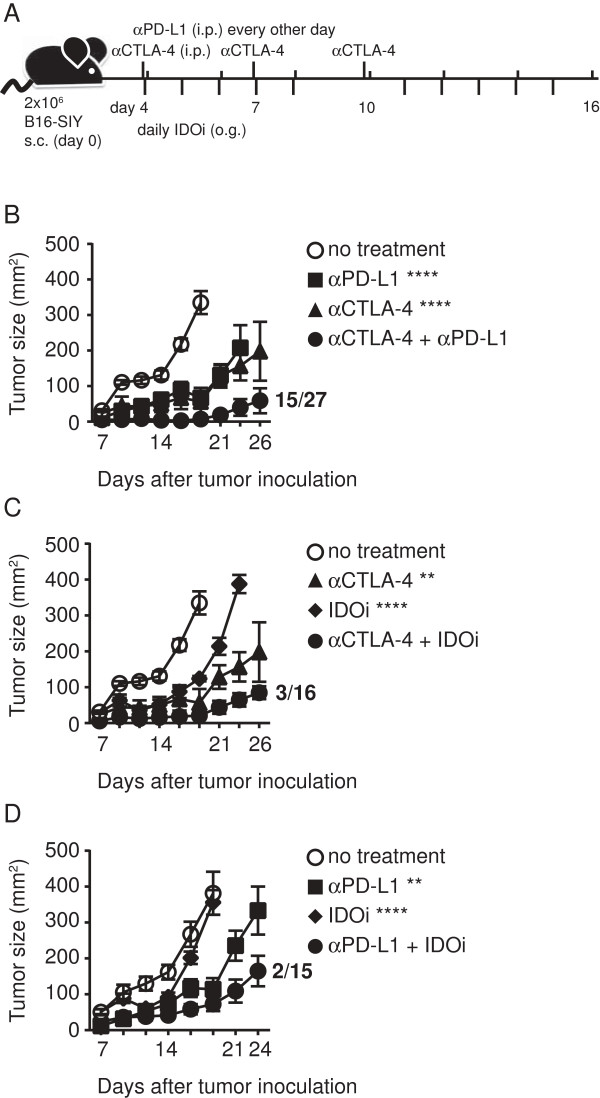
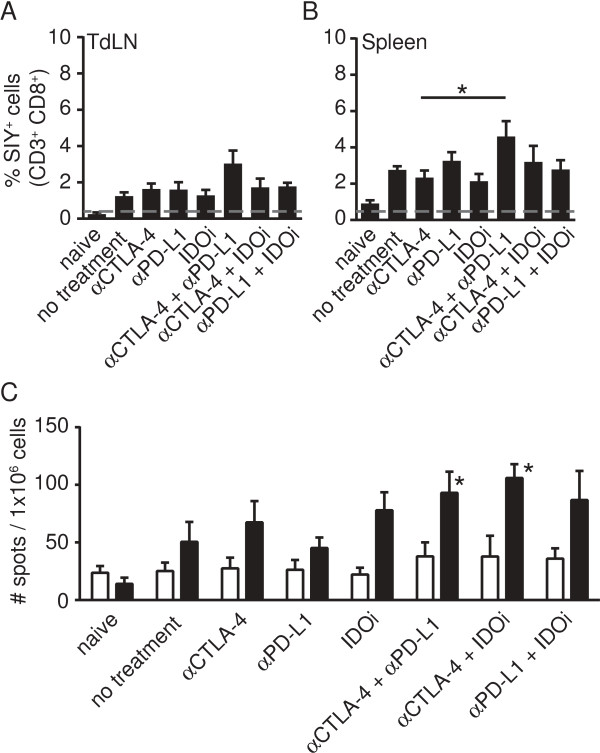
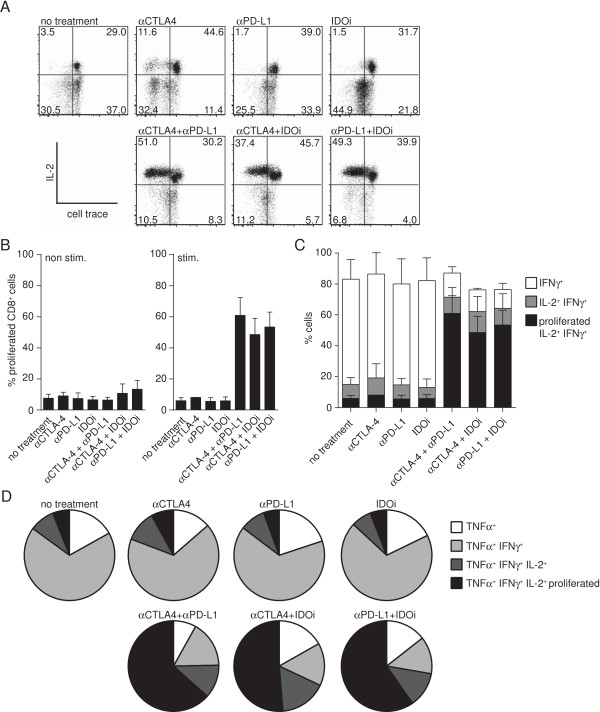
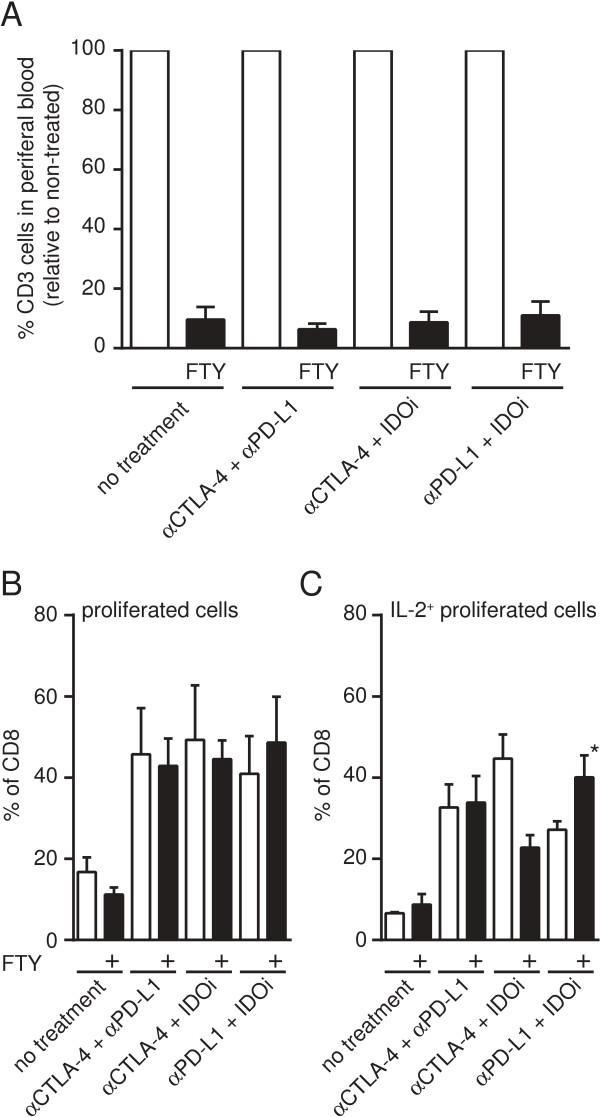
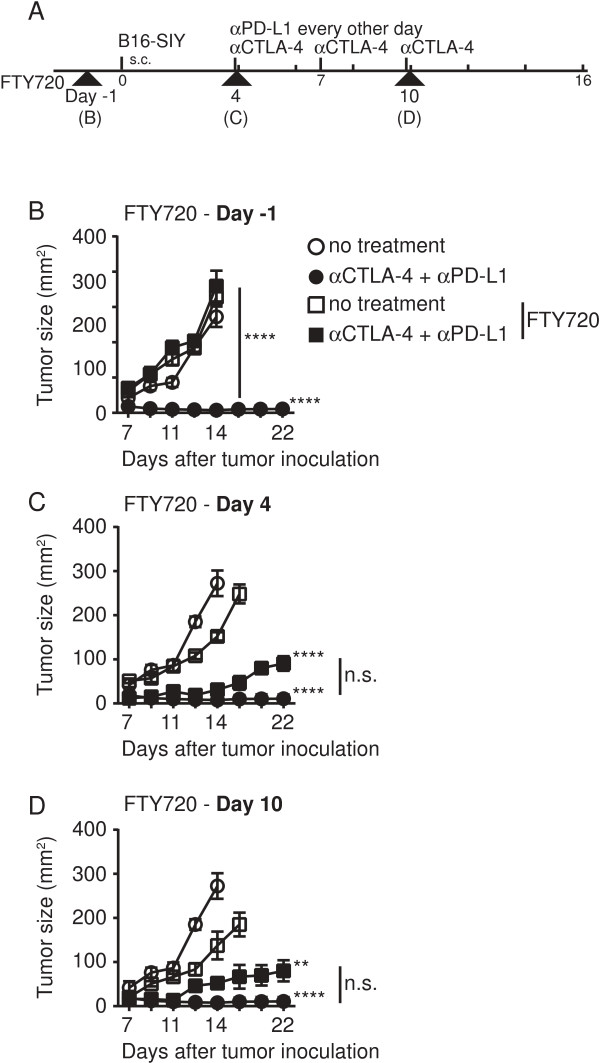
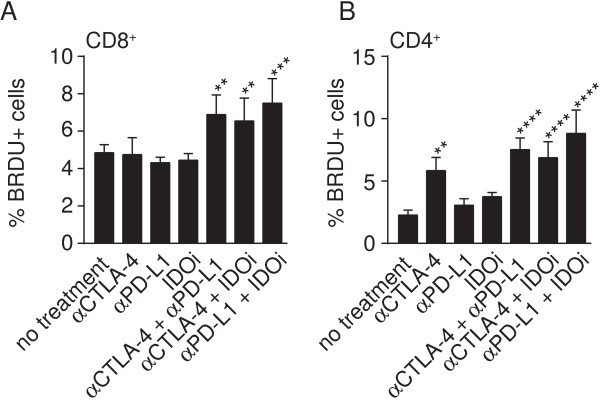
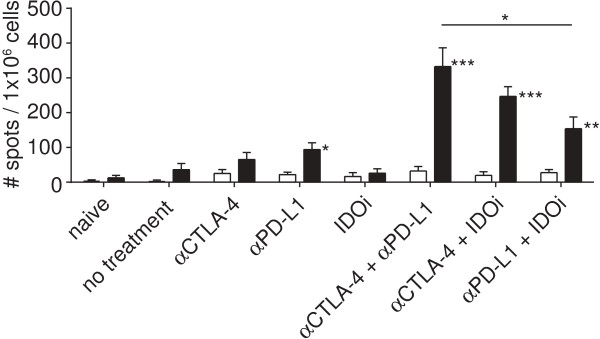
BACKGROUND: Blockade of immune inhibitory pathways is emerging as an important therapeutic modality for the treatment of cancer. Single agent treatments have partial anti-tumor activity in preclinical models and in human cancer patients. Inasmuch as the tumor microenvironment shows evidence of multiple immune inhibitory mechanisms present concurrently, it has been reasoned that combination therapies may be required for optimal therapeutic effect. METHODS: To test this notion, we utilized permutations of anti-CTLA-4 mAb, anti-PD-L1 mAb, and/or the IDO inhibitor INCB23843 in the murine B16.SIY melanoma model. RESULTS: All three combinations showed markedly improved tumor control over single treatments, with many mice achieving complete tumor rejection. This effect was seen in the absence of vaccination or adoptive T cell therapy. The mechanism of synergy was investigated to examine the priming versus effector phase of the anti-tumor immune response. Only a minimal increase in priming of anti-tumor T cells was observed at early time points in the tumor-draining lymph nodes (TdLN). In contrast, as early as three days after therapy initiation, a marked increase in the capacity of tumor-infiltrating CD8(+) T cells to produce IL-2 and to proliferate was found in all groups treated with the effective combinations. Treatment of mice with FTY720 to block new T cell trafficking from secondary lymphoid structures still enabled restoration of IL-2 production and proliferation by intratumoral T cells, and also retained most of the tumor growth control. CONCLUSIONS: Our data suggest that the therapeutic effect of these immunotherapies was mainly mediated through direct reactivation of T cells in situ. These three combinations are attractive to pursue clinically, and the ability of intratumoral CD8(+) T cells to produce IL-2 and to proliferate could be an important biomarker to integrate into clinical studies.
Overview
The claims and statistics of this paper haven’t been checked yet.
Free: it reads the open-access text and checks the first 5 claims that cite a source we can check. Create a free account to check every claim.
Integrity signals
Registry
Cites
Statistics
Figures
Verification
Claims the paper makes
The claims and statistics of this paper haven’t been checked yet.
Free: it reads the open-access text and checks the first 5 claims that cite a source we can check. Create a free account to check every claim.
Claims other papers make about this one
Each is checked against this paper’s own text: does it say what the citing paper says it does?
The source backs part of the claim, not all of it — or backs it for a different population, condition or comparison.
In the citing paper
“the endogenous AhR ligand Kyn displays pro-cancerogenic properties in a model of pre-clinical melanoma59”
From Dietary tryptophan metabolite released by intratumoral Lactobacillus reuteri facilitates immune checkpoint inhibitor treatment (2023) · cites this paper as [59]
Experimental — accuracy not yet measuredThe source backs part of the claim, not all of it — or backs it for a different population, condition or comparison.
In the citing paper
“recent studies demonstrated that DCs can be found in tumors, where they recruit T cells and stimulate tumor-reactive T cell responses locally (Spranger et al., 2014; de Mingo Pulido et al., 2018)”
From Successful Anti-PD-1 Cancer Immunotherapy Requires T Cell-Dendritic Cell Crosstalk Involving the Cytokines IFN-γ and IL-12 (2018) · cites this paper as Spranger et al., 2014
Experimental — accuracy not yet measuredIn the citing paper
“The tryptophan-metabolizing enzyme IDO inhibits T cell function, and combining IDO-blocking agents together with immune checkpoint inhibitors has shown promising results in mice and is also currently undergoing clinical trials in humans (105, 118).”
From Anti-PD-1 and Anti-CTLA-4 Therapies in Cancer: Mechanisms of Action, Efficacy, and Limitations (2018) · cites this paper as [118]
In the citing paper
“The tryptophan-metabolizing enzyme IDO inhibits T cell function, and combining IDO-blocking agents together with immune checkpoint inhibitors has shown promising results in mice and is also currently undergoing clinical trials in humans (105, 118).”
From Anti-PD-1 and Anti-CTLA-4 Therapies in Cancer: Mechanisms of Action, Efficacy, and Limitations (2018) · cites this paper as [118]
Self-check
Percentages, sums and reported differences re-computed from the paper’s own numbers.
The self-check needs the paper’s full text.
Citations
Cites
PD-1 and PD-L1 Immune Checkpoint Blockade to Treat Breast Cancer
Hartkopf, A. D., Taran, F.-A., Wallwiener, M., Walter, C. B., Krämer, B., Grischke, E.-M., & Brucker, S. Y. (2016) · Breast Care · doi:10.1159/000453569 · Cited by 30,845
Adverse Renal Effects of Immune Checkpoint Inhibitors: A Narrative Review
Wanchoo, R., Karam, S., Uppal, N. N., Barta, V. S., Deray, G., Devoe, C., Launay-Vacher, V., Jhaveri, K. D., & on behalf of Cancer and Kidney International Network Workgroup on Immune Checkpoint Inhibitors (2017) · American Journal of Nephrology · doi:10.1159/000455014 · Cited by 15,256
Improved Survival with Ipilimumab in Patients with Metastatic Melanoma
Hodi, F. S., O'Day, S. J., McDermott, D. F., Weber, R. W., Sosman, J. A., Haanen, J. B., Gonzalez, R., Robert, C., Schadendorf, D., Hassel, J. C., et al. (2010) · New England Journal of Medicine · doi:10.1056/nejmoa1003466 · Cited by 15,155 · cited 1×
“The first successful immunotherapy aiming to block a negative regulatory pathway on T cells is the anti-CTLA-4 (Cytotoxic T-Lymphocyte Antigen-4) mAb ipilimumab, which was approved by the FDA (Food and Drug Administration) in 2011 for treatment of patients with advanced melanoma [13].”
BackgroundSafety, activity, and immune correlates of anti–PD-1 antibody in cancer
Topalian, S. L., Hodi, F. S., Brahmer, J. R., Gettinger, S. N., Smith, D. C., McDermott, D. F., Powderly, J. D., Carvajal, R. D., Sosman, J. A., Atkins, M. B., et al. (2012) · New England Journal of Medicine · doi:10.1056/nejmoa1200690 · Cited by 12,628 · cited 1×
“Early clinical results have been reported with anti-PD-1 and anti-PD-L1 mAbs [14], IDO inhibitors [15], and Treg depletion targeting surface CD25 [16,17].”
BackgroundCuriel, T. J., Coukos, G., Zou, L., Alvarez, X., Cheng, P., Mottram, P., Evdemon-Hogan, M., Conejo-Garcia, J. R., Zhang, L., Burow, M., et al. (2004) · Nature Medicine · doi:10.1038/nm1093 · Cited by 5,151 · cited 1×
“These are expression of the ligand PD-L1 (programmed death-ligand 1), which can engage the inhibitory receptor PD-1 (programmed death-receptor 1) on activated T cells; presence of the tryptophan-catabolizing enzyme indoleamine-2,3dioxygenase (IDO), which exploits the exquisite sensitivity of T cells to tryptophan depl…”
BackgroundTumor-associated B7-H1 promotes T-cell apoptosis: A potential mechanism of immune evasion
Dong, H., Strome, S. E., Salomao, D. R., Tamura, H., Hirano, F., Flies, D. B., Roche, P. C., Lu, J., Zhu, G., Tamada, K., et al. (2002) · Nature Medicine · doi:10.1038/nm730 · Cited by 5,025
The immune contexture in human tumours: impact on clinical outcome
Fridman, W. H., Pagès, F., Sautès-Fridman, C., & Galon, J. (2012) · Nature reviews. Cancer · doi:10.1038/nrc3245 · Cited by 4,981 · cited 1×
“While most of these analyses have been carried out on biopsy material from patients with advanced melanoma, similar results are emerging in other solid tumors, including lung cancer, ovarian cancer, colorectal cancer, breast cancer, and head and neck cancer [3-6].”
ResultNivolumab plus Ipilimumab in Advanced Melanoma
Wolchok, J. D., Kluger, H., Callahan, M. K., Postow, M. A., Rizvi, N. A., Lesokhin, A. M., Segal, N. H., Ariyan, C. E., Gordon, R.-A., Reed, K., et al. (2013) · New England Journal of Medicine · doi:10.1056/nejmoa1302369 · Cited by 4,230 · cited 1×
“Phase I clinical trial development of the anti-CTLA-4 + anti-PD-1 combination has already been pursued in advanced melanoma, with profound clinical response rates observed that appear superior to single agent activity based on historical controls [47,49].”
BackgroundInnate and adaptive immune cells in the tumor microenvironment
Gajewski, T. F., Schreiber, H., & Fu, Y.-X. (2013) · Nature Immunology · doi:10.1038/ni.2703 · Cited by 4,148
Self-citationIwai, Y., Ishida, M., Tanaka, Y., Okazaki, T., Honjo, T., & Minato, N. (2002) · Proceedings of the National Academy of Sciences · doi:10.1073/pnas.192461099 · Cited by 3,203 · cited 2×
“yet significant impact on tumor growth kinetics and to improve tumor-specific immune responses in various mouse models in vivo [28-33].”
Background
Cited by
Items 301–400 of 562
Vigneron, N., van Baren, N., & den Eynde, B. J. V. (2015) · OncoImmunology · doi:10.1080/2162402x.2014.1003012 · Cited by 32
“This is in line with recent findings showing that the use of IDO1 inhibitors in a mouse model barely affected the priming of new antitumor T cells but strongly reactivated effector T cells in situ at the tumor site.(5) We also tested a series of 866 human tumors of 15 common types: approximately 56% expressed IDO1.”
ResultJohnson, T. S., McGaha, T. L., & Munn, D. H. (2017) · Advances in experimental medicine and biology · doi:10.1007/978-3-319-67577-0_7 · Cited by 35
“Emerging evidence from mouse preclinical models suggests that this hypothetical concern may indeed be the case [110, 111].”
Resistance to anticancer immunity in cancer patients: potential strategies to reverse resistance
Bonavida, B., & Chouaïb, S. (2016) · Annals of Oncology · doi:10.1093/annonc/mdw615 · Cited by 33
“The three combinations (anti-CTLA-4 mAbþ anti-PDL1 mAb, anti-CTLA-4 mAbþ INCB23843 and anti-PD-L1 mAbþ INCB23843) showed a significant anti-tumor effects in vivo [59] and activated the T-cell response.”
BackgroundWang, F., Yang, M., Luo, W., & Zhou, Q. (2022) · Journal of the National Cancer Center · doi:10.1016/j.jncc.2022.10.002 · Cited by 42
“8 It has been shown that the combination of IDO inhibitors with ICIs yielded increased numbers and functions of CD8 + T cells in the TME.”
BackgroundSeliger, B., & Ferrone, S. (2019) · Methods in molecular biology · doi:10.1007/978-1-4939-9773-2_15 · Cited by 32
Watanabe, T., Gaedicke, S., Guffart, E., Firat, E., & Niedermann, G. (2020) · Clinical Cancer Research · doi:10.1158/1078-0432.ccr-19-0476 · Cited by 30
Liu, J., Chen, D., Bao, T.-T., Fan, F., & Chen, Y. (2020) · Frontiers in Pharmacology · doi:10.3389/fphar.2019.01505 · Cited by 36
“…currently used in the clinical setting is to enhance existing antitumor responses including the use of monoclonal antibodies, lymphocytes, and cytokines, while the small-molecule inhibitors have gradually become a promising research field in cancer immunotherapy (Spranger et al., 2014).”
BackgroundTherapeutic potential of Fingolimod in triple negative breast cancer preclinical models
Rupp, T., Pelouin, O., Genest, L., Legrand, C., Froget, G., & Castagné, V. (2020) · Translational Oncology · doi:10.1016/j.tranon.2020.100926 · Cited by 32
Odunsi, A., McGray, A. R., Miliotto, A. J., Zhang, Y., Wang, J., Abiola, A., Eppolito, C., & Huang, R. (2020) · Journal for ImmunoTherapy of Cancer · doi:10.1136/jitc-2020-001237 · Cited by 31
McAuliffe, J., Chan, H. F., Noblecourt, L., Ramirez-Valdez, R. A., Almeida, V. P., Zhou, Y., Pollock, E., Cappuccini, F., Redchenko, I., Hill, A. V. S., et al. (2021) · Journal for ImmunoTherapy of Cancer · doi:10.1136/jitc-2021-003218 · Cited by 34
Sp1 induced gene TIMP1 is related to immune cell infiltration in glioblastoma
Liu, L., Yang, S., Lin, K., Yu, X., Meng, J., Ma, C., Wu, Z., Hao, Y., Chen, N., Ge, Q., et al. (2022) · Scientific Reports · doi:10.1038/s41598-022-14751-4 · Cited by 34
Jing, T., Zhang, Z., Kang, Z., Mo, J., Yue, X., Lin, Z., Fu, X., Liu, C. X., Ma, H., Zhang, X., et al. (2023) · Journal of Medicinal Chemistry · doi:10.1021/acs.jmedchem.3c00205 · Cited by 30
Pacella, I., Cammarata, I., Focaccetti, C., Miacci, S., Gulino, A., Tripodo, C., Ravà, M., Barnaba, V., & Piconese, S. (2018) · Cancer Immunology Research · doi:10.1158/2326-6066.cir-17-0713 · Cited by 31
“Results from mouse models demonstrate that the rescue of CD8þ T-cell effector functions, such as Tbet-driven IFNg release, is key to success (17, 41, 42).”
BackgroundMitchell, K. G., Parra, E. R., Nelson, D. B., Zhang, J., Wistuba, I. I., Fujimoto, J., Roth, J. A., Antonoff, M. B., Corsini, E. M., Vaporciyan, A. A., et al. (2019) · Journal of Thoracic and Cardiovascular Surgery · doi:10.1016/j.jtcvs.2019.04.084 · Cited by 34
Moinuddin, A., Poznanski, S. M., Portillo, A. L., Monteiro, J. K., & Ashkar, A. A. (2024) · Immunological Reviews · doi:10.1111/imr.13316 · Cited by 34
Ziblat, A., Horton, B. L., Higgs, E. F., Hatogai, K., Martinez, A., Shapiro, J. W., Kim, D. E., Zha, Y., Sweis, R. F., & Gajewski, T. F. (2024) · Cell Reports · doi:10.1016/j.celrep.2024.114141 · Cited by 33
Self-citationFlynn, M. J., & Larkin, J. (2017) · Expert Opinion on Pharmacotherapy · doi:10.1080/14656566.2017.1369956 · Cited by 30
“in preclinical models in their activation of intratumoral CD8 + T cells [92].”
BackgroundA tumor-targeted immune checkpoint blocker
Zhang, Y., Fang, C., Wang, R. E., Wang, Y., Guo, H., Guo, C., Zhao, L., Li, S., Li, X., Schultz, P. G., et al. (2019) · Proceedings of the National Academy of Sciences · doi:10.1073/pnas.1905646116 · Cited by 30
Oršolić, N., Kunštić, M., Kukolj, M., Odeh, D., & Ančić, D. (2020) · Molecules · doi:10.3390/molecules25235583 · Cited by 32
IFN-γ and CD38 in Hyperprogressive Cancer Development
Angelicola, S., Ruzzi, F., Landuzzi, L., Scalambra, L., Gelsomino, F., Ardizzoni, A., Nanni, P., Lollini, P., & Palladini, A. (2021) · Cancers · doi:10.3390/cancers13020309 · Cited by 34
“The IFN-γ signaling pathway can indeed increase angiogenesis in the TME by inhibiting the expression of vascular endothelial growth inhibitor (VEGI) [92].”
InfluentialImmuno-Metabolism: The Role of Cancer Niche in Immune Checkpoint Inhibitor Resistance
Weng, C.-Y., Kao, C.-X., Chang, T., & Huang, Y. (2021) · International Journal of Molecular Sciences · doi:10.3390/ijms22031258 · Cited by 34
“The combination use of IDO inhibitor with ICIs significantly attenuates tumor growth, mainly via reactivation of T cells, while also increasing IL-2 production and proliferation of CD8+ T cells [166].”
BackgroundDrug and molecular radiotherapy combinations for metastatic castration resistant prostate cancer
Staniszewska, M., Iking, J., Lückerath, K., Hadaschik, B. A., Herrmann, K., Ferdinandus, J., & Fendler, W. P. (2021) · Nuclear Medicine and Biology · doi:10.1016/j.nucmedbio.2021.03.009 · Cited by 33
Powderly, J. D., Klempner, S. J., Naing, A., Bendell, J. C., Garrido‐Laguna, I., Catenacci, D. V. T., Taylor, M. H., Lee, J. J., Zheng, F., Zhou, F., et al. (2022) · The Oncologist · doi:10.1093/oncolo/oyac174 · Cited by 30
“Number of patients, male 34 Number of patients, female 36 Stage 69 patients had metastatic disease; 1 patient had advanced disease Age: median (range) 59 (28-80) years Number of prior systemic therapies: median (range) 1 (1-7) Performance status: ECOG 0 or 1: all patients had ECOG performance status less than or equal…”
BackgroundLung Cancer Immunotherapy: Beyond Common Immune Checkpoints Inhibitors
Catalano, M., Shabani, S., Venturini, J., Ottanelli, C., Voltolini, L., & Roviello, G. (2022) · Cancers · doi:10.3390/cancers14246145 · Cited by 32
Targeting anticancer immunity in oral cancer: Drugs, products, and nanoparticles
Qin, L., & Wu, J. (2023) · Environmental Research · doi:10.1016/j.envres.2023.116751 · Cited by 30
Yanai, Y., Kosaka, T., Mikami, S., Hongo, H., Yasumizu, Y., Takeda, T., Matsumoto, K., Miyauchi, J., Kitano, S., & Oya, M. (2021) · Scientific Reports · doi:10.1038/s41598-021-01900-4 · Cited by 28
Albertí‐Valls, M., Olave, S., Olomí, A., Macià, A., & Eritja, N. (2024) · Cancers · doi:10.3390/cancers16233918 · Cited by 30
“Furthermore, PD-L1 expression has also been linked to the increased concentration of Th1 cytokine, chemical mediators, and interferons, alongside distinct gene expression patterns [60,61].”
Systematic evaluation of immune regulation and modulation
Stroncek, D. F., Butterfield, L. H., Cannarile, M. A., Dhodapkar, M. V., Greten, T. F., Grivel, J., Kaufman, D. R., Kong, H. H., Korangy, F., Lee, P. P., et al. (2017) · Journal for ImmunoTherapy of Cancer · doi:10.1186/s40425-017-0223-8 · Cited by 32
“In the context of immune checkpoint blockade, anti-CTLA-4-directed agents have been suggested to expand the breadth of antitumor immunity through peripheral T cell priming [76], whereas PD-1/PDL1-directed therapy is thought to predominantly act at the level of the TME in tumors with a pre-existing T cell infiltrate [7…”
Chen, J. A., Ma, W., Yuan, J. D., & Li, T. (2020) · Cancer treatment and research · doi:10.1007/978-3-030-38862-1_9 · Cited by 31
Recent advances in immune therapies for gastric cancer
Olnes, M. J., & Martinson, H. A. (2021) · Cancer Gene Therapy · doi:10.1038/s41417-021-00310-y · Cited by 28
Cancer immunotherapy focusing on the role of interleukins: A comprehensive and updated study
Samadi, M., Kamrani, A., Nasiri, H., Shomali, N., Heris, J. A., Shahabi, P., Ghahremanzadeh, K., Mohammadinasab, R., Sadeghi, M. T., Sadeghvand, S., et al. (2023) · Pathology - Research and Practice · doi:10.1016/j.prp.2023.154732 · Cited by 31
Therapeutic vaccination immunomodulation: forming the basis of all cancer immunotherapy
Coventry, B. J. (2019) · Therapeutic Advances in Vaccines and Immunotherapy · doi:10.1177/2515135519862234 · Cited by 34
Chae, Y. K., Oh, M. S., & Giles, F. J. (2017) · The Oncologist · doi:10.1634/theoncologist.2017-0354 · Cited by 28
“Ongoing clinical trials of combination therapies include those targeting immunosuppressive factors, such as IDO [121].”
BackgroundInfluentialGriglio, A., Torre, E., Serafini, M. T., Bianchi, A., Schmid, R., Zabetta, G. C., Massarotti, A., Sorba, G., Pirali, T., & Fallarini, S. (2018) · Bioorganic & Medicinal Chemistry Letters · doi:10.1016/j.bmcl.2018.01.032 · Cited by 27
Resistance mechanisms in melanoma to immuneoncologic therapy with checkpoint inhibitors
Fenton, S. E., Sosman, J. A., & Chandra, S. (2019) · Cancer Drug Resistance · doi:10.20517/cdr.2019.28 · Cited by 37
“IDO expression specifically catabolizes tryptophan to kynurenine to inhibit dendritic cell function, block T cell proliferation, and increase MDSC and Treg infiltration([171-178]).”
BackgroundBekki, S., Hashimoto, S., Yamasaki, K., Komori, A., Abiru, S., Nagaoka, S., Saeki, A., Suehiro, T., Kugiyama, Y., Beppu, A., et al. (2020) · PLoS ONE · doi:10.1371/journal.pone.0241002 · Cited by 27
Xiang, S., Li, S., & Xu, J. (2025) · Clinical and Translational Medicine · doi:10.1002/ctm2.70345 · Cited by 36
“198,199 Antiangiogenic agents are clinically proven to improve ICIs treatment strategies.”
Freeman-Keller, M., & Weber, J. S. (2014) · Therapeutic Advances in Medical Oncology · doi:10.1177/1758834014551747 · Cited by 27
Evolution of Molecular Targets in Melanoma Treatment
Tran, K. B., Buchanan, C. M., & Shepherd, P. R. (2020) · Current Pharmaceutical Design · doi:10.2174/1381612826666200130091318 · Cited by 35
Tu, W., Yang, F., Xu, G., Chi, J., Liu, Z., Peng, W. J., Hu, B., Zhang, L. J., Wan, H., Yu, N., et al. (2019) · ACS Medicinal Chemistry Letters · doi:10.1021/acsmedchemlett.9b00114 · Cited by 27
Heidari, F., Ramezani, A., Erfani, N., & Razmkhah, M. (2020) · International Reviews of Immunology · doi:10.1080/08830185.2020.1836176 · Cited by 26
Slingluff, C. L., Zarour, H. M., Tawbi, H. A., Kirkwood, J. M., Postow, M. A., Friedlander, P. A., Devoe, C., Gaughan, E. M., Mauldin, I. S., Olson, W. C., et al. (2021) · OncoImmunology · doi:10.1080/2162402x.2021.1898105 · Cited by 28
“A prior murine study suggests that tumor regression with checkpoint blockade depends primarily on T cells already infiltrating the tumors.(40) Questions remain about the ability of vaccine-induced T cells to infiltrate cancers de novo, and to induce tumor regressions alone or in combination with checkpoint blockade.”
BackgroundLara, P. N., Villanueva, L., Ibáñez, C., Erman, M., Lee, J., Heinrich, D. A., Lipatov, O. N., Gedye, C. A., Gökmen, E., Acevedo, A., et al. (2024) · BMC Cancer · doi:10.1186/s12885-023-10971-7 · Cited by 28
Hu, Z., Ye, L., Xing, Y., Hu, J., & Xi, T. (2018) · Scientific Reports · doi:10.1038/s41598-017-18641-y · Cited by 27
Exploiting natural anti-tumor immunity for metastatic renal cell carcinoma
Murphy, K. A., James, B. R., Guan, Y., Torry, D. S., Wilber, A. C., & Griffith, T. S. (2015) · Human Vaccines & Immunotherapeutics · doi:10.1080/21645515.2015.1035849 · Cited by 25
“Tumors can also induce anergy of resident na€ıve T cells by presenting tumor-associated antigens in the absence of co-stimulation or by secreting suppressive molecules.(117) Engagement of inhibitory receptors, such as CTLA-4 and PD-1, on T cells is an additional direct mechanism that tumor cells employ to suppress T c…”
BackgroundThe Role of Anti-PD-1/PD-L1 Agents in Melanoma: Progress to Date
Tsai, K. K., & DAUD, A. I. (2015) · Drugs · doi:10.1007/s40265-015-0376-z · Cited by 25
Inotodiol From Inonotus obliquus Chaga Mushroom Induces Atypical Maturation in Dendritic Cells
Maza, P. A. M., Lee, J., Kim, Y.-S., Sun, G.-M., Sung, Y.-J., Ponomarenko, L. P., Stonik, V. A., Ryu, M., & Kwak, J.-Y. (2021) · Frontiers in Immunology · doi:10.3389/fimmu.2021.650841 · Cited by 26
“IL-2 production by tumor-infiltrating CD8 T cells is related to antitumor immunity (62), and IL-2 produced by CD8 T cells can stimulate Tregs (63).”
BackgroundIsazadeh, A., Hajazimian, S., Garshasbi, H., Shadman, B., Baghbanzadeh, A., Chavoshi, R., Taefehshokr, S., Jadid, M. F. S., Hajiasgharzadeh, K., & Baradaran, B. (2020) · Journal of Cellular Physiology · doi:10.1002/jcp.29905 · Cited by 25
“The combination therapy by IDO inhibitors and immune checkpoints inhibitors may enhance T cell activity in the TME, and consequently kill IDO‐expressing tumors (Spranger et al., 2014).”
BackgroundFc-Silent Anti-TIGIT Antibodies Potentiate Antitumor Immunity without Depleting Regulatory T Cells
Piovesan, D., de Groot, A. E., Cho, S., Anderson, A. E., Ray, R. D., Patnaik, A., Foster, P. G., Mitchell, C. G., Espinoza, A. Y. L., Zhu, W. S., et al. (2024) · Cancer Research · doi:10.1158/0008-5472.can-23-2455 · Cited by 27
Ragonnaud, E., Andersson, A.-M. C., Pedersen, A. E., Laursen, H., & Holst, P. J. (2016) · Vaccine · doi:10.1016/j.vaccine.2015.06.087 · Cited by 23
Freimark, B. D., Gong, J., Ye, D., Gray, M. J., Nguyen, V., Yin, S., Hatch, M. M. S., Hughes, C. C. W., Schroit, A. J., Hutchins, J. T., et al. (2016) · Cancer Immunology Research · doi:10.1158/2326-6066.cir-15-0250 · Cited by 25
“Results: Anti-tumor efficacy of PS-targeting antibodies as single agent and in combination with checkpoint inhibitors Single agent treatment of murine melanomas with checkpoint inhibitors that block the CTLA-4 or PD-1 pathways has been shown to inhibit tumor growth; however, combinatorial therapy that inhibits multipl…”
BackgroundHarnessing the immune system for cancer therapy
Smith, E. L., Zamarin, D., & Lesokhin, A. M. (2014) · Current Opinion in Oncology · doi:10.1097/cco.0000000000000128 · Cited by 27
Xue, W., Brentville, V. A., Symonds, P., Cook, K., Yagita∥, H., Metheringham, R. L., & Durrant, L. G. (2016) · Oncotarget · doi:10.18632/oncotarget.13070 · Cited by 24
“Previous studies showed treatment with FTY720, an immunomodulatory drug, blocks sphingosine 1-phosphate receptors and inhibits T cell migration from lymphoid organs [21, 22].”
ResultAdvances in the discovery and development of selective heme-displacing IDO1 inhibitors
Sun, L. (2020) · Expert Opinion on Drug Discovery · doi:10.1080/17460441.2020.1781811 · Cited by 22
Small molecular drugs reshape tumor microenvironment to synergize with immunotherapy
Han, C., Zhang, A., Liu, Z., Moore, C., & Fu, Y. (2020) · Oncogene · doi:10.1038/s41388-020-01575-7 · Cited by 24
CD11c-targeted Delivery of DNA to Dendritic Cells Leads to cGAS- and STING-dependent Maturation
Laursen, M. F., Christensen, E., Degn, L. L. T., Jønsson, K. L., Jakobsen, M. R., Agger, R., & Kofod‐Olsen, E. (2017) · Journal of Immunotherapy · doi:10.1097/cji.0000000000000195 · Cited by 25
Lin, Y. I., Zhang, H., Niu, T., Tang, M., & Chang, J. (2020) · Molecules · doi:10.3390/molecules25194494 · Cited by 23
Immunomodulatory Monoclonal Antibodies in Combined Immunotherapy Trials for Cutaneous Melanoma
Aris, M., Mordoh, J., & Barrio, M. M. (2017) · Frontiers in Immunology · doi:10.3389/fimmu.2017.01024 · Cited by 23
“And that combination of CTLA-4, PD-1/PD-L1, and IDO blockade restores IL-2 production and proliferation of CD8+ T-cells (53).”
BackgroundCapaccione, K. M., Doubrovin, M., Braumuller, B., Leibowitz, D., Bhatt, N., Momen‐Heravi, F., Molotkov, A., Kissner, M. D., Goldner, K., Soffing, M., et al. (2022) · Cancers · doi:10.3390/cancers14194575 · Cited by 21
“While some studies have demonstrated that B16F10 tumors are refractory to checkpoint inhibitor immunotherapy, our data, as well as that of others [50,51], has demonstrated partial response with this therapy, calling into question whether the B16F10 microenvironment can truly be considered “cold” or if there are other…”
ResultNaing, A., Algazi, A. P., Falchook, G. S., Creelan, B., Powderly, J. D., Rosen, S. D., Barve, M. A., Mettu, N. B., Triozzi, P. L., Hamm, J. T., et al. (2022) · Cancer · doi:10.1002/cncr.34512 · Cited by 20
Advancements in melanoma cancer metastasis models
Melo, L. M. N., Kumar, S., Riess, V., Szylo, K. J., Eisenburger, R. T., Schadendorf, D., Ubellacker, J. M., & Tasdogan, A. (2023) · Pigment Cell & Melanoma Research · doi:10.1111/pcmr.13078 · Cited by 24
“…et al. (2009), Simpson et al. (2013) Anti- PD- 1 and anti- CTLA- 4 antibodies and combinatory treatments In vivo tumor model of B16/BL6 melanoma Spranger et al. (2014), Zhong et al. (2020) Anti- CTLA- 4 antibody, MPLA, IDO, 1- MT, and combinatory treatments B16F10 Melanoma Mouse Model Jallad…”
Davar, D., & Bahary, N. (2018) · Targeted Oncology · doi:10.1007/s11523-017-0547-9 · Cited by 22
Melanoma immunotherapy: strategies to overcome pharmacological resistance
Trojaniello, C., Vitale, M. G., Scarpato, L., Esposito, A., & Ascierto, P. A. (2020) · Expert Review of Anticancer Therapy · doi:10.1080/14737140.2020.1745634 · Cited by 23
Recent advances with Treg depleting fusion protein toxins for cancer immunotherapy
Kumar, P., Kumar, A., Parveen, S., Murphy, J. R., & Bishai, W. R. (2019) · Immunotherapy · doi:10.2217/imt-2019-0060 · Cited by 19
Xu, X. J., Ren, J., Ma, Y., Liu, H., Rong, Q., Feng, Y., Wang, Y., Cheng, Y., Ge, R., Li, Z., et al. (2019) · Journal of Enzyme Inhibition and Medicinal Chemistry · doi:10.1080/14756366.2018.1480614 · Cited by 18
“(E)-4-Ethoxy-1,1,1-trifluorobut-3-en-2-one (16).”
IDO1 Is a Therapeutic Target for Pancreatic Cancer–Associated Depression
Hue, J. J., Graor, H. J., Zarei, M., Katayama, E., Ji, K., Hajihassani, O., Loftus, A. W., Gohar, A. V., & Winter, J. M. (2022) · Molecular Cancer Therapeutics · doi:10.1158/1535-7163.mct-22-0055 · Cited by 18
Çiçin, İ., Plimack, E. R., Gurney, H., Leibowitz‐Amit, R., Alekseev, B. Y., Parnis, F. X., Peer, A., Necchi, A., Bellmunt, J., Nishiyama, H., et al. (2024) · BMC Cancer · doi:10.1186/s12885-023-11213-6 · Cited by 24
“In preclinical mouse models, IDO1 inhibition has been demonstrated to synergize with PD-L1 inhibition in delaying tumor growth and prolonging survival [23, 28].”
BackgroundLuke, J. J., Gelmon, K. A., Siu, L. L., Moreno, V., Desai, J., Gomez‐Roca, C., Carlino, M. S., Pachynski, R. K., Cosman, R., Chu, Q. S.-C., et al. (2024) · Clinical Cancer Research · doi:10.1158/1078-0432.ccr-24-0439 · Cited by 25
Williams, D. K., Markwalder, J. A., Balog, A., Chen, B., Chen, L., Donnell, J., Haque, L., Hart, A. C., Mandal, S. K., Nation, A., et al. (2018) · Bioorganic & Medicinal Chemistry Letters · doi:10.1016/j.bmcl.2018.01.010 · Cited by 18
Yazdani, M., Hatamipour, M., Alani, B., Nikzad, H., Roshan, N. M., Verdi, J., Jaafari, M. R., Noureddini, M., & Badiee, A. (2020) · PubMed Central · doi:10.22038/ijbms.2020.46654.10762 · Cited by 22
“Despite the importance of ICR blockers such as anti PD-1 monoclonal antibodies (mAb), which are considered as their benefits, their results have been disappointing due to the induced immune resistance when applied as a monotherapy (4, 5).”
BackgroundLee, Y. J., Lee, J. B., Ha, S., & Kim, H. R. (2021) · Molecules and Cells · doi:10.14348/molcells.2021.0044 · Cited by 19
“Combination of IDO inhibitors with ICI therapy enhances the TIL function and number in the tumor microenvironment (Spranger et al., 2014).”
BackgroundLiu, K., Liu, Y., Liu, H.-L., Chong, I., Yen, M., & Kuo, P. (2016) · Molecular Therapy — Nucleic Acids · doi:10.1038/mtna.2016.105 · Cited by 18
Immunological Aspects of Cancer Cell Metabolism
Ucche, S., & Hayakawa, Y. (2024) · International Journal of Molecular Sciences · doi:10.3390/ijms25105288 · Cited by 20
“An IDO1 enzyme inhibitor was also shown to improve the efficacy of anti-CTLA-4 and anti-PD-L1 antibody therapy in a mouse B16 melanoma model [69] and further induce the proliferation, survival, and functions of antitumor immune cells in vitro and enhance antitumor immunity in vivo against Pan02…”
BackgroundMonovalent pseudo-natural products supercharge degradation of IDO1 by its native E3 KLHDC3
Hennes, E., Lucas, B., Scholes, N. S., Cheng, X., Scott, D. C., Bischoff, M., Reich, K., Gasper, R., Lucas, M., Xu, T. T., et al. (2026) · Nature Chemistry · doi:10.1038/s41557-025-02021-5 · Cited by 22
From Famine to Feast: Developing Early-Phase Combination Immunotherapy Trials Wisely
Day, D., Monjazeb, A. M., Sharon, E., Ivy, S. P., Rubin, E. H., Rosner, G. L., & Butler, M. O. (2017) · Clinical Cancer Research · doi:10.1158/1078-0432.ccr-16-3064 · Cited by 17
“This hypothesis is validated by the demonstration of synergistic activity of multi-checkpoint blockade in nonclinical studies (22, 23).”
BackgroundArranz‐Nicolás, J., Martin-Salgado, M., Rodríguez‐Rodríguez, C., Liébana, R., Moreno-Ortíz, M. C., Leitner, J. M., Steinberger, P., Ávila‐Flores, A., & Mérida, I. (2020) · Journal for ImmunoTherapy of Cancer · doi:10.1136/jitc-2020-001521 · Cited by 22
“The results also extend knowledge of the DGK ζ role in limiting T cell responses, specifically of the DGK ζ interrelation with an important immune checkpoint such as PD-1; these findings indicate a promising horizon to be explored for further success of cancer immunotherapies.”
Zhang, J., Dai, Z., Yan, C., Zhang, W., Wang, D., & Tang, D. (2021) · Clinical & Translational Oncology · doi:10.1007/s12094-021-02659-w · Cited by 21
“Previous studies show that CTLA4-mediated recruitment of serine/threonine phosphatase PP2A inhibits AKT and further inhibits IL-2 production [35].”
BackgroundNaing, A., Powderly, J. D., Nemunaitis, J. J., Luke, J. J., Mansfield, A. S., Messersmith, W. A., Sahebjam, S., LoRusso, P. M., Garrido‐Laguna, I., Leopold, L. H., et al. (2022) · Journal for ImmunoTherapy of Cancer · doi:10.1136/jitc-2021-004223 · Cited by 18
Liu, D., Xiao, H., Xiang, Y., Zhong, D., Liu, Y., Wang, Y., & Zhang, W. (2025) · Journal of Cancer · doi:10.7150/jca.108163 · Cited by 18
“However, the combination therapy did not increase the early anti-tumor CD8 + T cell counts in the tumor-draining lymph nodes [152].”
Genomic and Immunologic Correlates of Indoleamine 2,3-Dioxygenase Pathway Expression in Cancer
Panda, A., & Ganesan, S. (2021) · Frontiers in Genetics · doi:10.3389/fgene.2021.706435 · Cited by 17
Metabolic orchestration of T lineage differentiation and function
Yong, C. S. M., Moussa, D. A., Cretenet, G., Kinet, S., Dardalhon, V., & Taylor, N. N. (2017) · FEBS Letters · doi:10.1002/1873-3468.12849 · Cited by 16
Prospects to Improve Chimeric Antigen Receptor T-Cell Therapy for Solid Tumors
Jin, C., Yu, D., & Essand, M. (2016) · Immunotherapy · doi:10.2217/imt-2016-0125 · Cited by 18
Liu, X., Zhang, Y., Duan, H., Luo, Q., Liu, W., Liang, L., Wan, H., Chang, S., Hu, J., & Shi, H. (2020) · Frontiers in Molecular Biosciences · doi:10.3389/fmolb.2019.00164 · Cited by 16
“…rates (ORRs) in multiple advanced solid tumors (Hamid et al., 2017; Lara et al., 2017; Perez et al., 2017; Smith et al., 2017), primarily through the reactivation of tumor-infiltrating T cells and/or the decrease of tumor-resident immunosuppressive regulatory T cells (Spranger et al., 2014).”
BackgroundMa, H., Qin, Q., Mi, J., & Feng, Q. (2020) · BMC Pharmacology and Toxicology · doi:10.1186/s40360-020-00439-w · Cited by 15
Necchi, A., van der Heijden, M. S., Trukhin, D. V., Peer, A., Gurney, H., Alekseev, B. Y., Parnis, F. X., Leibowitz‐Amit, R., Santis, M. D., Grivas, P. D., et al. (2024) · BMC Cancer · doi:10.1186/s12885-023-10727-3 · Cited by 17
“IDO1 and PD-L1 are co-expressed in a number of cancers [20–23], and preclinical studies have demonstrated the additive or synergistic effects of combined inhibition of IDO1 and PD-L1 [19, 24].”
BackgroundParmiani, G., Maccalli, C., & Maio, M. (2015) · Vaccines · doi:10.3390/vaccines3020420 · Cited by 17
“, ipilimumab combined with anti-PD-1 or anti-PD-L1; [4–6]) as documented in murine systems [7] and appears to involve the release of IL-2 and proliferation of T lymphocytes within the tumor microenvironment (MEV) [8].”
BackgroundUsing Preclinical Data to Design Combination Clinical Trials of Radiation Therapy and Immunotherapy
Gough, M. J., Sharon, S., Crittenden, M. R., & Young, K. H. (2020) · Seminars in Radiation Oncology · doi:10.1016/j.semradonc.2019.12.002 · Cited by 16
Metabolic interventions: A new insight into the cancer immunotherapy
Yu, T., Dong, T., Eyvani, H., Fang, Y., Wang, X., Zhang, X., & Lu, X. (2020) · Archives of Biochemistry and Biophysics · doi:10.1016/j.abb.2020.108659 · Cited by 16
“More so, the combination of PD-1 and CTLA-4 blockades rendered as a more effective synergistic treatment option comparing to monotherapy [197].”
BackgroundAscierto, P. A., Grimaldi, A. M., Anderson, A. C., Bifulco, C. B., Cochran, A. J., Garbe, C., Eggermont, A. M. M., Faries, M. B., Ferrone, S., Gershenwald, J. E., et al. (2014) · Journal of Translational Medicine · doi:10.1186/s12967-014-0277-z · Cited by 20
“mutations markedly increase the number of proliferating IL-2-producing CD8 T cells in tumor microenvironment [107].”
BackgroundSelf-citationAmine‐weighted chemical exchange saturation transfer magnetic resonance imaging in brain tumors
Cho, N. S., Hagiwara, A., Yao, J., Nathanson, D. A., Prins, R. M., Wang, C., Raymond, C., Desousa, B. R., Divakaruni, A. S., Morrow, D., et al. (2022) · NMR in Biomedicine · doi:10.1002/nbm.4785 · Cited by 18
Stinson, J. A., Sheen, A. M., Momin, N., Hampel, J., Bernstein, R., Kamerer, R. L., Fadl-Alla, B. A., Samuelson, J., Fink, E., Fan, T. M., et al. (2023) · Clinical Cancer Research · doi:10.1158/1078-0432.ccr-23-0006 · Cited by 15
Kong, K., Zhang, J., Liu, B.-Z., Meng, G., & Zhang, Q. (2019) · Bioorganic & Medicinal Chemistry Letters · doi:10.1016/j.bmcl.2019.126901 · Cited by 15
Heterogeneity of the tumor immune microenvironment and clinical interventions
Jin, Z., Zhou, Q., Cheng, J., Jia, Q., & Zhu, B. (2023) · Frontiers of Medicine · doi:10.1007/s11684-023-1015-9 · Cited by 15
Smith, H., Arbe-Barnes, E. H., Abu‐Shah, E., & Sivakumar, S. (2024) · Frontiers in Immunology · doi:10.3389/fimmu.2024.1406250 · Cited by 15
Poncelet, L., Ait-Belkacem, R., Marillier, R. G., Gomes, B., & Stauber, J. (2019) · Journal of Pharmaceutical and Biomedical Analysis · doi:10.1016/j.jpba.2019.02.038 · Cited by 14
Novel Therapeutic Strategies for Refractory Ovarian Cancers: Clear Cell and Mucinous Carcinomas
Shoji, T., Tatsuki, S., Abe, M., Tomabechi, H., Takatori, E., Kaido, Y., Nagasawa, T., Kagabu, M., Baba, T., & Itamochi, H. (2021) · Cancers · doi:10.3390/cancers13236120 · Cited by 15
“In preclinical models, epacadostat plus an ICI suppressed tumor growth more effectively than single-agent treatment, primarily through reactivation of antitumor immunity [40].”
BackgroundZhang, W., Zhang, J., Liu, T., Xing, J., Zhang, H., Wang, D., & Tang, D. (2022) · Journal of Cancer Research and Clinical Oncology · doi:10.1007/s00432-022-04081-3 · Cited by 16
MDSCs: The Key Players in the Formation of Pre-Metastatic Niche
Cui, W., Wang, Z., Lv, J., Qin, Y., & Shi, H. (2023) · Frontiers in Bioscience-Landmark · doi:10.31083/j.fbl2803058 · Cited by 16
“Last but not least, HIF-1 α can also enhance the suppressive activity of MDSCs by inducing expression of programmed death-ligand 1 (PD-L1), leading to reduced production of IL-2 and decreased proliferation of cytotoxic T cells [71,72].”
BackgroundIbrahim, O. M., & Kaliński, P. (2024) · Cells · doi:10.3390/cells13080699 · Cited by 14
“…blockade of CTLA-4 or PD-1/PD-L1 combined with IDO inhibition proved to be highly effective in enhancing the TME-infiltration with CD8 + T cells [139]; however, a phase II l trial, Check-Mate 9UT (NCT03519256), designed to assess the anti-tumor efficacy of an oral IDO inhibitor, BMS-986205, in…”
BackgroundSnyder, A., Zamarin, D., & Wolchok, J. D. (2015) · Progress in tumor research · doi:10.1159/000436998 · Cited by 17
Metadata
- Authors
- Spranger, S., Koblish, H. K., Horton, B., Scherle, P. A., Newton, R., & Gajewski, T. F.
- Affiliations
- University of Chicago (US)
- Incyte (United States) (US)
- Corresponding author
- Gajewski, Thomas F
- ORCID
- Venue
- Journal for ImmunoTherapy of Cancer
- Publisher
- BMJ
- Published
- 2014
- Volume
- 2
- Issue
- 1
- Pages
- 3
- ISSN
- 2051-1426 (ISSN-L)
- PMC
- PMC4019906
- OpenAlex
- W2113906692
- Cited by
- 552
- References
- 55
- Citations by year
- 2026: 17 · 2025: 23 · 2024: 32 · 2023: 34 · 2022: 46 · 2021: 63 · 2020: 68 · 2019: 54 · 2018: 64 · 2017: 56 · 2016: 54 · 2015: 33 · 2014: 7
- FWCI
- 24.15
- Type
- journal article
- Language
- en
- Open access
- gold
- doi.org
- Locations
- Journal for ImmunoTherapy of Cancer (publishedVersion)
- Europe PMC (PubMed Central) (publishedVersion, cc-by)
- PubMed Central (publishedVersion, cc-by)
- PubMed (publishedVersion)
- Funders
- Incyte
- Deutsche Forschungsgemeinschaft
- Topics
- Health Sciences › Medicine › Oncology › Cancer Immunotherapy and Biomarkers
- Life Sciences › Immunology and Microbiology › Immunology › Immunotherapy and Immune Responses
- Life Sciences › Immunology and Microbiology › Immunology › T-cell and B-cell Immunology
- Keywords
- tumor rejection, CTLA-4 blockade, PD-1/PD-L1 blockade, IDO inhibition, combination immunotherapy, IL-2 production, CD8+ T cell proliferation, tumor-infiltrating T cells, tumor microenvironment, fingolimod, T cell migration, tumor-draining lymph nodes, antitumor immunity
About these checks
Registry, retraction, Cites and statistics results are computed, not judged, with one exception: a printed reference that no index lists is read once by a model before it counts as a citation error. Claims are extracted by a model and kept only when their quote appears verbatim in the text; each cited source is then checked, with a model’s help, for whether it says what the claim relies on. Those verdicts can be wrong — read the claim’s quote and the cited source before relying on one.
Statistics and arithmetic are recomputed, not judged.
Confidence bands are shown only for fields calibrated on our annotated test set. None is calibrated yet, so no band is shown.
What counts as a claim ›How we measure confidence ›How we check this ›
Are you an author, or do you see a problem with this page? Request a review
Data sources
Bibliographic data: Semantic Scholar, OpenAlex, Crossref.
Contains information from the Semantic Scholar Academic Graph Datasets, made available under the ODC Attribution License (ODC-BY 1.0).
Semantic Scholar’s data is described in: Kinney, R., et al. (2023). The Semantic Scholar Open Data Platform. arXiv:2301.10140.
