

Mechanism of tumor rejection with doublets of CTLA-4, PD-1/PD-L1, or IDO blockade involves restored IL-2 production and proliferation of CD8(+) T cells directly within the tumor microenvironment
Open accessThe DOI matches its Crossref record; 55 of the 55 references it cites were found in a registry or an index.
Abstract
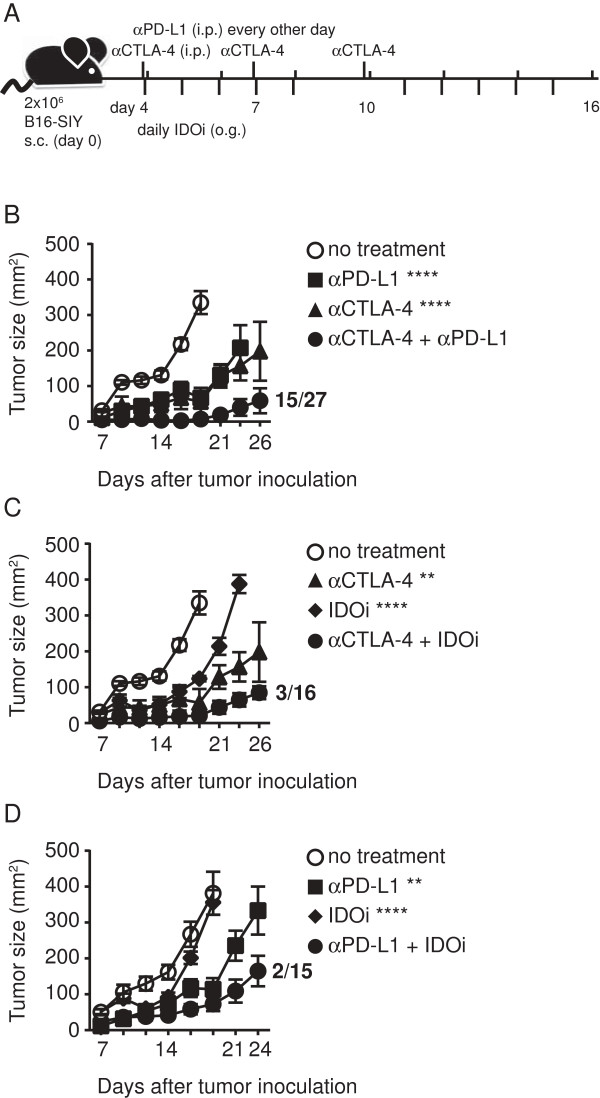
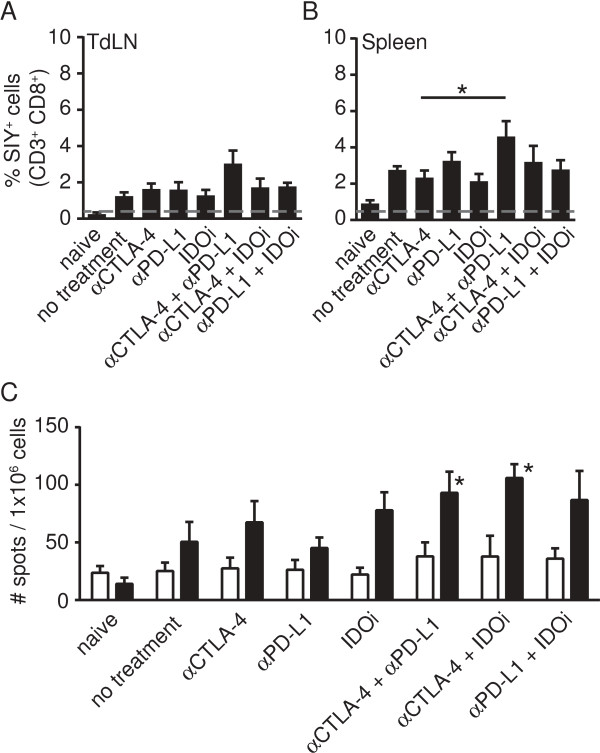
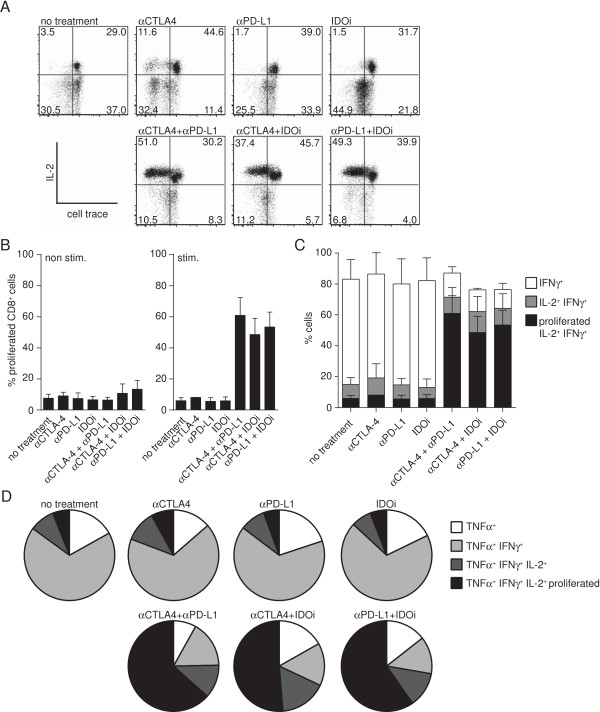
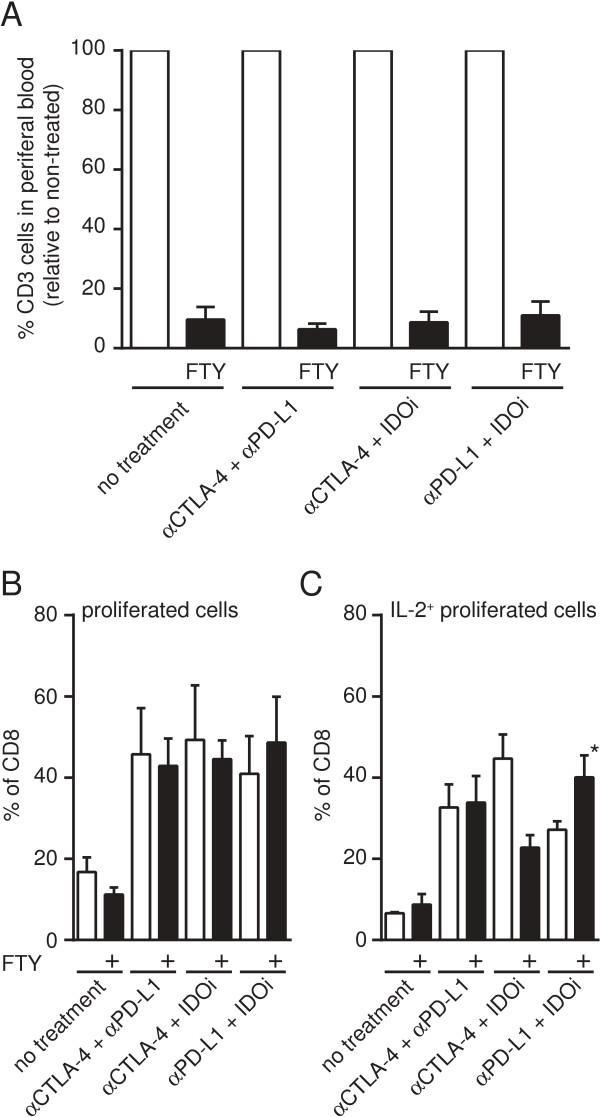
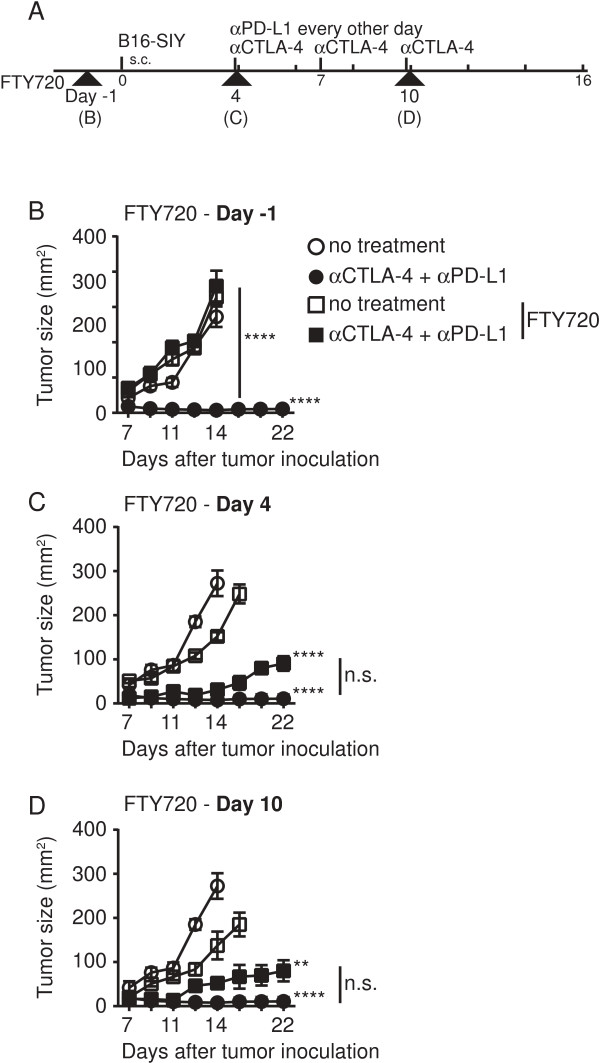
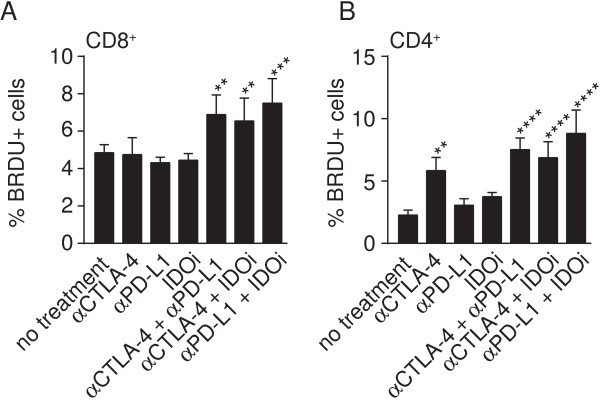
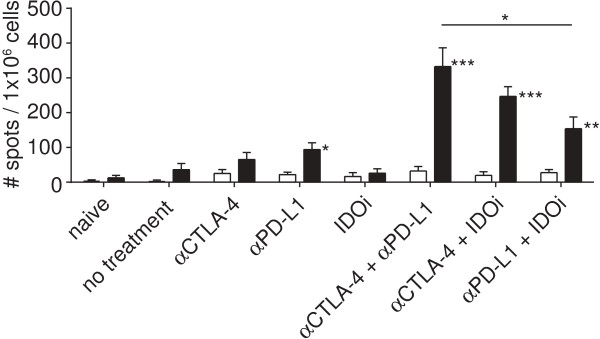
BACKGROUND: Blockade of immune inhibitory pathways is emerging as an important therapeutic modality for the treatment of cancer. Single agent treatments have partial anti-tumor activity in preclinical models and in human cancer patients. Inasmuch as the tumor microenvironment shows evidence of multiple immune inhibitory mechanisms present concurrently, it has been reasoned that combination therapies may be required for optimal therapeutic effect. METHODS: To test this notion, we utilized permutations of anti-CTLA-4 mAb, anti-PD-L1 mAb, and/or the IDO inhibitor INCB23843 in the murine B16.SIY melanoma model. RESULTS: All three combinations showed markedly improved tumor control over single treatments, with many mice achieving complete tumor rejection. This effect was seen in the absence of vaccination or adoptive T cell therapy. The mechanism of synergy was investigated to examine the priming versus effector phase of the anti-tumor immune response. Only a minimal increase in priming of anti-tumor T cells was observed at early time points in the tumor-draining lymph nodes (TdLN). In contrast, as early as three days after therapy initiation, a marked increase in the capacity of tumor-infiltrating CD8(+) T cells to produce IL-2 and to proliferate was found in all groups treated with the effective combinations. Treatment of mice with FTY720 to block new T cell trafficking from secondary lymphoid structures still enabled restoration of IL-2 production and proliferation by intratumoral T cells, and also retained most of the tumor growth control. CONCLUSIONS: Our data suggest that the therapeutic effect of these immunotherapies was mainly mediated through direct reactivation of T cells in situ. These three combinations are attractive to pursue clinically, and the ability of intratumoral CD8(+) T cells to produce IL-2 and to proliferate could be an important biomarker to integrate into clinical studies.
Overview
The claims and statistics of this paper haven’t been checked yet.
Free: it reads the open-access text and checks the first 5 claims that cite a source we can check. Create a free account to check every claim.
Integrity signals
Registry
Cites
Statistics
Figures
Verification
Claims the paper makes
The claims and statistics of this paper haven’t been checked yet.
Free: it reads the open-access text and checks the first 5 claims that cite a source we can check. Create a free account to check every claim.
Claims other papers make about this one
Each is checked against this paper’s own text: does it say what the citing paper says it does?
The source backs part of the claim, not all of it — or backs it for a different population, condition or comparison.
In the citing paper
“the endogenous AhR ligand Kyn displays pro-cancerogenic properties in a model of pre-clinical melanoma59”
From Dietary tryptophan metabolite released by intratumoral Lactobacillus reuteri facilitates immune checkpoint inhibitor treatment (2023) · cites this paper as [59]
Experimental — accuracy not yet measuredThe source backs part of the claim, not all of it — or backs it for a different population, condition or comparison.
In the citing paper
“recent studies demonstrated that DCs can be found in tumors, where they recruit T cells and stimulate tumor-reactive T cell responses locally (Spranger et al., 2014; de Mingo Pulido et al., 2018)”
From Successful Anti-PD-1 Cancer Immunotherapy Requires T Cell-Dendritic Cell Crosstalk Involving the Cytokines IFN-γ and IL-12 (2018) · cites this paper as Spranger et al., 2014
Experimental — accuracy not yet measuredIn the citing paper
“The tryptophan-metabolizing enzyme IDO inhibits T cell function, and combining IDO-blocking agents together with immune checkpoint inhibitors has shown promising results in mice and is also currently undergoing clinical trials in humans (105, 118).”
From Anti-PD-1 and Anti-CTLA-4 Therapies in Cancer: Mechanisms of Action, Efficacy, and Limitations (2018) · cites this paper as [118]
In the citing paper
“The tryptophan-metabolizing enzyme IDO inhibits T cell function, and combining IDO-blocking agents together with immune checkpoint inhibitors has shown promising results in mice and is also currently undergoing clinical trials in humans (105, 118).”
From Anti-PD-1 and Anti-CTLA-4 Therapies in Cancer: Mechanisms of Action, Efficacy, and Limitations (2018) · cites this paper as [118]
Self-check
Percentages, sums and reported differences re-computed from the paper’s own numbers.
The self-check needs the paper’s full text.
Citations
Cites
PD-1 and PD-L1 Immune Checkpoint Blockade to Treat Breast Cancer
Hartkopf, A. D., Taran, F.-A., Wallwiener, M., Walter, C. B., Krämer, B., Grischke, E.-M., & Brucker, S. Y. (2016) · Breast Care · doi:10.1159/000453569 · Cited by 30,845
Adverse Renal Effects of Immune Checkpoint Inhibitors: A Narrative Review
Wanchoo, R., Karam, S., Uppal, N. N., Barta, V. S., Deray, G., Devoe, C., Launay-Vacher, V., Jhaveri, K. D., & on behalf of Cancer and Kidney International Network Workgroup on Immune Checkpoint Inhibitors (2017) · American Journal of Nephrology · doi:10.1159/000455014 · Cited by 15,256
Improved Survival with Ipilimumab in Patients with Metastatic Melanoma
Hodi, F. S., O'Day, S. J., McDermott, D. F., Weber, R. W., Sosman, J. A., Haanen, J. B., Gonzalez, R., Robert, C., Schadendorf, D., Hassel, J. C., et al. (2010) · New England Journal of Medicine · doi:10.1056/nejmoa1003466 · Cited by 15,155 · cited 1×
“The first successful immunotherapy aiming to block a negative regulatory pathway on T cells is the anti-CTLA-4 (Cytotoxic T-Lymphocyte Antigen-4) mAb ipilimumab, which was approved by the FDA (Food and Drug Administration) in 2011 for treatment of patients with advanced melanoma [13].”
BackgroundSafety, activity, and immune correlates of anti–PD-1 antibody in cancer
Topalian, S. L., Hodi, F. S., Brahmer, J. R., Gettinger, S. N., Smith, D. C., McDermott, D. F., Powderly, J. D., Carvajal, R. D., Sosman, J. A., Atkins, M. B., et al. (2012) · New England Journal of Medicine · doi:10.1056/nejmoa1200690 · Cited by 12,628 · cited 1×
“Early clinical results have been reported with anti-PD-1 and anti-PD-L1 mAbs [14], IDO inhibitors [15], and Treg depletion targeting surface CD25 [16,17].”
BackgroundCuriel, T. J., Coukos, G., Zou, L., Alvarez, X., Cheng, P., Mottram, P., Evdemon-Hogan, M., Conejo-Garcia, J. R., Zhang, L., Burow, M., et al. (2004) · Nature Medicine · doi:10.1038/nm1093 · Cited by 5,151 · cited 1×
“These are expression of the ligand PD-L1 (programmed death-ligand 1), which can engage the inhibitory receptor PD-1 (programmed death-receptor 1) on activated T cells; presence of the tryptophan-catabolizing enzyme indoleamine-2,3dioxygenase (IDO), which exploits the exquisite sensitivity of T cells to tryptophan depl…”
BackgroundTumor-associated B7-H1 promotes T-cell apoptosis: A potential mechanism of immune evasion
Dong, H., Strome, S. E., Salomao, D. R., Tamura, H., Hirano, F., Flies, D. B., Roche, P. C., Lu, J., Zhu, G., Tamada, K., et al. (2002) · Nature Medicine · doi:10.1038/nm730 · Cited by 5,025
The immune contexture in human tumours: impact on clinical outcome
Fridman, W. H., Pagès, F., Sautès-Fridman, C., & Galon, J. (2012) · Nature reviews. Cancer · doi:10.1038/nrc3245 · Cited by 4,981 · cited 1×
“While most of these analyses have been carried out on biopsy material from patients with advanced melanoma, similar results are emerging in other solid tumors, including lung cancer, ovarian cancer, colorectal cancer, breast cancer, and head and neck cancer [3-6].”
ResultNivolumab plus Ipilimumab in Advanced Melanoma
Wolchok, J. D., Kluger, H., Callahan, M. K., Postow, M. A., Rizvi, N. A., Lesokhin, A. M., Segal, N. H., Ariyan, C. E., Gordon, R.-A., Reed, K., et al. (2013) · New England Journal of Medicine · doi:10.1056/nejmoa1302369 · Cited by 4,230 · cited 1×
“Phase I clinical trial development of the anti-CTLA-4 + anti-PD-1 combination has already been pursued in advanced melanoma, with profound clinical response rates observed that appear superior to single agent activity based on historical controls [47,49].”
BackgroundInnate and adaptive immune cells in the tumor microenvironment
Gajewski, T. F., Schreiber, H., & Fu, Y.-X. (2013) · Nature Immunology · doi:10.1038/ni.2703 · Cited by 4,148
Self-citationIwai, Y., Ishida, M., Tanaka, Y., Okazaki, T., Honjo, T., & Minato, N. (2002) · Proceedings of the National Academy of Sciences · doi:10.1073/pnas.192461099 · Cited by 3,203 · cited 2×
“yet significant impact on tumor growth kinetics and to improve tumor-specific immune responses in various mouse models in vivo [28-33].”
Background
Cited by
Items 501–562 of 562
Novel Targets in Development for Advanced Renal Cell Carcinoma
Thapa, B., Nelson, A. A., & Kilari, D. (2023) · Springer eBooks · doi:10.1007/978-3-031-40901-1_14 · Cited by 1
Enhancing the Efficacy of Checkpoint Blockade Through Combination Therapies
Juneja, V. R., LaFleur, M. W., Manguso, R. T., & Sharpe, A. H. (2016) · Springer eBooks · doi:10.1007/978-3-319-29827-6_1 · Cited by 3
Prendergast, G. C., Malachowski, W. J., Mondal, A., Scherle, P., & Muller, A. J. (2017) · Springer eBooks · doi:10.1007/978-3-319-62431-0_17 · Cited by 1
Self-citationRitchey, A. W., Kuban, J. D., & Sheth, R. A. (2018) · IntechOpen eBooks · doi:10.5772/intechopen.72275 · Cited by 1
Bender, M. J., McPherson, A. C., Phelps, C. M., Rana, M., Pandey, S., Shapira, J. H., Gocher, A. M., Mullett, S. J., Wendell, S. L., Davar, D., et al. (2022) · Research Square · doi:10.21203/rs.3.rs-1633600/v1 · Cited by 1
Editorial: Heme proteins: key players in the regulation of immune responses
Volpi, C., den Eynde, B. J. V., & Orabona, C. (2023) · Frontiers in Immunology · doi:10.3389/fimmu.2023.1263384 · Cited by 1
“Unfortunately, while a large piece of pre-clinical evidence supported the use of IDO1 inhibition in the context of immunotherapy in solid tumors (19, 20), the treatment of melanoma patients with the association pembrolizumab/epacadostat failed to improve progression-free survival compared to the monotherapy with pembr…”
Current condition and issues of animal evaluation models for cancer immunotherapy
Mie, M., & Takahashi, T. (2016) · Folia Pharmacologica Japonica · doi:10.1254/fpj.148.144
PD1 and PD-L1 Immune Checkpoint Inhibitors in Gastrointestinal Cancer
Pectasides, E., & McDermott, D. F. (2017) · Springer eBooks · doi:10.1007/978-3-319-43063-8_6 · Cited by 2
Immune Checkpoint Blockade: Subjugation of the Masses
Lussier, D. M., Appel, N., Johnson, J. L., & Blattman, J. N. (2017) · InTech eBooks · doi:10.5772/67687
“The combination of anti-PD-L1 or anti-PD-1 and anti-CTLA-4 mAb improved tumor control, increased IL-2 production and proliferation of CD8+ TILs, and increased the ratio of intratumoral CD8+ T cells to Tregs in the B16 melanoma mouse model [34, 38].”
BackgroundOvercoming Immune Suppression in the Tumor Microenvironment: Implications for Multi-modal Therapy
Johnson, T. S., & Munn, D. H. (2017) · Springer eBooks · doi:10.1007/978-3-319-43486-5_2
Medrano, R. F. V. (2018) · Digital Library of Theses and Dissertations (Universidade de São Paulo) · doi:10.11606/t.5.2018.tde-06042018-122815
RFA Lowers IDO Activity and Slows Non-Ablated Lesion Growth in Multifocal Hepatic CarcinomaPreprint
Wang, K., Mao, J., Mao, S., Wang, X., Tan, W., & Dong, J. (2021) · Research Square · doi:10.21203/rs.3.rs-653609/v1
Yanai, Y., Kosaka, T., Mikami, S., Hongo, H., 洋太, 安., Takeda, T., Matsumoto, K., Miyauchi, J., Kitano, S., & Oya, M. (2021) · European Urology · doi:10.1016/s0302-2838(21)01367-1
Sheen, J. H., Yoo, J., Kim, T., Lee, S.-J., & Han, J. (2022) · Research Square · doi:10.21203/rs.3.rs-986280/v1
Buesking, A. W., Mayes, P. A., & Combs, A. P. (2021) · Wiley eBooks · doi:10.1002/0471266949.bmc272
Eisenlohr, L. C., & Cosma, G. L. (2018) · Faculty Opinions – Post-Publication Peer Review of the Biomedical Literature · doi:10.3410/f.726981821.793545053
Celebrating a decade of the Journal for ImmunoTherapy of Cancer
Romero, P. J., Gulley, J. L., Hwu, P., Dean, M., & Million‐Weaver, S. (2022) · Journal for ImmunoTherapy of Cancer · doi:10.1136/jitc-2022-005207
Himes, J. E., Wisdom, A. J., Wang, L., Shepard, S. J., Daniel, A. R., Williams, N. T., Luo, L., Ma, Y., Mowery, Y. M., & Kirsch, D. G. (2023) · bioRxiv (Cold Spring Harbor Laboratory) · doi:10.1101/2023.04.04.535550
Modulating T cell metabolism to improve T cell therapy
Li, Y., Hung, S.-H., Singh, S., & Yee, C. (2024) · Elsevier eBooks · doi:10.1016/b978-0-443-13827-0.00008-1
Dongsar, T. T., Bajaj, K., Dongsar, T. S., Ali, A., Hasan, N., & Ahmad, F. J. (2025) · Current Cancer Drug Targets · doi:10.2174/0115680096349248250113093025
Unraveling the role of specificity protein 1 in gliomas: pathophysiology and clinical implications
Naseri, A., Razi, S., & Rezaei, N. (2025) · Clinical & Translational Oncology · doi:10.1007/s12094-025-04058-x
“Different cells, such as fibroblasts and immune cells, signaling molecules, vessels, and structures, including the ECM, organize the tumor immune microenvironment (TIME) [12, 50–52].”
Necchi, A., Van der Heijden, M. S., Trukhin, D. V., Peer, A., Gurney, H., Alekseev, B. Y., Parnis, F. X., Leibowitz, R., De Santis, M., Grivas, P. D., et al. (2024) · Figshare · doi:10.6084/m9.figshare.26377974
Çiçin, İ., Plimack, E. R., Gurney, H., Leibowitz, R., Alekseev, B. Y., Parnis, F. X., Peer, A., Necchi, A., Joaquim Bellmunt, B., Nishiyama, H., et al. (2024) · Figshare · doi:10.6084/m9.figshare.26378124
Çiçin, İ., Plimack, E. R., Gurney, H., Leibowitz, R., Alekseev, B. Y., Parnis, F. X., Peer, A., Necchi, A., Joaquim Bellmunt, B., Nishiyama, H., et al. (2024) · Figshare · doi:10.6084/m9.figshare.26377987
Necchi, A., Van der Heijden, M. S., Trukhin, D. V., Peer, A., Gurney, H., Alekseev, B. Y., Parnis, F. X., Leibowitz, R., De Santis, M., Grivas, P. D., et al. (2024) · Figshare · doi:10.6084/m9.figshare.26378125
Montagna, D. R., Duarte, A., Chiarella, P., Rearte, B., Bustuoabad, O. D., Vermeulen, M., & Ruggiero, R. A. (2022) · Figshare · doi:10.6084/m9.figshare.20430377
Montagna, D. R., Duarte, A., Chiarella, P., Rearte, B., Bustuoabad, O. D., Vermeulen, M., & Ruggiero, R. A. (2022) · Figshare · doi:10.6084/m9.figshare.20430380
Lara, P. N., Villanueva, L., Ibanez, C., Erman, M., Lee, J. L., Heinrich, D., Lipatov, O. N., Gedye, C. A., Gokmen, E., Acevedo, A., et al. (2024) · Figshare · doi:10.6084/m9.figshare.26377969
Gadakh, S., Aghav, B. D., Teraiya, N., & Kamdar, J. H. (2026) · Bioorganic Chemistry · doi:10.1016/j.bioorg.2026.109738
戸次, 鎮. (2022) · Institutional Repositories DataBase (IRDB)
La souris humanisée : modèle d'étude de l'immunothérapie anti-cancer
Rochère, P. D. L. (2018) · theses.fr (ABES) · doi:10.70675/62c63415zab1az40e4z8c1fz0b5580505c4f · Cited by 1
Il-26 : une cytokine pro-inflammatoire stimulant les cellules immunitaires innées myéloïdes
Poli, C. (2017) · theses.fr (ABES) · doi:10.70675/154b0002zc293z47a9z8bfbz9909e15c15e6
Effect of nasopharyngeal carcinoma derived exosomes on the induction of tolerogenic dendritic cells
Renaud, S. (2018) · theses.fr (ABES) · doi:10.70675/41db8e5ez4572z4453zb3efz2631b3820222
Rôle de la Neuropiline-1 dans les fonctions effectrices des lymphocytes T CD8 antitumoraux
Leclerc, M. (2018) · theses.fr (ABES) · doi:10.70675/13aee211zad7bz4b07z9a5fz29b15750d99c
Rôles du NAD dans la plasticité cellulaire cancéreuse
Gouasmi, R. (2025) · theses.fr (ABES) · doi:10.70675/4c8cef97z8e4fz4245z8588z8d740f2b17fe
Wang, J., Wang, Z., Zhao, W., Chen, H., Lu, B., Shao, Y., Zheng, Y., Liu, S., Wang, M., Fang, L., et al. (2026) · Journal for ImmunoTherapy of Cancer · doi:10.1136/jitc-2026-015052
“Collectively, these results indicate that Ad-VISTA/CAIX potently suppresses lung metastasis by augmenting tumor-specific multifunctional CD8 + T-cell immunity.”
Biomarker study of pembrolizumab in patients with advanced rare cancers
Naing, A., Li, X., Wang, Q., Tian, X. J., Sabir, S. H., Bhosale, P., Derbala, M. H., Stephen, B., Xu, M., Hajjar, J., et al. (2026) · Cell Reports Medicine · doi:10.1016/j.xcrm.2026.102827
Crosstalk In: crosstalk-aware inference of tumor microenvironment cell infiltration
Yi, Q., Yuan, J., Ye, Z., Xu, P., & Liu, W. (2026) · Journal of Translational Medicine · doi:10.1186/s12967-026-08478-3
“We find that aDCs are enriched and positively associated with response in our cohort, which aligns with the finding by Spranger et al. that functional dendritic cell activation is essential for effective antigen presentation and T-cell priming during immune-checkpoint blockade [48].”
Atomic degradation: chemical design strategies and immunotherapeutic mechanisms of radio-PROTACs
Varol, T. Ö., & Varol, M. (2026) · Annals of Nuclear Medicine · doi:10.1007/s12149-026-02254-5
Th1-adapted regulatory T cells in tumor immunity and inflammatory diseases
Kuratani, A., Okamoto, M., Kobayashi, T., & Yamamoto, M. (2026) · International Immunology · doi:10.1093/intimm/dxag038
Ameh, S., Theisen, D. J., Thapa, M., Turner, J. S., Rangarajan, A., Nelson, C. A., Schmitz, A. J., Song, Y., Medrano, R. F. V., Arthur, C. D., et al. (2026) · Cancer Immunology Research · doi:10.1158/2326-6066.cir-25-1652 · Cited by 1
Ou, X., Li, Y., Zhan, M., Tao, T., & Chen, P. (2026) · Medical Oncology · doi:10.1007/s12032-026-03343-1
Microneedle technology for antitumor therapy
Peng, S., Quan, G., & Pan, X. (2026) · Elsevier eBooks · doi:10.1016/b978-0-443-45544-5.00002-6
Wang, Z., Liu, M., Bao, W., Li, X., Ma, Z., Liu, H., & Tian, Z. (2026) · Biomaterials · doi:10.1016/j.biomaterials.2026.124657
BindingDB (2020) · UC San Diego · doi:10.7270/q28k7d3x
BindingDB (2020) · UC San Diego · doi:10.7270/q2m0481g
Metadata
- Authors
- Spranger, S., Koblish, H. K., Horton, B., Scherle, P. A., Newton, R., & Gajewski, T. F.
- Affiliations
- University of Chicago (US)
- Incyte (United States) (US)
- Corresponding author
- Gajewski, Thomas F
- ORCID
- Venue
- Journal for ImmunoTherapy of Cancer
- Publisher
- BMJ
- Published
- 2014
- Volume
- 2
- Issue
- 1
- Pages
- 3
- ISSN
- 2051-1426 (ISSN-L)
- PMC
- PMC4019906
- OpenAlex
- W2113906692
- Cited by
- 552
- References
- 55
- Citations by year
- 2026: 17 · 2025: 23 · 2024: 32 · 2023: 34 · 2022: 46 · 2021: 63 · 2020: 68 · 2019: 54 · 2018: 64 · 2017: 56 · 2016: 54 · 2015: 33 · 2014: 7
- FWCI
- 24.15
- Type
- journal article
- Language
- en
- Open access
- gold
- doi.org
- Locations
- Journal for ImmunoTherapy of Cancer (publishedVersion)
- Europe PMC (PubMed Central) (publishedVersion, cc-by)
- PubMed Central (publishedVersion, cc-by)
- PubMed (publishedVersion)
- Funders
- Incyte
- Deutsche Forschungsgemeinschaft
- Topics
- Health Sciences › Medicine › Oncology › Cancer Immunotherapy and Biomarkers
- Life Sciences › Immunology and Microbiology › Immunology › Immunotherapy and Immune Responses
- Life Sciences › Immunology and Microbiology › Immunology › T-cell and B-cell Immunology
- Keywords
- tumor rejection, CTLA-4 blockade, PD-1/PD-L1 blockade, IDO inhibition, combination immunotherapy, IL-2 production, CD8+ T cell proliferation, tumor-infiltrating T cells, tumor microenvironment, fingolimod, T cell migration, tumor-draining lymph nodes, antitumor immunity
About these checks
Registry, retraction, Cites and statistics results are computed, not judged, with one exception: a printed reference that no index lists is read once by a model before it counts as a citation error. Claims are extracted by a model and kept only when their quote appears verbatim in the text; each cited source is then checked, with a model’s help, for whether it says what the claim relies on. Those verdicts can be wrong — read the claim’s quote and the cited source before relying on one.
Statistics and arithmetic are recomputed, not judged.
Confidence bands are shown only for fields calibrated on our annotated test set. None is calibrated yet, so no band is shown.
What counts as a claim ›How we measure confidence ›How we check this ›
Are you an author, or do you see a problem with this page? Request a review
Data sources
Bibliographic data: Semantic Scholar, OpenAlex, Crossref.
Contains information from the Semantic Scholar Academic Graph Datasets, made available under the ODC Attribution License (ODC-BY 1.0).
Semantic Scholar’s data is described in: Kinney, R., et al. (2023). The Semantic Scholar Open Data Platform. arXiv:2301.10140.
