

Mechanism of tumor rejection with doublets of CTLA-4, PD-1/PD-L1, or IDO blockade involves restored IL-2 production and proliferation of CD8(+) T cells directly within the tumor microenvironment
Open accessThe DOI matches its Crossref record; 55 of the 55 references it cites were found in a registry or an index.
Abstract
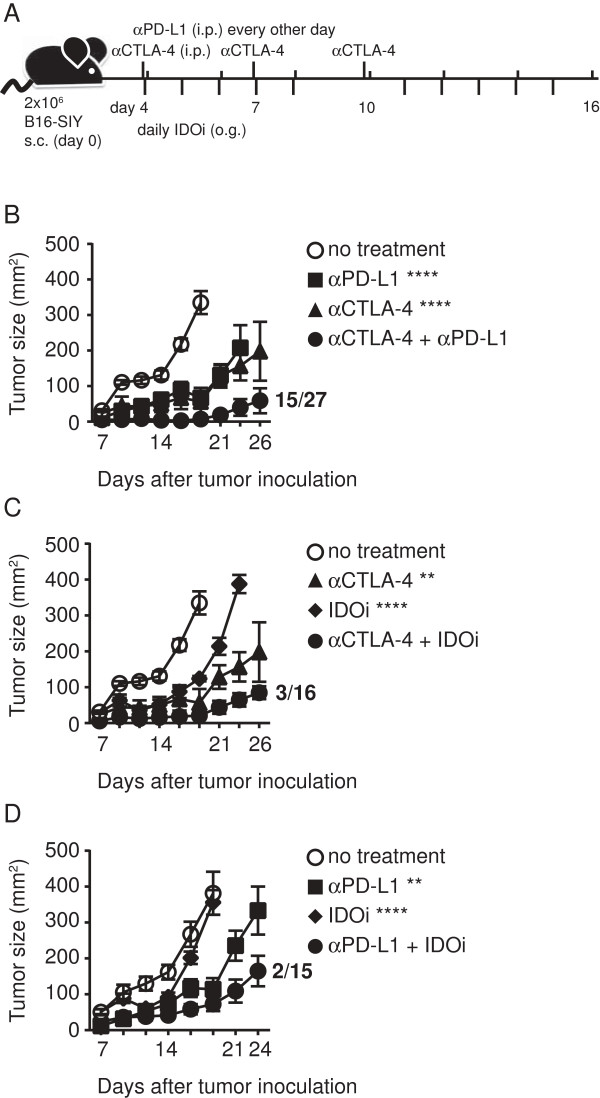
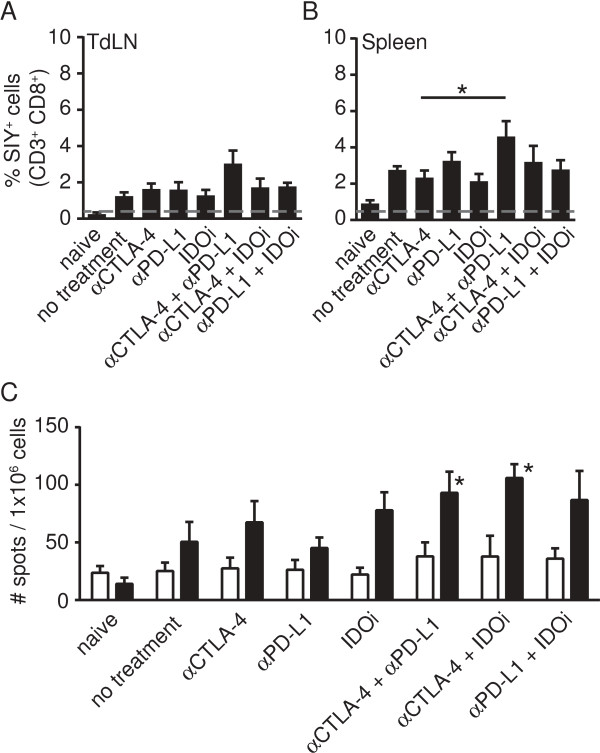
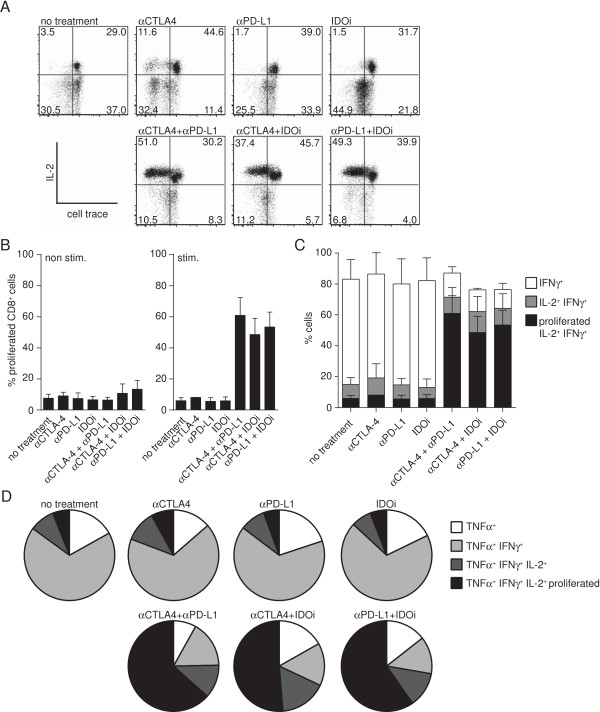
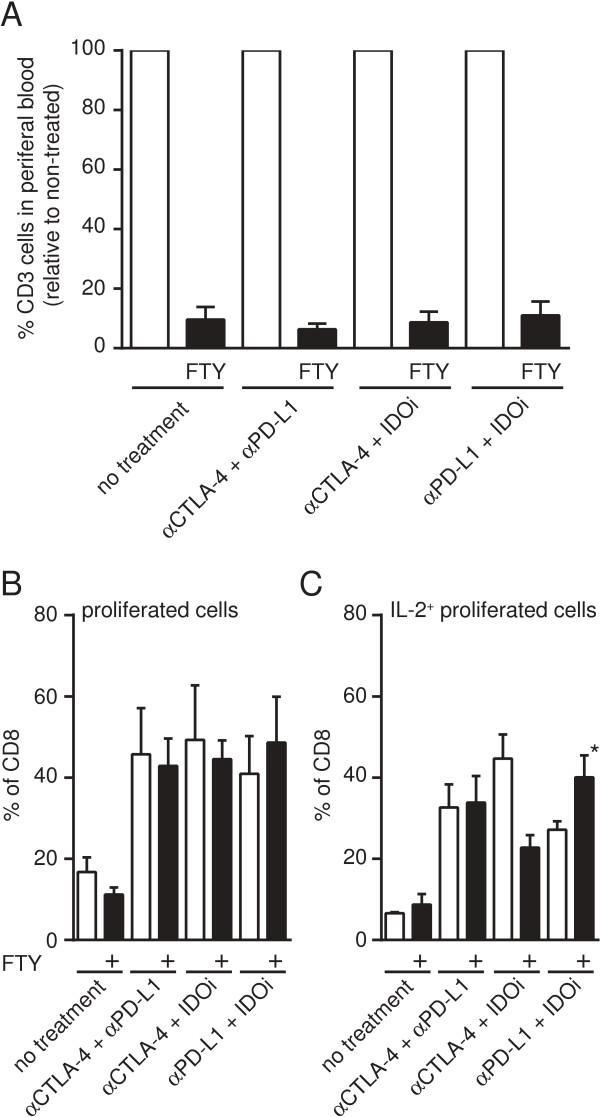
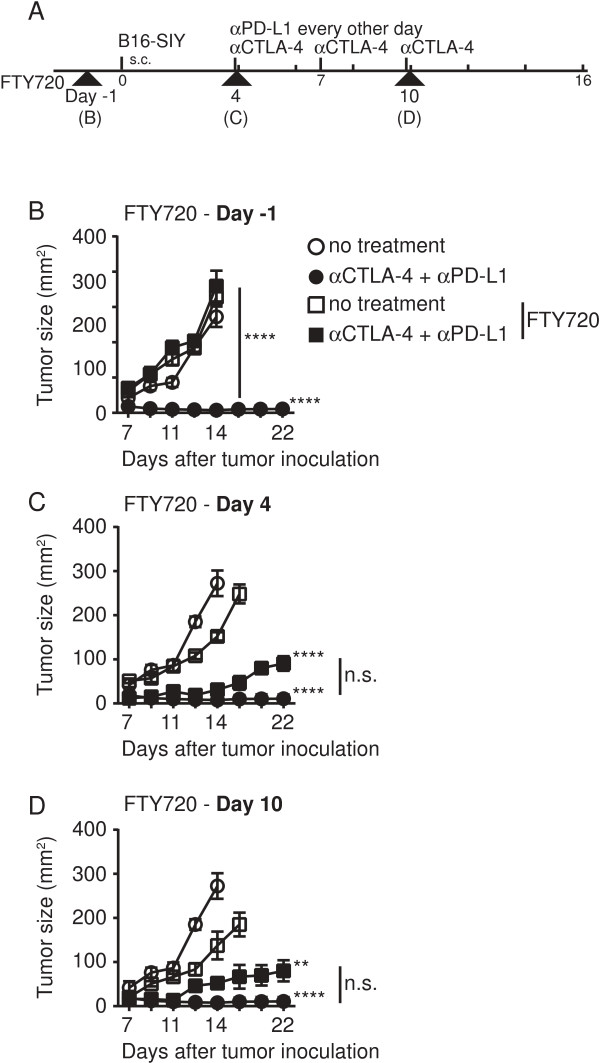
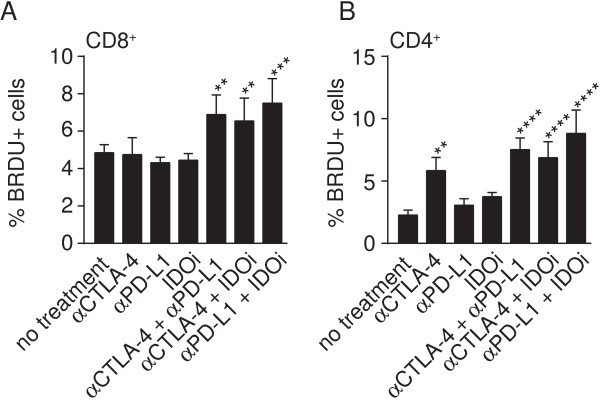
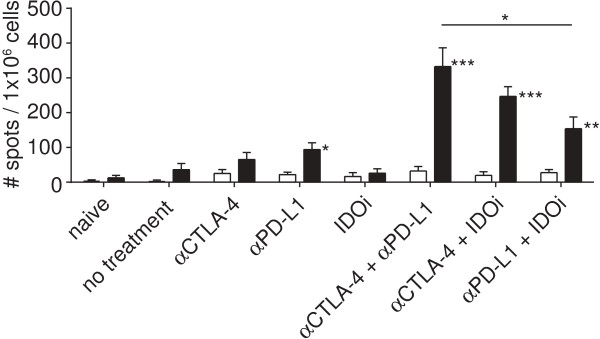
BACKGROUND: Blockade of immune inhibitory pathways is emerging as an important therapeutic modality for the treatment of cancer. Single agent treatments have partial anti-tumor activity in preclinical models and in human cancer patients. Inasmuch as the tumor microenvironment shows evidence of multiple immune inhibitory mechanisms present concurrently, it has been reasoned that combination therapies may be required for optimal therapeutic effect. METHODS: To test this notion, we utilized permutations of anti-CTLA-4 mAb, anti-PD-L1 mAb, and/or the IDO inhibitor INCB23843 in the murine B16.SIY melanoma model. RESULTS: All three combinations showed markedly improved tumor control over single treatments, with many mice achieving complete tumor rejection. This effect was seen in the absence of vaccination or adoptive T cell therapy. The mechanism of synergy was investigated to examine the priming versus effector phase of the anti-tumor immune response. Only a minimal increase in priming of anti-tumor T cells was observed at early time points in the tumor-draining lymph nodes (TdLN). In contrast, as early as three days after therapy initiation, a marked increase in the capacity of tumor-infiltrating CD8(+) T cells to produce IL-2 and to proliferate was found in all groups treated with the effective combinations. Treatment of mice with FTY720 to block new T cell trafficking from secondary lymphoid structures still enabled restoration of IL-2 production and proliferation by intratumoral T cells, and also retained most of the tumor growth control. CONCLUSIONS: Our data suggest that the therapeutic effect of these immunotherapies was mainly mediated through direct reactivation of T cells in situ. These three combinations are attractive to pursue clinically, and the ability of intratumoral CD8(+) T cells to produce IL-2 and to proliferate could be an important biomarker to integrate into clinical studies.
Overview
The claims and statistics of this paper haven’t been checked yet.
Free: it reads the open-access text and checks the first 5 claims that cite a source we can check. Create a free account to check every claim.
Integrity signals
Registry
Cites
Statistics
Figures
Verification
Claims the paper makes
The claims and statistics of this paper haven’t been checked yet.
Free: it reads the open-access text and checks the first 5 claims that cite a source we can check. Create a free account to check every claim.
Claims other papers make about this one
Each is checked against this paper’s own text: does it say what the citing paper says it does?
The source backs part of the claim, not all of it — or backs it for a different population, condition or comparison.
In the citing paper
“the endogenous AhR ligand Kyn displays pro-cancerogenic properties in a model of pre-clinical melanoma59”
From Dietary tryptophan metabolite released by intratumoral Lactobacillus reuteri facilitates immune checkpoint inhibitor treatment (2023) · cites this paper as [59]
Experimental — accuracy not yet measuredThe source backs part of the claim, not all of it — or backs it for a different population, condition or comparison.
In the citing paper
“recent studies demonstrated that DCs can be found in tumors, where they recruit T cells and stimulate tumor-reactive T cell responses locally (Spranger et al., 2014; de Mingo Pulido et al., 2018)”
From Successful Anti-PD-1 Cancer Immunotherapy Requires T Cell-Dendritic Cell Crosstalk Involving the Cytokines IFN-γ and IL-12 (2018) · cites this paper as Spranger et al., 2014
Experimental — accuracy not yet measuredIn the citing paper
“The tryptophan-metabolizing enzyme IDO inhibits T cell function, and combining IDO-blocking agents together with immune checkpoint inhibitors has shown promising results in mice and is also currently undergoing clinical trials in humans (105, 118).”
From Anti-PD-1 and Anti-CTLA-4 Therapies in Cancer: Mechanisms of Action, Efficacy, and Limitations (2018) · cites this paper as [118]
In the citing paper
“The tryptophan-metabolizing enzyme IDO inhibits T cell function, and combining IDO-blocking agents together with immune checkpoint inhibitors has shown promising results in mice and is also currently undergoing clinical trials in humans (105, 118).”
From Anti-PD-1 and Anti-CTLA-4 Therapies in Cancer: Mechanisms of Action, Efficacy, and Limitations (2018) · cites this paper as [118]
Self-check
Percentages, sums and reported differences re-computed from the paper’s own numbers.
The self-check needs the paper’s full text.
Citations
Cites
PD-1 and PD-L1 Immune Checkpoint Blockade to Treat Breast Cancer
Hartkopf, A. D., Taran, F.-A., Wallwiener, M., Walter, C. B., Krämer, B., Grischke, E.-M., & Brucker, S. Y. (2016) · Breast Care · doi:10.1159/000453569 · Cited by 30,845
Adverse Renal Effects of Immune Checkpoint Inhibitors: A Narrative Review
Wanchoo, R., Karam, S., Uppal, N. N., Barta, V. S., Deray, G., Devoe, C., Launay-Vacher, V., Jhaveri, K. D., & on behalf of Cancer and Kidney International Network Workgroup on Immune Checkpoint Inhibitors (2017) · American Journal of Nephrology · doi:10.1159/000455014 · Cited by 15,256
Improved Survival with Ipilimumab in Patients with Metastatic Melanoma
Hodi, F. S., O'Day, S. J., McDermott, D. F., Weber, R. W., Sosman, J. A., Haanen, J. B., Gonzalez, R., Robert, C., Schadendorf, D., Hassel, J. C., et al. (2010) · New England Journal of Medicine · doi:10.1056/nejmoa1003466 · Cited by 15,155 · cited 1×
“The first successful immunotherapy aiming to block a negative regulatory pathway on T cells is the anti-CTLA-4 (Cytotoxic T-Lymphocyte Antigen-4) mAb ipilimumab, which was approved by the FDA (Food and Drug Administration) in 2011 for treatment of patients with advanced melanoma [13].”
BackgroundSafety, activity, and immune correlates of anti–PD-1 antibody in cancer
Topalian, S. L., Hodi, F. S., Brahmer, J. R., Gettinger, S. N., Smith, D. C., McDermott, D. F., Powderly, J. D., Carvajal, R. D., Sosman, J. A., Atkins, M. B., et al. (2012) · New England Journal of Medicine · doi:10.1056/nejmoa1200690 · Cited by 12,628 · cited 1×
“Early clinical results have been reported with anti-PD-1 and anti-PD-L1 mAbs [14], IDO inhibitors [15], and Treg depletion targeting surface CD25 [16,17].”
BackgroundCuriel, T. J., Coukos, G., Zou, L., Alvarez, X., Cheng, P., Mottram, P., Evdemon-Hogan, M., Conejo-Garcia, J. R., Zhang, L., Burow, M., et al. (2004) · Nature Medicine · doi:10.1038/nm1093 · Cited by 5,151 · cited 1×
“These are expression of the ligand PD-L1 (programmed death-ligand 1), which can engage the inhibitory receptor PD-1 (programmed death-receptor 1) on activated T cells; presence of the tryptophan-catabolizing enzyme indoleamine-2,3dioxygenase (IDO), which exploits the exquisite sensitivity of T cells to tryptophan depl…”
BackgroundTumor-associated B7-H1 promotes T-cell apoptosis: A potential mechanism of immune evasion
Dong, H., Strome, S. E., Salomao, D. R., Tamura, H., Hirano, F., Flies, D. B., Roche, P. C., Lu, J., Zhu, G., Tamada, K., et al. (2002) · Nature Medicine · doi:10.1038/nm730 · Cited by 5,025
The immune contexture in human tumours: impact on clinical outcome
Fridman, W. H., Pagès, F., Sautès-Fridman, C., & Galon, J. (2012) · Nature reviews. Cancer · doi:10.1038/nrc3245 · Cited by 4,981 · cited 1×
“While most of these analyses have been carried out on biopsy material from patients with advanced melanoma, similar results are emerging in other solid tumors, including lung cancer, ovarian cancer, colorectal cancer, breast cancer, and head and neck cancer [3-6].”
ResultNivolumab plus Ipilimumab in Advanced Melanoma
Wolchok, J. D., Kluger, H., Callahan, M. K., Postow, M. A., Rizvi, N. A., Lesokhin, A. M., Segal, N. H., Ariyan, C. E., Gordon, R.-A., Reed, K., et al. (2013) · New England Journal of Medicine · doi:10.1056/nejmoa1302369 · Cited by 4,230 · cited 1×
“Phase I clinical trial development of the anti-CTLA-4 + anti-PD-1 combination has already been pursued in advanced melanoma, with profound clinical response rates observed that appear superior to single agent activity based on historical controls [47,49].”
BackgroundInnate and adaptive immune cells in the tumor microenvironment
Gajewski, T. F., Schreiber, H., & Fu, Y.-X. (2013) · Nature Immunology · doi:10.1038/ni.2703 · Cited by 4,148
Self-citationIwai, Y., Ishida, M., Tanaka, Y., Okazaki, T., Honjo, T., & Minato, N. (2002) · Proceedings of the National Academy of Sciences · doi:10.1073/pnas.192461099 · Cited by 3,203 · cited 2×
“yet significant impact on tumor growth kinetics and to improve tumor-specific immune responses in various mouse models in vivo [28-33].”
Background
Cited by
Items 201–300 of 562
Almawash, S. (2025) · Cancers · doi:10.3390/cancers17050880 · Cited by 80
Recent success and limitations of immune checkpoint inhibitors for cancer: A lesson from melanoma
Ottaviano, M., De Placido, S., & Ascierto, P. A. (2019) · Virchows Archiv · doi:10.1007/s00428-019-02538-4 · Cited by 57
IDO as a drug target for cancer immunotherapy: recent developments in IDO inhibitors discovery
Qian, S., Zhang, M., Chen, Q., He, Y., Wang, W., & Wang, Z. (2016) · RSC Advances · doi:10.1039/c5ra25046c · Cited by 61
Redman, J. M., Steinberg, S. M., & Gulley, J. L. (2018) · Journal for ImmunoTherapy of Cancer · doi:10.1186/s40425-018-0409-8 · Cited by 61
Regulation of myeloid cells by activated T cells determines the efficacy of PD-1 blockade
Eissler, N., Mao, Y., Brodin, D., Reuterswärd, P., Andersson Svahn, H., Johnsen, J. I., Kiessling, R., & Kogner, P. (2016) · OncoImmunology · doi:10.1080/2162402x.2016.1232222 · Cited by 60
Shields, B. D., Koss, B. S., Taylor, E. M., Storey, A. J., West, K. L., Byrum, S. D., Mackintosh, S. G., Edmondson, R., Mahmoud, F. A., Shalin, S. C., et al. (2019) · Cancer Research · doi:10.1158/0008-5472.can-18-1722 · Cited by 69
“It appears T-cell effector activity, Treg behavior, and APC function seem to be more relevant factors in anti-melanoma activity than the percent of immune cells residing within the tumor at endpoint (44).”
TCR-sequencing in cancer and autoimmunity: barcodes and beyond
Pauken, K. E., Lagattuta, K. A., Lu, B. Y., Lucca, L. E., DAUD, A. I., Hafler, D. A., Kluger, H. M., Raychaudhuri, S., & Sharpe, A. H. (2022) · Trends in Immunology · doi:10.1016/j.it.2022.01.002 · Cited by 63
Ipilimumab Combined with Nivolumab: A Standard of Care for the Treatment of Advanced Melanoma?
Carlino, M. S., & Long, G. V. (2016) · Clinical Cancer Research · doi:10.1158/1078-0432.ccr-15-2944 · Cited by 59
“IDO1 (indoleamine 2,3 dioxygenase 1) is overexpressed in many cancers and suppresses immune responses, with preclinical evidence of synergy between IDO1 inhibition and PD-1 blockade (34).”
Combination Immunotherapy: Taking Cancer Vaccines to the Next Level
Grenier, J. M., Yeung, S. T., & Khanna, K. M. (2018) · Frontiers in Immunology · doi:10.3389/fimmu.2018.00610 · Cited by 58
“They also express CTLA-4 which can outcompete receptors on conventional T cells for interactions with antigen presenting cells (69, 70).”
BackgroundInfluentialAnti-Tumor Activity and Immunotherapeutic Potential of a Bisphosphonate Prodrug
Tanaka, Y., Iwasaki, M., Murata‐Hirai, K., Matsumoto, K., Hayashi, K., Okamura, H., Sugie, T., Minato, N., Morita, C. T., & Toi, M. (2017) · Scientific Reports · doi:10.1038/s41598-017-05553-0 · Cited by 57
Salama, A. K. S., & Moschos, S. J. (2016) · Annals of Oncology · doi:10.1093/annonc/mdw534 · Cited by 57
Indoleamine Dioxygenase Inhibitors: Clinical Rationale and Current Development
Zhu, M. M. T., Dancsok, A. R., & Nielsen, T. O. (2019) · Current Oncology Reports · doi:10.1007/s11912-019-0750-1 · Cited by 55
“the combination of anti-CTLA-4 and anti-PD-L1 therapy induced more complete responders than doublet therapies with epacadostat plus either anti-CTLA-4 or anti-PD-L1, undermining the relative value of IDO-1 inhibitors in combination therapies [11].”
BackgroundInfluentialXu, J., Saklatvala, R., Mittal, S., Deshmukh, S., & Procopio, A. (2020) · Advanced Science · doi:10.1002/advs.201903394 · Cited by 56
Yu, Y., Liang, H., Fang, X., Zhang, S., Xing, Z., Shi, L., Kuang, C., Seliger, B., & Yang, Q. (2021) · Journal of Experimental & Clinical Cancer Research · doi:10.1186/s13046-021-01847-4 · Cited by 57
The Innate Immune Signalling Pathways: Turning RIG-I Sensor Activation against Cancer
Iurescia, S., Fioretti, D., & Rinaldi, M. (2020) · Cancers · doi:10.3390/cancers12113158 · Cited by 60
Heterodimeric IL-15 in Cancer Immunotherapy
Bergamaschi, C., Stravokefalou, V., Stellas, D., Karaliota, S., Felber, B. K., & Pavlakis, G. N. (2021) · Cancers · doi:10.3390/cancers13040837 · Cited by 58
Metastatic melanoma and immunotherapy
Herzberg, B., & Fisher, D. E. (2016) · Clinical Immunology · doi:10.1016/j.clim.2016.07.006 · Cited by 60
“prevent autoimmunity in the periphery [44-47].”
Ascierto, P. A., Atkins, M. B., Bifulco, C. B., Botti, G., Cochran, A. J., Davies, M. A., Demaria, S., Dummer, R., Ferrone, S., Formenti, S. C., et al. (2015) · Journal of Translational Medicine · doi:10.1186/s12967-015-0736-1 · Cited by 53
“mutations markedly increase the number of proliferating IL-2-producing CD8 T cells in tumor microenvironment [107].”
BackgroundSelf-citationImmune checkpoint blockade: Releasing the brake towards hematological malignancies
Xia, Y., Medeiros, L. J., & Young, K. H. (2015) · Blood Reviews · doi:10.1016/j.blre.2015.11.003 · Cited by 56
“Combination therapy induced a synergistic therapeutic effect as well as tumor-infiltrating T cell expansion and has been observed by another group [86].”
BackgroundHu‐Lieskovan, S., & Ribas, A. (2017) · The Cancer Journal · doi:10.1097/ppo.0000000000000246 · Cited by 55
“Up-regulation of IDO in the tumor microenvironment was a possible mechanism of resistance to anti–CTLA-4 immunotherapy, and when an IDO inhibitor was combined with anti–CTLA-4 antibodies, it significantly enhanced the therapeutic efficacy in different animal tumor models and was associated with increased TILs.(150,151…”
BackgroundInfluentialde Groot, R., van Loenen, M. M., Guislain, A., Nicolet, B. P., Heeren, J. J. F., Verhagen, O. J. H. M., van den Heuvel, M. M., de Jong, J., Burger, P., van der Schoot, C. E., et al. (2019) · OncoImmunology · doi:10.1080/2162402x.2019.1648170 · Cited by 61
Enhancing T cell therapy by overcoming the immunosuppressive tumor microenvironment
Arina, A., Corrales, L. P., & Bronte, V. (2016) · Seminars in Immunology · doi:10.1016/j.smim.2016.01.002 · Cited by 56
Therapeutic Lymphoid Organogenesis in the Tumor Microenvironment
Weinstein, A. M., & Storkus, W. J. (2015) · Advances in cancer research · doi:10.1016/bs.acr.2015.04.003 · Cited by 58
“Priming of CD8+ T cells in the tumor-draining lymph nodes or the trafficking of circulating T effector cells into the TME appears less important to clinical outcome than the priming of resident TILs after blockade of CTLA-4, PD-L1, or IDO (Spranger et al., 2014).”
BackgroundEnhancing adoptive cancer immunotherapy with Vγ2Vδ2 T cells through pulse zoledronate stimulation
Nada, M. H., Wang, H., Workalemahu, G., Tanaka, Y., & Morita, C. T. (2017) · Journal for ImmunoTherapy of Cancer · doi:10.1186/s40425-017-0209-6 · Cited by 57
Heterogeneity of colon cancer: from bench to bedside
Merlano, M. C., Granetto, C., Fea, E., Ricci, V., & Garrone, O. (2017) · ESMO Open · doi:10.1136/esmoopen-2017-000218 · Cited by 59
Recent Advances in Polymeric Nanomedicines for Cancer Immunotherapy
Lee, E. S., Shin, J. M., Son, S., Ko, H., Um, W., Song, S. H., Lee, J. A., & Park, J. H. (2019) · Advanced Healthcare Materials · doi:10.1002/adhm.201801320 · Cited by 54
Therapeutic Advancements Across Clinical Stages in Melanoma, With a Focus on Targeted Immunotherapy
Trojaniello, C., Luke, J. J., & Ascierto, P. A. (2021) · Frontiers in Oncology · doi:10.3389/fonc.2021.670726 · Cited by 58
“There are some preclinical data showing that inhibition of IDO leads to a more immunogenic tumor microenvironment (109, 110).”
BackgroundQiao, M., Jiang, T., Ren, S., & Zhou, C. (2017) · Clinical Lung Cancer · doi:10.1016/j.cllc.2017.06.005 · Cited by 56
“27 Expression of IDO is a critical resistance mechanism to CTLA-4 blockade and dual inhibition with CTLA-4 and PD-1 or PD-L1 blockade leads to synergistic antitumor effects in melanoma models.(28,29) Therefore, preclinical data provides a strong theoretical basis for exploration of clinical combinations of IDO inhibit…”
BackgroundThe Identification of Immunological Biomarkers in Kidney Cancers
López-Beltrán, A., Henriques, V., Cimadamore, A., Santoni, M., Cheng, L., Gevaert, T., Blanca, A., Massari, F., Scarpelli, M., & Montironi, R. (2018) · Frontiers in Oncology · doi:10.3389/fonc.2018.00456 · Cited by 57
Tissue Site and the Cancer Immunity Cycle
Horton, B. L., Fessenden, T. B., & Spranger, S. (2019) · Trends in cancer · doi:10.1016/j.trecan.2019.07.006 · Cited by 60
“Studies in pre-clinical mouse models have further emphasized that the mechanism of action of CBT is to reinvigorate existing anti-tumor immune responses within the tumor-microenvironment itself [5, 6].”
BackgroundSelf-citationDey, S., Sutanto‐Ward, E., Kopp, K., DuHadaway, J. B., Mondal, A., Ghaban, D., Lecoq, I., Zocca, M.-B., Merlo, L. M. F., Mandik‐Nayak, L., et al. (2020) · Journal for ImmunoTherapy of Cancer · doi:10.1136/jitc-2020-000605 · Cited by 53
Re-education of the Tumor Microenvironment With Targeted Therapies and Immunotherapies
Ngiow, S. F., & Young, A. (2020) · Frontiers in Immunology · doi:10.3389/fimmu.2020.01633 · Cited by 54
“Combining indoleamine 2,3dioxygenase (IDO) inhibition, an enzyme upregulated in human cancers that initiates the breakdown of tryptophan leading to multi-faceted immunosuppression within the TME (152), alongside immune checkpoint inhibitors showed promise for enhancing anti-tumor immunity in mice (153, 154).”
BackgroundImmuno-regulatory antibodies for the treatment of cancer
Honeychurch, J., Cheadle, E. J., Dovedi, S. J., & Illidge, T. (2015) · Expert Opinion on Biological Therapy · doi:10.1517/14712598.2015.1036737 · Cited by 56
“Interestingly, in mice bearing established B16-SIY melanomas, therapeutic response to a doublet of antiCTLA-4 and anti-PD-L1 required tumor resident but not tumor infiltrating T-cells [46].”
BackgroundAn Expanding Role for Immunotherapy in Colorectal Cancer
Bever, K. M., & Le, D. T. (2017) · Journal of the National Comprehensive Cancer Network · doi:10.6004/jnccn.2017.0037 · Cited by 51
Lin−CCR2+ hematopoietic stem and progenitor cells overcome resistance to PD-1 blockade
Flores, C. T., Wildes, T. J., Drake, J. A., Moore, G. L., Dean, B. D., Abraham, R. S., & Mitchell, D. A. (2018) · Nature Communications · doi:10.1038/s41467-018-06182-5 · Cited by 52
Yomoda, T., Sudo, T., Kawahara, A., Shigaki, T., Shimomura, S., Tajiri, K., Nagasu, S., Fujita, F., Kinugasa, T., & Akagi, Y. (2018) · Annals of Surgical Oncology · doi:10.1245/s10434-018-07110-z · Cited by 51
Molecular mechanisms of anti-psychotic drugs for improvement of cancer treatment
Hendouei, N., Saghafi, F., Shadfar, F., & Hosseinimehr, S. J. (2019) · European Journal of Pharmacology · doi:10.1016/j.ejphar.2019.05.031 · Cited by 53
Lamb, L. S., Sim, H., & McCormack, A. I. (2020) · Frontiers in Endocrinology · doi:10.3389/fendo.2020.576027 · Cited by 49
“Preclinical studies suggest improved response to ICI combination therapy when compared to monotherapy by acting synergistically, increasing the number of tumor infiltrating lymphocytes, reducing T regulatory (T reg) lymphocytes, and retarding tumor growth (25, 26).”
BackgroundIm, S. J., Lee, K., & Ha, S. (2024) · Experimental & Molecular Medicine · doi:10.1038/s12276-024-01301-3 · Cited by 62
Progress in Neoantigen Targeted Cancer Immunotherapies
Han, X.-J., Ma, X.-L., Yang, L., Wei, Y.-Q., Peng, Y., & Wei, X.-W. (2020) · Frontiers in Cell and Developmental Biology · doi:10.3389/fcell.2020.00728 · Cited by 47
EZH2 as a Regulator of CD8+ T Cell Fate and Function
Stairiker, C. J., Thomas, G. D., & Salek‐Ardakani, S. (2020) · Frontiers in Immunology · doi:10.3389/fimmu.2020.593203 · Cited by 53
“post-activation proliferative bursts (60, 61).”
High-Plex and High-Throughput Digital Spatial Profiling of Non-Small-Cell Lung Cancer (NSCLC)
Monkman, J. H., Taheri, T., Warkiani, M. E., O’Leary, C. G., Ladwa, R., Richard, D. J., O'Byrne, K. J., & Kulasinghe, A. (2020) · Cancers · doi:10.3390/cancers12123551 · Cited by 51
Peng, X., Zhao, Z., Liu, L., Bai, L., Tong, R., Yang, H., & Zhong, L. (2022) · Drug Design Development and Therapy · doi:10.2147/dddt.s373780 · Cited by 50
“Furthermore, it showed synergistic effects in combinatorial immunotherapy with anti-CTLA4 mAb or anti-PD-L1 mAb.(58) Based on the impressive preclinical data, a total of 63 clinical trials associated with epacadostat are conducted to evaluate its safety and efficacy in monotherapy or combination therapy in various mal…”
BackgroundThe New Era of Cancer Immunotherapy
Khalil, D. N., Budhu, S., Gasmi, B., Zappasodi, R., Hirschhorn-Cymerman, D., Plitt, T., Henau, O. D., Zamarin, D., Holmgaard, R., Murphy, J. T., et al. (2015) · Advances in cancer research · doi:10.1016/bs.acr.2015.04.010 · Cited by 51
Localized Multi‐Component Delivery Platform Generates Local and Systemic Anti‐Tumor Immunity
Acharya, A. P., Sinha, M. K., Ratay, M. L., Ding, X., Balmert, S. C., Workman, C. J., Wang, Y., Vignali, D. A. A., & Little, S. R. (2016) · Advanced Functional Materials · doi:10.1002/adfm.201604366 · Cited by 46
Qiu, H. Y., Zmina, P. M., Huang, A. Y.-C., Askew, D., & Bedogni, B. (2018) · Cancer Letters · doi:10.1016/j.canlet.2018.07.024 · Cited by 49
“when tumors in all animals were approximately 150-200 mm3, mice carrying either shGFP or shNotch1 expressing tumors, were divided into four groups of treatments: isotype IgG (Ctrl) anti-PD1 (200 μg/dose), anti-CTLA4 (200 μg/dose) or a combination of anti-PD1 and anti-CTLA4, given by intraperitoneal injection every oth…”
MethodZhang, M. L., Kem, M., Mooradian, M. J., Eliane, J.-P., Huynh, T. G., Iafrate, A. J., Gainor, J. F., & Mino-Kenudson, M. A. (2018) · Modern Pathology · doi:10.1038/s41379-018-0160-1 · Cited by 49
Antibody targeting of phosphatidylserine for the detection and immunotherapy of cancer
Belzile, O., Huang, X., Gong, J., Carlson, J., Schroit, A. J., Brekken, R. A., & Freimark, B. D. (2018) · ImmunoTargets and Therapy · doi:10.2147/itt.s134834 · Cited by 49
“84,85 Activated TILs can coexpress multiple immune checkpoints, including CTLA-4, lymphocyte activation gene-3 (LAG-3), and Tim-3, 86–88 resulting in higher immunosuppression than single-positive cells.”
Qiao, H., Chen, X., Chen, E., Zhang, J., Huang, D., Yang, D., Ding, Y., Qian, H., Feijén, J., & Chen, W. (2019) · Biomaterials Science · doi:10.1039/c9bm00324j · Cited by 46
Critical role of post-transcriptional regulation for IFN-γ in tumor-infiltrating T cells
Salerno, F., Guislain, A., Heeren, J. J. F., Nicolet, B. P., Young, H. A., & Wolkers, M. C. (2018) · OncoImmunology · doi:10.1080/2162402x.2018.1532762 · Cited by 49
Entezam, M., Sanaei, M., Mirzaei, Y., Mer, A. H., Abdollahpour‐Alitappeh, M., Azadegan‐Dehkordi, F., & Bagheri, N. (2023) · Life Sciences · doi:10.1016/j.lfs.2023.121459 · Cited by 47
The Quantity of Autocrine IL-2 Governs the Expansion Potential of CD8+ T Cells
Redeker, A., Welten, S. P. M., Baert, M. R. M., Vloemans, S. A., Tiemessen, M. M., Staal, F. J. T., & Arens, R. (2015) · The Journal of Immunology · doi:10.4049/jimmunol.1501083 · Cited by 44
“of tumor-infiltrating CD8 lymphocytes could be considered as a pharmacodynamic biomarker for clinical responses (32, 33).”
BackgroundHuang, F., Wang, B., Zeng, J., Sang, S., Lei, J., & Lu, Y. (2018) · Oncology Letters · doi:10.3892/ol.2018.7951 · Cited by 51
“Additionally, as a regulator, PD-1 suppresses proliferation and cytokine production of T cells (39).”
Qian, S., He, T., Wang, W., He, Y., Zhang, M., Yang, L., Li, G., & Wang, Z. (2016) · Bioorganic & Medicinal Chemistry · doi:10.1016/j.bmc.2016.10.003 · Cited by 43
Teplensky, M. H., Dittmar, J. W., Qin, L., Wang, S., Evangelopoulos, M., Zhang, B., & Mirkin, C. A. (2021) · Advanced Healthcare Materials · doi:10.1002/adhm.202101262 · Cited by 45
Su, X., Li, J., Xu, X., Ye, Y., Wang, C., Pang, G., Liu, W., Liu, A., Zhao, C., & Hao, X. (2024) · Journal of Translational Medicine · doi:10.1186/s12967-024-05552-6 · Cited by 50
CTLA-4 Limits Anti-CD20–Mediated Tumor Regression
Ren, Z., Guo, J., Liao, J., Luan, Y., Liu, Z., Sun, Z., Liu, X., Liang, Y., Peng, H., & Fu, Y.-X. (2017) · Clinical Cancer Research · doi:10.1158/1078-0432.ccr-16-0040 · Cited by 42
“mediated T-cell re-activation inside tumor tissues is essential for tumor regression (30, 31).”
BackgroundAminoisoxazoles as Potent Inhibitors of Tryptophan 2,3-Dioxygenase 2 (TDO2)
Pei, Z., Mendonca, R. V., Gazzard, L. J., Pastor, R. M., Goon, L. H., Gustafson, A. E., VanderPorten, E. C., Hatzivassiliou, G., DeMent, K., Cass, R. T., et al. (2018) · ACS Medicinal Chemistry Letters · doi:10.1021/acsmedchemlett.7b00427 · Cited by 43
Metabolic Traits in Cutaneous Melanoma
Neagu, M. T. (2020) · Frontiers in Oncology · doi:10.3389/fonc.2020.00851 · Cited by 43
“In mouse melanoma models an improved tumor control was obtained if anti-PD-L1 or anti-CTLA-4 was combined with IDO inhibitor INCB23843 (101).”
BackgroundZhang, L., Zhang, M., Jin-xiu, X., Li, S., Chen, Y., Wang, W., Yang, J., Li, S., & Gu, M. (2020) · Annals of Translational Medicine · doi:10.21037/atm-20-6719 · Cited by 43
“PD-1/PD-L ICI therapy can restore the number of effector T cells (Teffs), promote their cytotoxic immune response against chemotherapy-resistant tumors, restore the activity of CD8+ T cells depleted in chronic viral infection (21), promote the synthesis of pro-inflammatory cytokines, and restore sustained immunity to…”
BackgroundRelecom, A., Merhi, M., Inchakalody, V. P., Shahab Uddin, M. S., Rinchai, D., Bedognetti, D., & Dermime, S. (2021) · Journal of Experimental & Clinical Cancer Research · doi:10.1186/s13046-021-01872-3 · Cited by 44
“In preclinical models, the higher potency of the antiCTLA-4/anti-PD-1 combination translates into markedly increased CD8 T cells/Tregs and CD8 T cells/MDSCs ratios in post-treatment biopsies compared to single checkpoint blockade [187, 193].”
BackgroundZhou, J., Yu, L., Fan, Y., Guo, C.-H., Lv, X., Zhou, Z., Huang, H., Miao, D., Zhang, S., Li, X., et al. (2022) · European Journal of Medicinal Chemistry · doi:10.1016/j.ejmech.2022.114860 · Cited by 55
Wang, Z., Li, W., Jiang, Y., Tran, T. B., Cordova, L. E., Chung, J., Kim, M., Wondrak, G. T., Erdrich, J., & Lu, J. (2023) · Nature Communications · doi:10.1038/s41467-023-43079-4 · Cited by 46
“The combination of EPA with ICB signi fi cantly enhanced tumour inhibition compared to mono-therapy in preclinical melanoma models 32 .”
Prevailing over T cell exhaustion: New developments in the immunotherapy of pancreatic cancer
Bauer, C. A., Kühnemuth, B., Duewell, P., Ormanns, S., Gress, T. M., & Schnurr, M. M. (2016) · Cancer Letters · doi:10.1016/j.canlet.2016.02.057 · Cited by 45
Manipulating the tumor microenvironment by adoptive cell transfer of CAR T-cells
Gowrishankar, K., Birtwistle, L., & Micklethwaite, K. P. (2018) · Mammalian Genome · doi:10.1007/s00335-018-9756-5 · Cited by 49
Sung, J., & Cheong, J. (2022) · Cells · doi:10.3390/cells11050768 · Cited by 51
“In ICB combination therapy, administration of an IDO inhibitor can considerably increase the production of IL-2, TNF-α, and IFNγ in CD8+ T cells, thereby improving the function of T cells [159].”
BackgroundZhang, Y., Hu, Z., Zhang, J., Ren, C., & Wang, Y. (2022) · European Journal of Medicinal Chemistry · doi:10.1016/j.ejmech.2022.114524 · Cited by 45
Tyler, P. M., Servos, M. M., de Vries, R. C., Klebanov, B., Kashyap, T., Sacham, S., Landesman, Y., Dougan, M. L., & Dougan, S. K. (2017) · Molecular Cancer Therapeutics · doi:10.1158/1535-7163.mct-16-0496 · Cited by 41
“Effector CD8 T cells are present in many human tumors, and PD-1 blockade therapies operate by reactivating this population (54, 55).”
BackgroundBlockade of the B7-H1/PD-1 Pathway as a Basis for Combination Anticancer Therapy
Sznol, M. (2014) · The Cancer Journal · doi:10.1097/ppo.0000000000000056 · Cited by 41
“Either in human or animal studies, CTLA-4 and PD-1 inhibit T cells at different stages in activation and function, each agent increases expression of the other, combined inhibition of the 2 targets can enhance re-activation of exhausted T cells,(26) anti–CTLA-4 was associated with increased T cell infiltration into tu…”
ResultMalignant melanoma—The cradle of anti-neoplastic immunotherapy
Koller, K. M., Wang, W., Schell, T. D., Cozza, E. M., Kokolus, K. M., Neves, R. I., Mackley, H. B., Pameijer, C. R., Leung, A. M., Anderson, B. E., et al. (2016) · Critical Reviews in Oncology/Hematology · doi:10.1016/j.critrevonc.2016.04.010 · Cited by 43
“Doublet therapy resulted in increased frequency of IL-2 producing and proliferating polyfunctional T-cells within the tumor [333].”
BackgroundDing, Q., Mohib, K., Kuchroo, V. K., & Rothstein, D. M. (2017) · The Journal of Immunology · doi:10.4049/jimmunol.1602107 · Cited by 42
“The potency of TIM-4 Be1 cells is perhaps more easily appreciated by their ability to markedly inhibit the growth of B16 melanoma, with effects comparable to those achieved using combined checkpoint inhibition (50, 51).”
BackgroundHellmann, M. D., Gettinger, S. N., Chow, L. Q. M., Gordon, M. S., Awad, M. M., Cha, E., Gong, X., Zhou, G., Walker, C., Leopold, L. H., et al. (2020) · International Journal of Cancer · doi:10.1002/ijc.32951 · Cited by 41
“Furthermore, encouraging tumor suppression results were observed with an IDO1 inhibitor plus an anti-PD-L1 antibody in a murine melanoma model.(16) Optimal IDO1 inhibition with epacadostat was reported at doses that achieved steadystate predose exposures that exceeded the half-maximal inhibitory concentration (IC50).”
ResultMetabolic pathways fueling the suppressive activity of myeloid-derived suppressor cells
Goldmann, O., & Medina, E. (2024) · Frontiers in Immunology · doi:10.3389/fimmu.2024.1461455 · Cited by 47
Ekiz, H. A., Lai, S.-C. A., Gundlapalli, H., Haroun, F., Williams, M. A., & Welm, A. L. (2018) · OncoImmunology · doi:10.1080/2162402x.2018.1480286 · Cited by 39
“therapy was shown to be a powerful approach to release T cell inhibition in preclinical models and is now approved by the FDA for the treatment of certain cancers.(3,4) In some cases, long-term durable responses and complete remissions are achieved with checkpoint inhibition, but only a fraction of patients mount a pr…”
Targeting the tumor microenvironment and T cell metabolism for effective cancer immunotherapy
Hope, H. C., & Salmond, R. J. (2019) · European Journal of Immunology · doi:10.1002/eji.201848058 · Cited by 38
Mechanisms of Resistance to Checkpoint Blockade Therapy
Shi, H., Lan, J., & Yang, J. (2020) · Advances in experimental medicine and biology · doi:10.1007/978-981-15-3266-5_5 · Cited by 40
Pancreatic cancer: Emerging field of regulatory B-cell-targeted immunotherapies
Senturk, Z. N., Akdag, I., Deniz, B., & Sayi‐Yazgan, A. (2023) · Frontiers in Immunology · doi:10.3389/fimmu.2023.1152551 · Cited by 45
Spatial determinants of CD8+ T cell differentiation in cancer
Tooley, K., Escobar, G., & Anderson, A. C. (2022) · Trends in cancer · doi:10.1016/j.trecan.2022.04.003 · Cited by 43
Targetless T cells in cancer immunotherapy
Straten, P. T., & Garrido, F. (2016) · Journal for ImmunoTherapy of Cancer · doi:10.1186/s40425-016-0127-z · Cited by 38
“inflamed environment are more prone to respond to administration of checkpoint inhibitory mAb [28].”
BackgroundHerrera-Rios, D., Mughal, S. S., Teuber‐Hanselmann, S., Pierscianek, D., Sucker, A., Jansen, P., Schimming, T. T., Klode, J., REIFENBERGER, J., Felsberg, J., et al. (2020) · Frontiers in Immunology · doi:10.3389/fimmu.2020.00120 · Cited by 38
Colon cancer and immunotherapy—can we go beyond microsatellite instability?
Breakstone, R. (2021) · Translational Gastroenterology and Hepatology · doi:10.21037/tgh.2020.03.08 · Cited by 42
“Preclinical studies have demonstrated synergistic effects in anti-tumor immunity with combinations of PD-1/PD-L1 and CTLA 4 inhibition (54,55).”
BackgroundJiang, C., Zhang, Y., Fu, F., Deng, P., & Chen, H. (2023) · Journal of Thoracic Oncology · doi:10.1016/j.jtho.2023.09.1443 · Cited by 40
Novel immunotherapeutic options for BCG‐unresponsive high‐risk non‐muscle‐invasive bladder cancer
Hannouneh, Z. A., Hijazi, A., Alsaleem, A. A., Hami, S., Kheyrbek, N., Tanous, F., Khaddour, K., Abbas, A., & Alshehabi, Z. (2023) · Cancer Medicine · doi:10.1002/cam4.6768 · Cited by 39
Ng, S. S. M., Nagy, B. A., Jensen, S. M., Hu, X., Alicea, C., Fox, B. A., Felber, B. K., Bergamaschi, C., & Pavlakis, G. N. (2017) · Clinical Cancer Research · doi:10.1158/1078-0432.ccr-16-1808 · Cited by 38
“antitumor T cells must maintain specific effector properties, such as the production of cytokines IFNg (43), IL2 (44), and cytotoxic molecules (43).”
BackgroundRecent advances in the discovery of indoleamine 2,3-dioxygenase 1 (IDO1) inhibitors
Wang, X., Sun, S.-Y., Dong, Q.-Q., Wu, X.-X., Tang, W., & Xing, Y.-Q. (2019) · MedChemComm · doi:10.1039/c9md00208a · Cited by 38
Wu, Z., Man, S., Sun, R., Li, Z., Wu, Y., & Zuo, D. (2020) · International Immunopharmacology · doi:10.1016/j.intimp.2020.106613 · Cited by 39
Vackova, J., Poláková, I., Johari, S. D., & Šmahel, M. (2021) · Cancers · doi:10.3390/cancers13081935 · Cited by 39
“This result corresponds to published data showing that the efficacy of anti-CTLA-4 treatment has been dependent on activated tumor-infiltrating CD8+ T cells [53].”
ResultAn adverse tumor-protective effect of IDO1 inhibition
Kenski, J. C. N., Huang, X., Vredevoogd, D. W., de Bruijn, B., Traets, J. J. H., Ibáñez‐Molero, S., Schieven, S. M., Vliet, A. V., Krijgsman, O., Kuilman, T., et al. (2023) · Cell Reports Medicine · doi:10.1016/j.xcrm.2023.100941 · Cited by 38
Phase I/II sequencing study of azacitidine, epacadostat, and pembrolizumab in advanced solid tumors
Luke, J. J., Fakih, M., Schneider, C. J., Chiorean, E. G., Bendell, J. C., Kristeleit, R. S., Kurzrock, R., Blagden, S. P., Braña, I., Goff, L. W., et al. (2023) · British Journal of Cancer · doi:10.1038/s41416-023-02267-1 · Cited by 40
Yang, X., Lam, W., Jiang, Z., Guan, F., Han, X. N., Hu, R., Cai, W., Cheng, W., Liu, S.-H., Cheng, P., et al. (2021) · Scientific Reports · doi:10.1038/s41598-021-91623-3 · Cited by 35
Evolving Role of Immunotherapy in Advanced Biliary Tract Cancers
Kang, S., El‐Rayes, B. F., & Akce, M. (2022) · Cancers · doi:10.3390/cancers14071748 · Cited by 36
The Role of NcRNAs to Regulate Immune Checkpoints in Cancer
Jiang, Y., Zhao, L., Wu, Y., Deng, S., Cao, P., Lei, X., & Yang, X. (2022) · Frontiers in Immunology · doi:10.3389/fimmu.2022.853480 · Cited by 36
“In T cells, PD-1 acts as a regulator inhibiting the proliferation and cytokine production (67).”
BackgroundThe Impact of Indoleamine 2,3-dioxygenase (IDO) Expression on Stage III Gastric Cancer
Nishi, M., Yoshikawa, K., Higashijima, J., Tokunaga, T., Kashihara, H., Takasu, C., Ishikawa, D., Wada, Y., & Shimada, M. (2018) · Anticancer Research · doi:10.21873/anticanres.12605 · Cited by 34
Targeting amino acid-metabolizing enzymes for cancer immunotherapy
Grobben, Y. (2024) · Frontiers in Immunology · doi:10.3389/fimmu.2024.1440269 · Cited by 38
Martin, J. L., Julovi, S. M., Lin, M. Z., de Silva, H. C., Boyle, F. M., & Baxter, R. C. (2017) · Breast Cancer Research · doi:10.1186/s13058-017-0882-x · Cited by 33
“A previous study suggested that, although FTY720 impairs T cell trafficking from lymphoid tissues, it does not appear to compromise the beneficial activity of intratumoral T cells [49].”
Adu-Gyamfi, C. G., Savulescu, D. M., George, J. A., & Suchard, M. S. (2019) · Frontiers in Cellular and Infection Microbiology · doi:10.3389/fcimb.2019.00372 · Cited by 34
“…as an effective and host-driven therapy in TB. IDO inhibition as a therapeutic strategy against various cancers has yielded encouraging results (O’brien et al., 2003; Muller et al., 2005; Hanafi et al., 2014; Spranger et al., 2014; Austin and Rendina, 2015; Prendergast et al., 2017, 2018).”
ResultIndoleamine 2,3-dioxygenase 1 in circumventing checkpoint inhibitor responses: Updated
Charehjoo, A., Majidpoor, J., & Mortezaee, K. (2023) · International Immunopharmacology · doi:10.1016/j.intimp.2023.110032 · Cited by 34
In Situ Cocktail Nanovaccine for Cancer Immunotherapy
Liu, M., Xie, D., Hu, D., Zhang, R., Wang, Y., Tang, L., Zhou, B., Zhao, B., & Yang, L. (2023) · Advanced Science · doi:10.1002/advs.202207697 · Cited by 39
García‐Cañaveras, J. C., & Lahoz, A. (2021) · Cancers · doi:10.3390/cancers13133230 · Cited by 39
Ge, Y., Zhang, Y., Zhao, K., & Zhu, H. (2022) · Drug Design Development and Therapy · doi:10.2147/dddt.s374672 · Cited by 34
“Spranger et al found that dual blockade of IDO and PD-1/PD-L1 induced tumor rejection by restoring IL-2 production and proliferation of tumor-infiltrating CD8(+) T cells in the tumor microenvironment without attracting new T cells from secondary lymphoid structures.(133) Given these studies revealing the possible pote…”
Background
Metadata
- Authors
- Spranger, S., Koblish, H. K., Horton, B., Scherle, P. A., Newton, R., & Gajewski, T. F.
- Affiliations
- University of Chicago (US)
- Incyte (United States) (US)
- Corresponding author
- Gajewski, Thomas F
- ORCID
- Venue
- Journal for ImmunoTherapy of Cancer
- Publisher
- BMJ
- Published
- 2014
- Volume
- 2
- Issue
- 1
- Pages
- 3
- ISSN
- 2051-1426 (ISSN-L)
- PMC
- PMC4019906
- OpenAlex
- W2113906692
- Cited by
- 552
- References
- 55
- Citations by year
- 2026: 17 · 2025: 23 · 2024: 32 · 2023: 34 · 2022: 46 · 2021: 63 · 2020: 68 · 2019: 54 · 2018: 64 · 2017: 56 · 2016: 54 · 2015: 33 · 2014: 7
- FWCI
- 24.15
- Type
- journal article
- Language
- en
- Open access
- gold
- doi.org
- Locations
- Journal for ImmunoTherapy of Cancer (publishedVersion)
- Europe PMC (PubMed Central) (publishedVersion, cc-by)
- PubMed Central (publishedVersion, cc-by)
- PubMed (publishedVersion)
- Funders
- Incyte
- Deutsche Forschungsgemeinschaft
- Topics
- Health Sciences › Medicine › Oncology › Cancer Immunotherapy and Biomarkers
- Life Sciences › Immunology and Microbiology › Immunology › Immunotherapy and Immune Responses
- Life Sciences › Immunology and Microbiology › Immunology › T-cell and B-cell Immunology
- Keywords
- tumor rejection, CTLA-4 blockade, PD-1/PD-L1 blockade, IDO inhibition, combination immunotherapy, IL-2 production, CD8+ T cell proliferation, tumor-infiltrating T cells, tumor microenvironment, fingolimod, T cell migration, tumor-draining lymph nodes, antitumor immunity
About these checks
Registry, retraction, Cites and statistics results are computed, not judged, with one exception: a printed reference that no index lists is read once by a model before it counts as a citation error. Claims are extracted by a model and kept only when their quote appears verbatim in the text; each cited source is then checked, with a model’s help, for whether it says what the claim relies on. Those verdicts can be wrong — read the claim’s quote and the cited source before relying on one.
Statistics and arithmetic are recomputed, not judged.
Confidence bands are shown only for fields calibrated on our annotated test set. None is calibrated yet, so no band is shown.
What counts as a claim ›How we measure confidence ›How we check this ›
Are you an author, or do you see a problem with this page? Request a review
Data sources
Bibliographic data: Semantic Scholar, OpenAlex, Crossref.
Contains information from the Semantic Scholar Academic Graph Datasets, made available under the ODC Attribution License (ODC-BY 1.0).
Semantic Scholar’s data is described in: Kinney, R., et al. (2023). The Semantic Scholar Open Data Platform. arXiv:2301.10140.
