

Genome-wide deletion mutant analysis reveals genes required for respiratory growth, mitochondrial genome maintenance and mitochondrial protein synthesis in Saccharomyces cerevisiae
Open accessThe DOI matches its Crossref record; 87 of the 87 references it cites were found in a registry or an index.
Abstract
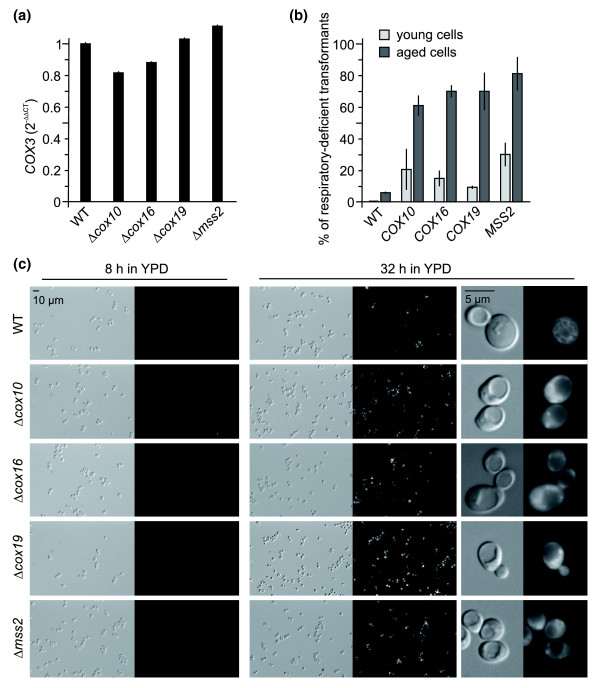
Background: The mitochondrial respiratory chain produces metabolic energy by oxidative phosphorylation. Biogenesis of the respiratory chain requires the coordinated expression of two genomes: the nuclear genome encoding the vast majority of mitochondrial proteins, and the mitochondrial genome encoding a handful of mitochondrial proteins. The understanding of the molecular processes contributing to respiratory chain assembly and maintenance requires the systematic identification and functional analysis of the genes involved. Results: We pursued a systematic, genome-wide approach to define the sets of genes required for respiratory activity and maintenance and expression of the mitochondrial genome in yeast. By comparative gene deletion analysis we found an unexpected phenotypic plasticity among respiratory-deficient mutants, and we identified ten previously uncharacterized genes essential for respiratory growth (RRG1 through RRG10). Systematic functional analysis of 319 respiratory-deficient mutants revealed 16 genes essential for maintenance of the mitochondrial genome, 88 genes required for mitochondrial protein translation, and 10 genes required for expression of specific mitochondrial gene products. A group of mutants acquiring irreversible damage compromising respiratory capacity includes strains defective in assembly of the cytochrome c oxidase that were found to be particularly sensitive to aging. Conclusions: These data advance the understanding of the molecular processes contributing to maintenance of the mitochondrial genome, mitochondrial protein translation, and assembly of the respiratory chain. They revealed a number of previously uncharacterized components, and provide a comprehensive picture of the molecular processes required for respiratory activity in a simple eukaryotic cell.
Overview
The claims and statistics of this paper haven’t been checked yet.
Free: it reads the open-access text and checks the first 5 claims that cite a source we can check. Create a free account to check every claim.
Integrity signals
Registry
Cites
Statistics
Figures
Verification
Claims the paper makes
The claims and statistics of this paper haven’t been checked yet.
Free: it reads the open-access text and checks the first 5 claims that cite a source we can check. Create a free account to check every claim.
Self-check
Percentages, sums and reported differences re-computed from the paper’s own numbers.
The self-check needs the paper’s full text.
Citations
Cites
Analysis of Relative Gene Expression Data Using Real-Time Quantitative PCR and the 2−ΔΔCT Method
Livak, K. J., & Schmittgen, T. D. (2001) · Methods · doi:10.1006/meth.2001.1262 · Cited by 180,860 · cited 1×
“3 7000 System SDS software Core Application (Applied Biosystems) and calculated according to the 2T-method [85].”
MethodSikorski, R. S., & Hieter, P. (1989) · Genetics · doi:10.1093/genetics/122.1.19 · Cited by 8,664
Mitochondria, Oxidants, and Aging
Balaban, R. S., Nemoto, S., & Finkel, T. (2005) · Cell · doi:10.1016/j.cell.2005.02.001 · Cited by 4,388 · cited 9×
“As mitochondrial metabolism and aging are linked to the generation of potentially harmful reactive oxygen species (ROS) [66] we asked whether ROS accumulate in COX assembly mutants.”
BackgroundInfluentialFunctional profiling of the Saccharomyces cerevisiae genome
Giaever, G., Chu, A. M., Ni, L., Connelly, C., Riles, L., Véronneau, S., Dow, S., Lucau-Danila, A., Anderson, K., André, B., et al. (2002) · Nature · doi:10.1038/nature00935 · Cited by 4,316 · cited 2×
“The MATα gene deletion library [16] and its supplement covering newly assigned small ORFs [21] was obtained from BioCat (Heidelberg, Germany), and MATa single mutant Δmip1 was obtained from EUROSCARF (Frankfurt, Germany).”
BackgroundMethodGlobal analysis of protein localization in budding yeast
Huh, W.-K., Falvo, J. V., Gerke, L. C., Carroll, A. S., Howson, R. W., Weissman, J. S., & O'Shea, E. K. (2003) · Nature · doi:10.1038/nature02026 · Cited by 4,248 · cited 6×
“Proteins Rrg1, Rrg2, and Rrg5 through Rrg10 have been localized to mitochondria by high-throughput green fluorescent protein (GFP) fusion protein localization [ 35 ] and/or mitochondrial proteome analysis [6,34].”
BackgroundInfluentialSherman, F. (2002) · Methods in Enzymology · doi:10.1016/s0076-6879(02)50954-x · Cited by 4,121 · cited 1×
“cerevisiae was cultivated and manipulated according to standard procedures [82].”
Method[1] Getting started with yeast
Sherman, F. (1991) · Methods in Enzymology · doi:10.1016/0076-6879(91)94004-v · Cited by 4,067
Baker Brachmann, C., Davies, A., Cost, G. J., Caputo, E., Li, J., Hieter, P., & Boeke, J. D. (1998) · Yeast · doi:10.1002/(sici)1097-0061(19980130)14:2<115::aid-yea204>3.0.co;2-2 · Cited by 3,401
Gray, M. W., Burger, G., & Lang, B. F. (1999) · Science · doi:10.1126/science.283.5407.1476 · Cited by 1,719
Computational Method to Predict Mitochondrially Imported Proteins and their Targeting Sequences
Claros, M. G., & Vincens, P. (1996) · European Journal of Biochemistry · doi:10.1111/j.1432-1033.1996.00779.x · Cited by 1,643 · cited 1×
“Although a mitochondrial location of Rrg3 has not been shown experimentally, the Mitoprot program [69] predicts the presence of a mitochondrial presequence with a high probability (0.”
Background
Research works printed but not linked: 1
- Ephrussi B Hottinguer H Tavlitzki J Action de l'acriflavine sur les levures II. Étude génétique du mutant "petite colonie". Ann Inst Pasteur 1949 76 419 442
Cited by
Mitochondrial fusion and fission in cell life and death
Westermann, B. (2010) · Nature Reviews Molecular Cell Biology · doi:10.1038/nrm3013 · Cited by 2,002
“In yeast, fusion-defective mutants rapidly lose their mitochondrial genome and consequently show defects in respiratio”
BackgroundSelf-citationHorvath, S. E., & Daum, G. (2013) · Progress in Lipid Research · doi:10.1016/j.plipres.2013.07.002 · Cited by 907
“In the yeast, deletion of UPS1, MDM31 or GEP5 causes a decrease in Psd1 levels and consequently a reduction of PE formation under fermentable growth conditions [296,297,335,336,341,342].”
BackgroundBioenergetic role of mitochondrial fusion and fission
Westermann, B. (2012) · Biochimica et Biophysica Acta (BBA) - Bioenergetics · doi:10.1016/j.bbabio.2012.02.033 · Cited by 687
Self-citationThe Yeast Deletion Collection: A Decade of Functional Genomics
Giaever, G., & Nislow, C. (2014) · Genetics · doi:10.1534/genetics.114.161620 · Cited by 481
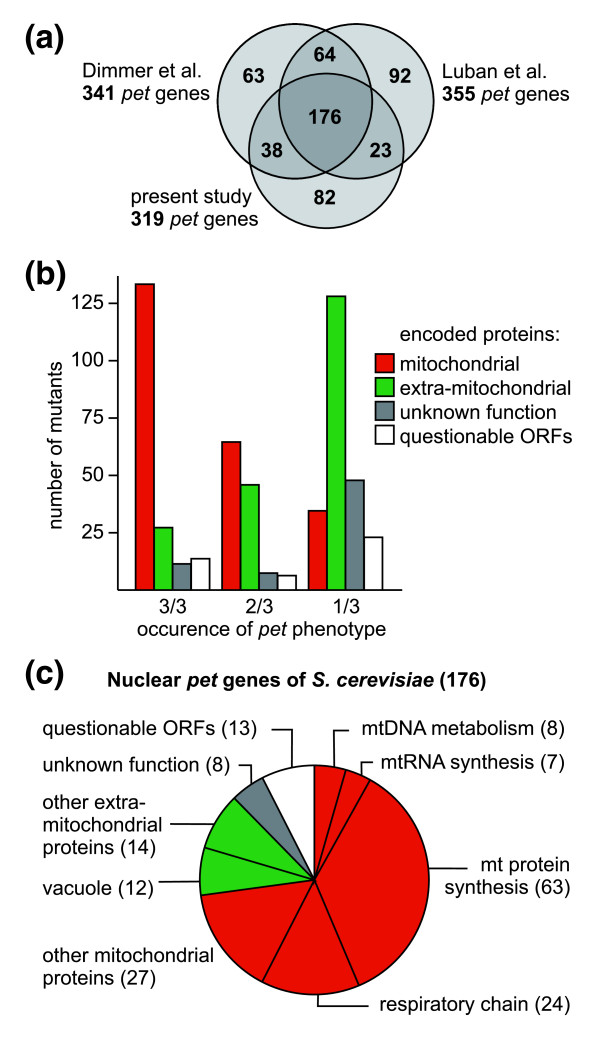
“The most recent of these studies (Merz and Westermann 2009) revealed an overlap of 176 genes between three colony-based studies, representing approximately half of the genes identified in each individual screen.”
BackgroundResultA Dynamic Interface between Vacuoles and Mitochondria in Yeast
Elbaz-Alon, Y., Rosenfeld-Gur, E., Shinder, V., Futerman, A. H., Geiger, T., & Schuldiner, M. (2014) · Developmental Cell · doi:10.1016/j.devcel.2014.06.007 · Cited by 380
“It has, however, previously been reported that the absence of Vps39 leads to impaired respiration capacity (Merz and Westermann, 2009).”
Background
Metadata
- Authors
- Merz, S., & Westermann, B.
- Affiliations
- University of Bayreuth (DE)
- Corresponding author
- Westermann, Benedikt
- ORCID
- Westermann, Benedikt
- Venue
- Genome Biology
- Published
- 2009-09-14
- Volume
- 10
- Issue
- 9
- Pages
- R95-R95
- ISSN
- 1465-6906 (ISSN-L)
- 1474-760X
- PMC
- PMC2768984
- OpenAlex
- W2130947642
- Cited by
- 213
- References
- 86
- Citations by year
- 2026: 4 · 2025: 9 · 2024: 11 · 2023: 26 · 2022: 4 · 2021: 9 · 2020: 12 · 2019: 12 · 2018: 12 · 2017: 17 · 2016: 16 · 2015: 17 · 2014: 16 · 2013: 10 · 2012: 14
- FWCI
- 5.09
- Type
- journal article
- Language
- en
- Open access
- gold
- doi.org
- Licence
- cc-by
- creativecommons.org/licenses/by/2.0/ (tdm)
- creativecommons.org/licenses/by/2.0/ (vor)
- Locations
- Genome biology (publishedVersion, cc-by)
- PubMed Central (publishedVersion, cc-by)
- PubMed (publishedVersion)
- ERef Bayreuth (University of Bayreuth) (submittedVersion)
- Funders
- Deutsche Forschungsgemeinschaft
- Topics
- Life Sciences › Biochemistry, Genetics and Molecular Biology › Molecular Biology › Mitochondrial Function and Pathology
- Life Sciences › Biochemistry, Genetics and Molecular Biology › Molecular Biology › Fungal and yeast genetics research
- Life Sciences › Biochemistry, Genetics and Molecular Biology › Cell Biology › Autophagy in Disease and Therapy
- Keywords
- mitochondrial DNA maintenance, mitochondrial translation, respiratory chain assembly, respiratory growth, cytochrome c oxidase assembly, respiration-deficient mutants, mitochondrial gene expression, phenotypic plasticity, Saccharomyces cerevisiae
- MeSH terms
- Electron Transport Complex IV, DNA, Mitochondrial, Electron Transport, Microscopy, Fluorescence, Mutation, Saccharomyces cerevisiae, Protein Biosynthesis, Gene Expression Regulation, Fungal, Genome, Fungal, Gene Deletion, Genes, Essential, Reverse Transcriptase Polymerase Chain Reaction, Mitochondrial Proteins, Saccharomyces cerevisiae Proteins, Genome, Mitochondrial
About these checks
Registry, retraction, Cites and statistics results are computed, not judged, with one exception: a printed reference that no index lists is read once by a model before it counts as a citation error. Claims are extracted by a model and kept only when their quote appears verbatim in the text; each cited source is then checked, with a model’s help, for whether it says what the claim relies on. Those verdicts can be wrong — read the claim’s quote and the cited source before relying on one.
Statistics and arithmetic are recomputed, not judged.
Confidence bands are shown only for fields calibrated on our annotated test set. None is calibrated yet, so no band is shown.
What counts as a claim ›How we measure confidence ›How we check this ›
Are you an author, or do you see a problem with this page? Request a review
How to cite
Cite CoChat for the checks on this page, and the paper for its own findings.
- This page
- CoChat. (2026). Citation check: Genome-wide deletion mutant analysis reveals genes required for respiratory growth, mitochondrial genome maintenance and mitochondrial protein synthesis in Saccharomyces cerevisiae. https://app.cochat.ai/papers/10.1186/gb-2009-10-9-r95
- The paper
- Merz, S., & Westermann, B. (2009). Genome-wide deletion mutant analysis reveals genes required for respiratory growth, mitochondrial genome maintenance and mitochondrial protein synthesis in Saccharomyces cerevisiae. Genome Biology. https://doi.org/10.1186/gb-2009-10-9-r95
Data sources
Bibliographic data: Semantic Scholar, OpenAlex, Crossref.
Contains information from the Semantic Scholar Academic Graph Datasets, made available under the ODC Attribution License (ODC-BY 1.0).
Semantic Scholar’s data is described in: Kinney, R., et al. (2023). The Semantic Scholar Open Data Platform. arXiv:2301.10140.
