

Genome-wide deletion mutant analysis reveals genes required for respiratory growth, mitochondrial genome maintenance and mitochondrial protein synthesis in Saccharomyces cerevisiae
Open accessThe DOI matches its Crossref record; 87 of the 87 references it cites were found in a registry or an index.
Abstract
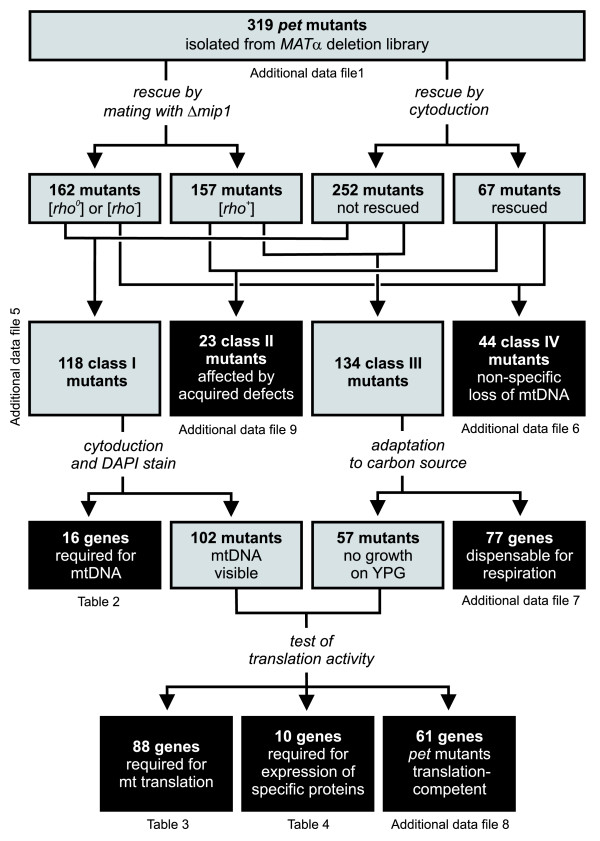
Background: The mitochondrial respiratory chain produces metabolic energy by oxidative phosphorylation. Biogenesis of the respiratory chain requires the coordinated expression of two genomes: the nuclear genome encoding the vast majority of mitochondrial proteins, and the mitochondrial genome encoding a handful of mitochondrial proteins. The understanding of the molecular processes contributing to respiratory chain assembly and maintenance requires the systematic identification and functional analysis of the genes involved. Results: We pursued a systematic, genome-wide approach to define the sets of genes required for respiratory activity and maintenance and expression of the mitochondrial genome in yeast. By comparative gene deletion analysis we found an unexpected phenotypic plasticity among respiratory-deficient mutants, and we identified ten previously uncharacterized genes essential for respiratory growth (RRG1 through RRG10). Systematic functional analysis of 319 respiratory-deficient mutants revealed 16 genes essential for maintenance of the mitochondrial genome, 88 genes required for mitochondrial protein translation, and 10 genes required for expression of specific mitochondrial gene products. A group of mutants acquiring irreversible damage compromising respiratory capacity includes strains defective in assembly of the cytochrome c oxidase that were found to be particularly sensitive to aging. Conclusions: These data advance the understanding of the molecular processes contributing to maintenance of the mitochondrial genome, mitochondrial protein translation, and assembly of the respiratory chain. They revealed a number of previously uncharacterized components, and provide a comprehensive picture of the molecular processes required for respiratory activity in a simple eukaryotic cell.
Overview
The claims and statistics of this paper haven’t been checked yet.
Free: it reads the open-access text and checks the first 5 claims that cite a source we can check. Create a free account to check every claim.
Integrity signals
Registry
Cites
Statistics
Figures
Verification
Claims the paper makes
The claims and statistics of this paper haven’t been checked yet.
Free: it reads the open-access text and checks the first 5 claims that cite a source we can check. Create a free account to check every claim.
Self-check
Percentages, sums and reported differences re-computed from the paper’s own numbers.
The self-check needs the paper’s full text.
Citations
Cites
Analysis of Relative Gene Expression Data Using Real-Time Quantitative PCR and the 2−ΔΔCT Method
Livak, K. J., & Schmittgen, T. D. (2001) · Methods · doi:10.1006/meth.2001.1262 · Cited by 180,860 · cited 1×
“3 7000 System SDS software Core Application (Applied Biosystems) and calculated according to the 2T-method [85].”
MethodSikorski, R. S., & Hieter, P. (1989) · Genetics · doi:10.1093/genetics/122.1.19 · Cited by 8,664
Mitochondria, Oxidants, and Aging
Balaban, R. S., Nemoto, S., & Finkel, T. (2005) · Cell · doi:10.1016/j.cell.2005.02.001 · Cited by 4,388 · cited 9×
“As mitochondrial metabolism and aging are linked to the generation of potentially harmful reactive oxygen species (ROS) [66] we asked whether ROS accumulate in COX assembly mutants.”
BackgroundInfluentialFunctional profiling of the Saccharomyces cerevisiae genome
Giaever, G., Chu, A. M., Ni, L., Connelly, C., Riles, L., Véronneau, S., Dow, S., Lucau-Danila, A., Anderson, K., André, B., et al. (2002) · Nature · doi:10.1038/nature00935 · Cited by 4,316 · cited 2×
“The MATα gene deletion library [16] and its supplement covering newly assigned small ORFs [21] was obtained from BioCat (Heidelberg, Germany), and MATa single mutant Δmip1 was obtained from EUROSCARF (Frankfurt, Germany).”
BackgroundMethodGlobal analysis of protein localization in budding yeast
Huh, W.-K., Falvo, J. V., Gerke, L. C., Carroll, A. S., Howson, R. W., Weissman, J. S., & O'Shea, E. K. (2003) · Nature · doi:10.1038/nature02026 · Cited by 4,248 · cited 6×
“Proteins Rrg1, Rrg2, and Rrg5 through Rrg10 have been localized to mitochondria by high-throughput green fluorescent protein (GFP) fusion protein localization [ 35 ] and/or mitochondrial proteome analysis [6,34].”
BackgroundInfluentialSherman, F. (2002) · Methods in Enzymology · doi:10.1016/s0076-6879(02)50954-x · Cited by 4,121 · cited 1×
“cerevisiae was cultivated and manipulated according to standard procedures [82].”
Method[1] Getting started with yeast
Sherman, F. (1991) · Methods in Enzymology · doi:10.1016/0076-6879(91)94004-v · Cited by 4,067
Baker Brachmann, C., Davies, A., Cost, G. J., Caputo, E., Li, J., Hieter, P., & Boeke, J. D. (1998) · Yeast · doi:10.1002/(sici)1097-0061(19980130)14:2<115::aid-yea204>3.0.co;2-2 · Cited by 3,401
Gray, M. W., Burger, G., & Lang, B. F. (1999) · Science · doi:10.1126/science.283.5407.1476 · Cited by 1,719
Computational Method to Predict Mitochondrially Imported Proteins and their Targeting Sequences
Claros, M. G., & Vincens, P. (1996) · European Journal of Biochemistry · doi:10.1111/j.1432-1033.1996.00779.x · Cited by 1,643 · cited 1×
“Although a mitochondrial location of Rrg3 has not been shown experimentally, the Mitoprot program [69] predicts the presence of a mitochondrial presequence with a high probability (0.”
BackgroundOxidative Phosphorylation at the fin de siècle
Saraste, M. (1999) · Science · doi:10.1126/science.283.5407.1488 · Cited by 1,313
Yeast Carbon Catabolite Repression
Gancedo, J. M. (1998) · Microbiology and Molecular Biology Reviews · doi:10.1128/mmbr.62.2.334-361.1998 · Cited by 1,273 · cited 2×
“For class III mutants, we reasoned that some strains might be unable to grow on medium containing glycerol as the sole carbon source because of synergistic effects of compromised mitochondrial function in combination with catabolite repression, which reduces the expression of genes required for respiration [8].”
BackgroundOxygen Stress: A Regulator of Apoptosis in Yeast
Madeo, F., Fröhlich, E., Ligr, M., Grey, M., Sigrist, S. J., Wolf, D. H., & Fröhlich, K.-U. (1999) · The Journal of Cell Biology · doi:10.1083/jcb.145.4.757 · Cited by 1,015 · cited 1×
“(DHR) to the oxidized fluorescent chromophore rhodamine 123 [67].”
BackgroundThe proteome of Saccharomyces cerevisiae mitochondria
Sickmann, A., Reinders, J., Wagner, Y., Joppich, C., Zahedi, R., Meyer, H. E., Schönfisch, B., Perschil, I., Chacinska, A., Guiard, B., et al. (2003) · Proceedings of the National Academy of Sciences · doi:10.1073/pnas.2135385100 · Cited by 895 · cited 9×
“Eight highly penetrant pet genes (YDR065w, YGR150c, YJL046w, YLL033w, YLR091w, YMR293c, YOR305w, and YPR116w) encode previously uncharacterized proteins, and earlier studies have revealed a respiratory-deficient phenotype for two additional ORFs of unknown function that were not covered by all three yeast deletion lib…”
BackgroundInfluentialThe fungal vacuole: composition, function, and biogenesis
Klionsky, D. J., Herman, P. K., & Emr, S. D. (1990) · Microbiological Reviews · doi:10.1128/mmbr.54.3.266-292.1990 · Cited by 824 · cited 1×
“First, vacuolar functions in metabolite storage or in cytosolic ion and pH homeostasis [54,55] might interfere with mitochondrial metabolism.”
BackgroundIssel-Tarver, L., Christie, K. R., Dolinski, K., Andrada, R., Balakrishnan, R., Ball, C. A., Binkley, G., Dong, S., Dwight, S. S., Fisk, D. G., et al. (2002) · Methods in Enzymology · doi:10.1016/s0076-6879(02)50972-1 · Cited by 672
PET genes of Saccharomyces cerevisiae
Tzagoloff, A., & Dieckmann, C. L. (1990) · Microbiological Reviews · doi:10.1128/mmbr.54.3.211-225.1990 · Cited by 551 · cited 3×
“By the end of the last century, more than 200 complementation groups and more than 100 pet genes had been identified by classic yeast genetic methods [12,13,15].”
BackgroundMitochondrial Fusion in Yeast Requires the Transmembrane GTPase Fzo1p
Hermann, G. J., Thatcher, J. W., Mills, J. P., Hales, K. G., Fuller, M. T., Nunnari, J., & Shaw, J. M. (1998) · The Journal of Cell Biology · doi:10.1083/jcb.143.2.359 · Cited by 549 · cited 3×
“Rapaport D, Brunner M, Neupert W, Westermann B: Fzo1p is a mitochondrial outer membrane protein essential for the biogenesis of functional mitochondria in Saccharomyces cerevisiae.”
BackgroundSystematic screen for human disease genes in yeast
Steinmetz, L. M., Scharfe, C., Deutschbauer, A. M., Mokranjac, D., Herman, Z. S., Jones, T., Chu, A. M., Giaever, G., Prokisch, H., Oefner, P. J., et al. (2002) · Nature Genetics · doi:10.1038/ng929 · Cited by 544 · cited 2×
“Remarkably, almost all of these highly penetrant mutants (95%) have been reported to show decreased fitness on non-fermentable carbon sources when the whole-genome pool of yeast deletion mutants was analyzed [77,78].”
BackgroundHow did Saccharomyces evolve to become a good brewer?
PISKUR, J., ROZPEDOWSKA, E., POLAKOVA, S., MERICO, A., & COMPAGNO, C. (2006) · Trends in Genetics · doi:10.1016/j.tig.2006.02.002 · Cited by 513 · cited 1×
“Only when fermentable carbon sources become limiting, genes required for respiration are induced, and ATP is generated by metabolizing non-fermentable carbon sources, such as ethanol, glycerol or lactate [9,10].”
BackgroundThorpe, G. W., Fong, C. S., Alic, N., Higgins, V. J., & Dawes, I. W. (2004) · Proceedings of the National Academy of Sciences · doi:10.1073/pnas.0305888101 · Cited by 450 · cited 1×
“Second, loss of V-ATPase activity has been reported to render cells hypersensitive to oxidative stress [ 56-58 ], which might have an impact on mitochondrial functions as well.”
BackgroundGenetic Basis of Mitochondrial Function and Morphology in Saccharomyces cerevisiae
Dimmer, K. S., Fritz, S., Fuchs, F., Messerschmitt, M., Weinbach, N., Neupert, W., & Westermann, B. (2002) · Molecular Biology of the Cell · doi:10.1091/mbc.01-12-0588 · Cited by 445 · cited 4×
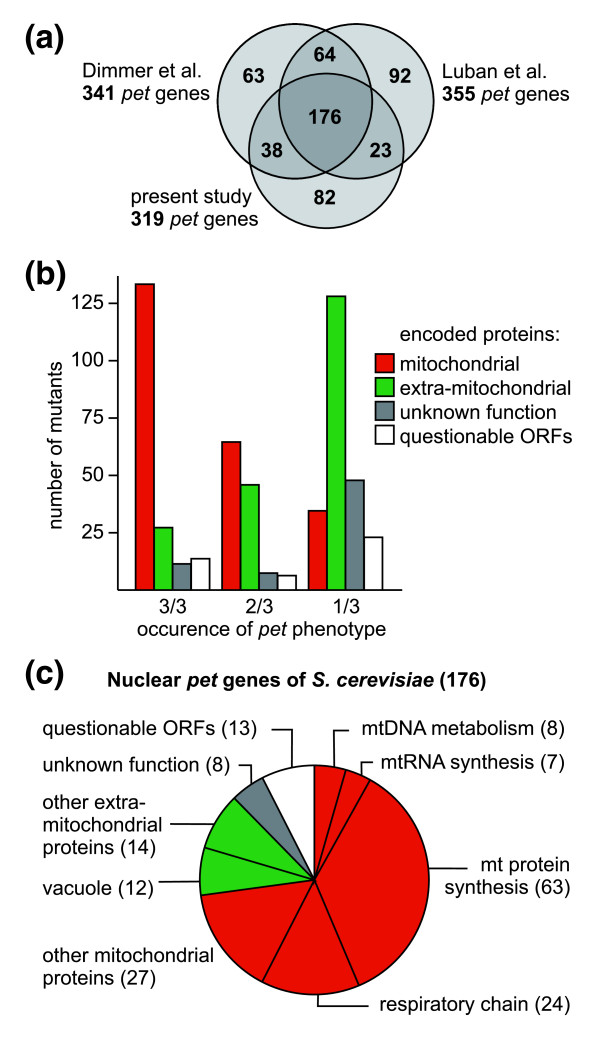
“[14] identified 341 deletion mutants that were unable to grow.”
BackgroundResultInfluentialSelf-citationReinders, J., Zahedi, R. P., Pfanner, N., Meisinger, C., & Sickmann, A. (2006) · Journal of Proteome Research · doi:10.1021/pr050477f · Cited by 392 · cited 9×
“Eight highly penetrant pet genes (YDR065w, YGR150c, YJL046w, YLL033w, YLR091w, YMR293c, YOR305w, and YPR116w) encode previously uncharacterized proteins, and earlier studies have revealed a respiratory-deficient phenotype for two additional ORFs of unknown function that were not covered by all three yeast deletion lib…”
BackgroundInfluentialThe Where, When, and How of Organelle Acidification by the Yeast Vacuolar H + -ATPase
Kane, P. M. (2006) · Microbiology and Molecular Biology Reviews · doi:10.1128/mmbr.70.1.177-191.2006 · Cited by 390 · cited 1×
“First, vacuolar functions in metabolite storage or in cytosolic ion and pH homeostasis [54,55] might interfere with mitochondrial metabolism.”
BackgroundFeasting, fasting and fermenting: glucose sensing in yeast and other cells
Johnston, M. (1999) · Trends in Genetics · doi:10.1016/s0168-9525(98)01637-0 · Cited by 385 · cited 1×
“Only when fermentable carbon sources become limiting, genes required for respiration are induced, and ATP is generated by metabolizing non-fermentable carbon sources, such as ethanol, glycerol or lactate [9,10].”
BackgroundRapaport, D., Brunner, M., Neupert, W., & Westermann, B. (1998) · Journal of Biological Chemistry · doi:10.1074/jbc.273.32.20150 · Cited by 370 · cited 3×
“Rapaport D, Brunner M, Neupert W, Westermann B: Fzo1p is a mitochondrial outer membrane protein essential for the biogenesis of functional mitochondria in Saccharomyces cerevisiae.”
BackgroundSelf-citationWong, E. D., Wagner, J. A., Gorsich, S. W., McCaffery, J. M., Shaw, J. M., & Nunnari, J. (2000) · The Journal of Cell Biology · doi:10.1083/jcb.151.2.341 · Cited by 357 · cited 1×
“Mgm1 is a dynamin-related protein required for mitochondrial genome maintenance by mediating mitochondrial fusion [30-32].”
BackgroundReenan, R. A., & Kolodner, R. D. (1992) · Genetics · doi:10.1093/genetics/132.4.975 · Cited by 349
Myers, A. M., Pape, L. K., & Tzagoloff, A. (1985) · The EMBO Journal · doi:10.1002/j.1460-2075.1985.tb03896.x · Cited by 321 · cited 1×
“It has been observed that a block of mitochondrial protein synthesis leads to a rapid and quantitative loss of mtDNA [27].”
BackgroundAconitase Couples Metabolic Regulation to Mitochondrial DNA Maintenance
Chen, X. J., Wang, X., Kaufman, B. A., & Butow, R. A. (2005) · Science · doi:10.1126/science.1106391 · Cited by 314 · cited 1×
“As expected, this group includes several components known to be involved in mtDNA metabolism: the mtDNA polymerase Mip1 [22]; mtDNA helicases Hmi1 [23] and Pif1 [24]; Apn1, a DNA repair protein active in the nucleus and mitochondria [25]; and aconitase, Aco1, an enzyme of the citric acid cycle that has an additional r…”
BackgroundOsman, C., Haag, M., Potting, C., Rodenfels, J., Dip, P. V., Wieland, F. T., Brügger, B., Westermann, B., & Langer, T. (2009) · Journal of Cell Biology · doi:10.1083/jcb.200810189 · Cited by 299
Self-citationContamine, V., & Picard, M. (2000) · Microbiology and Molecular Biology Reviews · doi:10.1128/mmbr.64.2.281-315.2000 · Cited by 288 · cited 3×
“By the end of the last century, more than 200 complementation groups and more than 100 pet genes had been identified by classic yeast genetic methods [12,13,15].”
BackgroundJones, B. A., & Fangman, W. L. (1992) · Genes & Development · doi:10.1101/gad.6.3.380 · Cited by 261 · cited 2×
“Mgm1 is a dynamin-related protein required for mitochondrial genome maintenance by mediating mitochondrial fusion [30-32].”
BackgroundMethodRecent developments in yeast aging
Kaeberlein, M., Burtner, C. R., & Kennedy, B. K. (2007) · PLoS Genetics · doi:10.1371/journal.pgen.0030084 · Cited by 239 · cited 1×
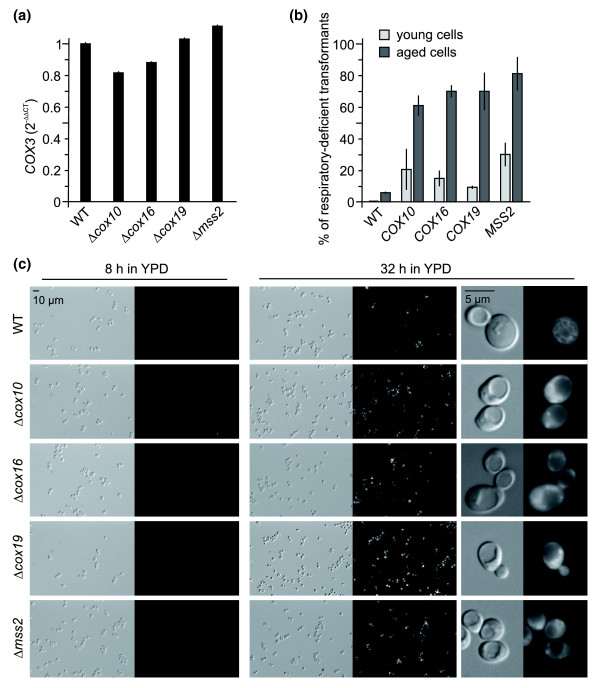
“In order to test whether Δcox10, Δcox16, Δcox19, and Δmss2 clones lose properties required for respiratory competence over time, we subjected the deletion mutants to chronological aging [65], that is, continued incubation of stationary phase cultures.”
BackgroundDumont, M. E., Ernst, J. F., Hampsey, D. M., & Sherman, F. (1987) · The EMBO Journal · doi:10.1002/j.1460-2075.1987.tb04744.x · Cited by 228 · cited 1×
“Cyc3 is the mitochondrial cytochrome c heme lyase that attaches the heme cofactor to apo-cytochrome c in the intermembrane space [52].”
BackgroundSelective and Non-Selective Autophagic Degradation of Mitochondria in Yeast
Kiššová, I. B., Salin, B., Schaeffer, J., Bhatia, S., Manon, S., & Camougrand, N. (2007) · Autophagy · doi:10.4161/auto.4034 · Cited by 223 · cited 1×
“As also mitochondria are degraded by autophagy in yeast [59], it is possible that the vacuole plays an important role in mitochondrial quality control and turn-over.”
BackgroundFunctional genomics of genes with small open reading frames (sORFs) in S. cerevisiae
Kastenmayer, J. P., Ni, L., Chu, A., Kitchen, L. E., Au, W.-C., Yang, H., Carter, C. D., Wheeler, D., Davis, R. W., Boeke, J. D., et al. (2006) · Genome Research · doi:10.1101/gr.4355406 · Cited by 220 · cited 9×
“Five of the uncharacterized ORFs are unlikely to encode proteins because they overlap with known protein-coding genes, whereas six ORFs (YDL129w, YDL133w, YDL033w/RRG4, YNL213c/RRG9, YOL071w, and YOL083w) might encode novel proteins involved in maintenance of respiratory activity.”
BackgroundMethodInfluentialIntegrative Analysis of the Mitochondrial Proteome in Yeast
Prokisch, H., Scharfe, C., Camp, D. G., Xiao, W., David, L., Andreoli, C., Monroe, M. E., Moore, R. J., Gritsenko, M. A., Kozany, C., et al. (2004) · PLoS Biology · doi:10.1371/journal.pbio.0020160 · Cited by 217 · cited 2×
“Remarkably, almost all of these highly penetrant mutants (95%) have been reported to show decreased fitness on non-fermentable carbon sources when the whole-genome pool of yeast deletion mutants was analyzed [77,78].”
BackgroundMethodFoury, F. (1989) · Journal of Biological Chemistry · doi:10.1016/s0021-9258(19)47098-1 · Cited by 208 · cited 3×
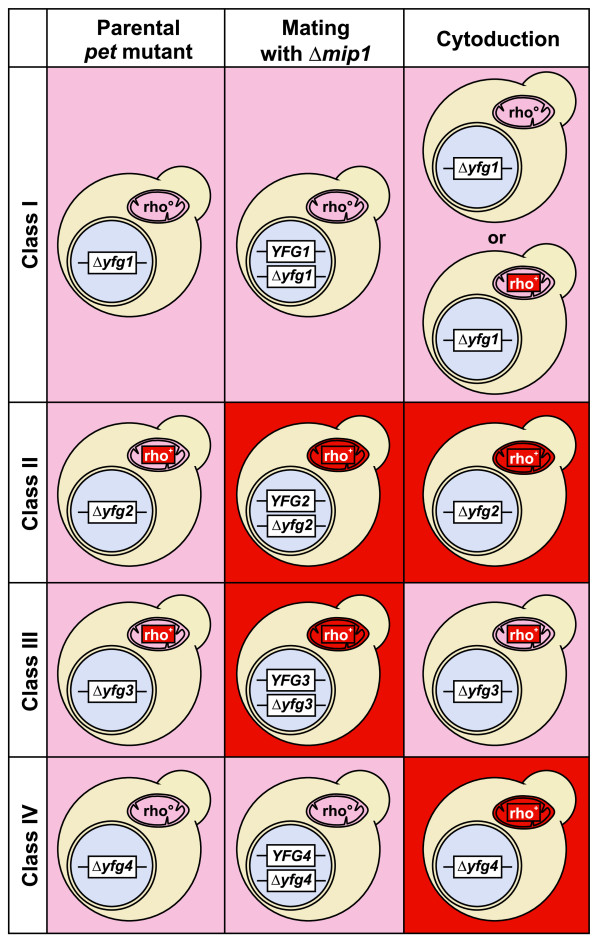
“As the Δmip1 strain is [rho0] [22], resulting heterozygous diploid strains are able to grow on glycerol-containing medium only if functional mtDNA is provided by the pet mutant mating partner.”
BackgroundGenome-Wide Analysis of Rad52 Foci Reveals Diverse Mechanisms Impacting Recombination
Alvaro, D., Lisby, M., & Rothstein, R. (2007) · PLoS Genetics · doi:10.1371/journal.pgen.0030228 · Cited by 197 · cited 2×
“It has been suggested that an increase of oxidative damage due to impaired respiratory chain functions might stimulate spontaneous DNA lesions in the nucleus and, therefore, constitutes a functional link between mitochondrial respiration and DNA repair processes in the nucleus [73].”
BackgroundPIF1: a DNA helicase in yeast mitochondria.
Lahaye, A., Stahl, H., Thines-Sempoux, D., & Foury, F. (1991) · The EMBO Journal · doi:10.1002/j.1460-2075.1991.tb08034.x · Cited by 195 · cited 1×
“As expected, this group includes several components known to be involved in mtDNA metabolism: the mtDNA polymerase Mip1 [22]; mtDNA helicases Hmi1 [23] and Pif1 [24]; Apn1, a DNA repair protein active in the nucleus and mitochondria [25]; and aconitase, Aco1, an enzyme of the citric acid cycle that has an additional r…”
BackgroundMss51p promotes mitochondrial Cox1p synthesis and interacts with newly synthesized Cox1p
Perez-Martinez, X. (2003) · The EMBO Journal · doi:10.1093/emboj/cdg566 · Cited by 194 · cited 1×
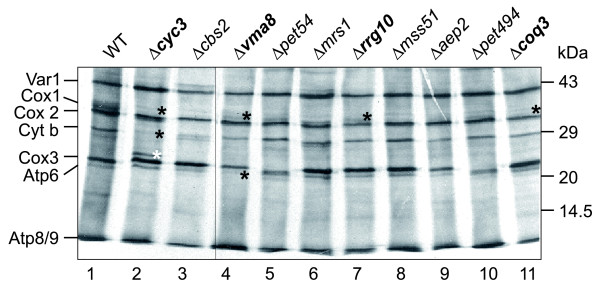
“Specific alterations of the pattern of newly translated mitochondrial proteins were observed in ten mutants (Figure 4 and Table 4). A role in the expression of specific mitochondria-synthesized proteins has already been described for Aep2 [44], Cbs2 [45], Mrs1 [46], Mss51 [ 47 ], Pet54 [48,49], and Pet494 [50].”
BackgroundMorris, T. W., Reed, K. E., & Cronan, J. E. (1994) · Journal of Biological Chemistry · doi:10.1016/s0021-9258(17)33977-7 · Cited by 172
The Doc1 subunit is a processivity factor for the anaphase-promoting complex
Carroll, C. W., & Morgan, D. O. (2002) · Nature Cell Biology · doi:10.1038/ncb871 · Cited by 164 · cited 1×
“Doc1 is involved in cyclin proteolysis as a processivity factor required for the ubiquitination activity of the anaphase promoting complex (APC) [ 33 ].”
BackgroundHess, D. C., Myers, C. L., Huttenhower, C., Hibbs, M. A., Hayes, A. P., Paw, J., Clore, J. J., Mendoza, R. M., Luis, B. S., Nislow, C., et al. (2009) · PLoS Genetics · doi:10.1371/journal.pgen.1000407 · Cited by 154 · cited 4×
“[70] reports a computational prediction of 193 candidate genes and subsequent analysis of their possible roles in mitochondrial biogenesis.”
BackgroundInfluentialNóbrega, M. P., Nóbrega, F. G., & Tzagoloff, A. (1990) · Journal of Biological Chemistry · doi:10.1016/s0021-9258(18)77289-x · Cited by 149
Power, sex, suicide: mitochondria and the meaning of life
(2006) · Choice Reviews Online · doi:10.5860/choice.43-4653 · Cited by 145
MARRES, C. A. M., de VRIES, S., & GRIVELL, L. A. (1991) · European Journal of Biochemistry · doi:10.1111/j.1432-1033.1991.tb15775.x · Cited by 128 · cited 1×
“In some organisms, including baker's yeast, Saccharomyces cerevisiae, complex I is replaced by an alternative NADH dehydrogenase that consists of a single amino acid chain [3,4].”
BackgroundRödel, G. (1986) · Current Genetics · doi:10.1007/bf00389424 · Cited by 122 · cited 2×
“A role in the expression of specific mitochon- dria-synthesized proteins has already been described for Aep2 [44], Cbs2 [45], Mrs1 [46], Mss51 [47], Pet54 [48,49], and Pet494 [50].”
BackgroundNobrega, M. P., Bandeira, S. C. B., Beers, J., & Tzagoloff, A. (2002) · Journal of Biological Chemistry · doi:10.1074/jbc.m207348200 · Cited by 121 · cited 3×
“While respiratory-deficiency in Δcox10, Δcox16, Δcox19, and Δmss2 mutants has been documented before [60,62-64], we asked whether acquired properties might contribute to the loss of respiratory activity in these mutants.”
BackgroundMethodLing, F., & Shibata, T. (2002) · The EMBO Journal · doi:10.1093/emboj/cdf466 · Cited by 120 · cited 2×
“Ling F, Shibata T: Recombination-dependent mtDNA partitioning: in vivo role of Mhr1p to promote pairing of homologous DNA.”
BackgroundThe long physiological reach of the yeast vacuolar H+-ATPase
Kane, P. M. (2007) · Journal of Bioenergetics and Biomembranes · doi:10.1007/s10863-007-9112-z · Cited by 120
The multifarious roles of PPR proteins in plant mitochondrial gene expression
Andrés, C., Claire Lurin, A., & Small, I. (2006) · Physiologia Plantarum · doi:10.1111/j.1399-3054.2006.00766.x · Cited by 108 · cited 1×
“PPR proteins are localized in plastids and mitochondria where they are involved in the control of various stages of gene expression [68].”
BackgroundDE VRIES, S., VAN WITZENBURG, R., GRIVELL, L. A., & MARRES, C. A. M. (1992) · European Journal of Biochemistry · doi:10.1111/j.1432-1033.1992.tb16587.x · Cited by 105
Vongsamphanh, R., Fortier, P.-K., & Ramotar, D. (2001) · Molecular and Cellular Biology · doi:10.1128/mcb.21.5.1647-1655.2001 · Cited by 104 · cited 1×
“As expected, this group includes several components known to be involved in mtDNA metabolism: the mtDNA polymerase Mip1 [22]; mtDNA helicases Hmi1 [23] and Pif1 [24]; Apn1, a DNA repair protein active in the nucleus and mitochondria [25]; and aconitase, Aco1, an enzyme of the citric acid cycle that has an additional r…”
BackgroundLoss of Vacuolar Proton-translocating ATPase Activity in Yeast Results in Chronic Oxidative Stress
Milgrom, E., Diab, H., Middleton, F., & Kane, P. M. (2007) · Journal of Biological Chemistry · doi:10.1074/jbc.m608293200 · Cited by 103 · cited 1×
“Second, loss of VATPase activity has been reported to render cells hypersensitive to oxidative stress [56-58], which might have an impact on mitochondrial functions as well.”
BackgroundOn the functions of the yeast COX10 and COX11 gene products.
Tzagoloff, A., Nobrega, M., Gorman, N., & Sinclair, P. R. (1993) · PubMed · Cited by 102
Dimmer, K. S., Jakobs, S., Vogel, F., Altmann, K., & Westermann, B. (2005) · The Journal of Cell Biology · doi:10.1083/jcb.200410030 · Cited by 102 · cited 2×
“Freshly made Δmdm31 and Δmdm32 deletion mutants have been found to be able to maintain [rho+] mtDNA [36].”
BackgroundSelf-citationMeeusen, S., Tieu, Q., Wong, E., Weiss, E., Schieltz, D., Yates, J. R., & Nunnari, J. (1999) · The Journal of Cell Biology · doi:10.1083/jcb.145.2.291 · Cited by 98 · cited 2×
“In addition, mitochondrial translation activity was absent in several mutants lacking proteins known to be required for mtDNA inheritance, such as Fzo1 [38,39], Mhr1 [40], Msh1 [41], or Mgm101 [42].”
BackgroundPAUL, M., VELOURS, J., ARSELIN de CHATEAUBODEAU, G., AIGLE, M., & GUERIN, B. (1989) · European Journal of Biochemistry · doi:10.1111/j.1432-1033.1989.tb15098.x · Cited by 97
The Role of DNA Double-Strand Breaks in Spontaneous Homologous Recombination in S. cerevisiae
Lettier, G., Feng, Q., de Mayolo, A. A., Erdeniz, N., Reid, R. J. D., Lisby, M., Mortensen, U. H., & Rothstein, R. (2006) · PLoS Genetics · doi:10.1371/journal.pgen.0020194 · Cited by 96 · cited 4×
“The [rho0] cytoduction donor strain was generated by growth of J1361 overnight in YPD medium supplemented with 50 μg/ml ethidium bromide.”
MethodInfluentialCoq3 and Coq4 Define a Polypeptide Complex in Yeast Mitochondria for the Biosynthesis of Coenzyme Q
Marbois, B., Gin, P., Faull, K. F., Poon, W. W., Lee, P. T., Strahan, J., Shepherd, J. N., & Clarke, C. F. (2005) · Journal of Biological Chemistry · doi:10.1074/jbc.m501315200 · Cited by 91 · cited 1×
“Coq3 is required for the biosynthesis of ubiquinone (coenzyme Q) in mitochondria [ 51 ].”
BackgroundCostanzo, M. C., & Fox, T. D. (1986) · Molecular and Cellular Biology · doi:10.1128/mcb.6.11.3694 · Cited by 84
Assessing Systems Properties of Yeast Mitochondria through an Interaction Map of the Organelle
Perocchi, F., Jensen, L. J., Gagneur, J., Ahting, U., von Mering, C., Bork, P., Prokisch, H., & Steinmetz, L. M. (2006) · PLoS Genetics · doi:10.1371/journal.pgen.0020170 · Cited by 76 · cited 1×
“[79] it will contribute to an understanding of the systems”
BackgroundMitochondrial assembly in yeast
Grivell, L. A., Artal-Sanz, M., Hakkaart, G., de Jong, L., Nijtmans, L. G. J., van Oosterum, K., Siep, M., & van der Spek, H. (1999) · FEBS Letters · doi:10.1016/s0014-5793(99)00532-3 · Cited by 73 · cited 1×
“In order to express this handful of mitochondrial genes, the cell synthesizes about 200 nuclear-encoded proteins that are devoted to mitochondrial genome maintenance and gene expression [6,7].”
BackgroundDogra, S., Krishnamurthy, S., Gupta, V., Dixit, B. L., Gupta, C. M., Sanglard, D., & Pprasad, R. (1999) · Yeast · doi:10.1002/(sici)1097-0061(19990130)15:2<111::aid-yea350>3.0.co;2-e · Cited by 68
Zambrano, A., Fontanesi, F., Solans, A., de Oliveira, R. L., Fox, T. D., Tzagoloff, A., & Barrientos, A. (2007) · Molecular Biology of the Cell · doi:10.1091/mbc.e06-09-0803 · Cited by 61 · cited 1×
“It should be noted that strain-dependent effects might also play a role, because, for example, Δpet309 was observed to be completely translation-inactive here, whereas mitochondrial translation products could be observed when this mutant was constructed in the W303 genetic background [43].”
BackgroundGraham, L. A., Hill, K. J., & Stevens, T. H. (1995) · Journal of Biological Chemistry · doi:10.1074/jbc.270.25.15037 · Cited by 60 · cited 1×
“Genome Biology 2009, 10:R95 olar H + ATPase [ 53 ], suggesting that expression of these proteins is particularly sensitive to changes in cell metabolism (Figure 4, lane 4).”
BackgroundCostanzo, M. C., Seaver, E. C., & Fox, T. D. (1989) · Genetics · doi:10.1093/genetics/122.2.297 · Cited by 54
Broadley, S. A., Demlow, C. M., & Fox, T. D. (2001) · Molecular and Cellular Biology · doi:10.1128/mcb.21.22.7663-7672.2001 · Cited by 54 · cited 2×
“While respiratory-deficiency in Δcox10, Δcox16, Δcox19, and Δmss2 mutants has been documented before [60, 62-64 ], we asked whether acquired properties might contribute to the loss of respiratory activity in these mutants.”
BackgroundSedman, T., Kuusk, S., Kivi, S., & Sedman, J. (2000) · Molecular and Cellular Biology · doi:10.1128/mcb.20.5.1816-1824.2000 · Cited by 54 · cited 1×
“As expected, this group includes several components known to be involved in mtDNA metabolism: the mtDNA polymerase Mip1 [22]; mtDNA helicases Hmi1 [23] and Pif1 [24]; Apn1, a DNA repair protein active in the nucleus and mitochondria [25]; and aconitase, Aco1, an enzyme of the citric acid cycle that has an additional r…”
BackgroundIntersection of RNA Processing and the Type II Fatty Acid Synthesis Pathway in Yeast Mitochondria
Schonauer, M. S., Kastaniotis, A. J., Hiltunen, J. K., & Dieckmann, C. L. (2008) · Molecular and Cellular Biology · doi:10.1128/mcb.01162-08 · Cited by 53 · cited 1×
“Intriguingly, it has recently been reported that lipoateprotein ligase activity is important for maturation of RNase P, an enzyme that processes mitochondrial precursor tRNAs [72].”
BackgroundValencik, M. L., Kloeckener‐Gruissem, B., Poyton, R. Ο., & McEwen, J. E. (1989) · The EMBO Journal · doi:10.1002/j.1460-2075.1989.tb08569.x · Cited by 50 · cited 2×
“A role in the expression of specific mitochon- dria-synthesized proteins has already been described for Aep2 [44], Cbs2 [45], Mrs1 [46], Mss51 [47], Pet54 [48,49], and Pet494 [50].”
BackgroundKREIKE, J., Schulze, M., Pillar, T. M., Körte, A., & Rödel, G. (1986) · Current Genetics · doi:10.1007/bf00420605 · Cited by 49 · cited 2×
“A role in the expression of specific mitochon- dria-synthesized proteins has already been described for Aep2 [44], Cbs2 [45], Mrs1 [46], Mss51 [47], Pet54 [48,49], and Pet494 [50].”
BackgroundMolecular machinery of mitochondrial dynamics in yeast
Merz, S., Hammermeister, M., Altmann, K., Dürr, M., & Westermann, B. (2007) · bchm · doi:10.1515/bc.2007.110 · Cited by 49 · cited 1×
“Mgm1 is a dynamin-related protein required for mitochondrial genome maintenance by mediating mitochondrial fusion [30-32].”
BackgroundSelf-citationAckerman, S. H., Gatti, D. L., Gellefors, P., Douglas, M. G., & Tzagoloff, A. (1991) · FEBS Letters · doi:10.1016/0014-5793(91)80124-l · Cited by 47 · cited 2×
“A role in the expression of specific mitochon- dria-synthesized proteins has already been described for Aep2 [44], Cbs2 [45], Mrs1 [46], Mss51 [47], Pet54 [48,49], and Pet494 [50].”
BackgroundRegulation of mitochondrial translation in yeast.
Towpik, J. (2005) · PubMed · Cited by 44
Carlson, C. G., Barrientos, A., Tzagoloff, A., & Glerum, D. M. (2003) · Journal of Biological Chemistry · doi:10.1074/jbc.m209893200 · Cited by 42 · cited 2×
“While respiratory-deficiency in Δcox10, Δcox16, Δcox19, and Δmss2 mutants has been documented before [60, 62-64 ], we asked whether acquired properties might contribute to the loss of respiratory activity in these mutants.”
BackgroundA “Petite Obligate” Mutant of Saccharomyces cerevisiae
Duvezin-Caubet, S., Rak, M., Lefebvre-Legendre, L., Tetaud, E., Bonnefoy, N., & di Rago, J.-P. (2006) · Journal of Biological Chemistry · doi:10.1074/jbc.m513805200 · Cited by 40
Dilda, P. J., Don, A. S., Tanabe, K. M., Higgins, V. J., Allen, J. D., Dawes, I. W., & Hogg, P. J. (2005) · JNCI Journal of the National Cancer Institute · doi:10.1093/jnci/dji316 · Cited by 40 · cited 1×
“This drug inhibits proliferation of actively dividing endothelial cells and is an inhibitor of angiogenesis during tumor formation [76].”
BackgroundAnalysis of mitochondrial translation products in Vivo and in organello in yeast
Westermann, B., Herrmann, J. M., & Neupert, W. (2001) · Methods in cell biology · doi:10.1016/s0091-679x(01)65025-8 · Cited by 35 · cited 1×
“Analysis of mitochondrial translation products Labeling of mitochondrial translation products in vivo was performed essentially as described [83] with the following minor modifications: cytosolic translation was stopped with 0.”
MethodSelf-citationLuban, C., Beutel, M., Ståhl, U., & Schmidt, U. (2005) · Gene · doi:10.1016/j.gene.2005.03.023 · Cited by 28 · cited 3×
“[17], suggesting that many of the affected genes are only indirectly related to maintenance of respiratory activity.”
BackgroundInfluentialGenetic approaches to the study of mitochondrial biogenesis in yeast
Bolotin‐Fukuhara, M., & Grivell, L. A. (1992) · Antonie van Leeuwenhoek · doi:10.1007/bf00584467 · Cited by 27 · cited 1×
“By the end of the last century, more than 200 complementation groups and more than 100 pet genes had been identified by classic yeast genetic methods [12,13,15].”
BackgroundFederovitch, C. M., Jones, Y., Tong, A. H.-Y., Boone, C. M., Prinz, W. A., & Hampton, R. Y. (2008) · Molecular Biology of the Cell · doi:10.1091/mbc.e07-11-1188 · Cited by 27
Power, Sex, Suicide: Mitochondria and the Meaning of Life
Harold, F. M. (2006) · Microbe Magazine · doi:10.1128/microbe.1.251.2 · Cited by 23
Disruption and basic phenotypic analysis of 18 novel genes from the yeastSaccharomyces cerevisiae
Wysocki, R., Roganti, T., Dyck, E. V., d’Exaerde, A. D. K., & Foury, F. (1999) · Yeast · Cited by 10
Truong, D., & Gietz, R. D. (2007) · Methods in microbiology · doi:10.1016/s0580-9517(06)36003-5 · Cited by 6 · cited 1×
“Then, a small amount of aged cells (or young cells taken directly from glycerol stocks as a control) was spread on a fresh YPD plate, incubated overnight at 30°C, and transformed according to the rapid transformation protocol described by Truong and Gietz [ 84 ].”
Method
Research works printed but not linked: 1
- Ephrussi B Hottinguer H Tavlitzki J Action de l'acriflavine sur les levures II. Étude génétique du mutant "petite colonie". Ann Inst Pasteur 1949 76 419 442
Cited by
Mitochondrial fusion and fission in cell life and death
Westermann, B. (2010) · Nature Reviews Molecular Cell Biology · doi:10.1038/nrm3013 · Cited by 2,002
“In yeast, fusion-defective mutants rapidly lose their mitochondrial genome and consequently show defects in respiratio”
BackgroundSelf-citationHorvath, S. E., & Daum, G. (2013) · Progress in Lipid Research · doi:10.1016/j.plipres.2013.07.002 · Cited by 907
“In the yeast, deletion of UPS1, MDM31 or GEP5 causes a decrease in Psd1 levels and consequently a reduction of PE formation under fermentable growth conditions [296,297,335,336,341,342].”
BackgroundBioenergetic role of mitochondrial fusion and fission
Westermann, B. (2012) · Biochimica et Biophysica Acta (BBA) - Bioenergetics · doi:10.1016/j.bbabio.2012.02.033 · Cited by 687
Self-citationThe Yeast Deletion Collection: A Decade of Functional Genomics
Giaever, G., & Nislow, C. (2014) · Genetics · doi:10.1534/genetics.114.161620 · Cited by 481
“The most recent of these studies (Merz and Westermann 2009) revealed an overlap of 176 genes between three colony-based studies, representing approximately half of the genes identified in each individual screen.”
BackgroundResultA Dynamic Interface between Vacuoles and Mitochondria in Yeast
Elbaz-Alon, Y., Rosenfeld-Gur, E., Shinder, V., Futerman, A. H., Geiger, T., & Schuldiner, M. (2014) · Developmental Cell · doi:10.1016/j.devcel.2014.06.007 · Cited by 380
“It has, however, previously been reported that the absence of Vps39 leads to impaired respiration capacity (Merz and Westermann, 2009).”
Background
Metadata
- Authors
- Merz, S., & Westermann, B.
- Affiliations
- University of Bayreuth (DE)
- Corresponding author
- Westermann, Benedikt
- ORCID
- Westermann, Benedikt
- Venue
- Genome Biology
- Published
- 2009-09-14
- Volume
- 10
- Issue
- 9
- Pages
- R95-R95
- ISSN
- 1465-6906 (ISSN-L)
- 1474-760X
- PMC
- PMC2768984
- OpenAlex
- W2130947642
- Cited by
- 213
- References
- 86
- Citations by year
- 2026: 4 · 2025: 9 · 2024: 11 · 2023: 26 · 2022: 4 · 2021: 9 · 2020: 12 · 2019: 12 · 2018: 12 · 2017: 17 · 2016: 16 · 2015: 17 · 2014: 16 · 2013: 10 · 2012: 14
- FWCI
- 5.09
- Type
- journal article
- Language
- en
- Open access
- gold
- doi.org
- Licence
- cc-by
- creativecommons.org/licenses/by/2.0/ (tdm)
- creativecommons.org/licenses/by/2.0/ (vor)
- Locations
- Genome biology (publishedVersion, cc-by)
- PubMed Central (publishedVersion, cc-by)
- PubMed (publishedVersion)
- ERef Bayreuth (University of Bayreuth) (submittedVersion)
- Funders
- Deutsche Forschungsgemeinschaft
- Topics
- Life Sciences › Biochemistry, Genetics and Molecular Biology › Molecular Biology › Mitochondrial Function and Pathology
- Life Sciences › Biochemistry, Genetics and Molecular Biology › Molecular Biology › Fungal and yeast genetics research
- Life Sciences › Biochemistry, Genetics and Molecular Biology › Cell Biology › Autophagy in Disease and Therapy
- Keywords
- mitochondrial DNA maintenance, mitochondrial translation, respiratory chain assembly, respiratory growth, cytochrome c oxidase assembly, respiration-deficient mutants, mitochondrial gene expression, phenotypic plasticity, Saccharomyces cerevisiae
- MeSH terms
- Electron Transport Complex IV, DNA, Mitochondrial, Electron Transport, Microscopy, Fluorescence, Mutation, Saccharomyces cerevisiae, Protein Biosynthesis, Gene Expression Regulation, Fungal, Genome, Fungal, Gene Deletion, Genes, Essential, Reverse Transcriptase Polymerase Chain Reaction, Mitochondrial Proteins, Saccharomyces cerevisiae Proteins, Genome, Mitochondrial
About these checks
Registry, retraction, Cites and statistics results are computed, not judged, with one exception: a printed reference that no index lists is read once by a model before it counts as a citation error. Claims are extracted by a model and kept only when their quote appears verbatim in the text; each cited source is then checked, with a model’s help, for whether it says what the claim relies on. Those verdicts can be wrong — read the claim’s quote and the cited source before relying on one.
Statistics and arithmetic are recomputed, not judged.
Confidence bands are shown only for fields calibrated on our annotated test set. None is calibrated yet, so no band is shown.
What counts as a claim ›How we measure confidence ›How we check this ›
Are you an author, or do you see a problem with this page? Request a review
Data sources
Bibliographic data: Semantic Scholar, OpenAlex, Crossref.
Contains information from the Semantic Scholar Academic Graph Datasets, made available under the ODC Attribution License (ODC-BY 1.0).
Semantic Scholar’s data is described in: Kinney, R., et al. (2023). The Semantic Scholar Open Data Platform. arXiv:2301.10140.
