

Effectiveness of power training compared to strength training in older adults: a systematic review and meta-analysis
Open accessThe DOI matches its Crossref record; 48 of the 48 references it cites were found in a registry or an index; 16 of the 58 sources its claims cite were checked for support.
Abstract
BACKGROUND: Research suggests that muscle power is a more critical determinant of physical functioning in older adults than muscle strength. The objective of this study was to systematically review the literature on the effect of power training compared to strength training in older adults on tests for muscle power, two groups of activity-based tests under controlled conditions: generic tests and tests with an emphasis on movement speed, and finally, physical activity level in daily life. METHODS: A systematic search for randomized controlled trials comparing effects of power training to strength training in older adults was performed in PubMed, Embase, Ebsco/CINAHL, Ebsco/SPORTDiscus, Wiley/Cochrane Library and Scopus. Risk of bias was assessed using the Cochrane Collaboration Tool, and quality of evidence was evaluated using GRADEpro Guideline Development Tool. Standardized mean differenences (SMD) and 95% confidence intervals (CI) were calculated for outcomes separately using a random effects model. RESULTS: Fifteen trials and 583 participants were included in the meta-analysis. Results indicated a statistically significant benefit of power training on all reported outcomes (muscle power SMD: 0.99, 95% CI: 0.54 to 1.44, p < 0.001; generic activity-based tests SMD: 0.37, 95% CI 0.06 to 0.68; p = 0.02, activity-based tests emphasizing movement speed SMD: 0.43, 95% CI 0.23 to 0.62, p < 0.001). None of the included studies used physical activity level in daily life as outcome. CONCLUSIONS: Power training offers more potential for improving muscle power and performance on activity tests in older adults compared to strength training. Future research should assess exercise parameters for power training in older adults. In addition, the validity and reliability of the tests used must be evaluated to establish a standardized test protocol. This protocol should also include measurements of physical activity in daily life.
Overview
CoChat Summary
TL;DR
This systematic review and meta-analysis found that power training significantly improved muscle power and activity-based test performance compared with strength training in older adults. No included study assessed physical activity level in daily life as an outcome.
Key findings
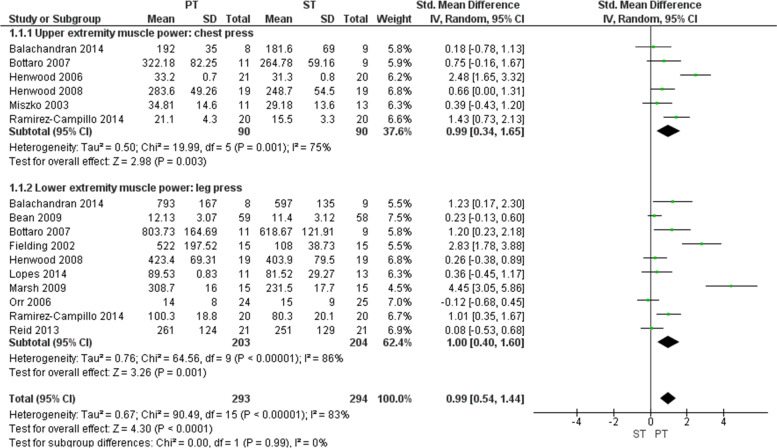
- The main meta-analysis included 15 trials and 583 participants; power training was superior to strength training for muscle power (SMD 0.99, 95% CI 0.54–1.44, p < 0.001).
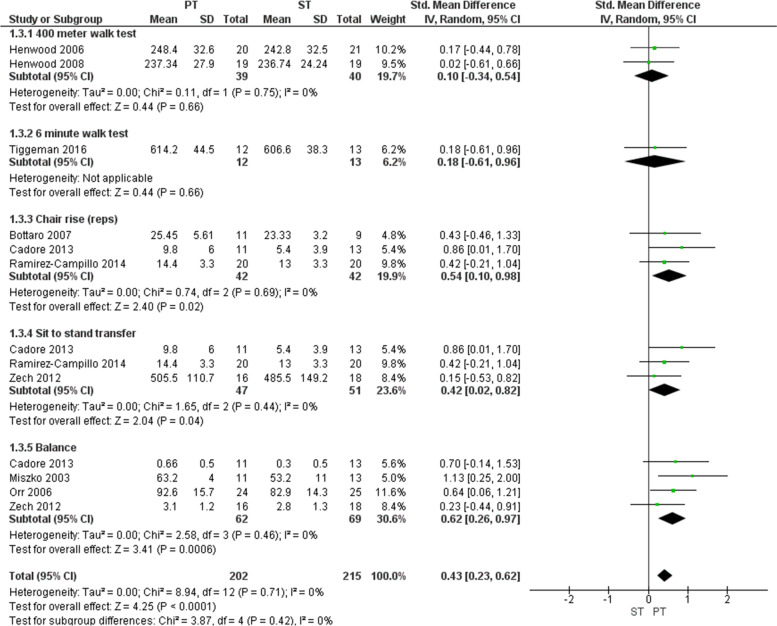
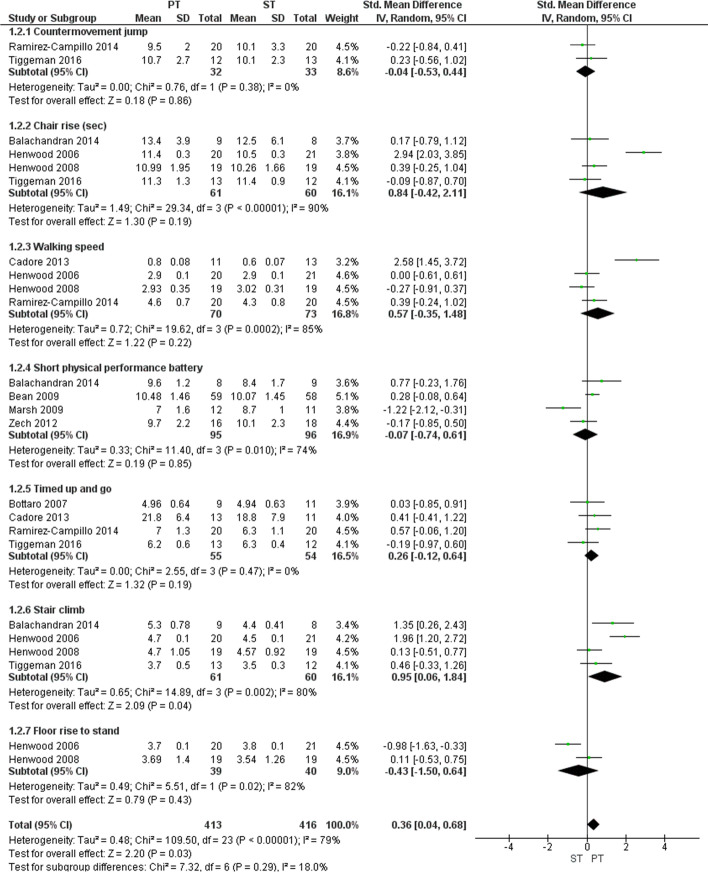
- In the results section and GRADE table, power training also improved generic activity tests (SMD 0.43, 95% CI 0.23–0.62, p < 0.001) and activity tests emphasizing movement speed (SMD 0.36, 95% CI 0.06–0.68, p = 0.02).
- Secondary analyses versus non-training favored power training for muscle power (SMD 1.12, 95% CI 0.75–1.48, p < 0.001), generic tests (SMD 0.73, 95% CI 0.48–0.99, p < 0.001), and speed tests (SMD 0.74, 95% CI 0.50–0.98, p < 0.001).
- None of the included studies used physical activity level in daily life as an outcome.
Methods
- Systematic review and meta-analysis of randomized controlled trials comparing power training with strength training in older adults (mean age > 65 years), registered in PROSPERO (CRD42020167877) and reported per PRISMA.
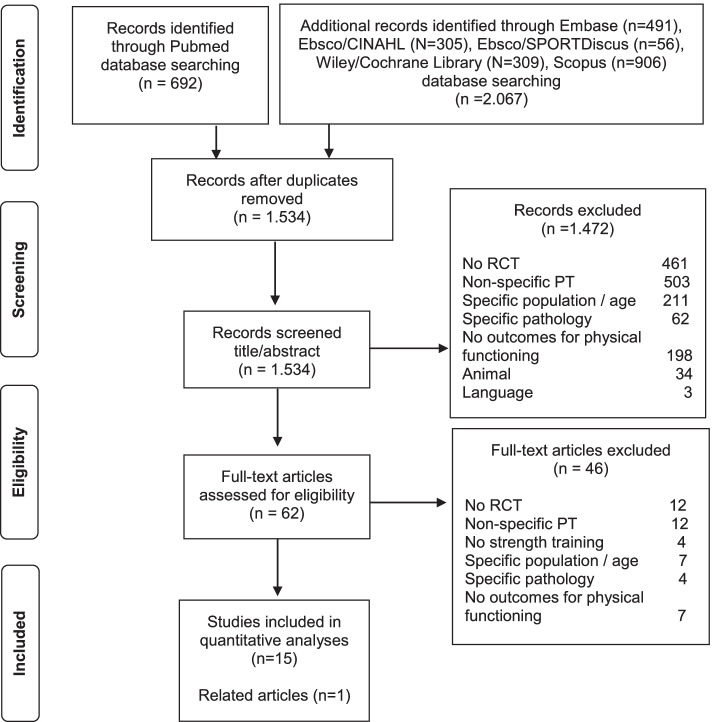
- Searched PubMed, Embase, Ebsco/CINAHL, Ebsco/SPORTDiscus, Wiley/Cochrane Library, and Scopus through 18 September 2020, plus grey literature; 15 trials and 583 participants were included in the main meta-analysis.
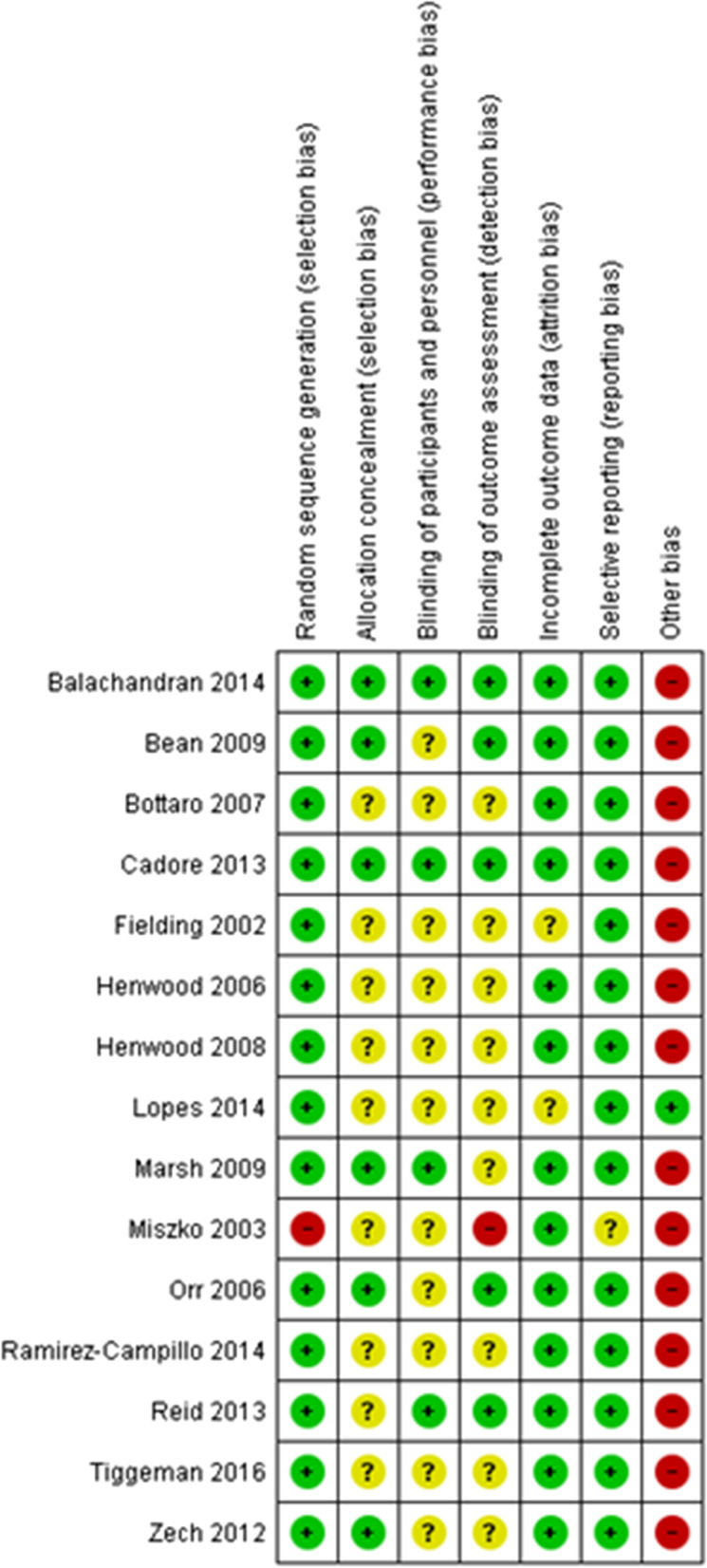
- Outcomes were grouped into muscle power, generic activity tests, activity tests emphasizing movement speed, and physical activity level; random-effects standardized mean differences with 95% CIs were calculated, with risk of bias assessed by the Cochrane tool and quality by GRADE and PEDro.
Limitations
- Stated by the paper: substantial variability in activity-based tests; lack of detailed intervention protocols prevented verification that workload, rest intervals, exercises, muscle groups, and ranges of motion were comparable; baseline muscle power loss and age-, sex-, or ethnicity-related differences were not accounted for; power training intensity/approach was heterogeneous; no long-term follow-up beyond post-intervention; publication bias was possible for muscle power.
- Evident in the text: high statistical heterogeneity for muscle power (upper extremity I² = 75%; lower extremity I² = 86%) and speed tests (I² = 78%); the abstract and results/GRADE table report inconsistent SMDs/labels for generic versus speed tests; and the text and Table 2 disagree on GRADE certainty for upper versus lower extremity muscle power.
Model-written summary. Check it against the paper before relying on it.
Integrity signals
Registry
Cites
Statistics
Figures
Verification
Claims the paper makes
9 Valid · 1 Not valid · 6 Not checked · 61 Own results and interpretations
The cited sources support only part of this claim — read each source’s verdict below.
In the paper
“Several studies have revealed that the annual decline in muscle power is larger than the annual decline in muscle strength in older adults [10–16].”
- Also stated in: § Introduction · boosted
“However, the conclusion that muscle power declined more rapidly than muscle strength was consistent.”
§ Effectiveness of power training compared to strength training in older adults: a systematic review and meta-analysis > Introduction
What the sources say
- Partly supportedcites [10] Strotmeyer ES Winger ME Cauley JA Normative values of muscle power using force plate jump tests in men aged 77-101 years: the osteoporotic fractures in men (MROS) study J Nutr Heal Aging. 2018 22 10 1167 1175 10.1007/s12603-018-1081-x PMC8963464 30498822 sourceExperimental — accuracy not yet measured
The Introduction says age-related muscle power decline is more marked than strength decline. The Discussion reports 10% lower power versus 3% lower force across successive five-year age groups, but these are cross-sectional differences among men aged 77–101, not measured annual declines in older adults generally. Page numbers were not provided in our copy. (LLM, conf=0.86)
- Supportedcites [11] Wiegmann S Felsenberg D Armbrecht G Dietzel R Longitudinal changes in muscle power compared to muscle strength and mass J Musculoskelet Neuronal Interact 2021 21 1 13 25 33657752 PMC8020018 source
The Discussion reports that in this 6-year longitudinal study, both 2LJP and CRTP showed a significantly higher reduction in the oldest age group than the muscle-strength and body-composition variables, with an annualised muscle-power decline of -1.84% to -3.5% per year for the 70+ group. The Results (Absolute longitudinal change of muscle power, strength and mass) and Abstract likewise give annualised absolute declines, with 2LJP significantly different from all muscle mass and strength variables (p<0.01) in older participants, and the Discussion states that power 'declined earlier and more extensively than other muscle parameters in women and in men.' This matches the claim's comparative annual-decline statement for older adults. (LLM, conf=0.85)
- Not checked — no full text of the sourcecites [12] Delmonico MJ Harris TB Visser M Longitudinal study of muscle strength, quality, and adipose tissue infiltration Am J Clin Nutr 2009 90 6 1579 1585 10.3945/ajcn.2009.28047 19864405 PMC2777469 source
- Supportedcites [13] Dionyssiotis Y Galanos A Michas G Trovas G Lyritis GP Assessment of musculoskeletal system in women with jumping mechanography Int J Women's Health 2009 1 1 113 118 10.2147/ijwh.s5889 PMC2971710 21072281 source
The Discussion reports that muscle power is lost more rapidly than force between ages 65 and 90: approximately 3.5% per year versus 1.8% per year. The paper attributes those figures to Skelton and colleagues, but it reports the comparison the citing sentence describes. (LLM, conf=0.91)
- Not checked — no full text of the sourcecites [14] Dietzel R Gast U Heine T Felsenberg D Armbrecht G Cross-sectional assessment of neuromuscular function using mechanography in women and men aged 20-85 years J Musculoskelet Neuronal Interact 2013 13 3 274 281 23989252
- Not checked — no full text of the sourcecites [15] Skelton, A. Y, C.A. G, K.E. M. Effects of resistance training on strength, power, and selected functional abilities of women aged 75 and older. J Am Geriatr Soc 1995;43(10):1081–1087. 10.1111/j.1532-5415.1995.tb07004.x. 7560695 source
- Not checked — no full text of the sourcecites [16] Metter EJ, Conwit R, Tobin J, Fozard JL. Age-associated loss of power and strength in the upper extremities in women and men. J Gerontol - Ser A Biol Sci Med Sci. 1997;52(5). 10.1093/gerona/52A.5.B267. 9310077 source
boostedstates an association- Asserted: passes — The authors put it forward as true.
- Checkable: passes — It can be checked against evidence.
- Load-bearing: passes — The paper’s conclusions depend on it.
- Based: passes — The paper gives a reason why it holds.
- Also stated in: § Introduction · boosted
The cited sources support only part of this claim — read each source’s verdict below.
In the paper
“Several studies have shown that training specifically aimed at increasing muscle power can improve the ability to generate high power output even in older adults [7, 17, 18].”
§ Effectiveness of power training compared to strength training in older adults: a systematic review and meta-analysis > Introduction
What the sources say
- Partly supportedcites [7] Miszko TA Cress ME Slade JM Covey CJ Agrawal SK Doerr CE Effect of strength and power training on physical function in community-dwelling older adults J Gerontol A Biol Sci Med Sci 2003 58 2 171 175 10.2144/000112656 12586856 sourceExperimental — accuracy not yet measured
The introduction says older adults who train for muscle power are more powerful than those who do not, and the Discussion reports that other researchers found improvements after power training. But this paper’s own trial found no significant improvement in anaerobic power, so it does not itself demonstrate the claimed increase in power output. (LLM, conf=0.86)
- Not checked — no full text of the sourcecites [17] Foldvari M, Clark M, Laviolette LC, et al. Association of muscle power with functional status in community-dwelling elderly women. J Gerontol - Ser A Biol Sci. Med Sci. 2000;55(4). 10.1093/gerona/55.4.M192. 10811148 source
- Not checked — no full text of the sourcecites [18] Sayers SP Gibson K A comparison of high-speed power training and traditional slow-speed resistance training in older men and women J Strength Cond Res 2010 24 12 3369 3380 10.1519/JSC.0b013e3181f00c7c 21068681 source
plainstates a cause- Asserted: passes — The authors put it forward as true.
- Checkable: passes — It can be checked against evidence.
- Load-bearing: passes — The paper’s conclusions depend on it.
- Based: passes — The paper gives a reason why it holds.
- Partly supported
The sources with a verdict support this claim; the rest weren’t checked yet, have no full text we could read, or their verdicts aren’t rated yet.
In the paper
“Power training consequently also improved physical functioning in daily life.”
§ Effectiveness of power training compared to strength training in older adults: a systematic review and meta-analysis > Introduction
What the sources say
- Supportedcites [3] Bean JF Kiely DK LaRose S O’Neill E Goldstein R Frontera WR Increased velocity exercise specific to task training versus the national institute on aging’s strength training program: changes in limb power and mobility J Gerontol - Ser A Biol Sci Med Sci. 2009 64 9 983 991 10.1093/gerona/glp056 19414509 PMC2720885 source
The Outcomes section (p. 5) reports significant improvements in observed physical performance and self-reported function after 16 weeks of training. Both the power-focused InVEST group and the strength-training comparison group improved; the paper does not find a significant difference in functioning between them. (LLM, conf=0.90)
- Not checked — no full text of the sourcecites [4] Bottaro M Machado SN Nogueira W Scales R Veloso J Effect of high versus low-velocity resistance training on muscular fitness and functional performance in older men Eur J Appl Physiol 2007 99 3 257 264 10.1007/s00421-006-0343-1 17146693 source
- Supportedcites [7] Miszko TA Cress ME Slade JM Covey CJ Agrawal SK Doerr CE Effect of strength and power training on physical function in community-dwelling older adults J Gerontol A Biol Sci Med Sci 2003 58 2 171 175 10.2144/000112656 12586856 source
The Physical Function section describes the CS-PFP as a test of 16 everyday tasks and reports significantly higher total scores after power training than after strength training or usual activity. The Conclusions state that power training improved whole-body physical function in community-dwelling older adults. The study measured performance on everyday tasks in a test, rather than observing activity in participants’ homes. (LLM, conf=0.90)
- Not checked — no full text of the sourcecites [8] Tschopp M, Sattelmayer MK, Hilfiker R. Is power training or conventional resistance training better for function in elderly persons? A meta-analysis Age Ageing Published online 2011. 10.1093/ageing/afr005. 21383023 source
- Not checked — no full text of the sourcecites [17] Foldvari M, Clark M, Laviolette LC, et al. Association of muscle power with functional status in community-dwelling elderly women. J Gerontol - Ser A Biol Sci. Med Sci. 2000;55(4). 10.1093/gerona/55.4.M192. 10811148 source
- Not checked — no full text of the sourcecites [18] Sayers SP Gibson K A comparison of high-speed power training and traditional slow-speed resistance training in older men and women J Strength Cond Res 2010 24 12 3369 3380 10.1519/JSC.0b013e3181f00c7c 21068681 source
- Not checked — no full text of the sourcecites [19] Ramirez-Campillo R Castillo A de la Fuente CI High-speed resistance training is more effective than low-speed resistance training to increase functional capacity and muscle performance in older women Exp Gerontol 2014 58 51 57 10.1016/j.exger.2014.07.001 25014621 source
- Not checked — no full text of the sourcecites [20] Steib S, Schoene D, Pfeifer K. Dose-response relationship of resistance training in older adults: A meta-analysis. Med Sci Sports Exerc Published online 2010. 10.1249/MSS.0b013e3181c34465. 19996996 source
plainstates a cause- Asserted: passes — The authors put it forward as true.
- Checkable: passes — It can be checked against evidence.
- Load-bearing: passes — The paper’s conclusions depend on it.
- Based: passes — The paper gives a reason why it holds.
- Supported
The cited sources support only part of this claim — read each source’s verdict below.
In the paper
“The effects appeared even larger than after strength training and endurance training [3, 4, 7, 8, 17–20].”
§ Effectiveness of power training compared to strength training in older adults: a systematic review and meta-analysis > Introduction
What the sources say
- Partly supportedcites [3] Bean JF Kiely DK LaRose S O’Neill E Goldstein R Frontera WR Increased velocity exercise specific to task training versus the national institute on aging’s strength training program: changes in limb power and mobility J Gerontol - Ser A Biol Sci Med Sci. 2009 64 9 983 991 10.1093/gerona/glp056 19414509 PMC2720885 sourceExperimental — accuracy not yet measured
The Results table (p. 6) shows a numerically larger improvement in physical performance after InVEST power training than after NIA strength training (SPPB: 1.75 versus 1.42 points). The Discussion (p. 6) says the between-group difference was not statistically significant, and the study did not compare power training with endurance training. (LLM, conf=0.86)
- Not checked — no full text of the sourcecites [4] Bottaro M Machado SN Nogueira W Scales R Veloso J Effect of high versus low-velocity resistance training on muscular fitness and functional performance in older men Eur J Appl Physiol 2007 99 3 257 264 10.1007/s00421-006-0343-1 17146693 source
- Partly supportedcites [7] Miszko TA Cress ME Slade JM Covey CJ Agrawal SK Doerr CE Effect of strength and power training on physical function in community-dwelling older adults J Gerontol A Biol Sci Med Sci 2003 58 2 171 175 10.2144/000112656 12586856 sourceExperimental — accuracy not yet measured
The Physical Function section reports significantly higher whole-body physical-function scores after power training than after strength training. The Discussion mentions an earlier combined strength-and-endurance program, but this study did not compare power training with endurance training, so it does not establish that the effects were larger than after endurance training. (LLM, conf=0.86)
- Not checked — no full text of the sourcecites [8] Tschopp M, Sattelmayer MK, Hilfiker R. Is power training or conventional resistance training better for function in elderly persons? A meta-analysis Age Ageing Published online 2011. 10.1093/ageing/afr005. 21383023 source
- Not checked — no full text of the sourcecites [17] Foldvari M, Clark M, Laviolette LC, et al. Association of muscle power with functional status in community-dwelling elderly women. J Gerontol - Ser A Biol Sci. Med Sci. 2000;55(4). 10.1093/gerona/55.4.M192. 10811148 source
- Not checked — no full text of the sourcecites [18] Sayers SP Gibson K A comparison of high-speed power training and traditional slow-speed resistance training in older men and women J Strength Cond Res 2010 24 12 3369 3380 10.1519/JSC.0b013e3181f00c7c 21068681 source
- Not checked — no full text of the sourcecites [19] Ramirez-Campillo R Castillo A de la Fuente CI High-speed resistance training is more effective than low-speed resistance training to increase functional capacity and muscle performance in older women Exp Gerontol 2014 58 51 57 10.1016/j.exger.2014.07.001 25014621 source
- Not checked — no full text of the sourcecites [20] Steib S, Schoene D, Pfeifer K. Dose-response relationship of resistance training in older adults: A meta-analysis. Med Sci Sports Exerc Published online 2010. 10.1249/MSS.0b013e3181c34465. 19996996 source
hedgedstates a cause- Asserted: passes — The authors put it forward as true.
- Checkable: passes — It can be checked against evidence.
- Load-bearing: passes — The paper’s conclusions depend on it.
- Based: passes — The paper gives a reason why it holds.
- Partly supported
The cited sources support only part of this claim — read each source’s verdict below.
In the paper
“in daily activities, such as getting up from a chair, the ability to move with a sufficiently large speed (emphasizing muscle power) is more often the limitating factor than the ability to produce a sufficiently large moment [10, 17].”
§ Effectiveness of power training compared to strength training in older adults: a systematic review and meta-analysis > Introduction
What the sources say
- Partly supportedcites [10] Strotmeyer ES Winger ME Cauley JA Normative values of muscle power using force plate jump tests in men aged 77-101 years: the osteoporotic fractures in men (MROS) study J Nutr Heal Aging. 2018 22 10 1167 1175 10.1007/s12603-018-1081-x PMC8963464 30498822 sourceExperimental — accuracy not yet measured
The Results (page unavailable) show that, among men aged 77–101 reporting both moderate-activity and stair-climbing limitations, jump velocity was 11% lower and force at peak power was 6% lower than in men without those limitations. This supports an association between lower velocity and daily-activity limitations, but the paper does not establish that speed is more often the limiting factor than the ability to produce joint moment, including when rising from a chair. (LLM, conf=0.84)
- Not checked — no full text of the sourcecites [17] Foldvari M, Clark M, Laviolette LC, et al. Association of muscle power with functional status in community-dwelling elderly women. J Gerontol - Ser A Biol Sci. Med Sci. 2000;55(4). 10.1093/gerona/55.4.M192. 10811148 source
plainstates a cause- Asserted: passes — The authors put it forward as true.
- Checkable: passes — It can be checked against evidence.
- Load-bearing: passes — The paper’s conclusions depend on it.
- Based: passes — The paper gives a reason why it holds.
- Partly supported
36 more claims
Create a free account to see all 77 claims and to verify the 1 reference still open.
- It may state two separate claims as one. 18
- Probably not a substantial claim. 22
Self-check
Percentages, sums and reported differences re-computed from the paper’s own numbers.
Each contradiction between two passages listed here was confirmed by an independent check.
Rated major: it would touch a result — a value a result rests on, reported and recomputed p-values on opposite sides of the significance level, two passages that conflict with no sign which is right, or a cited work retracted before this paper was published.
In the paper
§ Effectiveness of power training compared to strength training in older adults: a systematic review and meta-analysis > Abstract > Results
“activity-based tests emphasizing movement speed SMD: 0.43, 95% CI 0.23 to 0.62, p < 0.001”
§ Effectiveness of power training compared to strength training in older adults: a systematic review and meta-analysis > Results > Activity tests with an emphasis on movement speed
“The overall effect was calculated by pooling the effects of each subgroup analysis, which showed a significant benefit of power training compared to strength training (SMD: 0.36, 95% CI 0.06 to 0.68, p = 0.02).”
Rated major: it would touch a result — a value a result rests on, reported and recomputed p-values on opposite sides of the significance level, two passages that conflict with no sign which is right, or a cited work retracted before this paper was published.
In the paper
§ Effectiveness of power training compared to strength training in older adults: a systematic review and meta-analysis > Abstract > Results
“generic activity-based tests SMD: 0.37, 95% CI 0.06 to 0.68; p = 0.02”
§ Effectiveness of power training compared to strength training in older adults: a systematic review and meta-analysis > Results > Generic activity tests
“The overall effect of functional performance was calculated by pooling the effects of all subgroup analyses, which showed a significant benefit of power training over strength training (SMD: 0.43, 95% CI 0.23 to 0.62, p < 0.001).”
Rated major: it would touch a result — a value a result rests on, reported and recomputed p-values on opposite sides of the significance level, two passages that conflict with no sign which is right, or a cited work retracted before this paper was published.
In the paper
§ Effectiveness of power training compared to strength training in older adults: a systematic review and meta-analysis > Results > Quality of evidence
“The effect estimates for LE muscle power, generic and speed-based activity tests, were scored as having a ‘high’ amount of certainty, while UE muscle power was scored as having a ‘moderate amount’ of certainty.”
§ Effectiveness of power training compared to strength training in older adults: a systematic review and meta-analysis > Results > Outcome assessment
“SMD 0.99 SD higher(0.34 higher to 1.65 higher) | ⨁⨁⨁⨁ HIGH | IMPORTANT |”
Rated minor: it would not touch a result — a value no result rests on, a p-value that stays on the same side of the significance level, or a conflict that is clerical, resolved elsewhere in the paper, or outside its own findings.
In the paper
§ Effectiveness of power training compared to strength training in older adults: a systematic review and meta-analysis > Results > Outcome assessment
“SMD 0.36 SD higher(0.04 higher to 0.6 higher)”
§ Effectiveness of power training compared to strength training in older adults: a systematic review and meta-analysis > Results > Activity tests with an emphasis on movement speed
“SMD: 0.36, 95% CI 0.06 to 0.68, p = 0.02”
Rated minor: it would not touch a result — a value no result rests on, a p-value that stays on the same side of the significance level, or a conflict that is clerical, resolved elsewhere in the paper, or outside its own findings.
In the paper
“| Bean et al. (2009) [3] | ST | 3x/wk. for 16 wks | 11–16 RPE | 58 | 76.1 (6.9) | 45 (68%) |”
§ Effectiveness of power training compared to strength training in older adults: a systematic review and meta-analysis > Results > Outcome assessment
Reported 68 · recomputed 77.586207
3 more findings
Create a free account to see every finding of this check.
Citations
Cites
Preferred Reporting Items for Systematic Reviews and Meta-Analyses: the PRISMA statement
Moher, D., Liberati, A., Tetzlaff, J., Altman, D. G., & for the PRISMA Group (2009) · BMJ · doi:10.1136/bmj.b2535 · Cited by 83,823
Preferred Reporting Items for Systematic Reviews and Meta-Analyses: The PRISMA Statement
Moher, D., Liberati, A., Tetzlaff, J., Altman, D. G., & The PRISMA Group (2009) · PLoS Medicine · doi:10.1371/journal.pmed.1000097 · Cited by 64,042
Rayyan-a web and mobile app for systematic reviews.
Ouzzani, M., Hammady, H., Fedorowicz, Z., & Elmagarmid, A. (2016) · Systematic Reviews · doi:10.1186/s13643-016-0384-4 · Cited by 26,092
Wang, G., Ma, R., Qiao, G., Wada, K., Aizawa, Y., & Satoh, T. (2015) · Integrative Medicine International · doi:10.1159/000368408 · Cited by 18,657
Garber, C. E., Blissmer, B., Deschenes, M. R., Franklin, B. A., Lamonte, M. J., Lee, I.-M., Nieman, D. C., & Swain, D. P. (2011) · Medicine & Science in Sports & Exercise · doi:10.1249/mss.0b013e318213fefb · Cited by 9,319 · cited 1×
“In these guidelines a minimum duration of 6 weeks is recommended for a measurable improvement caused by increased neurological efficiency [41].”
BackgroundSterne, J. A. C., Sutton, A. J., Ioannidis, J. P. A., Terrin, N., Jones, D. R., Lau, J., Carpenter, J., Rucker, G., Harbord, R. M., Schmid, C. H., et al. (2011) · BMJ · doi:10.1136/bmj.d4002 · Cited by 7,709 · cited 1×
“Despite our efforts to evaluate publication bias through the use of funnel plots, we acknowledge that asymmetry could also be caused by small sample sizes and poor methodological quality of the included studies [50].”
BackgroundConstitution of the World Health Organization
(1946) · American Journal of Public Health and the Nations Health · doi:10.2105/ajph.36.11.1315 · Cited by 2,519
Investigating and dealing with publication and other biases in meta-analysis
Sterne, J. A. C., Egger, M., & Smith, G. D. (2001) · BMJ · doi:10.1136/bmj.323.7304.101 · Cited by 2,225 · cited 1×
“In a symmetrical funnel plot the intercept on the X-axis should be close to 0, whereas with asymmetry it deviates considerably from 0 and suggests publication bias [27].”
BackgroundLongitudinal study of muscle strength, quality, and adipose tissue infiltration
Delmonico, M. J., Harris, T. B., Visser, M., Park, S. W., Conroy, M. B., Velasquez-Mieyer, P., Boudreau, R., Manini, T. M., Nevitt, M., Newman, A. B., et al. (2009) · The American Journal of Clinical Nutrition · doi:10.3945/ajcn.2009.28047 · Cited by 1,446
Cadore, E. L., Rodríguez-Mañas, L., Sinclair, A., & Izquierdo, M. (2013) · Rejuvenation Research · doi:10.1089/rej.2012.1397 · Cited by 954
Leg extensor power and functional performance in very old men and women.
Bassey, E. J., Fiatarone, M. A., O'neill, E. F., Kelly, M., Evans, W. J., & Lipsitz, L. A. (1992) · Clinical Science · doi:10.1042/cs0820321 · Cited by 943
Skeletal muscle performance and ageing
Tieland, M., Trouwborst, I., & Clark, B. C. (2018) · Journal of Cachexia, Sarcopenia and Muscle · doi:10.1002/jcsm.12238 · Cited by 904
Association of Muscle Power With Functional Status in Community-Dwelling Elderly Women
Foldvari, M., Clark, M., Laviolette, L. C., Bernstein, M. A., Kaliton, D., Castaneda, C., Pu, C. T., Hausdorff, J. M., Fielding, R. A., & Singh, M. A. F. (2000) · The Journals of Gerontology Series A: Biological Sciences and Medical Sciences · doi:10.1093/gerona/55.4.m192 · Cited by 653 · cited 3×
“Thus, age-related decrease in muscle power is determined by a decrease in velocity more than by a decrease in force produced, indicating that training should emphasize velocity more than force [10, 17].”
BackgroundAge-Associated Loss of Power and Strength in the Upper Extremities in Women and Men
Metter, E. J., Conwit, R., Tobin, J., & Fozard, J. L. (1997) · The Journals of Gerontology Series A: Biological Sciences and Medical Sciences · doi:10.1093/gerona/52a.5.b267 · Cited by 592
Skelton, D. A., Young, A., Greig, C. A., & Malbut, K. E. (1995) · Journal of the American Geriatrics Society · doi:10.1111/j.1532-5415.1995.tb07004.x · Cited by 451
High-Velocity Resistance Training Increases Skeletal Muscle Peak Power in Older Women
Fielding, R. A., LeBrasseur, N. K., Cuoco, A., Bean, J., Mizer, K., & Singh, M. A. F. (2002) · Journal of the American Geriatrics Society · doi:10.1046/j.1532-5415.2002.50159.x · Cited by 446 · cited 1×
“Five studies were considered to have ‘good’ internal validity [3, 30, 33, 35, 38], 8 studies were classified as ‘poor’ to ‘fair’ [4, 5, 9, 29, 31, 32, 37, 39], and 1 study was classified as having ‘poor’ interal validity [7].”
BackgroundHaff, G. G., & Nimphius, S. (2012) · Strength & Conditioning Journal · doi:10.1519/ssc.0b013e31826db467 · Cited by 427 · cited 1×
“This was assessed in two ways: (1) the authors defined their intervention as power training; or (2) the intervention met the definition of muscle power training proposed by Haff and colleges [24]: “an intervention primarily aimed at muscle power, movement speed or rate of force development”; (c) the study included out…”
MethodEffect of strength and power training on physical function in community-dwelling older adults.
Miszko, T. A., Cress, M. E., Slade, J. M., Covey, C. J., Agrawal, S. K., & Doerr, C. E. (2003) · The Journals of Gerontology Series A: Biological Sciences and Medical Sciences · doi:10.1093/gerona/58.2.m171 · Cited by 391
Dose-Response Relationship of Resistance Training in Older Adults: A Meta-Analysis
STEIB, S., SCHOENE, D., & PFEIFER, K. (2010) · Medicine & Science in Sports & Exercise · doi:10.1249/mss.0b013e3181c34465 · Cited by 378 · cited 2×
“These results support the findings of previous intervention studies [3, 4, 7, 8–, 17–20] and systematic reviews [8, 20], both of which found power training to be more effective at improving physical and functional outcomes.”
BackgroundResultNewton, R. U., Murphy, A. J., Humphries, B. J., Wilson, G. J., Kraemer, W. J., & H�kkinen, K. (1997) · European Journal of Applied Physiology · doi:10.1007/s004210050169 · Cited by 377
Hortobágyi, T., Dempsey, L., Fraser, D., Zheng, D., Hamilton, G., Lambert, J., & Dohm, L. (2000) · The Journal of Physiology · doi:10.1111/j.1469-7793.2000.00293.x · Cited by 354
Power training improves balance in healthy older adults.
Orr, R., de Vos, N. J., Singh, N. A., Ross, D. A., Stavrinos, T. M., & Fiatarone-Singh, M. A. (2006) · The Journals of Gerontology Series A: Biological Sciences and Medical Sciences · doi:10.1093/gerona/61.1.78 · Cited by 337 · cited 1×
“Five studies were considered to have ‘good’ internal validity [3, 30, 33, 35, 38], 8 studies were classified as ‘poor’ to ‘fair’ [4, 5, 9, 29, 31, 32, 37, 39], and 1 study was classified as having ‘poor’ interal validity [7].”
BackgroundShort-Term Performance Effects of High Power, High Force, or Combined Weight-Training Methods
HARRIS, G. R., STONE, M. H., OʼBRYANT, H. S., PROULX, C. M., & JOHNSON, R. L. (2000) · Journal of Strength and Conditioning Research · doi:10.1519/00124278-200002000-00003 · Cited by 337
Optimal load for increasing muscle power during explosive resistance training in older adults.
de Vos, N. J., Singh, N. A., Ross, D. A., Stavrinos, T. M., Orr, R., & Fiatarone Singh, M. A. (2005) · The Journals of Gerontology Series A: Biological Sciences and Medical Sciences · doi:10.1093/gerona/60.5.638 · Cited by 309
Bottaro, M., Machado, S. N., Nogueira, W., Scales, R., & Veloso, J. (2007) · European Journal of Applied Physiology · doi:10.1007/s00421-006-0343-1 · Cited by 305
Strength versus muscle power-specific resistance training in community-dwelling older adults.
Henwood, T. R., Riek, S., & Taaffe, D. R. (2008) · The Journals of Gerontology: Series A · doi:10.1093/gerona/63.1.83 · Cited by 265 · cited 1×
“Five studies were considered to have ‘good’ internal validity [3, 30, 33, 35, 38], 8 studies were classified as ‘poor’ to ‘fair’ [4, 5, 9, 29, 31, 32, 37, 39], and 1 study was classified as having ‘poor’ interal validity [7].”
BackgroundCaserotti, P., Aagaard, P., Buttrup Larsen, J., & Puggaard, L. (2008) · Scandinavian Journal of Medicine & Science in Sports · doi:10.1111/j.1600-0838.2007.00732.x · Cited by 254 · cited 1×
“These findings signify the potential importance of emphasizing muscle power in the training and rehabilitation of older adults instead of focusing on strength [6].”
BackgroundByrne, C., Faure, C., Keene, D. J., & Lamb, S. E. (2016) · Sports Medicine · doi:10.1007/s40279-016-0489-x · Cited by 234 · cited 1×
“[40] found that muscle power was a superior predictor of functional performance compared to muscle strength, however, pooled effect estimates were not provided.”
BackgroundRamírez-Campillo, R., Castillo, A., de la Fuente, C. I., Campos-Jara, C., Andrade, D. C., Álvarez, C., Martínez, C., Castro-Sepúlveda, M., Pereira, A., Marques, M. C., et al. (2014) · Experimental Gerontology · doi:10.1016/j.exger.2014.07.001 · Cited by 212
Mangine, G. T., Hoffman, J. R., Gonzalez, A. M., Townsend, J. R., Wells, A. J., Jajtner, A. R., Beyer, K. S., Boone, C. H., Miramonti, A. A., Wang, R., et al. (2015) · Physiological Reports · doi:10.14814/phy2.12472 · Cited by 204 · cited 1×
“A period to 8-weeks is considered to be the minimum amount of time required for physiological changes in muscle structure and strength [42, 43].”
BackgroundTschopp, M., Sattelmayer, M. K., & Hilfiker, R. (2011) · Age and Ageing · doi:10.1093/ageing/afr005 · Cited by 187
Van Roie, E., Delecluse, C., Coudyzer, W., Boonen, S., & Bautmans, I. (2013) · Experimental Gerontology · doi:10.1016/j.exger.2013.08.010 · Cited by 178 · cited 1×
“Other age- (young old versus oldest old), sex-, or ethnicity-related differences between participants were also not accounted for, but are important determinants of the decrease in muscle power with increasing age [11, 13, 44].”
BackgroundHenwood, T. R., & Taaffe, D. R. (2006) · Clinical Physiology and Functional Imaging · doi:10.1111/j.1475-097x.2006.00695.x · Cited by 158
Lower extremity muscle function after strength or power training in older adults.
Marsh, A. P., Miller, M. E., Rejeski, W. J., Hutton, S. L., & Kritchevsky, S. B. (2009) · Journal of Aging and Physical Activity · doi:10.1123/japa.17.4.416 · Cited by 155
Balachandran, A., Krawczyk, S. N., Potiaumpai, M., & Signorile, J. F. (2014) · Experimental Gerontology · doi:10.1016/j.exger.2014.09.016 · Cited by 151 · cited 1×
“Five studies were considered to have ‘good’ internal validity [3, 30, 33, 35, 38], 8 studies were classified as ‘poor’ to ‘fair’ [4, 5, 9, 29, 31, 32, 37, 39], and 1 study was classified as having ‘poor’ interal validity [7].”
BackgroundReid, K. F., Martin, K. I., Doros, G., Clark, D. J., Hau, C., Patten, C., Phillips, E. M., Frontera, W. R., & Fielding, R. A. (2015) · The Journals of Gerontology Series A: Biological Sciences and Medical Sciences · doi:10.1093/gerona/glu156 · Cited by 146
Maximal strength and power, endurance performance, and serum hormones in middle-aged and elderly men
IZQUIERDO, M., H??KKINEN, K., ANT??N, A., GARRUES, M., IBA??EZ, J., RUESTA, M., & GOROSTIAGA, E. M. (2001) · Medicine & Science in Sports & Exercise · doi:10.1097/00005768-200109000-00022 · Cited by 142
Zech, A., Drey, M., Freiberger, E., Hentschke, C., Bauer, J. M., Sieber, C. C., & Pfeifer, K. (2012) · BMC Geriatrics · doi:10.1186/1471-2318-12-68 · Cited by 141 · cited 1×
“Five studies were considered to have ‘good’ internal validity [3, 30, 33, 35, 38], 8 studies were classified as ‘poor’ to ‘fair’ [4, 5, 9, 29, 31, 32, 37, 39], and 1 study was classified as having ‘poor’ interal validity [7].”
BackgroundBean, J. F., Kiely, D. K., LaRose, S., O'Neill, E., Goldstein, R., & Frontera, W. R. (2009) · The Journals of Gerontology Series A: Biological Sciences and Medical Sciences · doi:10.1093/gerona/glp056 · Cited by 138
Sayers, S. P., & Gibson, K. (2010) · Journal of Strength and Conditioning Research · doi:10.1519/jsc.0b013e3181f00c7c · Cited by 112 · cited 1×
“Several studies have shown that training specifically aimed at increasing muscle power can improve the ability to generate high power output even in older adults [7, 17, 18].”
BackgroundTiggemann, C. L., Dias, C. P., Radaelli, R., Massa, J. C., Bortoluzzi, R., Schoenell, M. C. W., Noll, M. A., Alberton, C. L., & Kruel, L. F. M. (2016) · AGE · doi:10.1007/s11357-016-9904-3 · Cited by 75
Drey, M., Zech, A., Freiberger, E., Bertsch, T., Uter, W., Sieber, C. C., Pfeifer, K., & Bauer, J. M. (2012) · Gerontology · doi:10.1159/000332207 · Cited by 70
Assessment of musculoskeletal system in women with jumping mechanography
Dionyssiotis, Y. (2009) · International Journal of Women's Health · doi:10.2147/ijwh.s5889 · Cited by 32
Strotmeyer, E. S., Winger, M. E., Cauley, J. A., Boudreau, R. M., Cusick, D., Collins, R. F., Chalhoub, D., Buehring, B., Orwoll, E., Harris, T. B., et al. (2018) · The Journal of nutrition, health and aging · doi:10.1007/s12603-018-1081-x · Cited by 32 · cited 2×
“Thus, age-related decrease in muscle power is determined by a decrease in velocity more than by a decrease in force produced, indicating that training should emphasize velocity more than force [10, 17].”
BackgroundLongitudinal changes in muscle power compared to muscle strength and mass
Wiegmann, S., Felsenberg, D., Armbrecht, G., & Dietzel, R. (2021) · Charité - Universitätsmedizin Berlin · doi:10.17169/refubium-29868 · Cited by 26
(2013) · PubMed · Cited by 25
Comparison Between Strength and Power Training on Elderly Force-Generating Ability
Lopes, P. B., Pereira, G., Martins de Souza, D., & Felix Rodacki, A. L. (2014) · Topics in Geriatric Rehabilitation · doi:10.1097/tgr.0000000000000033 · Cited by 17 · cited 1×
“Five studies were considered to have ‘good’ internal validity [3, 30, 33, 35, 38], 8 studies were classified as ‘poor’ to ‘fair’ [4, 5, 9, 29, 31, 32, 37, 39], and 1 study was classified as having ‘poor’ interal validity [7].”
BackgroundDorman, N. M. (2007) · BioTechniques · doi:10.2144/000112656 · Cited by 9
Research works printed but not linked: 2
- Ramirez-Campillo R Castillo A de la Fuente CI High-speed resistance training is more effective than low-speed resistance training to increase functional capacity and muscle performance in older women Exp Gerontol 2014 58 51 57 10.1016/j.exger.2014.07.001 25014621 · DOI · Paper page
- Marsh AP, Miller ME, Sciences B, Rejeski WJ. Training in Older Adults 2015;17(4):416–443. PMC4318571 19940322 · DOI · Paper page
Cited by
Nuñez-Lisboa, M., Valero‐Breton, M., & Dewolf, A. H. (2023) · Frontiers in Physiology · doi:10.3389/fphys.2023.1194889 · Cited by 26
Muscle Power Versus Strength as a Predictor of Mortality in Middle-Aged and Older Men and Women
de Araújo, C. G. S., Kunutsor, S. K., Eijsvogels, T. M. H., MYERS, J. N., Laukkanen, J. A., Hamar, D., Niebauer, J., Bhattacharjee, A., de Silva, C. G. D. S., Franca, J. F., et al. (2025) · Mayo Clinic Proceedings · doi:10.1016/j.mayocp.2025.02.015 · Cited by 33
Polo-Ferrero, L., Martin, M. J., Puente-González, A. S., Barbero-Iglesias, F. J., González-Manzano, S., & Méndez-Sánchez, R. (2025) · Nutrients · doi:10.3390/nu17111822 · Cited by 21
Hernández-Martínez, J., Cid-Calfucura, I., Chiguay, C., Weinberger, M., Delgado‐Floody, P., Muñoz-Vásquez, C., Aristegui-Mondaca, J., Levín-Catrilao, Á., Herrera-Valenzuela, T., Branco, B. H. M., et al. (2024) · Experimental Gerontology · doi:10.1016/j.exger.2024.112553 · Cited by 20
The role of physical activity in mitigating age-related changes in the neuromuscular control of gait
Nuñez-Lisboa, M., & Dewolf, A. H. (2025) · npj Aging · doi:10.1038/s41514-025-00239-8 · Cited by 19
Metadata
- Authors
- el Hadouchi, M., Kiers, H., de Vries, R., Veenhof, C., & van Dieën, J.
- Affiliations
- University of Applied Sciences Utrecht (NL)
- Venue
- European Review of Aging and Physical Activity
- Published
- 2022-08-11
- Volume
- 19
- Issue
- 1
- Pages
- 18-18
- ISSN
- 1813-7253 (ISSN-L)
- 1861-6909
- PMC
- PMC9367108
- OpenAlex
- W4290991958
- Semantic Scholar
- 15b26c09618b955b1fadb3acdac64e49b89bea19
- Cited by
- 35
- References
- 48
- Citations by year
- 2026: 8 · 2025: 18 · 2024: 8 · 2023: 1
- FWCI
- 1.68
- Type
- journal article
- Language
- en
- Open access
- gold
- doi.org
- Licence
- cc-by
- creativecommons.org/licenses/by/4.0 (tdm)
- creativecommons.org/licenses/by/4.0 (vor)
- Locations
- European Review of Aging and Physical Activity (publishedVersion, cc-by)
- PubMed Central (publishedVersion, cc-by)
- PubMed (publishedVersion)
- VU Research Portal (publishedVersion, other-oa)
- Data Archiving and Networked Services (DANS) (submittedVersion, other-oa)
- Funders
- Nederlandse Organisatie voor Wetenschappelijk Onderzoek (NWO 2017/BOO/00279639)
- Topics
- Health Sciences › Health Professions › Physical Therapy, Sports Therapy and Rehabilitation › Balance, Gait, and Falls Prevention
- Health Sciences › Medicine › Physiology (medical) › Nutrition and Health in Aging
- Health Sciences › Medicine › Orthopedics and Sports Medicine › Sports Performance and Training
- Keywords
- power training, resistance training, older adults, muscle power, physical activity level, movement speed, physical function, exercise intervention comparison
About these checks
Registry, retraction, Cites and statistics results are computed, not judged, with one exception: a printed reference that no index lists is read once by a model before it counts as a citation error. Claims are extracted by a model and kept only when their quote appears verbatim in the text; each cited source is then checked, with a model’s help, for whether it says what the claim relies on. Those verdicts can be wrong — read the claim’s quote and the cited source before relying on one.
The claim verdicts this report counts are experimental: their accuracy is not yet measured.
A language model drew the claims from the paper on 2026-10-10, under version 3 of the claim definition (model deepseek-v4.1-flash, prompt extract-v3).
A second model labelled each claim on 2026-10-10 (model jev-1.13-20260917, definition revision gold-guideline-v0.2).
Cited sources are checked with a language model’s help (gpt-6-sol and qwen3.8-omni-flash).
Statistics and arithmetic are recomputed, not judged.
Confidence bands are shown only for fields calibrated on our annotated test set. None is calibrated yet, so no band is shown.
What counts as a claim ›How we measure confidence ›How we check this ›
Are you an author, or do you see a problem with this page? Request a review
Data sources
Bibliographic data: Semantic Scholar, OpenAlex, Crossref.
Contains information from the Semantic Scholar Academic Graph Datasets, made available under the ODC Attribution License (ODC-BY 1.0).
Semantic Scholar’s data is described in: Kinney, R., et al. (2023). The Semantic Scholar Open Data Platform. arXiv:2301.10140.
