

Re-evaluation of the Haarlem Archaeopteryx and the radiation of maniraptoran theropod dinosaurs
Open accessThe DOI matches its Crossref record; 65 of the 65 references it cites were found in a registry or an index; 7 of the 72 sources its claims cite were checked for support.
Abstract
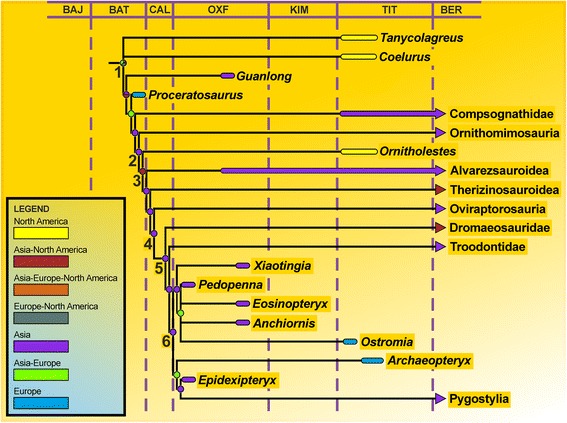
BACKGROUND: Archaeopteryx is an iconic fossil that has long been pivotal for our understanding of the origin of birds. Remains of this important taxon have only been found in the Late Jurassic lithographic limestones of Bavaria, Germany. Twelve skeletal specimens are reported so far. Archaeopteryx was long the only pre-Cretaceous paravian theropod known, but recent discoveries from the Tiaojishan Formation, China, yielded a remarkable diversity of this clade, including the possibly oldest and most basal known clade of avialan, here named Anchiornithidae. However, Archaeopteryx remains the only Jurassic paravian theropod based on diagnostic material reported outside China. RESULTS: Re-examination of the incomplete Haarlem Archaeopteryx specimen did not find any diagnostic features of this genus. In contrast, the specimen markedly differs in proportions from other Archaeopteryx specimens and shares two distinct characters with anchiornithids. Phylogenetic analysis confirms it as the first anchiornithid recorded outside the Tiaojushan Formation of China, for which the new generic name Ostromia is proposed here. CONCLUSIONS: In combination with a biogeographic analysis of coelurosaurian theropods and palaeogeographic and stratigraphic data, our results indicate an explosive radiation of maniraptoran coelurosaurs probably in isolation in eastern Asia in the late Middle Jurassic and a rapid, at least Laurasian dispersal of the different subclades in the Late Jurassic. Small body size and, possibly, a multiple origin of flight capabilities enhanced dispersal capabilities of paravian theropods and might thus have been crucial for their evolutionary success.
Overview
CoChat Summary
## TL;DR
Re-examination of the Haarlem specimen, long referred to Archaeopteryx, found that it lacks diagnostic Archaeopteryx features and should be removed from that genus. The authors name it Ostromia crassipes and infer it is an anchiornithid, implying an eastern Asian origin followed by Late Jurassic dispersal to Europe.
## Key findings
- The Haarlem specimen differs from securely identified Archaeopteryx specimens in several proportions, including:
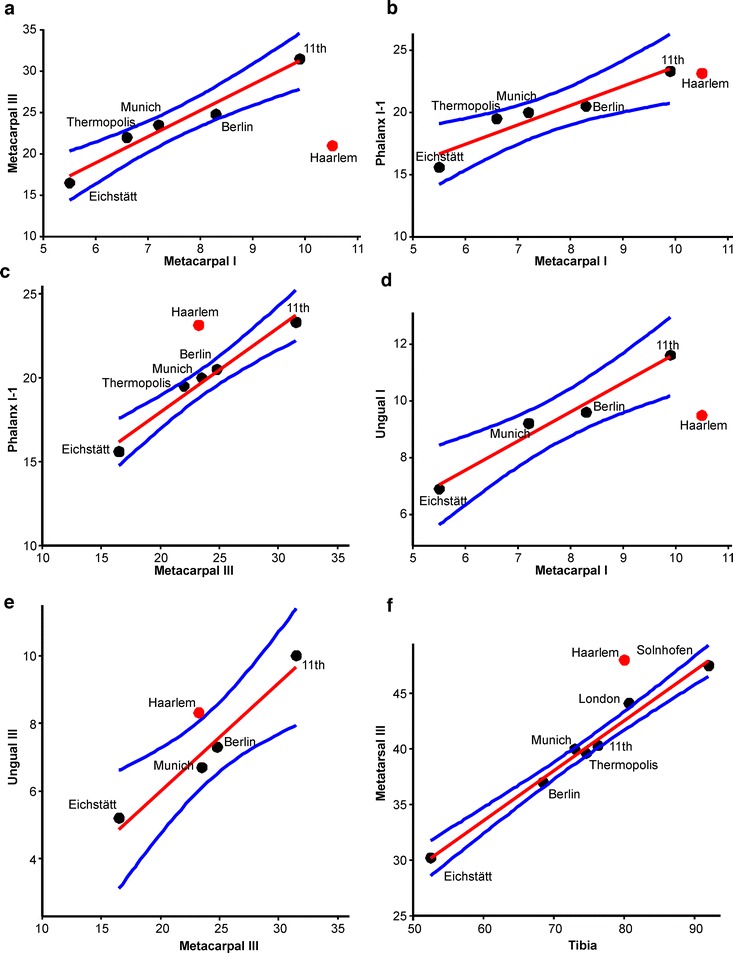
- metacarpal III / metacarpal I: 2.21 in Haarlem vs 2.99–3.33 in Archaeopteryx
- manual ungual I / metacarpal I: 0.90 in Haarlem vs 1.16–1.28 in Archaeopteryx
- tibiotarsus / metatarsus: 1.67 in Haarlem vs 1.74–1.94 in Archaeopteryx
- The statistical tests on proportional differences rejected the null hypothesis that Haarlem belonged to the same population as Archaeopteryx at p < 0.002.
- The phylogenetic analysis retained more than 15,580 equally parsimonious trees of 2624 steps; Haarlem did not cluster with Archaeopteryx, but fell in a polytomy with Pedopenna, Eosinopteryx, and Anchiornis, with Xiaotingia as sister taxon.
- The paper proposes the new genus and species Ostromia crassipes; the holotype is from the Early Tithonian laminated limestones of the Painten Formation at Jachenhausen, Bavaria, Germany.
## Methods
- The authors performed a detailed anatomical comparison of the Haarlem specimen and a high-quality cast, using binocular microscopes, and compared it to all 12 known Archaeopteryx specimens except London and Maxberg, plus anchiornithids and other Jehol theropods.
- They added Haarlem to an updated phylogenetic matrix, yielding 132 OTUs and 561 characters, and analyzed it in TNT under equally weighted parsimony with 1000 heuristic replicates and 1000 bootstrap replicates.
- They ran Statistical Dispersal-Vicariance Analysis (S-DIVA) in RASP, using a second TNT analysis with 100 replicates to generate a condensed tree for biogeographic inference; they also ran time-sliced analyses because the dataset spans roughly 167 million years.
## Limitations
- The paper states that the Haarlem specimen is very incomplete and “rather poor[ly] preserved,” which prevents direct evaluation of some diagnostic characters and leaves only 46 characters coded for the specimen.
- The authors explicitly note that the statistical tests have low power because of the very low sample size.
- Evident from the text: several measurements for Haarlem had to be estimated, and some interpretations rely on impressions and taphonomic reconstruction, so some conclusions are necessarily tentative.
Model-written summary. Check it against the paper before relying on it.
Integrity signals
Registry
Cites
Statistics
Figures
Verification
Claims the paper makes
5 Valid · 1 Not valid · 28 Not checked · 69 Own results and interpretations
Every source the paper cites for this claim was checked and supports it.
In the paper
“Outside Avialae, a longitudinal furrow can be found on phalanx I-1 (= phalanx II-1 based on the terminology of Xu et al. [28]) of the basal troodontid Jianianhualong tengi (DLXH 1218 [28]).”
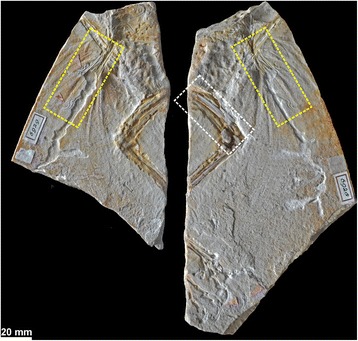
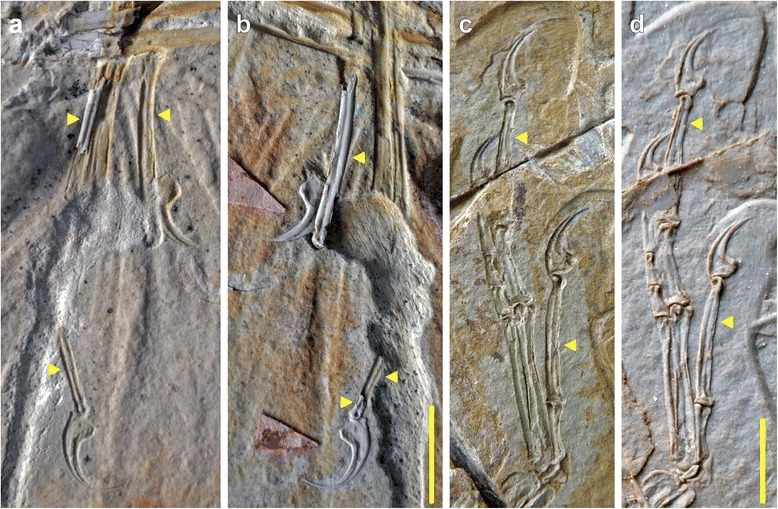
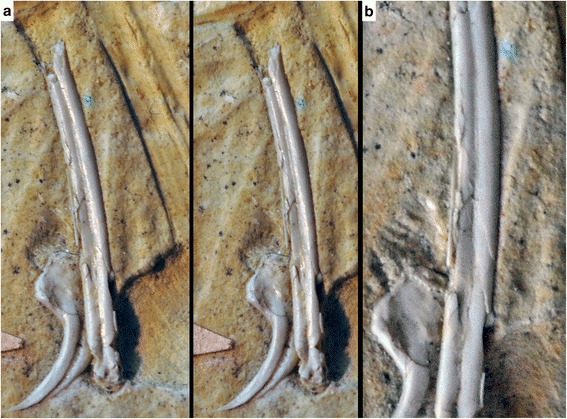
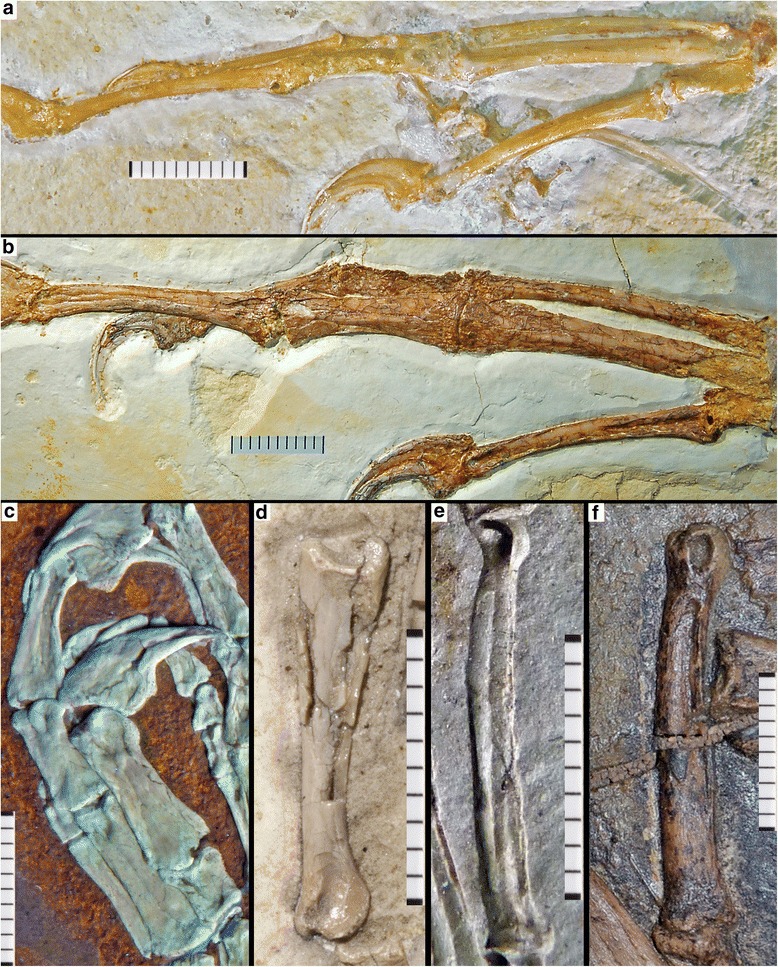
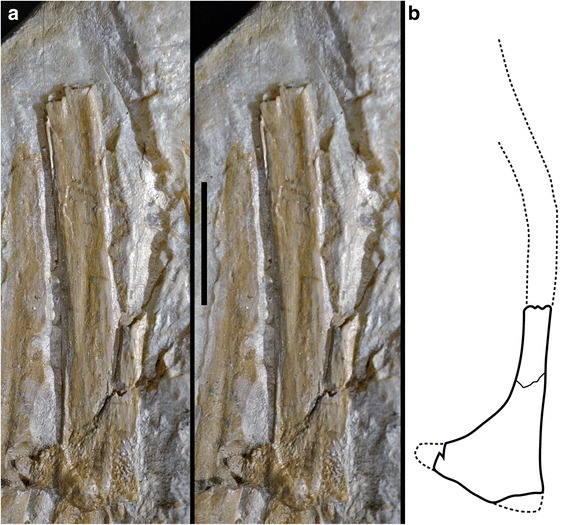
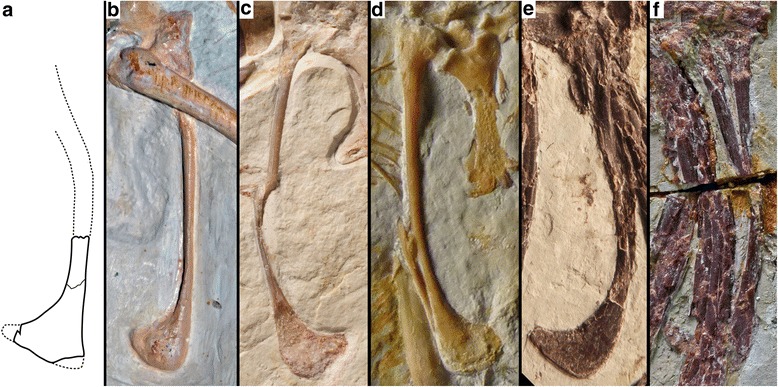
§ Re-evaluation of the Haarlem Archaeopteryx and the radiation of maniraptoran theropod dinosaurs > Results > Osteological differences Beside proportional differences, the Haarlem specimen shows a regular, well-developed longitudinal furrow on the exposed medial side of the preserved manual phalanx I-1 (Figs. 3b and 4). Although the margins of the phalanx show signs of compression, the furrow itself is intact and does not show any signs of breakage due to collapse of the bone (Figs. 3b and 4). Furthermore, the impression of the lateral side of phalanx III-3 shows a very similar, regular longitudinal ridge as counterpart to a furrow that was obviously present in this phalanx (Fig. 3b). The distal end of this phalanx is preserved as bone on the counterslab, and also shows the distal end of such a furrow towards the articular end of the medial side (Fig. 3b), indicating that these furrows were present on both sides of the manual phalanges; this is supported by the impression of this phalanx on the main slab. A longitudinal furrow is furthermore also present on the lateral side of a small preserved fragment of metacarpal III (Fig. 3a), again with no indication of being caused by collapse of this element, such as broken or irregular margins. None of the other specimens that can securely be identified as Archaeopteryx shows such regular furrows (e.g. Eichstätt, Munich, Thermopolis, and 11th specimens; CF and OR, pers. obs.; Fig. 5a), although collapse structures are present in various long bones of other specimens. In the Solnhofen specimen, for example, a longitudinal furrow seems to be present in the basal part of the right phalanx I-1 and II-2, but these grooves have irregular margins and show breaks at their deeper parts, indicating that they were caused by collapse of the hollow bone (OR, pers. obs.; Fig. 5b). Indeed, the absence or, when present, very typical morphology of such collapse structures in a wide variety of terrestrial vertebrates from the Solnhofen limestones, including lepidosaurs, crocoylomorphs, pterosaurs, and non-avialian theropods, and their inconsistent appearance in various elements or only parts of elements in other Archaeopteryx specimens differs drastically from the very regular structures found in all preserved manual phalanges in the Haarlem specimen, thus supporting our interpretation that the regular furrows in the manual elements are primary structures in the latter. Further differences can be found in the pubis, although only parts of the distal shaft and the pubic boot of the right pubis are preserved on the main slab of the Haarlem specimen, while the shaft of the left pubis is indicated by its impression (Fig. 6). Although the pubes were slightly compressed, and thus the shaft of the right pubis was slightly displaced anteriorly in respect to that of the left pubis (as e.g. in the Solnhofen and Thermopolis specimens), there is no indication of a break in the pubic shafts in the rather clear impression, and the exposure of the pubic boot in lateral view indicates that the pubis was embedded mainly transversely in the sediment. Thus, the preserved parts of the pubis and the impression clearly shows that the pubic shaft was strongly flexed, being anteriorly convex, in its medial part (Fig. 6). In those Archaeopteryx specimens, where the pubis is exposed in lateral view (i.e. Berlin, Solnhofen, Munich, 11th, and 12th specimen) the bone is slender with a straight to very slightly curved shaft (Fig. 7b-d). Only the Thermopolis specimen seems to show a slightly flexed pubic shaft [24], but the bone is seen in anterolateral view, making a final validation impossible. In contrast, the curving in the pubic shaft of the Eichstätt specimen is a preservational artefact, caused by the right pubic apron, which was displaced anteriorly during burial, forming a kink. However, the posterior margin of the pubic shaft is almost straight, as in the other Archaeopteryx specimens, and the slight apparent flexure of the pubis shafts in these specimens still differs considerably from the strongly flexed shafts in the Haarlem specimen. Furthermore, the pubic boot of the Haarlem specimen is triangular in outline, with an almost straight distal margin (Fig. 6), while in all other Archaeopteryx specimens, where the shape of structure can be verified, the pubic boot is distally convex and curves proximally posteriorly, resembling a the shape of a soup-ladle [9, 13] (Fig. 7b-d). Having established significant differences between the Haarlem specimen and those specimens that can securely be referred to Archaeopteryx, the fragmentary nature of the former specimen make an identification of its affinities difficult. However, although the presence of longitudinal furrows on the manual phalanges has not been described in the literature, we found this character to be clearly present in Anchiornis huxleyi, based on own observations by one of us (CF) on the holotype of this species (Institute of Vertebrate Paleontology and Paleoanthropology IVPP V14378). Although the only preserved manus in this specimen is poorly preserved and has suffered from severe breakage and erosion of the bones, the longitudinal furrows are clearly visible on the impression of the manus on the counterslab (Fig. 3c, d). Despite generally poor bone preservation in the specimens from the Tiaojishan Formation, this observation could subsequently be confirmed in other specimens (STM0-52 [25]; XHPM 1084; CF pers. obs.). Imprints of metacarpal III in the right manus of STM0-52 indicates that the furrows were present on both sides of the bone, as it is the case in Haarlem specimen (see above). As in the case of the Haarlem specimen, the very regular appearance of these furrows in the specimens we examined (Fig. 5e) argues against an interpretation as simple collapse structures. Similar furrows also seem to be present in the specimens described by Pei et al. ([26]: figs. 19, 28-30, although from the photos provided it is impossible to determine with certainty whether these structures might result from collapse of the phalanges. Furthermore, such furrows also seem to be present in the manual phalanges of Eosinopteryx [27], but they are clearly absent in Xiaotingia [4]. Outside Avialae, a longitudinal furrow can be found on phalanx I-1 (= phalanx II-1 based on the terminology of Xu et al. [28]) of the basal troodontid Jianianhualong tengi (DLXH 1218 [28]). Less well-developed furrows are also present in at least some manual phalanges of the basal tyrannosauroids Guanlong (IVPP V14531; OR, pers. obs.) and Yutyrannus (ZCDM V5001 [29]), and the paravians Sinornithoides (IVPP V9612; OR, pers. obs.) and Sinornithosaurus (IVPP V12811 [30]). A specimen of Caudipteryx (IVPP V12430; CF, pers. obs.) shows a weakly developed furrow on phalanx II-2 only, but it cannot be completely excluded that this structure is due to collapse. However, these furrows are less well-developed than in the Haarlem specimen and do not occur on all manual phalanges or the metacarpals (as with the presence of a groove on one phalanx only in Jianianhualong). In addition, the Haarlem specimen resembles Anchiornis with respect to its pubis morphology. Although not preserved in the holotype [31], the specimens described by Hu et al. [32], specimen BMNHC PH822 described by Pei et al. ([26]: fig. 32), and specimens STM0-165, STM0-52 [25] and STM-0-118 [33] show that the distal two thirds of the pubic shafts in this taxon are strongly flexed, and that the pubic boot has a similar, triangular outline (Fig. 7e, f).
What the sources say
- Supportedcites [28] Xu X Currie PJ Pittman M Xing L Meng Q Lü J Mosaic evolution in an asymmetrically feathered troodontid dinosaur with transitional features Nat Commun 2017 8 14972 10.1038/ncomms14972 28463233 PMC5418581 source
The Results (Postcranium; page unavailable) describe a prominent groove running along the medial surface of manual phalanx II-1, matching the longitudinal furrow in the claim. The paper uses II-1 for the phalanx the citing sentence labels I-1, and the Methods identify DLXH 1218 as the holotype of Jianianhualong tengi. (LLM, conf=0.94)
plainSingle case- Asserted: passes — The authors put it forward as true.
- Checkable: passes — It can be checked against evidence.
- Load-bearing: passes — The paper’s conclusions depend on it.
- Based: passes — The paper gives a reason why it holds.
- Supported
Every source the paper cites for this claim was checked and supports it.
In the paper
“The separate Asian origin of the lineages of Ostromia and Archaeopteryx implied by the biogeographic analysis indicates that this dispersal might have happened in several independent waves, as has recently been suggested for the evolution of oscine passerines in the Cenozoic [70].”
§ Re-evaluation of the Haarlem Archaeopteryx and the radiation of maniraptoran theropod dinosaurs > Discussion > The radiation and dispersal of maniraptoran theropods
What the sources say
- Supportedcites [70] Moyle RG Oliveros CH Andersen MJ Hosner PA Benz BW Manthey JD Tectonic collision and uplift of Wallacea triggered the global songbird radiation Nat Commun 2016 7 12709 10.1038/ncomms12709 27575437 PMC5013600 source
The Discussion reports an early Passerides lineage dispersing to Asia around 24 million years ago, followed by several Corvides and Passerides lineages from around 16 million years ago. This supports the cited analogy of multiple dispersal waves in oscine passerines; the source is not being cited for the origins of Ostromia or Archaeopteryx. (LLM, conf=0.92)
hedgedstates a possible cause- Asserted: passes — The authors put it forward as true.
- Checkable: passes — It can be checked against evidence.
- Load-bearing: unclear — It is unclear whether the paper’s conclusions depend on it.
- Based: passes — The paper gives a reason why it holds.
- Supported
A result the paper reports from its own data — it cites no other source for it, so there is none to check. The quote shows it is in the paper.
In the paper
“there are no anatomical characters that unambiguously support a referral to Archaeopteryx”
§ Re-evaluation of the Haarlem Archaeopteryx and the radiation of maniraptoran theropod dinosaurs > Results > Phylogenetic and taxonomic status of the Haarlem specimen
plainSingle case- Asserted: passes — The authors put it forward as true.
- Checkable: passes — It can be checked against evidence.
- Load-bearing: passes — The paper’s conclusions depend on it.
- Based: passes — The paper gives a reason why it holds.
A result the paper reports from its own data — it cites no other source for it, so there is none to check. The quote shows it is in the paper.
In the paper
“However, although the presence of longitudinal furrows on the manual phalanges has not been described in the literature, we found this character to be clearly present in Anchiornis huxleyi, based on own observations by one of us (CF) on the holotype of this species (Institute of Vertebrate Paleontology and Paleoanthropology IVPP V14378).”
§ Re-evaluation of the Haarlem Archaeopteryx and the radiation of maniraptoran theropod dinosaurs > Results > Osteological differences Beside proportional differences, the Haarlem specimen shows a regular, well-developed longitudinal furrow on the exposed medial side of the preserved manual phalanx I-1 (Figs. 3b and 4). Although the margins of the phalanx show signs of compression, the furrow itself is intact and does not show any signs of breakage due to collapse of the bone (Figs. 3b and 4). Furthermore, the impression of the lateral side of phalanx III-3 shows a very similar, regular longitudinal ridge as counterpart to a furrow that was obviously present in this phalanx (Fig. 3b). The distal end of this phalanx is preserved as bone on the counterslab, and also shows the distal end of such a furrow towards the articular end of the medial side (Fig. 3b), indicating that these furrows were present on both sides of the manual phalanges; this is supported by the impression of this phalanx on the main slab. A longitudinal furrow is furthermore also present on the lateral side of a small preserved fragment of metacarpal III (Fig. 3a), again with no indication of being caused by collapse of this element, such as broken or irregular margins. None of the other specimens that can securely be identified as Archaeopteryx shows such regular furrows (e.g. Eichstätt, Munich, Thermopolis, and 11th specimens; CF and OR, pers. obs.; Fig. 5a), although collapse structures are present in various long bones of other specimens. In the Solnhofen specimen, for example, a longitudinal furrow seems to be present in the basal part of the right phalanx I-1 and II-2, but these grooves have irregular margins and show breaks at their deeper parts, indicating that they were caused by collapse of the hollow bone (OR, pers. obs.; Fig. 5b). Indeed, the absence or, when present, very typical morphology of such collapse structures in a wide variety of terrestrial vertebrates from the Solnhofen limestones, including lepidosaurs, crocoylomorphs, pterosaurs, and non-avialian theropods, and their inconsistent appearance in various elements or only parts of elements in other Archaeopteryx specimens differs drastically from the very regular structures found in all preserved manual phalanges in the Haarlem specimen, thus supporting our interpretation that the regular furrows in the manual elements are primary structures in the latter. Further differences can be found in the pubis, although only parts of the distal shaft and the pubic boot of the right pubis are preserved on the main slab of the Haarlem specimen, while the shaft of the left pubis is indicated by its impression (Fig. 6). Although the pubes were slightly compressed, and thus the shaft of the right pubis was slightly displaced anteriorly in respect to that of the left pubis (as e.g. in the Solnhofen and Thermopolis specimens), there is no indication of a break in the pubic shafts in the rather clear impression, and the exposure of the pubic boot in lateral view indicates that the pubis was embedded mainly transversely in the sediment. Thus, the preserved parts of the pubis and the impression clearly shows that the pubic shaft was strongly flexed, being anteriorly convex, in its medial part (Fig. 6). In those Archaeopteryx specimens, where the pubis is exposed in lateral view (i.e. Berlin, Solnhofen, Munich, 11th, and 12th specimen) the bone is slender with a straight to very slightly curved shaft (Fig. 7b-d). Only the Thermopolis specimen seems to show a slightly flexed pubic shaft [24], but the bone is seen in anterolateral view, making a final validation impossible. In contrast, the curving in the pubic shaft of the Eichstätt specimen is a preservational artefact, caused by the right pubic apron, which was displaced anteriorly during burial, forming a kink. However, the posterior margin of the pubic shaft is almost straight, as in the other Archaeopteryx specimens, and the slight apparent flexure of the pubis shafts in these specimens still differs considerably from the strongly flexed shafts in the Haarlem specimen. Furthermore, the pubic boot of the Haarlem specimen is triangular in outline, with an almost straight distal margin (Fig. 6), while in all other Archaeopteryx specimens, where the shape of structure can be verified, the pubic boot is distally convex and curves proximally posteriorly, resembling a the shape of a soup-ladle [9, 13] (Fig. 7b-d). Having established significant differences between the Haarlem specimen and those specimens that can securely be referred to Archaeopteryx, the fragmentary nature of the former specimen make an identification of its affinities difficult. However, although the presence of longitudinal furrows on the manual phalanges has not been described in the literature, we found this character to be clearly present in Anchiornis huxleyi, based on own observations by one of us (CF) on the holotype of this species (Institute of Vertebrate Paleontology and Paleoanthropology IVPP V14378). Although the only preserved manus in this specimen is poorly preserved and has suffered from severe breakage and erosion of the bones, the longitudinal furrows are clearly visible on the impression of the manus on the counterslab (Fig. 3c, d). Despite generally poor bone preservation in the specimens from the Tiaojishan Formation, this observation could subsequently be confirmed in other specimens (STM0-52 [25]; XHPM 1084; CF pers. obs.). Imprints of metacarpal III in the right manus of STM0-52 indicates that the furrows were present on both sides of the bone, as it is the case in Haarlem specimen (see above). As in the case of the Haarlem specimen, the very regular appearance of these furrows in the specimens we examined (Fig. 5e) argues against an interpretation as simple collapse structures. Similar furrows also seem to be present in the specimens described by Pei et al. ([26]: figs. 19, 28-30, although from the photos provided it is impossible to determine with certainty whether these structures might result from collapse of the phalanges. Furthermore, such furrows also seem to be present in the manual phalanges of Eosinopteryx [27], but they are clearly absent in Xiaotingia [4]. Outside Avialae, a longitudinal furrow can be found on phalanx I-1 (= phalanx II-1 based on the terminology of Xu et al. [28]) of the basal troodontid Jianianhualong tengi (DLXH 1218 [28]). Less well-developed furrows are also present in at least some manual phalanges of the basal tyrannosauroids Guanlong (IVPP V14531; OR, pers. obs.) and Yutyrannus (ZCDM V5001 [29]), and the paravians Sinornithoides (IVPP V9612; OR, pers. obs.) and Sinornithosaurus (IVPP V12811 [30]). A specimen of Caudipteryx (IVPP V12430; CF, pers. obs.) shows a weakly developed furrow on phalanx II-2 only, but it cannot be completely excluded that this structure is due to collapse. However, these furrows are less well-developed than in the Haarlem specimen and do not occur on all manual phalanges or the metacarpals (as with the presence of a groove on one phalanx only in Jianianhualong). In addition, the Haarlem specimen resembles Anchiornis with respect to its pubis morphology. Although not preserved in the holotype [31], the specimens described by Hu et al. [32], specimen BMNHC PH822 described by Pei et al. ([26]: fig. 32), and specimens STM0-165, STM0-52 [25] and STM-0-118 [33] show that the distal two thirds of the pubic shafts in this taxon are strongly flexed, and that the pubic boot has a similar, triangular outline (Fig. 7e, f).
boosted- Asserted: passes — The authors put it forward as true.
- Checkable: passes — It can be checked against evidence.
- Load-bearing: passes — The paper’s conclusions depend on it.
- Based: passes — The paper gives a reason why it holds.
A result the paper reports from its own data — it cites no other source for it, so there is none to check. The quote shows it is in the paper.
In the paper
“In contrast, the specimen markedly differs in proportions from other Archaeopteryx specimens”
- Also stated in: § Differences in proportions Due to its incompleteness, none of the diagnostic characters for the genus Archaeopteryx listed by Foth et al. [9] is preserved in the Haarlem specimen, so that a direct evaluation of the taxonomic referral is not possible. However, the preserved elements show several differences to the corresponding parts of those specimens that can securely be referred to Archaeopteryx. Despite the limited data, several significant differences in proportions between the Haarlem specimen and other specimens of Archaeopteryx are obvious (Fig. 2; Table 2). Thus, the ratio between the length of metacarpal III and metacarpal I (Fig. 2a) varies between 2.99 (Berlin specimen) and 3.33 (Thermopolis specimen) in Archaeopteryx, but is 2.21 in the Haarlem specimen. Likewise, the ratio between manual ungual I and metacarpal I (Fig. 2b) varies between 1.16 (Berlin specimen) and 1.28 (Munich specimen) in Archaeopteryx, but is 0.90 in the Haarlem specimen. A possible explanation for this difference could be that the ungual has been wrongly identified and might represent the ungual of digit II or even of digit III of the left manus. However, ungual II does not differ considerably in size from the ungual of the first digit in other specimens of Archaeopteryx [13], and the difference in size between this ungual and the preserved ungual of the right digit III, as well as the close association of this ungual with phalanx I-1 argue against this interpretation. A further value in which the Haarlem specimen differs significantly from other specimens of Archaeopteryx is the length of the tibiotarsus in relation to the metatarsus (Fig. 2f), which varies between 1.74 (Eichstätt specimen) and 1.94 (Solnhofen specimen) in Archaeopteryx, but is 1.67 in the Haarlem specimen. As the length of the tibiotarsus and metatarsus can only be estimated in the Haarlem specimen, this difference should, however, be seen with caution. Ostrom [16] and Wellnhofer [13] noted the unusually long metatarsus in the Haarlem specimen as well, but as the distal end of the tibiotarsus and the proximal end of the metatarsus are missing, they speculated that this unusual measurement was due to a displacement of the metatarsus from the ankle. However, as both knee joints are preserved in articulation, with hardly any space in between the femur and the tibia, there is no reason to assume a displacement of the metatarsus by as much as 5 mm, the value needed to fall within the extremes of the range exhibited by the specimens that can securely be referred to Archaeopteryx. Thus, although the exact value might differ slightly, we tentatively regard this difference in proportions as real. Both statistical tests rejected the null hypothesis that the ratios for the Haarlem specimen were taken from the same population as the ratios for the securely identified Archaeopteryx specimens at p < 0.002. In addition, the Haarlem specimens differs from Archaeopteryx in the ratio between the manual phalanx I-1 and metacarpal 1, manual phalanx I-1 and metacarpal III and manual ungual III and metacarpal III (Table 2). Although the statistical power of the tests is low, given the low sample size, these differences indicate that there is little reason to refer this specimen to Archaeopteryx. · boosted
“several significant differences in proportions between the Haarlem specimen and other specimens of Archaeopteryx are obvious”
§ Re-evaluation of the Haarlem Archaeopteryx and the radiation of maniraptoran theropod dinosaurs > Abstract > Results
boostedSingle case ·- Asserted: passes — The authors put it forward as true.
- Checkable: passes — It can be checked against evidence.
- Load-bearing: passes — The paper’s conclusions depend on it.
- Based: passes — The paper gives a reason why it holds.
- Also stated in: § Differences in proportions Due to its incompleteness, none of the diagnostic characters for the genus Archaeopteryx listed by Foth et al. [9] is preserved in the Haarlem specimen, so that a direct evaluation of the taxonomic referral is not possible. However, the preserved elements show several differences to the corresponding parts of those specimens that can securely be referred to Archaeopteryx. Despite the limited data, several significant differences in proportions between the Haarlem specimen and other specimens of Archaeopteryx are obvious (Fig. 2; Table 2). Thus, the ratio between the length of metacarpal III and metacarpal I (Fig. 2a) varies between 2.99 (Berlin specimen) and 3.33 (Thermopolis specimen) in Archaeopteryx, but is 2.21 in the Haarlem specimen. Likewise, the ratio between manual ungual I and metacarpal I (Fig. 2b) varies between 1.16 (Berlin specimen) and 1.28 (Munich specimen) in Archaeopteryx, but is 0.90 in the Haarlem specimen. A possible explanation for this difference could be that the ungual has been wrongly identified and might represent the ungual of digit II or even of digit III of the left manus. However, ungual II does not differ considerably in size from the ungual of the first digit in other specimens of Archaeopteryx [13], and the difference in size between this ungual and the preserved ungual of the right digit III, as well as the close association of this ungual with phalanx I-1 argue against this interpretation. A further value in which the Haarlem specimen differs significantly from other specimens of Archaeopteryx is the length of the tibiotarsus in relation to the metatarsus (Fig. 2f), which varies between 1.74 (Eichstätt specimen) and 1.94 (Solnhofen specimen) in Archaeopteryx, but is 1.67 in the Haarlem specimen. As the length of the tibiotarsus and metatarsus can only be estimated in the Haarlem specimen, this difference should, however, be seen with caution. Ostrom [16] and Wellnhofer [13] noted the unusually long metatarsus in the Haarlem specimen as well, but as the distal end of the tibiotarsus and the proximal end of the metatarsus are missing, they speculated that this unusual measurement was due to a displacement of the metatarsus from the ankle. However, as both knee joints are preserved in articulation, with hardly any space in between the femur and the tibia, there is no reason to assume a displacement of the metatarsus by as much as 5 mm, the value needed to fall within the extremes of the range exhibited by the specimens that can securely be referred to Archaeopteryx. Thus, although the exact value might differ slightly, we tentatively regard this difference in proportions as real. Both statistical tests rejected the null hypothesis that the ratios for the Haarlem specimen were taken from the same population as the ratios for the securely identified Archaeopteryx specimens at p < 0.002. In addition, the Haarlem specimens differs from Archaeopteryx in the ratio between the manual phalanx I-1 and metacarpal 1, manual phalanx I-1 and metacarpal III and manual ungual III and metacarpal III (Table 2). Although the statistical power of the tests is low, given the low sample size, these differences indicate that there is little reason to refer this specimen to Archaeopteryx. · boosted
47 more claims
Create a free account to see all 103 claims and to verify the 18 references still open.
- It may state two separate claims as one. 45
- Probably not a substantial claim. 7
- The quote only partly states this claim. 2
Citations
Cites
On the Origin of Species by Means of Natural Selection
Livezey, R. L., & Darwin, C. (1953) · American Midland Naturalist · doi:10.2307/2485224 · Cited by 5,405
TNT, a free program for phylogenetic analysis
Goloboff, P. A., Farris, J. S., & Nixon, K. C. (2008) · Cladistics · doi:10.1111/j.1096-0031.2008.00217.x · Cited by 5,352 · cited 1×
“The matrix was analyzed using equally weighted parsimony in TNT [19] using a heuristic search with 1000 replicates of Wagner trees followed by TBR branch swapping (holding 10 trees per replicate).”
RASP (Reconstruct Ancestral State in Phylogenies): A tool for historical biogeography
Yu, Y., Harris, A. J., Blair, C., & He, X. (2015) · Molecular Phylogenetics and Evolution · doi:10.1016/j.ympev.2015.03.008 · Cited by 1,398 · cited 1×
“To establish the ancestral range of maniraptorans, we used a Statistical Dispersal-Vicariance Analysis (S-DIVA) [20], using the software RASP [21].”
Saurischian monophyly and the origin of birds
Gauthier, J. (1986) · The Academy · doi:10.5281/zenodo.16171435 · Cited by 1,294
S-DIVA (Statistical Dispersal-Vicariance Analysis): A tool for inferring biogeographic histories
Yu, Y., Harris, A. J., & He, X. (2010) · Molecular Phylogenetics and Evolution · doi:10.1016/j.ympev.2010.04.011 · Cited by 764 · cited 4×
“Results of the time-sliced S-DIVA analysis, including only Jurassic taxa.”
InfluentialThe resurrection of oceanic dispersal in historical biogeography
QUEIROZ, A. (2005) · Trends in Ecology & Evolution · doi:10.1016/j.tree.2004.11.006 · Cited by 692
A pre-Archaeopteryx troodontid theropod from China with long feathers on the metatarsus
Hu, D., Hou, L., Zhang, L., & Xu, X. (2009) · Nature · doi:10.1038/nature08322 · Cited by 365 · cited 1×
“[32], specimen BMNHC PH822 described by Pei et al.”
A Review of Dromaeosaurid Systematics and Paravian Phylogeny
Turner, A. H., Makovicky, P. J., & Norell, M. A. (2012) · Bulletin of the American Museum of Natural History · doi:10.1206/748.1 · Cited by 350
The theropod ancestry of birds: new evidence from the late cretaceous of madagascar
Forster, C. A., Sampson, S. D., Chiappe, L. M., & Krause, D. W. (1998) · Science · doi:10.1126/science.279.5358.1915 · Cited by 314 · cited 1×
“9), and further radiations and dispersals to South America [52, 53], Madagascar [54] and Africa [55] during the Cretaceous.”
Brusatte, S. L., Lloyd, G. T., Wang, S. C., & Norell, M. A. (2014) · Current Biology · doi:10.1016/j.cub.2014.08.034 · Cited by 313 · cited 2×
“basal Oviraptorosauria [8, 10] or Anchiornis (basal Deinonychosauria [4, 34] vs.”
An Archaeopteryx-like theropod from China and the origin of Avialae
Xu, X., You, H., Du, K., & Han, F. (2011) · Nature · doi:10.1038/nature10288 · Cited by 311 · cited 6×
“basal Oviraptorosauria [8, 10] or Anchiornis (basal Deinonychosauria [4, 34] vs.”
InfluentialSustained miniaturization and anatomical innovation in the dinosaurian ancestors of birds
Lee, M. S. Y., Cau, A., Naish, D., & Dyke, G. J. (2014) · Science · doi:10.1126/science.1252243 · Cited by 257 · cited 1×
“For maniraptorans, small body size of the taxa at the base of all major lineages [68] might have made oversea dispersal by rafting possible [69], thus facilitating the crossing of the epicontinental barriers between Asia and Europe.”
Tectonic collision and uplift of Wallacea triggered the global songbird radiation
Moyle, R. G., Oliveros, C. H., Andersen, M. J., Hosner, P. A., Benz, B. W., Manthey, J. D., Travers, S. L., Brown, R. M., & Faircloth, B. C. (2016) · Nature Communications · doi:10.1038/ncomms12709 · Cited by 240 · cited 1×
“The separate Asian origin of the lineages of Ostromia and Archaeopteryx implied by the biogeographic analysis indicates that this dispersal might have happened in several independent waves, as has recently been suggested for the evolution of oscine passerines in the Cenozoic [70].”
New specimen of Archaeopteryx provides insights into the evolution of pennaceous feathers
Foth, C., Tischlinger, H., & Rauhut, O. W. M. (2014) · Nature · doi:10.1038/nature13467 · Cited by 228 · cited 5×
“As exemplified by Archaeopteryx, flight ability might have further increased the dispersal potential for paravians, in which some form of flight capacity most probably evolved more than once [9, 34].”
Self-citationA bizarre Jurassic maniraptoran from China with elongate ribbon-like feathers
Zhang, F., Zhou, Z., Xu, X., Wang, X., & Sullivan, C. (2008) · Nature · doi:10.1038/nature07447 · Cited by 217 · cited 1×
“Prior to the recent description of abundant maniraptoran theropods from the Oxfordian of China ([4, 5, 27, 31, 34, 45, 46, 57, 58]), no certain preKimmeridgian representatives of this clade were known.”
A Jurassic avialan dinosaur from China resolves the early phylogenetic history of birds
Godefroit, P., Cau, A., Dong-Yu, H., Escuillié, F., Wenhao, W., & Dyke, G. (2013) · Nature · doi:10.1038/nature12168 · Cited by 216 · cited 3×
“Although the phylogenetic relationships of these taxa are still disputed [4, 5, 8, 9], at least the genera Anchiornis and Xiaotingia are usually considered to form a monophyletic, endemic clade [4, 8–10], which were recently considered to be the oldest known avialans [9].”
Upchurch, P., Hunn, C. A., & Norman, D. B. (2002) · Proceedings of the Royal Society of London. Series B: Biological Sciences · doi:10.1098/rspb.2001.1921 · Cited by 210 · cited 1×
“As eastern Asia seems to have been isolated from the rest of Laurasia by epicontinental seas by the Callovian at the latest [51], the biogeographic pattern, together with the stratigraphic occurrences of taxa and palaeogeographic reconstructions indicate a rapid, seemingly explosive radiation of maniraptoran theropods…”
A bizarre Jurassic maniraptoran theropod with preserved evidence of membranous wings
Xu, X., Zheng, X., Sullivan, C., Wang, X., Xing, L., Wang, Y., Zhang, X., O’Connor, J. K., Zhang, F., & Pan, Y. (2015) · Nature · doi:10.1038/nature14423 · Cited by 187 · cited 3×
“As exemplified by Archaeopteryx, flight ability might have further increased the dispersal potential for paravians, in which some form of flight capacity most probably evolved more than once [9, 34].”
A new feathered maniraptoran dinosaur fossil that fills a morphological gap in avian origin
Xu, X., Zhao, Q., Norell, M., Sullivan, C., Hone, D., Erickson, G., Wang, X., Han, F., & Guo, Y. (2009) · Science Bulletin · doi:10.1007/s11434-009-0009-6 · Cited by 175 · cited 4×
“Anchiornis Xu, Zhao, Norell, Sullivan, Hone, Erickson, Wang, Han, and Gao, 2009 [31].”
InfluentialA gigantic feathered dinosaur from the Lower Cretaceous of China
Xu, X., Wang, K., Zhang, K., Ma, Q., Xing, L., Sullivan, C., Hu, D., Cheng, S., & Wang, S. (2012) · Nature · doi:10.1038/nature10906 · Cited by 166 · cited 1×
“) and Yutyrannus (ZCDM V5001 [29]), and the paravians Sinornithoides (IVPP V9612; OR, pers.”
Rauhut, O. W. M., Foth, C., Tischlinger, H., & Norell, M. A. (2012) · Proceedings of the National Academy of Sciences · doi:10.1073/pnas.1203238109 · Cited by 151 · cited 1×
“However, teeth similar to those found in dromaeosaurids are also present in basal tyrannosauroids ([49]) and, probably, the juvenile dentition of more basal theropods ([40]), so more conclusive remains would be needed to prove the existence of pre-Late Jurassic paravians in areas outside eastern Asia.”
Self-citationThe vertebrates of the Jurassic Daohugou Biota of northeastern China
Sullivan, C., Wang, Y., Hone, D. W. E., Wang, Y., Xu, X., & Zhang, F. (2014) · Journal of Vertebrate Paleontology · doi:10.1080/02724634.2013.787316 · Cited by 151 · cited 1×
“Recent discoveries in the probably Oxfordian Tiaojishan Formation [6, 7] of eastern China have changed this picture.”
The tenth skeletal specimen of Archaeopteryx
MAYR, G., POHL, B., HARTMAN, S., & PETERS, D. S. (2007) · Zoological Journal of the Linnean Society · doi:10.1111/j.1096-3642.2006.00245.x · Cited by 149 · cited 1×
“Only the Thermopolis specimen seems to show a slightly flexed pubic shaft [24], but the bone is seen in anterolateral view, making a final validation impossible.”
A Basal Alvarezsauroid Theropod from the Early Late Jurassic of Xinjiang, China
Choiniere, J. N., Xu, X., Clark, J. M., Forster, C. A., Guo, Y., & Han, F. (2010) · Science · doi:10.1126/science.1182143 · Cited by 148 · cited 1×
“Prior to the recent description of abundant maniraptoran theropods from the Oxfordian of China ([4, 5, 27, 31, 34, 45, 46, 57, 58]), no certain preKimmeridgian representatives of this clade were known.”
Rauhut, O. W. M., & Werner, C. (1995) · Paläontologische Zeitschrift · doi:10.1007/bf02987808 · Cited by 145 · cited 1×
“9), and further radiations and dispersals to South America [52, 53], Madagascar [54] and Africa [55] during the Cretaceous.”
Self-citationA new maniraptoran dinosaur from China with long feathers on the metatarsus
Xu, X., & Zhang, F. (2005) · Naturwissenschaften · doi:10.1007/s00114-004-0604-y · Cited by 143 · cited 1×
“Prior to the recent description of abundant maniraptoran theropods from the Oxfordian of China ([4, 5, 27, 31, 34, 45, 46, 57, 58]), no certain preKimmeridgian representatives of this clade were known.”
Principal characters of American Jurassic dinosaurs; Part VIII, The order Theropoda
Marsh, O. C. (1884) · American Journal of Science · doi:10.2475/ajs.s3-27.160.329 · Cited by 129
A juvenile coelurosaurian theropod from China indicates arboreal habits
Zhang, F., Zhou, Z., Xu, X., & Wang, X. (2002) · Naturwissenschaften · doi:10.1007/s00114-002-0353-8 · Cited by 125 · cited 1×
“Prior to the recent description of abundant maniraptoran theropods from the Oxfordian of China ([4, 5, 27, 31, 34, 45, 46, 57, 58]), no certain preKimmeridgian representatives of this clade were known.”
Reduced plumage and flight ability of a new Jurassic paravian theropod from China
Godefroit, P., Demuynck, H., Dyke, G., Hu, D., Escuillié, F., & Claeys, P. (2013) · Nature Communications · doi:10.1038/ncomms2389 · Cited by 124 · cited 3×
“for Eosinopteryx [27], so that the only comparable ratio is”
RAUHUT, O. W. M., MILNER, A. C., & MOORE-FAY, S. (2010) · Zoological Journal of the Linnean Society · doi:10.1111/j.1096-3642.2009.00591.x · Cited by 120 · cited 2×
“On the other hand, the oldest certain records of coelurosaurs are Bathonian in age and come from Europe [49] and central Asia [50].”
Self-citationNovas, F. E. (1997) · Journal of Vertebrate Paleontology · doi:10.1080/02724634.1997.10010959 · Cited by 110 · cited 1×
“9), and further radiations and dispersals to South America [52, 53], Madagascar [54] and Africa [55] during the Cretaceous.”
Liu, Y.-Q., Kuang, H.-W., Jiang, X.-J., Peng, N., Xu, H., & Sun, H.-Y. (2012) · Palaeogeography, Palaeoclimatology, Palaeoecology · doi:10.1016/j.palaeo.2012.01.017 · Cited by 99 · cited 2×
“Given the probably Oxfordian age of the anchiornithids from the Tiaojishan Formation [6], basically all maniraptoran clades must have been established by this time, including the lineage leading to Archaeopteryx and higher avialans [48].”
Zheng, X., O’Connor, J., Wang, X., Wang, M., Zhang, X., & Zhou, Z. (2014) · Proceedings of the National Academy of Sciences · doi:10.1073/pnas.1411070111 · Cited by 96 · cited 2×
“Despite generally poor bone preservation in the specimens from the Tiaojishan Formation, this observation could subsequently be confirmed in other specimens (STM0-52 [25]; XHPM 1084; CF pers.”
Chiappe, L. (2016) · doi:10.1353/book.48019 · Cited by 92 · cited 1×
“Various basal birds from the Jehol group show a combination of longitudinal furrows and multiple, irregular breakages of phalanges and metacarpals, while in many other specimens these bones stay intact (extensively figured in Chiappe and Meng [38]).”
Mosaic evolution in an asymmetrically feathered troodontid dinosaur with transitional features
Xu, X., Currie, P., Pittman, M., Xing, L., Meng, Q., Lü, J., Hu, D., & Yu, C. (2017) · Nature Communications · doi:10.1038/ncomms14972 · Cited by 86 · cited 1×
“[28]) of the basal troodontid Jianianhualong tengi (DLXH 1218 [28]).”
Xu, X., & Wu, X.-C. (2001) · Canadian Journal of Earth Sciences · doi:10.1139/e01-082 · Cited by 76
Small theropod teeth from the Upper Jurassic coal mine of Guimarota (Portugal)
Zinke, J. (1998) · Paläontologische Zeitschrift · doi:10.1007/bf02987825 · Cited by 76
Allometric Scaling in the Earliest Fossil Bird, Archaeopteryx lithographica
Houck, M. A., Gauthier, J. A., & Strauss, R. E. (1990) · Science · doi:10.1126/science.247.4939.195 · Cited by 73
New Specimens of Anchiornis huxleyi(Theropoda: Paraves) from the Late Jurassic of Northeastern China
Pei, R., Li, Q., Meng, Q., Norell, M. A., & Gao, K.-Q. (2017) · Bulletin of the American Museum of Natural History · doi:10.1206/0003-0090-411.1.1 · Cited by 70 · cited 1×
“g [4, 8–10, 33, 34]), but also Eosinopteryx [10, 26].”
Reisdorf, A. G., & Wuttke, M. (2012) · Palaeobiodiversity and Palaeoenvironments · doi:10.1007/s12549-011-0068-y · Cited by 69
Basal paravian functional anatomy illuminated by high-detail body outline
Wang, X., Pittman, M., Zheng, X., Kaye, T. G., Falk, A. R., Hartman, S. A., & Xu, X. (2017) · Nature Communications · doi:10.1038/ncomms14576 · Cited by 69 · cited 1×
“32), and specimens STM0-165, STM0-52 [25] and STM-0-118 [33] show that the distal (See figure on previous page.”
Hunn, C. A., & Upchurch, P. (2001) · Systematic Biology · doi:10.1093/sysbio/50.3.391 · Cited by 66
(2013) · doi:10.1007/978-94-007-5637-3 · Cited by 61
:Archaeopteryx. Der Urvogel von Solnhofen
Bock, W. J. (2009) · The Auk · doi:10.1525/auk.2009.4109.3 · Cited by 60 · cited 12×
“Ostrom [16] and Wellnhofer [13] that this element repre-”
InfluentialUnenlagiinae revisited: dromaeosaurid theropods from South América
Gianechini, F. A., & Apesteguia, S. (2011) · Anais da Academia Brasileira de Ciências · doi:10.1590/s0001-37652011000100009 · Cited by 56 · cited 1×
“9), and further radiations and dispersals to South America [52, 53], Madagascar [54] and Africa [55] during the Cretaceous.”
Jensen, J. A., & Padian, K. (1989) · Journal of Paleontology · doi:10.1017/s0022336000019533 · Cited by 55
DAS FUENFTE SKELETTEXEMPLAR VON ARCHAEOPTERYX.
Wellnhofer, P. (1974) · Palaeontographica Abteilung A · Cited by 54
Upchurch, P., Andres, B., Butler, R. J., & Barrett, P. M. (2015) · Historical Biology · doi:10.1080/08912963.2014.939077 · Cited by 51
Niebuhr, B., & Pürner, T. (2014) · Schriftenreihe der Deutschen Gesellschaft für Geowissenschaften · doi:10.1127/sdgg/83/2014/5 · Cited by 51 · cited 1×
“Early Tithonian laminated limestones of the Painten Formation [37].”
Dinosaur biogeographical structure and Mesozoic continental fragmentation: a network‐based approach
Dunhill, A. M., Bestwick, J., Narey, H., & Sciberras, J. (2016) · Journal of Biogeography · doi:10.1111/jbi.12766 · Cited by 47 · cited 1×
“This scenario is supported by another recent analysis of dinosaurian biogeography [56], which found a peak in connectivity between the continents in the Late Jurassic, indicating that Europe was a “turntable” for dinosaur dispersal during that time.”
A Multi-Clade Test Supports the Intermediate Dispersal Model of Biogeography
Agnarsson, I., Cheng, R.-C., & Kuntner, M. (2014) · PLoS ONE · doi:10.1371/journal.pone.0086780 · Cited by 45 · cited 1×
“In the fragmenting world of Pangean break-up during the Late Jurassic and Cretaceous, increased dispersal potential might have been a key factor to explain the success of maniraptoran, and especially avialian theropods, with dispersal events being followed by endemic radiations of different clades [71].”
A new basal coelurosaur (Dinosauria: Theropoda) from the Middle Jurassic of Siberia
Averianov, A. O., Krasnolutskii, S. A., & Ivantsov, S. V. (2010) · Proceedings of the Zoological Institute RAS · doi:10.31610/trudyzin/2010.314.1.42 · Cited by 44 · cited 1×
“On the other hand, the oldest certain records of coelurosaurs are Bathonian in age and come from Europe [49] and central Asia [50].”
Pre-Archaeopteryx coelurosaurian dinosaurs and their implications for understanding avian origins
Xu, X., Ma, Q., & Hu, D. (2010) · Chinese Science Bulletin · doi:10.1007/s11434-010-4150-z · Cited by 43 · cited 1×
“Given the probably Oxfordian age of the anchiornithids from the Tiaojishan Formation [6], basically all maniraptoran clades must have been established by this time, including the lineage leading to Archaeopteryx and higher avialans [48].”
Archaeopteryx: Notice of a "New" Specimen
Ostrom, J. H. (1970) · Science · doi:10.1126/science.170.3957.537 · Cited by 39
Geological history of the Southern Franconian Alb the area of the Solnhofen Lithographic Limestone
Keupp, H., Koch, R., Schweigert, G., & Viohl, G. (2007) · Neues Jahrbuch für Geologie und Paläontologie - Abhandlungen · doi:10.1127/0077-7749/2007/0245-0003 · Cited by 37 · cited 1×
“Apart from a slight stratigraphic difference between some of the eastern and western plattenkalks, this most likely reflects different settings in these areas: whereas terrestrial organisms in the eastern area might have come directly from the larger land mass of the Bohemian massif to the east or from islands within…”
Theropod dinosaurs from the Middle Jurassic (Bajocian–Bathonian) of Skye, Scotland
Brusatte, S. L., & Clark, N. D. L. (2015) · Scottish Journal of Geology · doi:10.1144/sjg2014-022 · Cited by 30
“Time”: the neglected dimension in cladistic biogeography?
Upchurch, P., & Hunn, C. A. (2002) · Geobios · doi:10.1016/s0016-6995(02)00065-7 · Cited by 29
Halliday, T. J. D. (2013) · Acta Palaeontologica Polonica · doi:10.4202/app.2013.0018 · Cited by 29 · cited 2×
“However this may be, the biogeographic pattern presented above might furthermore be mirrored by goniopholid crocodiles [65] and some pterosaur clades [66], which also seem to have expanded their range”
First description of theropod remains from the Middle Jurassic (Bathonian) of Madagascar
Maganuco, S., Cau, A., & Pasini, G. (2005) · Società Italiana di Scienze Naturali ; Museo Civico di Storia Naturale in Milano · doi:10.5281/zenodo.13458777 · Cited by 27
Pre-Archaeopteryx coelurosaurian dinosaurs and their implications for understanding avian origins
Xu, Xing, X., -, M., Qingyu, Hu, & Dongyu (2010) · 中国科学通报:英文版 · Cited by 26
I. Remarks upon Archæopteryx lithographica
Huxley, T. H. (1868) · Proceedings of the Royal Society of London · doi:10.1098/rspl.1867.0046 · Cited by 25
Taxonomic status of the specimens of Archaeopteryx
Senter, P., & Robins, J. H. (2003) · Journal of Vertebrate Paleontology · doi:10.1671/22 · Cited by 24
自组装制备Fe3O4@Au复合纳米粒子用于固定化葡萄糖氧化酶
杨, 婉., 王, 显., 黄, 硕., & 单, 志. (2009) · Chinese Science Bulletin · doi:10.1360/csb2009-54-4-430 · Cited by 23
DESCRIPTION OF THE ARCHAEOPTERYX SPECIMEN IN THE TEYLER MUSEUM, HAARLEM
Ostrom, J. (1972) · Cited by 18
Hunn, C. A., & Upchurch, P. (2001) · Systematic Biology · doi:10.1080/713849647
Research works printed but not linked: 9
- Von Meyer H Archaeopteryx lithographica und Pterodactylus N Jb Min Geognosie Geol Petrefaktenkd. 1861 1861 678 679
- Von Meyer H Beiträge zur näheren Kenntnis fossiler Reptilien N Jb Min Geognosie, Geol Petrefaktenkd 1857 1857 532 543
- Mäuser M Die Malm-Zeta Plattenkalke von Jachenhausen bei Riedenburg (Südliche Frankenalb) Archaeopteryx 1984 1984 1 12
- Rauhut OWM Tischlinger H Archaeopteryx. Solnhofen – Ein Fenster die Jurazeit 2015 München Verlag Dr. Friedrich Pfeil 491 507
- Viohl G Der geologische Rahmen: die Südliche Frankenalb und ihre Entwicklung. Solnhofen – Ein Fenster die Jurazeit 2015 München Verlag Dr. Friedrich Pfeil 56 62
- Tischlinger H Göhlich UB OWM R Raubdinosaurier (Theropoda). Solnhofen – Ein Fenster die Jurazeit 2015 München Verlag Dr. Friedrich Pfeil 481 490
- Metcalf SJ Walker RJ Fraser NC Sues H-D A new Bathonian microvertebrate locality in the English midlands Shad. Dinosaur 1994 New York Cambridge University Press 322 331
- Chure DJ Koparion douglassi, a new dinosaur from the Morrison formation (upper Jurassic) of dinosaur National Monument; the oldest troodontid (Theropoda: Maniraptora) BYU Geol Stud 1994 40 11 15
- Butzmann R, Fischer T, Röper M, Rothgaenger M. Neu in Angriff genommen: Die Bearbeitung der Flora der “Fossillagerstätte Brunn”. Frd Bayer Staatssl Paläont Hist Geol, Jb Mitt. 2015;43:52–64.
Cited by
Rauhut, O. W. M., Foth, C., & Tischlinger, H. (2018) · PeerJ · doi:10.7717/peerj.4191 · Cited by 100
Self-citationPennaraptoran Theropod Dinosaurs Past Progress and New Frontiers
Pittman, M., & Xu, X. (2020) · Bulletin of the American Museum of Natural History · doi:10.1206/0003-0090.440.1.1 · Cited by 94
Condamine, F. L., Guinot, G., Benton, M. J., & Currie, P. J. (2021) · Nature Communications · doi:10.1038/s41467-021-23754-0 · Cited by 113
Hartman, S., Mortimer, M., Wahl, W. R., Lomax, D. R., Lippincott, J., & Lovelace, D. M. (2019) · PeerJ · doi:10.7717/peerj.7247 · Cited by 86
“(2005) is only three steps 923 longer, and a basal paravian position as in Foth et al. (2014) is just four steps longer. In 924 comparison, moving Liaoningvenator to group with anchiornithines as in Shen et al. (2017a) 925 requires 10 steps.”
BackgroundInfluentialParavian Phylogeny and the Dinosaur-Bird Transition: An Overview
Agnolin, F. L., Motta, M. J., Brissón Egli, F., Lo Coco, G., & Novas, F. E. (2019) · Frontiers in Earth Science · doi:10.3389/feart.2018.00252 · Cited by 48
“We agree with Foth and Rauhut (2017) in that the Haarlem specimen should not be referred to Archaeopteryx, but the inclusion of Ostromia among Anchiornithinae is dubious at Frontiers in Earth Science | www.frontiersin.org 10 February 2019 | Volume 6 | Article 252 best, and we propose that it should…”
BackgroundResultInfluential
Metadata
- Authors
- Foth, C., & Rauhut, O. W. M.
- Affiliations
- University of Fribourg (CH)
- Bayerische Staatssammlung für Paläontologie und Geologie (DE)
- Corresponding author
- Rauhut, Oliver W. M.
- Venue
- BMC Evolutionary Biology
- Published
- 2017-12
- Volume
- 17
- Issue
- 1
- Pages
- 236-236
- ISSN
- 1471-2148 (ISSN-L)
- PMC
- PMC5712154
- OpenAlex
- W2774993779
- Cited by
- 56
- References
- 65
- Citations by year
- 2026: 5 · 2025: 5 · 2024: 1 · 2023: 5 · 2022: 3 · 2021: 4 · 2020: 13 · 2019: 11 · 2018: 9
- FWCI
- 6.61
- Type
- journal article
- Language
- en
- Open access
- gold
- doi.org
- Licence
- cc-by
- Locations
- BMC Evolutionary Biology (publishedVersion, cc-by)
- Europe PMC (PubMed Central) (publishedVersion, cc-by)
- PubMed Central (publishedVersion, cc-by)
- PubMed (publishedVersion)
- RERO DOC (Universität Bern) (submittedVersion)
- DOAJ (DOAJ: Directory of Open Access Journals) (submittedVersion)
- Open access LMU (Ludwid Maxmilian's Universitat Munchen) (submittedVersion)
- Funders
- Volkswagen Foundation (84 640)
- Topics
- Physical Sciences › Earth and Planetary Sciences › Paleontology › Paleontology and Evolutionary Biology
- Physical Sciences › Earth and Planetary Sciences › Paleontology › Evolution and Paleontology Studies
- Life Sciences › Agricultural and Biological Sciences › Ecology, Evolution, Behavior and Systematics › Fossil Insects in Amber
- Keywords
- Archaeopteryx, origin of birds, Tiaojishan Formation, phylogenetic analysis, biogeography, origin of flight, small body size, lithographic limestone
- MeSH terms
- Animals, Birds, Biological Evolution, Fossils, Phylogeny, Dinosaurs
About these checks
Registry, retraction, Cites and statistics results are computed, not judged, with one exception: a printed reference that no index lists is read once by a model before it counts as a citation error. Claims are extracted by a model and kept only when their quote appears verbatim in the text; each cited source is then checked, with a model’s help, for whether it says what the claim relies on. Those verdicts can be wrong — read the claim’s quote and the cited source before relying on one.
The claim verdicts this report counts are experimental: their accuracy is not yet measured.
A language model drew the claims from the paper on 2026-10-10, under version 3 of the claim definition (model deepseek-v4.1-flash, prompt extract-v3).
A second model labelled each claim on 2026-10-10 (model jev-1.13-20260917, definition revision gold-guideline-v0.2).
Cited sources are checked with a language model’s help (gpt-6-sol).
Statistics and arithmetic are recomputed, not judged.
Confidence bands are shown only for fields calibrated on our annotated test set. None is calibrated yet, so no band is shown.
What counts as a claim ›How we measure confidence ›How we check this ›
Are you an author, or do you see a problem with this page? Request a review
Data sources
Bibliographic data: Semantic Scholar, OpenAlex, Crossref.
Contains information from the Semantic Scholar Academic Graph Datasets, made available under the ODC Attribution License (ODC-BY 1.0).
Semantic Scholar’s data is described in: Kinney, R., et al. (2023). The Semantic Scholar Open Data Platform. arXiv:2301.10140.
