

The DOI matches its Crossref record; 77 of the 77 references it cites were found in a registry or an index.
Reference genome of wild goat (capra aegagrus) and sequencing of goat breeds provide insight into genic basis of goat domestication
Open accessAbstract
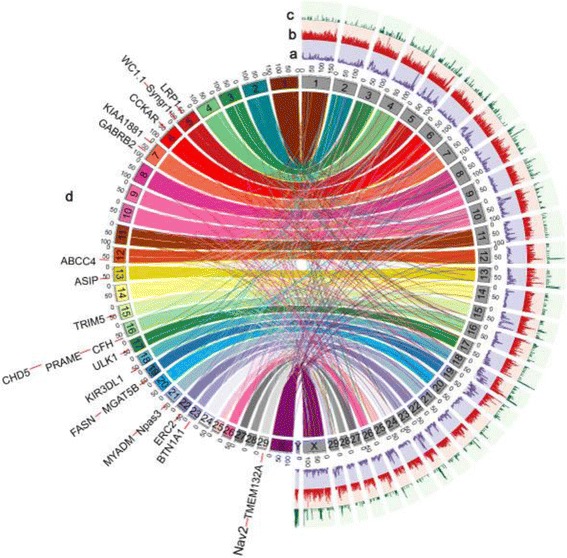
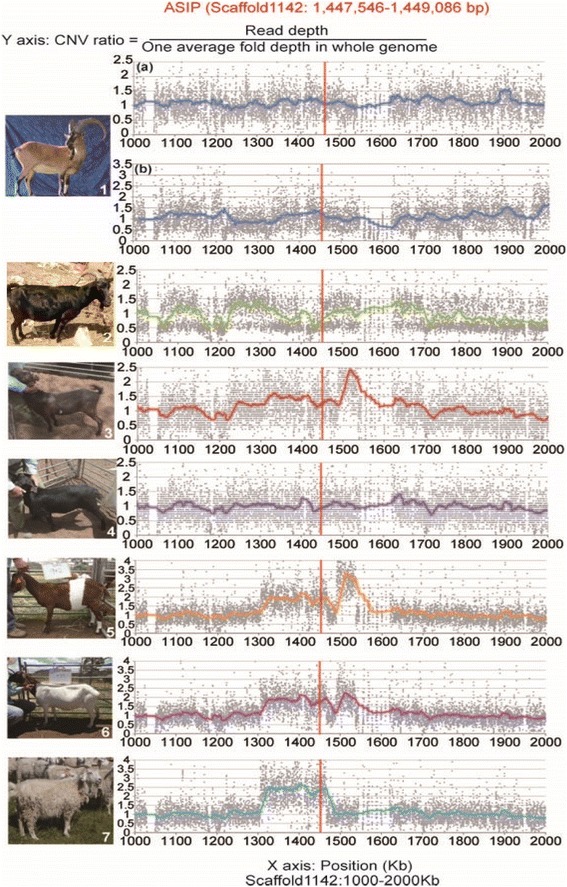
BACKGROUND: Domestic goats (Capra hircus) have been selected to play an essential role in agricultural production systems, since being domesticated from their wild progenitor, bezoar (Capra aegagrus). A detailed understanding of the genetic consequences imparted by the domestication process remains a key goal of evolutionary genomics. RESULTS: We constructed the reference genome of bezoar and sequenced representative breeds of domestic goats to search for genomic changes that likely have accompanied goat domestication and breed formation. Thirteen copy number variation genes associated with coat color were identified in domestic goats, among which ASIP gene duplication contributes to the generation of light coat-color phenotype in domestic goats. Analysis of rapidly evolving genes identified genic changes underlying behavior-related traits, immune response and production-related traits. CONCLUSION: Based on the comparison studies of copy number variation genes and rapidly evolving genes between wild and domestic goat, our findings and methodology shed light on the genetic mechanism of animal domestication and will facilitate future goat breeding.
Overview
The claims and statistics of this paper haven’t been checked yet.
Run the check — free, no account needed. It reads the open-access text and checks the sources it cites.
Integrity signals
Registry
Cites
Statistics
Figures
Verification
Claims the paper makes
The claims and statistics of this paper haven’t been checked yet.
Run the check — free, no account needed. It reads the open-access text and checks the sources it cites.
Claims other papers make about this one
Each is checked against this paper’s own text: does it say what the citing paper says it does?
The cited source says what the claim attributes to it.
In the citing paper
“Signals of selection associated with serotonergic signaling have also been identified in a tame strain of rat and the domesticated goat (Albert et al., 2011;Dong et al., 2015).”
From Glutamate receptors in domestication and modern human evolution (2020) · cites this paper as Dong et al., 2015
Self-check
Percentages, sums and reported differences re-computed from the paper’s own numbers.
The self-check needs the paper’s full text.
Citations
Cites
The Sequence Alignment/Map format and SAMtools
Li, H., Handsaker, B., Wysoker, A., Fennell, T., Ruan, J., Homer, N., Marth, G., Abecasis, G., Durbin, R., & 1000 Genome Project Data Processing Subgroup (2009) · Bioinformatics · doi:10.1093/bioinformatics/btp352 · Cited by 62,041
Fast and accurate short read alignment with Burrows-Wheeler transform
Li, H., & Durbin, R. (2009) · Bioinformatics · doi:10.1093/bioinformatics/btp324 · Cited by 58,607
Gene Ontology: tool for the unification of biology
Ashburner, M., Ball, C. A., Blake, J. A., Botstein, D., Butler, H., Cherry, J. M., Davis, A. P., Dolinski, K., Dwight, S. S., Eppig, J. T., et al. (2000) · Nature Genetics · doi:10.1038/75556 · Cited by 43,206
KEGG: Kyoto Encyclopedia of Genes and Genomes
Kanehisa, M. (2000) · Nucleic Acids Research · doi:10.1093/nar/28.1.27 · Cited by 37,077
KEGG: Kyoto Encyclopedia of Genes and Genomes
Ogata, H., Goto, S., Sato, K., Fujibuchi, W., Bono, H., & Kanehisa, M. (1999) · Nucleic Acids Research · doi:10.1093/nar/27.1.29 · Cited by 31,232
BLAST+: architecture and applications
Camacho, C., Coulouris, G., Avagyan, V., Ma, N., Papadopoulos, J., Bealer, K., & Madden, T. L. (2009) · BMC Bioinformatics · doi:10.1186/1471-2105-10-421 · Cited by 22,074
MRBAYES: Bayesian inference of phylogenetic trees.
Huelsenbeck, J. P., & Ronquist, F. (2001) · Bioinformatics · doi:10.1093/bioinformatics/17.8.754 · Cited by 21,937
Guindon, S., Dufayard, J.-F., Lefort, V., Anisimova, M., Hordijk, W., & Gascuel, O. (2010) · Systematic Biology · doi:10.1093/sysbio/syq010 · Cited by 18,376
PAML 4: Phylogenetic Analysis by Maximum Likelihood
Yang, Z. (2007) · Molecular Biology and Evolution · doi:10.1093/molbev/msm088 · Cited by 13,879
Fast and accurate long-read alignment with Burrows-Wheeler transform.
Li, H., & Durbin, R. (2010) · Bioinformatics · doi:10.1093/bioinformatics/btp698 · Cited by 12,063
Research works printed but not linked: 1
- Nowak RM. Walker's Mammals of the World, 6th edn, vol. II: The Johns Hopkins University Press, Baltimore, MD. 1991:1135-1238.
Cited by
Sorted by citations
Harnessing genomic information for livestock improvement
Georges, M., Charlier, C., & Hayes, B. (2019) · Nature Reviews Genetics · doi:10.1038/s41576-018-0082-2 · Cited by 384
Convergent genomic signatures of domestication in sheep and goats
Alberto, F. J., Boyer, F., Orozco-terWengel, P., Streeter, I., Servin, B., de Villemereuil, P., Benjelloun, B., Librado, P., Biscarini, F., Colli, L., et al. (2018) · Nature Communications · doi:10.1038/s41467-018-03206-y · Cited by 339
The origin of domestication genes in goats
Zheng, Z., Wang, X., Li, M., Li, Y., Yang, Z., Wang, X., Pan, X., Gong, M., Zhang, Y., Guo, Y., et al. (2020) · Science Advances · doi:10.1126/sciadv.aaz5216 · Cited by 184
Self-citationWang, X., Liu, J., Zhou, G., Guo, J., Yan, H., Niu, Y., Li, Y., Yuan, C., Geng, R., Lan, X., et al. (2016) · Scientific Reports · doi:10.1038/srep38932 · Cited by 167
Wang, X., Zheng, Z., Cai, Y., Chen, T., Li, C., Fu, W., & Jiang, Y. (2017) · GigaScience · doi:10.1093/gigascience/gix115 · Cited by 147
Amills, M., Capote, J., & Tosser‐Klopp, G. (2017) · Animal Genetics · doi:10.1111/age.12598 · Cited by 157
Diversity of copy number variation in the worldwide goat population
Liu, M., Zhou, Y., Rosen, B. D., Tassell, C. P. V., Stella, A., Tosser‐Klopp, G., Rupp, R., Palhière, I., Colli, L., Sayre, B. L., et al. (2018) · Heredity · doi:10.1038/s41437-018-0150-6 · Cited by 72
Guan, D., Luo, N., Tan, X., Zhao, Z., Huang, Y., Na, R., Zhang, J., & Zhao, Y. (2016) · Scientific Reports · doi:10.1038/srep36372 · Cited by 69
An atlas of CNV maps in cattle, goat and sheep
Huang, Y., Li, Y., Wang, X., Yu, J., Cai, Y., Zheng, Z., Li, R., Zhang, S., Chen, N., Nanaei, H. A., et al. (2021) · Science China Life Sciences · doi:10.1007/s11427-020-1850-x · Cited by 62
Ancient Genomes Reveal the Evolutionary History and Origin of Cashmere-Producing Goats in China
Cai, Y., Fu, W., Cai, D., Heller, R., Zheng, Z., Wen, J., Li, H., Wang, X., Alshawi, A., Sun, Z., et al. (2020) · Molecular Biology and Evolution · doi:10.1093/molbev/msaa103 · Cited by 61
Martin, P. M., Palhière, I., Ricard, A., Tosser‐Klopp, G., & Rupp, R. (2016) · PLoS ONE · doi:10.1371/journal.pone.0152426 · Cited by 57
Decrease of gene expression diversity during domestication of animals and plants
Liu, W., Chen, L., Zhang, S., Hu, F., Wang, Z., Lyu, J., Wang, B., Xiang, H., Zhao, R., Tian, Z., et al. (2019) · BMC Evolutionary Biology · doi:10.1186/s12862-018-1340-9 · Cited by 62
Li, R., Fu, W., Su, R., Tian, X., Du, D., Zhao, Y., Zheng, Z., Chen, Q., Gao, S., Cai, Y., et al. (2019) · Frontiers in Genetics · doi:10.3389/fgene.2019.01169 · Cited by 51
Glutamate receptors in domestication and modern human evolution
O’Rourke, T., & Boeckx, C. (2020) · Neuroscience & Biobehavioral Reviews · doi:10.1016/j.neubiorev.2019.10.004 · Cited by 50
Genetic diversity and selection of Tibetan sheep breeds revealed by whole-genome resequencing
Tian, D., Han, B., Li, X., Liu, D., Zhou, B., Zhao, C., Zhang, N., Wang, L., Pei, Q., & Zhao, K. (2023) · Animal Bioscience · doi:10.5713/ab.22.0432 · Cited by 51
Kumar, C. V., Song, S., Dewani, P., Kumar, M., Parkash, O., Ma, Y., Malhi, K. K., Yang, N., Mwacharo, J. M., He, X., et al. (2018) · Animal Genetics · doi:10.1111/age.12722 · Cited by 49
Goat Genomic Resources: The Search for Genes Associated with Its Economic Traits
Siddiki, A. Z., Miah, G., Islam, M. S., Kumkum, M., Rumi, M. H., Baten, A., & Hossain, M. A. (2020) · International Journal of Genomics · doi:10.1155/2020/5940205 · Cited by 49
Zhang, B., Chang, L., Lan, X., Asif, N., Guan, F., Fu, D., Li, B., Yan, C., Zhang, H., Zhang, X., et al. (2018) · GigaScience · doi:10.1093/gigascience/giy105 · Cited by 47
Yue, B., Li, H., Liu, M., Wu, J., Li, M., Lei, C., Huang, B., & Chen, H. (2019) · Frontiers in Genetics · doi:10.3389/fgene.2019.00091 · Cited by 47
The Muskox Lost a Substantial Part of Its Genetic Diversity on Its Long Road to Greenland
Hansen, C. C. R., Hvilsom, C., Schmidt, N. M., Aastrup, P., Van Coeverden de Groot, P. J., Siegismund, H. R., & Heller, R. (2018) · Current Biology · doi:10.1016/j.cub.2018.10.054 · Cited by 42
Telomere-to-telomere sheep genome assembly identifies variants associated with wool fineness
Luo, L.-Y., Wu, H., Zhao, L., Zhang, Y.-H., Huang, J.-H., Liu, Q., Wang, H.-T., Mo, D.-X., EEr, H.-H., Zhang, L., et al. (2025) · Nature Genetics · doi:10.1038/s41588-024-02037-6 · Cited by 51
Oget, C., Servin, B., & Palhière, I. (2018) · Animal Genetics · doi:10.1111/age.12752 · Cited by 39
Genome-Wide Patterns of Homozygosity Reveal the Conservation Status in Five Italian Goat Populations
Mastrangelo, S., Gerlando, R. D., Sardina, M. T., Sutera, A. M., Moscarelli, A., Tolone, M., Cortellari, M., Marletta, D., Crepaldi, P., & Portolano, B. (2021) · Animals · doi:10.3390/ani11061510 · Cited by 37
Signer‐Hasler, H., Henkel, J., Bangerter, E., Bulut, Z., Drögemüller, C., Leeb, T., & Flury, C. (2022) · Genetics Selection Evolution · doi:10.1186/s12711-022-00695-w · Cited by 37
Zhang, R.-Q., Wang, J., Zhang, T., Zhai, H., & Shen, W. (2019) · Gene · doi:10.1016/j.gene.2019.02.027 · Cited by 32
Domestication drive the changes of immune and digestive system of Eurasian perch (Perca fluviatilis)
Chen, X., Wang, J., Qian, L., Gaughan, S., Xiang, W., Ai, T., Fan, Z., & Wang, C. (2017) · PLoS ONE · doi:10.1371/journal.pone.0172903 · Cited by 32
Zhang, X., Zhang, S., Ma, L., Jiang, E., Xu, H., Chen, R., Yang, Q., Chen, H., Li, Z., & Lan, X. (2017) · Oncotarget · doi:10.18632/oncotarget.23260 · Cited by 31
New world goat populations are a genetically diverse reservoir for future use
Paim, T. D. P., de Faria, D. A., Hay, E. H., McManus, C., Lanari, M. R., Esquivel, L. C., Cascante, M. I. C., Jiménez-Alfaro, E., Mendez, A., Facó, O., et al. (2019) · Scientific Reports · doi:10.1038/s41598-019-38812-3 · Cited by 35
Marín, J. C., Rivera, R., Varas, V., Cortés, J., Agapito, A., Chero, A. M., Chávez, A., Johnson, W. E., & Orozco‐terWengel, P. (2018) · Frontiers in Genetics · doi:10.3389/fgene.2018.00487 · Cited by 30
Of browse, goats, and men: Contribution to the debate on animal traditions and cultures
Landau, S. Y., & Provenza, F. D. (2020) · Applied Animal Behaviour Science · doi:10.1016/j.applanim.2020.105127 · Cited by 26
Pardo, J. I. S., Bermejo, J. V. D., Ariza, A. G., Jurado, J. M. L., Navas, C. M., Pastrana, C. I., Martínez, A. M., & González, F. J. N. (2022) · Animals · doi:10.3390/ani12080988 · Cited by 27
Arenas‐Báez, P., Hernández, G. T., Castillo-Hernández, G., Hernández‐Rodríguez, M., Sánchez-Gutiérrez, R. A., López, S. V., González‐Maldonado, J., Martínez, P. A. D., Granados–Rivera, L. D., & Maldonado‐Jáquez, J. A. (2023) · Biology · doi:10.3390/biology12070929 · Cited by 27
Telomere-to-telomere genome assembly of a male goat reveals variants associated with cashmere traits
Wu, H. C., Luo, L.-Y., Zhang, Y., Zhang, C.-Y., Huang, J.-H., Mo, D.-X., Zhao, L.-M., Wang, Z., Wang, Y., Hehua, E., et al. (2024) · Nature Communications · doi:10.1038/s41467-024-54188-z · Cited by 37
Genomic insights into ruminant evolution: from past to future prospects
Wang, B., Chen, L., & Wang, W. (2019) · 动物学研究 · doi:10.24272/j.issn.2095-8137.2019.061 · Cited by 27
Fu, W., Wang, R., Yu, J., Hu, D., Cai, Y., Shao, J., & Jiang, Y. (2021) · Journal of genetics and genomics/Journal of Genetics and Genomics · doi:10.1016/j.jgg.2021.03.003 · Cited by 25
Daverio, M. S., Rigalt, F., Romero, S., Vidal-Rioja, L., & Rocco, F. D. (2016) · Small Ruminant Research · doi:10.1016/j.smallrumres.2016.08.003 · Cited by 24
Schaffer, A., Caicoya, Á. L., Colell, M., Holland, R., Ensenyat, C., & Amici, F. (2020) · Frontiers in Psychology · doi:10.3389/fpsyg.2020.604904 · Cited by 25
Li, H., Wei, X., Yang, J., Dong, D., Huang, Y., Lan, X., Plath, M. W., Lei, C., Qi, X., Bai, Y., et al. (2017) · Oncotarget · doi:10.18632/oncotarget.16644 · Cited by 24
Rare and unique adaptations to cancer in domesticated species: An untapped resource?
Frédéric Thomas, A., Giraudeau, M., Dheilly, N. M., Gouzerh, F., Boutry, J., Beckmann, C., Biro, P. A., Hamede, R., Abadie, J., Labrut, S., et al. (2020) · Evolutionary Applications · doi:10.1111/eva.12920 · Cited by 26
The wild ancestors of domestic animals as a neglected and threatened component of biodiversity
Smith, W. J. B., Quilodrán, C. S., Jezierski, M. T., Sendell‐Price, A. T., & Clegg, S. M. (2021) · Conservation Biology · doi:10.1111/cobi.13867 · Cited by 24
Zhou, Z., Fan, Y., Wang, G., Lai, Z., Gao, Y., Wu, F., Lei, C., & Dang, R. (2020) · Animals · doi:10.3390/ani10101823 · Cited by 26
Denoyelle, L., de Villemereuil, P., Boyer, F., Khelifi, M., Gaffet, C., Alberto, F. J., Benjelloun, B., & Pompanon, F. (2021) · Frontiers in Genetics · doi:10.3389/fgene.2021.745284 · Cited by 22
Selection signatures for fiber production in commercial species: A review
Ghildiyal, K., Panigrahi, M., Kumar, H., Rajawat, D., Nayak, S. S., Lei, C., Bhushan, B., & Dutt, T. (2022) · Animal Genetics · doi:10.1111/age.13272 · Cited by 23
Zeng, L., Chen, M., Li, Y., Su, L., Su, Y., Otecko, N. O., Liu, H., Wang, M., Yao, Y., Li, H., et al. (2017) · Molecular Biology and Evolution · doi:10.1093/molbev/msx238 · Cited by 20
Guo, J., Zhong, J., Liu, G. E., Yang, L., Li, L., Chen, G., Song, T., & Zhang, H. (2020) · BMC Genomics · doi:10.1186/s12864-020-07267-6 · Cited by 19
Xiong, Q., Tao, H., Zhang, N., Zhang, L., Wang, G., Li, X., Suo, X., Zhang, F., Liu, Y., & Chen, M. (2019) · Genomics · doi:10.1016/j.ygeno.2019.10.019 · Cited by 19
Liu, X., Chen, W., Huang, B., Wang, X., Peng, Y., Zhang, X., Chai, W., Khan, M. Z., & Wang, C. (2024) · Frontiers in Veterinary Science · doi:10.3389/fvets.2023.1334434 · Cited by 18
Xu, Z., Wang, X., Song, X., An, Q., Wang, D., Zhang, Z., Ding, X., Yao, Z., Wang, E., Liu, X., et al. (2022) · Animal Biotechnology · doi:10.1080/10495398.2022.2025818 · Cited by 17
Physicochemical Properties of Black Korean Goat Meat with Various Slaughter Ages
Choi, D.-M., Kang, K.-M., Kang, S. M., & Kim, H.-Y. (2023) · Animals · doi:10.3390/ani13040692 · Cited by 17
Mastrangelo, S., Jemaa, S. B., Sottile, G., Casu, S., Portolano, B., Ciani, E., & Pilla, F. (2019) · Journal of Animal Breeding and Genetics · doi:10.1111/jbg.12422 · Cited by 17
Genetic diversity of United States Rambouillet, Katahdin and Dorper sheep
Becker, G. M., Thorne, J. W., Burke, J. M., Lewis, R. M., Notter, D. R., Morgan, J. L. M., Schauer, C. S., Stewart, W. C., Redden, R. R., & Murdoch, B. M. (2024) · Genetics Selection Evolution · doi:10.1186/s12711-024-00905-7 · Cited by 16
Genomic Structural Diversity in Local Goats: Analysis of Copy-Number Variations
Gerlando, R. D., Mastrangelo, S., Moscarelli, A., Tolone, M., Sutera, A. M., Portolano, B., & Sardina, M. T. (2020) · Animals · doi:10.3390/ani10061040 · Cited by 18
Capturing the Effects of Domestication on Vocal Learning Complexity
O’Rourke, T. J., Martins, P. T., Asano, R., Tachibana, R. O., Okanoya, K., & Boeckx, C. A. (2021) · Trends in Cognitive Sciences · doi:10.1016/j.tics.2021.03.007 · Cited by 15
CNVs with adaptive potential in Rangifer tarandus: genome architecture and new annotated assembly
Prunier, J., Carrier, A., Gilbert, I., Poisson, W., Albert, V., Taillon, J., Bourret, V., Côté, S. D., Droit, A., & Robert, C. (2021) · Life Science Alliance · doi:10.26508/lsa.202101207 · Cited by 14
Identification of selection signatures in Capra hircus and Capra aegagrus in Iran
Taheri, S., Saedi, N., Zerehdaran, S., & Javadmanesh, A. (2023) · Animal Science Journal · doi:10.1111/asj.13864 · Cited by 12
Zhang, M., Xu, X., Chen, Y., Wei, C., Zhan, S., Cao, J., Guo, J., Dai, D., Wang, L., Zhong, T., et al. (2024) · International Journal of Molecular Sciences · doi:10.3390/ijms25158248 · Cited by 13
Xiao, C., Li, J., Xie, T., Chen, J., Zhang, S., Elaksher, S. H., Jiang, F., Jiang, Y., Zhang, L., Zhang, W., et al. (2021) · Ecology and Evolution · doi:10.1002/ece3.7611 · Cited by 12
A genome-wide analysis of copy number variation in Murciano-Granadina goats
Guan, D., Martínez, A. M., Castelló, A., Landi, V., Luigi‐Sierra, M. G., Álvarez, J. F., Cabrera, B., Bermejo, J. V. D., Such, X., Jordana, J., et al. (2020) · Genetics Selection Evolution · doi:10.1186/s12711-020-00564-4 · Cited by 14
Yu, S., Liu, Z., Li, M., Zhou, D., Hua, P., Cheng, H., Fan, W., Xu, Y., Liu, D., Liang, S., et al. (2023) · GigaScience · doi:10.1093/gigascience/giad016 · Cited by 10
Genomics of Adaptations in Ungulates
Chebii, V. J., Mpolya, E. A., Muchadeyi, F. C., & Entfellner, J.-B. D. (2021) · Animals · doi:10.3390/ani11061617 · Cited by 12
History of the Goat and Modern Versus Old Strategies to Enhance the Genetic Performance
Saleh, A. A., Rashad, A. M. A., Hassanine, N. N. A. M., Sharaby, M. A., & Sallam, S. M. A. (2023) · IntechOpen eBooks · doi:10.5772/intechopen.1001106 · Cited by 11
A missense mutation in RRM1 contributes to animal tameness
Dou, M., Li, M., Zheng, Z., Chen, Q., Wu, Y., Wang, J., Shan, H., Wang, F., Dai, X., Li, Y., et al. (2023) · Science Advances · doi:10.1126/sciadv.adf4068 · Cited by 10
Self-citationGenomic and Molecular Mechanisms of Goat Environmental Adaptation
Lu, Y. C., Ma, R., Li, D., Gao, Y., Sheng, Z., Shi, J., Peng, Y., Gao, Z., Deng, W., & He, X. (2025) · Biology · doi:10.3390/biology14060654 · Cited by 10
Exploring the genetic diversity: A review of germplasm in Nigerian indigenous goat breeds
Akintunde, A. O., Mustofa, I., Ndubuisi-Ogbonna, L. C., Oyekale, O. O., & Shobo, B. A. (2024) · Small Ruminant Research · doi:10.1016/j.smallrumres.2024.107236 · Cited by 10
Guan, D., Castelló, A., Luigi‐Sierra, M. G., Landi, V., Bermejo, J. V. D., Martínez, A. M., & Amills, M. (2021) · Livestock Science · doi:10.1016/j.livsci.2021.104440 · Cited by 10
Hempel, E., Westbury, M. V., Grau, J. H., Trinks, A., Paijmans, J. L. A., Kliver, S. F., Barlow, A., Mayer, F., Müller, J., Chen, L., et al. (2021) · Genes · doi:10.3390/genes12081236 · Cited by 12
Examination of homozygosity runs and selection signatures in native goat breeds of Henan, China
Peng, W., Zhang, Y., Gao, L., Wang, S., Liu, M., Sun, E., Lu, K., Zhang, Y., Li, B., Li, G.-Y., et al. (2024) · BMC Genomics · doi:10.1186/s12864-024-11098-0 · Cited by 9
Detecting the footprint of selection on the genome of Girgentana goat, a popular ancient breed
Criscione, A., Jemaa, S. B., Chessari, G., Riggio, S., Tumino, S., Cammilleri, G., Lastra, A., Carta, F., Sardina, M. T., Portolano, B., et al. (2025) · animal · doi:10.1016/j.animal.2025.101466 · Cited by 8
Akter, R., Son, J. S., Ahn, J. C., Morshed, M. N., Lee, G. J., Kim, M. J., An, J. T., Kong, B. M., Song, J., Yang, D., et al. (2024) · International Journal of Molecular Sciences · doi:10.3390/ijms25137247 · Cited by 8
Mixed Outcomes in Recombination Rates After Domestication: Revisiting Theory and Data
Bursell, M. G., Rohilla, M., Ramirez, L., Cheng, Y., Schwarzkopf, E. J., Guerrero, R. F., & Heil, C. S. (2025) · Molecular Ecology · doi:10.1111/mec.17773 · Cited by 7
Changthangi Pashmina Goat Genome: Sequencing, Assembly, and Annotation
Bhat, B. A., Ganai, N. A., Singh, A., Mir, R. A., Ahmad, S. M., Zargar, S. M., & Malik, F. A. (2021) · Frontiers in Genetics · doi:10.3389/fgene.2021.695178 · Cited by 7
Genetic Variation of Goat Interferon Regulatory Factor 3 Gene and Its Implication in Goat Evolution
Okpeku, M., Esmailizadeh, A., Adeola, A. C., Shu, L., Zhang, Y., Wang, Y., Sanni, T. M., Imumorin, I. G., PETERS, S. O., Zhang, J., et al. (2016) · PLoS ONE · doi:10.1371/journal.pone.0161962 · Cited by 7
Recent advances in genomic studies for domestication and genetic improvement of traits in goats
Akhatayeva, Z., Dan, H., Salehian-Dehkordi, H., Seiteuov, T. K., Халмурзаевич, А. А., Aitjanov, R., Lin, K., & Xu, S. (2025) · Journal of Integrative Agriculture · doi:10.1016/j.jia.2025.07.020 · Cited by 6
Pallotti, S., Garcia, A. F. R., Deiana, G., Antonini, M., Zhou, J., Sun, H., Renieri, C., & Napolioni, V. (2025) · BMC Genomics · doi:10.1186/s12864-025-12133-4 · Cited by 6
Population Genomics of Ungulates
Martchenko, D., Prewer, E., Latch, E. K., Kyle, C. J., & Shafer, A. B. A. (2018) · Population genomics · doi:10.1007/13836_2018_30 · Cited by 6
Wang, M., Lin, Y., Zhou, S., Cui, Y., Feng, Q., Yan, W., & Xiang, H. (2020) · Frontiers in Genetics · doi:10.3389/fgene.2020.566961 · Cited by 6
Genomics for the Improvement of Productivity and Robustness of South African Goat Breeds
Dzomba, E. F., Mdladla, K., Ncube, K. T., & Muchadeyi, F. C. (2017) · Springer eBooks · doi:10.1007/978-3-319-71855-2_27 · Cited by 6
Telomere-to-telomere sheep genome assembly reveals new variants associated with wool fineness traitPreprint
Luo, L.-Y., Wu, H., Zhao, L., Zhang, Y., Huang, J.-H., Liu, Q., Wang, H.-T., Mo, D.-X., EEr, H.-H., Zhang, L., et al. (2024) · bioRxiv (Cold Spring Harbor Laboratory) · doi:10.1101/2024.07.21.604451 · Cited by 6
Li, L., Quan, J., Liu, H., Yu, H., Chen, H., Xia, C., Zhao, S., & Gao, C. (2024) · BMC Genomics · doi:10.1186/s12864-023-09928-8 · Cited by 5
Unique Pharmacokinetic and Pharmacodynamic Parameters of Antimicrobials in Goats
Saganuwan, S. A. (2019) · IntechOpen eBooks · doi:10.5772/intechopen.84551 · Cited by 4
Genome Scan for Variable Genes Involved in Environmental Adaptations of Nubian Ibex
Chebii, V. J., Mpolya, E. A., Oyola, S., Kotzé, A., Entfellner, J.-B. D., & Mutuku, J. (2021) · Journal of Molecular Evolution · doi:10.1007/s00239-021-10015-3 · Cited by 3
Conservation of Goat Populations from Southwestern Europe Based on Molecular Diversity Criteria
Ginja, C., Cortés, O., Gama, L. T., Bermejo, J. V. D., Amills, M., de Sousa, C. B., Cañón, J., Capote, J., Dunner, S., Ferrando, A., et al. (2017) · Springer eBooks · doi:10.1007/978-3-319-71855-2_29 · Cited by 4
Panigrahi, M., Nayak, S. S., Rajawat, D., Bose, A., Bharia, N., Das, S., Sharma, A., & Dutt, T. (2025) · Mammalian Genome · doi:10.1007/s00335-025-10138-8 · Cited by 8
Strahsburger, E., & Scopinich-Cisternas, J. (2021) · IntechOpen eBooks · doi:10.5772/intechopen.99346 · Cited by 3
Yang, Q., Fan, W., Lai, B., Liao, B., & Deng, M. (2023) · PLoS ONE · doi:10.1371/journal.pone.0281061 · Cited by 3
Whole-genome sequencing and genomic analysis of Norduz goat (Capra hircus)
Arslan, M. (2023) · Mammalian Genome · doi:10.1007/s00335-023-09990-3 · Cited by 3
Genome-wide analysis of goat genetic diversity and production systems in Uganda
Onzima, R. B. (2019) · doi:10.18174/472434 · Cited by 3
Tian, D., Zhou, B., Han, B., Liu, S., Tian, F., Delin, Q., & Zhao, K. (2021) · Research Square · doi:10.21203/rs.3.rs-453887/v1 · Cited by 3
Li, M., Li, H., & Ye, S. (2025) · Frontiers in Genetics · doi:10.3389/fgene.2025.1544330 · Cited by 2
Tian, D., Zhou, B., Han, B., Li, X., Tian, F., Qi, D., & Zhao, K. (2023) · The Journal of Animal and Plant Sciences · doi:10.36899/japs.2023.6.0687 · Cited by 2
Selionova, M. I., М., А. А. М., Mamontova, T., Stolpovsky, Y. A., Beketov, S. V., Petrov, S. N., KHARZINOVA, V. R., Dotsev, A. V., & Zinovieva, N. A. (2021) · PubMed Central · doi:10.22092/ari.2021.355684.1709 · Cited by 2
Pastusiak, A., Reddy, M. R., Chen, X., Hoyer, I. J., Dorman, J., Gebhardt, M. E., Carpi, G., Norris, D. E., Pipas, J. M., & Jackson, E. K. (2024) · Communications Biology · doi:10.1038/s42003-024-06337-9 · Cited by 1
Choi, D.-M., Lee, S.-H., & Kim, H.-Y. (2024) · Food Science of Animal Resources · doi:10.5851/kosfa.2024.e118 · Cited by 1
Tian, Y., Lin, Y., Ma, Y., Li, J., Sahu, S. K., Fan, J., Lin, C., Li, Z., Shi, M., He, F., et al. (2025) · Biology · doi:10.3390/biology14010030 · Cited by 1
Deciphering the animal genomics using bioinformatics approaches
Usha, T., Panda, P., Goyal, A. K., Sukhralia, S., Afreen, S., Kumar, H., Shanmugarajan, D., & Middha, S. K. (2020) · Elsevier eBooks · doi:10.1016/b978-0-12-820595-2.00017-5 · Cited by 1
Mdyogolo, S., Nesengani, L. T., Tshilate, T. S., Smith, R. M., Masebe, T. M., & Mapholi, N. O. (2026) · Scientific Data · doi:10.1038/s41597-026-06725-2 · Cited by 1
Prunier, J., Carrier, A., Gilbert, I., Poisson, W., Albert, V., Taillon, J., Bourret, V., Côté, S. D., Droit, A., & Robert, C. (2021) · bioRxiv (Cold Spring Harbor Laboratory) · doi:10.1101/2021.07.22.453386
Crossbreed or Purebred, Which Is Better?
Pakpahan, S., & Furqon, A. (2023) · IntechOpen eBooks · doi:10.5772/intechopen.1001317
Keçi Genetik Kusuru: Mukopolisakkaridoz Tip III D (MPS III D)
GEDİK, Y., & Kavuncu, O. (2023) · Ziraat Mühendisliği · doi:10.33724/zm.1340073
Metadata
- Authors
- Dong, Y., Zhang, X., Xie, M., Arefnezhad, B., Wang, Z., Wang, W., Feng, S., Huang, G., Guan, R., Shen, W., Bunch, R., McCulloch, R., Li, Q., Li, B., Zhang, G., Xu, X., Kijas, J. W., Salekdeh, G. H., Wang, W., & Jiang, Y.
- Affiliations
- Kunming University of Science and Technology (CN)
- Kunming Institute of Zoology (CN)
- BGI Group (China) (CN)
- Agricultural Biotechnology Research Institute of Iran (IR)
- Commonwealth Scientific and Industrial Research Organisation (AU)
- Royan Institute (IR)
- Corresponding author
- Wang, Wenliang
- Kijas, James W.
- Salekdeh, Ghasem Hosseini
- Wang, Wen
- Jiang, Yu
- Venue
- BMC Genomics
- Published
- 2015-06-05
- Volume
- 16
- Issue
- 1
- Pages
- 431-431
- ISSN
- 1471-2164 (ISSN-L)
- PMC
- PMC4455334
- OpenAlex
- W1561398821
- Cited by
- 116
- References
- 77
- Citations by year
- 2026: 5 · 2025: 11 · 2024: 17 · 2023: 12 · 2022: 4 · 2021: 18 · 2020: 16 · 2019: 11 · 2018: 9 · 2017: 8 · 2016: 5
- FWCI
- 5.04
- Type
- journal article
- Language
- en
- Open access
- gold
- doi.org
- Locations
- BMC Genomics (publishedVersion, cc-by)
- PubMed Central (publishedVersion, cc-by)
- PubMed (publishedVersion)
- Research at the University of Copenhagen (University of Copenhagen) (publishedVersion, other-oa)
- Funders
- Government of Jiangxi Province
- Environmental Protection Administration, Executive Yuan, R.O.C. Taiwan
- National Key Research and Development Program of China (2013CB835200)
- Topics
- Life Sciences › Biochemistry, Genetics and Molecular Biology › Genetics › Genetic and phenotypic traits in livestock
- Life Sciences › Biochemistry, Genetics and Molecular Biology › Genetics › Genetic Mapping and Diversity in Plants and Animals
- Life Sciences › Biochemistry, Genetics and Molecular Biology › Molecular Biology › Genomics and Phylogenetic Studies
- Keywords
- goat domestication, Capra aegagrus, bezoar, goats, reference genome, copy number variation, coat color genes, rapidly evolving genes, immune response, production traits, goat breeds
- MeSH terms
- Amino Acid Sequence, Animals, Animals, Domestic, Animals, Wild, Breeding, DNA, Biological Evolution, Goats, Immune System, Male, Molecular Sequence Data, Nervous System, Phylogeny, Genetic Variation, Sequence Alignment, Genome, Protein Structure, Tertiary, Receptor, Cholecystokinin A, DNA Copy Number Variations, Myelin and Lymphocyte-Associated Proteolipid Proteins
About these checks
Registry, retraction, Cites and statistics results are computed, not judged, with one exception: a printed reference that no index lists is read once by a model before it counts as a citation error. Claims are extracted by a model and kept only when their quote appears verbatim in the text; each cited source is then checked, with a model’s help, for whether it says what the claim relies on. Those verdicts can be wrong — read the claim’s quote and the cited source before relying on one.
Statistics and arithmetic are recomputed, not judged.
Confidence bands are shown only for fields calibrated on our annotated test set. None is calibrated yet, so no band is shown.
What counts as a claim ›How we measure confidence ›How we check this ›
Are you an author, or do you see a problem with this page? Request a review
