

Genomic and functional analyses unveil the response to hyphal wall stress in Candida albicans cells lacking β(1,3)-glucan remodeling
Open accessThe DOI matches its Crossref record; 85 of the 86 references it cites were found in a registry or an index; 44 of the 75 sources its claims cite were checked for support.
Abstract
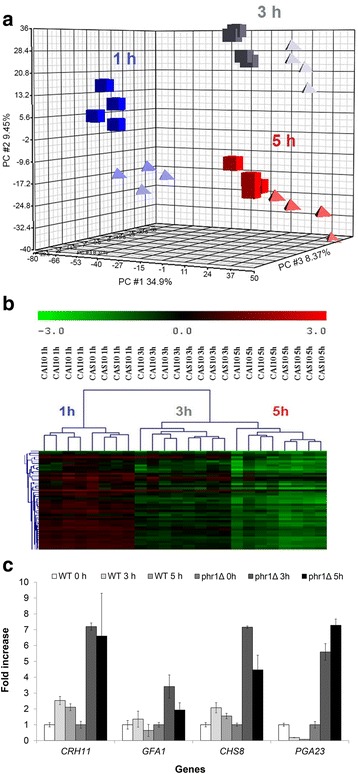
In phr1Δ Candida albicans undergoing hyphal wall stress, transcripts for several cell-wall genes including PGA23, PGA6, and PGA13 increase as part of an adaptive response.
Overview
CoChat Summary
TL;DR
Loss of the β(1,3)-glucan remodeling enzyme Phr1p in Candida albicans triggers a hyphal wall stress response during yeast-to-hypha transition, with constitutive MAPK activation, altered cell wall and cell cycle transcription, and increased chitin. Functional tests show Chs3p is essential for phr1Δ integrity during germination, while Chs8p becomes essential under severe hyphal wall stress on solid media.
Key findings
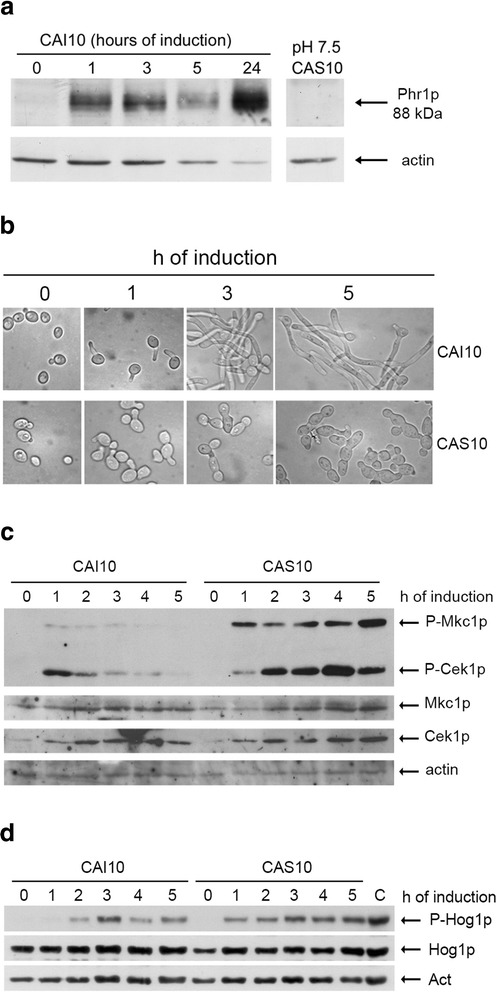
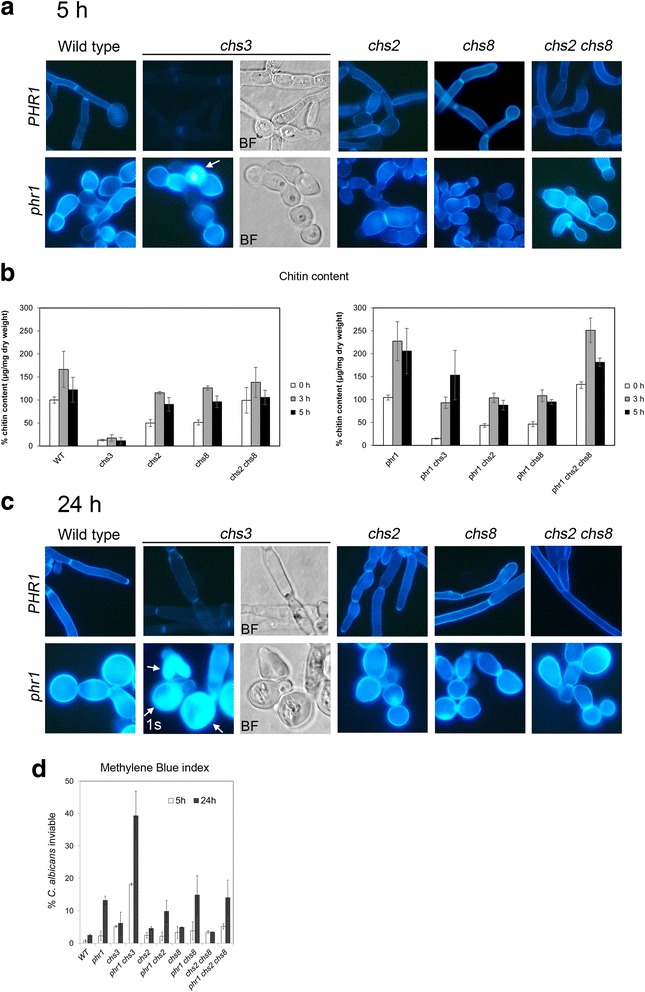
- In hyphal-inducing conditions, phr1Δ germ tubes were defective in elongation and accumulated more chitin: at 5 h, chitin rose to 16.40 ± 1.50 GlcNAc/mg dry weight in phr1Δ versus 11.70 ± 1.07 in wild type, about 40% extra chitin.
- phr1Δ cells constitutively activated Mkc1p, Cek1p, and Hog1p MAP kinases, and microarray profiling identified 115 Class 1 and 87 Class 2 genes with known functions as mutation-sensitive; common hyphal-responsive genes were 60%, 66%, and 64% up-regulated and 65%, 77%, and 76% down-regulated at 1, 3, and 5 h, respectively.
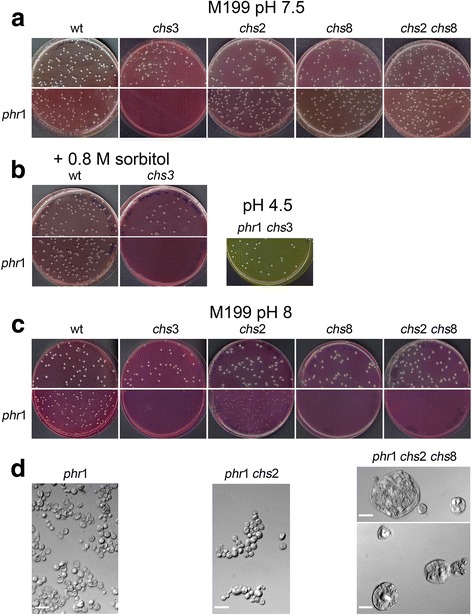
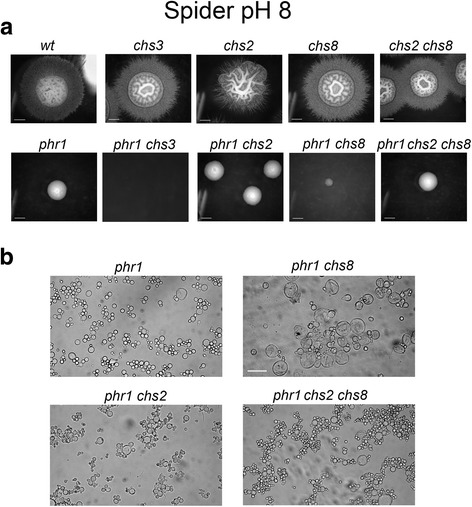
- PHR1 deletion was synthetic lethal with CHS3 loss on solid M199 pH 7.5 and with CHS8 deletion on solid M199 pH 8; on Spider medium at pH 8, PHR1 was synthetic lethal with CHS3 or CHS8.
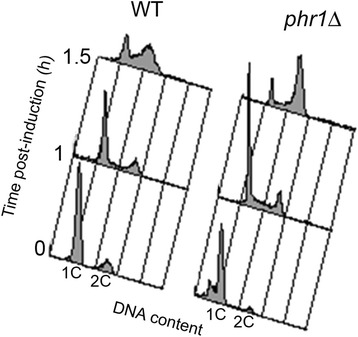
- phr1Δ chs3Δ cells showed increased death: 20% dead at 5 h and about 40% at 24 h in M199 pH 7.5, rising to 70% at pH 8, whereas phr1Δ alone was about 15% dead at 24 h; flow cytometry showed phr1Δ cells entered S-phase earlier than wild type at 1.5 h.
Methods
- Wild-type CAI10 and phr1Δ CAS10, plus chs2Δ, chs3Δ, chs8Δ, and chs2Δ chs8Δ derivatives, were shifted to M199-HEPES pH 7.5 at 37 °C to induce hyphal growth; phenotypes were also tested on solid M199 and Spider media at pH 7.5 or 8.
- Time-course DNA microarray analysis compared wild type and phr1Δ at 0, 1, 3, and 5 h using 6,346 ORF probes, 24 competitive hybridizations, dye-swaps, and two biological replicates; data were Lowess-normalized and analyzed with Limma and FDR ≤ 0.05, using expression ratios ≥2 or ≤0.5 and a mutant/wild-type relation factor (RF) ≥2 or ≤0.5.
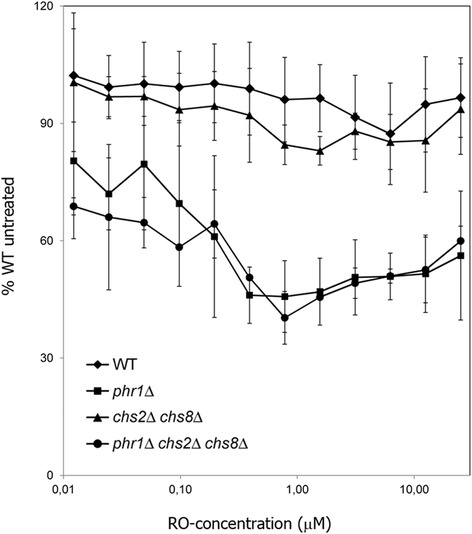
- Supporting assays included qRT-PCR, Western blotting for Phr1p and phosphorylated Mkc1p/Cek1p/Hog1p, calcofluor white and methylene blue staining, chitin measurement by enzymatic assay, flow cytometry of DNA content, and broth microdilution testing with the Chs1p inhibitor RO-09-3143.
Limitations
- The paper states that Hog1p phosphorylation oscillation in wild type was not further investigated, that the possible contribution of Chs1p to phr1Δ growth was not further explored, and that the proposed model for Chs3p/Chs8p localization requires experiments with fluorescent-tagged Chs proteins.
- Evident from the text: the microarray analysis was performed at pH 7.5 rather than pH 8 because phr1Δ cells showed greater death at pH 8 (15% versus about 5% at pH 7.5), so the transcriptional response under the more severe restrictive condition was not profiled.
- Evident from the text: several interpretations, such as Crh11p-mediated cross-linking and Chs3p recruitment to the septum, are proposed models rather than directly demonstrated mechanisms in this study.
Model-written summary. Check it against the paper before relying on it.
Integrity signals
Registry
Cites
Statistics
Figures
Verification
Claims the paper makes
24 Valid · 1 Not valid · 14 Not checked · 171 Own results and interpretations
The cited sources support only part of this claim — read each source’s verdict below.
In the paper
“Our functional analyses demonstrate that CHS3 is crucial during hyphal growth in the absence of Phr1p and support the notion that Chs3p is the major compensatory chitin synthase both in cell wall stress and HWS in fungi [21, 28, 47, 62, 63].”
§ Genomic and functional analyses unveil the response to hyphal wall stress in Candida albicans cells lacking β(1,3)-glucan remodeling > Discussion > CHS3 and CHS8 preserve phr1Δ cell integrity in different conditions of filamentation
What the sources say
- Partly supportedcites [21] Meyer V Damveld RA Arentshorst M Stahl U van den Hondel CA Ram AF Survival in the presence of antifungals: genome-wide expression profiling of Aspergillus niger in response to sublethal concentrations of caspofungin and fenpropimorph J Biol Chem 2007 282 45 32935 32948 10.1074/jbc.M705856200 17804411 sourceExperimental — accuracy not yet measured
The cell-wall-stress passage (page not provided) says that Aspergillus niger increases chitin deposition, and Table 3 lists an induced chitin synthase, ChsB. The paper does not identify Chs3p as the major compensatory synthase or establish its role in HWS across fungi. (LLM, conf=0.81)
- Partly supportedcites [28] Fonzi WA PHR1 and PHR2 of Candida albicans encode putative glycosidases required for proper cross-linking of beta-1,3- and beta-1,6-glucans J Bacteriol 1999 181 22 7070 7079 10559174 PMC94183 sourceExperimental — accuracy not yet measured
The Discussion (page unavailable) reports increased chitin synthesis in PHR mutants with cell-wall defects, supporting a compensatory chitin response. It does not identify Chs3p as the synthase responsible or establish that it is the major compensatory synthase during cell-wall stress and HWS across fungi. (LLM, conf=0.82)
- Partly supportedcites [47] Walker LA Munro CA de Bruijn I Lenardon MD McKinnon A Gow NA Stimulation of chitin synthesis rescues Candida albicans from echinocandins PLoS Pathog 2008 4 4 e1000040 10.1371/journal.ppat.1000040 18389063 PMC2271054 sourceExperimental — accuracy not yet measured
The Results section (page unavailable) reports that Chs3p synthesised the majority of chitin induced by caspofungin in C. albicans, supporting its major role in that cell-wall-stress response. The paper does not address HWS, and its findings do not establish that Chs3p is the major compensatory chitin synthase across fungi. (LLM, conf=0.85)
- Not checked — no full text of the sourcecites [62] Popolo L Gualtieri T Ragni E The yeast cell-wall salvage pathway Med Mycol 2001 39 Suppl 1 111 121 10.1080/mmy.39.1.111.121 11800265 source
- Partly supportedcites [63] Ram AF Kapteyn JC Montijn RC Caro LH Douwes JE Baginsky W Mazur P van den Ende H Klis FM Loss of the plasma membrane-bound protein Gas1p in Saccharomyces cerevisiae results in the release of beta1,3-glucan into the medium and induces a compensation mechanism to ensure cell wall integrity J Bacteriol 1998 180 6 1418 1424 9515908 PMC107039 sourceExperimental — accuracy not yet measured
Our copy of Ram et al. (1998) supports only the generic part of the notion: the DISCUSSION reports that the higher chitin content in gas1Δ, fks1Δ and knr4Δ 'might therefore be a general response to cell wall defects, to compensate for the loss in strength of the cell wall', and adds that 'in several fungi that were subjected to hypo[osmotic] stress, increased chitin synthase activities have been found (17)' (ref. 17 = Gooday & Schofield 1995). However, no passage anywhere in our copy names CHS3, Chs3p or chitin synthase III (searched: 'CHS3 Chs3p chitin synthase III', 'compensatory chitin synthase'); the paper measures total chitin/chitin synthase and attributes the compensation to β1,3-glucan synthase subunits Fks1p/Fks2p and to Cwp1p, so the specific claim that Chs3p is the MAJOR compensatory chitin synthase in cell wall stress and hypo-osmotic wall stress in fungi is not stated in this source. (LLM, conf=0.70)
boostedstates a cause- Asserted: passes — The authors put it forward as true.
- Checkable: passes — It can be checked against evidence.
- Load-bearing: passes — The paper’s conclusions depend on it.
- Based: passes — The paper gives a reason why it holds.
- Partly supported
The cited sources support only part of this claim — read each source’s verdict below.
In the paper
“The typical signature up-regulated genes of hyphal growth, such as ECE1, SOD5, ALS3, RBT1, HWP1, HYR1 PRA1, SAP4, SAP5, SAP6 and the typical down-regulated genes RHD1, TYE7, NRG1 were present [6].”
§ Genomic and functional analyses unveil the response to hyphal wall stress in Candida albicans cells lacking β(1,3)-glucan remodeling > Results > Time-course microarray analysis upon induction of hyphal growth in wild type and PHR1 null mutant
What the sources say
- Partly supportedcites [6] Nantel A Dignard D Bachewich C Harcus D Marcil A Bouin AP Sensen CW Hogues H van het Hoog M Gordon P Transcription profiling of Candida albicans cells undergoing the yeast-to-hyphal transition Mol Biol Cell 2002 13 10 3452 3465 10.1091/mbc.E02-05-0272 12388749 PMC129958 sourceExperimental — accuracy not yet measured
The yeast-to-hyphal switch results (pp. 5–7) report induction of ECE1, SOD5, RBT1, HWP1, and SAP4–6, and repression of RHD1, TYE7, and NRG1. But p. 5 says HYR1 and ALS3 were omitted from the data analysis because of PCR-amplification problems; the searched passages do not establish PRA1 as up-regulated. The source therefore does not support the full list as genes present in its expression results. (LLM, conf=0.90)
plain- Asserted: passes — The authors put it forward as true.
- Checkable: passes — It can be checked against evidence.
- Load-bearing: passes — The paper’s conclusions depend on it.
- Based: passes — The paper gives a reason why it holds.
- Partly supported
The cited sources support only part of this claim — read each source’s verdict below.
In the paper
“Thus, Phr1p and Phr2p appear to be the only active β(1,3)-glucanosyltransferases in C. albicans.”
§ Genomic and functional analyses unveil the response to hyphal wall stress in Candida albicans cells lacking β(1,3)-glucan remodeling > Background
What the sources say
- Partly supportedcites [16] Kovacova K, Degani G, Stratilova E, Farkas V, Popolo L. Catalytic properties of Phr family members of cell wall glucan remodeling enzymes: implications for the adaptation of Candida albicans to ambient pH. FEMS Yeast Res. 2015;15(2). doi:10.1093/femsyr/fou011. 25757890 sourceExperimental — accuracy not yet measured
The in vitro activity section (page not specified) reports β-1,3-glucanosyltransferase activity for purified Phr1p and Phr2p, but none detected for Pga4p. The Introduction (page not specified) identifies Phr3p and Pga5p as other family members; the paper does not test their catalytic activity or establish that Phr1p and Phr2p are the only active enzymes in C. albicans. (LLM, conf=0.85)
- Not checked — no full text of the sourcecites [18] Eckert SE Heinz WJ Zakikhany K Thewes S Haynes K Hube B Muhlschlegel FA PGA4, a GAS homologue from Candida albicans, is up-regulated early in infection processes Fungal Genet Biol 2007 44 5 368 377 10.1016/j.fgb.2006.12.006 17257864 source
hedged- Asserted: passes — The authors put it forward as true.
- Checkable: passes — It can be checked against evidence.
- Load-bearing: passes — The paper’s conclusions depend on it.
- Based: passes — The paper gives a reason why it holds.
- Partly supported
Every source the paper cites for this claim was checked and supports it.
In the paper
“In addition, PGA23, also a CS-induced gene [61], is persistently up-regulated in the phr1Δ mutant.”
§ Genomic and functional analyses unveil the response to hyphal wall stress in Candida albicans cells lacking β(1,3)-glucan remodeling > Discussion > Comparison with the Caspofungin-induced cell wall stress response
What the sources say
- Supportedcites [61] Bruno VM Kalachikov S Subaran R Nobile CJ Kyratsous C Mitchell AP Control of the C. albicans cell wall damage response by transcriptional regulator Cas5 PLoS Pathog 2006 2 3 e21 10.1371/journal.ppat.0020021 16552442 PMC1401495 source
The citation is attached to the description of PGA23 as a caspofungin-induced gene, not to the finding about persistent up-regulation in the phr1Δ mutant. In Results, under “Relationship between Caspofungin-Sensitive Mutants and Caspofungin-Responsive Genes” (page unavailable), the paper identifies CaPGA23 among genes whose caspofungin-response expression was examined. It does not establish the separate phr1Δ finding. (LLM, conf=0.86)
plainstates an association- Asserted: passes — The authors put it forward as true.
- Checkable: passes — It can be checked against evidence.
- Load-bearing: unclear — It is unclear whether the paper’s conclusions depend on it.
- Based: passes — The paper gives a reason why it holds.
- Supported
The cited sources support only part of this claim — read each source’s verdict below.
In the paper
“Our functional analyses demonstrate that CHS3 is crucial during hyphal growth in the absence of Phr1p and support the notion that Chs3p is the major compensatory chitin synthase both in cell wall stress and HWS in fungi [21, 28, 47, 62, 63].”
§ Genomic and functional analyses unveil the response to hyphal wall stress in Candida albicans cells lacking β(1,3)-glucan remodeling > Discussion > CHS3 and CHS8 preserve phr1Δ cell integrity in different conditions of filamentation
What the sources say
- Could not verifycites [21] Meyer V Damveld RA Arentshorst M Stahl U van den Hondel CA Ram AF Survival in the presence of antifungals: genome-wide expression profiling of Aspergillus niger in response to sublethal concentrations of caspofungin and fenpropimorph J Biol Chem 2007 282 45 32935 32948 10.1074/jbc.M705856200 17804411 sourceExperimental — accuracy not yet measured
Table 3 reports increased expression of the A. niger chitin synthase gene chsB under caspofungin treatment, but it does not test CHS3 during hyphal growth without Phr1p. Searches for Phr1p and Chs3p found no passage addressing that specific claim; the citing sentence presents it as the citing authors’ own functional-analysis result. (LLM, conf=0.75)
- Could not verifycites [28] Fonzi WA PHR1 and PHR2 of Candida albicans encode putative glycosidases required for proper cross-linking of beta-1,3- and beta-1,6-glucans J Bacteriol 1999 181 22 7070 7079 10559174 PMC94183 sourceExperimental — accuracy not yet measured
The Results and Discussion (page unavailable) report increased chitin cross-linking and later increased chitin content in PHR1 mutants. They do not address CHS3 or test whether it is crucial during hyphal growth without Phr1p; searches for CHS3 and hyphal growth found no passage establishing that point. The cited sentence presents the functional analyses as the citing authors’ own work. (LLM, conf=0.76)
- Partly supportedcites [47] Walker LA Munro CA de Bruijn I Lenardon MD McKinnon A Gow NA Stimulation of chitin synthesis rescues Candida albicans from echinocandins PLoS Pathog 2008 4 4 e1000040 10.1371/journal.ppat.1000040 18389063 PMC2271054 sourceExperimental — accuracy not yet measured
The first clause reports the citing authors’ own functional analyses, not a finding attributed to Walker et al. The cited paper’s Results (‘Salvage chitin synthesis involves multiple CHS isoenzymes’; page unavailable) support the linked background point that Chs3p produces most chitin induced by caspofungin, but do not establish its role during hyphal growth without Phr1p or in HWS. (LLM, conf=0.84)
- Not checked — no full text of the sourcecites [62] Popolo L Gualtieri T Ragni E The yeast cell-wall salvage pathway Med Mycol 2001 39 Suppl 1 111 121 10.1080/mmy.39.1.111.121 11800265 source
- Partly supportedcites [63] Ram AF Kapteyn JC Montijn RC Caro LH Douwes JE Baginsky W Mazur P van den Ende H Klis FM Loss of the plasma membrane-bound protein Gas1p in Saccharomyces cerevisiae results in the release of beta1,3-glucan into the medium and induces a compensation mechanism to ensure cell wall integrity J Bacteriol 1998 180 6 1418 1424 9515908 PMC107039 sourceExperimental — accuracy not yet measured
Ram et al. (1998) support only the generic backdrop: the DISCUSSION reports that gas1D, fks1D and knr4D S. cerevisiae mutants (isolated in a Calcofluor White-hypersensitivity screen) show increased chitin content as 'a general response to cell wall defects, to compensate for the loss in strength of the cell wall', and notes that in several fungi subjected to hypo-osmotic stress 'increased chitin synthase activities have been found' (crediting ref 17, Gooday & Schofield 1995). However, our copy never names CHS3/Chs3p as the enzyme responsible, nor does it address hyphal growth or HWS; the compensatory response it characterises in detail is Fks1p/Fks2p-driven beta-1,3-glucan synthase induction (RESULTS p. n/a; DISCUSSION). The specific attribution of 'major compensatory chitin synthase' to Chs3p in fungi is not stated in this source. (LLM, conf=0.70)
boostedstates a cause- Asserted: passes — The authors put it forward as true.
- Checkable: passes — It can be checked against evidence.
- Load-bearing: passes — The paper’s conclusions depend on it.
- Based: passes — The paper gives a reason why it holds.
- Could not verify
102 more claims
Create a free account to see all 210 claims and to verify the 12 references still open.
- It may state two separate claims as one. 64
- Probably not a substantial claim. 46
- The quote only partly states this claim. 1
Citations
Cites
Analysis of Relative Gene Expression Data Using Real-Time Quantitative PCR and the 2−ΔΔCT Method
Livak, K. J., & Schmittgen, T. D. (2001) · Methods · doi:10.1006/meth.2001.1262 · Cited by 180,860
Controlling the False Discovery Rate: A Practical and Powerful Approach to Multiple Testing
Benjamini, Y., & Hochberg, Y. (1995) · Journal of the Royal Statistical Society Series B: Statistical Methodology · doi:10.1111/j.2517-6161.1995.tb02031.x · Cited by 109,482
limma: Linear Models for Microarray Data
Smyth, G. K. (2005) · Statistics for Biology and Health · doi:10.1007/0-387-29362-0_23 · Cited by 5,796
TM4: a free, open-source system for microarray data management and analysis
Saeed, A. I., Sharov, V., White, J., Li, J., Liang, W., Bhagabati, N., Braisted, J., Klapa, M., Currier, T., Thiagarajan, M., et al. (2003) · BioTechniques · doi:10.2144/03342mt01 · Cited by 4,837 · cited 1×
“Hierarchical cluster analysis was performed using Pearson correlation (average linkage) and the Multiple Viewer Experiment (MeV) software package developed by TIGR [78].”
MethodGenomic Expression Programs in the Response of Yeast Cells to Environmental Changes
Gasch, A. P., Spellman, P. T., Kao, C. M., Carmel-Harel, O., Eisen, M. B., Storz, G., Botstein, D., & Brown, P. O. (2000) · Molecular Biology of the Cell · doi:10.1091/mbc.11.12.4241 · Cited by 4,815 · cited 1×
“In agreement with other reports, the category “RNA processing and biogenesis” and “Metabolism” were particularly rich [38, 39].”
ResultMutation of the mouse klotho gene leads to a syndrome resembling ageing
Kuro-o, M., Matsumura, Y., Aizawa, H., Kawaguchi, H., Suga, T., Utsugi, T., Ohyama, Y., Kurabayashi, M., Kaname, T., Kume, E., et al. (1997) · Nature · doi:10.1038/36285 · Cited by 3,837
Isogenic strain construction and gene mapping in Candida albicans.
Fonzi, W. A., & Irwin, M. Y. (1993) · Genetics · doi:10.1093/genetics/134.3.717 · Cited by 1,687
Self-citationCharacterization of the oral fungal microbiome (mycobiome) in healthy individuals
Ghannoum, M. A., Jurevic, R. J., Mukherjee, P. K., Cui, F., Sikaroodi, M., Naqvi, A., & Gillevet, P. M. (2010) · PLoS Pathogens · doi:10.1371/journal.ppat.1000713 · Cited by 1,150 · cited 1×
“albicans colonizes human mucosae and is a component of the oral fungal microbiome [1].”
BackgroundThe cell wall: a carbohydrate armour for the fungal cell
Latgé, J. (2007) · Molecular Microbiology · doi:10.1111/j.1365-2958.2007.05872.x · Cited by 987
Suppression of Hyphal Formation in Candida albicans by Mutation of a STE12 Homolog
Liu, H., Köhler, J., & Fink, G. R. (1994) · Science · doi:10.1126/science.7992058 · Cited by 786
Regulatory circuitry governing fungal development, drug resistance, and disease.
Shapiro, R. S., Robbins, N., & Cowen, L. E. (2011) · Microbiology and Molecular Biology Reviews · doi:10.1128/mmbr.00045-10 · Cited by 576 · cited 1×
“Whereas the yeast form is suitable for dissemination through the blood stream, the thin filamentous shape of hyphae is specialized for adhesion to epithelial and endothelial barriers, and penetration and invasion of the tissues below [4].”
BackgroundChitin synthesis and fungal pathogenesis
Lenardon, M. D., Munro, C. A., & Gow, N. A. (2010) · Current Opinion in Microbiology · doi:10.1016/j.mib.2010.05.002 · Cited by 502
Stimulation of Chitin Synthesis Rescues Candida albicans from Echinocandins
Walker, L. A., Munro, C. A., de Bruijn, I., Lenardon, M. D., McKinnon, A., & Gow, N. A. R. (2008) · PLoS Pathogens · doi:10.1371/journal.ppat.1000040 · Cited by 445 · cited 6×
“While this correlates with an increase in the in vitro activity of these enzymes, there is no corresponding increase in chitin accumulation in vivo [47].”
BackgroundInfluentialTranscription Profiling of Candida albicans Cells Undergoing the Yeast-to-Hyphal Transition
Nantel, A., Dignard, D., Bachewich, C., Harcus, D., Marcil, A., Bouin, A.-P., Sensen, C. W., Hogues, H., van het Hoog, M., Gordon, P., et al. (2002) · Molecular Biology of the Cell · doi:10.1091/mbc.e02-05-0272 · Cited by 378 · cited 2×
“The typical signature up-regulated genes of hyphal growth, such as ECE1, SOD5, ALS3, RBT1, HWP1, HYR1 PRA1, SAP4, SAP5, SAP6 and the typical down-regulated genes RHD1, TYE7, NRG1 were present [6].”
BackgroundResultMouyna, I., Fontaine, T., Vai, M., Monod, M., Fonzi, W. A., Diaquin, M., Popolo, L., Hartland, R. P., & Latgé, J.-P. (2000) · Journal of Biological Chemistry · doi:10.1074/jbc.275.20.14882 · Cited by 353 · cited 1×
“These enzymes internally cleave a donor glucan chain and attach a portion of the donor to an acceptor glucan in β(1,3)-linkage, thus lengthening one chain at the expense of the other [10].”
BackgroundSelf-citationGarcía, R., Bermejo, C., Grau, C., Pérez, R., Rodríguez-Peña, J. M., Francois, J., Nombela, C., & Arroyo, J. (2004) · Journal of Biological Chemistry · doi:10.1074/jbc.m312954200 · Cited by 338 · cited 2×
“Its homolog ScCRH1 is also up-regulated in cell wall mutants and in cells treated with Congo red or zymolyase [57, 58].”
BackgroundMethodSelf-citationCsank, C., Schröppel, K., Leberer, E., Harcus, D., Mohamed, O., Meloche, S., Thomas, D. Y., & Whiteway, M. (1998) · Infection and Immunity · doi:10.1128/iai.66.6.2713-2721.1998 · Cited by 328
Medina, I., Carbonell, J., Pulido, L., Madeira, S. C., Goetz, S., Conesa, A., T�rraga, J., Pascual-Montano, A., Nogales-Cadenas, R., Santoyo, J., et al. (2010) · Nucleic Acids Research · doi:10.1093/nar/gkq388 · Cited by 322
Liu, T. T., Lee, R. E. B., Barker, K. S., Lee, R. E., Wei, L., Homayouni, R., & Rogers, P. D. (2005) · Antimicrobial Agents and Chemotherapy · doi:10.1128/aac.49.6.2226-2236.2005 · Cited by 313 · cited 2×
“[23, 61].”
BackgroundEne, I. V., Adya, A. K., Wehmeier, S., Brand, A. C., MacCallum, D. M., Gow, N. A. R., & Brown, A. J. P. (2012) · Cellular Microbiology · doi:10.1111/j.1462-5822.2012.01813.x · Cited by 313 · cited 1×
“Its extraordinary ability to inhabit diverse niches of the human body is reflected in its adaptability to a wide range of ambient pH values and to changes in oxygen pressures, ion concentrations, and carbon sources [2, 3].”
BackgroundMunro, C. A., Selvaggini, S., De Bruijn, I., Walker, L., Lenardon, M. D., Gerssen, B., Milne, S., Brown, A. J. P., & Gow, N. A. R. (2007) · Molecular Microbiology · doi:10.1111/j.1365-2958.2007.05588.x · Cited by 309
PHR1 , a pH-Regulated Gene of Candida albicans , is Required for Morphogenesis
Saporito-Irwin, S. M., Birse, C. E., Sypherd, P. S., & Fonzi, W. A. (1995) · Molecular and Cellular Biology · doi:10.1128/mcb.15.2.601 · Cited by 264 · cited 4×
“CAS10 CAS8 phr1Δ::hisG/phr1Δ URA3/ura3 Δ::λimm434 [20]”
BackgroundInfluentialSelf-citationThe pH of the Host Niche Controls Gene Expression in and Virulence of Candida albicans
De Bernardis, F., Mühlschlegel, F. A., Cassone, A., & Fonzi, W. A. (1998) · Infection and Immunity · doi:10.1128/iai.66.7.3317-3325.1998 · Cited by 258 · cited 1×
“Moreover, PHR1 null mutants are avirulent in an animal model of systemic infection and in a model of experimental keratomycosis [29, 30].”
BackgroundSelf-citationGenome-wide Analysis of the Response to Cell Wall Mutations in the Yeast Saccharomyces cerevisiae
Lagorce, A., Hauser, N. C., Labourdette, D., Rodriguez, C., Martin-Yken, H., Arroyo, J., Hoheisel, J. D., & François, J. (2003) · Journal of Biological Chemistry · doi:10.1074/jbc.m211604200 · Cited by 254
Self-citationLane, S., Birse, C., Zhou, S., Matson, R., & Liu, H. (2001) · Journal of Biological Chemistry · doi:10.1074/jbc.m104484200 · Cited by 220 · cited 1×
“Genomic-scale expression studies have identified a number of signature genes induced by the yeast to hypha (Y-H) transition [5–7].”
BackgroundMühlschlegel, F. A., & Fonzi, W. A. (1997) · Molecular and Cellular Biology · doi:10.1128/mcb.17.10.5960 · Cited by 209
Self-citationAn improved transformation protocol for the human fungal pathogen Candida albicans
Walther, A., & Wendland, J. (2003) · Current Genetics · doi:10.1007/s00294-002-0349-0 · Cited by 209
An Extensive Circuitry for Cell Wall Regulation in Candida albicans
Blankenship, J. R., Fanning, S., Hamaker, J. J., & Mitchell, A. P. (2010) · PLoS Pathogens · doi:10.1371/journal.ppat.1000752 · Cited by 201 · cited 1×
“For quantification, the abundance of each transcript during induction conditions was determined relative to the standard TDH3 transcript, as indicated in other reports [79, 80].”
MethodRam, A. F. J., Kapteyn, J. C., Montijn, R. C., Caro, L. H. P., Douwes, J. E., Baginsky, W., Mazur, P., van den Ende, H., & Klis, F. M. (1998) · Journal of Bacteriology · doi:10.1128/jb.180.6.1418-1424.1998 · Cited by 200 · cited 1×
“Our functional analyses demonstrate that CHS3 is crucial during hyphal growth in the absence of Phr1p and support the notion that Chs3p is the major compensatory chitin synthase both in cell wall stress and HWS in fungi [21, 28, 47, 62, 63].”
BackgroundFonzi, W. A. (1999) · Journal of Bacteriology · doi:10.1128/jb.181.22.7070-7079.1999 · Cited by 193
Self-citationMAP kinase pathways as regulators of fungal virulence
Román, E., Arana, D. M., Nombela, C., Alonso‐Monge, R., & Plá, J. (2007) · Trends in Microbiology · doi:10.1016/j.tim.2007.02.001 · Cited by 190
Bulawa, C. E. (1992) · Molecular and Cellular Biology · doi:10.1128/mcb.12.4.1764 · Cited by 178
How human pathogenic fungi sense and adapt to pH: the link to virulence
Davis, D. A. (2009) · Current Opinion in Microbiology · doi:10.1016/j.mib.2009.05.006 · Cited by 177 · cited 1×
“Its extraordinary ability to inhabit diverse niches of the human body is reflected in its adaptability to a wide range of ambient pH values and to changes in oxygen pressures, ion concentrations, and carbon sources [2, 3].”
BackgroundMunro, C. A., Winter, K., Buchan, A., Henry, K., Becker, J. M., Brown, A. J. P., Bulawa, C. E., & Gow, N. A. R. (2001) · Molecular Microbiology · doi:10.1046/j.1365-2958.2001.02347.x · Cited by 162
Control of the C. albicans Cell Wall Damage Response by Transcriptional Regulator Cas5
Bruno, V. M., Kalachikov, S., Subaran, R., Nobile, C. J., Kyratsous, C., & Mitchell, A. P. (2006) · PLoS Pathogens · doi:10.1371/journal.ppat.0020021 · Cited by 157 · cited 3×
“Notably, the expression of CRH11, PGA13, PGA23, ECM331 is governed by CAS5, encoding a zinc-finger transcription factor that plays a major role in cell wall damage response [61].”
BackgroundResultInfluentialShen, J., Guo, W., & Köhler, J. R. (2005) · Infection and Immunity · doi:10.1128/iai.73.2.1239-1242.2005 · Cited by 155
Infection-related gene expression in Candida albicans
Brown, A. J. P., Odds, F. C., & Gow, N. A. R. (2007) · Current Opinion in Microbiology · doi:10.1016/j.mib.2007.04.001 · Cited by 148 · cited 1×
“PHR1 is also transcriptionally induced in response to heat stress, to treatments with the antifungal drug caspofungin and during infection [21–24].”
BackgroundAttenuated virulence of chitin-deficient mutants of Candida albicans.
Bulawa, C. E., Miller, D. W., Henry, L. K., & Becker, J. M. (1995) · Proceedings of the National Academy of Sciences · doi:10.1073/pnas.92.23.10570 · Cited by 146
Gow, N. A., Robbins, P. W., Lester, J. W., Brown, A. J., Fonzi, W. A., Chapman, T., & Kinsman, O. S. (1994) · Proceedings of the National Academy of Sciences · doi:10.1073/pnas.91.13.6216 · Cited by 145 · cited 1×
“CHS8 is responsible for the synthesis of a particular type of long fibrillar chitin at the septum [40–44].”
BackgroundSelf-citationEnjalbert, B., & Whiteway, M. (2005) · Eukaryotic Cell · doi:10.1128/ec.4.7.1203-1210.2005 · Cited by 145 · cited 3×
“This response could be a consequence of the morphogenetic defect as an early repression of ribosome biogenesis genes was also detected in the block of hyphae formation by farnesol [39].”
BackgroundResultThe yeast cell-wall salvage pathway
Popolo, L., Gualtieri, T., & Ragni, E. (2001) · Medical Mycology · doi:10.1080/mmy.39.1.111.121 · Cited by 142 · cited 1×
“Our functional analyses demonstrate that CHS3 is crucial during hyphal growth in the absence of Phr1p and support the notion that Chs3p is the major compensatory chitin synthase both in cell wall stress and HWS in fungi [21, 28, 47, 62, 63].”
BackgroundSelf-citationRole of three chitin synthase genes in the growth of Candida albicans
Mio, T., Yabe, T., Sudoh, M., Satoh, Y., Nakajima, T., Arisawa, M., & Yamada-Okabe, H. (1996) · Journal of Bacteriology · doi:10.1128/jb.178.8.2416-2419.1996 · Cited by 124
Heilmann, C. J., Sorgo, A. G., Mohammadi, S., Sosinska, G. J., de Koster, C. G., Brul, S., de Koning, L. J., & Klis, F. M. (2013) · Eukaryotic Cell · doi:10.1128/ec.00278-12 · Cited by 122 · cited 1×
“PHR1 is also transcriptionally induced in response to heat stress, to treatments with the antifungal drug caspofungin and during infection [21–24].”
BackgroundPardini, G., De Groot, P. W. J., Coste, A. T., Karababa, M., Klis, F. M., de Koster, C. G., & Sanglard, D. (2006) · Journal of Biological Chemistry · doi:10.1074/jbc.m606361200 · Cited by 121
Cyclin-Dependent Kinases Control Septin Phosphorylation in Candida albicans Hyphal Development
Sinha, I., Wang, Y.-M., Philp, R., Li, C.-R., Yap, W. H., & Wang, Y. (2007) · Developmental Cell · doi:10.1016/j.devcel.2007.06.011 · Cited by 120
Identifying infection-associated genes of Candida albicans in the postgenomic era
Wilson, D., Thewes, S., Zakikhany, K., Fradin, C., Albrecht, A., Almeida, R., Brunke, S., Grosse, K., Martin, R., Mayer, F., et al. (2009) · FEMS Yeast Research · doi:10.1111/j.1567-1364.2009.00524.x · Cited by 115 · cited 1×
“6-fold at 5 h in the wild type, in agreement with previous reports [6, 7].”
ResultDivergent Targets of Candida albicans Biofilm Regulator Bcr1 In Vitro and In Vivo
Fanning, S., Xu, W., Solis, N., Woolford, C. A., Filler, S. G., & Mitchell, A. P. (2012) · Eukaryotic Cell · doi:10.1128/ec.00103-12 · Cited by 106
Lenardon, M. D., Whitton, R. K., Munro, C. A., Marshall, D., & Gow, N. A. R. (2007) · Molecular Microbiology · doi:10.1111/j.1365-2958.2007.05990.x · Cited by 103 · cited 1×
“CHS8 is responsible for the synthesis of a particular type of long fibrillar chitin at the septum [40–44].”
Backgroundβ(1-3)Glucanosyltransferase Gel4p Is Essential for Aspergillus fumigatus
Gastebois, A., Fontaine, T., Latgé, J.-P., & Mouyna, I. (2010) · Eukaryotic Cell · doi:10.1128/ec.00107-10 · Cited by 100 · cited 1×
“Multigene families encoding redundant enzymes are present in all fungal species so far analyzed and are essential for viability in many species [11–14].”
BackgroundAssembly of the Yeast Cell Wall
Cabib, E., Farkas, V., Kosík, O., Blanco, N., Arroyo, J., & McPhie, P. (2008) · Journal of Biological Chemistry · doi:10.1074/jbc.m804274200 · Cited by 100 · cited 1×
“ScCrh1p acts in vitro and in vivo in the crosslinking of chitin chains to β(1,3)-and β(1,6)-glucan which in turn can be linked to GPI-mannoproteins yielding a more resistant wall [59, 60].”
BackgroundSelf-citationBader, O., Krauke, Y., & Hube, B. (2008) · BMC Microbiology · doi:10.1186/1471-2180-8-116 · Cited by 95
The Mitotic Cyclins Clb2p and Clb4p Affect Morphogenesis in Candida albicans
Bensen, E. S., Clemente-Blanco, A., Finley, K. R., Correa-Bordes, J., & Berman, J. (2005) · Molecular Biology of the Cell · doi:10.1091/mbc.e04-12-1081 · Cited by 94 · cited 1×
“Stabilization of the G1 cyclin and delayed accumulation of the mitotic cyclins Clb2 and Clb4 occurring during germ tube formation suggests an extended G1 phase with respect to yeast cells [66–68].”
BackgroundMunro, C. A., Whitton, R. K., Bleddyn Hughes, H., Rella, M., Selvaggini, S., & Gow, N. A. R. (2003) · Fungal Genetics and Biology · doi:10.1016/s1087-1845(03)00083-5 · Cited by 91
Chitin Synthesis in a gas1 Mutant of Saccharomyces cerevisiae
Valdivieso, M.-H., Ferrario, L., Vai, M., Duran, A., & Popolo, L. (2000) · Journal of Bacteriology · doi:10.1128/jb.182.17.4752-4757.2000 · Cited by 89 · cited 1×
“cerevisiae the absence of Chs3p does not lead to chitin deposition by other isoforms, namely the Class I chitin synthase Chs1p (equivalent to Chs2p and Chs8p) despite the fact that ScCHS1 is always up-regulated by cell wall stress [57, 64].”
BackgroundSelf-citationSurvival in the Presence of Antifungals
Meyer, V., Damveld, R. A., Arentshorst, M., Stahl, U., van den Hondel, C. A. M. J. J., & Ram, A. F. J. (2007) · Journal of Biological Chemistry · doi:10.1074/jbc.m705856200 · Cited by 85
Fernandez, F., Rush, J. S., Toke, D. A., Han, G.-S., Quinn, J. E., Carman, G. M., Choi, J.-Y., Voelker, D. R., Aebi, M., & Waechter, C. J. (2001) · Journal of Biological Chemistry · doi:10.1074/jbc.m105544200 · Cited by 74 · cited 1×
“cerevisiae, the dolichyl pyrophosphate (Dol-P-P) phosphatase of the ER encoded by CWH8 converts DolP-P to Dol-P (dolichyl monophosphate) in the luminal leaflet of the ER and Dol-P is reutilized for the synthesis of the lipid-linked core-oligosaccharide chain [55].”
BackgroundProtchenko, O., Rodriguez-Suarez, R., Androphy, R., Bussey, H., & Philpott, C. C. (2006) · Journal of Biological Chemistry · doi:10.1074/jbc.m512812200 · Cited by 72
Calderon, J., Zavrel, M., Ragni, E., Fonzi, W. A., Rupp, S., & Popolo, L. (2010) · Microbiology · doi:10.1099/mic.0.038000-0 · Cited by 72
Self-citationFinley, K. R., & Berman, J. (2005) · Eukaryotic Cell · doi:10.1128/ec.4.10.1697-1711.2005 · Cited by 66 · cited 1×
“Stabilization of the G1 cyclin and delayed accumulation of the mitotic cyclins Clb2 and Clb4 occurring during germ tube formation suggests an extended G1 phase with respect to yeast cells [66–68].”
BackgroundCovalently linked wall proteins in ascomycetous fungi
Klis, F. M., Brul, S., & De Groot, P. W. J. (2010) · Yeast · doi:10.1002/yea.1747 · Cited by 62
Sosinska, G. J., de Koning, L. J., de Groot, P. W. J., Manders, E. M. M., Dekker, H. L., Hellingwerf, K. J., de Koster, C. G., & Klis, F. M. (2011) · Microbiology · doi:10.1099/mic.0.044206-0 · Cited by 59
Identification of a Novel Inhibitor Specific to the Fungal Chitin Synthase
Sudoh, M., Yamazaki, T., Masubuchi, K., Taniguchi, M., Shimma, N., Arisawa, M., & Yamada-Okabe, H. (2000) · Journal of Biological Chemistry · doi:10.1074/jbc.m003634200 · Cited by 58
Lotz, H., Sohn, K., Brunner, H., Mühlschlegel, F. A., & Rupp, S. (2004) · Eukaryotic Cell · doi:10.1128/ec.3.3.776-784.2004 · Cited by 55
Gelis, S., de Groot, P. W. J., Castillo, L., Moragues, M. D., Sentandreu, R., Gómez, M.-M., & Valentín, E. (2012) · Fungal Genetics and Biology · doi:10.1016/j.fgb.2012.01.010 · Cited by 51
Ragni, E., Piberger, H., Neupert, C., García‐Cantalejo, J., Popolo, L., Arroyo, J., Aebi, M., & Strahl, S. (2011) · BMC Genomics · doi:10.1186/1471-2164-12-107 · Cited by 51
Self-citationRolli, E., Ragni, E., Calderon, J., Porello, S., Fascio, U., & Popolo, L. (2009) · Molecular Biology of the Cell · doi:10.1091/mbc.e08-11-1155 · Cited by 49
Self-citationWeig, M., Haynes, K., Rogers, T. R., Kurzai, O., Frosch, M., & Mühlschlegel, F. A. (2001) · Microbiology · doi:10.1099/00221287-147-8-2007 · Cited by 46
Cell wall protection by the Candida albicans class I chitin synthases
Preechasuth, K., Anderson, J. C., Peck, S. C., Brown, A. J. P., Gow, N. A. R., & Lenardon, M. D. (2015) · Fungal Genetics and Biology · doi:10.1016/j.fgb.2015.08.001 · Cited by 43
Vai, M., Orlandi, I., Cavadini, P., et al. (1996) · PubMed · doi:10.1002/(sici)1097-0061(19960330)12:4%3c361::aid-yea920%3e3.0.co;2-t · Cited by 42
Self-citationCell wall stress induces alternative fungal cytokinesis and septation strategies
Walker, L. A., Lenardon, M. D., Preechasuth, K., Munro, C. A., & Gow, N. A. R. (2013) · Journal of Cell Science · doi:10.1242/jcs.118885 · Cited by 42 · cited 1×
“CHS2, CHS8 and CHS3 are also responsible for the remedial septum that is synthesized when Chs1p is inhibited, an indication of cross compensation [40].”
BackgroundPopolo, L., & Vai, M. (1998) · Journal of Bacteriology · doi:10.1128/jb.180.1.163-166.1998 · Cited by 41 · cited 1×
“Sensitivity to the Chs1p inhibitor RO-09-3143 was tested in a microdilution assay performed according to the NCCLC guidelines M27-A2 using an inoculum size of 5 x 10(5)/ml as previously described [82].”
MethodSelf-citationde Medina-Redondo, M., Arnáiz-Pita, Y., Clavaud, C., Fontaine, T., del Rey, F., Latgé, J. P., & Vázquez de Aldana, C. R. (2010) · PLoS ONE · doi:10.1371/journal.pone.0014046 · Cited by 39
Barton, R., & Gull, K. (1988) · Journal of Cell Science · doi:10.1242/jcs.91.2.211 · Cited by 38
Herrero-de-Dios, C. M., Alonso‐Monge, R., & Plá, J. (2014) · Fungal Genetics and Biology · doi:10.1016/j.fgb.2014.05.010 · Cited by 35
Cabib, E., Blanco, N., & Arroyo, J. (2012) · Eukaryotic Cell · doi:10.1128/ec.05328-11 · Cited by 35
Self-citationRigamonti, M., Groppi, S., Belotti, F., Ambrosini, R., Filippi, G., Martegani, E., & Tisi, R. (2015) · Cell Calcium · doi:10.1016/j.ceca.2014.12.003 · Cited by 34 · cited 2×
“cerevisiae is involved in the release of calcium from intracellular stores in response to hypotonic shock [37].”
BackgroundSanz, M., Carrano, L., Jiménez, C., Candiani, G., Trilla, J. A., Durán, A., & Roncero, C. (2005) · Microbiology · doi:10.1099/mic.0.28093-0 · Cited by 32
Yesland, K., & Fonzi, W. A. (2000) · Microbiology · doi:10.1099/00221287-146-9-2097 · Cited by 31
Self-citationRagni, E., Calderon, J., Fascio, U., Sipiczki, M., Fonzi, W. A., & Popolo, L. (2011) · Fungal Genetics and Biology · doi:10.1016/j.fgb.2011.05.003 · Cited by 30
Self-citationYuan, X., Mitchell, B. M., Hua, X., Davis, D. A., & Wilhelmus, K. R. (2010) · Investigative Opthalmology & Visual Science · doi:10.1167/iovs.09-4726 · Cited by 30
PGA4, a GAS homologue from Candida albicans, is up-regulated early in infection processes
Eckert, S. E., Heinz, W. J., Zakikhany, K., Thewes, S., Haynes, K., Hube, B., & Mühlschlegel, F. A. (2007) · Fungal Genetics and Biology · doi:10.1016/j.fgb.2006.12.006 · Cited by 29
Mazáň, M., Blanco, N., Kováčová, K., Firáková, Z., Řehulka, P., Farkaš, V., & Arroyo, J. (2013) · Biochemical Journal · doi:10.1042/bj20130354 · Cited by 26
Self-citationKováčová, K., Degani, G., Stratilová, E., Farkaš, V., & Popolo, L. (2015) · FEMS Yeast Research · doi:10.1093/femsyr/fou011 · Cited by 21 · cited 4×
“For the analysis of Phr1p levels, total extracts were prepared as previously described [16].”
BackgroundMethodInfluentialSelf-citationSillo, F., Gissi, C., Chignoli, D., Ragni, E., Popolo, L., & Balestrini, R. (2013) · Fungal Genetics and Biology · doi:10.1016/j.fgb.2013.01.010 · Cited by 17
Self-citationVai, M., Orlandi, I., Cavadini, P., Alberghina, L., & Popolo, L. (1996) · Yeast · doi:10.1002/(sici)1097-0061(19960330)12:4<361::aid-yea920>3.0.co;2-t · cited 1×
“Phr1p and Phr2p are highly similar to Saccharomyces cerevisiae Gas1p, they share the same activity in vitro and PHR1 complements gas1Δ mutation [15, 16].”
BackgroundSelf-citation
Cited by
Targeting Candida spp. to develop antifungal agents.
Salci, T., Negri, M., Abadio, A. K. R., Svidzinski, T., & Kioshima, É. S. (2018) · Drug Discovery Today · doi:10.1016/j.drudis.2018.01.003 · Cited by 31
The PHR Family: The Role of Extracellular Transglycosylases in Shaping Candida albicans Cells
Popolo, L., Degani, G., Camilloni, C., & Fonzi, W. (2017) · Journal of Fungi · doi:10.3390/jof3040059 · Cited by 29
Self-citationMourer, T., Ghalid, M. E., d’Enfert, C., & Bachellier‐Bassi, S. (2021) · Research in Microbiology · doi:10.1016/j.resmic.2021.103813 · Cited by 26
Lei, J., Huang, J., Xin, C., Liu, F., Zhang, J., Xie, Y., Mao, Y., Chen, W., & Song, Z. (2023) · Microbiology Spectrum · doi:10.1128/spectrum.03801-22 · Cited by 26
Degani, G., & Popolo, L. (2019) · Frontiers in Cellular and Infection Microbiology · doi:10.3389/fcimb.2019.00400 · Cited by 9
Self-citation
Metadata
- Authors
- Degani, G., Ragni, E., Botias, P., Ravasio, D., Calderon, J., Pianezzola, E., Rodriguez-Peña, J. M., Vanoni, M. A., Arroyo, J., Fonzi, W. A., & Popolo, L.
- Affiliations
- University of Milan (IT)
- Universidad Complutense de Madrid (ES)
- Georgetown University (US)
- Corresponding author
- Popolo, Laura
- Venue
- BMC Genomics
- Published
- 2016-07-02
- Volume
- 17
- Issue
- 1
- Pages
- 482-482
- ISSN
- 1471-2164 (ISSN-L)
- PMC
- PMC4942948
- OpenAlex
- W2460760680
- Cited by
- 10
- References
- 86
- Citations by year
- 2026: 1 · 2025: 2 · 2023: 1 · 2022: 1 · 2021: 1 · 2019: 1 · 2018: 1 · 2017: 2
- FWCI
- 0.69
- Type
- journal article
- Language
- en
- Open access
- gold
- doi.org
- Licence
- cc-by
- Locations
- BMC Genomics (publishedVersion, cc-by)
- PubMed Central (publishedVersion, cc-by)
- PubMed (publishedVersion)
- Archivio Istituzionale della Ricerca (Universita Degli Studi Di Milano) (submittedVersion, cc-by)
- DIGITAL.CSIC (Spanish National Research Council (CSIC)) (submittedVersion, cc-by)
- Funders
- Comunidad de Madrid (S2010/BDM-2414)
- MINECO (BIO2013-481136-P)
- EU-RTN FP7 (512481)
- Topics
- Life Sciences › Biochemistry, Genetics and Molecular Biology › Molecular Biology › Fungal and yeast genetics research
- Health Sciences › Medicine › Infectious Diseases › Antifungal resistance and susceptibility
- Health Sciences › Medicine › Infectious Diseases › Fungal Infections and Studies
- Keywords
- Candida albicans, PHR1, chitin synthase, CHS2, CHS3, yeast-to-hypha transition, germ tube formation, pH control, MAPK signaling, Hog1p, synthetic lethality, gene expression profiling, cell wall stress response, virulence
- MeSH terms
- Candida albicans, Cell Wall, DNA Replication, Epistasis, Genetic, Fungal Proteins, Glucans, Membrane Glycoproteins, Mutation, Stress, Physiological, Gene Expression Regulation, Fungal, Cluster Analysis, Genome, Fungal, Gene Expression Profiling, Genomics, Hyphae, Transcriptome
About these checks
Registry, retraction, Cites and statistics results are computed, not judged, with one exception: a printed reference that no index lists is read once by a model before it counts as a citation error. Claims are extracted by a model and kept only when their quote appears verbatim in the text; each cited source is then checked, with a model’s help, for whether it says what the claim relies on. Those verdicts can be wrong — read the claim’s quote and the cited source before relying on one.
The claim verdicts this report counts are experimental: their accuracy is not yet measured.
A language model drew the claims from the paper on 2026-10-10, under version 3 of the claim definition (model deepseek-v4.1-flash, prompt extract-v3).
A second model labelled each claim on 2026-10-10 (model jev-1.13-20260917, definition revision gold-guideline-v0.2).
Cited sources are checked with a language model’s help (gpt-6-sol and qwen3.8-omni-flash).
Statistics and arithmetic are recomputed, not judged.
Confidence bands are shown only for fields calibrated on our annotated test set. None is calibrated yet, so no band is shown.
What counts as a claim ›How we measure confidence ›How we check this ›
Are you an author, or do you see a problem with this page? Request a review
Data sources
Bibliographic data: Semantic Scholar, OpenAlex, Crossref.
Contains information from the Semantic Scholar Academic Graph Datasets, made available under the ODC Attribution License (ODC-BY 1.0).
Semantic Scholar’s data is described in: Kinney, R., et al. (2023). The Semantic Scholar Open Data Platform. arXiv:2301.10140.
