

The DOI matches its Crossref record; 80 of the 80 references it cites were found in a registry or an index.
Genetic mapping of canine fear and aggression
Open accessAbstract
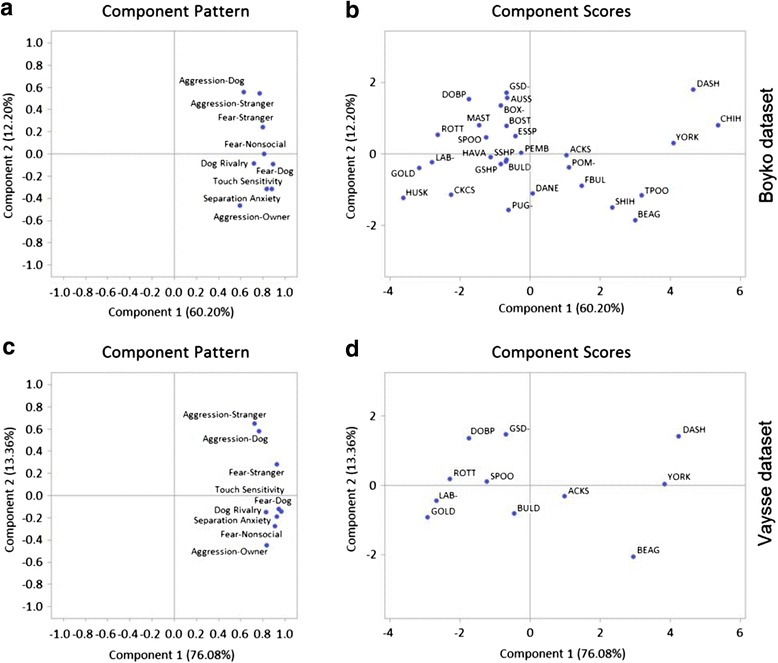
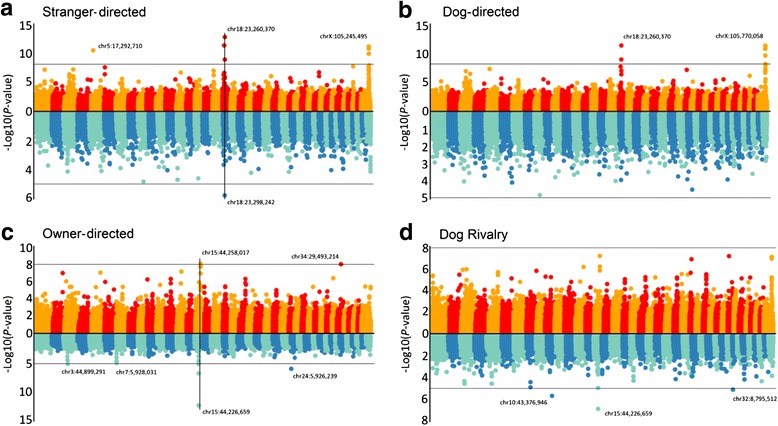
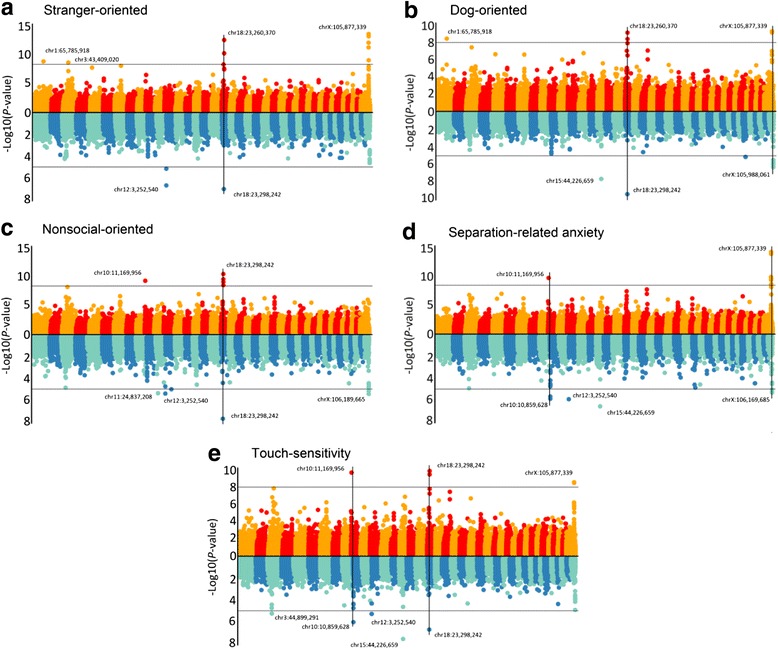
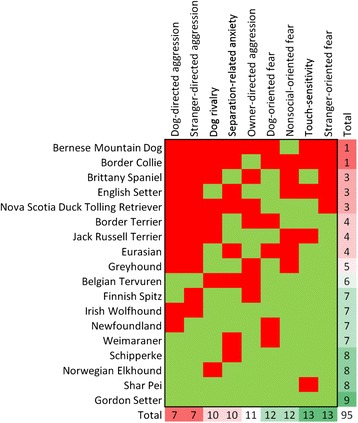
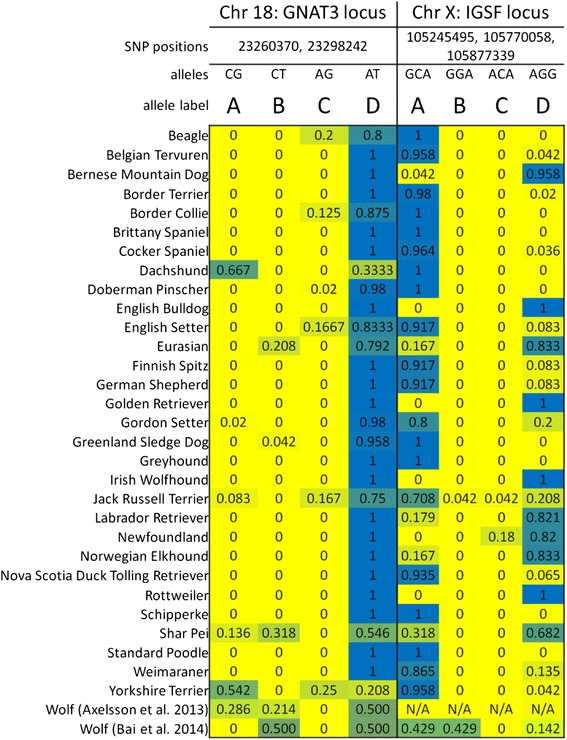
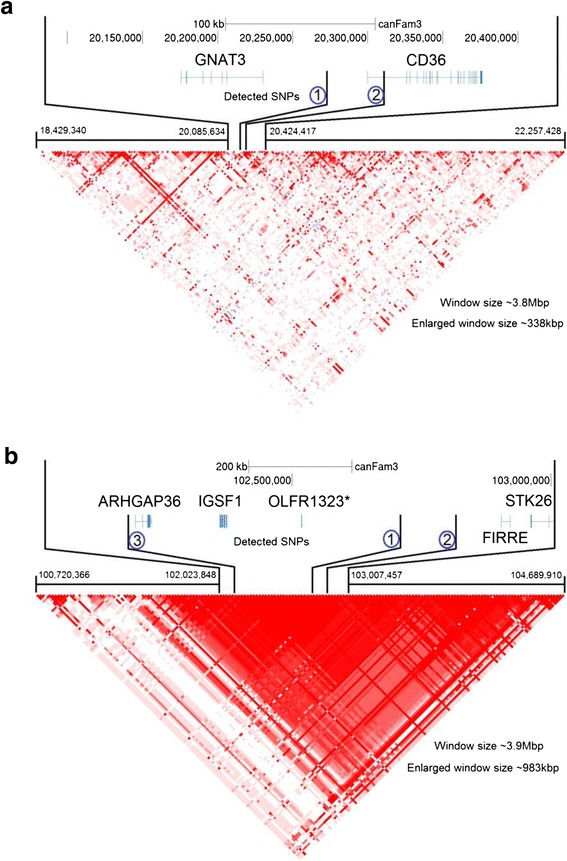
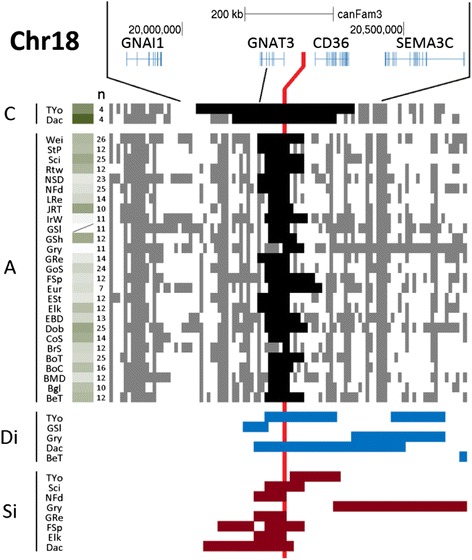
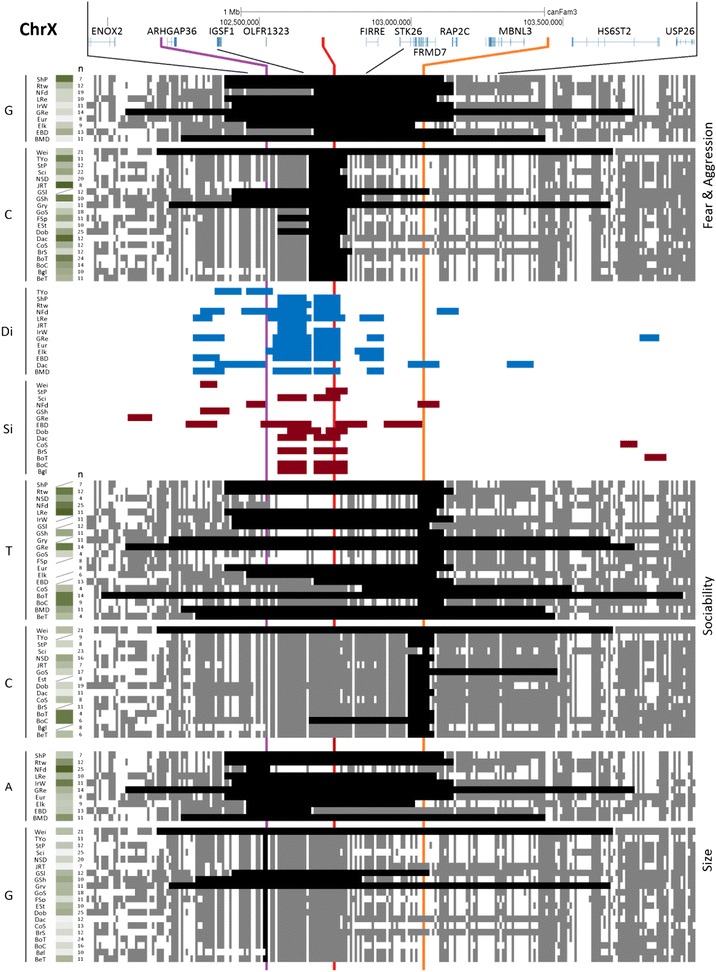
BACKGROUND: Fear/anxiety and anger/aggression greatly influence health, quality of life and social interactions. They are a huge burden to wellbeing, and personal and public economics. However, while much is known about the physiology and neuroanatomy of such emotions, little is known about their genetics - most importantly, why some individuals are more susceptible to pathology under stress. RESULTS: We conducted genomewide association (GWA) mapping of breed stereotypes for many fear and aggression traits across several hundred dogs from diverse breeds. We confirmed those findings using GWA in a second cohort of partially overlapping breeds. Lastly, we used the validated loci to create a model that effectively predicted fear and aggression stereotypes in a third group of dog breeds that were not involved in the mapping studies. We found that i) known IGF1 and HMGA2 loci variants for small body size are associated with separation anxiety, touch-sensitivity, owner directed aggression and dog rivalry; and ii) two loci, between GNAT3 and CD36 on chr18, and near IGSF1 on chrX, are associated with several traits, including touch-sensitivity, non-social fear, and fear and aggression that are directed toward unfamiliar dogs and humans. All four genome loci are among the most highly evolutionarily-selected in dogs, and each of those was previously shown to be associated with morphological traits. We propose that the IGF1 and HMGA2 loci are candidates for identical variation being associated with both behavior and morphology. In contrast, we show that the GNAT3-CD36 locus has distinct variants for behavior and morphology. The chrX region is a special case due to its extensive linkage disequilibrium (LD). Our evidence strongly suggests that sociability (which we propose is associated with HS6ST2) and fear/aggression are two distinct GWA loci within this LD block on chrX, but there is almost perfect LD between the peaks for fear/aggression and animal size. CONCLUSIONS: We have mapped many canine fear and aggression traits to single haplotypes at the GNAT3-CD36 and IGSF1 loci. CD36 is widely expressed, but areas of the amygdala and hypothalamus are among the brain regions with highest enrichment; and CD36-knockout mice are known to have significantly increased anxiety and aggression. Both of the other genes have very high tissue-specificity and are very abundantly expressed in brain regions that comprise the core anatomy of fear and aggression - the amygdala to hypothalamic-pituitary-adrenal (HPA) axis. We propose that reduced-fear variants at these loci may have been involved in the domestication process.
Overview
The claims and statistics of this paper haven’t been checked yet.
Run the check — free, no account needed. It reads the open-access text and checks the sources it cites.
Integrity signals
Registry
Cites
Statistics
Figures
Verification
Claims the paper makes
The claims and statistics of this paper haven’t been checked yet.
Run the check — free, no account needed. It reads the open-access text and checks the sources it cites.
Claims other papers make about this one
Each is checked against this paper’s own text: does it say what the citing paper says it does?
The source backs part of the claim, not all of it — or backs it for a different population, condition or comparison.
In the citing paper
“Aggression and fear are associated with the same genetic loci linked to small body size, as suggested by the correlation found in Zapata et al.’s studies [162,163].”
From Ethical Concerns about Fashionable Dog Breeding (2024) · cites this paper as [162]
Experimental — accuracy not yet measuredIn the citing paper
“We noted that non-genetic models, such as stress-induced aggression [27, 81] and other organisms [30, 31, 82], were not included in this study.”
From An integrated analysis of genes and functional pathways for aggression in human and rodent models (2019) · cites this paper as [82]
Self-check
Percentages, sums and reported differences re-computed from the paper’s own numbers.
The self-check needs the paper’s full text.
Citations
Cites
PLINK: a tool set for whole-genome association and population-based linkage analyses.
Purcell, S., Neale, B., Todd-Brown, K., Thomas, L., Ferreira, M. A. R., Bender, D., Maller, J., Sklar, P., de Bakker, P. I. W., Daly, M. J., et al. (2007) · The American Journal of Human Genetics · doi:10.1086/519795 · Cited by 34,089
Tissue-based map of the human proteome
Uhlén, M., Fagerberg, L., Hallström, B. M., Lindskog, C., Oksvold, P., Mardinoglu, A., Sivertsson, Å., Kampf, C., Sjöstedt, E., Asplund, A., et al. (2015) · Science · doi:10.1126/science.1260419 · Cited by 15,286
Haploview: analysis and visualization of LD and haplotype maps
Barrett, J. C., Fry, B., Maller, J., & Daly, M. J. (2004) · Bioinformatics · doi:10.1093/bioinformatics/bth457 · Cited by 14,551
The Human Genome Browser at UCSC
Kent, W. J., Sugnet, C. W., Furey, T. S., Roskin, K. M., Pringle, T. H., Zahler, A. M., & Haussler, A. D. (2002) · Genome Research · doi:10.1101/gr.229102 · Cited by 10,400
Genome-wide atlas of gene expression in the adult mouse brain
Lein, E. S., Hawrylycz, M. J., Ao, N., Ayres, M., Bensinger, A., Bernard, A., Boe, A. F., Boguski, M. S., Brockway, K. S., Byrnes, E. J., et al. (2007) · Nature · doi:10.1038/nature05453 · Cited by 5,572
Genome-wide efficient mixed-model analysis for association studies
Zhou, X., & Stephens, M. (2012) · Nature Genetics · doi:10.1038/ng.2310 · Cited by 3,627
The hitch-hiking effect of a favourable gene
Smith, J. M., & Haigh, J. (1974) · Genetical Research · doi:10.1017/s0016672300014634 · Cited by 3,415
The hitch-hiking effect of a favourable gene
Smith, J. M., & Haigh, J. (2007) · Genetics Research · doi:10.1017/s0016672308009579 · Cited by 2,675
Genome-wide detection and characterization of positive selection in human populations
The International HapMap Consortium, Sabeti, P. C., Varilly, P., Fry, B., Lohmueller, J., Hostetter, E., Cotsapas, C., Xie, X., Byrne, E. H., McCarroll, S. A., et al. (2007) · Nature · doi:10.1038/nature06250 · Cited by 2,131
A variant associated with nicotine dependence, lung cancer and peripheral arterial disease
Thorgeirsson, T. E., Geller, F., Sulem, P., Rafnar, T., Wiste, A., Magnusson, K. P., Manolescu, A., Thorleifsson, G., Stefansson, H., Ingason, A., et al. (2008) · Nature · doi:10.1038/nature06846 · Cited by 1,523
The “hitchhiking effect” revisited
Kaplan, N. L., Hudson, R. R., & Langley, C. H. (1989) · Genetics · doi:10.1093/genetics/123.4.887 · Cited by 1,076
The genomic signature of dog domestication reveals adaptation to a starch-rich diet
Axelsson, E., Ratnakumar, A., Arendt, M.-L., Maqbool, K., Webster, M. T., Perloski, M., Liberg, O., Arnemo, J. M., Hedhammar, Å., & Lindblad-Toh, K. (2013) · Nature · doi:10.1038/nature11837 · Cited by 963
A de novo paradigm for mental retardation.
Vissers, L. E. L. M., de Ligt, J., Gilissen, C., Janssen, I., Steehouwer, M., de Vries, P., van Lier, B., Arts, P., Wieskamp, N., del Rosario, M., et al. (2010) · Nature Genetics · doi:10.1038/ng.712 · Cited by 852
The Domestic dog: its evolution, behaviour, and interactions with people
Williams (1996) · Choice Reviews Online · doi:10.5860/choice.33-5715 · Cited by 737
Hsu, Y., & Serpell, J. A. (2003) · Journal of the American Veterinary Medical Association · doi:10.2460/javma.2003.223.1293 · Cited by 709
Self-citationA framework for studying emotions across species
Anderson, D. J., & Adolphs, R. (2014) · Cell · doi:10.1016/j.cell.2014.03.003 · Cited by 691
Efficient mapping of mendelian traits in dogs through genome-wide association
Karlsson, E. K., Baranowska, I., Wade, C. M., Hillbertz, N. S., Zody, M. C., Anderson, N., Biagi, T., Patterson, N. J., Pielberg, G., Kulbokas, E. J., et al. (2007) · Nature Genetics · doi:10.1038/ng.2007.10 · Cited by 561
A Simple Genetic Architecture Underlies Morphological Variation in Dogs
Boyko, A. R., Quignon, P., Li, L., Schoenebeck, J. J., Degenhardt, J. D., Lohmueller, K. E., Zhao, K., Brisbin, A. G., Parker, H. G., vonHoldt, B. M., et al. (2010) · PLoS Biology · doi:10.1371/journal.pbio.1000451 · Cited by 499
A genome-wide association study of alcohol dependence
Bierut, L. J., Agrawal, A., Bucholz, K. K., Doheny, K. F., Laurie, C., Pugh, E., Fisher, S., Fox, L., Howells, W., Bertelsen, S., et al. (2010) · Proceedings of the National Academy of Sciences · doi:10.1073/pnas.0911109107 · Cited by 457
Vaysse, A., Ratnakumar, A., Derrien, T., Axelsson, E., Pielberg, G., Sigurðsson, S., Fall, T., Seppälä, E. H., Hansen, M. S., Lawley, C., et al. (2011) · PLoS Genetics · doi:10.1371/journal.pgen.1002316 · Cited by 405
BioGPS and MyGene.info: organizing online, gene-centric information
Wu, C., MacLeod, I., & Su, A. I. (2012) · Nucleic Acids Research · doi:10.1093/nar/gks1114 · Cited by 369
Out of southern East Asia: the natural history of domestic dogs across the world
Wang, G., Zhai, W., Yang, H., Wang, L., Li, Z., Yan-hu, L., Fan, R., Yin, T., Zhu, C., Poyarkov, A. D., et al. (2015) · Cell Research · doi:10.1038/cr.2015.147 · Cited by 363
Stephan, W., Wiehe, T., & Lenz, M. W. (1992) · Theoretical Population Biology · doi:10.1016/0040-5809(92)90045-u · Cited by 351
Tracking footprints of artificial selection in the dog genome
Akey, J. M., Ruhe, A. L., Akey, D. T., Wong, A. K., Connelly, C. F., Madeoy, J., Nicholas, T. J., & Neff, M. W. (2010) · Proceedings of the National Academy of Sciences · doi:10.1073/pnas.0909918107 · Cited by 350
Frantz, L., Schraiber, J. G., Madsen, O., Megens, H., Cagan, A., Bosse, M., Paudel, Y., Crooijmans, R. P. M. A., Larson, G., & Groenen, M. A. M. (2015) · Nature Genetics · doi:10.1038/ng.3394 · Cited by 342
An Expressed Fgf4 Retrogene Is Associated with Breed-Defining Chondrodysplasia in Domestic Dogs
Parker, H. G., VonHoldt, B. M., Quignon, P., Margulies, E. H., Shao, S., Mosher, D. S., Spady, T. C., Elkahloun, A., Cargill, M., Jones, P. G., et al. (2009) · Science · doi:10.1126/science.1173275 · Cited by 342
Breed differences in canine aggression
Duffy, D. L., Hsu, Y., & Serpell, J. A. (2008) · Applied Animal Behaviour Science · doi:10.1016/j.applanim.2008.04.006 · Cited by 334
Self-citationCovert expectation-of-reward in rat ventral striatum at decision points
van der Meer, M. A. A. (2009) · Frontiers in Integrative Neuroscience · doi:10.3389/neuro.07.001.2009 · Cited by 299
Genome-wide meta-analysis identifies six novel loci associated with habitual coffee consumption
Cornelis, M. C., Byrne, E. M., Esko, T., Nalls, M. A., Ganna, A., Paynter, N. P., Monda, K. L., Amin, N., Fischer, K., Renström, F., et al. (2014) · Molecular Psychiatry · doi:10.1038/mp.2014.107 · Cited by 291
Chen, C., Rainnie, D. G., Greene, R. W., & Tonegawa, S. (1994) · Science · doi:10.1126/science.7939668 · Cited by 285
An Improved Canine Genome and a Comprehensive Catalogue of Coding Genes and Non-Coding Transcripts
Hoeppner, M. P., Lundquist, A. L., Pirun, M., Meadows, J. R. S., Zamani, N., Johnson, J., Sundström, G., Cook, A., FitzGerald, M. G., Swofford, R., et al. (2014) · PLoS ONE · doi:10.1371/journal.pone.0091172 · Cited by 277
Sweet taste signaling functions as a hypothalamic glucose sensor
Ren, X. (2009) · Frontiers in Integrative Neuroscience · doi:10.3389/neuro.07.012.2009 · Cited by 267
Dog bites to humans—demography, epidemiology, injury, and risk
Overall, K. L., & Love, M. (2001) · Journal of the American Veterinary Medical Association · doi:10.2460/javma.2001.218.1923 · Cited by 239
Predictive validity of a method for evaluating temperament in young guide and service dogs
Duffy, D. L., & Serpell, J. A. (2012) · Applied Animal Behaviour Science · doi:10.1016/j.applanim.2012.02.011 · Cited by 220
Self-citationSun, Y., Bak, B., Schoenmakers, N., van Trotsenburg, A. S. P., Oostdijk, W., Voshol, P., Cambridge, E., White, J. K., le Tissier, P., Gharavy, S. N. M., et al. (2012) · Nature Genetics · doi:10.1038/ng.2453 · Cited by 217
Dog Behavior Co-Varies with Height, Bodyweight and Skull Shape
McGreevy, P. D., Georgevsky, D., Carrasco, J., Valenzuela, M., Duffy, D. L., & Serpell, J. A. (2013) · PLoS ONE · doi:10.1371/journal.pone.0080529 · Cited by 213
Self-citationGenetics of human aggressive behaviour
Craig, I. W., & Halton, K. E. (2009) · Human Genetics · doi:10.1007/s00439-009-0695-9 · Cited by 213
The role of genetic variation in the causation of mental illness: an evolution-informed framework
Uher, R. (2009) · Molecular Psychiatry · doi:10.1038/mp.2009.85 · Cited by 190
Derived variants at six genes explain nearly half of size reduction in dog breedsPreprint
Rimbault, M., Beale, H. C., Schoenebeck, J. J., Hoopes, B. C., Allen, J. J., Kilroy-Glynn, P., Wayne, R. K., Sutter, N. B., & Ostrander, E. A. (2013) · Genome Research · doi:10.1101/gr.157339.113 · Cited by 172
Effects of breed, sex, and neuter status on trainability in dogs
Serpell, J. A., & Hsu, Y. (2005) · Anthrozoös · doi:10.2752/089279305785594135 · Cited by 167
Self-citationSingle-Nucleotide-Polymorphism-Based Association Mapping of Dog Stereotypes
Jones, P., Chase, K., Martin, A. J., Davern, P., Ostrander, E., & Lark, K. G. (2008) · Genetics · doi:10.1534/genetics.108.087866 · Cited by 159
Mapping DNA structural variation in dogsPreprint
Chen, W., Swartz, J. D., Rush, L. J., & Alvarez, C. E. (2008) · Genome Research · doi:10.1101/gr.083741.108 · Cited by 128
Self-citationSerpell, J. A., & Duffy, D. L. (2014) · Springer eBooks · doi:10.1007/978-3-642-53994-7_2 · Cited by 124
Self-citationTang, R., Noh, H. J., Wang, D., Sigurðsson, S., Swofford, R., Perloski, M., Duxbury, M. M., Patterson, E. E., Albright, J., Castelhano, M. G., et al. (2014) · Genome biology · doi:10.1186/gb-2014-15-3-r25 · Cited by 107
Molecular genetics and subjective well-being
Rietveld, C. A., Cesarini, D., Benjamin, D. J., Koellinger, P. D., De Neve, J.-E., Tiemeier, H., Johannesson, M., Magnusson, P. K. E., Pedersen, N. L., Krueger, R. F., et al. (2013) · Proceedings of the National Academy of Sciences · doi:10.1073/pnas.1222171110 · Cited by 104
Foyer, P., Bjällerhag, N., Wilsson, E., & Jensen, P. (2014) · Applied Animal Behaviour Science · doi:10.1016/j.applanim.2014.03.006 · Cited by 97
Use of fluoxetine to treat dominance aggression in dogs
Dodman, N. H., Donnelly, R., Shuster, L., Mertens, P. A., Rand, W., & Miczek, K. A. (1996) · Journal of the American Veterinary Medical Association · doi:10.2460/javma.1996.209.09.1585 · Cited by 96
Lord, K. A., Schneider, R. A., & Coppinger, R. (2016) · Cambridge University Press eBooks · doi:10.1017/9781139161800.004 · Cited by 96
Gelernter, J. E., Page, G. P., Stein, M. B., & Woods, S. W. (2003) · American Journal of Psychiatry · doi:10.1176/appi.ajp.161.1.59 · Cited by 86
DoGSD: the dog and wolf genome SNP database
Bai, B., Zhao, W., Tang, B., Wang, Y.-Q., Wang, L., Zhang, Z., Yang, H., Yan-hu, L., Zhu, J., Irwin, D. M., et al. (2014) · Nucleic Acids Research · doi:10.1093/nar/gku1174 · Cited by 86
Environmental Effects on Compulsive Tail Chasing in Dogs
Tiira, K., Hakosalo, O., Kareinen, L., Thomas, A., Hielm-Björkman, A. K., Escriou, C., Arnold, P. D., & Lohi, H. (2012) · PLoS ONE · doi:10.1371/journal.pone.0041684 · Cited by 83
Novel origins of copy number variation in the dog genome
Berglund, J., Nevalainen, E., Molin, A.-M., Perloski, M., André, C., Zody, M. C., Sharpe, T., Hitte, C., Lindblad‐Toh, K., Lohi, H., et al. (2012) · Genome biology · doi:10.1186/gb-2012-13-8-r73 · Cited by 78
Ruíz-Ávila, L., Wong, G. T., Damak, S., & Margolskee, R. F. (2001) · Proceedings of the National Academy of Sciences · doi:10.1073/pnas.151235798 · Cited by 77
Nicholas, T. J., Baker, C. A., Eichler, E. E., & Akey, J. M. (2011) · BMC Genomics · doi:10.1186/1471-2164-12-414 · Cited by 76
Naturally Occurring Cancers in Dogs: Insights for Translational Genetics and Medicine
Alvarez, C. E. (2014) · ILAR Journal · doi:10.1093/ilar/ilu010 · Cited by 72
Self-citationDehkordi, O., Rose, J. E., Fatemi, M., Allard, J. S., Balan, K. V., Young, J. K., Fatima, S., Millis, R. M., & Jayam‐Trouth, A. (2012) · Brain Research · doi:10.1016/j.brainres.2012.07.038 · Cited by 69
Evaluation of a behavioral assessment tool for dogs relinquished to shelters
Duffy, D. L., Kruger, K. A., & Serpell, J. A. (2014) · Preventive Veterinary Medicine · doi:10.1016/j.prevetmed.2014.10.003 · Cited by 67
Self-citationValidity of model devices used to assess canine temperament in behavioral tests
Barnard, S., Siracusa, C., Reisner, I. R., Valsecchi, P., & Serpell, J. A. (2012) · Applied Animal Behaviour Science · doi:10.1016/j.applanim.2012.02.017 · Cited by 62
Self-citationBreed-dependent differences in the onset of fear-related avoidance behavior in puppies
Morrow, M., Ottobre, J. S., OTTOBRE, A. C., Neville, P. F., St-Pierre, N. R., Dreschel, N. A., & Pate, J. L. (2015) · Journal of Veterinary Behavior · doi:10.1016/j.jveb.2015.03.002 · Cited by 50
Isoflurane Modulates Genomic Expression in Rat Amygdala
Rampil, I. J., Moller, D. H., & Bell, A. (2006) · Anesthesia & Analgesia · doi:10.1213/01.ane.0000202384.96269.51 · Cited by 49
Rare coding variants and X-linked loci associated with age at menarche
Lunetta, K. L., Day, F. R., Sulem, P., Ruth, K. S., Tung, J. Y., Hinds, D. A., Esko, T., Elks, C. E., Altmaier, E., He, C., et al. (2015) · Nature Communications · doi:10.1038/ncomms8756 · Cited by 46
α‐Gustducin expression in the vomeronasal organ of the mouse
Zancanaro, C., Mucignat‐Caretta, C., Merigo, F., Cavaggioni, A., & Osculati, F. (1999) · European Journal of Neuroscience · doi:10.1046/j.1460-9568.1999.00912.x · Cited by 44
Tizzano, M., Merigo, F., & Sbarbati, A. (2006) · Journal of Anatomy · doi:10.1111/j.1469-7580.2006.00617.x · Cited by 44
Meester, R. H. D., Bacquer, D. D., Peremans, K. Y., Vermeire, S. T., Planta, D. J. U., Coopman, F., & Audenaert, K. (2008) · Journal of Veterinary Behavior · doi:10.1016/j.jveb.2007.10.005 · Cited by 42
Genetics of behavior in the silver fox
Kukekova, A. V., Temnykh, S. V., Johnson, J. L., Trut, L. N., & Acland, G. M. (2011) · Mammalian Genome · doi:10.1007/s00335-011-9373-z · Cited by 40
Shin, Y., Park, J.-H., Choi, J., Chun, M., Moon, Y. W., & Lee, M. (2010) · Neurochemical Research · doi:10.1007/s11064-010-0223-2 · Cited by 39
Involvement of brain serotonin 5-HT1A receptors in genetic predisposition to aggressive behavior
Popova, N. K., Naumenko, V. S., & Plyusnina, I. Z. (2007) · Neuroscience and Behavioral Physiology · doi:10.1007/s11055-007-0062-z · Cited by 33
Expression of CD36 by Olfactory Receptor Cells and Its Abundance on the Epithelial Surface in Mice
Lee, S., Eguchi, A., Tsuzuki, S., Matsumura, S., Inoue, K., Iwanaga, T., Masuda, D., Yamashita, S., & Fushiki, T. (2015) · PLoS ONE · doi:10.1371/journal.pone.0133412 · Cited by 32
Spatial and temporal expression of immunoglobulin superfamily member 1 in the rat
Joustra, S. D., Meijer, O. C., Heinen, C. A., Mol, I. M., Laghmani, E. H., Sengers, R. M. A., Carreno, G., van Trotsenburg, A. S. P., Biermasz, N. R., Bernard, D. J., et al. (2015) · Journal of Endocrinology · doi:10.1530/joe-15-0204 · Cited by 32
An anxiety-like phenotype in mice selectively bred for aggression
Nehrenberg, D. L., Rodriguiz, R. M., Cyr, M., Zhang, X., Lauder, J. M., Gariépy, J., & Wetsel, W. C. (2009) · Behavioural Brain Research · doi:10.1016/j.bbr.2009.02.010 · Cited by 29
Grimm, D. (2015) · Science · doi:10.1126/science.348.6232.274 · Cited by 27
Enkephalin knockdown in the central amygdala nucleus reduces unconditioned fear and anxiety
Poulin, J., Bérubé, P., Laforest, S., & Drolet, G. (2013) · European Journal of Neuroscience · doi:10.1111/ejn.12134 · Cited by 26
Zucchi, F. C. R., Yao, Y., Ilnytskyy, Y., Robbins, J. C., Soltanpour, N., Kovalchuk, I., Kovalchuk, O., & Metz, G. A. S. (2014) · PLoS ONE · doi:10.1371/journal.pone.0092130 · Cited by 20
Dodman, N. H., Moon, R., & Zelin, M. L. (1996) · Journal of the American Veterinary Medical Association · doi:10.2460/javma.1996.209.06.1107 · Cited by 19
Behavioral characterization of CD36 knockout mice with SHIRPA primary screen
Zhang, S., Wang, W., Li, J., Cheng, K., Zhou, J., Zhu, D., Yang, D., Liang, Z., Fang, L., Liao, L., et al. (2015) · Behavioural Brain Research · doi:10.1016/j.bbr.2015.11.027 · Cited by 19
Analysis of Expression Data: An Overview
Grewal, A., Lambert, P., & Stockton, J. (2007) · Current Protocols in Human Genetics · doi:10.1002/0471142905.hg1104s54 · Cited by 16
Characterization and Treatment of 20 Canine Dominance Aggression Cases.
Uchida, Y., Dodman, N. H., DeNAPOLI, J., & Aronson, L. (1997) · Journal of Veterinary Medical Science · doi:10.1292/jvms.59.397 · Cited by 10
Analysis of Expression Data: An Overview
Grewal, A., Lambert, P., & Stockton, J. (2007) · Current Protocols in Bioinformatics · doi:10.1002/0471250953.bi0701s17 · Cited by 10
Ha, J. H., Alam, M. S., Lee, D. H., & Kim, J.-J. (2015) · Asian-Australasian Journal of Animal Sciences · doi:10.5713/ajas.14.0941 · Cited by 6
Analysis of Expression Data: An Overview
Grewal, A., Lambert, P., & Stockton, J. (2003) · Current Protocols in Human Genetics · doi:10.1002/0471142905.hg1104s38 · Cited by 1
Cited by
Sorted by citations
Jagannathan, V., Drögemüller, C., & Leeb, T. (2019) · Animal Genetics · doi:10.1111/age.12834 · Cited by 195
Demographic history, selection and functional diversity of the canine genome
Ostrander, E. A., Wayne, R. K., Freedman, A. H., & Davis, B. W. (2017) · Nature Reviews Genetics · doi:10.1038/nrg.2017.67 · Cited by 186
Prevalence, comorbidity, and breed differences in canine anxiety in 13,700 Finnish pet dogs
Salonen, M., Sulkama, S., Mikkola, S., Puurunen, J., Hakanen, E., Tiira, K., Araujo, C., & Lohi, H. (2020) · Scientific Reports · doi:10.1038/s41598-020-59837-z · Cited by 182
Highly heritable and functionally relevant breed differences in dog behaviour
MacLean, E. L., Snyder-Mackler, N., vonHoldt, B. M., & Serpell, J. A. (2019) · Proceedings of the Royal Society B: Biological Sciences · doi:10.1098/rspb.2019.0716 · Cited by 144
Self-citationMeđugorac, I., Graf, A., Grohs, C., Rothammer, S., Zagdsuren, Y., Александровна, Г. Е., Zinovieva, N. A., Barbieri, J., Seichter, D., Ruß, I., et al. (2017) · Nature Genetics · doi:10.1038/ng.3775 · Cited by 135
Metadata
- Authors
- Zapata, I., Serpell, J. A., & Alvarez, C. E.
- Affiliations
- Nationwide Children's Hospital (US)
- University of Pennsylvania (US)
- Corresponding author
- Alvarez, Carlos E.
- Venue
- BMC Genomics
- Published
- 2016-08-08
- Volume
- 17
- Issue
- 1
- Pages
- 572-572
- ISSN
- 1471-2164 (ISSN-L)
- PMC
- PMC4977763
- OpenAlex
- W2518047727
- Cited by
- 168
- References
- 80
- Citations by year
- 2026: 14 · 2025: 17 · 2024: 19 · 2023: 26 · 2022: 20 · 2021: 14 · 2020: 16 · 2019: 18 · 2018: 11 · 2017: 10 · 2016: 3
- FWCI
- 11.30
- Type
- journal article
- Language
- en
- Open access
- gold
- doi.org
- Locations
- BMC Genomics (publishedVersion, cc-by)
- Europe PMC (PubMed Central) (publishedVersion, cc-by)
- PubMed Central (publishedVersion, cc-by)
- PubMed (publishedVersion)
- Funders
- Congressionally Directed Medical Research Programs (W81XWH-11-2-0224)
- American Kennel Club Canine Health Foundation (01660)
- Morris Animal Foundation (D13CA-073)
- Topics
- Life Sciences › Agricultural and Biological Sciences › Animal Science and Zoology › Human-Animal Interaction Studies
- Life Sciences › Biochemistry, Genetics and Molecular Biology › Genetics › Genetic and phenotypic traits in livestock
- Life Sciences › Biochemistry, Genetics and Molecular Biology › Genetics › Genetic Mapping and Diversity in Plants and Animals
- Keywords
- insulin-like growth factor I, HMGA2, IGSF1, separation anxiety, tactile sensitivity, sociability, amygdala, hypothalamic-pituitary-adrenal axis
- MeSH terms
- Aggression, Alleles, Animals, Behavior, Animal, Breeding, Chromosome Mapping, Dogs, Fear, Haplotypes, Linkage Disequilibrium, Genome, Genome-Wide Association Study, Genetic Association Studies
About these checks
Registry, retraction, Cites and statistics results are computed, not judged, with one exception: a printed reference that no index lists is read once by a model before it counts as a citation error. Claims are extracted by a model and kept only when their quote appears verbatim in the text; each cited source is then checked, with a model’s help, for whether it says what the claim relies on. Those verdicts can be wrong — read the claim’s quote and the cited source before relying on one.
Statistics and arithmetic are recomputed, not judged.
Confidence bands are shown only for fields calibrated on our annotated test set. None is calibrated yet, so no band is shown.
What counts as a claim ›How we measure confidence ›How we check this ›
Are you an author, or do you see a problem with this page? Request a review
