

Generalized anxiety disorder in primary care: mental health services use and treatment adequacy
Open accessThe DOI matches its Crossref record; 66 of the 67 references it cites were found in a registry or an index.
Abstract
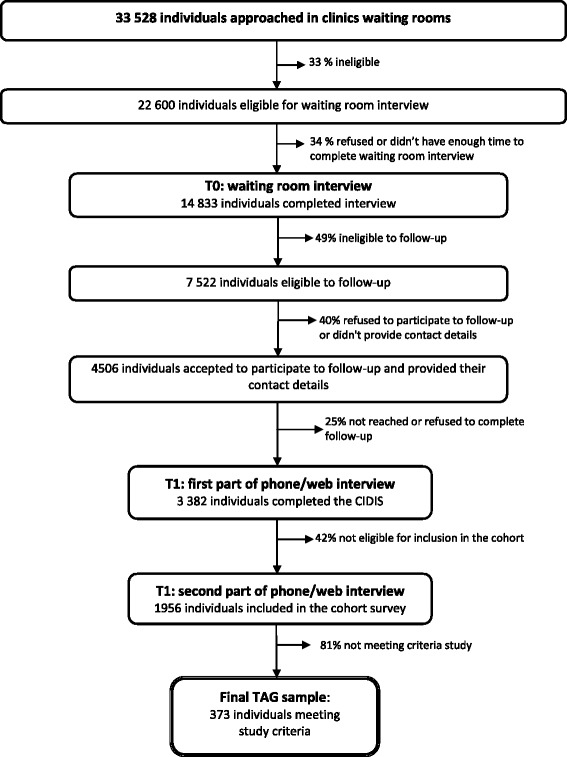
PURPOSE: Generalized Anxiety Disorder (GAD) is a common mental disorder in the primary care setting, marked by persistent anxiety and worries. The aims of this study were to: 1) examine mental health services utilisation in a large sample of primary care patients; 2) explore detection of GAD and minimal standards for pharmacological and psychological treatment adequacy based on recommendation from clinical practice guidelines; 3) examine correlates of treatment adequacy, i.e. predisposing, enabling and needs factors according to the Behavioural Model of Health Care Use. METHODS: A sample of 373 adults meeting DSM-IV criteria for Generalized Anxiety Disorder in the past 12 months took part in this study. Data were drawn from the "Dialogue" project, a large primary care study conducted in 67 primary care clinics in Quebec, Canada. Following a mental health screening in medical clinics (n = 14833), patients at risk of anxiety or depression completed the Composite International Diagnostic Interview-Simplified (CIDIS). Multilevel logistic regression models were developed to examine correlates of treatment adequacy for pharmacological and psychological treatments. RESULTS: Results indicate that 52.5 % of participants were recognized as having GAD by a healthcare professional in the past 12 months, and 36.2 % of the sample received a pharmacological (24.4 %) and/or psychological treatment (19.2 %) meeting indicators based on clinical practice guidelines recommendations. The detection of GAD by a health professional and the presence of comorbid depression were associated with overall treatment adequacy. CONCLUSIONS: This study suggests that further efforts towards GAD detection could lead to an increase in the delivery of evidence-based treatments. Key targets for improvement in treatment adequacy include regular follow up of patients with a GAD medication and access to psychotherapy from the primary care setting.
Overview
The claims and statistics of this paper haven’t been checked yet.
Free: it reads the open-access text and checks the first 5 claims that cite a source we can check. Create a free account to check every claim.
Integrity signals
Registry
Cites
Statistics
Figures
Verification
Claims the paper makes
The claims and statistics of this paper haven’t been checked yet.
Free: it reads the open-access text and checks the first 5 claims that cite a source we can check. Create a free account to check every claim.
Claims other papers make about this one
Each is checked against this paper’s own text: does it say what the citing paper says it does?
The cited source doesn’t support the claim as written.
In the citing paper
“Importantly, the proportion of patients with anxiety disorders who receive adequate treatment is still much lower (Roberge et al., 2015; Kasteenpohja et al., 2016), even in the US, with less than 15% of people with diagnosed anxiety receiving treatment which conforms with evidence-based recommendations (Roberge et al., 2015; Kasteenpohja et al., 2016).”
From Treatment gap for anxiety disorders is global: Results of the World Mental Health Surveys in 21 countries (2018) · cites this paper as Roberge et al., 2015
Checked by a reasoning model — may be wrong.
Experimental — accuracy not yet measuredThe source backs part of the claim, not all of it — or backs it for a different population, condition or comparison.
In the citing paper
“Previous research shows that GAD often goes undetected and thus untreated in primary health care patients [6, 8, 11, 12, 16].”
From Intolerance-of-uncertainty therapy versus metacognitive therapy for generalized anxiety disorder in primary health care: A randomized controlled pilot trial (2023) · cites this paper as [16]
Experimental — accuracy not yet measuredThe cited source says what the claim attributes to it.
In the citing paper
“This finding is similar to international studies that have explored mental health service use and treatment adequacy for GAD (Roberge et al., 2015).”
From Treatment histories, barriers, and preferences for individuals with symptoms of generalized anxiety disorder (2024) · cites this paper as Roberge et al., 2015
Self-check
Percentages, sums and reported differences re-computed from the paper’s own numbers.
The self-check needs the paper’s full text.
Citations
Cites
Diagnostic and Statistical Manual of Mental Disorders
American Psychiatric Association (2013) · doi:10.1176/appi.books.9780890425596 · Cited by 116,369
Diagnostic and Statistical Manual of Mental Disorders
Williams, J. B. W., & First, M. (2013) · Encyclopedia of Social Work · doi:10.1093/acrefore/9780199975839.013.104 · Cited by 109,519
The Hospital Anxiety and Depression Scale
Zigmond, A. S., & Snaith, R. P. (1983) · Acta Psychiatrica Scandinavica · doi:10.1111/j.1600-0447.1983.tb09716.x · Cited by 47,139
Kessler, R. C., Berglund, P., Demler, O., Jin, R., Merikangas, K. R., & Walters, E. E. (2005) · Archives of General Psychiatry · doi:10.1001/archpsyc.62.6.593 · Cited by 20,391 · cited 1×
“GAD often has a chronic course [2–6] with a lifetime prevalence rate for DSM-IV criteria estimated at approximately 6 % [7–10].”
BackgroundDepression and quality of life in older persons: A review
Sivertsen, H., Bjørkløf, G. H., Engedal, K., Selbæk, G., & Helvik, A.-S. (2015) · Dementia and Geriatric Cognitive Disorders · doi:10.1159/000437299 · Cited by 14,152
Revisiting the Behavioral Model and Access to Medical Care: Does it Matter?
Andersen, R. M. (1995) · Journal of Health and Social Behavior · doi:10.2307/2137284 · Cited by 9,831 · cited 4×
“Finally, we also sought to examine individual-level correlates of treatment adequacy using Andersen’s Behavioural Model of Health Care [44] to examine the contribution of conceptually distinct predisposing factors, enabling factors and need for care factors associated with treatment adequacy for GAD.”
MethodInfluentialAnxiety disorders in primary care: prevalence, impairment, comorbidity, and detection
Kroenke, K., Spitzer, R. L., Williams, J. B. W., Monahan, P. O., & Löwe, B. (2007) · Annals of Internal Medicine · doi:10.7326/0003-4819-146-5-200703060-00004 · Cited by 4,741 · cited 2×
“Research has typically shown low rates of recognition of GAD by primary care providers [8–10, 24–28].”
BackgroundLevesque, J.-F., Harris, M. F., & Russell, G. (2013) · International Journal for Equity in Health · doi:10.1186/1475-9276-12-18 · Cited by 3,484 · cited 1×
“Second, our results offer a partial view of the correlates of treatment adequacy from service utilization data that could be complemented by research on perceived needs for care and provider and clinic characteristics [60].”
ResultWang, P. S., Lane, M., Olfson, M., Pincus, H. A., Wells, K. B., & Kessler, R. C. (2005) · Archives of General Psychiatry · doi:10.1001/archpsyc.62.6.629 · Cited by 2,695 · cited 2×
“The primary care perspective, in contrast with epidemiological survey or clinical trials, is important because these patients are in contact with the health care system and anxiety disorders are generally treated in the primary care setting [38, 42, 43].”
BackgroundWang, P. S., Aguilar-Gaxiola, S., Alonso, J., Angermeyer, M. C., Borges, G., Bromet, E. J., Bruffaerts, R., de Girolamo, G., de Graaf, R., Gureje, O., et al. (2007) · The Lancet · doi:10.1016/s0140-6736(07)61414-7 · Cited by 1,655 · cited 1×
“The primary care perspective, in contrast with epidemiological survey or clinical trials, is important because these patients are in contact with the health care system and anxiety disorders are generally treated in the primary care setting [38, 42, 43].”
Multilevel Analysis in Public Health Research
Diez-Roux, A. V. (2000) · Annual Review of Public Health · doi:10.1146/annurev.publhealth.21.1.171 · Cited by 1,220 · cited 1×
“In a second step, multilevel models were assessed for each adequacy with clinical ID’s as a random intercept [53].”
MethodKatzman, M. A., Bleau, P., Blier, P., Chokka, P., Kjernisted, K., Van Ameringen, M., & the Canadian Anxiety Guidelines Initiative Group on behalf of the Anxiety Disorders Association of Canada/Association Canadienne des troubles anxieux and McGill University (2014) · BMC Psychiatry · doi:10.1186/1471-244x-14-s1-s1 · Cited by 1,090 · cited 1×
“Major depression is associated with increased severity and functional impairment of GAD [45].”
BackgroundDSM-III-R Generalized Anxiety Disorder in the National Comorbidity Survey
Wittchen, H.-U. (1994) · Archives of General Psychiatry · doi:10.1001/archpsyc.1994.03950050015002 · Cited by 967 · cited 1×
“GAD is highly associated with comorbid psychiatric disorders, with major depressive disorder being the most frequent [2, 3, 11, 19–21], and comorbid physical illness [22].”
BackgroundBruce, S. E., Yonkers, K. A., Otto, M. W., Eisen, J. L., Weisberg, R. B., Pagano, M., Shea, M. T., & Keller, M. B. (2005) · American Journal of Psychiatry · doi:10.1176/appi.ajp.162.6.1179 · Cited by 963 · cited 1×
“GAD often has a chronic course [2–6] with a lifetime prevalence rate for DSM-IV criteria estimated at approximately 6 % [7–10].”
BackgroundWang, P. S., Berglund, P., & Kessler, R. C. (2000) · Journal of General Internal Medicine · doi:10.1046/j.1525-1497.2000.9908044.x · Cited by 686
Anxiety disorders and comorbid medical illness
Roy-Byrne, P. P., Davidson, K. W., Kessler, R. C., Asmundson, G. J. G., Goodwin, R. D., Kubzansky, L., Lydiard, R. B., Massie, M. J., Katon, W., Laden, S. K., et al. (2008) · General Hospital Psychiatry · doi:10.1016/j.genhosppsych.2007.12.006 · Cited by 668 · cited 1×
“GAD is highly associated with comorbid psychiatric disorders, with major depressive disorder being the most frequent [2, 3, 11, 19–21], and comorbid physical illness [22].”
BackgroundMental illness in general health care : an international study
Üstün, T. B., & Sartorius, N. (1995) · Medical Entomology and Zoology · Cited by 610
(2002) · PubMed · Cited by 518
Kessler, R. C., DuPont, R. L., Berglund, P., & Wittchen, H.-U. (1999) · American Journal of Psychiatry · doi:10.1176/ajp.156.12.1915 · Cited by 486 · cited 2×
“GAD is highly associated with comorbid psychiatric disorders, with major depressive disorder being the most frequent [2, 3, 11, 19–21], and comorbid physical illness [22].”
Background(1998) · PubMed · Cited by 460
Human and economic burden of generalized anxiety disorder
Hoffman, D. L., Dukes, E. M., & Wittchen, H.-U. (2008) · Depression and Anxiety · doi:10.1002/da.20257 · Cited by 438 · cited 1×
“Persons suffering from GAD present significant impairments in work, social and family functioning, and healthrelated quality of life [11–16].”
BackgroundTyrer, P., & Baldwin, D. (2006) · The Lancet · doi:10.1016/s0140-6736(06)69865-6 · Cited by 404
Oxford Handbook of Anxiety and Related Disorders
(2008) · doi:10.1093/oxfordhb/9780195307030.001.0001 · Cited by 402 · cited 1×
“SSRIs and venlafaxine) or cognitive behaviour therapy as first choice treatments for GAD, and long-term therapy may be needed to prevent relapse [33–35].”
BackgroundWittchen, H.-U., Carter, R. M., Pfister, H., Montgomery, S. A., & Kessler, R. C. (2000) · International Clinical Psychopharmacology · doi:10.1097/00004850-200015060-00002 · Cited by 299 · cited 1×
“Persons suffering from GAD present significant impairments in work, social and family functioning, and healthrelated quality of life [11–16].”
BackgroundCaring for Mental Illness in the United States: A Focus on Older Adults
Klap, R., Unroe, K. T., & Unützer, J. (2003) · The American Journal of Geriatric Psychiatry · doi:10.1097/00019442-200309000-00006 · Cited by 292 · cited 1×
“For GAD in particular, it has been suggested that underrecognition may be due to vague somatic symptoms, to patient’s attribution of symptoms to physical problems, to an ill-defined diagnosis [2] and to the variety of clinical presentations [5], which may depend on the symptom overlap with comorbid psychiatric disorde…”
BackgroundSchoevers, R. A., Deeg, D. J. H., van Tilburg, W., & Beekman, A. T. F. (2005) · The American Journal of Geriatric Psychiatry · doi:10.1097/00019442-200501000-00006 · Cited by 283 · cited 1×
“GAD is highly associated with comorbid psychiatric disorders, with major depressive disorder being the most frequent [2, 3, 11, 19–21], and comorbid physical illness [22].”
BackgroundThompson, A., Hunt, C., & Issakidis, C. (2004) · Social Psychiatry and Psychiatric Epidemiology · doi:10.1007/s00127-004-0816-7 · Cited by 253 · cited 1×
“This is consistent with previous research that showed that comorbid psychiatric disorders and symptom severity facilitate detection of anxiety disorders, while excessive worry may not be sufficient for health care professionals to recognize GAD as well as for patients to decide to seek mental health care [14, 26, 54–5…”
ResultJudd, L. L., Kessler, R. C., PauIus, M. P., Zeller, P. V., Wittchen, H. ‐., & Kunovac, J. L. (1998) · Acta Psychiatrica Scandinavica · doi:10.1111/j.1600-0447.1998.tb05960.x · Cited by 222
Clinical practice guidelines. Management of anxiety disorders.
(2006) · PubMed · Cited by 217
Factors predicting the clinical course of generalised anxiety disorder
Yonkers, K. A., Dyck, I. R., Warshaw, M., & Keller, M. B. (2000) · British Journal of Psychiatry · doi:10.1192/bjp.176.6.544 · Cited by 213 · cited 1×
“GAD often has a chronic course [2–6] with a lifetime prevalence rate for DSM-IV criteria estimated at approximately 6 % [7–10].”
Background(2000) · Europe PMC (PubMed Central) · doi:10.1590/s0042-96862000000400006 · Cited by 195 · cited 1×
“There is also increasing evidence regarding the economic burden of GAD in terms of lost work productivity and medical costs due to high utilization of medical services [8, 15, 17, 18].”
BackgroundQuality of Care for Primary Care Patients With Anxiety Disorders
Stein, M. B., Sherbourne, C. D., Craske, M. G., Means-Christensen, A., Bystritsky, A., Katon, W., Sullivan, G., & Roy-Byrne, P. P. (2004) · American Journal of Psychiatry · doi:10.1176/appi.ajp.161.12.2230 · Cited by 191 · cited 2×
“(2004, 2011), could have led to lower treatment adequacy rates [39, 40].”
BackgroundHumanistic and economic burden of generalized anxiety disorder in North America and Europe
Revicki, D. A., Travers, K., Wyrwich, K. W., Svedsäter, H., Locklear, J., Mattera, M. S., Sheehan, D. V., & Montgomery, S. (2012) · Journal of Affective Disorders · doi:10.1016/j.jad.2011.11.014 · Cited by 172 · cited 1×
“There is also increasing evidence regarding the economic burden of GAD in terms of lost work productivity and medical costs due to high utilization of medical services [8, 15, 17, 18].”
BackgroundTreatment adequacy for anxiety and depressive disorders in six European countries
Fernández, A., Haro, J. M., Martinez-Alonso, M., Demyttenaere, K., Brugha, T. S., Autonell, J., De Girolamo, G., Bernert, S., Lépine, J. P., & Alonso, J. (2007) · British Journal of Psychiatry · doi:10.1192/bjp.bp.106.023507 · Cited by 171 · cited 1×
“We also built on previous research on treatment adequacy for anxiety and depression to expand our treatment adequacy indicators and explore other aspects of care that were not explicitly advocated in the guidelines [39, 40, 46, 50–52].”
MethodDepressive episodes–evidence for a causal role of primary anxiety disorders?
Wittchen, H.-U., Beesdo, K., Bittner, A., & Goodwin, R. D. (2003) · European Psychiatry · doi:10.1016/j.eurpsy.2003.10.001 · Cited by 171
Roberge, P., Doré, I., Menear, M., Chartrand, E., Ciampi, A., Duhoux, A., & Fournier, L. (2012) · Journal of Affective Disorders · doi:10.1016/j.jad.2012.10.029 · Cited by 167 · cited 2×
“The screening questionnaire included general questions about socio-demographic characteristics, overall health status, consultations with health care providers, psychotropic medication, as well as the Hospital Anxiety and Depression scale (HADS) [47, 48].”
Self-citationPatient perspectives on once-weekly fluoxetine.
Judge, R. (2001) · PubMed · Cited by 144
Jc, B., Davidson, J. R. T., Lecrubier, Y., Nutt, D. J., Borkovec, T. D., Rickels, K., Stein, D. J., & Wittchen, H.-U. (2001) · Max Planck Institute for Plasma Physics · Cited by 133
Andrews, G., Sanderson, K., Slade, T., & Issakidis, C. (2000) · Australian and New Zealand Journal of Psychiatry · doi:10.1080/000486700536 · Cited by 119
Treatment adequacy of anxiety and depressive disorders: Primary versus specialised care in Spain
Fernández, A., Haro, J. M., Codony, M., Vilagut, G., Martínez‐Alonso, M., Autonell, J., Salvador‐Carulla, L., Ayuso‐Mateos, J. L., Fullana, M. A., & Alonso, J. (2006) · Journal of Affective Disorders · doi:10.1016/j.jad.2006.05.005 · Cited by 113 · cited 1×
“5 % in epidemiological surveys in Canada, United States, Spain and Australia [17, 36–38], 44.”
BackgroundComorbidity in generalized anxiety disorder: impact and implications.
Stein, D. J. (2001) · PubMed · Cited by 109
Quality of and patient satisfaction with primary health care for anxiety disorders
Stein, M. B., Roy-Byrne, P. P., Craske, M. G., Campbell-Sills, L., Lang, A. J., Golinelli, D., Rose, R. D., Bystritsky, A., Sullivan, G., & Sherbourne, C. D. (2011) · The Journal of Clinical Psychiatry · doi:10.4088/jcp.09m05626blu · Cited by 100 · cited 2×
“(2004, 2011), could have led to lower treatment adequacy rates [39, 40].”
BackgroundHilbink, M., Laurant, M. G. H., Verhaak, P. F. M., Prins, M., van Marwijk, H., Penninx, B. W. J. H., Wensing, M., & Grol, R. P. T. M. (2009) · General Hospital Psychiatry · doi:10.1016/j.genhosppsych.2009.05.011 · Cited by 98 · cited 1×
“We also built on previous research on treatment adequacy for anxiety and depression to expand our treatment adequacy indicators and explore other aspects of care that were not explicitly advocated in the guidelines [39, 40, 46, 50–52].”
MethodMunk-Jørgensen, P., Allgulander, C., Dahl, A. A., Foldager, L., Holm, M., Rasmussen, I., Virta, A., Huuhtanen, M.-T., & Wittchen, H.-U. (2006) · Psychiatric Services · doi:10.1176/ps.2006.57.12.1738 · Cited by 96 · cited 2×
“Research has typically shown low rates of recognition of GAD by primary care providers [8–10, 24–28].”
BackgroundPhysician office visits of adults for anxiety disorders in the United States, 1985–1998
Harman, J. S., Rollman, B. L., Hanusa, B. H., Lenze, E. J., & Shear, M. K. (2002) · Journal of General Internal Medicine · doi:10.1046/j.1525-1497.2002.10409.x · Cited by 86
Mental health service use and treatment adequacy for anxiety disorders in Canada
Roberge, P., Fournier, L., Duhoux, A., Nguyen, C. T., & Hilbink, M. (2010) · Social Psychiatry and Psychiatric Epidemiology · doi:10.1007/s00127-010-0186-2 · Cited by 85 · cited 2×
“As seen in previous studies for anxiety disorders [42], treatment adequacy rates were higher for pharmacotherapy (24.”
ResultSelf-citationGeneralized anxiety disorder, somatic pain and health care costs
Olfson, M., & Gameroff, M. J. (2007) · General Hospital Psychiatry · doi:10.1016/j.genhosppsych.2007.04.004 · Cited by 80 · cited 1×
“There is also increasing evidence regarding the economic burden of GAD in terms of lost work productivity and medical costs due to high utilization of medical services [8, 15, 17, 18].”
BackgroundGeneralized anxiety disorder in primary care: emerging issues in management and treatment.
Culpepper, L. (2002) · PubMed · Cited by 78
Drapeau, A., Boyer, R., & Diallo, F. B. (2011) · BMC Public Health · doi:10.1186/1471-2458-11-837 · Cited by 73 · cited 1×
“First, the current dataset is based on self-reported data from a cross-sectional primary care mental health survey and differences in the reporting of mental health service use in surveys compared to administrative data has been highlighted in previous studies [58, 59].”
MethodQuality of care for major depression and its determinants: a multilevel analysis
Duhoux, A., Fournier, L., Gauvin, L. I., & Roberge, P. (2012) · BMC Psychiatry · doi:10.1186/1471-244x-12-142 · Cited by 72
Self-citationHunt, C., Slade, T., & Andrews, G. (2004) · Depression and Anxiety · doi:10.1002/da.20019 · Cited by 70 · cited 1×
“Strong patterns of comorbidity between GAD and major depression have been observed in our study, as well as in clinical and community samples [14, 32], and major depression has been associated with treatment adequacy for anxiety Table 3 Predisposing, Enabling and Needs Factors Associated with Treatment Adequacy (Conti…”
BackgroundKessler, R. C., Berglund, P. A., Dewit, D. J., Bedirhan Üstün, T., Wang, P. S., & Wïttchen, H. (2002) · International Journal of Methods in Psychiatric Research · doi:10.1002/mpr.128 · Cited by 70 · cited 1×
“Persons suffering from GAD present significant impairments in work, social and family functioning, and healthrelated quality of life [11–16].”
BackgroundCalleo, J., Stanley, M. A., Greisinger, A., Wehmanen, O., Johnson, M., Novy, D., Wilson, N., & Kunik, M. (2009) · Journal of Clinical Psychology in Medical Settings · doi:10.1007/s10880-008-9144-5 · Cited by 65 · cited 2×
“Research has typically shown low rates of recognition of GAD by primary care providers [8–10, 24–28].”
BackgroundResultReasons and Determinants for Perceiving Unmet Needs for Mental Health in Primary Care in Quebec
Dezetter, A., Duhoux, A., Menear, M., Roberge, P., Chartrand, E., & Fournier, L. (2015) · The Canadian Journal of Psychiatry · doi:10.1177/070674371506000607 · Cited by 57 · cited 1×
“Further analyses of Dialogue project data revealed that approximately 40 % of the participants perceived unmet needs for mental health care, in particular for psychotherapy [61].”
BackgroundSelf-citation(2001) · PubMed · Cited by 54
Generalized anxiety disorder: What are we missing?
Allgulander, C. (2006) · European Neuropsychopharmacology · doi:10.1016/j.euroneuro.2006.04.002 · Cited by 51 · cited 1×
“This is consistent with previous research that showed that comorbid psychiatric disorders and symptom severity facilitate detection of anxiety disorders, while excessive worry may not be sufficient for health care professionals to recognize GAD as well as for patients to decide to seek mental health care [14, 26, 54–5…”
ResultPrins, M. A., Verhaak, P. F. M., Smolders, M., Laurant, M. G. H., van der Meer, K., Spreeuwenberg, P., van Marwijk, H. W. J., Penninx, B. W. J. H., & Bensing, J. M. (2010) · Journal of General Internal Medicine · doi:10.1007/s11606-009-1216-1 · Cited by 50 · cited 6×
“Fernandez A, Haro JM, Martinez-Alonso M, Demyttenaere K, Brugha TS, Autonell J, et al. Treatment adequacy for anxiety and depressive disorders in six European countries.”
BackgroundInfluentialOxford Guide to Low Intensity CBT Interventions
(2015) · Oxford Clinical Psychology · doi:10.1093/med:psych/9780199590117.001.0001 · Cited by 40
Recognition of anxiety disorders by family physicians after rigorous medical record case extraction
Janssen, E. H. C., van de Ven, P. M., Terluin, B., Verhaak, P. F. M., van Marwijk, H., Hilbink, M., van der Meer, K., Penninx, B. W. J. H., & van Hout, H. P. J. (2012) · General Hospital Psychiatry · doi:10.1016/j.genhosppsych.2012.04.010 · Cited by 33 · cited 1×
“Research has typically shown low rates of recognition of GAD by primary care providers [8–10, 24–28].”
BackgroundPrins, M. A., Verhaak, P. F., Hilbink-Smolders, M., Spreeuwenberg, P., Laurant, M. G., van der Meer, K., van Marwijk, H. W., Penninx, B. W., & Bensing, J. M. (2011) · BMC Psychiatry · doi:10.1186/1471-244x-11-180 · Cited by 28 · cited 1×
“We also built on previous research on treatment adequacy for anxiety and depression to expand our treatment adequacy indicators and explore other aspects of care that were not explicitly advocated in the guidelines [39, 40, 46, 50–52].”
MethodOlssøn, I., Mykletun, A., & Dahl, A. A. (2006) · The Primary Care Companion For CNS Disorders · doi:10.4088/pcc.v08n0604 · Cited by 18 · cited 1×
“Research has typically shown low rates of recognition of GAD by primary care providers [8–10, 24–28].”
Background(2009) · Simply Effective Cognitive Behaviour Therapy · doi:10.4324/9780203879719-12 · Cited by 17
Smolders, M., Laurant, M., van Rijswijk, E., Mulder, J., Braspenning, J., Verhaak, P., Wensing, M., & Grol, R. (2007) · Family Practice · doi:10.1093/fampra/cmm062 · Cited by 16 · cited 1×
“As seen in other studies [57], our data on medication use also suggested that a large proportion of patients were taking benzodiazepines in the long term, despite clear guidance that it should be a short-term adjunct medication [34].”
ResultBarbee, J. G., Todorov, A. A., Kuczmierczyk, A. R., Mancuso, D. M., Schwab, J. J., Maddock, R. J., Hoehn‐Saric, R., Kelley, L. A., & Davidson, J. R. T. (1997) · Annals of Clinical Psychiatry · doi:10.1023/a:1026225923747 · Cited by 14 · cited 1×
“For GAD in particular, it has been suggested that underrecognition may be due to vague somatic symptoms, to patient’s attribution of symptoms to physical problems, to an ill-defined diagnosis [2] and to the variety of clinical presentations [5], which may depend on the symptom overlap with comorbid psychiatric disorde…”
BackgroundPalin, J. L., Goldner, E. M., Koehoorn, M., & Hertzman, C. (2012) · The Canadian Journal of Psychiatry · doi:10.1177/070674371205700606 · Cited by 12 · cited 1×
“First, the current dataset is based on self-reported data from a cross-sectional primary care mental health survey and differences in the reporting of mental health service use in surveys compared to administrative data has been highlighted in previous studies [58, 59].”
MethodGeneralized anxiety disorder in medical practice
Hoehn‐Saric, R. (2005) · Primary psychiatry · Cited by 6
Research works printed but not linked: 1
- Kovess V Fournier L Lesage AD Lebigre FA Caria A Two validation studies of the CIDIS: a simplified version of the composite international diagnostic interview Psychiatric Networks 2001 4 1–2 10 24
Cited by
Alonso, J., Liu, Z., Evans-Lacko, S., Sadikova, E., Sampson, N., Chatterji, S., Abdulmalik, J., Aguilar-Gaxiola, S., Al-Hamzawi, A., Andrade, L. H., et al. (2018) · Depression and Anxiety · doi:10.1002/da.22711 · Cited by 716
“For minimally adequate psychotherapy, the number of sessions (either 8 or 12) and sometimes the typeof therapy (i.e., cognitivebehavioral treatmentby the samemental health professional) have been proposed (Roberge et al., 2015).”
InfluentialPauley, D., Cuijpers, P., Papola, D., Miguel, C., & Karyotaki, E. (2021) · Psychological Medicine · doi:10.1017/s0033291721001999 · Cited by 170
“It is reported that less than 20% of people facing anxiety disorders receive adequate treatment (Roberge et al., 2015; Teija et al., 2016).”
Biological markers of generalized anxiety disorder
Maron, E., & Nutt, D. (2017) · Dialogues in Clinical Neuroscience · doi:10.31887/dcns.2017.19.2/dnutt · Cited by 164
US Preventive Services Task Force, Barry, M. J., Nicholson, W. K., Silverstein, M., Coker, T. R., Davidson, K. W., Davis, E. M., Donahue, K. E., Jaén, C. R., Li, L., et al. (2023) · JAMA · doi:10.1001/jama.2023.9301 · Cited by 152
Nyongesa, M. K., Mwangi, P. M., Koot, H. M., Cuijpers, P. J., Newton, C. R. J. C., & Abubakar, A. A. (2020) · Annals of General Psychiatry · doi:10.1186/s12991-020-00312-4 · Cited by 116
Metadata
- Authors
- Roberge, P., Normand-Lauzière, F., Raymond, I., Luc, M., Tanguay-Bernard, M.-M., Duhoux, A., Bocti, C., & Fournier, L.
- Affiliations
- Université de Sherbrooke (CA)
- Université de Montréal (CA)
- Centre Hospitalier de l’Université de Montréal (CA)
- Corresponding author
- Roberge, Pasquale
- Venue
- BMC Family Practice
- Published
- 2015-10-22
- Volume
- 16
- Issue
- 1
- Pages
- 146-146
- ISSN
- 1471-2296 (ISSN-L)
- PMC
- PMC4618956
- OpenAlex
- W2173230887
- Semantic Scholar
- 9b972150976fea6c4130334c4a3ce7c464b263b9
- Cited by
- 85
- References
- 67
- Citations by year
- 2026: 3 · 2025: 10 · 2024: 11 · 2023: 9 · 2022: 9 · 2021: 22 · 2020: 7 · 2019: 4 · 2018: 6 · 2017: 4
- FWCI
- 5.45
- Type
- journal article
- Language
- en
- Open access
- gold
- doi.org
- Locations
- BMC Family Practice (publishedVersion)
- Europe PMC (PubMed Central) (publishedVersion, cc-by)
- PubMed Central (publishedVersion, cc-by)
- PubMed (publishedVersion)
- Funders
- Canadian Health Services Research Foundation (RC2-1270-06)
- Topics
- Health Sciences › Medicine › Psychiatry and Mental health › Mental Health Treatment and Access
- Social Sciences › Psychology › Experimental and Cognitive Psychology › Anxiety, Depression, Psychometrics, Treatment, Cognitive Processes
- Health Sciences › Medicine › Family Practice › Primary Care and Health Outcomes
- Keywords
- generalized anxiety disorder, primary care, mental health service utilization, treatment adequacy, pharmacotherapy, psychological intervention, access to psychotherapy, comorbid depression, mental health screening
- MeSH terms
- Adolescent, Adult, Anxiety Disorders, Female, Humans, Interviews as Topic, Male, Mental Health Services, Middle Aged, Primary Health Care, Quality of Health Care, Quebec, Anti-Anxiety Agents, Treatment Outcome, Guideline Adherence, Young Adult
About these checks
Registry, retraction, Cites and statistics results are computed, not judged, with one exception: a printed reference that no index lists is read once by a model before it counts as a citation error. Claims are extracted by a model and kept only when their quote appears verbatim in the text; each cited source is then checked, with a model’s help, for whether it says what the claim relies on. Those verdicts can be wrong — read the claim’s quote and the cited source before relying on one.
Statistics and arithmetic are recomputed, not judged.
Confidence bands are shown only for fields calibrated on our annotated test set. None is calibrated yet, so no band is shown.
What counts as a claim ›How we measure confidence ›How we check this ›
Are you an author, or do you see a problem with this page? Request a review
Data sources
Bibliographic data: Semantic Scholar, OpenAlex, Crossref.
Contains information from the Semantic Scholar Academic Graph Datasets, made available under the ODC Attribution License (ODC-BY 1.0).
Semantic Scholar’s data is described in: Kinney, R., et al. (2023). The Semantic Scholar Open Data Platform. arXiv:2301.10140.
