

Health economic evaluations of non-pharmacological interventions for persons with dementia and their informal caregivers: a systematic review
Open accessThe DOI matches its Crossref record; 56 of the 58 references it cites were found in a registry or an index.
Abstract
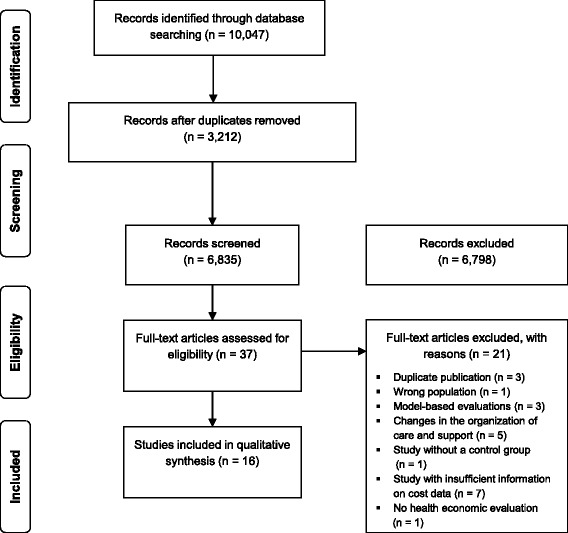
BACKGROUND: This systematic review aims to review the literature on trial-based economic evaluations of non-pharmacological interventions directly targeted at persons with dementia as well as persons with mild cognitive impairment and their respective caregivers. METHODS: A systematic literature research was conducted for the timeframe from 2010 to 2016 in the following databases: Centre for Reviews and Dissemination, EconLit, Embase, Cochrane Library, PsycINFO and PubMed. Study quality was assessed according to the Drummond criteria. RESULTS: In total sixteen publications were identified. Health economic evaluations indicated the cost-effectiveness of physical exercise interventions and occupational therapy. There was also evidence to suggest that psychological and behavioral therapies are cost-effective. Health economic studies investigating psychosocial interventions mainly targeted towards informal caregivers showed inconsistent results. CONCLUSIONS: Due to the increasing prevalence of dementia non-pharmacological interventions and their health economic impact are of increasing importance for health care decision-makers and HTA agencies.
Overview
The claims and statistics of this paper haven’t been checked yet.
Free: it reads the open-access text and checks the first 5 claims that cite a source we can check. Create a free account to check every claim.
Integrity signals
Registry
Cites
Statistics
Figures
Verification
Claims the paper makes
The claims and statistics of this paper haven’t been checked yet.
Free: it reads the open-access text and checks the first 5 claims that cite a source we can check. Create a free account to check every claim.
Claims other papers make about this one
Each is checked against this paper’s own text: does it say what the citing paper says it does?
The source backs part of the claim, not all of it — or backs it for a different population, condition or comparison.
In the citing paper
“although research that has evaluated both the costs and benefits of enhanced home support interventions is scant. 899 , 900”
From 2024 Alzheimer's disease facts and figures (2024) · cites this paper as [900]
Experimental — accuracy not yet measuredThe cited source says what the claim attributes to it.
In the citing paper
“In two systematic reviews of the cost‐effectiveness of enhanced home support interventions for individuals with dementia, researchers found some evidence to support occupational therapy, home‐based exercise, and some psychological and behavioral treatments as potentially cost‐effective approaches”
From 2024 Alzheimer's disease facts and figures (2024) · cites this paper as [900]
Self-check
Percentages, sums and reported differences re-computed from the paper’s own numbers.
The self-check needs the paper’s full text.
Citations
Cites
Methods for the Economic Evaluation of Health Care Programmes
Drummond, M. E., Sculpher, M. J., Torrance, G. W., O’Brien, B. J., & Stoddart, G. L. (2005) · doi:10.1093/oso/9780198529446.001.0001 · Cited by 13,648
Dementia prevention, intervention, and care
Livingston, G., Sommerlad, A., Orgeta, V., Costafreda, S. G., Huntley, J., Ames, D., Ballard, C., Banerjee, S., Burns, A., Cohen-Mansfield, J., et al. (2017) · The Lancet · doi:10.1016/s0140-6736(17)31363-6 · Cited by 6,072 · cited 1×
“However, these pharmacological interventions may provoke side-effects [4].”
BackgroundThe cochrane database of systematic reviews
Geddes, J. (1996) · Journal of Psychosomatic Research · doi:10.1016/s0022-3999(96)90063-x · Cited by 5,989
(2015) · HAL · Cited by 2,238
Alzheimer’s disease drug-development pipeline: Few candidates, frequent failures
Cummings, J. L., Morstorf, T., & Zhong, K. (2014) · Alzheimer's Research & Therapy · doi:10.1186/alzrt269 · Cited by 1,744 · cited 1×
“In the light of the comparably low success rate in the development of AD drugs [39] and the limited number of agents in the current pipeline [40], the development of effective non-pharmacological interventions is of particular importance in the treatment and care of PwDs and the support of informal caregivers.”
BackgroundThe Cochrane Database of Systematic Reviews
Handoll, H. H., Howe, T. E., & Madhok, R. (2002) · Physiotherapy · doi:10.1016/s0031-9406(05)60709-2 · Cited by 1,497
Nonpharmacological therapies in Alzheimer’s disease: a systematic review of efficacy
Olazarán, J., Reisberg, B., Clare, L., Cruz, I., Peña-Casanova, J., del Ser, T., Woods, B., Beck, C., Auer, S., Lai, C., et al. (2010) · Dementia and Geriatric Cognitive Disorders · doi:10.1159/000316119 · Cited by 937 · cited 2×
“Implications for future research There is evidence on the effectiveness of multicomponent psychosocial interventions on the maintenance of caregivers’ psychological health [55] and delayed institutionalization of PwDs [12].”
BackgroundExercise programs for people with dementia
Forbes, D., Forbes, S. C., Blake, C. M., Thiessen, E. J., & Forbes, S. (2015) · Cochrane Database of Systematic Reviews · doi:10.1002/14651858.cd006489.pub4 · Cited by 631
Groot, C., Hooghiemstra, A. M., Raijmakers, P. G. H. M., van Berckel, B. N. M., Scheltens, P., Scherder, E. J. A., van der Flier, W. M., & Ossenkoppele, R. (2016) · Ageing Research Reviews · doi:10.1016/j.arr.2015.11.005 · Cited by 616 · cited 1×
“Results of meta-analyses indicate that physical exercise interventions may have a positive effect on the rate of cognitive decline in AD [7] and suggest that there is a beneficial effect on cognitive functioning independent of the subtype of dementia [8].”
BackgroundVitamin D supplementation in pregnancy: a systematic review
Harvey, N. C., Holroyd, C., Ntani, G., Javaid, K., Cooper, P., Moon, R., Cole, Z., Tinati, T., Godfrey, K., Dennison, E., et al. (2014) · Health Technology Assessment · doi:10.3310/hta18450 · Cited by 352
Depression in dementia: epidemiology, mechanisms, and treatment
Enache, D., Winblad, B., & Aarsland, D. (2011) · Current Opinion in Psychiatry · doi:10.1097/yco.0b013e32834bb9d4 · Cited by 315 · cited 1×
“This is of particular importance, since depressive symptoms are common in all types and disease stages of dementia as well as in PwMCI and may impact considerably on the quality of life of PwDs and their caregivers [11].”
BackgroundEffects of the Finnish Alzheimer Disease Exercise Trial (FINALEX): A Randomized Controlled Trial
Pitkälä, K. H., Pöysti, M. M., Laakkonen, M.-L., Tilvis, R. S., Savikko, N., Kautiainen, H., & Strandberg, T. E. (2013) · JAMA Internal Medicine · doi:10.1001/jamainternmed.2013.359 · Cited by 304 · cited 10×
“An individually tailored home-based exercise program significantly delayed the deterioration of physical functioning of AD patients [20].”
BackgroundMethodInfluentialGraff, M. J. L., Adang, E. M. M., Vernooij-Dassen, M. J. M., Dekker, J., Jönsson, L., Thijssen, M., Hoefnagels, W. H. L., & Rikkert, M. G. M. O. (2008) · BMJ · doi:10.1136/bmj.39408.481898.be · Cited by 270 · cited 1×
“A previous CEA on occupational therapy also demonstrated costeffectiveness from the societal perspective [41].”
BackgroundLivingston, G., Kelly, L., Lewis-Holmes, E., Baio, G., Morris, S., Patel, N., Omar, R. Z., Katona, C., & Cooper, C. (2014) · Health Technology Assessment · doi:10.3310/hta18390 · Cited by 242 · cited 1×
“However, no cost-effectiveness thresholds exist for outcomes such as the change in the NPI or the MMSE score [45].”
BackgroundCognitive stimulation therapy for people with dementia: cost-effectiveness analysis
Knapp, M., Thorgrimsen, L., Patel, A., Spector, A., Hallam, A., Woods, B., & Orrell, M. (2006) · British Journal of Psychiatry · doi:10.1192/bjp.bp.105.010561 · Cited by 240 · cited 1×
“[42] found CST to be potentially cost-effective in comparison to CAU, considering its effects on cognition and quality of life.”
BackgroundSchaller, S., Mauskopf, J., Kriza, C., Wahlster, P., & Kolominsky-Rabas, P. L. (2015) · International Journal of Geriatric Psychiatry · doi:10.1002/gps.4198 · Cited by 215 · cited 1×
“A systematic review on cost-of-illness studies showed that the main cost drivers in the dementia care context are informal care costs [51].”
BackgroundSelf-citationFarina, N., Rusted, J., & Tabet, N. (2014) · International Psychogeriatrics · doi:10.1017/s1041610213001385 · Cited by 195 · cited 1×
“Results of meta-analyses indicate that physical exercise interventions may have a positive effect on the rate of cognitive decline in AD [7] and suggest that there is a beneficial effect on cognitive functioning independent of the subtype of dementia [8].”
BackgroundLivingston, G., Barber, J., Rapaport, P., Knapp, M., Griffin, M., Romeo, R., King, D., Livingston, D., Lewis-Holmes, E., Mummery, C., et al. (2014) · Health Technology Assessment · doi:10.3310/hta18610 · Cited by 192 · cited 3×
“Of these, two articles are based on results from the British START (STrAtegies for RelaTives) study [18, 19].”
BackgroundPsychological treatments for depression and anxiety in dementia and mild cognitive impairment
Orgeta, V., Qazi, A., Spector, A. E., & Orrell, M. (2014) · Cochrane Database of Systematic Reviews · doi:10.1002/14651858.cd009125.pub2 · Cited by 184
Dickinson, C., Dow, J., Gibson, G., Hayes, L., Robalino, S., & Robinson, L. (2017) · International Psychogeriatrics · doi:10.1017/s1041610216001447 · Cited by 182 · cited 1×
“Implications for future research There is evidence on the effectiveness of multicomponent psychosocial interventions on the maintenance of caregivers’ psychological health [55] and delayed institutionalization of PwDs [12].”
BackgroundPsychosocial interventions in dementia care research: The INTERDEM manifesto
Moniz-Cook, E., Vernooij-Dassen, M., Woods, B., Orrell, M., & Interdem Network (2011) · Aging & Mental Health · doi:10.1080/13607863.2010.543665 · Cited by 173 · cited 2×
“Furthermore, over the last decade non-pharmacological interventions for PwDs and persons with mild cognitive impairment (PwMCI) as well as their caregivers became more important, leading to a considerable growth in the evidence base [5, 6].”
BackgroundOrrell, M., Aguirre, E., Spector, A., Hoare, Z., Woods, R. T., Streater, A., Donovan, H., Hoe, J., Knapp, M., Whitaker, C., et al. (2014) · British Journal of Psychiatry · doi:10.1192/bjp.bp.113.137414 · Cited by 163 · cited 1×
“Before entering the study, all participants completed seven weeks of twice-weekly standard cognitive stimulation therapy [36].”
BackgroundKrol, M., Papenburg, J., & van Exel, J. N. A. (2014) · PharmacoEconomics · doi:10.1007/s40273-014-0218-y · Cited by 159 · cited 2×
“[53] assessed the effect of the inclusion and exclusion of informal care cost and effects on cost-effectiveness outcomes.”
BackgroundWoods, R., Bruce, E., Edwards, R., Elvish, R., Hoare, Z., Hounsome, B., Keady, J., Moniz-Cook, E., Orgeta, V, Orrell, M., et al. (2012) · Health Technology Assessment · doi:10.3310/hta16480 · Cited by 153 · cited 26×
“Further, an instructed walking program for PwDs and their caregivers is potentially cost-effective compared to CAU, when focusing on the reduction of BPSD as the outcome of interest [28].”
BackgroundResultInfluentialQuality of life in dementia: a study on proxy bias
Arons, A. M. M., Krabbe, P. F. M., Schölzel-Dorenbos, C. J. M., van der Wilt, G. J., & Rikkert, M. G. M. O. (2013) · BMC Medical Research Methodology · doi:10.1186/1471-2288-13-110 · Cited by 144 · cited 1×
“indicates that patient-by-proxy HRQoL values must be interpreted cautiously, as caregivers are found to reflect parts of their own HRQoL onto the care recipient [47].”
BackgroundZweifel, P. S., Breyer, F., & Kifmann, M. (2009) · Springer eBooks · doi:10.1007/978-3-540-68540-1 · Cited by 139
Dementia care costs and outcomes: a systematic review
Knapp, M., Iemmi, V., & Romeo, R. (2013) · International Journal of Geriatric Psychiatry · doi:10.1002/gps.3864 · Cited by 126 · cited 2×
“Previously performed systematic reviews highlight the scarcity of economic evidence regarding non-pharmacological interventions for PwDs [13] and their supporting informal caregivers [14].”
BackgroundOrgeta, V., Leung, P., Yates, L., Kang, S., Hoare, Z., Henderson, C., Whitaker, C., Burns, A., Knapp, M., Leroi, I., et al. (2015) · Health Technology Assessment · doi:10.3310/hta19640 · Cited by 124 · cited 4×
“[27] assessed structured, individual, homebased cognitive stimulation sessions for PwDs, administered by the respective caregiver.”
BackgroundInfluentialGitlin, L. N., Hodgson, N., Jutkowitz, E., & Pizzi, L. (2010) · The American Journal of Geriatric Psychiatry · doi:10.1097/jgp.0b013e3181c37d13 · Cited by 123 · cited 2×
“[23] examined the cost-effectiveness of a structured intervention administered by an occupational therapist composed of six in-home sessions and two telephone contacts over a period of 4 months (see Table 5).”
BackgroundLaakkonen, M., Kautiainen, H., Hölttä, E., Savikko, N., Tilvis, R. S., Strandberg, T. E., & Pitkälä, K. H. (2016) · Journal of the American Geriatrics Society · doi:10.1111/jgs.14055 · Cited by 109 · cited 3×
“With regard to psychological and behavioral treatments, self-management group rehabilitation for PwDs and their spouses [24] as well as cognitive-behavioral therapy for PwD-caregiver dyads [25], demonstrated effectiveness and cost-neutrality.”
BackgroundMethodAlzheimer's drug‐development pipeline: 2016
Cummings, J., Morstorf, T., & Lee, G. (2016) · Alzheimer's & Dementia: Translational Research & Clinical Interventions · doi:10.1016/j.trci.2016.07.001 · Cited by 108 · cited 1×
“In the light of the comparably low success rate in the development of AD drugs [39] and the limited number of agents in the current pipeline [40], the development of effective non-pharmacological interventions is of particular importance in the treatment and care of PwDs and the support of informal caregivers.”
BackgroundLowery, D., Cerga‐Pashoja, A., Iliffe, S., Thuné‐Boyle, I., Griffin, M., Lee, J., Bailey, A., Bhattacharya, R., & Warner, J. (2014) · International Journal of Geriatric Psychiatry · doi:10.1002/gps.4062 · Cited by 102 · cited 2×
“In contrast to the entire sample [35], the economic subsample indicated a statistically significant between-group difference considering the average scores of the GHQ at 12 weeks, favoring the intervention group.”
BackgroundResultOrgeta, V., Edwards, R. T., Hounsome, B., Orrell, M., & Woods, B. (2015) · Quality of Life Research · doi:10.1007/s11136-014-0770-0 · Cited by 100
Livingston, G., Barber, J., Rapaport, P., Knapp, M., Griffin, M., King, D., Romeo, R., Livingston, D., Mummery, C., Walker, Z., et al. (2014) · The Lancet Psychiatry · doi:10.1016/s2215-0366(14)00073-x · Cited by 98
Cognitive–behavioural therapy for anxiety in dementia: pilot randomised controlled trial
Spector, A., Charlesworth, G., King, M., Lattimer, M., Sadek, S., Marston, L., Rehill, A., Hoe, J., Qazi, A., Knapp, M., et al. (2015) · British Journal of Psychiatry · doi:10.1192/bjp.bp.113.140087 · Cited by 91 · cited 3×
“With regard to psychological and behavioral treatments, self-management group rehabilitation for PwDs and their spouses [24] as well as cognitive-behavioral therapy for PwD-caregiver dyads [25], demonstrated effectiveness and cost-neutrality.”
BackgroundCharlesworth, G., Shepstone, L., Wilson, E., Thalanany, M., Mugford, M., & Poland, F. (2008) · Health Technology Assessment · doi:10.3310/hta12040 · Cited by 89 · cited 1×
“In the framework of this previous review, a social support intervention comprising a facilitated access to a befriender volunteer was unlikely to be cost-effective [43].”
Oyebode, J. R., & Parveen, S. (2019) · Dementia · doi:10.1177/1471301216656096 · Cited by 88 · cited 2×
“Furthermore, over the last decade non-pharmacological interventions for PwDs and persons with mild cognitive impairment (PwMCI) as well as their caregivers became more important, leading to a considerable growth in the evidence base [5, 6].”
BackgroundKnapp, M., King, D., Romeo, R., Schehl, B., Barber, J., Griffin, M., Rapaport, P., Livingston, D., Mummery, C., Walker, Z., et al. (2013) · BMJ · doi:10.1136/bmj.f6342 · Cited by 87 · cited 1×
“The sessions covered psychoeducation about dementia, caregiver stress and behavior strategies [38].”
BackgroundAlgar-Skaife, K., Woods, B. T., & Windle, G. (2014) · Dementia · doi:10.1177/1471301214540163 · Cited by 87 · cited 2×
“Especially, in more severe levels of dementia observational methods may provide additional valuable data and might be an alternative way to capture PwD’s experiences [50].”
BackgroundDisease-modifying drugs in Alzheimer's disease
Scarpini, E., Galimberti, D., & Ghezzi, L. (2013) · Drug Design, Development and Therapy · doi:10.2147/dddt.s41431 · Cited by 74
Davis, J. C., Bryan, S., Marra, C. A., Sharma, D., Chan, A., Beattie, B. L., Graf, P., & Liu-Ambrose, T. (2013) · PLoS ONE · doi:10.1371/journal.pone.0063031 · Cited by 72 · cited 13×
“Two trial-based CEA evaluating physical exercise interventions for PwDs [20, 28] and one for PwMCI were identified [33].”
BackgroundMethodInfluentialD'Amico, F., Rehill, A., Knapp, M., Aguirre, E., Donovan, H., Hoare, Z., Hoe, J., Russell, I., Spector, A., Streater, A., et al. (2015) · Journal of the American Medical Directors Association · doi:10.1016/j.jamda.2014.10.020 · Cited by 70 · cited 6×
“Likewise our systematic review found evidence that a long-term maintenance CST is potentially cost-effective [21].”
BackgroundMethodInfluentialNon-Pharmacological Treatment in People With Cognitive Impairment
Straubmeier, M., Behrndt, E.-M., Seidl, H., Özbe, D., Luttenberger, K., & Graessel, E. (2017) · Deutsches Ärzteblatt international · doi:10.3238/arztebl.2017.0815 · Cited by 62
Problem-Solving Counseling for Caregivers of the Cognitively Impaired: Effective for Whom?
Roberts, J., Browne, G., Milne, C., Spooner, L., Gafni, A., Drummond-Young, M., LeGris, J., Watt, S., LeClair, K., Beaumont, L., et al. (1999) · Nursing Research · doi:10.1097/00006199-199905000-00006 · Cited by 59 · cited 1×
“caregivers without a significant difference in caregiver expenditures [44].”
BackgroundAguirre, E., Kang, S., Hoare, Z., Edwards, R. T., & Orrell, M. W. (2015) · Quality of Life Research · doi:10.1007/s11136-015-1065-9 · Cited by 57
The Effect of Telephone Support Groups on Costs of Care for Veterans With Dementia
Wray, L. O., Shulan, M. D., Toseland, R. W., Freeman, K. E., Vasquez, B. E., & Gao, J. (2010) · The Gerontologist · doi:10.1093/geront/gnq040 · Cited by 56 · cited 3×
“Two publications did not present detailed effectiveness results in the publication and the referenced articles could not be found [31, 32].”
BackgroundVersijpt, J. (2014) · Journal of Alzheimer's Disease · doi:10.3233/jad-132639 · Cited by 46
Economic Evaluation of Mental Health Interventions: A Guide to Costing Approaches
Shearer, J., McCrone, P., & Romeo, R. (2016) · PharmacoEconomics · doi:10.1007/s40273-016-0390-3 · Cited by 43
Jones, C., Edwards, R. T., & Hounsome, B. (2012) · International Psychogeriatrics · doi:10.1017/s1041610211001207 · Cited by 38 · cited 2×
“[14] focused on economic evaluations assessing interventions targeted at informal caregivers of community-dwelling PwDs.”
BackgroundJoling, K. J., Bosmans, J. E., van Marwijk, H. W., van der Horst, H. E., Scheltens, P., Vroomen, J. L., & van Hout, H. P. (2013) · Trials · doi:10.1186/1745-6215-14-305 · Cited by 36
D'Amico, F., Rehill, A., Knapp, M., Lowery, D., Cerga‐Pashoja, A., Griffin, M., Iliffe, S., & Warner, J. (2016) · International Journal of Geriatric Psychiatry · doi:10.1002/gps.4376 · Cited by 35 · cited 13×
“Further, an instructed walking program for PwDs and their caregivers is potentially cost-effective compared to CAU, when focusing on the reduction of BPSD as the outcome of interest [28].”
BackgroundMethodInfluentialSøgaard, R., Sørensen, J. R., Waldorff, F. B., Eckermann, A., Buss, D. V., Phung, T. K. T., & Waldemar, G. (2014) · BMJ Open · doi:10.1136/bmjopen-2013-004105 · Cited by 29 · cited 4×
“Psychological and behavioral interventions Three publications evaluated psychological and behavioral therapies delivered to PwD-caregiver dyads (see Table 4) [22, 24, 25].”
BackgroundInfluentialWaldemar, G., Waldorff, F. B., Buss, D. V., Eckermann, A., Keiding, N., Rishøj, S., Siersma, V., Sørensen, J., Sørensen, L. V., & Vogel, A. (2011) · Neuroepidemiology · doi:10.1159/000322942 · Cited by 28 · cited 1×
“The program was composed of counselling, educational and support elements, which were compared to a control group that was informed about available support programs in their respective communities [37].”
BackgroundDahlrup, B., Nordell, E., Carlsson, K. S., & Elmståhl, S. (2013) · Dementia and Geriatric Cognitive Disorders · doi:10.1159/000355365 · Cited by 22 · cited 3×
“Further, an educational and support intervention appears to be effective and cost neutral [30].”
Davis, J. C., Bryan, S., Marra, C. A., Hsiung, G.-Y. R., & Liu-Ambrose, T. (2015) · British Journal of Sports Medicine · doi:10.1136/bjsports-2013-092743 · Cited by 17 · cited 1×
“Moreover, the assessment of HRQoL in PwDs may be prone to recall bias and missing values are likely to occur within a cognitively impaired population [46].”
BackgroundDo Nurse-Led Skill Training Interventions Affect Informal Caregivers' Out-of-Pocket Expenditures?
Houtven, C. H. V., Thorpe, J., Chestnutt, D. H., Molloy, M. A., Boling, J., & Davis, L. (2012) · The Gerontologist · doi:10.1093/geront/gns045 · Cited by 15
Research works printed but not linked: 1
- Wimo A, Jönsson L, Winblad B: Health economic aspects of dementia. In: Dementia, Fifth Edition. Edited by David Ames, Alistair Burns, O'Brien JT, vol. 5. Boca Raton: CRC Press; 2017.
Cited by
2023 Alzheimer's disease facts and figures
(2023) · Alzheimer's & Dementia · doi:10.1002/alz.13016 · Cited by 3,212
2024 Alzheimer's disease facts and figures
(2024) · Alzheimer's & Dementia · doi:10.1002/alz.13809 · Cited by 2,536
2019 Alzheimer’s disease facts and figures.
Alzheimer's Association (2019) · Alzheimer's & Dementia · doi:10.1016/j.jalz.2019.01.010 · Cited by 2,461
2020 Alzheimer's disease facts and figures
(2020) · Alzheimer's & Dementia · doi:10.1002/alz.12068 · Cited by 2,353
2022 Alzheimer's disease facts and figures
(2022) · Alzheimer's & Dementia · doi:10.1002/alz.12638 · Cited by 2,341
Metadata
- Authors
- Nickel, F., Barth, J., & Kolominsky-Rabas, P. L.
- Affiliations
- Friedrich-Alexander-Universität Erlangen-Nürnberg (DE)
- Corresponding author
- Nickel, Franziska
- Venue
- BMC Geriatrics
- Published
- 2018-03-09
- Volume
- 18
- Issue
- 1
- Pages
- 69-69
- ISSN
- 1471-2318 (ISSN-L)
- PMC
- PMC5845149
- OpenAlex
- W2802216160
- Cited by
- 58
- References
- 58
- Citations by year
- 2026: 2 · 2025: 8 · 2024: 6 · 2023: 11 · 2022: 8 · 2021: 9 · 2020: 8 · 2019: 4 · 2018: 2
- FWCI
- 1.52
- Type
- journal article
- Language
- en
- Open access
- gold
- doi.org
- Licence
- cc-by
- creativecommons.org/licenses/by/4.0/ (tdm)
- Locations
- BMC Geriatrics (publishedVersion, cc-by)
- PubMed Central (publishedVersion, cc-by)
- PubMed (publishedVersion)
- OPUS FAU (Kooperativer Bibliotheksverbund Berlin-Brandenburg (KOBV), on behalf of the Universitätsbibliothek Erlangen-Nürnberg) (submittedVersion, cc-by)
- DOAJ (DOAJ: Directory of Open Access Journals) (submittedVersion, cc-by-sa)
- Funders
- Karl und Veronica Carstens-Stiftung
- Topics
- Social Sciences › Economics, Econometrics and Finance › Economics and Econometrics › Health Systems, Economic Evaluations, Quality of Life
- Health Sciences › Medicine › Psychiatry and Mental health › Dementia and Cognitive Impairment Research
- Life Sciences › Neuroscience › Cellular and Molecular Neuroscience › Alzheimer's disease research and treatments
- Keywords
- dementia, non-pharmacological treatment, informal caregivers, mild cognitive impairment, cost-effectiveness, economic evaluation, physical exercise intervention, occupational therapy, psychotherapy, behavior therapy, psychosocial interventions
- MeSH terms
- Behavior Therapy, Cost-Benefit Analysis, Dementia, Humans, Occupational Therapy, Caregivers
About these checks
Registry, retraction, Cites and statistics results are computed, not judged, with one exception: a printed reference that no index lists is read once by a model before it counts as a citation error. Claims are extracted by a model and kept only when their quote appears verbatim in the text; each cited source is then checked, with a model’s help, for whether it says what the claim relies on. Those verdicts can be wrong — read the claim’s quote and the cited source before relying on one.
Statistics and arithmetic are recomputed, not judged.
Confidence bands are shown only for fields calibrated on our annotated test set. None is calibrated yet, so no band is shown.
What counts as a claim ›How we measure confidence ›How we check this ›
Are you an author, or do you see a problem with this page? Request a review
Data sources
Bibliographic data: Semantic Scholar, OpenAlex, Crossref.
Contains information from the Semantic Scholar Academic Graph Datasets, made available under the ODC Attribution License (ODC-BY 1.0).
Semantic Scholar’s data is described in: Kinney, R., et al. (2023). The Semantic Scholar Open Data Platform. arXiv:2301.10140.
