

From grief, guilt pain and stigma to hope and pride – a systematic review and meta-analysis of mixed-method research of the psychosocial impact of stillbirth
Open accessThe DOI matches its Crossref record; 19 of the 19 references it cites were found in a registry or an index.
Abstract
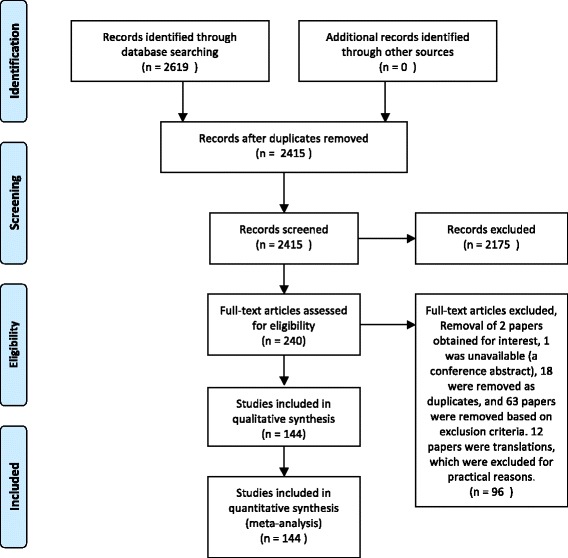
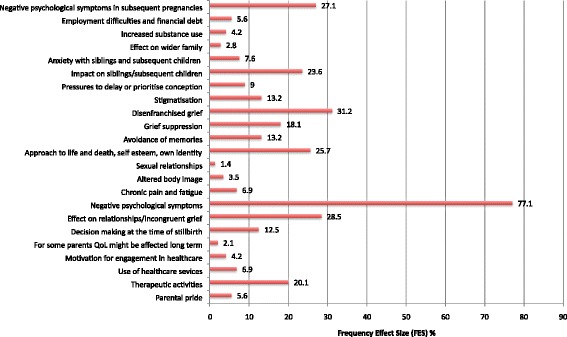
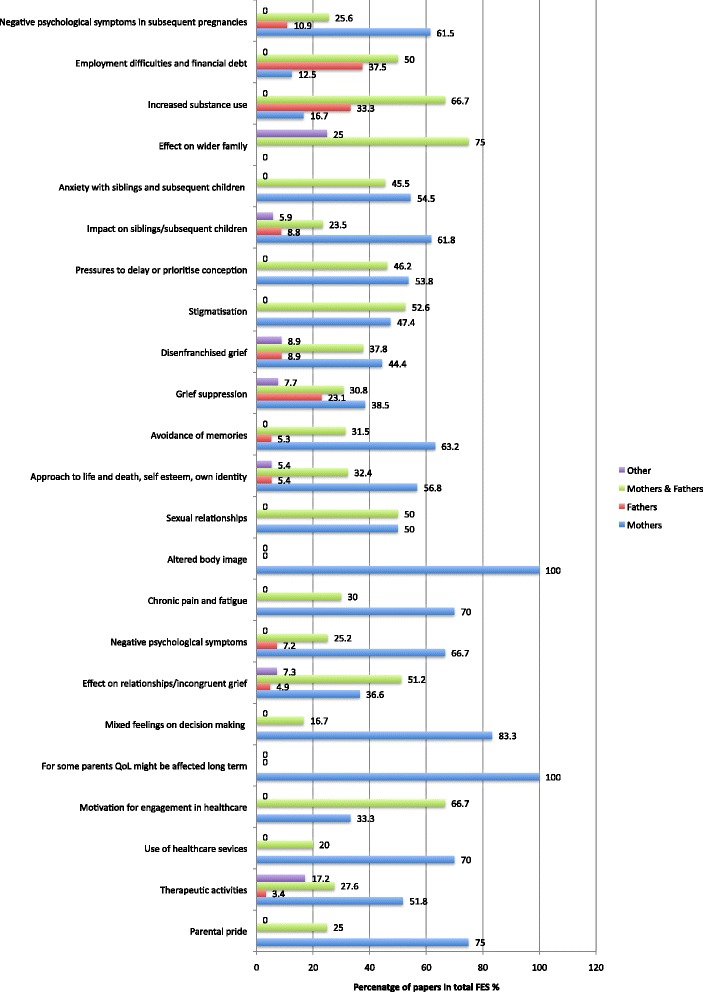
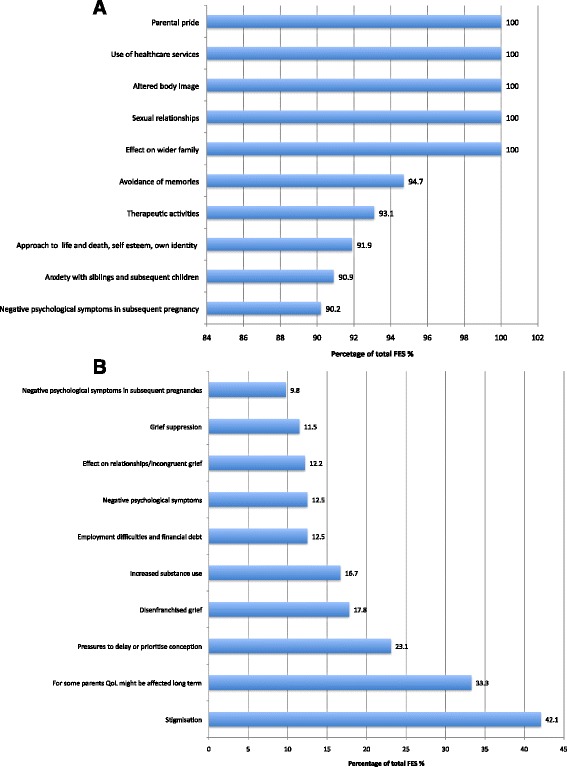
BACKGROUND: Despite improvements in maternity healthcare services over the last few decades, more than 2.7 million babies worldwide are stillborn each year. The global health agenda is silent about stillbirth, perhaps, in part, because its wider impact has not been systematically analysed or understood before now across the world. Our study aimed to systematically review, evaluate and summarise the current evidence regarding the psychosocial impact of stillbirth to parents and their families, with the aim of improving guidance in bereavement care worldwide. METHODS: Systematic review and meta-summary (quantitative aggregation of qualitative findings) of quantitative, qualitative, and mixed-methods studies. All languages and countries were included. RESULTS: Two thousand, six hundred and nineteen abstracts were identified; 144 studies were included. Frequency effect sizes (FES %) were calculated for each theme, as a measure of their prevalence in the literature. Themes ranged from negative psychological symptoms post bereavement (77 · 1) and in subsequent pregnancies (27 · 1), to disenfranchised grief (31 · 2), and incongruent grief (28 · 5), There was also impact on siblings (23 · 6) and on the wider family (2 · 8). They included mixed-feelings about decisions made when the baby died (12 · 5), avoidance of memories (13 · 2), anxiety over other children (7 · 6), chronic pain and fatigue (6 · 9), and a different approach to the use of healthcare services (6 · 9). Some themes were particularly prominent in studies of fathers; grief suppression (avoidance)(18 · 1), employment difficulties, financial debt (5 · 6), and increased substance use (4 · 2). Others found in studies specific to mothers included altered body image (3 · 5) and impact on quality of life (2 · 1). Counter-intuitively, Some themes had mixed connotations. These included parental pride in the baby (5 · 6), motivation for engagement in healthcare improvement (4 · 2) and changed approaches to life and death, self-esteem, and own identity (25 · 7). In studies from low/middle income countries, stigmatisation (13 · 2) and pressure to prioritise or delay conception (9) were especially prevalent. CONCLUSION: Experiencing the birth of a stillborn child is a life-changing event. The focus of the consequences may vary with parent gender and country. Stillbirth can have devastating psychological, physical and social costs, with ongoing effects on interpersonal relationships and subsequently born children. However, parents who experience the tragedy of stillbirth can develop resilience and new life-skills and capacities. Future research should focus on developing interventions that may reduce the psychosocial cost of stillbirth.
Overview
The claims and statistics of this paper haven’t been checked yet.
Free: it reads the open-access text and checks the first 5 claims that cite a source we can check. Create a free account to check every claim.
Integrity signals
Registry
Cites
Statistics
Figures
Verification
Claims the paper makes
The claims and statistics of this paper haven’t been checked yet.
Free: it reads the open-access text and checks the first 5 claims that cite a source we can check. Create a free account to check every claim.
Claims other papers make about this one
Each is checked against this paper’s own text: does it say what the citing paper says it does?
The cited source doesn’t support the claim as written.
In the citing paper
“Many reviews include only a specific subset of parents or family members (most often mothers) or types of perinatal loss (eg, stillbirth) in contexts other than health care facilities immediately after the loss, or are limited to studies using specific methodologies and often lack outcome measurement.12,14,15,20,32”
From Bereavement care guidelines used in health care facilities immediately following perinatal loss: a scoping review (2024) · cites this paper as [14]
Checked by a reasoning model — may be wrong.
Experimental — accuracy not yet measuredThe source backs part of the claim, not all of it — or backs it for a different population, condition or comparison.
In the citing paper
“Parents may experience disenfranchised grief, where their loss is not understood or socially acknowledged or validated by others, along with societal stigma, and feelings of guilt and shame (Burden 2016; Pollock 2021).”
From Support for parents and families after stillbirth and neonatal death (2024) · cites this paper as Burden 2016
Experimental — accuracy not yet measuredThe source backs part of the claim, not all of it — or backs it for a different population, condition or comparison.
In the citing paper
“The few studies investigating men’s reactions after SB suggest that paternal and maternal reactions might differ [10, 59].”
From Depression, anxiety, PTSD, and OCD after stillbirth: a systematic review (2021) · cites this paper as [10]
Experimental — accuracy not yet measuredThe source backs part of the claim, not all of it — or backs it for a different population, condition or comparison.
In the citing paper
“Previous research has indicated fathers are underrepresented in the stillbirth literature, but may have different perspectives on their experiences than their partners [e.g., (38, 39)].”
From Parent hospital experiences following stillbirth (2026) · cites this paper as [39]
Experimental — accuracy not yet measuredThe source backs part of the claim, not all of it — or backs it for a different population, condition or comparison.
In the citing paper
“While numerous sources are available, randomized controlled trials (RCTs) and quasi-experimental studies are lacking, and the synthesized information is older or has a limited population or focus.12,14,15,20,32”
From Bereavement care guidelines used in health care facilities immediately following perinatal loss: a scoping review (2024) · cites this paper as [14]
Experimental — accuracy not yet measured
7 more claims about this paper
Create a free account to see every claim other papers make about this one.
Self-check
Percentages, sums and reported differences re-computed from the paper’s own numbers.
The self-check needs the paper’s full text.
Citations
Cites
Beyond PICO: The SPIDER Tool for Qualitative Evidence Synthesis
Cooke, A., Smith, D., & Booth, A. (2012) · Qualitative Health Research · doi:10.1177/1049732312452938 · Cited by 2,608
Stillbirths: Where? When? Why? How to make the data count?
Lawn, J. E., Blencowe, H., Pattinson, R., Cousens, S., Kumar, R., Ibiebele, I., Gardosi, J., Day, L. T., & Stanton, C. (2011) · The Lancet · doi:10.1016/s0140-6736(10)62187-3 · Cited by 785
Oestergaard, M. Z., Inoue, M., Yoshida, S., Mahanani, W. R., Gore, F. M., Cousens, S., Lawn, J. E., Mathers, C. D., & on behalf of the United Nations Inter-agency Group for Child Mortality Estimation and the Child Health Epidemiology Reference Group (2011) · PLoS Medicine · doi:10.1371/journal.pmed.1001080 · Cited by 481 · cited 1×
“Despite underreporting, 98 % of stillbirths occur in low and middle-income countries (LMIC), and 67 % occur in rural families [3, 4].”
BackgroundPrevious prenatal loss as a predictor of perinatal depression and anxiety
Blackmore, E. R., Côté-Arsenault, D., Tang, W., Glover, V., Evans, J., Golding, J., & O'Connor, T. G. (2011) · British Journal of Psychiatry · doi:10.1192/bjp.bp.110.083105 · Cited by 315 · cited 1×
“Moreover, as the majority women conceive within a year of the loss [7], negative psychological effects of the loss may continue into subsequent pregnancies, despite the birth of a healthy child [8].”
BackgroundCreating Metasummaries of Qualitative Findings
Sandelowski, M., & Barroso, J. (2003) · Nursing Research · doi:10.1097/00006199-200307000-00004 · Cited by 273 · cited 4×
“The IES was derived for each included article by dividing the number of themes contained in the articles by the total number of themes across all reports [11].”
BackgroundMethodInfluentialStillbirth as risk factor for depression and anxiety in the subsequent pregnancy: cohort study
Hughes, P. M., Turton, P., & Evans, C. D. H. (1999) · BMJ · doi:10.1136/bmj.318.7200.1721 · Cited by 260 · cited 1×
“Moreover, as the majority women conceive within a year of the loss [7], negative psychological effects of the loss may continue into subsequent pregnancies, despite the birth of a healthy child [8].”
BackgroundPerinatal Mortality in Developing Countries
Zupan, J. (2005) · New England Journal of Medicine · doi:10.1056/nejmp058032 · Cited by 186 · cited 1×
“Despite underreporting, 98 % of stillbirths occur in low and middle-income countries (LMIC), and 67 % occur in rural families [3, 4].”
BackgroundMills, T., Ricklesford, C., Cooke, A., Heazell, A., Whitworth, M., & Lavender, T. (2014) · BJOG: An International Journal of Obstetrics & Gynaecology · doi:10.1111/1471-0528.12656 · Cited by 155 · cited 1×
“A previous review has assessed the impact of stillbirth and neonatal death on subsequent pregnancy, but was limited to studies in HIC and parents alone, not the wider family [16].”
BackgroundSelf-citationHaws, R. A., Mashasi, I., Mrisho, M., Schellenberg, J. A., Darmstadt, G. L., & Winch, P. J. (2010) · Social Science & Medicine · doi:10.1016/j.socscimed.2010.03.051 · Cited by 150 · cited 1×
“Moreover, because of this fear of stigmatization, stillbirth in LMICs is likely underreported [23].”
BackgroundThe Unique Experiences of Women and Their Families After the Death of a Baby
Cacciatore, J. (2010) · Social Work in Health Care · doi:10.1080/00981380903158078 · Cited by 128 · cited 1×
“Some studies have demonstrated these opportunities decreased anxiety, reduced physical symptoms and sleep disorders and allowed parents to cope better with their grief [18–21].”
BackgroundSelf-citation
Research works printed but not linked: 2
- Lawn JE, Blencowe H, Waiswa PS, Flenady V, Froen F. Qureshi Z. Stillbirths: data for accelerating progress for 2030. For The Lancet Ending Preventable Stillbirth Series study group, The Lancet. In press.
- Peters M Riitano D Lisy K Jordan Z Aromataris E Providing care for families who have experienced stillbirth: a comprehensive systematic review 2014
Cited by
Items 201–300 of 545
A Core Outcome Set for Stillbirth Care: An International Consensus Study
Bakhbakhi, D., Davies, A. K., Siassakos, D. M., Hinton, L., Duffy, J. M., Dangerfield, H., Redshaw, M., Merriel, A., Howell, A., Heazell, A. E. P., et al. (2025) · BJOG An International Journal of Obstetrics & Gynaecology · doi:10.1111/1471-0528.18265 · Cited by 6
Self-citationSun, S., Sun, Y., Qian, J., Tian, Y., Wang, F., Yu, Q., & Yu, X. (2023) · BMJ Open · doi:10.1136/bmjopen-2022-070288 · Cited by 7
Tindal, K., Cousins, F. L., Ellery, S. J., Palmer, K. R., Gordon, A., Filby, C. E., Gargett, C. E., Vollenhoven, B. J., & Davies-Tuck, M. L. (2024) · Journal of Clinical Medicine · doi:10.3390/jcm13154430 · Cited by 6
“Pregnancy loss and infertility also remain highly stigmatised topics [121,122].”
BackgroundFlach, K., Machado, W. D. L., & Levandowski, D. C. (2024) · Death Studies · doi:10.1080/07481187.2024.2385386 · Cited by 6
“Recently, the Diagnostic and Statistical Manual of Mental Disorders, Fifth Edition-Text Revision (DSM-5-TR) included Prolonged Grief Disorder (PGD).”
InfluentialNuzum, D., Fitzgerald, B., Evans, M. J., & O’Donoghue, K. (2021) · Journal of Religion and Health · doi:10.1007/s10943-020-01176-4 · Cited by 6
Lin, M. S., Yan, L., Wang, X., Wang, Y., Zhou, Y., Wang, Y., & Tian, C. (2024) · Environmental Research · doi:10.1016/j.envres.2024.119165 · Cited by 6
Pokharel, A., Ramalho, R., Das, B. K., Rongmei, L., Jatchavala, C., Gürcan, A., & Ransing, R. S. (2024) · PubMed Central · doi:10.1177/02537176231225649 · Cited by 6
Salehabadi, M. Z., Kheirkhah, M., Esmaeili, N., & Haghani, S. (2020) · Iran Journal of Nursing · doi:10.29252/ijn.33.125.55 · Cited by 6
Bereavement photography, volunteering, and posttraumatic growth: A mixed-methods investigation
Vivekananda, K., Ong, U., Wurf, G., D’Souza, L., Giosserano, R., & Licqurish, S. (2022) · Death Studies · doi:10.1080/07481187.2022.2067264 · Cited by 6
“Often the invisibility of perinatal loss and ensuing denial of the social existence of the baby (Burden et al., 2016; Cacciatore, 2010), leads to bereaved parents experiencing disenfranchized grief especially if their loss is not, or cannot, be publicly mourned (Carolan & Wright, 2017; Doka, 1999).”
BackgroundAlderdice, F. A. (2017) · Journal of Reproductive and Infant Psychology · doi:10.1080/02646838.2016.1267010 · Cited by 6
“In a systematic review of the psychosocial impact of stillbirth by Burden et al. (2016), a key theme identified in the meta-summary was feeling isolated and stigmatised as the experience of being a parent without a child was not recognised by society.”
BackgroundRoberts, L. R., Sarpy, N. L., Peters, J., Nick, J. M., & Tamares, S. (2022) · JBI Evidence Synthesis · doi:10.11124/jbies-21-00053 · Cited by 5
Duelo perinatal, salud mental y la importancia del acompañamiento psicológico
Cortés-Cataldo, F., Olhaberry, M., Sieverson, C., Romero, M., Tagle-Silva, M. T., Mena-Silva, C., Honorato-Miranda, C., Anguita, A. M., & Iribarren, D. (2025) · Revista Médica Clínica Las Condes · doi:10.1016/j.rmclc.2025.05.002 · Cited by 6
Standardizing Fetal Movement Monitoring using Count the Kicks
Burgess, A., Aucutt, M., & Coleman, S. L. (2024) · MCN The American Journal of Maternal/Child Nursing · doi:10.1097/nmc.0000000000001048 · Cited by 5
Sun, S., Qian, J., Sun, Y., Wu, M., Liu, L., & Yu, X. (2022) · Perspectives In Psychiatric Care · doi:10.1111/ppc.13119 · Cited by 5
Sun, S., Qian, J., Wang, F., Tian, Y., Sun, Y., Zheng, Q., & Yu, X. (2023) · International Journal of Nursing Practice · doi:10.1111/ijn.13146 · Cited by 5
Determinants of stillbirth in the Five General Hospitals of Lusaka, Zambia: A Case-Control study
Makasa, M., Mutale, W., Lubeya, M. K., Mpetemoya, T., Chinayi, M., Mangala, B., Chipoya, M., & Kaonga, P. (2023) · Medical Journal of Zambia · doi:10.55320/mjz.50.1.395 · Cited by 5
Cuéllar‐Flores, I., Cercas, L. Á.-C., Rubio, S. A., Cordero, E., de Neira, M. D., Fernández, A., Raggiotti, E. L., Serrano-Villar, M., Madrigal, A. L., Vaquero, A. H., et al. (2024) · Papeles del Psicólogo - Psychologist Papers · doi:10.23923/pap.psicol.3039 · Cited by 5
Imaroh, I., & Mesra, R. (2024) · ETIC (EDUCATION AND SOCIAL SCIENCE JOURNAL) · doi:10.64924/29cpye27 · Cited by 5
Muin, D. A., Neururer, S. B., Rotter, V., Leitner, H., Leutgeb, S., Husslein, P. W., Kiss, H., & Kohlberger, P. (2021) · BMC Pregnancy and Childbirth · doi:10.1186/s12884-021-03995-z · Cited by 5
Yeshambel, A., Alene, T., Adella, G. A., Azeze, G. A., Anmut, W., Gelaw, K. A., & Birhan, B. (2023) · OBM Neurobiology · doi:10.21926/obm.neurobiol.2301154 · Cited by 5
Shaw, K. L., Spry, J. L., Cummins, C., Ewer, A. K., Kilby, M. D., & Mancini, A. (2023) · Archives of Disease in Childhood Fetal & Neonatal · doi:10.1136/archdischild-2023-325649 · Cited by 5
Second Trimester Pregnancy Loss
Casey, F. E. (2017) · Cambridge University Press eBooks · doi:10.1017/9781316662571.026 · Cited by 5
Forsberg, K., Silver, R. M., & Christiansen‐Lindquist, L. (2018) · American Journal of Perinatology · doi:10.1055/s-0038-1648234 · Cited by 5
Men’s Experiences With Perinatal Loss: An Integrative Review
Burrow, R. (2024) · Research and theory for nursing practice · doi:10.1891/rtnp-2023-0127 · Cited by 4
Healing hearts: mind-body therapy for mothers after stillbirth’s silent grief
Bar, V., Hermesh, T., Reshef, P., Hermetz, S., Hertz‐Palmor, N., Gothelf, D., & Mosheva, M. (2025) · Frontiers in Psychiatry · doi:10.3389/fpsyt.2025.1534616 · Cited by 4
Majumder, M., Kumar, G. A., Ali, S. B., Akbar, M., George, S., Dora, S. P., Akhouri, S. S., Kumari, S., Singh, M. K., Mahapatra, T., et al. (2025) · BMC Public Health · doi:10.1186/s12889-025-22823-z · Cited by 4
“Potential coping reported by fathers following the loss of a baby includes a tendency to resort to avoidance behaviour by substance abuse [6, 7, 32, 33], and aggression [25].”
Racialized Economic Segregation and Disparities in the Risk of Stillbirth
Rammah, A., Drake, J. M., Moussa, I., Whitworth, K. W., Henderson, H., Álvarez, J. C., & Symanski, E. (2025) · Journal of Racial and Ethnic Health Disparities · doi:10.1007/s40615-025-02511-9 · Cited by 4
“Stillbirth, often defined as the death of a fetus prior to birth at 20 weeks of gestation or more, is a public health concern with considerable mental health and financial burdens on families [1].”
Pathak, B. G., Maurya, S., Bisht, S., Vats, P., Mukerjee, R., Anand, V. K., & Mazumder, S. (2026) · PLoS ONE · doi:10.1371/journal.pone.0347994 · Cited by 4
Hurricane-Force Grief: A Mirror of Fathers’ Love
Denhup, C. (2024) · OMEGA - Journal of Death and Dying · doi:10.1177/00302228241260979 · Cited by 4
“This is attributed to grief suppression because of societal expectations that men be stoic and supportive of their spouse (Badenhorst et al., 2006; Burden et al., 2016; Cacciatorre et al., 2013; Obst et al., 2020; Obst et al., 2021; Wood & Milo, 2001).”
Preventing Stillbirth in Canada: A Need for a Coordinated National Action Plan
Murphy‐Kaulbeck, L., Belzile, N., Tsundu, D., & Cook, J. L. (2025) · Journal of Obstetrics and Gynaecology Canada · doi:10.1016/j.jogc.2025.102945 · Cited by 4
Air pollution mixtures and stillbirth: k-means cluster analysis
Riches, N. O., Gouripeddi, R., Silver, R. M., & Facelli, J. C. (2025) · Hygiene and Environmental Health Advances · doi:10.1016/j.heha.2025.100153 · Cited by 4
A Genetic Counselor's Guide to Understanding Grief
Ali, N., & Bellcross, C. A. (2020) · Wiley eBooks · doi:10.1002/9781119529873.ch5 · Cited by 4
Carrying Death: A Qualitative Study of Women’s Bodily Perceptions After Their Baby Died in Utero
Damm, M. F., Jørgensen, M. L., Eklund, M. V., Hvidtjørn, D., & Prinds, C. (2023) · OMEGA - Journal of Death and Dying · doi:10.1177/00302228231190544 · Cited by 4
“Cacciatore et al. have described how the bodily preparation and changes through pregnancy can become a memorial of the child, but also an unbearable reminder of the loss itself (Burden et al., 2016; Cacciatore, 2010; Huberty et al., 2014).”
InfluentialThe most painful estrangement: Death at birth
Cacciatore, J. (2023) · Seminars in Perinatology · doi:10.1016/j.semperi.2023.151870 · Cited by 4
Self-citationAcute Grief: Pengalaman Duka saat Ibu Kehilangan Perinatal
Samutri, E., Widyawati, W., & Nisman, W. A. (2020) · Dinamika Kesehatan Jurnal Kebidanan dan Keperawatan · doi:10.33859/dksm.v10i1.445 · Cited by 4
Shaffer, S. K., & Stockdale, C. K. (2017) · Cambridge University Press eBooks · doi:10.1017/9781316662571.033 · Cited by 4
Support after stillbirth: Findings from the Parent Voices Initiative Global Registry Project
Hardy, V. P., Beedle, A., Murphy, S., Storey, C., Aggarwal, N., Dandona, R., Dev, A., Doherty, P., Heazell, A. E. P., Kinney, M. V., et al. (2023) · Bereavement · doi:10.54210/bj.2023.1084 · Cited by 4
Self-citationSadowsky, M. (2017) · SOPHIA (St. Catherine University) · Cited by 4
Maternal Satisfaction with Healthcare after Perinatal Loss in Monochorionic Twin Pregnancy
Druguet, M., Nuño, L., Rodó, C., Arévalo, S., Carreras, E., & Gómez-Benito, J. (2019) · Journal of Clinical Medicine · doi:10.3390/jcm8081213 · Cited by 4
“Although several studies have considered the factors that influence the grief process in the context of perinatal loss [8,11,18], very few have examined satisfaction with hospital care [19], especially among women with a monochorionic twin pregnancy.”
BackgroundNarratives of loss and resolution: Continuing bonds in the maternal experience of stillbirth
Hunt, C. (2020) · City Research Online (City University London) · Cited by 4
Support for parents and families after stillbirth and neonatal death
Loughnan, S., Bakhbakhi, D., Ellwood, D. A., Boyle, F., Middleton, P., Burden, C., Ludski, K., Saunders, R., & Flenady, V. (2024) · Cochrane Database of Systematic Reviews · doi:10.1002/14651858.cd015798 · Cited by 3
Self-citationHiding in Plain Sight : A Narrative Review of Non-Parental Relatives’ Perinatal Grief
Bimman, R., & Graham, N. (2025) · Journal of Social Work in End-of-Life & Palliative Care · doi:10.1080/15524256.2024.2443152 · Cited by 3
Perinatal Grief in the Indian Context: Conceptualizing and Companioning the Grieving Process
Devendran, Y., Saravanan, V., Satyanarayana, V. A., S., S. C., Devi, G., & Desai, G. (2025) · Journal of Psychiatry Spectrum · doi:10.4103/jopsys.jopsys_85_24 · Cited by 3
Kumaravel, K. S., Anurekha, V., Balamurugan, M. S., Kumar, P., Gobinathan, S., & Danishraja, M. (2025) · Apollo Medicine · doi:10.1177/09760016251357091 · Cited by 3
Höglund, B., & Hildingsson, I. (2025) · Women and Birth · doi:10.1016/j.wombi.2025.102091 · Cited by 3
Tran, T. P., & Liu, J. J. (2022) · Maternal and Child Health Journal · doi:10.1007/s10995-022-03541-z · Cited by 3
“…having previous births or child loss, women who ever had children may have neglected ANC, and the traumatic experience of a child’s death can lead to poor maternal mental and physical health, which could affect mothers’ healthseeking behavior during subsequent pregnancies (Burden et al., 2016).”
BackgroundRøseth, I., Hvidtjørn, D., & Dahl, B. (2023) · Sexualities · doi:10.1177/13634607231168962 · Cited by 3
“…couple and experiencing the death of a baby might therefore lead to stigmatization in multiple ways, such as a less approving family structure, a lack of acknowledgement in the healthcare system and disenfranchised grief (Burden et al., 2016; Cacciatore and Raffo, 2011; Rose and Oxlad 2022b).”
Experiências de luto parental após um natimorto: uma síntese temática no contexto da América Latina
Alvarenga, W. D. A., Macêdo, N. R., Santos, A. K. S., de Lucca, M., deMontigny, F., da Rocha, S. S., & Nascimento, L. C. (2023) · Online Brazilian Journal of Nursing · doi:10.17665/1676-4285.20236643 · Cited by 3
Pollock, D., Bailey, H. D., Hasanoff, S., Munn, Z., Valenzuela, C., Stern, C., Price, C. L., Marriott, R., Gliddon, J., Lewis, C., et al. (2024) · Women and Birth · doi:10.1016/j.wombi.2024.101604 · Cited by 3
“The Dark Farewell to the Light of Life”: A Qualitative Study About Prenatal Loss
Öztürk, G. K., & Elmas, S. (2022) · OMEGA - Journal of Death and Dying · doi:10.1177/00302228221131599 · Cited by 3
“In a meta-analysis study that supports these results, prenatal loss was determined to be a life-changing event with devastating psychological, physical and social effects (Burden et al., 2016).”
ResultWhat Should Be Discussed When Considering a Vaginal Birth? A Delphi Consensus Study
Demetri, A., Davies, A. K., Bakhbakhi, D., Hunt, A., Ijaz, S., McGuinness, S., Beasor, G., Clayton, G., Bradley, V., Bunni, E., et al. (2025) · BJOG An International Journal of Obstetrics & Gynaecology · doi:10.1111/1471-0528.70071 · Cited by 3
Self-citationInduction and Augmentation of Labor
Goldberg, A. (2017) · Cambridge University Press eBooks · doi:10.1017/9781316662571.004 · Cited by 3
Parenting while grieving: the impact of baby loss
Cleaver, H., Rose, W., Young, E., & Veitch, R. (2018) · Journal of Public Mental Health · doi:10.1108/jpmh-07-2018-0042 · Cited by 3
Ker, C.-R. (2018) · Current Obstetrics and Gynecology Reports · doi:10.1007/s13669-018-0251-5 · Cited by 3
A Study on the Bangladeshi Mothers' Experiences with Intrauterine Fetal Death (IUFD)
Chowdhury, D., Islam, S., Biswas, R., Jyoti, A. B., Mukta, S. A., & Islam, M. S. (2022) · Journal of Advances in Medicine and Medical Research · doi:10.9734/jammr/2022/v34i234870 · Cited by 3
Curricular Quality Improvement in Midwifery: Simulating Unexpected Perinatal Loss
Altman, S. D., Tilley, C. P., Feldman, R., Brennan, M., & Wholihan, D. J. (2023) · Journal of Midwifery & Women s Health · doi:10.1111/jmwh.13498 · Cited by 3
Fetene, S. M., Haile, T. G., & Dadi, A. F. (2023) · BMJ Open · doi:10.1136/bmjopen-2023-074447 · Cited by 3
Liu, S., Athurupana, R., Han, H., Yang, T., & Nakatsuka, M. (2023) · Institutional Repositories DataBase (IRDB) · doi:10.18926/amo/66149 · Cited by 3
Reproductive Health and Bodily Integrity in Tanzania
Westeneng, J., & D’Exelle, B. (2017) · Studies in Family Planning · doi:10.1111/sifp.12029 · Cited by 3
Alraies, F. (2019) · Brunel University Research Archive (BURA) (Brunel University London) · Cited by 4
Research on stillbirth: back and forth between the researcher’s and mother’s perspective
Deforges, C. (2023) · Journal of Reproductive and Infant Psychology · doi:10.1080/02646838.2023.2228095 · Cited by 3
“invisible and reinforce the social taboo surrounding perinatal bereavement, which they will already face in many other ways (Burden et al., 2016).”
BackgroundSharma, B., Gill, G., Kumar, A., Jindal, H. A., Nehra, R., Grover, S., Suri, V., & Aggarwal, N. (2025) · Indian Journal of Psychiatry · doi:10.4103/indianjpsychiatry.indianjpsychiatry_631_24 · Cited by 2
“6-8] According to the National Family Health Survey (NFHS-5) 2019–2021, the stillbirth rate in India is approximately 9.7 stillbirths per 1000 births; this translates into a huge burden, impacting the mental health and holistic wellbeing of mothers.”
InfluentialFogarty, S., Heazell, A. E. P., Munk, N., & Hay, P. (2026) · BMC Complementary Medicine and Therapies · doi:10.1186/s12906-026-05244-2 · Cited by 2
“Swedish massage strokes included longitudinal and transverse gliding, digital ischemic pressure, and transverse frictions — techniques supported by prior pregnancy massage research [11, 39].”
Self-citationNingsih, Y. R. (2025) · INTERNATIONAL SEMINAR · doi:10.36563/rz3fnn90 · Cited by 2
“The psychological effects of grief experienced by couples immediately following a stillbirth include feelings of sadness and guilt, which can result in social isolation, (Burden et al., 2016).”
Loughnan, S. A., Ali, K., Wojcieszek, A. M., Diget, I. S., Singline, L., Lancaster, A., Porter, E., Andrews, C. J., Gordon, A., Heazell, A. E. P., et al. (2026) · Women and Birth · doi:10.1016/j.wombi.2025.102155 · Cited by 2
Self-citationBigirinama, R. N., Iwu, E., Mary, M., Abimiku, R. H., Chiribagula, C. Z., Israel-Isah, S., Ekambi, S., Mwene-Batu, P. L., Maina, C. P., Bisimwa, G. B., et al. (2026) · Global Public Health · doi:10.1080/17441692.2026.2640771 · Cited by 2
Toms, P., Nolte, L., & Doswell, S. (2026) · Autism in Adulthood · doi:10.1177/25739581261438423 · Cited by 2
Perinatal mental health screening and care among those with pregnancy complications
Goulding, A. N., Fletcher, T. L., & Miller, E. S. (2026) · American Journal of Obstetrics & Gynecology MFM · doi:10.1016/j.ajogmf.2026.102006 · Cited by 2
Sharing loss online: Social media as a tool for navigating stillbirth grief
Sternbaum, S., Powell, Z., & Davis, C. (2026) · Midwifery · doi:10.1016/j.midw.2026.104932 · Cited by 2
Shamir, M. M. (2024) · Death Studies · doi:10.1080/07481187.2024.2318591 · Cited by 2
“Given a loss that is often unseen, unfelt, and unknown by others and a loss event that is vague, intangible, or ambiguous, parents often suppress their grief (Burden et al., 2016; Swanson-Kauffman, 1988) and may consequently deliver an incoherent loss story to the surviving twin.”
Lelond, S., & Woodgate, R. (2022) · Mspace (University of Manitoba) · doi:10.17605/osf.io/krhv9 · Cited by 2
Birthing autoethnographic philanthropy, healing, and organizational change
Arnold, A. (2020) · Routledge eBooks · doi:10.4324/9780429056987-17 · Cited by 2
Tasked for Compassion: Initiating Reproductive Grief Care in the Neonatal Intensive Care Unit
Grauerholz, K. R. (2022) · Newborn · doi:10.5005/jp-journals-11002-0026 · Cited by 2
Keskinen, N., Helmi, S., Kaunonen, M., Huhtala, H., & Aho, A. L. (2023) · Mortality · doi:10.1080/13576275.2023.2208517 · Cited by 2
“Losing a loved one requires the bereaved to rebuild their identity while dealing with a sense of emptiness created by their loss and shaping a new life without the deceased loved one (Burden et al., 2016; Pritchard & Buckle, 2018).”
InfluentialAllan-Wiseman, S., Yazdani, N., & Modanloo, S. (2024) · Journal of Social Work in End-of-Life & Palliative Care · doi:10.1080/15524256.2024.2364588 · Cited by 2
“These include the experience of sadness, anger, guilt, depression, posttraumatic stress, and prolonged grief disorders (Burden et al., 2016; Ellis et al., 2016; Pollock et al., 2021).”
Walsh, A., McCarthy, J. F., & Bradshaw, C. (2025) · Midwifery · doi:10.1016/j.midw.2025.104445 · Cited by 2
Coping with stillbirth: Insights from parents in rural Limpopo, South Africa
Shivambo, L., & Gumede, D. (2025) · Journal of Public Health in Africa · doi:10.4102/jphia.v16i1.1250 · Cited by 2
“8,27 However, there may be a need to foster collaboration among psychologists, pastoral counsellors and other relevant professionals to combine evidence-based psychological interventions with spiritual guidance.”
Bereaved parents’ experiences of baby loss stigma: A meta-ethnography
Corcoran, R. L., Shirley, L. J., Clancy, A., & Smith, D. M. (2026) · Death Studies · doi:10.1080/07481187.2026.2659895 · Cited by 2
Nausea and Vomiting of Pregnancy and Hyperemesis Gravidarum
Akinlaja, O. A., & Gist, W. (2017) · Cambridge University Press eBooks · doi:10.1017/9781316662571.035 · Cited by 2
Power, S., Meaney, S., Cotter, R., & O’Donoghue, K. (2020) · International Journal of Palliative Nursing · doi:10.12968/ijpn.2020.26.4.156 · Cited by 2
Psychosoziale Begleitung im Kontext perinataler Palliativversorgung: Das Modell „BE-TRAUER-N“
von der Hude, K. (2021) · Zeitschrift für Palliativmedizin · doi:10.1055/a-1193-3585 · Cited by 2
Keskinen, N., Kaunonen, M., Helmi, S., & Aho, A. L. (2023) · Tampere University Institutional Repository (Tampere University) · Cited by 2
Post-Ebola Case Management of Orphaned Young Adults in Rural Sierra LeonePreprint
Frazer, A. (2021) · SSRN Electronic Journal · doi:10.2139/ssrn.3864466 · Cited by 2
Reimer, J. E. (2019) · DigitalCommons - CalPoly (California State Polytechnic University) · doi:10.15368/theses.2019.34 · Cited by 3
The Role of Strength: Navigating Perinatal Loss Among Black Women
Hill, A. N. (2019) · VCU Scholars Compass (Virginia Commonwealth University) · doi:10.25772/srby-c024 · Cited by 2
“Across several studies, bereaved mothers expressed having depressive symptoms that included self-blame, regret, excessive guilt, decreased self-esteem and feeling a failure (Burden et al., 2016; Kersting & Wagner, 2012).”
BackgroundInfluentialRe: Why stillbirth deserves a place on the medical school curriculum
Cornish, E. F., & Siassakos, D. M. (2020) · BJOG An International Journal of Obstetrics & Gynaecology · doi:10.1111/1471-0528.16245 · Cited by 2
Self-citationSun, J., Rei, W., Chang, M.-Y., & Sheu, S. (2020) · doi:10.21203/rs.3.rs-34764/v1 · Cited by 2
“According to traditional Chinese custom, different ceremonies are held to facilitate the transition at various life stages – birth, adulthood, marriage, and death [3].”
BackgroundAgo, B. U., & Ekanem, E. (2022) · Qeios · doi:10.32388/16jkew.2 · Cited by 2
Köksal, C. (2018) · İstanbul Bilgi University Open Access Repository · Cited by 2
Keser, E., & Kahya, Y. (2025) · Journal of Reproductive and Infant Psychology · doi:10.1080/02646838.2024.2335176 · Cited by 1
“Perinatal loss-related guilt may involve thoughts about mistakes made during pregnancy and a perception of imperfection regarding one’s own body or femininity (Burden et al., 2016; Cacciatore et al., 2013; Leppert & Pahlka, 1984).”
Understanding Jordanian Mothers’ Experience after Stillbirth: A Qualitative Study Protocol
Al-Shuqerat, S. M., & Bawadi, H. A. (2020) · Open Journal of Nursing · doi:10.4236/ojn.2020.103019 · Cited by 1
Lived Experiences of Women Following a Stillbirth Delivery in Mityana Hospital
Ahmed, K., Namyalo, J., Nabasirye, C. K., Nakalega, A. P., & Kobusingye, J. (2021) · Journal of Health, Medicine and Nursing · doi:10.7176/jhmn/92-04 · Cited by 1
“[20, 21] The results from this study showed that grief was the most pressing issue following a stillbirth.”
ResultHow Nurse-Midwives Can Best Support Families Who Have Experienced Perinatal Loss
Egner, T. M., & Kluck, J. J. (2019) · Cited by 1
Posttraumatic Stress Disorder Symptoms and Related Factors in Women with Early Pregnancy Loss
Sayin, N., & PINAR, Ş. E. (2022) · Journal of Contemporary Medicine · doi:10.16899/jcm.1165862 · Cited by 1
Culturally and Linguistically Diverse Men’s Grief Experiences Following Perinatal Death in Australia
Pearson, T., Due, C., & Obst, K. L. (2023) · OMEGA - Journal of Death and Dying · doi:10.1177/00302228231153545 · Cited by 1
Factors Involved in Posttraumatic Growth in Mothers Experiencing Fetal and Infant Death
Casey, S., & Schneider, A. L. (2024) · OMEGA - Journal of Death and Dying · doi:10.1177/00302228241226539 · Cited by 1
“…members may struggle with depression, anxiety, posttraumatic stress disorder (PTSD) symptoms, health problems, increased alcohol or substance use (Burden et al., 2016; Cacciatore et al., 2014), social phobia, agoraphobia, anger, guilt, suicidal ideation, fi nancial debt, employment problems…”
Martin, C. J. H., Côté‐Arsenault, D., & Norris, G. (2024) · Bereavement · doi:10.54210/bj.2024.1119 · Cited by 2
Christl-Sebinger, S., & Schildberger, B. (2024) · Zeitschrift für Geburtshilfe und Neonatologie · doi:10.1055/a-2388-7717 · Cited by 1
Terapia Antirretroviral (TARV): fatores associados a não adesão em adultos portadores de HIV/AIDS
da Silva, T. M., Leite, M. D. D. S., & de Araújo, M. R. (2024) · Editora Poisson eBooks · doi:10.36229/978-65-5866-437-6.cap.01 · Cited by 1
A Phenomenological Study of Clinical Stillbirth Management for Grieving Mothers
Al-Shuqerat, S. M., Al‐Hamdan, Z. M., & Bawadi, H. A. (2024) · Journal of Social Work in End-of-Life & Palliative Care · doi:10.1080/15524256.2024.2420186 · Cited by 1
“Thus, the perceived intangible consequences of stillbirth on mothers are overlooked (Burden et al., 2016; Cacciatore & Bushfield, 2007; Kiguli et al., 2015).”
Influential
Metadata
- Authors
- Burden, C., Bradley, S., Storey, C., Ellis, A., Heazell, A. E. P., Downe, S., Cacciatore, J., & Siassakos, D.
- Affiliations
- Southmead Hospital (GB)
- Manchester Academic Health Science Centre (GB)
- University of Lancashire (GB)
- Arizona State University (US)
- Corresponding author
- Burden, Christy
- Venue
- BMC Pregnancy and Childbirth
- Published
- 2016-01-19
- Volume
- 16
- Issue
- 1
- Pages
- 9-9
- ISSN
- 1471-2393 (ISSN-L)
- PMC
- PMC4719709
- OpenAlex
- W2270991912
- Semantic Scholar
- 0ec979f0e52baeb61f9e4a9114a7462c698106ad
- Cited by
- 445
- References
- 19
- Citations by year
- 2026: 52 · 2025: 46 · 2024: 41 · 2023: 44 · 2022: 48 · 2021: 56 · 2020: 33 · 2019: 22 · 2018: 23 · 2017: 72 · 2016: 7
- FWCI
- 6.13
- Type
- journal article
- Language
- en
- Open access
- gold
- doi.org
- Licence
- cc-by
- Locations
- BMC Pregnancy and Childbirth (publishedVersion, cc-by)
- PubMed Central (publishedVersion, cc-by)
- PubMed (publishedVersion)
- CLOK (University of Central Lancashire) (acceptedVersion)
- Arizona State University Library Digital Repository (Arizona State University) (submittedVersion, cc-by)
- Research Explorer (The University of Manchester) (submittedVersion)
- Explore Bristol Research (submittedVersion, cc-by)
- Bristol Research (University of Bristol) (submittedVersion, cc-by)
- Figshare (cc-by)
- Funders
- SANDS Charity
- Topics
- Social Sciences › Psychology › Clinical Psychology › Grief, Bereavement, and Mental Health
- Health Sciences › Medicine › Pediatrics, Perinatology and Child Health › Global Maternal and Child Health
- Health Sciences › Medicine › Pediatrics, Perinatology and Child Health › Maternal and Neonatal Healthcare
- Keywords
- psychosocial impact, bereavement, grief, disenfranchised grief, stigma, parental guilt, mothers, siblings, chronic pain, substance use, employment problems, debt, body image, quality of life, bereavement support, low- and middle-income countries, subsequent pregnancy, maternal mental health, paternal mental health
- MeSH terms
- Adaptation, Psychological, Adult, Fathers, Female, Grief, Guilt, Humans, Infant, Newborn, Male, Mothers, Pregnancy, Quality of Life, Qualitative Research, Stillbirth, Social Stigma, Hope
About these checks
Registry, retraction, Cites and statistics results are computed, not judged, with one exception: a printed reference that no index lists is read once by a model before it counts as a citation error. Claims are extracted by a model and kept only when their quote appears verbatim in the text; each cited source is then checked, with a model’s help, for whether it says what the claim relies on. Those verdicts can be wrong — read the claim’s quote and the cited source before relying on one.
Statistics and arithmetic are recomputed, not judged.
Confidence bands are shown only for fields calibrated on our annotated test set. None is calibrated yet, so no band is shown.
What counts as a claim ›How we measure confidence ›How we check this ›
Are you an author, or do you see a problem with this page? Request a review
Data sources
Bibliographic data: Semantic Scholar, OpenAlex, Crossref.
Contains information from the Semantic Scholar Academic Graph Datasets, made available under the ODC Attribution License (ODC-BY 1.0).
Semantic Scholar’s data is described in: Kinney, R., et al. (2023). The Semantic Scholar Open Data Platform. arXiv:2301.10140.
