

From grief, guilt pain and stigma to hope and pride – a systematic review and meta-analysis of mixed-method research of the psychosocial impact of stillbirth
Open accessThe DOI matches its Crossref record; 19 of the 19 references it cites were found in a registry or an index.
Abstract
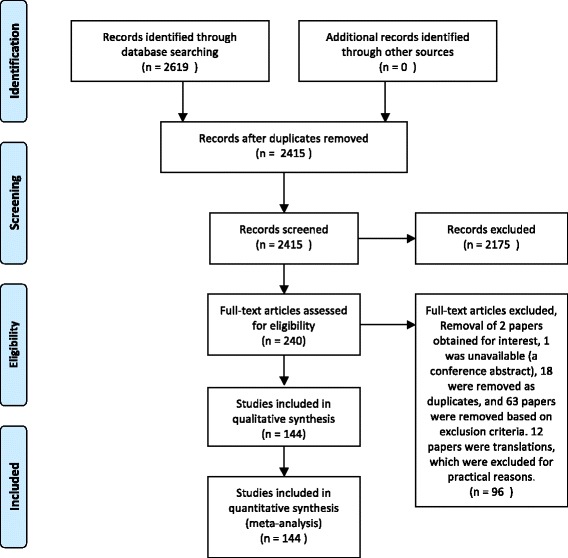
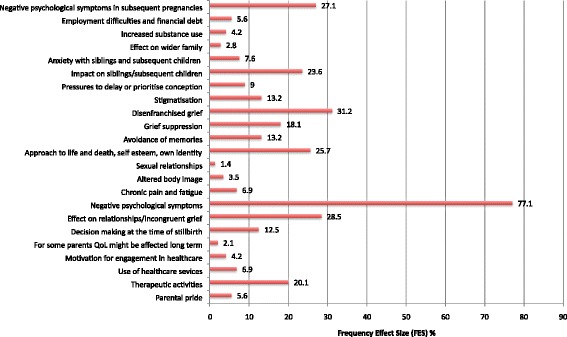
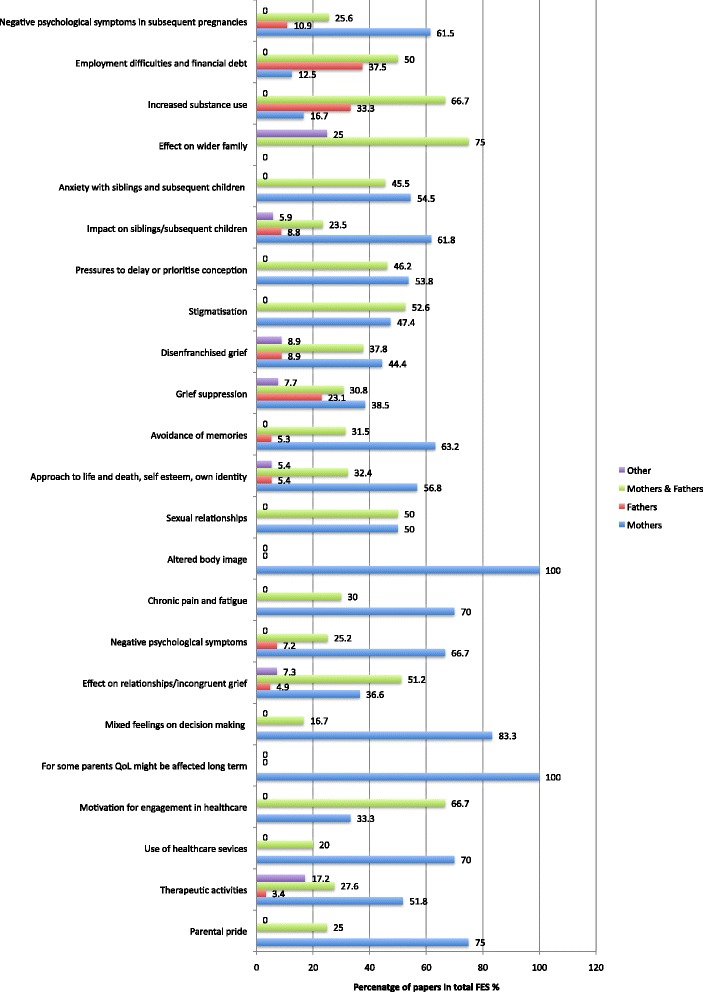
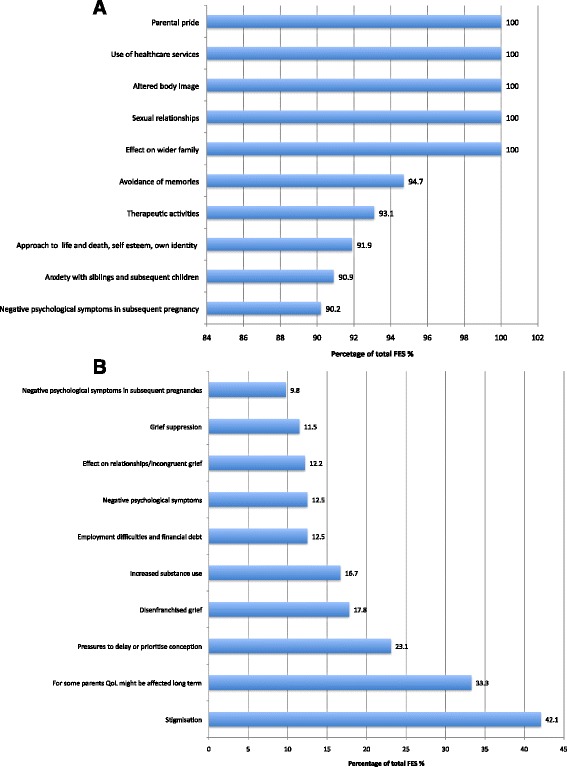
BACKGROUND: Despite improvements in maternity healthcare services over the last few decades, more than 2.7 million babies worldwide are stillborn each year. The global health agenda is silent about stillbirth, perhaps, in part, because its wider impact has not been systematically analysed or understood before now across the world. Our study aimed to systematically review, evaluate and summarise the current evidence regarding the psychosocial impact of stillbirth to parents and their families, with the aim of improving guidance in bereavement care worldwide. METHODS: Systematic review and meta-summary (quantitative aggregation of qualitative findings) of quantitative, qualitative, and mixed-methods studies. All languages and countries were included. RESULTS: Two thousand, six hundred and nineteen abstracts were identified; 144 studies were included. Frequency effect sizes (FES %) were calculated for each theme, as a measure of their prevalence in the literature. Themes ranged from negative psychological symptoms post bereavement (77 · 1) and in subsequent pregnancies (27 · 1), to disenfranchised grief (31 · 2), and incongruent grief (28 · 5), There was also impact on siblings (23 · 6) and on the wider family (2 · 8). They included mixed-feelings about decisions made when the baby died (12 · 5), avoidance of memories (13 · 2), anxiety over other children (7 · 6), chronic pain and fatigue (6 · 9), and a different approach to the use of healthcare services (6 · 9). Some themes were particularly prominent in studies of fathers; grief suppression (avoidance)(18 · 1), employment difficulties, financial debt (5 · 6), and increased substance use (4 · 2). Others found in studies specific to mothers included altered body image (3 · 5) and impact on quality of life (2 · 1). Counter-intuitively, Some themes had mixed connotations. These included parental pride in the baby (5 · 6), motivation for engagement in healthcare improvement (4 · 2) and changed approaches to life and death, self-esteem, and own identity (25 · 7). In studies from low/middle income countries, stigmatisation (13 · 2) and pressure to prioritise or delay conception (9) were especially prevalent. CONCLUSION: Experiencing the birth of a stillborn child is a life-changing event. The focus of the consequences may vary with parent gender and country. Stillbirth can have devastating psychological, physical and social costs, with ongoing effects on interpersonal relationships and subsequently born children. However, parents who experience the tragedy of stillbirth can develop resilience and new life-skills and capacities. Future research should focus on developing interventions that may reduce the psychosocial cost of stillbirth.
Overview
The claims and statistics of this paper haven’t been checked yet.
Free: it reads the open-access text and checks the first 5 claims that cite a source we can check. Create a free account to check every claim.
Integrity signals
Registry
Cites
Statistics
Figures
Verification
Claims the paper makes
The claims and statistics of this paper haven’t been checked yet.
Free: it reads the open-access text and checks the first 5 claims that cite a source we can check. Create a free account to check every claim.
Claims other papers make about this one
Each is checked against this paper’s own text: does it say what the citing paper says it does?
The cited source doesn’t support the claim as written.
In the citing paper
“Many reviews include only a specific subset of parents or family members (most often mothers) or types of perinatal loss (eg, stillbirth) in contexts other than health care facilities immediately after the loss, or are limited to studies using specific methodologies and often lack outcome measurement.12,14,15,20,32”
From Bereavement care guidelines used in health care facilities immediately following perinatal loss: a scoping review (2024) · cites this paper as [14]
Checked by a reasoning model — may be wrong.
Experimental — accuracy not yet measuredThe source backs part of the claim, not all of it — or backs it for a different population, condition or comparison.
In the citing paper
“Parents may experience disenfranchised grief, where their loss is not understood or socially acknowledged or validated by others, along with societal stigma, and feelings of guilt and shame (Burden 2016; Pollock 2021).”
From Support for parents and families after stillbirth and neonatal death (2024) · cites this paper as Burden 2016
Experimental — accuracy not yet measuredThe source backs part of the claim, not all of it — or backs it for a different population, condition or comparison.
In the citing paper
“The few studies investigating men’s reactions after SB suggest that paternal and maternal reactions might differ [10, 59].”
From Depression, anxiety, PTSD, and OCD after stillbirth: a systematic review (2021) · cites this paper as [10]
Experimental — accuracy not yet measuredThe source backs part of the claim, not all of it — or backs it for a different population, condition or comparison.
In the citing paper
“Previous research has indicated fathers are underrepresented in the stillbirth literature, but may have different perspectives on their experiences than their partners [e.g., (38, 39)].”
From Parent hospital experiences following stillbirth (2026) · cites this paper as [39]
Experimental — accuracy not yet measuredThe source backs part of the claim, not all of it — or backs it for a different population, condition or comparison.
In the citing paper
“While numerous sources are available, randomized controlled trials (RCTs) and quasi-experimental studies are lacking, and the synthesized information is older or has a limited population or focus.12,14,15,20,32”
From Bereavement care guidelines used in health care facilities immediately following perinatal loss: a scoping review (2024) · cites this paper as [14]
Experimental — accuracy not yet measured
7 more claims about this paper
Create a free account to see every claim other papers make about this one.
Self-check
Percentages, sums and reported differences re-computed from the paper’s own numbers.
The self-check needs the paper’s full text.
Citations
Cites
Beyond PICO: The SPIDER Tool for Qualitative Evidence Synthesis
Cooke, A., Smith, D., & Booth, A. (2012) · Qualitative Health Research · doi:10.1177/1049732312452938 · Cited by 2,608
Stillbirths: Where? When? Why? How to make the data count?
Lawn, J. E., Blencowe, H., Pattinson, R., Cousens, S., Kumar, R., Ibiebele, I., Gardosi, J., Day, L. T., & Stanton, C. (2011) · The Lancet · doi:10.1016/s0140-6736(10)62187-3 · Cited by 785
Oestergaard, M. Z., Inoue, M., Yoshida, S., Mahanani, W. R., Gore, F. M., Cousens, S., Lawn, J. E., Mathers, C. D., & on behalf of the United Nations Inter-agency Group for Child Mortality Estimation and the Child Health Epidemiology Reference Group (2011) · PLoS Medicine · doi:10.1371/journal.pmed.1001080 · Cited by 481 · cited 1×
“Despite underreporting, 98 % of stillbirths occur in low and middle-income countries (LMIC), and 67 % occur in rural families [3, 4].”
BackgroundPrevious prenatal loss as a predictor of perinatal depression and anxiety
Blackmore, E. R., Côté-Arsenault, D., Tang, W., Glover, V., Evans, J., Golding, J., & O'Connor, T. G. (2011) · British Journal of Psychiatry · doi:10.1192/bjp.bp.110.083105 · Cited by 315 · cited 1×
“Moreover, as the majority women conceive within a year of the loss [7], negative psychological effects of the loss may continue into subsequent pregnancies, despite the birth of a healthy child [8].”
BackgroundCreating Metasummaries of Qualitative Findings
Sandelowski, M., & Barroso, J. (2003) · Nursing Research · doi:10.1097/00006199-200307000-00004 · Cited by 273 · cited 4×
“The IES was derived for each included article by dividing the number of themes contained in the articles by the total number of themes across all reports [11].”
BackgroundMethodInfluentialStillbirth as risk factor for depression and anxiety in the subsequent pregnancy: cohort study
Hughes, P. M., Turton, P., & Evans, C. D. H. (1999) · BMJ · doi:10.1136/bmj.318.7200.1721 · Cited by 260 · cited 1×
“Moreover, as the majority women conceive within a year of the loss [7], negative psychological effects of the loss may continue into subsequent pregnancies, despite the birth of a healthy child [8].”
BackgroundPerinatal Mortality in Developing Countries
Zupan, J. (2005) · New England Journal of Medicine · doi:10.1056/nejmp058032 · Cited by 186 · cited 1×
“Despite underreporting, 98 % of stillbirths occur in low and middle-income countries (LMIC), and 67 % occur in rural families [3, 4].”
BackgroundMills, T., Ricklesford, C., Cooke, A., Heazell, A., Whitworth, M., & Lavender, T. (2014) · BJOG: An International Journal of Obstetrics & Gynaecology · doi:10.1111/1471-0528.12656 · Cited by 155 · cited 1×
“A previous review has assessed the impact of stillbirth and neonatal death on subsequent pregnancy, but was limited to studies in HIC and parents alone, not the wider family [16].”
BackgroundSelf-citationHaws, R. A., Mashasi, I., Mrisho, M., Schellenberg, J. A., Darmstadt, G. L., & Winch, P. J. (2010) · Social Science & Medicine · doi:10.1016/j.socscimed.2010.03.051 · Cited by 150 · cited 1×
“Moreover, because of this fear of stigmatization, stillbirth in LMICs is likely underreported [23].”
BackgroundThe Unique Experiences of Women and Their Families After the Death of a Baby
Cacciatore, J. (2010) · Social Work in Health Care · doi:10.1080/00981380903158078 · Cited by 128 · cited 1×
“Some studies have demonstrated these opportunities decreased anxiety, reduced physical symptoms and sleep disorders and allowed parents to cope better with their grief [18–21].”
BackgroundSelf-citation
Research works printed but not linked: 2
- Lawn JE, Blencowe H, Waiswa PS, Flenady V, Froen F. Qureshi Z. Stillbirths: data for accelerating progress for 2030. For The Lancet Ending Preventable Stillbirth Series study group, The Lancet. In press.
- Peters M Riitano D Lisy K Jordan Z Aromataris E Providing care for families who have experienced stillbirth: a comprehensive systematic review 2014
Cited by
Items 101–200 of 545
Stillbirth - a challenge for the 21st century
Heazell, A. E. P. (2016) · BMC Pregnancy and Childbirth · doi:10.1186/s12884-016-1181-8 · Cited by 19
Self-citationJørgensen, M. L., Prinds, C., Mørk, S., & Hvidtjørn, D. (2022) · Scandinavian Journal of Caring Sciences · doi:10.1111/scs.12967 · Cited by 19
“also found many parents who indicated that even mourning the death of a newborn was taboo and not culturally acceptable (18).”
BackgroundCaldwell, J. M., Meredith, P. J., Whittingham, K., Ziviani, J. M., & Wilson, T. (2023) · Journal of Reproductive and Infant Psychology · doi:10.1080/02646838.2023.2180142 · Cited by 19
“Women (and men) bereaved by perinatal loss frequently report social isolation and disconnection from others, as well as a sense of guilt, self-blame, failure, and shame (Burden et al., 2016).”
BackgroundGood practices in perinatal bereavement care in public maternity hospitals in Southern Spain
Martínez-García, E., Lara-Rodríguez, H., Álvarez‐Serrano, M. A., González‐García, A., Salvador, A. M., Gázquez‐López, M., & Pérez‐Morente, M. Á. (2023) · Midwifery · doi:10.1016/j.midw.2023.103749 · Cited by 20
Pearson, T., Obst, K. L., & Due, C. (2022) · Journal of Clinical Nursing · doi:10.1111/jocn.16465 · Cited by 18
Bakhbakhi, D., Siassakos, D. M., Storey, C., Heazell, A. E. P., Lynch, M., Timlin, L., & Burden, C. (2018) · BMJ Open · doi:10.1136/bmjopen-2017-020164 · Cited by 18
Self-citationFatal fetal anomaly: Experiences of women and their partners
Jackson, P., Power, S., Dennehy, R., & O’Donoghue, K. (2023) · Prenatal Diagnosis · doi:10.1002/pd.6311 · Cited by 18
Hennegan, J. M., Henderson, J., & Redshaw, M. (2018) · Journal of Reproductive and Infant Psychology · doi:10.1080/02646838.2018.1424325 · Cited by 17
“Where partners were protective of mothers in relation to their own reactions, they may have under-reported partners’ symptoms (Burden et al., 2016).”
BackgroundOnline Support Groups for Perinatal Loss: A Pilot Feasibility Study for Women of Color
Gold, K. J., Boggs, M. E., Plegue, M. A., & Andalibi, N. (2022) · Cyberpsychology Behavior and Social Networking · doi:10.1089/cyber.2021.0304 · Cited by 17
Social Determinants of Health and Risk of Stillbirth in the United States
Adams, A. D., Dongarwar, D., Shay, L. A., Baroni, M. D., Williams, E., Ehieze, P., Wilson, R., Awoseyi, A., & Salihu, H. M. (2022) · American Journal of Perinatology · doi:10.1055/s-0042-1756141 · Cited by 17
Managing Ambiguity When Caring for Women Who Experience Stillbirth
Nurse-Clarke, N. J. (2020) · Journal of Obstetric, Gynecologic & Neonatal Nursing · doi:10.1016/j.jogn.2020.09.156 · Cited by 18
Kurz, M. R. (2020) · American Journal of Dance Therapy · doi:10.1007/s10465-020-09340-9 · Cited by 17
“Multiple studies have found a negative impact of pregnancy loss on body image and self-concept (Burden et al., 2016; Guzewicz et al., 2014; Huberty et al., 2014).”
BackgroundPerinatal Grief Among Poor Rural and Urban Women in Central India
Roberts, L. R., Renati, S. J., Solomon, S., & Montgomery, S. (2021) · International Journal of Women s Health · doi:10.2147/ijwh.s297292 · Cited by 17
Protocol for the development of a core outcome set for stillbirth care research (iCHOOSE Study)
Bakhbakhi, D., Fraser, A., Siasakos, D., Hinton, L., Davies, A. K., Merriel, A., Duffy, J. M., Redshaw, M., Lynch, M., Timlin, L., et al. (2022) · BMJ Open · doi:10.1136/bmjopen-2021-056629 · Cited by 17
Self-citationJena, B. H., Biks, G. A., Gete, Y. K., & Gelaye, K. A. (2021) · BMC Pregnancy and Childbirth · doi:10.1186/s12884-021-04325-z · Cited by 17
“This results in fear, anxiety and depression for subsequent pregnancies, and affects marital, familial and social relationships of the mother due to repeated blame, stigma and violence [5, 11].”
BackgroundBakhbakhi, D., Siassakos, D. M., Davies, A. K., Merriel, A., Barnard, K., Stead, E., Shakespeare, C., Duffy, J. M., Hinton, L., McDowell, K., et al. (2023) · BJOG An International Journal of Obstetrics & Gynaecology · doi:10.1111/1471-0528.17390 · Cited by 17
“Nonetheless, it is important to identify and measure outcomes consistently when investigating mental, physical and social healthcare and impacts associated with the experience of stillbirth care.(2) This is particularly important in order to build a comprehensive evidence base on the interventions that are most likely…”
BackgroundSelf-citationPrevalence and predictors for postpartum sleep disorders: a nationwide analysis
Sultan, P., Guo, N., Kawai, M., Barwick, F. H., Carvalho, B., Mackey, S., Kallen, M. A., Gould, C. E., & Butwick, A. J. (2023) · The Journal of Maternal-Fetal & Neonatal Medicine · doi:10.1080/14767058.2023.2170749 · Cited by 17
“delivery, women are at risk of mental health problems such as depression and anxiety [36,37].”
BackgroundQian, J., Yu, X., Sun, S., Zhou, X., Wu, M., & Yang, M. (2019) · Midwifery · doi:10.1016/j.midw.2019.102548 · Cited by 17
Stillbirth and infant death: mental health among low-income mothers in Mumbai
Roberts, L. R., Renati, S. J., Solomon, S., & Montgomery, S. (2021) · BMC Pregnancy and Childbirth · doi:10.1186/s12884-021-03754-0 · Cited by 19
King, M. Q., Oka, M., & Robinson, W. D. (2021) · Death Studies · doi:10.1080/07481187.2019.1626936 · Cited by 16
Mothers’ experience of maternity and neonatal care when babies die: A quantitative study
Redshaw, M., & Henderson, J. (2018) · PLOS ONE · doi:10.1371/journal.pone.0208134 · Cited by 16
“However, qualitative studies, indicate that following perinatal death women welcome and value the opportunity to hold their baby [32].”
BackgroundXie, J., Tang, S., Huang, C., Chen, J., Owusua, T., Hu, S., Lu, J., Sun, M., Peng, H., & Qin, C. (2022) · Annals of Palliative Medicine · doi:10.21037/apm-21-2415 · Cited by 17
Actis Danna, V., Lavender, T., Laisser, R., Chimwaza, A., Chisuse, I., Kasengele, C. T., Kimaro, D., Kuzenza, F. D., Lyangenda, K., Mwamadi, M., et al. (2023) · Women and Birth · doi:10.1016/j.wombi.2022.04.006 · Cited by 15
Association between Female Reproductive Factors and Risk of Dementia
Pszczołowska, M., Walczak, K., Miśków, W., Mroziak, M., Kozłowski, G., Beszłej, J. A., & Leszek, J. (2024) · Journal of Clinical Medicine · doi:10.3390/jcm13102983 · Cited by 15
“The consequences of stillbirth are long-term health and psychosocial problems for women and families, and significant economic costs for parents and health care providers [40].”
BackgroundEstudio fenomenológico sobre la experiencia de las familias en el duelo perinatal
Ávila, M. C. (2020) · Repositorio de Patentes de la Universidad de Almería (Universidad de Almería) · Cited by 16
A mother’s voice: the construction of maternal identity following perinatal loss
Rossen, L., Opie, J. E., & O’Dea, G. (2026) · OMEGA - Journal of Death and Dying · doi:10.1177/00302228231209769 · Cited by 14
“…adverse emotional effects on bereaved parents (Burden et al., 2016; Huberty et al., 2016; Johnson & Langford, 2015), and is associated with severe anxiety, major depression, posttraumatic stress disorder, and suicidal ideation (Burden et al., 2016; Ellis et al., 2016; Heazell et al., 2016).”
Addressing Stillbirth in India Must Include Men
Roberts, L., Montgomery, S., Ganesh, G., Kaur, H. P., & Singh, R. (2017) · Issues in Mental Health Nursing · doi:10.1080/01612840.2017.1294220 · Cited by 14
The economic burden associated with stillbirth: A systematic review
Veettil, S. K., Kategeaw, W., Hejazi, A. A., Workalemahu, T., Rothwell, E., Silver, R. M., & Chaiyakunapruk, N. (2023) · Birth · doi:10.1111/birt.12714 · Cited by 15
Lamsal, R., Yeh, E. A., Pullenayegum, E., & Ungar, W. J. (2024) · PharmacoEconomics · doi:10.1007/s40273-024-01397-5 · Cited by 14
“Limited research exists on how maternal-perinatal health affects other children (or siblings), but studies have shown that stillbirths and the death of a twin have been associated with long-term effects on children’s physical and mental health [32].”
BackgroundPutri, L. T. D., Kartasurya, M. I., & Musthofa, S. B. (2024) · Media Publikasi Promosi Kesehatan Indonesia (MPPKI) · doi:10.56338/mppki.v7i7.5407 · Cited by 14
“…anxiety, chronic pain and fatigue, changes in body image, changes and decreases in self-esteem, treatment of decreased motivation for health, can adversely affect the decline in the quality of life of the mother so that it also affects the condition of children who will be born to be short (18).”
BackgroundMusodza, W., Sheehan, A., Nicholls, D., & Dahlen, H. G. (2021) · OMEGA - Journal of Death and Dying · doi:10.1177/0030222821991312 · Cited by 15
“Another study showed that parents may harbour feelings of guilt regarding events surrounding the pregnancy or perinatal loss (Burden et al., 2016; Nuzum et al., 2018).”
BackgroundAvaliação do luto familiar na perda gestacional e neonatal
Nisihara, R., Okamoto, C. T., Reda, S., Maia, N. T., Mendes, G. B., Pucci, C. M., & Trintinalha, M. D. O. (2021) · Medicina (Ribeirão Preto) · doi:10.11606/issn.2176-7262.rmrp.2021.174765 · Cited by 14
Qian, J., Wu, H., Sun, S., Wang, M., & Yu, X. (2022) · PLoS ONE · doi:10.1371/journal.pone.0262965 · Cited by 14
“It is generally considered to be the most emotionally painful situation of bereavement because it is often sudden, unexpected, and in many cases unexplainable [6], which may cause serious and long-term psychological problems to bereaved parents [7].”
BackgroundLehmann, O. V., Neimeyer, R. A., Thimm, J. C., Hjeltnes, A., Lengelle, R., & Kalstad, T. G. (2022) · Frontiers in Psychology · doi:10.3389/fpsyg.2021.809848 · Cited by 14
Sun, S., Hao, Y., Qian, J., Wang, F., Sun, Y., & Yu, X. (2022) · BMC Pregnancy and Childbirth · doi:10.1186/s12884-022-04739-3 · Cited by 14
“For some couples, differences in response to grief can lead to arguments, infidelity, and even domestic violence or suicidal tendencies [8].”
BackgroundAccommodating Bereaved Parents in the Workplace: A Scoping Review
Schoonover, K. L., Yadav, H., Prokop, L. J., & Lapid, M. I. (2022) · Journal of Loss and Trauma · doi:10.1080/15325024.2022.2122221 · Cited by 14
“Relationships with spouses/partners, family, and others are challenged in addition to changing workplace presence and ultimately employee retention post-child death, resulting in significant financial hardship for many families and implications for the workplace with potential productivity losses (Alam et al., 2012; B…”
BackgroundInfluentialHildingsson, I., Berterö, C., Hultcrantz, M., Fredriksson, M. K., Peira, N., Silverstein, R. A., Persson, M., & Sveen, J. (2024) · Women and Birth · doi:10.1016/j.wombi.2024.01.007 · Cited by 15
Maternal Health after Stillbirth: Postpartum Hospital Readmission in California
Wall‐Wieler, E., Butwick, A. J., Gibbs, R. S., Lyell, D. J., Girsen, A. I., El-Sayed, Y. Y., & Carmichael, S. L. (2020) · American Journal of Perinatology · doi:10.1055/s-0040-1708803 · Cited by 14
Abdel Razeq, N. M., & Al‐Gamal, E. (2021) · Journal for Specialists in Pediatric Nursing · doi:10.1111/jspn.12328 · Cited by 13
Hu, M., Gu, X. P., Niu, Y., Lu, W., Huang, C., Tang, Q., & Wu, J. (2021) · Diabetes/Metabolism Research and Reviews · doi:10.1002/dmrr.3491 · Cited by 13
Kwesiga, D. K., Wanduru, P., Eriksson, L., Målqvist, M., Waiswa, P., & Blencowe, H. K. (2023) · BMC Public Health · doi:10.1186/s12889-023-16519-5 · Cited by 13
“The study further shows men being more prone to grief suppression so as to support the mother of the baby, as has been noted elsewhere [23, 30].”
BackgroundResultThe Experiences of Mothers with Intrauterine Fetal Death/Demise (IUFD) in Indonesia
Sinaga, A. D., Purwarini, J., & Anggraeni, L. D. (2020) · Nurse Media Journal of Nursing · doi:10.14710/nmjn.v10i1.22722 · Cited by 13
“Women, more frequently than men, reported guilt and disturbing images, thoughts, and feelings that interfered with sex (Burden et al., 2016).”
BackgroundIndividual counseling in mothers bereaved by pregnancy loss: a randomized clinical trial
Haghighi, M., Oladbaniadam, K., Mohaddesi, H., & Rasuli, J. (2022) · Journal of Education and Health Promotion · doi:10.4103/jehp.jehp_1765_21 · Cited by 12
“6 Journal of Education and Health Promotion | Volume 11 | June 2022 families and different individuals react differently to pregnancy loss,[43] providing individual counseling and interventions tailored to the needs of each person can be more effective.”
BackgroundRedshaw, M., Henderson, J., & Bevan, C. (2021) · BMJ Open · doi:10.1136/bmjopen-2021-050832 · Cited by 12
(2018) · Europe PMC (PubMed Central) · Cited by 12
Blencowe, H. K., Campbell, O. M. R., Kerac, T., Stafford, R. E., Tripathi, V., & Filippi, V. (2024) · BJOG An International Journal of Obstetrics & Gynaecology · doi:10.1111/1471-0528.18051 · Cited by 12
Grief, bereavement and prolonged grief disorder: scoping and mapping the evidence
Raine, G., Khouja, C., Khatwa, M., Fulbright, H., Sutcliffe, K., & Sowden, A. J. (2025) · BJPsych Open · doi:10.1192/bjo.2025.10050 · Cited by 12
Development of a core outcome set for interventions to prevent stillbirth
Kim, B. V., Aromataris, E., Middleton, P., Townsend, R., Thangaratinam, S., Duffy, J. M., de Lint, W. B., Coat, S., Flenady, V., Khalil, A. A., et al. (2021) · Australian and New Zealand Journal of Obstetrics and Gynaecology · doi:10.1111/ajo.13369 · Cited by 12
Milton, R., Alkali, F. I., Modibbo, F. I., Sanders, J., Mukaddas, A. S., Kassim, A., Sa’ad, F. H., Tukur, F. M., Pell, B., Hood, K., et al. (2021) · BMC Pregnancy and Childbirth · doi:10.1186/s12884-021-04207-4 · Cited by 12
“Disenfranchised grief is reported to be driven by the stigma surrounding stillbirth, for example not being able to see or name the baby and in some instances not being able to talk about the baby among family and friends [27].”
BackgroundBereavement Care Practices Following Stillbirths: Health-Care Provider's Perspective
Sharma, B., Kulshreshtha, S., Aggarwal, N., Suri, V., & Nehra, R. (2022) · Indian Journal of Community Medicine · doi:10.4103/ijcm.ijcm_676_21 · Cited by 12
“The grief of losing a baby can lead to major mental illnesses such as depression, anxiety, and posttraumatic stress disorder.[1] The impact of stillbirth is not only on the affected parents and the families but also on the communities, and society, health-care system, and providers too.”
BackgroundLoughnan, S. A., Boyle, F. M., Ellwood, D. A., Crocker, S., Lancaster, A., Astell, C., Dean, J., Horey, D., Callander, E. J., Jackson, C. L., et al. (2022) · Trials · doi:10.1186/s13063-022-06363-0 · Cited by 13
Głaz, S. (2022) · Journal of Religion and Health · doi:10.1007/s10943-022-01698-z · Cited by 12
“Death and birth are the two most significant events in a Woman’s life (Burden et al., 2016).”
BackgroundMeasuring EQ-5D-5L utility values in parents who have experienced perinatal death
Camacho, E. M., Gold, K. J., Murphy, M., Storey, C., & Heazell, A. E. P. (2024) · The European Journal of Health Economics · doi:10.1007/s10198-024-01677-z · Cited by 12
“Synthesis of the psychological outcomes following stillbirth identifies that negative symptoms such as anxiety, depression, chronic pain and fatigue, and post-traumatic stress disorder are frequently reported [6].”
BackgroundInfluentialSelf-citationMartin, C. J. H., Patterson, J., Paterson, C., Welsh, N., Dougall, N. J., Karatzias, T., & Williams, B. (2021) · Midwifery · doi:10.1016/j.midw.2021.102947 · Cited by 12
“To add, a meta-analysis by Burden et al. (2016) analysed 144 studies about parental grief and concluded that loss from miscarriage, stillbirth, termination of pregnancy due to fetal anomaly, and neonatal death can create feelings of guilt, disenfranchisement, betrayal by one’s body, and envy of…”
Continuing bonds: parent's experience of an ongoing relationship with their stillborn baby.
Jones, E. E. (2020) · Sunderland Repository (University of Sunderland) · Cited by 12
Christou, A., Alam, A., Hofiani, S. M. S., Mubasher, A., Rasooly, M. H., Rashidi, M. K., & Raynes-Greenow, C. (2021) · Journal of Perinatology · doi:10.1038/s41372-020-00907-5 · Cited by 11
Murphy, S. (2019) · Women's Studies International Forum · doi:10.1016/j.wsif.2019.02.009 · Cited by 11
Emotional Effect of the Loss of One or Both Fetuses in a Monochorionic Twin Pregnancy
Druguet, M., Nuño, L., Rodó, C., Arévalo, S., Carreras, E., & Gómez-Benito, J. (2018) · Journal of Obstetric, Gynecologic & Neonatal Nursing · doi:10.1016/j.jogn.2018.01.004 · Cited by 11
“Some findings indicated that childlessness confers vulnerability to psychological problems after pregnancy loss (Burden et al., 2016; McSpedden, Mullan, Sharpe, Breen, & Lobb, 2017), whereas other findings did not support an association between these two factors (Swanson et al., 2002).”
BackgroundResultStillbirth, still life: A qualitative patient-led study on parents’ unsilenced stories of stillbirth
Gillis, C., Wheatley, V., Jones, A., Roland, B., Gill, M., Marlett, N. J., & Shklarov, S. (2020) · Bereavement Care · doi:10.1080/02682621.2020.1828724 · Cited by 11
Psychosocial Support within the Context of Perinatal Palliative Care: The “SORROWFUL” Model
von der Hude, K., & Garten, L. (2022) · Children · doi:10.3390/children10010038 · Cited by 11
“Many parents may feel guilty about their situation, feel responsible, or feel incompetent [2,3].”
BackgroundQian, J., Wu, G., Jevitt, C. M., Sun, S., Wang, M., Sun, X., & Yu, X. (2024) · BMC Psychiatry · doi:10.1186/s12888-024-05534-4 · Cited by 11
“Perinatal bereavement refers to the loss experience of parents in the aftermath of a miscarriage, stillbirth, or neonatal death [1, 2], which may result in various psychological problems for some parents [3, 4].”
BackgroundExperiences of Volunteers Supporting Parents Following a Fatal Fetal Anomaly Diagnosis
Power, S., O’Donoghue, K., & Meaney, S. (2021) · Qualitative Health Research · doi:10.1177/1049732320987834 · Cited by 11
“…emotional distress and intensified grief are associated with the absence of appropriate follow-up care and social acknowledgment (Boyle et al., 2015; Burden et al., 2016; Due et al., 2018; Heazell et al., 2016; Meaney et al., 2017), highlighting the need for parents to receive various levels of…”
BackgroundBittersweet: a qualitative exploration of mothers’ experiences of raising a single surviving twin
Jordan, A., Smith, P., & Rodham, K. (2018) · Psychology, Health & Medicine · doi:10.1080/13548506.2018.1434215 · Cited by 10
“Studies have most often explored the experiences of mothers after a stillbirth or neonatal death, identifying high levels of psychological distress and isolation post loss (Cacciatore, 2013; Burden et al., 2016).”
Marwah, S., Gaikwad, H. S., & Mittal, P. (2019) · The Journal of Obstetrics and Gynecology of India · doi:10.1007/s13224-018-1173-x · Cited by 10
Recognising stillbirth as a loss of life and not a baby born without life
Dandona, R., & Solberg, C. T. (2023) · BMJ Global Health · doi:10.1136/bmjgh-2023-011815 · Cited by 10
Cena, L., & Stefana, A. (2020) · Frontiers in Psychology · doi:10.3389/fpsyg.2020.01216 · Cited by 10
“Stillbirth is a devastating life event (Koopmans et al., 2013; Burden et al., 2016) that has a profound, negative, and long-lasting impact on parents socially, economically, and psychologically (Heazell et al.”
BackgroundTestoni, I., Finco, N., Keisari, S., Orkibi, H., & Azoulay, B. (2021) · Frontiers in Psychiatry · doi:10.3389/fpsyt.2021.619684 · Cited by 10
“In the area of research about stillbirth, literature has already discussed this as a form of natural abortion that may cause severe and complicated grief because the loss is involuntarily, and the pregnant women who want to have a child already represents the foetus as a baby (12, 13, 35, 36).”
BackgroundBradford, B. F., Cronin, R. S., Popoola, T., Bright, N., & Silverio, S. A. (2024) · Women and Birth · doi:10.1016/j.wombi.2024.101622 · Cited by 9
Höglund, B., & Hildingsson, I. (2025) · BMC Pregnancy and Childbirth · doi:10.1186/s12884-024-07055-0 · Cited by 9
The Process Model of Stigmatized Loss: Identity-Threatened Experiences of Bereaved Mothers
Minton, E. A., Wang, C. X., Anthony, C. M., & Fox, A. K. (2023) · Qualitative Health Research · doi:10.1177/10497323231203643 · Cited by 9
“Stigma has profound and long-lasting effects on individuals ’ life outcomes, and even concealable stigma identities (e.g., diabetes and depression) can lead to large mental and physical distress (Burden et al., 2016; Flach et al., 2022).”
BackgroundLeyland, A., & Choucri, L. (2024) · Midwifery · doi:10.1016/j.midw.2023.103913 · Cited by 10
Trauma, coping, and adjustment when parenting a child with Dravet syndrome
Mercier, A., Dorris, L., Brunklaus, A., Symonds, J. D., Zuberi, S. M., Finch, T., Wilson, G., & Eldred, C. (2025) · European Journal of Paediatric Neurology · doi:10.1016/j.ejpn.2025.01.002 · Cited by 9
Risk factors for postpartum readmission among women after having a stillbirth
DiTosto, J. D., Liu, C., Wall‐Wieler, E., Gibbs, R. S., Girsen, A. I., El-Sayed, Y. Y., Butwick, A. J., & Carmichael, S. L. (2021) · American Journal of Obstetrics & Gynecology MFM · doi:10.1016/j.ajogmf.2021.100345 · Cited by 9
Care and management of stillborn babies from the parents’ perspective: A phenomenological study
Sun, J., Rei, W., Chang, M., & Sheu, S. (2022) · Journal of Clinical Nursing · doi:10.1111/jocn.15936 · Cited by 8
Oualiken, C., Martz, O., Idrissi, N., Harizay, F. T., Martin, L., de Maistre, E., Ricaud, L., & Tarris, G. (2023) · Frontiers in Medicine · doi:10.3389/fmed.2022.1083806 · Cited by 8
Westvik‐Johari, K., Håberg, S. E., Lawlor, D. A., Romundstad, L. B., Bergh, C., Wennerholm, U., Gissler, M., Henningsen, A.-K. A., Tiitinen, A. E., Pinborg, A. B., et al. (2023) · International Journal of Epidemiology · doi:10.1093/ije/dyad003 · Cited by 8
Gaps in Stillbirth Bereavement Care: A Cross-Sectional Survey of U.S. Hospitals by Birth Volume
Gold, K. J., Boggs, M. E., & Plegue, M. A. (2023) · Maternal and Child Health Journal · doi:10.1007/s10995-023-03861-8 · Cited by 8
“(Burden et al., 2016; Heazell et al., 2016; Leon, 2009; Pollock et al., 2020).”
Arega, B. N., Feleke, L. A., Tilahun, H. A., Ahmed, D. M., & Hailu, G. (2024) · BMC Women s Health · doi:10.1186/s12905-024-02920-8 · Cited by 8
“These women are afflicted with anxiety, persistent depression, post-traumatic stress disorder, and stigmatization [7–10].”
BackgroundSalvini, S., D’Souza, L., McDowell, C., & Vivekananda, K. (2024) · OMEGA - Journal of Death and Dying · doi:10.1177/00302228241265525 · Cited by 8
“Whether the baby is considered a person by society, and if the fathers are recognised in their roles, has a large impact on fathers ’ bereavement and the enfranchisement, or not, of their grief (Burden et al., 2016; Cholette, 2012; Due et al., 2017; Jones et al., 2019; Ramirez et al., 2019).”
Vance, J. L., Plant, M., Saba, S., Heazell, A. E. P., Morris, R. K., Morton, V. H., & Gurney, L. (2025) · BMC Pregnancy and Childbirth · doi:10.1186/s12884-025-07421-6 · Cited by 8
“A recent systematic review of 144 studies examining the psychological impact following stillbirth highlighted a clear continuation of negative psychological symptoms within the next pregnancy [25].”
Self-citationDecesare, J. Z. (2017) · Cambridge University Press eBooks · doi:10.1017/9781316662571.029 · Cited by 8
Ateva, E., Blencowe, H. K., Castillo, T. P., Dev, A., Farmer, M., Kinney, M. V., Mishra, S., Leisher, S. H., Maloney, S., Hardy, V. P., et al. (2017) · BJOG An International Journal of Obstetrics & Gynaecology · doi:10.1111/1471-0528.15113 · Cited by 8
Self-citationAgbata, A. T., Eze, J., Ukaegbe, C. I., & Odio, B. N. (2017) · African Journal of Medical and Health Sciences · doi:10.4103/ajmhs.ajmhs_82_16 · Cited by 8
Furtado‐Eraso, S. (2021) · Academica-e (Universidad Pública de Navarra) · doi:10.48035/tesis/2454/40990 · Cited by 8
Druguet, M., Nuño, L., Rodó, C., Arévalo, S., Carreras Moratonas, E., & Gómez-Benito, J. (2019) · The Journal of Maternal-Fetal & Neonatal Medicine · doi:10.1080/14767058.2017.1395013 · Cited by 7
Beato, B. V. G., Machado-Kayzuka, G. C., Neris, R. R., Payne, E., de Andrade Alvarenga, W., Leite, A. C. A. B., Silva-Rodrigues, F. M., Polita, N. B., deMontigny, F., Silverio, S. A., et al. (2025) · Frontiers in Psychiatry · doi:10.3389/fpsyt.2025.1661483 · Cited by 7
Maurya, S., Yadav, K. K., Vats, P., Dixit, K., Hashmi, M., Bisht, S., Mukherjee, R., Mazumder, S., & Pathak, B. G. (2026) · Frontiers in Psychiatry · doi:10.3389/fpsyt.2026.1736722 · Cited by 7
“” [IDI-10; Mother] Such quest for solitude or personal space was more frequently reported by bereaved mother who were living in a joint families where they felt they had little space to process their grief.”
Luto perinatal e o impacto na saúde mental parental: uma revisão narrativa
Freire, M. M. N. D. O., Ribeiro, J. D. A. M., Gomes, I. E. V. E. M., Rückl, S., Nunes, M. A., Ribeiro, C. C., da Silva, A. G., & Rennó, J. (2024) · Debates em Psiquiatria · doi:10.25118/2763-9037.2024.v14.1350 · Cited by 8
Women’s Length of Stay in a Danish Specialized Unit for Perinatally Bereaved Parents
Hvidtjørn, D., Mørk, S., Eklund, M. V., Maimburg, R. D., & Henriksen, T. B. (2021) · Journal of Obstetric, Gynecologic & Neonatal Nursing · doi:10.1016/j.jogn.2021.06.009 · Cited by 7
Hunt, C., & Josselin, D. (2022) · OMEGA - Journal of Death and Dying · doi:10.1177/00302228221112255 · Cited by 7
“…in amplifying a sense of motherhood and community acknowledgement of critical import since mothers of stillborn babies commonly experience feelings of disen-franchisement, guilt, and shame, which are linked to a lack of community legitimizing (Burden et al., 2016; Brierley-Jones et al., 2014-2015).”
BackgroundThe impact of the COVID-19 pandemic on perinatal loss among Italian couples: A mixed-method study
Testoni, I., Ronconi, L., Iacona, E., Trainini, A., Tralli, N., Nodari, L., Limongelli, G., & Cena, L. (2022) · Frontiers in Psychology · doi:10.3389/fpsyg.2022.929350 · Cited by 9
“The suffering of loss may be exacerbated and prolonged due to lack of social or partner support (Lasker and Toedter, 2000; Burden et al., 2016), an unsatisfactory relationship with healthcare staff (DeMontigny et al.”
BackgroundWarland, J., Pollock, D., Collier, A., Horey, D., & Boyle, F. M. (2023) · Australian and New Zealand Journal of Obstetrics and Gynaecology · doi:10.1111/ajo.13759 · Cited by 7
Developing text-messaging support for fathers after perinatal loss
Fletcher, R. J., Regan, C., May, C. D., Rennie, A., Ludski, K., & StGeorge, J. M. (2024) · Women and Birth · doi:10.1016/j.wombi.2024.101594 · Cited by 7
Factors Associated with Perinatal Bereavement Among Mothers in Bolivia: A Qualitative Study
Cox, C. E. F., Ortiz, M. F. C., Lara, T., Schulmeyer, M. K., & Fernández‐Alcántara, M. (2025) · Healthcare · doi:10.3390/healthcare13060615 · Cited by 7
“…of perinatal grief has motivated a new approach to research in which perinatal losses are considered as a stigmatized phenomenon [30,31], characterized by silence, minimization, loss of support from friends, family or healthcare professionals or feelings of shame and blame [26,32].”
InfluentialProfessional approach to the care of women who have suffered a perinatal loss
Rubio‐Alvarez, A., Jiménez‐Ramos, C., Bravo‐Vaquero, C., Pulgarín‐Pulgarín, B., Rodríguez‐Almagro, J., & Hernández‐Martínez, A. (2024) · Nursing & Health Sciences · doi:10.1111/nhs.13116 · Cited by 6
Brintow, M. B., Prinds, C., O’Connor, M., Möller, S., Henriksen, T. B., Mørk, S., & Hvidtjørn, D. (2023) · Death Studies · doi:10.1080/07481187.2023.2297059 · Cited by 6
“This finding may support the common practice of memory-making through, for example, seeing and holding the child after stillbirth (Burden et al., 2016).”
White Tears: A Phenomenological Study of Perinatal Loss
Pekyiğit, A., Yıldız, D., Deniz, A. Ö., & BAĞRIYANIK, B. Ç. (2024) · OMEGA - Journal of Death and Dying · doi:10.1177/00302228241234381 · Cited by 6
“Similar results were reported in other studies conducted with mothers or fathers who had suffered perinatal loss (Arach et al., 2022; Burden et al., 2016; Camacho-´ Avila et al., 2019; Kirui & Lister, 2021; Yildiz & Cimete, 2017).”
Fogarty, S., Heazell, A. E. P., Munk, N., & Hay, P. (2024) · Pilot and Feasibility Studies · doi:10.1186/s40814-024-01499-z · Cited by 6
“The use of these massage strokes is based on prior pregnancy massage research (39, 42).”
BackgroundMethodSelf-citationBalle, S. R., Nothelfer, C., Mergl, R., Quaatz, S. M., Hoffmann, S., Hoffmann, H., Allgaier, A., & Eichhorn, K. (2024) · European Journal of Psychotraumatology · doi:10.1080/20008066.2024.2386827 · Cited by 6
“Similarly to Burden et al. (2016) and Gold et al. (2018), whose participants occasionally attributed blame to themselves for the death of their baby after stillbirths/infant deaths, participants scoring high on the self-blame factor reported blaming themselves and feeling guilty.”
BackgroundAddressing Stillbirth: Exploring Economic Status, Government Strategies, and Gaps
Soundararajan, S. S. (2025) · Cureus · doi:10.7759/cureus.76923 · Cited by 6
“There is an additional burden on people who experience stillbirth in LMIC; including constant stigmatization, rejection, verbal abuse, and blame [17] However, it is important to note that these psychosocial impacts are not unique to LMICs, as literature has documented similar experiences in HICs.”
Metadata
- Authors
- Burden, C., Bradley, S., Storey, C., Ellis, A., Heazell, A. E. P., Downe, S., Cacciatore, J., & Siassakos, D.
- Affiliations
- Southmead Hospital (GB)
- Manchester Academic Health Science Centre (GB)
- University of Lancashire (GB)
- Arizona State University (US)
- Corresponding author
- Burden, Christy
- Venue
- BMC Pregnancy and Childbirth
- Published
- 2016-01-19
- Volume
- 16
- Issue
- 1
- Pages
- 9-9
- ISSN
- 1471-2393 (ISSN-L)
- PMC
- PMC4719709
- OpenAlex
- W2270991912
- Semantic Scholar
- 0ec979f0e52baeb61f9e4a9114a7462c698106ad
- Cited by
- 445
- References
- 19
- Citations by year
- 2026: 52 · 2025: 46 · 2024: 41 · 2023: 44 · 2022: 48 · 2021: 56 · 2020: 33 · 2019: 22 · 2018: 23 · 2017: 72 · 2016: 7
- FWCI
- 6.13
- Type
- journal article
- Language
- en
- Open access
- gold
- doi.org
- Licence
- cc-by
- Locations
- BMC Pregnancy and Childbirth (publishedVersion, cc-by)
- PubMed Central (publishedVersion, cc-by)
- PubMed (publishedVersion)
- CLOK (University of Central Lancashire) (acceptedVersion)
- Arizona State University Library Digital Repository (Arizona State University) (submittedVersion, cc-by)
- Research Explorer (The University of Manchester) (submittedVersion)
- Explore Bristol Research (submittedVersion, cc-by)
- Bristol Research (University of Bristol) (submittedVersion, cc-by)
- Figshare (cc-by)
- Funders
- SANDS Charity
- Topics
- Social Sciences › Psychology › Clinical Psychology › Grief, Bereavement, and Mental Health
- Health Sciences › Medicine › Pediatrics, Perinatology and Child Health › Global Maternal and Child Health
- Health Sciences › Medicine › Pediatrics, Perinatology and Child Health › Maternal and Neonatal Healthcare
- Keywords
- psychosocial impact, bereavement, grief, disenfranchised grief, stigma, parental guilt, mothers, siblings, chronic pain, substance use, employment problems, debt, body image, quality of life, bereavement support, low- and middle-income countries, subsequent pregnancy, maternal mental health, paternal mental health
- MeSH terms
- Adaptation, Psychological, Adult, Fathers, Female, Grief, Guilt, Humans, Infant, Newborn, Male, Mothers, Pregnancy, Quality of Life, Qualitative Research, Stillbirth, Social Stigma, Hope
About these checks
Registry, retraction, Cites and statistics results are computed, not judged, with one exception: a printed reference that no index lists is read once by a model before it counts as a citation error. Claims are extracted by a model and kept only when their quote appears verbatim in the text; each cited source is then checked, with a model’s help, for whether it says what the claim relies on. Those verdicts can be wrong — read the claim’s quote and the cited source before relying on one.
Statistics and arithmetic are recomputed, not judged.
Confidence bands are shown only for fields calibrated on our annotated test set. None is calibrated yet, so no band is shown.
What counts as a claim ›How we measure confidence ›How we check this ›
Are you an author, or do you see a problem with this page? Request a review
Data sources
Bibliographic data: Semantic Scholar, OpenAlex, Crossref.
Contains information from the Semantic Scholar Academic Graph Datasets, made available under the ODC Attribution License (ODC-BY 1.0).
Semantic Scholar’s data is described in: Kinney, R., et al. (2023). The Semantic Scholar Open Data Platform. arXiv:2301.10140.
