

Vaping during pregnancy: a systematic review of health outcomes.
Open accessPublished version of a preprint
The DOI matches its Crossref record; 59 of the 64 references it cites were found in a registry or an index; 210 of the 301 sources its claims cite were checked for support.
Abstract
Systematic review of 26 human studies of vaping during pregnancy.
Overview
CoChat Summary
## TL;DR
This systematic review included 26 studies of vaping during pregnancy and found more studies reporting no increased risk for exclusive vaping versus non-use, and comparable risk for exclusive vaping versus exclusive smoking, but the evidence quality was poor. The authors conclude that the findings are inconclusive because exposure to smoking and vaping was often not adequately measured and meta-analysis was not possible.
## Key findings
- The review included 26 studies with 765,527 women: 1 RCT, 23 cohort studies, and 2 case-control studies.
- For exclusive-vaping vs non-use, more studies reported no increased risk than increased risk for:
- maternal pregnancy/postpartum outcomes: 3 no increased risk vs 1 increased risk
- fetal/infant outcomes: 20 no increased risk vs 4 increased risk
- For key fetal outcomes, the evidence was mixed:
- Preterm birth: 8 studies found no significant difference vs non-use; 2 found higher risk for exclusive-vapers
- Small for gestational age / mean birth centile: 8 studies found no significant difference vs non-use; 2 found higher risk for exclusive-vapers
- Low birth weight / birth weight: 4 studies found similar birth weight vs non-use; 4 found higher likelihood of low birth weight for exclusive-vapers
- The RCT compared vaping and NRT for smoking cessation in pregnancy; it met 4/5 quality criteria, and the secondary analysis found no evidence of risk for vaping/NRT.
## Methods
- Systematic review conducted according to PRISMA; protocol registered on the Open Science Framework.
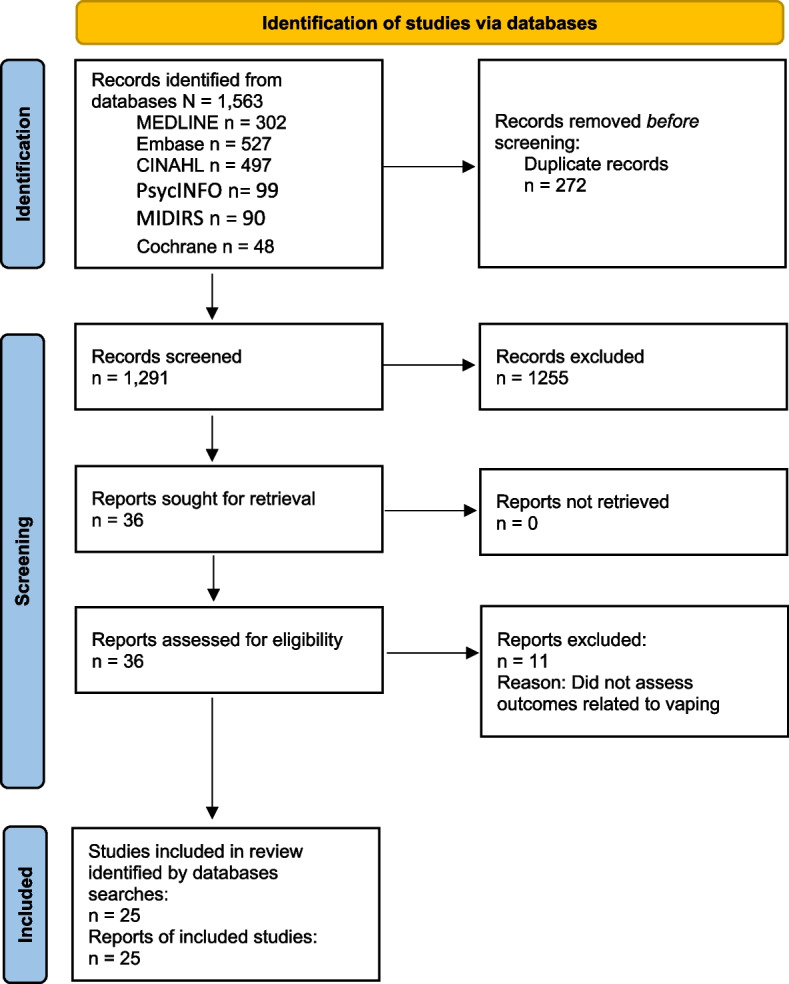
- Searched 6 databases (MEDLINE, Embase, CINAHL, PsycInfo, Maternity and Infant Care, Cochrane CENTRAL) plus review registries and references, up to November 10, 2023.
- Included primary quantitative human studies in English on vaping during pregnancy; quality assessed with the Mixed Methods Appraisal Tool (MMAT); findings were synthesized narratively because there were insufficient high-quality studies for meta-analysis.
## Limitations
- Stated in the paper: non-English studies were excluded, and the evidence could only be synthesized narratively rather than via meta-analysis because there were insufficient high-quality studies.
- Stated in the paper: most studies did not adequately assess exposure to vaping and smoking, often relying on self-report and lacking biochemical verification; this limits causal interpretation.
- Evident from the text: many included studies had small sample sizes, non-representative samples, and overlapping PRAMS data, and several comparisons were based on a very small number of studies, which weakens confidence in the findings.
Model-written summary. Check it against the paper before relying on it.
Integrity signals
Registry
Cites
Statistics
Figures
Verification
Claims the paper makes
111 Valid · 17 Not valid · 45 Not checked · 65 Own results and interpretations
Some cited sources support this claim and some don’t — read each source’s verdict below.
In the paper
“and two included a broad assessment of the use of nicotine products, including NRT [16, 40].”
§ Vaping during pregnancy: a systematic review of health outcomes > Results > Description of included studies
What the sources say
- Supportedcites [16] Hajek P Przulj D Pesola F Electronic cigarettes versus nicotine patches for smoking cessation in pregnancy: a randomized controlled trial [published correction appears in Nat Med. 2022 Nov 7] Nat Med 2022 28 5 958 964 10.1038/s41591-022-01808-0 35577966 PMC9117131 source
The Methods (Measures; page not provided) say participants reported allocated and non-allocated product use at follow-up calls. The Results (Secondary outcomes; page not provided) report use of any nicotine product at the end of pregnancy and distinguish NRT patches from other NRT products, supporting this paper’s inclusion as a study assessing nicotine-product use. (LLM, conf=0.90)
- Disputedcites [40] Froggatt S Reissland N Covey J The effects of prenatal cigarette and e-cigarette exposure on infant neurobehaviour: A comparison to a control group EClinicalMedicine 2020 28 100602 10.1016/j.eclinm.2020.100602 33294816 PMC7700948 sourceExperimental — accuracy not yet measured
The Methods state that women using NRT such as patches, gum, or inhalers were not eligible. The study assessed cigarette and e-cigarette exposure, rather than broadly assessing nicotine-product use including those NRT products. (LLM, conf=0.88)
Checked by a reasoning model — may be wrong.
plain- Asserted: passes — The authors put it forward as true.
- Checkable: passes — It can be checked against evidence.
- Load-bearing: unclear — It is unclear whether the paper’s conclusions depend on it.
- Based: passes — The paper gives a reason why it holds.
- Supported
Some cited sources support this claim and some don’t — read each source’s verdict below.
In the paper
“six verified only smoking status (33,34,37,40,41,44]”
§ Vaping during pregnancy: a systematic review of health outcomes > Results > Description of included studies
What the sources say
- Supportedcites [33] Ashford K McCubbin A Barnett J Longitudinal examination of prenatal tobacco switching behaviors and birth outcomes, including Electronic Nicotine Delivery System (ENDS) and dual use Matern Child Health J 2021 25 8 1175 1181 10.1007/s10995-021-03161-z 33973130 PMC8314381 source
The Methods (Measures) say smoking status was biologically confirmed at enrollment and serum cotinine was measured at each visit. The Discussion says product-specific switching behaviors were based on self-report because no standard measure distinguished the products. This supports citing this study as one that verified smoking status but not product-specific use; the count of six refers to the citing paper's group of studies, not to a finding this source must report. (LLM, conf=0.91)
- Disputedcites [34] Cardenas VM Cen R Clemens MM Use of Electronic Nicotine Delivery Systems (ENDS) by pregnant women I: risk of small-for-gestational-age birth Tob Induc Dis 2019 17 44 10.18332/tid/106089 31516487 PMC6662791 sourceExperimental — accuracy not yet measured
The Introduction (page unavailable) says the study aimed to assess the validity of self-reported ENDS use and cigarette smoking using biomarkers. The Results section reports biomarker comparisons for both ENDS users and smokers, contrary to describing this study as verifying only smoking status. This paper alone cannot establish the citing sentence’s count of six studies. (LLM, conf=0.82)
Checked by a reasoning model — may be wrong.
- Supportedcites [37] Clemens MM Cardenas VM Fischbach LA Use of electronic nicotine delivery systems by pregnant women II: Hair biomarkers for exposures to nicotine and tobacco-specific nitrosamines Tob Induc Dis 2019 17 50 10.18332/tid/105387 31516493 PMC6662780 source
The Methods (Biomarker analysis; page unavailable) use a hair-nicotine cutoff to indicate active smoking. The Discussion reports confirming self-reported smokers, dual ENDS users, and non-smokers against that cutoff; ENDS use itself was self-reported. This supports citing the paper as an example of a study that verified smoking status only, though this single paper does not establish the count of six studies. (LLM, conf=0.86)
- Supportedcites [40] Froggatt S Reissland N Covey J The effects of prenatal cigarette and e-cigarette exposure on infant neurobehaviour: A comparison to a control group EClinicalMedicine 2020 28 100602 10.1016/j.eclinm.2020.100602 33294816 PMC7700948 source
The Methods section states that a CO breath test was used to confirm mothers’ self-reported smoking status, while e-cigarette nicotine content was self-reported from product packaging. This supports citing this paper as one of the studies that verified smoking status; the count of six refers to the citing paper’s group of references, not a finding this source must establish. (LLM, conf=0.90)
- Supportedcites [41] Froggatt S Reissland N Covey J Kumarendran K Foetal mouth movements: Effects of nicotine Acta Paediatr 2021 110 11 3014 3020 10.1111/apa.16042 34310742 source
Section 2.1 (Participants) states that all mothers, regardless of exposure group, completed a Smokerlyzer piCObaby breath test giving a CO reading for mother and foetus 'used to assess level of CO at the time of the scan', i.e. biochemical verification of smoking status, while stress (PSS), anxiety/depression (HADS) and attachment were collected as questionnaire scales and cigarette numbers came from a self-report smoking questionnaire. The Discussion reinforces this limits the verification to smoking: nicotine milligrams in e-cigarettes 'was self-reported in this study' and 'future research should aim to obtain a biological and objective measure of nicotine', with other factors (caffeine, fasting) unmeasured. No passage in our copy reports verification of any outcome or covariate other than smoking/CO, so classifying this study among those that verified only smoking status is supported. (LLM, conf=0.82)
- Supportedcites [44] Lavezzi AM Pusiol T Paradiso B Harmful Effect of Intrauterine Smoke Exposure on Neuronal Control of "Fetal Breathing System" in Stillbirths Int J Environ Res Public Health 2022 19 7 4164 10.3390/ijerph19074164 35409845 PMC8999022 source
The Materials and Methods section describes using hair cotinine tests to validate mothers’ statements about smoking, especially when smoking was denied. This supports citing the paper as a study that verified smoking status; the paper itself does not establish the citing sentence’s count of six studies. (LLM, conf=0.86)
plain- Asserted: passes — The authors put it forward as true.
- Checkable: passes — It can be checked against evidence.
- Load-bearing: unclear — It is unclear whether the paper’s conclusions depend on it.
- Based: passes — The paper gives a reason why it holds.
- Supported
Some cited sources support this claim and some don’t — read each source’s verdict below.
In the paper
“Six of these studies observed no significant group differences in PTB rates [32, 42, 48, 50, 53, 54]”
§ Vaping during pregnancy: a systematic review of health outcomes > Results > Fetal and infant outcomes
What the sources say
- Disputedcites [32] Ammar L Tindle HA Miller AM Electronic cigarette use during pregnancy and the risk of adverse birth outcomes: A cross-sectional surveillance study of the US Pregnancy Risk Assessment Monitoring System (PRAMS) population Plos One 2023 18 10 e0287348 10.1371/journal.pone.0287348 37874824 PMC10597477 sourceExperimental — accuracy not yet measured
The Results section (page unavailable) reports a significantly increased risk of preterm birth for exclusive e-cigarette users compared with non-users (adjusted risk ratio 1.29, 95% CI 1.00–1.65). Thus this paper does not support its inclusion among studies said to find no significant difference for that comparison. Its nonsignificant preterm-birth result concerns dual users, not exclusive vapers. (LLM, conf=0.90)
Checked by a reasoning model — may be wrong.
- Not checked — no full text of the sourcecites [42] Hawkins SS Wylie BJ Hacker MR Associations between electronic nicotine delivery systems and birth outcomes J Matern Fetal Neonatal Med 2022 35 25 6868 6875 10.1080/14767058.2021.1929156 34030564 source
- Partly supportedcites [48] Opondo C Harrison S Alderdice F Carson C Quigley MA Electronic cigarette use (vaping) and patterns of tobacco cigarette smoking in pregnancy-evidence from a population-based maternity survey in England PLoS ONE 2021 16 6 e0252817 10.1371/journal.pone.0252817 34086809 PMC8177470 sourceExperimental — accuracy not yet measured
The Results (Table 4; page not provided) report no statistically significant difference in preterm birth between women who vaped and women who did not (adjusted p = 0.403). But those groups are not exclusive vapers and non-users: the paper includes women with differing cigarette-smoking patterns in its vaping comparison. This source supports the no-significant-difference finding, not the specified group comparison. (LLM, conf=0.88)
- Supportedcites [50] Regan AK Pereira G Patterns of combustible and electronic cigarette use during pregnancy and associated pregnancy outcomes Sci Rep 2021 11 1 13508 10.1038/s41598-021-92930-5 34188127 PMC8241992 source
The Results (Association with birth outcomes) report no significant difference in preterm birth between e-cigarette-only users and former smokers who used neither product during pregnancy (aPR 1.21; 95% CI 0.78–1.87). This paper supports one of the six studies cited, not the count of six on its own. Its comparison group consisted of former smokers, not all never-users. (LLM, conf=0.88)
- Not checked — no full text of the sourcecites [53] Wang X Lee NL Burstyn I moking and use of electronic cigarettes (vaping) in relation to preterm birth and small-for-gestational-age in a 2016 U.S. national sample Prev Med. 2020 134 106041 10.1016/j.ypmed.2020.106041 32105682 source
- Supportedcites [54] Wang X Lee NL Burstyn I Exposure-response analysis of the association of maternal smoking and use of electronic cigarettes (vaping) in relation to preterm birth and small-for-gestational-age in a national US sample, 2016–2018 Glob Epidemiol 2022 4 100079 10.1016/j.gloepi.2022.100079 37637017 PMC10446111 source
The Results section reports similar preterm-birth odds for sole occasional vapers and non-users. For sole frequent vapers, the adjusted odds ratio was 1.2 with a 95% confidence interval of 0.7–2.3, which includes no difference. This supports counting this paper as one of the six studies, though it does not itself establish the total of six. (LLM, conf=0.91)
plain- Asserted: passes — The authors put it forward as true.
- Checkable: passes — It can be checked against evidence.
- Load-bearing: unclear — It is unclear whether the paper’s conclusions depend on it.
- Based: passes — The paper gives a reason why it holds.
- Disputed
Some cited sources support this claim and some don’t — read each source’s verdict below.
In the paper
“Six studies examined specific maternal pregnancy or postpartum outcomes [16,36,47,51,55,56, see Table 4].”
§ Vaping during pregnancy: a systematic review of health outcomes > Results > Maternal outcomes
What the sources say
- Supportedcites [16] Hajek P Przulj D Pesola F Electronic cigarettes versus nicotine patches for smoking cessation in pregnancy: a randomized controlled trial [published correction appears in Nat Med. 2022 Nov 7] Nat Med 2022 28 5 958 964 10.1038/s41591-022-01808-0 35577966 PMC9117131 source
This paper is one of the studies identified by the citation. Its Methods (Outcomes) specify pregnancy and maternal outcomes to be monitored, and Results (Secondary outcomes, Table 4) report outcomes including miscarriage, maternal death and cesarean delivery. The citation does not require this individual paper to establish the total of six studies. (LLM, conf=0.90)
- Supportedcites [36] Choi BM Weinberger AH Petersen N Association of e-cigarette use and postpartum depression: pregnancy risk assessment monitoring system 2016–2019 J Womens Health (Larchmt) 2024 33 1 45 51 10.1089/jwh.2023.0061 37944112 PMC10794836 source
The citation is offered as one of the studies that examined a specific maternal pregnancy/postpartum outcome, and our copy shows Choi et al. (2024) is exactly such a study: the Discussion opens 'This study examined the relationship between e-cigarette use and PPD in a nationally representative sample of mothers in the United States,' and the Dataset/Variables sections specify the maternal outcome as postpartum depression (two PHQ-type items, 'always'/'often-almost always' = PPD) measured on PRAMS surveys completed 2-6 months postpartum, with sensitivity analyses covering e-cigarette use in the 3 months before pregnancy and the last 3 months of pregnancy. The count of 'six studies' and the grouping into Table 4 are the citing authors' own tally and are not attributed to this source, so nothing here is unsupported. (LLM, conf=0.85)
- Supportedcites [47] Nanninga EK Weiland S Berger MY Feijen-de Jong EI Erwich JJHM Peters LL Adverse Maternal and Infant Outcomes of Women Who Differ in Smoking Status: E-Cigarette and Tobacco Cigarette Users Int J Environ Res Public Health 2023 20 3 2632 10.3390/ijerph20032632 36768007 PMC9915204 source
The citation identifies this paper as one of the six studies, not as the source of the count. Its Statistical Analysis section (2.4) specifies maternal pregnancy and postpartum outcomes, including hypertensive disorders of pregnancy, gestational diabetes, and postpartum hemorrhage. (LLM, conf=0.92)
- Disputedcites [51] Rollins LG Sokol NA McCallum M Electronic Cigarette Use During Preconception and/or Pregnancy: Prevalence, Characteristics, and Concurrent Mental Health Conditions J Womens Health (Larchmt) 2020 29 6 780 788 10.1089/jwh.2019.8089 32109175 PMC7307667 sourceExperimental — accuracy not yet measured
Our copy states the study's three aims in the Introduction as prevalence of e-cigarette use in the preconception/pregnancy period, sociodemographic characteristics, and differences in mental health conditions and other substance use — no maternal pregnancy or postpartum outcome is measured; the only obstetric variable is estimated gestational age at the time of the antenatal telephone survey (Measures, Statistical analyses). The Discussion reinforces this: 'More research is needed to identify health outcomes associated with the amount and type of e-cigarette exposure in pregnancy,' and the Limitations note the survey captured only self-reported tobacco, alcohol and substance use and depressive symptoms, with no birth or postpartum outcome data. Thus the paper contradicts, rather than supports, its inclusion among studies that 'examined specific maternal pregnancy or postpartum outcomes.' (LLM, conf=0.80)
Checked by a reasoning model — may be wrong.
- Supportedcites [55] Wen X Thomas MA Liu L Association between maternal e-cigarette use during pregnancy and low gestational weight gain Int J Gynaecol Obstet 2023 162 1 300 308 10.1002/ijgo.14672 36637259 PMC10523399 source
This is an identification citation: the citing paper lists this work as one of the studies that examined a specific maternal pregnancy/postpartum outcome. Our copy confirms it is such a study — the Abstract states the aim 'to examine the associations of e-cigarette, combustible cigarette, and dual use during late pregnancy with the risk of low GWG', Section 2.3 (Outcome measures) defines low gestational weight gain by pre-pregnancy BMI per the Institute of Medicine guidelines, and Section 2.1 describes the PRAMS phase 8 (2016-2020) analysis of 176 882 singleton live births. The 'six studies' count is the citing authors' own tally across their review and is not a statement attributed to this source; the disjunctive wording ('pregnancy or postpartum') is satisfied by the gestational weight gain outcome. (LLM, conf=0.85)
- Disputedcites [56] Galbo A Izhakoff N Courington C Castro G Lozano J Ruiz-Pelaez J The association between electronic cigarette use during pregnancy and unfavorable birth outcomes Cureus 2022 14 7 e26748 10.7759/cureus.2674 35967153 PMC9365076 sourceExperimental — accuracy not yet measured
The Materials and methods section identifies this as a study of patients with traumatic brain injury and states that its primary endpoint was early post-traumatic seizure. That is contrary to citing it as one of the studies examining maternal pregnancy or postpartum outcomes. (LLM, conf=0.88)
Checked by a reasoning model — may be wrong.
plain- Asserted: passes — The authors put it forward as true.
- Checkable: passes — It can be checked against evidence.
- Load-bearing: unclear — It is unclear whether the paper’s conclusions depend on it.
- Based: passes — The paper gives a reason why it holds.
- Supported
At least one cited source doesn’t support this claim or points to a different paper, and none confirmed it — see the verdicts below.
In the paper
“The finding for one of the latter studies should be treated with caution as they also reported no absolute risk for PTB [50].”
§ Vaping during pregnancy: a systematic review of health outcomes > Results > Fetal and infant outcomes
What the sources say
- Disputedcites [50] Regan AK Pereira G Patterns of combustible and electronic cigarette use during pregnancy and associated pregnancy outcomes Sci Rep 2021 11 1 13508 10.1038/s41598-021-92930-5 34188127 PMC8241992 sourceExperimental — accuracy not yet measured
Table 3 in the Results (“Association with birth outcomes”) reports preterm-birth prevalence for both e-cigarette-only users and current smokers, including adjusted estimates of 9.2% and 10.8%, respectively. The Discussion cautions that the study had limited power to detect a difference, but the claim that it reported no absolute preterm-birth risk is contrary to the table. (LLM, conf=0.90)
Checked by a reasoning model — may be wrong.
plain- Asserted: passes — The authors put it forward as true.
- Checkable: passes — It can be checked against evidence.
- Load-bearing: unclear — It is unclear whether the paper’s conclusions depend on it.
- Based: passes — The paper gives a reason why it holds.
- Disputed
160 more claims · 89 with their cited sources checked
Create a free account to see all 238 claims and to verify the 53 references still open.
- It may state two separate claims as one. 57
- Probably not a substantial claim. 27
Citations
Cites
The PRISMA 2020 statement: an updated guideline for reporting systematic reviews
Page, M. J., McKenzie, J. E., Bossuyt, P. M., Boutron, I., Hoffmann, T. C., Mulrow, C. D., Shamseer, L., Tetzlaff, J. M., Akl, E. A., Brennan, S. E., et al. (2021) · Systematic Reviews · doi:10.1186/s13643-021-01626-4 · Cited by 13,874 · cited 1×
“This review was conducted according to the Preferred Reporting Items for Systematic Reviews and Meta-Anal-yses (PRISMA) statement [28].”
MethodThe Mixed Methods Appraisal Tool (MMAT) version 2018 for information professionals and researchers
Hong, Q. N., Fàbregues, S., Bartlett, G., Boardman, F., Cargo, M., Dagenais, P., Gagnon, M.-P., Griffiths, F., Nicolau, B., O’Cathain, A., et al. (2018) · Education for Information · doi:10.3233/efi-180221 · Cited by 4,737 · cited 1×
“We assessed study quality using the Mixed Methods Appraisal Tool (MMAT) [30].”
MethodNicotine replacement therapy versus control for smoking cessation
Hartmann-Boyce, J., Chepkin, S. C., Ye, W., Bullen, C., & Lancaster, T. (2018) · Cochrane Database of Systematic Reviews · doi:10.1002/14651858.cd000146.pub5 · Cited by 697 · cited 1×
“Nicotine replacement therapy (NRT) is effective for smoking cessation in non-pregnant smokers [3]; however, it is not effective in controlled trials during pregnancy [4].”
BackgroundLange, S., Probst, C., Rehm, J., & Popova, S. (2018) · The Lancet Global Health · doi:10.1016/s2214-109x(18)30223-7 · Cited by 550 · cited 1×
“Smoking during pregnancy is harmful to maternal, fetal and child health; increases the risk of adverse birth outcomes such as preterm birth, low birthweight, still-birth, and miscarriage [1]; and is a global public health issue [1, 2].”
BackgroundHajek, P., Etter, J., Benowitz, N., Eissenberg, T., & McRobbie, H. (2014) · Addiction · doi:10.1111/add.12659 · Cited by 546 · cited 3×
“Vaping involves heating liquid which typically contains flavourings, propylene glycol and vegetable glycerine [7], and results in the formation of carcinogens and toxicants, including nitrosamines, volatile organic compounds (VOCs), polycyclic aromatic hydrocarbons (PAHs) and heavy metals, which…”
BackgroundShahab, L., Goniewicz, M. L., Blount, B. C., Brown, J., McNeill, A., Alwis, K. U., Feng, J., Wang, L., & West, R. (2017) · Annals of Internal Medicine · doi:10.7326/m16-1107 · Cited by 538 · cited 3×
“Both studies had very small sample sizes, lacked information on the level of exposure to vap-ing or smoking, and included few biomarkers compared with studies of non-pregnant populations [12, 25], making it difficult to draw conclusions.”
BackgroundResultAccelerated Metabolism of Nicotine and Cotinine in Pregnant Smokers
Dempsey, D., Jacob, P., & Benowitz, N. L. (2002) · The Journal of Pharmacology and Experimental Therapeutics · doi:10.1124/jpet.301.2.594 · Cited by 452 · cited 1×
“This is probably due to low adherence and inadequate dosing [4]; nicotine is metabolised faster during pregnancy and standard dosing may be too low [5, 6].”
BackgroundLong-Term Consequences of Fetal and Neonatal Nicotine Exposure: A Critical Review
Bruin, J. E., Gerstein, H. C., & Holloway, A. C. (2010) · Toxicological Sciences · doi:10.1093/toxsci/kfq103 · Cited by 366 · cited 1×
“Studies with nic-otine-naïve animals have reported adverse effects of nicotine on fetal lung development [18, 19].”
BackgroundRisks and Benefits of Nicotine to Aid Smoking Cessation in Pregnancy
Dempsey, D. A., & Benowitz, N. L. (2001) · Drug Safety · doi:10.2165/00002018-200124040-00005 · Cited by 346 · cited 1×
“Vaping has the advantage that it does not involve tobacco combustion, which is the primary source of harm from smoking cigarettes [7, 17].”
BackgroundGoniewicz, M. L., Gawron, M., Smith, D. M., Peng, M., Jacob, P., & Benowitz, N. L. (2017) · Nicotine & Tobacco Research · doi:10.1093/ntr/ntw160 · Cited by 331 · cited 1×
“…propylene glycol and vegetable glycerine [7], and results in the formation of carcinogens and toxicants, including nitrosamines, volatile organic compounds (VOCs), polycyclic aromatic hydrocarbons (PAHs) and heavy metals, which are generally present at much lower levels than in smoking [12, 23–25].”
BackgroundElectronic cigarettes for smoking cessation
Hartmann-Boyce, J., Lindson, N., Butler, A. R., McRobbie, H., Bullen, C., Begh, R., Theodoulou, A., Notley, C., Rigotti, N. A., Turner, T., et al. (2022) · Cochrane Database of Systematic Reviews · doi:10.1002/14651858.cd010216.pub7 · Cited by 320
Pharmacological interventions for promoting smoking cessation during pregnancy
Claire, R., Chamberlain, C., Davey, M.-A., Cooper, S. E., Berlin, I., Leonardi-Bee, J., & Coleman, T. (2020) · Cochrane Database of Systematic Reviews · doi:10.1002/14651858.cd010078.pub3 · Cited by 188 · cited 3×
“…of the important clinical outcomes for pregnant women, fetuses and infants identified in reviews of the health consequences of NTR and smoking [1, 4, 21], including miscarriage, stillbirth, preterm birth, birthweight, low birthweight, small for gestational age, admission to neonatal intensive…”
BackgroundQuit Methods Used by US Adult Cigarette Smokers, 2014–2016
Caraballo, R. S., Shafer, P. R., Patel, D., Davis, K. C., & McAfee, T. A. (2017) · Preventing Chronic Disease · doi:10.5888/pcd14.160600 · Cited by 177 · cited 1×
“Vaping is more popular for smoking cessation than traditional NRT [11, 12].”
BackgroundPrevalence and Perceptions of Electronic Cigarette Use during Pregnancy
Wagner, N. J., Camerota, M., & Propper, C. (2017) · Maternal and Child Health Journal · doi:10.1007/s10995-016-2257-9 · Cited by 169
The use of electronic cigarettes in pregnancy: a review of the literature
Whittington, J. R., Simmons, P. M., Phillips, A. M., Gammill, S. K., Cen, R., Magann, E. F., & Cardenas, V. M. (2018) · Obstetrical & Gynecological Survey · doi:10.1097/ogx.0000000000000595 · Cited by 158 · cited 1×
“Thus, where the risk of exclusive-vaping was reported, as nearly all pregnant women who vape are likely to be current or former smokers [14, 60–62] it is possible that this heightened risk is largely due to high levels of smoking at times beyond the assessment period or concurrent unreported…”
BackgroundNicotine delivery to users from cigarettes and from different types of e-cigarettes
Hajek, P., Przulj, D., Phillips, A., Anderson, R., & McRobbie, H. (2017) · Psychopharmacology · doi:10.1007/s00213-016-4512-6 · Cited by 151
Enjoyment and other reasons for electronic cigarette use: Results from college students in New York
Saddleson, M. L., Kozlowski, L. T., Giovino, G. A., Goniewicz, M. L., Mahoney, M. C., Homish, G. G., & Arora, A. (2015) · Addictive Behaviors · doi:10.1016/j.addbeh.2015.11.012 · Cited by 110 · cited 1×
“Vaping (i.e., use of electronic cigarettes) provides nicotine as an aerosol [7] and is distinct from traditional NRT, allowing tailored titration of nicotine and offering flavours and enjoyment [7–9].”
BackgroundChanges in the rate of nicotine metabolism across pregnancy: a longitudinal study
Bowker, K., Lewis, S., Coleman, T., & Cooper, S. (2015) · Addiction · doi:10.1111/add.13029 · Cited by 90
Wang, X., Lee, N. L., & Burstyn, I. (2020) · Preventive Medicine · doi:10.1016/j.ypmed.2020.106041 · Cited by 86 · cited 10×
“Comparisons Nine studies compared outcomes for all four groups key groups: exclusive-smokers, exclusive-vapers, dual-users and non-users [32, 34, 35, 42, 44, 46, 47, 53, 55].”
BackgroundResultInfluentialHajek, P., Przulj, D., Pesola, F., Griffiths, C., Walton, R., McRobbie, H., Coleman, T., Lewis, S., Whitemore, R., Clark, M., et al. (2022) · Nature Medicine · doi:10.1038/s41591-022-01808-0 · Cited by 85 · cited 9×
“Three studies considered the potential confounding effect of second-hand smoke exposure [16, 40, 45] and two included a broad assessment of the use of nicotine products, including NRT [16, 40].”
BackgroundMethodResultInfluentialSelf-citationKim, S., & Oancea, S. C. (2020) · BMC Pregnancy and Childbirth · doi:10.1186/s12884-020-03247-6 · Cited by 74 · cited 10×
“Of 20 studies including pregnant individuals who were exclusive-vapers, three had fewer than 10 participants in that group [34, 39, 44] seven included 10 to 30 [33, 35, 40, 41, 47, 51], nine included larger samples [32, 42, 43, 46, 49, 50, 53–55] and two did not report the sample size [45, 52].”
BackgroundMethodResultInfluentialAdverse Birth Outcomes Associated With Prepregnancy and Prenatal Electronic Cigarette Use
Regan, A. K., Bombard, J. M., O’Hegarty, M. M., Smith, R. A., & Tong, V. T. (2021) · Obstetrics & Gynecology · doi:10.1097/aog.0000000000004432 · Cited by 74 · cited 10×
“Of 20 studies including pregnant individuals who were exclusive-vapers, three had fewer than 10 participants in that group [34, 39, 44] seven included 10 to 30 [33, 35, 40, 41, 47, 51], nine included larger samples [32, 42, 43, 46, 49, 50, 53–55] and two did not report the sample size [45, 52].”
BackgroundMethodResultInfluentialCardenas, V., Cen, R., Clemens, M., Moody, H., Ekanem, U., Policherla, A., Fischbach, L., Eswaran, H., Magann, E., Delongchamp, R., et al. (2019) · Tobacco Induced Diseases · doi:10.18332/tid/106089 · Cited by 72 · cited 10×
“Comparisons Nine studies compared outcomes for all four groups key groups: exclusive-smokers, exclusive-vapers, dual-users and non-users [32, 34, 35, 42, 44, 46, 47, 53, 55].”
BackgroundMethodInfluentialObisesan, O. H., Osei, A. D., Uddin, S. M. I., Dzaye, O., Cainzos-Achirica, M., Mirbolouk, M., Orimoloye, O. A., Sharma, G., Al Rifai, M., Stokes, A., et al. (2020) · American Journal of Preventive Medicine · doi:10.1016/j.amepre.2020.02.015 · Cited by 70 · cited 1×
“Thus, where the risk of exclusive-vaping was reported, as nearly all pregnant women who vape are likely to be current or former smokers [14, 60–62] it is possible that this heightened risk is largely due to high levels of smoking at times beyond the assessment period or concurrent unreported…”
BackgroundLi, G., Saad, S., Oliver, B. G., & Chen, H. (2018) · Toxics · doi:10.3390/toxics6030043 · Cited by 67 · cited 3×
“There are also concerns about vaping ingredients other than nicotine [19].”
BackgroundVaping in Pregnancy: A Systematic Review
Calder, R., Gant, E., Bauld, L., McNeill, A., Robson, D., & Brose, L. S. (2021) · Nicotine & Tobacco Research · doi:10.1093/ntr/ntab017 · Cited by 67 · cited 1×
“Most pregnant women who vape do so to stop smoking or reduce smoking [58].”
BackgroundSelf-citationElectronic cigarettes and obstetric outcomes: a prospective observational study
McDonnell, B., Dicker, P., & Regan, C. (2020) · BJOG: An International Journal of Obstetrics & Gynaecology · doi:10.1111/1471-0528.16110 · Cited by 59 · cited 9×
“Comparisons Nine studies compared outcomes for all four groups key groups: exclusive-smokers, exclusive-vapers, dual-users and non-users [32, 34, 35, 42, 44, 46, 47, 53, 55].”
BackgroundInfluentialFetal safety of nicotine replacement therapy in pregnancy: systematic review and meta-analysis.
Taylor, L., Claire, R., Campbell, K., Coleman‐Haynes, T., Leonardi‐Bee, J., Chamberlain, C., Berlin, I., Davey, M., Cooper, S., & Coleman, T. (2021) · Addiction · doi:10.1111/add.15185 · Cited by 53 · cited 2×
“Systematic reviews and meta-analyses conclude that there is unclear evidence on whether the use of NRT during pregnancy is harmful to the fetus [20, 21].”
BackgroundFroggatt, S., Reissland, N., & Covey, J. (2020) · EClinicalMedicine · doi:10.1016/j.eclinm.2020.100602 · Cited by 50 · cited 9×
“Three studies considered the potential confounding effect of second-hand smoke exposure [16, 40, 45] and two included a broad assessment of the use of nicotine products, including NRT [16, 40].”
BackgroundMethodInfluentialRollins, L. G., Sokol, N. A., McCallum, M., England, L., Matteson, K., Werner, E., & Stroud, L. R. (2020) · Journal of Women's Health · doi:10.1089/jwh.2019.8089 · Cited by 48 · cited 8×
“Of 20 studies including pregnant individuals who were exclusive-vapers, three had fewer than 10 participants in that group [34, 39, 44] seven included 10 to 30 [33, 35, 40, 41, 47, 51], nine included larger samples [32, 42, 43, 46, 49, 50, 53–55] and two did not report the sample size [45, 52].”
BackgroundInfluentialRegan, A. K., & Pereira, G. (2021) · Scientific Reports · doi:10.1038/s41598-021-92930-5 · Cited by 43 · cited 9×
“Of 20 studies including pregnant individuals who were exclusive-vapers, three had fewer than 10 participants in that group [34, 39, 44] seven included 10 to 30 [33, 35, 40, 41, 47, 51], nine included larger samples [32, 42, 43, 46, 49, 50, 53–55] and two did not report the sample size [45, 52].”
BackgroundMethodResultInfluentialTaylor, E., Simonavičius, E., McNeill, A., Brose, L. S., East, K., Marczylo, T., & Robson, D. (2024) · Nicotine and Tobacco Research · doi:10.1093/ntr/ntad156 · Cited by 40
Self-citationCardenas, V. M., Ali, M. M., Fischbach, L. A., & Nembhard, W. N. (2020) · Annals of Epidemiology · doi:10.1016/j.annepidem.2020.08.002 · Cited by 34 · cited 10×
“Comparisons Nine studies compared outcomes for all four groups key groups: exclusive-smokers, exclusive-vapers, dual-users and non-users [32, 34, 35, 42, 44, 46, 47, 53, 55].”
BackgroundMethodResultInfluentialE-cigarette use during pregnancy and its association with adverse birth outcomes in the US
Lin, S.-Y., Wang, L., Zhou, W., Kitsantas, P., Wen, X., & Xue, H. (2023) · Preventive Medicine · doi:10.1016/j.ypmed.2022.107375 · Cited by 34 · cited 10×
“Three studies considered the potential confounding effect of second-hand smoke exposure [16, 40, 45] and two studies included a broad assessment of use of nicotine products, including NRT [16, 40].”
BackgroundMethodInfluentialCohn, A. M., Elmasry, H., Wild, R. C., Johnson, A. L., Abudayyeh, H., Kurti, A., & Coleman-Cowger, V. H. (2023) · Nicotine & Tobacco Research · doi:10.1093/ntr/ntac111 · Cited by 33 · cited 10×
“In addition, two studies included pregnancy outcomes in a composite measure [38, 45] (see ‘Other fetal and infant outcomes’).”
BackgroundMethodResultInfluentialShittu, A. A. T., Kumar, B. P., Okafor, U., Berkelhamer, S. K., Goniewicz, M. L., & Wen, X. (2022) · American Journal of Obstetrics and Gynecology · doi:10.1016/j.ajog.2021.11.1354 · Cited by 32 · cited 8×
“Among four studies comparing dual-use and exclusive-smoking, two observed a similar risk of SGA [49, 50], one observed comparable MBCs [46], and one found that switching from exclusive-smoking to dual-use had little effect on SGA risk [52].”
BackgroundMethodResultInfluentialClemens, M., Cardenas, V., Fischbach, L., Cen, R., Siegel, E., Eswaran, H., Ekanem, U., Policherla, A., Moody, H., Magann, E., et al. (2019) · Tobacco Induced Diseases · doi:10.18332/tid/105387 · Cited by 31 · cited 7×
“Two studies examined maternal exposure to biomarkers of toxicants and carcinogens during pregnancy and neither reported evidence of increased risk of vaping (see Table 5) [37, 39].”
BackgroundMethodInfluentialOpondo, C., Harrison, S., Alderdice, F., Carson, C., & Quigley, M. A. (2021) · PLOS ONE · doi:10.1371/journal.pone.0252817 · Cited by 29 · cited 9×
“Ten studies reported PTB [16, 32, 42, 43, 47–50, 53, 54] and five reported GA [16, 33, 40, 46, 48].”
BackgroundResultInfluentialPesola, F., Smith, K. M., Phillips‐Waller, A., Przulj, D., Griffiths, C., Walton, R., McRobbie, H., Coleman, T., Lewis, S., Whitemore, R., et al. (2024) · Addiction · doi:10.1111/add.16422 · Cited by 29 · cited 7×
“The RCT also found that, irrespective of trial arm, those who reported smoking cessation and the use of NRT or vaping in pregnancy had significantly fewer PTBs than did those reporting cessation and no use of these products [57]; GA was similar in these two groups.”
BackgroundResultInfluentialSelf-citationPregnant women’s use of e‐cigarettes in the UK: a cross‐sectional survey
Bowker, K., Lewis, S., Phillips, L., Orton, S., Ussher, M., Naughton, F., Bauld, L., Coleman, T., Sinclair, L., McRobbie, H., et al. (2021) · BJOG: An International Journal of Obstetrics & Gynaecology · doi:10.1111/1471-0528.16553 · Cited by 28 · cited 2×
“Vaping is increasingly popular for smoking cessation and harm reduction in pregnancy [14, 15] and one randomised controlled trial (RCT) showed vaping to be more effective than NRT for cessation in pregnancy when excluding those using non-allocated products [16].”
BackgroundSelf-citationGunnerbeck, A., Lundholm, C., Rhedin, S., Mitha, A., Chen, R., D’Onofrio, B. M., & Almqvist, C. (2023) · Pediatric Research · doi:10.1038/s41390-022-02463-4 · Cited by 27 · cited 1×
“A more recent study reported that the use of nicotine-based snuff in early pregnancy was associated with an increased risk of infant mortality; however, this study failed to consider the potential effects of smoking during the periods before and after the assessment [22].”
BackgroundAssociations between electronic nicotine delivery systems and birth outcomes
Hawkins, S. S., Wylie, B. J., & Hacker, M. R. (2022) · The Journal of Maternal-Fetal & Neonatal Medicine · doi:10.1080/14767058.2021.1929156 · Cited by 26 · cited 10×
“Comparisons Nine studies compared outcomes for all four groups key groups: exclusive-smokers, exclusive-vapers, dual-users and non-users [32, 34, 35, 42, 44, 46, 47, 53, 55].”
BackgroundMethodInfluentialBiomarkers of Electronic Nicotine Delivery Systems (ENDS) use
Goniewicz, M. L. (2023) · Addiction Neuroscience · doi:10.1016/j.addicn.2023.100077 · Cited by 26 · cited 1×
“For the general adult population, at least in the short-to medium term, biomarker research suggests that vaping poses a small fraction of the risk of smoking [12, 25, 26].”
BackgroundAmmar, L., Tindle, H. A., Miller, A. M., Adgent, M. A., Nian, H., Ryckman, K. K., Mogos, M., Piano, M. R., Xie, E., Snyder, B. M., et al. (2023) · PLOS ONE · doi:10.1371/journal.pone.0287348 · Cited by 26 · cited 10×
“Comparisons Nine studies compared outcomes for all four groups key groups: exclusive-smokers, exclusive-vapers, dual-users and non-users [32, 34, 35, 42, 44, 46, 47, 53, 55].”
BackgroundMethodResultInfluentialHazama, A., Ziechmann, R., Arul, M., Krishnamurthy, S., Galgano, M., & Chin, L. S. (2018) · Cureus · doi:10.7759/cureus.2674 · Cited by 24
Use of e-cigarettes in pregnancy: A systematic review of evidence published from 2020-2022
Bell, L., Whelan, M., Thomas, L., Edwards, E., Lycett, D., Hayward, K., Wilson, K., Harrison, R., & Patel, R. (2025) · Journal of Public Health · doi:10.1007/s10389-023-02026-9 · Cited by 23 · cited 3×
“Overall, this review confirms the findings of a previous review [27] that the studies are of poor quality, which disallows the use of meta-analysis, and the findings are inconclusive.”
BackgroundResultInfluentialNicotine replacement therapy during pregnancy and child health outcomes: a systematic review
Blanc, J., Tosello, B., Ekblad, M. O., Berlin, I., & Netter, A. (2021) · International Journal of Environmental Research and Public Health · doi:10.3390/ijerph18084004 · Cited by 20 · cited 1×
“Systematic reviews and meta-analyses conclude that there is unclear evidence on whether the use of NRT during pregnancy is harmful to the fetus [20, 21].”
BackgroundAssociation between maternal e‐cigarette use during pregnancy and low gestational weight gain
Wen, X., Thomas, M. A., Liu, L., Moe, A. A., Duong, P. H., Griffiths, M. E., & Munlyn, A. L. (2023) · International Journal of Gynecology & Obstetrics · doi:10.1002/ijgo.14672 · Cited by 19 · cited 7×
“Comparisons Nine studies compared outcomes for all four groups key groups: exclusive-smokers, exclusive-vapers, dual-users and non-users [32, 34, 35, 42, 44, 46, 47, 53, 55].”
BackgroundInfluentialNanninga, E. K., Weiland, S., Berger, M. Y., Feijen-de Jong, E. I., Erwich, J. J. H. M., & Peters, L. L. (2023) · International Journal of Environmental Research and Public Health · doi:10.3390/ijerph20032632 · Cited by 19 · cited 9×
“Comparisons Nine studies compared outcomes for all four groups key groups: exclusive-smokers, exclusive-vapers, dual-users and non-users [32, 34, 35, 42, 44, 46, 47, 53, 55].”
BackgroundInfluentialColeman, S. R. M., Bunn, J. Y., Nighbor, T. D., Kurti, A. N., Bolívar, H. A., Tyndale, R. F., & Higgins, S. T. (2021) · Preventive Medicine · doi:10.1016/j.ypmed.2021.106582 · Cited by 18 · cited 10×
“Two studies examined maternal exposure to biomarkers of toxicants and carcinogens during pregnancy and neither reported evidence of increased risk of vaping (see Table 5) [37, 39].”
BackgroundMethodInfluentialWang, X., Lee, N. L., & Burstyn, I. (2022) · Global Epidemiology · doi:10.1016/j.gloepi.2022.100079 · Cited by 16 · cited 9×
“In one study this was the case irrespective of the frequency of vaping [54].”
BackgroundResultInfluentialAshford, K., McCubbin, A., Barnett, J., Blair, L. M., Lei, F., Bush, H., & Breland, A. (2021) · Maternal and Child Health Journal · doi:10.1007/s10995-021-03161-z · Cited by 15 · cited 10×
“Of 20 studies including pregnant individuals who were exclusive-vapers, three had fewer than 10 participants in that group [34, 39, 44] seven included 10 to 30 [33, 35, 40, 41, 47, 51], nine included larger samples [32, 42, 43, 46, 49, 50, 53–55] and two did not report the sample size [45, 52].”
BackgroundMethodResultInfluentialHead, S. K., Zaganjor, I., Kofie, J. N., Sawdey, M. D., & Cullen, K. A. (2022) · Journal of Community Health · doi:10.1007/s10900-021-01055-3 · Cited by 15 · cited 1×
“Vaping is increasingly popular for smoking cessation and harm reduction in pregnancy [14, 15] and one randomised controlled trial (RCT) showed vaping to be more effective than NRT for cessation in pregnancy when excluding those using non-allocated products [16].”
BackgroundThe Association Between Electronic Cigarette Use During Pregnancy and Unfavorable Birth Outcomes
Galbo, A., Izhakoff, N., Courington, C., Castro, G., Lozano, J., & Ruiz-Pelaez, J. (2022) · Cureus · doi:10.7759/cureus.26748 · Cited by 11 · cited 9×
“Another study observed significantly higher odds of at least one adverse birth outcome among those reporting any vap-ing during the last three months of pregnancy than among those who did not, although they did not con-trol for smoking status [56].”
BackgroundMethodInfluentialPregnancy Outcomes Associated With Use of Tobacco and Marijuana
Layoun, V., Ohnona, A., & Tolosa, J. E. (2022) · Clinical Obstetrics & Gynecology · doi:10.1097/grf.0000000000000699 · Cited by 10 · cited 5×
“The most frequently assessed outcomes were key infant outcomes that have been shown to be detrimentally affected by smoking [1]; namely, preterm birth (PTB)/ gestational age (GA), small for gestational age (SGA), and low birth weight (LBW)/birth-weight (BW).”
BackgroundInfluentialChoi, B. M., Weinberger, A. H., Petersen, N., Pang, R. D., DeVito, E. E., Bell, M. L., & Allen, A. M. (2024) · Journal of Women's Health · doi:10.1089/jwh.2023.0061 · Cited by 10 · cited 10×
“…there was no evidence of increased risk for exclusive-vaping compared with non-use for low gestational weight gain [55], postpartum depression [36] or for a composite of adverse outcomes (or for individual outcomes of hypertensive disorders, gestational diabetes or postpartum haemorrhage)…”
BackgroundMethodInfluentialFoetal mouth movements: Effects of nicotine
Froggatt, S., Reissland, N., Covey, J., & Kumarendran, K. (2021) · Acta Paediatrica · doi:10.1111/apa.16042 · Cited by 7 · cited 10×
“Of 20 studies including pregnant individuals who were exclusive-vapers, three had fewer than 10 participants in that group [34, 39, 44] seven included 10 to 30 [33, 35, 40, 41, 47, 51], nine included larger samples [32, 42, 43, 46, 49, 50, 53–55] and two did not report the sample size [45, 52].”
BackgroundMethodInfluentialLavezzi, A. M., Pusiol, T., & Paradiso, B. (2022) · International Journal of Environmental Research and Public Health · doi:10.3390/ijerph19074164 · Cited by 7 · cited 9×
“Comparisons Nine studies compared outcomes for all four groups key groups: exclusive-smokers, exclusive-vapers, dual-users and non-users [32, 34, 35, 42, 44, 46, 47, 53, 55].”
BackgroundMethodInfluentialWang, X., Lee, N. L., & Burstyn, I. (2020) · Annals of Epidemiology · doi:10.1016/j.annepidem.2020.01.001 · Cited by 6 · cited 1×
“Relying on self-reports and lack of assessment of dose may lead to misclassification of exposure, affecting associations with outcomes [59].”
Background
Research works printed but not linked: 1
- McNeill A Simonavičius E Brose L Nicotine vaping in England: an evidence update including health risks and perceptions, 2022. A report commissioned by the Office for Health Improvement and Disparities 2022 London Office for Health Improvement and Disparities
Cited by
Deprato, A., Garud, A., Azzolina, D., Murgia, N., Davenport, M. H., Kaul, P., Lacy, P., & Moitra, S. (2025) · Journal of Hazardous Materials · doi:10.1016/j.jhazmat.2024.137028 · Cited by 25
Maternal vaping and pregnancy adverse outcomes: a systematic review and meta-analysis
Vallée, A., Eid, M., Feki, A., & Ayoubi, J.-M. (2025) · Women and Birth · doi:10.1016/j.wombi.2025.101951 · Cited by 16
A review of popular vaping misconceptions: redefining ENDS safety and usage risks
Sharma, S., Alexander, L. E. C., Meister, M. L., Ross, C. A., Hess, J., Ray, K., Noël, A., Shannahan, J. H., & Wright, C. (2025) · Inhalation Toxicology · doi:10.1080/08958378.2025.2571918 · Cited by 4
“In combination with modern ENDS device technology designed to optimize aerosol delivery, nicotine salt formulations contribute to prolonged use, greater nicotine intake, and potentially stronger dependence patterns (Cho et al. 2024; Harris 2024).”
Sukhato, K., Anothaisintawee, T., Chawla, N., Boonmanunt, S. W., Tansawet, A., Pornsuriyasak, P., Inpithuk, P., McKay, G. J., Attia, J. R., & Thakkinstian, A. (2025) · BMC Public Health · doi:10.1186/s12889-025-25765-8 · Cited by 7
“Previous systematic reviews [10, 11] highlighted this uncertainty, reporting mixed evidence regarding the relationship between E-cigarette use and perinatal outcomes.”
USSHER, M. H., Lewis, S., Marczylo, T. H., Blount, B., Brown, J., Bailey, A., Coleman, T. J., Cooper, S. E., Marks, J., George, M., et al. (2025) · Nicotine & Tobacco Research · doi:10.1093/ntr/ntaf103 · Cited by 5
Self-citation
Metadata
- Authors
- Ussher, M., Fleming, J., & Brose, L.
- Affiliations
- University of Stirling (GB)
- St George's, University of London (GB)
- King's College London (GB)
- Corresponding author
- Ussher, Michael
- Venue
- BMC pregnancy and childbirth
- Published
- 2024-06-20
- Volume
- 24
- Issue
- 1
- Pages
- 435-435
- ISSN
- 1471-2393 (ISSN-L)
- PMC
- PMC11191278
- OpenAlex
- W4399857074
- Cited by
- 27
- References
- 64
- Citations by year
- 2026: 12 · 2025: 14 · 2024: 1
- FWCI
- 1.53
- Type
- journal article
- Language
- en
- Open access
- gold
- doi.org
- Licence
- cc-by
- creativecommons.org/licenses/by/4.0 (tdm)
- creativecommons.org/licenses/by/4.0 (vor)
- Locations
- BMC Pregnancy and Childbirth (publishedVersion, cc-by)
- PubMed Central (publishedVersion, cc-by)
- PubMed (publishedVersion)
- St George's Online Research Archive (St George's University of London) (acceptedVersion)
- DOAJ (DOAJ: Directory of Open Access Journals) (submittedVersion, cc-by-sa)
- Research Portal (King's College London) (submittedVersion, cc-by)
- Topics
- Health Sciences › Medicine › Public Health, Environmental and Occupational Health › Smoking Behavior and Cessation
- Health Sciences › Medicine › Pediatrics, Perinatology and Child Health › Prenatal Substance Exposure Effects
- Health Sciences › Medicine › Public Health, Environmental and Occupational Health › Pregnancy and Medication Impact
- Keywords
- electronic cigarettes, maternal outcomes, fetal outcomes, infant outcomes, birth weight, small for gestational age, nicotine replacement therapy, smoking cessation, maternal biomarkers, smoking during pregnancy
- MeSH terms
- Vaping, Female, Humans, Infant, Newborn, Pregnancy, Pregnancy Complications, Pregnancy Outcome, Smoking Cessation
About these checks
Registry, retraction, Cites and statistics results are computed, not judged, with one exception: a printed reference that no index lists is read once by a model before it counts as a citation error. Claims are extracted by a model and kept only when their quote appears verbatim in the text; each cited source is then checked, with a model’s help, for whether it says what the claim relies on. Those verdicts can be wrong — read the claim’s quote and the cited source before relying on one.
The claim verdicts this report counts are experimental: their accuracy is not yet measured.
A language model drew the claims from the paper on 2026-10-10, under version 3 of the claim definition (model deepseek-v4.1-flash, prompt extract-v3).
A second model labelled each claim on 2026-10-10 (model jev-1.13-20260917, definition revision gold-guideline-v0.2).
Cited sources are checked with a language model’s help (gpt-6-sol and qwen3.8-omni-flash).
Statistics and arithmetic are recomputed, not judged.
Confidence bands are shown only for fields calibrated on our annotated test set. None is calibrated yet, so no band is shown.
What counts as a claim ›How we measure confidence ›How we check this ›
Are you an author, or do you see a problem with this page? Request a review
Data sources
Bibliographic data: Semantic Scholar, OpenAlex, Crossref.
Contains information from the Semantic Scholar Academic Graph Datasets, made available under the ODC Attribution License (ODC-BY 1.0).
Semantic Scholar’s data is described in: Kinney, R., et al. (2023). The Semantic Scholar Open Data Platform. arXiv:2301.10140.
