

Association of dietary carbohydrate intake, glycemic index, and glycemic load with colorectal cancer risk in adults: a systematic review and dose-response meta-analysis of prospective cohort studies
Open accessThe DOI matches its Crossref record; 71 of the 71 references it cites were found in a registry or an index.
Abstract
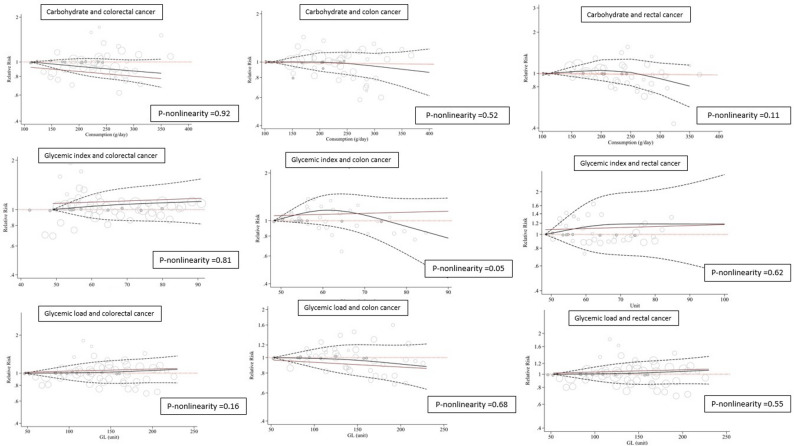
BACKGROUND AND OBJECTIVES: Carbohydrate consumption is a key factor in controlling insulin secretion; however, the effects vary by the glycemic index (GI) and glycemic load (GL), which might be associated with the risk of colorectal cancer. Due to conflicting results regarding their impact on colorectal cancer and considering that previous meta-analyses lacked dose-response analyses for colon and rectal cancer, this comprehensive dose-response meta-analysis was undertaken to explore the association between dietary carbohydrates, GI, and GL with the risks of colorectal, colon, and rectal cancers. METHOD: A comprehensive search of online databases (PubMed, Scopus, Web of Sciences) up to November 2024 identified 23 studies with 2,019,665 participants. Random-effect models were used to calculate pooled effect sizes, and dose-response analyses assessed linear and nonlinear associations. We used the Preferred Reporting Items for Systematic Reviews and Meta-analyses (PRISMA) form. RESULT: The results of this study revealed a marginal increase in colorectal cancer risk associated with a higher GI (RR: 1.08, 95% CI: 1.00 − 1.16, P = 0.04). However, in subgroup analyses, higher GI was significantly associated with an increased risk of colorectal cancer among men, in cohorts with follow-up durations shorter than 10 years, and in studies conducted in US populations. On the other hand, subgroup analyses indicated an inverse significant association between carbohydrate intake and colorectal cancer in specific subgroups, including men, women, studies conducted in non-US populations, and cohorts with follow-up durations shorter than 10 years. Furthermore, neither linear nor nonlinear dose-response analyses indicated a significant association between exposures and outcomes. CONCLUSIONS: These results suggest that a higher GI may be associated with an increased risk of colorectal cancer. Nevertheless, additional studies are required to establish a more definitive connection between carbohydrate intake and colorectal cancer risk.
Overview
The claims and statistics of this paper haven’t been checked yet.
Free: it reads the open-access text and checks the first 5 claims that cite a source we can check. Create a free account to check every claim.
Integrity signals
Registry
Cites
Statistics
Figures
Verification
Claims the paper makes
The claims and statistics of this paper haven’t been checked yet.
Free: it reads the open-access text and checks the first 5 claims that cite a source we can check. Create a free account to check every claim.
Self-check
Percentages, sums and reported differences re-computed from the paper’s own numbers.
The self-check needs the paper’s full text.
Citations
Cites
Sung, H., Ferlay, J., Siegel, R. L., Laversanne, M., Soerjomataram, I., Jemal, A., & Bray, F. (2021) · CA: A Cancer Journal for Clinicians · doi:10.3322/caac.21660 · Cited by 108,699 · cited 1×
“Colorectal cancer (CRC) was among the top three most diagnosed cancers globally in 2020, and it stood as the second leading cause of death attributed to cancer [1].”
Preferred reporting items for systematic reviews and meta-analyses: The PRISMA statement
Moher, D., Liberati, A., Tetzlaff, J., Altman, D. G., & the PRISMA Group* (2009) · Annals of Internal Medicine · doi:10.7326/0003-4819-151-4-200908180-00135 · Cited by 37,554
Glycemic index of foods: a physiological basis for carbohydrate exchange
Jenkins, D. J., Wolever, T. M., Taylor, R. H., Barker, H., Fielden, H., Baldwin, J. M., Bowling, A. C., Newman, H. C., Jenkins, A. L., & Goff, D. V. (1981) · The American Journal of Clinical Nutrition · doi:10.1093/ajcn/34.3.362 · Cited by 3,857 · cited 1×
“Jenkins introduced the Glycemic Index (GI) in 1981 as a system that ranks foods based on their blood glucose–raising potential relative to white bread or glucose [11].”
Methods for Trend Estimation from Summarized Dose-Response Data, with Applications to Meta-Analysis
Greenland, S., & Longnecker, M. P. (1992) · American Journal of Epidemiology · doi:10.1093/oxfordjournals.aje.a116237 · Cited by 2,353 · cited 1×
“Utilizing the dose-response meta-analysis method proposed by Greenland and Orsini, this study investigated the association between dietary carbohydrate, GI, and GL and the risk of colorectal, colon, and rectal cancer [27, 28].”
International Tables of Glycemic Index and Glycemic Load Values: 2008
Atkinson, F. S., Foster-Powell, K., & Brand-Miller, J. C. (2008) · Diabetes Care · doi:10.2337/dc08-1239 · Cited by 1,965 · cited 1×
“More than half of the studies included in our meta-analysis were conducted in the United States, where carbohydrate intake comes from a wide variety of sources with both high and low glycemic indices (such as whole grain, potatoes, and pasta) [60, 61].”
Dietary Fiber, Glycemic Load, and Risk of Non—insulin-dependent Diabetes Mellitus in Women
Salmerón, J. (1997) · JAMA: The Journal of the American Medical Association · doi:10.1001/jama.1997.03540300040031 · Cited by 1,804
Generalized Least Squares for Trend Estimation of Summarized Dose–response Data
Orsini, N., Bellocco, R., & Greenland, S. (2006) · The Stata Journal: Promoting communications on statistics and Stata · doi:10.1177/1536867x0600600103 · Cited by 1,241 · cited 1×
“Utilizing the dose-response meta-analysis method proposed by Greenland and Orsini, this study investigated the association between dietary carbohydrate, GI, and GL and the risk of colorectal, colon, and rectal cancer [27, 28].”
Inflammation and insulin resistance
de Luca, C., & Olefsky, J. M. (2008) · FEBS Letters · doi:10.1016/j.febslet.2007.11.057 · Cited by 1,161
Clinton, S. K., Giovannucci, E. L., & Hursting, S. D. (2020) · The Journal of Nutrition · doi:10.1093/jn/nxz268 · Cited by 973 · cited 1×
“…fiber from sources such as fruits, vegetables, legumes, and whole grains have been strongly associated with a reduced risk of colorectal cancer [64], it is possible that the protective effects observed in previous studies may be attributed primarily to the fiber content of these…”
Sawicki, T., Ruszkowska, M., Danielewicz, A., Niedźwiedzka, E., Arłukowicz, T., & Przybyłowicz, K. E. (2021) · Cancers · doi:10.3390/cancers13092025 · Cited by 921
Glycemic index, glycemic load, and risk of type 2 diabetes,,
Willett, W., Manson, J., & Liu, S. (2002) · The American Journal of Clinical Nutrition · doi:10.1093/ajcn/76.1.274s · Cited by 726 · cited 1×
“Diets containing foods with a high GI and GL cause postprandial blood sugar spikes, increasing insulin secretion by pancreatic β-cells, thereby facilitating glucose regulation in the bloodstream [13].”
Augustin, L. S. A., Kendall, C. W. C., Jenkins, D. J. A., Willett, W. C., Astrup, A., Barclay, A. W., Björck, I., Brand-Miller, J. C., Brighenti, F., Buyken, A. E., et al. (2015) · Nutrition, Metabolism and Cardiovascular Diseases · doi:10.1016/j.numecd.2015.05.005 · Cited by 707 · cited 1×
“More than half of the studies included in our meta-analysis were conducted in the United States, where carbohydrate intake comes from a wide variety of sources with both high and low glycemic indices (such as whole grain, potatoes, and pasta) [60, 61].”
Nutrition and cancer: A review of the evidence for an anti-cancer diet
Donaldson, M. S. (2004) · Nutrition Journal · doi:10.1186/1475-2891-3-19 · Cited by 699
Bostick, R. M., Potter, J. D., Kushi, L. H., Sellers, T. A., Steinmetz, K. A., McKenzie, D. R., Gapstur, S. M., & Folsom, A. R. (1994) · Cancer Causes & Control · doi:10.1007/bf01830725 · Cited by 494 · cited 1×
“…23 cohort studies in the meta-analysis, 17 of which examined the association with carbohydrate intake, involving 1,950,608 participants and 19,677 cases of colorectal cancer [22, 24, 40–54], 13 studies including 1,380,215 participants and 15,305 colorectal cancer cases for GI [23, 45–49, 52–58]”
Cavaghan, M. K., Ehrmann, D. A., & Polonsky, K. S. (2000) · Journal of Clinical Investigation · doi:10.1172/jci10761 · Cited by 362 · cited 1×
“Over time, this recurrent response can lead to the development of insulin resistance [14].”
Neuhouser, M. L., Tinker, L., Shaw, P. A., Schoeller, D., Bingham, S. A., Horn, L. V., Beresford, S. A. A., Caan, B., Thomson, C., Satterfield, S., et al. (2008) · American Journal of Epidemiology · doi:10.1093/aje/kwn026 · Cited by 354 · cited 1×
“Also, Food frequency surveys may not accurately reflect the relationship between nutrient consumption and illness due to measurement errors [59, 73, 74].”
Voorrips, L. E., Goldbohm, R. A., van Poppel, G., Sturmans, F., Hermus, R. J. J., & van den Brandt, P. A. (2000) · American Journal of Epidemiology · doi:10.1093/aje/152.11.1081 · Cited by 307
Inflammation-Induced Tumorigenesis and Metastasis
Hibino, S., Kawazoe, T., Kasahara, H., Itoh, S., Ishimoto, T., Sakata-Yanagimoto, M., & Taniguchi, K. (2021) · International Journal of Molecular Sciences · doi:10.3390/ijms22115421 · Cited by 290 · cited 1×
“This chronic inflammatory state ultimately contributes to cellular damage and tumorigenesis [16].”
The Association Between IGF-I and Insulin Resistance
Friedrich, N., Thuesen, B., Jørgensen, T., Juul, A., Spielhagen, C., Wallaschofksi, H., & Linneberg, A. (2012) · Diabetes Care · doi:10.2337/dc11-1833 · Cited by 283
Prospective study of diet and female colorectal cancer: The New York university women's health study
Kato, I., Akhmedkhanov, A., Koenig, K., Toniolo, P. G., Shore, R. E., & Riboli, E. (1997) · Nutrition and Cancer · doi:10.1080/01635589709514588 · Cited by 269
Insulin-Like Growth Factor 1 (IGF-1) Signaling in Glucose Metabolism in Colorectal Cancer
Kasprzak, A. (2021) · International Journal of Molecular Sciences · doi:10.3390/ijms22126434 · Cited by 248 · cited 3×
“As glycolysis dominates energy generation, lactate synthesis sustains anabolic activities needed for fast cellular proliferation, supporting tumor development [68].”
Baena, R., & Salinas, P. (2015) · Maturitas · doi:10.1016/j.maturitas.2014.12.017 · Cited by 219 · cited 1×
“Among the modifiable environmental determinants, dietary intake plays a significant role [3–5].”
The gastrointestinal microbiota and colorectal cancer
Keku, T. O., Dulal, S., Deveaux, A., Jovov, B., & Han, X. (2015) · American Journal of Physiology-Gastrointestinal and Liver Physiology · doi:10.1152/ajpgi.00360.2012 · Cited by 205 · cited 1×
“Increasing gut microbial diversity, insulin sensitivity, and reducing oxidative stress and inflammation may provide these protective benefits [65, 71, 72].”
The relative roles of growth hormone and IGF-1 in controlling insulin sensitivity
Clemmons, D. R. (2004) · Journal of Clinical Investigation · doi:10.1172/jci200420660 · Cited by 203 · cited 1×
“IGF-1 increases insulin sensitivity, regulating blood glucose levels under normal physiological settings [66].”
Glycaemic index, glycaemic load and cancer risk: results from the prospective NutriNet-Santé cohort
Debras, C., Chazelas, E., Srour, B., Julia, C., Kesse‐Guyot, E., Zelek, L. H., Agaësse, C., Druesne‐Pecollo, N., Andreeva, V. A., Galan, P., et al. (2021) · International Journal of Epidemiology · doi:10.1093/ije/dyab169 · Cited by 196 · cited 1×
“…23 cohort studies in the meta-analysis, 17 of which examined the association with carbohydrate intake, involving 1,950,608 participants and 19,677 cases of colorectal cancer [22, 24, 40–54], 13 studies including 1,380,215 participants and 15,305 colorectal cancer cases for GI [23, 45–49, 52–58]”
Prospective Study of Major Dietary Patterns and Colorectal Cancer Risk in Women
Terry, P., Hu, F. B., Hansen, H., & Wolk, A. (2001) · American Journal of Epidemiology · doi:10.1093/aje/154.12.1143 · Cited by 194
Mediterranean diet and colorectal cancer risk: results from a European cohort
Bamia, C., Lagiou, P., Buckland, G., Grioni, S., Agnoli, C., Taylor, A. J., Dahm, C. C., Overvad, K., Olsen, A., Tjønneland, A., et al. (2013) · European Journal of Epidemiology · doi:10.1007/s10654-013-9795-x · Cited by 180
Liew, S. C., Das-Gupta, E., Wong, S. F., Lee, N., Safdar, N., & Jamil, A. (2012) · Nutrition Journal · doi:10.1186/1475-2891-11-1 · Cited by 178
Dietary Glycemic Load, Carbohydrate, Sugar, and Colorectal Cancer Risk in Men and Women
Michaud, D. S., Fuchs, C. S., Liu, S., Willett, W. C., Colditz, G. A., & Giovannucci, E. (2005) · Cancer Epidemiology, Biomarkers & Prevention · doi:10.1158/1055-9965.138.14.1 · Cited by 167 · cited 1×
“Moreover, the results are broadly consistent with those of two large prospective cohort studies of Canadian [44] and US women [46], which have follow-ups of up to 20 years.”
A comparison of two dietary instruments for evaluating the fat–breast cancer relationship
Freedman, L. S., Potischman, N., Kipnis, V., Midthune, D., Schatzkin, A., Thompson, F. E., Troiano, R. P., Prentice, R., Patterson, R., Carroll, R., et al. (2006) · International Journal of Epidemiology · doi:10.1093/ije/dyl085 · Cited by 162 · cited 1×
“Also, Food frequency surveys may not accurately reflect the relationship between nutrient consumption and illness due to measurement errors [59, 73, 74].”
Dietary Glycemic Load and Risk of Colorectal Cancer in the Women's Health Study
Higginbotham, S., Zhang, Z.-F., Lee, I.-M., Cook, N. R., Giovannucci, E., Buring, J. E., & Liu, S. (2004) · JNCI Journal of the National Cancer Institute · doi:10.1093/jnci/djh020 · Cited by 158 · cited 4×
“Of the 14 studies examining the association between carbohydrate intake and colorectal cancer, 3 reported an inverse association [22, 43, 48], one study reported a positive association [45], while the remaining studies showed no significant association.”
InfluentialA prospective study of colon and rectal cancer among Hawaii Japanese men
Chyou, P., Nomura, A. M. Y., & Stemmermann, G. N. (1996) · Annals of Epidemiology · doi:10.1016/s1047-2797(96)00047-6 · Cited by 126 · cited 1×
“Among these, a negative association was observed in one study for colon cancer [50] and another for rectal cancer [41], whereas the other studies found no notable relationships for either cancer type.”
Colorectal Cancer Prevention Through Dietary and Lifestyle Modifications
Gingras, D., & Béliveau, R. (2011) · Cancer Microenvironment · doi:10.1007/s12307-010-0060-5 · Cited by 114 · cited 1×
“Increasing gut microbial diversity, insulin sensitivity, and reducing oxidative stress and inflammation may provide these protective benefits [65, 71, 72].”
Dietary glycemic index, glycemic load, and risk of cancer: a prospective cohort study
George, S. M., Mayne, S. T., Leitzmann, M. F., Park, Y., Schatzkin, A., Flood, A., Hollenbeck, A., & Subar, A. F. (2008) · American Journal of Epidemiology · doi:10.1093/aje/kwn347 · Cited by 111 · cited 1×
“Three studies found a positive association between high-GI foods and increased colorectal cancer risk [45, 53, 57], although no significant associations were observed for colon or rectal cancer.”
Carbohydrate issues: type and amount
Wheeler, M. L., & Pi-Sunyer, F. X. (2008) · Journal of the American Dietetic Association · doi:10.1016/j.jada.2008.01.024 · Cited by 105 · cited 1×
“Carbo-hydrates are a key energy source, making up a large part of the diet; the type and quantity affect blood glucose levels and insulin secretion [6, 7].”
Munteanu, C., & Schwartz, B. (2024) · International Journal of Molecular Sciences · doi:10.3390/ijms25158250 · Cited by 104 · cited 2×
“Increasing gut microbial diversity, insulin sensitivity, and reducing oxidative stress and inflammation may provide these protective benefits [65, 71, 72].”
High glycemic index and glycemic load are associated with moderately increased cancer risk
Turati, F., Galeone, C., Gandini, S., Augustin, L. S., Jenkins, D. J. A., Pelucchi, C., & La Vecchia, C. (2015) · Molecular Nutrition & Food Research · doi:10.1002/mnfr.201400594 · Cited by 99 · cited 1×
“In 2015, GI and GL were examined with numerous cancer forms, including CRC. GL and CRC were not significantly associated when comparing the highest and lowest consumption groups, while GI was [19].”
Diet and Colorectal Cancer Mortality: Results From the Japan Collaborative Cohort Study
Kojima, M., Wakai, K., Tamakoshi, K., Tokudome, S., Toyoshima, H., Watanabe, Y., Hayakawa, N., Suzuki, K., Hashimoto, S., Ito, Y., et al. (2004) · Nutrition and Cancer · doi:10.1207/s15327914nc5001_4 · Cited by 98 · cited 1×
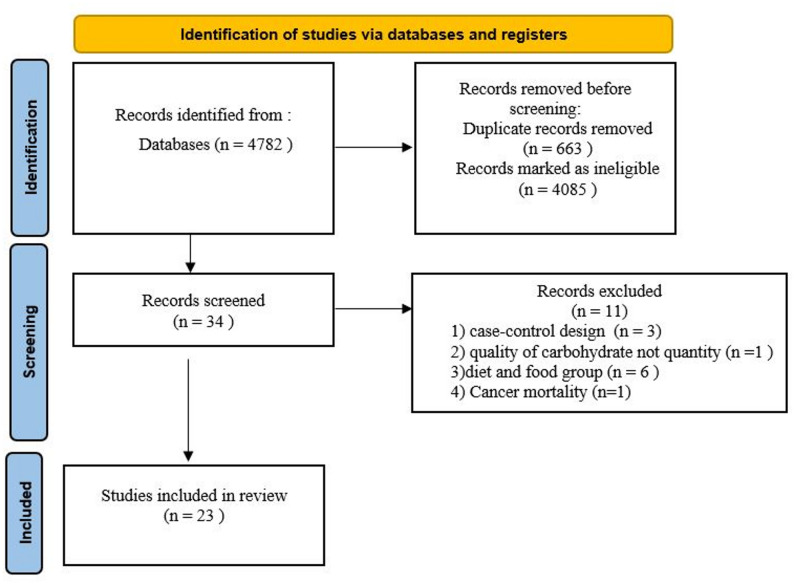
“…carbohydrate quality and colorectal cancer, rather than quantity [32], 6 studies focused on the relationship between food groups, dietary pattern or diet without reporting carbohydrate intake [33–38] and one study investigated the association between diet and colorectal cancer mortality [39].”
Adolescent and mid-life diet: risk of colorectal cancer in the NIH-AARP Diet and Health Study
Ruder, E. H., Thiébaut, A. C. M., Thompson, F. E., Potischman, N. A., Subar, A. F., Park, Y., Graubard, B. I., Hollenbeck, A. R., & Cross, A. J. (2011) · American Journal of Clinical Nutrition · doi:10.3945/ajcn.111.020701 · Cited by 86
Incidence of Colorectal Cancer in Relation to Glycemic Index and Load in a Cohort of Women
McCarl, M., Harnack, L., Limburg, P. J., Anderson, K. E., & Folsom, A. R. (2006) · Cancer Epidemiology, Biomarkers & Prevention · doi:10.1158/1055-9965.epi-05-0700 · Cited by 86
Terry, P. D., Jain, M., Miller, A. B., Howe, G. R., & Rohan, T. E. (2003) · JNCI Journal of the National Cancer Institute · doi:10.1093/jnci/95.12.914 · Cited by 82 · cited 1×
“Moreover, the results are broadly consistent with those of two large prospective cohort studies of Canadian [44] and US women [46], which have follow-ups of up to 20 years.”
Hedayati, N., Safari, M. H., Milasi, Y. E., Kahkesh, S., Farahani, N., Khoshnazar, S. M., Dorostgou, Z., Alaei, E., Alimohammadi, M., Rahimzadeh, P., et al. (2025) · Discover Oncology · doi:10.1007/s12672-025-02471-w · Cited by 81
Aune, D., Chan, D. S. M., Lau, R., Vieira, R., Greenwood, D. C., Kampman, E., & Norat, T. (2012) · Cancer Causes & Control · doi:10.1007/s10552-012-9918-9 · Cited by 81 · cited 1×
“In their study, these dietary parameters did not significantly affect CRC risk [18].”
Sieri, S., Krogh, V., Agnoli, C., Ricceri, F., Palli, D., Masala, G., Panico, S., Mattiello, A., Tumino, R., Giurdanella, M. C., et al. (2014) · International Journal of Cancer · doi:10.1002/ijc.29341 · Cited by 76 · cited 1×
“Three studies found a positive association between high-GI foods and increased colorectal cancer risk [45, 53, 57], although no significant associations were observed for colon or rectal cancer.”
Dietary Patterns, Food Groups, and Rectal Cancer Risk in Whites and African-Americans
Williams, C. D., Satia, J. A., Adair, L. S., Stevens, J., Galanko, J., Keku, T. O., & Sandler, R. S. (2009) · Cancer Epidemiology, Biomarkers & Prevention · doi:10.1158/1055-9965.epi-08-1146 · Cited by 75
Prizment, A. E., Anderson, K. E., Visvanathan, K., & Folsom, A. R. (2011) · Cancer Epidemiology Biomarkers & Prevention · doi:10.1158/1055-9965.epi-10-1146 · Cited by 74 · cited 1×
“Higher levels of inflammation-related indicators like CRP) C-Reac-tive Protein (are correlated with a greater likelihood of developing colorectal cancer, highlighting the interplay between inflammation and cell cycle dysfunction [17].”
Carbohydrate Nutrition and the Risk of Cancer
Vieytes, C. A. M., Taha, H. M., Burton-Obanla, A. A., Douglas, K. G., & Arthur, A. E. (2019) · Current Nutrition Reports · doi:10.1007/s13668-019-0264-3 · Cited by 73
Kabat, G. C., Shikany, J. M., Beresford, S. A. A., Caan, B., Neuhouser, M. L., Tinker, L. F., & Rohan, T. E. (2008) · Cancer Causes & Control · doi:10.1007/s10552-008-9200-3 · Cited by 67 · cited 1×
“…23 cohort studies in the meta-analysis, 17 of which examined the association with carbohydrate intake, involving 1,950,608 participants and 19,677 cases of colorectal cancer [22, 24, 40–54], 13 studies including 1,380,215 participants and 15,305 colorectal cancer cases for GI [23, 45–49, 52–58]”
Sun, Z., Liu, L., Wang, P., Roebothan, B., Zhao, J., Dicks, E. L., Cotterchio, M., Buehler, S. K., Campbell, P. T., McLaughlin, J. R., et al. (2012) · Nutrition Journal · doi:10.1186/1475-2891-11-18 · Cited by 61 · cited 1×
“…review of the remaining 34 studies, 11 were excluded for the following reasons: 3 studies were excluded due to their case-control design [29–31], One study reported the association between carbohydrate quality and colorectal cancer, rather than quantity [32], 6 studies focused on the…”
Satia, J. A., Tseng, M., Galanko, J. A., Martin, C., & Sandler, R. S. (2009) · Nutrition and Cancer · doi:10.1080/01635580802419806 · Cited by 57 · cited 1×
“…carbohydrate quality and colorectal cancer, rather than quantity [32], 6 studies focused on the relationship between food groups, dietary pattern or diet without reporting carbohydrate intake [33–38] and one study investigated the association between diet and colorectal cancer mortality [39].”
Larsson, S. C., Giovannucci, E., & Wolk, A. (2006) · American Journal of Epidemiology · doi:10.1093/aje/kwk012 · Cited by 54
A Prospective Diet-Wide Association Study for Risk of Colorectal Cancer in EPIC
Papadimitriou, N., Bouras, E., van den Brandt, P. A., Muller, D. C., Papadopoulou, A., Heath, A. K., Critselis, E., Gunter, M. J., Vineis, P., Ferrari, P., et al. (2021) · Clinical Gastroenterology and Hepatology · doi:10.1016/j.cgh.2021.04.028 · Cited by 52 · cited 2×
“Firstly, the need for an updated synthesis became evident following the recent publication of three large-scale cohort studies [22–24], which were not included in previous analyses.”
InfluentialOh, K., Willett, W. C., Fuchs, C. S., & Giovannucci, E. L. (2004) · Cancer Epidemiology, Biomarkers & Prevention · doi:10.1158/1055-9965.1192.13.7 · Cited by 49 · cited 1×
“Also, Food frequency surveys may not accurately reflect the relationship between nutrient consumption and illness due to measurement errors [59, 73, 74].”
Strayer, L., Jacobs, D. R., Schairer, C., Schatzkin, A. G., & Flood, A. P. (2007) · Cancer Causes & Control · doi:10.1007/s10552-007-9030-8 · Cited by 47 · cited 1×
“Of the 14 studies examining the association between carbohydrate intake and colorectal cancer, 3 reported an inverse association [22, 43, 48], one study reported a positive association [45], while the remaining studies showed no significant association.”
Howarth, N. C., Murphy, S. P., Wilkens, L. R., Henderson, B. E., & Kolonel, L. N. (2008) · The American Journal of Clinical Nutrition · doi:10.1093/ajcn/88.4.1074 · Cited by 44 · cited 2×
“Regarding the association between GL and colorectal cancer, one study indicated a positive association [45], while another identified an inverse association [50].”
Warburg effect regulated by amphiregulin in the development of colorectal cancer
Nam, S. O., Yotsumoto, F., Miyata, K., Fukagawa, S., Yamada, H., Kuroki, M., & Miyamoto, S. (2015) · Cancer Medicine · doi:10.1002/cam4.416 · Cited by 41
Makarem, N., Bandera, E. V., Lin, Y., Jacques, P. F., Hayes, R. B., & Parekh, N. (2017) · British Journal Of Nutrition · doi:10.1017/s0007114517001489 · Cited by 40 · cited 3×
“…23 cohort studies in the meta-analysis, 17 of which examined the association with carbohydrate intake, involving 1,950,608 participants and 19,677 cases of colorectal cancer [22, 24, 40–54], 13 studies including 1,380,215 participants and 15,305 colorectal cancer cases for GI [23, 45–49, 52–58]”
Zhou, W., Rowitz, B. M., & Dailey, M. J. (2018) · Experimental Biology and Medicine · doi:10.1177/1535370218785152 · Cited by 40 · cited 1×
“This powerful mitogen prevents apoptosis and stimulates cell growth [8–10].”
Diet and colorectal adenoma in Japanese males and females
Nagata, C., Shimizu, H., KAMETANI, M., Takeyama, N., Ohnuma, T., & Matsushita, S. (2001) · Diseases of the Colon & Rectum · doi:10.1007/bf02234831 · Cited by 38
Weijenberg, M. P., Mullie, P. F. F., Brants, H. A. M., Heinen, M. M., Goldbohm, R. A., & van den Brandt, P. A. (2008) · International Journal of Cancer · doi:10.1002/ijc.23110 · Cited by 36 · cited 1×
“Additionally, one publication showed an inverse relationship with colon cancer [56], whereas no meaningful association was detected for rectal cancer.”
The Crucial Roles of Diet, Microbiota, and Postbiotics in Colorectal Cancer
Kuru-Yaşar, R., & Üstün‐Aytekin, Ö. (2024) · Current Nutrition Reports · doi:10.1007/s13668-024-00525-z · Cited by 35 · cited 1×
“Among the modifiable environmental determinants, dietary intake plays a significant role [3–5].”
Shin, S., Saito, E., Sawada, N., Ishihara, J., Takachi, R., Nanri, A., Shimazu, T., Yamaji, T., Iwasaki, M., Sasazuki, S., et al. (2017) · Clinical Nutrition · doi:10.1016/j.clnu.2017.04.015 · Cited by 33
Dietary glycemic load and risk of colorectal cancer in Chinese women
Li, H. L., Yang, G., Shu, X., Xiang, Y.-B., Chow, W., Ji, B., Zhang, X., Cai, H., Gao, J., Gao, Y.-T., et al. (2010) · American Journal of Clinical Nutrition · doi:10.3945/ajcn.110.003053 · Cited by 30
Huang, J. H., Pan, G., Jiang, H., Li, W., Dong, J., Zhang, H., Ji, X., & Zhu, Z. (2017) · Bioscience Reports · doi:10.1042/bsr20160553 · Cited by 21 · cited 2×
“However, subgroup analysis showed that men with higher carbohydrate consumption may have a higher CRC risk [20].”
Watling, C. Z., Kelly, R. K., Murphy, N., Gunter, M. J., Piernas, C., Bradbury, K. E., Schmidt, J. A., Key, T. J., & Perez‐Cornago, A. (2023) · Cancer Research · doi:10.1158/0008-5472.can-22-3755 · Cited by 20 · cited 3×
“Of the 14 studies examining the association between carbohydrate intake and colorectal cancer, 3 reported an inverse association [22, 43, 48], one study reported a positive association [45], while the remaining studies showed no significant association.”
InfluentialAbe, S. K., Inoue, M., Sawada, N., Ishihara, J., Iwasaki, M., Yamaji, T., Shimazu, T., Sasazuki, S., & Tsugane, S. (2016) · Cancer Causes & Control · doi:10.1007/s10552-016-0733-6 · Cited by 19 · cited 1×
“…23 cohort studies in the meta-analysis, 17 of which examined the association with carbohydrate intake, involving 1,950,608 participants and 19,677 cases of colorectal cancer [22, 24, 40–54], 13 studies including 1,380,215 participants and 15,305 colorectal cancer cases for GI [23, 45–49, 52–58]”
Huang, J., Fang, Y., Xu, M., Luo, H. L., Zhang, N., Huang, W., Pan, Z.-Z., Chen, Y., & Zhang, C. (2018) · British Journal Of Nutrition · doi:10.1017/s000711451800051x · Cited by 18
Cai, X., Li, X., Tang, M., Liang, C., Xu, Y., 张苗尊, Yu, W., & Li, X. (2019) · British Journal Of Nutrition · doi:10.1017/s0007114519000424 · Cited by 14 · cited 2×
“However, it showed that a higher dietary GI may increase CRC risk [21].”
Dietary Glycemic Index May Influence Cancer Risk by Modulating IGF-I Activity: A Hypothesis
McCarty, M. F. (1998) · Journal of Medicinal Food · doi:10.1089/jmf.1998.1.123 · Cited by 12 · cited 1×
“As a potent mitogen, IGF facilitates the proliferation of malignant colonocytes while concurrently inhibiting apoptotic processes, contributing to the progression of colorectal cancer [67, 68].”
Xiao, Y., Xiang, L., Jiang, Y., Tang, Y., Gu, H., Wang, Y., & Peng, L. (2024) · BMC Medicine · doi:10.1186/s12916-024-03325-y · Cited by 10 · cited 1×
“…to their case-control design [29–31], One study reported the association between carbohydrate quality and colorectal cancer, rather than quantity [32], 6 studies focused on the relationship between food groups, dietary pattern or diet without reporting carbohydrate intake [33–38] and one study…”
Mahjourian, M., Anjom-Shoae, J., Mohammadi, M. A., Feinle‐Bisset, C., & Sadeghi, O. (2025) · Cancer Epidemiology · doi:10.1016/j.canep.2025.102768 · Cited by 10
Self-citation
Research works printed but not linked: 2
- 9. Sekharam M, et al. Insulin-like growth factor 1 receptor enhances invasion and induces resistance to apoptosis of colon cancer cells through the Akt/Bcl-xL pathway. Cancer Res. 2003;63(22):7708–16. 14633695
- 29. Borugian MJ, et al. Carbohydrates and colorectal cancer risk among Chinese in North America. Cancer Epidemiol Biomarkers Prev. 2002;11(2):187–93. 11867506
Cited by
Toward International Dietary Guidance: A Food Guide Pyramid for Human and Planetary Health
Corte, K. W. D., Buyken, A. E., Vecchia, C. L., Vanginkel, M.-A., Salas‐Salvadó, J., Riccardi, G., Trichopoulou, A. D., Slavin, J. L., Ceriello, A., Bulló, M., et al. (2026) · Advances in Nutrition · doi:10.1016/j.advnut.2026.100738 · Cited by 1
Metadata
- Authors
- Mahjourian, M. M., Zeinalabedini, M., Hanjani, N. A., & Azadbakht, L.
- Affiliations
- Tehran University of Medical Sciences (IR)
- Shiraz University of Medical Sciences (IR)
- Endocrinology and Metabolism Clinical Sciences Institute (IR)
- Corresponding author
- Azadbakht, Leila
- Venue
- BMC Cancer
- Published
- 2025-12-27
- Volume
- 26
- Issue
- 1
- Pages
- 151-151
- ISSN
- 1471-2407 (ISSN-L)
- PMC
- PMC12853901
- OpenAlex
- W7117368317
- Cited by
- 1
- References
- 65
- Citations by year
- 2026: 1
- FWCI
- 0.19
- Type
- journal article
- Language
- en
- Open access
- gold
- doi.org
- Licence
- cc-by-nc-nd
- creativecommons.org/licenses/by-nc-nd/4.0 (tdm)
- creativecommons.org/licenses/by-nc-nd/4.0 (vor, 32 d)
- Locations
- BMC Cancer (publishedVersion, cc-by-nc-nd)
- Europe PMC (PubMed Central) (publishedVersion, cc-by-nc-nd)
- PubMed (publishedVersion)
- PubMed Central (publishedVersion, cc-by-nc-nd)
- DOAJ (DOAJ: Directory of Open Access Journals) (submittedVersion, cc-by-sa)
- Funders
- Tehran University of Medical Sciences and Health Services
- Topics
- Health Sciences › Medicine › Public Health, Environmental and Occupational Health › Nutritional Studies and Diet
- Health Sciences › Nursing › Nutrition and Dietetics › Food composition and properties
- Life Sciences › Biochemistry, Genetics and Molecular Biology › Molecular Biology › Metabolism, Diabetes, and Cancer
- Keywords
- colorectal cancer, carbohydrate intake, glycemic index, glycemic load, colon cancer, rectal cancer, cancer risk, dose-response relationship, insulin secretion, subgroup analysis
- MeSH terms
- Glycemic Load, Adult, Dietary Carbohydrates, Humans, Male, Prospective Studies, Risk Factors, Colorectal Neoplasms, Glycemic Index
About these checks
Registry, retraction, Cites and statistics results are computed, not judged, with one exception: a printed reference that no index lists is read once by a model before it counts as a citation error. Claims are extracted by a model and kept only when their quote appears verbatim in the text; each cited source is then checked, with a model’s help, for whether it says what the claim relies on. Those verdicts can be wrong — read the claim’s quote and the cited source before relying on one.
Statistics and arithmetic are recomputed, not judged.
Confidence bands are shown only for fields calibrated on our annotated test set. None is calibrated yet, so no band is shown.
What counts as a claim ›How we measure confidence ›How we check this ›
Are you an author, or do you see a problem with this page? Request a review
Data sources
Bibliographic data: Semantic Scholar, OpenAlex, Crossref.
Contains information from the Semantic Scholar Academic Graph Datasets, made available under the ODC Attribution License (ODC-BY 1.0).
Semantic Scholar’s data is described in: Kinney, R., et al. (2023). The Semantic Scholar Open Data Platform. arXiv:2301.10140.
