

The effect of the video game Mindlight on anxiety symptoms in children with an Autism Spectrum Disorder
Open accessThe DOI matches its Crossref record; 46 of the 46 references it cites were found in a registry or an index.
Abstract
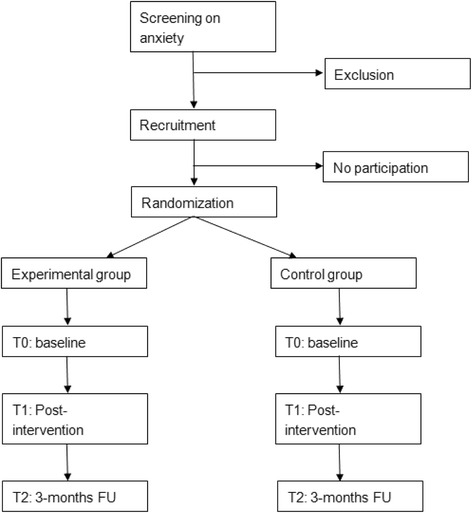
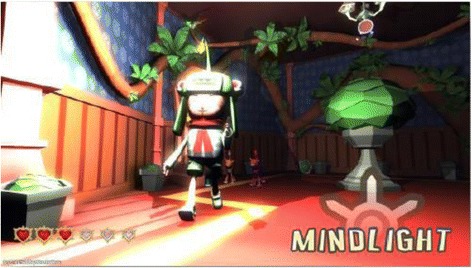
BACKGROUND: In the clinical setting, a large proportion of children with an autism spectrum disorder (ASD) experience anxiety symptoms. Because anxiety is an important cause of impairment for children with an ASD, it is necessary that effective anxiety interventions are implemented for these children. Recently, a serious game called Mindlight has been developed that is focused on decreasing anxiety in children. This approach is based on recent research suggesting that video games might be suitable as an intervention vehicle to enhance mental health in children. In the present study it will be investigated whether Mindlight is effective in decreasing (sub) clinical anxiety symptoms in children who are diagnosed with an ASD. METHODS/DESIGN: The present study involves a randomized controlled trial (RCT) with two conditions (experimental versus control), in which it is investigated whether Mindlight is effective in decreasing (sub) clinical anxiety symptoms in children with an ASD. For this study, children of 8-16 years old with a diagnosis of an ASD and (sub) clinical anxiety symptoms will be randomly assigned to the experimental (N = 60) or the control (N = 60) condition. Children in the experimental condition will play Mindlight for one hour per week, for six consecutive weeks. Children in the control condition will play the puzzle game Triple Town, also for one hour per week and for six consecutive weeks. All children will complete assessments at baseline, post-intervention and 3-months follow-up. Furthermore, parents and teachers will also complete assessments at the same time points. The primary outcome will be child report of anxiety symptoms. Secondary outcomes will be parent report of child anxiety, child/parent report of depressive symptoms, and parent/teacher report of social functioning and behavior problems. DISCUSSION: This paper aims to describe a study that will examine the effect of the serious game Mindlight on (sub) clinical anxiety symptoms of children with an ASD in the age of 8-16 years old. It is expected that children in the experimental condition will show lower levels of anxiety symptoms at 3-months follow-up, compared to children in the control condition. If Mindlight turns out to be effective, it could be an important contribution to the already existing interventions for anxiety in children with an ASD. Mindlight could then be implemented as an evidence-based treatment for anxiety symptoms in children with an ASD in mental health institutes and special education schools. TRIAL REGISTRATION: Dutch Trial Register NTR5069 . Registered 20 April 2015.
Overview
The claims and statistics of this paper haven’t been checked yet.
Free: it reads the open-access text and checks the first 5 claims that cite a source we can check. Create a free account to check every claim.
Integrity signals
Registry
Cites
Statistics
Figures
Verification
Claims the paper makes
The claims and statistics of this paper haven’t been checked yet.
Free: it reads the open-access text and checks the first 5 claims that cite a source we can check. Create a free account to check every claim.
Self-check
Percentages, sums and reported differences re-computed from the paper’s own numbers.
The self-check needs the paper’s full text.
Citations
Cites
1 retracted
Cervantes, P. E., Matson, J. L., Tureck, K., & Adams, H. L. (2013) · Research in Autism · doi:10.1016/j.rasd.2013.09.005 · Cited by 29 · cited 1×
“Anxiety also underlies comorbid symptoms of children with an ASD, for example oppositional and aggressive behavior [6] and depressive symptoms [7].”
BackgroundRetractedFaul, F., Erdfelder, E., Lang, A.-G., & Buchner, A. (2007) · Behavior Research Methods · doi:10.3758/bf03193146 · Cited by 65,971 · cited 1×
“1 [30] to calculate the sample size that is required in the present study.”
BackgroundCONSORT 2010 Statement: updated guidelines for reporting parallel group randomised trials
the CONSORT Group, Schulz, K. F., Altman, D. G., & Moher, D. (2010) · BMC Medicine · doi:10.1186/1741-7015-8-18 · Cited by 13,371
Diagnostic and Statistical Manual of Mental Disorders, Fourth Edition, Text Revision (DSM-IV-TR)
American Psychiatric Association (2000) · doi:10.1176/appi.books.9780890423349 · Cited by 11,069
(1943) · The Nervous child · Cited by 8,870
The benefits of playing video games.
Granic, I., Lobel, A., & Engels, R. C. M. E. (2014) · American Psychologist · doi:10.1037/a0034857 · Cited by 2,456 · cited 2×
“Recently, it has been shown that video games have the potential to enhance mental health and well-being in children and adolescents [18, 17].”
BackgroundSelf-citationCONSORT 2010 Statement: updated guidelines for reporting parallel group randomised trials
the CONSORT Group, Schulz, K. F., Altman, D. G., & Moher, D. (2010) · Trials · doi:10.1186/1745-6215-11-32 · Cited by 1,871
Anxiety Disorders in Children and Adolescents with Autistic Spectrum Disorders: A Meta-Analysis
van Steensel, F. J. A., Bögels, S. M., & Perrin, S. (2011) · Clinical Child and Family Psychology Review · doi:10.1007/s10567-011-0097-0 · Cited by 1,463 · cited 1×
“More specifically, 21 % of the children with an ASD suffer from subclinical anxiety [2] and approximately 40 % of the children with an ASD meet the criteria of at least one anxiety disorder [3].”
BackgroundAnxiety in children and adolescents with autism spectrum disorders
White, S. W., Oswald, D., Ollendick, T., & Scahill, L. (2009) · Clinical Psychology Review · doi:10.1016/j.cpr.2009.01.003 · Cited by 1,427 · cited 5×
“are important in anxiety interventions [1].”
BackgroundMethodInfluentialThe Prevalence of Anxiety and Mood Problems among Children with Autism and Asperger Syndrome
Kim, J. A., Szatmari, P., Bryson, S. E., Streiner, D. L., & Wilson, F. J. (2000) · Autism · doi:10.1177/1362361300004002002 · Cited by 882 · cited 1×
“Furthermore, anxiety in children with an ASD has a negative impact on adaptive functioning, daily living skills and relationships with peers, teachers and family [8–10].”
BackgroundNauta, M. H., Scholing, A., Rapee, R. M., Abbott, M., Spence, S. H., & Waters, A. (2004) · Behaviour Research and Therapy · doi:10.1016/s0005-7967(03)00200-6 · Cited by 763 · cited 1×
“The SCAS-P has a good reliability and validity [38].”
BackgroundMerry, S. N., Stasiak, K., Shepherd, M., Frampton, C., Fleming, T., & Lucassen, M. F. G. (2012) · BMJ · doi:10.1136/bmj.e2598 · Cited by 716 · cited 1×
“[19] found that the video game ‘SPARX’ was effective in reducing depressive symptoms among adolescents in the age between 12–19 years old.”
BackgroundDutch version of the Strengths and Difficulties Questionnaire (SDQ)
van Widenfelt, B. M., Goedhart, A. W., Treffers, P. D. A., & Goodman, R. (2003) · European Child & Adolescent Psychiatry · doi:10.1007/s00787-003-0341-3 · Cited by 690
Psychometric properties of the Spence Children’s Anxiety Scale with young adolescents
Spence, S. H., Barrett, P. M., & Turner, C. M. (2003) · Journal of Anxiety Disorders · doi:10.1016/s0887-6185(02)00236-0 · Cited by 580 · cited 1×
“The SCAS has a high validity and reliability [36, 37].”
BackgroundResearch review: attention bias modification (ABM): a novel treatment for anxiety disorders
Bar‐Haim, Y. (2010) · Journal of Child Psychology and Psychiatry · doi:10.1111/j.1469-7610.2010.02251.x · Cited by 556 · cited 1×
“ABM has been shown to reliably reduce anxiety by retraining the attentional system to focus on positive stimuli [35].”
BackgroundKhunti, K., Gray, L. J., Skinner, T., Carey, M. E., Realf, K., Dallosso, H., Fisher, H., Campbell, M., Heller, S., & Davies, M. J. (2012) · BMJ · doi:10.1136/bmj.e2333 · Cited by 465
Silver, M., & Oakes, P. (2001) · Autism · doi:10.1177/1362361301005003007 · Cited by 454 · cited 4×
“be an effective tool in treatment for children with ASD, due to its visual and structured character [15].”
BackgroundMethodInfluentialChalfant, A. M., Rapee, R., & Carroll, L. (2007) · Journal of Autism and Developmental Disorders · doi:10.1007/s10803-006-0318-4 · Cited by 428 · cited 1×
“Therefore, a greater focus on visual aids and structured sensory information is an important requirement in anxiety treatment for children with an ASD [15, 16].”
BackgroundExposure Therapy for Anxiety: Principles and Practice
Davis, M., & Powers, M. (2011) · Cognitive Behaviour Therapy · doi:10.1080/16506073.2011.609655 · Cited by 374
Parent Expectancies for Child Therapy: Assessment and Relation to Participation in Treatment
Nock, M. K., & Kazdin, A. E. (2001) · Journal of Child and Family Studies · doi:10.1023/a:1016699424731 · Cited by 347 · cited 1×
“The PETS has a good validity and reliability [47].”
BackgroundStrang, J. F., Kenworthy, L., Daniolos, P., Case, L., Wills, M. C., Martin, A., & Wallace, G. L. (2012) · Research in Autism Spectrum Disorders · doi:10.1016/j.rasd.2011.06.015 · Cited by 314 · cited 1×
“suffer from subclinical anxiety [2] and approximately 40 % of the children with an ASD meet the criteria of at”
BackgroundReaven, J., Blakeley‐Smith, A., Culhane‐Shelburne, K., & Hepburn, S. (2012) · Journal of Child Psychology and Psychiatry · doi:10.1111/j.1469-7610.2011.02486.x · Cited by 314 · cited 1×
“[31, 12, 32]).”
White, S. W., Ollendick, T., Albano, A. M., Oswald, D., Johnson, C., Southam-Gerow, M. A., Kim, I., & Scahill, L. (2013) · Journal of Autism and Developmental Disorders · doi:10.1007/s10803-012-1577-x · Cited by 313 · cited 1×
“[13]), reasoning that the traditional form of CBT is not suitable for children with an ASD.”
BackgroundThe Relationship Between Anxiety and Repetitive Behaviours in Autism Spectrum Disorder
Rodgers, J., Glod, M., Connolly, B., & McConachie, H. (2012) · Journal of Autism and Developmental Disorders · doi:10.1007/s10803-012-1531-y · Cited by 296 · cited 1×
“For example, anxiety underlies or affects the stereotype and rigid behavior [4] and the problems in social functioning [5] that children with an ASD often show.”
Background(2010) · Cited by 262
Muris, P., Schmidt, H., & Merckelbach, H. (2000) · Personality and Individual Differences · doi:10.1016/s0191-8869(99)00102-6 · Cited by 259 · cited 1×
“The SCAS has a high validity and reliability [36, 37].”
BackgroundThe Application of the Principle of Intention–to–Treat to the Analysis of Clinical Trials
Gillings, D., & Koch, G. (1991) · Drug Information Journal · doi:10.1177/009286159102500311 · Cited by 228 · cited 1×
“Following the intention-to-treat principle [48], all children randomized to a condition will be included in the analyses to test the study objectives.”
MethodFriends, fun, frustration and fantasy: Child motivations for video game play
Ferguson, C. J., & Olson, C. K. (2013) · Motivation and Emotion · doi:10.1007/s11031-012-9284-7 · Cited by 215 · cited 1×
“Recently, it has been shown that video games have the potential to enhance mental health and well-being in children and adolescents [18, 17].”
BackgroundDistorted cognition and pathological anxiety in children and adolescents
Muris, P., & Field, A. P. (2008) · Cognition & Emotion · doi:10.1080/02699930701843450 · Cited by 207
Exploring the Manifestations of Anxiety in Children with Autism Spectrum Disorders
Hallett, V., Lecavalier, L., Sukhodolsky, D. G., Cipriano, N., Aman, M. G., McCracken, J. T., McDougle, C. J., Tierney, E., King, B. H., Hollander, E., et al. (2013) · Journal of Autism and Developmental Disorders · doi:10.1007/s10803-013-1775-1 · Cited by 193 · cited 1×
“Furthermore, anxiety in children with an ASD has a negative impact on adaptive functioning, daily living skills and relationships with peers, teachers and family [8–10].”
BackgroundChang, Y., Quan, J. L., & Wood, J. J. (2012) · Journal of Developmental and Physical Disabilities · doi:10.1007/s10882-012-9268-2 · Cited by 170
McNally Keehn, R. H., Lincoln, A. J., Brown, M. Z., & Chavira, D. A. (2013) · Journal of Autism and Developmental Disorders · doi:10.1007/s10803-012-1541-9 · Cited by 150 · cited 1×
“[12]) or new interventions especially developed for children with an ASD (e.”
BackgroundDrahota, A., Wood, J. J., Sze, K. M., & Van Dyke, M. (2011) · Journal of Autism and Developmental Disorders · doi:10.1007/s10803-010-1037-4 · Cited by 140 · cited 1×
“Furthermore, anxiety in children with an ASD has a negative impact on adaptive functioning, daily living skills and relationships with peers, teachers and family [8–10].”
BackgroundVasa, R. A., Kalb, L. G., Mazurek, M. O., Kanne, S. M., Freedman, B. H., Keefer, A. J., Clemons, T. E., & Murray, D. S. (2013) · Research in Autism · doi:10.1016/j.rasd.2013.07.005 · Cited by 134 · cited 1×
“Anxiety also underlies comorbid symptoms of children with an ASD, for example oppositional and aggressive behavior [6] and depressive symptoms [7].”
BackgroundTest Review: Children’s Depression Inventory 2 (CDI 2)
Bae, Y. (2012) · Journal of Psychoeducational Assessment · doi:10.1177/0734282911426407 · Cited by 113
Neurocognitive training for children with and without AD/HD
Johnstone, S. J., Roodenrys, S., Blackman, R., Johnston, E., Loveday, K., Mantz, S., & Barratt, M. F. (2012) · ADHD Attention Deficit and Hyperactivity Disorders · doi:10.1007/s12402-011-0069-8 · Cited by 109
EEG From a Single-Channel Dry-Sensor Recording Device
Johnstone, S. J., Blackman, R., & Bruggemann, J. M. (2012) · Clinical EEG and Neuroscience · doi:10.1177/1550059411435857 · Cited by 98 · cited 2×
“[33]), which children will put on when they are going to”
BackgroundCognitive Behavioral Therapy for Children With Autism: Review and Considerations for Future Research
Danial, J. T., & Wood, J. J. (2013) · Journal of Developmental & Behavioral Pediatrics · doi:10.1097/dbp.0b013e31829f676c · Cited by 93 · cited 1×
“[31, 12, 32]).”
Cbt for anxiety disorders in children with and without autism spectrum disorders.
van Steensel, F. J. A., & Bögels, S. M. (2015) · Journal of Consulting and Clinical Psychology · doi:10.1037/a0039108 · Cited by 89
Brief Report: The Development of the Children's Social Behavior Questionnaire: Preliminary Data
Luteijn, E., Jackson, S., Volkmar, F. R., & Minderaa, R. B. (1998) · Journal of Autism and Developmental Disorders · doi:10.1023/a:1026060330122 · Cited by 64
An Integrative, Multi-Factor Conceptualization of Hypnosis
Hammond, D. C. (2005) · American Journal of Clinical Hypnosis · doi:10.1080/00029157.2005.10401508 · Cited by 64 · cited 2×
“ABM is a training protocol that has its roots in CBT and that is based on the idea that distorted cognitions, particularly attentional biases characterized by hyper attention towards potential threats, play a role in the pathogenesis of childhood anxiety [22].”
BackgroundHartman, C. A., Luteijn, E., Moorlag, H., de Bildt, A. A., & Minderaa, R. B. (2008) · Cited by 50
Stressful Gaming, Interoceptive Awareness, and Emotion Regulation Tendencies: A Novel Approach
Lobel, A., Granic, I., & Engels, R. C. M. E. (2014) · Cyberpsychology, Behavior, and Social Networking · doi:10.1089/cyber.2013.0296 · Cited by 47
Self-citationChildren's Depression Inventory. Handleiding (herziene uitgave)
Timbremont, B., Braet, C., & Roelofs, J. (2008) · Ghent University Academic Bibliography (Ghent University) · Cited by 26
Khandaker, M. (2009) · Studies in health technology and informatics · doi:10.3233/978-1-60750-017-9-37 · Cited by 10
Children’s Depression Inventory (CDI)
(2011) · Encyclopedia of Child Behavior and Development · doi:10.1007/978-0-387-79061-9_4285 · Cited by 5
Research works printed but not linked: 6
- Siebelink BM Treffers PDA Anxiety disorders interview schedule for DSM- IV- child version. ADIS-C handleiding 2001 Amsterdam Harcourt Test Publishers
- Scholing A Nauta MH Spence SH Spence children’s anxiety scale (Dutch translation of child version) 1999 Amsterdam, NL University of Amsterdam
- Scholing A Nauta MH Spence SH Spence children’s anxiety scale (Dutch translation of parent version) 1999 Amsterdam, NL University of Amsterdam
- Hartman CA Vragenlijst voor inventarisatie van sociaal gedrag van Kinderen. Herziene handleiding 2007 2007 Amsterdam Harcourt
- Goedhart A Treffers F Widenfelt B Vragen naar psychische problemen bij kinderen en adolescenten: de strengths and difficulties questionnaire Maandblad Geestelijke Volksgezondheid 2003 58 1018 1035 · DOI · Paper page
- Kazdin AE Holland L Parent expectancies for therapy scale 1991 New Haven, CT Yale university, Child Conduct Clinic
Cited by
Nijhof, S. L., Vinkers, C. H., van Geelen, S. M., Duijff, S. N., Achterberg, E. J. M., van der Net, J., Veltkamp, R. C., Grootenhuis, M. A., van de Putte, E. M., Hillegers, M. H. J., et al. (2018) · Neuroscience & Biobehavioral Reviews · doi:10.1016/j.neubiorev.2018.09.024 · Cited by 363
“studies have used applied games to successfully decrease anxiety or depressive symptoms in adolescents (Fleming et al., 2012; Fleming et al., 2017; Lau et al., 2017; Merry et al., 2012; Poppelaars et al., 2016; Scholten et al., 2016; Schuurmans et al., 2015; van Rooij et al., 2016; Wijnhoven et al., 2015).”
Self-citationHeasman, B., & Gillespie, A. (2019) · Autism · doi:10.1177/1362361318785172 · Cited by 316
Scholten, H., & Granic, I. (2019) · Journal of Medical Internet Research · doi:10.2196/11528 · Cited by 138
“…significant decreases in children’s anxiety symptoms, with two of the studies showing similar improvements as active control [94] and treatment -as-usual [95] studies and two studies showing improvements equivalent to cognitive-behavioral interventions [93,96], even after long-term follow-up [93].”
Self-citationCarlier, S., der Paelt, S. V., Ongenae, F., Backere, F. D., & Turck, F. D. (2020) · Sensors · doi:10.3390/s20040966 · Cited by 136
“At the moment of writing, no results were yet reported [24].”
BackgroundInfluentialSuleiman, A. B., & Dahl, R. E. (2017) · Journal of Adolescent Health · doi:10.1016/j.jadohealth.2016.12.010 · Cited by 95
“[101] have developed a game to reduce anxiety in young adolescents called Mindlight.”
Background
Metadata
- Authors
- Wijnhoven, L. A. M. W., Creemers, D. H. M., Engels, R. C. M. E., & Granic, I.
- Affiliations
- Radboud University Nijmegen (NL)
- Corresponding author
- Wijnhoven, Lieke A. M. W.
- Venue
- BMC Psychiatry
- Published
- 2015-07-01
- Volume
- 15
- Issue
- 1
- Pages
- 138-138
- ISSN
- 1471-244X (ISSN-L)
- PMC
- PMC4488062
- OpenAlex
- W1653319191
- Cited by
- 69
- References
- 46
- Citations by year
- 2026: 3 · 2025: 7 · 2024: 1 · 2023: 6 · 2022: 10 · 2021: 7 · 2020: 10 · 2019: 7 · 2018: 8 · 2017: 7 · 2016: 1 · 2015: 1
- FWCI
- 3.41
- Type
- journal article
- Language
- en
- Open access
- gold
- doi.org
- Locations
- BMC Psychiatry (publishedVersion, cc-by)
- Europe PMC (PubMed Central) (publishedVersion, cc-by)
- PubMed Central (publishedVersion, cc-by)
- PubMed (publishedVersion)
- Radboud Repository (Radboud University) (submittedVersion)
- Radboud Repository (Radboud University) (submittedVersion, other-oa)
- Funders
- Radboud Universiteit
- Topics
- Life Sciences › Neuroscience › Cognitive Neuroscience › Autism Spectrum Disorder Research
- Social Sciences › Psychology › Developmental and Educational Psychology › Educational Games and Gamification
- Social Sciences › Psychology › Applied Psychology › Digital Mental Health Interventions
- Keywords
- serious games, video games, autism spectrum disorder, anxiety symptoms, children, anxiety intervention, digital mental health interventions, depressive symptoms, social functioning, behavioral problems
- MeSH terms
- Autism Spectrum Disorder, Adolescent, Anxiety, Child, Clinical Protocols, Female, Humans, Male, Therapy, Computer-Assisted, Treatment Outcome, Video Games
About these checks
Registry, retraction, Cites and statistics results are computed, not judged, with one exception: a printed reference that no index lists is read once by a model before it counts as a citation error. Claims are extracted by a model and kept only when their quote appears verbatim in the text; each cited source is then checked, with a model’s help, for whether it says what the claim relies on. Those verdicts can be wrong — read the claim’s quote and the cited source before relying on one.
Statistics and arithmetic are recomputed, not judged.
Confidence bands are shown only for fields calibrated on our annotated test set. None is calibrated yet, so no band is shown.
What counts as a claim ›How we measure confidence ›How we check this ›
Are you an author, or do you see a problem with this page? Request a review
Data sources
Bibliographic data: Semantic Scholar, OpenAlex, Crossref.
Contains information from the Semantic Scholar Academic Graph Datasets, made available under the ODC Attribution License (ODC-BY 1.0).
Semantic Scholar’s data is described in: Kinney, R., et al. (2023). The Semantic Scholar Open Data Platform. arXiv:2301.10140.
