

Effectiveness of Balancing Everyday Life (BEL) versus standard occupational therapy for activity engagement and functioning among people with mental illness – a cluster RCT study
Open accessThe DOI matches its Crossref record; 55 of the 55 references it cites were found in a registry or an index.
Abstract
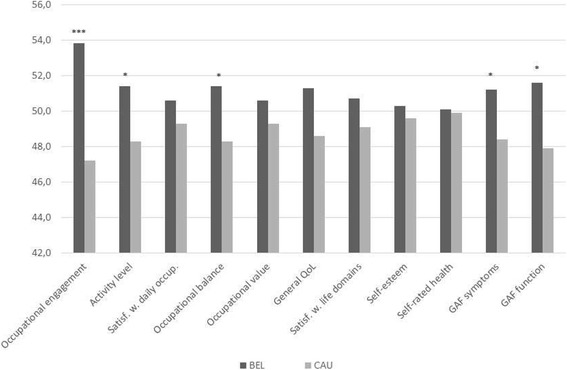
BACKGROUND: Many with a mental illness have an impoverished everyday life with few meaningful activities and a sedentary lifestyle. The study aim was to evaluate the effectiveness of the 16-week Balancing Everyday Life (BEL) program, compared to care as usual (CAU), for people with mental illness in specialized and community-based psychiatric services. The main outcomes concerned different aspects of subjectively evaluated everyday activities, in terms of the engagement and satisfaction they bring, balance among activities, and activity level. Secondary outcomes pertained to various facets of well-being and functioning. It was hypothesized that those who received the BEL intervention would improve more than the comparison group regarding activity, well-being and functioning outcomes. METHODS: BEL is a group and activity-based lifestyle intervention. CAU entailed active support, mainly standard occupational therapy. The BEL group included 133 participants and the CAU group 93. They completed self-report questionnaires targeting activity and well-being on three occasions - at baseline, after completed intervention (at 16 weeks) and at a six-month follow-up. A research assistant rated the participants' level of functioning and symptom severity on the same occasions. Non-parametric statistics were used since these instruments produced ordinal data. RESULTS: The BEL group improved more than the CAU group from baseline to 16 weeks on primary outcomes in terms of activity engagement (p < 0.001), activity level (p = 0.036) and activity balance (p < 0.042). The BEL group also improved more on the secondary outcomes of symptom severity (p < 0.018) and level of functioning (p < 0.046) from baseline to 16 weeks, but not on well-being. High intra-class correlations (0.12-0.22) indicated clustering effects for symptom severity and level of functioning. The group differences on activity engagement (p = 0.001) and activity level (p = 0.007) remained at the follow-up. The BEL group also improved their well-being (quality of life) more than the CAU group from baseline to the follow-up (p = 0.049). No differences were found at that time for activity balance, level of functioning and symptom severity. CONCLUSION: The BEL program was effective compared to CAU in terms of activity engagement. Their improvements were not, however, greater concerning other subjective perceptions, such as satisfaction with daily activities and self-rated health, and clustering effects lowered the dependability regarding findings of improvements on symptoms and functioning. Although the CAU group had "caught up" at the follow-up, the BEL group had improved more on general quality of life. BEL appeared to be important in shortening the time required for participants to develop their engagement in activity and in attaining improved quality of life in a follow-up perspective. TRIAL REGISTRATION: The study was registered with ClinicalTrial.gov. Reg. No. NCT02619318 .
Overview
The claims and statistics of this paper haven’t been checked yet.
Free: it reads the open-access text and checks the first 5 claims that cite a source we can check. Create a free account to check every claim.
Integrity signals
Registry
Cites
Statistics
Figures
Verification
Claims the paper makes
The claims and statistics of this paper haven’t been checked yet.
Free: it reads the open-access text and checks the first 5 claims that cite a source we can check. Create a free account to check every claim.
Claims other papers make about this one
Each is checked against this paper’s own text: does it say what the citing paper says it does?
The source backs part of the claim, not all of it — or backs it for a different population, condition or comparison.
In the citing paper
“Balancing Everyday Life (BEL) (47) is a manualized group-based lifestyle intervention designed for people using community-based mental health services. Developed by Swedish occupational therapists, it aims to facilitate engagement in desired activities identified by participants and support for personal recovery (47).”
From Contributions of a time use perspective in community mental health practice: a scoping review (2024) · cites this paper as [47]
Experimental — accuracy not yet measuredThe source backs part of the claim, not all of it — or backs it for a different population, condition or comparison.
In the citing paper
“The BEL has been evaluated in rigorous RCT studies that demonstrate it is effective in improving activity engagement, as represented in increased activity levels and more optimal activity balance, and improving personal recovery, clinical symptoms, psychosocial functioning and general quality of life (47, 68).”
From Contributions of a time use perspective in community mental health practice: a scoping review (2024) · cites this paper as [47]
Experimental — accuracy not yet measuredThe source backs part of the claim, not all of it — or backs it for a different population, condition or comparison.
In the citing paper
“All ten studies reported the time use interventions were facilitated by at least one occupational therapist; only P2P groups were co-facilitated with peer or lived experience workers. All reported facilitator training and regular briefings (47, 64, 65).”
From Contributions of a time use perspective in community mental health practice: a scoping review (2024) · cites this paper as [47]
Experimental — accuracy not yet measuredThe source backs part of the claim, not all of it — or backs it for a different population, condition or comparison.
In the citing paper
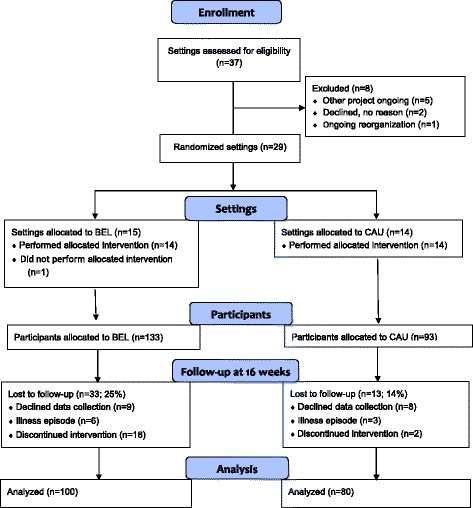
“The study had to include 128 participants, 64 in each group, to achieve a statistical power of 80% and a significance level of 5% and to detect a difference of 3 points corresponding to a moderate effect size, on the POES-S.”
From Meaningful Activities and Recovery (MA&R): a co-led peer occupational therapy intervention for people with psychiatric disabilities. Results from a randomized controlled trial (2023) · cites this paper as [24]
Experimental — accuracy not yet measuredThe cited source says what the claim attributes to it.
In the citing paper
“Ten studies reported the development and evaluation of time use interventions, including Action over Inertia (AOI) (62, 63), Balancing Everyday Life (BEL) (47) and the Pathway to Participation (P2P) program (64).”
From Contributions of a time use perspective in community mental health practice: a scoping review (2024) · cites this paper as [47]
8 more claims about this paper
Create a free account to see every claim other papers make about this one.
Self-check
Percentages, sums and reported differences re-computed from the paper’s own numbers.
The self-check needs the paper’s full text.
Citations
Cites
(1992) · PubMed · Cited by 33,716
Society and the Adolescent Self-Image
Rosenberg, M. (1965) · doi:10.1515/9781400876136 · Cited by 30,126
The MOS 36-ltem Short-Form Health Survey (SF-36): I. Conceptual Framework and Item Selection
Ware, J. E., & Sherbourne, C. D. (1992) · Medical Care · doi:10.1097/00005650-199206000-00002 · Cited by 30,033 · cited 1×
“Self-rated was also considered as an aspect of well-being and was assessed by using the first item of the MOS SF36 [38].”
MethodThe Global Assessment Scale: A Procedure for Measuring Overall Severity of Psychiatric Disturbance
Endicott, J. (1976) · Archives of General Psychiatry · doi:10.1001/archpsyc.1976.01770060086012 · Cited by 4,982 · cited 1×
“The Global Assessment of Functioning (GAF) scale [40] was used to assess the individual’s overall level of psychosocial functioning.”
MethodRecovery from mental illness: the guiding vision of the mental health service system in the 1990s
Anthony, W. A. (1993) · Psychosocial Rehabilitation Journal · doi:10.1037/h0095655 · Cited by 3,700 · cited 1×
“The BEL program also emphasizes personal recovery, which is defined as an individual process towards a meaningful and hopeful life, regardless of the absence or presence of symptoms [16].”
BackgroundWalker, E. R., McGee, R. E., & Druss, B. G. (2015) · JAMA Psychiatry · doi:10.1001/jamapsychiatry.2014.2502 · Cited by 2,976 · cited 1×
“Mental illness often results in consequences such as deteriorated quality of life [1, 2], an impoverished everyday life with few meaningful activities [3], reduced work capacity [4, 5] risks of physical health problems [6] and increased mortality [7].”
BackgroundVancampfort, D., Stubbs, B., Mitchell, A. J., De Hert, M., Wampers, M., Ward, P. B., Rosenbaum, S., & Correll, C. U. (2015) · World Psychiatry · doi:10.1002/wps.20252 · Cited by 1,271 · cited 1×
“Mental illness often results in consequences such as deteriorated quality of life [1, 2], an impoverished everyday life with few meaningful activities [3], reduced work capacity [4, 5] risks of physical health problems [6] and increased mortality [7].”
BackgroundDesign and Analysis of Group-Randomized Trials
Sonnad, S. (1999) · Medicine & Science in Sports & Exercise · doi:10.1097/00005768-199902000-00025 · Cited by 1,125
Design and Analysis of Group-Randomized Trials
Murray, D. M. (2007) · doi:10.1093/oso/9780195120363.001.0001 · Cited by 1,116
Application and Results of the Manchester Short Assessment of Quality of Life (Mansa)
Priebe, S., Huxley, P., Knight, S., & Evans, S. (1999) · International Journal of Social Psychiatry · doi:10.1177/002076409904500102 · Cited by 1,071 · cited 2×
“A Swedish MANSA version was used in the study.”
Method
Research works printed but not linked: 2
- WHO The ICD-10 classification of mental and behavioural disorders 1993 Geneva World Health Organization
- Burlingame GM MacKenzie KR Strauss B Lambert M Small-group treatment: evidence for effectiveness and mechanisms of change Bergin and Garfield’s handbook of psychotherapy and behavior change. 5 edn 2004 New York Wiley 647 696
Cited by
Recovery from schizophrenia: is it possible?
Vita, A., & Barlati, S. (2018) · Current Opinion in Psychiatry · doi:10.1097/yco.0000000000000407 · Cited by 187
Experiences of Using Weighted Blankets among Children with ADHD and Sleeping Difficulties
Lönn, M. E., Aili, K., Svedberg, P., Nygren, J., Jarbin, H., & Larsson, I. (2023) · Occupational Therapy International · doi:10.1155/2023/1945290 · Cited by 97
“Improving daily functioning and well-being by an improved ability to balance everyday life is common in occupational therapy practice [67].”
BackgroundOccupational therapy interventions in mental health: A literature review in search of evidence
Kirsh, B., Martin, L., Hultqvist, J., & Eklund, M. (2019) · Occupational Therapy in Mental Health · doi:10.1080/0164212x.2019.1588832 · Cited by 83
Self-citationLund, K., Argentzell, E., Leufstadius, C., Tjörnstrand, C., & Eklund, M. (2019) · Scandinavian Journal of Occupational Therapy · doi:10.1080/11038128.2017.1409266 · Cited by 56
“Part of the project is also a randomized controlled trial [46] comparing BEL participants and a control group receiving care as usual regarding activity engagement, functioning and well-being.”
BackgroundSelf-citationPsychometric evaluation of the Swedish version of Rosenberg’s self-esteem scale
Eklund, M., Bäckström, M., & Hansson, L. (2018) · Nordic Journal of Psychiatry · doi:10.1080/08039488.2018.1457177 · Cited by 52
Self-citationPyatak, E. A., Carandang, K. M., Collins, C. R., & Carlson, M. E. (2022) · American Journal of Occupational Therapy · doi:10.5014/ajot.2022.049269 · Cited by 70
“Finally, two similar interventions, Redesigning Daily Occupations (ReDO) and Balancing Everyday Life (BEL), have been investigated among women with stress-related disorders (Eklund & Erlandsson, 2011, 2014) and people with mental illness (Eklund et al., 2017).”
Occupational therapy interventions for adults with severe mental illness: a scoping review
Rocamora-Montenegro, M., Compañ-Gabucio, L.-M., & Garcia de la Hera, M. (2021) · BMJ Open · doi:10.1136/bmjopen-2020-047467 · Cited by 45
Argentzell, E., Bäckström, M., Lund, K., & Eklund, M. (2020) · BMC Psychiatry · doi:10.1186/s12888-020-02924-2 · Cited by 34
Self-citationBjørkedal, S. T. B., Bejerholm, U., Eplov, L. F., & Møller, T. (2020) · Trials · doi:10.1186/s13063-020-04722-3 · Cited by 28
“They found this intervention more effective than care as usual regarding functioning and activity engagement [21].”
BackgroundLund, K., Hultqvist, J., Bejerholm, U., Argentzell, E., & Eklund, M. (2020) · Scandinavian Journal of Occupational Therapy · doi:10.1080/11038128.2018.1551419 · Cited by 25
Self-citationIkiugu, M. N., Molitor, W. L., Feldhacker, D. R., Gebhart, C., Spier, M., Kapels, L., Arnold, R., & Gaikowski, R. (2018) · Journal of Happiness Studies · doi:10.1007/s10902-018-0030-z · Cited by 24
“Since well-being was measured in only one study (Pooremamali and Eklund 2017) in which four well-being outcomes were measured, there was no heterogeneity.”
Occupational therapy interventions in mental health: a scoping review of recent evidence
Petersen, K. S., Bjørkedal, S. T. B., Torsting, A. M., & Eplov, L. F. (2019) · International Journal of Therapy and Rehabilitation · doi:10.12968/ijtr.2016.0070 · Cited by 17
Connolly, D., Anderson, M., Colgan, M., Montgomery, J., Clarke, J., & Kinsella, M. (2018) · British Journal of Occupational Therapy · doi:10.1177/0308022618793323 · Cited by 20
“These findings are similar to those of Eklund et al. (2017), who reported significant improvements in occupational engagement for a lifestyle intervention self-management programme for individuals with enduring mental illness.”
BackgroundResultOccupational therapy practice in oncology care: Results from a survey
Duker, L. I. S., & Sleight, A. G. (2018) · Nursing and Health Sciences · doi:10.1111/nhs.12576 · Cited by 15
“However, it is also important to note that certain treatments, such as lifestyle, quality of life, and/or mental health interventions, may be wellsuited and efficacious as group treatment (Clark et al., 2012; Eklund et al., 2017; Lund et al., 2017; Polo & Smith, 2017).”
BackgroundRehabilitasi Mental Berbasis Komunitas terhadap Kualitas Hidup ODGJ
Satuhu, N. R., Juniarti, N., & Widianti, E. (2023) · Jurnal Keperawatan Silampari · doi:10.31539/jks.v6i2.5429 · Cited by 14
Rees, E. F., Ennals, P., & Fossey, E. (2021) · Frontiers in Psychiatry · doi:10.3389/fpsyt.2021.624803 · Cited by 13
“An important step forward has been the development of manualized interventions that address disruptions in activity patterns and occupational engagement (21), such as Action Over Inertia (AOI) (25) and Balancing Everyday Life (BEL) (20).”
BackgroundInfluentialDoroud, N., Fossey, E., Fortune, T., Brophy, L., & Mountford, L. (2022) · Journal of Mental Health · doi:10.1080/09638237.2021.1952950 · Cited by 13
Lee, C. D., Kim, M. Y., Lee, M. J., Kang, J., & Foster, E. R. (2021) · Journal of Occupational Science · doi:10.1080/14427591.2020.1869584 · Cited by 16
Lund, K., Argentzell, E., Bejerholm, U., & Eklund, M. (2019) · Australian Occupational Therapy Journal · doi:10.1111/1440-1630.12604 · Cited by 12
Self-citationHultqvist, J., Lund, K., Argentzell, E., & Eklund, M. (2019) · BMC Psychology · doi:10.1186/s40359-019-0359-z · Cited by 11
“Following that line of research findings, the Balancing Everyday Life (BEL) was developed with the aim of supporting mental health service users to make personally meaningful changes toward attaining a better balance in daily life, and improving QOL [10].”
BackgroundMethodInfluentialSelf-citationBjørkedal, S.-T. B., Bejerholm, U., Hjorthøj, C., Møller, T., & Eplov, L. F. (2023) · BMC Psychiatry · doi:10.1186/s12888-023-04875-w · Cited by 11
“In an randomized controlled trial (RCT), the group-based occupational therapy intervention Balancing Everyday Life (BEL) showed a small but significant effect on activity engagement [24].”
BackgroundMethodMigliorini, C., Fossey, E. M., & Harvey, C. A. (2022) · Frontiers in Psychiatry · doi:10.3389/fpsyt.2022.1013919 · Cited by 12
“Better access is also required to individualized support for community participation that enables social connectedness, wellbeing, and recovery (47, 62, 63).”
BackgroundNoguchi, T., & Kyougoku, M. (2021) · Hong Kong Journal of Occupational Therapy · doi:10.1177/1569186120985413 · Cited by 10
Nutrition and schizophrenia: associations worthy of continued revaluation
Tang, M., Zhao, T., Liu, T. C., Dang, R., Cai, H., & Wang, Y. (2023) · Nutritional Neuroscience · doi:10.1080/1028415x.2023.2233176 · Cited by 10
Larson, E. A. (2019) · Journal of Occupational Science · doi:10.1080/14427591.2019.1689529 · Cited by 11
Dalgaard, N. T., Jensen, M. C. F., Bengtsen, E., Krassel, K. F., & Vembye, M. H. (2022) · Campbell Systematic Reviews · doi:10.1002/cl2.1254 · Cited by 12
“An example of a study, which we will include is Eklund et al. (2017).”
BackgroundInterventions promoting occupational balance in adults: A systematic literature review
Lentner, S., Haberl, E. D., Baciu, L., Dür, M., Lischka, C., Fallahpour, M., Guidetti, S. G. E., & Köttl, H. (2025) · PLoS ONE · doi:10.1371/journal.pone.0325061 · Cited by 15
Eklund, M., Lund, K., & Argentzell, E. (2023) · Scandinavian Journal of Occupational Therapy · doi:10.1080/11038128.2023.2184717 · Cited by 8
“The current study, focussing specifically on the DC context, was incorporated into the ethical review of the BEL project as a whole [30].”
BackgroundInfluentialSelf-citationBirken, M., Wenborn, J., & Connell, C. (2022) · British Journal of Occupational Therapy · doi:10.1177/03080226221086206 · Cited by 9
“Eight reported a power calculation to determine the sample size required to detect change between the groups (Callahan et al., 2017; Eklund et al., 2017; Gitlin et al., 2018; Graff et al., 2006; Gunnarsson et al., 2018; Shimada et al., 2018; Voight-Radloff et al., 2011b; Wenborn et al., 2021).”
InfluentialEklund, M., & Argentzell, E. (2021) · Scandinavian Journal of Occupational Therapy · doi:10.1080/11038128.2021.1998608 · Cited by 14
“Interviewees were enrolled from the approximately 150 occupational therapists who had completed a three-day BEL training, either in connection with the RCT [3] or as a separate course.”
BackgroundSelf-citationTepavicharov, N. K., Christensen, J. R., Møller, T., Eplov, L. F., & Bjørkedal, S. T. B. (2022) · Occupational Therapy International · doi:10.1155/2022/7418667 · Cited by 11
Woolley, H., Levy, E., Spector, S., Geneau, N., Castro, A., Rouleau, S., & Roy, L. (2019) · Canadian Journal of Occupational Therapy · doi:10.1177/0008417419878916 · Cited by 14
Birken, M., Wong, H. T., McPherson, P., & Killaspy, H. T. (2020) · British Journal of Occupational Therapy · doi:10.1177/0308022620979467 · Cited by 12
“In recent years, researchers in this field have tended to focus on interventions to help people achieve balance in their activities in order to promote wellbeing rather than on developing interventions to assist people to manage ADL (Edgelow and Krupa, 2011; Eklund et al., 2017).”
BackgroundEklund, L., Gunnarsson, A. B., Jansson, J.-Å., Pooremamali, P., & Eklund, M. (2021) · BMC Psychiatry · doi:10.1186/s12888-021-03388-8 · Cited by 7
Self-citation). The pathways to participation (P2P) program: A pilot outcomes study
Hitch, D., Vernon, L., Collins, R., Dun, C., Palexas, S., & Lhuede, K. (2022) · International Journal of Environmental Research and Public Health · doi:10.3390/ijerph19106088 · Cited by 6
“The Balancing Everyday Life (BEL) intervention [24] is a 12-session (plus 2 booster sessions) intervention that aims to enable consumers to achieve balance in their activity participation to support their recovery.”
BackgroundEklund, M., Argentzell, E., Bejerholm, U., Brunt, D., & Tjörnstrand, C. (2020) · British Journal of Occupational Therapy · doi:10.1177/0308022619888872 · Cited by 6
Self-citationHernandez, R., Schneider, S., Wagman, P., Håkansson, C., Spruijt‐Metz, D., & Pyatak, E. A. (2023) · American Journal of Occupational Therapy · doi:10.5014/ajot.2023.050173 · Cited by 9
Berardi, A., Galeoto, G., Simeon, R., Bandiera, R., Sellitto, G., Seco‐Calvo, J., & Gonzalez-Bernal, J. J. (2024) · International Journal of Prison Health · doi:10.1108/ijoph-07-2023-0038 · Cited by 6
Barchéus, I.-M., Ranner, M., Lexell, E. M., Jacobsson, L., & Larsson-Lund, M. (2024) · JMIR Formative Research · doi:10.2196/56189 · Cited by 10
“This reflects the strength of the activity-based approach of SEE, in line with the findings of other occupational therapy interventions [40-42] showing the value of using activity as a therapeutic agent in a change process.”
ResultEklund, M., & Argentzell, E. (2025) · Scandinavian Journal of Occupational Therapy · doi:10.1080/11038128.2025.2451267 · Cited by 8
“…have resemblances with quality of life, and these kinds of changes can come later in the recovery process, as indicated by Eklund and colleagues [6] who found that the BEL TM participants improved more than the comparison group on quality of life, but only at a follow-up six months after…”
InfluentialSelf-citationLidström-Holmqvist, K., Tollén, A., & Holmefur, M. (2021) · American Journal of Occupational Therapy · doi:10.5014/ajot.2021.043216 · Cited by 6
“A study by Eklund et al. (2017) demonstrated the effectiveness of a group intervention to improve engagement and balance in everyday life among people with mental illness.”
Holmefur, M., Roshanai, A. H., White, S., Janeslätt, G. K., Vimefall, E., & Lidström-Holmqvist, K. (2021) · Trials · doi:10.1186/s13063-021-05578-x · Cited by 8
“One such method is “Balancing everyday life”, which showed good results in one study [48].”
MethodOccupational Therapy in Severe Mental Disorder—A Self-Controlled Quasi-Experimental Study
Valverde-Bolivar, E., Simonelli‐Muñoz, A. J., Rivera‐Caravaca, J. M., Gallego‐Gómez, J. I., González-Moro, M. T. R., & García-Arenas, J. J. (2022) · Healthcare · doi:10.3390/healthcare10030493 · Cited by 7
“There are few studies focused on the occupational interests of people with SMD identifying the main occupational limitations of these patients [29].”
BackgroundWagman, P., Gunnarsson, A. B., Hjärthag, F., Hedin, K., & Håkansson, C. (2023) · Work · doi:10.3233/wor-220096 · Cited by 12
Contributions of a time use perspective in community mental health practice: a scoping review
Fossey, E., Doroud, N., Harvey, C. A., Dun, C., Hitch, D., Farnworth, L., & Krupa, T. (2024) · Frontiers in Psychiatry · doi:10.3389/fpsyt.2024.1461705 · Cited by 5
Activity participation patterns of community mental health consumers
Jennings, C., Lhuede, K., Bradley, G., Pepin, G., & Hitch, D. (2021) · British Journal of Occupational Therapy · doi:10.1177/0308022620945166 · Cited by 5
“The Action over Inertia (Edgelow and Krupa, 2011) and Balancing Everyday Life (Eklund et al., 2017) interventions focus more closely on nonvocational activities, while hybrid programmes such as Pathways to Participation (Hitch et al.”
BackgroundAlotaibi, N. M., Alhamad, H., Jahrami, H., Al‐Heizan, M. O., Albaghli, L., Ashkanouni, H., Tariah, H. S. A., Abouelhassan, H., & Alkhamis, M. A. (2024) · International Journal of Environmental Research and Public Health · doi:10.3390/ijerph21080974 · Cited by 5
An Occupation-Based Healthy Nutrition and Wellness Program for Individuals With Schizophrenia
Doğu, S. E., Kokurcan, A., & Örsel, S. (2023) · OTJR Occupational Therapy Journal of Research · doi:10.1177/15394492231153113 · Cited by 7
“Occupation-based healthy lifestyle interventions have shown considerable improvements in life satisfaction, depression, well-being, quality of life, and social functionality of individuals (Clark et al., 2012; Eklund et al., 2017; Maeir et al., 2021).”
BackgroundWork experiences, resources, and beliefs among vulnerable subgroups of mental health care users
Eklund, M., Jansson, J.-Å., Eklund, L., Pooremamali, P., & Gunnarsson, A. B. (2021) · Work · doi:10.3233/wor-213559 · Cited by 6
“This indicates that they would need a broad array of support, including supported employment but possibly also support that may promote activity balance and quality of life, for example an activity-based lifestyle intervention [48].”
BackgroundSelf-citationBarchéus, I.-M., Ranner, M., Nyman, A., Lexell, E. M., & Larsson-Lund, M. (2023) · PLoS ONE · doi:10.1371/journal.pone.0296364 · Cited by 5
“This indicates, similar to occupational therapy models [58–60] and interventions with a similar focus [61–63], the advantages of supporting peoples’ self-reflections on patterns, balance and values in activities in everyday life.”
ResultPerilli, V., Stasolla, F., Maselli, S., & Morelli, I. (2018) · Clinical Research in Psychology · doi:10.33309/2639-9113.010108 · Cited by 5
Eklund, M., & Gunnarsson, A. B. (2025) · Scandinavian Journal of Occupational Therapy · doi:10.1080/11038128.2025.2474853 · Cited by 6
“…recovery-based group intervention Balancing Everyday Life was effective compared to treatment according to best mental health occupational therapy practice [10], and the intervention group improved more on occupational balance in terms of time allocation and taking part in a variety of occupations.”
Self-citationEklund, M., Parsonage-Harrison, J., & Argentzell, E. (2024) · British Journal of Occupational Therapy · doi:10.1177/03080226241228750 · Cited by 5
“The occupational balance-and recovery-orientated Balancing Everyday Life , developed for people with severe mental illness, was more successful than standard care regarding outcomes such as occupational balance, occupational engagement and quality of life (Eklund et al., 2017).”
Self-citationNasiri, E., Nouri, A. K., Hosseini, S. A., & Mandani, G. (2025) · Journal of Education and Health Promotion · doi:10.4103/jehp.jehp_1036_23 · Cited by 4
“[29,32] All of these factors could reduce the disease symptoms, recurrence, and risk of hospitalization [30,31] promote doing, activity balance, level of functioning [35] and social functioning [36] improve the patient’s well‑being.”
Larsson-Lund, M., Barchéus, I.-M., Ranner, M., Vikman, I., Jacobsson, L., & Lexell, E. M. (2025) · BMC Health Services Research · doi:10.1186/s12913-025-12456-8 · Cited by 5
“As indicated, embracing SEE as intended can result in clients learning sustainable self-management skills, aligning with other non-internet-based occupational therapy interventions [43–45] that emphasize self-analysis and goal setting as therapeutic agents for change in daily life.”
Argentzell, E., & Eklund, M. (2025) · Occupational Therapy in Mental Health · doi:10.1080/0164212x.2025.2571891 · Cited by 5
Self-citationOccupational intervention in mental health hospitals: Study of contextual impact
Volovic-Shushan, S., Krupa, T. M., Bloch, Y., & Lipskaya‐Velikovsky, L. (2022) · Scandinavian Journal of Occupational Therapy · doi:10.1080/11038128.2022.2076734 · Cited by 4
“Everyday Life [15] and the Participation through”
Eklund, M., & Bäckström, M. (2023) · Work · doi:10.3233/wor-220582 · Cited by 3
Self-citationPENINGKATAN HARDSKILL PENDERITA EKS. GANGGUAN JIWA MELALUI OPTIMIZED OCCUPATIONAL THERAPY
Mashudi, S., Syafii, M. L., & Buntoro, G. A. (2022) · JMM (Jurnal Masyarakat Mandiri) · doi:10.31764/jmm.v6i5.9998 · Cited by 3
Bejerholm, U., Håkansson, A., Knutagård, M., & Hillborg, H. (2024) · Trials · doi:10.1186/s13063-024-08007-x · Cited by 4
Eklund, M., & Argentzell, E. (2026) · BMC Geriatrics · doi:10.1186/s12877-026-07359-0 · Cited by 4
“Another potential flaw is that the POES self-report version used in this study has not been extensively psychometrically tested, although its homogeneity and face validity have been shown, both in the current project and in previous research [30, 35].”
Self-citationEklund, M. (2023) · Scandinavian Journal of Occupational Therapy · doi:10.1080/11038128.2023.2184718 · Cited by 3
“The RCT as a whole comprised several outcomes, such as quality of life, level of functioning, occupational engagement [10] and personal recovery [12], as well as a study on predictors [13] and another on implementing BEL in a multi-professional context [14].”
BackgroundResultSelf-citationNoguchi, T., Kyougoku, M., Kawakami, T., Nishimoto, Y., & Kashihara, K. (2021) · Occupational Therapy in Mental Health · doi:10.1080/0164212x.2021.1957065 · Cited by 3
Analysis of Occupational Therapy In Schizophrenic Patients
Khadijah, S., Darni, D., & Sulaihah, S. (2020) · Jurnal NERS · doi:10.20473/jn.v14i3.17178 · Cited by 2
Gudmundsson, M., Pálsdóttir, A. M., Sutton, D., Bejerholm, U., & Argentzell, E. (2026) · Scandinavian Journal of Occupational Therapy · doi:10.1007/s44474-026-00003-5 · Cited by 1
Self-citationExperiences of occupational therapists within an ACT-based interdisciplinary pain management program
Haage, M., & Tjörnstrand, C. (2024) · Scandinavian Journal of Occupational Therapy · doi:10.1080/11038128.2024.2361635 · Cited by 2
“…group therapy as a strong feature, are programs such as ReDO® [32], Lifestyle Redesign® [33], Redesigning your everyday activities and lifestyle with occupational therapy (REVEAL(OT)) [34], Active in my home (AiMH) [35,36], Balancing everyday life (BEL) [37,38] and Managing Fatigue [39,40].”
Self-citationMEMBERDAYAKAN PENDERITA GANGGUAN JIWA DI DESA PARINGAN KECAMATAN JENANGAN PONOROGO
Mashudi, S., Nasriati, R., & Armyati, E. O. (2021) · Adimas Jurnal Pengabdian Kepada Masyarakat · doi:10.24269/adi.v5i2.2104 · Cited by 1
“Perbaikan kondisi penderita gangguan jiwa selain dengan terapi obat, vitamin D [3], juga diperlukan terapi okupasi [4].”
Psychometric properties of the arabic version of occupational value with pre-defined ítems
Eklund, M., Ekstam, L., Hassan, M., & López, P. B. (2024) · Scandinavian Journal of Occupational Therapy · doi:10.1080/11038128.2024.2380417 · Cited by 1
“…compared to standard care in terms of, for example, quality of life and physical functioning among seniors [4], improved sleep patterns [5] and improved quality of life [6] among people with mental illness, and increased return to work-rate among people with stress-related disorders [7].”
Self-citationMudakavi, I. B., Rentala, S., & Nebhinani, N. (2025) · Discover Mental Health · doi:10.1007/s44192-025-00329-9 · Cited by 1
“…such as (1) balancing everyday life (BEL) program have improved the level of functioning ( p < 0.046) of the mentally ill from baseline to 16 weeks [45]; (2) interpersonal and social rhythm therapy (content and process) as an adjunct to medication, alone or in combination with cognitive…”
InfluentialDarni, D., Khadijah, S., & Sulaihah, S. (2020) · Jurnal NERS · doi:10.20473/jn.v14i3.17146
Remédiation cognitive et vie quotidienne
Pachoud, B. (2023) · Elsevier eBooks · doi:10.1016/b978-2-294-78309-8.00004-5
Lewis-Kipkulei, P. Y., & Woods, L. (2025) · Occupational Therapy in Mental Health · doi:10.1080/0164212x.2025.2472778
“Individuals who experience mental illness have decreased engagement in meaningful activities with less social participation and a sedentary lifestyle (Bitter et al., 2016; Eklund et al., 2017).”
Sasaki, T., & Tanimura, A. (2025) · Cureus · doi:10.7759/cureus.85496
“The occupation-focused intervention, Balancing Everyday Life, demonstrated that reconstructing occupational balance through group work led to improved Global Assessment of Functioning scores, independent of symptom changes [27].”
Hebert, K. R. (2025) · Occupational Therapy in Mental Health · doi:10.1080/0164212x.2025.2523378
“Deficits in occupational balance are frequently treated by increasing engagement in a variety of occupational areas (Eklund et al., 2017).”
InfluentialEbisu, T., Masuzawa, T., Yotsumoto, K., Hashimoto, T., Argentzell, E., & Eklund, M. (2025) · Scandinavian Journal of Occupational Therapy · doi:10.1080/11038128.2025.2526427 · Cited by 1
“Owing to the lack of comparable data on other socio-demographic variables and different healthcare systems, it is difficult to make detailed comparisons between participants in this study and those in previous studies [11,29].”
Self-citationFrom Theory to Practice: Developing the MOBILE Intervention for Adults with Depression
Volovic-Shushan, S., Josman, N., Baruch, L. B., & Stern, A. (2025) · Healthcare · doi:10.3390/healthcare13212667
“In addition, there is limited but encouraging evidence supporting lifestyle interventions, such as the Balancing Everyday Life [17] program, that focus on promoting engagement in various daily activities, achieving occupational balance, and improving health habits.”
Psychometric properties of the occupational value with pre-defined items in stroke patients
Eklund, M., Pálsdóttir, A. M., Pessah-Rasmussen, H., & López, P. B. (2025) · Scandinavian Journal of Occupational Therapy · doi:10.1080/11038128.2025.2597214
“Moreover, when applied to individuals with conditions other than stroke, the OVal-pd has detected within-group improvements among people receiving nature-based vocational rehabilitation [37] and activity-and recovery-based rehabilitation for people with mental illness [38].”
Self-citationBjørkedal, S.-T. B., Bejerholm, U., Hjorthøj, C., Møller, T., & Eplov, L. F. (2023) · Figshare · doi:10.6084/m9.figshare.23304989
Bejerholm, U., Håkansson, A., Knutagård, M., & Hillborg, H. (2024) · Figshare · doi:10.6084/m9.figshare.26698538
Eklund, L., Gunnarsson, A. B., Jansson, J.-Å., Pooremamali, P., & Eklund, M. (2021) · Figshare · doi:10.6084/m9.figshare.15087350
Self-citationBjørkedal, S.-T. B., Bejerholm, U., Hjorthøj, C., Møller, T., & Eplov, L. F. (2023) · Figshare · doi:10.6084/m9.figshare.23304995
Bjørkedal, S.-T. B., Bejerholm, U., Hjorthøj, C., Møller, T., & Eplov, L. F. (2023) · Figshare · doi:10.6084/m9.figshare.23304992
Bjørkedal, S.-T. B., Bejerholm, U., Hjorthøj, C., Møller, T., & Eplov, L. F. (2023) · Figshare · doi:10.6084/m9.figshare.23304986
Editors' Showcase: Mental Health Occupational Therapy
(2025) · Frontiers research topics · doi:10.3389/978-2-8325-6788-3
The Whole Health Group Series: A Case Series of an Occupation-Based Intervention for Adults with HIV
Wikel, R., Meyer, K., & Navarro-Walker, L. (2026) · Journal of HIV & Social Services · doi:10.1080/15381501.2026.2617282
Demirci, B., Oğul, Ö. E., & Derin, S. (2026) · OTJR Occupational Therapy Journal of Research · doi:10.1177/15394492261417221 · Cited by 1
Tordai, C., Schmidt, S., Argentzell, E., & Eklund, M. (2026) · Occupational Therapy In Health Care · doi:10.1080/07380577.2026.2688258
Self-citationLönn, M. E., Westberg, K. H., Holst, A.-C., & Erlandsson, L. (2026) · Occupational Therapy International · doi:10.1155/oti/9972405
“ReDO is originally designed for individuals with stress-related disorders [14, 15], and BEL is designed for individuals with mental illness [16].”
Koncept okupacijskega ravnovesja v delovni terapiji - pregled literature
Lebar, C. (2026) · Revija za zdravstvene vede · doi:10.55707/jhs.v13i1.194
Akel, S., Mutlu, E., Abaoğlu, H., & Akı, E. (2026) · Occupational Therapy in Mental Health · doi:10.1080/0164212x.2026.2708103
The association between sleep hygiene and occupational balance in individuals with schizophrenia
Bağcı, E., Abaoğlu, H., & Ekici, G. (2026) · British Journal of Occupational Therapy · doi:10.1177/03080226261466551
Borgh, M., Falkmer, T., Argentzell, E., Bejerholm, U., & Lexén, A. (2026) · Nordic Journal of Psychiatry · doi:10.1080/08039488.2026.2725114
“In line with previous studies, the 12 satisfaction items were used [42] (Borgh et al., submitted for publication), covering work, finances, relationships, living situation, safety, leisure, and health.”
Self-citationGühne, U., Becker, T., Weinmann, S., & Riedel-Heller, S. G. (2026) · Springer Reference Medizin · doi:10.1007/978-3-642-45028-0_50-2
Krishnan, M., Reddy, A. S., Reddy, K. S., & Angothu, H. (2026) · Indian Journal of Social Psychiatry · doi:10.4103/ijsp.ijsp_248_25
Turk, Z. Y., Abaoğlu, H., Koçyiğit, D., & Yağcioğlu, A. E. A. (2026) · Cadernos Brasileiros de Terapia Ocupacional · doi:10.1590/2526-8910.cto449344962
wulandari, P. L., Harkomah, I., & Saswati, N. (2026) · Jurnal Keperawatan Bunda Delima · doi:10.59030/jkbd.v8i10.575
Metadata
- Authors
- Eklund, M., Tjörnstrand, C., Sandlund, M., & Argentzell, E.
- Affiliations
- Lund University (SE)
- Umeå University (SE)
- Corresponding author
- Eklund, Mona
- Venue
- BMC Psychiatry
- Published
- 2017-11-09
- Volume
- 17
- Issue
- 1
- Pages
- 363-363
- ISSN
- 1471-244X (ISSN-L)
- PMC
- PMC5680821
- OpenAlex
- W2767718511
- Semantic Scholar
- 2037fe5ea6dac9318e2f9e40ad5c858cde6b237b
- Cited by
- 93
- References
- 55
- Citations by year
- 2026: 12 · 2025: 13 · 2024: 9 · 2023: 16 · 2022: 9 · 2021: 13 · 2020: 6 · 2019: 8 · 2018: 6 · 2017: 1
- FWCI
- 16.18
- Type
- journal article
- Language
- en
- Open access
- gold
- doi.org
- Licence
- cc-by
- Locations
- BMC Psychiatry (publishedVersion, cc-by)
- PubMed Central (publishedVersion, cc-by)
- PubMed (publishedVersion)
- DiVA at Umeå University (Umeå University) (submittedVersion, other-oa)
- DOAJ (DOAJ: Directory of Open Access Journals) (submittedVersion, cc-by-sa)
- Lund University Publications (Lund University) (submittedVersion)
- Funders
- Vetenskapsrådet (K2014-99X-20067-09-4)
- Topics
- Health Sciences › Health Professions › Occupational Therapy › Occupational Therapy Practice and Research
- Social Sciences › Psychology › Clinical Psychology › Psychiatric care and mental health services
- Health Sciences › Medicine › Psychiatry and Mental health › Schizophrenia research and treatment
- Keywords
- mental illness, activity engagement, everyday activities, occupational therapy, functioning, symptom severity, well-being, quality of life, sedentary lifestyle, group intervention, community mental health services, self-rated health, activity balance, activity level, cluster effect, intervention effectiveness, follow-up outcomes, level of functioning
- MeSH terms
- Adult, Mental Disorders, Female, Humans, Life Style, Male, Middle Aged, Occupational Therapy, Patient Participation, Quality of Life, Surveys and Questionnaires, Cluster Analysis, Treatment Outcome, Self Report
About these checks
Registry, retraction, Cites and statistics results are computed, not judged, with one exception: a printed reference that no index lists is read once by a model before it counts as a citation error. Claims are extracted by a model and kept only when their quote appears verbatim in the text; each cited source is then checked, with a model’s help, for whether it says what the claim relies on. Those verdicts can be wrong — read the claim’s quote and the cited source before relying on one.
Statistics and arithmetic are recomputed, not judged.
Confidence bands are shown only for fields calibrated on our annotated test set. None is calibrated yet, so no band is shown.
What counts as a claim ›How we measure confidence ›How we check this ›
Are you an author, or do you see a problem with this page? Request a review
Data sources
Bibliographic data: Semantic Scholar, OpenAlex, Crossref.
Contains information from the Semantic Scholar Academic Graph Datasets, made available under the ODC Attribution License (ODC-BY 1.0).
Semantic Scholar’s data is described in: Kinney, R., et al. (2023). The Semantic Scholar Open Data Platform. arXiv:2301.10140.
