

Epidemiology of treatment resistant depression among major depressive disorder patients in Israel
Open accessThe DOI matches its Crossref record; 62 of the 64 references it cites were found in a registry or an index.
Abstract
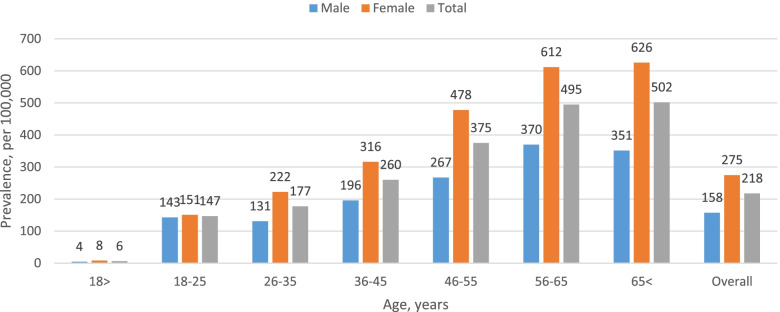
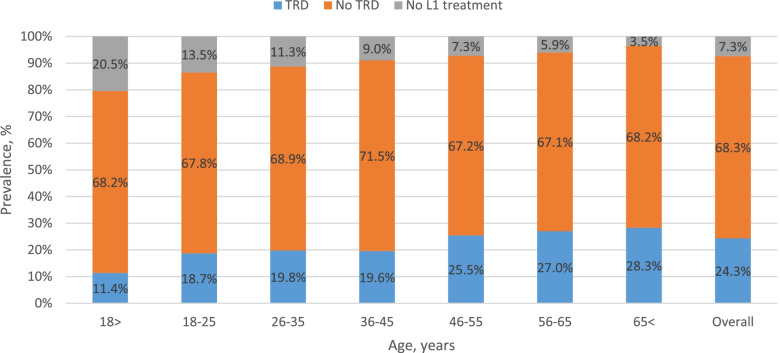
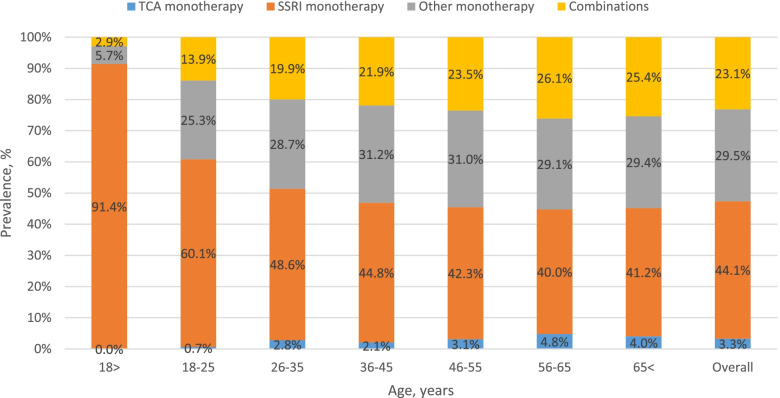
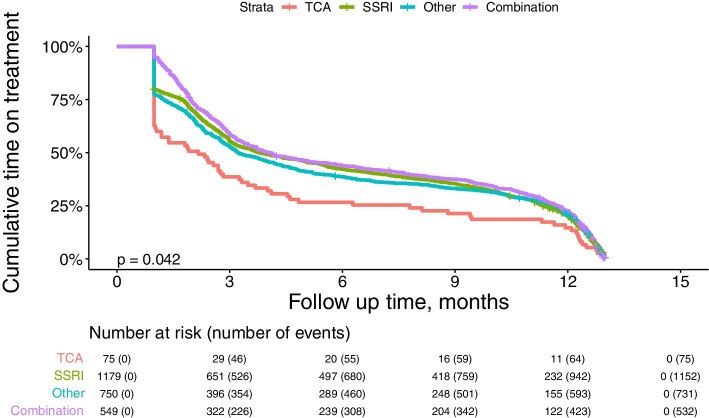
Introduction: Major depressive disorder (MDD) is one of the most common mental disorders worldwide, estimated to affect 10–15% of the population per year. Treatment resistant depression (TRD) is estimated to affect a third of these patients who show difficulties in social and occupational function, decline of physical health, suicidal thoughts and increased health care utilization. We describe the prevalence of MDD, TRD and associated healthcare resource utilization in Maccabi Healthcare Services (MHS), a 2.5 million-member state-mandated health service in Israel. Methods: All MHS members with an MDD diagnosis were identified within the years 2017–2018 and prevalence assessed by age, sex and TRD. To assess the incidence of MDD, members aged 18–65 years at the start of any MDD episode were identified between 1 st January 2016 and 31 st May 2018 with at least one systemic first-line antidepressant treatment within three months before or after the initial episode. Treatment patterns, time on first-line treatment, and healthcare resource utilization were compared by TRD. Results: A total of 4960 eligible MDD patients were identified (median age = 51 years, 65% female), representing a period prevalence of 0.218%, and of those, a high proportion of patients received drug treatment (92%). Among incident MDD cases (n = 2553), 24.4% had TRD. Factors associated with TRD included increasing age and personality disorder. Median time on treatment was 3.7 months (longer for those without TRD than those with) and 81.9% of patients purchased more than one month’s supply of therapy. In the year after index, patients with TRD had a significant increased number of visits to primary care physicians, psychiatrists, emergency room visits, general hospitalizations, and psychiatric hospitalizations. Conclusion: Our study shows that prevalence of MDD in Israel is low compared to other countries, however once diagnosed, patients' are likely to receive drug treatment. Among patients diagnosed with MDD, the proportion of TRD is similar to other countries, increases with age and is associated with increased healthcare utilization, therefore should be a focus of continued research for finding effective long term treatment options.
Overview
The claims and statistics of this paper haven’t been checked yet.
Free: it reads the open-access text and checks the first 5 claims that cite a source we can check. Create a free account to check every claim.
Integrity signals
Registry
Cites
Statistics
Figures
Verification
Claims the paper makes
The claims and statistics of this paper haven’t been checked yet.
Free: it reads the open-access text and checks the first 5 claims that cite a source we can check. Create a free account to check every claim.
Claims other papers make about this one
Each is checked against this paper’s own text: does it say what the citing paper says it does?
The cited source doesn’t support the claim as written.
In the citing paper
“It is currently estimated that at least 30% of persons with depression meet this definition.”
From Treatment‐resistant depression: definition, prevalence, detection, management, and investigational interventions (2023) · cites this paper as [101]
Checked by a reasoning model — may be wrong.
Experimental — accuracy not yet measuredThe source backs part of the claim, not all of it — or backs it for a different population, condition or comparison.
In the citing paper
“TRD is often stated to af fect approximately 30% of persons receiving antidepressant treatment in research set tings, while its prevalence in real world prac- tice is estimated to range between 6 and 55% 32,98- 101 .”
From Treatment‐resistant depression: definition, prevalence, detection, management, and investigational interventions (2023) · cites this paper as [101]
Experimental — accuracy not yet measured
Self-check
Percentages, sums and reported differences re-computed from the paper’s own numbers.
The self-check needs the paper’s full text.
Citations
Cites
Adapting a clinical comorbidity index for use with ICD-9-CM administrative databases
DEYO, R. (1992) · Journal of Clinical Epidemiology · doi:10.1016/0895-4356(92)90133-8 · Cited by 10,452 · cited 1×
“In addition, comorbidity was measured by the Deyo-Charlson Comorbidity Index [35] and augmented using the MHS chronic disease registries.”
MethodKessler, R. C., Berglund, P., Demler, O., Jin, R., Koretz, D., Merikangas, K. R., Rush, A. J., Walters, E. E., & Wang, P. S. (2003) · JAMA · doi:10.1001/jama.289.23.3095 · Cited by 7,988
Scoville, W. B. (1949) · Journal of neurosurgery · doi:10.3171/jns.1949.6.1.0065 · Cited by 7,381
Cross-national epidemiology of DSM-IV major depressive episode
Bromet, E., Andrade, L. H., Hwang, I., Sampson, N. A., Alonso, J., de Girolamo, G., de Graaf, R., Demyttenaere, K., Hu, C., Iwata, N., et al. (2011) · BMC Medicine · doi:10.1186/1741-7015-9-90 · Cited by 2,221 · cited 3×
“Period prevalence cohort Major depressive disorder is a severe disorder that had an average global prevalence in 2010 of 6% [2], with a recent systemic review reporting lifetime prevalence of between 2 and 21% [36].”
BackgroundInfluentialThe Economic Burden of Adults With Major Depressive Disorder in the United States (2005 and 2010)
Greenberg, P. E., Fournier, A.-A., Sisitsky, T., Pike, C. T., & Kessler, R. C. (2015) · The Journal of Clinical Psychiatry · doi:10.4088/jcp.14m09298 · Cited by 1,779
Seedat, S., Scott, K. M., Angermeyer, M. C., Berglund, P., Bromet, E. J., Brugha, T. S., Demyttenaere, K., de Girolamo, G., Haro, J. M., Jin, R., et al. (2009) · Archives of General Psychiatry · doi:10.1001/archgenpsychiatry.2009.36 · Cited by 1,518 · cited 2×
“[4, 5] and lifetime rates varying by country, between 1% in the Czech Republic and 16.”
BackgroundResultDiagnosis and definition of treatment-resistant depression
Fava, M. (2003) · Biological Psychiatry · doi:10.1016/s0006-3223(03)00231-2 · Cited by 1,380 · cited 5×
“Healthcare services utilization included primary care physician (PCP) visits, hospitalizations (number and duration), emergency room (ER) visits and ECT therapy.”
BackgroundInfluentialKaton, W. J. (2003) · Biological Psychiatry · doi:10.1016/s0006-3223(03)00273-7 · Cited by 1,223 · cited 1×
“MDD has substantial impact on overall functioning and quality of life, associated with high comorbidity [6] and a high burden upon healthcare services [7].”
BackgroundUndertreatment of people with major depressive disorder in 21 countries
Thornicroft, G., Chatterji, S., Evans-Lacko, S., Gruber, M., Sampson, N., Aguilar-Gaxiola, S., Al-Hamzawi, A., Alonso, J., Andrade, L., Borges, G., et al. (2017) · British Journal of Psychiatry · doi:10.1192/bjp.bp.116.188078 · Cited by 1,121 · cited 1×
“In real-world clinics, not all patients will receive treatment or move to another line of therapy, however we found that untreated patients made up just 3–20% of the entire prevalence cohort (depending on age group and sex), lower than observed in other countries [41].”
DEFINITION AND EPIDEMIOLOGY OF TREATMENT-RESISTANT DEPRESSION
Fava, M., & Davidson, K. G. (1996) · Psychiatric Clinics of North America · doi:10.1016/s0193-953x(05)70283-5 · Cited by 797
Treatment-resistant depression: therapeutic trends, challenges, and future directions
Al-harbi (2012) · Patient Preference and Adherence · doi:10.2147/ppa.s29716 · Cited by 796
(1997) · PubMed · Cited by 727
The STAR*D project results: A comprehensive review of findings
Warden, D., Rush, A. J., Trivedi, M. H., Fava, M., & Wisniewski, S. R. (2007) · Current Psychiatry Reports · doi:10.1007/s11920-007-0061-3 · Cited by 727 · cited 2×
“Another study reported a much higher proportion of TRD, however this was a clinical trial where all patients received medication according to protocol [8].”
BackgroundResultVan de Velde, S., Bracke, P., & Levecque, K. (2010) · Social Science & Medicine · doi:10.1016/j.socscimed.2010.03.035 · Cited by 719
Gender differences in depression
Angst, J., Gamma, A., Gastpar, M., L�pine, J.-P., Mendlewicz, J., & Tylee, A. (2002) · European Archives of Psychiatry and Clinical Neuroscience · doi:10.1007/s00406-002-0381-6 · Cited by 629 · cited 1×
“This theory also highlights different coping mechanisms with men pursuing sports or drinking alcohol and women using emotional outlets [49].”
BackgroundSouery, D., Oswald, P., Massat, I., Bailer, U., Bollen, J., Demyttenaere, K., Kasper, S., Lecrubier, Y., Montgomery, S., Serretti, A., et al. (2007) · The Journal of Clinical Psychiatry · doi:10.4088/jcp.v68n0713 · Cited by 521 · cited 2×
“It is estimated that 30%–40% of patients with MDD do not respond to typical antidepressant medications [11], showing treatment resistant symptoms and failure to achieve remission, with difficulties in social and occupational function, decline of physical and mental health, suicidal thoughts [12] and lower quality of l…”
BackgroundTreatment-Resistant Depression
(2015) · Encyclopedia of Psychopharmacology · doi:10.1007/978-3-642-36172-2_200431 · Cited by 488
Steiner, J. F., Koepsell, T. D., Fihn, S. D., & Inui, T. S. (1988) · Medical Care · doi:10.1097/00005650-198808000-00007 · Cited by 458
Prevalence and correlates of major depressive disorder: a systematic review
Gutiérrez-Rojas, L., Porras-Segovia, A., Dunne, H., Andrade-González, N., & Cervilla, J. A. (2020) · Brazilian Journal of Psychiatry · doi:10.1590/1516-4446-2020-0650 · Cited by 456
(2007) · PubMed · Cited by 453
Treatment resistant depression: methodological overview and operational criteria
Souery, D., Amsterdam, J., de Montigny, C., Lecrubier, Y., Montgomery, S., Lipp, O., Racagni, G., Zohar, J., & Mendlewicz, J. (1999) · European Neuropsychopharmacology · doi:10.1016/s0924-977x(98)00004-2 · Cited by 444 · cited 2×
“The most common definition requires a minimum of two prior treatment failures for adequate dose and adequate duration in a current episode [14–16], and further defined as a failure to respond to two adequate trials of different antidepressants given for 6–8 weeks at adequate doses [17, 18].”
BackgroundResultBerlim, M. T., & Turecki, G. (2007) · The Canadian Journal of Psychiatry · doi:10.1177/070674370705200108 · Cited by 412
Baxter, A. J., Scott, K. M., Ferrari, A. J., Norman, R. E., Vos, T., & Whiteford, H. A. (2014) · Depression and Anxiety · doi:10.1002/da.22230 · Cited by 403
The Impact of Treatment-Resistant Depression on Health Care Utilization and Costs
Crown, W. H., Finkelstein, S., Berndt, E. R., Ling, D., Poret, A. W., Rush, A. J., & Russell, J. M. (2002) · The Journal of Clinical Psychiatry · doi:10.4088/jcp.v63n1102 · Cited by 386 · cited 1×
“Treatment resistant depression (TRD) is associated with increased health care utilization and cost with at least 12% more outpatient visits, increased use of psychotropic medications and double the risk of hospitalization than other patients suffering from MDD [13].”
BackgroundPersonality Pathology and Treatment Outcome in Major Depression: A Review
Mulder, R. T. (2002) · American Journal of Psychiatry · doi:10.1176/appi.ajp.159.3.359 · Cited by 355 · cited 1×
“Personality disorder may present as depressive mood, showing an interaction between the two disorders [51, 52] and is associated with poor response to treatment [53, 54].”
BackgroundJohnston, K. M., Powell, L. C., Anderson, I. M., Szabo, S., & Cline, S. (2019) · Journal of Affective Disorders · doi:10.1016/j.jad.2018.06.045 · Cited by 321 · cited 1×
“Patients with TRD had increased healthcare utilization including PCP and psychiatry visits, hospitalizations and ER visits, incurring higher burden of disease and healthcare costs as reported in previous studies [46, 66].”
ResultAnderson, I. M., & Tomenson, B. M. (1995) · BMJ · doi:10.1136/bmj.310.6992.1433 · Cited by 306 · cited 1×
“TCA treatment was more likely to be discontinued after one month, in line with previous studies that report increased side effects with this therapeutic group [65] and patients that initiated SSRI or combination therapy for L1 with no TRD had longer time on treatment than those that received TCA or other treatment.”
ResultFekadu, A., Wooderson, S. C., Markopoulo, K., Donaldson, C., Papadopoulos, A., & Cleare, A. J. (2009) · Journal of Affective Disorders · doi:10.1016/j.jad.2008.10.014 · Cited by 299 · cited 2×
“Patients with TRD had increased healthcare utilization including PCP and psychiatry visits, hospitalizations and ER visits, incurring higher burden of disease and healthcare costs as reported in previous studies [46, 66].”
ResultSchuch, J. J. J., Roest, A. M., Nolen, W. A., Penninx, B. W. J. H., & de Jonge, P. (2014) · Journal of Affective Disorders · doi:10.1016/j.jad.2013.12.011 · Cited by 280
Medical Risk in Patients With Bipolar Disorder and Schizophrenia
Newcomer, J. W. (2006) · The Journal of Clinical Psychiatry · doi:10.4088/jcp.1106e16 · Cited by 264
Dunner, D. L., Rush, A. J., Russell, J. M., Burke, M., Woodard, S., Wingard, P., & Allen, J. (2006) · The Journal of Clinical Psychiatry · doi:10.4088/jcp.v67n0501 · Cited by 234 · cited 1×
“Studies have shown that TRD response rates are poor, with one study showing a 10% one-year response rate to standard MDD treatments [26].”
BackgroundDe Carlo, V., Calati, R., & Serretti, A. (2016) · Psychiatry Research · doi:10.1016/j.psychres.2016.04.034 · Cited by 217
Major Depressive Disorder and Borderline Personality Disorder Revisited: Longitudinal Interactions
Gunderson, J. G., Morey, L. C., Stout, R. L., Skodol, A. E., Shea, M. T., McGlashan, T. H., Zanarini, M. C., Grilo, C. M., Sanislow, C. A., Yen, S., et al. (2004) · The Journal of Clinical Psychiatry · doi:10.4088/jcp.v65n0804 · Cited by 201 · cited 1×
“Previous studies have shown that improvement in MDD affects the outcome of personality disorder [55].”
ResultThe epidemiology of diabetes in a large Israeli HMO
Chodick, G., Heymann, A. D., Shalev, V., & Kookia, E. (2003) · European Journal of Epidemiology · doi:10.1023/b:ejep.0000006635.36802.c8 · Cited by 175 · cited 1×
“Baseline chronic diseases were identified using validated MHS registries, (for diabetes mellitus [30], hypertension [31], chronic obstructive pulmonary disease [COPD], cardiovascular disease [32], hypertension, osteoporosis [33], cancer [34]) or by two or more ICD-9-CM diagnosis codes before index date on separate phy…”
MethodSelf-citationShalev, V., Chodick, G., Goren, I., Silber, H., Kokia, E. S., & Heymann, A. D. (2010) · International Journal of Cardiology · doi:10.1016/j.ijcard.2010.08.002 · Cited by 156 · cited 1×
“Baseline chronic diseases were identified using validated MHS registries, (for diabetes mellitus [30], hypertension [31], chronic obstructive pulmonary disease [COPD], cardiovascular disease [32], hypertension, osteoporosis [33], cancer [34]) or by two or more ICD-9-CM diagnosis codes before index date on separate phy…”
MethodSelf-citationStahl, S. M. (2003) · The Journal of Clinical Psychiatry · doi:10.4088/jcp.v64n0301 · Cited by 153
Treatment-Resistant Depression in Primary Care across Canada
Rizvi, S. J., Grima, E., Tan, M., Rotzinger, S., Lin, P., McIntyre, R. S., & Kennedy, S. H. (2014) · The Canadian Journal of Psychiatry · doi:10.1177/070674371405900702 · Cited by 144 · cited 2×
“A real world study in primary care found a prevalence rate of 22% among 1212 patients with MDD [25].”
BackgroundResultKubitz, N., Mehra, M., Potluri, R. C., Garg, N., & Cossrow, N. (2013) · PLoS ONE · doi:10.1371/journal.pone.0076882 · Cited by 143 · cited 1×
“TRD prevalence estimates vary widely dependent on the definition used, from 35% in a study limited to subjects with a MDD diagnosis [23] to less than 10% in a study that included a wider range of depression diagnoses among subjects [24].”
MethodImmigrant Status, Living Arrangements, and Depressive Symptoms Among Middle-Aged and Older Adults
Wilmoth, J. M., & Chen, P. (2003) · The Journals of Gerontology Series B · doi:10.1093/geronb/58.5.s305 · Cited by 121 · cited 1×
“Immigrants are known to be at high risk of depression [43] and communication limitations may make diagnosis and Table 3 Medication purchases by type of antidepressant medication for one month or more, by treatment resistant depression,”
BackgroundWeitzman, D., Chodick, G., Shalev, V., Grossman, C., & Grossman, E. (2014) · Hypertension · doi:10.1161/hypertensionaha.114.03718 · Cited by 114
Self-citationThe Time Course of Nonchronic Major Depressive Disorder: Uniformity Across Episodes and Samples
Coryell, W. (1994) · Archives of General Psychiatry · doi:10.1001/archpsyc.1994.03950050065007 · Cited by 105
Serious life events among resistant and non-resistant MDD patients
Amital, D., Fostick, L., Silberman, A., Beckman, M., & Спивак, Б. (2008) · Journal of Affective Disorders · doi:10.1016/j.jad.2008.01.006 · Cited by 103 · cited 1×
“It is estimated that 30%–40% of patients with MDD do not respond to typical antidepressant medications [11], showing treatment resistant symptoms and failure to achieve remission, with difficulties in social and occupational function, decline of physical and mental health, suicidal thoughts [12] and lower quality of l…”
BackgroundA New Prediction Model for Evaluating Treatment-Resistant Depression
Kautzky, A., Baldinger-Melich, P., Kranz, G. S., Vanicek, T., Souery, D., Montgomery, S., Mendlewicz, J., Zohar, J., Serretti, A., Lanzenberger, R., et al. (2017) · The Journal of Clinical Psychiatry · doi:10.4088/jcp.15m10381 · Cited by 94 · cited 1×
“It is estimated that 30%–40% of patients with MDD do not respond to typical antidepressant medications [11], showing treatment resistant symptoms and failure to achieve remission, with difficulties in social and occupational function, decline of physical and mental health, suicidal thoughts [12] and lower quality of l…”
BackgroundHeightened Subjective Experience of Depression in Borderline Personality Disorder
Stanley, B., & Wilson, S. T. (2006) · Journal of Personality Disorders · doi:10.1521/pedi.2006.20.4.307 · Cited by 75 · cited 1×
“Personality disorder may present as depressive mood, showing an interaction between the two disorders [51, 52] and is associated with poor response to treatment [53, 54].”
BackgroundCaraci, F., Calabrese, F., Molteni, R., Bartova, L., Dold, M., Leggio, G. M., Fabbri, C., Mendlewicz, J., Racagni, G., Kasper, S., et al. (2018) · Pharmacological Reviews · doi:10.1124/pr.117.014977 · Cited by 73
The pharmacological management of depression
Kupfer, D. J. (2005) · Dialogues in Clinical Neuroscience · doi:10.31887/dcns.2005.7.3/dkupfer · Cited by 69 · cited 1×
“Whereas there are no clinical trials that recommend combination therapy and the increased effectiveness is debated [57– 60], there is some evidence to suggest that combination therapy may be effective particularly in the elderly [61], and the combination of venlafaxine and mirtazapine may be particularly effective in…”
BackgroundManaging treatment-resistant major depression.
Nelson, J. C. (2003) · PubMed · Cited by 66
Personality Traits as Risk Factors for Treatment-Resistant Depression
Takahashi, M., Shirayama, Y., Muneoka, K., Suzuki, M., Sato, K., & Hashimoto, K. (2013) · PLoS ONE · doi:10.1371/journal.pone.0063756 · Cited by 63 · cited 1×
“Personality disorder may present as depressive mood, showing an interaction between the two disorders [51, 52] and is associated with poor response to treatment [53, 54].”
BackgroundDefinition of Treatment-Resistant Depression in the Medicare Population
Bradley N. Gaynes, M. D., Gary Asher, M. D., Gerald Gartlehner, M. D., Valerie Hoffman, P. D., Josh Green, B. A., Erin Boland, M. S. P. H., Linda Lux, M. P. A., Charlotte Randolph, B. A., Carla Bann, P. D., Emmanuel Cokker-Schwimmer, M. P. H., et al. (2018) · Systematic Review Data Repository · doi:10.26300/4j7h-jk02 · Cited by 58
Mahlich, J., Tsukazawa, S., & Wiegand, F. (2018) · Drugs - Real World Outcomes · doi:10.1007/s40801-017-0126-5 · Cited by 49 · cited 1×
“Incidence cohort: Treatment patterns Median age in the incidence cohort at index date was 47 years (IQR 36–56), similar to age reported in another retrospective database study [47].”
MethodMismatch negativity in treatment-resistant depression and borderline personality disorder
He, W., Chai, H., Zheng, L., Yu, W., Chen, W., Li, J., Chen, W., & Wang, W. (2010) · Progress in Neuro-Psychopharmacology and Biological Psychiatry · doi:10.1016/j.pnpbp.2009.12.021 · Cited by 48 · cited 1×
“Personality disorder may present as depressive mood, showing an interaction between the two disorders [51, 52] and is associated with poor response to treatment [53, 54].”
BackgroundEffect of inadequate response to treatment in patients with depression.
Knoth, R. L., Bolge, S. C., Kim, E., & Tran, Q.-V. (2010) · PubMed · Cited by 46
Venlafaxine—mirtazapine combination in the treatment of persistent depressive illness
Hannan, N., Hamzah, Z., Akinpeloye, H. O., & Meagher, D. (2007) · Journal of Psychopharmacology · doi:10.1177/0269881107065738 · Cited by 42
Treatment-Resistant Depression in Poland—Epidemiology and Treatment
Gałecki, P., Samochowiec, J., Mikułowska, M., & Szulc, A. (2022) · Journal of Clinical Medicine · doi:10.3390/jcm11030480 · Cited by 39
Goldshtein, I., Chandler, J., Shalev, V., Shalom, S. I., Nguyen, A. M., Rouach, V., & Chodick, G. (2015) · Journal of Aging Research and Lifestyle · doi:10.14283/jarcp.2015.43 · Cited by 33 · cited 1×
“Baseline chronic diseases were identified using validated MHS registries, (for diabetes mellitus [30], hypertension [31], chronic obstructive pulmonary disease [COPD], cardiovascular disease [32], hypertension, osteoporosis [33], cancer [34]) or by two or more ICD-9-CM diagnosis codes before index date on separate phy…”
MethodSelf-citationSaragoussi, D., Chollet, J., Bineau, S., Chalem, Y., & Milea, D. (2012) · International Journal of Clinical Practice · doi:10.1111/j.1742-1241.2012.03015.x · Cited by 30 · cited 1×
“Guidelines recommend continuing antidepressants for 4 to 9 months after initial symptom resolution, however, many patients discontinue earlier (most within first 3 months) probably due to side effects, lack of efficacy or improvement of symptoms [64].”
BackgroundDual–Dual Action? Combining Venlafaxine and Mirtazapine in the Treatment of Depression
Malhi, G. S., Ng, F., & Berk, M. (2008) · Australian & New Zealand Journal of Psychiatry · doi:10.1080/00048670701881587 · Cited by 26 · cited 1×
“Whereas there are no clinical trials that recommend combination therapy and the increased effectiveness is debated [57– 60], there is some evidence to suggest that combination therapy may be effective particularly in the elderly [61], and the combination of venlafaxine and mirtazapine may be particularly effective in…”
BackgroundPractical management of treatment-resistant depression.
Cadieux, R. J. (1998) · PubMed · Cited by 24
Mental Illness Stigma in the Israeli Context: Deliberations and Suggestions
Tal, A., Roe, D., & Corrigan, P. W. (2007) · International Journal of Social Psychiatry · doi:10.1177/0020764007082346 · Cited by 22 · cited 1×
“In addition, the stigma of mental illness is still high in Israel and patients may convince their physicians not to report a major depressive diagnosis in the electronic database [44], or report less a severe disease diagnosis such as anxiety.”
BackgroundThe characterization and definition of treatment-resistant mood disorders
Souery, D., Lipp, O., Massat, I., & Mendlewicz, J. (2001) · Treatment-Resistant Mood Disorders · doi:10.1017/cbo9780511666421.002 · Cited by 21
Augmentation and Combination Strategies for Complicated Depression
D, M. F. M. (2009) · The Journal of Clinical Psychiatry · doi:10.4088/jcp.8001tx13c · Cited by 21
Martín‐Lopez, L. M., Rojo, E., Gibert, K., Martín‐Sánchez, J. C., Sperry, L., Duñó, L., Bulbena, A., & Vallejo, J. (2011) · Depression Research and Treatment · doi:10.1155/2011/140194 · Cited by 14
Depression in primary care in Israel.
Geulayov, G., Lipsitz, J. D., Sabar, R., & Gross, R. (2007) · PubMed · Cited by 12
Treatment-refractory depression: Definitions and characteristics
Berman, R. M., Narasimhan, M., & Charney, D. S. (1997) · Depression and Anxiety · doi:10.1002/(sici)1520-6394(1997)5:4<154::aid-da2>3.0.co;2-d
Research works printed but not linked: 1
- (APA) APA. Practice guidelines for the treatment of patients with major depressive disorder, 3rd edition. 2010 [Available from: http://psychiatryonline.org/guidelines.
Cited by
McIntyre, R. S., Alsuwaidan, M., Baune, B. T., Berk, M., Demyttenaere, K., Goldberg, J. F., Gorwood, P., Ho, R., Kasper, S., Kennedy, S. H., et al. (2023) · World Psychiatry · doi:10.1002/wps.21120 · Cited by 836
The impact of exercise on depression: how moving makes your brain and body feel better
Hossain, M. N., Lee, J., Choi, H., Kwak, Y.-S., & Kim, J. (2024) · Physical Activity and Nutrition · doi:10.20463/pan.2024.0015 · Cited by 137
“Seeking guidance from a healthcare professional before starting an exercise regimen ensures a personalized and thorough treatment strategy that incorporates the beneficial impacts of physical activity 32 .”
BackgroundPrefrontal cortex astroglia modulate anhedonia-like behavior
Codeluppi-Arrowsmith, S. A., Xu, M., Bansal, Y., Lepack, A. E., Duric, V., Chow, M., Muir, J., Bagot, R. C., Licznerski, P., Wilber, S. L., et al. (2023) · Molecular Psychiatry · doi:10.1038/s41380-023-02246-1 · Cited by 47
Vincenzo, M. D., Martiadis, V., Rocca, B. D., Arsenio, E., D’Arpa, A., Volpicelli, A., Luciano, M., Sampogna, G., & Fiorillo, A. (2024) · Frontiers in Psychiatry · doi:10.3389/fpsyt.2024.1394787 · Cited by 43
The prevalence and economic burden of treatment-resistant depression in Thailand
Prasartpornsirichoke, J., Pityaratstian, N., Poolvoralaks, C., Sirinimnualkul, N., Ormtavesub, T., Hiranwattana, N., Phonsit, S., & Rungnirundorn, T. (2023) · BMC Public Health · doi:10.1186/s12889-023-16477-y · Cited by 20
“4% in 2016–2018) [32], Poland’s outpatient private and public clinics (25.”
Background
Metadata
- Authors
- Sharman Moser, S., Chodick, G., Gelerstein, S., Barit Ben David, N., Shalev, V., & Stein-Reisner, O.
- Affiliations
- Tel Aviv University (IL)
- Maccabi Healthcare Services (IL)
- Venue
- BMC Psychiatry
- Published
- 2022-08-11
- Volume
- 22
- Issue
- 1
- Pages
- 541-541
- ISSN
- 1471-244X (ISSN-L)
- PMC
- PMC9367052
- OpenAlex
- W4290991902
- Cited by
- 23
- References
- 63
- Citations by year
- 2026: 4 · 2025: 4 · 2024: 8 · 2023: 7
- FWCI
- 2.84
- Type
- journal article
- Language
- en
- Open access
- gold
- doi.org
- Licence
- cc-by
- creativecommons.org/licenses/by/4.0 (tdm)
- creativecommons.org/licenses/by/4.0 (vor)
- Locations
- BMC Psychiatry (publishedVersion, cc-by)
- PubMed Central (publishedVersion, cc-by)
- PubMed (publishedVersion)
- DOAJ (DOAJ: Directory of Open Access Journals) (submittedVersion, cc-by-sa)
- Topics
- Health Sciences › Medicine › Pharmacology (medical) › Treatment of Major Depression
- Health Sciences › Medicine › Psychiatry and Mental health › Mental Health Treatment and Access
- Social Sciences › Psychology › Clinical Psychology › Psychological Treatments and Disorders
- Keywords
- treatment-resistant depression, major depressive disorder, prevalence, healthcare resource utilization, time on treatment, personality disorders, age as risk factor, psychiatric hospitalization, emergency department visits, Maccabi Healthcare Services, Israel
- MeSH terms
- Antidepressive Agents, Major Depressive Disorder, Female, Humans, Israel, Male, Middle Aged, Retrospective Studies, Depressive Disorder, Treatment-Resistant
About these checks
Registry, retraction, Cites and statistics results are computed, not judged, with one exception: a printed reference that no index lists is read once by a model before it counts as a citation error. Claims are extracted by a model and kept only when their quote appears verbatim in the text; each cited source is then checked, with a model’s help, for whether it says what the claim relies on. Those verdicts can be wrong — read the claim’s quote and the cited source before relying on one.
Statistics and arithmetic are recomputed, not judged.
Confidence bands are shown only for fields calibrated on our annotated test set. None is calibrated yet, so no band is shown.
What counts as a claim ›How we measure confidence ›How we check this ›
Are you an author, or do you see a problem with this page? Request a review
Data sources
Bibliographic data: Semantic Scholar, OpenAlex, Crossref.
Contains information from the Semantic Scholar Academic Graph Datasets, made available under the ODC Attribution License (ODC-BY 1.0).
Semantic Scholar’s data is described in: Kinney, R., et al. (2023). The Semantic Scholar Open Data Platform. arXiv:2301.10140.
