

Mental health-related telemedicine interventions for pregnant women and new mothers: a systematic literature review
Open accessThe DOI matches its Crossref record; 86 of the 87 references it cites were found in a registry or an index; 72 of the 120 sources its claims cite were checked for support.
Abstract
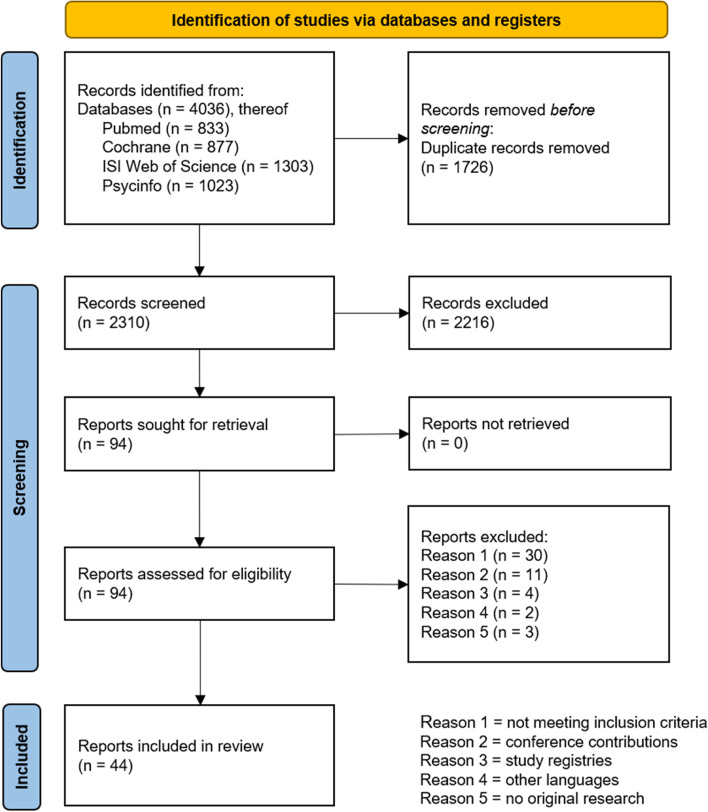
Background: Pregnancy and the postpartum period are times when women are at increased risk for depression and mental problems. This may also negatively affect the foetus. Thus, there is a need for interventions with low-threshold access and care. Telemedicine interventions are a promising approach to address these issues. This systematic literature review examined the efficacy of telemedicine interventions for pregnant women and/or new mothers to address mental health-related outcomes. The primary objective was to analyse whether telemedicine interventions can reduce mental health problems in pregnant women and new mothers. The secondary aim was to clarify the impact of type of interventions, their frequency and their targets. Methods: Inclusion criteria: randomized controlled trials, with participants being pregnant women and/or new mothers (with infants up to twelve months), involving telemedicine interventions of any kind (e.g. websites, apps, chats, telephone), and addressing any mental health-related outcomes like depression, postnatal depression, anxiety, stress and others. Search terms were pregnant women, new mothers, telemedicine, RCT (randomised controlled trials), mental stress as well as numerous synonyms including medical subject headings. The literature search was conducted within the databases PubMed, Cochrane Library, Web of Science and PsycINFO. Screening, inclusion of records and data extraction were performed by two researchers according to the PRISMA guidelines, using the online tool CADIMA. Results: Forty four articles were included. A majority (62%) reported significantly improved mental health-related outcomes for participants receiving telemedicine interventions compared to control. In particular (internet-delivered) Cognitive Behavioural Therapy was successful for depression and stress, and peer support improved outcomes for postnatal depression and anxiety. Interventions with preventive approaches and interventions aimed at symptom reduction were largely successful. For the most part there was no significant improvement in the symptoms of anxiety. Conclusion: Telemedicine interventions evaluated within RCTs were mostly successful. However, they need to be designed to specifically target a certain mental health issue because there is no one-size-fits-all approach. Further research should focus on which specific interventions are appropriate for which mental health outcomes in terms of intervention delivery modes, content, target approaches, etc. Further investigation is needed, in particular with regard to anxiety. © 2023, The Author(s).
Overview
CoChat Summary
## TL;DR
This systematic review of 44 RCT reports found that telemedicine interventions for pregnant women and new mothers were mostly associated with improved mental health-related outcomes, with 62% of articles reporting at least one significant benefit versus control. Effects were strongest and most consistent for depression, postnatal depression, and stress, while anxiety showed the least consistent benefit.
## Key findings
- The review included 44 articles from RCTs; across all studies, 4036 records were identified in the search, and 44 reports were included after screening.
- 62% of the articles reported significantly improved mental health-related outcomes compared with control; in the authors’ overall count, 29/44 (66%) reported results reaching significance, and 28/44 (64%) reported significantly improved scores.
- Across 106 mental health-related outcomes, 52 showed significantly improved scores, 53 showed no significant effects, and 1 showed significantly worse scores.
- For the most common outcomes: depression had 19 articles with 11 showing at least one significant improvement; postnatal depression had 28 articles with 14 showing at least one significant improvement; anxiety had 22 articles with only 8 showing at least one significant improvement; stress had 12 articles with 5 showing at least one significant improvement.
- Interventions using (internet-delivered) cognitive behavioural therapy (iCBT) and peer support were repeatedly highlighted as successful for some outcomes; the paper also states that preventive approaches and symptom reduction interventions were “largely successful.”
## Methods
- Systematic literature review conducted according to PRISMA; the review protocol was registered in PROSPERO (no. 166180).
- Included randomized controlled trials of pregnant women and/or new mothers with infants up to 12 months, published in English or German, from 2007 to November 2020.
- Searches were run in PubMed, Cochrane Library, Web of Science, and PsycINFO; screening and data extraction were done by two researchers using CADIMA, and risk of bias was assessed with RoB 2.
## Limitations
- The paper states that the broad inclusion criteria were both a strength and a limitation because they produced considerable variation across studies, making comparisons difficult and leaving small sample sizes for each detailed intervention commonality.
- The authors note that the risk-of-bias tool was not ideally suited to telemedicine interventions because blinding is usually not possible, and losses to follow-up are often higher in mental health studies; they also say they skipped the RoB 2 domain on deviations from intended interventions. *(stated in the paper)*
- The review itself makes evident that evidence was heterogeneous and that many subgroup conclusions rest on small numbers of studies, especially for less common outcomes and intervention types. *(evident from the text)*
- Feasibility, acceptance, and implementation barriers were not reported in every article, so the paper says no reliable conclusion can be drawn from that evidence base. *(stated in the paper)*
Model-written summary. Check it against the paper before relying on it.
Integrity signals
Registry
Cites
Statistics
Figures
Verification
Claims the paper makes
20 Valid · 6 Not valid · 13 Not checked · 169 Own results and interpretations
Some cited sources support this claim and some don’t — read each source’s verdict below.
In the paper
“However, the majority of the articles (n = 24) did not deal with the feasibility of the interventions [20, 35, 36, 38, 40, 43–45, 47, 48, 50, 51, 56, 62, 64, 66, 67, 69, 72–77].”
§ Mental health-related telemedicine interventions for pregnant women and new mothers: a systematic literature review > Results > Step 5: Feasibility, acceptance and implementation barriers
What the sources say
- Disputedcites [20] Forsell E Internet delivered cognitive behavior therapy for antenatal depression: A randomised controlled trial J Affect Disord 2017 221 56 64 10.1016/j.jad.2017.06.013 28628768 sourceExperimental — accuracy not yet measured
The cited trial does address feasibility-related questions: §2.8 describes measures of adherence and utilization, and §§3.2–3.3 report treatment use, credibility, and satisfaction. Its conclusion (§5) also calls the findings a proof of concept. The trial therefore does not fit the cited list of articles said not to deal with feasibility; the aggregate count of 24 cannot be assessed from this paper alone. Our copy provides no page numbers for these passages. (LLM, conf=0.84)
Checked by a reasoning model — may be wrong.
- Disputedcites [35] Altazan AD Mood and quality of life changes in pregnancy and postpartum and the effect of a behavioral intervention targeting excess gestational weight gain in women with overweight and obesity: a parallel-arm randomized controlled pilot trial BMC Pregnancy Childbirth 2019 19 1 50 10.1186/s12884-019-2196-8 30696408 PMC6352352 sourceExperimental — accuracy not yet measured
The Methods (Statistical analysis; page unavailable) explicitly describe this trial as a “pilot and feasibility study,” contrary to listing it among articles that did not deal with feasibility. This paper does not establish the citing review’s aggregate count of 24 articles. (LLM, conf=0.82)
Checked by a reasoning model — may be wrong.
- Supportedcites [36] Chan KL Using Smartphone-Based Psychoeducation to Reduce Postnatal Depression Among First-Time Mothers: Randomized Controlled Trial JMIR Mhealth Uhealth 2019 7 5 e12794 10.2196/12794 31094354 PMC6537506 source
This citation identifies one of the articles in the citing document’s group of 24; the count is the citing document’s tally, not a finding attributed to this trial. The Methods (Outcomes and Statistical Analysis; page unavailable) identify depression and other health outcomes as the measures used to assess effectiveness, rather than feasibility. Although the paper records app use, the cited passages do not describe a feasibility assessment. (LLM, conf=0.84)
- Partly supportedcites [38] Heller HM The Effectiveness of a Guided Internet-Based Tool for the Treatment of Depression and Anxiety in Pregnancy (MamaKits Online): Randomized Controlled Trial J Med Internet Res 2020 22 3 e15172 10.2196/15172 32202505 PMC7136839 sourceExperimental — accuracy not yet measured
The Primary Outcomes section identifies symptom reduction and perinatal child outcomes, not feasibility, as the trial’s primary focus. However, the Client Satisfaction and Inclusion, Study Flow, Study Termination, and Dropout sections report satisfaction, recruitment, and adherence—issues relevant to feasibility—so saying this article did not deal with feasibility at all is too broad. This individual paper cannot establish the citing review’s count of 24 articles. (LLM, conf=0.78)
- Not checked — no full text of the sourcecites [40] Urech C Efficacy of an internet-based cognitive behavioral stress management training in women with idiopathic preterm labor: A randomized controlled intervention study J Psychosom Res 2017 103 140 146 10.1016/j.jpsychores.2017.10.014 29167041 source
- Disputedcites [43] Barrera AZ Wickham RE Muñoz RF Online prevention of postpartum depression for Spanish- and English-speaking pregnant women: A pilot randomized controlled trial Internet Interv 2015 2 3 257 265 10.1016/j.invent.2015.06.002 26273567 PMC4530522 sourceExperimental — accuracy not yet measured
This paper does address practical aspects of the intervention: the Acceptability of intervention materials section describes collecting participant feedback, and Results §3.1 reports ratings of usefulness and ease of understanding. The Discussion (§4) also examines low engagement and access. These passages run contrary to classifying this paper as one that did not deal with intervention feasibility; they do not establish whether the other 23 cited articles did. (LLM, conf=0.78)
Checked by a reasoning model — may be wrong.
- Partly supportedcites [44] Bennion KA Impact of an Internet-Based Lifestyle Intervention on Behavioral and Psychosocial Factors During Postpartum Weight Loss Obesity (Silver Spring, Md.) 2020 28 10 1860 1867 10.1002/oby.22921 32888250 PMC7511419 sourceExperimental — accuracy not yet measured
The Methods and Results describe a trial assessing weight-control behaviors and psychosocial outcomes, rather than intervention feasibility. The Discussion mentions high retention but does not present a feasibility assessment. This single paper cannot establish the citing document’s aggregate count of 24 articles or that they were a majority. (LLM, conf=0.78)
- Not checked — no full text of the sourcecites [45] Butler Tobah YS Randomized comparison of a reduced-visit prenatal care model enhanced with remote monitoring Am J Obstet Gynecol 2019 221 6 638.e1 638.e8 10.1016/j.ajog.2019.06.034 31228414 source
- Disputedcites [47] Dennis-Tiwary TA Denefrio S Gelber S Salutary effects of an attention bias modification mobile application on biobehavioral measures of stress and anxiety during pregnancy Biol Psychol 2017 127 148 156 10.1016/j.biopsycho.2017.05.003 28478138 PMC5593765 sourceExperimental — accuracy not yet measured
As applied to this cited article, the claim that it did not deal with feasibility conflicts with its reporting of intervention use and practical difficulties. The Method’s “Participants” section records completion and withdrawal, including a withdrawal caused by technical difficulties; “App use fidelity check” reports usage and missing app-analytics data. This individual paper cannot establish the citing review’s total of 24 articles. (LLM, conf=0.76)
Checked by a reasoning model — may be wrong.
- Disputedcites [48] Duffecy J A Group-Based Online Intervention to Prevent Postpartum Depression (Sunnyside): Feasibility Randomized Controlled Trial JMIR Ment Health 2019 6 5 e10778 10.2196/10778 31140443 PMC6707575 sourceExperimental — accuracy not yet measured
This citation is included in the list of articles said not to address feasibility. The Discussion > Conclusions explicitly describes the study as “feasibility testing of a Web-based intervention,” and the Results > Stage II: Pilot Trial report usability and acceptability findings. Our copy therefore makes the contrary point about this article; it cannot establish whether the stated count of 24 is correct for the other articles. (LLM, conf=0.90)
Checked by a reasoning model — may be wrong.
plainn = 24- Asserted: passes — The authors put it forward as true.
- Checkable: passes — It can be checked against evidence.
- Load-bearing: unclear — It is unclear whether the paper’s conclusions depend on it.
- Based: passes — The paper gives a reason why it holds.
- Disputed
At least one cited source doesn’t support this claim or points to a different paper, and none confirmed it — see the verdicts below.
In the paper
“for a further two studies the acceptance was unclear [53, 63]”
§ Mental health-related telemedicine interventions for pregnant women and new mothers: a systematic literature review > Results > Step 5: Feasibility, acceptance and implementation barriers
What the sources say
- Disputedcites [53] Stremler R Effect of behavioural-educational intervention on sleep for primiparous women and their infants in early postpartum: multisite randomised controlled trial BMJ 2013 346 f1164 10.1136/bmj.f1164 23516146 PMC3603553 sourceExperimental — accuracy not yet measured
The cited trial does not leave participants’ acceptance of the trial unclear. In “Use of sleep advice, co-intervention, acceptability of trial” (page unavailable), it reports that 83% of intervention respondents liked receiving sleep information from the nurse, 79% liked the written material, and only 3.9% in each group said they probably would not participate again. The discussion raises uncertainty about acceptance of some individual strategies, but not about acceptance of the trial overall. (LLM, conf=0.82)
Checked by a reasoning model — may be wrong.
- Not checked — no full text of the sourcecites [63] O'Mahen HA Internet-based behavioral activation–treatment for postnatal depression (Netmums): a randomized controlled trial J Affect Disord 2013 150 3 814 822 10.1016/j.jad.2013.03.005 23602514 source
plain- Asserted: passes — The authors put it forward as true.
- Checkable: passes — It can be checked against evidence.
- Load-bearing: unclear — It is unclear whether the paper’s conclusions depend on it.
- Based: passes — The paper gives a reason why it holds.
- Disputed
Some cited sources support this claim and some don’t — read each source’s verdict below.
In the paper
“the remaining 14 studies in this review did not mention this issue [35, 36, 40, 44, 47, 50, 56, 66, 67, 69, 73–76].”
§ Mental health-related telemedicine interventions for pregnant women and new mothers: a systematic literature review > Results > Step 5: Feasibility, acceptance and implementation barriers
What the sources say
- Supportedcites [35] Altazan AD Mood and quality of life changes in pregnancy and postpartum and the effect of a behavioral intervention targeting excess gestational weight gain in women with overweight and obesity: a parallel-arm randomized controlled pilot trial BMC Pregnancy Childbirth 2019 19 1 50 10.1186/s12884-019-2196-8 30696408 PMC6352352 source
The Methods (Study design and intervention) describe the SmartMoms intervention, and the Results (Participant characteristics) report enrollment and follow-up, but neither discusses participant acceptance. A search of the full-text copy found no mention of acceptance or acceptability. This supports including this paper among studies that did not mention the issue; this paper alone cannot establish the count of 14. (LLM, conf=0.85)
- Supportedcites [36] Chan KL Using Smartphone-Based Psychoeducation to Reduce Postnatal Depression Among First-Time Mothers: Randomized Controlled Trial JMIR Mhealth Uhealth 2019 7 5 e12794 10.2196/12794 31094354 PMC6537506 source
The Methods and Results sections describe app use and measure postnatal depression, anxiety, stress, and quality of life, but do not discuss acceptance of the intervention. A search of our untruncated copy for “acceptance” found no matching passage. This supports including this paper among studies that did not mention acceptance; the count of 14 belongs to the citing review, not to this individual paper. (LLM, conf=0.84)
- Not checked — no full text of the sourcecites [40] Urech C Efficacy of an internet-based cognitive behavioral stress management training in women with idiopathic preterm labor: A randomized controlled intervention study J Psychosom Res 2017 103 140 146 10.1016/j.jpsychores.2017.10.014 29167041 source
- Supportedcites [44] Bennion KA Impact of an Internet-Based Lifestyle Intervention on Behavioral and Psychosocial Factors During Postpartum Weight Loss Obesity (Silver Spring, Md.) 2020 28 10 1860 1867 10.1002/oby.22921 32888250 PMC7511419 source
This citation identifies one of the studies the review says did not mention acceptance; the count of 14 is the review’s own characterization, not a finding attributed to this individual paper. The Introduction and Methods > Interventions describe the study’s behavioral and psychosocial targets, and the Discussion describes its measures and limitations, without addressing acceptance. Pages are not supplied in our copy. (LLM, conf=0.82)
- Disputedcites [47] Dennis-Tiwary TA Denefrio S Gelber S Salutary effects of an attention bias modification mobile application on biobehavioral measures of stress and anxiety during pregnancy Biol Psychol 2017 127 148 156 10.1016/j.biopsycho.2017.05.003 28478138 PMC5593765 sourceExperimental — accuracy not yet measured
The paper’s introductory discussion (indexed under Abstract; page unavailable) explicitly mentions the “acceptability” of treatments during pregnancy and the goal of optimizing treatment acceptability. Thus, this cited study does mention the issue, contrary to the claim that it did not. (LLM, conf=0.85)
Checked by a reasoning model — may be wrong.
- Supportedcites [50] Kalmbach DA A randomized controlled trial of digital cognitive behavioral therapy for insomnia in pregnant women Sleep Med 2020 72 82 92 10.1016/j.sleep.2020.03.016 32559716 PMC8210706 source
For this citation, the paper serves as one example of a study the review says did not discuss acceptance; it is not being cited to establish the total of 14. The Methods (Study outcomes; page unavailable) describe sleep and symptom outcomes, and the Methods (Sociodemographics, health information, and potential covariates; page unavailable) describe session completion as adherence. Our full-text copy does not report acceptance as an issue assessed by this study. (LLM, conf=0.83)
- Not checked — no full text of the sourcecites [56] Carissoli C Enhancing psychological wellbeing of women approaching the childbirth: a controlled study with a mobile application Annu Rev Cyberther Telemed 2017 15 45 50
- Not checked — no full text of the sourcecites [66] Ngai FW The Effect of Telephone-Based Cognitive-Behavioral Therapy on Postnatal Depression: a Randomized Controlled Trial Psychother Psychosom 2015 84 5 294 303 10.1159/000430449 26278623 source
- Could not verifycites [67] Shorey S Evaluation of a Technology-Based Peer-Support Intervention Program for Preventing Postnatal Depression (Part 1): Randomized Controlled Trial J Med Internet Res 2019 21 8 e12410 10.2196/12410 31469084 PMC6744221 sourceExperimental — accuracy not yet measured
The trial’s Results report maternal outcomes, not acceptance. A Discussion passage mentions mothers’ satisfaction only as a finding from a separate qualitative interview. Searches for acceptance, acceptability, and related terms found no passage establishing the review’s claim; this one paper also cannot verify the count of 14 studies. (LLM, conf=0.70)
- Disputedcites [69] Yang R Vigod SN Hensel JM Optional Web-Based Videoconferencing Added to Office-Based Care for Women Receiving Psychotherapy During the Postpartum Period: Pilot Randomized Controlled Trial J Med Internet Res 2019 21 6 e13172 10.2196/13172 31199291 PMC6592391 sourceExperimental — accuracy not yet measured
This source does address acceptance. The Discussion (Principal Findings; page unavailable) explicitly mentions patient acceptance of virtual mental health care, and the Conclusions say videoconferencing was perceived as an acceptable format for psychotherapy. The source cannot establish what the other 13 studies mentioned. (LLM, conf=0.90)
Checked by a reasoning model — may be wrong.
plain- Asserted: passes — The authors put it forward as true.
- Checkable: passes — It can be checked against evidence.
- Load-bearing: unclear — It is unclear whether the paper’s conclusions depend on it.
- Based: passes — The paper gives a reason why it holds.
- Supported
Some cited sources support this claim and some don’t — read each source’s verdict below.
In the paper
“the other studies (n = 38 [20, 35–37, 39–42, 44, 45, 47, 48, 50–57, 59, 61–77]) did not report anything about this aspect.”
§ Mental health-related telemedicine interventions for pregnant women and new mothers: a systematic literature review > Results > Step 5: Feasibility, acceptance and implementation barriers
What the sources say
- Disputedcites [20] Forsell E Internet delivered cognitive behavior therapy for antenatal depression: A randomised controlled trial J Affect Disord 2017 221 56 64 10.1016/j.jad.2017.06.013 28628768 sourceExperimental — accuracy not yet measured
The paper does discuss potential implementation barriers. Section 4.4 (page not provided) says specialized protocols may reduce therapist fidelity or hinder dissemination, and that adapting protocols has a development cost. This contradicts the categorical claim that the study reported nothing about implementation barriers, although it did not systematically assess them. (LLM, conf=0.84)
Checked by a reasoning model — may be wrong.
- Supportedcites [35] Altazan AD Mood and quality of life changes in pregnancy and postpartum and the effect of a behavioral intervention targeting excess gestational weight gain in women with overweight and obesity: a parallel-arm randomized controlled pilot trial BMC Pregnancy Childbirth 2019 19 1 50 10.1186/s12884-019-2196-8 30696408 PMC6352352 source
The Methods (Study design and intervention) describe how SmartMoms was delivered, and the Results (Participant characteristics) report enrollment and exclusions, but neither reports implementation barriers. Searches for implementation barriers, challenges, feasibility, adherence, and recruitment found no barrier report in this paper. This supports including it among studies that did not report barriers; the paper alone cannot establish the citing review’s total of 38 studies. (LLM, conf=0.82)
- Could not verifycites [36] Chan KL Using Smartphone-Based Psychoeducation to Reduce Postnatal Depression Among First-Time Mothers: Randomized Controlled Trial JMIR Mhealth Uhealth 2019 7 5 e12794 10.2196/12794 31094354 PMC6537506 sourceExperimental — accuracy not yet measured
The Methods describe delivery and use of the iParent app, and the Results report retention, but the passages found do not assess barriers to implementing the intervention. The Introduction discusses constraints on traditional face-to-face support, not barriers encountered in this trial. This paper also cannot establish what the other 37 cited studies reported. (LLM, conf=0.68)
- Supportedcites [37] Haga SM Mamma Mia - A randomized controlled trial of an internet-based intervention for perinatal depression Psychol Med 2018 49 11 1850 1858 10.1017/S0033291718002544 30191779 PMC6650775 source
For this study, the Introduction discusses barriers to accessing face-to-face treatment, while the Study limitations and Adherence sections discuss dropout and session completion. Our copy does not report barriers to implementing the Mamma Mia intervention. This source alone cannot establish the statement about all 38 studies. (LLM, conf=0.82)
- Not checked — no full text of the sourcecites [39] Loughnan SA A randomized controlled trial of 'MUMentum Pregnancy': Internet-delivered cognitive behavioral therapy program for antenatal anxiety and depression J Affect Disord 2019 243 381 390 10.1016/j.jad.2018.09.057 30266030 source
- Not checked — no full text of the sourcecites [40] Urech C Efficacy of an internet-based cognitive behavioral stress management training in women with idiopathic preterm labor: A randomized controlled intervention study J Psychosom Res 2017 103 140 146 10.1016/j.jpsychores.2017.10.014 29167041 source
- Disputedcites [41] Sheeber LB Development and Pilot Evaluation of an Internet-Facilitated Cognitive-Behavioral Intervention for Maternal Depression J Consult Clin Psychol 2012 80 5 739 749 10.1037/a0028820 22663903 PMC3435487 sourceExperimental — accuracy not yet measured
The claim says this study reported nothing about implementation barriers, but the Method (Mom-Net Intervention; page unavailable) says coaches addressed barriers to participants’ engagement. The Discussion (page unavailable) also identifies provision of computer equipment as a likely aid to enrollment and retention. This paper cannot establish whether the other 37 studies reported barriers. (LLM, conf=0.78)
Checked by a reasoning model — may be wrong.
- Disputedcites [42] Ahmed AH The Effect of Interactive Web-Based Monitoring on Breastfeeding Exclusivity, Intensity, and Duration in Healthy, Term Infants After Hospital Discharge J Obstet Gynecol Neonatal Nurs 2016 45 2 143 154 10.1016/j.jogn.2015.12.001 26779838 PMC4789120 sourceExperimental — accuracy not yet measured
The Results section reports reasons participants did not use or complete the web-based intervention, including family demands, computer and Internet problems, and re-hospitalization. The Methods section also identifies data-entry burden as a possible obstacle. Thus, this study did report barriers relevant to implementation; its text cannot establish what the other 37 studies reported. Page numbers are not available in our copy. (LLM, conf=0.88)
Checked by a reasoning model — may be wrong.
- Supportedcites [44] Bennion KA Impact of an Internet-Based Lifestyle Intervention on Behavioral and Psychosocial Factors During Postpartum Weight Loss Obesity (Silver Spring, Md.) 2020 28 10 1860 1867 10.1002/oby.22921 32888250 PMC7511419 source
The Results and Discussion (pages unavailable in our copy) report participant retention, a clinic withdrawal, and barriers women face in adhering to weight-loss programs, but do not report barriers to implementing this intervention. The adherence barriers are distinct from implementation barriers. (LLM, conf=0.84)
- Not checked — no full text of the sourcecites [45] Butler Tobah YS Randomized comparison of a reduced-visit prenatal care model enhanced with remote monitoring Am J Obstet Gynecol 2019 221 6 638.e1 638.e8 10.1016/j.ajog.2019.06.034 31228414 source
plainn = 38- Asserted: passes — The authors put it forward as true.
- Checkable: passes — It can be checked against evidence.
- Load-bearing: unclear — It is unclear whether the paper’s conclusions depend on it.
- Based: passes — The paper gives a reason why it holds.
- Disputed
The sources with a verdict support this claim; the rest weren’t checked yet, have no full text we could read, or their verdicts aren’t rated yet.
In the paper
“To our knowledge, there are currently few systematic reviews and meta-analyses in the literature that have dealt specifically with the topic of mental health and telemedicine interventions for pregnant women or new mothers [26–31].”
§ Mental health-related telemedicine interventions for pregnant women and new mothers: a systematic literature review > Background
What the sources say
- Supportedcites [26] Lee EW Web-based interventions for prevention and treatment of perinatal mood disorders: a systematic review BMC Pregnancy Childbirth 2016 16 38 10.1186/s12884-016-0831-1 26928898 PMC4770541 source
The Abstract (Background) identifies this paper as a systematic review of web-based interventions for mood disorders from pregnancy through one year postpartum. It therefore supports the citation as an example of a review on mental-health telemedicine interventions for pregnant women or new mothers; it need not itself be a meta-analysis. (LLM, conf=0.90)
- Not checked — no full text of the sourcecites [27] Loughnan SA Internet-delivered psychological interventions for clinical anxiety and depression in perinatal women: a systematic review and meta-analysis Arch Womens Ment Health 2019 22 6 737 750 10.1007/s00737-019-00961-9 31101993 source
- Not checked — no full text of the sourcecites [28] Nair U The effectiveness of telemedicine interventions to address maternal depression: A systematic review and meta-analysis J Telemed Telecare 2018 24 10 639 650 10.1177/1357633X18794332 30343660 source
- Not checked — no full text of the sourcecites [29] Ashford MT Olander EK Ayers S Computer- or web-based interventions for perinatal mental health: A systematic review J Affect Disord 2016 197 134 146 10.1016/j.jad.2016.02.057 26991368 source
- Supportedcites [30] Hanach N The effectiveness of telemedicine interventions, delivered exclusively during the postnatal period, on postpartum depression in mothers without history or existing mental disorders: A systematic review and meta-analysis Midwifery 2021 94 102906 10.1016/j.midw.2020.102906 33360589 source
The citation is one of several offered as examples of reviews on this topic. The Methods and Discussion sections identify this paper as a systematic review and meta-analysis of telemedicine interventions for postpartum depression in new mothers. Page numbers are unavailable in our copy. (LLM, conf=0.90)
- Supportedcites [31] Lau Y Therapist-Supported Internet-Based Cognitive Behavior Therapy for Stress, Anxiety, and Depressive Symptoms Among Postpartum Women: A Systematic Review and Meta-Analysis J Med Internet Res 2017 19 4 e138 10.2196/jmir.6712 28455276 PMC5429436 source
The Introduction says relatively few meta-analyses of therapist-supported internet-based cognitive behavioral therapy focus on postpartum women. It also identifies two recent systematic reviews of computer- or Web-based interventions for perinatal mental health or mood disorders, supporting the citing sentence’s broad claim that such reviews were few. (LLM, conf=0.91)
hedged- Asserted: passes — The authors put it forward as true.
- Checkable: passes — It can be checked against evidence.
- Load-bearing: passes — The paper’s conclusions depend on it.
- Based: passes — The paper gives a reason why it holds.
- Supported
103 more claims · 6 with their cited sources checked
Create a free account to see all 208 claims and to verify the 2 references still open.
- Probably not a substantial claim. 31
- It may state two separate claims as one. 65
- Borderline: one of the tests for a substantial claim is unclear. 1
- The quote only partly states this claim. 11
Citations
Cites
RoB 2: a revised tool for assessing risk of bias in randomised trials
Sterne, J. A. C., Savović, J., Page, M. J., Elbers, R. G., Blencowe, N. S., Boutron, I., Cates, C. J., Cheng, H.-Y., Corbett, M. S., Eldridge, S. M., et al. (2019) · BMJ · doi:10.1136/bmj.l4898 · Cited by 34,787 · cited 2×
“To critically appraise the validity of the included articles risk of bias assessments [34] were performed with the Cochrane risk-of-bias tool for randomized trials (RoB 2) according to the PRISMA guidelines [32].”
MethodPRISMA-P Group, Moher, D., Shamseer, L., Clarke, M., Ghersi, D., Liberati, A., Petticrew, M., Shekelle, P., & Stewart, L. A. (2015) · Systematic Reviews · doi:10.1186/2046-4053-4-1 · Cited by 26,223 · cited 3×
“A strength of this review was that it was carried out according to the PRISMA guidelines [32] and using the open access online tool CADIMA [33].”
MethodEffects of perinatal mental disorders on the fetus and child
Stein, A., Pearson, R. M., Goodman, S. H., Rapa, E., Rahman, A., McCallum, M., Howard, L. M., & Pariante, C. M. (2014) · The Lancet · doi:10.1016/s0140-6736(14)61277-0 · Cited by 2,166 · cited 2×
“An untreated mental disorder during pregnancy can affect not just the mother but also the foetus [7] and it also has implications for the postpartum development [8].”
BackgroundGrote, N. K., Bridge, J. A., Gavin, A. R., Melville, J. L., Iyengar, S., & Katon, W. J. (2010) · Archives of General Psychiatry · doi:10.1001/archgenpsychiatry.2010.111 · Cited by 1,882
Fisher, J., Cabral de Mello, M., Patel, V., Rahman, A., Tran, T., Holton, S., & Holmes, W. (2012) · Bulletin of the World Health Organization · doi:10.2471/blt.11.091850 · Cited by 1,798 · cited 2×
“It is known, that the prevalence is higher in low-to middle-income countries than in high-income countries [2, 6].”
BackgroundPrevalence of Depression During Pregnancy: Systematic Review
Bennett, H. A., Einarson, A., Taddio, A., Koren, G., & Einarson, T. R. (2004) · Obstetrics & Gynecology · doi:10.1097/01.aog.0000116689.75396.5f · Cited by 1,725
Computer-based psychological treatments for depression: A systematic review and meta-analysis
Richards, D., & Richardson, T. (2012) · Clinical Psychology Review · doi:10.1016/j.cpr.2012.02.004 · Cited by 1,442 · cited 1×
“The success of ‘telephone’ interventions can probably be attributed to the fact that ‘telemedicine’ interventions with personal contacts are commonly more successful than interventions without personal contacts [83, 84].”
BackgroundPerinatal mental health: a review of progress and challenges
Howard, L. M., & Khalifeh, H. (2020) · World Psychiatry · doi:10.1002/wps.20769 · Cited by 1,118 · cited 4×
“It is known, that the prevalence is higher in low-to middle-income countries than in high-income countries [2, 6].”
BackgroundInfluentialThe Impact of Postnatal Depression on Infant Development
Murray, L. (1992) · Journal of Child Psychology and Psychiatry · doi:10.1111/j.1469-7610.1992.tb00890.x · Cited by 1,089 · cited 1×
“The negative effects on children’s development caused by low mother–child bonding are well known [16].”
BackgroundShorey, S., Chee, C. Y. I., Ng, E. D., Chan, Y. H., Tam, W. W. S., & Chong, Y. S. (2018) · Journal of Psychiatric Research · doi:10.1016/j.jpsychires.2018.08.001 · Cited by 1,055
Children of Affectively Ill Parents: A Review of the Past 10 Years
BEARDSELEE, W. R., VERSAGE, E. M., & GIADSTONE, T. R. G. (1998) · Journal of the American Academy of Child & Adolescent Psychiatry · doi:10.1097/00004583-199811000-00012 · Cited by 943
New Parents and Mental Disorders: A Population-Based Register Study
Munk-Olsen, T., Laursen, T. M., Pedersen, C. B., Mors, O., & Mortensen, P. B. (2006) · JAMA · doi:10.1001/jama.296.21.2582 · Cited by 727
Depression and anxiety in early pregnancy and risk for preeclampsia
Kurki, T. (2000) · Obstetrics & Gynecology · doi:10.1016/s0029-7844(99)00602-x · Cited by 690
O’Connor, E., Rossom, R. C., Henninger, M., Groom, H. C., & Burda, B. U. (2016) · JAMA · doi:10.1001/jama.2015.18948 · Cited by 563 · cited 2×
“Diagnostics and treatment are needed as early as possible [11, 20, 21].”
BackgroundMental Health Mobile Apps for Preadolescents and Adolescents: A Systematic Review.
Grist, R., Porter, J., & Stallard, P. (2017) · Journal of Medical Internet Research · doi:10.2196/jmir.7332 · Cited by 518 · cited 1×
“The success of ‘telephone’ interventions can probably be attributed to the fact that ‘telemedicine’ interventions with personal contacts are commonly more successful than interventions without personal contacts [83, 84].”
BackgroundDepression during pregnancy: rates, risks and consequences--Motherisk Update 2008.
Marcus, S. M. (2009) · PubMed · Cited by 513
Kohl, C., McIntosh, E. J., Unger, S., Haddaway, N. R., Kecke, S., Schiemann, J., & Wilhelm, R. (2018) · Environmental Evidence · doi:10.1186/s13750-018-0115-5 · Cited by 471
Sockol, L. E. (2015) · Journal of Affective Disorders · doi:10.1016/j.jad.2015.01.052 · Cited by 395 · cited 4×
“[78] that CBT-interventions generally had an even greater effect in the postpartum phase than interventions in the perinatal phase.”
BackgroundInfluentialDennis, C.-L., Hodnett, E., Kenton, L., Weston, J., Zupancic, J., Stewart, D. E., & Kiss, A. (2009) · BMJ · doi:10.1136/bmj.a3064 · Cited by 386 · cited 10×
“One article stated that ‘telephone remains the most accessible for most people’ [46].”
BackgroundInfluentialPrenatal depression restricts fetal growth
Diego, M. A., Field, T., Hernandez-Reif, M., Schanberg, S., Kuhn, C., & Gonzalez-Quintero, V. H. (2009) · Early Human Development · doi:10.1016/j.earlhumdev.2008.07.002 · Cited by 277
Milgrom, J., Danaher, B. G., Gemmill, A. W., Holt, C., Holt, C. J., Seeley, J. R., Tyler, M. S., Ross, J., & Ericksen, J. (2016) · Journal of Medical Internet Research · doi:10.2196/jmir.4993 · Cited by 221 · cited 8×
“Education lessons (n = 10) 5 (50%) [36, 37, 67, 71, 75]”
BackgroundInfluentialRandomized comparison of a reduced-visit prenatal care model enhanced with remote monitoring
Butler Tobah, Y. S., LeBlanc, A., Branda, M. E., Inselman, J. W., Morris, M. A., Ridgeway, J. L., Finnie, D. M., Theiler, R., Torbenson, V. E., Brodrick, E. M., et al. (2019) · American Journal of Obstetrics and Gynecology · doi:10.1016/j.ajog.2019.06.034 · Cited by 212 · cited 10×
“Another categorization concerned the goals of the intervention: ‘managing and coping with stress’ (n = 3 [40, 48, 60]), ‘preventing stress/mental health impairment’ (n = 11 [36, 37, 43, 45, 46, 54, 57, 58, 61, 65, 77]), ‘strengthening mental health’ (n = 6 [56, 59, 73–76]) and ‘symptom reduction’ (n = 17 [20, 38, 39,…”
BackgroundInfluentialO'Mahen, H. A., Woodford, J., McGinley, J., Warren, F. C., Richards, D. A., Lynch, T. R., & Taylor, R. S. (2013) · Journal of Affective Disorders · doi:10.1016/j.jad.2013.03.005 · Cited by 202 · cited 8×
“Symptom reduction (n = 10) 5 (50%) [20, 39, 52, 63, 66]”
BackgroundInfluentialForsell, E., Bendix, M., Holländare, F., Szymanska von Schultz, B., Nasiell, J., Blomdahl-Wetterholm, M., Eriksson, C., Kvarned, S., Lindau van der Linden, J., Söderberg, E., et al. (2017) · Journal of Affective Disorders · doi:10.1016/j.jad.2017.06.013 · Cited by 175 · cited 8×
“Symptom reduction (n = 10) 5 (50%) [20, 39, 52, 63, 66]”
BackgroundInfluentialComputer- or web-based interventions for perinatal mental health: a systematic review
Ashford, M. T., Olander, E. K., & Ayers, S. (2016) · Journal of Affective Disorders · doi:10.1016/j.jad.2016.02.057 · Cited by 166 · cited 2×
“Existing reviews focused on specific intervention contents like internet-delivered Cognitive Behavioural Therapy (iCBT) [27, 31] on specific diagnoses like depression and anxiety [27, 28, 30, 31] or on specific modalities like internet-delivered interventions [26, 29].”
BackgroundA randomized controlled trial of digital cognitive behavioral therapy for insomnia in pregnant women
Kalmbach, D. A., Cheng, P., O'Brien, L. M., Swanson, L. M., Sangha, R., Sen, S., Guille, C., Cuamatzi-Castelan, A., Henry, A. L., Roth, T., et al. (2020) · Sleep Medicine · doi:10.1016/j.sleep.2020.03.016 · Cited by 154 · cited 7×
“In n = 7 articles the ‘main intervention target was not in the field of mental health [35, 42, 44, 50, 53, 67, 68]).”
BackgroundInfluentialLau, Y., Htun, T. P., Wong, S. N., Tam, W. S. W., & Klainin-Yobas, P. (2017) · Journal of Medical Internet Research · doi:10.2196/jmir.6712 · Cited by 149 · cited 4×
“Existing reviews focused on specific intervention contents like internet-delivered Cognitive Behavioural Therapy (iCBT) [27, 31] on specific diagnoses like depression and anxiety [27, 28, 30, 31] or on specific modalities like internet-delivered interventions [26, 29].”
BackgroundResultInfluentialBarrera, A. Z., Wickham, R. E., & Muñoz, R. F. (2015) · Internet Interventions · doi:10.1016/j.invent.2015.06.002 · Cited by 145 · cited 3×
“The control groups comprised 57% TAU (n = 25, [20, 35–39, 42, 45, 46, 51, 53, 56, 63, 66–75, 77]), 23% waitlist controls (n = 10, [41, 49, 52, 57–62, 65]), 7% information only controls (n = 3, [43, 50, 54]), 7% another intervention (n = 3, [44, 48, 76]), 5% distraction controls (n = 2, [40, 64]), and 2% placebo traini…”
BackgroundStremler, R., Hodnett, E., Kenton, L., Lee, K., Weiss, S., Weston, J., & Willan, A. (2013) · BMJ · doi:10.1136/bmj.f1164 · Cited by 145 · cited 9×
“The participants were mostly positive in terms of their acceptance of or satisfaction with the intervention (n = 23 [20, 38, 39, 41–43, 45, 46, 48, 51, 52, 54, 55, 58, 59, 61, 62, 64, 65, 68, 70–72]), however acceptance was reported as negative in two studies[49, 60], for a further two studies the acceptance was uncle…”
BackgroundResultInfluentialLoughnan, S. A., Sie, A., Hobbs, M. J., Joubert, A. E., Smith, J., Haskelberg, H., Mahoney, A. E. J., Kladnitski, N., Holt, C. J., Milgrom, J., et al. (2019) · Journal of Affective Disorders · doi:10.1016/j.jad.2018.09.057 · Cited by 145 · cited 9×
“Symptom reduction (n = 10) 5 (50%) [20, 39, 52, 63, 66]”
BackgroundInfluentialLee, E. W., Denison, F. C., Hor, K., & Reynolds, R. M. (2016) · BMC Pregnancy and Childbirth · doi:10.1186/s12884-016-0831-1 · Cited by 143 · cited 2×
“Existing reviews focused on specific intervention contents like internet-delivered Cognitive Behavioural Therapy (iCBT) [27, 31] on specific diagnoses like depression and anxiety [27, 28, 30, 31] or on specific modalities like internet-delivered interventions [26, 29].”
BackgroundResultShorey, S., Chee, C. Y. I., Ng, E. D., Lau, Y., Dennis, C.-L., & Chan, Y. H. (2019) · Journal of Medical Internet Research · doi:10.2196/12410 · Cited by 125 · cited 10×
“Education lessons (n = 10) 5 (50%) [36, 37, 67, 71, 75]”
BackgroundInfluentialLoughnan, S. A., Joubert, A. E., Grierson, A., Andrews, G., & Newby, J. M. (2019) · Archives of Women's Mental Health · doi:10.1007/s00737-019-00961-9 · Cited by 123 · cited 5×
“This was consistent with other reviews that investigated web-based iCBT interventions targeting maternal mood outcomes in pregnant women and mothers in postpartum stage [26, 27, 31].”
BackgroundResultInfluentialOhoka, H., Koide, T., Goto, S., Murase, S., Kanai, A., Masuda, T., Aleksic, B., Ishikawa, N., Furumura, K., & Ozaki, N. (2014) · Psychiatry and Clinical Neurosciences · doi:10.1111/pcn.12171 · Cited by 117 · cited 1×
“showed that the mother-to-infant-bonding is less pronounced in women who suffer from depression during pregnancy, furthermore, that bonding decreased after delivery, and then went up at 1 month postpartum [15].”
BackgroundPerinatal Maternal Mental Health, Fetal Programming and Child Development
Lewis, A., Austin, E., Knapp, R., Vaiano, T., & Galbally, M. (2015) · Healthcare · doi:10.3390/healthcare3041212 · Cited by 114 · cited 1×
“Diagnostics and treatment are needed as early as possible [11, 20, 21].”
BackgroundPugh, N. E., Hadjistavropoulos, H. D., & Dirkse, D. (2016) · PLOS ONE · doi:10.1371/journal.pone.0149186 · Cited by 114 · cited 9×
“Symptom reduction (n = 10) 5 (50%) [20, 39, 52, 63, 66]”
BackgroundInfluentialOxytocin pathways in the intergenerational transmission of maternal early life stress
Toepfer, P., Heim, C., Entringer, S., Binder, E., Wadhwa, P., & Buss, C. (2017) · Neuroscience & Biobehavioral Reviews · doi:10.1016/j.neubiorev.2016.12.026 · Cited by 113 · cited 1×
“Furthermore, untreated mental disorders in the mothers can affect the mother–child-bonding [14].”
BackgroundNair, U., Armfield, N. R., Chatfield, M. D., & Edirippulige, S. (2018) · Journal of Telemedicine and Telecare · doi:10.1177/1357633x18794332 · Cited by 111 · cited 2×
“Existing reviews focused on specific intervention contents like internet-delivered Cognitive Behavioural Therapy (iCBT) [27, 31] on specific diagnoses like depression and anxiety [27, 28, 30, 31] or on specific modalities like internet-delivered interventions [26, 29].”
BackgroundShorey, S., Lau, Y., Dennis, C., Chan, Y. S., Tam, W. W. S., & Chan, Y. H. (2017) · Journal of Advanced Nursing · doi:10.1111/jan.13293 · Cited by 110 · cited 10×
“(c) Personal contacts were provided in the form of ‘bilateral contacts’ (n = 20 [20, 35, 36, 38, 41, 42, 45, 46, 49–55, 62, 64, 66, 69, 77]), as a ‘forum’, where participants could post, read, and comment on messages, share experiences and exchange views and information with other participants and sometimes also with…”
BackgroundInfluentialLoughnan, S. A., Butler, C., Sie, A. A., Grierson, A. B., Chen, A. Z., Hobbs, M. J., Joubert, A. E., Haskelberg, H., Mahoney, A., Holt, C., et al. (2019) · Behaviour Research and Therapy · doi:10.1016/j.brat.2019.03.001 · Cited by 102 · cited 4×
“Contacts restricted to ‘purely technical support’ reported n = 9 articles [37, 39, 44, 57, 58, 61, 70, 74, 76], thereof n = 1 ‘automated feedback’ [44], n = 2 ‘delivery by email’ [37, 74], n = 5 ‘reminders or reminders plus program-related support’ [39, 57, 58, 61, 76], and n = 1 ‘technical assistance’ [70].”
BackgroundInfluentialChan, K. L., Leung, W. C., Tiwari, A., Or, K. L., & Ip, P. (2019) · JMIR mHealth and uHealth · doi:10.2196/12794 · Cited by 102 · cited 10×
“Education lessons (n = 10) 5 (50%) [36, 37, 67, 71, 75]”
BackgroundInfluentialSawyer, A., Kaim, A., Le, H.-N., McDonald, D., Mittinty, M., Lynch, J., & Sawyer, M. (2019) · Journal of Medical Internet Research · doi:10.2196/13689 · Cited by 101 · cited 9×
“‘Online group and education’ [72] were also mentioned only once as intervention content.”
BackgroundInfluentialThe Impact of a Brief Obstetrics Clinic-Based Intervention on Treatment Use for Perinatal Depression
Flynn, H. A., O'mahen, H. A., Massey, L., & Marcus, S. (2006) · Journal of Women's Health · doi:10.1089/jwh.2006.15.1195 · Cited by 99 · cited 1×
“found, that 65% of pregnant women with a current major depressive disorder were not receiving any depression treatment [24].”
BackgroundMamma Mia – A randomized controlled trial of an internet-based intervention for perinatal depression
Haga, S. M., Drozd, F., Lisøy, C., Wentzel-Larsen, T., & Slinning, K. (2019) · Psychological Medicine · doi:10.1017/s0033291718002544 · Cited by 99 · cited 8×
“Internet intervention: website (n = 17) 9 (53%) [20, 37, 39, 52, 58, 60, 63, 65, 75]”
BackgroundResultInfluentialYang, M., Jia, G., Sun, S., Ye, C., Zhang, R., & Yu, X. (2019) · Journal of Midwifery & Women's Health · doi:10.1111/jmwh.12944 · Cited by 99 · cited 10×
“Two interventions were referred to as treatment sessions without further specification (‘treatment sessions via telephone by certified nursemidwives’, ‘videoconferencing’) [51, 55].”
BackgroundInfluentialMindfulness for pregnancy: a randomised controlled study of online mindfulness during pregnancy
Krusche, A., Dymond, M., Murphy, S. E., & Crane, C. (2018) · Midwifery · doi:10.1016/j.midw.2018.07.005 · Cited by 97
Shorey, S., Ng, Y. P. M., Ng, E. D., Siew, A. L., Mörelius, E., Yoong, J., & Gandhi, M. (2019) · Journal of Medical Internet Research · doi:10.2196/10816 · Cited by 97 · cited 9×
“Telephone, emails or other messengers (n = 1) 1 (100%) [77]”
BackgroundInfluentialGuo, L., Zhang, J., Mu, L., & Ye, Z. (2020) · Journal of Nervous & Mental Disease · doi:10.1097/nmd.0000000000001096 · Cited by 96 · cited 8×
“Internet intervention: website (n = 17) 9 (53%) [20, 37, 39, 52, 58, 60, 63, 65, 75]”
BackgroundInfluentialZhao, L., Chen, J., Lan, L., Deng, N., Liao, Y., Yue, L., Chen, I., Wen, S. W., & Xie, R.-H. (2021) · JMIR mHealth and uHealth · doi:10.2196/32544 · Cited by 91 · cited 1×
“A possible explanation for this could be the degree of severity of the disease and the resulting complexity of treatment, which Zhao found to be significantly different for depressive symptoms based on the severity of PPD [85].”
BackgroundNgai, F.-W., Wong, P. W.-C., Leung, K.-Y., Chau, P.-H., & Chung, K.-F. (2015) · Psychotherapy and Psychosomatics · doi:10.1159/000430449 · Cited by 88 · cited 6×
“Symptom reduction (n = 10) 5 (50%) [20, 39, 52, 63, 66]”
InfluentialAhmed, A. H., Roumani, A. M., Szucs, K., Zhang, L., & King, D. (2016) · Journal of Obstetric, Gynecologic & Neonatal Nursing · doi:10.1016/j.jogn.2015.12.001 · Cited by 86 · cited 9×
“One article named ‘monitoring’ as the kind of intervention used but it showed no significant results [42].”
BackgroundInfluentialFonseca, A., Alves, S., Monteiro, F., Gorayeb, R., & Canavarro, M. C. (2020) · Behavior Therapy · doi:10.1016/j.beth.2019.09.007 · Cited by 82 · cited 7×
“The participants were mostly positive in terms of their acceptance of or satisfaction with the intervention (n = 23 [20, 38, 39, 41–43, 45, 46, 48, 51, 52, 54, 55, 58, 59, 61, 62, 64, 65, 68, 70–72]), however acceptance was reported as negative in two studies[49, 60], for a further two studies the acceptance was uncle…”
BackgroundResultInfluentialHeller, H. M., Hoogendoorn, A. W., Honig, A., Broekman, B. F. P., & van Straten, A. (2020) · Journal of Medical Internet Research · doi:10.2196/15172 · Cited by 82
Sheeber, L. B., Seeley, J. R., Feil, E. G., Davis, B., Sorensen, E., Kosty, D. B., & Lewinsohn, P. M. (2012) · Journal of Consulting and Clinical Psychology · doi:10.1037/a0028820 · Cited by 81 · cited 7×
“Women were recruited in six different settings: 45% (n = 20, [20, 35, 38–40, 43, 48, 49, 52, 54, 57–63, 70, 71, 76]) using analogue or digital advertisements and invitations, 5% (n = 2, [56, 64]) in antenatal childbirth classes, 2% (n = 1, [41]) in Head Start classrooms (classes for early childhood education), 18% (n…”
BackgroundInfluentialBaker-Ericzén, M. J., Connelly, C. D., Hazen, A. L., Dueñas, C., Landsverk, J. A., & Horwitz, S. M. (2012) · Families, Systems, & Health · doi:10.1037/a0028750 · Cited by 78 · cited 1×
“However, treatment rates were low [22] both during pregnancy as well as postpartum [23].”
BackgroundJiao, N., Zhu, L., Chong, Y. S., Chan, W.-C. S., Luo, N., Wang, W., Hu, R., Chan, Y. H., & He, H.-G. (2019) · International Journal of Nursing Studies · doi:10.1016/j.ijnurstu.2019.07.002 · Cited by 78 · cited 7×
“Education lessons (n = 10) 5 (50%) [36, 37, 67, 71, 75]”
BackgroundInfluentialUpdate on Mental Health of Infants and Children of Parents Affected With Mental Health Issues
Apter, G., Bobin-Bègue, A., Genet, M.-C., Gratier, M., & Devouche, É. (2017) · Current Psychiatry Reports · doi:10.1007/s11920-017-0820-8 · Cited by 76
Lungu, A., Jun, J. J., Azarmanesh, O., Leykin, Y., & Chen, C. E.-J. (2020) · Journal of Medical Internet Research · doi:10.2196/18723 · Cited by 75 · cited 1×
“Blended care is a relatively recent concept that combines regular face-to-face treatments, such as therapist-led CBT sessions with telemedicine modules, such as iCBT, in order to take advantage of the benefits of both approaches while mitigating their disadvantages [86].”
BackgroundHanach, N., de Vries, N., Radwan, H., & Bissani, N. (2021) · Midwifery · doi:10.1016/j.midw.2020.102906 · Cited by 75 · cited 1×
“Existing reviews focused on specific intervention contents like internet-delivered Cognitive Behavioural Therapy (iCBT) [27, 31] on specific diagnoses like depression and anxiety [27, 28, 30, 31] or on specific modalities like internet-delivered interventions [26, 29].”
BackgroundWallwiener, S., Goetz, M., Lanfer, A., Gillessen, A., Suling, M., Feisst, M., Sohn, C., & Wallwiener, M. (2019) · Archives of Gynecology and Obstetrics · doi:10.1007/s00404-019-05075-2 · Cited by 74 · cited 1×
“6% of 38,174 pregnant women had at least one ailment in the field of mental disorders in 2008 [3].”
BackgroundGawlik, S., Waldeier, L. M., Müller, M., Szabo, A., Sohn, C., & Reck, C. (2012) · Archives of Women s Mental Health · doi:10.1007/s00737-012-0320-0 · Cited by 73 · cited 1×
“Due to the fact that hormonal changes increase the risk for mental disorders, women are more prone to affective disorders during their childbearing years [1].”
BackgroundNieminen, K., Berg, I., Frankenstein, K., Viita, L., Larsson, K., Persson, U., Spånberger, L., Wretman, A., Silfvernagel, K., Andersson, G., et al. (2016) · Cognitive Behaviour Therapy · doi:10.1080/16506073.2016.1169626 · Cited by 73 · cited 6×
“Symptom reduction (n = 12) 8 (67%) [20, 39, 41, 51, 52, 62, 69, 71]”
BackgroundInfluentialDennis-Tiwary, T. A., Denefrio, S., & Gelber, S. (2017) · Biological Psychology · doi:10.1016/j.biopsycho.2017.05.003 · Cited by 70 · cited 5×
“No significant effects were reported for the following modes of delivery: ‘apps’ (n = 2 [36, 47]), ‘email’ (n = 1 [76]) and ‘videoconference’ (n = 1 [55]).”
BackgroundInfluentialFonseca, A., Monteiro, F., Alves, S., Gorayeb, R., & Canavarro, M. C. (2019) · Frontiers in Psychology · doi:10.3389/fpsyg.2019.00265 · Cited by 67 · cited 9×
“Internet intervention: website (n = 17) 9 (53%) [20, 37, 39, 52, 58, 60, 63, 65, 75]”
BackgroundInfluentialGjerdingen, D. K., McGovern, P., Pratt, R., Johnson, L., & Crow, S. (2013) · Journal of Primary Care & Community Health · doi:10.1177/2150131912451598 · Cited by 61 · cited 8×
“There were three three-arm studies, two of these had two intervention arms and one TAU arm [35, 75], and one had two intervention arms and a waitlist control arm [49].”
BackgroundResultInfluentialDuffecy, J., Grekin, R., Hinkel, H., Gallivan, N., Nelson, G., & O'Hara, M. W. (2019) · JMIR Mental Health · doi:10.2196/10778 · Cited by 60 · cited 7×
“(c) Personal contacts were provided in the form of ‘bilateral contacts’ (n = 20 [20, 35, 36, 38, 41, 42, 45, 46, 49–55, 62, 64, 66, 69, 77]), as a ‘forum’, where participants could post, read, and comment on messages, share experiences and exchange views and information with other participants and sometimes also with…”
BackgroundInfluentialKelman, A. R., Evare, B. S., Barrera, A. Z., Muñoz, R. F., & Gilbert, P. (2018) · Clinical Psychology & Psychotherapy · doi:10.1002/cpp.2185 · Cited by 58 · cited 8×
“The target of ‘strengthening mental health’ was also considered, but no article reported significant results in this regard (n = 2 [59, 76]).”
BackgroundInfluentialMonteiro, F., Pereira, M., Canavarro, M. C., & Fonseca, A. (2020) · International Journal of Environmental Research and Public Health · doi:10.3390/ijerph17134679 · Cited by 58 · cited 5×
“Contacts restricted to ‘purely technical support’ reported n = 9 articles [37, 39, 44, 57, 58, 61, 70, 74, 76], thereof n = 1 ‘automated feedback’ [44], n = 2 ‘delivery by email’ [37, 74], n = 5 ‘reminders or reminders plus program-related support’ [39, 57, 58, 61, 76], and n = 1 ‘technical assistance’ [70].”
BackgroundInfluentialScreening for Postpartum Depression in Well-Baby Care Settings: A Systematic Review
van der Zee-van den Berg, A. I., Boere-Boonekamp, M. M., IJzerman, M. J., Haasnoot-Smallegange, R. M. E., & Reijneveld, S. A. (2017) · Maternal and Child Health Journal · doi:10.1007/s10995-016-2088-8 · Cited by 57 · cited 1×
“However, treatment rates were low [22] both during pregnancy as well as postpartum [23].”
BackgroundAltazan, A. D., Redman, L. M., Burton, J. H., Beyl, R. A., Cain, L. E., Sutton, E. F., & Martin, C. K. (2019) · BMC Pregnancy and Childbirth · doi:10.1186/s12884-019-2196-8 · Cited by 55 · cited 8×
“There were three three-arm studies, two of these had two intervention arms and one TAU arm [35, 75], and one had two intervention arms and a waitlist control arm [49].”
BackgroundInfluentialTelephone‐Administered Interpersonal Psychotherapy by Nurse‐Midwives for Postpartum Depression
Posmontier, B., Neugebauer, R., Stuart, S., Chittams, J., & Shaughnessy, R. (2016) · Journal of Midwifery & Women's Health · doi:10.1111/jmwh.12411 · Cited by 54 · cited 6×
“Two interventions were referred to as treatment sessions without further specification (‘treatment sessions via telephone by certified nursemidwives’, ‘videoconferencing’) [51, 55].”
BackgroundInfluentialScherer, S., Alder, J., Gaab, J., Berger, T., Ihde, K., & Urech, C. (2016) · Journal of Psychosomatic Research · doi:10.1016/j.jpsychores.2015.10.011 · Cited by 51 · cited 7×
“treatment’ [38], ‘stress management’ [64], and a ‘supplemental nutrition program’ [44].”
BackgroundInfluentialDepression and anxiety in pregnancy.
Fishell, A. (2010) · PubMed · Cited by 48
Gammer, I., Hartley-Jones, C., & Jones, F. W. (2020) · Mindfulness · doi:10.1007/s12671-020-01306-9 · Cited by 47 · cited 4×
“The target of ‘strengthening mental health’ was also considered, but no article reported significant results in this regard (n = 2 [59, 76]).”
BackgroundInfluentialDeveloping smartphone apps for behavioural studies: The AlcoRisk app case study
Smith, A. D. M., de Salas, K., Lewis, I. J., & Schüz, B. (2017) · Journal of Biomedical Informatics · doi:10.1016/j.jbi.2017.07.007 · Cited by 37
Mouchabac, S., Maatoug, R., Conejero, I., Adrien, V., Bonnot, O., Millet, B., Ferreri, F., & Bourla, A. (2021) · Brain Sciences · doi:10.3390/brainsci11111454 · Cited by 35
Wozney, L., Olthuis, J., Lingley-Pottie, P., McGrath, P. J., Chaplin, W., Elgar, F., Cheney, B., Huguet, A., Turner, K., & Kennedy, J. (2017) · Archives of Women's Mental Health · doi:10.1007/s00737-017-0732-y · Cited by 33 · cited 10×
“Another categorization concerned the goals of the intervention: ‘managing and coping with stress’ (n = 3 [40, 48, 60]), ‘preventing stress/mental health impairment’ (n = 11 [36, 37, 43, 45, 46, 54, 57, 58, 61, 65, 77]), ‘strengthening mental health’ (n = 6 [56, 59, 73–76]) and ‘symptom reduction’ (n = 17 [20, 38, 39,…”
BackgroundInfluentialYang, R., Vigod, S. N., & Hensel, J. M. (2019) · Journal of Medical Internet Research · doi:10.2196/13172 · Cited by 33 · cited 9×
“Symptom reduction (n = 11) 4 (36%) [20, 39, 52, 69]”
BackgroundInfluentialIshola, A., & Chipps, J. A. (2015) · Journal of Telemedicine and Telecare · doi:10.1177/1357633x15605408 · Cited by 29 · cited 9×
“Acceptance and commitment therapy (ACT) (n = 1) 1 (100%) [73]”
BackgroundInfluentialUrech, C., Scherer, S., Emmenegger, M., Gaab, J., Tschudin, S., Hoesli, I., Berger, T., & Alder, J. (2017) · Journal of Psychosomatic Research · doi:10.1016/j.jpsychores.2017.10.014 · Cited by 29 · cited 7×
“The targets of ‘managing and coping with stress’ (n = 2 [40, 60]) and ‘strengthening mental health’ (n = 3 [59, 75, 76]) were also considered but there were no articles that reported significant results.”
BackgroundInfluentialHaga, S. M., Kinser, P. A., Wentzel‐Larsen, T., Lisøy, C., Garthus‐Niegel, S., Slinning, K., & Drozd, F. (2020) · The Journal of Positive Psychology · doi:10.1080/17439760.2020.1738535 · Cited by 23 · cited 2×
“Contacts restricted to ‘purely technical support’ reported n = 9 articles [37, 39, 44, 57, 58, 61, 70, 74, 76], thereof n = 1 ‘automated feedback’ [44], n = 2 ‘delivery by email’ [37, 74], n = 5 ‘reminders or reminders plus program-related support’ [39, 57, 58, 61, 76], and n = 1 ‘technical assistance’ [70].”
Nurse–Patient Interaction as a Treatment for Antepartum Depression: A Mixed-Methods Analysis
Evans, E. C., Deutsch, N. L., Drake, E., & Bullock, L. (2017) · Journal of the American Psychiatric Nurses Association · doi:10.1177/1078390317705449 · Cited by 19 · cited 1×
“Stigma, risks of using antidepressant medications during pregnancy, lack of time, childcare issues, as well as limited resources, particularly in rural regions, high amounts of stress, lack of transportation and inadequate support were identified as impeding barriers to care [6, 21, 25].”
BackgroundBennion, K. A., Tate, D., Muñoz‐Christian, K., & Phelan, S. (2020) · Obesity · doi:10.1002/oby.22921 · Cited by 18 · cited 8×
“treatment’ [38], ‘stress management’ [64], and a ‘supplemental nutrition program’ [44].”
BackgroundInfluentialPromotion of mental health in children of parents with a mental disorder.
Verrocchio, M. C., Ambrosini, A., & Fulcheri, M. (2013) · PubMed · doi:10.4415/ann_13_04_15 · Cited by 17
Fortea, L., Tortella‐Feliu, M., Juaneda‐Seguí, A., la Peña‐Arteaga, V. D., Chavarría-Elizondo, P., Prat-Torres, L., Soriano‐Mas, C., Lane, S. P., Raduà, J., & Fullana, M. A. (2021) · Assessment · doi:10.1177/10731911211065166 · Cited by 15
(2017) · Cited by 6
Cited by
Singla, D. R., Silver, R. K., Vigod, S. N., Schoueri‐Mychasiw, N., Kim, J., Porte, L. M. L., Ravitz, P., Schiller, C. E., Lawson, A., Kiss, A., et al. (2025) · Nature Medicine · doi:10.1038/s41591-024-03482-w · Cited by 80
“Telemedicine-delivered psychotherapies are generally preferred by perinatal patients and are efficacious in reducing perinatal depressive and anxiety symptoms 18,19 .”
Barriers and facilitators of using health information technologies by women: a scoping review
Moulaei, K., Moulaei, R., & Bahaadinbeigy, K. (2023) · BMC Medical Informatics and Decision Making · doi:10.1186/s12911-023-02280-7 · Cited by 29
Anyanwu, I. S., & Jenkins, J. (2024) · Oxford Open Digital Health · doi:10.1093/oodh/oqae026 · Cited by 30
“…(18–48 years) represent the typical age of fertility of women (15–49 years) [113], however, no study with adolescent representatives was included, hence limiting the context and interpretations of these findings to only adult populations,as seen in other previous reviews [16–24,27–34, 41].”
Mahoney, A., Shiner, C. T., Grierson, A. B., Sharrock, M. J., Loughnan, S. A., Harrison, V., & Millard, M. (2023) · Journal of Affective Disorders · doi:10.1016/j.jad.2023.06.008 · Cited by 17
Gleeson, D. E., Busch, S. H., & Ickovics, J. R. (2025) · AJPM Focus · doi:10.1016/j.focus.2025.100362 · Cited by 16
“32 The American College of Obstetricians and Gynecolo-gists recommends depression and anxiety screening during pregnancy and after birth: at fi rst obstetric visit, during 24 − 28 weeks gestation, and at comprehensive postpartum visits.”
Metadata
- Authors
- Stentzel, U., Grabe, H. J., Schmidt, S., Tomczyk, S., van den Berg, N., & Beyer, A.
- Affiliations
- Universitätsmedizin Greifswald (DE)
- Universität Greifswald (DE)
- Corresponding author
- Stentzel, Ulrike
- Venue
- BMC Psychiatry
- Published
- 2023-04-28
- Volume
- 23
- Issue
- 1
- Pages
- 292-292
- ISSN
- 1471-244X (ISSN-L)
- PMC
- PMC10148488
- OpenAlex
- W4367312242
- Semantic Scholar
- 1ffbfb42e417b67962c51c8d89f98a9a437924f1
- Cited by
- 52
- References
- 87
- Citations by year
- 2026: 16 · 2025: 17 · 2024: 15 · 2023: 4
- FWCI
- 2.57
- Type
- journal article
- Language
- en
- Open access
- gold
- doi.org
- Licence
- cc-by
- creativecommons.org/licenses/by/4.0 (tdm)
- creativecommons.org/licenses/by/4.0 (vor)
- Locations
- BMC Psychiatry (publishedVersion, cc-by)
- PubMed Central (publishedVersion, cc-by)
- PubMed (publishedVersion)
- DOAJ (DOAJ: Directory of Open Access Journals) (submittedVersion, cc-by-sa)
- Funders
- Exzellenzforschungsprogramm des Landes Mecklenburg-Vorpommern (ESF/14-BM-A55-0022/18)
- Universitätsmedizin Greifswald
- Topics
- Health Sciences › Medicine › Public Health, Environmental and Occupational Health › Maternal Mental Health During Pregnancy and Postpartum
- Social Sciences › Psychology › Applied Psychology › Digital Mental Health Interventions
- Health Sciences › Medicine › Public Health, Environmental and Occupational Health › Telemedicine and Telehealth Implementation
- Keywords
- telemedicine, maternal mental health, postpartum depression, pregnancy, postpartum women, internet-based cognitive behavioral therapy, peer support, anxiety, stress, depression, low-threshold care, digital interventions
- MeSH terms
- Depression, Female, Humans, Infant, Mental Health, Mothers, Pregnancy, Telemedicine, Depression, Postpartum, Pregnant People
About these checks
Registry, retraction, Cites and statistics results are computed, not judged, with one exception: a printed reference that no index lists is read once by a model before it counts as a citation error. Claims are extracted by a model and kept only when their quote appears verbatim in the text; each cited source is then checked, with a model’s help, for whether it says what the claim relies on. Those verdicts can be wrong — read the claim’s quote and the cited source before relying on one.
The claim verdicts this report counts are experimental: their accuracy is not yet measured.
A language model drew the claims from the paper on 2026-10-11, under version 3 of the claim definition (model deepseek-v4.1-flash, prompt extract-v3).
A second model labelled each claim on 2026-10-11 (model jev-1.13-20260917, definition revision gold-guideline-v0.2).
Cited sources are checked with a language model’s help (gpt-6-sol).
Statistics and arithmetic are recomputed, not judged.
Confidence bands are shown only for fields calibrated on our annotated test set. None is calibrated yet, so no band is shown.
What counts as a claim ›How we measure confidence ›How we check this ›
Are you an author, or do you see a problem with this page? Request a review
Data sources
Bibliographic data: Semantic Scholar, OpenAlex, Crossref.
Contains information from the Semantic Scholar Academic Graph Datasets, made available under the ODC Attribution License (ODC-BY 1.0).
Semantic Scholar’s data is described in: Kinney, R., et al. (2023). The Semantic Scholar Open Data Platform. arXiv:2301.10140.
