

The DOI matches its Crossref record; 83 of the 83 references it cites were found in a registry or an index.
Are interventions to promote healthy eating equally effective for all? Systematic review of socioeconomic inequalities in impact
Open accessAbstract
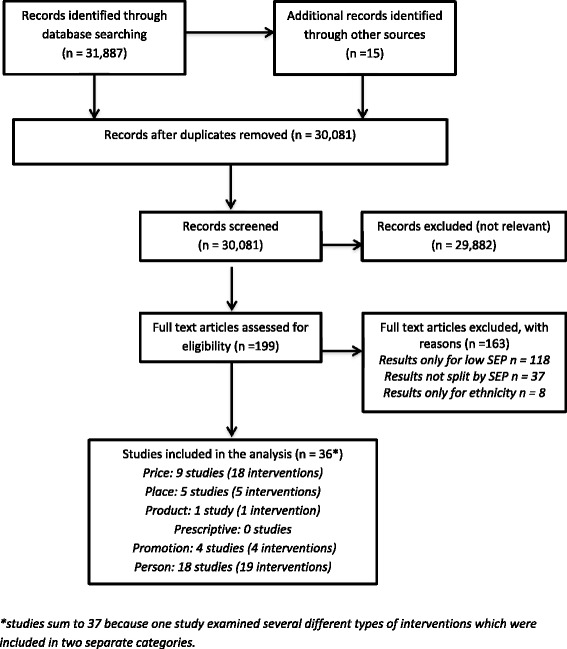
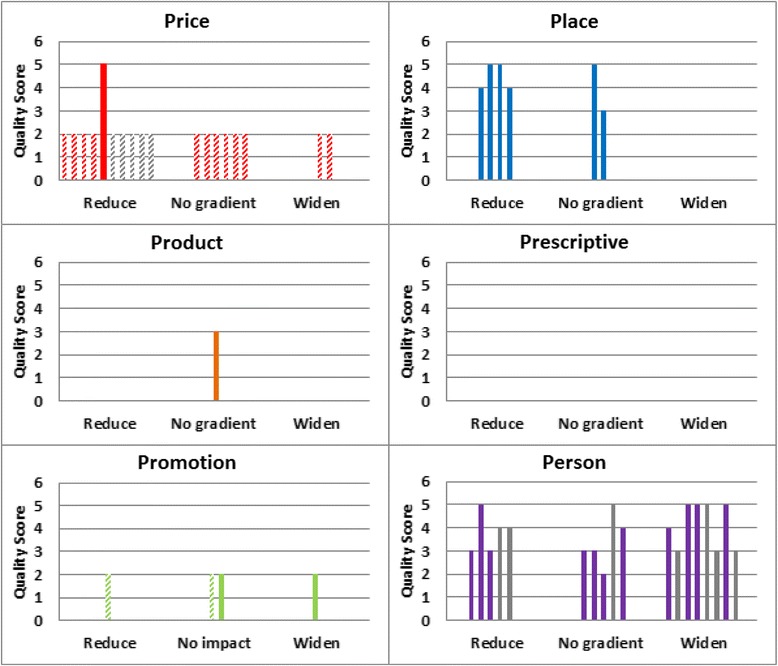
BACKGROUND: Interventions to promote healthy eating make a potentially powerful contribution to the primary prevention of non communicable diseases. It is not known whether healthy eating interventions are equally effective among all sections of the population, nor whether they narrow or widen the health gap between rich and poor. We undertook a systematic review of interventions to promote healthy eating to identify whether impacts differ by socioeconomic position (SEP). METHODS: We searched five bibliographic databases using a pre-piloted search strategy. Retrieved articles were screened independently by two reviewers. Healthier diets were defined as the reduced intake of salt, sugar, trans-fats, saturated fat, total fat, or total calories, or increased consumption of fruit, vegetables and wholegrain. Studies were only included if quantitative results were presented by a measure of SEP. Extracted data were categorised with a modified version of the "4Ps" marketing mix, expanded to 6 "Ps": "Price, Place, Product, Prescriptive, Promotion, and Person". RESULTS: Our search identified 31,887 articles. Following screening, 36 studies were included: 18 "Price" interventions, 6 "Place" interventions, 1 "Product" intervention, zero "Prescriptive" interventions, 4 "Promotion" interventions, and 18 "Person" interventions. "Price" interventions were most effective in groups with lower SEP, and may therefore appear likely to reduce inequalities. All interventions that combined taxes and subsidies consistently decreased inequalities. Conversely, interventions categorised as "Person" had a greater impact with increasing SEP, and may therefore appear likely to reduce inequalities. All four dietary counselling interventions appear likely to widen inequalities. We did not find any "Prescriptive" interventions and only one "Product" intervention that presented differential results and had no impact by SEP. More "Place" interventions were identified and none of these interventions were judged as likely to widen inequalities. CONCLUSIONS: Interventions categorised by a "6 Ps" framework show differential effects on healthy eating outcomes by SEP. "Upstream" interventions categorised as "Price" appeared to decrease inequalities, and "downstream" "Person" interventions, especially dietary counselling seemed to increase inequalities. However the vast majority of studies identified did not explore differential effects by SEP. Interventions aimed at improving population health should be routinely evaluated for differential socioeconomic impact.
Overview
The claims and statistics of this paper haven’t been checked yet.
Run the check — free, no account needed. It reads the open-access text and checks the sources it cites.
Integrity signals
Registry
Cites
Statistics
Figures
Verification
Claims the paper makes
The claims and statistics of this paper haven’t been checked yet.
Run the check — free, no account needed. It reads the open-access text and checks the sources it cites.
Claims other papers make about this one
Each is checked against this paper’s own text: does it say what the citing paper says it does?
In the citing paper
“In addition, population strategies to address diet, such as economic incentives, can reduce socioeconomic-related disparities in health, whereas individual-based approaches may exacerbate inequities.98, 99”
From Dietary and Policy Priorities for Cardiovascular Disease, Diabetes, and Obesity: A Comprehensive Review (2016) · cites this paper as [98]
Self-check
Percentages, sums and reported differences re-computed from the paper’s own numbers.
The self-check needs the paper’s full text.
Citations
Cites
Lim, S. S., Vos, T., Flaxman, A. D., Danaei, G., Shibuya, K., Adair-Rohani, H., AlMazroa, M. A., Amann, M., Anderson, H. R., Andrews, K. G., et al. (2012) · The Lancet · doi:10.1016/s0140-6736(12)61766-8 · Cited by 11,805
Indicators of socioeconomic position (part 1): Figure 1
Galobardes, B., Shaw, M., Lawlor, D. A., Lynch, J. W., & Smith, G. D. (2005) · Journal of Epidemiology & Community Health · doi:10.1136/jech.2004.023531 · Cited by 2,979 · cited 2×
“For each of the included interventions, if the outcome was split by more than one socioeconomic proxy measure, we took the quantitative effect on inequalities from the stratified results that best represented SEP [24,25].”
Socioeconomic factors and cardiovascular disease: a review of the literature.
Kaplan, G. A., & Keil, J. E. (1993) · Circulation · doi:10.1161/01.cir.88.4.1973 · Cited by 1,845
A Framework for Public Health Action: The Health Impact Pyramid
Frieden, T. R. (2010) · American Journal of Public Health · doi:10.2105/ajph.2009.185652 · Cited by 1,535 · cited 2×
“Frieden depicts this difference as a “Health Impact Pyramid” [79].”
(2012) · Choice Reviews Online · doi:10.5860/choice.49-6620 · Cited by 1,284
Evaluating primary care behavioral counseling interventions An evidence-based approach
Whitlock, E. (2002) · American Journal of Preventive Medicine · doi:10.1016/s0749-3797(02)00415-4 · Cited by 1,057 · cited 1×
“Whitlock and colleagues reviewed the effectiveness of counselling interventions on public health [81].”
What types of interventions generate inequalities? Evidence from systematic reviews
Lorenc, T., Petticrew, M., Welch, V., & Tugwell, P. (2013) · Journal of Epidemiology and Community Health · doi:10.1136/jech-2012-201257 · Cited by 927 · cited 1×
“explicitly concluded that “downstream” interventions actually worsen health inequalities [82].”
Self-citationSOCIAL MARKETING IN PUBLIC HEALTH
Grier, S. A., & Bryant, C. A. (2004) · Annual Review of Public Health · doi:10.1146/annurev.publhealth.26.021304.144610 · Cited by 925 · cited 1×
“The “4 Ps” framework is a well-established framework used within the marketing field and translates well to a policy context [31].”
Tackling of unhealthy diets, physical inactivity, and obesity: health effects and cost-effectiveness
Cecchini, M., Sassi, F., Lauer, J. A., Lee, Y. Y., Guajardo-Barron, V., & Chisholm, D. (2010) · The Lancet · doi:10.1016/s0140-6736(10)61514-0 · Cited by 889 · cited 1×
“Preventative interventions are more cost effective when compared to treatment [86].”
Welch, V. A., Petticrew, M. P., Tugwell, P., Moher, D., Petkovic, J., Waters, E., White, H., & the PRISMA-Equity Bellagio group (2012) · PLoS Medicine · doi:10.1371/journal.pmed.1001333 · Cited by 732 · cited 2×
“Upon fulfilling these criteria, studies were assessed utilising a PICOS (Participants, Interventions, Comparators, Outcomes and Study design) [23].”
Self-citation
Research works printed but not linked: 1
- Thomas H. Quality Assessment Tool for Quantitative Studies. Toronto: Effective Public Health Practice Project McMaster University; 2003.
Cited by
Sorted by citations
Mozaffarian, D. (2016) · Circulation · doi:10.1161/circulationaha.115.018585 · Cited by 2,216
“In addition, population strategies to address diet, such as economic incentives, can reduce socioeconomic-related disparities in health, whereas individual-based approaches may exacerbate inequities.(98,99) Evidence-based personalized approaches, especially related to underlying nongenetic characteristics, should be c…”
Bridel, C., van Wieringen, W. N., Zetterberg, H., Tijms, B. M., Teunissen, C. E., and the NFL Group, Alvarez-Cermeño, J. C., Andreasson, U., Axelsson, M., Bäckström, D. C., et al. (2019) · JAMA Neurology · doi:10.1001/jamaneurol.2019.1534 · Cited by 764
Good intentions are not enough: how informatics interventions can worsen inequality
Veinot, T. C., Mitchell, H., & Ancker, J. S. (2018) · Journal of the American Medical Informatics Association · doi:10.1093/jamia/ocy052 · Cited by 704
Brown, K., Rumgay, H., Dunlop, C., Ryan, M., Quartly, F., Cox, A., Deas, A., Elliss‐Brookes, L., Gavin, A., Hounsome, L. S., et al. (2018) · British Journal of Cancer · doi:10.1038/s41416-018-0029-6 · Cited by 558
“Further, many lifestyle ‘choices’ are driven by environmental/societal factors such as food pricing and availability, and susceptibility to these factors varies with socioeconomic position.(33) Differences in risk factor exposure prevalence between countries are generally not large, with the exception of H.”
BackgroundLister, N. B., Baur, L. A., Felix, J. F., Hill, A. J., Marcus, C., Reinehr, T., Summerbell, C., & Wabitsch, M. (2023) · Nature Reviews Disease Primers · doi:10.1038/s41572-023-00435-4 · Cited by 596
Alcaraz, K. I., Wiedt, T. L., Daniels, E. C., Yabroff, K. R., Guerra, C. E., & Wender, R. C. (2020) · CA: A Cancer Journal for Clinicians · doi:10.3322/caac.21586 · Cited by 530
Craig, P., Di Ruggiero, E., Frohlich, K. L., Mykhalovskiy, E., White, M., on behalf of the Canadian Institutes of Health Research (CIHR)–National Institute for Health Research (NIHR) Context Guidance Authors Group (listed alphabetically), Campbell, R., Cummins, S., Edwards, N., Hunt, K., et al. (2018) · doi:10.3310/cihr-nihr-01 · Cited by 370
Self-citationThe TIPPME intervention typology for changing environments to change behaviour
Hollands, G. J., Bignardi, G., Johnston, M., Kelly, M. P., Ogilvie, D., Petticrew, M. P., Prestwich, A., Shemilt, I., Sutton, S. R., & Marteau, T. M. (2017) · Nature Human Behaviour · doi:10.1038/s41562-017-0140 · Cited by 373
Self-citationSocial determinants and non-communicable diseases: time for integrated action
Marmot, M. G., & Bell, R. (2019) · BMJ · doi:10.1136/bmj.l251 · Cited by 353
Bukhman, G., Mocumbi, A. O., Atun, R. A., Becker, A. E., Bhutta, Z. A., Binagwaho, A., Clinton, C., Coates, M. M., Dain, K., Ezzati, M., et al. (2020) · The Lancet · doi:10.1016/s0140-6736(20)31907-3 · Cited by 294
Systematic review of dietary salt reduction policies: Evidence for an effectiveness hierarchy?
Hyseni, L., Elliott-Green, A., Lloyd‐Williams, F., Kypridemos, C., O’Flaherty, M., McGill, R., Orton, L., Bromley, H., Cappuccio, F. P., & Capewell, S. (2017) · PLoS ONE · doi:10.1371/journal.pone.0177535 · Cited by 288
Self-citationMcGill, R., Anwar, E., Orton, L., Bromley, H., Lloyd‐Williams, F., O’Flaherty, M., Taylor-Robinson, D. C., Guzman-Castillo, M., Gillespie, D., Moreira, P., et al. (2015) · BMC Public Health · doi:10.1186/s12889-015-2162-y · Cited by 268
“Unfortunately, the original version of this article [1] contained an error.”
BackgroundSelf-citationThomson, K. H., Hillier-Brown, F. C., Todd, A., McNamara, C. L., Huijts, T., & Bambra, C. L. (2018) · BMC Public Health · doi:10.1186/s12889-018-5677-1 · Cited by 256
Non-conscious processes in changing health-related behaviour: a conceptual analysis and framework
Hollands, G. J., Marteau, T. M., & Fletcher, P. C. (2016) · Health Psychology Review · doi:10.1080/17437199.2015.1138093 · Cited by 236
“For example, there is evidence that person-centred behaviour change interventions that involve individual-level education and counselling may widen inequalities, whilst those that instead alter the environments that people are exposed to do not appear to do so (McGill et al., 2015).”
BackgroundBianchi, F., Garnett, E. E., Dorsel, C., Aveyard, P. N., & Jebb, S. A. (2018) · The Lancet Planetary Health · doi:10.1016/s2542-5196(18)30188-8 · Cited by 238
Increasing healthy food choices through nudges: A systematic review
Vecchio, R., & Cavallo, C. (2019) · Food Quality and Preference · doi:10.1016/j.foodqual.2019.05.014 · Cited by 186
Preventing CKD in Developed Countries
Luyckx, V. A., Cherney, D. Z. I., & Bello, A. K. (2019) · Kidney International Reports · doi:10.1016/j.ekir.2019.12.003 · Cited by 189
Wattar, B. H. A., Dodds, J. P., Placzek, A., Beresford, L., Spyreli, E., Moore, A. P., Carreras, F. J. G., Austin, F., Murugesu, N., Roseboom, T. J., et al. (2019) · PLoS Medicine · doi:10.1371/journal.pmed.1002857 · Cited by 188
Burgoine, T., Sarkar, C., Webster, C. J., & Monsivais, P. (2018) · International Journal of Behavioral Nutrition and Physical Activity · doi:10.1186/s12966-018-0699-8 · Cited by 176
“Not only to improve population-level diet and health [63], but those of at risk population sub-groups in particular (as identified here, those experiencing greatest individual-level disadvantage and greatest neighbourhood-level proportion of fast-food outlets in combination, which was associated with excess dietary an…”
BackgroundDisparities in the Prevalence of Diagnosed Diabetes — United States, 1999–2002 and 2011–2014
Beckles, G. L., & Chou, C. (2016) · MMWR Morbidity and Mortality Weekly Report · doi:10.15585/mmwr.mm6545a4 · Cited by 137
Desbouys, L., Méjean, C., Henauw, S. D., & Castetbon, K. (2019) · Public Health Nutrition · doi:10.1017/s1368980019002362 · Cited by 137
Attwood, S., van Sluijs, E. M. F., & Sutton, S. R. (2016) · International Journal of Behavioral Nutrition and Physical Activity · doi:10.1186/s12966-016-0384-8 · Cited by 140
“disadvantaged groups only [33–35].”
Dietary and policy priorities to reduce the global crises of obesity and diabetes
Mozaffarian, D. (2020) · Nature Food · doi:10.1038/s43016-019-0013-1 · Cited by 135
Lehne, G., & Bolte, G. (2017) · International Journal of Behavioral Nutrition and Physical Activity · doi:10.1186/s12966-017-0472-4 · Cited by 136
“The issue of IGIs has also been discussed in studies on obesity prevention interventions [26–30], interventions to promote healthy eating [31], school-based cognitive-behavioral [19], and school-based health behavior interventions [32].”
BackgroundPetkovic, J., Duench, S., Trawin, J., Dewidar, O., Pardo, J. P., Simeon, R., DesMeules, M., Gagnon, D., Roberts, J. H., Hossain, A., et al. (2021) · Cochrane Database of Systematic Reviews · doi:10.1002/14651858.cd012932.pub2 · Cited by 145
Kraak, V. I., Englund, T. R., Misyak, S. A., & Serrano, E. L. (2017) · Obesity Reviews · doi:10.1111/obr.12553 · Cited by 121
“Some systematic reviews have identified pricing and fiscal strategies as essential interventions to reduce socioeconomic inequities and promote healthy eating to decrease obesity and NCD risks (49,50).”
BackgroundPechey, R., Cartwright, E., Pilling, M. A., Hollands, G. J., Vasiljevic, M., Jebb, S. A., & Marteau, T. M. (2018) · Appetite · doi:10.1016/j.appet.2018.11.013 · Cited by 116
“As such, these interventions may be more equitable (McGill et al., 2015), given cognitive resources may be depleted by both deprivation in childhood and current fi nancial burdens (Mani, Mullainathan, Sha fi r, & Zhao, 2013; Mo ffi tt et al., 2011; Raver, Blair, & Willoughby, 2013).”
Hollands, G. J., Carter, P., Anwer, S., King, S., Jebb, S. A., Ogilvie, D., Shemilt, I., Higgins, J. P. T., & Marteau, T. M. (2019) · Cochrane Database of Systematic Reviews · doi:10.1002/14651858.cd012573.pub3 · Cited by 114
Livingstone, K. M., Olstad, D. L., Leech, R. M., Ball, K., Meertens, B., POTTER, J. F., Cleanthous, X., Reynolds, R., & McNaughton, S. A. (2017) · Nutrients · doi:10.3390/nu9101092 · Cited by 116
“Such interventions can improve on “one size fits all” dietary recommendations, which may be primarily effective in higher SEP groups [37].”
BackgroundMcMahon, N. E., Thomson, K. H., Kaner, E., & Bambra, C. L. (2018) · Addictive Behaviors · doi:10.1016/j.addbeh.2018.11.048 · Cited by 120
Harbers, M. C., Beulens, J. W. J., Rutters, F., de Boer, F. E., Gillebaart, M., Sluijs, I., & van der Schouw, Y. T. (2020) · Nutrition Journal · doi:10.1186/s12937-020-00623-y · Cited by 106
“Alternatively, environmental-level interventions are more likely to benefit adults with low SEP and reduce health inequalities [3], because they rely to a lesser extent on an individual’s access to resources but rather create healthy opportunities for all.”
BackgroundKonttinen, H. M., Halmesvaara, O., Fogelholm, M., Saarijärvi, H., Nevalainen, J., & Erkkola, M. (2021) · International Journal of Behavioral Nutrition and Physical Activity · doi:10.1186/s12966-021-01139-2 · Cited by 108
“Given that one of the strongest associations occurred between lower household income and higher salience of cheapness, our results also support the potential of using price interventions to reduce socioeconomic inequalities in healthy eating [8].”
BackgroundResultHollands, G. J., Carter, P., Shemilt, I., Marteau, T. M., Jebb, S. A., Higgins, J. P. T., & Ogilvie, D. (2017) · Cochrane Database of Systematic Reviews · doi:10.1002/14651858.cd012573 · Cited by 100
Changing behaviour: an essential component of tackling health inequalities
Marteau, T. M., Rutter, H., & Marmot, M. (2021) · BMJ · doi:10.1136/bmj.n332 · Cited by 95
“18 19 Such effects are known as intervention generated inequalities.”
A systematic review of the influences of food store product placement on dietary-related outcomes
Shaw, S., Ntani, G., Baird, J., & Vogel, C. (2020) · Nutrition Reviews · doi:10.1093/nutrit/nuaa024 · Cited by 95
“reflective engagement, which appear most beneficial for more advantaged groups.(22) Assessing whether product”
BackgroundA comprehensive review of current approaches on food waste reduction strategies
Urugo, M. M., Teka, T. A., Gemede, H. F., Mersha, S., Tessema, A., Woldemariam, H. W., & Admassu, H. (2024) · Comprehensive Reviews in Food Science and Food Safety · doi:10.1111/1541-4337.70011 · Cited by 110
Hillier-Brown, F. C., Summerbell, C., Moore, H. J., Wrieden, W. L., Adams, J. M., Abraham, C., Adamson, A., Araújo‐Soares, V., White, M. J., & Lake, A. A. (2017) · BMC Public Health · doi:10.1186/s12889-016-3980-2 · Cited by 89
“Population 629 level interventions have the advantage that they are often more effective and 630 equitable than more individualistic interventions, although have not been popular 631 with governments in the UK [36, 37].”
BackgroundSelf-citationImpact of school policies on non-communicable disease risk factors – a systematic review
Singh, A., Bassi, S., Nazar, G. P., Saluja, K., Park, M. H., Kinra, S., & Arora, M. (2017) · BMC Public Health · doi:10.1186/s12889-017-4201-3 · Cited by 98
Bolt-Evensen, K., Vik, F. N., Stea, T. H., Klepp, K.-I., & Bere, E. T. (2018) · International Journal of Behavioral Nutrition and Physical Activity · doi:10.1186/s12966-018-0646-8 · Cited by 86
An effectiveness hierarchy of preventive interventions: neglected paradigm or self-evident truth?
Capewell, S., & CAPEWELL, A. E. (2017) · Journal of Public Health · doi:10.1093/pubmed/fdx055 · Cited by 92
Self-citationLakerveld, J., Woods, C. B., Hebestreit, A., Brenner, H., Flechtner‐Mors, M., Harrington, J. M., Kamphuis, C. B. M., Laxy, M., Łuszczyńska, A., Mazzocchi, M., et al. (2020) · Food Policy · doi:10.1016/j.foodpol.2020.101873 · Cited by 83
Reducing health inequalities through general practice
Gkiouleka, A., Wong, G., Sowden, S. L., Bambra, C. L., Siersbaek, R., Manji, S., Moseley, A., Harmston, R. R., Kuhn, I. L., & Ford, J. A. (2023) · The Lancet Public Health · doi:10.1016/s2468-2667(23)00093-2 · Cited by 89
Krukowski, R. A., Ross, K. M., Western, M. J., Cooper, R., Busse, H., Forbes, C. C., Kuntsche, E. N., Allmeta, A., Silva, A. M., John-Akinola, Y. O., et al. (2024) · Trials · doi:10.1186/s13063-024-07937-w · Cited by 92
“…interventions such as dietary counseling can widen social inequalities by being less effective in minoritized populations, potentially because they require more individual agency (which minoritized populations tend to have less of due to a host of factors, including structural barriers) [7].”
BackgroundYau, A., Berger, N., Law, C., Cornelsen, L., Greener, R., Adams, J., Boyland, E. J., Burgoine, T., de Vocht, F., Egan, M., et al. (2022) · PLOS Medicine · doi:10.1371/journal.pmed.1003915 · Cited by 77
“However, there was no evidence to suggest that a reduction in advertising exposure mediated a reduction in HFSS consumption, which may have been caused by other factors related to the policy [26].”
BackgroundSelf-citationUsing social norms to encourage healthier eating
Higgs, S., Liu, J.-Y., Collins, E., & Thomas, J. (2019) · Nutrition Bulletin · doi:10.1111/nbu.12371 · Cited by 61
“low consumers who are often resistant to other types of healthy eating interventions that focus on providing information on the health benefits of healthier eating) (McGill et al. 2015).”
BackgroundAdverse childhood experiences: A scoping review of measures and methods
Karatekin, C., Mason, S. M., Riegelman, A., Bakker, C., Hunt, S., Gresham, B. L., Corcoran, F., & Barnes, A. J. (2022) · Children and Youth Services Review · doi:10.1016/j.childyouth.2022.106425 · Cited by 85
Gambling harm is everybody's business: A public health approach and call to action
Johnstone, P. W., & Regan, M. (2020) · Public Health · doi:10.1016/j.puhe.2020.06.010 · Cited by 73
Green, M. A., García‐Fiñana, M., Barr, B., Burnside, G., Cheyne, C. P., Hughes, D. M., Ashton, M., Sheard, S., Geddes, A., Rankin, J., et al. (2021) · The Lancet Regional Health - Europe · doi:10.1016/j.lanepe.2021.100107 · Cited by 78
“agency often widen the inequalities they seek to tackle [4,5].”
Olstad, D. L., Teychenne, M. J., Minaker, L. M., Taber, D. R., Raine, K. D., Nykiforuk, C. I. J., & Ball, K. (2016) · Obesity Reviews · doi:10.1111/obr.12457 · Cited by 72
Løvhaug, A. L., Granheim, S. I., Djojosoeparto, S. K., Harrington, J. M., Kamphuis, C. B. M., Poelman, M. P., Roos, G., Sawyer, A. D. M., Stronks, K., Torheim, L. E., et al. (2022) · BMC Public Health · doi:10.1186/s12889-022-12827-4 · Cited by 76
“the Effective Public Health Practice Project Quality Assessment Instrument [EPHPP] [26, 38, 42]; the Effective Practice of Care [EPOC] guidelines and the Newcastle-Ottawa Scale [39]; the Methods for Evaluating Research Guideline Evidence [MERGE] [42]; the Community Guide of the US Task Force on Community Preventive Se…”
BackgroundMethodResultInfluentialNudging more sustainable grocery purchases: Behavioural innovations in a supermarket setting
Bauer, J. M., Aarestrup, S. C., Hansen, P. G., & Reisch, L. A. (2022) · Technological Forecasting and Social Change · doi:10.1016/j.techfore.2022.121605 · Cited by 70
Koutoukidis, D. A., Jebb, S. A., Ordóñez-Mena, J. M., Noreik, M., Tsiountsioura, M., Kennedy, S. G., Payne, S., Aveyard, P. N., & Piernas, C. (2019) · International Journal of Behavioral Nutrition and Physical Activity · doi:10.1186/s12966-019-0810-9 · Cited by 66
Allen, K., Pearson‐Stuttard, J., Hooton, W., Diggle, P. J., Capewell, S., & O’Flaherty, M. (2015) · BMJ · doi:10.1136/bmj.h4583 · Cited by 65
Self-citationStautz, K., Zupan, Z., Field, M., & Marteau, T. M. (2018) · Health Psychology Review · doi:10.1080/17437199.2017.1421477 · Cited by 64
“Relatedly, the possibility that individual differences in self-control caused by material deprivation might help to account for socioeconomic differences in intervention outcomes (i.e., intervention generated inequalities; McGill et al., 2015) requires further exploration.”
BackgroundInfluentialWearn, A., & Shepherd, L. (2022) · Psychology and Health · doi:10.1080/08870446.2022.2050230 · Cited by 64
“…‘change’ one’s thoughts, feelings and behaviours which in turn can inadvertently increase challenges to service access for marginalised or underserved groups (e.g. those of low socioeconomic status or those from ethnic minority groups) (Lorenc et al., 2013; McGill et al., 2015; White et al., 2009).”
BackgroundVenturelli, F., Ferrari, F., Broccoli, S., Bonvicini, L., Mancuso, P., Bargellini, A., & Rossi, P. G. (2019) · Obesity Reviews · doi:10.1111/obr.12931 · Cited by 65
Hook, C. J., & Markus, H. R. (2020) · Perspectives on Psychological Science · doi:10.1177/1745691619896252 · Cited by 65
“In contrast, evidence suggests that stronger interventions, such as taxes on unhealthy foods and cigarettes and subsidies for healthy foods, would be unlikely to widen health disparities and might even narrow them (McGill et al., 2015; Thomas et al., 2008).”
BackgroundFismen, A., Buoncristiano, M., Williams, J., Helleve, A., Abdrakhmanova, S., Bakacs, M., Bergh, I. H., Boymatova, K., Duleva, V. L., Fijałkowska, A., et al. (2021) · Obesity Reviews · doi:10.1111/obr.13211 · Cited by 69
McMahon, N. E. (2021) · Journal of Public Health · doi:10.1093/pubmed/fdab157 · Cited by 67
“paradigm or self-evident truth? McGill et al. (2015)25 Are interventions to promote healthy”
BackgroundHohenschurz‐Schmidt, D., Thomson, O. P., Rossettini, G., Miciak, M., Newell, D., Roberts, L. C., Vase, L., & Draper‐Rodi, J. (2022) · Musculoskeletal Science and Practice · doi:10.1016/j.msksp.2022.102677 · Cited by 67
The Impact of Maternal Obesity on Offspring Cardiovascular Health: A Systematic Literature Review
Kankowski, L., Ardissino, M., McCracken, C., Lewandowski, A. J., Leeson, P., Neubauer, S., Harvey, N. C., Petersen, S. E., & Raisi‐Estabragh, Z. (2022) · Frontiers in Endocrinology · doi:10.3389/fendo.2022.868441 · Cited by 67
Hollands, G. J., Carter, P., Anwer, S., King, S., Jebb, S. A., Ogilvie, D., Shemilt, I., Higgins, J. P. T., & Marteau, T. M. (2019) · Cochrane Database of Systematic Reviews · doi:10.1002/14651858.cd012573.pub2 · Cited by 57
Stuber, J. M., Middel, C. N. H., Mackenbach, J. D., Beulens, J. W. J., & Lakerveld, J. (2020) · International Journal of Environmental Research and Public Health · doi:10.3390/ijerph17082764 · Cited by 56
“At the same time, the evidence base consistently shows that groups with a low SEP are at higher risk of cardiometabolic diseases and cardiovascular events [11,12], so their underrepresentation in health promotion approaches hinders opportunities to decrease socioeconomic inequalities in health [13].”
BackgroundInterventions to prevent obesity in children aged 5 to 11 years old
Spiga, F., Davies, A. L., Tomlinson, E., Moore, T. H., Dawson, S., Breheny, K., Savović, J., Gao, Y., Phillips, S. M., Hillier-Brown, F. C., et al. (2024) · Cochrane Database of Systematic Reviews · doi:10.1002/14651858.cd015328.pub2 · Cited by 75
Interventions to prevent obesity in children aged 12 to 18 years old
Spiga, F., Tomlinson, E., Davies, A. L., Moore, T. H., Dawson, S., Breheny, K., Savović, J., Hodder, R. K., Wolfenden, L., Higgins, J. P. T., et al. (2024) · Cochrane Database of Systematic Reviews · doi:10.1002/14651858.cd015330.pub2 · Cited by 63
de Mestral, C., Mayén, A., Petrović, D., Marques-Vidal, P. M., Bochud, M., & Stringhini, S. (2017) · American Journal of Public Health · doi:10.2105/ajph.2016.303629 · Cited by 60
Education and the Relationship Between Supermarket Environment and Diet
Vogel, C., Ntani, G., Inskip, H. M., Barker, M. E., Cummins, S., Cooper, C. C., Moon, G., & Baird, J. (2016) · American Journal of Preventive Medicine · doi:10.1016/j.amepre.2016.02.030 · Cited by 57
Hunter, J. A., Hollands, G. J., Couturier, D., & Marteau, T. M. (2017) · Appetite · doi:10.1016/j.appet.2017.11.101 · Cited by 54
“Despite this evidence, intervention studies rarely explore differential outcomes by SEP (McGill et al., 2015) or cognitive resource.”
Higher ultra-processed food intake is associated with higher DNA damage in healthy adolescents
Edalati, S., Bagherzadeh, F., Jafarabadi, M. A., & Ebrahimi‐Mameghani, M. (2020) · British Journal Of Nutrition · doi:10.1017/s0007114520001981 · Cited by 52
Welch, V. A., Petkovic, J., Simeon, R., Presseau, J., Gagnon, D., Hossain, A., Pardo, J. P., Pottie, K. C., Rader, T., Sokolovski, A., et al. (2018) · Cochrane Database of Systematic Reviews · doi:10.1002/14651858.cd012932 · Cited by 52
Socioeconomic Inequalities in Diet Quality: from Identifying the Problem to Implementing Solutions
Peeters, A., & Blake, M. R. (2016) · Current Nutrition Reports · doi:10.1007/s13668-016-0167-5 · Cited by 47
Kypridemos, C., Guzman-Castillo, M., Hyseni, L., Hickey, G. L., Bandosz, P., Buchan, I. E., Capewell, S., & O’Flaherty, M. (2017) · BMJ Open · doi:10.1136/bmjopen-2016-013791 · Cited by 48
Self-citationKypridemos, C., Collins, B., McHale, P., Bromley, H., Parvulescu, P., Capewell, S., & O’Flaherty, M. (2018) · PLoS Medicine · doi:10.1371/journal.pmed.1002573 · Cited by 55
Self-citationLakerveld, J., Mackenbach, J. D., de Boer, F. E., Brandhorst, B., Broerse, J. E. W., de Bruijn, G., Feunekes, G. I. J., Gillebaart, M., Harbers, M. C., Hoenink, J. C., et al. (2018) · BMC Public Health · doi:10.1186/s12889-018-5839-1 · Cited by 51
Altering the availability of products within physical micro-environments: a conceptual framework
Pechey, R., Hollands, G. J., Carter, P., & Marteau, T. M. (2020) · BMC Public Health · doi:10.1186/s12889-020-09052-2 · Cited by 45
Advancing Health Equity Efforts to Reduce Obesity: Changing the Course
Kumanyika, S. (2022) · Annual Review of Nutrition · doi:10.1146/annurev-nutr-092021-050805 · Cited by 54
“A qualitative study (67) of the diminishing-returns hypothesis suggests reasons why upward SES mobility might have smaller or even opposite health effects for Black and White people.”
BackgroundInfluentialTinner, L., Caldwell, D. M., Hickman, M., MacArthur, G. J., Gottfredson, D. C., Lana, A., Moberg, D. P., Wolfe, D. A., & Campbell, R. M. (2018) · BMC Public Health · doi:10.1186/s12889-018-6042-0 · Cited by 45
“Whereas reviews have been undertaken to assess inequalities with regard to single behaviours such as healthy eating [16, 22] physical activity [23], smoking tobacco [24], no study has yet explored differential intervention effects with regard to MRB interventions.”
BackgroundGillespie, D., Allen, K., Guzman-Castillo, M., Bandosz, P., Moreira, P., McGill, R., Anwar, E., Lloyd‐Williams, F., Bromley, H., Diggle, P. J., et al. (2015) · PLoS ONE · doi:10.1371/journal.pone.0127927 · Cited by 45
“There is a paucity of studies on socio-economic differentials in effects of dietary interventions [41,42].”
Self-citationVogel, C., Abbott, G., Ntani, G., Barker, M. E., Cooper, C. C., Moon, G., Ball, K., & Baird, J. (2019) · International Journal of Behavioral Nutrition and Physical Activity · doi:10.1186/s12966-019-0772-y · Cited by 43
Robroek, S. J., Hengel, K. M. O., van der Beek, A. J., Boot, C. R. L., van Lenthe, F. J., Burdorf, A., & Coenen, P. (2020) · Obesity Reviews · doi:10.1111/obr.13101 · Cited by 41
“7,9,10 ,14”
Dalrymple, K. V., Vogel, C., Godfrey, K. M., Baird, J., Harvey, N. C., Hanson, M. A., Cooper, C. C., Inskip, H. M., & Crozier, S. (2021) · International Journal of Obesity · doi:10.1038/s41366-021-01047-2 · Cited by 44
“Our findings support the need to enact effective and appropriate nutrition interventions to promote longer term health outcomes, particularly among families from socially deprived backgrounds [41].”
BackgroundSocioeconomic inequalities in cardiovascular disease: a causal perspective
Bann, D., Wright, L., Hughes, A. D., & Chaturvedi, N. (2023) · Nature Reviews Cardiology · doi:10.1038/s41569-023-00941-8 · Cited by 46
“Additionally, interventions targeted at individual behaviour change might inadvertently widen inequalities because they can disproportionately benefit those with the most resources (high SEP groups) 157,158 .”
Berg, J., Harting, J., & Stronks, K. (2019) · Critical Public Health · doi:10.1080/09581596.2019.1680803 · Cited by 40
Vik, F. N., Lippevelde, W. V., & Øverby, N. C. (2019) · BMC Public Health · doi:10.1186/s12889-019-7286-z · Cited by 39
Planting seeds of change: reconceptualizing what people eat as eating practices and patterns
Olstad, D., & Kirkpatrick, S. (2021) · International Journal of Behavioral Nutrition and Physical Activity · doi:10.1186/s12966-021-01102-1 · Cited by 32
Pérignon, M., Dubois, C., Gazan, R., Maillot, M., Muller, L., Ruffieux, B., Gaigi, H., & Darmon, N. (2017) · Current Developments in Nutrition · doi:10.3945/cdn.117.001107 · Cited by 38
van Kesteren, R., & Evans, A. (2019) · Appetite · doi:10.1016/j.appet.2019.104503 · Cited by 44
Coenen, P., Robroek, S. J., van der Beek, A. J., Boot, C. R. L., van Lenthe, F. J., Burdorf, A., & Hengel, K. M. O. (2020) · International Journal of Behavioral Nutrition and Physical Activity · doi:10.1186/s12966-020-01002-w · Cited by 38
Reynolds, J. P., Ventsel, M., Kosīte, D., Dames, B. A. R., Brocklebank, L. A., Masterton, S., Pechey, E., Pilling, M. A., Pechey, R., Hollands, G. J., et al. (2021) · PLoS Medicine · doi:10.1371/journal.pmed.1003743 · Cited by 38
“Those in manual occupations have—on average— worse health outcomes and higher body mass indexes (BMIs) compared to those in nonmanual occupations [7], and many interventions that aim to improve healthy eating only exacerbate existing inequalities [20].”
BackgroundThe role of the food industry in health: lessons from tobacco?
Capewell, S., & Lloyd‐Williams, F. (2018) · British Medical Bulletin · doi:10.1093/bmb/ldy002 · Cited by 40
“McGill et al. 14 used a “5Ps” Framework to categorise healthy eating interventions (Price, Place, Product, Promotion and Person).”
InfluentialSelf-citationHosking, J., Macmillan, A. K., Jones, R., Ameratunga, S. N., & Woodward, A. J. (2019) · Systematic Reviews · doi:10.1186/s13643-019-1009-5 · Cited by 34
Added Sugar and Oral Health: A Position Paper of the Brazilian Academy of Dentistry
Feldens, C. A., Pinheiro, L. L., Cury, J. A., Mendonça, F., Groisman, M., Costa, R. A. H., Pereira, H. C., & Vieira, A. R. (2022) · Frontiers in Oral Health · doi:10.3389/froh.2022.869112 · Cited by 49
“Although educating mothers and families regarding healthy eating may reduce disease risks, broader approaches not depending on “behavior changes” may be more effective in reducing sugar consumption, and ultimately health disparities [41].”
BackgroundPopulation Approaches to Prevention of Type 2 Diabetes
White, M. J. (2016) · PLoS Medicine · doi:10.1371/journal.pmed.1002080 · Cited by 36
Self-citationStewart-Knox, B. J., Markovina, J., Rankin, A., Bunting, B. P., Kuznesof, S. A., Fischer, A. R. H., van der Lans, I. A., Poínhos, R., de Almeida, M. D. V., Panzone, L., et al. (2016) · Food Policy · doi:10.1016/j.foodpol.2016.08.001 · Cited by 34
“Interventions to promote health and prevent noncommunicable health conditions, however, have tended to focus almost exclusively on educational approaches and interventions based on communication, such as labelling, with only limited success (McGill et al., 2015).”
BackgroundGreen, M. A., Radley, D., Lomax, N., Morris, M. A., & Griffiths, C. (2018) · BMC Public Health · doi:10.1186/s12889-018-5383-z · Cited by 34
de Mestral, C., Chatelan, A., Marques-Vidal, P. M., Stringhini, S., & Bochud, M. (2019) · Nutrients · doi:10.3390/nu11071573 · Cited by 38
“To date, however, most interventions to improve healthy eating in the general population and in specific groups have relied on individual responsibility, primarily in relation to nutrition knowledge [42,46,47], even though the evidence shows these have limited impact and often exacerbate inequalities [14,47–49].”
BackgroundFood consumption in the UK: Trends, attitudes and drivers
d'Angelo, C., Gloinson, E. R., Draper, A., & Guthrie, S. (2020) · RAND Corporation eBooks · doi:10.7249/rr4379 · Cited by 37
Diet-Related Health Inequalities in High-Income Countries: A Scoping Review of Observational Studies
Álvarez, E. C., Rifà‐Ros, R., Salinas‐Roca, B., Costa‐Tutusaus, L., Lamas, M., & Rodríguez‐Monforte, M. (2025) · Advances in Nutrition · doi:10.1016/j.advnut.2025.100439 · Cited by 33
“…promoting and health-damaging dietary behaviors by in fl uencing key determinants such as cost [28 – 32], availability [33 – 35], convenience [36], material and informational/educational resources [37 – 39], marketing exposure [36,40], and symbolic representations of food [27,41 – 43], among others.”
Feasibility of a social media-based weight loss intervention designed for low-SES adults
Cavallo, D. N., Martinez, R., Hooper, M. W., & Flocke, S. A. (2020) · Translational Behavioral Medicine · doi:10.1093/tbm/ibaa070 · Cited by 33
McDonald, M., Hunt, K., Sivaramakrishnan, H., Moullin, J. C., Avenell, A., Kerr, D. A., Birch, J. M., Ntoumanis, N., & Quested, E. (2022) · Obesity Reviews · doi:10.1111/obr.13436 · Cited by 35
“Others have posited that behavioral weight management interventions that rely on a high degree of individual agency may augment health inequalities,(43,45) with population level approaches potentially more equitable.(46,47) Indeed, a recent systematic review concluded that digital interventions targeting physical acti…”
Background
Metadata
- Authors
- McGill, R., Anwar, E., Orton, L., Bromley, H., Lloyd-Williams, F., O’Flaherty, M., Taylor-Robinson, D., Guzman-Castillo, M., Gillespie, D., Moreira, P., Allen, K., Hyseni, L., Calder, N., Petticrew, M., White, M., Whitehead, M., & Capewell, S.
- Affiliations
- University of Liverpool (GB)
- London School of Hygiene & Tropical Medicine (GB)
- University of Cambridge (GB)
- Corresponding author
- McGill, Rory
- ORCID
- Venue
- BMC Public Health
- Published
- 2015-05-02
- Volume
- 15
- Issue
- 1
- Pages
- 457-457
- ISSN
- 1471-2458 (ISSN-L)
- PMC
- PMC4423493
- OpenAlex
- W4239413439
- Cited by
- 407
- References
- 83
- Citations by year
- 2026: 18 · 2025: 30 · 2024: 48 · 2023: 33 · 2022: 40 · 2021: 63 · 2020: 42 · 2019: 38 · 2018: 37 · 2017: 32 · 2016: 21 · 2015: 5
- FWCI
- 4.07
- Type
- journal article
- Language
- en
- Update notices
- correction (2015-09-15)
- Open access
- gold
- doi.org
- Locations
- BMC Public Health (publishedVersion, cc-by)
- PubMed Central (publishedVersion, cc-by)
- PubMed (publishedVersion)
- LSHTM Research Online (London School of Hygiene and Tropical Medicine) (acceptedVersion)
- Apollo (University of Cambridge) (submittedVersion, cc-by)
- Apollo
- Funders
- London School of Hygiene and Tropical Medicine
- Wellcome Trust (087636/Z/08/Z)
- National Institute for Health and Care Research
- University of Exeter
- University of Sheffield
- National Institutes of Health
- Medical Research Council (MR/K023187/1)
- Economic and Social Research Council (ES/G007462/1, ES/G007470/1)
- School for Public Health Research
- Topics
- Health Sciences › Nursing › Nutrition and Dietetics › Nutrition, Health and Food Behavior
- Health Sciences › Medicine › Public Health, Environmental and Occupational Health › Nutritional Studies and Diet
- Health Sciences › Medicine › Public Health, Environmental and Occupational Health › Obesity, Physical Activity, Diet
- Keywords
- healthy eating interventions, socioeconomic disparities, socioeconomic position, nutrition counseling, non-communicable disease prevention, dietary intake, fruit and vegetable intake, health disparities
- MeSH terms
- Commerce, Diet, Feeding Behavior, Health Education, Health Promotion, Humans, Socioeconomic Factors, Vegetables, Marketing
About these checks
Registry, retraction, Cites and statistics results are computed, not judged, with one exception: a printed reference that no index lists is read once by a model before it counts as a citation error. Claims are extracted by a model and kept only when their quote appears verbatim in the text; each cited source is then checked, with a model’s help, for whether it says what the claim relies on. Those verdicts can be wrong — read the claim’s quote and the cited source before relying on one.
Statistics and arithmetic are recomputed, not judged.
Confidence bands are shown only for fields calibrated on our annotated test set. None is calibrated yet, so no band is shown.
What counts as a claim ›How we measure confidence ›How we check this ›
Are you an author, or do you see a problem with this page? Request a review
