

The DOI matches its Crossref record; 83 of the 83 references it cites were found in a registry or an index.
Are interventions to promote healthy eating equally effective for all? Systematic review of socioeconomic inequalities in impact
Open accessAbstract
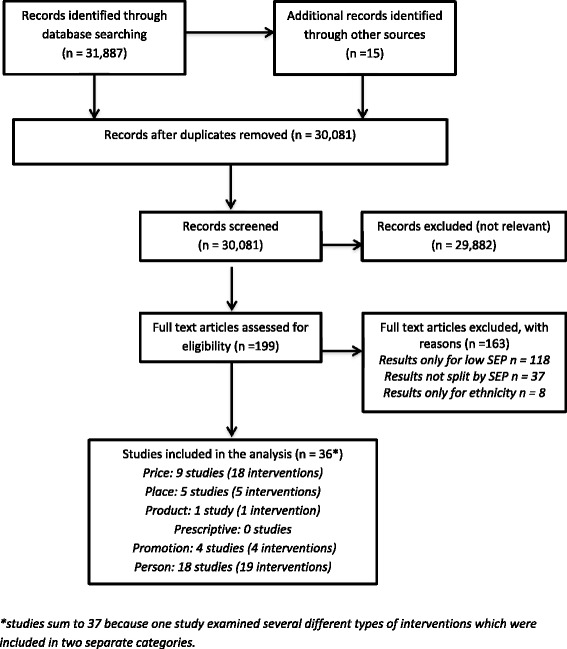
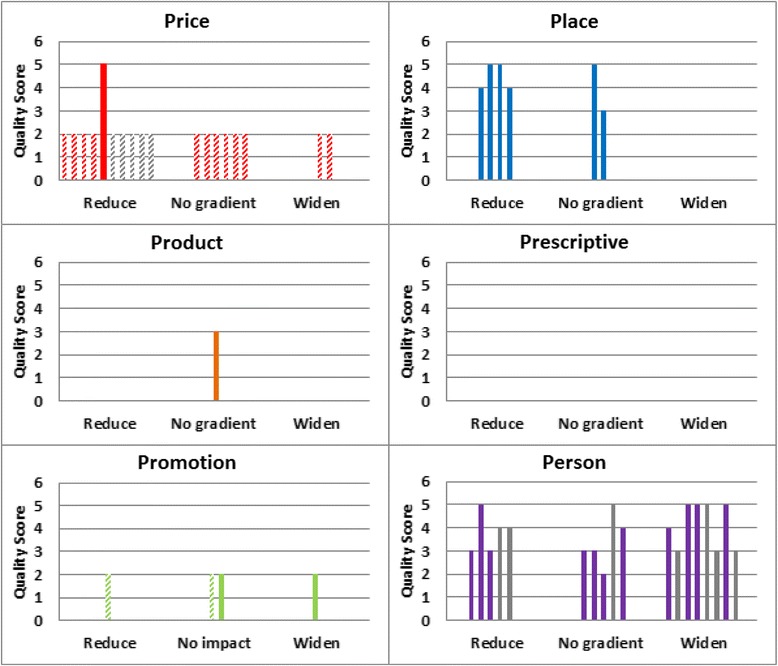
BACKGROUND: Interventions to promote healthy eating make a potentially powerful contribution to the primary prevention of non communicable diseases. It is not known whether healthy eating interventions are equally effective among all sections of the population, nor whether they narrow or widen the health gap between rich and poor. We undertook a systematic review of interventions to promote healthy eating to identify whether impacts differ by socioeconomic position (SEP). METHODS: We searched five bibliographic databases using a pre-piloted search strategy. Retrieved articles were screened independently by two reviewers. Healthier diets were defined as the reduced intake of salt, sugar, trans-fats, saturated fat, total fat, or total calories, or increased consumption of fruit, vegetables and wholegrain. Studies were only included if quantitative results were presented by a measure of SEP. Extracted data were categorised with a modified version of the "4Ps" marketing mix, expanded to 6 "Ps": "Price, Place, Product, Prescriptive, Promotion, and Person". RESULTS: Our search identified 31,887 articles. Following screening, 36 studies were included: 18 "Price" interventions, 6 "Place" interventions, 1 "Product" intervention, zero "Prescriptive" interventions, 4 "Promotion" interventions, and 18 "Person" interventions. "Price" interventions were most effective in groups with lower SEP, and may therefore appear likely to reduce inequalities. All interventions that combined taxes and subsidies consistently decreased inequalities. Conversely, interventions categorised as "Person" had a greater impact with increasing SEP, and may therefore appear likely to reduce inequalities. All four dietary counselling interventions appear likely to widen inequalities. We did not find any "Prescriptive" interventions and only one "Product" intervention that presented differential results and had no impact by SEP. More "Place" interventions were identified and none of these interventions were judged as likely to widen inequalities. CONCLUSIONS: Interventions categorised by a "6 Ps" framework show differential effects on healthy eating outcomes by SEP. "Upstream" interventions categorised as "Price" appeared to decrease inequalities, and "downstream" "Person" interventions, especially dietary counselling seemed to increase inequalities. However the vast majority of studies identified did not explore differential effects by SEP. Interventions aimed at improving population health should be routinely evaluated for differential socioeconomic impact.
Overview
The claims and statistics of this paper haven’t been checked yet.
Run the check — free, no account needed. It reads the open-access text and checks the sources it cites.
Integrity signals
Registry
Cites
Statistics
Figures
Verification
Claims the paper makes
The claims and statistics of this paper haven’t been checked yet.
Run the check — free, no account needed. It reads the open-access text and checks the sources it cites.
Claims other papers make about this one
Each is checked against this paper’s own text: does it say what the citing paper says it does?
In the citing paper
“In addition, population strategies to address diet, such as economic incentives, can reduce socioeconomic-related disparities in health, whereas individual-based approaches may exacerbate inequities.98, 99”
From Dietary and Policy Priorities for Cardiovascular Disease, Diabetes, and Obesity: A Comprehensive Review (2016) · cites this paper as [98]
Self-check
Percentages, sums and reported differences re-computed from the paper’s own numbers.
The self-check needs the paper’s full text.
Citations
Cites
Lim, S. S., Vos, T., Flaxman, A. D., Danaei, G., Shibuya, K., Adair-Rohani, H., AlMazroa, M. A., Amann, M., Anderson, H. R., Andrews, K. G., et al. (2012) · The Lancet · doi:10.1016/s0140-6736(12)61766-8 · Cited by 11,805
Indicators of socioeconomic position (part 1): Figure 1
Galobardes, B., Shaw, M., Lawlor, D. A., Lynch, J. W., & Smith, G. D. (2005) · Journal of Epidemiology & Community Health · doi:10.1136/jech.2004.023531 · Cited by 2,979 · cited 2×
“For each of the included interventions, if the outcome was split by more than one socioeconomic proxy measure, we took the quantitative effect on inequalities from the stratified results that best represented SEP [24,25].”
Socioeconomic factors and cardiovascular disease: a review of the literature.
Kaplan, G. A., & Keil, J. E. (1993) · Circulation · doi:10.1161/01.cir.88.4.1973 · Cited by 1,845
A Framework for Public Health Action: The Health Impact Pyramid
Frieden, T. R. (2010) · American Journal of Public Health · doi:10.2105/ajph.2009.185652 · Cited by 1,535 · cited 2×
“Frieden depicts this difference as a “Health Impact Pyramid” [79].”
(2012) · Choice Reviews Online · doi:10.5860/choice.49-6620 · Cited by 1,284
Evaluating primary care behavioral counseling interventions An evidence-based approach
Whitlock, E. (2002) · American Journal of Preventive Medicine · doi:10.1016/s0749-3797(02)00415-4 · Cited by 1,057 · cited 1×
“Whitlock and colleagues reviewed the effectiveness of counselling interventions on public health [81].”
What types of interventions generate inequalities? Evidence from systematic reviews
Lorenc, T., Petticrew, M., Welch, V., & Tugwell, P. (2013) · Journal of Epidemiology and Community Health · doi:10.1136/jech-2012-201257 · Cited by 927 · cited 1×
“explicitly concluded that “downstream” interventions actually worsen health inequalities [82].”
Self-citationSOCIAL MARKETING IN PUBLIC HEALTH
Grier, S. A., & Bryant, C. A. (2004) · Annual Review of Public Health · doi:10.1146/annurev.publhealth.26.021304.144610 · Cited by 925 · cited 1×
“The “4 Ps” framework is a well-established framework used within the marketing field and translates well to a policy context [31].”
Tackling of unhealthy diets, physical inactivity, and obesity: health effects and cost-effectiveness
Cecchini, M., Sassi, F., Lauer, J. A., Lee, Y. Y., Guajardo-Barron, V., & Chisholm, D. (2010) · The Lancet · doi:10.1016/s0140-6736(10)61514-0 · Cited by 889 · cited 1×
“Preventative interventions are more cost effective when compared to treatment [86].”
Welch, V. A., Petticrew, M. P., Tugwell, P., Moher, D., Petkovic, J., Waters, E., White, H., & the PRISMA-Equity Bellagio group (2012) · PLoS Medicine · doi:10.1371/journal.pmed.1001333 · Cited by 732 · cited 2×
“Upon fulfilling these criteria, studies were assessed utilising a PICOS (Participants, Interventions, Comparators, Outcomes and Study design) [23].”
Self-citation
Research works printed but not linked: 1
- Thomas H. Quality Assessment Tool for Quantitative Studies. Toronto: Effective Public Health Practice Project McMaster University; 2003.
Cited by
Sorted by citations
Items 101–200 of 412
Kraak, V. I., Englund, T. R., Misyak, S. A., & Serrano, E. L. (2017) · International Journal of Environmental Research and Public Health · doi:10.3390/ijerph14070760 · Cited by 31
“However, nudge actions alone are limited because they exclude pricing strategies that are recognized as a powerful intervention to reduce obesity risk and health disparities among low-income populations [17,18].”
BackgroundSocioeconomic inequalities in childhood-to-adulthood BMI tracking in three British birth cohorts
Norris, T., Bann, D., Hardy, R., & Johnson, W. (2019) · International Journal of Obesity · doi:10.1038/s41366-019-0387-z · Cited by 30
Effect of Using Date Pits Powder as a Fat Replacer and Anti-Oxidative Agent on Beef Burger Quality
Essa, R. Y., & Elsebaie, E. M. (2018) · Journal of Food and Dairy Sciences · doi:10.21608/jfds.2018.35225 · Cited by 31
The health and financial impacts of a sugary drink tax across different income groups in Canada
Kao, K.-E., Jones, A. C., Öhinmaa, A., & Paulden, M. (2020) · Economics & Human Biology · doi:10.1016/j.ehb.2020.100869 · Cited by 31
Exploring the risk factors for early‐life sugar consumption: A birth cohort study
Feldens, C. A., Vítolo, M. R., Maciel, R. R., Baratto, P. S., Rodrigues, P. H., & Kramer, P. F. (2020) · International Journal of Paediatric Dentistry · doi:10.1111/ipd.12713 · Cited by 32
Reducing socioeconomic inequalities in obesity: the role of population prevention
Peeters, A., & Backholer, K. (2015) · The Lancet Diabetes & Endocrinology · doi:10.1016/s2213-8587(15)00373-3 · Cited by 31
Tainio, M., Monsivais, P., Jones, N. R. V., Brand, C., & Woodcock, J. (2017) · BMJ Open · doi:10.1136/bmjopen-2016-014199 · Cited by 31
Hollands, G. J., South, E., Shemilt, I., Oliver, S. R., Thomas, J., & Sowden, A. J. (2024) · Journal of Clinical Epidemiology · doi:10.1016/j.jclinepi.2024.111312 · Cited by 32
Levelling up health: A practical, evidence-based framework for reducing health inequalities
Davey, F., McGowan, V. J., Birch, J. M., Kuhn, I. L., Lahiri, A., Gkiouleka, A., Arora, A., Sowden, S. L., Bambra, C. L., & Ford, J. A. (2022) · Public Health in Practice · doi:10.1016/j.puhip.2022.100322 · Cited by 30
“…healthy eating interventions also show that interventions are more likely to reduce inequalities if they are more intensive, multi-component, address multiple barriers to healthy behaviours, and are based in a range of settings from schools and work-places to churches and community centres [28,60].”
Mayén, A., de Mestral, C., Zamora, G., Paccaud, F. M., Marques-Vidal, P. M., Bovet, P., & Stringhini, S. (2016) · International Journal for Equity in Health · doi:10.1186/s12939-016-0489-3 · Cited by 30
Stuber, J., Mackenbach, J., de Boer, F. D., de Bruijn, G., Gillebaart, M., Harbers, M. C., Hoenink, J., Klein, M., Middel, C. N. H., van der Schouw, Y., et al. (2020) · Nutrix Journal · doi:10.1186/s12937-020-00562-8 · Cited by 24
“These approaches may therefore widen the existing health inequalities between populations with different SEP levels [12].”
BackgroundHarbers, M. C., Middel, C. N. H., Stuber, J. M., Beulens, J. W. J., Rutters, F., & van der Schouw, Y. T. (2021) · International Journal of Environmental Research and Public Health · doi:10.3390/ijerph18116175 · Cited by 28
“, mainly focusing on information provision) preferentially improve healthy eating outcomes in individuals with high SEP [5], whereas interventions focused on creating healthier food-environments seem to affect all SEP levels equally [5,6], and could be instrumental in reducing the social inequalities in the burden of…”
BackgroundMilne, R., Altomare, D., Ribaldi, F., Molinuevo, J. L., Frisoni, G. B., Brayne, C., & on behalf of the European Task Force for Brain Health Services (2021) · Alzheimer s Research & Therapy · doi:10.1186/s13195-021-00885-6 · Cited by 29
“reduce inequalities in health outcomes [31, 32].”
ResultBurgaz, C., Dam, I. V., Garton, K., Swinburn, B. A., Sacks, G., Asiki, G., Claro, R. M., Diouf, A., Martins, A. P. B., & Vandevijvere, S. (2024) · Globalization and Health · doi:10.1186/s12992-024-01060-w · Cited by 35
“For instance, during the workshops it was suggested that mandatory food reformulation strategies may increase the prices of those products and therefore make them less accessible to vulnerable groups, already at higher risk of developing obesity and diet-related NCDs [19, 21, 30].”
BackgroundWatt, T., Beckert, W., Smith, R., & Cornelsen, L. (2020) · Public Health Nutrition · doi:10.1017/s1368980019004956 · Cited by 27
“Seven reviews of public health literature considering the impact of price interventions on food consumption or nutrition have been published between 2014 and 2018 (7 – 13) .”
BackgroundCraveiro, D., Marques, S., Zvěřinová, I., Máca, V., Ščasný, M., Chiabai, A., Suárez, C., Martínez-Juárez, P., de Jalón, S. G., Quiroga, S., et al. (2021) · Appetite · doi:10.1016/j.appet.2021.105283 · Cited by 27
Baars, A. E., Valverde, J. R. R., Hu, Y., Bopp, M., Brønnum‐Hansen, H., Kalèdiené, R., Leinsalu, M., Martikainen, P., Regidor, E., White, C., et al. (2019) · International Journal of Public Health · doi:10.1007/s00038-019-01253-w · Cited by 26
Vos, M., Deforche, B. I., Kerckhove, A. V., Michels, N., Geuens, M., & Lippevelde, W. V. (2022) · BMC Public Health · doi:10.1186/s12889-022-14817-y · Cited by 30
Maden, M., Cunliffe, A., McMahon, N. E., Booth, A., Carey, G. M., Paisley, S., Dickson, R., & Gabbay, M. (2017) · Systematic Reviews · doi:10.1186/s13643-017-0638-9 · Cited by 30
“The theoretical literature was used to inform both a priori assumptions (n = 10) ([20, 29] (child and adult reviews), [33, 36, 40, 49, 52, 54, 62]) and explanations of review findings (n = 7) [33, 40, 44, 51, 52, 54, 55].”
BackgroundMethodBandosz, P., Ahmadi‐Abhari, S., Guzman-Castillo, M., Pearson‐Stuttard, J., Collins, B., Whittaker, H., Shipley, M. J., Capewell, S., Brunner, E. J., & O’Flaherty, M. (2019) · Diabetologia · doi:10.1007/s00125-019-05015-4 · Cited by 26
Self-citationArrazat, L., Cambriels, C., Noan, C. L., Nicklaus, S., & Marty, L. (2024) · International Journal of Behavioral Nutrition and Physical Activity · doi:10.1186/s12966-024-01624-4 · Cited by 25
“Overcoming such barriers requires diverse strategies to modify behavior [12, 13].”
BackgroundDhuria, P., Lawrence, W. T., Crozier, S., Cooper, C. C., Baird, J., & Vogel, C. (2021) · BMC Public Health · doi:10.1186/s12889-021-11112-0 · Cited by 25
Chatelan, A., Lebacq, T., Rouche, M., Kelly, C. N. M., Fismen, A., Kalman, M., Dzielska, A., & Castetbon, K. (2022) · European Journal of Nutrition · doi:10.1007/s00394-022-02851-w · Cited by 30
Pechey, R., Bateman, P. A., Cook, B., Potter, C., Clark, M., Stewart, C., Piernas, C., & Jebb, S. A. (2022) · Appetite · doi:10.1016/j.appet.2022.106277 · Cited by 26
“…of the differential impact by socioeconomic position of different types of dietary interventions – based on limited evidence – suggested information-based interventions targeting individuals tend to differentially improve diets of those with higher socioeconomic positions (McGill et al., 2015).”
Khanal, S. (2017) · JOURNAL OF CLINICAL AND DIAGNOSTIC RESEARCH · doi:10.7860/jcdr/2017/25021.9970 · Cited by 25
Herrmann, A., Sauerborn, R., & Nilsson, M. (2020) · International Journal of Environmental Research and Public Health · doi:10.3390/ijerph17041297 · Cited by 23
Diet quality in Canada: policy solutions for equity
Olstad, D. L., Campbell, N. R. C., & Raine, K. D. (2019) · Canadian Medical Association Journal · doi:10.1503/cmaj.180938 · Cited by 24
Healthy eating strategies for socioeconomically disadvantaged populations: a meta-ethnography
Gillies, C., Super, S., Molder, H. T., de Graaf, C., & Wagemakers, A. (2021) · International Journal of Qualitative Studies on Health and Well-Being · doi:10.1080/17482631.2021.1942416 · Cited by 27
“…(http://creativecommons.org/licenses/by/4.0/), which permits unrestricted use, distribution, and reproduction in any medium, provided the original work is properly cited. adopt and maintain a healthy diet (Baum & Fisher, 2014; Beauchamp et al., 2014; Coupe et al., 2018; McGill et al., 2015).”
BackgroundInfluentialOptions to design more ethical and still successful default nudges: a review and recommendations
Lemken, D. (2021) · Behavioural Public Policy · doi:10.1017/bpp.2021.33 · Cited by 24
“…review of interventions on healthy food choices shows how choice structuring interventions have been found to narrow the inequality in food choices along socio-economic characteristics while providing information or education, similar to framing, tends to widen the gap (McGill et al., 2015).”
BackgroundChanging the assortment of available food and drink for leaner, greener diets
Marteau, T. M., Hollands, G. J., Pechey, R., Reynolds, J. P., & Jebb, S. A. (2022) · BMJ · doi:10.1136/bmj-2021-069848 · Cited by 24
Low potassium and high sodium intakes: a double health threat to Cape Verdeans
Alves, D. A., Santos, Z., Amado, M., Craveiro, I. M. R., Delgado, A., Correia, A. J., & Gonçalves, L. A. P. (2018) · BMC Public Health · doi:10.1186/s12889-018-5911-x · Cited by 23
“Some authors have highlighted the role of socioeconomic inequalities to design interventions aiming to promote a healthy diet, such as the reduction of salt intake [16, 17].”
BackgroundParkinson, B., McManus, E., Sutton, M., & Meacock, R. (2022) · BMJ Quality & Safety · doi:10.1136/bmjqs-2022-014983 · Cited by 23
Inglis, G., Archibald, D., Doi, L., Laird, Y., Malden, S., Marryat, L., McAteer, J., Pringle, J., & Frank, J. W. (2018) · SSM - Population Health · doi:10.1016/j.ssmph.2018.09.010 · Cited by 25
“…whilst reviewing the main approaches that have been taken for the classification of public health interventions:the “sector” approach of Bambra et al. (2010); the “six Ps” approach of McGill et al. (2015); and the “degree of individual agency” approach of Adams, Mytton, White, and Monsivais (2016).”
BackgroundInfluentialCzwikla, G., Boen, F., Cook, D. G., de Jong, J., Harris, T. J., Hilz, L. K., Iliffe, S., Lechner, L., Morris, R. W., Muellmann, S., et al. (2021) · International Journal of Behavioral Nutrition and Physical Activity · doi:10.1186/s12966-021-01131-w · Cited by 23
“The relevance of individual agency for equity-specific effects of behavioral interventions is empirically supported by systematic reviews of interventions in different areas, including tobacco control [22], obesity prevention [23], and healthy eating [24].”
Beyond choice architecture: advancing the science of changing behaviour at scale
Marteau, T. M., Fletcher, P. C., Munafo, M. R., & Hollands, G. J. (2021) · BMC Public Health · doi:10.1186/s12889-021-11382-8 · Cited by 23
Rantala, E., Pentikäinen, S. P., Tilles‐Tirkkonen, T., Kanerva, M., Hansen, P. G., Kolehmainen, M., Männikkö, R., Lindström, J., Pihlajamäki, J., Poutanen, K. S., et al. (2021) · Nutrients · doi:10.3390/nu13103592 · Cited by 22
Fayet‐Moore, F., George, A., Cassettari, T., Yulin, L., Tuck, K., & Pezzullo, L. (2018) · Nutrients · doi:10.3390/nu10010034 · Cited by 23
“A systematic review of interventions to promote healthy eating found the efficacy of the intervention type varied depending on SES [74].”
BackgroundJolidon, V., Bracke, P., & Burton-Jeangros, C. (2021) · SSM - Population Health · doi:10.1016/j.ssmph.2021.100830 · Cited by 27
“Our results are in line with a population-level approach of prevention which attends to upstream socioeconomic determinants of health, as opposed to downstream approaches which focus on individual agency (McGill et al., 2015).”
ResultLehmann, J., Trübner, M., Patzina, A., Jeitler, M., Hoffmann, R., & Keßler, C. S. (2024) · Appetite · doi:10.1016/j.appet.2024.107765 · Cited by 23
“…studies are rarely able to analyze differences in the impact of interventions based on sociodemographic or socioeconomic variables, even though there is some evidence that dietary interventions are more successful in specific societal groups such as the highly educated (McGill et al., 2015).”
InfluentialFeldens, C. A., dos Santos, I. F., Kramer, P. F., Vítolo, M. R., Braga, V. S., & Chaffee, B. W. (2021) · Caries Research · doi:10.1159/000518890 · Cited by 22
“Favorably, a systematic review has reported that policylevel strategies are more likely to reduce population inequality in contrast to individual counseling [McGill et al., 2015].”
BackgroundPreventing Childhood Obesity in Primary Schools: A Realist Review from UK Perspective
Ijaz, S., Nobles, J., Johnson, L., Moore, T. H., Savović, J., & Jago, R. (2021) · International Journal of Environmental Research and Public Health · doi:10.3390/ijerph182413395 · Cited by 22
“Despite socioeconomic status (SES) being a well-known moderator of intervention effect for health promotion interventions [47], it was formally explored in only one included study [40].”
Backgroundde Mestral, C., Marques-Vidal, P. M., Gaspoz, J., Theler, J., & Guessous, I. (2017) · PLoS ONE · doi:10.1371/journal.pone.0174578 · Cited by 22
Thomas, M. M., Phongsavan, P., McGill, B., O'Hara, B. J., & Bauman, A. E. (2018) · Health Education Research · doi:10.1093/her/cyy032 · Cited by 22
Chang, K., Vamos, E. P., Palladino, R., Majeed, A., Lee, J. T., & Millett, C. J. (2018) · Journal of Epidemiology & Community Health · doi:10.1136/jech-2018-210961 · Cited by 22
Shagiwal, S. S., Groenestein, E., Schop-Etman, A., Jongerling, J., van der Waal, J., Noordzij, G., & Denktaş, S. (2020) · Obesity Science & Practice · doi:10.1002/osp4.452 · Cited by 21
“As a result, they are more likely to lead to intervention-generated inequalities,(22) because evidence shows that disadvantaged groups with poor literacy skills are less receptive to interventions that rely on educating or informing individuals.(20,23) Recently, there has been a growing appreciation for using theory-d…”
BackgroundA Scoping Review of Food Literacy Interventions
O’Brien, K., MacDonald‐Wicks, L. K., & Heaney, S. E. (2024) · Nutrients · doi:10.3390/nu16183171 · Cited by 21
“However, when examining the relationship between socioeconomic position and healthy eating interventions, a recent review found that downstream approaches such as dietary counselling increased socioeconomic inequalities [45].”
BackgroundKarpouzis, F., Anastasiou, K., Lindberg, R., Walsh, A. D., Shah, S., & Ball, K. (2025) · Journal of Nutrition Education and Behavior · doi:10.1016/j.jneb.2025.02.008 · Cited by 21
Exemplary medical care or Trojan horse? An analysis of the ‘lifestyle medicine’ movement
Nunan, D., Blane, D., & McCartney, M. (2021) · British Journal of General Practice · doi:10.3399/bjgp21x715721 · Cited by 21
Dinnissen, C. S., Ocké, M. C., Buurma-Rethans, E. J. M., & van Rossum, C. T. M. (2021) · Nutrients · doi:10.3390/nu13051520 · Cited by 21
“However, other policies, such as economic interventions, such as taxes aimed at reducing the cost for healthy foods) and also more upstream policies focused on access to decent wages and social support might be even more effective [44,45].”
BackgroundLangfield, T., Marty, L., Inns, M., Jones, A., & Robinson, E. (2023) · Obesity Reviews · doi:10.1111/obr.13565 · Cited by 21
Rosenqvist, E., Kiviruusu, O. H., & Konttinen, H. M. (2021) · Appetite · doi:10.1016/j.appet.2021.105795 · Cited by 25
Brakefield, W. S., Olusanya, O. A., & Shaban‐Nejad, A. (2022) · JMIR Public Health and Surveillance · doi:10.2196/37039 · Cited by 20
Marsden, A., Hann, M., Barron, E., Ross, J., Valabhji, J., Murray, E., & Cotterill, S. (2023) · Preventive Medicine Reports · doi:10.1016/j.pmedr.2023.102161 · Cited by 19
Stuber, J. M., Mackenbach, J. D., de Bruijn, G., Gillebaart, M., Hoenink, J. C., Middel, C. N. H., de Ridder, D. T. D., van der Schouw, Y. T., Smit, E. G., Velema, E., et al. (2024) · BMC Medicine · doi:10.1186/s12916-024-03268-4 · Cited by 22
“Such interventions rely heavily on individual resources like knowledge and motivation and inadequately reach vulnerable populations including those with a low socioeconomic position (SEP) [8–10].”
BackgroundPförtner, T., Pfaff, H., & Elgar, F. J. (2019) · KZfSS Kölner Zeitschrift für Soziologie und Sozialpsychologie · doi:10.1007/s11577-019-00606-w · Cited by 22
Beets, M. W., Brazendale, K., Weaver, R. G., & Armstrong, B. (2019) · Childhood Obesity · doi:10.1089/chi.2019.0109 · Cited by 20
Czwikla, G., Boen, F., Cook, D. G., de Jong, J., Harris, T. J., Hilz, L. K., Iliffe, S., Morris, R. W., Muellmann, S., Peels, D. A., et al. (2019) · International Journal of Environmental Research and Public Health · doi:10.3390/ijerph16173195 · Cited by 20
“This hypothesis is supported by results of systematic reviews on, inter alia, tobacco control interventions [65], obesity prevention interventions [66], and interventions to promote healthy eating [67].”
ResultImpact of proximity of healthier versus less healthy foods on intake: A lab-based experiment
Hunter, J. A., Hollands, G. J., Pilling, M. A., & Marteau, T. M. (2018) · Appetite · doi:10.1016/j.appet.2018.10.021 · Cited by 19
“those that provide information to participants and thus require them to actively reflect on and change behaviour, are more likely to contribute to health disparities between socioeconomic positions (Beauchamp, Backholer, Magliano, & Peeters, 2014; Lorenc, Petticrew, Welch, & Tugwell, 2013; McGill et al., 2015).”
Schönbach, J.-K., Thiele, S., & Lhachimi, S. K. (2018) · Preventive Medicine · doi:10.1016/j.ypmed.2018.11.011 · Cited by 21
Effectiveness of Dietary Policies to Reduce Noncommunicable Diseases
Afshin, A., Micha, R., Webb, M., Capewell, S., Whitsel, L. P., Rubinstein, A. L., Prabhakaran, D., Suhrcke, M., & Mozaffarian, D. (2017) · World Bank, Washington, DC eBooks · doi:10.1596/978-1-4648-0518-9_ch6 · Cited by 19
Self-citationConceptualising changes to tobacco and alcohol policy as affecting a single interlinked system
Gillespie, D., Hatchard, J. L., Squires, H., Gilmore, A., & Brennan, A. (2021) · BMC Public Health · doi:10.1186/s12889-020-10000-3 · Cited by 18
Self-citationHolly, S., Jantzi, H. A., Seabrook, J. A., McEachern, L. W., Burke, S. M., Irwin, J. D., & Gilliland, J. (2023) · Nutrition Reviews · doi:10.1093/nutrit/nuad058 · Cited by 18
Mantziki, K., Renders, C. M., Vassilopoulos, A., Radulian, G., Borys, J.-M., du Plessis, H. R., Gregório, M. J., Graça, P., Henauw, S. D., Handjiev, S., et al. (2016) · International Journal for Equity in Health · doi:10.1186/s12939-016-0438-1 · Cited by 17
“In the literature, several attempts have been made to explain this phenomenon by relating it to low compliance [14], the sources of being disadvantaged [6, 18] and low participation rates [13].”
BackgroundGoffe, L., Hillier-Brown, F. C., Hildred, N., Worsnop, M., Adams, J. M., Araújo‐Soares, V., Penn, L., Wrieden, W. L., Summerbell, C. D., Lake, A. A., et al. (2019) · BMJ Open · doi:10.1136/bmjopen-2018-023441 · Cited by 17
Self-citationEFFECT OF USING CHICORY ROOTS POWDER AS A FAT REPLACER ON BEEF BURGER QUALITY
Zeny, T. E., Essa, R. Y., BISAR, B. A., & Metwalli, S. (2019) · Slovenian Veterinary Research · doi:10.26873/svr-788-2019 · Cited by 17
Commercial Determinants of Global Health
Allen, L. N. (2020) · Springer eBooks · doi:10.1007/978-3-030-05325-3_57-1 · Cited by 18
Smile, S., Raffaele, C. T., & Perlin, R. (2020) · Paediatrics & Child Health · doi:10.1093/pch/pxaa008 · Cited by 22
“A systematic review identified that provision of nutritional information is inadequate in changing dietary behaviours (8).”
BackgroundScragg, J., Koutoukidis, D. A., Dirksen, C., Heitmann, B. L., & Jebb, S. A. (2025) · Med · doi:10.1016/j.medj.2025.100805 · Cited by 16
Jørgensen, S. E., Jørgensen, T. S., Aarestrup, A. K., Due, P., & Krølner, R. F. (2016) · International Journal of Behavioral Nutrition and Physical Activity · doi:10.1186/s12966-016-0435-1 · Cited by 17
Motivated by default—How nudges facilitate people to act in line with their motivation.
van Gestel, L. C., Adriaanse, M. A., & de Ridder, D. T. D. (2021) · Motivation Science · doi:10.1037/mot0000230 · Cited by 14
“This is in contrast to other interventions such as educational campaigns or persuasion techniques which often do rely on the availability of cognitive resources (Beauchamp et al., 2014; Lorenc et al., 2013; McGill et al., 2015).”
ResultGraf, S., & Cecchini, M. (2018) · Revista Panamericana de Salud Pública · doi:10.26633/rpsp.2018.56 · Cited by 17
“Available evidence suggests that upstream interventions, including community-based interventions and environmental changes, would be particularly effective in modifying dietary behaviors and in tackling obesity in these population groups (32, 33).”
McDonald, M., Dombrowski, S., Skinner, R., Calveley, E., Carroll, P., Elders, A., Gray, C., Grindle, M., Harris, F., Jones, C., et al. (2020) · BMC Medical Research Methodology · doi:10.1186/s12874-020-01136-2 · Cited by 9
“Analysis of intervention effectiveness across socioeconomic groups is seldom conducted [57], but may be particularly important for men from disadvantaged areas given inequalities for morbidity and mortality compared to women [39, 40].”
BackgroundA Systematic Review on the Effects of Personalized Price Promotions for Food Products
Nguyen, M. T. T., Emberger‐Klein, A., & Menrad, K. (2018) · Journal of Food Products Marketing · doi:10.1080/10454446.2018.1529647 · Cited by 16
Graham, J., Tudor, K., Jebb, S. A., Lewis, A. L., Tearne, S., Adab, P., Begh, R. A., Jolly, K. B., Daley, A., Farley, A., et al. (2019) · BMC Medicine · doi:10.1186/s12916-019-1284-y · Cited by 18
Allotey, J., Coomar, D., Ensor, J., Ruiz‐Calvo, G., Boath, A., Ogwulu, C. O., Monahan, M., Kabeya, V., Zheng, M., Mcneill, R., et al. (2026) · BMJ · doi:10.1136/bmj-2025-084159 · Cited by 17
Acton, R. B., Kirkpatrick, S. I., & Hammond, D. G. (2021) · Canadian Journal of Public Health · doi:10.17269/s41997-021-00475-x · Cited by 15
“Given that many existing nutrition and obesity interventions have proven to be less effective for low SES and low literacy individuals (McGill et al. 2015), the consistency of the sugar taxes and FOP labels across groups in this study supports these policies as a strong starting point for promoting…”
BackgroundInfluentialOlstad, D. L., Beall, R. F., Spackman, E., Dunn, S., Lipscombe, L. L., Williams, K., Oster, R. T., Scott, S., Zimmermann, G. L., McBrien, K., et al. (2022) · BMJ Open · doi:10.1136/bmjopen-2021-050006 · Cited by 17
Karimi, N., Opie, R., Crawford, D. A., O’Connell, S. L., & Ball, K. (2023) · Journal of Medical Internet Research · doi:10.2196/42595 · Cited by 19
“Moreover, automation can assist in detecting when a patient deviates from the recommended care plan, enabling the health care team to intervene at the right moment [28,29,31].”
Packer, J., Michalopoulou, S., Cruz, J., Dhar, D., Stansfield, C., Kaczmarska, H., Viner, R., Mytton, O. T., & Russell, S. (2024) · Nutrients · doi:10.3390/nu16203484 · Cited by 17
“Structural interventions or population-level policies can be more equitable than interventions that rely on individual agency [129,130].”
Croot, L., Rimmer, M., Salway, S., Hatton, C., Dowse, E., Lavin, J. H., Bennett, S. E., Harris, J., & O’Cathain, A. (2018) · International Journal for Equity in Health · doi:10.1186/s12939-018-0871-4 · Cited by 15
Do Target Groups Appreciate Being Targeted? An Exploration of Healthy Eating Policy Acceptance
Aschemann‐Witzel, J., Bech‐Larsen, T., & Capacci, S. (2016) · Journal of Consumer Policy · doi:10.1007/s10603-016-9327-7 · Cited by 15
“Finally, we note that the more accepted policies are not necessarily the most effective in tackling problems such as inequality in health (McGill et al. 2015).”
BackgroundPinket, A.-S., Craemer, M. D., Huybrechts, I., Bourdeaudhuij, I. D., Deforche, B. I., Cardon, G., Androutsos, O., Koletzko, B. V., Moreno, L. A., Socha, P., et al. (2017) · Nutrients · doi:10.3390/nu9050479 · Cited by 15
“However, in both reviews, it was also concluded that most studies did not explore differential effects by socioeconomic status, which should be targeted in future studies [26,40].”
BackgroundThe Role of Diet and Oral Hygiene in Dental Caries
Feldens, C. A., Kramer, P. F., & Vargas‐Ferreira, F. (2018) · Springer eBooks · doi:10.1007/978-3-319-93426-6_4 · Cited by 15
Rodgers, M., South, E., Harden, M., Whitehead, M. M., & Sowden, A. J. (2025) · Archives of Public Health · doi:10.1186/s13690-025-01644-x · Cited by 20
“Two reviews included studies on mass media or social marketing campaigns [37, 38].”
Self-citationKim, E., Kim, B., & Jung, H. (2019) · BMC Oral Health · doi:10.1186/s12903-019-0881-7 · Cited by 17
Vogel, C., Crozier, S., Dhuria, P., Shand, C., Lawrence, W. T., Cade, J. E., Moon, G., Lord, J. L., Ball, K., Cooper, C. C., et al. (2020) · BMJ Open · doi:10.1136/bmjopen-2020-036758 · Cited by 14
Dietary Policies and Programs: Moving Beyond Efficacy and Into “Real-World” Settings
Yi, S. S., Lee, M. S. L., Russo, R. G., Li, Y., Trinh‐Shevrin, C., & Kwon, S. C. (2021) · Health Equity · doi:10.1089/heq.2020.0050 · Cited by 16
“In a recent review, dietary programs focused on ‘‘price’’ strategies were identified to have the most potential for decreasing dietary disparities, while ‘‘person’’ strategies, especially dietary counseling, were likely to increase disparities.(38) There is little attention with regard to unintended consequences of di…”
BackgroundDjojosoeparto, S. K., Kamphuis, C. B. M., Harrington, J. M., Løvhaug, A. L., Roos, G., Sawyer, A. D. M., Stronks, K., Terragni, L., Torheim, L. E., Vandevijvere, S., et al. (2022) · European Journal of Public Health · doi:10.1093/eurpub/ckac052 · Cited by 14
Ejlerskov, K. T., Sharp, S. J., Stead, M., Adamson, A., White, M. J., & Adams, J. M. (2018) · International Journal of Behavioral Nutrition and Physical Activity · doi:10.1186/s12966-018-0755-4 · Cited by 14
Self-citationNon-visible disease, the hidden disruptive experiences of chronic illness in adversity
Querol, S. E., Clarke, P., Sattler, E. L. P., Halford, J. C. G., & Gabbay, M. (2020) · International Journal of Qualitative Studies on Health and Well-Being · doi:10.1080/17482631.2020.1857579 · Cited by 13
“Health policies stressing responsibility on lifestyle choices or “downstream” interventions do not favour people living in deprived areas (Jepson et al., 2010; McGill et al., 2015).”
BackgroundHunter, J. A., Hollands, G. J., Couturier, D., & Marteau, T. M. (2016) · BMC Public Health · doi:10.1186/s12889-016-3184-9 · Cited by 14
“Even in studies involving participants who are more representative of the general population, these rarely explore the differential effects of an intervention by SEP [3] and few studies consider the role of EF in explaining variation in outcomes of interventions.”
BackgroundDistributional Changes in U.S. Sugar-Sweetened Beverage Purchases, 2002–2014
Valizadeh, P., Popkin, B. M., & Ng, S. W. (2020) · American Journal of Preventive Medicine · doi:10.1016/j.amepre.2020.02.002 · Cited by 13
Doustmohammadian, A., & Bazhan, M. (2021) · Systematic Reviews · doi:10.1186/s13643-021-01625-5 · Cited by 20
Moe, Å. M., Sørbye, S. H., Hopstock, L. A., Carlsen, M. H., Løvsletten, O., & Ytterstad, E. (2022) · BMC Nutrition · doi:10.1186/s40795-022-00599-4 · Cited by 13
“Abbreviations Tromsø7: The seventh survey of the Tromsø Study; FFQ: Food frequency questionnaire;; TEI: Total energy intake; TWI: Total water intake; PAL: Physical activity level; LeduLPAL: low education and low PAL; LeduHPAL: low education and high PAL; HeduLPAL: high education and low PAL; HeduHPAL: high education a…”
BackgroundInfluentialWaller, M., Blomstrand, A., Högberg, T. R. S., Ariai, N., Thorn, J., Hange, D., & Björkelund, C. (2016) · Scandinavian Journal of Primary Health Care · doi:10.1080/02813432.2016.1248628 · Cited by 13
“[5,7,8] Interventions should be evaluated for differential socioeconomic impact.[9] Implementation of a lifestyleimprovement method, “Pro-Health”, began in 2007–2008 in the Hisingen community (inhabitants 130,000) of Gothenburg.”
MethodNakamura, S., Inayama, T., & Arao, T. (2017) · BMC Public Health · doi:10.1186/s12889-016-3907-y · Cited by 15
“However, in practice, it has been widely reported that vegetable intake remains low among social disadvantaged groups in terms of household income and other indicators of socio-economic status [6, 7].”
BackgroundD’Hooghe, S., Inaç, Y., Clercq, E. M. D., Deforche, B. I., Dury, S., Vandevijvere, S., de Weghe, N. V., Dyck, D. V., & Ridder, K. D. (2022) · Archives of Public Health · doi:10.1186/s13690-022-00956-6 · Cited by 12
Beating Cancer Inequalities in the EU
OECD (2024) · OECD health policy studies · doi:10.1787/14fdc89a-en · Cited by 38
Advancement of behavioral energy interventions in commercial buildings
Kosonen, H., & Kim, A. A. (2017) · Facilities · doi:10.1108/f-04-2016-0044 · Cited by 13
Smith, B. T., Hack, S., Jessri, M., Arcand, J., McLaren, L., L’Abbé, M. R., Anderson, L. N., Hobin, E. P., Hammond, D. G., Manson, H. E., et al. (2021) · Nutrients · doi:10.3390/nu13030779 · Cited by 13
“, low agency interventions) removes an important barrier for designing equitable population-level interventions [14].”
Background
Metadata
- Authors
- McGill, R., Anwar, E., Orton, L., Bromley, H., Lloyd-Williams, F., O’Flaherty, M., Taylor-Robinson, D., Guzman-Castillo, M., Gillespie, D., Moreira, P., Allen, K., Hyseni, L., Calder, N., Petticrew, M., White, M., Whitehead, M., & Capewell, S.
- Affiliations
- University of Liverpool (GB)
- London School of Hygiene & Tropical Medicine (GB)
- University of Cambridge (GB)
- Corresponding author
- McGill, Rory
- ORCID
- Venue
- BMC Public Health
- Published
- 2015-05-02
- Volume
- 15
- Issue
- 1
- Pages
- 457-457
- ISSN
- 1471-2458 (ISSN-L)
- PMC
- PMC4423493
- OpenAlex
- W4239413439
- Cited by
- 407
- References
- 83
- Citations by year
- 2026: 18 · 2025: 30 · 2024: 48 · 2023: 33 · 2022: 40 · 2021: 63 · 2020: 42 · 2019: 38 · 2018: 37 · 2017: 32 · 2016: 21 · 2015: 5
- FWCI
- 4.07
- Type
- journal article
- Language
- en
- Update notices
- correction (2015-09-15)
- Open access
- gold
- doi.org
- Locations
- BMC Public Health (publishedVersion, cc-by)
- PubMed Central (publishedVersion, cc-by)
- PubMed (publishedVersion)
- LSHTM Research Online (London School of Hygiene and Tropical Medicine) (acceptedVersion)
- Apollo (University of Cambridge) (submittedVersion, cc-by)
- Apollo
- Funders
- London School of Hygiene and Tropical Medicine
- Wellcome Trust (087636/Z/08/Z)
- National Institute for Health and Care Research
- University of Exeter
- University of Sheffield
- National Institutes of Health
- Medical Research Council (MR/K023187/1)
- Economic and Social Research Council (ES/G007462/1, ES/G007470/1)
- School for Public Health Research
- Topics
- Health Sciences › Nursing › Nutrition and Dietetics › Nutrition, Health and Food Behavior
- Health Sciences › Medicine › Public Health, Environmental and Occupational Health › Nutritional Studies and Diet
- Health Sciences › Medicine › Public Health, Environmental and Occupational Health › Obesity, Physical Activity, Diet
- Keywords
- healthy eating interventions, socioeconomic disparities, socioeconomic position, nutrition counseling, non-communicable disease prevention, dietary intake, fruit and vegetable intake, health disparities
- MeSH terms
- Commerce, Diet, Feeding Behavior, Health Education, Health Promotion, Humans, Socioeconomic Factors, Vegetables, Marketing
About these checks
Registry, retraction, Cites and statistics results are computed, not judged, with one exception: a printed reference that no index lists is read once by a model before it counts as a citation error. Claims are extracted by a model and kept only when their quote appears verbatim in the text; each cited source is then checked, with a model’s help, for whether it says what the claim relies on. Those verdicts can be wrong — read the claim’s quote and the cited source before relying on one.
Statistics and arithmetic are recomputed, not judged.
Confidence bands are shown only for fields calibrated on our annotated test set. None is calibrated yet, so no band is shown.
What counts as a claim ›How we measure confidence ›How we check this ›
Are you an author, or do you see a problem with this page? Request a review
