

The DOI matches its Crossref record; 111 of the 113 references it cites were found in a registry or an index.
The relationship between organisational stressors and mental wellbeing within police officers: a systematic review
Open accessAbstract
Background: Occupational stressors in police work increase the risk for officer mental health morbidities. Officers’ poor mental wellbeing is harmful to the individual, can affect professionalism, organisational effectiveness, and public safety. While the impact of operational stressors on officers’ mental wellbeing is well documented, no review has systematically investigated organisational stressor impacts. This study aimed to conduct a systematic review to assess the relationship between organisational stressors and police officer mental wellbeing. Methods: Systematic review conducted following PRISMA and Cochrane Collaboration guidelines. Literature search was undertaken from 1990 to May 2017 on four databases (EBSCOHOST Medline/SocINDEX/PsycINFO/OVID Embase) and grey literature. Included articles were critically appraised and assessed for risk of bias. Narrative and evidence syntheses were performed by specific mental health outcomes. Results: In total, 3571 results were returned, and 15 studies met the inclusion criteria. All included studies were published in English between 1995 and 2016, had cross-sectional study designs, spanned across four continents and covered 15,150 officers. Strong evidence of significant associations was identified for organisational stressors and the outcomes of: occupational stress, psychiatric symptoms/psychological distress, emotional exhaustion and personal accomplishment. The organisational stressors most often demonstrating consistently significant associations with mental health outcomes included lack of support, demand, job pressure, administrative/organisational pressure and long working-hours. Conclusions: This review is the first to systematically examine organisational stressors and mental health in police officers. Organisational stressors that can be targeted by interventions and policy changes to secure officer wellbeing, a healthy work environment, and benefits to the organisation and the public are identified.
Overview
The claims and statistics of this paper haven’t been checked yet.
Run the check — free, no account needed. It reads the open-access text and checks the sources it cites.
Integrity signals
Registry
Cites
Statistics
Figures
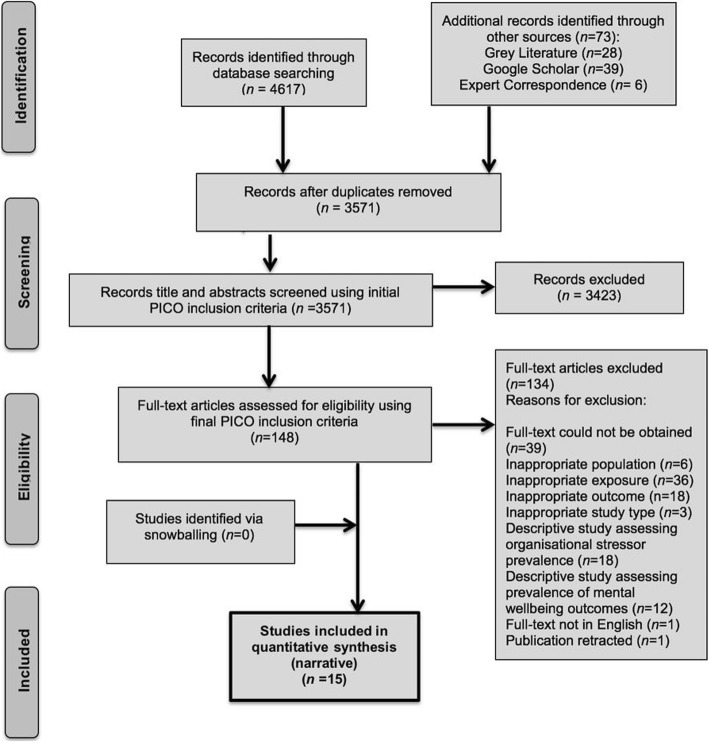
Verification
Claims the paper makes
The claims and statistics of this paper haven’t been checked yet.
Run the check — free, no account needed. It reads the open-access text and checks the sources it cites.
Claims other papers make about this one
Each is checked against this paper’s own text: does it say what the citing paper says it does?
The source backs part of the claim, not all of it — or backs it for a different population, condition or comparison.
In the citing paper
“Police activity is, thus, described in the literature as stressful, leading to poor physical and mental health outcomes over time, in which burnout is included”
From Psychosocial risk and protective factors associated with burnout in police officers: A systematic review (2023) · cites this paper as Purba and Demou, 2019
Experimental — accuracy not yet measuredThe source backs part of the claim, not all of it — or backs it for a different population, condition or comparison.
In the citing paper
“In terms or organisational factors, high job demands, effort-reward imbalance, low decision latitude, perceived injustice, low social sup port, lack of leadership, organisational culture, and working in urban environments were found to be associated with burnout, in line with the wide literature (Nieuwenhuijsen et al., 2010; Purba and Demou, 2019; Sherwood et al., 2019).”
From Psychosocial risk and protective factors associated with burnout in police officers: A systematic review (2023) · cites this paper as Purba and Demou, 2019
Experimental — accuracy not yet measured
Self-check
Percentages, sums and reported differences re-computed from the paper’s own numbers.
The self-check needs the paper’s full text.
Citations
Cites
Preferred reporting items for systematic reviews and meta-analyses: the PRISMA Statement.
(2009) · PubMed Central · Cited by 44,859
Preferred Reporting Items for Systematic Reviews and Meta-Analyses: The PRISMA Statement
Moher, D., Liberati, A., Tetzlaff, J., & Altman, D. G. (2009) · Journal of Clinical Epidemiology · doi:10.1016/j.jclinepi.2009.06.005 · Cited by 19,575
(2014) · Medical Entomology and Zoology · Cited by 17,633
Systematic reviews: CRD's guidance for undertaking reviews in health care
Tacconelli, E. (2010) · The Lancet Infectious Diseases · doi:10.1016/s1473-3099(10)70065-7 · Cited by 3,262
Popay, J., Roberts, H., Sowden, A., Petticrew, M., Arai, L., Rodgers, M., Britten, N., Roen, K., & Duffy, S. (2006) · Lancaster University · doi:10.13140/2.1.1018.4643 · Cited by 2,070
Psychosocial work environment and mental health—a meta-analytic review
Stansfeld, S., & Candy, B. (2006) · Scandinavian Journal of Work, Environment & Health · doi:10.5271/sjweh.1050 · Cited by 1,875
Babbie, E. R. (1998) · Cited by 1,729
Jha, A. (2023) · Routledge eBooks · doi:10.4324/9781032624860-3 · Cited by 1,665
Herzog, R., Álvarez-Pasquin, M. J., Díaz, C., Del Barrio, J. L., Estrada, J. M., & Gil, Á. (2013) · BMC Public Health · doi:10.1186/1471-2458-13-154 · Cited by 1,652
"The very best of the millennium": Longitudinal research and the demand-control-(support) model.
de Lange, A., Taris, T. W., Kompier, M. A. J., Houtman, I. L. D., & Bongers, P. M. (2003) · Journal of Occupational Health Psychology · doi:10.1037/1076-8998.8.4.282 · Cited by 1,105
Research works printed but not linked: 23
- Executive HS. Work related stress, anxiety and depression statistics in Great Britain 2016. Suffolk: Health and Safety Executive; 2016.
- COEH CfOEH. Occupational physicians reporting activiity. Quarterly report. Manchester: University of Manchester; 2000.
- Rollinson D. Organisational behaviour and analysis: an integrated appraoch. 3rd ed. London: Pearson Education Limited; 2005.
- Ward GE. Physiological, psychological and social issues specifically related to the police profession. Law Order. 1979;27(1):12.
- Policing Co. Code of ethics a code of practice for the principles and standards of professional behaviour for the policing profession of England and Wales. Coventry: College of Policing Ltd; 2014.
- Schaufeli WB, Maslach C, Marek T. Profesional burnout: recent developments in theory and research. Washington: Taylor & Francis; 1993.
- Territo L, Vetter HJ. Stress and police personnel. J Police Sci Adm. 1981;9(2):195–208.
- UNISON. 2014 police staff stress survey report. London: UNISON; 2014.
- Kroes WH. Society’s victims- the police: an analysis of job stress in policing. 2nd ed. Springfied: Charlie Thomas; 1985.
- Alexander DA, Innes G, Irving BL, Sinclair S, Walker LG. Health, stress and policing: a study in Grampion police. London: The Police Foundation; 1991.
- Alexander D, Walker L, Innes G, Irving B. Police stress at work. UK: Police Foundation; 1993.
- Koortzen P. The dimensionality of police stressors. Acta Criminologiae et Medicinae Legalis Japonica. 1996;9(2):55–63.
- Husain W. The levels of depression, anxiety and stress in police officers. Acad Res Int. 2014;5(4):458–65.
- Health and Safety Executive (HSE). Striking the balance between operational and health and safety duties in the police service. Suffolk: Health and Safety Executive; 2008.
- Higgins JP, Green S. Cochrane handbook for systematic reviews of interventions version 5.0.2. London: The Cochrane Collaboration; 2009.
- Torgerson C. Systematic reviews. London: Continuum; 2003.
- Bioethics NCo. The findings of a series of engagement activites exploring the culture of scientific research in the UK. London: Nuffield College of Bioethics; 2014.
- Boland A, Cherry G, Dickson R. Doing a systematic review a students guide. London: SAGE Publications; 2014.
- Bernard B. A critical review of epidemiological evidence for work-related muscoloskeletal disorders of the neck, upper extremity and low back. Cincinnati: National Institute for Occupational Safety and Health; 1997.
- Leka S, Griffiths A, Cox T. Protecting workers health series No 3: Work organization & stress. Geneva: World Health Organization (WHO); 2004.
- Xavier P, Prabhakar K. A study of police stress and burnout among Tamil Nadu police. Int J Pharm Sci Rev Res. 2016;38(2):159–61.
- Finn P, Tomz JE. Developing a law enforcement stress program for officers and their families. In: Issues and practices in criminal justice. Washington D.C: National Insitute of Justice; 1996.
- Elliot-Davies M, Houdmont J. Officer demand, capacity and welfare survey descriptive statistics summary report: mental health and wellbeing January 2017. Surrey: Police Federation of England and Wales (PFEW); 2017.
Cited by
Sorted by citations
Queirós, C., Passos, F., Bártolo, A., Marques, A. J., da Silva, C. F., & Pereira, A. (2020) · Frontiers in Psychology · doi:10.3389/fpsyg.2020.00587 · Cited by 330
Queirós, C. M. L., Passos, F., Bártolo, A., Faria, S., Fonseca, S. M., Marques, A. J., da Silva, C. F., & Pereira, A. (2020) · International Journal of Environmental Research and Public Health · doi:10.3390/ijerph17186718 · Cited by 184
“These results are in line with other studies and confirm that policing is a stressful professional occupation [1,2,15,28] and that burnout affects police officers [4,6,24,27].”
BackgroundResultInfluentialUnderstanding the mental health and wellbeing needs of police officers and staff in Scotland
Demou, E., Hale, H. C., & Hunt, K. (2020) · Police Practice and Research · doi:10.1080/15614263.2020.1772782 · Cited by 93
“Aligned with recent literature, organisational, as opposed to operational, stressors were reported by officers and staff to be the key stressors [11].”
BackgroundInfluentialSelf-citationKyprianides, A., Bradford, B., Beale, M., Savigar-Shaw, L., Stott, C., & Radburn, M. (2021) · Policing & Society · doi:10.1080/10439463.2021.1916492 · Cited by 71
“These stressful workplace exposures have been found to significantly impact on the mental and physical well-being of police officers (Violanti et al. 2017, Purba and Demou 2019).”
BackgroundStevelink, S. A. M., Opie, E., Pernet, D., Gao, H., Elliott, P., Wessely, S. C., Fear, N. T., Hotopf, M. H., & Greenberg, N. L. (2020) · PLoS ONE · doi:10.1371/journal.pone.0240902 · Cited by 74
Ryu, G. W., Yang, Y. S., & Choi, M. (2020) · BMC Public Health · doi:10.1186/s12889-020-08546-3 · Cited by 78
“The subjective well-being of police officers is related to mental health [4].”
BackgroundWorking hours, sleep, and fatigue in the public safety sector: A scoping review of the research
Allison, P., Tiesman, H. M., Wong, I. S., Bernzweig, D., James, L., James, S., Navarro, K. M., & Patterson, P. D. (2022) · American Journal of Industrial Medicine · doi:10.1002/ajim.23407 · Cited by 65
Alves, L., Abreo, L., Petkari, E., & Pinto da Costa, M. (2023) · Journal of Affective Disorders · doi:10.1016/j.jad.2023.03.081 · Cited by 50
Mental Disorders and Mental Health Promotion in Police Officers
Santre, S. (2024) · Health Psychology Research · doi:10.52965/001c.93904 · Cited by 63
Brunetto, Y., Farr-Wharton, B., Wankhade, P., Saccon, C., & Xerri, M. J. (2022) · International journal of human resources management · doi:10.1080/09585192.2022.2047755 · Cited by 47
“Unlike other types of emergency workers, police officers are potentially exposed to violence daily and are subsequently at greater risk of personal injury, which is further compounded by their responsibilities associated with protecting the public and carrying firearms (Purba & Demou, 2019).”
BackgroundInfluentialOrganizational Factors and Their Impact on Mental Health in Public Safety Organizations
Edgelow, M., Scholefield, E., McPherson, M., Legassick, K., & Novecosky, J. (2022) · International Journal of Environmental Research and Public Health · doi:10.3390/ijerph192113993 · Cited by 47
“Other operational factors include the volume of work, or workload, and threats to safety and risk of injury or death [6,9].”
BackgroundInfluentialMaran, D. A., Magnavita, N., & Garbarino, S. (2022) · International Journal of Environmental Research and Public Health · doi:10.3390/ijerph19063720 · Cited by 67
“They include “lack of support, heavy workloads, interpersonal conflicts with colleagues and supervisors, inadequate resources, time pressures, and an overly bureaucratic organizational system that punishes and harshly manages employees” ([3], p.”
BackgroundDrew, J. M., Sargeant, E., & Martin, S. (2024) · Policing A Journal of Policy and Practice · doi:10.1093/police/paae036 · Cited by 42
“In policing, job demand stress has consistently been found to be significantly related to poor well-being, mental ill-health, burnout, and psychological distress (Purba and Demou, 2019; Syed et al ., 2020; Wagner et al ., 2019).”
BackgroundChen, I., Lin, C., Zheng, X., & Griffiths, M. D. (2020) · International Journal of Environmental Research and Public Health · doi:10.3390/ijerph17082737 · Cited by 40
“Consequently, the police may experience negative emotions that contribute and/or cause mental health problems [1,2].”
BackgroundChen, P.-F., & Wu, L. (2022) · BMC Public Health · doi:10.1186/s12889-022-14758-6 · Cited by 52
Secondary Traumatic Stress in Italian Police Officers: The Role of Job Demands and Job Resources
Maran, D. A., Zito, M., & Colombo, L. (2020) · Frontiers in Psychology · doi:10.3389/fpsyg.2020.01435 · Cited by 44
“Moreover, to improve coping strategies and resilience, a meta-analysis by Purba and Demou (2019) suggested that it is important to increase the support given by superiors and colleagues because the lack of such support is related to mental health outcomes.”
BackgroundMumford, E. A., Liu, W., & Taylor, B. G. (2021) · Police Quarterly · doi:10.1177/1098611121991111 · Cited by 41
“Moreover, officers face these occupational hazards in the context of unique organizational stressors, such as rotating shifts, chain of command management environment, and cultural stigmas regarding mental health supports (Purba & Demou, 2019).”
BackgroundTrauma and Coping Strategies in Police Officers: A Quantitative-Qualitative Pilot Study
Civilotti, C., Fini, G. D., & Maran, D. A. (2021) · International Journal of Environmental Research and Public Health · doi:10.3390/ijerph18030982 · Cited by 34
“In the meta-analysis conducted by Purba and Demou [66], the importance of support for POs by the organization emerged, in particular from superiors and colleagues, as positive feedback is linked to improved mental health outcomes.”
MethodFarr‐Wharton, B., Brunetto, Y., Wankhade, P., Saccon, C., & Xerri, M. J. (2021) · Policing An International Journal · doi:10.1108/pijpsm-09-2020-0156 · Cited by 36
The policing culture: an exploration into the mental health of former British police officers
Porter, C. N., & Lee, R. (2023) · Current Psychology · doi:10.1007/s12144-023-04365-y · Cited by 31
“Additionally, police officers face organisational pressures such as long shifts, inadequate resources, a lack of support, and increased public demand (Purba & Demou, 2019; Wang et al., 2010).”
Zhou, S., Li, M., Chen, S.-R., Jiang, D., Qu, Y., & Xu, X. (2024) · BMC Psychology · doi:10.1186/s40359-024-01779-6 · Cited by 43
Taking the strain? Police well-being in the COVID-19 era
Newiss, G., Charman, S., Ilett, C., Bennett, S., Ghaemmaghami, A., Smith, P., & Inkpen, R. (2021) · The Police Journal Theory Practice and Principles · doi:10.1177/0032258x211044702 · Cited by 30
“…et al., 2020; Jackman et al., 2020; Ordon et al., 2019), the impact of rapid change, not feeling valued, heavy workloads and the negative characteristics of organisational cultures conversely had an adverse impact upon well-being (Demou et al., 2020; Hesketh et al., 2017; Purba and Demou, 2019).”
BackgroundResultBell, S., Palmer-Conn, S., & Kealey, N. (2021) · The Police Journal Theory Practice and Principles · doi:10.1177/0032258x211049009 · Cited by 30
“…shifts, poor communication and lack of support from senior ranks and increased workload (Brown and Campbell, 1990; Crowe and Stradling, 1993; Purba and Demou, 2019) and operational stressors in the form of traumatic incidents (Abdollahi, 2002; Brewin, et al., 2020; Hesketh and Tehrani,…”
BackgroundPerceived occupational risk of fentanyl exposure among law enforcement
Attaway, P. R., McDonald, H. S., Davidson, P. J., & Kral, A. H. (2021) · International Journal of Drug Policy · doi:10.1016/j.drugpo.2021.103303 · Cited by 29
Njiro, B. J., Ndumwa, H. P., Msenga, C. J., Kawala, T., Matola, E., Mhonda, J., Corbin, H., Ubuguyu, O., & Likindikoki, S. L. (2021) · General Psychiatry · doi:10.1136/gpsych-2020-100448 · Cited by 29
Davies, L. E., Brooks, M., & Braithwaite, E. (2022) · The Police Journal Theory Practice and Principles · doi:10.1177/0032258x221106107 · Cited by 28
“However, comparable literature on police officers is limited, even though they too face occupational stressors such as poor management, lack of support from senior ranks, and increased workload (Purba and Demou, 2019).”
BackgroundFleming, J., & Brown, J. M. (2021) · Police Practice and Research · doi:10.1080/15614263.2021.1938048 · Cited by 30
“Comparative police/ police staff health studies also contribute to the literature (see Kerswell et al., 2020; Purba & Demou, 2019; Stevelink et al., 2020) particularly around stress and wellbeing.”
BackgroundLeadership matters to the police: Managing emotional labour through authentic leadership
Farr‐Wharton, B., Xerri, M. J., Saccon, C., & Brunetto, Y. (2021) · Public Money & Management · doi:10.1080/09540962.2021.1940481 · Cited by 35
“In particular, Purba and Demou (2019) argue that stress from undertaking police work compromises their wellbeing.”
BackgroundFarr‐Wharton, B., Brunetto, Y., Grande, A. H., Brown, K. A., & Teo, S. (2022) · Review of Public Personnel Administration · doi:10.1177/0734371x221130977 · Cited by 28
“In particular, Purba and Demou (2019, p. 18) argue police officers experience high level of stress, which is caused by a combination of operational tasks including the constant threat to their physical and mental safety resulting from the expectations that they must control their emotions when…”
BackgroundGavin, P., & Porter, C. N. (2024) · Police Practice and Research · doi:10.1080/15614263.2024.2364247 · Cited by 27
“Police officers recognise organisational stressors as being oppressive, unnecessary, unavoidable, and uncontrollable (Purba & Demou, 2019) and research suggests that organisational stress may be more prevalent and may pose a greater threat to the mental health of police officers than operational…”
Protecting Police Officers Against Burnout: Overcoming a Fragmented Research Field
Correia, I. F., Romão, Â., Almeida, A. E., & Ramos, S. (2023) · Journal of Police and Criminal Psychology · doi:10.1007/s11896-023-09584-4 · Cited by 51
“This exposure to ongoing occupational stressors, such as the preceding, leads to high levels of burnout and mental health problems in police officers of many countries (Purba and Demou 2019; Queirós et al.”
BackgroundWilliams, E. P., & Sondhi, A. (2022) · Policing A Journal of Policy and Practice · doi:10.1093/police/paac001 · Cited by 25
Vadvilavičius, T., Varnagirytė, E., Jarašiūnaitė–Fedosejeva, G., & Gustainienė, L. (2023) · Journal of Police and Criminal Psychology · doi:10.1007/s11896-022-09570-2 · Cited by 42
“2020; Ivleva and Pajarskienė, 2019; Purba and Demou 2019; Violanti et al.”
BackgroundOrganizational Risk Factors for Aircrew Health: A Systematic Review of Observational Studies
Marqueze, E. C., Benevides, E. A. D. S. E., Russo, A. C., Fürst, M. S. G., Roscani, R. C., Guimarães, P. C. V., & Salim, C. A. (2023) · International Journal of Environmental Research and Public Health · doi:10.3390/ijerph20043401 · Cited by 24
“mental health disorders [56], and adverse pregnancy outcomes (preterm birth, chance of”
BackgroundEdgelow, M., Fecica, A., Kohlen, C., & Tandal, K. (2023) · Frontiers in Public Health · doi:10.3389/fpubh.2023.1140983 · Cited by 23
Drew, J. M., & Williamson, H. (2024) · Police Quarterly · doi:10.1177/10986111241275048 · Cited by 29
“In turn, stress stemming from these experiences is strongly associated with adverse psychological outcomes (Purba & Demou, 2019).”
InfluentialHuang, Y., Guo, H., Wang, S., Zhong, S., He, Y., Chen, H., Zhou, J., & Wang, X. (2024) · BMC Public Health · doi:10.1186/s12889-023-17514-6 · Cited by 30
“The job of a correctional officer has been recognized as highly demanding and burdensome [1].”
BackgroundMetcalf, S. A., Saunders, E. C., Moore, S. K., Walsh, O., Meier, A., Auty, S. G., Bessen, S. Y., & Marsch, L. A. (2022) · Journal of the American College of Emergency Physicians Open · doi:10.1002/emp2.12641 · Cited by 21
A Descriptive Study of Police Officer Access to Mental Health Services
Padilla, K. E. L. (2023) · Journal of Police and Criminal Psychology · doi:10.1007/s11896-023-09582-6 · Cited by 21
“Organizational sources of stress are those that are found across many types of occupations and can include having to deal with excessive paperwork or unsupportive supervisors (Purba and Demou 2019; Violanti et al.”
BackgroundOrganisational and individual perspectives of police wellbeing in England and Wales
Phythian, R., Birdsall, N., Kirby, S., Cooper, E., Posner, Z. M., & Boulton, L. J. (2021) · The Police Journal Theory Practice and Principles · doi:10.1177/0032258x211052250 · Cited by 20
“Research outlines the extent of and diversity in the demand on police of fi cers and staff, and the subsequent impact this has both on individual wellbeing and organisational performance (e.g. McCraty and Atkinson, 2012; Purba and Demou, 2019).”
Geoffrion, S., Leduc, M.-P., Bourgouin, E., Bellemare, F., Arenzon, V., & Genest, C. (2023) · Frontiers in Psychology · doi:10.3389/fpsyg.2023.1149597 · Cited by 26
“Indeed, research has shown that being exposed to traumatic events on an ongoing basis can have a significant impact on mental health (Purba and Demou, 2019), and that police officers are particularly vulnerable to PTSIs (Carleton et al., 2019; Purba and Demou, 2019).”
BackgroundNelson, K., & Smith, A. P. (2023) · Behavioral Sciences · doi:10.3390/bs14010001 · Cited by 32
“While several studies have shown that work conditions directly influence personal experiences of physical and psychological strain [2–6], there is little research on whether subjective appraisals, such as perceived job stress and job satisfaction, may affect this relationship.”
BackgroundWang, J., Huang, Y., Wang, S., Zhang, Z., He, Y., Wang, X., & Guo, H. (2024) · BMC Public Health · doi:10.1186/s12889-024-18048-1 · Cited by 30
“Although burnout syndrome has been observed in all types of occupations, it tends to be more prevalent in some occupational groups, such as public safety personnel [6, 7], physicians [8–10], and teachers [11, 12].”
BackgroundFleming, J., & Brown, J. M. (2021) · Policing A Journal of Policy and Practice · doi:10.1093/police/paab027 · Cited by 19
“These findings are well established (Purba and Demou 2019) and are relevant across a number of countries and jurisdictions (van der Lippe and Lippenyi, 2018).”
BackgroundBrown, J. M., & Fleming, J. (2021) · The Police Journal Theory Practice and Principles · doi:10.1177/0032258x211052891 · Cited by 19
“Thatpolicing is a stressful occupation is well documented across a number of countries and jurisdictions (McCarty and Skogan 2013; Terpstra and Schaap 2013; Violanti et al., 2017; van der Lippe et al., 2011; Purba and Demou 2019; Duxbury et al., 2020; Queirós et al., 2020).”
BackgroundA systematic review of lifestyle and health among patrolling police officers
Valmari, E. G., Ghazinour, M., Nygren, U., & Gilenstam, K. (2022) · Scandinavian Journal of Occupational Therapy · doi:10.1080/11038128.2022.2083013 · Cited by 25
“The police profession is globally considered a highstrain and high-risk profession, affecting police officers’ lifestyle [3], as well as physical [4,5], mental [6] and social health [7,8].”
BackgroundMaguire, L., & Sondhi, A. (2022) · The Police Journal Theory Practice and Principles · doi:10.1177/0032258x221128398 · Cited by 20
“…incidents could lead to of fi cers developing one or more psychosocial conditions, which are regularly identi fi ed in the literature as trauma including post-traumatic stress, anxiety, burnout, fatigue or stress (cf. Bell et al., 2021; Fear et al., 2014; Lentz et al., 2021; Purba and Demou, 2019).”
BackgroundPredictors, Mediators and Moderators of Police Work-Related Stress: A Scoping Review
Cheung, Y. K., & Li, J. C. M. (2023) · International Journal of Environmental Research and Public Health · doi:10.3390/ijerph20032253 · Cited by 31
“For example, a systematic review of the relevant publications from 1990 to 2017 was completed [14].”
BackgroundResultWorking Time Characteristics and Mental Health among Corrections and Transportation Workers
Cavallari, J. M., Garza, J. L. B., Ferguson, J. M., Laguerre, R. A., Decker, R. E., Suleiman, A. O., & Dugan, A. G. (2020) · Annals of Work Exposures and Health · doi:10.1093/annweh/wxaa131 · Cited by 19
Lam, L. T.-M., & Lam, M. K. (2023) · Frontiers in Psychiatry · doi:10.3389/fpsyt.2023.1106816 · Cited by 20
‘Constant pressures from all angles’: Understanding the mental health of UK police officers
Porter, C. N., & Gavin, P. (2024) · The Police Journal Theory Practice and Principles · doi:10.1177/0032258x241280217 · Cited by 16
“Police of fi cers recognise organisational stressors as being oppressive, unnecessary, unavoidable, and uncontrollable (Purba and Demou, 2019), and research suggests that they may pose a greater threat to the mental health of police of fi cers than operational stressors (Brough, 2004; Galanis et al.,…”
Police Officers and the Meaning of Work: The Forgotten Dimension
Alcadipani, R., Lotta, G., & Medeiros, C. R. D. O. (2021) · Public Organization Review · doi:10.1007/s11115-021-00568-8 · Cited by 16
Examining police officers’ perceptions of stress: the role of Person−environment fit
Rief, R. M., & Clinkinbeard, S. S. (2021) · Policing An International Journal · doi:10.1108/pijpsm-02-2021-0034 · Cited by 23
Baek, H., Han, S., & Seepersad, R. (2021) · Police Quarterly · doi:10.1177/10986111211036007 · Cited by 26
“Conversely, support from various sources may help officers to manage occupational stress, resulting in a lower likelihood of burnout at work (Mansour & Tremblay, 2016; Purba & Demou, 2019).”
BackgroundDevelopments in UK police wellbeing: A review of blue light wellbeing frameworks
Phythian, R., Birdsall, N., Kirby, S., Cooper, E., Posner, Z. M., & Boulton, L. J. (2022) · The Police Journal Theory Practice and Principles · doi:10.1177/0032258x211073003 · Cited by 15
“Police culture and mental health stigma A prevailing barrier to police wellbeing that continues to feature in recent research is that of police culture, especially regarding mental health stigma (see Demou et al., 2020; Purba and Demou, 2019).”
BackgroundPikoulas, G., Charila, D., & Tzavellas, E. (2022) · International Journal of Police Science & Management · doi:10.1177/14613557221089569 · Cited by 15
“…pay, long working hours, heavy workload, inconsistent leadership and excessive paperwork (Biggam et al. et al., 1997; Evans and Coman, 1993; Purba and Demou, 2019); personality traits, such as neuroticism and conscientiousness (Louw, 2014); and psychological characteristics, such as…”
BackgroundShift Work Adaptation Among Police Officers: The BCOPS Study
Nevels, T. L., Burch, J. B., Wirth, M. D., Ginsberg, J., McLain, A. C., Andrew, M. E., Allison, P., Fekedulegn, D. B., & Violanti, J. M. (2021) · Chronobiology International · doi:10.1080/07420528.2021.1895824 · Cited by 17
“Law enforcement is among the most dangerous and stressful occupations (Purba and Demou 2019; Syed et al. 2020; Violanti et al. 2017).”
BackgroundEvaluating real-time momentary stress and affect in police officers using a smartphone application
Ryu, G. W., Yang, Y. S., & Choi, M. (2020) · BMC Public Health · doi:10.1186/s12889-020-09225-z · Cited by 16
“Systematic reviews of existing studies on psychological outcomes for police officers revealed that factors associated with stress include higher job demands, poor relationships with colleagues, job pressure, low rewards, role ambiguity, and lack of social support [3, 18].”
BackgroundKwan, R., Ng, F., Lai, M., Wong, D. C. N., & Chan, S. (2023) · Trials · doi:10.1186/s13063-023-07130-5 · Cited by 12
“The stress of life across the lifespan (e.g. the COVID-19 pandemic, organizational stress) is known to be associated with poor mental well-being [2, 3].”
BackgroundSondhi, A., Harding, R., Maguire, L., & Williams, E. P. (2023) · Policing A Journal of Policy and Practice · doi:10.1093/police/paad020 · Cited by 15
How Do Police Officers Cope with Stress? A Qualitative Study
Singo, C., & Shilubane, H. N. (2022) · Journal of Police and Criminal Psychology · doi:10.1007/s11896-022-09556-0 · Cited by 14
“Being a law enforcement officer appears to be an extremely demanding and difficult occupation because of the qualities of modern-day societies such as the rise in physical violence with guns in metropolitan areas, as well as insufficient human and material resources (Purba and Demou 2019).”
BackgroundA Scoping Review of Stress Measurements and Psychometry in Police Research
Rabbing, L., Bjørkelo, B., Fostervold, K. I., Strømme, H., & Lau, B. (2022) · Journal of Police and Criminal Psychology · doi:10.1007/s11896-022-09498-7 · Cited by 18
Yadav, B., Anil, K. C., Bhusal, S., & Pradhan, P. M. S. (2022) · BMJ Open · doi:10.1136/bmjopen-2022-061534 · Cited by 13
Fitzhugh, H., Michaelides, G., Daniels, K., Connolly, S., & Nasamu, E. (2023) · Review of Public Personnel Administration · doi:10.1177/0734371x231155794 · Cited by 14
“Front-line public sector work involves organizational stressors from how public services are managed (Purba & Demou, 2019) and cycles of politicized reform (Brunetto & Beattie, 2020).”
A review of the (potential) implications of climate change for policing practice worldwide
Matczak, A., & Bergh, S. I. (2023) · Policing A Journal of Policy and Practice · doi:10.1093/police/paad062 · Cited by 13
Grau‐Alberola, E., Sanchez, A. B., & Figueiredo‐Ferraz, H. (2024) · Anales del Sistema Sanitario de Navarra · doi:10.23938/assn.1058 · Cited by 20
“A systematic review showed that the organizational stressors most often associated with mental health outcomes include the lack of support 20 .”
BackgroundEmotional Intelligence as a Predictor of Police Operational Stress: A Pilot Study
Rajan, S. K., Thomas, M. W., & Vidya, P. (2021) · Journal of Police and Criminal Psychology · doi:10.1007/s11896-021-09456-9 · Cited by 15
“2013; Purba and Demou 2019).”
Taylor, B. G., Liu, W., & Mumford, E. A. (2021) · International Journal of Police Science & Management · doi:10.1177/14613557211064050 · Cited by 12
“Workplace stressors can have a significant associations with health outcomes including lack of support, high demands, occupational pressures, administrative/organizational pressures and long working hours (Purba and Demou, 2019).”
BackgroundJones, J. K., & Turner, M. J. (2022) · Journal of Rational-Emotive & Cognitive-Behavior Therapy · doi:10.1007/s10942-022-00459-x · Cited by 15
“Such adverse mental health outcomes associated with policing include occupational stress, anxiety, depression, psychiatric symptoms/psychological distress, burnout, and suicidal ideation (Purba & Demou, 2019).”
BackgroundMumford, E. A., Liu, W., & O’Leary, M. S. (2024) · Police Quarterly · doi:10.1177/10986111241253851 · Cited by 17
“Although occupational stressors are challenging to minimize, the prominance of organizational stressors in policing has been widely documented (Purba & Demou, 2019).”
Steel, E., Malinen, S. K., & Näswall, K. (2024) · Safety Science · doi:10.1016/j.ssci.2024.106659 · Cited by 20
Effect of Organizational Factors on Psychological Stress and Job Satisfaction
Singh, P., Bhardwaj, P., Sharma, S. K., & Mishra, V. (2022) · Vision The Journal of Business Perspective · doi:10.1177/09722629221106265 · Cited by 15
Besagas, A. J. L., & Branzuela, S. K. M. (2023) · Journal of Legal Subjects · doi:10.55529/jls.32.13.22 · Cited by 11
Simonovska, T., Sinclair, R. L., & Duval, K. (2023) · Frontiers in Psychology · doi:10.3389/fpsyg.2023.1155733 · Cited by 11
“While it has been generally noted that police personnel may experience a range of symptoms in response to such stressors, much of the existing literature that explores operational stressors tends to focus on critical incident stress responses or the stressors that are considered as inherent to police work itself (Stin…”
BackgroundInfluentialRacial variations in work-related stress among police officers
Repasky, G. R., Rogers, R. L., Bellas, C. M., & Frissora, G. (2020) · Journal of Ethnicity in Criminal Justice · doi:10.1080/15377938.2020.1736226 · Cited by 11
“Law enforcement is recognized generally as one of the most stressful of all occupations (Purba & Demou, 2019).”
BackgroundIllias, M., Riach, K., & Demou, E. (2024) · BMC Public Health · doi:10.1186/s12889-024-20152-1 · Cited by 15
“…masculinist parameters of conduct and their negative implications for health and well-being reported in this review, resonate with the findings of previous research [78–81] reporting how organisational and operational stressors affect the psychological wellbeing of police officers more generally.”
ResultSelf-citationCulture and well-being among sworn officers: an empirical examination
Patterson, S., & King, W. R. (2022) · Policing An International Journal · doi:10.1108/pijpsm-06-2022-0078 · Cited by 10
Law Enforcement and Mental Health: The Limpid Kryptonite—A Clear and Present Danger
Singletary, G. (2023) · Journal of Police and Criminal Psychology · doi:10.1007/s11896-023-09609-y · Cited by 16
Bezie, A. E., Yenealem, D. G., Belay, A. A., Abie, A. B., Abebaw, T., Melaku, C., Mamaye, Y., & Tesfaye, A. H. (2024) · Frontiers in Public Health · doi:10.3389/fpubh.2024.1355625 · Cited by 17
“In addition, organizational stressors, such as insufficient help from superiors and a lack of cooperation with coworkers, are more likely to persist for officers, which may increase the likelihood that they will experience burnout (102).”
Backgroundde Sousa, C., Viseu, J. N. R., Pimenta, A. C., Vinagre, H., Ferreira, J. M. A., Matavelli, R. D., JOSÉ, H. M. G., Sousa, L., Romana, F. A., & VALENTİM, O. M. M. D. S. (2024) · Behavioral Sciences · doi:10.3390/bs14060478 · Cited by 17
“Consistent with the JD-R, some studies have indicated a positive correlation between WFC and stress and burnout [28] and a positive association between high levels of WFC and high anxiety levels [29].”
ResultMiles‐Johnson, T., & Fay, S. (2022) · Societies · doi:10.3390/soc12040100 · Cited by 9
“police organizations is likely to increase the mental capacity of officers and reduce work‐ place stressors [74].”
Backgrounddos Santos, A. R., Ihlenfeld, M. F. K., Olandoski, M., & Barreto, F. C. (2022) · BMJ Open · doi:10.1136/bmjopen-2021-049182 · Cited by 9
Suicidal ideation in police officers and associated risk factors: A systematic review
Talavera‐Velasco, B., Gutiérrez-Carvajal, A., Martín‐García, J., & Moreno, L. (2024) · Policing A Journal of Policy and Practice · doi:10.1093/police/paae057 · Cited by 9
Drew, J. M., Keech, J. J., & Martin, S. (2025) · American Journal of Criminal Justice · doi:10.1007/s12103-025-09833-8 · Cited by 8
“Policing is an occupation that has been consistently shown to have significant psychological health impacts on staff (Purba & Demou, 2019; Regehr et al., 2019; Syed et al., 2020; Wagner et al., 2020).”
Exploring the life contexts of patrolling police officers in the European Union – A scoping review
Valmari, E. G., Ghazinour, M., Nygren, U., & Gilenstam, K. (2022) · Scandinavian Journal of Occupational Therapy · doi:10.1080/11038128.2022.2041088 · Cited by 9
Evaluation of physical health, mental wellbeing, and injury in a UK Police Firearms unit
Bradley, E., Fayaz, S., Farish, C., & Coulson, M. (2022) · Police Practice and Research · doi:10.1080/15614263.2022.2080066 · Cited by 8
Police victims of domestic abuse: barriers to reporting victimisation
Couto, L., O’Leary, N., & Brennan, I. R. (2023) · Policing & Society · doi:10.1080/10439463.2023.2250523 · Cited by 8
“For example, police o ffi cers are clearly damaged by stress and trauma (Purba and Demou 2019), they experience physical harm more than any other profession (Health and Safety Executive, 2020), one-third in the UK are female (Home O ffi ce 2023a, 2023b) and procedures for dealing with crimes are often…”
BackgroundGender discrimination and family stressors: Perceptions and experiences of women police officers
Schafer, J. A., Dunlap, B., Mancini, M. A., & Linhorst, D. M. (2024) · Policing A Journal of Policy and Practice · doi:10.1093/police/paae027 · Cited by 8
Tsirimokou, A., Kloess, J. A., Dhinse, S. K., & Larkin, M. (2024) · Journal of Police and Criminal Psychology · doi:10.1007/s11896-024-09655-0 · Cited by 14
“These have shown to have significant associations with symptoms of burnout, such as emotional exhaustion and reduced self-efficacy, in some cases extending to serious psychological distress and psychiatric symptoms (Purba and Demou 2019).”
Navigating the decision‐making landscape of AI in risk finance: Techno‐accountability unveiled
Issa, H., Dakroub, R., Lakkis, H., & Jaber, J. (2024) · Risk Analysis · doi:10.1111/risa.14336 · Cited by 12
Stress and coping among police personnel in South India
Savarimalai, R., Christy, J., Binu, V. S. N., & Sekar, K. (2023) · Industrial Psychiatry Journal · doi:10.4103/ipj.ipj_30_22 · Cited by 12
“[7] The studies conducted in Africa and India [24,25] revealed that duty‑related stressors such as multi‑tasking, working in sensitive/life‑threatening situations, investigating a critical case, and handling the accused also added to the work pressure of the police personnel.”
Lu, Y.-F., & Kuen, K. (2024) · Policing & Society · doi:10.1080/10439463.2024.2438259 · Cited by 8
“The scholarship on operational and organisational stressors and their impacts on health among law enforcement officers has been well established (Abdollahi 2002, Violanti et al. 2017, Purba and Demou 2019).”
Ricciardelli, R., Carbonell, M., Ferguson, L., & Huey, L. (2023) · International Journal of Police Science & Management · doi:10.1177/14613557231188578 · Cited by 9
“Operational stressors in policing are well recognized (see, for example J Brown et al., 1999; Purba and Demou, 2019; Shane, 2010; Violanti et al., 2017); they are the acute situations, incidents, and responses to calls for services that also gain police of fi cers ’ recognition as fi rst responders…”
BackgroundOccupational prestige and job satisfaction in high-stress public safety work
Mumford, E. A., Hudak, K. M., Liotta, M., O’Leary, M. S., & Ramey, A. S. (2022) · Policing A Journal of Policy and Practice · doi:10.1093/police/paac049 · Cited by 7
Minor psychiatric disorders and the work context of Civil Police: a mixed method study
Tavares, J. P., Mendonça, V. G., Vieira, L. S., Guimarães, R. S. W., Magnago, T. S. B. D. S., Machado, W. D. L., & Pai, D. D. (2022) · Jornal Brasileiro de Psiquiatria · doi:10.1590/0047-2085000000390 · Cited by 7
“As for the socio-labor data, the study evidenced that the working time median was 7 (3-16) years, the time exercising in the role was 6 (3-14) years and the workday was 8 (8-8) hours per day and 40 (40-40) hours per week.”
Traynor, I. G., & Rydon‐Grange, M. (2024) · The Police Journal Theory Practice and Principles · doi:10.1177/0032258x241230762 · Cited by 7
“Unsurprisingly, both stressor types negatively impact of fi cers ’ mental health, increasing symptoms of post-traumatic stress disorder (PTSD), occupational stress, distress, and emotional exhaustion (Purba and Demou, 2019; Wagner et al., 2020).”
Sondhi, A., Harding, R., & Williams, E. P. (2024) · Police Practice and Research · doi:10.1080/15614263.2024.2426172 · Cited by 7
“A recent series of reviews (Alves et al., 2023; Correia et al., 2023; Galanis et al., 2021; Purba & Demou, 2019; Sherwood et al., 2019) have identified common factors associated with stress and burnout in policing, including demographic factors (such as age, gender, marital status), job…”
“I don’t want to be a victim again”: the impact of repeat assault on police officers
Davidson, L., Dennis, A., Theodoropoulou, A., Carter, H., Amlôt, R., & Hesketh, I. (2023) · Frontiers in Psychology · doi:10.3389/fpsyg.2023.1145944 · Cited by 6
“Whilst a systematic review of the relationship between organizational stressors and mental wellbeing within police officers identified 36 different organizational stressors, including organizational culture, job pressure, and long working hours that were related to mental wellbeing outcomes among police officers (Purb…”
BackgroundFemale police officers: An exploration of the availability and utilization of mental health services
Treece, K. S. (2023) · The Police Journal Theory Practice and Principles · doi:10.1177/0032258x231186948 · Cited by 7
“Long and unpredictable hours, inadequate support, and lack of autonomy are commonly attributed to organizational stress (Purba and Demou, 2019).”
Police officers' perception of community support for policing: implications for well-being
Keaton, J., Black, K. J., Houdmont, J., Beck, E., Roddy, D., Chambers, J., & Moon, S. (2023) · Policing An International Journal · doi:10.1108/pijpsm-05-2023-0056 · Cited by 12
Metadata
- Authors
- Purba, A., & Demou, E.
- Affiliations
- University of Glasgow (GB)
- MRC/CSO Social and Public Health Sciences Unit (GB)
- Corresponding author
- Demou, Evangelia
- Venue
- BMC Public Health
- Published
- 2019-10-15
- Volume
- 19
- Issue
- 1
- Pages
- 1286-1286
- ISSN
- 1471-2458 (ISSN-L)
- PMC
- PMC6792329
- OpenAlex
- W2980327373
- Cited by
- 328
- References
- 113
- Citations by year
- 2026: 59 · 2025: 51 · 2024: 70 · 2023: 59 · 2022: 43 · 2021: 34 · 2020: 12
- FWCI
- 3.44
- Type
- journal article
- Language
- en
- Open access
- gold
- doi.org
- Locations
- BMC Public Health (publishedVersion, cc-by)
- PubMed Central (publishedVersion, cc-by)
- PubMed (publishedVersion)
- ENLIGHTEN (Jurnal Bimbingan dan Konseling Islam) (acceptedVersion, cc-by-sa)
- DOAJ (DOAJ: Directory of Open Access Journals) (submittedVersion, cc-by-sa)
- Funders
- Medical Research Council (MC_PC_13027)
- Topics
- Social Sciences › Psychology › Social Psychology › Stress and Burnout Research
- Health Sciences › Medicine › Public Health, Environmental and Occupational Health › Workplace Health and Well-being
- Health Sciences › Medicine › Public Health, Environmental and Occupational Health › Occupational Health and Burnout
- Keywords
- organisational stressors, police officers, psychological well-being, occupational stress, psychological distress, emotional exhaustion, job demands, lack of support, long working hours, administrative pressure, police mental health
- MeSH terms
- Occupational Stress, Mental Disorders, Humans, Mental Health, Risk Factors, Police
About these checks
Registry, retraction, Cites and statistics results are computed, not judged, with one exception: a printed reference that no index lists is read once by a model before it counts as a citation error. Claims are extracted by a model and kept only when their quote appears verbatim in the text; each cited source is then checked, with a model’s help, for whether it says what the claim relies on. Those verdicts can be wrong — read the claim’s quote and the cited source before relying on one.
Statistics and arithmetic are recomputed, not judged.
Confidence bands are shown only for fields calibrated on our annotated test set. None is calibrated yet, so no band is shown.
What counts as a claim ›How we measure confidence ›How we check this ›
Are you an author, or do you see a problem with this page? Request a review
