

The DOI matches its Crossref record; 111 of the 113 references it cites were found in a registry or an index.
The relationship between organisational stressors and mental wellbeing within police officers: a systematic review
Open accessAbstract
Background: Occupational stressors in police work increase the risk for officer mental health morbidities. Officers’ poor mental wellbeing is harmful to the individual, can affect professionalism, organisational effectiveness, and public safety. While the impact of operational stressors on officers’ mental wellbeing is well documented, no review has systematically investigated organisational stressor impacts. This study aimed to conduct a systematic review to assess the relationship between organisational stressors and police officer mental wellbeing. Methods: Systematic review conducted following PRISMA and Cochrane Collaboration guidelines. Literature search was undertaken from 1990 to May 2017 on four databases (EBSCOHOST Medline/SocINDEX/PsycINFO/OVID Embase) and grey literature. Included articles were critically appraised and assessed for risk of bias. Narrative and evidence syntheses were performed by specific mental health outcomes. Results: In total, 3571 results were returned, and 15 studies met the inclusion criteria. All included studies were published in English between 1995 and 2016, had cross-sectional study designs, spanned across four continents and covered 15,150 officers. Strong evidence of significant associations was identified for organisational stressors and the outcomes of: occupational stress, psychiatric symptoms/psychological distress, emotional exhaustion and personal accomplishment. The organisational stressors most often demonstrating consistently significant associations with mental health outcomes included lack of support, demand, job pressure, administrative/organisational pressure and long working-hours. Conclusions: This review is the first to systematically examine organisational stressors and mental health in police officers. Organisational stressors that can be targeted by interventions and policy changes to secure officer wellbeing, a healthy work environment, and benefits to the organisation and the public are identified.
Overview
The claims and statistics of this paper haven’t been checked yet.
Run the check — free, no account needed. It reads the open-access text and checks the sources it cites.
Integrity signals
Registry
Cites
Statistics
Figures
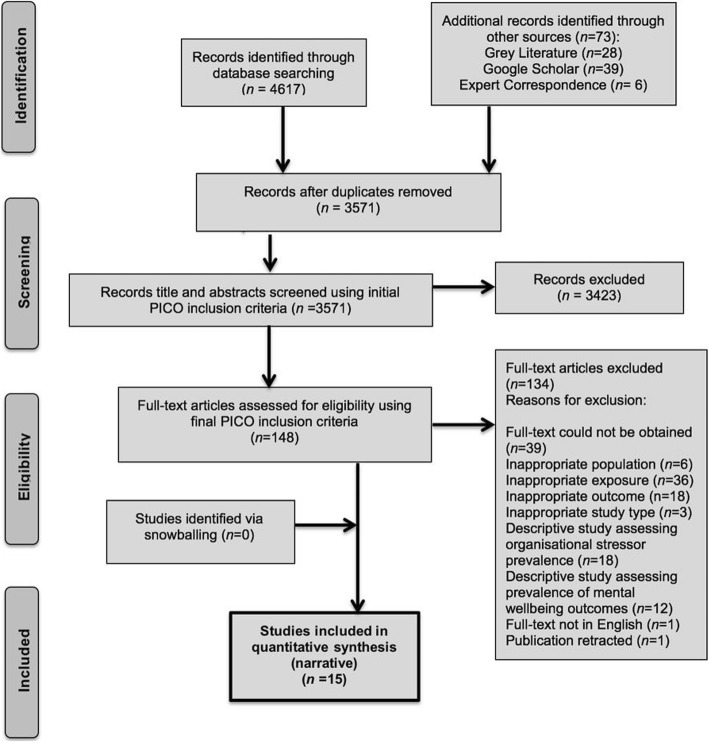
Verification
Claims the paper makes
The claims and statistics of this paper haven’t been checked yet.
Run the check — free, no account needed. It reads the open-access text and checks the sources it cites.
Claims other papers make about this one
Each is checked against this paper’s own text: does it say what the citing paper says it does?
The source backs part of the claim, not all of it — or backs it for a different population, condition or comparison.
In the citing paper
“Police activity is, thus, described in the literature as stressful, leading to poor physical and mental health outcomes over time, in which burnout is included”
From Psychosocial risk and protective factors associated with burnout in police officers: A systematic review (2023) · cites this paper as Purba and Demou, 2019
Experimental — accuracy not yet measuredThe source backs part of the claim, not all of it — or backs it for a different population, condition or comparison.
In the citing paper
“In terms or organisational factors, high job demands, effort-reward imbalance, low decision latitude, perceived injustice, low social sup port, lack of leadership, organisational culture, and working in urban environments were found to be associated with burnout, in line with the wide literature (Nieuwenhuijsen et al., 2010; Purba and Demou, 2019; Sherwood et al., 2019).”
From Psychosocial risk and protective factors associated with burnout in police officers: A systematic review (2023) · cites this paper as Purba and Demou, 2019
Experimental — accuracy not yet measured
Self-check
Percentages, sums and reported differences re-computed from the paper’s own numbers.
The self-check needs the paper’s full text.
Citations
Cites
Preferred reporting items for systematic reviews and meta-analyses: the PRISMA Statement.
(2009) · PubMed Central · Cited by 44,859
Preferred Reporting Items for Systematic Reviews and Meta-Analyses: The PRISMA Statement
Moher, D., Liberati, A., Tetzlaff, J., & Altman, D. G. (2009) · Journal of Clinical Epidemiology · doi:10.1016/j.jclinepi.2009.06.005 · Cited by 19,575
(2014) · Medical Entomology and Zoology · Cited by 17,633
Systematic reviews: CRD's guidance for undertaking reviews in health care
Tacconelli, E. (2010) · The Lancet Infectious Diseases · doi:10.1016/s1473-3099(10)70065-7 · Cited by 3,262
Popay, J., Roberts, H., Sowden, A., Petticrew, M., Arai, L., Rodgers, M., Britten, N., Roen, K., & Duffy, S. (2006) · Lancaster University · doi:10.13140/2.1.1018.4643 · Cited by 2,070
Psychosocial work environment and mental health—a meta-analytic review
Stansfeld, S., & Candy, B. (2006) · Scandinavian Journal of Work, Environment & Health · doi:10.5271/sjweh.1050 · Cited by 1,875
Babbie, E. R. (1998) · Cited by 1,729
Jha, A. (2023) · Routledge eBooks · doi:10.4324/9781032624860-3 · Cited by 1,665
Herzog, R., Álvarez-Pasquin, M. J., Díaz, C., Del Barrio, J. L., Estrada, J. M., & Gil, Á. (2013) · BMC Public Health · doi:10.1186/1471-2458-13-154 · Cited by 1,652
"The very best of the millennium": Longitudinal research and the demand-control-(support) model.
de Lange, A., Taris, T. W., Kompier, M. A. J., Houtman, I. L. D., & Bongers, P. M. (2003) · Journal of Occupational Health Psychology · doi:10.1037/1076-8998.8.4.282 · Cited by 1,105
Dissemination and publication of research findings: an updated review of related biases
Song, F., Parekh, Hooper, L., Loke, Y., Ryder, J., Sutton, A., Hing, C., Kwok, C., Pang, C., & Harvey, I. (2010) · Health Technology Assessment · doi:10.3310/hta14080 · Cited by 1,039
A systematic review including meta-analysis of work environment and depressive symptoms
Theorell, T., Hammarström, A., Aronsson, G., Träskman Bendz, L., Grape, T., Hogstedt, C., Marteinsdottir, I., Skoog, I., & Hall, C. (2015) · BMC Public Health · doi:10.1186/s12889-015-1954-4 · Cited by 982
Harvey, S. B., Modini, M., Joyce, S., Milligan-Saville, J. S., Tan, L., Mykletun, A., Bryant, R. A., Christensen, H., & Mitchell, P. B. (2017) · Occupational and Environmental Medicine · doi:10.1136/oemed-2016-104015 · Cited by 799
Zhou, Q.-H. (2015) · Chinese Nursing Research · doi:10.1016/j.cnre.2016.01.001 · Cited by 738
(1997) · doi:10.1111/j.2044-8325.1997.tb00656.x · Cited by 722
Psychosocial work environment and stress-related disorders, a systematic review
Nieuwenhuijsen, K., Bruinvels, D., & Frings-Dresen, M. (2010) · Occupational Medicine · doi:10.1093/occmed/kqq081 · Cited by 696
(2014) · doi:10.5271/sjweh.3388 · Cited by 648
Doing A Systematic Review: A Student’s Guide
Boland, A., Cherry, M. G., Dickson, R., & Carden, J. (2020) · International Coaching Psychology Review · doi:10.53841/bpsicpr.2020.15.2.119 · Cited by 642
Steenstra, I. A., Verbeek, J. H., Heymans, M. W., & Bongers, P. M. (2005) · Occupational and Environmental Medicine · doi:10.1136/oem.2004.015842 · Cited by 495
Research Methods in Psychology
(1994) · Journal of Environmental Psychology · doi:10.1016/s0272-4944(05)80228-2 · Cited by 484
Job stress and burnout among correctional officers: A literature review study
Schaufeli, W. B., & Peeters, M. C. W. (2000) · International Journal of Stress Management · doi:10.1023/a:1009514731657 · Cited by 474
Collins, P. A. (2003) · Occupational Medicine · doi:10.1093/occmed/kqg061 · Cited by 468
The Relation between Work-related Psychosocial Factors and the Development of Depression
Netterstrom, B., Conrad, N., Bech, P., Fink, P., Olsen, O., Rugulies, R., & Stansfeld, S. (2008) · Epidemiologic Reviews · doi:10.1093/epirev/mxn004 · Cited by 467
A Conceptual Model and Implications for Coping with Stressful Events in Police Work
ANSHEL, M. H. (2000) · Criminal Justice and Behavior · doi:10.1177/0093854800027003006 · Cited by 459
Cross sectional studies: advantages and disadvantages
Sedgwick, P. M. (2014) · BMJ · doi:10.1136/bmj.g2276 · Cited by 438
Finney, C., Stergiopoulos, E., Hensel, J., Bonato, S., & Dewa, C. S. (2013) · BMC Public Health · doi:10.1186/1471-2458-13-82 · Cited by 429
Research methods in psychology
Schinka, J. A., & Velicer, W. F. (2013) · Wiley eBooks · Cited by 407
Burnout, job stress and violent behaviour among Dutch police officers
Kop, N., Euwema, M., & Schaufeli, W. B. (1999) · Work & Stress · doi:10.1080/02678379950019789 · Cited by 405
Professional burnout: recent developments in theory and research
Wright, B. (1997) · Accident and Emergency Nursing · doi:10.1016/s0965-2302(97)90071-0 · Cited by 403
Menke, B. A. (1979) · Journal of Criminal Justice · doi:10.1016/0047-2352(79)90006-0 · Cited by 362
Babbie, Earl, & Dokumen, D. (2016) · Cited by 362
Workplace bullying and mental health: a meta-analysis on cross-sectional and longitudinal data
Verkuil, B., Atasayi, S., & Molendijk, M. L. (2015) · PLoS ONE · doi:10.1371/journal.pone.0135225 · Cited by 348
Job demands, job resources, and burnout among police officers
Martinussen, M., Richardsen, A. M., & Burke, R. J. (2007) · Journal of Criminal Justice · doi:10.1016/j.jcrimjus.2007.03.001 · Cited by 337
Sources of occupational stress in the police
Brown, J. M., & Campbell, E. A. (1990) · Work & Stress · doi:10.1080/02678379008256993 · Cited by 312
Routine occupational stress and psychological distress in police
Liberman, A., Best, S. R., Metzler, T. J., Fagan, J. A., Weiss, D. S., & Marmar, C. R. (2002) · Policing An International Journal · doi:10.1108/13639510210429446 · Cited by 299
Improving response rates and evaluating nonresponse bias in surveys: AMEE Guide No. 102
Phillips, A. W., Reddy, S. T., & Durning, S. J. (2015) · Medical Teacher · doi:10.3109/0142159x.2015.1105945 · Cited by 273
The dillman total design survey method.
Hoddinott, S., & Bass, M. J. (1986) · PubMed · Cited by 251
Association of work-related stress with mental health problems in a special police force unit
Garbarino, S., Cuomo, G., Chiorri, C., & Magnavita, N. (2013) · BMJ Open · doi:10.1136/bmjopen-2013-002791 · Cited by 222
Violanti, J. M., & Aron, F. (1994) · Psychological Reports · doi:10.2466/pr0.1994.75.2.824 · Cited by 219
HOW TO DO A SYSTEMATIC LITERATURE REVIEW IN NURSING: A STEP-BY-STEP GUIDE
Bettany‐Saltikov, J. (2016) · Open University Press eBooks · Cited by 213
Measurement Of Burnout: A Review
Schaufeli, W. B., Enzmann, D., & Girault-Lidvan, N. (2017) · Routledge eBooks · doi:10.4324/9781315227979-16 · Cited by 209
How to do a Systematic Literature Review in Nursing. A Step-by-Step Guide
Cronin, P. (2013) · Nurse Education in Practice · doi:10.1016/j.nepr.2012.12.004 · Cited by 208
Stress and Policing: Sources and Strategies
Brown, J. M., & Campbell, E. A. (1994) · Medical Entomology and Zoology · Cited by 190
Multilevel Influences on Police Stress
Morash, M., Haarr, R. N., & Kwak, D. (2006) · Journal of Contemporary Criminal Justice · doi:10.1177/1043986205285055 · Cited by 183
Patra, J., Bhatia, M., Suraweera, W., Morris, S. K., Patra, C., Gupta, P. C., & Jha, P. (2015) · PLoS Medicine · doi:10.1371/journal.pmed.1001835 · Cited by 171
McPheeters, M. L., Kripalani, S. B., Peterson, N. B., Idowu, R. T., Jerome, R. N., Potter, S., & Andrews, J. C. (2012) · PubMed Central · Cited by 166
Bhopal, R. S. (2008) · Oxford University Press eBooks · doi:10.1093/acprof:oso/9780199543144.001.0001 · Cited by 156
Crank, J. P., Regoli, R. M., Hewitt, J. D., & Culbertson, R. G. (1995) · Criminal Justice and Behavior · doi:10.1177/0093854895022002004 · Cited by 153
The effect of law enforcement stress on organizational commitment
Jaramillo, F., Nixon, R., & Sams, D. (2005) · Policing An International Journal · doi:10.1108/13639510510597933 · Cited by 148
Job-Related Burnout Among Civilian and Sworn Police Personnel
McCarty, W. P., & Skogan, W. G. (2013) · Police Quarterly · doi:10.1177/1098611112457357 · Cited by 148
Work-Related Stress and Posttraumatic Stress in Emergency Medical Services
Donnelly, E. (2012) · Prehospital Emergency Care · doi:10.3109/10903127.2011.621044 · Cited by 146
Work‐family stress, conflict, coping, and burnout in police officers
Burke, R. J. (1993) · Stress Medicine · doi:10.1002/smi.2460090308 · Cited by 135
Self-perceived occupational stress and distress in a Scottish police force
Biggam, F. H., Power, K., Macdonald, R. R., Carcary, W. B., & Moodie, E. M. (1997) · Work & Stress · doi:10.1080/02678379708256829 · Cited by 126
Job Demands, Job Resources, and Well-being in Police Officers—a Resource-Oriented Approach
Wolter, C., Maria, A. S., Wörfel, F., Gusy, B., Lesener, T., Kleiber, D., & Renneberg, B. (2018) · Journal of Police and Criminal Psychology · doi:10.1007/s11896-018-9265-1 · Cited by 121
Tooth Erosion and Eating Disorders: A Systematic Review and Meta-Analysis
Hermont, A. P., de Oliveira, P. A. D., Martins, C. C., Paiva, S. M., Pordeus, I. A., & Auad, S. M. (2014) · PLoS ONE · doi:10.1371/journal.pone.0111123 · Cited by 117
Dewa, C. S., McDaid, D., & Ettner, S. L. (2007) · The Canadian Journal of Psychiatry · doi:10.1177/070674370705200603 · Cited by 114
Countering method bias in questionnaire‐based user studies
Gorrell, G., Ford, N. J., Madden, A. D., Holdridge, P., & Eaglestone, B. (2011) · Journal of Documentation · doi:10.1108/00220411111124569 · Cited by 114
Work-related well-being in the South African Police Service
Mostert, K., & Rothmann, S. (2006) · Journal of Criminal Justice · doi:10.1016/j.jcrimjus.2006.09.003 · Cited by 114
An exploration of job stress and health in the Norwegian police service: a cross sectional study.
Berg, A. T., Hem, E., Lau, B., & Ekeberg, Ø. (2006) · Journal of Occupational Medicine and Toxicology · doi:10.1186/1745-6673-1-26 · Cited by 113
Sources and Assessment of Occupational Stress in the Police
Deschamps, F., Paganon‐Badinier, I., Marchand, A.-C., & Merle, C. S. (2003) · Journal of Occupational Health · doi:10.1539/joh.45.358 · Cited by 111
Suicide in police--a critical review.
Hem, E., Berg, A., & Ekeberg, A. O. (2001) · Suicide and Life-Threatening Behaviour · doi:10.1521/suli.31.2.224.21513 · Cited by 107
Garbarino, S., Guglielmi, O., Puntoni, M., Bragazzi, N. L., & Magnavita, N. (2019) · International Journal of Environmental Research and Public Health · doi:10.3390/ijerph16050885 · Cited by 107
Social Stressors and Strain Among Police Officers
Adams, G. A., & Buck, J. (2010) · Criminal Justice and Behavior · doi:10.1177/0093854810374282 · Cited by 105
A Survey of Quality of Life and Depression for Police Officers in Kaohsiung, Taiwan
Chen, H., Chou, F. H., Chen, M., Su, S., Wang, S.-Y., Feng, W., Chen, P., Lai, J.-Y., Chao, S.-S., Yang, S.-L., et al. (2006) · Quality of Life Research · doi:10.1007/s11136-005-4829-9 · Cited by 101
Occupational Stress Among Police Officers: The Case of Botswana Police Service
Agolla, J. E. (2008) · Research Journal of Business Management · doi:10.3923/rjbm.2009.25.35 · Cited by 95
Work Stress and Health in a Sample of U.S. Police
Kirkcaldy, B. D., Cooper, C. L., & Ruffalo, P. (1995) · Psychological Reports · doi:10.2466/pr0.1995.76.2.700 · Cited by 93
Effort-reward imbalance and overcommitment at work,associations with police burnout
Violanti, J. M., Mnatsakanova, A., Andrew, M. E., Allison, P., Gu, J. K., & Fekedulegn, D. (2018) · Police Quarterly · doi:10.1177/1098611118774764 · Cited by 91
FROM CULT OF MASCULINITY TO SMART MACHO: GENDER PERSPECTIVES ON POLICE OCCUPATIONAL CULTURE
Brown, J. M. (2010) · Sociology of crime, law and deviance · doi:10.1016/s1521-6136(07)08008-6 · Cited by 91
Davey, J. D., Obst, P. L., & Sheehan, M. C. (2001) · Journal of Police and Criminal Psychology · doi:10.1007/bf02802731 · Cited by 88
Bell, S., & Eski, Y. (2015) · Policing A Journal of Policy and Practice · doi:10.1093/police/pav041 · Cited by 87
The relationship between social support and occupational stress among police officers.
Graf, F. A. (1986) · Cited by 84
Research Methods in Psychology, 10th ed.
Shaughnessy, J. J., Zechmeister, E. B., & Zechmeister, J. S. (2000) · Cited by 83
Cooper, C. L., Davidson, M. J., & Robinson, P. H. (1982) · PubMed · Cited by 83
Psychosocial interventions for prevention of psychological disorders in law enforcement officers
Peñalba, V., McGuire, H., & Leite, J. R. (2008) · Cochrane Database of Systematic Reviews · doi:10.1002/14651858.cd005601.pub2 · Cited by 81
General versus specific measures of occupational stress: An Australian police survey
Evans, B. J., & Coman, G. (1993) · Stress Medicine · doi:10.1002/smi.2460090105 · Cited by 80
Research skills for social work
Whittaker, A. (2009) · Research Open (London South Bank University) · Cited by 78
Stress and Suicide in Police Officers: Paradigm of Occupational Stress
McCAFFERTY, F. L., McCAFFERTY, E., & McCAFFERTY, M. A. (1992) · Southern Medical Journal · doi:10.1097/00007611-199203000-00003 · Cited by 73
Arial, M., Gonik, V., Wild, P. P., & Danuser, B. (2009) · International Archives of Occupational and Environmental Health · doi:10.1007/s00420-009-0500-z · Cited by 72
Rodríguez-Jareño, M. C., Demou, E., Vargas-Prada, S., Sanati, K. A., Škerjanc, A., Reis, P. G., Helimäki-Aro, R., Macdonald, E. B., & Serra, C. (2014) · BMJ Open · doi:10.1136/bmjopen-2014-004916 · Cited by 67
Self-citationCorrelation Coefficient Rule of Thumb
Krehbiel, T. C. (2004) · Decision Sciences Journal of Innovative Education · doi:10.1111/j.0011-7315.2004.00025.x · Cited by 67
Ferreira, P. H., Ferreira, M. L., Maher, C. G., Refshauge, K. M., Herbert, R., & Latimer, J. (2002) · Journal of Clinical Epidemiology · doi:10.1016/s0895-4356(02)00498-5 · Cited by 65
Backteman-Erlanson, S., Padyab, M., & Brulin, C. (2013) · Police Practice and Research · doi:10.1080/15614263.2012.736719 · Cited by 62
A post-graduate's guide to doing a literature review in health and social care
Aveyard, H., Payne, S. A., & Preston, N. J. (2016) · Lancaster EPrints (Lancaster University) · Cited by 60
Stressors, coping resources and strategies, and police stress in South Korea
Morash, M., Kwak, D., Hoffman, V. J., Lee, C. H., Cho, S. H., & Moon, B. (2008) · Journal of Criminal Justice · doi:10.1016/j.jcrimjus.2008.04.010 · Cited by 59
Job Stress and Burnout among Probation/Parole Officers: Perceptions and Causal Factors
Whitehead, J. T., & Lindquist, C. A. (1985) · International Journal of Offender Therapy and Comparative Criminology · doi:10.1177/0306624x8502900204 · Cited by 56
The impact of job and family factors on work stress and engagement among Hong Kong police officers
Li, J. C. M., Cheung, J. C. K., & Sun, I. Y. (2018) · Policing An International Journal · doi:10.1108/pijpsm-01-2018-0015 · Cited by 52
Takahashi, N., & Hashizume, M. (2014) · BMJ Open · doi:10.1136/bmjopen-2014-004798 · Cited by 51
Cherry, N., Chen, Y., & McDonald, J. C. (2006) · Occupational Medicine · doi:10.1093/occmed/kql041 · Cited by 44
Inherent and Organisational Stress in the SAPS: An Empirical Survey in the Western Cape
Guile, G., Tredoux, C. G., & Foster, D. (1998) · South African Journal of Psychology · doi:10.1177/008124639802800302 · Cited by 42
Psychological Distress, Depression, and Burnout
Marchand, A., & Durand, P. (2011) · Journal of Occupational and Environmental Medicine · doi:10.1097/jom.0b013e318206f0e9 · Cited by 42
Stress and police officer performance: An examination of effective coping behavior
Band, S. R., & Manuele, C. A. (1987) · Journal of Police and Criminal Psychology · doi:10.1007/bf02806522 · Cited by 41
Working hours and common mental disorders in English police officers
Houdmont, J., & Randall, R. (2016) · Occupational Medicine · doi:10.1093/occmed/kqw166 · Cited by 40
A Historical Survey of Police Suicide in Queensland, Australia, 1843–1992
Cantor, C. H., Tyman, R., & Slater, P. J. (1995) · Suicide and Life-Threatening Behavior · doi:10.1111/j.1943-278x.1995.tb00242.x · Cited by 38
Risk factors for occupational stress among Greek police officers
Galanis, P., Fragkou, D., Καϊτελίδου, Δ., Kalokairinou, A., & Katsoulas, T. A. (2018) · Policing An International Journal · doi:10.1108/pijpsm-09-2018-0131 · Cited by 32
Occupational stress in police and prison staff
Brough, P. A., & Biggs, A. (2010) · Cambridge University Press eBooks · doi:10.1017/cbo9780511730290.086 · Cited by 32
Stress in Spanish police force depending on occupational rank, sex, age and work-shift
Moreno, L., García-Albuerne, Y., Talavera‐Velasco, B., & Martín‐García, J. (2016) · Psicothema · doi:10.7334/psicothema2015.310 · Cited by 30
An assessment of work stress among police executives
Crank, J. P., Regoli, B., Hewitt, J. D., & Culbertson, R. G. (1993) · Journal of Criminal Justice · doi:10.1016/0047-2352(93)90016-g · Cited by 26
Stress and the Police Officer: Some West Australian Evidence
Savery, L. K., Soutar, G. N., & Weaver, J. R. (1993) · The Police Journal Theory Practice and Principles · doi:10.1177/0032258x9306600307 · Cited by 26
Workplace fairness and emotional exhaustion in Nigeria police: The moderating role of gender
Adebayo, D. O., Sunmola, A. M., & Udegbe, I. B. (2008) · Anxiety Stress & Coping · doi:10.1080/10615800701415456 · Cited by 24
Effort-Reward Imbalance, Overcommitment, and Psychological Distress in Canadian Police Officers
Janzen, B. L., Muhajarine, N., Zhu, T., & Kelly, I. W. (2007) · Psychological Reports · doi:10.2466/pr0.100.2.525-530 · Cited by 22
Gender difference in occupational stress: A study of the South Korean National Police Agency
Kim, J. L., Wells, W., Vardalis, J. J., Johnson, S. K., & Lim, H.-J. (2015) · International journal of law, crime and justice · doi:10.1016/j.ijlcj.2015.09.001 · Cited by 17
Stress among police detectives.
Cooper, C. L., & Pj, G. (1983) · PubMed · Cited by 17
de Vet, H. C. W., van Tulder, M. W., & Bouter, L. M. (2003) · Journal of Clinical Epidemiology · doi:10.1016/s0895-4356(03)00196-3 · Cited by 13
Occupational Stress, Burnout and Coping in Police Personnel: Findings from a Systematic Review
Kapade-Nikam, P., & Shaikh, M. (2014) · Cited by 13
Alexander, D. A., Walker, L., Innes, G., & Police Foundation, L. (. K. (1993) · OpenGrey (Institut de l'Information Scientifique et Technique) · Cited by 10
Oweke, J. A., Muola, J. M., & Ngumi, O. (2014) · IOSR Journal of Humanities and Social Science · doi:10.9790/0837-191131320 · Cited by 9
Parental participation in the care of hospitalized children: a review of the research evidence
Savage, E., & Callery, P. (2000) · doi:10.1007/978-0-333-98239-6_5 · Cited by 8
Work Pressures : New Agendas in Communication
Ballard, D. I., & McGlone, M. S. (2016) · Cited by 8
On-the-Job Stress in Policing- Reducing It, Preventing It
(2000) · PsycEXTRA Dataset · doi:10.1037/e523592006-001 · Cited by 7
Forbes, E. (2016) · Nursing Standard · doi:10.7748/ns.30.51.32.s35 · Cited by 5
Tenth Anniversary Editorial from the General Editors
Neyroud, P. (2016) · Policing A Journal of Policy and Practice · doi:10.1093/police/pav052 · Cited by 4
Research works printed but not linked: 23
- Executive HS. Work related stress, anxiety and depression statistics in Great Britain 2016. Suffolk: Health and Safety Executive; 2016.
- COEH CfOEH. Occupational physicians reporting activiity. Quarterly report. Manchester: University of Manchester; 2000.
- Rollinson D. Organisational behaviour and analysis: an integrated appraoch. 3rd ed. London: Pearson Education Limited; 2005.
- Ward GE. Physiological, psychological and social issues specifically related to the police profession. Law Order. 1979;27(1):12.
- Policing Co. Code of ethics a code of practice for the principles and standards of professional behaviour for the policing profession of England and Wales. Coventry: College of Policing Ltd; 2014.
- Schaufeli WB, Maslach C, Marek T. Profesional burnout: recent developments in theory and research. Washington: Taylor & Francis; 1993.
- Territo L, Vetter HJ. Stress and police personnel. J Police Sci Adm. 1981;9(2):195–208.
- UNISON. 2014 police staff stress survey report. London: UNISON; 2014.
- Kroes WH. Society’s victims- the police: an analysis of job stress in policing. 2nd ed. Springfied: Charlie Thomas; 1985.
- Alexander DA, Innes G, Irving BL, Sinclair S, Walker LG. Health, stress and policing: a study in Grampion police. London: The Police Foundation; 1991.
- Alexander D, Walker L, Innes G, Irving B. Police stress at work. UK: Police Foundation; 1993.
- Koortzen P. The dimensionality of police stressors. Acta Criminologiae et Medicinae Legalis Japonica. 1996;9(2):55–63.
- Husain W. The levels of depression, anxiety and stress in police officers. Acad Res Int. 2014;5(4):458–65.
- Health and Safety Executive (HSE). Striking the balance between operational and health and safety duties in the police service. Suffolk: Health and Safety Executive; 2008.
- Higgins JP, Green S. Cochrane handbook for systematic reviews of interventions version 5.0.2. London: The Cochrane Collaboration; 2009.
- Torgerson C. Systematic reviews. London: Continuum; 2003.
- Bioethics NCo. The findings of a series of engagement activites exploring the culture of scientific research in the UK. London: Nuffield College of Bioethics; 2014.
- Boland A, Cherry G, Dickson R. Doing a systematic review a students guide. London: SAGE Publications; 2014.
- Bernard B. A critical review of epidemiological evidence for work-related muscoloskeletal disorders of the neck, upper extremity and low back. Cincinnati: National Institute for Occupational Safety and Health; 1997.
- Leka S, Griffiths A, Cox T. Protecting workers health series No 3: Work organization & stress. Geneva: World Health Organization (WHO); 2004.
- Xavier P, Prabhakar K. A study of police stress and burnout among Tamil Nadu police. Int J Pharm Sci Rev Res. 2016;38(2):159–61.
- Finn P, Tomz JE. Developing a law enforcement stress program for officers and their families. In: Issues and practices in criminal justice. Washington D.C: National Insitute of Justice; 1996.
- Elliot-Davies M, Houdmont J. Officer demand, capacity and welfare survey descriptive statistics summary report: mental health and wellbeing January 2017. Surrey: Police Federation of England and Wales (PFEW); 2017.
Cited by
Sorted by citations
Queirós, C., Passos, F., Bártolo, A., Marques, A. J., da Silva, C. F., & Pereira, A. (2020) · Frontiers in Psychology · doi:10.3389/fpsyg.2020.00587 · Cited by 330
Queirós, C. M. L., Passos, F., Bártolo, A., Faria, S., Fonseca, S. M., Marques, A. J., da Silva, C. F., & Pereira, A. (2020) · International Journal of Environmental Research and Public Health · doi:10.3390/ijerph17186718 · Cited by 184
“These results are in line with other studies and confirm that policing is a stressful professional occupation [1,2,15,28] and that burnout affects police officers [4,6,24,27].”
BackgroundResultInfluentialUnderstanding the mental health and wellbeing needs of police officers and staff in Scotland
Demou, E., Hale, H. C., & Hunt, K. (2020) · Police Practice and Research · doi:10.1080/15614263.2020.1772782 · Cited by 93
“Aligned with recent literature, organisational, as opposed to operational, stressors were reported by officers and staff to be the key stressors [11].”
BackgroundInfluentialSelf-citationKyprianides, A., Bradford, B., Beale, M., Savigar-Shaw, L., Stott, C., & Radburn, M. (2021) · Policing & Society · doi:10.1080/10439463.2021.1916492 · Cited by 71
“These stressful workplace exposures have been found to significantly impact on the mental and physical well-being of police officers (Violanti et al. 2017, Purba and Demou 2019).”
BackgroundStevelink, S. A. M., Opie, E., Pernet, D., Gao, H., Elliott, P., Wessely, S. C., Fear, N. T., Hotopf, M. H., & Greenberg, N. L. (2020) · PLoS ONE · doi:10.1371/journal.pone.0240902 · Cited by 74
Metadata
- Authors
- Purba, A., & Demou, E.
- Affiliations
- University of Glasgow (GB)
- MRC/CSO Social and Public Health Sciences Unit (GB)
- Corresponding author
- Demou, Evangelia
- Venue
- BMC Public Health
- Published
- 2019-10-15
- Volume
- 19
- Issue
- 1
- Pages
- 1286-1286
- ISSN
- 1471-2458 (ISSN-L)
- PMC
- PMC6792329
- OpenAlex
- W2980327373
- Cited by
- 328
- References
- 113
- Citations by year
- 2026: 59 · 2025: 51 · 2024: 70 · 2023: 59 · 2022: 43 · 2021: 34 · 2020: 12
- FWCI
- 3.44
- Type
- journal article
- Language
- en
- Open access
- gold
- doi.org
- Locations
- BMC Public Health (publishedVersion, cc-by)
- PubMed Central (publishedVersion, cc-by)
- PubMed (publishedVersion)
- ENLIGHTEN (Jurnal Bimbingan dan Konseling Islam) (acceptedVersion, cc-by-sa)
- DOAJ (DOAJ: Directory of Open Access Journals) (submittedVersion, cc-by-sa)
- Funders
- Medical Research Council (MC_PC_13027)
- Topics
- Social Sciences › Psychology › Social Psychology › Stress and Burnout Research
- Health Sciences › Medicine › Public Health, Environmental and Occupational Health › Workplace Health and Well-being
- Health Sciences › Medicine › Public Health, Environmental and Occupational Health › Occupational Health and Burnout
- Keywords
- organisational stressors, police officers, psychological well-being, occupational stress, psychological distress, emotional exhaustion, job demands, lack of support, long working hours, administrative pressure, police mental health
- MeSH terms
- Occupational Stress, Mental Disorders, Humans, Mental Health, Risk Factors, Police
About these checks
Registry, retraction, Cites and statistics results are computed, not judged, with one exception: a printed reference that no index lists is read once by a model before it counts as a citation error. Claims are extracted by a model and kept only when their quote appears verbatim in the text; each cited source is then checked, with a model’s help, for whether it says what the claim relies on. Those verdicts can be wrong — read the claim’s quote and the cited source before relying on one.
Statistics and arithmetic are recomputed, not judged.
Confidence bands are shown only for fields calibrated on our annotated test set. None is calibrated yet, so no band is shown.
What counts as a claim ›How we measure confidence ›How we check this ›
Are you an author, or do you see a problem with this page? Request a review
