

The DOI matches its Crossref record; 111 of the 113 references it cites were found in a registry or an index.
The relationship between organisational stressors and mental wellbeing within police officers: a systematic review
Open accessAbstract
Background: Occupational stressors in police work increase the risk for officer mental health morbidities. Officers’ poor mental wellbeing is harmful to the individual, can affect professionalism, organisational effectiveness, and public safety. While the impact of operational stressors on officers’ mental wellbeing is well documented, no review has systematically investigated organisational stressor impacts. This study aimed to conduct a systematic review to assess the relationship between organisational stressors and police officer mental wellbeing. Methods: Systematic review conducted following PRISMA and Cochrane Collaboration guidelines. Literature search was undertaken from 1990 to May 2017 on four databases (EBSCOHOST Medline/SocINDEX/PsycINFO/OVID Embase) and grey literature. Included articles were critically appraised and assessed for risk of bias. Narrative and evidence syntheses were performed by specific mental health outcomes. Results: In total, 3571 results were returned, and 15 studies met the inclusion criteria. All included studies were published in English between 1995 and 2016, had cross-sectional study designs, spanned across four continents and covered 15,150 officers. Strong evidence of significant associations was identified for organisational stressors and the outcomes of: occupational stress, psychiatric symptoms/psychological distress, emotional exhaustion and personal accomplishment. The organisational stressors most often demonstrating consistently significant associations with mental health outcomes included lack of support, demand, job pressure, administrative/organisational pressure and long working-hours. Conclusions: This review is the first to systematically examine organisational stressors and mental health in police officers. Organisational stressors that can be targeted by interventions and policy changes to secure officer wellbeing, a healthy work environment, and benefits to the organisation and the public are identified.
Overview
The claims and statistics of this paper haven’t been checked yet.
Run the check — free, no account needed. It reads the open-access text and checks the sources it cites.
Integrity signals
Registry
Cites
Statistics
Figures
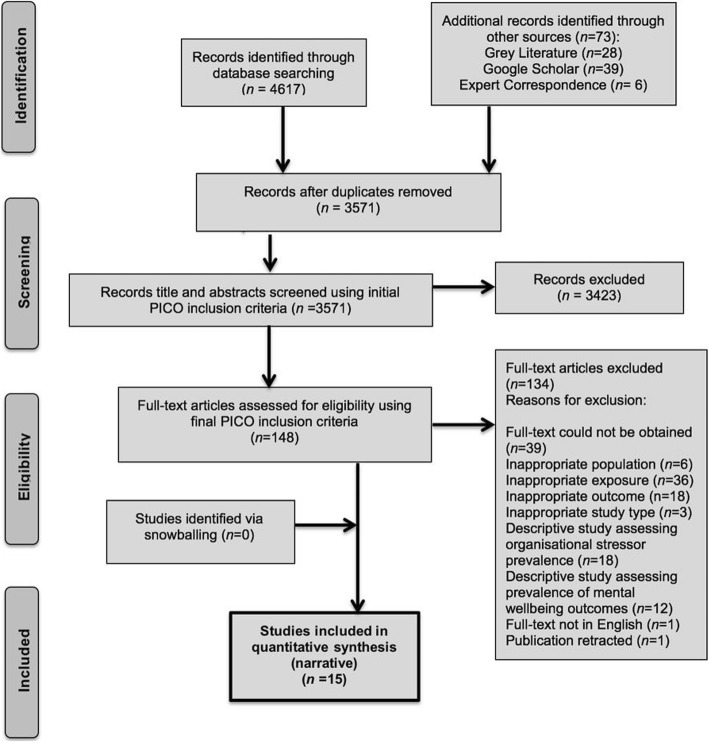
Verification
Claims the paper makes
The claims and statistics of this paper haven’t been checked yet.
Run the check — free, no account needed. It reads the open-access text and checks the sources it cites.
Claims other papers make about this one
Each is checked against this paper’s own text: does it say what the citing paper says it does?
The source backs part of the claim, not all of it — or backs it for a different population, condition or comparison.
In the citing paper
“Police activity is, thus, described in the literature as stressful, leading to poor physical and mental health outcomes over time, in which burnout is included”
From Psychosocial risk and protective factors associated with burnout in police officers: A systematic review (2023) · cites this paper as Purba and Demou, 2019
Experimental — accuracy not yet measuredThe source backs part of the claim, not all of it — or backs it for a different population, condition or comparison.
In the citing paper
“In terms or organisational factors, high job demands, effort-reward imbalance, low decision latitude, perceived injustice, low social sup port, lack of leadership, organisational culture, and working in urban environments were found to be associated with burnout, in line with the wide literature (Nieuwenhuijsen et al., 2010; Purba and Demou, 2019; Sherwood et al., 2019).”
From Psychosocial risk and protective factors associated with burnout in police officers: A systematic review (2023) · cites this paper as Purba and Demou, 2019
Experimental — accuracy not yet measured
Self-check
Percentages, sums and reported differences re-computed from the paper’s own numbers.
The self-check needs the paper’s full text.
Citations
Cites
Preferred reporting items for systematic reviews and meta-analyses: the PRISMA Statement.
(2009) · PubMed Central · Cited by 44,859
Preferred Reporting Items for Systematic Reviews and Meta-Analyses: The PRISMA Statement
Moher, D., Liberati, A., Tetzlaff, J., & Altman, D. G. (2009) · Journal of Clinical Epidemiology · doi:10.1016/j.jclinepi.2009.06.005 · Cited by 19,575
(2014) · Medical Entomology and Zoology · Cited by 17,633
Systematic reviews: CRD's guidance for undertaking reviews in health care
Tacconelli, E. (2010) · The Lancet Infectious Diseases · doi:10.1016/s1473-3099(10)70065-7 · Cited by 3,262
Popay, J., Roberts, H., Sowden, A., Petticrew, M., Arai, L., Rodgers, M., Britten, N., Roen, K., & Duffy, S. (2006) · Lancaster University · doi:10.13140/2.1.1018.4643 · Cited by 2,070
Psychosocial work environment and mental health—a meta-analytic review
Stansfeld, S., & Candy, B. (2006) · Scandinavian Journal of Work, Environment & Health · doi:10.5271/sjweh.1050 · Cited by 1,875
Babbie, E. R. (1998) · Cited by 1,729
Jha, A. (2023) · Routledge eBooks · doi:10.4324/9781032624860-3 · Cited by 1,665
Herzog, R., Álvarez-Pasquin, M. J., Díaz, C., Del Barrio, J. L., Estrada, J. M., & Gil, Á. (2013) · BMC Public Health · doi:10.1186/1471-2458-13-154 · Cited by 1,652
"The very best of the millennium": Longitudinal research and the demand-control-(support) model.
de Lange, A., Taris, T. W., Kompier, M. A. J., Houtman, I. L. D., & Bongers, P. M. (2003) · Journal of Occupational Health Psychology · doi:10.1037/1076-8998.8.4.282 · Cited by 1,105
Research works printed but not linked: 23
- Executive HS. Work related stress, anxiety and depression statistics in Great Britain 2016. Suffolk: Health and Safety Executive; 2016.
- COEH CfOEH. Occupational physicians reporting activiity. Quarterly report. Manchester: University of Manchester; 2000.
- Rollinson D. Organisational behaviour and analysis: an integrated appraoch. 3rd ed. London: Pearson Education Limited; 2005.
- Ward GE. Physiological, psychological and social issues specifically related to the police profession. Law Order. 1979;27(1):12.
- Policing Co. Code of ethics a code of practice for the principles and standards of professional behaviour for the policing profession of England and Wales. Coventry: College of Policing Ltd; 2014.
- Schaufeli WB, Maslach C, Marek T. Profesional burnout: recent developments in theory and research. Washington: Taylor & Francis; 1993.
- Territo L, Vetter HJ. Stress and police personnel. J Police Sci Adm. 1981;9(2):195–208.
- UNISON. 2014 police staff stress survey report. London: UNISON; 2014.
- Kroes WH. Society’s victims- the police: an analysis of job stress in policing. 2nd ed. Springfied: Charlie Thomas; 1985.
- Alexander DA, Innes G, Irving BL, Sinclair S, Walker LG. Health, stress and policing: a study in Grampion police. London: The Police Foundation; 1991.
- Alexander D, Walker L, Innes G, Irving B. Police stress at work. UK: Police Foundation; 1993.
- Koortzen P. The dimensionality of police stressors. Acta Criminologiae et Medicinae Legalis Japonica. 1996;9(2):55–63.
- Husain W. The levels of depression, anxiety and stress in police officers. Acad Res Int. 2014;5(4):458–65.
- Health and Safety Executive (HSE). Striking the balance between operational and health and safety duties in the police service. Suffolk: Health and Safety Executive; 2008.
- Higgins JP, Green S. Cochrane handbook for systematic reviews of interventions version 5.0.2. London: The Cochrane Collaboration; 2009.
- Torgerson C. Systematic reviews. London: Continuum; 2003.
- Bioethics NCo. The findings of a series of engagement activites exploring the culture of scientific research in the UK. London: Nuffield College of Bioethics; 2014.
- Boland A, Cherry G, Dickson R. Doing a systematic review a students guide. London: SAGE Publications; 2014.
- Bernard B. A critical review of epidemiological evidence for work-related muscoloskeletal disorders of the neck, upper extremity and low back. Cincinnati: National Institute for Occupational Safety and Health; 1997.
- Leka S, Griffiths A, Cox T. Protecting workers health series No 3: Work organization & stress. Geneva: World Health Organization (WHO); 2004.
- Xavier P, Prabhakar K. A study of police stress and burnout among Tamil Nadu police. Int J Pharm Sci Rev Res. 2016;38(2):159–61.
- Finn P, Tomz JE. Developing a law enforcement stress program for officers and their families. In: Issues and practices in criminal justice. Washington D.C: National Insitute of Justice; 1996.
- Elliot-Davies M, Houdmont J. Officer demand, capacity and welfare survey descriptive statistics summary report: mental health and wellbeing January 2017. Surrey: Police Federation of England and Wales (PFEW); 2017.
Cited by
Sorted by citations
Items 101–200 of 329
Drew, J. M., & Chevroulet, C. (2024) · Policing An International Journal · doi:10.1108/pijpsm-05-2024-0082 · Cited by 8
Post-traumatic effects in policing: exploring disclosure, coping and social support
Pitel, M., Ewles, G. B., Hausdorf, P. A., & Heffren, C. D. J. (2020) · Police Practice and Research · doi:10.1080/15614263.2020.1848564 · Cited by 7
“Being able to seek support from supervisors and one’s organization can have a positive impact on police officer well-being (Purba & Demou, 2019).”
BackgroundMarcatto, F., Orrico, K., Luis, O., Filon, F. L., & Ferrante, D. (2021) · Policing A Journal of Policy and Practice · doi:10.1093/police/paab052 · Cited by 6
Understanding the Workload of Police Investigators: a Human Factors Approach
Yong Sheng, T. A. N., Zalzuli, A. D., Ang, J. C. H., Ho, H. F., & Cheryl, T. A. N. (2022) · Journal of Police and Criminal Psychology · doi:10.1007/s11896-022-09506-w · Cited by 7
“Extant research on police stress has focused on outcome measures such as the impact on health and coping (Can and Hendy 2014; Collins and Gibbs 2003; Purba and Demou 2019).”
BackgroundResultInfluentialAuthenticity as Best-Self: The Experiences of Women in Law Enforcement
Jacobs, R., & Barnard, A. (2022) · Frontiers in Psychology · doi:10.3389/fpsyg.2022.861942 · Cited by 6
Rabbing, L., Bjørkelo, B., & Langvik, E. (2022) · Health Psychology Open · doi:10.1177/20551029221146396 · Cited by 9
“Despite the systematic finding that organisational factors contribute to ill health to a larger extent than work tasks (Purba and Demou, 2019; Shane, 2020; Violanti et al., 2017), police stress research has mainly emphasised socalled traditional types of police work and acute types of stress in…”
BackgroundStress and Psychological Well-Being in Military Gendarmes
Turliuc, M. N., & Balcan, A. (2023) · Social Sciences · doi:10.3390/socsci12090517 · Cited by 12
‘I really felt wanted’: Police recruitment strategies within a competitive labour market
Wojslawowicz, A. N., Payne, J. S., Gibson, A., & Cherry, W. T. (2024) · Policing A Journal of Policy and Practice · doi:10.1093/police/paae003 · Cited by 6
Espartero, J. R. E. (2023) · Journal of Advances in Humanities Research · doi:10.56868/jadhur.v2i2.135 · Cited by 9
Ramos-Galarza, C., Flores, F., Argoti, T., Díaz‐Guerra, D. D., Hernández-Lugo, M. D. L. C., & Broche‐Pérez, Y. (2025) · Frontiers in Psychiatry · doi:10.3389/fpsyt.2025.1580673 · Cited by 7
Personality and hardiness differences between Norwegian police and psychology students
Skoglund, T. H., Risan, P., & Milne, R. J. (2022) · Scandinavian Journal of Psychology · doi:10.1111/sjop.12877 · Cited by 5
Langvik, E., Loncar, L., Rostad, I. S., Eraker, Y., & Saksvik‐Lehouillier, I. (2022) · Cogent Social Sciences · doi:10.1080/23311886.2022.2127210 · Cited by 5
“…of suffering and traumatised victims, including victims of child abuse, as well as a demanding workload, which increases the risk of health impairment like secondary trauma (Craun & Bourke, 2015; Doyle et al., 2022; Krause, 2013; Perez et al., 2010; Purba & Demou, 2019; Violanti et al., 2017).”
BackgroundJaafar, S., Ortiz, C., Rathus, J. H., & Stratis, A. (2024) · Journal of Police and Criminal Psychology · doi:10.1007/s11896-024-09642-5 · Cited by 5
“(Purba and Demou 2019).”
InfluentialLoncar, L., Rostad, I. S., Saksvik‐Lehouillier, I., & Langvik, E. (2025) · Cogent Psychology · doi:10.1080/23311908.2025.2449733 · Cited by 8
“…investigators are associated with poor physical health and chronic illnesses (Burns et al., 2008; Burns & Buchanan, 2020; Maceachern et al., 2019; Purba & demou, 2019), burnout (Fansher et al., 2020; losung et al., 2021; Perez et al., 2010; sage et al., 2018), emotional numbness and moral injury…”
Balcan, A. (2023) · BRAIN BROAD RESEARCH IN ARTIFICIAL INTELLIGENCE AND NEUROSCIENCE · doi:10.18662/brain/14.1/409 · Cited by 4
Dougherty, M., O’Leary, M. S., & Mumford, E. A. (2024) · The Police Journal Theory Practice and Principles · doi:10.1177/0032258x241244612 · Cited by 4
Behavioral Health Training and Peer Support Programs
Pressley, H., Blalock, J. R., & Hasselt, V. B. V. (2023) · Springer eBooks · doi:10.1007/978-3-031-38149-2_7 · Cited by 4
Examining firefighter and police officers’ trust and service quality: What resources matter?
Flinchbaugh, C. L., Miles, J. M., Javadizadeh, B., Liang, Y., & Smith, W. L. (2024) · Journal of Management & Organization · doi:10.1017/jmo.2023.69 · Cited by 4
“…resource that may facilitate employee performance in the face of risky jobs and heightened stressors, such as dangerous contexts, fatigue, erratic shift hours, or physical demands (Henderson, Berry, & Matic, 2007; Purba & Demou, 2019; Vila, 2006; Vila, Morrison, & Kenney, 2002; Young et al., 2014).”
InfluentialParkes, S., Irizar, P., Greenberg, N. L., Wessely, S. C., Fear, N. T., Hotopf, M. H., & Stevelink, S. A. M. (2024) · Epidemiology and Psychiatric Sciences · doi:10.1017/s2045796024000283 · Cited by 4
“…most commonly cited sources of stress are a high workload, poor work–life balance, working shifts, being uncertain about a future role or career (Elliott-Davies, 2021b), a lack of support, long working hours, job demand (sustained physical/mental effort) and job pressure (Purba and Demou, 2019).”
BackgroundWare, J., Farley, H., & Grant, W. (2024) · Journal of Criminal Justice Education · doi:10.1080/10511253.2024.2389093 · Cited by 4
“Workplace burn out has consistently been reported in frontline police (Purba & Demou, 2019), corrections officers (lambert et al., 2015), probation staff (Gladfelter & Haggis, 2022), legal professionals (Iversen & Robertson, 2021), and professionals working in prisons (Forman-Dolan et al., 2022).”
Rasà, D. M., Stoppa, I., Bérenger-Currias, N. M. L. P., Pasho, E., Ciura, S., Kabashi, E., Martinat, C., & Boido, M. (2025) · Scientific Reports · doi:10.1038/s41598-025-02167-9 · Cited by 4
Khalilzadeh, A., Talebi, B., & Khadivi, A. (2020) · Journal of Occupational Health and Epidemiology · doi:10.29252/johe.9.3.180 · Cited by 4
“al (2017) [4], Abed et al (2018) [34], Moshashai and Nazari (2020) [33] on the relationship between PH and OS, Yao et al (2015) [21], Khan et al (2017) [22], Mousavi et al (2020) [35], Yousefi et al (2018) [36], Pourba and Demo (2019) [37] on the”
BackgroundPollock, L. D., & Augusto, D. (2021) · The Police Journal Theory Practice and Principles · doi:10.1177/0032258x211044708 · Cited by 6
“Law enforcement officers are exposed to a chronic high stress load and consistently high demands (Purba and Demou, 2019) including exposure to toxic environments and unpredictable danger (Tuttle et al., 2018).”
BackgroundStaff burnout in the Children and Young People Secure Estate (CYPSE) in England
Lane, R., Labno, A., D’Souza, S., Ullman, R., Singleton, R., Bevington, D., Law, D., Rogers, A., Jacob, J., & Edbrooke-Childs, J. H. (2023) · Journal of Workplace Behavioral Health · doi:10.1080/15555240.2023.2181177 · Cited by 4
“…and intention to quit (Kristensen et al., 2005), the development of unhealthy coping mechanisms, such as greater alcohol consumption (Elliott & Daley, 2013), poor mental health (Purba & Demou, 2019), and poor job performance and reduced client safety (Garcia et al., 2019; Tawfik et al., 2019).”
BackgroundIntrapersonal and Organisational Predictors of Psychological Help-Seeking in a UK Police Force
Traynor, I. G., Scott, H., & Rydon‐Grange, M. (2024) · Journal of Police and Criminal Psychology · doi:10.1007/s11896-024-09652-3 · Cited by 4
“For example, studies have shown that high job-related pressure among police officers increases the likelihood of anxiety, and of physical illnesses, including cardiovascular disease (Purba and Demou 2019; Violanti et al. 2017).”
Job Characteristics and Burnout: The Role of Self-Efficacy Among the Tunisian Police Officers
Dhaouadi, K., & Fliss, D. (2024) · Journal of African Business · doi:10.1080/15228916.2024.2333630 · Cited by 5
“In fact, the comparison between different professions reveals that being a police officer was among the most stressful occupations (Purba & Demou, 2019).”
Xerri, M. J., Brunetto, Y., Saccon, C., & Wankhade, P. (2024) · Public Administration Quarterly · doi:10.1177/07349149241268571 · Cited by 4
“Past research shows that organizational stress is derived from poor bureaucratic procedures (Brunetto et al., 2017; Moynihan & Pandey, 2007)—coupled with consistent under-funding and the normalization of high workloads (Farr-Wharton et al., 2023; Purba & Demou, 2019).”
InfluentialPadmanabhanunni, A., & Pretorius, T. B. (2024) · International Journal of Environmental Research and Public Health · doi:10.3390/ijerph21121684 · Cited by 4
Ryu, G. W., & Lee, J. Y. (2025) · INQUIRY The Journal of Health Care Organization Provision and Financing · doi:10.1177/00469580251317931 · Cited by 9
Physiological Predictors of Mental Disorders Among Police Officers in Indonesia
Abdullah, A., Amin, H. M., Abdurrahman, F., Idris, J., & Marthoenis, M. (2021) · Asia Pacific Journal of Public Health · doi:10.1177/10105395211027752 · Cited by 4
Alkaabi, F. A. (2022) · Policing A Journal of Policy and Practice · doi:10.1093/police/paac010 · Cited by 4
Empowering law enforcement officers to engage effectively with individuals in crisis
White, R. W., Knauff, J. K., & Kverno, K. S. (2023) · Archives of Psychiatric Nursing · doi:10.1016/j.apnu.2023.08.005 · Cited by 4
Hypertension and Occupational Health: A General Overview and Expert Consensus Suggestions
Güneş, Y. (2024) · Turk Kardiyoloji Dernegi Arsivi-Archives of the Turkish Society of Cardiology · doi:10.5543/tkda.2023.89406 · Cited by 5
Valmari, E. G., Ghazinour, M., Nygren, U., & Gilenstam, K. (2021) · Scandinavian Journal of Occupational Therapy · doi:10.1080/11038128.2021.1939415 · Cited by 4
Gaskin, J., Li, W. W., van Eijk, L., & Sarnyai, Z. (2025) · Police Practice and Research · doi:10.1080/15614263.2025.2506647 · Cited by 8
“…critical incidents, studies indicate that operational and organisational factors, such as shift work, fatigue, public scrutiny, organisational culture, and administrative pressures contribute to stress experienced by officers (Carleton et al., 2020; Drew & Williamson, 2024; Purba & Demou, 2019).”
Epigenetic impact of chronic stress: BDNF exon IV gene methylation in high-risk professionals
Quaioto, B. R., de Souza, M. L. M., Borçoi, A. R., Mendes, S. O., Neto, L. C. B. S., Corrêa, C. H. P., Moreno, I. A. A., Olinda, A. S., Cunha, E. R., da Silva, P. A. V., et al. (2025) · Journal of Psychiatric Research · doi:10.1016/j.jpsychires.2025.06.018 · Cited by 3
Coping with the toll of child sexual abuse investigations
Easton, L., Synnott, J., Mojtahedi, D., & Ιωάννου, Μ. (2025) · Frontiers in Psychology · doi:10.3389/fpsyg.2025.1584034 · Cited by 3
Tsogbe, D., Umar, A., & Gmayinaam, V. U. (2025) · BMC Psychiatry · doi:10.1186/s12888-025-07649-8 · Cited by 3
Crime scene examiners' mental health: a scoping review
Frih, Z. B. S., Mickelsson, T. B., & Ghazinour, M. (2026) · Frontiers in Psychology · doi:10.3389/fpsyg.2025.1724579 · Cited by 3
Craig, E., & Duran, F. (2026) · Police Practice and Research · doi:10.1080/15614263.2026.2627207 · Cited by 4
“Recent research by Roach et al. (2024) and Porter and Gavin (2025) underscores the significant impact of organizational and operational pressures, including pandemic-related challenges, on officer mental health (Oliver et al., 2023; Purba & Demou, 2019; Soomro & Yanos, 2018).”
Beyond the Uniform: Impact of Indirect Trauma on Spanish Police Officers
Velasco, J., Salido-Santos, E., & Sanmartín, F. J. (2023) · Journal of Police and Criminal Psychology · doi:10.1007/s11896-023-09630-1 · Cited by 4
“In light of the cost of police work, in recent years, increasing attention has been paid to the effects of occupational stressors on the psychological well-being of police officers (Crad-dock and Telesco 2022; Purba and Demou 2019).”
Buy-in for police early intervention systems: An initial exploration of what works
Christoff, T., & Carleton, B. (2024) · Journal of Criminal Justice · doi:10.1016/j.jcrimjus.2024.102179 · Cited by 3
A pilot study on the efficacy of an online mindfulness intervention for Canadian police officers
Fleischmann, M. H., Boudreau, A., Vincent, M., Charman, M., Collie, E., Johnston, R., & Khoury, B. (2024) · Journal of Community Safety and Well-Being · doi:10.35502/jcswb.364 · Cited by 3
Work-life Balance, Self-Determination, and Psychological Well-being Among Police Personnel
Papagayo, H. (2024) · Journal of interdisciplinary perspectives · doi:10.69569/jip.2024.0362 · Cited by 3
Navigating policing and work-life balance in the South Pacific
Watson, D. V. C., Pino, N. W., Amin, S. N., & Scott, J. (2024) · Police Practice and Research · doi:10.1080/15614263.2024.2424296 · Cited by 3
“…arguments about the positive relationship between improved policing and the implementation of initiatives aimed at mitigating occupational hazards, promoting physical and mental wellness, and enhancing overall safety within law enforcement agencies (Hesketh et al., 2017; Purba & Demou, 2019).”
Barbin, A., Manning, M., Davies, K., & Horvath, M. A. H. (2025) · Current Psychology · doi:10.1007/s12144-025-08318-5 · Cited by 3
“Performance measures could also be revised to integrate individual factors such as competence and job satisfaction, both of which were found to significantly influence wellbeing in this study (Biggs et al., 2014; Boateng, 2014; Purba & Demou, 2019).”
Loveless, A. M., Games, K. E., Shea, M. E., Thews, K. N., & Winkelmann, Z. K. (2022) · Journal of Athletic Training · doi:10.4085/1062-6050-0148.22 · Cited by 3
Garrido, M. V., Herold, R., Rohwer, E., Mache, S., Terschürenm, C., Preisser, A. M., & Harth, V. (2022) · BMC Public Health · doi:10.1186/s12889-022-14098-5 · Cited by 3
Fatores de risco psicossociais no trabalho do policial militar: revisão sistemática
Carvalho, R. G. D., Dantas, J. D. S. O. M., & Hernández, J. A. E. (2023) · Contribuciones a las Ciencias Sociales · doi:10.55905/revconv.16n.11-159 · Cited by 3
Aparicio, A. I. Á., Fernández, J. M. M., & Herráez-Collado, E. (2024) · Ciencia policial: revista del Instituto de Estudios de Policía · doi:10.14201/cp.31941 · Cited by 3
Brunetto, Y., Farr‐Wharton, B., Grande, A. H., Sharafizad, F., & Richman, M. (2025) · Public Management Review · doi:10.1080/14719037.2025.2479872 · Cited by 4
“Previous research has documented that this is the case for SLBs pre, during and post the COVID-19 crisis (Brunetto et al. 2020; Farr-Wharton, Brunetto et al. 2021; Purba and Demou 2019).”
Friends not food: A scoping review into veg∗an mental health and psychosocial wellbeing
Cornish, S., Jones, L., & Sheeran, N. (2025) · Appetite · doi:10.1016/j.appet.2025.108207 · Cited by 3
Stanley, E. A., Mumford, E. A., Liu, W., Taylor, B. G., & Maitra, P. (2021) · Journal of Police and Criminal Psychology · doi:10.1007/s11896-021-09436-z · Cited by 4
Jäger, T., Giordano, J. J., & Kohls, N. (2023) · Springer eBooks · doi:10.1007/978-3-031-41100-7_17 · Cited by 2
Rancic, N. K., Veljković, D., Mirković, M., Kulić, L., Jovanović, V., Stamenkovic, B. N., Maksimović, N., Ciric, V. M., Živković-Marinkov, E., Giljača, S., et al. (2024) · Frontiers in Public Health · doi:10.3389/fpubh.2023.1277622 · Cited by 2
“The police job is considered stressful, leading to poor physical and mental health outcomes over time, in which burnout is included (1, 2).”
BackgroundJoshua, G. B., Tsuma, E. T., Egessa, R., & Onyango, R. (2024) · African Journal of Empirical Research · doi:10.51867/ajernet.5.2.16 · Cited by 2
“This excessive stress that law enforcement officers are exposed to not only threatens their physical and mental health but also affects professionalism, organizational effectiveness, and public safety (Purba & Demou, 2019).”
BackgroundChu, D. C. (2024) · Criminal Justice and Behavior · doi:10.1177/00938548241291026 · Cited by 2
Oluwasanu, M. M., Oladeji, B. D., Oluwatobi, H., Titiloye, M. A., Adefolarin, A. O., Unogu, M. O., Okafor, P. C., Ajayi, O., Uvere, E., & Ajuwon, A. J. (2024) · Pilot and Feasibility Studies · doi:10.1186/s40814-024-01559-4 · Cited by 3
“Other sources of stress are constant exposure to people in pain and suffering, threats to officers’ safety and well-being, being in possession of firearms [2], and responsibility for maintaining peace and protecting lives and properties.”
Szivak, T. K., Schafer, E. A., MacDonald, H. V., & Sáenz, C. (2025) · Metabolites · doi:10.3390/metabo15080506 · Cited by 4
Sharratt, K., & Roach, J. O. (2025) · Journal of Criminal Psychology · doi:10.1108/jcp-07-2025-0079 · Cited by 2
Discretionary Authority Coping and Stress in Human Service Organizations
Szücs, S., Berlin, J. M., Höjer, S., & Liljegren, A. (2025) · Human Services Organizations Management Leadership & Governance · doi:10.1080/23303131.2025.2580018 · Cited by 2
“However, three systematic reviews have shown that little is still known about the relationship between coping strategies and stress (Edri-Peer & Cohen, 2025; Kapade Nikam & Shaikh, 2014; Purba & Demou, 2019).”
Trépanier, M., Deschênes, A.-A., Marin, M., & Gendron, A. (2025) · Journal of Workplace Behavioral Health · doi:10.1080/15555240.2025.2579032 · Cited by 2
“Several studies indicate that police officers who experience high levels of stress have a greater likelihood of developing various mental health issues, including symptoms of depression, anxiety, and occupational burnout (Baldwin et al., 2019; Gershon et al., 2009; Purba & Demou, 2019).”
Unique challenges faced by rural police officers: A scoping review and thematic analysis
Procter, J., & Ware, J. (2025) · The Police Journal Theory Practice and Principles · doi:10.1177/0032258x251393950 · Cited by 3
Tow, K. E., Caputi, P., Zentrich, G., Deane, F. P., Thyer, L., Simpson, P., & Risi, A. (2025) · Cogent Psychology · doi:10.1080/23311908.2025.2594286 · Cited by 2
Gekoski, A., Horvath, M. A. H., & Davies, K. (2026) · Psychology Crime and Law · doi:10.1080/1068316x.2025.2611338 · Cited by 2
Hickie, S. (2026) · Policing A Journal of Policy and Practice · doi:10.1093/police/paag016 · Cited by 2
Irizar, P., Jackson, L., Gage, S. H., Bell, S. M., Piper, R., Fallon, V., & Goodwin, L. (2022) · Policing A Journal of Policy and Practice · doi:10.1093/police/paac052 · Cited by 2
A Study on Operational Stressors Among Traffic Police Officers in Bengaluru
Mohiddina, F. K., Hafeez, M., Abbas, E. M., Raja, S. B., Prabhu, H. R. A., & Thabsheera, H. (2022) · APIK Journal of Internal Medicine · doi:10.4103/ajim.ajim_92_21 · Cited by 2
Jäger, T., & Kohls, N. (2023) · Springer eBooks · doi:10.1007/978-3-658-40118-4_10 · Cited by 2
Psychological Well-Being and Job Satisfaction of Kenyan Police Officers
Ndero, P. K., Kimamo, C. O., & Mwaura, L. (2024) · International Journal of Psychology · doi:10.47604/ijp.2286 · Cited by 3
“The inconclusive nature of police work, the heavy responsibility of carrying and safely keeping a fire arm, court overtime, and laborious bureaucratic demands are also included (Purba & Demou 2019).”
BackgroundImpact of Excessive Workload on the Work-Life Balance of Police Personnel in Karnataka
Dhanush, M. R., & Shobha, C. (2023) · DHARANA - Bhavan s International Journal of Business · doi:10.18311/dbijb/2023/34337 · Cited by 2
Workplace Spirituality to Reduce Burnout in Members of The Regional Police Mobile Brigade
Humaira, Y., & Aprilia, E. D. (2024) · SEURUNE Jurnal Psikologi UNSYIAH · doi:10.24815/s-jpu.v7i1.37178 · Cited by 2
“Paparan terhadap stresor pekerjaan yang terus menerus ini, seperti yang telah disebutkan sebelumnya, menyebabkan tingginya tingkat kelelahan dan masalah kesehatan mental pada petugas polisi di banyak negara (Purba & Demou 2019; Queirós dkk. 2020), termasuk Indonesia, tempat penelitian ini dilakukan.”
BackgroundCommunity Policing Practice in the Nigerian Police: Implications of Employee Burnout
Okoka, H., & Kheswa, J. G. (2024) · Journal of Police and Criminal Psychology · doi:10.1007/s11896-024-09711-9 · Cited by 6
“Furthermore, studies have found that personal accomplishment was a protective factor for dissatisfaction at the workplace (Torres-Vences et al. 2022; Purba and Demou 2019; Basinska and Dåderman 2019).”
Johari, M. A., Ahmad, S. B., & Ismail, Z. (2021) · Malaysian Journal of Social Sciences and Humanities (MJSSH) · doi:10.47405/mjssh.v6i9.1012 · Cited by 2
Sulaikah, S., Maharani, A., & Hidayah, Z. (2021) · Jurnal Ilmiah Mandala Education · doi:10.36312/jime.v7i3.2318 · Cited by 2
“Berbagai faktor risiko berkontribusi pada stres dan kesusahan yang dialami oleh petugas polisi; ini sering dibagi menjadi dua kategori: stres operasional dan organisasi (Evans & Coman, 1993); (Purba & Demou, 2019).”
BackgroundPsychometric Properties of the PSQ-OP and PSQ-ORG in Puerto Rico
Rico, P. U. C. D. P., Ramos, A. D., Vega, A. V., & Rico, I. I. P. (2022) · Revista de Psicología · doi:10.46553/rpsi.18.35.2022.p45-71 · Cited by 2
“Police officers may have to deal with a heavy workload, interpersonal conflict with colleagues and supervisors, inadequate resources, bad timing, and an overly bureaucratic organizational system (Purba & Demou, 2019).”
BackgroundSuicide clusters in law enforcement: a descriptive analysis
Violanti, J. M. (2022) · Policing An International Journal · doi:10.1108/pijpsm-01-2022-0006 · Cited by 2
Sulaikah, S., Maharani, A., & Hidayah, Z. (2021) · Jurnal Ilmiah Mandala Education · doi:10.58258/jime.v7i3.2318 · Cited by 2
Gupta, V., Upadhyay, S. K., & Malik, C. (2023) · Journal of Police and Criminal Psychology · doi:10.1007/s11896-023-09590-6 · Cited by 2
policial que mata dentro de casa
Cruz, F. G. (2023) · Revista de Estudos Empíricos em Direito · doi:10.19092/reed.v10.748 · Cited by 2
A Test of Job Demands-Resources Theory: Organizational Citizenship Behavior in a Carceral Setting
Rankin, K. E., & Treston, K. C. (2024) · Criminal Justice and Behavior · doi:10.1177/00938548241227550 · Cited by 3
“However, criminal justice organizations have only recently started paying attention to the well-being of staff (Miller et al., 2022; Purba & Demou, 2019; Ricciardelli & Power, 2020; Trounson et al., 2019).”
BackgroundHan, S., & Kang, K. (2024) · Journal of Korean Academy of Psychiatric and Mental Health Nursing · doi:10.12934/jkpmhn.2024.33.1.18 · Cited by 2
Akinlabi, O. M. (2021) · Springer eBooks · doi:10.1007/978-3-030-71024-8_12 · Cited by 2
Work and Life Stressors of Law Enforcement PersonnelPreprint
Lawrence, D. S., & Carleton, B. (2023) · CrimRxiv · doi:10.21428/cb6ab371.3e836109 · Cited by 2
“Several studies suggest that operational stressors are more detrimental to officers than occupational stressors (Finney et al., 2013; Purba & Demou, 2019; Shane, 2010; Violanti & Aron, 1993; Violanti et a., 2016, 2017).”
BackgroundInfluentialPrimary Care Consultations Among UK Police Officers and Staff
Trompeter, N., Fear, N. T., Greenberg, N. L., Hotopf, M. H., Irizar, P., Wessely, S. C., & Stevelink, S. A. M. (2023) · Journal of Occupational and Environmental Medicine · doi:10.1097/jom.0000000000002819 · Cited by 1
“This model fits wellwith the results of a recent systematic review that identified job demand as being consistently linked with adverse mental health.(7) Later iterations of the job demand-control model include perceived job support as a potential protective factor that might prevent negative outcomes otherwise associ…”
ResultConspiracy theorists in policing: causes, challenges, and considerations
Evans, N. (2023) · Journal of Policing Intelligence and Counter Terrorism · doi:10.1080/18335330.2023.2203711 · Cited by 3
“The link between police work and psychological injury is well established through research into both organisational and occupational stressors (Kleim & Westphal, 2011; Purba & Demou, 2019).”
BackgroundThe predictive validity of cognitive ability and personality tests toward police on-the-job training
Skoglund, T. H. (2024) · International Journal of Police Science & Management · doi:10.1177/14613557241228726 · Cited by 1
“Policing includes a variety of work assignments in which of fi cers are exposed to different occupational challenges and potential stressors (Berg et al., 2006; Fyhn et al., 2016; Purba and Demou, 2019).”
BackgroundPranoyo, T. (2024) · International Journal of Business Law and Education · doi:10.56442/ijble.v5i2.626 · Cited by 1
Erro‐Garcés, A., & Redín, C. I. (2024) · International journal of organizational analysis · doi:10.1108/ijoa-10-2023-4013 · Cited by 2
Metabolic Syndrome and Associated Components Among Police Officers
Violanti, J. M., Fekedulegn, D. B., Mnatsakanova, A., Gu, J. K., Service, S. K., Allison, P., & Hartley, T. A. (2025) · Journal of Occupational and Environmental Medicine · doi:10.1097/jom.0000000000003316 · Cited by 2
Organisational Support for Police Employees Investigating Child Abuse in Norway
Loncar, L., Rostad, I. S., Saksvik‐Lehouillier, I., & Langvik, E. (2025) · Nordic Journal of Studies in Policing · doi:10.18261/njsp.12.1.1 · Cited by 1
Lima, A. D. G. T., de Santana, E. M., Barros, A. C., de Medeiros, S. E. G., Cavalcanti, D. D. F., & de Aquino, J. M. (2025) · Texto & Contexto - Enfermagem · doi:10.1590/1980-265x-tce-2025-0013pt · Cited by 1
The well-being of police officers: Navigating resilience, optimizing strength
Bersamina, D. R., & Quero, A. R. (2025) · Multidisciplinary Science Journal · doi:10.31893/multiscience.2026290 · Cited by 1
Identifying sources of occupational stress among tactical police officers in Canada
Ricciardelli, R., & Towns, Z. (2025) · Policing An International Journal · doi:10.1108/pijpsm-07-2025-0136 · Cited by 3
Gonçalves, S. P., dos Santos, J. V., Sobral, T., & Neves, J. (2025) · The American Journal of Psychology · doi:10.5406/19398298.138.3.01 · Cited by 2
Are psychopathic traits a shield against burnout in policing?
Boduszek, D., Żurawska, D., Dziubińska, J., & Willmott, D. (2026) · The Police Journal Theory Practice and Principles · doi:10.1177/0032258x251412285 · Cited by 1
Cooper, L., Harding, R., Williams, E., & Sondhi, A. (2026) · Criminology & Criminal Justice · doi:10.1177/17488958251406190 · Cited by 1
Carire-Quispe, K. S., Condori-Sulca, N. A. M., Bueno-Dueñas, J. C., & Travezaño-Cabrera, A. (2026) · Psychology Health & Medicine · doi:10.1080/13548506.2026.2623307 · Cited by 1
Smith‐MacDonald, L., Limenih, G., Seliman, M., Crocker, S. J., Osifeso, T., Lentz, L., Brémault‐Phillips, S., MacPhee, R. S., Andérson, G. S., Malloy, D. C., et al. (2026) · Journal of Police and Criminal Psychology · doi:10.1007/s11896-025-09785-z · Cited by 1
“Workplace stressors include making split-second decisions when managing potentially psychologically traumatic events (PPTE; Heber et al. 2023) during complex and often contradictory environments (Papazoglou 2013; Regehr and LeBlanc 2017) in addition to public scrutiny (Purba and Demou 2019).”
Mulrooney, K. J. D., & Harkness, A. (2026) · American Behavioral Scientist · doi:10.1177/00027642261423336 · Cited by 1
Metadata
- Authors
- Purba, A., & Demou, E.
- Affiliations
- University of Glasgow (GB)
- MRC/CSO Social and Public Health Sciences Unit (GB)
- Corresponding author
- Demou, Evangelia
- Venue
- BMC Public Health
- Published
- 2019-10-15
- Volume
- 19
- Issue
- 1
- Pages
- 1286-1286
- ISSN
- 1471-2458 (ISSN-L)
- PMC
- PMC6792329
- OpenAlex
- W2980327373
- Cited by
- 328
- References
- 113
- Citations by year
- 2026: 59 · 2025: 51 · 2024: 70 · 2023: 59 · 2022: 43 · 2021: 34 · 2020: 12
- FWCI
- 3.44
- Type
- journal article
- Language
- en
- Open access
- gold
- doi.org
- Locations
- BMC Public Health (publishedVersion, cc-by)
- PubMed Central (publishedVersion, cc-by)
- PubMed (publishedVersion)
- ENLIGHTEN (Jurnal Bimbingan dan Konseling Islam) (acceptedVersion, cc-by-sa)
- DOAJ (DOAJ: Directory of Open Access Journals) (submittedVersion, cc-by-sa)
- Funders
- Medical Research Council (MC_PC_13027)
- Topics
- Social Sciences › Psychology › Social Psychology › Stress and Burnout Research
- Health Sciences › Medicine › Public Health, Environmental and Occupational Health › Workplace Health and Well-being
- Health Sciences › Medicine › Public Health, Environmental and Occupational Health › Occupational Health and Burnout
- Keywords
- organisational stressors, police officers, psychological well-being, occupational stress, psychological distress, emotional exhaustion, job demands, lack of support, long working hours, administrative pressure, police mental health
- MeSH terms
- Occupational Stress, Mental Disorders, Humans, Mental Health, Risk Factors, Police
About these checks
Registry, retraction, Cites and statistics results are computed, not judged, with one exception: a printed reference that no index lists is read once by a model before it counts as a citation error. Claims are extracted by a model and kept only when their quote appears verbatim in the text; each cited source is then checked, with a model’s help, for whether it says what the claim relies on. Those verdicts can be wrong — read the claim’s quote and the cited source before relying on one.
Statistics and arithmetic are recomputed, not judged.
Confidence bands are shown only for fields calibrated on our annotated test set. None is calibrated yet, so no band is shown.
What counts as a claim ›How we measure confidence ›How we check this ›
Are you an author, or do you see a problem with this page? Request a review
