

Psychometric validation and measurement invariance of the Health-Promoting Lifestyle Profile II in Honduran university students
Open accessThe DOI matches its Crossref record; 69 of the 69 references it cites were found in a registry or an index; 23 of the 46 sources its claims cite were checked for support.
Abstract
BACKGROUND: The Health-Promoting Lifestyle Profile II (HPLP-II) is an instrument that assesses health-promoting behaviors. Despite its extensive use in the international literature, studies in the Honduran context examining its psychometric properties and supporting its use as a culturally sensitive measure in lower-middle-income countries are lacking. This study aimed to evaluate (1) the structural validity and reliability of the HPLP-II in a sample of Honduran university students, (2) its measurement invariance across key sociodemographic variables, and (3) its convergent validity through associations with quality of life. METHODS: This was a cross-sectional study conducted in a large national sample consisting of 6,012 Honduran university students. The participants completed a survey that included sociodemographic variables, the HPLP-II, and a measure of quality of life (WHOQOL-BREF). Structural and convergent validity were estimated via item-level confirmatory factor analysis models. Internal consistency was assessed through McDonald's omega (Ω) and composite reliability (CR). Additionally, the configural, metric, and scalar invariance of the instrument were analyzed across different sociodemographic variables. RESULTS: The six-factor correlated model of the HPLP-II demonstrated the best fit to the data (CFI = .968; TLI = .966; RMSEA = .066; SRMR = .061). Adequate factor loadings (λ > .30) and internal consistency indices (Ω > .700; CR > .800) were observed for each of the six factors of the instrument. The findings revealed configural, metric, and scalar invariance by sex, university campus, field of study, current occupation, and self-reported preexisting medical conditions. The results also revealed moderate to strong positive correlations between all dimensions of the HPLP-II and those of the WHOQOL-BREF (r > .300; p < .001). CONCLUSIONS: This study provides favorable evidence regarding the structural and convergent validity, as well as the reliability, of the scale for assessing health-promoting behaviors among Honduran university students. Measurement invariance up to the scalar level was supported, allowing for comparisons of latent means across subgroups. Finally, the evidence of convergent validity offers empirical support for the association between health-promoting behaviors and quality of life among university students.
Overview
CoChat Summary
## TL;DR
This cross-sectional study validated the Spanish HPLP-II in 6,012 Honduran university students and found that a six-factor correlated model fit best. It also showed reliability, measurement invariance across several sociodemographic groups, and moderate-to-strong positive associations with quality of life.
## Key findings
- The six-factor correlated model fit best: CFI = .968, TLI = .966, RMSEA = .066, SRMR = .061; the unidimensional model fit was unacceptable.
- Internal consistency was adequate across all six factors, with McDonald’s omega > .700 and composite reliability > .800 for each factor; factor loadings were generally adequate, ranging from 0.330 to 0.835.
- Measurement invariance was supported at the configural, metric, and scalar levels across sex, university campus, field of study, current occupation, and self-reported preexisting medical conditions (ΔCFI < 0.010; ΔRMSEA < 0.015).
- HPLP-II dimensions correlated positively with WHOQOL-BREF domains at moderate-to-strong levels (r > 0.300; p < .001), with the strongest correlations reported for spiritual growth with psychological well-being (r = 0.840) and interpersonal relationships with social well-being (r = 0.717).
## Methods
- Cross-sectional psychometric validation study using a large national sample of 6,012 Honduran university students from one major public university; participants were first-year students aged 18+ and were recruited by nonprobability convenience sampling.
- Students completed a survey including sociodemographic variables, the 52-item Spanish HPLP-II, and the WHOQOL-BREF; the HPLP-II was reviewed by three experts and piloted with 15 students.
- Structural validity was tested with CFA using WLSMV in R; internal consistency was estimated with McDonald’s omega and composite reliability; measurement invariance was examined with multigroup CFA; convergent validity was tested via latent correlations between HPLP-II and WHOQOL-BREF factors.
## Limitations
- The authors state that nonprobability sampling limits generalizability; they also note possible selection bias from internet access and self-selection, and that the central campus was overrepresented.
- The cross-sectional design precludes causal inference and does not capture within-person change over time.
- The paper states that strict invariance was not tested, and it also relies exclusively on self-report measures, which may introduce social desirability and common method bias, and no response-time checks were included.
Model-written summary. Check it against the paper before relying on it.
Integrity signals
Registry
Cites
Statistics
Figures
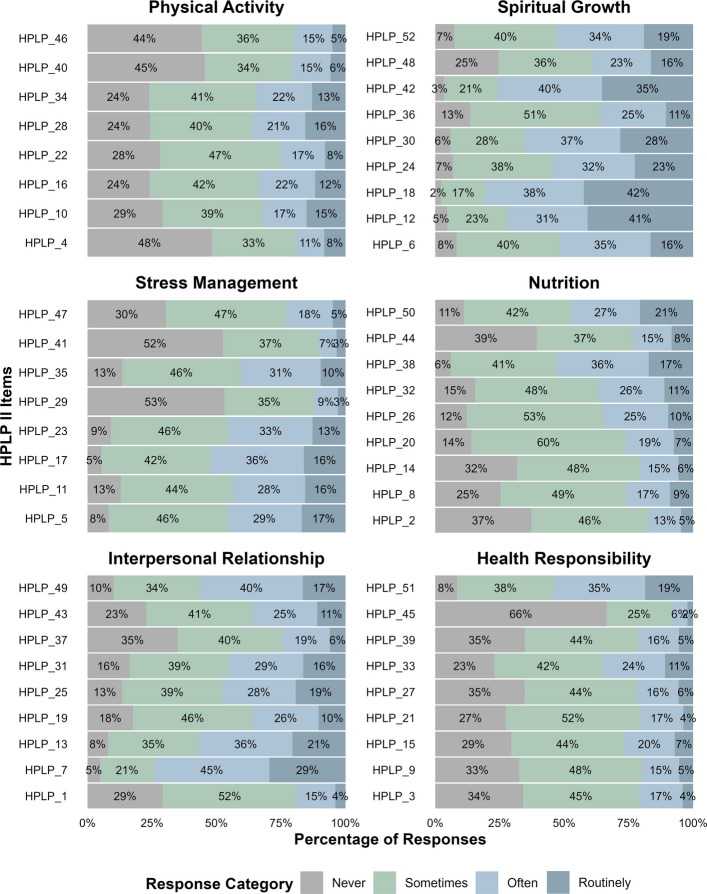
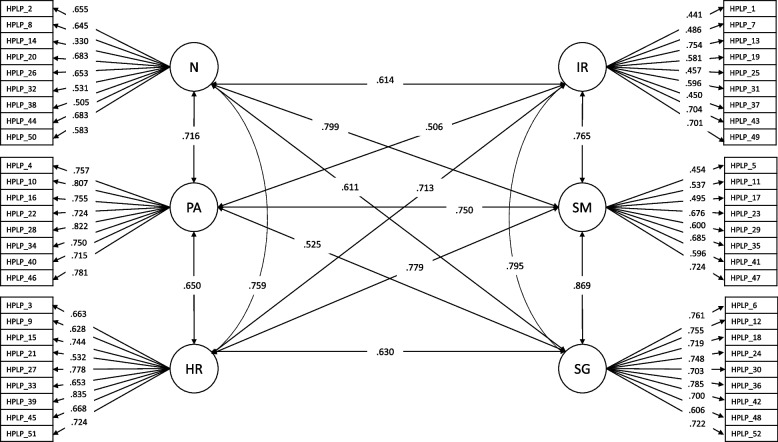
Verification
Claims the paper makes
12 Valid · 1 Not valid · 16 Not checked · 86 Own results and interpretations
Every source the paper cites for this claim was checked and supports it.
In the paper
“This study uses the Spanish version of the scale, which has been validated in Latin American higher education contexts [29, 31].”
§ Psychometric validation and measurement invariance of the Health-Promoting Lifestyle Profile II in Honduran university students > Methods > Measures
What the sources say
- Supportedcites [29] Enríquez-Reyna MC, Peche Alejandro P, Ibarra González ÁD, Gómez Infante EA, Villarreal Salazar A del C, Medina Rodríguez RE. Propiedades psicométricas de la versión en español del instrumento Health-Promoting Lifestyle Profile-II en universitarios mexicanos. Enfermería Global. 2022;21(2):411–23. source
The Introduction describes an evaluation of the Spanish HPLP-II in Mexican university students. The Conclusions find it valid and suitable for use in Spanish, while noting that the six-dimension model has only partially good fit. This paper therefore supports the claim for a Latin American higher-education setting. (LLM, conf=0.89)
- Supportedcites [31] Zambrano Bermeo RN, Estrada Gonzalez C, del Herrera Guerra EP, Aviles Gonzalez CI. Reliability and validity of the health-promoting lifestyle profile II Spanish version in university students. Healthcare. 2024;12(13):1330. 38998863 PMC11241212 source
The Methods describe testing the Spanish HPLP-II in a Colombian university setting. The Conclusions report that psychometric tests in Colombian university students supported its construct validity and reliability, providing an example of validation in a Latin American higher education context. (LLM, conf=0.91)
plain- Asserted: passes — The authors put it forward as true.
- Checkable: passes — It can be checked against evidence.
- Load-bearing: passes — The paper’s conclusions depend on it.
- Based: passes — The paper gives a reason why it holds.
- Supported
Every source the paper cites for this claim was checked and supports it.
In the paper
“Studying measurement invariance based on sociodemographic characteristics is essential, as evidence indicates differences in the adoption of health-promoting behaviors between urban and rural contexts [37], as well as by gender, with lower scores observed particularly among women [40, 41].”
§ Psychometric validation and measurement invariance of the Health-Promoting Lifestyle Profile II in Honduran university students > Background
What the sources say
- Supportedcites [37] Nelson D, McGonagle I, Jackson C, Tsuro T, Scott E, Gussy M, et al. Health-promoting behaviours following primary treatment for cancer: a rural-urban comparison from a cross-sectional study. Curr Oncol. 2023;30(2):1585–97. 36826083 PMC9955107 source
The Discussion reports significantly different health-promoting behaviours among rural and urban U.K. participants who had completed primary cancer treatment. The Conclusions specify that rural participants reported greater engagement than urban participants, supporting the cited statement that evidence indicates a rural–urban difference. (LLM, conf=0.92)
hedgedstates an association- Asserted: passes — The authors put it forward as true.
- Checkable: passes — It can be checked against evidence.
- Load-bearing: passes — The paper’s conclusions depend on it.
- Based: passes — The paper gives a reason why it holds.
- Supported
The cited sources support only part of this claim — read each source’s verdict below.
In the paper
“The selection of the WHOQOL-BREF as an indicator of convergent validity was based on prior literature supporting the empirical association between these constructs in university students [5, 8, 66–68].”
§ Psychometric validation and measurement invariance of the Health-Promoting Lifestyle Profile II in Honduran university students > Methods > Data analysis
What the sources say
- Partly supportedcites [5] Amiri S, Mahmood N, Junaidi S, Khan MA. Lifestyle interventions improving health-related quality of life: a systematic review and meta-analysis of randomized control trials. J Educ Health Promot. 2024;13(1):36. PMC11392327 39268447 sourceExperimental — accuracy not yet measured
The Data items section (page unavailable) lists WHOQOL among measures of health-related quality of life, and the Discussion (page unavailable) reports that lifestyle interventions improved health-related quality of life. The paper does not establish an empirical association in university students or assess the WHOQOL-BREF specifically as an indicator of convergent validity. (LLM, conf=0.78)
- Supportedcites [8] Kupcewicz E, Schneider-Matyka D, Rachubińska K, Jastrzębski P, Bentkowska A, Grochans E. Health behaviours and the quality of life of students of medical fields during the COVID-19 Pandemic. Nutrients. 2024;16(11):1747. 38892679 PMC11174481 source
The WHOQoL-Bref Questionnaire section identifies the measure as an assessment of quality of life. Section 3.4 reports associations between health behaviours and WHOQoL-Bref quality-of-life domains among students of medical fields, supporting its citation as prior empirical literature for the citing authors’ selection. The source does not itself test convergent validity, but the sentence presents that selection as the citing authors’ decision. (LLM, conf=0.84)
- Supportedcites [66] Mak YW, Kao AHF, Tam LWY, Tse VWC, Tse DTH, Leung DYP. Health-promoting lifestyle and quality of life among Chinese nursing students. Prim Health Care Res Dev. 2018;19(6):629–36. 29623871 PMC6692834 source
The Methods (Instruments) identify WHOQOL-BREF as the study’s quality-of-life measure. The Findings (Predictors of QOL) report significant associations between quality of life and four health-promoting lifestyle variables among nursing students. This supports the cited paper’s role as prior evidence for an empirical association; the convergent-validity rationale is the citing authors’ own. (LLM, conf=0.90)
- Supportedcites [67] Tol A, Tavassoli E, Shariferad G, Shojaeezadeh D. Health-promoting lifestyle and quality of life among undergraduate students at school of health, Isfahan University of Medical Sciences. J Educ Health Promot. 2013;2(1):11. 24083261 PMC3778574 source
The Results and Conclusion report an empirical association between health-promoting lifestyle and quality of life among undergraduate students, supporting the cited rationale for examining convergent validity. The Methods identify QLQ-C30 as this study’s quality-of-life measure; the citing authors’ selection of WHOQOL-BREF is their own decision, not a method attributed to this source. (LLM, conf=0.86)
- Supportedcites [68] Abuadas FH. Relationship between Health-promoting practices and the health-related quality of life among Saudi University Students after the COVID-19 Pandemic lockdown: cross-sectional study. Open Nurs J. 2023;17(1):8. source
The Instrument section identifies the WHOQOL-BREF as the measure of quality of life among Saudi university students. The Discussion reports that health-promoting practices were substantially related to students’ quality of life, and the Predictors of QOL section reports specific associations. This supports the cited paper’s role as evidence for an empirical association; the citing authors’ choice to use the measure for convergent validity is their own. (LLM, conf=0.90)
plainstates an association- Asserted: passes — The authors put it forward as true.
- Checkable: passes — It can be checked against evidence.
- Load-bearing: passes — The paper’s conclusions depend on it.
- Based: passes — The paper gives a reason why it holds.
- Partly supported
Every source the paper cites for this claim was checked and supports it.
In the paper
“and is consistent with recent research that has tested the factorial structure of the HPLP-II in university student populations, yielding comparable fit indices and factor reliability estimates [29, 31].”
§ Psychometric validation and measurement invariance of the Health-Promoting Lifestyle Profile II in Honduran university students > Discussion
What the sources say
- Supportedcites [29] Enríquez-Reyna MC, Peche Alejandro P, Ibarra González ÁD, Gómez Infante EA, Villarreal Salazar A del C, Medina Rodríguez RE. Propiedades psicométricas de la versión en español del instrumento Health-Promoting Lifestyle Profile-II en universitarios mexicanos. Enfermería Global. 2022;21(2):411–23. source
The Results (page unavailable) report confirmatory testing of six HPLP-II dimensions in Mexican students, with fit indices for two models and reliability estimates for each dimension. The Discussion (page unavailable) also says the six-factor structure accords with earlier validation findings. The source supports the cited comparison, though it describes model fit as only moderate or partially good. (LLM, conf=0.88)
- Supportedcites [31] Zambrano Bermeo RN, Estrada Gonzalez C, del Herrera Guerra EP, Aviles Gonzalez CI. Reliability and validity of the health-promoting lifestyle profile II Spanish version in university students. Healthcare. 2024;12(13):1330. 38998863 PMC11241212 source
The Construct Validity Test (Section 3.2) reports a six-factor HPLP-II model tested in Colombian university students, with correlated subscales and acceptable fit indices. The Reliability Test (Section 3.3) reports scale and subscale reliability estimates, while the Discussion (Section 4) compares the findings with other studies and notes similar reliability and fit results. (LLM, conf=0.92)
plain- Asserted: passes — The authors put it forward as true.
- Checkable: passes — It can be checked against evidence.
- Load-bearing: unclear — It is unclear whether the paper’s conclusions depend on it.
- Based: passes — The paper gives a reason why it holds.
- Supported
The cited sources support only part of this claim — read each source’s verdict below.
In the paper
“University students represent a particularly vulnerable group prone to adopting unhealthy lifestyles that increase the risk of developing NCDs [9, 10].”
§ Psychometric validation and measurement invariance of the Health-Promoting Lifestyle Profile II in Honduran university students > Background
What the sources say
- Partly supportedcites [9] Liu X, Ping S, Gao W. Changes in undergraduate students’ psychological well-being as they experience university life. Int J Environ Res Public Health. 2019;16(16):2864. 31405114 PMC6719208 sourceExperimental — accuracy not yet measured
The Introduction (page unavailable) describes college students as psychologically disadvantaged and says negative emotions may affect their lifestyle. It does not say students are particularly prone to adopting unhealthy lifestyles or that those lifestyles increase their risk of NCDs. (LLM, conf=0.78)
- Supportedcites [10] Nursiswati N, Candradewini C, Sari D, Kurniasih S, Ibrahim K. Factors associated with healthy behavior for preventing non-communicable diseases. J Multidiscip Healthc. 2025;18:1597–613. 40125309 PMC11929413 source
The Introduction describes university students’ distinctive pressures and lifestyle changes, which can lead to unhealthy behaviors that raise NCD risk. The Conclusions also report that students’ daily behaviors significantly influence NCD risk. Page numbers are not provided in our copy. (LLM, conf=0.91)
plainstates a cause- Asserted: passes — The authors put it forward as true.
- Checkable: passes — It can be checked against evidence.
- Load-bearing: passes — The paper’s conclusions depend on it.
- Based: passes — The paper gives a reason why it holds.
- Partly supported
52 more claims
Create a free account to see all 115 claims and to verify the 1 reference still open.
- Probably not a substantial claim. 41
- It may state two separate claims as one. 34
Citations
Cites
Hu, L., & Bentler, P. M. (1999) · Structural Equation Modeling A Multidisciplinary Journal · doi:10.1080/10705519909540118 · Cited by 108,788 · cited 1×
“Acceptable model fit was indicated by CFI and TLI values ≥ 0.95, and RMSEA and SRMR values ≤ 0.08 [58].”
Influentiallavaan : An R Package for Structural Equation Modeling
Rosseel, Y. (2012) · Journal of Statistical Software · doi:10.18637/jss.v048.i02 · Cited by 27,955 · cited 1×
“Various analytical packages have been employed, including tidyverse [51], semTools (version 0.5–6) [52], and lavaan (version 0.6–16) [53].”
InfluentialWickham, H., Averick, M., Bryan, J., Chang, W., McGowan, L., François, R., Grolemund, G., Hayes, A., Henry, L., Hester, J., et al. (2019) · Journal of Open Source Software · doi:10.21105/joss.01686 · Cited by 22,138 · cited 1×
“Various analytical packages have been employed, including tidyverse [51], semTools (version 0.5–6) [52], and lavaan (version 0.6–16) [53].”
InfluentialEvaluating Goodness-of-Fit Indexes for Testing Measurement Invariance
Cheung, G. W., & Rensvold, R. B. (2002) · Structural Equation Modeling: A Multidisciplinary Journal · doi:10.1207/s15328007sem0902_5 · Cited by 16,280 · cited 2×
“Research based on simulation studies indicates that, in large samples (n > 1,000), even a CFI difference of 0.005 can represent a meaningful improvement in model fit [61].”
InfluentialSensitivity of Goodness of Fit Indexes to Lack of Measurement Invariance
Chen, F. F. (2007) · Structural Equation Modeling: A Multidisciplinary Journal · doi:10.1080/10705510701301834 · Cited by 12,217 · cited 1×
“Evidence of invariance was determined based on changes in fit indices: ΔCFI ≤ 0.010 and ΔRMSEA ≤ 0.015 [64, 65].”
Influential(1995) · Social Science & Medicine · doi:10.1016/0277-9536(95)00112-k · Cited by 7,643 · cited 1×
“This scale was developed by the World Health Organization (WHO) and consists of 26 items rated on a five-point Likert scale [45, 46].”
A Beginner's Guide to Structural Equation Modeling: Fourth Edition
Schumacker, R. E., & Lomax, R. G. (2015) · doi:10.4324/9781315749105 · Cited by 6,604
Likert scales, levels of measurement, and the “laws” of statistics
Norman, G. (2010) · Advances in Health Sciences Education · doi:10.1007/s10459-010-9222-y · Cited by 4,850 · cited 1×
“Following recommendations for reporting data derived from Likert-type scales, a pre-liminary descriptive analysis was conducted to examine the distribution of responses across all categories for each item [54, 55].”
Skevington, S. M., Lotfy, M., & O'Connell, K. A. (2004) · Quality of Life Research · doi:10.1023/b:qure.0000018486.91360.00 · Cited by 4,686
Putnick, D. L., & Bornstein, M. H. (2016) · Developmental Review · doi:10.1016/j.dr.2016.06.004 · Cited by 4,369 · cited 3×
“Evidence of invariance was determined based on changes in fit indices: ΔCFI ≤ 0.010 and ΔRMSEA ≤ 0.015 [64, 65].”
InfluentialMokkink, L. B., Terwee, C. B., Patrick, D. L., Alonso, J., Stratford, P. W., Knol, D. L., Bouter, L. M., & de Vet, H. C. W. (2010) · Quality of Life Research · doi:10.1007/s11136-010-9606-8 · Cited by 4,260 · cited 1×
“This cross-sectional study followed the methodological recommendations proposed by the COSMIN initiative (Consensus-based Standards for the Selection of Health Measurement Instruments) for the evaluation of the psychometric properties of health-related instruments [42].”
Analyzing and Interpreting Data From Likert-Type Scales
Sullivan, G. M., & Artino, A. R. (2013) · Journal of Graduate Medical Education · doi:10.4300/jgme-5-4-18 · Cited by 3,044 · cited 1×
“Following recommendations for reporting data derived from Likert-type scales, a pre-liminary descriptive analysis was conducted to examine the distribution of responses across all categories for each item [54, 55].”
Cheung, G. W., Cooper-Thomas, H. D., Lau, R. S., & Wang, L. C. (2024) · Asia Pacific Journal of Management · doi:10.1007/s10490-023-09871-y · Cited by 2,262 · cited 2×
“Values above 0.50 are generally considered acceptable cutoff points [63].”
InfluentialEstimation of composite reliability for congeneric measures
Raykov, T. (1997) · Applied Psychological Measurement · doi:10.1177/01466216970212006 · Cited by 1,775 · cited 1×
“Values of both coefficients ≥ 0.70 were interpreted as acceptable indicators of reliability [60, 61].”
InfluentialOptimizing rating scale category effectiveness.
Linacre, J. M. (2002) · PubMed · Cited by 1,689
The Health-Promoting Lifestyle Profile: Development and Psychometric Characteristics
WALKER, S. N., SECHRIST, K. R., & PENDER, N. J. (1987) · Nursing Research · doi:10.1097/00006199-198703000-00002 · Cited by 1,427 · cited 4×
“It has preliminary evidence of content validity and adequate internal consistency, both in its original English version and in its initial Spanish adaptation [14, 16].”
InfluentialManagement and Prevention Strategies for Non-communicable Diseases (NCDs) and Their Risk Factors
Budreviciute, A., Damiati, S., Sabir, D. K., Onder, K., Schuller-Goetzburg, P., Plakys, G., Katileviciute, A., Khoja, S., & Kodzius, R. (2020) · Frontiers in Public Health · doi:10.3389/fpubh.2020.574111 · Cited by 946
Understanding the Model Size Effect on SEM Fit Indices
Shi, D., Lee, T., & Maydeu-Olivares, A. (2019) · Educational and Psychological Measurement · doi:10.1177/0013164418783530 · Cited by 919 · cited 1×
“Our models included 52 items and a very large sample (n = 6,012), conditions under which conventional cutoffs (e.g., CFI ≥ 0.95, RMSEA ≤ 0.08) may yield overly stringent or misleading conclusions [72].”
InfluentialAn Essay on Measurement and Factorial Invariance
Meredith, W., & Teresi, J. A. (2006) · Medical Care · doi:10.1097/01.mlr.0000245438.73837.89 · Cited by 664
Fernandez, M. E., Ruiter, R. A. C., Markham, C. M., & Kok, G. (2019) · Frontiers in Public Health · doi:10.3389/fpubh.2019.00209 · Cited by 484 · cited 1×
“Health-promoting behaviors, as reflected in a healthy lifestyle, refer to the actions individuals take to enhance their emotional, physical, and spiritual well-being [4].”
The Relationship Between Spirituality, Health-Related Behavior, and Psychological Well-Being
Bożek, A., Nowak, P. F., & Blukacz, M. (2020) · Frontiers in Psychology · doi:10.3389/fpsyg.2020.01997 · Cited by 266
Changes in Undergraduate Students’ Psychological Well-Being as They Experience University Life
Liu, X., Ping, S., & Gao, W. (2019) · International Journal of Environmental Research and Public Health · doi:10.3390/ijerph16162864 · Cited by 261 · cited 1×
“University students represent a particularly vulnerable group prone to adopting unhealthy lifestyles that increase the risk of developing NCDs [9, 10].”
Variância Média Extraída e Confiabilidade Composta: Indicadores de Precisão
Valentini, F., & Damásio, B. F. (2016) · Psicologia: Teoria e Pesquisa · doi:10.1590/0102-3772e322225 · Cited by 234
Ximénez, C., Maydeu‐Olivares, A., Shi, D., & Revuelta, J. (2022) · Structural Equation Modeling A Multidisciplinary Journal · doi:10.1080/10705511.2021.1992596 · Cited by 221 · cited 1×
“For this reason, we also reported the SRMR, which has been described as relatively less sensitive to sample size and model complexity [73].”
Champion, K. E., Parmenter, B., McGowan, C., Spring, B., Wafford, Q. E., Gardner, L. A., Thornton, L., McBride, N., Barrett, E. L., Teesson, M., et al. (2019) · The Lancet Digital Health · doi:10.1016/s2589-7500(19)30088-3 · Cited by 197
Bridging the Gap: Exploring the Unique Transition From Home, School or College Into University
Worsley, J. D., Harrison, P., & Corcoran, R. (2021) · Frontiers in Public Health · doi:10.3389/fpubh.2021.634285 · Cited by 159
A Spanish Language Version Of the Health-Promoting Lifestyle Profile
WALKER, S. N., KERR, M. J., PENDER, N. J., & SECHRIST, K. R. (1990) · Nursing Research · doi:10.1097/00006199-199009000-00003 · Cited by 147 · cited 1×
“It has preliminary evidence of content validity and adequate internal consistency, both in its original English version and in its initial Spanish adaptation [14, 16].”
Evaluating Evidence for Conceptually Related Constructs Using Bivariate Correlations
Swank, J. M., & Mullen, P. R. (2017) · Measurement and Evaluation in Counseling and Development · doi:10.1080/07481756.2017.1339562 · Cited by 129 · cited 1×
“Correlation coefficients of approximately 0.10, 0.30, and 0.50 were interpreted as small, moderate, and strong, respectively [70].”
InfluentialAlzahrani, S. H., Malik, A. A., Bashawri, J., Shaheen, S. A., Shaheen, M. M., Alsaib, A. A., Mubarak, M. A., Adam, Y. S., & Abdulwassi, H. K. (2019) · SAGE Open Medicine · doi:10.1177/2050312119838426 · Cited by 128 · cited 2×
“While previous studies have explored sociodemographic differences in health-promoting behaviors [12, 40], to the best of our knowledge, this is the first study to provide empirical evidence of measurement invariance of the HPLP-II in a sample of Latin American university students.”
Shariferad, G., Tol, A., Tavassoli, E., & Shojaeezadeh, D. (2013) · Journal of Education and Health Promotion · doi:10.4103/2277-9531.108006 · Cited by 124
Health-promoting lifestyle and quality of life among Chinese nursing students
Mak, Y. W., Kao, A. H. F., Tam, L. W. Y., Tse, V. W. C., Tse, D. T. H., & Leung, D. Y. P. (2018) · Primary Health Care Research & Development · doi:10.1017/s1463423618000208 · Cited by 120 · cited 2×
“Similar findings have been reported in studies assessing the association between health-promoting behaviors and quality of life in university students from different countries [66–68].”
Li, J., Yu, J., Chen, X., Quan, X., & Zhou, L. (2018) · Medicine · doi:10.1097/md.0000000000010937 · Cited by 99
Health promotion lifestyle profile‐II: Chinese version short form
Teng, H., Yen, M., & Fetzer, S. (2010) · Journal of Advanced Nursing · doi:10.1111/j.1365-2648.2010.05353.x · Cited by 87 · cited 2×
“Although our findings support the adequate psychometric properties of the six correlated factors model, future research could explore the psychometric adaptation of abbreviated versions of the instrument [20, 25] in Latin American contexts.”
Kuan, G., Kueh, Y. C., Abdullah, N., & Tai, E. L. M. (2019) · BMC Public Health · doi:10.1186/s12889-019-7109-2 · Cited by 77 · cited 2×
“…studies have been conducted in Portugal [18], Spain [19] and Italy [20]; in Asia, studies have been conducted in countries such as Iran [21], Malaysia [22, 23], Taiwan [24], China [25], South Korea [26], and Sri Lanka [27]; and in Africa, there is evidence of validation in South Africa [28].”
Madsen, W., Ambrens, M., & Ohl, M. (2019) · Frontiers in Public Health · doi:10.3389/fpubh.2019.00014 · Cited by 63
Validity and reliability of health promoting lifestyle profile II in the Iranian elderly
Garmaroudi, G., Tanjani, P., Azadbakht, M., Sahaf, R., & Fekrizadeh, Z. (2016) · International Journal of Preventive Medicine · doi:10.4103/2008-7802.182731 · Cited by 63 · cited 1×
“In Europe, studies have been conducted in Portugal [18], Spain [19] and Italy [20]; in Asia, studies have been conducted in countries such as Iran [21], Malaysia [22, 23], Taiwan [24], China [25], South Korea [26], and Sri Lanka [27]; and in Africa, there is evidence of validation in South Africa…”
Mendelson, S. G., McNeese‐Smith, D. K., Koniak‐Griffin, D., Nyamathi, A., & Lu, M. C. (2008) · Journal of Obstetric, Gynecologic & Neonatal Nursing · doi:10.1111/j.1552-6909.2008.00262.x · Cited by 57 · cited 1×
“It has also been applied across diverse population groups, including older adults [27, 34], pregnant women [38], and young individuals, such as university students [12, 39].”
Sousa, P., Gaspar, P., Vaz, D. C., Gonzaga, S., & Dixe, M. A. (2015) · International Journal of Nursing Knowledge · doi:10.1111/2047-3095.12065 · Cited by 56 · cited 1×
“In Europe, studies have been conducted in Portugal [18], Spain [19] and Italy [20]; in Asia, studies have been conducted in countries such as Iran [21], Malaysia [22, 23], Taiwan [24], China [25], South Korea [26], and Sri Lanka [27]; and in Africa, there is evidence of validation in South Africa…”
Meihan, L., & Chung-Ngok, W. (2011) · Quality of Life Research · doi:10.1007/s11136-010-9790-6 · Cited by 52 · cited 1×
“…studies have been conducted in Portugal [18], Spain [19] and Italy [20]; in Asia, studies have been conducted in countries such as Iran [21], Malaysia [22, 23], Taiwan [24], China [25], South Korea [26], and Sri Lanka [27]; and in Africa, there is evidence of validation in South Africa [28].”
Mo, P. K. H., Wong, E. L. Y., Yeung, N. C. Y., Wong, S. Y. S., Chung, R. Y., Tong, A. C. Y., Ko, C. C. Y., Li, J., & Yeoh, E.-K. (2022) · Health and Quality of Life Outcomes · doi:10.1186/s12955-022-01931-z · Cited by 48
Psychometric properties of the Spanish version of the health‐promoting lifestyle profile II
Pérez‐Fortis, A., Ulla Díez, S. M., & Padilla, J. (2012) · Research in Nursing & Health · doi:10.1002/nur.21470 · Cited by 42 · cited 1×
“In Europe, studies have been conducted in Portugal [18], Spain [19] and Italy [20]; in Asia, studies have been conducted in countries such as Iran [21], Malaysia [22, 23], Taiwan [24], China [25], South Korea [26], and Sri Lanka [27]; and in Africa, there is evidence of validation in South Africa…”
Factors Associated with Lifestyle Behaviors among University Students—A Cross-Sectional Study
Alothman, S., Baiz, A. A. A., Alzaben, A. S., Khan, R., Alamri, A. F., & Omer, A. B. (2024) · Healthcare · doi:10.3390/healthcare12020154 · Cited by 39 · cited 1×
“It has also been applied across diverse population groups, including older adults [27, 34], pregnant women [38], and young individuals, such as university students [12, 39].”
Pengpid, S., & Peltzer, K. (2020) · Journal of Public Health · doi:10.1093/pubmed/fdaa138 · Cited by 36 · cited 1×
“Recent studies have emphasized that sociodemographic, psychological, and contextual variables influence adherence to healthy behaviors among university students [12, 13], reinforcing the importance of assessing and promoting healthy habits within the university setting.”
Du, M., Kong, H., Ran, L., Ran, Y., Bai, L., Du, Y., Guan, H., Dong, Y., & Zhao, Y. (2022) · BMC Geriatrics · doi:10.1186/s12877-022-03608-0 · Cited by 35 · cited 1×
“In applied contexts, the HPLP-II has been used in clinical settings with participants presenting specific comorbidities, such as hypertension [33, 34], diabetes [35], and cancer [36, 37].”
Rathnayake, N., Alwis, G., Lenora, J., & Lekamwasam, S. (2020) · Health and Quality of Life Outcomes · doi:10.1186/s12955-020-01371-7 · Cited by 31 · cited 4×
“It has also been applied across diverse population groups, including older adults [27, 34], pregnant women [38], and young individuals, such as university students [12, 39].”
InfluentialHealth Promoting Lifestyle and its Relationship with Self-Efficacy in Iranian Mastectomized Women
Bieyabanie, M. H., & Mirghafourvand, M. (2020) · Asian Pacific Journal of Cancer Prevention · doi:10.31557/apjcp.2020.21.6.1667 · Cited by 25 · cited 1×
“In applied contexts, the HPLP-II has been used in clinical settings with participants presenting specific comorbidities, such as hypertension [33, 34], diabetes [35], and cancer [36, 37].”
Lim, B. C., Kueh, Y. C., Arifin, W. N., & Ng, K. H. (2016) · Education in Medicine Journal · doi:10.5959/eimj.v8i2.438 · Cited by 24 · cited 1×
“…studies have been conducted in Portugal [18], Spain [19] and Italy [20]; in Asia, studies have been conducted in countries such as Iran [21], Malaysia [22, 23], Taiwan [24], China [25], South Korea [26], and Sri Lanka [27]; and in Africa, there is evidence of validation in South Africa [28].”
Lin, L.-C., & Yao, G. (2022) · Psychological Assessment · doi:10.1037/pas0001122 · Cited by 23
Amiri, S., Mahmood, N., Junaidi, S., & Khan, M. A. (2024) · Journal of Education and Health Promotion · doi:10.4103/jehp.jehp_1156_23 · Cited by 21 · cited 2×
“The evidence suggests that adopting a healthy lifestyle not only reduces the risk of NCDs but also enhances well-being and improves quality of life [5–8].”
Castillo-Díaz, M. A., Martínez, M. C., Periañez, C. A. H., & Sauceda-Acosta, D. (2024) · Health Promotion International · doi:10.1093/heapro/daae082 · Cited by 21
Self-citationPropiedades psicométricas de la versión chilena del Whoqol-Bref para la calidad de vida
Hidalgo-Rasmussen, C. A., Morales, G. I., Ortíz, M. S., Rojas, M., Balboa‐Castillo, T., Lanuza, F., & Munoz, S. (2021) · Behavioral Psychology/Psicología Conductual · doi:10.51668/bp.8321210s · Cited by 20 · cited 1×
“We used Spanish versions of the HPLP-II [29] and WHOQOL-BREF [48].”
Castillo-Díaz, M. A., Gomes, C. M. A., & Jelihovschi, E. G. (2022) · International Journal of Educational Methodology · doi:10.12973/ijem.8.4.687 · Cited by 18 · cited 1×
“Model selection was guided by comparing these fit indices, favoring the model with higher CFI and TLI values and lower RMSEA and SRMR values [59].”
Self-citationSavarese, G., Carpinelli, L., Cavallo, P., & Vitale, M. P. (2018) · Health · doi:10.4236/health.2018.1011118 · Cited by 16
Zambrano Bermeo, R. N., Estrada Gonzalez, C., Herrera Guerra, E. D. P., & Aviles Gonzalez, C. I. (2024) · Healthcare · doi:10.3390/healthcare12131330 · Cited by 14 · cited 6×
“In Latin America, Spanish-language adaptations have been developed in countries such as Mexico [29] and Colombia [30, 31].”
InfluentialThe relationship between spiritual health and health-promoting lifestyle among students
Rafat, F., Rezaie-Chamani, S., Rahnavardi, M., & Khalesi, Z. B. (2019) · International Journal of Adolescent Medicine and Health · doi:10.1515/ijamh-2018-0158 · Cited by 13
Davis, B., & De Guzman, S. (2022) · Teaching and Learning in Nursing · doi:10.1016/j.teln.2022.05.009 · Cited by 12 · cited 1×
“In addition, recent evidence of validity has also been reported in the United States [32].”
Ghanim, M., Al-Othman, N., Rabayaa, M., & Alqaraleh, M. (2022) · Palestinian Medical and Pharmaceutical Journal · doi:10.59049/2790-0231.1092 · Cited by 12 · cited 1×
“Studying measurement invariance based on sociodemo-graphic characteristics is essential, as evidence indicates differences in the adoption of health-promoting behaviors between urban and rural contexts [37], as well as by gender, with lower scores observed particularly among women [40, 41].”
Factors Associated with Healthy Behavior for Preventing Non-Communicable Diseases
Nursiswati, N., Candradewini, C., Sari, D., Kurniasih, S., & Ibrahim, K. (2025) · Journal of Multidisciplinary Healthcare · doi:10.2147/jmdh.s504338 · Cited by 12 · cited 2×
“This pattern aligns with previous findings suggesting that university students represent a population at risk for low adherence to health-promoting behaviors [10, 12].”
Liu, Y., Meng, L., Li, J., Jin, Y., & An, R.-H. (2022) · Disease Markers · doi:10.1155/2022/7383745 · Cited by 12
Fukumoto, K., Wei, C., Matsuo, H., Harada, K., Zhang, S.-C., Kalay, L., Yamashiro, T., Nishikawa, T., Araki, E., & Ueda, A. (2011) · Environmental Health and Preventive Medicine · doi:10.1007/s12199-010-0194-6 · Cited by 11 · cited 1×
“For example, a randomized controlled trial involving patients with metabolic syndrome demonstrated that a program based on the health promotion model significantly increased scores across each of the six HPLP-II subscales over a two-year follow-up [74].”
Enríquez-Reyna, M. C., Peche Alejandro, P., Ibarra González, Á. D., Gómez Infante, E. A., Villarreal Salazar, A. D. C., & Medina Rodríguez, R. E. (2022) · Enfermería Global · doi:10.6018/eglobal.490521 · Cited by 11
Roomaney, R., van Eeden, S., & Kagee, A. (2017) · South African Journal of Psychology · doi:10.1177/0081246316667919 · Cited by 8 · cited 2×
“On the other hand, the strong association between interpersonal relationships and the social domain ( r = 0.717) confirms that perceived social support is a key component of social well-being during the university stage [28].”
InfluentialNelson, D., McGonagle, I., Jackson, C., Tsuro, T., Scott, E., Gussy, M., & Kane, R. (2023) · Current Oncology · doi:10.3390/curroncol30020122 · Cited by 8 · cited 2×
“In applied contexts, the HPLP-II has been used in clinical settings with participants presenting specific comorbidities, such as hypertension [33, 34], diabetes [35], and cancer [36, 37].”
Gómez-Acosta, A., Escobar-Velásquez, K. D., & Barajas-Lizarazo, M. (2024) · Duazary · doi:10.21676/2389783x.5435 · Cited by 5
Lim, J. (2018) · Asian Social Work and Policy Review · doi:10.1111/aswp.12154 · Cited by 4 · cited 1×
“…studies have been conducted in Portugal [18], Spain [19] and Italy [20]; in Asia, studies have been conducted in countries such as Iran [21], Malaysia [22, 23], Taiwan [24], China [25], South Korea [26], and Sri Lanka [27]; and in Africa, there is evidence of validation in South Africa [28].”
Religion, Spirituality, and Health in Latin America: Interdisciplinary Perspectives
Maraldi, E. D. O., Toniol, R. F., & Stern, F. L. (2022) · International Journal of Latin American Religions · doi:10.1007/s41603-022-00183-5 · Cited by 3 · cited 1×
“This finding may reflect a sociocultural nuance characteristic of the Latin American context, where spirituality is a deeply internalized and socially reinforced construct [71].”
Abuadas, F. H. (2023) · The Open Nursing Journal · doi:10.2174/18744346-v17-e230404-2023-10 · Cited by 2 · cited 2×
“Similar findings have been reported in studies assessing the association between health-promoting behaviors and quality of life in university students from different countries [66–68].”
Health Behaviours and the Quality of Life of Students of Medical Fields during the COVID-19 Pandemic
Kupcewicz, E., Schneider-Matyka, D., Rachubińska, K., Jastrzębski, P., Bentkowska, A., & Grochans, E. (2024) · Nutrients · doi:10.3390/nu16111747 · Cited by 1 · cited 2×
“The evidence suggests that adopting a healthy lifestyle not only reduces the risk of NCDs but also enhances well-being and improves quality of life [5–8].”
(1988) · PubMed
Research works printed but not linked: 1
- Kline R. Principles and practice of structural equation modeling. Fifth: Guildford Press; 2023.
Cited by
Castillo-Díaz, M. A., & Periañez, C. A. H. (2026) · Frontiers in Psychology · doi:10.3389/fpsyg.2025.1735602 · Cited by 4
Self-citationAkgöl, B. B., Bayram, M., Üstün, N., & Aksaka, N. (2026) · BMC Medical Education · doi:10.1186/s12909-026-08591-3
“…Health-Promoting Lifestyle Profile II (HPLP II), developed by Walker et al., is a widely used instrument for evaluating health-promoting behaviors across six domains: health responsibility, physical activity, nutrition, stress management, spiritual growth, and interpersonal relationships [18, 19].”
Ibrahim, R. H., Ali, S. M. M., & Mukhtar, S. H. A. (2026) · American Journal of Lifestyle Medicine · doi:10.1177/15598276261484870
YUSUF, F. Z., Jamilu, A., & SALIHU, A. A. (2026) · Federal University Gusau Faculty of Education Journal · doi:10.64348/zije.2026599
Metadata
- Authors
- Castillo-Díaz, M. A., & Periañez, C. A. H.
- Affiliations
- National Autonomous University of Honduras (HN)
- Universidad del Valle (CO)
- Corresponding author
- Castillo-Díaz, Marcio Alexander
- Venue
- BMC Public Health
- Published
- 2025-12-13
- Volume
- 26
- Issue
- 1
- Pages
- 229-229
- ISSN
- 1471-2458 (ISSN-L)
- PMC
- PMC12817687
- OpenAlex
- W4417321381
- Cited by
- 4
- References
- 54
- Citations by year
- 2026: 4
- FWCI
- 5.01
- Type
- journal article
- Language
- en
- Open access
- gold
- doi.org
- Licence
- cc-by
- creativecommons.org/licenses/by/4.0 (tdm)
- creativecommons.org/licenses/by/4.0 (vor, 37 d)
- Locations
- BMC Public Health (publishedVersion, cc-by)
- PubMed (publishedVersion)
- PubMed Central (publishedVersion, cc-by)
- DOAJ (DOAJ: Directory of Open Access Journals) (submittedVersion, cc-by-sa)
- Topics
- Health Sciences › Health Professions › General Health Professions › Health and Wellbeing Research
- Social Sciences › Decision Sciences › Management Science and Operations Research › Psychometric Methodologies and Testing
- Health Sciences › Nursing › Research and Theory › Health Education and Validation
- Keywords
- Health-Promoting Lifestyle Profile II, health-promoting behaviors, psychometric validation, measurement invariance, university students, quality of life, WHOQOL-BREF, cultural adaptation, lower-middle-income countries, Honduras
- MeSH terms
- Adolescent, Adult, Cross-Sectional Studies, Factor Analysis, Statistical, Female, Health Promotion, Honduras, Humans, Life Style, Male, Psychometrics, Quality of Life, Surveys and Questionnaires, Students, Universities, Reproducibility of Results, Young Adult
About these checks
Registry, retraction, Cites and statistics results are computed, not judged, with one exception: a printed reference that no index lists is read once by a model before it counts as a citation error. Claims are extracted by a model and kept only when their quote appears verbatim in the text; each cited source is then checked, with a model’s help, for whether it says what the claim relies on. Those verdicts can be wrong — read the claim’s quote and the cited source before relying on one.
The claim verdicts this report counts are experimental: their accuracy is not yet measured.
A language model drew the claims from the paper on 2026-10-10, under version 3 of the claim definition (model deepseek-v4.1-flash, prompt extract-v3).
A second model labelled each claim on 2026-10-10 (model jev-1.13-20260917, definition revision gold-guideline-v0.2).
Cited sources are checked with a language model’s help (gpt-6-sol).
Statistics and arithmetic are recomputed, not judged.
Confidence bands are shown only for fields calibrated on our annotated test set. None is calibrated yet, so no band is shown.
What counts as a claim ›How we measure confidence ›How we check this ›
Are you an author, or do you see a problem with this page? Request a review
Data sources
Bibliographic data: Semantic Scholar, OpenAlex, Crossref.
Contains information from the Semantic Scholar Academic Graph Datasets, made available under the ODC Attribution License (ODC-BY 1.0).
Semantic Scholar’s data is described in: Kinney, R., et al. (2023). The Semantic Scholar Open Data Platform. arXiv:2301.10140.
