

Challenges in diagnosis and health care in polycystic ovary syndrome in Canada: a patient view to improve health care
Open accessThe DOI matches its Crossref record; 75 of the 76 references it cites were found in a registry or an index; 85 of the 126 sources its claims cite were checked for support.
Abstract
BACKGROUND: Polycystic Ovary Syndrome (PCOS) is the most common endocrine-metabolic disorder affecting health and quality of life of those affected across the lifespan. We currently have limited evidence-based data on the experience of those living with PCOS in the health care system including diagnosis, health concerns and disease management. The aim of this study was to assess the perceptions of health status, health care experience and disease management support in those affected by PCOS in Alberta, Canada. METHODS: An online questionnaire was completed via REDCap by individuals self-reporting a diagnosis of PCOS. Question categories included demographics, symptoms of PCOS and time to confirm a diagnosis, follow-up care, health concerns, and information resources. Descriptive statistics were used and thematic analyses was applied to open-response questions. RESULTS: Responses from 194 participants living in Canada (93% in Alberta) were included. The average age was 34 ± 8 years and BMI was 35 ± 9. Menstrual irregularity was identified in 84% of respondents as the first symptom noticed and the primary reason for seeking a medical consultation. A PCOS diagnosis occurred on average 4.3 years following awareness of first symptoms and required consultation with more than one primary care provider for 57% of respondents. Half (53%) of respondents reported not receiving a referral to specialists for follow-up care and 70% were not informed about long-term health morbidity such as diabetes or cardiovascular disease. Most respondents (82%) did their own research about PCOS using on-line sources, academic literature and advice from peer support. The participant themes from open questions for improving health care included more resources and support, increased and reliable information, better education and training for clinicians, timely diagnosis, prompt referrals to specialists, and generally more compassion and empathy to the challenges faced by those managing their disease. CONCLUSION: Our findings highlight the health concerns and challenges in health care for those with PCOS. In Alberta, Canada we have identified major gaps in health care including a timely diagnosis, follow up care and supports, and multidisciplinary care. This evidence-based data can be used to inform development of pathways to improve the health care experience in those affected by PCOS.
Overview
CoChat Summary
TL;DR
An online survey of 194 people self-reporting PCOS in Canada, mostly Alberta, found delayed diagnosis, insufficient information and referrals, and low satisfaction with follow-up care. The authors conclude there are major gaps in timely diagnosis, continuous support, and multidisciplinary care for PCOS.
Key findings
- Diagnosis was delayed: average age at diagnosis was 24.01 ± 6.12 years, and time from first seeking medical help to diagnosis averaged 4.25 ± 5.86 years; 56.7% received a diagnosis after more than one family doctor or referred specialist. Menstrual irregularity was the first symptom noticed in 83.5% and the main reason for seeking help in 74.2%.
- Information and follow-up were inadequate: 69.6% did not receive information about long-term health complications at diagnosis, 53.1% did not receive a referral for follow-up, 47.4% did not see anyone regularly for PCOS management, and 46.4% rated their care as inadequate versus 36.6% adequate. Median satisfaction with PCOS-related follow-up care was 10 on a 0–100 scale.
- Many respondents self-managed information needs: 82% did their own research, using internet searches (68.6%) and social media/websites (40.7%). Preferred supports included better access to health professionals (77.3%) and more educational materials (73.3%).
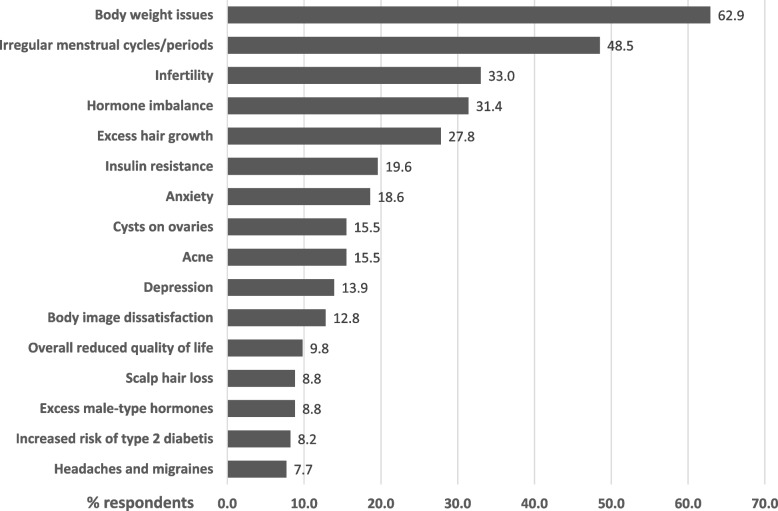
- Comorbidities and mental health concerns were common: overweight/obesity was reported by 62.4%, high LDL cholesterol by 15.5%, high glucose/pre-diabetes by 13.4%, metabolic syndrome by 6.2%, and type 2 diabetes by 3.1%; 35.6% reported mental health as a concern, but only 1% were referred to a psychologist/psychiatrist.
Methods
- An online REDCap questionnaire adapted from a previously published PCOS questionnaire, following CHERRIES recommendations, and pilot-tested with 5 PCOS patient-partners and 5 health professionals; it included 72 questions in 5 sections, with 4 sections analyzed.
- Participants self-identifying as having PCOS were recruited in Alberta, Canada via social media, patient registries, and research websites; responses were collected January 2021–June 2022. Of 222 respondents, 198 completed the survey and 194 living in Canada were included after one duplicate was removed.
- Descriptive statistics were used for categorical and continuous data; open-response questions were analyzed with qualitative content analysis and inductive coding, with themes reviewed and agreed by three independent reviewers.
Limitations
- Stated by the authors: results may not be generalizable to other countries or health systems because the survey was adapted to the Alberta/Canadian context; the sample was small for a population-based survey and multivariable analyses; recall bias is possible; PCOS diagnosis was self-reported and not verified with medical records; sample bias may favor those more dissatisfied; the questionnaire was English-only; participants were predominantly Caucasian and 20% were immigrants, limiting diversity; internet/social media delivery may have reduced diversity; and intersectional factors were not investigated.
- Evident from the text: the cross-sectional survey design cannot establish causality or temporal relationships beyond self-report, and the anonymous, self-selected online sample may not represent the broader PCOS population.
Model-written summary. Check it against the paper before relying on it.
Integrity signals
Registry
Cites
Statistics
Figures
Verification
Claims the paper makes
46 Valid · 0 Not valid · 5 Not checked · 109 Own results and interpretations
Every source the paper cites for this claim was checked and supports it.
In the paper
“The need to monitor and track symptoms, and to rule out other endocrine or pathophysiological conditions makes a diagnosis clinically challenging [3].”
§ Challenges in diagnosis and health care in polycystic ovary syndrome in Canada: a patient view to improve health care > Background
What the sources say
- Supportedcites [3] Teede HJ Tay CT Laven J Dokras A Moran LJ Piltonen T Costello M Boivin J Redman L Boyle A Norman R Mousa A Joham A International PCOS network Fertil Steril 2023 120 4 767 793 10.1016/j.fertnstert.2023.07.025 37589624 source
The diagnostic algorithm (section 5.7.6; page not specified) requires assessment of symptoms, exclusion of other causes, and later reassessment for some adolescents. The guideline also explicitly notes diagnostic challenges in adolescents (section 5.9; page not specified), supporting the citing sentence’s broad characterization. (LLM, conf=0.87)
plainstates a cause- Asserted: passes — The authors put it forward as true.
- Checkable: passes — It can be checked against evidence.
- Load-bearing: passes — The paper’s conclusions depend on it.
- Based: passes — The paper gives a reason why it holds.
- Supported
The cited sources support only part of this claim — read each source’s verdict below.
In the paper
“Recent studies including surveys, interviews, and focus groups of those with PCOS reveal a high degree of dissatisfaction with health care and the health care system in many countries [2, 28, 30–34].”
§ Challenges in diagnosis and health care in polycystic ovary syndrome in Canada: a patient view to improve health care > Background
What the sources say
- Supportedcites [2] Gibson-Helm ME Teede HJ Dunaif A Dokras A Delayed diagnosis and a lack of information associated with dissatisfaction in women with polycystic ovary syndrome J Clin Endocrinol Metab 2017 102 2 604 612 10.1210/jc.2016-2963 27906550 PMC6283441 source
The Abstract reports that few respondents were satisfied with their PCOS diagnosis experience (35.2%) or the information they received (15.6%). The Discussion says that very few women in all surveyed world regions were satisfied with either. This international questionnaire supports the survey-based portion of the multi-cited statement; it is not itself an interview or focus-group study. (LLM, conf=0.89)
- Supportedcites [28] Hoyos LR Putra M Armstrong AA Cheng CY Riestenberg CK Schooler TA Dumesic DA Measures of patient dissatisfaction with health care in polycystic ovary syndrome: retrospective analysis J Med Internet Res 2020 22 4 e16541 10.2196/16541 32314967 PMC7201322 source
The Discussion’s Principal Findings report that 57.3% of surveyed respondents with PCOS were dissatisfied with their health care. The Introduction also describes dissatisfaction with PCOS care worldwide. This paper supplies survey evidence for the multi-citation statement; it need not itself include interviews or focus groups. (LLM, conf=0.89)
- Not checked — no full text of the sourcecites [30] Gibson-Helm ME Lucus IM Boyle JA Teede HJ Women’s experiences of polycystic ovary syndrome diagnosis Fam Pract 2014 31 5 545 549 10.1093/fampra/cmu028 24925927 source
- Not checked — no full text of the sourcecites [31] Tomlinson J Pinkney J Adams L Stenhouse E Bendall A Corrigan O Letherby G The diagnosis and lived experience of polycystic ovary syndrome: a qualitative study J Adv Nurs 2017 73 10 2318 2326 10.1111/jan.13300 28329428 source
- Partly supportedcites [32] Hoeger KM Dokras A Piltonen T Update on PCOS: consequences, challenges, and guiding treatment J Clin Endocrinol Metab 2021 106 3 e1071 e1083 10.1210/clinem/dgaa839 33211867 sourceExperimental — accuracy not yet measured
The review’s Abstract (page not provided) says women with PCOS report dissatisfaction with the treatment and recommendations they receive, supporting the core point about dissatisfaction with care. Our copy does not establish that surveys, interviews and focus groups found a high degree of dissatisfaction with health care systems in many countries. (LLM, conf=0.84)
- Supportedcites [33] Kaur I, Suri V, Rana SV, Singh A. Treatment pathways traversed by polycystic ovary syndrome (PCOS) patients: a mixed-method study. PLOS ONE. Published: August 9, 2021 10.1371/journal.pone.0255830. PMC8351971 34370764 source
The Abstract Conclusions report that women with PCOS were dissatisfied with the information and treatment they received. The Data collection section describes a questionnaire and in-depth interviews, making this an example of the studies cited in the sentence; the paper itself studies patients in India, not multiple countries. (LLM, conf=0.90)
- Supportedcites [34] Ismayilova M Yaya S “I felt like she didn’t take me seriously”: a multi-methods study examining patient satisfaction and experiences with polycystic ovary syndrome (PCOS) in Canada BMC Womens Health 2022 22 47 10.1186/s12905-022-01630-3 35197027 PMC8864824 source
The Discussion (page unavailable) reports that 65.9% of Canadian survey respondents were dissatisfied with information provided at diagnosis, while interview participants described frustration with clinicians’ limited PCOS knowledge. It also says these satisfaction findings resemble surveys of PCOS populations in Australia and internationally, supporting the sentence’s broader point; the cited studies collectively, rather than this paper alone, account for the listed methods. (LLM, conf=0.87)
plain- Asserted: passes — The authors put it forward as true.
- Checkable: passes — It can be checked against evidence.
- Load-bearing: passes — The paper’s conclusions depend on it.
- Based: passes — The paper gives a reason why it holds.
- Supported
Every source the paper cites for this claim was checked and supports it.
In the paper
“For example, a fear of infertility or an expectation of infertility following a PCOS diagnosis may lead to individuals with PCOS not using contraception resulting in unplanned pregnancies [51].”
§ Challenges in diagnosis and health care in polycystic ovary syndrome in Canada: a patient view to improve health care > Discussion > Lack of information at diagnosis
What the sources say
- Supportedcites [51] Copp T Muscat DM Hersch J McCaffery KJ Doust J Dokras A Mol BW Jansen J The challenges with managing polycystic ovary syndrome: a qualitative study of women's and clinicians' experiences Patient Educ Couns 2022 105 3 719 725 10.1016/j.pec.2021.05.038 34099308 source
In the Clinicians section (p. 15), clinicians describe women with PCOS encountering misinformation that they will be infertile and identify not using contraception and unintended pregnancies as possible consequences. This supports the citing sentence’s hedged claim, though the paper presents it as a clinician concern rather than a measured pregnancy outcome. (LLM, conf=0.88)
hedgedstates a possible cause- Asserted: passes — The authors put it forward as true.
- Checkable: passes — It can be checked against evidence.
- Load-bearing: unclear — It is unclear whether the paper’s conclusions depend on it.
- Based: passes — The paper gives a reason why it holds.
- Supported
Every source the paper cites for this claim was checked and supports it.
In the paper
“These psychiatric morbidities greatly impact quality of life in those with PCOS [3, 60].”
§ Challenges in diagnosis and health care in polycystic ovary syndrome in Canada: a patient view to improve health care > Discussion > Referrals and follow-up in health care management
What the sources say
- Supportedcites [3] Teede HJ Tay CT Laven J Dokras A Moran LJ Piltonen T Costello M Boivin J Redman L Boyle A Norman R Mousa A Joham A International PCOS network Fertil Steril 2023 120 4 767 793 10.1016/j.fertnstert.2023.07.025 37589624 source
In section 5.9 (page unavailable), the guideline says depression and anxiety symptoms are significantly increased in women with PCOS and calls for greater awareness of psychological features and their impacts on quality of life. This supports the citing sentence’s broad paraphrase. (LLM, conf=0.87)
- Supportedcites [60] Chaudhari AP Mazumdar K Mehta PD Anxiety, depression, and quality of life in women with polycystic ovarian syndrome Indian J Psychol Med 2018 40 3 239 246 10.4103/IJPSYM.IJPSYM_561_17 29875531 PMC5968645 source
The Discussion reports that psychiatric morbidity was significantly associated with poorer quality of life in women with PCOS and suggests it can significantly undermine quality of life. The Conclusions likewise link anxiety and depression with poorer quality of life. The supplied passages have section labels but no page numbers. (LLM, conf=0.91)
plainstates a cause- Asserted: passes — The authors put it forward as true.
- Checkable: passes — It can be checked against evidence.
- Load-bearing: passes — The paper’s conclusions depend on it.
- Based: passes — The paper gives a reason why it holds.
- Supported
The cited sources support only part of this claim — read each source’s verdict below.
In the paper
“A PCOS diagnosis can lead to self-imposed diet-lifestyle changes or treatments that create additional anxiety and stress; therefore, appropriate personalized health communication of information about PCOS and resources at the time of diagnosis are important [51].”
§ Challenges in diagnosis and health care in polycystic ovary syndrome in Canada: a patient view to improve health care > Discussion > Lack of information at diagnosis
What the sources say
- Partly supportedcites [51] Copp T Muscat DM Hersch J McCaffery KJ Doust J Dokras A Mol BW Jansen J The challenges with managing polycystic ovary syndrome: a qualitative study of women's and clinicians' experiences Patient Educ Couns 2022 105 3 719 725 10.1016/j.pec.2021.05.038 34099308 sourceExperimental — accuracy not yet measured
The Women with PCOS section (p. 16) reports that some women tried alternative treatments or cut out food groups. The Discussion (p. 21) describes anxiety about long-term consequences and inadequate information, and the Practice implications (p. 23) call for tailored communication. The paper does not say that self-imposed diet or treatment changes themselves created additional anxiety and stress. (LLM, conf=0.84)
plainstates a cause- Asserted: passes — The authors put it forward as true.
- Checkable: passes — It can be checked against evidence.
- Load-bearing: passes — The paper’s conclusions depend on it.
- Based: passes — The paper gives a reason why it holds.
- Partly supported
66 more claims · 14 with their cited sources checked
Create a free account to see all 160 claims and to verify the 1 reference still open.
- Probably not a substantial claim. 43
- It may state two separate claims as one. 58
Self-check
Percentages, sums and reported differences re-computed from the paper’s own numbers.
Each contradiction between two passages listed here was confirmed by an independent check.
Rated minor: it would not touch a result — a value no result rests on, a p-value that stays on the same side of the significance level, or a conflict that is clerical, resolved elsewhere in the paper, or outside its own findings.
In the paper
§ Challenges in diagnosis and health care in polycystic ovary syndrome in Canada: a patient view to improve health care > Discussion > Clinical treatment options and medical prescriptions
“At diagnosis, less than 25% of respondents indicated that they were provided prescriptions for treatment of PCOS symptoms.”
§ Challenges in diagnosis and health care in polycystic ovary syndrome in Canada: a patient view to improve health care > Results > PCOS-related health care at diagnosis
“Only about one third of respondents (29.2%) reported receiving prescriptions to address symptoms at the time of their diagnosis.”
Rated minor: it would not touch a result — a value no result rests on, a p-value that stays on the same side of the significance level, or a conflict that is clerical, resolved elsewhere in the paper, or outside its own findings.
In the paper
§ Challenges in diagnosis and health care in polycystic ovary syndrome in Canada: a patient view to improve health care > Discussion > Diagnosis
“Our study participants reported a protracted PCOS diagnosis that occurred at an average age of 23 years and took on average greater than 4 years following the first physician consultation for PCOS-related symptoms.”
§ Challenges in diagnosis and health care in polycystic ovary syndrome in Canada: a patient view to improve health care > Results > PCOS-related health care at diagnosis
“| Age at diagnosise | 13–36 | 24.01 ± 6.12 |”
Rated minor: it would not touch a result — a value no result rests on, a p-value that stays on the same side of the significance level, or a conflict that is clerical, resolved elsewhere in the paper, or outside its own findings.
In the paper
§ Challenges in diagnosis and health care in polycystic ovary syndrome in Canada: a patient view to improve health care > Discussion > Limitations and strengths of the study
“Our study participants were predominately Caucasian (70%) and 20% were immigrants to Canada, therefore data may not reflect the diverse ethnic groups including indigenous groups in Canada, and future studies could be aimed to address this limitation.”
§ Challenges in diagnosis and health care in polycystic ovary syndrome in Canada: a patient view to improve health care > Results > Respondent characteristics
“Most of the participants (84.5%) were Caucasian/White and 13.9% self-identified as a member of a minority group.”
Rated minor: it would not touch a result — a value no result rests on, a p-value that stays on the same side of the significance level, or a conflict that is clerical, resolved elsewhere in the paper, or outside its own findings.
In the paper
§ Challenges in diagnosis and health care in polycystic ovary syndrome in Canada: a patient view to improve health care > Discussion > Limitations and strengths of the study
“Our study participants were predominately Caucasian (70%) and 20% were immigrants to Canada, therefore data may not reflect the diverse ethnic groups including indigenous groups in Canada, and future studies could be aimed to address this limitation.”
§ Challenges in diagnosis and health care in polycystic ovary syndrome in Canada: a patient view to improve health care > Results > Respondent characteristics
“The majority (90.7%) of respondents were born in Canada and 9.8% were immigrants to Canada.”
Rated minor: it would not touch a result — a value no result rests on, a p-value that stays on the same side of the significance level, or a conflict that is clerical, resolved elsewhere in the paper, or outside its own findings.
In the paper
§ Challenges in diagnosis and health care in polycystic ovary syndrome in Canada: a patient view to improve health care > Abstract > Results
“Menstrual irregularity was identified in 84% of respondents as the first symptom noticed and the primary reason for seeking a medical consultation.”
§ Challenges in diagnosis and health care in polycystic ovary syndrome in Canada: a patient view to improve health care > Results > PCOS-related health care at diagnosis
“| Symptoms that led to seek medical help | Menstrual irregularities | 144 (74.2) |”
Citations
Cites
Harris, P. A., Taylor, R., Thielke, R., Payne, J., Gonzalez, N., & Conde, J. G. (2009) · Journal of Biomedical Informatics · doi:10.1016/j.jbi.2008.08.010 · Cited by 51,384 · cited 1×
“The survey was created using REDCap (Research Electronic Data Capture) [40], a web-based application used for electronic data capture, hosted and supported by the Women and Children’s Health Research Institute (WCHRI) at the University of Alberta.”
MethodEysenbach, G. (2004) · Journal of Medical Internet Research · doi:10.2196/jmir.6.3.e34 · Cited by 6,480 · cited 1×
“The survey methodology followed the recommendations of the Checklist for Reporting Results of Internet E-Surveys (CHERRIES) to ensure that this study was conducted in a reliable, reproducible, and transparent manner [39].”
MethodThe Diagnosis of Polycystic Ovary Syndrome during Adolescence
Witchel, S. F., Oberfield, S., Rosenfield, R. L., Codner, E., Bonny, A., Ibáñez, L., Pena, A., Horikawa, R., Gomez-Lobo, V., Joel, D., et al. (2015) · Hormone Research in Paediatrics · doi:10.1159/000375530 · Cited by 3,113 · cited 3×
“” see multiple physicians or specialists, get 2nd opinion 32 [23.5] ◦ “Find a physician / dietician / therapist, etc. that specializes with PCOS patients.”
BackgroundInfluentialAzziz, R., Carmina, E., Chen, Z., Dunaif, A., Laven, J. S. E., Legro, R. S., Lizneva, D., Natterson-Horowtiz, B., Teede, H. J., & Yildiz, B. O. (2016) · Nature Reviews Disease Primers · doi:10.1038/nrdp.2016.57 · Cited by 2,005 · cited 2×
“Menstrual dysfunction-acyclicity, hirsutism, acne, alopecia, endo-metriosis, and fertility concerns can be treated with a range of interventions and pharmaceuticals including oral contraceptives and anti-androgens [3, 20].”
BackgroundTeede, H. J., Misso, M. L., Costello, M. F., Dokras, A., Laven, J., Moran, L., Piltonen, T., Norman, R. J., & the International PCOS Network (2018) · Clinical Endocrinology · doi:10.1111/cen.13795 · Cited by 1,823
Bozdag, G., Mumusoglu, S., Zengin, D., Karabulut, E., & Yildiz, B. O. (2016) · Human Reproduction · doi:10.1093/humrep/dew218 · Cited by 1,526 · cited 1×
“Polycystic Ovary Syndrome (PCOS) is the most common endocrine-metabolic disorder affecting 6%–20% of populations [1–4].”
BackgroundTeede, H. J., Misso, M. L., Costello, M. F., Dokras, A., Laven, J., Moran, L., Piltonen, T., Norman, R. J., Andersen, M., Azziz, R., et al. (2018) · Fertility and Sterility · doi:10.1016/j.fertnstert.2018.05.004 · Cited by 1,325 · cited 3×
“Establishing a partnership between the health professional and the individual is essential for targeted and appropriate treatment decisions and optimal management of PCOS symptoms and co-morbidities [3, 38].”
BackgroundMoran, L. J., Misso, M. L., Wild, R. A., & Norman, R. J. (2010) · Human Reproduction Update · doi:10.1093/humupd/dmq001 · Cited by 1,108
Tang, T., Lord, J. M., Norman, R. J., Yasmin, E., & Balen, A. H. (2012) · Cochrane Database of Systematic Reviews · doi:10.1002/14651858.cd003053.pub5 · Cited by 698
Pregnancy complications in women with polycystic ovary syndrome
Palomba, S., de Wilde, M. A., Falbo, A., Koster, M. P. H., La Sala, G. B., & Fauser, B. C. J. M. (2015) · Human Reproduction Update · doi:10.1093/humupd/dmv029 · Cited by 691 · cited 1×
“Therefore, early intervention to target cardiometabolic risk factors following a diagnosis of PCOS is strongly recommended [3, 55, 56].”
BackgroundThe Prevalence of Polycystic Ovary Syndrome: A Brief Systematic Review
Pundir, C., Deswal, R., Narwal, V., & Dang, A. (2020) · Journal of Human Reproductive Sciences · doi:10.4103/jhrs.jhrs_95_18 · Cited by 657 · cited 2×
“” don’t know where to get help, no advice 6 [4.4] to childbearing.”
BackgroundInfluentialIncreased risk of depressive disorders in women with polycystic ovary syndrome
Hollinrake, E., Abreu, A., Maifeld, M., Van Voorhis, B. J., & Dokras, A. (2007) · Fertility and Sterility · doi:10.1016/j.fertnstert.2006.11.039 · Cited by 631 · cited 2×
“This is concerning given the established evidence of increased depression, anxiety, eating disorders and other mental illnesses in those affected with PCOS [3, 8, 57–59].”
BackgroundCooney, L. G., Lee, I., Sammel, M. D., & Dokras, A. (2017) · Human Reproduction · doi:10.1093/humrep/dex044 · Cited by 631 · cited 1×
“Thus, routine screening for mental illnesses including anxiety, depression and eating disorders at the time of PCOS diagnosis or during follow-up care and referral to psychiatric counselling is recommended for those with PCOS [3, 8, 57, 58].”
BackgroundUpdate on PCOS: consequences, challenges, and guiding treatment
Hoeger, K. M., Dokras, A., & Piltonen, T. (2021) · The Journal of Clinical Endocrinology & Metabolism · doi:10.1210/clinem/dgaa839 · Cited by 610 · cited 3×
“However, evidence indicates that the advice and support for diet-lifestyle management is not consistently provided and may not meet the needs of patients [32].”
BackgroundResultInfluentialAzziz, R. (2018) · Obstetrics & Gynecology · doi:10.1097/aog.0000000000002698 · Cited by 573
Gibson-Helm, M., Teede, H., Dunaif, A., & Dokras, A. (2016) · The Journal of Clinical Endocrinology & Metabolism · doi:10.1210/jc.2016-2963 · Cited by 428 · cited 7×
“These findings are similar to global reports in which those affected by PCOS describe not adequately being informed by their health care practitioner, or were not referred to relevant sources of information at diagnosis, leading to overall dissatisfaction with their health care [2, 30, 31].”
BackgroundMethodResultInfluentialLong-term cardiometabolic disease risk in women with PCOS: a systematic review and meta-analysis
Wekker, V, van Dammen, L., Koning, A., Heida, K. Y., Painter, R. C., Limpens, J., Laven, J. S. E., Roeters van Lennep, J. E., Roseboom, T. J., & Hoek, A. (2020) · Human Reproduction Update · doi:10.1093/humupd/dmaa029 · Cited by 425 · cited 1×
“PCOS is associated with increased co-morbidities including obesity, infertility, pregnancy complications, depression and anxiety, metabolic syndrome, diabetes, reproductive cancers and cardiovascular disease [3, 7, 8, 10–13].”
BackgroundTeede, H. J., Tay, C. T., Laven, J., Dokras, A., Moran, L. J., Piltonen, T. T., Costello, M. F., Boivin, J., M. Redman, L., A. Boyle, J., et al. (2023) · Fertility and Sterility · doi:10.1016/j.fertnstert.2023.07.025 · Cited by 417
The Potential Implications of a PCOS Diagnosis on a Woman's Long-Term Health Using Data Linkage
Hart, R., & Doherty, D. A. (2015) · The Journal of Clinical Endocrinology & Metabolism · doi:10.1210/jc.2014-3886 · Cited by 391 · cited 1×
“PCOS impacts overall health and quality of life across the lifespan from childhood to post-menopause [5–9].”
BackgroundMorley, L. C., Tang, T., Yasmin, E., Norman, R. J., & Balen, A. H. (2017) · Cochrane Database of Systematic Reviews · doi:10.1002/14651858.cd003053.pub6 · Cited by 296
Dokras, A., Stener-Victorin, E., Yildiz, B. O., Li, R., Ottey, S., Shah, D., Epperson, N., & Teede, H. (2018) · Fertility and Sterility · doi:10.1016/j.fertnstert.2018.01.038 · Cited by 285 · cited 7×
“Thus, routine screening for mental illnesses including anxiety, depression and eating disorders at the time of PCOS diagnosis or during follow-up care and referral to psychiatric counselling is recommended for those with PCOS [3, 8, 57, 58].”
BackgroundInfluentialBeyond fertility: polycystic ovary syndrome and long-term health
Cooney, L. G., & Dokras, A. (2018) · Fertility and Sterility · doi:10.1016/j.fertnstert.2018.08.021 · Cited by 270 · cited 4×
“PCOS impacts overall health and quality of life across the lifespan from childhood to post-menopause [5–9].”
BackgroundInfluentialDepression and Body Image among Women with Polycystic Ovary Syndrome
Himelein, M. J., & Thatcher, S. S. (2006) · Journal of Health Psychology · doi:10.1177/1359105306065021 · Cited by 248 · cited 3×
“” more compassion and understanding 23 [16.8] ◦ “Often times I’ve felt neglected and alone with my condition, doctors didn’t take me seriously or allow me to believe that not having my period isn’t normal.”
BackgroundInfluentialDokras, A., Saini, S., Gibson-Helm, M., Schulkin, J., Cooney, L., & Teede, H. (2017) · Fertility and Sterility · doi:10.1016/j.fertnstert.2017.04.011 · Cited by 218 · cited 1×
“A study conducted in Australia and North America revealed physicians had significant gaps in the knowledge of PCOS, diagnostic criteria and related comorbidities [49, 50].”
BackgroundBahri Khomami, M., Joham, A. E., Boyle, J. A., Piltonen, T., Silagy, M., Arora, C., Misso, M. L., Teede, H. J., & Moran, L. J. (2019) · Obesity Reviews · doi:10.1111/obr.12829 · Cited by 211
Riestenberg, C., Jagasia, A., Markovic, D., Buyalos, R. P., & Azziz, R. (2022) · The Journal of Clinical Endocrinology & Metabolism · doi:10.1210/clinem/dgab613 · Cited by 210 · cited 2×
“” ◦ “Always do your own research and get more than one opinion on things if you still feel unsure” ask for referral 20 [14.7] ◦ “If you don’t feel heard ask for a new referral, try a naturopath osteopath or even acupuncture it won’t damage and it might help.”
BackgroundInfluentialCoffey, S., Bano, G., & Mason, H. D. (2006) · Gynecological Endocrinology · doi:10.1080/09513590600604541 · Cited by 206
Deeks, A. A., Gibson-Helm, M. E., Paul, E., & Teede, H. J. (2011) · Human Reproduction · doi:10.1093/humrep/der071 · Cited by 202 · cited 1×
“In our study and in other reports, those with PCOS are scarcely informed about cardiometabolic risk factors and long-term morbidity risk including dyslipidemia, insulin resistance, pre-diabetes, diabetes and cardiovascular disease [71–73].”
ResultCardiovascular disease in a nationwide population of Danish women with polycystic ovary syndrome
Glintborg, D., Rubin, K. H., Nybo, M., Abrahamsen, B., & Andersen, M. (2018) · Cardiovascular Diabetology · doi:10.1186/s12933-018-0680-5 · Cited by 200 · cited 1×
“…these individuals did not receive the necessary care required to assess cardiometabolic risk factors and risk of serious co-morbidities such as Type 2 Diabetes and cardiovascular disease, which are recognized in the international guidelines as important to address in management of PCOS [3, 53, 54].”
BackgroundRubin, K. H., Glintborg, D., Nybo, M., Abrahamsen, B., & Andersen, M. (2017) · The Journal of Clinical Endocrinology & Metabolism · doi:10.1210/jc.2017-01354 · Cited by 195 · cited 3×
“PCOS is associated with increased co-morbidities including obesity, infertility, pregnancy complications, depression and anxiety, metabolic syndrome, diabetes, reproductive cancers and cardiovascular disease [3, 7, 8, 10–13].”
BackgroundInfluentialAnxiety, Depression, and Quality of Life in Women with Polycystic Ovarian Syndrome
Chaudhari, A. P., Mazumdar, K., & Mehta, P. D. (2018) · Indian Journal of Psychological Medicine · doi:10.4103/ijpsym.ijpsym_561_17 · Cited by 187 · cited 1×
“These psychiatric morbidities greatly impact quality of life in those with PCOS [3, 60].”
BackgroundPolycystic ovary syndrome throughout a woman’s life
Group of interest in Reproductive Endocrinology (GIER) of the Spanish Fertility Society (SEF), Bellver, J., Rodríguez-Tabernero, L., Robles, A., Muñoz, E., Martínez, F., Landeras, J., García-Velasco, J., Fontes, J., Álvarez, M., et al. (2018) · Journal of Assisted Reproduction and Genetics · doi:10.1007/s10815-017-1047-7 · Cited by 180 · cited 1×
“” educate/train clinicians 35 [25.5] ◦ “More doctors need to know about PCOS!”
BackgroundInfluentialDeductive and Inductive Approaches to Qualitative Data Analysis: The Five-Cycle Process
Bingham, A. (2021) · Proceedings of the 2021 AERA Annual Meeting · doi:10.3102/1682697 · Cited by 148 · cited 1×
“Open questions were analyzed using qualitative content analysis and inductive coding methodology [44].”
MethodBerni, T. R., Morgan, C. L., & Rees, D. A. (2021) · The Journal of Clinical Endocrinology & Metabolism · doi:10.1210/clinem/dgab392 · Cited by 146 · cited 1×
“” find someone (clinician/support group) who listens 17 [12.5] ◦ “I would tell her to reach out to local groups of women that have PCOS I would ask her to find a proper physician that will recognize PCOS is a problem and knows a little bit about it and is open to working with them they may not know…”
BackgroundInfluentialIncreased risk of disordered eating in polycystic ovary syndrome
Lee, I., Cooney, L. G., Saini, S., Smith, M. E., Sammel, M. D., Allison, K. C., & Dokras, A. (2017) · Fertility and Sterility · doi:10.1016/j.fertnstert.2016.12.014 · Cited by 127 · cited 1×
“Depression and anxiety in those affected by PCOS are also risk factors for eating disorders [8, 18, 61–63].”
BackgroundTay, C. T., Teede, H. J., Hill, B., Loxton, D., & Joham, A. E. (2019) · Fertility and Sterility · doi:10.1016/j.fertnstert.2019.03.027 · Cited by 120 · cited 1×
“Depression and anxiety in those affected by PCOS are also risk factors for eating disorders [8, 18, 61–63].”
BackgroundPinola, P., Puukka, K., Piltonen, T. T., Puurunen, J., Vanky, E., Sundström-Poromaa, I., Stener-Victorin, E., Lindén Hirschberg, A., Ravn, P., Skovsager Andersen, M., et al. (2017) · Fertility and Sterility · doi:10.1016/j.fertnstert.2016.12.017 · Cited by 113 · cited 1×
“PCOS is associated with increased co-morbidities including obesity, infertility, pregnancy complications, depression and anxiety, metabolic syndrome, diabetes, reproductive cancers and cardiovascular disease [3, 7, 8, 10–13].”
BackgroundWomen's experiences of polycystic ovary syndrome diagnosis
Gibson-Helm, M. E., Lucas, I. M., Boyle, J. A., & Teede, H. J. (2014) · Family Practice · doi:10.1093/fampra/cmu028 · Cited by 112 · cited 5×
“These findings are similar to global reports in which those affected by PCOS describe not adequately being informed by their health care practitioner, or were not referred to relevant sources of information at diagnosis, leading to overall dissatisfaction with their health care [2, 30, 31].”
BackgroundMethodResultInfluentialHolbrey, S., & Coulson, N. S. (2013) · BMC Women's Health · doi:10.1186/1472-6874-13-51 · Cited by 108 · cited 1×
“Whilst online support groups are beneficial for peer support, internet and social media forums may not always provide validated and reliable sources of evidence-based information and this information may mis-inform those with PCOS [75, 76].”
BackgroundAvery, J. C., & Braunack-Mayer, A. J. (2007) · BMC Women's Health · doi:10.1186/1472-6874-7-9 · Cited by 100 · cited 1×
“Whilst online support groups are beneficial for peer support, internet and social media forums may not always provide validated and reliable sources of evidence-based information and this information may mis-inform those with PCOS [75, 76].”
BackgroundWest, S., Lashen, H., Bloigu, A., Franks, S., Puukka, K., Ruokonen, A., Jarvelin, M. R., Tapanainen, J. S., & Morin-Papunen, L. (2014) · Human Reproduction · doi:10.1093/humrep/deu200 · Cited by 94 · cited 1×
“Although it can be diagnosed in adolescence, many young individuals may not know they have PCOS or do not receive a diagnosis until they experience infertility [3, 9, 24–29].”
BackgroundTabassum, F., Jyoti, C., Sinha, H. H., Dhar, K., & Akhtar, M. S. (2021) · PLOS ONE · doi:10.1371/journal.pone.0247486 · Cited by 94 · cited 1×
“In this study, we did not investigate the relationship between intersectional factors and how these may impact health and health care experience including gender, ethnicity, socioeconomic status, family history, family dynamics, work and childcare [77, 78].”
BackgroundThe diagnosis and lived experience of polycystic ovary syndrome: A qualitative study
Tomlinson, J., Pinkney, J., Adams, L., Stenhouse, E., Bendall, A., Corrigan, O., & Letherby, G. (2017) · Journal of Advanced Nursing · doi:10.1111/jan.13300 · Cited by 88 · cited 1×
“These findings are similar to global reports in which those affected by PCOS describe not adequately being informed by their health care practitioner, or were not referred to relevant sources of information at diagnosis, leading to overall dissatisfaction with their health care [2, 30, 31].”
ResultBody image satisfaction and self-esteem status among the patients with polycystic ovary syndrome.
(2013) · Europe PMC (PubMed Central) · Cited by 80
An Update on Contraception in Polycystic Ovary Syndrome
Oguz, S. H., & Yildiz, B. O. (2021) · Endocrinology and Metabolism · doi:10.3803/enm.2021.958 · Cited by 76 · cited 1×
“Oral contraceptives are commonly prescribed for those not considering becoming pregnant to treat the primary concerns of menstrual irregularities and hyperandro-genism [3, 65, 66].”
BackgroundProviding lifestyle advice to women with PCOS: an overview of practical issues affecting success
Ee, C., Pirotta, S., Mousa, A., Moran, L., & Lim, S. (2021) · BMC Endocrine Disorders · doi:10.1186/s12902-021-00890-8 · Cited by 70 · cited 1×
“Frustration about a lack of information and expert advice can lead to distrust in the health care system and precipitate poor relationships between patients and health care professionals [74].”
BackgroundIsmayilova, M., & Yaya, S. (2022) · BMC Women's Health · doi:10.1186/s12905-022-01630-3 · Cited by 68 · cited 2×
“Our findings reinforce other findings in Canada and as well as other countries related to the health care experience of those with PCOS [2, 30–32, 34, 46].”
BackgroundResultManaging Polycystic Ovary Syndrome: What Our Patients Are Telling Us
Crete, J., & Adamshick, P. (2011) · Journal of Holistic Nursing · doi:10.1177/0898010111398660 · Cited by 61
Determinants of Quality of Life and Satisfaction with Life in Women with Polycystic Ovary Syndrome
Rzońca, E., Bień, A., Wdowiak, A., Szymański, R., & Iwanowicz-Palus, G. (2018) · International Journal of Environmental Research and Public Health · doi:10.3390/ijerph15020376 · Cited by 59 · cited 1×
“In this study, we did not investigate the relationship between intersectional factors and how these may impact health and health care experience including gender, ethnicity, socioeconomic status, family history, family dynamics, work and childcare [77, 78].”
BackgroundCopp, T., Hersch, J., Muscat, D. M., McCaffery, K. J., Doust, J., Dokras, A., Mol, B. W., & Jansen, J. (2019) · Human Reproduction Open · doi:10.1093/hropen/hoz026 · Cited by 59 · cited 1×
“A sensitive-personalized approach to communication of a diagnosis and information about PCOS has been recommended to avoid unnecessary stress and anxiety associated with a fear of infertility and other health risks when receiving a PCOS diagnosis [3, 52].”
BackgroundCopp, T., Muscat, D. M., Hersch, J., McCaffery, K. J., Doust, J., Dokras, A., Mol, B. W., & Jansen, J. (2022) · Patient Education and Counseling · doi:10.1016/j.pec.2021.05.038 · Cited by 59 · cited 2×
“For example, a fear of infertility or an expectation of infertility following a PCOS diagnosis may lead to individuals with PCOS not using contraception resulting in unplanned pregnancies [51].”
BackgroundThe Diagnostic Experiences of Women With Polycystic Ovary Syndrome (PCOS) in Ontario, Canada
Soucie, K., Samardzic, T., Schramer, K., Ly, C., & Katzman, R. (2021) · Qualitative Health Research · doi:10.1177/1049732320971235 · Cited by 56 · cited 2×
“These findings were consistent with a Canadian study reporting that patients were dismissed and deferred by their physician to follow-up care until planning to become pregnant [47].”
BackgroundResultHoyos, L. R., Putra, M., Armstrong, A. A., Cheng, C. Y., Riestenberg, C. K., Schooler, T. A., & Dumesic, D. A. (2020) · Journal of Medical Internet Research · doi:10.2196/16541 · Cited by 53 · cited 2×
“Recent studies including surveys, interviews, and focus groups of those with PCOS reveal a high degree of dissat-isfaction with health care and the health care system in many countries [2, 28, 30–34].”
BackgroundPirotta, S., Barillaro, M., Brennan, L., Grassi, A., Jeanes, Y., Joham, A., Kulkarni, J., Couch, L., Lim, S., & Moran, L. (2019) · Journal of Clinical Medicine · doi:10.3390/jcm8101682 · Cited by 52
Shah, D., Patil, M., & On behalf of the National PCOS Working Group (2018) · Journal of Human Reproductive Sciences · doi:10.4103/jhrs.jhrs_72_18 · Cited by 51 · cited 1×
“Oral contraceptives are commonly prescribed for those not considering becoming pregnant to treat the primary concerns of menstrual irregularities and hyperandro-genism [3, 65, 66].”
BackgroundFernandez, R. C., Moore, V. M., Rumbold, A. R., Whitrow, M. J., Avery, J. C., & Davies, M. J. (2021) · Human Reproduction · doi:10.1093/humrep/deab101 · Cited by 50 · cited 2×
“Collectively, these experiences can impact physical and mental health, and overall quality of life [37].”
BackgroundTassone, E., Teede, H., Dokras, A., Garad, R., & Gibson-Helm, M. (2018) · Seminars in Reproductive Medicine · doi:10.1055/s-0038-1668086 · Cited by 48 · cited 3×
“Our findings reinforce other findings in Canada and as well as other countries related to the health care experience of those with PCOS [2, 30–32, 34, 46].”
BackgroundResultImplementation of dietary and general lifestyle advice among women with polycystic ovarian syndrome
Humphreys, L., & Costarelli, V. (2008) · Journal of the Royal Society for the Promotion of Health · doi:10.1177/1466424008092230 · Cited by 47 · cited 1×
“In our study and in other reports, those with PCOS are scarcely informed about cardiometabolic risk factors and long-term morbidity risk including dyslipidemia, insulin resistance, pre-diabetes, diabetes and cardiovascular disease [71–73].”
ResultKnowledge of PCOS in physicians-in-training: identifying gaps and educational opportunities
Chemerinski, A., Cooney, L., Shah, D., Butts, S., Gibson-Helm, M., & Dokras, A. (2020) · Gynecological Endocrinology · doi:10.1080/09513590.2020.1746761 · Cited by 45 · cited 1×
“A study conducted in Australia and North America revealed physicians had significant gaps in the knowledge of PCOS, diagnostic criteria and related comorbidities [49, 50].”
BackgroundHasan, M., Sultana, S., Sohan, M., Parvin, S., Rahman, M. A., Hossain, M. J., Rahman, M. S., & Islam, M. R. (2022) · PLOS ONE · doi:10.1371/journal.pone.0270102 · Cited by 45 · cited 1×
“This is concerning given the established evidence of increased depression, anxiety, eating disorders and other mental illnesses in those affected with PCOS [3, 8, 57–59].”
BackgroundBurnatowska, E., Wikarek, A., Oboza, P., Ogarek, N., Glinianowicz, M., Kocelak, P., & Olszanecka-Glinianowicz, M. (2023) · Nutrients · doi:10.3390/nu15020295 · Cited by 44 · cited 1×
“Depression and anxiety in those affected by PCOS are also risk factors for eating disorders [8, 18, 61–63].”
BackgroundMartin, M. L., Halling, K., Eek, D., Krohe, M., & Paty, J. (2017) · Health and Quality of Life Outcomes · doi:10.1186/s12955-017-0736-3 · Cited by 40 · cited 2×
“” prompt referral to specialists 26 [19.0] ◦ “I think that there should be faster referrals to OB’s or GYN’S for any reproductive issue.”
BackgroundInfluentialBlackshaw, L. C. D., Chhour, I., Stepto, N. K., & Lim, S. S. (2019) · Medical Sciences · doi:10.3390/medsci7070076 · Cited by 40 · cited 2×
“Other barriers to PCOS symptom management also include time and/or geographical restrictions to be able to access follow-up health care from specialists [64].”
BackgroundClinical Variability in Approaches to Polycystic Ovary Syndrome
Bonny, A. E., Appelbaum, H., Connor, E. L., Cromer, B., DiVasta, A., Gomez-Lobo, V., Harel, Z., Huppert, J., & Sucato, G. (2012) · Journal of Pediatric and Adolescent Gynecology · doi:10.1016/j.jpag.2012.03.004 · Cited by 38 · cited 1×
“Often each clinical symptom and comorbidity is treated separately, which can delay or obscure a diagnosis of PCOS and limit follow up care [3, 22, 23].”
BackgroundIsmayilova, M., & Yaya, S. (2023) · International Health · doi:10.1093/inthealth/ihac028 · Cited by 38 · cited 3×
“Our data is consistent with other reports of a protracted diagnosis of PCOS taking greater than two years, and associated with multiple visits to health professionals and examination by three or more physicians before a diagnosis [2, 30, 48].”
ResultOptimizing reproductive health in women with obesity and infertility
Belan, M., Harnois-Leblanc, S., Laferrère, B., & Baillargeon, J.-P. (2018) · Canadian Medical Association Journal · doi:10.1503/cmaj.171233 · Cited by 29 · cited 1×
“” prompt referral to specialists 26 [19.0] ◦ “I think that there should be faster referrals to OB’s or GYN’S for any reproductive issue.”
BackgroundInfluentialPirotta, S., Joham, A., Grieger, J. A., Tay, C. T., Bahri-Khomami, M., Lujan, M., Lim, S. S., & Moran, L. J. (2020) · Seminars in Reproductive Medicine · doi:10.1055/s-0041-1726866 · Cited by 29 · cited 1×
“Although it can be diagnosed in adolescence, many young individuals may not know they have PCOS or do not receive a diagnosis until they experience infertility [3, 9, 24–29].”
BackgroundActkins, K. V., Singh, K., Hucks, D., Velez Edwards, D. R., Aldrich, M., Cha, J., Wellons, M., & Davis, L. K. (2021) · The Journal of Clinical Endocrinology & Metabolism · doi:10.1210/clinem/dgaa675 · Cited by 27
Kiconco, S., Tay, C. T., Rassie, K. L., Azziz, R., Teede, H. J., & Joham, A. E. (2022) · Clinical Endocrinology · doi:10.1111/cen.14647 · Cited by 25
Dolphin, P. J., & Rubinstein, D. (1974) · Biochemical and Biophysical Research Communications · doi:10.1016/0006-291x(74)90618-4 · Cited by 23 · cited 1×
“…these individuals did not receive the necessary care required to assess cardiometabolic risk factors and risk of serious co-morbidities such as Type 2 Diabetes and cardiovascular disease, which are recognized in the international guidelines as important to address in management of PCOS [3, 53, 54].”
BackgroundTreatment pathways traversed by polycystic ovary syndrome (PCOS) patients: A mixed-method study
Kaur, I., Suri, V., Rana, S. V., & Singh, A. (2021) · PLOS ONE · doi:10.1371/journal.pone.0255830 · Cited by 23 · cited 2×
“” insufficient follow-up care 39 [33.6] ◦ “They offer no form of treatment.”
BackgroundInfluentialThe diagnostic experience of polycystic ovary syndrome: A scoping review of patient perspectives
Presswala, B., & De Souza, L. R. (2023) · Patient Education and Counseling · doi:10.1016/j.pec.2023.107771 · Cited by 21 · cited 2×
“…of qualitative studies investigating the diagnostic experience of individuals living with PCOS, indicated that the prolonged and complex diagnostic process often leaves patients emotionally drained and can lead to mistrust in the health care system, impacting individual and population health [35].”
BackgroundInfluentialKatz, A., Enns, J., Wong, S. T., Williamson, T., Singer, A., McGrail, K., Bakal, J. A., Taylor, C., & Peterson, S. (2018) · International Journal of Population Data Science · doi:10.23889/ijpds.v3i3.437 · Cited by 20 · cited 1×
“The outcomes of this survey reflect the health care experience of those with PCOS in the province of Alberta, which has broad similarities with other Canadian provincial health care systems but these may also differ in specific health policies, initiatives and resource allocation [45].”
BackgroundInterventions for the metabolic dysfunction in polycystic ovary syndrome
Bozdag, G., & Yildiz, B. O. (2013) · Steroids · doi:10.1016/j.steroids.2013.04.008 · Cited by 18
Contemporary Management of Polycystic Ovarian Syndrome
ZIMMERMAN, L. D., SETTON, R., PEREIRA, N., & ROSENWAKS, Z. (2019) · Clinical Obstetrics & Gynecology · doi:10.1097/grf.0000000000000449 · Cited by 8 · cited 1×
“Metformin was prescribed in 8% and 44% of respondents at diagnosis and at follow-up clinic visits, respectively, to target insulin resistance and pre-diabetes risk, androgen production, cardiometabolic risk factors and reproductive concerns [67–70].”
Background
Research works printed but not linked: 1
- Glintborg DRK Nybo M Abrahamsen B Andersen M Cardiovascular disease in a nationwide population of Danish women with polycystic ovary syndrome Cardiovasc Diabetol 2018 17 37 10.1186/s12933-018-0680-5 29519249 PMC5844097 · DOI · Paper page
Cited by
Vine, D., Ghosh, M., Wang, T., & Bakal, J. (2024) · CJC Open · doi:10.1016/j.cjco.2023.12.010 · Cited by 53
Self-citationDiagnosis and management of polycystic ovarian syndrome
Dason, E. S., Koshkina, O., Chan, C., & Sobel, M. L. (2024) · Canadian Medical Association Journal · doi:10.1503/cmaj.231251 · Cited by 107
Polycystic Ovary Syndrome, Insulin Resistance, and Cardiovascular Disease
Dubey, P., Reddy, S., Sharma, K., Johnson, S., Hardy, G., & Dwivedi, A. K. (2024) · Current Cardiology Reports · doi:10.1007/s11886-024-02050-5 · Cited by 53
“…follow-up durations, incomplete/incorrectly diagnosed or presumed PCOS diagnoses, outcome ascertainment biases, and different definitions of CVD and PCOS criteria, likely contributed to marked heterogeneity between study designs which ultimately hamper the ability to draw robust conclusions [79].”
A machine learning approach for non-invasive PCOS diagnosis from ultrasound and clinical features
Agirsoy, M., & Oehlschlaeger, M. A. (2025) · Scientific Reports · doi:10.1038/s41598-025-10453-9 · Cited by 52
Dubé‐Zinatelli, E., Anderson, F., & Ismail, N. (2025) · Frontiers in Neuroendocrinology · doi:10.1016/j.yfrne.2025.101203 · Cited by 32
Metadata
- Authors
- Sydora, B. C., Wilke, M. S., McPherson, M., Chambers, S., Ghosh, M., & Vine, D. F.
- Affiliations
- University of Alberta (CA)
- Corresponding author
- Vine, Donna F.
- Venue
- BMC Women's Health
- Published
- 2023-11-04
- Volume
- 23
- Issue
- 1
- Pages
- 569-569
- ISSN
- 1472-6874 (ISSN-L)
- PMC
- PMC10625259
- OpenAlex
- W4388345203
- Cited by
- 60
- References
- 76
- Citations by year
- 2026: 19 · 2025: 23 · 2024: 16 · 2023: 2
- FWCI
- 14.38
- Type
- journal article
- Language
- en
- Open access
- gold
- doi.org
- Licence
- cc-by
- creativecommons.org/licenses/by/4.0 (tdm)
- creativecommons.org/licenses/by/4.0 (vor)
- Locations
- BMC Women s Health (publishedVersion, cc-by)
- PubMed Central (publishedVersion, cc-by)
- PubMed (publishedVersion)
- DOAJ (DOAJ: Directory of Open Access Journals) (submittedVersion, cc-by-sa)
- Funders
- Women's and Children's Health Research Institute (WCHRI) of the university of Alberta
- Topics
- Health Sciences › Medicine › Reproductive Medicine › Ovarian function and disorders
- Health Sciences › Medicine › Reproductive Medicine › Endometriosis Research and Treatment
- Health Sciences › Medicine › Reproductive Medicine › Reproductive Health and Technologies
- Keywords
- polycystic ovary syndrome, patient experience, delayed diagnosis, specialist referral, follow-up care, health information sources, peer support, multidisciplinary care, quality of care, menstrual irregularity, clinician education, Alberta
- MeSH terms
- Adult, Delivery of Health Care, Female, Humans, Menstruation Disturbances, Polycystic Ovary Syndrome, Quality of Life, Surveys and Questionnaires
About these checks
Registry, retraction, Cites and statistics results are computed, not judged, with one exception: a printed reference that no index lists is read once by a model before it counts as a citation error. Claims are extracted by a model and kept only when their quote appears verbatim in the text; each cited source is then checked, with a model’s help, for whether it says what the claim relies on. Those verdicts can be wrong — read the claim’s quote and the cited source before relying on one.
The claim verdicts this report counts are experimental: their accuracy is not yet measured.
A language model drew the claims from the paper on 2026-10-10, under version 3 of the claim definition (model deepseek-v4.1-flash, prompt extract-v3).
A second model labelled each claim on 2026-10-10 (model jev-1.13-20260917, definition revision gold-guideline-v0.2).
Cited sources are checked with a language model’s help (gpt-6-sol).
Statistics and arithmetic are recomputed, not judged.
Confidence bands are shown only for fields calibrated on our annotated test set. None is calibrated yet, so no band is shown.
What counts as a claim ›How we measure confidence ›How we check this ›
Are you an author, or do you see a problem with this page? Request a review
Data sources
Bibliographic data: Semantic Scholar, OpenAlex, Crossref.
Contains information from the Semantic Scholar Academic Graph Datasets, made available under the ODC Attribution License (ODC-BY 1.0).
Semantic Scholar’s data is described in: Kinney, R., et al. (2023). The Semantic Scholar Open Data Platform. arXiv:2301.10140.
