

Third-wave cognitive behavioral therapies for caregivers of cancer patients: a scoping review.
Open accessThe DOI matches its Crossref record; 40 of the 40 references it cites were found in a registry or an index; 39 of the 63 sources its claims cite were checked for support.
Abstract
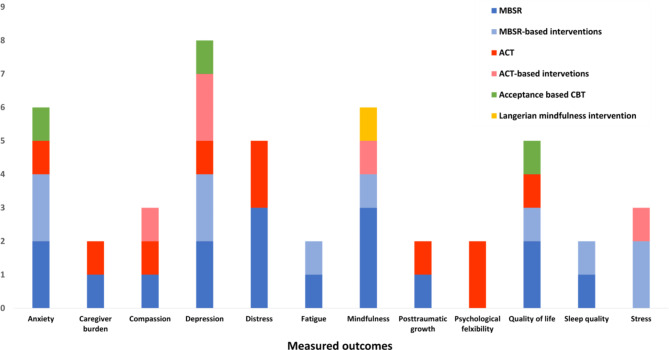
Background: Cancer caregivers extend comprehensive support covering all aspects of patients' daily lives. It has been reported that a significant proportion of cancer caregivers experience emotional distress. As one way to solve this problem, third-wave cognitive behavioral therapies (CBT), which involves integrating acceptance and mindfulness into cognitive‒behavioral therapy, has been applied to improve caregiver outcomes. Methods: A scoping review was conducted based on the scoping review guidelines proposed by the Jonna Briggs Institute (JBI). The population was caregivers of cancer patients, the concept was third-wave CBT, and the context remained open. English and Korean publications published from 2001 to June 2022 were identified from PubMed, Embase, CINAHL, PsycINFO, Cochrane, Korea Med, and RISS. Results: A total of 12 studies were included in this scoping review. Mindfulness-Based Stress Reduction (MBSR) and Acceptance and Commitment Therapy (ACT) was the most frequently applied intervention (n = 3, each). Among the components of third-wave CBT, 'mindfulness' was identified in all the studies reviewed (n = 12). Dyadic interventions comprised the majority (n = 9). Interventions using digital technologies such as mobile application/web page (n = 3), telephone (n = 3), and FaceTime (n = 2) have increased since 2017. Depression was the most frequently evaluated outcome (n = 8), followed by anxiety and mindfulness (n = 6, each). Conclusions: The current review explored available third-wave CBT intervention studies for cancer caregivers and targeted outcomes. Most of the interventions were dyadic interventions and utilized mindfulness. Delivery methods were continuously updated with digital technologies. Further RCTs with robust research designs and a synthesis of the results of the trials would provide evidence about how to effectively apply third-wave CBTs for cancer caregivers.
Overview
CoChat Summary
TL;DR
This scoping review mapped third-wave CBT interventions for caregivers of cancer patients and found 12 eligible randomized controlled trials published from 2001 to June 2022. Most interventions were dyadic, centered on mindfulness, and increasingly delivered through digital technologies; depression was the most frequently measured outcome.
Key findings
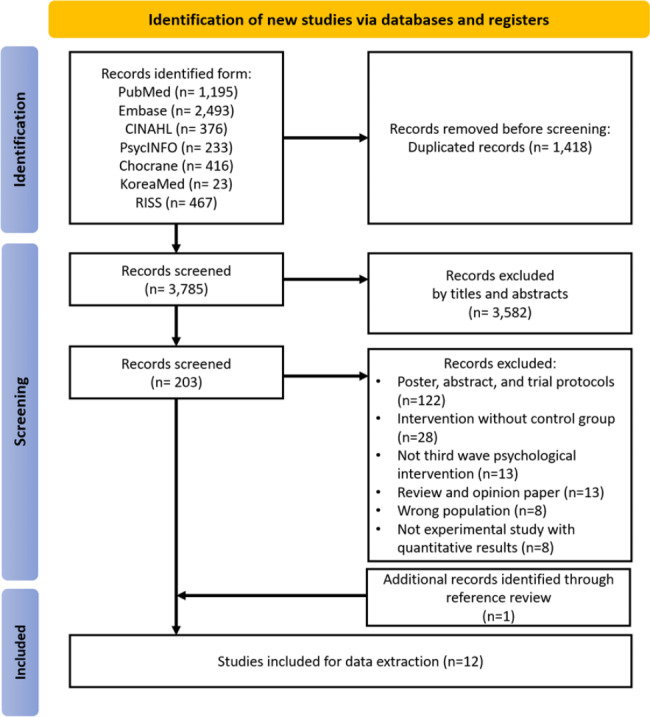
- The review included 12 studies; all 12 were randomized controlled trials (RCTs), and 8 were pilot studies.
- The most frequently applied interventions were Mindfulness-Based Stress Reduction (MBSR) and Acceptance and Commitment Therapy (ACT), with n = 3 each; among intervention components, mindfulness appeared in all 12 studies.
- Dyadic interventions were the majority (n = 9). Digital delivery increased after 2017, including mobile app/web page (n = 3), telephone (n = 3), and FaceTime (n = 2).
- Depression was the most frequently evaluated outcome (n = 8), followed by anxiety and mindfulness (n = 6 each); the review also notes 37 outcome variables measured by 44 questionnaires.
Methods
- Scoping review conducted using JBI scoping review guidelines.
- Search of PubMed, Embase, CINAHL, PsycINFO, Cochrane, Korea Med, and RISS for English and Korean studies published from 2001 to June 2022.
- Included experimental studies with control groups on caregivers of adult cancer patients/survivors that used third-wave CBT and reported quantitative outcomes; two researchers screened and extracted data independently.
Limitations
- The paper states that only experimental studies with quantitative outcomes were included, so non-experimental or qualitative evidence was excluded.
- The search window was limited to the last 20 years, so studies from the 1980s to 2000 were not included.
- The authors state that study quality was not evaluated, and there were not enough data on long-term outcomes; additionally, only one study secured an appropriate sample size, which they say means results should be interpreted with caution.
Model-written summary. Check it against the paper before relying on it.
Integrity signals
Registry
Cites
Statistics
Figures
Verification
Claims the paper makes
21 Valid · 5 Not valid · 13 Not checked · 42 Own results and interpretations
At least one cited source doesn’t support this claim or points to a different paper, and none confirmed it — see the verdicts below.
In the paper
“The results of the intervention by Köhle et al. using a webpage indicate that the scores for positive mental health, psychological flexibility, self-compassion, sense of mastery, and relational communication style were higher than those for interventions involving personalized feedback via email [27].”
§ Third-wave cognitive behavioral therapies for caregivers of cancer patients: a scoping review > Discussion
What the sources say
- Disputedcites [27] Köhle N Drossaert CHC Klooster PMT Schreurs KMG Hagedoorn M Van Uden-Kraan CF Web-based self-help intervention for partners of cancer patients based on acceptance and commitment therapy and self-compassion training: a randomized controlled trial with automated versus personal feedback Support Care Cancer 2021 29 5115 25 10.1007/s00520-021-06051-w 33608762 PMC8295082 sourceExperimental — accuracy not yet measured
Split into 2 atoms — 1 confirmed, 0 partially supported, 1 disputed, 0 misattributed, 0 unverifiable. Expand the claim to see per-atom verdicts.
Checked by a reasoning model — may be wrong.
hedgedstates a cause- Asserted: passes — The authors put it forward as true.
- Checkable: passes — It can be checked against evidence.
- Load-bearing: passes — The paper’s conclusions depend on it.
- Based: passes — The paper gives a reason why it holds.
- Disputed
The sources with a verdict support this claim; the rest weren’t checked yet, have no full text we could read, or their verdicts aren’t rated yet.
In the paper
“Five studies included only spouses or partners [21, 22, 27–29].”
§ Third-wave cognitive behavioral therapies for caregivers of cancer patients: a scoping review > Results > Characteristics of participating caregivers
What the sources say
- Supportedcites [21] Milbury K Li Y Durrani S Liao Z Tsao AS Carmack C A mindfulness-based intervention as a supportive care strategy for patients with metastatic non-small cell lung cancer and their spouses: results of a three-arm pilot randomized controlled trial Oncologist 2020 25 e1794 802 10.1634/theoncologist.2020-0125 32621630 PMC7648356 source
The Participant Characteristics section describes the study sample as patients and their spouses, and Recruitment and Retention reports 75 patient–spouse dyads. This supports the citation’s identification of this study as one whose participating partners were spouses; the count of five studies is the citing paper’s aggregate, not a claim about this source alone. (LLM, conf=0.92)
- Supportedcites [22] Milbury K Weathers SP Durrani S Li Y Whisenant M Li J Online couple-based meditation intervention for patients with primary or metastatic brain tumors and their partners: results of a pilot randomized controlled trial J Pain Symptom Manag 2020 59 1260 7 10.1016/j.jpainsymman.2020.02.004 PMC11816621 32061834 source
The Methods (Participants; page not provided) require patients to have a spouse or romantic partner willing to participate. This confirms that this cited trial is one of the studies described as including only spouses or partners; the count of five refers to the citing paper’s set of studies, not to a claim made by this trial. (LLM, conf=0.92)
- Supportedcites [27] Köhle N Drossaert CHC Klooster PMT Schreurs KMG Hagedoorn M Van Uden-Kraan CF Web-based self-help intervention for partners of cancer patients based on acceptance and commitment therapy and self-compassion training: a randomized controlled trial with automated versus personal feedback Support Care Cancer 2021 29 5115 25 10.1007/s00520-021-06051-w 33608762 PMC8295082 source
The Methods (Participants) specify that being a partner of a cancer patient or survivor was an inclusion criterion. The Discussion also says applicants who were children, parents, or other family caregivers were excluded. This supports identifying this study as one that included only partners; the source does not need to establish the citing review’s total of five studies. (LLM, conf=0.93)
- Not checked — no full text of the sourcecites [28] Hsiao FH Jow GM Kuo WH Yang PS Lam HB Chang KJ The long-term effects of mindfulness added to family resilience-oriented couples support group on psychological well-being and cortisol responses in breast cancer survivors and their partners Mindfulness 2016 7 1365 76 10.1007/s12671-016-0578-9 source
- Not checked — no full text of the sourcecites [29] Price-Blackshear MA Pratscher SD Oyler DL Armer JM Cheng A-L Cheng MX Online couples mindfulness-based intervention for young breast cancer survivors and their partners: a randomized-control trial J Psychosoc Oncol 2020 38 592 611 10.1080/07347332.2020.1778150 32552446 source
plain- Asserted: passes — The authors put it forward as true.
- Checkable: passes — It can be checked against evidence.
- Load-bearing: unclear — It is unclear whether the paper’s conclusions depend on it.
- Based: passes — The paper gives a reason why it holds.
- Supported
The cited sources support only part of this claim — read each source’s verdict below.
In the paper
“The most common method was a weekly session for a total of 6 weeks [19, 20, 24, 27] or 8 weeks [25, 28, 29] with a length of approximately 60 min per session [21, 22, 27, 29, 30].”
§ Third-wave cognitive behavioral therapies for caregivers of cancer patients: a scoping review > Results > Characteristics of interventions
What the sources say
- Supportedcites [19] Mosher CE Secinti E Hirsh AT Hanna N Einhorn LH Jalal SI Acceptance and commitment therapy for symptom interference in advanced lung cancer and caregiver distress: a pilot randomized trial J Pain Symptom Manag 2019 58 632 44 10.1016/j.jpainsymman.2019.06.021 PMC6754796 31255586 source
The Methods section (“General Aspects of Treatment Procedures and Therapist Training”) states that participants received six weekly 50-minute telephone sessions. This supports the cited six-week schedule and, as an approximation, the description of sessions as about 60 minutes long. The claim that this was the most common method is the citing authors’ synthesis across studies, not a finding attributed to this trial alone. (LLM, conf=0.87)
- Not checked — no full text of the sourcecites [20] Kubo A Kurtovich E McGinnis M Aghaee S Altschuler A Quesenberry C Pilot pragmatic randomized trial of mHealth mindfulness-based intervention for advanced cancer patients and their informal caregivers Psychooncology 2020 10.1002/pon.5557 32979294 source
- Supportedcites [24] Mosher CE Secinti E Wu W Acceptance and commitment therapy for patient fatigue interference and caregiver burden in advanced gastrointestinal cancer: results of a pilot randomized trial Palliat Med 2022 36 7 1104 17 10.1177/02692163221099610 35637615 PMC9396957 source
The Methods > Intervention conditions passage states that the trial used six weekly 50-minute telephone sessions. This supports the cited six-week schedule and a session length of approximately an hour; the paper specifies 50 minutes, not 60. (LLM, conf=0.88)
- Partly supportedcites [27] Köhle N Drossaert CHC Klooster PMT Schreurs KMG Hagedoorn M Van Uden-Kraan CF Web-based self-help intervention for partners of cancer patients based on acceptance and commitment therapy and self-compassion training: a randomized controlled trial with automated versus personal feedback Support Care Cancer 2021 29 5115 25 10.1007/s00520-021-06051-w 33608762 PMC8295082 sourceExperimental — accuracy not yet measured
The Methods (Description of the intervention; page unavailable) describe six modules completed over 6–12 weeks, with a requested minimum of 1–1.5 hours per week. That supports a weekly time commitment of roughly an hour and allows a six- or eight-week course, but it does not establish fixed weekly 60-minute sessions or that this was the most common method. The Results (Treatment adherence and drop-out; page unavailable) report an average of 108 minutes per week. (LLM, conf=0.86)
- Partly supportedcites [25] Kubo A Kurtovich E McGinnis M Aghaee S Altschuler A Quesenberry C A randomized controlled trial of mhealth mindfulness intervention for cancer patients and informal cancer caregivers: a feasibility study within an integrated health care delivery system Integr Cancer Ther 2019 18 1534735419850634 10.1177/1534735419850634 31092044 PMC6537293 sourceExperimental — accuracy not yet measured
Methods > Procedures (page not supplied) describes an 8-week intervention, supporting that duration. It asked participants to complete sessions daily, not weekly, and says sessions could be set to 10–20 minutes, not approximately 60 minutes. The paper also does not establish what method was most common across the cited studies. (LLM, conf=0.90)
- Not checked — no full text of the sourcecites [28] Hsiao FH Jow GM Kuo WH Yang PS Lam HB Chang KJ The long-term effects of mindfulness added to family resilience-oriented couples support group on psychological well-being and cortisol responses in breast cancer survivors and their partners Mindfulness 2016 7 1365 76 10.1007/s12671-016-0578-9 source
- Not checked — no full text of the sourcecites [29] Price-Blackshear MA Pratscher SD Oyler DL Armer JM Cheng A-L Cheng MX Online couples mindfulness-based intervention for young breast cancer survivors and their partners: a randomized-control trial J Psychosoc Oncol 2020 38 592 611 10.1080/07347332.2020.1778150 32552446 source
- Supportedcites [21] Milbury K Li Y Durrani S Liao Z Tsao AS Carmack C A mindfulness-based intervention as a supportive care strategy for patients with metastatic non-small cell lung cancer and their spouses: results of a three-arm pilot randomized controlled trial Oncologist 2020 25 e1794 802 10.1634/theoncologist.2020-0125 32621630 PMC7648356 source
The Intervention Groups section states that each session lasted 60 minutes, supporting the session-length claim. This paper’s intervention ran for four weeks, but the citing sentence attaches this source to the approximately 60-minute duration, not to the six- or eight-week schedules. (LLM, conf=0.92)
- Supportedcites [22] Milbury K Weathers SP Durrani S Li Y Whisenant M Li J Online couple-based meditation intervention for patients with primary or metastatic brain tumors and their partners: results of a pilot randomized controlled trial J Pain Symptom Manag 2020 59 1260 7 10.1016/j.jpainsymman.2020.02.004 PMC11816621 32061834 source
The Methods > Intervention Group passage states that couples attended one 60-minute session per week for four weeks. This paper supports the approximately 60-minute session length attributed to it, not the separately cited six- or eight-week durations. (LLM, conf=0.92)
- Supportedcites [30] Trevino KM Stern A Hershkowitz R Managing anxiety from Cancer (MAC): a pilot randomized controlled trial of an anxiety intervention for older adults with cancer and their caregivers Palliat Support Care 2021 19 2 135 45 10.1017/S1478951521000286 33818370 PMC8085071 source
The Methods section (Treatment conditions) describes weekly MAC sessions lasting 45–60 minutes, supporting the approximately 60-minute session length. The paper specifies seven sessions, so it does not support a six- or eight-week course; the citation is applicable to the session-length portion of the sentence. (LLM, conf=0.90)
plain- Asserted: passes — The authors put it forward as true.
- Checkable: passes — It can be checked against evidence.
- Load-bearing: unclear — It is unclear whether the paper’s conclusions depend on it.
- Based: passes — The paper gives a reason why it holds.
- Supported
The cited sources support only part of this claim — read each source’s verdict below.
In the paper
“Only a single study calculated and secured the sample size for appropriate statistical power [27].”
- Also stated in: § Discussion · plain
“All 12 studies were randomized trials, but only one study estimated and secured an appropriate sample size.”
§ Third-wave cognitive behavioral therapies for caregivers of cancer patients: a scoping review > Results > General characteristics of the included studies
What the sources say
- Partly supportedcites [27] Köhle N Drossaert CHC Klooster PMT Schreurs KMG Hagedoorn M Van Uden-Kraan CF Web-based self-help intervention for partners of cancer patients based on acceptance and commitment therapy and self-compassion training: a randomized controlled trial with automated versus personal feedback Support Care Cancer 2021 29 5115 25 10.1007/s00520-021-06051-w 33608762 PMC8295082 sourceExperimental — accuracy not yet measured
The Methods (Power analysis; page not provided) report a sample-size calculation targeting 80% power and 87 participants per condition at baseline. But the Results (Study population; page not provided) report only 203 participants randomized across three conditions, and the Study limitations section says the study was slightly underpowered. The source therefore supports calculating the sample size, not securing it. (LLM, conf=0.90)
plainSingle case- Asserted: passes — The authors put it forward as true.
- Checkable: passes — It can be checked against evidence.
- Load-bearing: passes — The paper’s conclusions depend on it.
- Based: passes — The paper gives a reason why it holds.
- Also stated in: § Discussion · plain
The sources with a verdict support this claim; the rest weren’t checked yet, have no full text we could read, or their verdicts aren’t rated yet.
In the paper
“Eight studies were pilot studies [19–26].”
§ Third-wave cognitive behavioral therapies for caregivers of cancer patients: a scoping review > Results > General characteristics of the included studies
What the sources say
- Supportedcites [19] Mosher CE Secinti E Hirsh AT Hanna N Einhorn LH Jalal SI Acceptance and commitment therapy for symptom interference in advanced lung cancer and caregiver distress: a pilot randomized trial J Pain Symptom Manag 2019 58 632 44 10.1016/j.jpainsymman.2019.06.021 PMC6754796 31255586 source
The citation identifies this paper as one of the pilot studies, rather than asking it to establish the citing review’s count of eight. The Discussion describes the work as “this pilot study,” and the Results > Feasibility reports that participants were randomized to two interventions. No page number is available in our copy. (LLM, conf=0.92)
- Not checked — no full text of the sourcecites [20] Kubo A Kurtovich E McGinnis M Aghaee S Altschuler A Quesenberry C Pilot pragmatic randomized trial of mHealth mindfulness-based intervention for advanced cancer patients and their informal caregivers Psychooncology 2020 10.1002/pon.5557 32979294 source
- Supportedcites [21] Milbury K Li Y Durrani S Liao Z Tsao AS Carmack C A mindfulness-based intervention as a supportive care strategy for patients with metastatic non-small cell lung cancer and their spouses: results of a three-arm pilot randomized controlled trial Oncologist 2020 25 e1794 802 10.1634/theoncologist.2020-0125 32621630 PMC7648356 source
The Discussion identifies this study as a pilot randomized controlled trial, and the Conclusion also calls it a three-arm pilot RCT. The source therefore supports its identification as one of the pilot studies; the count of eight among 12 is the citing paper’s synthesis, not a finding attributed to this individual study. (LLM, conf=0.94)
- Supportedcites [22] Milbury K Weathers SP Durrani S Li Y Whisenant M Li J Online couple-based meditation intervention for patients with primary or metastatic brain tumors and their partners: results of a pilot randomized controlled trial J Pain Symptom Manag 2020 59 1260 7 10.1016/j.jpainsymman.2020.02.004 PMC11816621 32061834 source
This paper is one of the studies cited in the range [19–26], so the citation identifies it as a pilot study rather than asking it to establish the count of eight. The Methods (Data Analysis Plan) explicitly calls it “a pilot trial,” and the Discussion calls it “this pilot RCT.” (LLM, conf=0.93)
- Supportedcites [23] Trevino KM Stern A Hershkowitz R Kim SY Li Y Lachs M Managing anxiety from cancer (MAC): a pilot randomized controlled trial of an anxiety intervention for older adults with cancer and their caregivers Palliat Support Care 2021 19 135 45 10.1017/S1478951521000286 33818370 PMC8085071 source
This is an identification citation within a group of eight references. The cited paper identifies itself in its title as a pilot randomized controlled trial, and its Results (Sample characteristics; page not provided) describe the randomized study. It supports counting this paper as one of the pilot studies, though it does not establish the total of eight. (LLM, conf=0.91)
- Supportedcites [24] Mosher CE Secinti E Wu W Acceptance and commitment therapy for patient fatigue interference and caregiver burden in advanced gastrointestinal cancer: results of a pilot randomized trial Palliat Med 2022 36 7 1104 17 10.1177/02692163221099610 35637615 PMC9396957 source
The Discussion (Strengths/limitations; page unavailable) says the trial’s primary goal was to assess feasibility before a fully powered trial. This confirms that the cited paper is a pilot study, which is the role of this individual citation in the group [19–26]. (LLM, conf=0.91)
- Supportedcites [25] Kubo A Kurtovich E McGinnis M Aghaee S Altschuler A Quesenberry C A randomized controlled trial of mhealth mindfulness intervention for cancer patients and informal cancer caregivers: a feasibility study within an integrated health care delivery system Integr Cancer Ther 2019 18 1534735419850634 10.1177/1534735419850634 31092044 PMC6537293 source
The Methods > Data Analyses passage explicitly calls this randomized clinical trial a pilot study. This source supports its identification as one of the pilot studies cited in [19–26]; the total of eight is the citing paper’s count, not a finding attributed to this individual study. (LLM, conf=0.93)
- Supportedcites [26] Geng L Wang J Cheng L Zhang B Shen H Mindful learning improves positive feelings of cancer patients’ family caregivers Int J Environ Res Public Health 2019 16 248 10.3390/ijerph16020248 30654534 PMC6352041 source
The Discussion identifies this research as “a pilot study in the health care field.” The citation identifies this paper as one of the pilot studies; the count of eight studies is not a finding attributed to this individual paper. (LLM, conf=0.93)
plainn = 8- Asserted: passes — The authors put it forward as true.
- Checkable: passes — It can be checked against evidence.
- Load-bearing: unclear — It is unclear whether the paper’s conclusions depend on it.
- Based: passes — The paper gives a reason why it holds.
- Supported
30 more claims · 5 with their cited sources checked
Create a free account to see all 81 claims and every source verdict.
- It may state two separate claims as one. 30
- Probably not a substantial claim. 21
- The quote only partly states this claim. 1
Citations
Cites
JBI Manual for Evidence Synthesis
(2020) · JBI eBooks · doi:10.46658/jbimes-20-01 · Cited by 4,165 · cited 1×
“The scoping review was conducted based on the scoping review guidelines proposed by the Jonna Briggs Institute (JBI) [15].”
MethodPsychosomatic medicine in Germany: more timely than ever
Zipfel, S., Herzog, W., Kruse, J., & Henningsen, P. (2016) · Psychotherapy and Psychosomatics · doi:10.1159/000447701 · Cited by 2,323
Mindfulness-based therapy: a comprehensive meta-analysis
Khoury, B., Lecomte, T., Fortin, G., Masse, M., Therien, P., Bouchard, V., Chapleau, M.-A., Paquin, K., & Hofmann, S. G. (2013) · Clinical Psychology Review · doi:10.1016/j.cpr.2013.05.005 · Cited by 2,003 · cited 1×
“Third-wave CBT is attracting attention in terms of its use not only in the clinical population but also in the nonclinical population [10, 11].”
BackgroundMindfulness-based stress reduction for healthy individuals: A meta-analysis
Khoury, B., Sharma, M., Rush, S. E., & Fournier, C. (2015) · Journal of Psychosomatic Research · doi:10.1016/j.jpsychores.2015.03.009 · Cited by 1,617 · cited 2×
“Third-wave CBT is attracting attention in terms of its use not only in the clinical population but also in the nonclinical population [10, 11].”
BackgroundCognitive therapy: Nature and relation to behavior therapy
Beck, A. T. (1970) · Behavior Therapy · doi:10.1016/s0005-7894(70)80030-2 · Cited by 863 · cited 1×
“Whereas the thirdwave CBT is intended not to correct dysfunctional beliefs and reduce symptoms but to work toward the empowerment of patients [5, 9].”
BackgroundHayes, S. C. (2016) · Behavior Therapy · doi:10.1016/j.beth.2016.11.006 · Cited by 785
Mindfulness-Based Interventions for Anxiety and Depression
Hofmann, S. G., & Gómez, A. F. (2017) · Psychiatric Clinics of North America · doi:10.1016/j.psc.2017.08.008 · Cited by 756 · cited 1×
“Mindfulness-based interventions have demonstrated effectiveness in reducing the severity of depression in a wide range of individuals, with or without the disease [40].”
BackgroundThe third wave of cognitive behavioral therapy and the rise of process-based care
Hayes, S. C., & Hofmann, S. G. (2017) · World Psychiatry · doi:10.1002/wps.20442 · Cited by 613
Sklenarova, H., Krümpelmann, A., Haun, M. W., Friederich, H., Huber, J., Thomas, M., Winkler, E. C., Herzog, W., & Hartmann, M. (2015) · Cancer · doi:10.1002/cncr.29223 · Cited by 438 · cited 1×
“Caregivers of cancer patients are likely to be depressed and anxious and have unmet needs in terms of their emotional well-being [3] and social support [2].”
BackgroundThe third wave of cognitive behavioural therapies
Kahl, K. G., Winter, L., & Schweiger, U. (2012) · Current Opinion in Psychiatry · doi:10.1097/yco.0b013e328358e531 · Cited by 265 · cited 1×
“Studies published in English or Korean over the past 20 years were searched, as this reflected the period when third-wave CBT became popular in clinical practice [6, 17].”
BackgroundContemporary cognitive behavior therapy: A review of theory, history, and evidence
Thoma, N., Pilecki, B., & McKay, D. (2015) · Psychodynamic Psychiatry · doi:10.1521/pdps.2015.43.3.423 · Cited by 197 · cited 6×
“CBT draws out human emotions from unmeasurable areas, observes behavior, and manipulates the configuration of behavior to verify its effectiveness through re-executable experiments; as such, the structure of the treatment is emphasized [5].”
BackgroundMethodInfluentialPospos, S., Young, I. T., Downs, N., Iglewicz, A., Depp, C., Chen, J. Y., Newton, I., Lee, K., Light, G. A., & Zisook, S. (2018) · Academic Psychiatry · doi:10.1007/s40596-017-0868-0 · Cited by 180 · cited 2×
“In previous systematic reviews of web-based and mobile applications targeting health care workers, digital devices were not yet an adequate substitute for face-to-face interventions [35].”
BackgroundKubo, A., Kurtovich, E., McGinnis, M., Aghaee, S., Altschuler, A., Quesenberry, C., Kolevska, T., & Avins, A. L. (2019) · Integrative Cancer Therapies · doi:10.1177/1534735419850634 · Cited by 167 · cited 6×
“Among the 12 studies investigated, nine studies targeted patient–caregiver dyads [19–22, 24, 25, 28–30].”
BackgroundMethodInfluentialLi, Q., & Loke, A. Y. (2014) · Psycho-Oncology · doi:10.1002/pon.3535 · Cited by 152 · cited 1×
“Some patient–caregiver dyad programs reported promising outcomes, and therefore, dyad intervention has been emphasized in the literature [37, 38].”
BackgroundPsychosocial interventions for informal caregivers of people living with cancer
Treanor, C. J., Santin, O., Prue, G., Coleman, H., Cardwell, C. R., O'Halloran, P., & Donnelly, M. (2019) · Cochrane Database of Systematic Reviews · doi:10.1002/14651858.cd009912.pub2 · Cited by 145 · cited 2×
“Most studies were interested in depression, which was also one of the most frequently measured outcomes in previous reviews about psychosocial intervention [4].”
BackgroundResultSchellekens, M. P. J., van den Hurk, D. G. M., Prins, J. B., Donders, A. R. T., Molema, J., Dekhuijzen, R., van der Drift, M. A., & Speckens, A. E. M. (2017) · Psycho-Oncology · doi:10.1002/pon.4430 · Cited by 138 · cited 2×
“MBSR interventions for patient–caregiver dyads by Schellekens et al. [31] and Kubo et al. [25] found that the QoL of patients measured by the Global Quality of Life subscale of the European Organization for Research and Treatment of Cancer Quality of Life Questionnaire (EORTC QLQ) and Functional…”
BackgroundMethodBuck, H. G., Stromberg, A., Chung, M. L., Donovan, K. A., Harkness, K., Howard, A. M., Kato, N., Polo, R., & Evangelista, L. S. (2018) · International Journal of Nursing Studies · doi:10.1016/j.ijnurstu.2017.10.007 · Cited by 135
Dimidjian, S., Arch, J. J., Schneider, R. L., Desormeau, P., Felder, J. N., & Segal, Z. V. (2016) · Behavior Therapy · doi:10.1016/j.beth.2016.07.002 · Cited by 130 · cited 1×
“…third-wave CBT, and treatments such as cognitive behavioral analysis system of psychotherapy (CBASP), mindfulness-based stress reduction (MBSR), metacognitive therapies (MCT), and integrative behavioral couple therapy (IBCT) could be considered as various forms of the third-wave CBT [7, 8].”
MethodImplementation of Cognitive Behavioral Therapy in e–Mental Health Apps: Literature Review
Denecke, K., Schmid, N., & Nüssli, S. (2022) · Journal of Medical Internet Research · doi:10.2196/27791 · Cited by 107 · cited 2×
“Interventions using digital devices are accessible at any time and place, making them tremendously advantageous for cancer caregivers, who have a sizable temporal burden [33].”
BackgroundBrown, L. A., Gaudiano, B. A., & Miller, I. W. (2011) · Behavior Modification · doi:10.1177/0145445510393730 · Cited by 103
Mosher, C. E., Secinti, E., Hirsh, A. T., Hanna, N., Einhorn, L. H., Jalal, S. I., Durm, G., Champion, V. L., & Johns, S. A. (2019) · Journal of Pain and Symptom Management · doi:10.1016/j.jpainsymman.2019.06.021 · Cited by 98 · cited 4×
“Two studies were conducted with caregivers of lung cancer patients in an advanced stage [19, 21], and two studies were conducted with caregivers of breast cancer patients in the follow-up phase [28, 29].”
BackgroundMethodInfluentialLitzelman, K., & Yabroff, K. R. (2015) · Cancer Epidemiology, Biomarkers & Prevention · doi:10.1158/1055-9965.epi-14-1420 · Cited by 91 · cited 1×
“Given that patients’ distress interacts with that of family members [39], improving patient outcomes can ultimately be beneficial to caregivers.”
BackgroundJaffray, L., Bridgman, H., Stephens, M., & Skinner, T. (2016) · Palliative Medicine · doi:10.1177/0269216315600331 · Cited by 88 · cited 2×
“These results may indicate that caregivers desire to receive independent support in caregiving settings [32].”
BackgroundResultAcceptance and commitment therapy for family caregivers: A systematic review and meta-analysis.
Han, A., Yuen, H. K., & Jenkins, J. (2021) · Journal of Health Psychology · doi:10.1177/1359105320941217 · Cited by 82 · cited 2×
“There are studies that have applied third-wave CBT for caregivers, including acceptance and commitment therapy (ACT) [12], mindfulness-based stress reduction (MBSR) [13], mindfulness-based cognitive therapy (MBCT) [14], and dialectical behavioral therapy (DBT) [13].”
BackgroundMilbury, K., Li, Y., Durrani, S., Liao, Z., Tsao, A. S., Carmack, C., Cohen, L., & Bruera, E. (2020) · The Oncologist · doi:10.1634/theoncologist.2020-0125 · Cited by 78 · cited 7×
“There were two 3-arm studies; Milbury et al. had two control groups [21], and Köhle et al. had two intervention groups [27] (Table 1).”
BackgroundMethodInfluentialFeliu‐Soler, A., Cebolla, A., McCracken, L. M., D’Amico, F., Knapp, M. R. J., López-Montoyo, A., García‐Campayo, J., Soler, J., Baños, R., Pérez‐Aranda, A., et al. (2017) · Behavior Therapy · doi:10.1016/j.beth.2017.07.001 · Cited by 77 · cited 1×
“…third-wave CBT, and treatments such as cognitive behavioral analysis system of psychotherapy (CBASP), mindfulness-based stress reduction (MBSR), metacognitive therapies (MCT), and integrative behavioral couple therapy (IBCT) could be considered as various forms of the third-wave CBT [7, 8].”
MethodPrice-Blackshear, M. A., Pratscher, S. D., Oyler, D. L., Armer, J. M., Cheng, A.-L., Cheng, M. X., Records, K., Udmuangpia, T., Carson, J. W., & Ann Bettencourt, B. (2020) · Journal of Psychosocial Oncology · doi:10.1080/07347332.2020.1778150 · Cited by 76 · cited 5×
“A study by Price-Blackshear et al. reported that coordination and relationship quality in individual meditation groups improved over time [29].”
BackgroundMethodResultInfluentialMilbury, K., Weathers, S.-P., Durrani, S., Li, Y., Whisenant, M., Li, J., Lim, B., Weinberg, J. S., Kesler, S. R., Cohen, L., et al. (2020) · Journal of Pain and Symptom Management · doi:10.1016/j.jpainsymman.2020.02.004 · Cited by 68 · cited 4×
“…both gastrointestinal cancer patients in advanced stages and their caregivers in the intervention [24], and one study included brain tumor patients Table 1 Characteristics of the third-wave CBT intervention examining caregivers of cancer patients at various stages and their caregivers [22].”
BackgroundMethodInfluentialMindfulness-based stress reduction for family carers of people with dementia
Liu, Z., Sun, Y.-Y., & Zhong, B.-L. (2018) · Cochrane Database of Systematic Reviews · doi:10.1002/14651858.cd012791.pub2 · Cited by 66 · cited 1×
“There are studies that have applied third-wave CBT for caregivers, including acceptance and commitment therapy (ACT) [12], mindfulness-based stress reduction (MBSR) [13], mindfulness-based cognitive therapy (MBCT) [14], and dialectical behavioral therapy (DBT) [13].”
BackgroundWeightman, M. (2020) · Journal of International Medical Research · doi:10.1177/0300060520928686 · Cited by 62 · cited 1×
“The ineffectiveness of digital health interventions could be derived from the insufficient structure of the intervention when compared to traditional face-to-face treatment [34].”
BackgroundKubo, A., Kurtovich, E., McGinnis, M., Aghaee, S., Altschuler, A., Quesenberry, C., Kolevska, T., Liu, R., Greyz‐Yusupov, N., & Avins, A. (2024) · Psycho-Oncology · doi:10.1002/pon.5557 · Cited by 57 · cited 5×
“Two interventions using the web page and the mobile app without interactions with the therapist failed to demonstrate effectiveness on caregivers [20, 25], except for a positive effect in the domain of mindfulness [25].”
BackgroundMethodInfluentialKöhle, N., Drossaert, C. H. C., ten Klooster, P. M., Schreurs, K. M. G., Hagedoorn, M., Van Uden-Kraan, C. F., Verdonck-de Leeuw, I. M., & Bohlmeijer, E. T. (2021) · Supportive Care in Cancer · doi:10.1007/s00520-021-06051-w · Cited by 45 · cited 7×
“There were two 3-arm studies; Milbury et al. had two control groups [21], and Köhle et al. had two intervention groups [27] (Table 1).”
BackgroundMethodInfluentialThird wave cognitive behavioural therapies for people with multiple sclerosis: a scoping review
Zarotti, N., Eccles, F., Broyd, A., Longinotti, C., Mobley, A., & Simpson, J. (2023) · Disability and Rehabilitation · doi:10.1080/09638288.2022.2069292 · Cited by 40 · cited 1×
“…cognitive therapy (MBCT), mindfulness-based stress reduction (MBSR), behavioral activation (BA), cognitive behavioral analysis system of psychotherapy (CBASP), meta-cognitive therapy (MCT), and dialectical behavior therapy (DBT) based on other reviews on the third-wave CBT [14, 16].”
MethodHsiao, F.-H., Jow, G.-M., Kuo, W.-H., Yang, P.-S., Lam, H.-B., Chang, K.-J., Lee, J.-J., Huang, C.-S., Lai, Y.-M., Chen, Y.-T., et al. (2016) · Mindfulness · doi:10.1007/s12671-016-0578-9 · Cited by 39 · cited 7×
“Among the 12 studies investigated, nine studies targeted patient–caregiver dyads [19–22, 24, 25, 28–30].”
BackgroundMethodResultInfluentialSelf-citationMindfulness- and compassion-based interventions for family carers of older adults: A scoping review.
Murfield, J., Moyle, W., & O'Donovan, A. (2021) · International Journal of Nursing Studies · doi:10.1016/j.ijnurstu.2019.103495 · Cited by 35 · cited 4×
“There are studies that have applied third-wave CBT for caregivers, including acceptance and commitment therapy (ACT) [12], mindfulness-based stress reduction (MBSR) [13], mindfulness-based cognitive therapy (MBCT) [14], and dialectical behavioral therapy (DBT) [13].”
BackgroundMethodInfluentialUnique characteristics of informal hospice cancer caregiving
Washington, K. T., Pike, K. C., Demiris, G., & Oliver, D. P. (2015) · Supportive Care in Cancer · doi:10.1007/s00520-014-2570-z · Cited by 34 · cited 3×
“The prevalence of depression in cancer caregivers is about 30% [2], which calls for the use of appropriate intervention approaches.”
BackgroundMosher, C. E., Secinti, E., Wu, W., Kashy, D. A., Kroenke, K., Bricker, J. B., Helft, P. R., Turk, A. A., Loehrer, P. J., Sehdev, A., et al. (2022) · Palliative Medicine · doi:10.1177/02692163221099610 · Cited by 34 · cited 4×
“Among the 12 studies investigated, nine studies targeted patient–caregiver dyads [19–22, 24, 25, 28–30].”
BackgroundMethodInfluentialTrevino, K. M., Stern, A., Hershkowitz, R., Kim, S. Y., Li, Y., Lachs, M., & Prigerson, H. G. (2021) · Palliative and Supportive Care · doi:10.1017/s1478951521000286 · Cited by 23 · cited 2×
“Trevino (2017) [30] United States Primary unpaid caregiver Yes Mixed Receiving treatment Acceptancefocused cognitive-behavioral therapy for coping with cancer Telephone call Social worker 45 to 60 min *7 sessions/ 7 weeks Usual care”
MethodSelf-citationMindful Learning Improves Positive Feelings of Cancer Patients’ Family Caregivers
Geng, L., Wang, J., Cheng, L., Zhang, B., & Shen, H. (2019) · International Journal of Environmental Research and Public Health · doi:10.3390/ijerph16020248 · Cited by 22 · cited 3×
“Some studies recruited cancer caregivers with patients at specific stages of cancer or treatment (e.g., advanced stage; receiving treatment) without considering the types of cancer [20, 25], while others recruited cancer caregivers without considering the patient’s clinical details [26, 27].”
BackgroundPlatts, D., & Morgan, S. (2018) · Academic Psychiatry · doi:10.1007/s40596-018-0906-6 · Cited by 6 · cited 1×
“However, digital technology may be more suitable for helping individuals as a complement to face-to-face therapy for managing relatively mild emotional distress [35, 36].”
Background
Research works printed but not linked: 2
- Covidence Systematic Review Software. Covidence Web-Based Review Program [Internet]. Melbourne, Australia: Veritas Health Innovation; c2023 [cited 2023 Apr 26]. Available from: https://www.covidence.org/.
- Trevino KM Stern A Hershkowitz R Managing anxiety from Cancer (MAC): a pilot randomized controlled trial of an anxiety intervention for older adults with cancer and their caregivers Palliat Support Care 2021 19 2 135 45 10.1017/S1478951521000286 33818370 PMC8085071 · DOI · Paper page
Cited by
Wang, J.-Q., Wang, X.-Z., & Wang, W.-X. (2025) · World Journal of Psychiatry · doi:10.5498/wjp.v15.i3.100959 · Cited by 11
Park, S., & Park, S. (2025) · Asian Social Work and Policy Review · doi:10.1111/aswp.70018
Guo, Y. (2025) · Internet Interventions · doi:10.1016/j.invent.2025.100891 · Cited by 4
Ip, V., Jegatheeswaran, S., Cheema, A. A., FitzGerald, M., Wakif, Z., Thind, J. K., Kyte, S., Yung, S., Raiker, R., Ansar, M. A., et al. (2026) · Cognitive Behaviour Therapy · doi:10.1080/16506073.2026.2623505 · Cited by 2
The role of self-compassion in the relationship between resilience and negative affect
Lajunen, T. J., Adonis, M. N., Giagkou, M., & Sullman, M. J. M. (2026) · Scientific Reports · doi:10.1038/s41598-026-42585-x · Cited by 2
Metadata
- Authors
- Hong, B., Yang, S., Hyeon, S., Kim, S., & Lee, J.
- Affiliations
- Yonsei University (KR)
- Corresponding author
- Lee, Jiyeon
- Venue
- BMC Complementary Medicine and Therapies
- Published
- 2023-10-11
- Volume
- 23
- Issue
- 1
- Pages
- 360-360
- ISSN
- 2662-7671 (ISSN-L)
- PMC
- PMC10566119
- OpenAlex
- W4387531019
- Semantic Scholar
- 51fd1a93e5d4f1e7acc1598db47cb393e3536ad6
- Cited by
- 7
- References
- 38
- Citations by year
- 2026: 4 · 2025: 3
- FWCI
- 0.36
- Type
- journal article
- Language
- en
- Open access
- gold
- doi.org
- Licence
- cc-by
- creativecommons.org/licenses/by/4.0 (tdm)
- creativecommons.org/licenses/by/4.0 (vor)
- Locations
- BMC Complementary Medicine and Therapies (publishedVersion, cc-by)
- PubMed Central (publishedVersion, cc-by)
- PubMed (publishedVersion)
- DOAJ (DOAJ: Directory of Open Access Journals) (submittedVersion, cc-by-sa)
- Funders
- National Research Foundation of Korea (2019R1A2C1087026)
- Topics
- Social Sciences › Psychology › Clinical Psychology › Mindfulness and Compassion Interventions
- Health Sciences › Medicine › Oncology › Cancer survivorship and care
- Health Sciences › Nursing › Research and Theory › Nursing care and research
- Keywords
- cancer caregivers, third-wave cognitive behavioral therapy, mindfulness-based stress reduction, acceptance and commitment therapy, caregiver distress, dyadic intervention, digital mental health interventions, depression, anxiety, mindfulness
- MeSH terms
- Humans, Neoplasms, Cognitive Behavioral Therapy, Caregivers, Mindfulness, Acceptance and Commitment Therapy
About these checks
Registry, retraction, Cites and statistics results are computed, not judged, with one exception: a printed reference that no index lists is read once by a model before it counts as a citation error. Claims are extracted by a model and kept only when their quote appears verbatim in the text; each cited source is then checked, with a model’s help, for whether it says what the claim relies on. Those verdicts can be wrong — read the claim’s quote and the cited source before relying on one.
The claim verdicts this report counts are experimental: their accuracy is not yet measured.
A language model drew the claims from the paper on 2026-10-11, under version 3 of the claim definition (model deepseek-v4.1-flash, prompt extract-v3).
A second model labelled each claim on 2026-10-11 (model jev-1.13-20260917, definition revision gold-guideline-v0.2).
Cited sources are checked with a language model’s help (gpt-6-sol).
Statistics and arithmetic are recomputed, not judged.
Confidence bands are shown only for fields calibrated on our annotated test set. None is calibrated yet, so no band is shown.
What counts as a claim ›How we measure confidence ›How we check this ›
Are you an author, or do you see a problem with this page? Request a review
Data sources
Bibliographic data: Semantic Scholar, OpenAlex, Crossref.
Contains information from the Semantic Scholar Academic Graph Datasets, made available under the ODC Attribution License (ODC-BY 1.0).
Semantic Scholar’s data is described in: Kinney, R., et al. (2023). The Semantic Scholar Open Data Platform. arXiv:2301.10140.
