

Medical artificial intelligence readiness scale for medical students (MAIRS-MS)–development, validity and reliability study
Open accessThe DOI matches its Crossref record; 53 of the 55 references it cites were found in a registry or an index.
Abstract
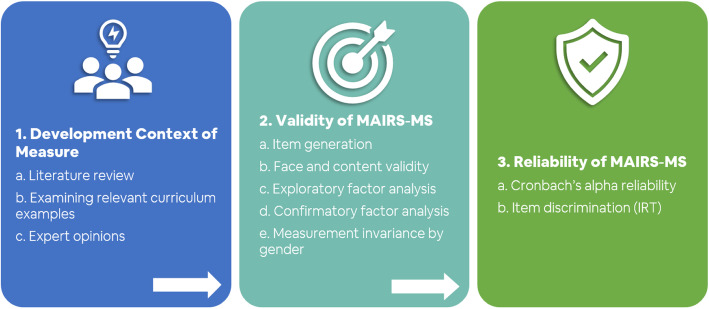
Background: It is unlikely that applications of artificial intelligence (AI) will completely replace physicians. However, it is very likely that AI applications will acquire many of their roles and generate new tasks in medical care. To be ready for new roles and tasks, medical students and physicians will need to understand the fundamentals of AI and data science, mathematical concepts, and related ethical and medico-legal issues in addition with the standard medical principles. Nevertheless, there is no valid and reliable instrument available in the literature to measure medical AI readiness. In this study, we have described the development of a valid and reliable psychometric measurement tool for the assessment of the perceived readiness of medical students on AI technologies and its applications in medicine. Methods: To define medical students’ required competencies on AI, a diverse set of experts’ opinions were obtained by a qualitative method and were used as a theoretical framework, while creating the item pool of the scale. Exploratory Factor Analysis (EFA) and Confirmatory Factor Analysis (CFA) were applied. Results: A total of 568 medical students during the EFA phase and 329 medical students during the CFA phase, enrolled in two different public universities in Turkey participated in this study. The initial 27-items finalized with a 22-items scale in a four-factor structure (cognition, ability, vision, and ethics), which explains 50.9% cumulative variance that resulted from the EFA. Cronbach’s alpha reliability coefficient was 0.87. CFA indicated appropriate fit of the four-factor model ( χ 2 /df = 3.81, RMSEA = 0.094, SRMR = 0.057, CFI = 0.938, and NNFI (TLI) = 0.928). These values showed that the four-factor model has construct validity. Conclusions: The newly developed Medical Artificial Intelligence Readiness Scale for Medical Students (MAIRS-MS) was found to be valid and reliable tool for evaluation and monitoring of perceived readiness levels of medical students on AI technologies and applications. Medical schools may follow ‘a physician training perspective that is compatible with AI in medicine’ to their curricula by using MAIRS-MS. This scale could be benefitted by medical and health science education institutions as a valuable curriculum development tool with its learner needs assessment and participants’ end-course perceived readiness opportunities.
Overview
The claims and statistics of this paper haven’t been checked yet.
Free: it reads the open-access text and checks the first 5 claims that cite a source we can check. Create a free account to check every claim.
Integrity signals
Registry
Cites
Statistics
Figures
Verification
Claims the paper makes
The claims and statistics of this paper haven’t been checked yet.
Free: it reads the open-access text and checks the first 5 claims that cite a source we can check. Create a free account to check every claim.
Claims other papers make about this one
Each is checked against this paper’s own text: does it say what the citing paper says it does?
The cited source doesn’t support the claim as written.
In the citing paper
“The validity of the self-report measurement instruments for AI literacy [11,12,14,15] has only been tested regarding their factorial structure.”
From Meta AI literacy scale: Further validation and development of a short version (2024) · cites this paper as [11]
Checked by a reasoning model — may be wrong.
Experimental — accuracy not yet measuredThe source backs part of the claim, not all of it — or backs it for a different population, condition or comparison.
In the citing paper
“Overall, this includes learning the AI terminology [13,37,45], strengths and limitations of AI [12,13,16,37,42], risks of AI [12,13,17,37,39,42], controlling for bias [42], critical appraisal AI literature and tools [12,13,34,37,39,45,46], and shared decision-making [12,13,37,41,45].”
From An evidence-based approach to artificial intelligence education for medical students: A systematic review (2023) · cites this paper as [17]
Experimental — accuracy not yet measuredThe source backs part of the claim, not all of it — or backs it for a different population, condition or comparison.
In the citing paper
“In particular, knowledge related to data stewardship [12,13,37,41], data preprocessing and acquisition [13], standardization [13], data analytics [13,17,39], health data infrastructure [45], programming [39,41], and big data [13,45], may help physicians appreciate the obstacles faced by data scientists and improve the multidisciplinary collaboration [13,39].”
From An evidence-based approach to artificial intelligence education for medical students: A systematic review (2023) · cites this paper as [17]
Experimental — accuracy not yet measuredThe source backs part of the claim, not all of it — or backs it for a different population, condition or comparison.
In the citing paper
“MAIRS-MC43 also showed at least some evidence for content validity while showing good evidence for structural validity and internal consistency.”
From A systematic review of AI literacy scales (2024) · cites this paper as [43]
Experimental — accuracy not yet measuredThe source backs part of the claim, not all of it — or backs it for a different population, condition or comparison.
In the citing paper
“GSE-6AI30, MAIRS-MC43, and SNAIL45 have been validated specifically for medical students, which makes them the instruments of choice if medical students are to be assessed.”
From A systematic review of AI literacy scales (2024) · cites this paper as [43]
Experimental — accuracy not yet measured
10 more claims about this paper
Create a free account to see every claim other papers make about this one.
Self-check
Percentages, sums and reported differences re-computed from the paper’s own numbers.
The self-check needs the paper’s full text.
Citations
Cites
Tabachnick, B. G., & Fidell, L. S. (1983) · Cited by 80,054
(1998) · Cited by 36,049
Research Design: Qualitative, Quantitative, and Mixed Methods Approaches
Creswell, J. W. (1994) · Cited by 35,508
(1991) · Cited by 15,554
Dermatologist-level classification of skin cancer with deep neural networks
Esteva, A., Kuprel, B., Novoa, R. A., Ko, J., Swetter, S. M., Blau, H. M., & Thrun, S. (2017) · Nature · doi:10.1038/nature21056 · Cited by 14,362
The Scree Test For The Number Of Factors
Cattell, R. B. (1966) · Multivariate Behavioral Research · doi:10.1207/s15327906mbr0102_10 · Cited by 13,554
Research Design: Qualitative, Quantitative, and Mixed Methods Approaches
ภู่พันธ์, ศ. (2018) · วารสารวิธีวิทยาการวิจัย (Journal of Research Methodology: JRM) · Cited by 13,060
High-performance medicine: the convergence of human and artificial intelligence
Topol, E. J. (2019) · Nature Medicine · doi:10.1038/s41591-018-0300-7 · Cited by 10,450
Structural Equation Modelling: Guidelines for Determining Model Fit
Hooper, D., Coughlan, J., & Mullen, M. R. (2008) · Dublin Institute of Technology · doi:10.21427/d7cf7r · Cited by 8,746
The Varimax Criterion for Analytic Rotation in Factor Analysis
Kaiser, H. F. (1958) · Psychometrika · doi:10.1007/bf02289233 · Cited by 7,580
Research works printed but not linked: 2
- Başar E Genel Öğretim Yöntemleri 2001 Samsun Kardeşler Ofset ve Matbaa
- Harman G Çelikler D Eğitimde hazir bulunuşluğun önemi üzerine bir derleme çalişmasi J Res Educ Teach 2012 3 2146 9199
Cited by
Conceptualizing AI literacy: An exploratory review
Ng, D. T. K., Leung, J. K. L., Chu, S. K. W., & Qiao, M. S. (2021) · Computers and Education: Artificial Intelligence · doi:10.1016/j.caeai.2021.100041 · Cited by 2,205
Chiu, T. K. F., Xia, Q., Zhou, X., Chai, C. S., & Cheng, M. (2023) · Computers and Education: Artificial Intelligence · doi:10.1016/j.caeai.2022.100118 · Cited by 1,181
Artificial intelligence literacy in higher and adult education: A scoping literature review
Laupichler, M. C., Aster, A., Schirch, J., & Raupach, T. (2022) · Computers and Education Artificial Intelligence · doi:10.1016/j.caeai.2022.100101 · Cited by 658
A scoping review of artificial intelligence in medical education: BEME Guide No. 84
Gordon, M., Daniel, M., Ajiboye, A., Uraiby, H., Xu, N. Y., Bartlett, R., Hanson, J., Haas, M., Spadafore, M., Grafton-Clarke, C., et al. (2024) · Medical Teacher · doi:10.1080/0142159x.2024.2314198 · Cited by 679
Carolus, A., Koch, M. J., Straka, S., Latoschik, M. E., & Wienrich, C. (2023) · Computers in Human Behavior: Artificial Humans · doi:10.1016/j.chbah.2023.100014 · Cited by 488
In search of artificial intelligence (AI) literacy in teacher education: A scoping review
Sperling, K., Stenberg, C.-J., McGrath, C., Åkerfeldt, A., Heintz, F., & Stenliden, L. (2024) · Computers and Education Open · doi:10.1016/j.caeo.2024.100169 · Cited by 498
Carolus, A., Koch, M., Straka, S., Latoschik, M. E., & Wienrich, C. (2023) · arXiv · doi:10.48550/arxiv.2302.09319 · Cited by 411
“However, besides practically-oriented instruments often developed for a specific intervention study in an educational context, few measurement instruments with initial validations and theoretical foundations exist[20, 45].”
BackgroundArtificial intelligence in medical education: a cross-sectional needs assessment
Civaner, M. M., Uncu, Y., Bulut, F., Chalil, E. G., & Tatli, A. (2022) · BMC Medical Education · doi:10.1186/s12909-022-03852-3 · Cited by 363
“A recently developed scale (MAIRS-MS) to measure medical students’ readiness for AI in medicine could provide a starting point in that regard [33].”
Wang, X., Li, L., Tan, S. C., Yang, L., & Lei, J. (2023) · Computers in Human Behavior · doi:10.1016/j.chb.2023.107798 · Cited by 336
Kohnke, L., Moorhouse, B. L., & Zou, D. (2023) · Computers and Education: Artificial Intelligence · doi:10.1016/j.caeai.2023.100156 · Cited by 309
Laupichler, M. C., Aster, A., Haverkamp, N., & Raupach, T. (2023) · Computers in Human Behavior Reports · doi:10.1016/j.chbr.2023.100338 · Cited by 269
A systematic review of AI literacy scales
Lintner, T. (2024) · npj Science of Learning · doi:10.1038/s41539-024-00264-4 · Cited by 292
Laupichler, M. C., Aster, A., Meyerheim, M., Raupach, T., & Mergen, M. (2024) · BMC Medical Education · doi:10.1186/s12909-024-05400-7 · Cited by 170
“Karaca et al. [18] were among the few who took a systematic approach to studying a closely related but not identical concept to AI literacy.”
BackgroundShaikh, F., Afshan, G., Anwar, R. S., Abbas, Z., & Channa, K. A. (2023) · Asia Pacific Journal of Human Resources · doi:10.1111/1744-7941.12385 · Cited by 217
Investigating Students’ Perceptions towards Artificial Intelligence in Medical Education
Buabbas, A. J., Miskin, B., Alnaqi, A. A., Ayed, A. K., Shehab, A. A., Syed-Abdul, S., & Uddin, M. (2023) · Healthcare · doi:10.3390/healthcare11091298 · Cited by 152
Chee, H., Ahn, S., & Lee, J. (2025) · British Journal of Educational Technology · doi:10.1111/bjet.13556 · Cited by 158
Fošner, A. (2024) · Sustainability · doi:10.3390/su16198668 · Cited by 185
“Other review articles have concentrated on specific fields of study, like medicine, mathematics, and languages [27] or particular teaching activities, like assessment [28] or particular technologies and applications, like proctoring systems, assistive robots, and adaptive learning [9,29].”
Are physicians and medical students ready for artificial intelligence applications in healthcare?
AlZaabi, A., AlMaskari, S., & AalAbdulsalam, A. (2023) · DIGITAL HEALTH · doi:10.1177/20552076231152167 · Cited by 93
“Experts agree that medical curriculum should not introduce sophisticated technical tools; instead, an understanding of the topic, its uses, applications, disadvantages, limitations, and data management are the main areas to be highlighted.(14) There is a growing movement to include such topics in both undergraduate an…”
BackgroundProposing a Principle-Based Approach for Teaching AI Ethics in Medical Education
Weidener, L., & Fischer, M. (2024) · JMIR Medical Education · doi:10.2196/55368 · Cited by 90
“Furthermore, research suggests limited knowledge and understanding of AI among medical students [14].”
BackgroundLi, X., Jiang, M. Y.-C., Jong, M. S.-Y., Zhang, X., & Chai, C.-S. (2022) · International Journal of Environmental Research and Public Health · doi:10.3390/ijerph19148733 · Cited by 87
Mouta, A., Pinto-Llorente, A. M., & Torrecilla-Sánchez, E. M. (2024) · International Journal of Artificial Intelligence in Education · doi:10.1007/s40593-023-00384-9 · Cited by 86
“To facilitate this, Karaca et al. (2021) have developed the MAIRS-MS, a reliable tool for assessing students’ readiness for AI and its applications in medicine.”
Tung, A. Y. Z., & Dong, L. W. (2023) · Journal of Medical Education and Curricular Development · doi:10.1177/23821205231201164 · Cited by 84
“Therefore, it will not be able to determine whether a test-taker has “adequate readiness” or not.(10) We propose revisiting the average scores of Malaysian medical students on the MAIRS-MS scale once a cut-off point has been”
BackgroundMatos, T., Santos, W., Zdravevski, E., Coelho, P. J., Pires, I. M., & Madeira, F. (2025) · Decision Analytics Journal · doi:10.1016/j.dajour.2025.100571 · Cited by 161
Artificial Intelligence in Health Professions Education assessment: AMEE Guide No. 178
Masters, K., MacNeil, H., Benjamin, J., Carver, T., Nemethy, K., Valanci-Aroesty, S., Taylor, D. C. M., Thoma, B., & Thesen, T. (2025) · Medical Teacher · doi:10.1080/0142159x.2024.2445037 · Cited by 80
“In the specific context of HPE, the Medical Artificial Intelligence Readiness Scale for Medical Students (MAIRS-MS) [20] can gauge learner readiness.”
Maxwell, D., Oyarzun, B., Kim, S., & Bong, J. Y. (2025) · TechTrends · doi:10.1007/s11528-025-01109-6 · Cited by 80
GLAT: The generative AI literacy assessment test
Jin, Y., Martinez-Maldonado, R., Gašević, D., & Yan, L. (2025) · Computers and Education: Artificial Intelligence · doi:10.1016/j.caeai.2025.100436 · Cited by 76
Pupic, N., Ghaffari-zadeh, A., Hu, R., Singla, R., Darras, K., Karwowska, A., & Forster, B. B. (2023) · PLOS Digital Health · doi:10.1371/journal.pdig.0000255 · Cited by 79
Taskiran, N. (2023) · Nurse Educator · doi:10.1097/nne.0000000000001446 · Cited by 75
“The sociodemographic form, which was developed by the researchers in line with the literature, 7,9,19,25 includes a total of 19 questions to determine the sociodemo-graphic characteristics of the students (age, gender, graduated high school, grade level, region of residence for the longest time,…”
BackgroundMethodInfluentialChai, C. S., Yu, D., King, R. B., & Zhou, Y. (2024) · Sage Open · doi:10.1177/21582440241242188 · Cited by 69
Medical and Dental Professionals Readiness for Artificial Intelligence for Saudi Arabia Vision 2030
Aboalshamat, K., Alhuzali, R., Alalyani, A., Alsharif, S., Qadhi, H., Almatrafi, R., Ammash, D., & Alotaibi, S. (2022) · International Journal of Pharmaceutical Research And Allied Sciences · doi:10.51847/nu8y6y6q1m · Cited by 66
“These questions comprise the MAIRS for medical students (MAIRS-MS), which was validated in a prior study [27] with Cronbach’s alpha of 0.73.”
BackgroundMethodInfluentialEvaluating AI literacy of secondary students: Framework and scale development
Zhong, B., & Liu, X. (2024) · Computers & Education · doi:10.1016/j.compedu.2024.105230 · Cited by 102
Laupichler, M. C., Hadizadeh, D. R., Wintergerst, M. W. M., von der Emde, L., Paech, D., Dick, E. A., & Raupach, T. (2022) · BMC Medical Education · doi:10.1186/s12909-022-03866-x · Cited by 62
“Karaca et al. [32] recently created the so-called “Medical Artificial Intelligence Readiness Scale for Medical Students” (MAIRS-MS), which tries to assess the perceived preparedness to use AI-applications in health-care, i.e., “AI readiness”.”
BackgroundMethodArtificial intelligence in undergraduate medical education: an updated scoping review
Simoni, J., Urtubia-Fernandez, J., Mengual, E., Simoni, D. A., Royo, M., Egaña-Yin, D., Hertog, O. L. A., López-Ortiz, L., Muñoz-Tomás, A., Santiago-Martínez, P., et al. (2025) · BMC Medical Education · doi:10.1186/s12909-025-08188-2 · Cited by 62
“The Medical Artificial Intelligence Readiness Scale for Medical Students (MAIRS-MS) [30] was utilized in a few studies to explore perceptions of AI [31–34].”
Learning About AI: A Systematic Review of Reviews on AI Literacy
Zhang, S., Ganapathy Prasad, P., & Schroeder, N. L. (2025) · Journal of Educational Computing Research · doi:10.1177/07356331251342081 · Cited by 62
“…were self-reported, replying on Likert-scale items (Carolus et al., 2023; Çelebi et al., 2023; Celik, 2023; Chan & Zhou, 2023; Hwang et al., 2023; Karaca et al., 2021; Kim & Lee, 2022; Laupichler et al., 2023a, 2023b, 2024; Lee & Park, 2024; Moodi Ghalibaf et al., 2023; Morales-Garc´ ı a et…”
Brauner, P., Glawe, F., Liehner, G. L., Vervier, L., & Ziefle, M. (2025) · Technological Forecasting and Social Change · doi:10.1016/j.techfore.2025.124304 · Cited by 58
“AI-Readiness: Finally, we assessed individuals’ AI-readiness using a subset of the Medical Artificial Intelligence Readiness Scale for Medical Students (MAIRS-MS or just AIRS in the following; Karaca, Çalı¸skan, and Demir (2021)).”
Medical Students’ Perspectives on Trust in Medical AI: A Quantitative Comparative Study
Kajanová, J., & Badrov, A. (2024) · Asian Journal of Ethics in Health and Medicine · doi:10.51847/36mpdz9az8 · Cited by 58
Yalcinkaya, T., Ergin, E., & Yucel, S. C. (2024) · Teaching and Learning in Nursing · doi:10.1016/j.teln.2024.07.008 · Cited by 57
Truong, N. M., Vo, T. Q., Tran, H. T. B., Nguyen, H. T., & Pham, V. N. H. (2023) · Heliyon · doi:10.1016/j.heliyon.2023.e22653 · Cited by 56
“A recently established scale (i.e., MAIRS-MS) for assessing medical students ’ preparedness for AI in medicine might be a good starting point [62].”
BackgroundArtificial Intelligence Education for the Health Workforce: Expert Survey of Approaches and Needs
Gray, K. M., Slavotinek, J., Dimaguila, G. L., & Choo, D. (2022) · JMIR Medical Education · doi:10.2196/35223 · Cited by 72
“A few papers are based on surveying the attitudes or knowledge of current medical students about AI [14], and one paper even offers a way to measure medical students’ readiness to learn about AI [15].”
BackgroundSidra, S., & Mason, C. (2025) · International Journal of Human-Computer Interaction · doi:10.1080/10447318.2025.2543997 · Cited by 95
“Other notable self-report instruments include the AI Self-Efficacy Scale (AISES) (Wang & Chuang, 2024), the ChatGPT Literacy Scale (Lee & Park, 2024), and scales focused on domain-specific contexts like the Medical AI Readiness Scale for Students (MAIRS-MS) (Karaca et al., 2021) and Intelligent TPACK for teachers (Cel…”
Soomro, S., Fan, M., Sohu, J. M., Soomro, S., & Shaikh, S. N. (2024) · Kybernetes · doi:10.1108/k-07-2024-1889 · Cited by 85
Tan, S. C., Chen, W., & Chua, B. L. (2023) · Learning Research and Practice · doi:10.1080/23735082.2023.2258895 · Cited by 71
“One emerging concept that is closely related to these issues is AI readiness (Karaca et al., 2021).”
BackgroundHalat, D. H., Shami, R., Daud, A., Sami, W., Soltani, A., & Malki, A. M. (2024) · Clinical and Experimental Dental Research · doi:10.1002/cre2.925 · Cited by 75
“The second section aimed at AI readiness evaluation using the 22 ‐ item Medical Artificial Intelligence Readiness Scale (MAIRS) (Karaca, Çal ış kan, and Demir 2021) including four domains that collectively ensure a holistic and responsible approach to adopting AI in medicine: cognition, ability,…”
BackgroundMethodInfluentialKleine, A.-K., Kokje, E., Lermer, E., & Gaube, S. (2023) · JMIR Human Factors · doi:10.2196/46859 · Cited by 49
“We assessed cognitive technology readiness with 5 items of the cognition factor of the medical AI readiness scale [40].”
MethodFung, T. C. J., Chan, S. L., Lam, C. F., Lam, C. Y., Cheng, C. C. W., Lai, M. H., Cheuk, C. J. H., Au, S. L., Mak, L. Y., Hu, S., et al. (2025) · doi:10.21203/rs.3.rs-6250414/v1 · Cited by 48
Moldt, J.-A., Festl-Wietek, T., Fuhl, W., Zabel, S., Claassen, M., Wagner, S., Nieselt, K., & Herrmann-Werner, A. (2024) · JMIR Medical Education · doi:10.2196/58355 · Cited by 47
“Several studies emphasize the importance of understanding the fundamentals of AI and data science, mathematical concepts, and related ethical and social issues [26,28].”
BackgroundAI readiness scale for teachers: Development and validation
Ramazanoğlu, M., & Akin, T. (2024) · Education and Information Technologies · doi:10.1007/s10639-024-13087-y · Cited by 82
“Studies in the literature (Holmström, 2022; Karaca et al., 2021; Luckin et al., 2022; Wang et al., 2023b) have shown that the concept of AI readiness reveals the knowledge required to use AI-supported applications.”
InfluentialPublics’ views on ethical challenges of artificial intelligence: a scoping review
Machado, H., Silva, S., & Neiva, L. (2023) · AI and Ethics · doi:10.1007/s43681-023-00387-1 · Cited by 86
Determining medical students' anxiety and readiness levels about artificial intelligence
Özbek Güven, G., Yilmaz, Ş., & Inceoğlu, F. (2024) · Heliyon · doi:10.1016/j.heliyon.2024.e25894 · Cited by 44
“A high score on the scale indicates high readiness for medical AI [1].”
BackgroundMeta AI literacy scale: Further validation and development of a short version
Koch, M. J., Carolus, A., Wienrich, C., & Latoschik, M. E. (2024) · Heliyon · doi:10.1016/j.heliyon.2024.e39686 · Cited by 44
“Additionally, AI literacy measures included the AI Literacy Scale [15], the Medical AI Readiness Scale for Medical Students (MAIRS-MS) [11], and the AI Literacy Scale [14].”
BackgroundMethodInfluentialRahimi, A. R., & Sevilla‐Pavón, A. (2024) · Computers and Education Artificial Intelligence · doi:10.1016/j.caeai.2024.100258 · Cited by 81
AI literacy of library and information science students: A study of Bangladesh, India and Pakistan
Hossain, Z., Biswas, M. S., & Khan, G. (2026) · Journal of Librarianship and Information Science · doi:10.1177/09610006241309323 · Cited by 43
“Research by Wood et al. (2021), Karaca et al. (2021) and Markauskaite et al. (2022) emphasise the growing need for ‘AI literacy’, ‘AI readiness’, and ‘AI capabilities’ in students’ professional development, advocating for the inclusion of AI literacy education in curricula.”
Evolution in the Practice of Pediatric Endoscopy and Sedation
Cox, C. B., Laborda, T. J., Kynes, J. M., & Hiremath, G. S. (2021) · Frontiers in Pediatrics · doi:10.3389/fped.2021.687635 · Cited by 42
Readiness Towards Artificial Intelligence Among Undergraduate Medical Students in Malaysia
Faculty of Medicine, M. U. C. M., Xuan, P. Y., Fahumida, M. I. F., Faculty of Medicine, M. U. C. M., Al Nazir Hussain, M. I., Faculty of Medicine, M. U. C. M., Jayathilake, N. T., Faculty of Medicine, M. U. C. M., Khobragade, S., Faculty of Medicine, M. U. C. M., et al. (2023) · Education in Medicine Journal · doi:10.21315/eimj2023.15.2.4 · Cited by 41
“In this study, Medical Artificial Intelligence Readiness Scale for Medical Students (MAIRS-MS) was used after getting permission from the original developer (33).”
MethodFung, T. C. J., Chan, S. L., Lam, C. F. M., Lam, C. Y., Cheng, C. C. W., Lai, M. H., Ho, C. C. J., Au, S. L., Mak, L. Y., Hu, S., et al. (2025) · BMC Nursing · doi:10.1186/s12912-025-03492-0 · Cited by 48
“It requires participants to rate their self-assessment on a 5-point Likert scale (ranging from 1 = ‘strongly disagree’ to 5 = ‘strongly agree’) on 22 statements regarding their AI readiness [25].”
Boztepe, H., Akdeniz Kudubeş, A., Semerci Şahin, R., Durmuş Sarıkahya, S., & Çınar Özbay, S. (2025) · Nurse Education in Practice · doi:10.1016/j.nepr.2025.104568 · Cited by 38
Mnguni, L. E. (2024) · Journal for STEM Education Research · doi:10.1007/s41979-024-00128-x · Cited by 58
“They should also possess ethical grounding, technological aptitude, and the ability to meaning-fully engage learners through AI (Ayanwale et al., 2022; Karaca et al., 2021).”
Si, J. (2025) · BMC Medical Education · doi:10.1186/s12909-025-07766-8 · Cited by 57
“For example, Karaca et al. [17] evaluated Turkish medical students’ AI readiness using the Medical Students’ Artificial Intelligence Readiness Scale (MAIRS), reporting a mean score of 3.92 out of 5.”
InfluentialLugito, N. P. H., Cucunawangsih, C., Suryadinata, N., Kurniawan, A., Wijayanto, R., Sungono, V., Sabran, M. Z., Albert, N., Budianto, C. J., Rubismo, K. Y., et al. (2024) · BMC Medical Education · doi:10.1186/s12909-024-06058-x · Cited by 49
“MAIRS-MS has previously been used to evaluate readiness of medical student in Malaysia towards AI [7, 8].”
MethodMaaß, L., Grab‐Kroll, C., Koerner, J., Öchsner, W., Schön, M., Messerer, D. A. C., Boeckers, T. M., & Böckers, A. (2024) · Journal of CME · doi:10.1080/28338073.2024.2437293 · Cited by 48
“…literacy scale was not available during the development of the questionnaire, the authors referenced the German version of the by Karaca et al. [42] developed “Medical artificial intelligence readiness scale for medical students” (MAIRS-MS) which was translated by Laupichler et al. (2022) [43].”
Alsaedi, A., Alneami, N. A., Almajnoni, F. S., Alamri, O., Aljohni, K., Alrwaily, M., Eid, M., Budayr, A., Alrehaili, M., Alghamdi, M., et al. (2024) · Nursing Reports · doi:10.3390/nursrep14040271 · Cited by 51
“Studies show wide implementation of AI in healthcare, ranging from data collection to data interpretation and recommendations associated with patient care [10].”
Asal, M. G. R., Alsenany, S. A., Elzohairy, N. W., & El‐Sayed, A. A. I. (2025) · Nurse Education in Practice · doi:10.1016/j.nepr.2025.104367 · Cited by 48
Alqaissi, N. M., & Qtait, M. T. (2025) · SAGE Open Nursing · doi:10.1177/23779608251374185 · Cited by 63
“Tools like the MAIRS-MS scale have been developed to assess AI readiness among medical students, highlighting the importance of measuring not just exposure but also pre-paredness (Karaca et al., 2021).”
Hamad, M., Qtaishat, F. A., Mhairat, E., AL-Qunbar, A., Jaradat, M., Mousa, A., Faidi, B., & Alkhaldi, S. M. (2024) · Journal of Medical Education and Curricular Development · doi:10.1177/23821205241281648 · Cited by 47
Almalki, M., Alkhamis, M. A., Khairallah, F. M., & Choukou, M.-A. (2025) · BMC Medical Education · doi:10.1186/s12909-025-06995-1 · Cited by 61
“…Google Form questionnaire, which included three sections: demographics (e.g., age, gender, academic program type); students’ perceptions of AI-related course requirements; and AI-related questions from the Medical Artificial Intelligences Readiness Scale for Medical Students (MAIRS-MS) [28].”
Maraş, G., Albayrak, E., & Sürme, Y. (2024) · Journal of Clinical Nursing · doi:10.1111/jocn.17562 · Cited by 44
Eminoğlu, A., & Çelikkanat, Ş. (2024) · International Journal of Medical Informatics · doi:10.1016/j.ijmedinf.2024.105386 · Cited by 30
Wang, X., & Li, P. C. (2024) · European Journal of Education · doi:10.1111/ejed.12761 · Cited by 41
AI literacy as a core component of AI education
Tadimalla, S. Y., & Maher, M. L. (2025) · AI Magazine · doi:10.1002/aaai.70007 · Cited by 72
Moodi Ghalibaf, A., Moghadasin, M., Emadzadeh, A., & Mastour, H. (2023) · BMC Medical Education · doi:10.1186/s12909-023-04553-1 · Cited by 29
“Medical Artificial Intelligence Readiness Scale for Medical Students (MAIRS-MS) : MAIRS-MS was provided by Karaca, et al. [18]. with 22 questions and four categories of cognition, ability, vision, and ethics.”
InfluentialShahrani, A. S. A., Alhumaidan, N. I., Alhindawi, Z., Althobaiti, A., Aloufi, K., Almughamisi, R. H., & Aldalbahi, A. (2024) · Healthcare · doi:10.3390/healthcare12242504 · Cited by 41
“The questionnaire was initially constructed in English and was formulated based on a previously validated questionnaire from similar studies [26–28].”
Ünal, A. S., & Avcı, A. (2024) · Journal of Pediatric Nursing · doi:10.1016/j.pedn.2024.09.012 · Cited by 35
Hossain, Z. (2024) · Library Hi Tech News · doi:10.1108/lhtn-10-2024-0186 · Cited by 48
Ziapour, A., Darabı, F., Janjani, P., Amani, M. A., Yıldırım, M., & Motevaseli, S. (2025) · BMC Medical Education · doi:10.1186/s12909-025-06852-1 · Cited by 39
Boyacı, H., & Söyük, S. (2025) · BMC Health Services Research · doi:10.1186/s12913-025-12846-y · Cited by 41
“The validity and reliability studies of the scale were conducted by Karaca et al. [43].”
Transforming Nursing Education with Artificial Intelligence: A Systematic Review (2010–2025)
Alrazeeni, D. M., Alharrasi, M., Rony, M. K. K., Biswas, R. K., Tama, I. J., Halder, C. R., Deb, B., Bashar, F., & Akter, F. (2026) · SAGE Open Nursing · doi:10.1177/23779608261424597 · Cited by 47
“Data privacy, informed consent, and algorithmic transparency are major issues as AI systems handle sensitive student information (Civaner et al., 2022; Karaca et al., 2021).”
Corti, L., Oltmans, R., Jung, J., Balayn, A., Wijsenbeek, M., & Yang, J. (2024) · Proceedings of the CHI Conference on Human Factors in Computing Systems · doi:10.1145/3613904.3642551 · Cited by 26
Bewersdorff, A., Nerdel, C., & Zhaı, X. (2025) · Computers and Education Artificial Intelligence · doi:10.1016/j.caeai.2025.100493 · Cited by 49
Rezazadeh, H., Ahmadipour, H., & Salajegheh, M. (2023) · BMC Medical Education · doi:10.1186/s12909-023-04516-6 · Cited by 22
“Karaca et al. (2021) designed and psychometrically evaluated a valid and reliable tool for the measurement of medical students’ readiness for the use of artificial intelligence in medicine.”
BackgroundMethodInfluentialÜzüm, B., Elçiçek, M., & Pesen, A. (2024) · International Journal of Human-Computer Interaction · doi:10.1080/10447318.2024.2385518 · Cited by 39
“…Generative Artificial Intelligence Acceptance Scale (Karaoglan Yilmaz et al., 2023), Artificial Intelligence Literacy Scale (Wang et al., 2023), Artificial Intelligence Readiness Scale for Medical Students (Karaca et al., 2021), Artificial Intelligence Self-Efficacy Scale (Wang & Chuang, 2023).”
Overview and confirmatory and exploratory factor analysis of AI literacy scale
Koch, M. J., Wienrich, C., Straka, S., Latoschik, M. E., & Carolus, A. (2024) · Computers and Education Artificial Intelligence · doi:10.1016/j.caeai.2024.100310 · Cited by 43
Kong, S. C., Zhu, J., & Yang, Y. N. (2024) · Computers and Education Artificial Intelligence · doi:10.1016/j.caeai.2024.100359 · Cited by 39
Professional identity and its relationships with AI readiness and interprofessional collaboration
Ta’an, W., Damrah, S., Al‐Hammouri, M. M., & Williams, B. A. (2025) · PLoS ONE · doi:10.1371/journal.pone.0322794 · Cited by 33
“The first was the Medical Artificial Intelligence Readiness Scale (MAIRS) which is a 22-item four-dimensional scale [7].”
InfluentialKong, J., Liu, J., Chen, G., & Shang, W. (2025) · Education and Information Technologies · doi:10.1007/s10639-025-13753-9 · Cited by 35
“…affective (Kong et al., 2021; Ng et al., 2023a, b), attitude (Chai et al., 2020; Xia et al., 2022), cognitive (Carolus et al., 2023a, b ; Karaca et al., 2021; Kong et al., 2021; Ng et al., 2023a, b ; Wang et al., 2023), and ethical aspects (Carolus et al., 2023a, b ; Chai et al., 2020;…”
InfluentialTwelve tips for developing and implementing AI curriculum for undergraduate medical education
Kim, D.-H., Kang, Y. J., & Lee, Y. (2025) · Medical Education Online · doi:10.1080/10872981.2025.2585637 · Cited by 32
“…useful framework for structuring evaluation methods • At the Knows level, students' cognitive preparedness can be assessed through a knowledge test for their basic understanding of AI technologies, or through surveys or scales measuring their AI literacy and self-efficacy in using AI tools [66,67].”
Are we ready for Artificial Intelligence in Medicine?
Iqbal, J. D., & Vinay, R. (2022) · Swiss Medical Weekly · doi:10.4414/smw.2022.w30179 · Cited by 25
Bhuiyan, M. R. I., Husain, T., Islam, M. S., & Amin, A. (2025) · Health Education · doi:10.1108/he-10-2024-0125 · Cited by 30
Cecil, J., Kleine, A., Lermer, E., & Gaube, S. (2025) · BMC Health Services Research · doi:10.1186/s12913-025-12715-8 · Cited by 48
“Readiness for medical AI can be divided into different subdimensions [46]: Cognitive readiness encompasses peoples’ cognitive abilities such as knowledge of and critical thinking about AI technologies.”
InfluentialÖzüdoğru, G., & Durak, H. Y. (2025) · Information Development · doi:10.1177/02666669251335657 · Cited by 47
“The level of student readiness determines whether a new behavioral change in education occurs (Karaca et al., 2021).”
Derinalp, P., & Özyurt, M. (2024) · International Journal of Human-Computer Interaction · doi:10.1080/10447318.2024.2352921 · Cited by 34
“Yet, another AI scale development study was conducted by Karaca et al. (2021).”
Hobeika, E., Hallit, R. R., Malaeb, D. N., Sakr, F., Dabbous, M., Merdad, N., Rashid, T., Amin, R., Jebreen, K., Zarrouq, B., et al. (2024) · Cogent Psychology · doi:10.1080/23311908.2024.2395637 · Cited by 31
“…for the assessment on non-experts ai literacy, which yields three factors-technical understanding, critical appraisal and practical implication. the medical artificial intelligence readiness scale for medical students (MaiRs-Ms) developed specifically for students in medicine (Karaca et al., 2021).”
Understanding Researchers’ AI Readiness in a Higher Education Context: Q Methodology Research
Chaaban, Y., Qadhi, S., Chen, J., & Du, X. (2024) · Education Sciences · doi:10.3390/educsci14070709 · Cited by 19
Coşkun, A. B., Kenner, C. A., & Elmaoğlu, E. (2024) · The Journal of Perinatal & Neonatal Nursing · doi:10.1097/jpn.0000000000000904 · Cited by 26
Teachers' AI readiness in Chinese as a Foreign Language education: Scale development and validation
Li, N., & Liang, Y. (2025) · System · doi:10.1016/j.system.2025.103597 · Cited by 41
Fitzek, S., & Choi, K.-E. A. (2024) · BMC Medical Education · doi:10.1186/s12909-024-05826-z · Cited by 18
“The survey instrument was adapted from a prior study by Bisdas et al. [5], incorporating elements from the AI in Healthcare Education Questionnaire (AIHEQ, [20]) and the Medical Student’s Attitude Toward AI in Medicine (MSATAIM) scale [23].”
MethodInfluentialElbassal, N. A. M. M., El‐Sayed, A. A. I., & Elgamal, H. G. (2025) · BMC Nursing · doi:10.1186/s12912-025-03896-y · Cited by 35
“The Artificial Intelligence Readiness Scale (AIRS), developed by Karaca et al. (2021) [46], was utilized to measure nurses’ readiness to adopt and utilize AI technologies in clinical practice.”
Clinical informatics training in medical school education curricula: a scoping review
Zainal, H., Tan, J. K., Xin, X., Thumboo, J., & Yong, F. K. (2022) · Journal of the American Medical Informatics Association · doi:10.1093/jamia/ocac245 · Cited by 21
Zhang, J., & Zhou, Y. (2026) · European Journal of Education · doi:10.1111/ejed.70738 · Cited by 21
Zhang, J., & Liu, W. (2026) · Innovation in Language Learning and Teaching · doi:10.1080/17501229.2026.2682435 · Cited by 25
Artificial Intelligence: Knowledge and Attitude Among Lebanese Medical Students
Daher, O. A., Dabbousi, A. A., Chamroukh, R., Saab, A. Y., Al Ayoubi, A. R., & Salameh, P. (2024) · Cureus · doi:10.7759/cureus.51466 · Cited by 16
“The survey questionnaire, derived from three previously published studies [17-19], underwent a rigorous validation process.”
Influential
Metadata
- Authors
- Karaca, O., Çalışkan, S. A., & Demir, K.
- Affiliations
- Ege University (TR)
- Dokuz Eylül University (TR)
- Corresponding author
- Çalışkan, S. Ayhan
- Venue
- BMC Medical Education
- Published
- 2021-02-18
- Volume
- 21
- Issue
- 1
- Pages
- 112-112
- ISSN
- 1472-6920 (ISSN-L)
- PMC
- PMC7890640
- OpenAlex
- W3131540942
- Cited by
- 377
- References
- 55
- Citations by year
- 2026: 148 · 2025: 120 · 2024: 65 · 2023: 27 · 2022: 14 · 2021: 3
- FWCI
- 7.88
- Type
- journal article
- Language
- en
- Open access
- gold
- doi.org
- Licence
- cc-by
- creativecommons.org/licenses/by/4.0/ (tdm)
- creativecommons.org/licenses/by/4.0/ (vor)
- Locations
- BMC Medical Education (publishedVersion, cc-by)
- PubMed Central (publishedVersion, cc-by)
- PubMed (publishedVersion)
- DOAJ (DOAJ: Directory of Open Access Journals) (submittedVersion, cc-by-sa)
- Funders
- Manisa Celal Bayar Üniversitesi
- Topics
- Health Sciences › Medicine › Health Informatics › Artificial Intelligence in Healthcare and Education
- Social Sciences › Education › Innovations in Medical Education
- Social Sciences › Education › Artificial Intelligence in Education
- Keywords
- artificial intelligence in healthcare, medical students, scale development, psychometric validation, AI competencies, AI ethics, AI literacy, medical curriculum, student needs assessment
- MeSH terms
- Artificial Intelligence, Humans, Psychometrics, Surveys and Questionnaires, Students, Medical, Turkey, Reproducibility of Results
About these checks
Registry, retraction, Cites and statistics results are computed, not judged, with one exception: a printed reference that no index lists is read once by a model before it counts as a citation error. Claims are extracted by a model and kept only when their quote appears verbatim in the text; each cited source is then checked, with a model’s help, for whether it says what the claim relies on. Those verdicts can be wrong — read the claim’s quote and the cited source before relying on one.
Statistics and arithmetic are recomputed, not judged.
Confidence bands are shown only for fields calibrated on our annotated test set. None is calibrated yet, so no band is shown.
What counts as a claim ›How we measure confidence ›How we check this ›
Are you an author, or do you see a problem with this page? Request a review
Data sources
Bibliographic data: Semantic Scholar, OpenAlex, Crossref.
Contains information from the Semantic Scholar Academic Graph Datasets, made available under the ODC Attribution License (ODC-BY 1.0).
Semantic Scholar’s data is described in: Kinney, R., et al. (2023). The Semantic Scholar Open Data Platform. arXiv:2301.10140.
