

Development of an internet-delivered cognitive behavioral therapy program for use in combination with exercise therapy and education by patients at increased risk of chronic pain following total knee arthroplasty
Open accessThe DOI matches its Crossref record; 78 of the 79 references it cites were found in a registry or an index.
Abstract
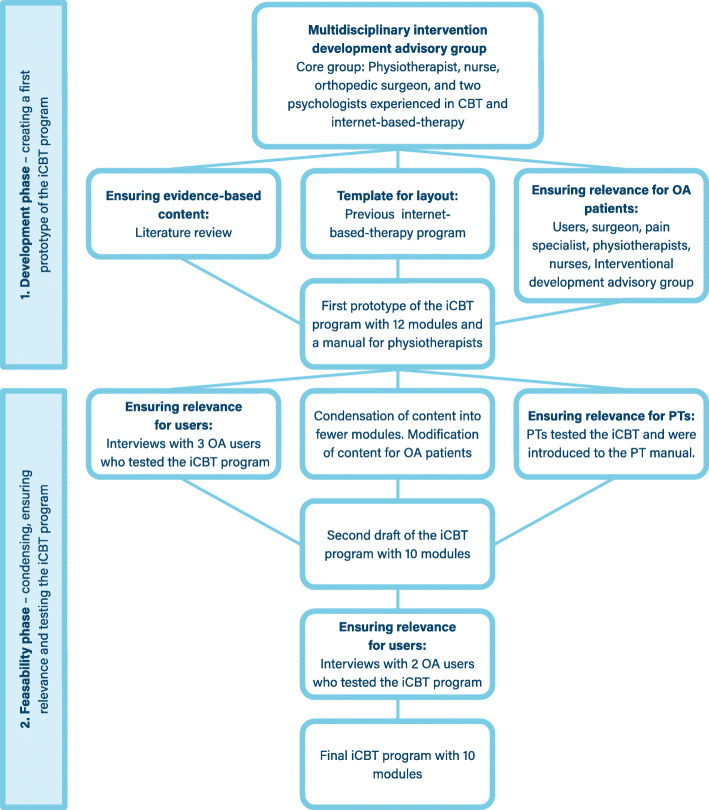
Background: Approximately 20% of patients experience chronic pain after total knee arthroplasty (TKA). Due to the growing number of TKA procedures, this will affect an increasing number of people worldwide. Catastrophic thinking, dysfunctional illness perception, poor mental health, anxiety and depression characterize these non-improvers, and indicate that these patients may need individualized treatment using a treatment approach based on the bio-psycho-social health model. The present study developed an internet-delivered cognitive behavioral therapy (iCBT) program to be combined with exercise therapy and education for patients with knee osteoarthritis (OA) at increased risk of chronic pain after TKA. Methods: The development process followed the first two phases of the UK Medical Research Council framework for complex interventions. In the development phase, the first prototype of the iCBT program was developed based on literature review, established iCBT programs and multidisciplinary workshops. The feasibility phase consisted of testing the program, interviewing users, condensing the program, and tailoring it to the patient group. A physiotherapist manual was developed and adapted to physiotherapists who will serve as mentors. Results: The development process resulted in an iCBT program consisting of 10 modules with educational texts, videos and exercises related to relevant topics such as goalsetting, stress and pain, lifestyle, automatic thoughts, mindfulness, selective attention, worry and rumination. A physiotherapist manual was developed to guide the physiotherapists in supporting the patients through the program and to optimize adherence to the program. Conclusions: The iCBT program is tailored to patients at risk of chronic pain following TKA, and may be useful as a supplement to surgery and/or exercise therapy. A multicentre RCT will evaluate the iCBT program in combination with an exercise therapy and education program. This novel intervention may be a valuable contribution to the treatment of OA patients at risk of chronic pain after TKA. Trial registration: The RCT is pre-registered at ClinicalTrials.gov: NCT03771430 11/12/2018.
Overview
The claims and statistics of this paper haven’t been checked yet.
Free: it reads the open-access text and checks the first 5 claims that cite a source we can check. Create a free account to check every claim.
Integrity signals
Registry
Cites
Statistics
Figures
Verification
Claims the paper makes
The claims and statistics of this paper haven’t been checked yet.
Free: it reads the open-access text and checks the first 5 claims that cite a source we can check. Create a free account to check every claim.
Claims other papers make about this one
Each is checked against this paper’s own text: does it say what the citing paper says it does?
The source backs part of the claim, not all of it — or backs it for a different population, condition or comparison.
In the citing paper
“Finally, Personas were seen as beneficial for prospective users (i.e., patients with chronic pain) as part of the intervention, as users could identify themselves with the Personas and Personas may highlight the relevance of the intervention or specific exercises (Rognsvag et al., 2021; Schubert et al., 2022).”
From Using Personas in the development of eHealth interventions for chronic pain: A scoping review and narrative synthesis (2023) · cites this paper as Rognsvag et al., 2021
Experimental — accuracy not yet measuredThe source backs part of the claim, not all of it — or backs it for a different population, condition or comparison.
In the citing paper
“Finally, two studies included Personas in the intervention (but not explicitly in the development process): “Persona […] appears in all modules throughout the program” (Rognsvag et al., 2021) and “Personas are introduced at the beginning; their answers and thoughts on exercises are displayed as encouraging examples” (Schubert et al., 2022)). However, no details were presented.”
From Using Personas in the development of eHealth interventions for chronic pain: A scoping review and narrative synthesis (2023) · cites this paper as Rognsvag et al., 2021
Experimental — accuracy not yet measuredThe cited source says what the claim attributes to it.
In the citing paper
“Two studies did not specify how Personas were created (Hochstenbach et al., 2017; Schubert et al., 2022) and two studies provided minimal detail, mentioning “typical patients” (Rognsvag et al., 2021), and “previous research and clinical expertise with persons with chronic pain and other stakeholders” (Turesson et al., 2022) as their source.”
From Using Personas in the development of eHealth interventions for chronic pain: A scoping review and narrative synthesis (2023) · cites this paper as Rognsvag et al., 2021
The cited source says what the claim attributes to it.
In the citing paper
“Three studies did not provide details other than “four Personas are introduced in the beginning [of the intervention]; their answers and thoughts on certain exercises are displayed as encouraging examples”(Schubert et al., 2022), “represent the patient population” (Hochstenbach et al., 2017), and “based on typical osteoarthritis or total knee arthroplasty patient” (Rognsvag et al., 2021).”
From Using Personas in the development of eHealth interventions for chronic pain: A scoping review and narrative synthesis (2023) · cites this paper as Rognsvag et al., 2021
Self-check
Percentages, sums and reported differences re-computed from the paper’s own numbers.
The self-check needs the paper’s full text.
Citations
Cites
Melzack, R., & Wall, P. D. (1965) · Science · doi:10.1126/science.150.3699.971 · Cited by 11,090 · cited 2×
“In later modules, participants learn about various forms of thinking errors, safety behaviors, internal dialogue, perceiving challenging situations as threats, losses or challenges, locus of control, stressful situations [24, 25, 65], and the gate control theory of pain [28].”
BackgroundDeveloping and evaluating complex interventions: the new Medical Research Council guidance
Craig, P., Dieppe, P., Macintyre, S., Michie, S., Nazareth, I., & Petticrew, M. (2008) · BMJ · doi:10.1136/bmj.a1655 · Cited by 10,995 · cited 1×
“The UK Medical Research Council (MRC) framework for complex interventions [48] served as a foundation for the program’s development process.”
MethodHoffmann, T. C., Glasziou, P. P., Boutron, I., Milne, R., Perera, R., Moher, D., Altman, D. G., Barbour, V., Macdonald, H., Johnston, M., et al. (2014) · BMJ · doi:10.1136/bmj.g1687 · Cited by 10,548 · cited 1×
“The iCBT program is presented according to the template for intervention description and replication (TIDieR) checklist and guide [64].”
MethodFear-avoidance and its consequences in chronic musculoskeletal pain: a state of the art.
Vlaeyen, J. W. S., & Linton, S. J. (2000) · Pain · doi:10.1016/s0304-3959(99)00242-0 · Cited by 4,931 · cited 1×
“[31] addresses a number of psychological factors that may impact pain intensity and disability, such as catastrophic thinking [32, 33], fearavoidance [34], low self-efficacy, helplessness and lack of perceived control [35–38], in addition to passive pain coping strategies [39].”
BackgroundMotivational Interviewing: Helping People Change
Tober, G. (2013) · Alcohol and Alcoholism · doi:10.1093/alcalc/agt010 · Cited by 4,268 · cited 1×
“Phase 2 resulted in a final version of the iCBT program consisting of ten modules (Table 3), accompanied by a physiotherapist manual (Table 4) containing a brief introduction to CBT and basic motivational interviewing (MI) [63] techniques, in addition to instructions for each module.”
MethodOARSI guidelines for the non-surgical management of knee, hip, and polyarticular osteoarthritis
Bannuru, R. R., Osani, M. C., Vaysbrot, E. E., Arden, N. K., Bennell, K., Bierma-Zeinstra, S. M. A., Kraus, V. B., Lohmander, L. S., Abbott, J. H., Bhandari, M., et al. (2019) · Osteoarthritis and Cartilage · doi:10.1016/j.joca.2019.06.011 · Cited by 3,542 · cited 3×
“Current treatment modalities for knee OA are based on the Osteoarthritis Research Society International (OARSI) recommendations for evidence-based treatment, which include education, exercise, lifestyle alterations, weight loss when relevant, and analgesics [14].”
BackgroundMethodThe Efficacy of Cognitive Behavioral Therapy: A Review of Meta-analyses
Hofmann, S. G., Asnaani, A., Vonk, I. J. J., Sawyer, A. T., & Fang, A. (2012) · Cognitive Therapy and Research · doi:10.1007/s10608-012-9476-1 · Cited by 3,445 · cited 2×
“The premise for CBT in relation to pain is to identify and modify pain-enhancing thinking patterns, or cognitions, maladaptive behavior and situations that contribute to the maintenance of psychological distress, which may lead to further progression of pain [30].”
BackgroundMelzack, R., & Wall, P. D. (1996) · Pain Forum · doi:10.1016/s1082-3174(96)80062-6 · Cited by 2,784
eHealth Literacy: Essential Skills for Consumer Health in a Networked World.
Norman, C. D., & Skinner, H. A. (2006) · Journal of Medical Internet Research · doi:10.2196/jmir.8.2.e9 · Cited by 2,643 · cited 1×
“For planning and conducting the interviews, Norman and Skinner’s eHealth literacy model [62] was employed.”
MethodKolasinski, S. L., Neogi, T., Hochberg, M. C., Oatis, C., Guyatt, G., Block, J., Callahan, L., Copenhaver, C., Dodge, C., Felson, D., et al. (2020) · Arthritis Care & Research · doi:10.1002/acr.24131 · Cited by 2,516
Theoretical perspectives on the relation between catastrophizing and pain
Sullivan, M. J. L., Thorn, B., Haythornthwaite, J. A., Keefe, F., Martin, M., Bradley, L. A., & Lefebvre, J. C. (2001) · The Clinical Journal of Pain · doi:10.1097/00002508-200103000-00008 · Cited by 2,472 · cited 1×
“[31] addresses a number of psychological factors that may impact pain intensity and disability, such as catastrophic thinking [32, 33], fearavoidance [34], low self-efficacy, helplessness and lack of perceived control [35–38], in addition to passive pain coping strategies [39].”
Background(2013) · Cited by 2,393
Avoidable waste in the production and reporting of research evidence
Chalmers, I., & Glasziou, P. (2009) · The Lancet · doi:10.1016/s0140-6736(09)60329-9 · Cited by 2,208
Kolasinski, S. L., Neogi, T., Hochberg, M. C., Oatis, C., Guyatt, G., Block, J., Callahan, L., Copenhaver, C., Dodge, C., Felson, D., et al. (2020) · Arthritis & Rheumatology · doi:10.1002/art.41142 · Cited by 1,965
Developing and evaluating complex interventions: the new Medical Research Council guidance
Craig, P., Dieppe, P., Macintyre, S., Michie, S., Nazareth, I., & Petticrew, M. (2013) · International Journal of Nursing Studies · doi:10.1016/j.ijnurstu.2012.09.010 · Cited by 1,658
Psychological therapies for the management of chronic pain (excluding headache) in adults
Williams, A. C. D. C., Eccleston, C., & Morley, S. (2012) · Cochrane Database of Systematic Reviews · doi:10.1002/14651858.cd007407.pub3 · Cited by 1,634
Beswick, A. D., Wylde, V., Gooberman-Hill, R., Blom, A., & Dieppe, P. (2012) · BMJ Open · doi:10.1136/bmjopen-2011-000435 · Cited by 1,450 · cited 1×
“However, studies consistently show that 20% of patients have questionable benefit from TKA and continue to experience pain and poor function without clinical explanation [3, 4] and without any effective treatments available [5].”
Background(1990) · Cited by 1,282
Carlbring, P., Andersson, G., Cuijpers, P., Riper, H., & Hedman-Lagerlöf, E. (2018) · Cognitive Behaviour Therapy · doi:10.1080/16506073.2017.1401115 · Cited by 1,232 · cited 1×
“demonstrated that iCBT targeting psychiatric and somatic conditions is as effective as face-to-face treatment for all conditions studied [53].”
BackgroundChekroud, S. R., Gueorguieva, R., Zheutlin, A. B., Paulus, M., Krumholz, H. M., Krystal, J. H., & Chekroud, A. M. (2018) · The Lancet Psychiatry · doi:10.1016/s2215-0366(18)30227-x · Cited by 1,172 · cited 1×
“Furthermore, exercise can also have a positive effect on mental health [67].”
BackgroundBarriers to treatment adherence in physiotherapy outpatient clinics: A systematic review
Jack, K., McLean, S. M., Moffett, J. K., & Gardiner, E. (2010) · Manual Therapy · doi:10.1016/j.math.2009.12.004 · Cited by 924 · cited 3×
“Because these psychological factors, combined with pain, may constitute significant barriers to participation in exercise therapy [21], we expect that by modifying the risk factors, patients may increase their adherence to exercise and physical activity.”
BackgroundExercise for osteoarthritis of the knee: a Cochrane systematic review
Fransen, M., McConnell, S., Harmer, A. R., Van der Esch, M., Simic, M., & Bennell, K. L. (2015) · British Journal of Sports Medicine · doi:10.1136/bjsports-2015-095424 · Cited by 888 · cited 1×
“The effectiveness of exercise is comparable to that of Non-Steroidal Anti-Inflammatory Drugs (NSAIDs), with effects lasting at least 2 to 6 months [15].”
BackgroundEhde, D. M., Dillworth, T. M., & Turner, J. A. (2014) · American Psychologist · doi:10.1037/a0035747 · Cited by 879 · cited 2×
“Research has shown that, whether administered alone or in combination with medical or interdisciplinary rehabilitation treatment, CBT improved pain and related problems in chronic pain patients [26, 27].”
BackgroundPredicting dissatisfaction following total knee replacement: A PROSPECTIVE STUDY OF 1217 PATIENTS
Scott, C. E. H., Howie, C. R., MacDonald, D., & Biant, L. C. (2010) · The Journal of Bone and Joint Surgery. British volume · doi:10.1302/0301-620x.92b9.24394 · Cited by 874
A Randomized, Controlled Trial of Total Knee Replacement
Skou, S. T., Roos, E. M., Laursen, M. B., Rathleff, M. S., Arendt-Nielsen, L., Simonsen, O., & Rasmussen, S. (2015) · New England Journal of Medicine · doi:10.1056/nejmoa1505467 · Cited by 816 · cited 2×
“quite a successful procedure, with improvements in pain, function and quality of life [1, 2].”
BackgroundSelf-citationProjected increase in total knee arthroplasty in the United States – an alternative projection model
Inacio, M. C. S., Paxton, E. W., Graves, S. E., Namba, R. S., & Nemes, S. (2017) · Osteoarthritis and Cartilage · doi:10.1016/j.joca.2017.07.022 · Cited by 660 · cited 1×
“The incidence of TKA procedures worldwide is growing [6], with more than 700,000 procedures annually in the United States alone [7], and is estimated to increase by 143% by 2050 [8].”
BackgroundCoping or acceptance? What to do about chronic pain
McCracken, L. M., & Eccleston, C. (2003) · Pain · doi:10.1016/s0304-3959(03)00202-1 · Cited by 591 · cited 1×
“[31] addresses a number of psychological factors that may impact pain intensity and disability, such as catastrophic thinking [32, 33], fearavoidance [34], low self-efficacy, helplessness and lack of perceived control [35–38], in addition to passive pain coping strategies [39].”
BackgroundPredictors of persistent pain after total knee arthroplasty: a systematic review and meta-analysis
Lewis, G. N., Rice, D. A., McNair, P. J., & Kluger, M. (2015) · British Journal of Anaesthesia · doi:10.1093/bja/aeu441 · Cited by 587
Internet-administered cognitive behavior therapy for health problems: a systematic review
Cuijpers, P., van Straten, A., & Andersson, G. (2008) · Journal of Behavioral Medicine · doi:10.1007/s10865-007-9144-1 · Cited by 555 · cited 1×
“Various pain coping skill programs have shown promise in OA patients [41–44] and can be effectively delivered as internet-based CBT [45].”
BackgroundDuncan, E., O'Cathain, A., Rousseau, N., Croot, L., Sworn, K., Turner, K. M., Yardley, L., & Hoddinott, P. (2020) · BMJ Open · doi:10.1136/bmjopen-2019-033516 · Cited by 481 · cited 2×
“CBT: Cognitive Behavioral Therapy; GUIDED: Guidance to reporting intervention development; iCBT: Internet-delivered Cognitive Behavioral Therapy; MI: Motivational Interviewing; MRC: Medical Research Council; NSAI D: Non-Steroidal Anti Inflammatory Drugs; OA: Osteoarthritis; OARSI: Osteoarthritis Research Society Inter…”
MethodPsychological factors affecting the outcome of total hip and knee arthroplasty: a systematic review
Vissers, M. M., Bussmann, J. B., Verhaar, J. A. N., Busschbach, J. J. V., Bierma-Zeinstra, S. M. A., & Reijman, M. (2012) · Seminars in Arthritis and Rheumatism · doi:10.1016/j.semarthrit.2011.07.003 · Cited by 473 · cited 1×
“A growing literature suggests that non-improvers following TKA have a distinct preoperative psychological profile characterized by catastrophic thinking [17], dysfunctional illness perception [4], poor mental health [18], anxiety [19] and depression [20].”
BackgroundArnstein, P., Caudill, M., Mandle, C. L., Norris, A., & Beasley, R. (1999) · Pain · doi:10.1016/s0304-3959(98)00220-6 · Cited by 436 · cited 1×
“In particular, in the context of pain, CBT focuses on reducing pain and distress by modifying physical sensations, catastrophic and ruminative thinking, and maladaptive behaviors [30], in addition to enhancing self-efficacy [35, 36].”
BackgroundFactors associated with functional impairment in symptomatic knee osteoarthritis
Creamer, P., Lethbridge‐Cejku, M., & Hochberg, M. C. (2000) · Rheumatology · doi:10.1093/rheumatology/39.5.490 · Cited by 435
(2011) · Cited by 412
Constructing and deconstructing the gate theory of pain
Mendell, L. M. (2014) · Pain · doi:10.1016/j.pain.2013.12.010 · Cited by 407
Self-efficacy and perceived control: Cognitive mediators of pain tolerance.
Litt, M. D. (1988) · Journal of Personality and Social Psychology · doi:10.1037//0022-3514.54.1.149 · Cited by 369
Bleijenberg, N., de Man-van Ginkel, J. M., Trappenburg, J. C. A., Ettema, R. G. A., Sino, C. G., Heim, N., Hafsteindóttir, T. B., Richards, D. A., & Schuurmans, M. J. (2018) · International Journal of Nursing Studies · doi:10.1016/j.ijnurstu.2017.12.001 · Cited by 334 · cited 1×
“[75] stated that improving the development of complex interventions “would reduce research waste and enhance the likelihood of success”, and recommended adding four elements to the MRC framework: 1) problem identification and definition, 2) determination of recipients’ and providers’ needs, 3) examination of current p…”
BackgroundA longitudinal study to explain the pain‐depression link in older adults with osteoarthritis
Hawker, G. A., Gignac, M. A. M., Badley, E., Davis, A. M., French, M. R., Li, Y., Perruccio, A. V., Power, J. D., Sale, J., & Lou, W. (2011) · Arthritis Care & Research · doi:10.1002/acr.20298 · Cited by 328
Total knee replacement: Is it really an effective procedure for all?
Wylde, V., Dieppe, P., Hewlett, S., & Learmonth, I. D. (2007) · The Knee · doi:10.1016/j.knee.2007.06.001 · Cited by 312
Somers, T. J., Keefe, F. J., Pells, J. J., Dixon, K. E., Waters, S. J., Riordan, P. A., Blumenthal, J. A., McKee, D. C., LaCaille, L., Tucker, J. M., et al. (2009) · Journal of Pain and Symptom Management · doi:10.1016/j.jpainsymman.2008.05.009 · Cited by 305 · cited 2×
“They are characterized by having one or more psychological factors that may contribute to increased pain and reduced quality of life [40].”
BackgroundKanavaki, A. M., Rushton, A., Efstathiou, N., Alrushud, A., Klocke, R., Abhishek, A., & Duda, J. L. (2017) · BMJ Open · doi:10.1136/bmjopen-2017-017042 · Cited by 295 · cited 2×
“These factors may hamper engagement in physical activity and rehabilitation due to pain-related fear of movement or motivational problems [21, 22].”
BackgroundHunt, M. A., Keefe, F. J., Bryant, C., Metcalf, B. R., Ahamed, Y., Nicholas, M. K., & Bennell, K. L. (2013) · The Knee · doi:10.1016/j.knee.2012.07.008 · Cited by 290
Keefe, F. J., Blumenthal, J., Baucom, D., Affleck, G., Waugh, R., Caldwell, D. S., Beaupre, P., Kashikar-Zuck, S., Wright, K., Egert, J., et al. (2004) · Pain · doi:10.1016/j.pain.2004.03.022 · Cited by 286 · cited 1×
“Therefore, as found in patients with hip and knee OA [42, 43], a biopsychosocial approach that combines psychological and physical interventions might produce the best outcome [31].”
BackgroundBennell, K. L., Nelligan, R., Dobson, F., Rini, C., Keefe, F., Kasza, J., French, S., Bryant, C., Dalwood, A., Abbott, J. H., et al. (2017) · Annals of Internal Medicine · doi:10.7326/m16-1714 · Cited by 284 · cited 1×
“Using physiotherapists as mentors is in line with findings from a recent study [44], which demonstrated that patients achieved better functional outcome when physiotherapists combined exercise with Pain Coping Skills training compared to either treatment alone.”
ResultKatz, J., Burns, L., Ritvo, S., Ferguson, M., Clark, H., & Seltzer, Z. (2015) · Journal of Pain Research · doi:10.2147/jpr.s64730 · Cited by 280 · cited 1×
“A growing literature suggests that non-improvers following TKA have a distinct preoperative psychological profile characterized by catastrophic thinking [17], dysfunctional illness perception [4], poor mental health [18], anxiety [19] and depression [20].”
BackgroundUtilization rates of hip arthroplasty in OECD countries
Pabinger, C., & Geissler, A. (2014) · Osteoarthritis and Cartilage · doi:10.1016/j.joca.2014.04.009 · Cited by 265
Skou, S. T., Roos, E. M., Laursen, M. B., Rathleff, M. S., Arendt-Nielsen, L., Rasmussen, S., & Simonsen, O. (2018) · Osteoarthritis and Cartilage · doi:10.1016/j.joca.2018.04.014 · Cited by 241 · cited 1×
“Only 26 and 32% of them decided to undergo surgery 12 and 24months after the intervention, respectively [1, 16].”
BackgroundSelf-citationPain-Related Catastrophizing: What Is It?
Turner, J. A., & Aaron, L. A. (2001) · The Clinical Journal of Pain · doi:10.1097/00002508-200103000-00009 · Cited by 240 · cited 1×
“[31] addresses a number of psychological factors that may impact pain intensity and disability, such as catastrophic thinking [32, 33], fearavoidance [34], low self-efficacy, helplessness and lack of perceived control [35–38], in addition to passive pain coping strategies [39].”
BackgroundDo Psychological Factors Predict Poor Outcome in Patients Undergoing TKA? A Systematic Review
Khatib, Y., Madan, A., Naylor, J. M., & Harris, I. A. (2015) · Clinical Orthopaedics & Related Research · doi:10.1007/s11999-015-4234-9 · Cited by 212 · cited 1×
“A growing literature suggests that non-improvers following TKA have a distinct preoperative psychological profile characterized by catastrophic thinking [17], dysfunctional illness perception [4], poor mental health [18], anxiety [19] and depression [20].”
BackgroundUtilization rates of knee-arthroplasty in OECD countries
Pabinger, C., Lothaller, H., & Geissler, A. (2015) · Osteoarthritis and Cartilage · doi:10.1016/j.joca.2015.05.008 · Cited by 212 · cited 1×
“The incidence of TKA procedures worldwide is growing [6], with more than 700,000 procedures annually in the United States alone [7], and is estimated to increase by 143% by 2050 [8].”
BackgroundDear (2015) · doi:10.1097/j.pain.0000000000000251 · Cited by 187
Sale, J. E. M., Gignac, M. A. M., & HAWKER, G. A. (2008) · PubMed · Cited by 169
Rini, C., Porter, L. S., Somers, T. J., McKee, D. C., DeVellis, R. F., Smith, M., Winkel, G., Ahern, D. K., Goldman, R., Stiller, J. L., et al. (2015) · Pain · doi:10.1097/j.pain.0000000000000121 · Cited by 150
Chronic Postoperative Pain After Primary and Revision Total Knee Arthroplasty
Petersen, K. K., Simonsen, O., Laursen, M. B., Nielsen, T. A., Rasmussen, S., & Arendt-Nielsen, L. (2015) · The Clinical Journal of Pain · doi:10.1097/ajp.0000000000000146 · Cited by 149
Riddle, D. L., Keefe, F. J., Nay, W. T., McKee, D., Attarian, D. E., & Jensen, M. P. (2011) · Archives of Physical Medicine and Rehabilitation · doi:10.1016/j.apmr.2011.01.003 · Cited by 141
Cai, L., Gao, H., Xu, H., Wang, Y., Lyu, P., & Liu, Y. (2018) · The Journal of Arthroplasty · doi:10.1016/j.arth.2017.10.035 · Cited by 127
O'moore, K. A., Newby, J. M., Andrews, G., Hunter, D. J., Bennell, K., Smith, J., & Williams, A. D. (2018) · Arthritis Care & Research · doi:10.1002/acr.23257 · Cited by 117 · cited 1×
“O’Moore [55] found that a 10-week iCBT depression program effectively reduced depression, and improved selfefficacy, pain, stiffness, and physical function in patients with OA and severe depression.”
Background(1996) · Cited by 105
Lange, J. K., Lee, Y.-Y., Spiro, S. K., & Haas, S. B. (2017) · The Journal of Arthroplasty · doi:10.1016/j.arth.2017.12.031 · Cited by 105 · cited 1×
“quite a successful procedure, with improvements in pain, function and quality of life [1, 2].”
BackgroundRiddle, D. L., Keefe, F. J., Ang, D. C., Slover, J., Jensen, M. P., Bair, M. J., Kroenke, K., Perera, R. A., Reed, S. D., McKee, D., et al. (2019) · Journal of Bone and Joint Surgery · doi:10.2106/jbjs.18.00621 · Cited by 101
Coping strategies and self‐efficacy as predictors of outcome in osteoarthritis: a systematic review
Benyon, K., Hill, S., Zadurian, N., & Mallen, C. (2010) · Musculoskeletal Care · doi:10.1002/msc.187 · Cited by 93
Birch, S., Stilling, M., Mechlenburg, I., & Hansen, T. B. (2020) · Acta Orthopaedica · doi:10.1080/17453674.2019.1694312 · Cited by 85
Towards a biopsychosocial framework of osteoarthritis of the knee
Hunt, M. A., Birmingham, T. B., Skarakis-Doyle, E., & Vandervoort, A. A. (2008) · Disability and Rehabilitation · doi:10.1080/09638280701189960 · Cited by 81 · cited 1×
“As such, these patients may need individualized treatment using a more comprehensive treatment approach based on the biopsycho-social health model [23].”
BackgroundSchuster, R., Topooco, N., Keller, A., Radvogin, E., & Laireiter, A.-R. (2020) · Internet Interventions · doi:10.1016/j.invent.2020.100326 · Cited by 77
Filardo, G., Merli, G., Roffi, A., Marcacci, T., Berti Ceroni, F., Raboni, D., Bortolotti, B., Kon, E., & Marcacci, M. (2017) · Knee Surgery, Sports Traumatology, Arthroscopy · doi:10.1007/s00167-016-4201-3 · Cited by 74
Buvanendran, A., Sremac, A. C., Merriman, P. A., Della Valle, C. J., Burns, J. W., & McCarthy, R. J. (2021) · Regional Anesthesia & Pain Medicine · doi:10.1136/rapm-2020-102258 · Cited by 70
A systematic review of psychological interventions in total hip and knee arthroplasty
Bay, S., Kuster, L., McLean, N. J., Byrnes, M. L., & Kuster, M. S. (2018) · BMC Musculoskeletal Disorders · doi:10.1186/s12891-018-2121-8 · Cited by 67
Trends in Total Knee Arthroplasty Implant Utilization
Nguyen, L.-C. L., Lehil, M. S., & Bozic, K. J. (2014) · The Journal of Arthroplasty · doi:10.1016/j.arth.2014.12.009 · Cited by 66 · cited 1×
“The incidence of TKA procedures worldwide is growing [6], with more than 700,000 procedures annually in the United States alone [7], and is estimated to increase by 143% by 2050 [8].”
BackgroundBeswick, A. D., Wylde, V., & Gooberman‐Hill, R. (2015) · BMJ Open · doi:10.1136/bmjopen-2014-007387 · Cited by 65 · cited 2×
“However, studies consistently show that 20% of patients have questionable benefit from TKA and continue to experience pain and poor function without clinical explanation [3, 4] and without any effective treatments available [5].”
BackgroundAre There Prognostic Factors for One-Year Outcome After Total Knee Arthroplasty? A Systematic Review
Harmelink, K. E. M., Zeegers, A. V. C. M., Hullegie, W., Hoogeboom, T. J., der Sanden, M. W. G. N., & Staal, J. B. (2017) · The Journal of Arthroplasty · doi:10.1016/j.arth.2017.07.011 · Cited by 65 · cited 1×
“A growing literature suggests that non-improvers following TKA have a distinct preoperative psychological profile characterized by catastrophic thinking [17], dysfunctional illness perception [4], poor mental health [18], anxiety [19] and depression [20].”
BackgroundLindberg, M. F., Miaskowski, C. A., Rustøen, T., Rosseland, L. A., Cooper, B. A., & Lerdal, A. (2016) · Acta Orthopaedica · doi:10.1080/17453674.2016.1237440 · Cited by 58 · cited 2×
“However, studies consistently show that 20% of patients have questionable benefit from TKA and continue to experience pain and poor function without clinical explanation [3, 4] and without any effective treatments available [5].”
BackgroundSelf-citationWhich patients do not return to work after total knee arthroplasty?
Kuijer, P., Kievit, A. J., Pahlplatz, T. M. J., Hooiveld, T., Hoozemans, M. J. M., Blankevoort, L., Schafroth, M. U., van Geenen, R. C. I., & Frings‐Dresen, M. H. W. (2016) · Rheumatology International · doi:10.1007/s00296-016-3512-5 · Cited by 52
de Boer, M. J., Versteegen, G. J., Vermeulen, K. M., Sanderman, R., & Struys, M. M. R. F. (2014) · European Journal of Pain · doi:10.1002/ejp.509 · Cited by 51 · cited 1×
“Internet-based CBT programs have been evaluated in other populations with chronic pain [71, 72] and have shown promising results.”
BackgroundHolm, I., Pripp, A. H., & Risberg, M. A. (2020) · Journal of Clinical Medicine · doi:10.3390/jcm9103112 · Cited by 50 · cited 1×
“AktivA [46], consisting of a 90-min patient education session followed by exercise therapy twice a week for 12”
MethodSelf-citationIsmail, A., Moore, C., Alshishani, N., Yaseen, K., & Alshehri, M. A. (2017) · Journal of Physical Therapy Science · doi:10.1589/jpts.29.2228 · Cited by 41
Cognitive Behavioral Therapy for Chronic Pain
Vranceanu, A., Stone, M. T., Wallace, T., & Kulich, R. J. (2016) · Springer eBooks · doi:10.1007/978-3-319-29294-6_5 · Cited by 33 · cited 3×
“In later modules, participants learn about various forms of thinking errors, safety behaviors, internal dialogue, perceiving challenging situations as threats, losses or challenges, locus of control, stressful situations [24, 25, 65], and the gate control theory of pain [28].”
BackgroundValdes, A. M., Warner, S. C., Harvey, H. L., Fernandes, G. S., Doherty, S., Jenkins, W., Wheeler, M., & Doherty, M. (2015) · Seminars in Arthritis and Rheumatism · doi:10.1016/j.semarthrit.2015.05.004 · Cited by 28 · cited 1×
“Thus, TKA non-responders represent a large and growing number of patients who continue to suffer from unrelieved pain and poor function [9, 10].”
BackgroundHiggins, D. M., Buta, E., Williams, D. A., Halat, A. M., Bair, M. J., Heapy, A. A., Krein, S. L., Rajeevan, H., Rosen, M. I., & Kerns, R. D. (2019) · Pain Practice · doi:10.1111/papr.12861 · Cited by 19
Research works printed but not linked: 2
- Turk DT Monarch ES Biopsychosocial perspective on chronic pain. Psychological approaches to pain management. 2nd ed 2002 New York Guilford Press
- Turk DC, Meichenbaum D, Genest M. Pain and Behavioural medicine: A cognitive Bahavioural Perspective. 2nd ed. New York: The Guilford Press; 1983.
Cited by
Bartels, S. L., Taygar, A. S., Johnsson, S. I., Petersson, S., Flink, I., Boersma, K., McCracken, L. M., & Wicksell, R. K. (2023) · Internet Interventions · doi:10.1016/j.invent.2023.100619 · Cited by 46
Kaynar, A. M., Lin, C., Sanchez, A. G., Lavage, D. R., Monroe, A., Zharichenko, N., Strassburger, M., Saucier, K., Groff, Y. J., Klatt, B. A., et al. (2023) · Trials · doi:10.1186/s13063-023-07634-0 · Cited by 21
“Rognsvåg et al. developed an Internet-delivered cognitive behavioral therapy program for use in combination with exercise and education in patients at increased risk of chronic pain following total knee arthroplasty [59].”
BackgroundLi, Y., Gu, Z., Ning, R., & Yin, H. (2023) · Journal of Orthopaedic Surgery and Research · doi:10.1186/s13018-023-03907-1 · Cited by 17
“In recent years, with the rapid development of the mobile internet, the application of mobile care in healthcare allows effective real-time information exchange and knowledge transfer, which overcomes the limitations of physical space and space [7], such as online platforms that allow patients to receive health educat…”
BackgroundZhu, D., Zhao, J., Wang, M., Cao, B., Zhang, W., Li, Y., Zhang, C., & Han, T. (2024) · JMIR mhealth and uhealth · doi:10.2196/53798 · Cited by 15
“Based on the interviews conducted for the qualitative study, issues were identified with the digital app user experience of KOA patients [52,56,62].”
BackgroundResultInfluentialUse of health self-management platform features: The case of a specialist ehealth app
Cenamor, J. (2022) · Technological Forecasting and Social Change · doi:10.1016/j.techfore.2022.122066 · Cited by 11
Metadata
- Authors
- Rognsvåg, T., Lindberg, M. F., Lerdal, A., Stubberud, J., Furnes, O., Holm, I., Indrekvam, K., Lau, B., Rudsengen, D., Skou, S. T., & Badawy, M.
- Affiliations
- Haukeland University Hospital (NO)
- University of Oslo (NO)
- Oslo University Hospital (NO)
- University of Southern Denmark (DK)
- Corresponding author
- Rognsvåg, Turid
- ORCID
- Venue
- BMC Health Services Research
- Published
- 2021-10-25
- Volume
- 21
- Issue
- 1
- Pages
- 1151-1151
- ISSN
- 1472-6963 (ISSN-L)
- PMC
- PMC8546935
- OpenAlex
- W3208312005
- Cited by
- 18
- References
- 79
- Citations by year
- 2026: 1 · 2025: 2 · 2024: 5 · 2023: 7 · 2022: 2
- FWCI
- 3.14
- Type
- journal article
- Language
- en
- Open access
- gold
- doi.org
- Licence
- cc-by
- creativecommons.org/licenses/by/4.0 (tdm)
- creativecommons.org/licenses/by/4.0 (vor)
- Locations
- BMC Health Services Research (publishedVersion, cc-by)
- Europe PMC (PubMed Central) (publishedVersion, other-oa)
- PubMed Central (publishedVersion, cc-by)
- PubMed (publishedVersion)
- University of Southern Denmark Research Portal (University of Southern Denmark) (publishedVersion)
- NORA - Norwegian Open Research Archives (submittedVersion, cc-by)
- DOAJ (DOAJ: Directory of Open Access Journals) (submittedVersion, cc-by-sa)
- University of Southern Denmark Research Portal (University of Southern Denmark) (submittedVersion, cc-by)
- Duo Research Archive (University of Oslo) (submittedVersion, cc-by)
- Funders
- European Commission (801790, HORIZON2020)
- Norges Forskningsråd (287816)
- Region Sjælland (801790)
- Helse Sør-Øst RHF (2018060)
- Topics
- Social Sciences › Psychology › Applied Psychology › Digital Mental Health Interventions
- Health Sciences › Health Professions › Physical Therapy, Sports Therapy and Rehabilitation › Musculoskeletal pain and rehabilitation
- Health Sciences › Medicine › Surgery › Total Knee Arthroplasty Outcomes
- Keywords
- internet-based cognitive behavioral therapy, total knee arthroplasty, knee osteoarthritis, exercise therapy, patient education, intervention development, biopsychosocial model, catastrophic thinking, illness perception, mindfulness, rumination
- MeSH terms
- Exercise Therapy, Humans, Cognitive Behavioral Therapy, Arthroplasty, Replacement, Knee, Internet, Chronic Pain
About these checks
Registry, retraction, Cites and statistics results are computed, not judged, with one exception: a printed reference that no index lists is read once by a model before it counts as a citation error. Claims are extracted by a model and kept only when their quote appears verbatim in the text; each cited source is then checked, with a model’s help, for whether it says what the claim relies on. Those verdicts can be wrong — read the claim’s quote and the cited source before relying on one.
Statistics and arithmetic are recomputed, not judged.
Confidence bands are shown only for fields calibrated on our annotated test set. None is calibrated yet, so no band is shown.
What counts as a claim ›How we measure confidence ›How we check this ›
Are you an author, or do you see a problem with this page? Request a review
Data sources
Bibliographic data: Semantic Scholar, OpenAlex, Crossref.
Contains information from the Semantic Scholar Academic Graph Datasets, made available under the ODC Attribution License (ODC-BY 1.0).
Semantic Scholar’s data is described in: Kinney, R., et al. (2023). The Semantic Scholar Open Data Platform. arXiv:2301.10140.
