

The DOI matches its Crossref record; 49 of the 51 references it cites were found in a registry or an index.
The NASSS framework for ex post theorisation of technology-supported change in healthcare: worked example of the TORPEDO programme
Open accessAbstract
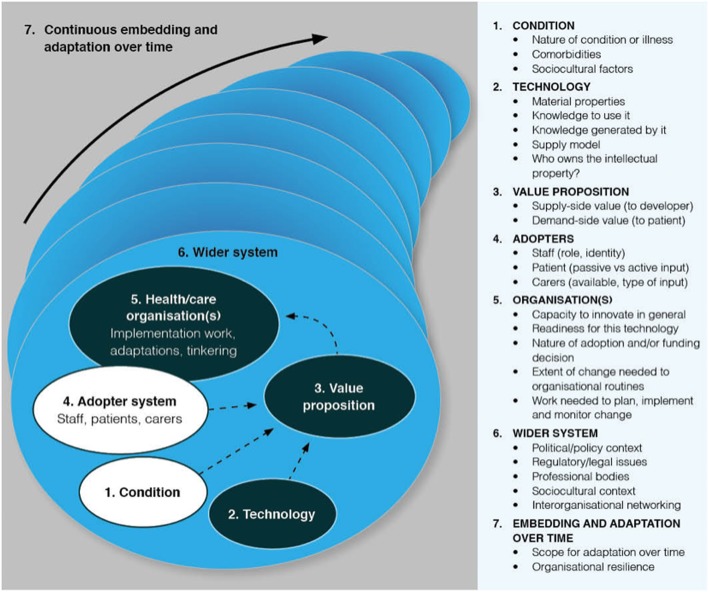
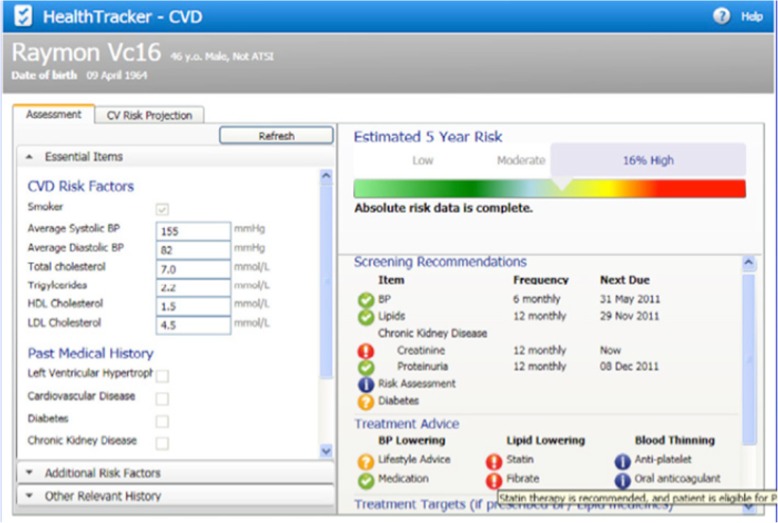
Background: Evaluation of health technology programmes should be theoretically informed, interdisciplinary, and generate in-depth explanations. The NASSS (non-adoption, abandonment, scale-up, spread, sustainability) framework was developed to study unfolding technology programmes in real time—and in particular to identify and manage their emergent uncertainties and interdependencies. In this paper, we offer a worked example of how NASSS can also inform ex post (i.e. retrospective) evaluation. Methods: We studied the TORPEDO (Treatment of Cardiovascular Risk in Primary Care using Electronic Decision Support) research programme, a multi-faceted computerised quality improvement intervention for cardiovascular disease prevention in Australian general practice. The technology ( HealthTracker ) had shown promise in a cluster randomised controlled trial (RCT), but its uptake and sustainability in a real-world implementation phase was patchy. To explain this variation, we used NASSS to undertake secondary analysis of the multi-modal TORPEDO dataset (results and process evaluation of the RCT, survey responses, in-depth professional interviews, videotaped consultations) as well as a sample of new, in-depth narrative interviews with TORPEDO researchers. Results: Ex post analysis revealed multiple areas of complexity whose influence and interdependencies helped explain the wide variation in uptake and sustained use of the HealthTracker technology: the nature of cardiovascular risk in different populations, the material properties and functionality of the technology, how value (financial and non-financial) was distributed across stakeholders in the system, clinicians’ experiences and concerns, organisational preconditions and challenges, extra-organisational influences (e.g. policy incentives), and how interactions between all these influences unfolded over time. Conclusion: The NASSS framework can be applied retrospectively to generate a rich, contextualised narrative of technology-supported change efforts and the numerous interacting influences that help explain its successes, failures, and unexpected events. A NASSS-informed ex post analysis can supplement earlier, contemporaneous evaluations to uncover factors that were not apparent or predictable at the time but dynamic and emergent.
Overview
The claims and statistics of this paper haven’t been checked yet.
Run the check — free, no account needed. It reads the open-access text and checks the sources it cites.
Integrity signals
Registry
Cites
Statistics
Figures
Verification
Claims the paper makes
The claims and statistics of this paper haven’t been checked yet.
Run the check — free, no account needed. It reads the open-access text and checks the sources it cites.
Claims other papers make about this one
Each is checked against this paper’s own text: does it say what the citing paper says it does?
In the citing paper
“The NASSS framework has been widely used across a range of settings for evaluating and explaining the fortunes of various kinds of health technology projects [see for example (18–20)] and draws on complexity theory (21).”
From Planning and Evaluating Remote Consultation Services: A New Conceptual Framework Incorporating Complexity and Practical Ethics (2021) · cites this paper as [19]
In the citing paper
“Empirical work to develop NASSS and subsequent applications has been conducted entirely in high-income settings [14, 33]; this study was the first to test its utility in a low-income setting.”
From Scale-up of a novel vital signs alert device to improve maternity care in Sierra Leone: a mixed methods evaluation of adoption (2023) · cites this paper as [33]
Self-check
Percentages, sums and reported differences re-computed from the paper’s own numbers.
The self-check needs the paper’s full text.
Citations
Cites
Diffusion of Innovations in Service Organizations: Systematic Review and Recommendations
GREENHALGH, T., ROBERT, G., MACFARLANE, F., BATE, P., & KYRIAKIDOU, O. (2004) · The Milbank Quarterly · doi:10.1111/j.0887-378x.2004.00325.x · Cited by 7,448
Self-citationThe Duality of Technology: Rethinking the Concept of Technology in Organizations
Orlikowski, W. J. (1992) · Organization Science · doi:10.1287/orsc.3.3.398 · Cited by 4,957
Orlikowski, W. J. (2000) · Organization Science · doi:10.1287/orsc.11.4.404.14600 · Cited by 4,760
An Intervention to Decrease Catheter-Related Bloodstream Infections in the ICU
Pronovost, P., Needham, D., Berenholtz, S., Sinopoli, D., Chu, H., Cosgrove, S., Sexton, B., Hyzy, R., Welsh, R., Roth, G., et al. (2006) · New England Journal of Medicine · doi:10.1056/nejmoa061115 · Cited by 4,387
Tudor Hart, J. (1971) · The Lancet · doi:10.1016/s0140-6736(71)92410-x · Cited by 3,253
Greenhalgh, T., Wherton, J., Papoutsi, C., Lynch, J., Hughes, G., A'Court, C., Hinder, S., Fahy, N., Procter, R., & Shaw, S. (2017) · Journal of Medical Internet Research · doi:10.2196/jmir.8775 · Cited by 2,887
Self-citationImplementing, Embedding, and Integrating Practices: An Outline of Normalization Process Theory
May, C., & Finch, T. (2009) · Sociology · doi:10.1177/0038038509103208 · Cited by 2,115
Clinical psychology: Science and practice.
Kazdin, A. E. (1994) · Clinical Psychology Science and Practice · doi:10.1111/j.1468-2850.1994.tb00001.x · Cited by 1,361
Gabbay, J., & May, A. L. (2004) · BMJ · doi:10.1136/bmj.329.7473.1013 · Cited by 986
Cresswell, K., & Sheikh, A. (2013) · International Journal of Medical Informatics · doi:10.1016/j.ijmedinf.2012.10.007 · Cited by 690
Explaining Michigan: Developing an Ex Post Theory of a Quality Improvement Program
DIXON-WOODS, M., BOSK, C. L., AVELING, E. L., GOESCHEL, C. A., & PRONOVOST, P. J. (2011) · Milbank Quarterly · doi:10.1111/j.1468-0009.2011.00625.x · Cited by 603
Mair, F. S., May, C., O’Donnell, C., Finch, T., Sullivan, F., & Murray, E. (2012) · Bulletin of the World Health Organization · doi:10.2471/blt.11.099424 · Cited by 553
Theorising big IT programmes in healthcare: Strong structuration theory meets actor-network theory
Greenhalgh, T., & Stones, R. (2010) · Social Science & Medicine · doi:10.1016/j.socscimed.2009.12.034 · Cited by 371
Self-citationGreenhalgh, T., Shaw, S., Wherton, J., Vijayaraghavan, S., Morris, J., Bhattacharya, S., Hanson, P., Campbell-Richards, D., Ramoutar, S., Collard, A., et al. (2018) · Journal of Medical Internet Research · doi:10.2196/jmir.9897 · Cited by 371
Self-citationA theory of entrepreneurship and institutional uncertainty
Bylund, P. L., & McCaffrey, M. C. (2017) · Journal of Business Venturing · doi:10.1016/j.jbusvent.2017.05.006 · Cited by 348
Sligo, J. L., Gauld, R. D. C., Roberts, V., & Villa, L. (2016) · International Journal of Medical Informatics · doi:10.1016/j.ijmedinf.2016.09.007 · Cited by 306
Explaining Matching Michigan: an ethnographic study of a patient safety program
Dixon-Woods, M., Leslie, M., Tarrant, C., & Bion, J. (2013) · Implementation Science · doi:10.1186/1748-5908-8-70 · Cited by 291
Why Do Evaluations of eHealth Programs Fail? An Alternative Set of Guiding Principles
Greenhalgh, T., & Russell, J. (2010) · PLoS Medicine · doi:10.1371/journal.pmed.1000360 · Cited by 273
Self-citationGreenhalgh, T., Wherton, J., Papoutsi, C., Lynch, J., Hughes, G., A’Court, C., Hinder, S., Procter, R., & Shaw, S. (2018) · BMC Medicine · doi:10.1186/s12916-018-1050-6 · Cited by 232
Self-citationMatthews, A., Herrett, E., Gasparrini, A., Van Staa, T., Goldacre, B., Smeeth, L., & Bhaskaran, K. (2016) · BMJ · doi:10.1136/bmj.i3283 · Cited by 221
Why Business Modeling is Crucial in the Development of eHealth Technologies
van Limburg, M., van Gemert-Pijnen, J. E., Nijland, N., Ossebaard, H. C., Hendrix, R. M., & Seydel, E. R. (2011) · Journal of Medical Internet Research · doi:10.2196/jmir.1674 · Cited by 179
Lay epidemiology and the rationality of responses to health education.
Frankel, S., Davison, C., & Smith, G. D. (1991) · PubMed · Cited by 168
Building a National Health IT System from the Middle Out
Coiera, E. W. (2009) · Journal of the American Medical Informatics Association · doi:10.1197/jamia.m3183 · Cited by 162
Care at a Distance : On the Closeness of Technology
Pols, J. (2012) · doi:10.26530/oapen_413032 · Cited by 151
Peiris, D., Usherwood, T. P., Panaretto, K. S., Harris, M., Hunt, J., Redfern, J., Zwar, N. A., Colagiuri, S., Hayman, N. E., Lo, S., et al. (2015) · Circulation Cardiovascular Quality and Outcomes · doi:10.1161/circoutcomes.114.001235 · Cited by 143
Self-citationSuccesses and Failures of Pay for Performance in the United Kingdom
Roland, M. O., & Campbell, S. (2014) · New England Journal of Medicine · doi:10.1056/nejmhpr1316051 · Cited by 121
Peiris, D., Joshi, R., Webster, R. J., Groenestein, P., Usherwood, T. P., Heeley, E. L., Turnbull, F., Lipman, A., & Patel, A. A. (2009) · Journal of Medical Internet Research · doi:10.2196/jmir.1258 · Cited by 120
Self-citationThe Paradoxes of Telehealth: a Review of the Literature 2000–2015
Standing, C., Standing, S., McDermott, M., Gururajan, R., & Kiani Mavi, R. (2018) · Systems Research and Behavioral Science · doi:10.1002/sres.2442 · Cited by 105
"We Can Do This the Easy Way or the Hard Way": Negative Emotions, Self-Regulation, and the Law
Loewenstein, G. F., & O’Donoghue, T. (2006) · bepress Legal Repository · Cited by 86
McMullen, H., Griffiths, C., Leber, W., & Greenhalgh, T. (2015) · Trials · doi:10.1186/s13063-015-0755-5 · Cited by 81
Self-citationComputer templates in chronic disease management: ethnographic case study in general practice
Swinglehurst, D., Greenhalgh, T., & Roberts, C. (2012) · BMJ Open · doi:10.1136/bmjopen-2012-001754 · Cited by 79
Self-citationLehoux, P., Miller, F. A., Daudelin, G., & Denis, J.-L. (2017) · International Journal of Health Policy and Management · doi:10.15171/ijhpm.2017.11 · Cited by 74
Greenhalgh, T., Swinglehurst, D., & Stones, R. (2014) · Health Services and Delivery Research · doi:10.3310/hsdr02390 · Cited by 71
Self-citationBeyond positive a priori bias: reframing community engagement in LMICs
Abímbọ́lá, Ṣ. (2019) · Health Promotion International · doi:10.1093/heapro/daz023 · Cited by 66
Benson, T. (2019) · BMJ Health & Care Informatics · doi:10.1136/bmjhci-2019-000018 · Cited by 58
Bushouse, B. K. (2011) · Policy Studies Journal · doi:10.1111/j.1541-0072.2010.00398.x · Cited by 56
Knight, A. W., Caesar, C., Ford, D., Coughlin, A., & Frick, C. (2012) · BMJ Quality & Safety · doi:10.1136/bmjqs-2011-000165 · Cited by 46
Adoption of technology‐enhanced treatments: Conceptual and practical considerations.
Anton, M. T., & Jones, D. J. (2017) · Clinical Psychology: Science and Practice · doi:10.1111/cpsp.12197 · Cited by 46
Patel, B., Usherwood, T., Harris, M., Patel, A., Panaretto, K., Zwar, N., & Peiris, D. (2018) · Implementation Science · doi:10.1186/s13012-018-0830-x · Cited by 42
Self-citationChallenging Perspectives on Organizational Change in Health Care
Fitzgerald, L., & McDermott, A. M. (2017) · Routledge eBooks · doi:10.4324/9781315690735 · Cited by 30
Dijkstra, A., Heida, A., & van Rheenen, P. F. (2019) · Journal of Medical Internet Research · doi:10.2196/11761 · Cited by 27
Peiris, D., Usherwood, T. P., Weeramanthri, T. S., Cass, A., & Patel, A. A. (2011) · Sociology of Health & Illness · doi:10.1111/j.1467-9566.2011.01361.x · Cited by 24
Self-citationPatel, B. N., Patel, A. A., Jan, S., Usherwood, T. P., Harris, M., Panaretto, K. S., Zwar, N. A., Redfern, J., Jansen, J., Doust, J. A., et al. (2014) · Implementation Science · doi:10.1186/s13012-014-0187-8 · Cited by 19
Self-citationSix ways for governments to get value from health IT
Cresswell, K. M., Bates, D. W., & Sheikh, A. (2016) · The Lancet · doi:10.1016/s0140-6736(16)30519-0 · Cited by 17
Patel, B. N., Peiris, D., Usherwood, T. P., Li, Q., Harris, M., Panaretto, K. S., Zwar, N. A., & Patel, A. A. (2017) · Journal of the American Heart Association · doi:10.1161/jaha.117.007093 · Cited by 15
Self-citationAppification, AI, and Healthcare's New Iron TrianglePreprint
Terry, N. P. (2017) · SSRN Electronic Journal · doi:10.2139/ssrn.3020784 · Cited by 12
Patel, B. N., Usherwood, T., Harris, M., Panaretto, K. S., Redfern, J., Jansen, J., McKinn, S., Lyford, M., Patel, A. A., & Peiris, D. (2014) · Cited by 3
Self-citationGreenhalgh, T., Shaw, S. E., Wherton, J. P., Vijayaraghavan, S., Morris, J. H., Bhattacharya, S., Hanson, P., Campbell-Richards, D., Ramoutar, S., Collard, A., et al. (2018) · doi:10.2196/preprints.9897.a · Cited by 2
Self-citationO’Grady, C. L., Patel, B. N., Candlin, S., Candlin, C. N., Peiris, D., & Usherwood, T. P. (2016) · Palgrave Macmillan UK eBooks · doi:10.1057/9781137478788_17 · Cited by 1
Self-citation
Research works printed but not linked: 2
- Patel B, Usherwood T, Harris M, Patel A, Panaretto K, SZwar N, Peiris D: What drives adoption of computerised quality improvement tools by primary healthcare providers? An application of Normalisation Process Theory. Submitted to Implementation Science [?] 2018.
- England NHS. Five-year forward view. London: NHS England; 2014.
Cited by
Sorted by citations
Greenhalgh, T., Rosen, R., Shaw, S. E., Byng, R., Faulkner, S., Finlay, T., Grundy, E., Husain, L., Hughes, G., Leone, C., et al. (2021) · Frontiers in Digital Health · doi:10.3389/fdgth.2021.726095 · Cited by 173
“19 We provide support or signposting (e.g., to community provision) for patients who wish to increase their digital skills and confidence with a view to consulting remotely.”
BackgroundSelf-citationMeunier, P.-Y., Raynaud, C., Guimaraes, E., Gueyffier, F., & Letrilliart, L. (2023) · The Annals of Family Medicine · doi:10.1370/afm.2908 · Cited by 149
Abell, B., Naicker, S., Rodwell, D., Donovan, T., Tariq, A., Baysari, M., Blythe, R., Parsons, R., & McPhail, S. M. (2023) · Implementation Science · doi:10.1186/s13012-023-01287-y · Cited by 131
Dyb, K., Berntsen, G. R., & Kvam, L. (2021) · BMC Health Services Research · doi:10.1186/s12913-021-06262-1 · Cited by 67
Chen, W., O’Bryan, C. M., Gorham, G., Howard, K., Balasubramanya, B., Coffey, P., Abeyaratne, A., & Cass, A. (2022) · Implementation Science Communications · doi:10.1186/s43058-022-00326-x · Cited by 69
Metadata
- Authors
- Abimbola, S., Patel, B., Peiris, D., Patel, A., Harris, M., Usherwood, T., & Greenhalgh, T.
- Affiliations
- UNSW Sydney (AU)
- The University of Sydney (AU)
- Corresponding author
- Greenhalgh, Trisha
- Venue
- BMC Medicine
- Published
- 2019-12
- Volume
- 17
- Issue
- 1
- Pages
- 233-233
- ISSN
- 1741-7015 (ISSN-L)
- PMC
- PMC6937726
- OpenAlex
- W2997344043
- Cited by
- 102
- References
- 51
- Citations by year
- 2026: 15 · 2025: 16 · 2024: 24 · 2023: 19 · 2022: 18 · 2021: 6 · 2020: 4
- FWCI
- 9.53
- Type
- journal article
- Language
- en
- Open access
- gold
- doi.org
- Licence
- Locations
- BMC Medicine (publishedVersion, cc-by)
- PubMed Central (publishedVersion, cc-by)
- PubMed (publishedVersion)
- UNSWorks (University of New South Wales, Sydney, Australia) (submittedVersion, cc-by-nc-nd)
- DOAJ (DOAJ: Directory of Open Access Journals) (submittedVersion)
- Funders
- National Institute for Health Research (BRC-1215-2008)
- Topics
- Health Sciences › Health Professions › General Health Professions › Health Policy Implementation Science
- Social Sciences › Public Administration › Evaluation and Performance Assessment
- Health Sciences › Health Professions › Health Information Management › Electronic Health Records Systems
- Keywords
- NASSS framework, ex-post evaluation, implementation evaluation, cardiovascular risk management, electronic decision support, general practice, clinician experience, policy incentives, process evaluation
- MeSH terms
- Cardiovascular Diseases, Humans, Retrospective Studies, Technology Assessment, Biomedical, Randomized Controlled Trials as Topic, Disease Management, Decision Support Systems, Clinical, Biomedical Technology, Quality Improvement
About these checks
Registry, retraction, Cites and statistics results are computed, not judged, with one exception: a printed reference that no index lists is read once by a model before it counts as a citation error. Claims are extracted by a model and kept only when their quote appears verbatim in the text; each cited source is then checked, with a model’s help, for whether it says what the claim relies on. Those verdicts can be wrong — read the claim’s quote and the cited source before relying on one.
Statistics and arithmetic are recomputed, not judged.
Confidence bands are shown only for fields calibrated on our annotated test set. None is calibrated yet, so no band is shown.
What counts as a claim ›How we measure confidence ›How we check this ›
Are you an author, or do you see a problem with this page? Request a review
