

Association between childhood trauma and risk for obesity: a putative neurocognitive developmental pathway
Open accessThe DOI matches its Crossref record; 85 of the 87 references it cites were found in a registry or an index.
Abstract
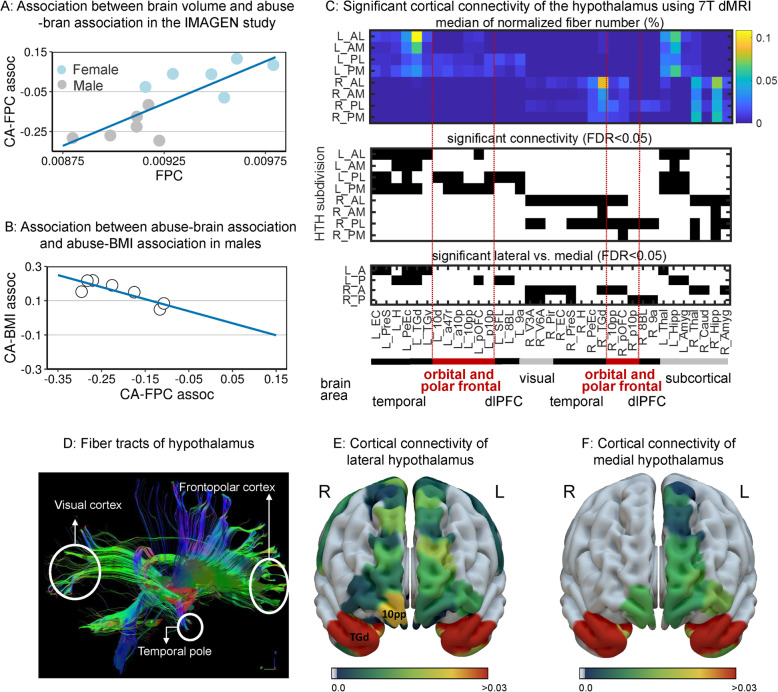
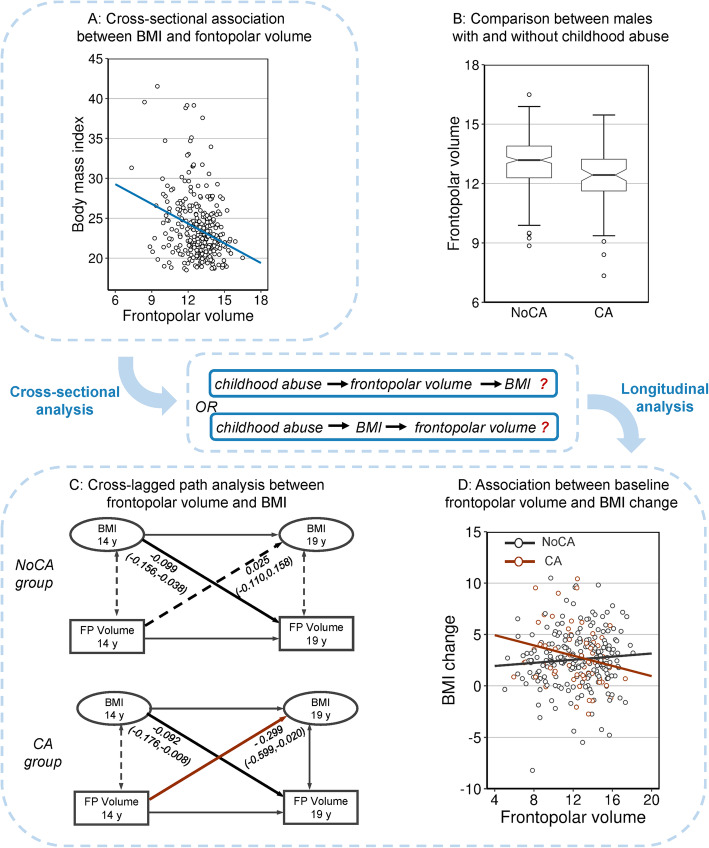
Background: Childhood trauma increases the risk for adult obesity through multiple complex pathways, and the neural substrates are yet to be determined. Methods: Participants from three population-based neuroimaging cohorts, including the IMAGEN cohort, the UK Biobank (UKB), and the Human Connectome Project (HCP), were recruited. Voxel-based morphometry analysis of both childhood trauma and body mass index (BMI) was performed in the longitudinal IMAGEN cohort; validation of the findings was performed in the UKB. White-matter connectivity analysis was conducted to study the structural connectivity between the identified brain region and subdivisions of the hypothalamus in the HCP. Results: In IMAGEN, a smaller frontopolar cortex (FPC) was associated with both childhood abuse (CA) (β = − .568, 95%CI − .942 to − .194; p = .003) and higher BMI (β = − .086, 95%CI − .128 to − .043; p < .001) in male participants, and these findings were validated in UKB. Across seven data collection sites, a stronger negative CA-FPC association was correlated with a higher positive CA-BMI association (β = − 1.033, 95%CI − 1.762 to − .305; p = .015). Using 7-T diffusion tensor imaging data (n = 156), we found that FPC was the third most connected cortical area with the hypothalamus, especially the lateral hypothalamus. A smaller FPC at age 14 contributed to higher BMI at age 19 in those male participants with a history of CA, and the CA-FPC interaction enabled a model at age 14 to account for some future weight gain during a 5-year follow-up (variance explained 5.8%). Conclusions: The findings highlight that a malfunctioning, top-down cognitive or behavioral control system, independent of genetic predisposition, putatively contributes to excessive weight gain in a particularly vulnerable population, and may inform treatment approaches.
Overview
The claims and statistics of this paper haven’t been checked yet.
Free: it reads the open-access text and checks the first 5 claims that cite a source we can check. Create a free account to check every claim.
Integrity signals
Registry
Cites
Statistics
Figures
Verification
Claims the paper makes
The claims and statistics of this paper haven’t been checked yet.
Free: it reads the open-access text and checks the first 5 claims that cite a source we can check. Create a free account to check every claim.
Claims other papers make about this one
Each is checked against this paper’s own text: does it say what the citing paper says it does?
The source backs part of the claim, not all of it — or backs it for a different population, condition or comparison.
In the citing paper
“Acceleration of aging-related processes can emerge as early as adolescence, driving inflammation, metabolic dysfunction, and increased psychiatric and cardiometabolic risk (Henje Blom et al., 2015; Luo et al., 2020; Rasmussen et al., 2020; Slopen et al., 2013; Tang et al., 2020; Widom et al., 2024).”
From Telomere trajectories from early adolescence to adulthood following early institutionalization: Protective effects of foster care in the Bucharest Early Intervention Project (2026) · cites this paper as Luo et al., 2020
Experimental — accuracy not yet measured
Self-check
Percentages, sums and reported differences re-computed from the paper’s own numbers.
The self-check needs the paper’s full text.
Citations
Cites
Tzourio-Mazoyer, N., Landeau, B., Papathanassiou, D., Crivello, F., Etard, O., Delcroix, N., Mazoyer, B., & Joliot, M. (2002) · NeuroImage · doi:10.1006/nimg.2001.0978 · Cited by 16,319 · cited 1×
“, 380,537 voxels defined by the automatic anatomic labeling atlas [50]) and considered the following covariates: data collecting site, handedness, and total intracranial volume (TIV).”
Background‘Small Changes' to Diet and Physical Activity Behaviors for Weight Management
Hills, A. P., Byrne, N. M., Lindstrom, R., & Hill, J. O. (2013) · Obesity Facts · doi:10.1159/000345030 · Cited by 9,493
The UK Biobank resource with deep phenotyping and genomic data
Bycroft, C., Freeman, C., Petkova, D., Band, G., Elliott, L. T., Sharp, K., Motyer, A., Vukcevic, D., Delaneau, O., O’Connell, J., et al. (2018) · Nature · doi:10.1038/s41586-018-0579-z · Cited by 8,876
SMITH, S., & NICHOLS, T. (2009) · NeuroImage · doi:10.1016/j.neuroimage.2008.03.061 · Cited by 5,250 · cited 1×
“05, 2tailed) [51] with cluster size greater than 217 voxels (approximately 4/3 × π × [3.”
BackgroundA multi-modal parcellation of human cerebral cortex
Glasser, M. F., Coalson, T. S., Robinson, E. C., Hacker, C. D., Harwell, J., Yacoub, E., Ugurbil, K., Andersson, J., Beckmann, C. F., Jenkinson, M., et al. (2016) · Nature · doi:10.1038/nature18933 · Cited by 5,111 · cited 1×
“We used state-of-the-art brain atlases, including HCP-MMP (multi-modal parcellation) for cortical areas [44] and CIT168 (California Institute of Technology) for the hypothalamus [45].”
MethodProspective Studies Collaboration (2009) · The Lancet · doi:10.1016/s0140-6736(09)60318-4 · Cited by 4,807
Genetic studies of body mass index yield new insights for obesity biology
Study, T. L. C., Locke, A. E., The ADIPOGen Consortium, The AGEN-BMI Working Group, The CARDIOGRAMplusC4D Consortium, The CKDGen Consortium, The, G. L. G. C., The, I. C. B. P., The MAGIC Investigators, The MuTHER Consortium, et al. (2015) · Nature · doi:10.1038/nature14177 · Cited by 4,534 · cited 1×
“To generate PRSBMI in IMAGEN, we used GWAS summary data from GIANT, which included 2, 554,637 SNPs and up to 339,224 individuals of European ancestry [36] (Additional file 1: Method S1).”
MethodInitial reliability and validity of a new retrospective measure of child abuse and neglect
(1994) · American Journal of Psychiatry · doi:10.1176/ajp.151.8.1132 · Cited by 3,577
Andersson, J. L. R., & Sotiropoulos, S. N. (2016) · NeuroImage · doi:10.1016/j.neuroimage.2015.10.019 · Cited by 3,500
Andersson, J. L. R., Skare, S., & Ashburner, J. (2003) · NeuroImage · doi:10.1016/s1053-8119(03)00336-7 · Cited by 3,469
The Human Connectome Project: A data acquisition perspective
Van Essen, D. C., Ugurbil, K., Auerbach, E., Barch, D., Behrens, T. E. J., Bucholz, R., Chang, A., Chen, L., Corbetta, M., Curtiss, S. W., et al. (2012) · NeuroImage · doi:10.1016/j.neuroimage.2012.02.018 · Cited by 2,680 · cited 5×
“T DTI data were provided by the Human Connectome Project, WU-Minn Consortium (Principal Investigators: David Van Essen and Kamil Ugurbil; https://www.humanconnectome.org/).”
BackgroundInfluentialOngur, D. (2000) · Cerebral Cortex · doi:10.1093/cercor/10.3.206 · Cited by 2,627 · cited 3×
“We found that volumetric shrinkage of the FPC (BA10 and BA32) quantitatively linked CA to adult overweight or Fig.”
BackgroundInfluentialOgden, C. L., Carroll, M. D., Lawman, H. G., Fryar, C. D., Kruszon-Moran, D., Kit, B. K., & Flegal, K. M. (2016) · JAMA · doi:10.1001/jama.2016.6361 · Cited by 2,178 · cited 1×
“Background Overweight and obesity affect one third of adults in developed countries [1], and life expectancy could be shortened by 2–4 years for those who became obese [2].”
BackgroundMultimodal population brain imaging in the UK Biobank prospective epidemiological study
Miller, K. L., Alfaro-Almagro, F., Bangerter, N. K., Thomas, D. L., Yacoub, E., Xu, J., Bartsch, A. J., Jbabdi, S., Sotiropoulos, S. N., Andersson, J. L. R., et al. (2016) · Nature Neuroscience · doi:10.1038/nn.4393 · Cited by 2,020
Mechanisms, Pathophysiology, and Management of Obesity
Heymsfield, S. B., & Wadden, T. A. (2017) · New England Journal of Medicine · doi:10.1056/nejmra1514009 · Cited by 1,867 · cited 1×
“Identifying the contributors to long-term weight gain will be essential for combating the obesity epidemic [4, 5].”
BackgroundThe effects of childhood maltreatment on brain structure, function and connectivity
Teicher, M. H., Samson, J. A., Anderson, C. M., & Ohashi, K. (2016) · Nature Reviews Neuroscience · doi:10.1038/nrn.2016.111 · Cited by 1,856 · cited 2×
“Human studies have begun to reveal enduring effects of childhood trauma on neural systems [12], including reduced gray matter volume (GMV) in the prefrontal cortex [16] and ventral striatum [17]; however, neural contributions to an NcC pathway remain to be determined.”
BackgroundGoodman, R., Ford, T., Richards, H., Gatward, R., & Meltzer, H. (2000) · Journal of Child Psychology and Psychiatry · doi:10.1111/j.1469-7610.2000.tb02345.x · Cited by 1,755
Validity of the Childhood Trauma Questionnaire in an Adolescent Psychiatric Population
BERNSTEIN, D. P., AHLUVALIA, T., POGGE, D., & HANDELSMAN, L. (1997) · Journal of the American Academy of Child & Adolescent Psychiatry · doi:10.1097/00004583-199703000-00012 · Cited by 1,574
Family income, parental education and brain structure in children and adolescents
Noble, K. G., Houston, S. M., Brito, N. H., Bartsch, H., Kan, E., Kuperman, J. M., Akshoomoff, N., Amaral, D. G., Bloss, C. S., Libiger, O., et al. (2015) · Nature Neuroscience · doi:10.1038/nn.3983 · Cited by 1,423 · cited 1×
“To ensure specificity of our finding, we accounted for potential confounding factors: polygenetic risk for obesity [23], family socioeconomical status [24], changes due to illegal drug use [25], and elevated depressive symptoms [26].”
BackgroundMedicare's search for effective obesity treatments: Diets are not the answer.
Mann, T., Tomiyama, A. J., Westling, E., Lew, A.-M., Samuels, B., & Chatman, J. (2007) · American Psychologist · doi:10.1037/0003-066x.62.3.220 · Cited by 1,208 · cited 1×
“Our results may partly explain why dieting for long-term weight management is so difficult [68].”
BackgroundA meta-analysis of sex differences in human brain structure
Ruigrok, A. N. V., Salimi-Khorshidi, G., Lai, M.-C., Baron-Cohen, S., Lombardo, M. V., Tait, R. J., & Suckling, J. (2014) · Neuroscience & Biobehavioral Reviews · doi:10.1016/j.neubiorev.2013.12.004 · Cited by 1,192
PRSice: Polygenic Risk Score software
Euesden, J., Lewis, C. M., & O’Reilly, P. F. (2015) · Bioinformatics · doi:10.1093/bioinformatics/btu848 · Cited by 1,191
Deterministic diffusion fiber tracking improved by quantitative anisotropy
Yeh, F.-C., Verstynen, T. D., Wang, Y., Fernández-Miranda, J. C., & Tseng, W.-Y. I. (2013) · PLoS ONE · doi:10.1371/journal.pone.0080713 · Cited by 1,121
Handbook of developmental research methods
Laursen, B. P., Little, T. D., & Card, N. A. (2012) · Cited by 1,033
Generalized ${ q}$-Sampling Imaging
Yeh, F.-C., Wedeen, V. J., & Tseng, W.-Y. I. (2010) · IEEE Transactions on Medical Imaging · doi:10.1109/tmi.2010.2045126 · Cited by 1,019
Advances in diffusion MRI acquisition and processing in the Human Connectome Project
Sotiropoulos, S. N., Jbabdi, S., Xu, J., Andersson, J. L., Moeller, S., Auerbach, E. J., Glasser, M. F., Hernandez, M., Sapiro, G., Jenkinson, M., et al. (2013) · NeuroImage · doi:10.1016/j.neuroimage.2013.05.057 · Cited by 891 · cited 3×
“T MAGNETOM scanner with a high spatial resolution of 1.05 mm isotropic (Additional file 1: Method S3) [49].”
BackgroundInfluentialMaintenance of Lost Weight and Long-Term Management of Obesity
Hall, K. D., & Kahan, S. (2018) · Medical Clinics of North America · doi:10.1016/j.mcna.2017.08.012 · Cited by 876 · cited 1×
“Obesity interventions are effective in the short term, but subsequent weight regain often occurs: long-term weight management is a primary treatment challenge [3].”
BackgroundRelation Between Obesity and Blunted Striatal Response to Food Is Moderated by Taq IA A1 Allele
Stice, E., Spoor, S., Bohon, C., & Small, D. M. (2008) · Science · doi:10.1126/science.1161550 · Cited by 786
Anterior Prefrontal Function and the Limits of Human Decision-Making
Koechlin, E., & Hyafil, A. (2007) · Science · doi:10.1126/science.1142995 · Cited by 747 · cited 1×
“This could correspond, for example, to better adherence to dietary strategies of avoiding exposure to appealing yet high calorie food [57].”
BackgroundChildhood maltreatment and obesity: systematic review and meta-analysis
Danese, A., & Tan, M. (2014) · Molecular Psychiatry · doi:10.1038/mp.2013.54 · Cited by 709 · cited 2×
“In observational studies, childhood trauma has been identified as a key environmental risk factor that can disrupt brain development [12, 13] and increase risk for obesity [14, 15].”
BackgroundMethodInformatics and Data Mining Tools and Strategies for the Human Connectome Project
Marcus, D. S., Harwell, J., Olsen, T., Hodge, M., Glasser, M. F., Prior, F., Jenkinson, M., Laumann, T., Curtiss, S. W., & Van Essen, D. C. (2011) · Frontiers in Neuroinformatics · doi:10.3389/fninf.2011.00004 · Cited by 689
The IMAGEN study: reinforcement-related behaviour in normal brain function and psychopathology
Schumann, G., Loth, E., Banaschewski, T., Barbot, A., Barker, G., Büchel, C., Conrod, P. J., Dalley, J. W., Flor, H., Gallinat, J., et al. (2010) · Molecular Psychiatry · doi:10.1038/mp.2010.4 · Cited by 626 · cited 4×
“IMAGEN is a multicenter longitudinal study of healthy youths in Europe [22].”
BackgroundMethodInfluentialSelf-citationMotivation and cognitive control in the human prefrontal cortex
Kouneiher, F., Charron, S., & Koechlin, E. (2009) · Nature Neuroscience · doi:10.1038/nn.2321 · Cited by 590 · cited 2×
“may be relevant for “resisting temptation”: the frontal pole has been implicated in deciding to avoid situations requiring difficult motivational choices—the temporal discounting of reward [66]—consistent with hierarchical models of cognitive control [56].”
BackgroundNIH working group report: Innovative research to improve maintenance of weight loss
MacLean, P. S., Wing, R. R., Davidson, T., Epstein, L., Goodpaster, B., Hall, K. D., Levin, B. E., Perri, M. G., Rolls, B. J., Rosenbaum, M., et al. (2015) · Obesity · doi:10.1002/oby.20967 · Cited by 548 · cited 1×
“Identifying the contributors to long-term weight gain will be essential for combating the obesity epidemic [4, 5].”
BackgroundPrefrontal cortical projections to the hypothalamus in Macaque monkeys
Öngür, D., An, X., & Price, J. L. (1998) · The Journal of Comparative Neurology · doi:10.1002/(sici)1096-9861(19981130)401:4<480::aid-cne4>3.3.co;2-6 · Cited by 541 · cited 2×
“Human resting-state functional connectivity has been reported between the PFC and the hypothalamus [75], and there is evidence for structural connectivity between these regions in the primate brain [9], but this has not yet been confirmed for the human brain due to the small volume of the hypothalamus and the complexi…”
BackgroundA high-resolution probabilistic in vivo atlas of human subcortical brain nuclei
Pauli, W. M., Nili, A. N., & Tyszka, J. M. (2018) · Scientific Data · doi:10.1038/sdata.2018.63 · Cited by 517
Kelly, D. M., & Jones, T. H. (2015) · Obesity Reviews · doi:10.1111/obr.12282 · Cited by 487 · cited 1×
“Low testosterone levels have been implicated in metabolic dysfunction, especially associated with increased central adiposity and reduced lean mass in males, while weight loss has also been linked to increased testosterone levels [80].”
BackgroundVal-Laillet, D., Aarts, E., Weber, B., Ferrari, M., Quaresima, V., Stoeckel, L. E., Alonso-Alonso, M., Audette, M., Malbert, C. H., & Stice, E. (2015) · NeuroImage: Clinical · doi:10.1016/j.nicl.2015.03.016 · Cited by 442 · cited 2×
“To date, most studies have targeted the dorsolateral PFC, but therapeutic effects have been inconclusive [84].”
BackgroundDemos, K. E., Heatherton, T. F., & Kelley, W. M. (2012) · The Journal of Neuroscience · doi:10.1523/jneurosci.5958-11.2012 · Cited by 410 · cited 1×
“Thus, some studies have found, associated with excessive future weight gain a few years later, increased activation of reward regions occurring in response to palatable food [60, 61] or food cues [62, 63], while others have found that reduced volumes [64] or abnormal activity [65] in the prefrontal inhibitory control…”
BackgroundA multidimensional assessment of stressful life events among adolescents: Derivation and correlates
Newcomb, M. D., Huba, G. J., & Bentler, P. M. (1981) · Journal of Health and Social Behavior · doi:10.2307/2136681 · Cited by 359
Gogtay, N., & Thompson, P. M. (2010) · Brain and Cognition · doi:10.1016/j.bandc.2009.08.009 · Cited by 347 · cited 1×
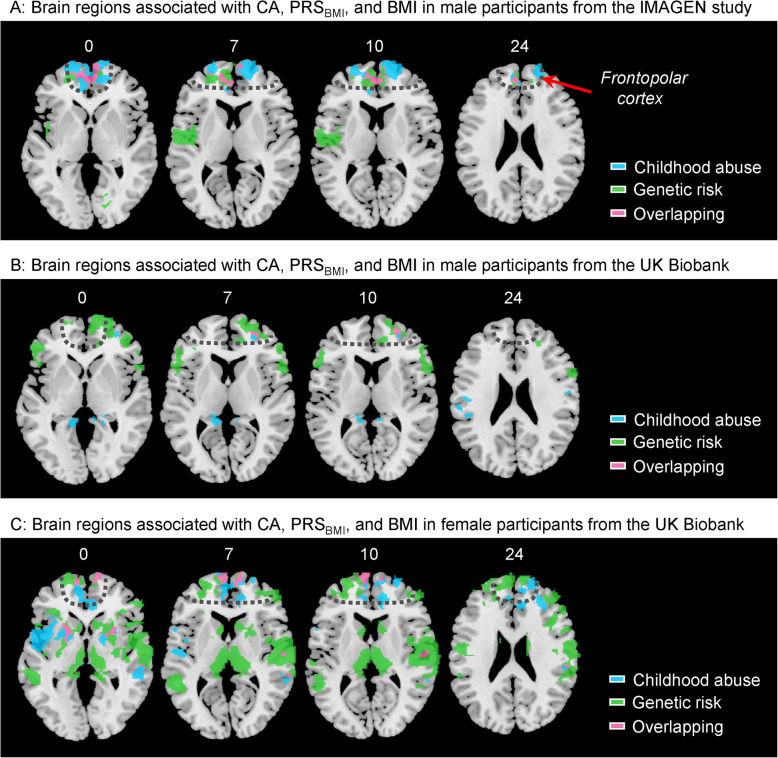
“Regardless of age-related effects on the brain [55], we were able to confirm that smaller FPC was associated with both CA and higher BMI in male participants (n = 1725) from UKB (Fig.”
BackgroundEdmiston, E. E. (2011) · Archives of Pediatrics & Adolescent Medicine · doi:10.1001/archpediatrics.2011.565 · Cited by 341 · cited 1×
“Human studies have begun to reveal enduring effects of childhood trauma on neural systems [12], including reduced gray matter volume (GMV) in the prefrontal cortex [16] and ventral striatum [17]; however, neural contributions to an NcC pathway remain to be determined.”
BackgroundPreschoolers' Delay of Gratification Predicts their Body Mass 30 Years Later
Schlam, T. R., Wilson, N. L., Shoda, Y., Mischel, W., & Ayduk, O. (2013) · The Journal of Pediatrics · doi:10.1016/j.jpeds.2012.06.049 · Cited by 333 · cited 1×
“Cognitive control in 3-year-olds predicts their weight status [69] 30 years [70] later, and our finding of reduced FPC volume associated with higher BMI may provide a neuroanatomical basis for this observation.”
BackgroundNeafsey, E. J. (1991) · Progress in Brain Research · doi:10.1016/s0079-6123(08)62679-5 · Cited by 305 · cited 1×
“The FPC cluster we identified is located in the medial prefrontal cortex (mPFC; mainly BA24, BA25, BA32, and BA10) [8], and this network provides the origin of most of frontal projections to the hypothalamus in both rats [73] and monkeys [9].”
BackgroundThe Prefrontal Cortex and Obesity: A Health Neuroscience Perspective
Lowe, C. J., Reichelt, A. C., & Hall, P. A. (2019) · Trends in Cognitive Sciences · doi:10.1016/j.tics.2019.01.005 · Cited by 293 · cited 2×
“The findings on FPC provide new evidence on how higher-order cognitive and motivational control may be essential for success in weight management [10].”
BackgroundEffects of childhood abuse on adult obesity: a systematic review and meta‐analysis
Hemmingsson, E., Johansson, K., & Reynisdottir, S. (2014) · Obesity Reviews · doi:10.1111/obr.12216 · Cited by 265 · cited 1×
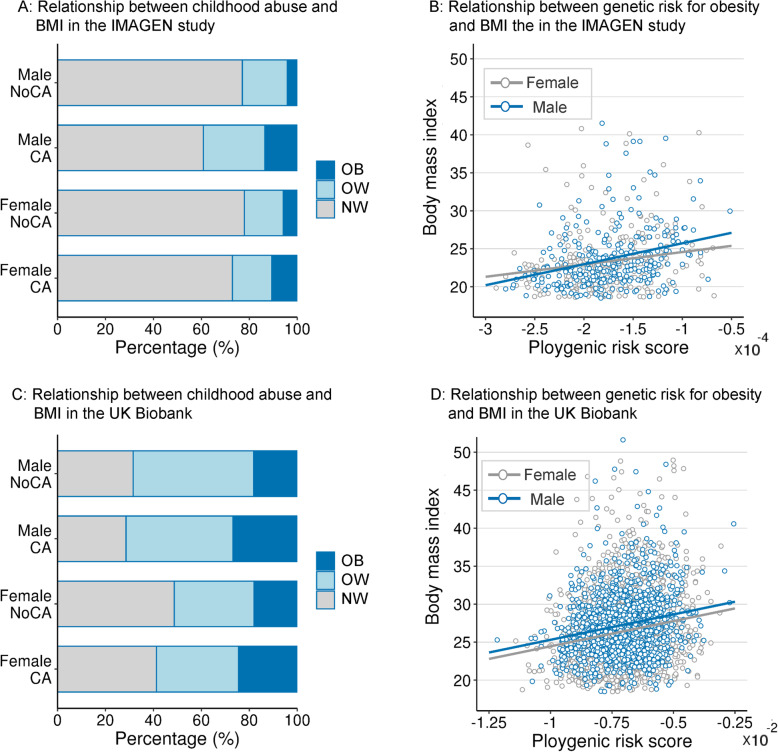
“Consistent with previous reports [14, 83], the CA prevalence was as high as 1 in 4 young male participants in our sample, and the risk of being overweight or obese at age 19 was 2.”
MethodThe hardship of obesity: a soft-wired hypothalamus
Horvath, T. L. (2005) · Nature Neuroscience · doi:10.1038/nn1453 · Cited by 255 · cited 1×
“, the hypothalamus) [72] provides a structural basis for the neurocognitive control of eating behavior.”
BackgroundAndersson, J. L. R., & Sotiropoulos, S. N. (2015) · NeuroImage · doi:10.1016/j.neuroimage.2015.07.067 · Cited by 254
Cytoarchitecture, probability maps and functions of the human frontal pole
Bludau, S., Eickhoff, S. B., Mohlberg, H., Caspers, S., Laird, A. R., Fox, P. T., Schleicher, A., Zilles, K., & Amunts, K. (2014) · NeuroImage · doi:10.1016/j.neuroimage.2013.05.052 · Cited by 242 · cited 1×
“The lateral FPC has been related to inhibitory control, while the medial FPC has been associated with both emotion and reward processing [59].”
BackgroundFrontal pole cortex: encoding ends at the end of the endbrain
Tsujimoto, S., Genovesio, A., & Wise, S. P. (2011) · Trends in Cognitive Sciences · doi:10.1016/j.tics.2011.02.001 · Cited by 206
Obesity, Brain Volume, and White Matter Microstructure at MRI: A Cross-sectional UK Biobank Study
Dekkers, I. A., Jansen, P. R., & Lamb, H. J. (2019) · Radiology · doi:10.1148/radiol.2019181012 · Cited by 200 · cited 1×
“Obesity itself can affect the brain [20, 21]: evidence of neural changes temporarily preceding excessive weight gain would further strengthen the case for an NcC pathway.”
BackgroundYokum, S., Ng, J., & Stice, E. (2012) · International Journal of Obesity · doi:10.1038/ijo.2011.175 · Cited by 199 · cited 1×
“Thus, some studies have found, associated with excessive future weight gain a few years later, increased activation of reward regions occurring in response to palatable food [60, 61] or food cues [62, 63], while others have found that reduced volumes [64] or abnormal activity [65] in the prefrontal inhibitory control…”
BackgroundEarly childhood stress exposure, reward pathways, and adult decision making
Birn, R. M., Roeber, B. J., & Pollak, S. D. (2017) · Proceedings of the National Academy of Sciences · doi:10.1073/pnas.1708791114 · Cited by 197 · cited 1×
“In observational studies, childhood trauma has been identified as a key environmental risk factor that can disrupt brain development [12, 13] and increase risk for obesity [14, 15].”
BackgroundfMRI reactivity on a delay discounting task predicts weight gain in obese women
Kishinevsky, F. I., Cox, J. E., Murdaugh, D. L., Stoeckel, L. E., Cook, E. W., & Weller, R. E. (2012) · Appetite · doi:10.1016/j.appet.2011.11.029 · Cited by 191 · cited 1×
“Thus, some studies have found, associated with excessive future weight gain a few years later, increased activation of reward regions occurring in response to palatable food [60, 61] or food cues [62, 63], while others have found that reduced volumes [64] or abnormal activity [65] in the prefrontal inhibitory control…”
BackgroundSotiropoulos, S. N., Moeller, S., Jbabdi, S., Xu, J., Andersson, J. L., Auerbach, E. J., Yacoub, E., Feinberg, D., Setsompop, K., Wald, L. L., et al. (2013) · Magnetic Resonance in Medicine · doi:10.1002/mrm.24623 · Cited by 186
Fuemmeler, B. F., Dedert, E., McClernon, F. J., & Beckham, J. C. (2009) · Journal of Traumatic Stress · doi:10.1002/jts.20421 · Cited by 180 · cited 1×
“The identified sex differences are also supported by both animal models for childhood trauma [78] and human epidemiological studies on the traumaobesity association [79].”
ResultObesity remodels activity and transcriptional state of a lateral hypothalamic brake on feeding
Rossi, M. A., Basiri, M. L., McHenry, J. A., Kosyk, O., Otis, J. M., van den Munkhof, H. E., Bryois, J., Hübel, C., Breen, G., Guo, W., et al. (2019) · Science · doi:10.1126/science.aax1184 · Cited by 164 · cited 1×
“Obesity itself can affect the brain [20, 21]: evidence of neural changes temporarily preceding excessive weight gain would further strengthen the case for an NcC pathway.”
BackgroundGorka, A. X., Hanson, J. L., Radtke, S. R., & Hariri, A. R. (2014) · Biology of Mood & Anxiety Disorders · doi:10.1186/2045-5380-4-12 · Cited by 151 · cited 1×
“Human studies have begun to reveal enduring effects of childhood trauma on neural systems [12], including reduced gray matter volume (GMV) in the prefrontal cortex [16] and ventral striatum [17]; however, neural contributions to an NcC pathway remain to be determined.”
BackgroundSun, X., Kroemer, N. B., Veldhuizen, M. G., Babbs, A. E., de Araujo, I. E., Gitelman, D. R., Sherwin, R. S., Sinha, R., & Small, D. M. (2015) · The Journal of Neuroscience · doi:10.1523/jneurosci.3884-14.2015 · Cited by 147 · cited 1×
“Thus, some studies have found, associated with excessive future weight gain a few years later, increased activation of reward regions occurring in response to palatable food [60, 61] or food cues [62, 63], while others have found that reduced volumes [64] or abnormal activity [65] in the prefrontal inhibitory control…”
BackgroundOpel, N., Redlich, R., Dohm, K., Zaremba, D., Goltermann, J., Repple, J., Kaehler, C., Grotegerd, D., Leehr, E. J., Böhnlein, J., et al. (2019) · The Lancet Psychiatry · doi:10.1016/s2215-0366(19)30044-6 · Cited by 145
Ganguly, P., & Brenhouse, H. C. (2015) · Developmental Cognitive Neuroscience · doi:10.1016/j.dcn.2014.07.001 · Cited by 136 · cited 1×
“The identified sex differences are also supported by both animal models for childhood trauma [78] and human epidemiological studies on the traumaobesity association [79].”
ResultKita, H., & Oomura, Y. (1981) · Brain Research · doi:10.1016/0006-8993(81)91244-0 · Cited by 128
Pausova, Z., Paus, T., Abrahamowicz, M., Almerigi, J., Arbour, N., Bernard, M., Gaudet, D., Hanzalek, P., Hamet, P., Evans, A. C., et al. (2007) · Human Brain Mapping · doi:10.1002/hbm.20402 · Cited by 124
Self-controlled children stay leaner in the transition to adolescence
Duckworth, A. L., Tsukayama, E., & Geier, A. B. (2010) · Appetite · doi:10.1016/j.appet.2009.11.016 · Cited by 123 · cited 1×
“Cognitive control in 3-year-olds predicts their weight status [69] 30 years [70] later, and our finding of reduced FPC volume associated with higher BMI may provide a neuroanatomical basis for this observation.”
BackgroundRestricting Temptations: Neural Mechanisms of Precommitment
Crockett, M. J., Braams, B. R., Clark, L., Tobler, P. N., Robbins, T. W., & Kalenscher, T. (2013) · Neuron · doi:10.1016/j.neuron.2013.05.028 · Cited by 122 · cited 2×
“may be relevant for “resisting temptation”: the frontal pole has been implicated in deciding to avoid situations requiring difficult motivational choices—the temporal discounting of reward [66]—consistent with hierarchical models of cognitive control [56].”
BackgroundSelf-citationAddictive Illegal Drugs: Structural Neuroimaging
Geibprasert, S., Gallucci, M., & Krings, T. (2009) · American Journal of Neuroradiology · doi:10.3174/ajnr.a1811 · Cited by 113 · cited 1×
“To ensure specificity of our finding, we accounted for potential confounding factors: polygenetic risk for obesity [23], family socioeconomical status [24], changes due to illegal drug use [25], and elevated depressive symptoms [26].”
BackgroundThe Cognitive Control of Eating and Body Weight: It’s More Than What You “Think”
Davidson, T. L., Jones, S., Roy, M., & Stevenson, R. J. (2019) · Frontiers in Psychology · doi:10.3389/fpsyg.2019.00062 · Cited by 112 · cited 1×
“Long-term weight management involves more than detecting physiological signals about hunger or satiety: cognitive control is required to resist urges to eat and helps avoid or shift attention away from food cues in the environment or retrieved from memory [6].”
BackgroundBurger, K. S., & Stice, E. (2014) · NeuroImage · doi:10.1016/j.neuroimage.2014.05.066 · Cited by 109 · cited 1×
“Thus, some studies have found, associated with excessive future weight gain a few years later, increased activation of reward regions occurring in response to palatable food [60, 61] or food cues [62, 63], while others have found that reduced volumes [64] or abnormal activity [65] in the prefrontal inhibitory control…”
BackgroundNeuroendocrine coupling across adolescence and the longitudinal influence of early life stress
Ruttle, P. L., Shirtcliff, E. A., Armstrong, J. M., Klein, M. H., & Essex, M. J. (2015) · Developmental Psychobiology · doi:10.1002/dev.21138 · Cited by 106 · cited 1×
“Childhood trauma has been associated with negative testosteronecortisol coupling in adolescent females, but positive testosterone-cortisol coupling in adolescent males [81], since childhood trauma can alter the coupling between hypothalamic pituitary adrenal axis and hypothalamuspituitary-gonadal [82].”
BackgroundWhite matter connectivity of human hypothalamus
Lemaire, J., Frew, A. J., McArthur, D. L., Gorgulho, A. A., Alger, J. R., Salomon, N., Chen, C., Behnke, E., & Salles, A. A. F. D. (2010) · Brain Research · doi:10.1016/j.brainres.2010.11.072 · Cited by 104 · cited 1×
“Human resting-state functional connectivity has been reported between the PFC and the hypothalamus [75], and there is evidence for structural connectivity between these regions in the primate brain [9], but this has not yet been confirmed for the human brain due to the small volume of the hypothalamus and the complexi…”
BackgroundGardner, R., Feely, A., Layte, R., Williams, J. M., & McGavock, J. (2019) · Pediatric Research · doi:10.1038/s41390-019-0414-8 · Cited by 96
Neurocognitive and Hormonal Correlates of Voluntary Weight Loss in Humans
Neseliler, S., Hu, W., Larcher, K., Zacchia, M., Dadar, M., Scala, S. G., Lamarche, M., Zeighami, Y., Stotland, S. C., Larocque, M., et al. (2019) · Cell Metabolism · doi:10.1016/j.cmet.2018.09.024 · Cited by 80 · cited 1×
“This may be particularly true when dieting begins to produce weight loss, which has been associated with decreased leptin and increased ghrelin levels in blood, changes that have been associated with increased PFC activity in response to food cues [67].”
BackgroundYam, K. Y., Naninck, E. F. G., Abbink, M. R., la Fleur, S. E., Schipper, L., van den Beukel, J. C., Grefhorst, A., Oosting, A., van der Beek, E. M., Lucassen, P. J., et al. (2017) · Psychoneuroendocrinology · doi:10.1016/j.psyneuen.2016.12.012 · Cited by 78 · cited 2×
“For example, a 2017 study has demonstrated that compared with the controls, a chronic early-life stress (ES; between P2 and P9) mouse model actually had reduced mRNA expression of leptin lasting to adulthood and both reduced total body fat mass and impaired learning and memory in adulthood; however, compared with the…”
ResultPrefrontal gray matter volume mediates genetic risks for obesity
Opel, N., Redlich, R., Kaehler, C., Grotegerd, D., Dohm, K., Heindel, W. L., Kugel, H., Thalamuthu, A., Koutsouleris, N., Arolt, V., et al. (2017) · Molecular Psychiatry · doi:10.1038/mp.2017.51 · Cited by 78 · cited 1×
“We first confirmed a previous finding [54] that lower GMV of a frontopolar cluster was associated with both greater PRSBMI and higher BMI in male participants from IMAGEN (Additional file 1: Table S3).”
Resultthe IMAGEN Consortium, Desrivières, S., Lourdusamy, A., Tao, C., Toro, R., Jia, T., Loth, E., Medina, L. M., Kepa, A., Fernandes, A., et al. (2015) · Molecular Psychiatry · doi:10.1038/mp.2013.197 · Cited by 71
Self-citationLuo, Q., Chen, Q., Wang, W., Desrivières, S., Quinlan, E. B., Jia, T., Macare, C., Robert, G. H., Cui, J., Guedj, M., et al. (2019) · JAMA Psychiatry · doi:10.1001/jamapsychiatry.2018.4126 · Cited by 70 · cited 2×
“In IMAGEN, T1-weighted images were collected using 3-T scanners and the ADNI protocols [33].”
BackgroundMethodSelf-citationScaife, J. C., Godier-McBard, L. R., Reinecke, A., Harmer, C. J., & Park, R. J. (2016) · Psychiatry Research Neuroimaging · doi:10.1016/j.pscychresns.2016.10.004 · Cited by 67
Everaerd, D., Klumpers, F., Zwiers, M. P., Guadalupe, T. M., Franke, B., van Oostrom, I., Schene, A. H., Fernández, G., & Tendolkar, I. (2015) · Neuropsychopharmacology · doi:10.1038/npp.2015.344 · Cited by 65 · cited 1×
“Neural changes after childhood trauma are additionally modulated by sex [18]: brain development is sex-dimorphic [19] and an NcC pathway may be sexdimorphic as well.”
BackgroundFragkaki, I., Cima, M., & Granic, I. (2017) · Psychoneuroendocrinology · doi:10.1016/j.psyneuen.2017.11.005 · Cited by 57 · cited 1×
“Childhood trauma has been associated with negative testosteronecortisol coupling in adolescent females, but positive testosterone-cortisol coupling in adolescent males [81], since childhood trauma can alter the coupling between hypothalamic pituitary adrenal axis and hypothalamuspituitary-gonadal [82].”
BackgroundLateral–Medial Dissociation in Orbitofrontal Cortex–Hypothalamus Connectivity
Hirose, S., Osada, T., Ogawa, A., Tanaka, M., Wada, H., Yoshizawa, Y., Imai, Y., Machida, T., Akahane, M., Shirouzu, I., et al. (2016) · Frontiers in Human Neuroscience · doi:10.3389/fnhum.2016.00244 · Cited by 43 · cited 1×
“Human resting-state functional connectivity has been reported between the PFC and the hypothalamus [75], and there is evidence for structural connectivity between these regions in the primate brain [9], but this has not yet been confirmed for the human brain due to the small volume of the hypothalamus and the complexi…”
BackgroundKamali, A., Zhang, C. C., Riascos, R., Tandon, N., Bonfante-Mejia, E. E., Patel, R., Lincoln, J. A., Rabiei, P., Ocasio, L., Younes, K., et al. (2018) · Scientific Reports · doi:10.1038/s41598-018-23452-w · Cited by 37 · cited 1×
“Human resting-state functional connectivity has been reported between the PFC and the hypothalamus [75], and there is evidence for structural connectivity between these regions in the primate brain [9], but this has not yet been confirmed for the human brain due to the small volume of the hypothalamus and the complexi…”
BackgroundOpel, N., Redlich, R., Repple, J., Flint, C., Grotegerd, D., Dohm, K., Zaremba, D., Goltermann, J., Steinmann, L. A., Krughöfer, R., et al. (2018) · Psychoneuroendocrinology · doi:10.1016/j.psyneuen.2018.09.027 · Cited by 32 · cited 1×
“To ensure specificity of our finding, we accounted for potential confounding factors: polygenetic risk for obesity [23], family socioeconomical status [24], changes due to illegal drug use [25], and elevated depressive symptoms [26].”
BackgroundClarke, R. E., Verdejo‐García, A., & Andrews, Z. B. (2018) · Journal of Neurochemistry · doi:10.1111/jnc.14455 · Cited by 24 · cited 1×
“It has long been hypothesized that the communication between the hypothalamus and the cortical regions may influence food choices, based on the observations that the reward value of food can be influenced by metabolic state [74].”
BackgroundKennedy, J. T., Astafiev, S. V., Golosheykin, S., Korucuoglu, O., & Anokhin, A. P. (2019) · NeuroImage · doi:10.1016/j.neuroimage.2019.05.053 · Cited by 14 · cited 1×
“To ensure specificity of our finding, we accounted for potential confounding factors: polygenetic risk for obesity [23], family socioeconomical status [24], changes due to illegal drug use [25], and elevated depressive symptoms [26].”
Background(2012)
Research works printed but not linked: 1
- Bernstein D Fink L Bernstein D Childhood trauma questionnaire: a retrospective self-report manual 1998
Cited by
Pollok, T. M., Kaiser, A., Kraaijenvanger, E. J., Monninger, M., Brandeis, D., Banaschewski, T., Eickhoff, S. B., & Holz, N. E. (2022) · Neuroscience & Biobehavioral Reviews · doi:10.1016/j.neubiorev.2022.104589 · Cited by 86
Self-citationVaidya, N., Marquand, A. F., Nees, F., Siehl, S., & Schumann, G. (2024) · Molecular Psychiatry · doi:10.1038/s41380-024-02556-y · Cited by 88
Self-citationYang, W., Jin, S., Duan, W., Yu, H., Ping, L., Shen, Z., Cheng, Y., Xu, X., & Zhou, C. (2023) · Psychological Medicine · doi:10.1017/s0033291723000661 · Cited by 62
“…2022), schizophrenia (Cancel, Dallel, Zine, El-Hage, & Fakra, 2019; D ’ Andrea et al., 2022; Sideli et al., 2020), substance abuse (Hughes et al., 2017), eating disorders (Cascino et al., 2022; Luo et al., 2020), as well as functional somatic and visceral pain syndromes (Chandan et al., 2020).”
Mitigating Weight Bias in the Clinical Setting: A New Approach to Care
Olson, S., Muñoz, E. G., Solis, E., & Bradford, H. M. (2023) · Journal of Midwifery & Women s Health · doi:10.1111/jmwh.13578 · Cited by 27
Setting Preconception Care Priorities in Australia Using a Delphi Technique
Boyle, J. A., Black, K. I., Dorney, E., Amor, D. J., Brown, L., Callander, E. J., Camilleri, R., Cheney, K., Gordon, A., Hammarberg, K., et al. (2022) · Seminars in Reproductive Medicine · doi:10.1055/s-0042-1749683 · Cited by 21
Metadata
- Authors
- Luo, Q., Zhang, L., Huang, C.-C., Zheng, Y., Kanen, J. W., Zhao, Q., Yao, Y., Quinlan, E. B., Jia, T., Banaschewski, T., Bokde, A. L. W., Bromberg, U., Büchel, C., Flor, H., Frouin, V., Garavan, H., Gowland, P., Heinz, A., Ittermann, B., Martinot, J.-L., Martinot, M.-L. P., Nees, F., Orfanos, D. P., Poustka, L., Hohmann, S., Fröhner, J. H., Smolka, M. N., Walter, H., Whelan, R., Sahakian, B. J., Schumann, G., Li, F., Feng, J., Desrivières, S., Robbins, T. W., & for the IMAGEN consortium
- Affiliations
- Shanghai Jiao Tong University (CN)
- Fudan University (CN)
- University of Cambridge (GB)
- King's College London (GB)
- Heidelberg University (DE)
- Trinity College Dublin (IE)
- University Medical Center Hamburg-Eppendorf (DE)
- University of Mannheim (DE)
- Université Paris-Saclay (FR)
- University of Vermont (US)
- University of Nottingham (GB)
- Stiftung Charité (DE)
- Physikalisch-Technische Bundesanstalt (DE)
- Inserm (FR)
- Universitätsmedizin Göttingen (DE)
- Neuroimaging Center (DE)
- Corresponding author
- Li, Fei
- Feng, Jianfeng
- ORCID
- Luo, Qiang
- Zhang, Lingli
- Huang, Chu-Chung
- Zheng, Yan
- Kanen, Jonathan W.
- Zhao, Qi
- Yao, Ye
- Quinlan, Erin B.
- Jia, Tianye
- Banaschewski, Tobias
- Bokde, Arun L. W.
- Bromberg, Uli
- Büchel, Christian
- Flor, Herta
- Frouin, Vincent
- Garavan, Hugh
- Gowland, Penny
- Heinz, Andreas
- Ittermann, Bernd
- Martinot, Jean-Luc
- Martinot, Marie-Laure Paillère
- Nees, Frauke
- Orfanos, Dimitri Papadopoulos
- Poustka, Luise
- Hohmann, Sarah
- Fröhner, Juliane H.
- Smolka, Michael N.
- Walter, Henrik
- Whelan, Robert
- Sahakian, Barbara J.
- Li, Fei
- Feng, Jianfeng
- Desrivières, Sylvane
- Robbins, Trevor W.
- Venue
- BMC Medicine
- Published
- 2020-10-15
- Volume
- 18
- Issue
- 1
- Pages
- 278-278
- ISSN
- 1741-7015 (ISSN-L)
- PMC
- PMC7559717
- OpenAlex
- W3092663328
- Cited by
- 26
- References
- 87
- Citations by year
- 2026: 3 · 2025: 6 · 2024: 5 · 2023: 5 · 2022: 4 · 2021: 3
- FWCI
- 1.19
- Type
- journal article
- Language
- en
- Open access
- gold
- doi.org
- Licence
- cc-by
- creativecommons.org/licenses/by/4.0 (tdm)
- creativecommons.org/licenses/by/4.0 (vor)
- Locations
- BMC Medicine (publishedVersion, cc-by)
- PubMed Central (publishedVersion, cc-by)
- PubMed (publishedVersion)
- Apollo (University of Cambridge) (submittedVersion, cc-by)
- DOAJ (DOAJ: Directory of Open Access Journals) (submittedVersion)
- Research Portal (King's College London) (submittedVersion, other-oa)
- GoeScholar The Publication Server of the Georg-August-Universität Göttingen (Georg-August-Universität Göttingen) (submittedVersion)
- Apollo (cc-by)
- Apollo
- Funders
- National Key Research and Development Program of China (2018YFC0910503)
- National Natural Science Foundation of China (81873909, 81571031, 81761128035, and 81930095)
- Natural Science Foundation of Shanghai (17ZR1444400)
- Shanghai Municipal Science and Technology Major Project (2018SHZDZX01)
- Zhangjiang Lab
- Shanghai Municipal Commission of Health and Family Planning (2017ZZ02026, 2018BR33, 2017EKHWYX-02 and GDEK201709)
- Shanghai Shenkang Hospital Development (16CR2025B)
- Shanghai Municipal Education Commission (20152234)
- Shanghai Committee of Science and Technology (17XD1403200, 19410713500, and 18DZ2313505)
- Key projects of Guangdong Province (2018B030335001)
- Xinhua Hospital of Shanghai Jiao Tong University School of Medicine (Xinhua Hospital of Shanghai Jiao Tong University School of Medicine)
- key project of Shanghai Science and Technology Innovation Plan (16JC1420402)
- the National Natural Science Foundation of China (91630314)
- the Shanghai AI Platform for Diagnosis and Treatment of Brain Diseases
- the Project of Zhangjiang Hi-Tech District Management Committee
- Shanghai
- 111 project (B18015)
- the European Union-funded FP6 Integrated Project IMAGEN (LSHM-CT-2007-037286)
- the Horizon 2020 funded ERC Advanced Grant ‘STRATIFY’ (695313)
- ERANID (PR-ST-0416-10004)
- BRIDGET (MR/N027558/1)
- Associazione Emma e Ernesto Rulfo per la Genetica Medica
- MATRICS (603016)
- the Innovative Medicine Initiative Project EU-AIMS (115300-2)
- the Medical Research Council Grant 'c-VEDA' (MR/N000390/1)
- the Swedish Research Council FORMAS
- the Medical Research Council
- the National Institute for Health Research (NIHR) Biomedical Research Centre at South London and Maudsley NHS Foundation Trust and King’s College London
- the Bundesministeriumfür Bildung und Forschung (BMBF grants 01GS08152; 01EV0711; eMED SysAlc01ZX1311A; Forschungsnetz AERIAL 01EE1406A, 01EE1406B)
- the Deutsche Forschungsgemeinschaft (DFG grants SM 80/7-2, SFB 940/2)
- the Medical Research Foundation and Medical research council (MR/R00465X/1)
- the Human Brain Project
- ANR (project AF12-NEUR0008-01 - WM2NA, and ANR-12-SAMA-0004)
- the Fondation de France, the Fondation pour la Recherche Médicale
- the Mission Interministérielle de Lutte-contre-les-Drogues-et-les-Conduites-Addictives (MILDECA)
- the Assistance-Publique-Hôpitaux-de-Paris and INSERM
- Paris Sud University IDEX 2012
- the National Institutes of Health, Science Foundation Ireland (16/ERCD/3797)
- U.S.A. (RO1 MH085772-01A1)
- NIH Consortium grant (U54 EB020403)
- cross-NIH alliance that funds Big Data to Knowledge Centres of Excellence
- National Key R&D Program of China (2019YFA0709502)
- Topics
- Social Sciences › Psychology › Clinical Psychology › Child Abuse and Trauma
- Social Sciences › Psychology › Clinical Psychology › Eating Disorders and Behaviors
- Health Sciences › Medicine › Public Health, Environmental and Occupational Health › Obesity, Physical Activity, Diet
- Keywords
- childhood trauma, childhood abuse, obesity, body mass index, frontopolar cortex, hypothalamus, lateral hypothalamus, white matter connectivity, weight gain, brain structure, sex differences
- MeSH terms
- Adolescent, Adult, Brain, Child Abuse, Female, Humans, Longitudinal Studies, Male, Obesity, Surveys and Questionnaires, Weight Gain, Body Mass Index, Genetic Predisposition to Disease, Young Adult
About these checks
Registry, retraction, Cites and statistics results are computed, not judged, with one exception: a printed reference that no index lists is read once by a model before it counts as a citation error. Claims are extracted by a model and kept only when their quote appears verbatim in the text; each cited source is then checked, with a model’s help, for whether it says what the claim relies on. Those verdicts can be wrong — read the claim’s quote and the cited source before relying on one.
Statistics and arithmetic are recomputed, not judged.
Confidence bands are shown only for fields calibrated on our annotated test set. None is calibrated yet, so no band is shown.
What counts as a claim ›How we measure confidence ›How we check this ›
Are you an author, or do you see a problem with this page? Request a review
Data sources
Bibliographic data: Semantic Scholar, OpenAlex, Crossref.
Contains information from the Semantic Scholar Academic Graph Datasets, made available under the ODC Attribution License (ODC-BY 1.0).
Semantic Scholar’s data is described in: Kinney, R., et al. (2023). The Semantic Scholar Open Data Platform. arXiv:2301.10140.
