

Clinical trials of new drugs for Alzheimer disease
Open accessThe DOI matches its Crossref record; 83 of the 84 references it cites were found in a registry or an index; 21 of the 49 sources its claims cite were checked for support.
Abstract
Current AD drugs, including cholinesterase inhibitors and memantine, can only inhibit dementia symptoms for a limited period and cannot stop or reverse disease progression.
Overview
CoChat Summary
## TL;DR
This review surveys ongoing and recent clinical trials of Alzheimer disease drugs and argues that the field has shifted away from late-stage anti-amyloid strategies toward earlier intervention and more diverse targets. The authors conclude that effective disease-modifying therapies are still lacking, despite some encouraging signals for a few agents.
## Key findings
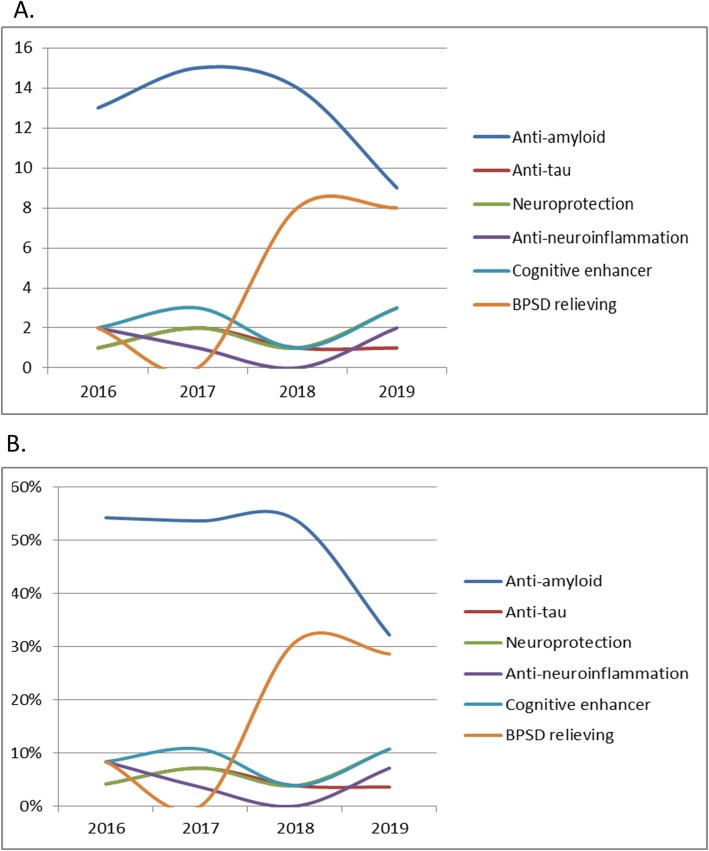
- In 2019, there were nine phase 3 anti-amyloid trials for eight drugs, and the number of anti-amyloid phase 3 trials was lower than in 2017 and 2018.
- Ongoing anti-amyloid trials had largely moved to prodromal or preclinical AD; no ongoing drug trials enrolled patients with advanced AD.
- Aducanumab showed dose-dependent amyloid removal and, in the updated EMERGE analysis, 23% less decline in CDR-SB, 27% less decline in ADAS-Cog 13, and 40% less decline in ADCS-ADL-MCI versus placebo at 78 weeks; amyloid plaque burden also decreased at 26 and 78 weeks (P < 0.001).
- Several programs were unsuccessful or stopped for lack of efficacy or other reasons, including azeliragon, pioglitazone, intepirdine, aripiprazole, nilvadipine, and the CNP520 arm of Generation Study 1, which “showed a worsening of cognitive function.”
## Methods
- The paper is a narrative review of Alzheimer disease clinical trials, organized by therapeutic target: anti-amyloid, anti-tau, antineuroinflammation, neuroprotection, cognitive enhancers, and BPSD-relieving therapy.
- The authors state they reviewed the current state of clinical trials at clinicaltrials.gov, along with the underlying mechanisms and reasons prior trials failed.
- Main analysis is descriptive synthesis of trial status, phases, targets, endpoints, and reported outcomes; no original participant-level statistical analysis is reported.
## Limitations
- The paper does not describe a systematic search strategy, inclusion/exclusion criteria, or formal risk-of-bias assessment; this is evident from the text.
- It is a review of trial registrations and reported results, so its conclusions depend on available public reports and may be limited by incomplete disclosure of some trial findings; this is evident from the text.
- The authors do not report pooled effect estimates or meta-analytic results; instead, the evidence is presented trial by trial.
Model-written summary. Check it against the paper before relying on it.
Integrity signals
Registry
Cites
Statistics
Figures
Verification
Claims the paper makes
16 Valid · 5 Not valid · 18 Not checked · 32 Own results and interpretations
The cited sources support only part of this claim — read each source’s verdict below.
In the paper
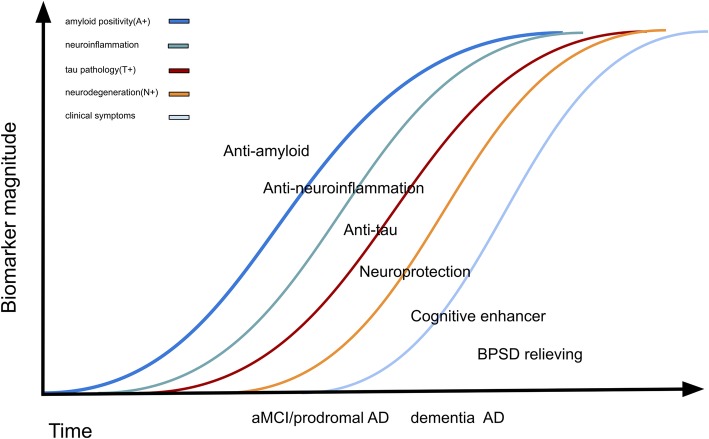
“Molecular imaging studies such as those using amyloid positron emission tomography (PET) have shown that Aβ deposition reaches a plateau before brain atrophy can be identified from structural magnetic resonance imaging (MRI) and cognitive symptoms [15, 19].”
§ Clinical trials of new drugs for Alzheimer disease > Introduction
What the sources say
- Not checked — no full text of the sourcecites [15] Kang J Lemaire HG Unterbeck A Salbaum JM Masters CL Grzeschik KH The precursor of Alzheimer's disease amyloid A4 protein resembles a cell-surface receptor Nature 1987 325 6106 733 736 10.1038/325733a0 2881207 source
- Partly supportedcites [19] Mormino EC Kluth JT Madison CM Rabinovici GD Baker SL Miller BL Episodic memory loss is related to hippocampal-mediated beta-amyloid deposition in elderly subjects Brain J Neurol 2009 132 Pt 5 1310 1323 10.1093/brain/awn320 PMC2677792 19042931 sourceExperimental — accuracy not yet measured
Our copy of Mormino et al. (2009) supports only the sequencing element of the claim: the Discussion section 'Ab burden and EM' states that 'modest PIB increases were associated with HV atrophy... [but] were not accompanied by EM memory deficits after removal of the two subjects with highest PIB values', and 'Quantifying and classifying PIB uptake' says 'the negative impact of Ab pathology begins during initial stages of accumulation in non-demented individuals, far before Alzheimer's disease-comparable levels are reached' — i.e. Aβ-related hippocampal atrophy precedes detectable episodic memory symptoms. However, no passage in our copy states or implies that Aβ deposition 'reaches a plateau'; on the contrary, the Introduction and Discussion describe PIB uptake as continuous, supporting 'the hypothesis that Ab accumulation is a continuous process that results in clinical Alzheimer's disease once a certain threshold is reached'. The plateau claim (searched: plateau, ceiling, saturation, levels off, nonlinear) is therefore not attributable to this source, and the study is cross-sectional with no longitudinal trajectory data. (LLM, conf=0.68)
plainstates an association- Asserted: passes — The authors put it forward as true.
- Checkable: passes — It can be checked against evidence.
- Load-bearing: unclear — It is unclear whether the paper’s conclusions depend on it.
- Based: passes — The paper gives a reason why it holds.
The cited sources support only part of this claim — read each source’s verdict below.
In the paper
“Furthermore, the brains of patients with AD exhibited evidence of sustained inflammation.”
§ Clinical trials of new drugs for Alzheimer disease > Introduction
What the sources say
- Partly supportedcites [26] Hamelin L Lagarde J Dorothee G Leroy C Labit M Comley RA Early and protective microglial activation in Alzheimer's disease: a prospective study using 18F-DPA-714 PET imaging Brain J Neurol 2016 139 Pt 4 1252 1264 10.1093/brain/aww017 26984188 sourceExperimental — accuracy not yet measured
The Introduction describes microglial activation in the brains of patients with Alzheimer’s disease, and the Discussion reports evidence of neuroinflammation in patients at the prodromal stage. The paper discusses chronic activation and a sustained inflammatory response, but its reported patient findings do not establish that inflammation persisted over time in those individuals. The copy provides section labels but no page numbers for these passages. (LLM, conf=0.82)
plainstates an association- Asserted: passes — The authors put it forward as true.
- Checkable: passes — It can be checked against evidence.
- Load-bearing: unclear — It is unclear whether the paper’s conclusions depend on it.
- Based: passes — The paper gives a reason why it holds.
- Partly supported
The cited sources support only part of this claim — read each source’s verdict below.
In the paper
“Aβ itself acts as a proinflammatory agent, activating many inflammatory components.”
§ Clinical trials of new drugs for Alzheimer disease > Introduction
What the sources say
- Partly supportedcites [26] Hamelin L Lagarde J Dorothee G Leroy C Labit M Comley RA Early and protective microglial activation in Alzheimer's disease: a prospective study using 18F-DPA-714 PET imaging Brain J Neurol 2016 139 Pt 4 1252 1264 10.1093/brain/aww017 26984188 sourceExperimental — accuracy not yet measured
The Introduction describes microglial activation around amyloid-β plaques, and the Discussion says amyloid deposits provoke an inflammatory response (page numbers unavailable in our copy). But the Discussion also says the mechanism is not fully understood; the paper does not establish that Aβ itself activates many inflammatory components. (LLM, conf=0.84)
plainstates a cause- Asserted: passes — The authors put it forward as true.
- Checkable: passes — It can be checked against evidence.
- Load-bearing: unclear — It is unclear whether the paper’s conclusions depend on it.
- Based: passes — The paper gives a reason why it holds.
- Partly supported
The cited sources support only part of this claim — read each source’s verdict below.
In the paper
“Neuronal death or brain atrophy induced by amyloid, tau, and neuroinflammation might be prevented with neuroprotective therapies, which include suppressing excitable amino acid signaling pathways, free radical scavengers, and regeneration enhancers (Table 3) [29].”
§ Clinical trials of new drugs for Alzheimer disease > Introduction
What the sources say
- Partly supportedcites [29] Chi Hao Chang Hui-Yun Sang Tzu-Kang Neuronal Cell Death Mechanisms in Major Neurodegenerative Diseases International Journal of Molecular Sciences 2018 19 10 3082 10.3390/ijms19103082 30304824 PMC6213751 sourceExperimental — accuracy not yet measured
Section 3.2 links amyloid-beta and Tau to neuronal death, and the Introduction and Future Directions discuss developing treatments to counter disease progression. But the copy does not support the full attributed claim: it does not identify neuroinflammation as a cause in this account or describe the listed neuroprotective therapies—suppressing excitatory amino acid signaling, free-radical scavengers, and regeneration enhancers—as ways to prevent neuronal death or brain atrophy. No page numbers are provided for these passages. (LLM, conf=0.84)
hedgedstates a possible cause- Asserted: passes — The authors put it forward as true.
- Checkable: passes — It can be checked against evidence.
- Load-bearing: passes — The paper’s conclusions depend on it.
- Based: passes — The paper gives a reason why it holds.
- Partly supported
The cited sources support only part of this claim — read each source’s verdict below.
In the paper
“All the mutant genes of hereditary, autosomal, and dominant familial AD, including amyloid precursor protein (APP), presenilin 1, and presenilin 2, encode the major proteins involved in amyloid metabolism [14–16].”
§ Clinical trials of new drugs for Alzheimer disease > Introduction
What the sources say
- Not checked — no full text of the sourcecites [14] Selkoe DJ The molecular pathology of Alzheimer's disease Neuron. 1991 6 4 487 498 10.1016/0896-6273(91)90052-2 1673054 source
- Not checked — no full text of the sourcecites [15] Kang J Lemaire HG Unterbeck A Salbaum JM Masters CL Grzeschik KH The precursor of Alzheimer's disease amyloid A4 protein resembles a cell-surface receptor Nature 1987 325 6106 733 736 10.1038/325733a0 2881207 source
- Partly supportedcites [16] Gunawardena S Yang G Goldstein LS Presenilin controls kinesin-1 and dynein function during APP-vesicle transport in vivo Hum Mol Genet 2013 22 19 3828 3843 10.1093/hmg/ddt237 23710041 PMC3766177 sourceExperimental — accuracy not yet measured
The Introduction (page not provided) says presenilin is the catalytic component of the gamma-secretase complex that cleaves APP, and that numerous presenilin mutations cause familial AD. It does not establish that APP, presenilin 1, and presenilin 2 comprise all the genes implicated in autosomal-dominant familial AD, or characterize all three as encoding the major proteins of amyloid metabolism. (LLM, conf=0.83)
plain- Asserted: passes — The authors put it forward as true.
- Checkable: passes — It can be checked against evidence.
- Load-bearing: unclear — It is unclear whether the paper’s conclusions depend on it.
- Based: passes — The paper gives a reason why it holds.
37 more claims · 7 with their cited sources checked
Create a free account to see all 71 claims and to verify the 1 reference still open.
- Probably not a substantial claim. 15
- It may state two separate claims as one. 17
- The quote only partly states this claim. 2
Claims other papers make about this one
Each is checked against this paper’s own text: does it say what the citing paper says it does?
The source backs part of the claim, not all of it — or backs it for a different population, condition or comparison.
In the citing paper
“all attempts to develop A β -targeting drugs to reverse deficits in memory and cognition have ended in failure, despite being successful in reducing the A β load”
From Nilotinib restores memory function by preventing dopaminergic neuron degeneration in a mouse model of Alzheimer’s Disease (2021) · cites this paper as Huang et al., 2020
Experimental — accuracy not yet measuredThe source backs part of the claim, not all of it — or backs it for a different population, condition or comparison.
In the citing paper
“However, in numerous human clinical trials using this approach, there was a decrease in amyloid load, but without significant clinical improvement nor reduction in disease progression [165].”
From Alzheimer's Disease: Treatment Strategies and Their Limitations. (2022) · cites this paper as [165]
Experimental — accuracy not yet measuredThe cited source says what the claim attributes to it.
In the citing paper
“These drugs primarily function by modulating neurotransmitter levels but cannot alter the course of the disease,409,411 which are instructive for designing new drugs.”
From Recent advances in Alzheimer's disease: Mechanisms, clinical trials and new drug development strategies. (2024) · cites this paper as [411]
The cited source says what the claim attributes to it.
In the citing paper
“However, the targets of both phase 1 and phase 2 trials are diverse, with a noticeable increase in the number of phase 1 trials focusing on neuroprotection and phase 2 trials focusing on anti-neuroinflammation [85].”
From Clinical trials of new drugs for Alzheimer disease: a 2020–2023 update (2023) · cites this paper as [85]
The check wasn’t confident either way, so it gives no verdict — never disputed.
In the citing paper
“Moreover, the literature review reveals that only a single cholinesterase inhibitor is in Phase II and Phase III clinical trials, for AD management [147,148].”
From Acetylcholinesterase Inhibitory Potential of Various Sesquiterpene Analogues for Alzheimer’s Disease Therapy (2021) · cites this paper as [147]
Experimental — accuracy not yet measured
4 more claims about this paper
Create a free account to see every claim other papers make about this one.
Citations
Cites
NIA‐AA Research Framework: Toward a biological definition of Alzheimer's disease
Jack, C. R., Bennett, D. A., Blennow, K., Carrillo, M. C., Dunn, B., Haeberlein, S. B., Holtzman, D. M., Jagust, W., Jessen, F., Karlawish, J., et al. (2018) · Alzheimer's & Dementia · doi:10.1016/j.jalz.2018.02.018 · Cited by 10,537
The amyloid hypothesis of Alzheimer's disease at 25 years
Selkoe, D. J., & Hardy, J. (2016) · EMBO Molecular Medicine · doi:10.15252/emmm.201606210 · Cited by 6,164
Pushko, P., Pumpens, P., & Grens, E. (2013) · Intervirology · doi:10.1159/000346773 · Cited by 5,950
Glenner, G. G., & Wong, C. W. (1984) · Biochemical and Biophysical Research Communications · doi:10.1016/s0006-291x(84)80190-4 · Cited by 5,404
Hypothetical model of dynamic biomarkers of the Alzheimer's pathological cascade
Jack, C. R., Knopman, D. S., Jagust, W. J., Shaw, L. M., Aisen, P. S., Weiner, M. W., Petersen, R. C., & Trojanowski, J. Q. (2010) · The Lancet Neurology · doi:10.1016/s1474-4422(09)70299-6 · Cited by 4,806 · cited 1×
“Tau accumulation, which might be a consequence of neuronal damage, was proposed to begin between AD clinical symptom development and Aβ accumulation [20].”
BackgroundThe precursor of Alzheimer's disease amyloid A4 protein resembles a cell-surface receptor
Kang, J., Lemaire, H.-G., Unterbeck, A., Salbaum, J. M., Masters, C. L., Grzeschik, K.-H., Multhaup, G., Beyreuther, K., & Müller-Hill, B. (1987) · Nature · doi:10.1038/325733a0 · Cited by 4,619
Amyloid plaque core protein in Alzheimer disease and Down syndrome.
Masters, C. L., Simms, G., Weinman, N. A., Multhaup, G., McDonald, B. L., & Beyreuther, K. (1985) · Proceedings of the National Academy of Sciences · doi:10.1073/pnas.82.12.4245 · Cited by 4,431
The antibody aducanumab reduces Aβ plaques in Alzheimer’s disease
Sevigny, J., Chiao, P., Bussière, T., Weinreb, P. H., Williams, L., Maier, M., Dunstan, R., Salloway, S., Chen, T., Ling, Y., et al. (2016) · Nature · doi:10.1038/nature19323 · Cited by 3,059 · cited 1×
“Additionally, amyloid was cleared from the six cortical regions of interest, namely the frontal, parietal, lateral temporal, sensorimotor, anterior, and posterior cingulate areas [43].”
BackgroundThe molecular pathology of Alzheimer's disease
Selkoe, D. J. (1991) · Neuron · doi:10.1016/0896-6273(91)90052-2 · Cited by 2,708
Neurofibrillary tangles but not senile plaques parallel duration and severity of Alzheimer's disease
Arriagada, P. V., Growdon, J. H., Hedley-Whyte, E. T., & Hyman, B. T. (1992) · Neurology · doi:10.1212/wnl.42.3.631 · Cited by 2,668
Cited by
Items 101–200 of 669
Protective effect of irisin against Alzheimer’s disease
Chen, K., Wang, K., & Wang, T. (2022) · Frontiers in Psychiatry · doi:10.3389/fpsyt.2022.967683 · Cited by 50
“The two main pharmacological treatments for AD, namely, cholinesterase inhibitors and N-methyl-D-aspartate amino receptor blockers in clinical trials, fail to improve symptoms significantly (12, 13), indicating the importance of alternative forms of treatment and prevention methods such as exercise.”
BackgroundA multimodal machine learning model for predicting dementia conversion in Alzheimer’s disease
Lee, M., Kim, H. W., Choe, Y. S., Yang, H. S., Lee, J., Lee, H., Yong, J. H., Kim, D., Lee, M., Kang, D. W., et al. (2024) · Scientific Reports · doi:10.1038/s41598-024-60134-2 · Cited by 62
Spiro-heterocycles: Recent advances in biological applications and synthetic strategies
Basavaraja, D., Doddamani, S. V., S, A. C., Siby, A., Sreelakshmi, V. S., Ancy, A., & Somappa, S. B. (2025) · Tetrahedron · doi:10.1016/j.tet.2025.134468 · Cited by 50
Role of calcium dysregulation in Alzheimer's disease and its therapeutic implications
Joshi, M., Joshi, S. S., Khambete, M., & Degani, M. S. (2022) · Chemical Biology & Drug Design · doi:10.1111/cbdd.14175 · Cited by 41
Recent advances towards mass spectrometry-based clinical lipidomics
Salihović, S., Lamichhane, S., Hyötyläinen, T., & Orešič, M. (2023) · Current Opinion in Chemical Biology · doi:10.1016/j.cbpa.2023.102370 · Cited by 44
P38α MAPK Signaling—A Robust Therapeutic Target for Rab5-Mediated Neurodegenerative Disease
Germann, U. A., & Alam, J. J. (2020) · International Journal of Molecular Sciences · doi:10.3390/ijms21155485 · Cited by 44
Martins, M. M., Branco, P. S., & Ferreira, L. M. (2023) · ChemistrySelect · doi:10.1002/slct.202300461 · Cited by 53
Iqbal, D., Alsaweed, M., Jamal, Q. M. S., Asad, M. R., Rizvi, S. M. D., Rizvi, M. R., Albadrani, H. M., Hamed, M., Jahan, S., & Alyenbaawi, H. (2023) · Biomolecules · doi:10.3390/biom13111613 · Cited by 57
Unveiling the impact of aging on BBB and Alzheimer's disease: Factors and therapeutic implications
Nelson, V. K., Jha, N. K., Nuli, M. V., Gupta, S. K., Kanna, S., Gahtani, R. M., Hani, U., Singh, A. K., Abomughaid, M. M., Abomughayedh, A. M., et al. (2024) · Ageing Research Reviews · doi:10.1016/j.arr.2024.102224 · Cited by 48
Bollack, A., Collij, L. E., García, D. V., Shekari, M., Altomare, D., Payoux, P., Dubois, B., Grau‐Rivera, O., Boada, M., Marquié, M., et al. (2024) · Alzheimer s & Dementia · doi:10.1002/alz.13761 · Cited by 50
Kumar, A., Kashyap, S., Mazahir, F., Sharma, R. K., & Yadav, A. K. (2024) · Drug Discovery Today · doi:10.1016/j.drudis.2024.104164 · Cited by 44
Mitochondrial dysfunction in neurodegenerative diseases: A focus on iPSC-derived neuronal models
Trombetta-Lima, M., Sabogal-Guáqueta, A. M., & Dolga, A. M. (2021) · Cell Calcium · doi:10.1016/j.ceca.2021.102362 · Cited by 45
“Many clinical trials are currently targeting the etiology of the disease, including β - and γ -secretase inhibitors, tau aggregation inhibitors, and both passive and active immunotherapy for A β and tau aggregates (extensively reviewed [49,50].”
BackgroundPlasma microRNA vary in association with the progression of Alzheimer's disease
Guévremont, D., Tsui, H., Knight, R. G., Fowler, C. J., Masters, C. L., Martins, R. N., Abraham, W. C., Tate, W. P., Cutfield, N. J., & Williams, J. M. (2022) · Alzheimer s & Dementia Diagnosis Assessment & Disease Monitoring · doi:10.1002/dad2.12251 · Cited by 51
Musumeci, T., Benedetto, G. D., Carbone, C., Bonaccorso, A., Amato, G., Faro, M. J. L., Burgaletto, C., Puglisi, G., Bernardini, R., & Cantarella, G. (2022) · Biomedicines · doi:10.3390/biomedicines10050985 · Cited by 52
“Current available Food and Drug Administration (FDA)-approved pharmacotherapies for AD provide only symptomatic relief without any disease-modifying potential [13,14].”
BackgroundXiong, W., Zhao, X., Xu, Q., Wei, G., Zhang, L., Fan, Y., Wen, L., Liu, Y., Zhang, T., Zhang, L., et al. (2021) · Journal of Ethnopharmacology · doi:10.1016/j.jep.2021.114598 · Cited by 47
Therapeutic potential of neurotrophic factors in Alzheimer’s Disease
Nasrolahi, A., Javaherforooshzadeh, F., Jafarzadehgharehziaaddin, M., Mahmoudi, J., Asl, K. D., & Shabani, Z. (2021) · Molecular Biology Reports · doi:10.1007/s11033-021-06968-9 · Cited by 47
“8 million people throughout the world were living with dementia in 2015 [1].”
BackgroundIqbal, D., Khan, M. S., Waiz, M., Rehman, M. T., Alaidarous, M., Jamal, A., Alothaim, A. S., Alajmi, M. F., Alshehri, B., Banawas, S., et al. (2021) · Cells · doi:10.3390/cells10123533 · Cited by 40
“The approved medications (cholinesterase inhibitors) for neurodegenerative disorders have several side effects such as nausea, vomiting, loss of appetite, headache, constipation, confusion, and dizziness [11,12].”
BackgroundKılıç, B., Bardakkaya, M., Sağkan, R. I., Aksakal, F., Shakila, S., & Doğruer, D. S. (2022) · Bioorganic Chemistry · doi:10.1016/j.bioorg.2022.106322 · Cited by 41
Amyloid β oligomer induces cerebral vasculopathy via pericyte-mediated endothelial dysfunction
Chen, S., Guo, D., Zhu, Y., Xiao, S., Xie, J., Zhang, Z., Hu, Y., Huang, J., Ma, X., Ning, Z., et al. (2024) · Alzheimer s Research & Therapy · doi:10.1186/s13195-024-01423-w · Cited by 46
Fenamates as Potential Therapeutics for Neurodegenerative Disorders
Hill, J., & Zawia, N. H. (2021) · Cells · doi:10.3390/cells10030702 · Cited by 41
“Targeting neuroinflammation is a recent approach that has gained more attention due to the high failure rate of previous drug candidates [94].”
Anticancer drugs repurposed for Alzheimer’s disease: a systematic review
Ancidoni, A., Bacigalupo, I., Remoli, G., Lacorte, E., Piscopo, P., Sarti, G., Corbo, M., Vanacore, N., & Canevelli, M. (2021) · Alzheimer s Research & Therapy · doi:10.1186/s13195-021-00831-6 · Cited by 44
“In parallel, since 2019, the number of phase III studies targeting Aβ dropped by 20% [56].”
BackgroundFrom 1901 to 2022, how far are we from truly understanding the pathogenesis of age-related dementia?
Fang, X., Zhang, J., Roman, R. J., & Fan, F. (2022) · GeroScience · doi:10.1007/s11357-022-00591-7 · Cited by 40
“Although many other clinical trials targeting the amyloid and tau pathways have not shown to be effective [2], in 2021, the first human IgG1 anti-amyloid monoclonal antibody aducanumab (Aduhelm®) successfully reduced Aβ aggregation and was approved by the FDA [3].”
BackgroundRecent advances in exploring and exploiting soybean functional peptides—a review
Zhu, Y., Chen, G., Diao, J., & Wang, C. (2023) · Frontiers in Nutrition · doi:10.3389/fnut.2023.1185047 · Cited by 47
“cardiovascular disease, Alzheimer’s disease, type 2 diabetes (T2D), and certain types of cancer may develop (90, 91).”
BackgroundEvolving therapeutic interventions for the management and treatment of Alzheimer’s disease
Ahmad, F., Karan, A., Sharma, R., Sharma, N. S., Sundar, V., Jayaraj, R. L., Mukherjee, S., & DeCoster, M. A. (2024) · Ageing Research Reviews · doi:10.1016/j.arr.2024.102229 · Cited by 43
Emerging therapeutic developments in neurodegenerative diseases: A clinical investigation
Kumar, D., Ashraf, G. M., Bilgrami, A. L., & Hassan, M. I. (2022) · Drug Discovery Today · doi:10.1016/j.drudis.2022.06.005 · Cited by 42
Bakker, L., Köhler, S., Eussen, S. J. P. M., Choe, K., van den Hove, D. L. A., Kenis, G., Rutten, B. P. F., Ulvik, A., Ueland, P. M., Verhey, F. R. J., et al. (2023) · Brain, Behavior, and Immunity · doi:10.1016/j.bbi.2023.04.015 · Cited by 37
Challenges of Repurposing Tetracyclines for the Treatment of Alzheimer’s and Parkinson’s Disease
Markulin, I., Matasin, M., Turk, V. E., & Salković-Petrisic, M. (2022) · Journal of Neural Transmission · doi:10.1007/s00702-021-02457-2 · Cited by 36
“Due to all mentioned above, a new trend of repurposing the drugs already approved in other indications for targeting the common pathophysiological mechanisms underlying AD and PD, has recently emerged in NDs research, putting into focus also the efficacy of several antibiotics as possible anti-AD/ PD agents (Yiannopou…”
BackgroundDo glutathione and copper interact to modify Alzheimer's disease pathogenesis?
Ho, T., Ahmadi, S., & Kerman, K. (2022) · Free Radical Biology and Medicine · doi:10.1016/j.freeradbiomed.2022.01.025 · Cited by 39
A new generation of AD biomarkers: 2019 to 2021
Hawksworth, J. I., Fernández, E., & Gevaert, K. (2022) · Ageing Research Reviews · doi:10.1016/j.arr.2022.101654 · Cited by 37
Puranik, N., & Song, M. (2024) · Molecules · doi:10.3390/molecules29235744 · Cited by 55
“The exact treatments targeting tau consist of Tau aggregation inhibitors such as TRx0237 (LMTX) [197–199] and Bepranemab [200], which implies that those exclusively dealing with amyloid or tau plus the GLU pathway may be a more successful strategy.”
Friend or enemy? Review of 17β‐HSD10 and its role in human health or disease
Vinklářová, L., Schmidt, M., Benek, O., Kuča, K., Gunn, F. J., & Musílek, K. (2020) · Journal of Neurochemistry · doi:10.1111/jnc.15027 · Cited by 46
Blood DNA methylation signatures to detect dementia prior to overt clinical symptoms
Fransquet, P. D., Lacaze, P., Saffery, R., Phung, J., Parker, E., Shah, R., Murray, A., Woods, R. L., & Ryan, J. (2020) · Alzheimer's & Dementia: Diagnosis, Assessment & Disease Monitoring · doi:10.1002/dad2.12056 · Cited by 36
Jablonski, A. M., Warren, L., Usenovic, M., Zhou, H., Sugam, J., Parmentier-Batteur, S., & Voleti, B. (2021) · Scientific Reports · doi:10.1038/s41598-021-82901-1 · Cited by 36
Ophthalmic Biomarkers for Alzheimer’s Disease: A Review
Majeed, A., Marwick, B., Yu, H., Fadavi, H., & Tavakoli, M. (2021) · Frontiers in Aging Neuroscience · doi:10.3389/fnagi.2021.720167 · Cited by 41
Abd‐Nikfarjam, B., Dolati‐Somarin, A., Rahimi, V. B., & Askari, V. R. (2023) · BioFactors · doi:10.1002/biof.1936 · Cited by 42
Monfared, A. A. T., Ye, W., Sardesai, A., Folse, H., Chavan, A., Aruffo, E., & Zhang, Q. (2023) · Neurology and Therapy · doi:10.1007/s40120-023-00473-w · Cited by 43
“Approximately 60–70% of dementia cases are caused by AD [2], and”
BackgroundShen, Y., Liu, F., & Zhang, M. (2024) · Biomedicine & Pharmacotherapy · doi:10.1016/j.biopha.2024.117235 · Cited by 41
Sarkar, B., Alam, S., Rajib, T. K., Islam, S. S., Araf, Y., & Ullah, M. A. (2021) · Egyptian Journal of Medical Human Genetics · doi:10.1186/s43042-020-00127-8 · Cited by 40
Rehman, S., Ashfaq, U. A., Sufyan, M., Shahid, I., Ijaz, B., & Hussain, M. (2022) · PLoS ONE · doi:10.1371/journal.pone.0264074 · Cited by 39
“In continuing clinical trials, researchers are testing multiple possible therapeutic agents targeting multiple factors like neurotransmitter modifications, neuro-inflammation, amyloid and tau aggregation [34].”
BackgroundDisturb mitochondrial associated proteostasis: Neurodegeneration and imperfect ageing
Jagtap, Y. A., Kumar, P., Kinger, S., Dubey, A. R., Choudhary, A., Gutti, R. K., Singh, S., Jha, H. C., Poluri, K. M., & Mishra, A. (2023) · Frontiers in Cell and Developmental Biology · doi:10.3389/fcell.2023.1146564 · Cited by 36
“Multiple drugs have been tried to achieve this objective with minimal success in clinical trials (Huang et al., 2020; Karran and De Strooper, 2022).”
BackgroundXu, Q., Shaw, P. C., Hu, Z. J., Yang, W., Ip, S., Xian, Y., & Lin, Z. (2021) · Chinese Medicine · doi:10.1186/s13020-021-00514-2 · Cited by 35
“Thus far, these drugs only provide temporary symptomatic relief for AD patients, but cannot delay or stop the underlying pathology [9].”
BackgroundSuzuki, N., Hatta, T., Ito, M., & Kusakabe, K. (2024) · Chemical and Pharmaceutical Bulletin · doi:10.1248/cpb.c24-00069 · Cited by 50
Zhao, L., Duan, Z., Wang, Y., Wang, M., Liu, Y., Wang, X., & Li, H. (2020) · Journal of Ethnopharmacology · doi:10.1016/j.jep.2020.113640 · Cited by 38
Multifaceted Alzheimer’s Disease: Building a Roadmap for Advancement of Novel Therapies
Kaur, D., Behl, T., Sehgal, A., Singh, S., Sharma, N., & BUNGAU, S. G. (2021) · Neurochemical Research · doi:10.1007/s11064-021-03415-w · Cited by 37
Mateev, E., Kondeva-Burdina, M., Georgieva, M., & Zlatkov, A. (2023) · Journal of Molecular Graphics and Modelling · doi:10.1016/j.jmgm.2023.108471 · Cited by 37
Carbamate as a potential anti‐Alzheimer's pharmacophore: A review
Singh, Y. P., Kumar, N., Chauhan, B. S., & Garg, P. (2023) · Drug Development Research · doi:10.1002/ddr.22113 · Cited by 43
“AD has become a huge burden to the world because there are no promising disease ‐ modifying potential remedies available to date that fix Alzheimer's sickness (Huang et al., 2020).”
BackgroundPaolis, M. L. D., Paoletti, I., Zaccone, C., Capone, F., D’Amelio, M., & Krashia, P. (2024) · Translational Neurodegeneration · doi:10.1186/s40035-024-00423-y · Cited by 49
Li, Z., Jiang, S., Wang, J., Li, W., Yang, J., Liu, W., Gao, H., Huang, Y., & Ruan, S. (2025) · Science Advances · doi:10.1126/sciadv.adr8841 · Cited by 39
“Because of the ineffective transport across BBB, a plethora of therapeutic drugs that treat brain diseases fail to receive approval for clinical application, even promising treat-ment outcomes are demonstrated in preclinical studies ( 20 – 22 ).”
Reversal of Calcium Dysregulation as Potential Approach for Treating Alzheimer's Disease
Александровна, П. Е., Chernyuk, D., & Борисович, Б. И. (2020) · Current Alzheimer Research · doi:10.2174/1567205017666200528162046 · Cited by 34
Structure-activity relationship study of tryptophan-based butyrylcholinesterase inhibitors
Meden, A., Knez, D., Malikowska‐Racia, N., Brazzolotto, X., Nachon, F., Svete, J., Sałat, K., Grošelj, U., & Gobec, S. (2020) · European Journal of Medicinal Chemistry · doi:10.1016/j.ejmech.2020.112766 · Cited by 36
Serra, L., D’Amelio, M., Esposito, S., Domenico, C. D., Koch, G., Marra, C., Mercuri, N. B., Caltagirone, C., Artusi, C. A., Lopiano, L., et al. (2021) · Journal of Alzheimer s Disease · doi:10.3233/jad-210171 · Cited by 35
“Cholinesterase inhibitors are currently used to treat patients with AD despite their moderate effect on clinical symptoms [20].”
Manchanda, S., Galan-Acosta, L., Abelein, A., Tambaro, S., Chen, G., Nilsson, P., & Johansson, J. (2023) · Molecular Therapy · doi:10.1016/j.ymthe.2022.08.010 · Cited by 38
“9 There is a high rate of failure of compounds developed for AD, and many tested compounds, in particular antibodies, have poor permeability over the blood-brain barrier (BBB), 10 but recently a monoclonal antibody was approved by the US Food and Drug Administration for AD treatment.”
β-Synuclein as a candidate blood biomarker for synaptic degeneration in Alzheimer’s disease
Mohaupt, P., Pons, M., Vialaret, J., Delaby, C., Hirtz, C., & Lehmann, S. (2022) · Alzheimer s Research & Therapy · doi:10.1186/s13195-022-01125-1 · Cited by 37
Mangrulkar, S. V., Wankhede, N. L., Kale, M. B., Upaganlawar, A. B., Taksande, B. G., Umekar, M. J., Anwer, M. K., Dailah, H. G., Mohan, S., & Behl, T. (2023) · Neurotoxicity Research · doi:10.1007/s12640-023-00647-2 · Cited by 37
“In a phase 2 clinical study, individuals with AD had better cerebral glucose metabolism and less brain damage (Huang et al. 2020; Salomone et al. 2012).”
BackgroundPrasansuklab, A., Sukjamnong, S., Theerasri, A., Hu, V. W., Sarachana, T., & Tencomnao, T. (2023) · Scientific Reports · doi:10.1038/s41598-023-34183-y · Cited by 36
Zhang, W., Zhu, D., Tong, Z., Peng, B., Cheng, X., Esser, L., & Voelcker, N. H. (2023) · Pharmaceutics · doi:10.3390/pharmaceutics15092271 · Cited by 36
Bermejo‐Pareja, F., & del Ser, T. (2024) · Journal of Clinical Medicine · doi:10.3390/jcm13020536 · Cited by 43
Herrmann, F., Heßmann, M., Schaertl, S., Berg-Rosseburg, K., Brown, C. J., Bursow, G., Chiki, A., Ebneth, A., Gehrmann, M., Hoeschen, N., et al. (2021) · Scientific Reports · doi:10.1038/s41598-021-97334-z · Cited by 31
Meden, A., Knez, D., Brazzolotto, X., Nachon, F., Dias, J., Svete, J., Stojan, J., Grošelj, U., & Gobec, S. (2022) · European Journal of Medicinal Chemistry · doi:10.1016/j.ejmech.2022.114248 · Cited by 38
Hernando, S., Santos‐Vizcaíno, E., Igartúa, M., & Hernández, R. M. (2023) · Wiley Interdisciplinary Reviews Nanomedicine and Nanobiotechnology · doi:10.1002/wnan.1898 · Cited by 38
Maiti, P., Manna, J., Burch, Z. N., Flaherty, D. B., Larkin, J., & Dunbar, G. L. (2020) · International Journal of Molecular Sciences · doi:10.3390/ijms21186664 · Cited by 32
“Several anti-amyloid, anti-inflammatory drugs and small molecules have been tested to inhibit amyloid aggregation and neuroinflammation in AD [18,19].”
BackgroundRetractedNemergut, M., Marques, S. M., Uhrik, L., Vanova, T., Nezvedova, M., Gadara, D. C., Jha, D., Tulis, J., Novakova, V., Planas-Iglesias, J., et al. (2023) · Molecular Neurodegeneration · doi:10.1186/s13024-023-00620-9 · Cited by 30
“Despite the 75 considerable funding for AD drug development [4], no disease-modifying therapies currently 76 exist, and numerous clinical trials have failed to demonstrate any benefits [5,6].”
BackgroundA dynamical systems approach for multiscale synthesis of Alzheimer’s pathogenesis
Rollo, J. L., Crawford, J. W., & Hardy, J. (2023) · Neuron · doi:10.1016/j.neuron.2023.04.018 · Cited by 34
“…and indeed some debate as to whether its deterministic chain of events should be used to inform future drug trials of amyloid lowering drugs 74,75 , what is clear is that Aβ is only one part of the complex heterarchical cascade of events that mediates the neurodegenerative process of AD 76,77…”
Singh, A., Singh, K., Kaur, J., Kaur, R., Sharma, A., Kaur, J., Kaur, U., Chadha, R., & Bedi, P. M. S. (2023) · ACS Chemical Neuroscience · doi:10.1021/acschemneuro.3c00393 · Cited by 30
Molecular Pathogenesis and Interventional Strategies for Alzheimer’s Disease: Promises and Pitfalls
Bhute, S., Sarmah, D., Datta, A., Rane, P., Shard, A., Goswami, A., Borah, A., Kalia, K., Dave, K. R., & Bhattacharya, P. (2020) · ACS Pharmacology & Translational Science · doi:10.1021/acsptsci.9b00104 · Cited by 35
Transfer Learning for Classification of Alzheimer's Disease Based on Genome Wide Data
Alatrany, A. S., Khan, W., Hussain, A. J., Mustafina, J., & Al‐Jumeily, D. (2023) · IEEE Transactions on Computational Biology and Bioinformatics · doi:10.1109/tcbb.2022.3233869 · Cited by 35
An eXplainability Artificial Intelligence approach to brain connectivity in Alzheimer's disease
Amoroso, N., Quarto, S., Rocca, M. L., Tangaro, S., Monaco, A., & Bellotti, R. (2023) · Frontiers in Aging Neuroscience · doi:10.3389/fnagi.2023.1238065 · Cited by 40
“It would therefore open up a wide range of possibilities for cures and disease-modifying therapies in the event we could effectively diagnose MCI and distinguish physiological impairment from early symptoms of AD (Huckans et al., 2013; Huang et al., 2020).”
BackgroundBataglioli, J. C., Gomes, L. M., Maunoir, C., Smith, J. R., Cole, H. D., McCain, J., Sainuddin, T., Cameron, C. G., McFarland, S. A., & Storr, T. (2021) · Chemical Science · doi:10.1039/d1sc00004g · Cited by 32
Advances in Drug Therapy for Alzheimer’s Disease
Zhu, C.-C., Fu, S., Chen, Y., Li, L., Mao, R., Wang, J., Liu, R., Liu, Y., & Wang, X. (2020) · Current Medical Science · doi:10.1007/s11596-020-2281-2 · Cited by 38
Capillary Stalling: A Mechanism of Decreased Cerebral Blood Flow in AD/ADRD
Crumpler, R. F., Roman, R. J., & Fan, F. (2021) · Journal of Experimental Neurology · doi:10.33696/neurol.2.048 · Cited by 43
“AD is characterized by beta-amyloid (Aβ) accumulation, hyperphosphorylation of the tau protein (p-Tau), and cholinergic deficiency; however, potential treatment options focusing on these pathways have shown little efficacy [1,2].”
BackgroundNeuroinflammation Biomarkers in the AT(N) Framework Across the Alzheimer's Disease Continuum
Bieger, A., Rocha, A., Bellaver, B., Machado, L., Da Ros, L., Borelli, W. V., Therriault, J., Macedo, A. C., Pascoal, T. A., Gauthier, S., et al. (2023) · The Journal of Prevention of Alzheimer's Disease · doi:10.14283/jpad.2023.54 · Cited by 29
“In AD, prognostic biomarkers have promising clinical applications because drug therapies are supposed to start before symptoms (192).”
BackgroundWei, H., Masurkar, A. V., & Razavian, N. (2023) · Frontiers in Aging Neuroscience · doi:10.3389/fnagi.2023.1149036 · Cited by 35
Distinguishing features of depression in dementia from primary psychiatric disease
Fisher, D. W., Dunn, J. T., & Dong, H. (2024) · Discover Mental Health · doi:10.1007/s44192-023-00057-y · Cited by 36
“For dementia, many treatments against cytokines and microglia have been tried, but none have been successful in humans [170].”
BackgroundFlavonoids and Alzheimer’s disease: reviewing the evidence for neuroprotective potential
Amin, M. A., Dehbia, Z., Nafady, M. H., Zehravi, M., Kumar, K. P., Haque, M. A., Baig, M. S., Farhana, A., Khan, S. L., Afroz, T., et al. (2024) · Molecular and Cellular Biochemistry · doi:10.1007/s11010-023-04922-w · Cited by 33
“Many Aβ-targeting antibodies, involving bapineuzumab (Pfizer/Johnson & Johnson) [91], Crene-zumab (Genentech) [92], solanezumab (Eli Lilly) [93], and ponezumab (Johnson & Johnson/Pfizer) [94], have unsuccessful in clinical investigations.”
Yan, H., Wang, W., Cui, T., Shao, Y., Li, M., Fang, L., & Feng, L. (2024) · ImmunoTargets and Therapy · doi:10.2147/itt.s455881 · Cited by 33
“148,149 In recent years, most studies on the role of neuroinflammation in the development of AD have focused on microglia, astrocytes and neurons.”
BackgroundRao, C. V., Farooqui, M., Madhavaram, A., Zhang, Y., Asch, A. S., & Yamada, H. Y. (2020) · Aging Cell · doi:10.1111/acel.13221 · Cited by 30
Rye, I., Vik, A., Kociński, M., Lundervold, A. S., & Lundervold, A. J. (2022) · Scientific Reports · doi:10.1038/s41598-022-18805-5 · Cited by 36
“These features were used to train two different supervised learning algorithms to classify the patients into the two predefined groups: (1) an ensemble-based model constructed by combining five different models, and (2) a Random Forest (RF) model25.”
MethodNamiot, E. D., Smirnovová, D., Sokolov, A. V., Chubarev, V. N., Tarasov, V. V., & Schiöth, H. B. (2023) · Frontiers in Pharmacology · doi:10.3389/fphar.2023.1228148 · Cited by 35
“…primarily on speci fi c areas of medicine (e.g., antidiabetic therapy or Alzheimer ’ s disease drugs) (Bachurin et al., 2017; Anwar et al., 2019; Huang et al., 2020; Ji et al., 2020; Sokolov et al., 2021; Bondarev et al., 2022; Dahlén et al., 2022; Dambrova et al., 2022; Jovic et al., 2022; Kim…”
BackgroundNavigating the dementia landscape: Biomarkers and emerging therapies
Maheshwari, S., Singh, A., Ansari, V. A., Mahmood, T., Wasim, R., Akhtar, J., & Verma, A. (2024) · Ageing Research Reviews · doi:10.1016/j.arr.2024.102193 · Cited by 33
Investigating the effects of Ginkgo biloba leaf extract on cognitive function in Alzheimer's disease
Zhu, C., Liu, J., Lin, J., Xu, J., & Yu, E. (2024) · CNS Neuroscience & Therapeutics · doi:10.1111/cns.14914 · Cited by 32
Naik, R. A., Mir, M. N., Malik, I. A., Bhardwaj, R., Alshabrmi, F. M., Mahmoud, M. A., Alhomrani, M., Alamri, A. S., Alsanie, W. F., Hjazi, A. M., et al. (2025) · Frontiers in Bioscience-Landmark · doi:10.31083/fbl25551 · Cited by 35
The Current Landscape of Prevention Trials in Dementia
Lee, J., Howard, R. S., & Schneider, L. S. (2022) · Neurotherapeutics · doi:10.1007/s13311-022-01236-5 · Cited by 33
“These range from anti-amyloid and anti-tau treatments to agents that are proposed to have anti-neuroinflammatory, neuroprotective and neurorestorative therapies, and to neurotransmitter modifiers and cognitive enhancers [32].”
BackgroundDonepezil ameliorates Aβ pathology but not tau pathology in 5xFAD mice
Choi, H.-J., Park, J.-H., Jeong, Y. J., Hwang, J.-W., Lee, S., Lee, H., Seol, E., Kim, I.-W., Cha, B., Seo, J., et al. (2022) · Molecular Brain · doi:10.1186/s13041-022-00948-1 · Cited by 36
“Unfortunately, most drugs targeting Aβ or tau (single target) have failed in clinical studies [3, 4].”
BackgroundXu, Q., Su, Z., Hu, Z. J., Yang, W., Xian, Y., & Lin, Z. (2022) · Phytomedicine · doi:10.1016/j.phymed.2022.154441 · Cited by 34
Fang, X., Tang, C., Zhang, H., Border, J. J., Liu, Y., Shin, S. M., Yu, H., Roman, R. J., & Fan, F. (2023) · GeroScience · doi:10.1007/s11357-023-00773-x · Cited by 25
Animal models of Alzheimer’s disease: preclinical insights and challenges
Xu, Q., Yang, W., Zhong, M., Lin, Z., Gray, N. E., & Xian, Y. (2023) · Acta Materia Medica · doi:10.15212/amm-2023-0001 · Cited by 46
“There are two well-recognized pathologic hallmarks in AD (extracellular amyloid plaques and intracellular neurofibrillary tangles [NFTs]) [4].”
BackgroundLlewellyn, J., Mallikarjun, V., Appleton, E., Osipova, M., Gilbert, H. T. J., Richardson, S. M., Hubbard, S. J., & Swift, J. (2023) · Proceedings of the National Academy of Sciences · doi:10.1073/pnas.2210745120 · Cited by 33
“Progress in the development of drugs to address diseases such as Alzheimer’s has been slow (6), but a better understanding of the PN may inform new therapeutic strategies.”
Fang, X., Border, J. J., Rivers, P. L., Zhang, H., Williams, J. M., Fan, F., & Roman, R. J. (2023) · GeroScience · doi:10.1007/s11357-023-00841-2 · Cited by 28
MOSTAFA, M., Disouky, A., & Lazarov, O. (2025) · Neurotherapeutics · doi:10.1016/j.neurot.2025.e00580 · Cited by 34
The current landscape in Alzheimer’s disease research and drug discovery
Devenish, S. R. A. (2020) · Drug Discovery Today · doi:10.1016/j.drudis.2020.04.002 · Cited by 25
Pharmacological Strategies to Improve Dendritic Spines in Alzheimer’s Disease
Ettcheto, M., Busquets, O., Cano, A. C., Sánchez‐López, E., Manzine, P. R., Espinosa-Jiménez, T., Verdaguer, E., Sureda, F. X., Olloquequi, J., Castro-Torres, R. D., et al. (2020) · Journal of Alzheimer s Disease · doi:10.3233/jad-201106 · Cited by 28
Rab35 and glucocorticoids regulate APP and BACE1 trafficking to modulate Aβ production
Zhuravleva, V., Vaz‐Silva, J., Zhu, M. J., Gomes, P., Silva, J. M., Sousa, N., Sotiropoulos, I., & Waites, C. L. (2021) · Cell Death and Disease · doi:10.1038/s41419-021-04433-w · Cited by 26
Sleep–Wake Disorders in Alzheimer’s Disease: A Review
Sun, Y.-Y., Wang, Z., Zhou, H.-Y., & Huang, H. (2022) · ACS Chemical Neuroscience · doi:10.1021/acschemneuro.2c00097 · Cited by 30
Alzheimer's Disease: Many Failed Trials, So Where Do We Go from Here?
Reiss, A. B., Glass, A. D., Wısnıewskı, T., Wolozin, B. L., Gomolin, I. H., Pinkhasov, A., Leon, J. D., & Stecker, M. M. (2020) · Journal of Investigative Medicine · doi:10.1136/jim-2020-001297 · Cited by 27
Debnath, I., Ghosh, S., Jha, S. K., Bhunia, S., Nayak, A., Basak, S., Nandi, S., & Bhattacharjee, S. (2025) · BIO Integration · doi:10.15212/bioi-2025-0073 · Cited by 36
Pasieka, A., Panek, D., Jończyk, J., Godyń, J., Szałaj, N., Latacz, G., Tabor, J., Mezeiová, E., Chantegreil, F., Dias, J., et al. (2021) · European Journal of Medicinal Chemistry · doi:10.1016/j.ejmech.2021.113397 · Cited by 31
Gallego, I., Villate-Beitia, I., del Burgo, L. S., Puras, G., & Pedraz, J. L. (2022) · Pharmacological Reviews · doi:10.1124/pharmrev.121.000418 · Cited by 33
“In fact, although many clinical trials have been carried out through immunotherapy by employing monoclonal antibodies against the presumably main Therapeutic Opportunities for Brain Revascularization 445 cause of AD, the Ab plaques, all of them have failed (Huang et al., 2020).”
BackgroundDelila, L., Nebie, O., Le, N. T. N., Barro, L., Chou, M., Wu, Y., Watanabe, N., Takahara, M., Buée, L., Blum, D. L., et al. (2022) · Bioengineering & Translational Medicine · doi:10.1002/btm2.10360 · Cited by 27
Gore, S. V., Kakodkar, R., Hernández, T. D. R., Edmister, S. T., & Créton, R. (2023) · Scientific Reports · doi:10.1038/s41598-023-30303-w · Cited by 26
“One explanation is that the accumulation of amyloid β/hyperphosphorylated Tau does not correlate well with cognitive decline, a hallmark of late AD 60,61 .”
BackgroundNady, D. S., Bakowsky, U., & Fahmy, S. A. (2023) · Journal of Drug Delivery Science and Technology · doi:10.1016/j.jddst.2023.105047 · Cited by 32
Metadata
- Authors
- Huang, L.-K., Chao, S.-P., & Hu, C.-J.
- Affiliations
- National Health Research Institutes (TW)
- Taipei Medical University-Shuang Ho Hospital (TW)
- Corresponding author
- Hu, Chaur-Jong
- Venue
- Journal of Biomedical Science
- Published
- 2020-01-06
- Volume
- 27
- Issue
- 1
- Pages
- 18-18
- ISSN
- 1021-7770 (ISSN-L)
- 1423-0127
- PMC
- PMC6943903
- OpenAlex
- W3000635098
- Cited by
- 702
- References
- 84
- Citations by year
- 2026: 32 · 2025: 66 · 2024: 94 · 2023: 142 · 2022: 137 · 2021: 146 · 2020: 66
- FWCI
- 73.09
- Type
- journal article
- Language
- en
- Open access
- diamond
- doi.org
- Licence
- cc-by
- creativecommons.org/licenses/by/4.0/ (tdm)
- creativecommons.org/licenses/by/4.0/ (vor)
- Locations
- Journal of Biomedical Science (publishedVersion, cc-by)
- PubMed (publishedVersion)
- PubMed Central (submittedVersion, cc-by)
- DOAJ (DOAJ: Directory of Open Access Journals) (submittedVersion, cc-by-sa)
- Topics
- Health Sciences › Medicine › Pharmacology (medical) › Cholinesterase and Neurodegenerative Diseases
- Life Sciences › Neuroscience › Cellular and Molecular Neuroscience › Alzheimer's disease research and treatments
- Life Sciences › Neuroscience › Neurology › Neuroprotection in Cerebral Ischemia
- Keywords
- Alzheimer's disease, clinical trials, amyloid hypothesis, amyloid-beta, anti-amyloid therapy, anti-tau therapy, cholinesterase inhibitors, NMDA receptor antagonists
- MeSH terms
- Alzheimer Disease, Cholinesterase Inhibitors, Clinical Trials as Topic, Humans, Receptors, N-Methyl-D-Aspartate, Amyloid beta-Peptides
About these checks
Registry, retraction, Cites and statistics results are computed, not judged, with one exception: a printed reference that no index lists is read once by a model before it counts as a citation error. Claims are extracted by a model and kept only when their quote appears verbatim in the text; each cited source is then checked, with a model’s help, for whether it says what the claim relies on. Those verdicts can be wrong — read the claim’s quote and the cited source before relying on one.
The claim verdicts this report counts are experimental: their accuracy is not yet measured.
A language model drew the claims from the paper on 2026-10-10, under version 3 of the claim definition (model deepseek-v4.1-flash, prompt extract-v3).
A second model labelled each claim on 2026-10-10 (model jev-1.13-20260917, definition revision gold-guideline-v0.2).
Cited sources are checked with a language model’s help (qwen3.8-omni-flash and gpt-6-sol).
Statistics and arithmetic are recomputed, not judged.
Confidence bands are shown only for fields calibrated on our annotated test set. None is calibrated yet, so no band is shown.
What counts as a claim ›How we measure confidence ›How we check this ›
Are you an author, or do you see a problem with this page? Request a review
Data sources
Bibliographic data: Semantic Scholar, OpenAlex, Crossref.
Contains information from the Semantic Scholar Academic Graph Datasets, made available under the ODC Attribution License (ODC-BY 1.0).
Semantic Scholar’s data is described in: Kinney, R., et al. (2023). The Semantic Scholar Open Data Platform. arXiv:2301.10140.
