

Clinical trials of new drugs for Alzheimer disease
Open accessThe DOI matches its Crossref record; 83 of the 84 references it cites were found in a registry or an index; 21 of the 49 sources its claims cite were checked for support.
Abstract
Current AD drugs, including cholinesterase inhibitors and memantine, can only inhibit dementia symptoms for a limited period and cannot stop or reverse disease progression.
Overview
CoChat Summary
## TL;DR
This review surveys ongoing and recent clinical trials of Alzheimer disease drugs and argues that the field has shifted away from late-stage anti-amyloid strategies toward earlier intervention and more diverse targets. The authors conclude that effective disease-modifying therapies are still lacking, despite some encouraging signals for a few agents.
## Key findings
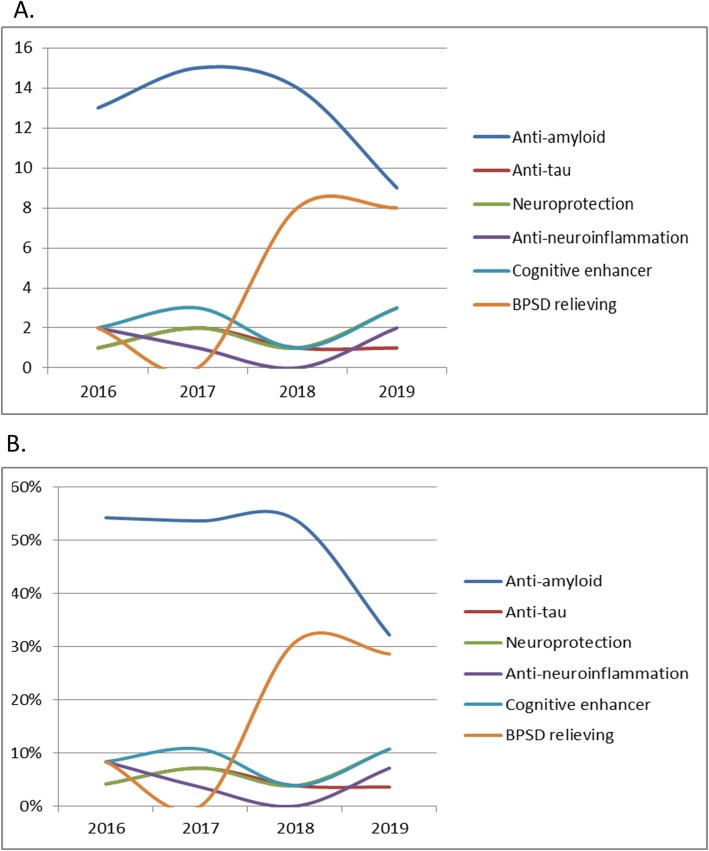
- In 2019, there were nine phase 3 anti-amyloid trials for eight drugs, and the number of anti-amyloid phase 3 trials was lower than in 2017 and 2018.
- Ongoing anti-amyloid trials had largely moved to prodromal or preclinical AD; no ongoing drug trials enrolled patients with advanced AD.
- Aducanumab showed dose-dependent amyloid removal and, in the updated EMERGE analysis, 23% less decline in CDR-SB, 27% less decline in ADAS-Cog 13, and 40% less decline in ADCS-ADL-MCI versus placebo at 78 weeks; amyloid plaque burden also decreased at 26 and 78 weeks (P < 0.001).
- Several programs were unsuccessful or stopped for lack of efficacy or other reasons, including azeliragon, pioglitazone, intepirdine, aripiprazole, nilvadipine, and the CNP520 arm of Generation Study 1, which “showed a worsening of cognitive function.”
## Methods
- The paper is a narrative review of Alzheimer disease clinical trials, organized by therapeutic target: anti-amyloid, anti-tau, antineuroinflammation, neuroprotection, cognitive enhancers, and BPSD-relieving therapy.
- The authors state they reviewed the current state of clinical trials at clinicaltrials.gov, along with the underlying mechanisms and reasons prior trials failed.
- Main analysis is descriptive synthesis of trial status, phases, targets, endpoints, and reported outcomes; no original participant-level statistical analysis is reported.
## Limitations
- The paper does not describe a systematic search strategy, inclusion/exclusion criteria, or formal risk-of-bias assessment; this is evident from the text.
- It is a review of trial registrations and reported results, so its conclusions depend on available public reports and may be limited by incomplete disclosure of some trial findings; this is evident from the text.
- The authors do not report pooled effect estimates or meta-analytic results; instead, the evidence is presented trial by trial.
Model-written summary. Check it against the paper before relying on it.
Integrity signals
Registry
Cites
Statistics
Figures
Verification
Claims the paper makes
16 Valid · 5 Not valid · 18 Not checked · 32 Own results and interpretations
The cited sources support only part of this claim — read each source’s verdict below.
In the paper
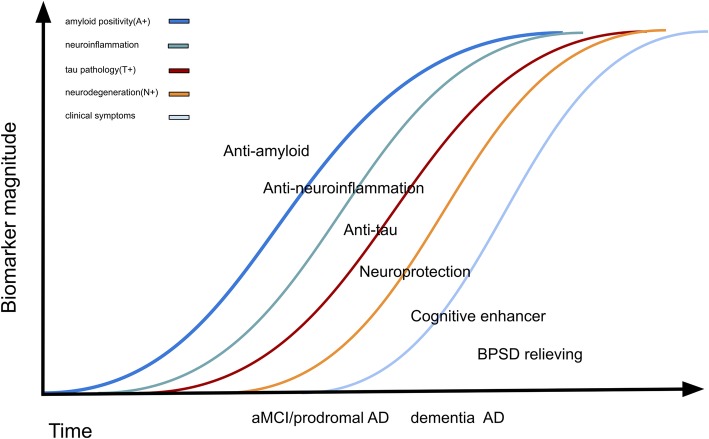
“Molecular imaging studies such as those using amyloid positron emission tomography (PET) have shown that Aβ deposition reaches a plateau before brain atrophy can be identified from structural magnetic resonance imaging (MRI) and cognitive symptoms [15, 19].”
§ Clinical trials of new drugs for Alzheimer disease > Introduction
What the sources say
- Not checked — no full text of the sourcecites [15] Kang J Lemaire HG Unterbeck A Salbaum JM Masters CL Grzeschik KH The precursor of Alzheimer's disease amyloid A4 protein resembles a cell-surface receptor Nature 1987 325 6106 733 736 10.1038/325733a0 2881207 source
- Partly supportedcites [19] Mormino EC Kluth JT Madison CM Rabinovici GD Baker SL Miller BL Episodic memory loss is related to hippocampal-mediated beta-amyloid deposition in elderly subjects Brain J Neurol 2009 132 Pt 5 1310 1323 10.1093/brain/awn320 PMC2677792 19042931 sourceExperimental — accuracy not yet measured
Our copy of Mormino et al. (2009) supports only the sequencing element of the claim: the Discussion section 'Ab burden and EM' states that 'modest PIB increases were associated with HV atrophy... [but] were not accompanied by EM memory deficits after removal of the two subjects with highest PIB values', and 'Quantifying and classifying PIB uptake' says 'the negative impact of Ab pathology begins during initial stages of accumulation in non-demented individuals, far before Alzheimer's disease-comparable levels are reached' — i.e. Aβ-related hippocampal atrophy precedes detectable episodic memory symptoms. However, no passage in our copy states or implies that Aβ deposition 'reaches a plateau'; on the contrary, the Introduction and Discussion describe PIB uptake as continuous, supporting 'the hypothesis that Ab accumulation is a continuous process that results in clinical Alzheimer's disease once a certain threshold is reached'. The plateau claim (searched: plateau, ceiling, saturation, levels off, nonlinear) is therefore not attributable to this source, and the study is cross-sectional with no longitudinal trajectory data. (LLM, conf=0.68)
plainstates an association- Asserted: passes — The authors put it forward as true.
- Checkable: passes — It can be checked against evidence.
- Load-bearing: unclear — It is unclear whether the paper’s conclusions depend on it.
- Based: passes — The paper gives a reason why it holds.
The cited sources support only part of this claim — read each source’s verdict below.
In the paper
“Furthermore, the brains of patients with AD exhibited evidence of sustained inflammation.”
§ Clinical trials of new drugs for Alzheimer disease > Introduction
What the sources say
- Partly supportedcites [26] Hamelin L Lagarde J Dorothee G Leroy C Labit M Comley RA Early and protective microglial activation in Alzheimer's disease: a prospective study using 18F-DPA-714 PET imaging Brain J Neurol 2016 139 Pt 4 1252 1264 10.1093/brain/aww017 26984188 sourceExperimental — accuracy not yet measured
The Introduction describes microglial activation in the brains of patients with Alzheimer’s disease, and the Discussion reports evidence of neuroinflammation in patients at the prodromal stage. The paper discusses chronic activation and a sustained inflammatory response, but its reported patient findings do not establish that inflammation persisted over time in those individuals. The copy provides section labels but no page numbers for these passages. (LLM, conf=0.82)
plainstates an association- Asserted: passes — The authors put it forward as true.
- Checkable: passes — It can be checked against evidence.
- Load-bearing: unclear — It is unclear whether the paper’s conclusions depend on it.
- Based: passes — The paper gives a reason why it holds.
- Partly supported
The cited sources support only part of this claim — read each source’s verdict below.
In the paper
“Aβ itself acts as a proinflammatory agent, activating many inflammatory components.”
§ Clinical trials of new drugs for Alzheimer disease > Introduction
What the sources say
- Partly supportedcites [26] Hamelin L Lagarde J Dorothee G Leroy C Labit M Comley RA Early and protective microglial activation in Alzheimer's disease: a prospective study using 18F-DPA-714 PET imaging Brain J Neurol 2016 139 Pt 4 1252 1264 10.1093/brain/aww017 26984188 sourceExperimental — accuracy not yet measured
The Introduction describes microglial activation around amyloid-β plaques, and the Discussion says amyloid deposits provoke an inflammatory response (page numbers unavailable in our copy). But the Discussion also says the mechanism is not fully understood; the paper does not establish that Aβ itself activates many inflammatory components. (LLM, conf=0.84)
plainstates a cause- Asserted: passes — The authors put it forward as true.
- Checkable: passes — It can be checked against evidence.
- Load-bearing: unclear — It is unclear whether the paper’s conclusions depend on it.
- Based: passes — The paper gives a reason why it holds.
- Partly supported
The cited sources support only part of this claim — read each source’s verdict below.
In the paper
“Neuronal death or brain atrophy induced by amyloid, tau, and neuroinflammation might be prevented with neuroprotective therapies, which include suppressing excitable amino acid signaling pathways, free radical scavengers, and regeneration enhancers (Table 3) [29].”
§ Clinical trials of new drugs for Alzheimer disease > Introduction
What the sources say
- Partly supportedcites [29] Chi Hao Chang Hui-Yun Sang Tzu-Kang Neuronal Cell Death Mechanisms in Major Neurodegenerative Diseases International Journal of Molecular Sciences 2018 19 10 3082 10.3390/ijms19103082 30304824 PMC6213751 sourceExperimental — accuracy not yet measured
Section 3.2 links amyloid-beta and Tau to neuronal death, and the Introduction and Future Directions discuss developing treatments to counter disease progression. But the copy does not support the full attributed claim: it does not identify neuroinflammation as a cause in this account or describe the listed neuroprotective therapies—suppressing excitatory amino acid signaling, free-radical scavengers, and regeneration enhancers—as ways to prevent neuronal death or brain atrophy. No page numbers are provided for these passages. (LLM, conf=0.84)
hedgedstates a possible cause- Asserted: passes — The authors put it forward as true.
- Checkable: passes — It can be checked against evidence.
- Load-bearing: passes — The paper’s conclusions depend on it.
- Based: passes — The paper gives a reason why it holds.
- Partly supported
The cited sources support only part of this claim — read each source’s verdict below.
In the paper
“All the mutant genes of hereditary, autosomal, and dominant familial AD, including amyloid precursor protein (APP), presenilin 1, and presenilin 2, encode the major proteins involved in amyloid metabolism [14–16].”
§ Clinical trials of new drugs for Alzheimer disease > Introduction
What the sources say
- Not checked — no full text of the sourcecites [14] Selkoe DJ The molecular pathology of Alzheimer's disease Neuron. 1991 6 4 487 498 10.1016/0896-6273(91)90052-2 1673054 source
- Not checked — no full text of the sourcecites [15] Kang J Lemaire HG Unterbeck A Salbaum JM Masters CL Grzeschik KH The precursor of Alzheimer's disease amyloid A4 protein resembles a cell-surface receptor Nature 1987 325 6106 733 736 10.1038/325733a0 2881207 source
- Partly supportedcites [16] Gunawardena S Yang G Goldstein LS Presenilin controls kinesin-1 and dynein function during APP-vesicle transport in vivo Hum Mol Genet 2013 22 19 3828 3843 10.1093/hmg/ddt237 23710041 PMC3766177 sourceExperimental — accuracy not yet measured
The Introduction (page not provided) says presenilin is the catalytic component of the gamma-secretase complex that cleaves APP, and that numerous presenilin mutations cause familial AD. It does not establish that APP, presenilin 1, and presenilin 2 comprise all the genes implicated in autosomal-dominant familial AD, or characterize all three as encoding the major proteins of amyloid metabolism. (LLM, conf=0.83)
plain- Asserted: passes — The authors put it forward as true.
- Checkable: passes — It can be checked against evidence.
- Load-bearing: unclear — It is unclear whether the paper’s conclusions depend on it.
- Based: passes — The paper gives a reason why it holds.
37 more claims · 7 with their cited sources checked
Create a free account to see all 71 claims and to verify the 1 reference still open.
- Probably not a substantial claim. 15
- It may state two separate claims as one. 17
- The quote only partly states this claim. 2
Claims other papers make about this one
Each is checked against this paper’s own text: does it say what the citing paper says it does?
The source backs part of the claim, not all of it — or backs it for a different population, condition or comparison.
In the citing paper
“all attempts to develop A β -targeting drugs to reverse deficits in memory and cognition have ended in failure, despite being successful in reducing the A β load”
From Nilotinib restores memory function by preventing dopaminergic neuron degeneration in a mouse model of Alzheimer’s Disease (2021) · cites this paper as Huang et al., 2020
Experimental — accuracy not yet measuredThe source backs part of the claim, not all of it — or backs it for a different population, condition or comparison.
In the citing paper
“However, in numerous human clinical trials using this approach, there was a decrease in amyloid load, but without significant clinical improvement nor reduction in disease progression [165].”
From Alzheimer's Disease: Treatment Strategies and Their Limitations. (2022) · cites this paper as [165]
Experimental — accuracy not yet measuredThe cited source says what the claim attributes to it.
In the citing paper
“These drugs primarily function by modulating neurotransmitter levels but cannot alter the course of the disease,409,411 which are instructive for designing new drugs.”
From Recent advances in Alzheimer's disease: Mechanisms, clinical trials and new drug development strategies. (2024) · cites this paper as [411]
The cited source says what the claim attributes to it.
In the citing paper
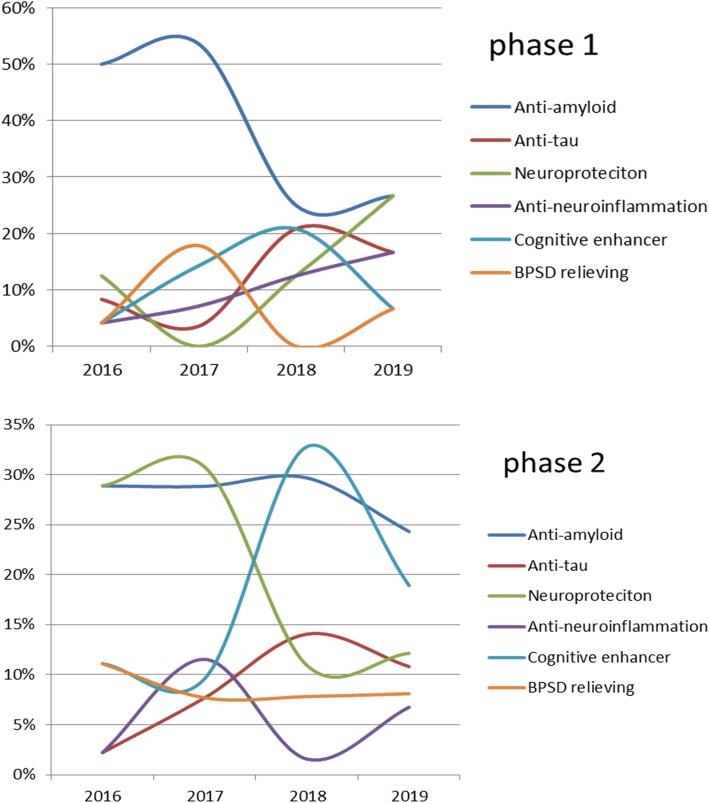
“However, the targets of both phase 1 and phase 2 trials are diverse, with a noticeable increase in the number of phase 1 trials focusing on neuroprotection and phase 2 trials focusing on anti-neuroinflammation [85].”
From Clinical trials of new drugs for Alzheimer disease: a 2020–2023 update (2023) · cites this paper as [85]
The check wasn’t confident either way, so it gives no verdict — never disputed.
In the citing paper
“Moreover, the literature review reveals that only a single cholinesterase inhibitor is in Phase II and Phase III clinical trials, for AD management [147,148].”
From Acetylcholinesterase Inhibitory Potential of Various Sesquiterpene Analogues for Alzheimer’s Disease Therapy (2021) · cites this paper as [147]
Experimental — accuracy not yet measured
4 more claims about this paper
Create a free account to see every claim other papers make about this one.
Citations
Cites
NIA‐AA Research Framework: Toward a biological definition of Alzheimer's disease
Jack, C. R., Bennett, D. A., Blennow, K., Carrillo, M. C., Dunn, B., Haeberlein, S. B., Holtzman, D. M., Jagust, W., Jessen, F., Karlawish, J., et al. (2018) · Alzheimer's & Dementia · doi:10.1016/j.jalz.2018.02.018 · Cited by 10,537
The amyloid hypothesis of Alzheimer's disease at 25 years
Selkoe, D. J., & Hardy, J. (2016) · EMBO Molecular Medicine · doi:10.15252/emmm.201606210 · Cited by 6,164
Pushko, P., Pumpens, P., & Grens, E. (2013) · Intervirology · doi:10.1159/000346773 · Cited by 5,950
Glenner, G. G., & Wong, C. W. (1984) · Biochemical and Biophysical Research Communications · doi:10.1016/s0006-291x(84)80190-4 · Cited by 5,404
Hypothetical model of dynamic biomarkers of the Alzheimer's pathological cascade
Jack, C. R., Knopman, D. S., Jagust, W. J., Shaw, L. M., Aisen, P. S., Weiner, M. W., Petersen, R. C., & Trojanowski, J. Q. (2010) · The Lancet Neurology · doi:10.1016/s1474-4422(09)70299-6 · Cited by 4,806 · cited 1×
“Tau accumulation, which might be a consequence of neuronal damage, was proposed to begin between AD clinical symptom development and Aβ accumulation [20].”
BackgroundThe precursor of Alzheimer's disease amyloid A4 protein resembles a cell-surface receptor
Kang, J., Lemaire, H.-G., Unterbeck, A., Salbaum, J. M., Masters, C. L., Grzeschik, K.-H., Multhaup, G., Beyreuther, K., & Müller-Hill, B. (1987) · Nature · doi:10.1038/325733a0 · Cited by 4,619
Amyloid plaque core protein in Alzheimer disease and Down syndrome.
Masters, C. L., Simms, G., Weinman, N. A., Multhaup, G., McDonald, B. L., & Beyreuther, K. (1985) · Proceedings of the National Academy of Sciences · doi:10.1073/pnas.82.12.4245 · Cited by 4,431
The antibody aducanumab reduces Aβ plaques in Alzheimer’s disease
Sevigny, J., Chiao, P., Bussière, T., Weinreb, P. H., Williams, L., Maier, M., Dunstan, R., Salloway, S., Chen, T., Ling, Y., et al. (2016) · Nature · doi:10.1038/nature19323 · Cited by 3,059 · cited 1×
“Additionally, amyloid was cleared from the six cortical regions of interest, namely the frontal, parietal, lateral temporal, sensorimotor, anterior, and posterior cingulate areas [43].”
BackgroundThe molecular pathology of Alzheimer's disease
Selkoe, D. J. (1991) · Neuron · doi:10.1016/0896-6273(91)90052-2 · Cited by 2,708
Neurofibrillary tangles but not senile plaques parallel duration and severity of Alzheimer's disease
Arriagada, P. V., Growdon, J. H., Hedley-Whyte, E. T., & Hyman, B. T. (1992) · Neurology · doi:10.1212/wnl.42.3.631 · Cited by 2,668
Cited by
Items 201–300 of 669
Bliss, E. S., Biki, S. M., Wong, R. H. X., Howe, P. R. C., & Mills, D. E. (2023) · European Journal of Applied Physiology · doi:10.1007/s00421-023-05154-y · Cited by 25
Xiong, M., Roshanbin, S., Rokka, J., Schlein, E., Ingelsson, M., Sehlin, D., Eriksson, J., & Syvänen, S. (2021) · NeuroImage · doi:10.1016/j.neuroimage.2021.118302 · Cited by 24
“Still, most of them have failed to meet their clinical endpoints in late phase studies (Huang et al., 2020).”
Kim, K. Y., Suh, Y., & Chang, K. (2020) · International Journal of Molecular Sciences · doi:10.3390/ijms21072658 · Cited by 25
“The major pathological hallmarks of AD are senile plaques consisting of amyloid fibrils and neurofibrillary tangles made of hyperphosphorylated tau protein [1].”
BackgroundThe Functional Roles and Applications of Immunoglobulins in Neurodegenerative Disease
Sim, K.-Y., Im, K. C., & Park, S. (2020) · International Journal of Molecular Sciences · doi:10.3390/ijms21155295 · Cited by 25
Jabir, N. R., Rehman, M. T., Tabrez, S. S. M., Alserihi, R. F., Alajmi, M. F., Khan, M. S., Husain, F. M., & Ahmed, A. B. A. (2021) · Current Pharmaceutical Design · doi:10.2174/1381612827666210226123240 · Cited by 27
Contribution of cerebral microvascular mechanisms to age-related cognitive impairment and dementia
Fang, X., Crumpler, R. F., Thomas, K. N., Mazique, J. N., Roman, R. J., & Fan, F. (2022) · Physiology International · doi:10.1556/2060.2022.00020 · Cited by 26
Current peptide vaccine and immunotherapy approaches against Alzheimer’s disease
Parrocha, C. M. T., & Nowick, J. S. (2023) · Peptide Science · doi:10.1002/pep2.24289 · Cited by 24
Recent advance on pleiotropic cholinesterase inhibitors bearing amyloid modulation efficacy
Zhang, H., Peng, Y., Zhuo, L., Wang, Y., Guo, Z., Wang, S., Long, L., Li, X., & Wang, Z. (2022) · European Journal of Medicinal Chemistry · doi:10.1016/j.ejmech.2022.114695 · Cited by 27
Effect of ivabradine on cognitive functions of rats with scopolamine-induced dementia
Assi, A.-A. A., Abdelnabi, S., Attaai, A., & Abd-ellatief, R. B. (2022) · Scientific Reports · doi:10.1038/s41598-022-20963-5 · Cited by 24
Advances in the discovery of heterocyclic-based drugs against Alzheimer’s disease
Sánchez, J. D., Alcántara, A. R., González, J. F., & Sánchez-Montero, J. M. (2023) · Expert Opinion on Drug Discovery · doi:10.1080/17460441.2023.2264766 · Cited by 26
Recent advances in cellular biosensor technology to investigate tau oligomerization
Lo, C. H. (2021) · Bioengineering & Translational Medicine · doi:10.1002/btm2.10231 · Cited by 25
Multi-mechanical waves against Alzheimer’s disease pathology: a systematic review
Monteiro, F., Sotiropoulos, I., Carvalho, Ó. S. N., Sousa, N., & Silva, F. S. (2021) · Translational Neurodegeneration · doi:10.1186/s40035-021-00256-z · Cited by 24
“However, besides the extensive efforts over years to find a pharmacological treatment for AD, there is no effective therapy that can stop or revert brain pathology as well as cognitive and other behavioral deficits of AD [9].”
BackgroundMumtaz, I., Ayaz, M. O., Khan, M. S., Manzoor, U., Ganayee, M. A., Bhat, A. Q., Dar, G. H., Alghamdi, B. S. A., Hashem, A. M., Dar, M. J., et al. (2022) · Frontiers in Aging Neuroscience · doi:10.3389/fnagi.2022.977411 · Cited by 24
SLGCN: Structure-enhanced line graph convolutional network for predicting drug–disease associations
Liu, B.-M., Gao, Y.-L., Li, F., Zheng, C.-H., & Liu, J. (2023) · Knowledge-Based Systems · doi:10.1016/j.knosys.2023.111187 · Cited by 28
Liu, J., Wei, A., Liu, T., Ji, X., Zhang, Y., Yan, F., Chen, M., Hu, J., Zhou, S., Shi, J., et al. (2024) · FEBS Journal · doi:10.1111/febs.17099 · Cited by 25
Reversal of cerebral hypoperfusion: a novel therapeutic target for the treatment of AD/ADRD?
Fan, F., & Roman, R. J. (2021) · GeroScience · doi:10.1007/s11357-021-00357-7 · Cited by 25
Hakim, A. M. (2021) · Frontiers in Aging Neuroscience · doi:10.3389/fnagi.2021.679837 · Cited by 24
Bilingualism: A Global Public Health Strategy for Healthy Cognitive Aging
Mendis, S. B., Raymont, V., & Tabet, N. (2021) · Frontiers in Neurology · doi:10.3389/fneur.2021.628368 · Cited by 27
Shao, S.-Y., Zhang, F., Yang, Y., Feng, Z.-M., Jiang, J., & Zhang, P. (2021) · Bioorganic Chemistry · doi:10.1016/j.bioorg.2021.105025 · Cited by 22
Malik, N., Amber, S., & Zahid, S. (2022) · Frontiers in Pharmacology · doi:10.3389/fphar.2022.943163 · Cited by 26
“At present, there is no effective medicine that can cure or stop the deterioration of neurons and manage multiple symptoms of AD at a time, although many new drugs are under clinical trials proposed as neuroprotective treatment (Huang et al., 2020).”
BackgroundSchreiner, T. G., Creangă-Murariu, I., Tamba, B.-I., Lucanu, N., & Popescu, B. O. (2022) · Biomolecules · doi:10.3390/biom12081136 · Cited by 26
Schmidt-Morgenroth, I., Michaud, P., Gasparini, F., & Avraméas, A. (2023) · International Journal of Molecular Sciences · doi:10.3390/ijms241310523 · Cited by 27
“AD has been described as a cascade of several biochemical mechanisms [48,49].”
BackgroundPérez, S. S., Bringas, G., Amable, N. U., Peñalver, A. I., López, D., Dalmau, E. G., Fernández, A., Hernández-Díaz, Z. M., Vina-Rodríguez, A., Peña, Y., et al. (2023) · Alzheimer s Research & Therapy · doi:10.1186/s13195-023-01356-w · Cited by 26
“The U.S. Food and Drug Administration (FDA) has approved seven drugs for the treatment of Alzheimer’s: rivastigmine, galantamine, donepezil, memantine, memantine plus donepezil, aducanumab (under the accelerated approval pathway), and lecanemab [1–7].”
BackgroundJoshi, A., Wang, D., Watterson, S., McClean, P. L., Behera, C. K., Sharp, T., & Wong‐Lin, K. (2020) · Neuropharmacology · doi:10.1016/j.neuropharm.2020.108118 · Cited by 23
“Numerous studies have associated 5-HT3 mediated drugs with the accumulation of specific proteins found in AD (Fakhfouri et al., 2019; Huang et al., 2020; Skovgård et al., 2018).”
Tang, C., Border, J. J., Zhang, H., Gregory, A., Bai, S., Fang, X., Liu, Y., Wang, S., Hwang, S. H., Gao, W., et al. (2025) · GeroScience · doi:10.1007/s11357-025-01550-8 · Cited by 22
“Currently, none of the U.S. Food and Drug Administration (FDA)-approved treatments have targeted cerebral vasculature, and AD/ADRD has not been proven curable largely due to an incomplete understanding of the precise underlying mechanisms [3, 4].”
The burden of cognitive impairment
Gračner, T., Chaturvedi, R. R., Nguyen, P., Heun‐Johnson, H., Tysinger, B., Goldman, D. P., & Lakdawalla, D. (2025) · Alzheimer s & Dementia · doi:10.1002/alz.70436 · Cited by 40
Small molecule therapeutics for neuroinflammation-mediated neurodegenerative disorders
Miller, S., & Blanco, M.-J. (2021) · RSC Medicinal Chemistry · doi:10.1039/d1md00036e · Cited by 23
Medikonda, R. T., Choi, J. H., Pant, A., Saleh, L., Routkevitch, D., Tong, L., Belcaid, Z., Kim, Y. H., Jackson, C. M., Jackson, C., et al. (2021) · Journal of neurosurgery · doi:10.3171/2021.1.jns202482 · Cited by 23
Diaz-Baquero, A. A., Franco, M., Parra−Vidales, E., Toribio-Guzmán, J. M., Aguado, Y. B., Abad, F. M., Bartolomé, M. V. P., Asl, A. M., & van der Roest, H. G. (2022) · Journal of Alzheimer s Disease · doi:10.3233/jad-215350 · Cited by 31
“People with dementia (PwD) can be treated with pharmacological therapy [9] and also with psychosocial therapies, the latter of which are aimed at physical, cognitive, social, and emotional, or even family unit rehabilitation [10].”
BackgroundHunt, N. J., Wahl, D., Westwood, L. J., Lockwood, G. P., Couteur, D. G. L., & Cogger, V. C. (2022) · Advanced Drug Delivery Reviews · doi:10.1016/j.addr.2022.114537 · Cited by 22
“Drug discovery targeting the amyloid cascade has thus far resulted in multiple failure to launch therapeutics [11], with the number of anti-Aβ clinical trials declining between 2016 and 2019 [133].”
BackgroundChen, Y., Lu, C.-H., Ke, C., & Liu, R.-S. (2021) · Membranes · doi:10.3390/membranes11100796 · Cited by 26
“The safety and doses for clinical use are certainly priorities; other issues include the establishment of the optimal cell culture conditions, the protocol for isolation, characterization and quantification of MSC-derived EVs, and therapeutic schedules [10,114].”
BackgroundDual-target inhibitors of cholinesterase and GSK-3β to modulate Alzheimer’s disease
He, J., & Tam, K. Y. (2024) · Drug Discovery Today · doi:10.1016/j.drudis.2024.103914 · Cited by 21
Genetic testing in dementia‐A medical genetics perspective
Huq, A. J., Sexton, A., Lacaze, P. A., Masters, C. L., Storey, E., Velakoulis, D., James, P. A., & Winship, I. (2021) · International Journal of Geriatric Psychiatry · doi:10.1002/gps.5535 · Cited by 24
“, IL4).(130,131) Despite a large number of AD trials disease modification remains elusive.”
BackgroundAndrade, S., Loureiro, J. A., & Pereira, M. D. C. (2021) · Archives of Biochemistry and Biophysics · doi:10.1016/j.abb.2021.109022 · Cited by 20
Genetic Therapies for Alzheimer’s Disease: A Scoping Review
Lennon, M. J., Rigney, G., Raymont, V., & Sachdev, P. S. (2021) · Journal of Alzheimer s Disease · doi:10.3233/jad-215145 · Cited by 26
The NLRP3 Inflammasome in the Pathogenesis and Treatment of Alzheimer’s Disease
Golzari-Sorkheh, M., Brown, C. E., Weaver, D. F., & Reed, M. A. (2021) · Journal of Alzheimer s Disease · doi:10.3233/jad-210660 · Cited by 23
“Regrettably, the pathological alterations of AD start more than 20 yearspriortotheonsetofsymptoms[4],renderingthe arising in part from the underlying complexity and heterogeneity of the pathobiology and pathophysiology involved in AD [9].”
Ramakrishnan, V., Friedrich, C. M., Witt, C. M., Sheehan, R., Pryor, M. M., Atwal, J. K., Wildsmith, K. R., Kudrycki, K., Lee, S., Mazer, N. A., et al. (2022) · CPT Pharmacometrics & Systems Pharmacology · doi:10.1002/psp4.12876 · Cited by 23
Alzheimer’s disease is an inherent, natural part of human brain aging: an integrated perspective
Ferrer, I. (2022) · Free Neuropathology · doi:10.17879/freeneuropathology-2022-3806 · Cited by 30
Cellular mechanisms of fibrin (ogen): insight from neurodegenerative diseases
Wen, T., & Zhang, Z. (2023) · Frontiers in Neuroscience · doi:10.3389/fnins.2023.1197094 · Cited by 21
“Despite recent advancements, the efficacy of existing treatment options for neurodegenerative diseases is still limited by their inability to address issues (Huang et al., 2020).”
BackgroundDeep Learning of Speech Data for Early Detection of Alzheimer’s Disease in the Elderly
Ahn, K., Cho, M., Kim, S., Lee, K. E., Song, Y., Yoo, S., Jeon, S. Y., Kim, J. L., Yoon, D. H., & Kong, H. (2023) · Bioengineering · doi:10.3390/bioengineering10091093 · Cited by 34
“Currently, there is no cure for AD, and it is considered a very serious disease [2,4].”
BackgroundZhang, H., Chen, Y., Yu, M., Xi, Y., Han, G., Jin, Y., Wang, G.-J., Sun, X., Zhou, J., & Ding, Y. (2023) · Proceedings of the National Academy of Sciences · doi:10.1073/pnas.2304213120 · Cited by 21
“As a formidable challenge in both the clinic and society, Alzheimer’s disease (AD) affects more than 50 million people globally, with a limited cure that can moderately delay cog nitive decline and slow disease progression (1, 2).”
Fan, C., Chen, K., Zhou, J., Wong, P., He, D., Huang, Y., Wang, X., Ling, T., Yang, Y., & Zhao, H. (2020) · Human Genetics · doi:10.1007/s00439-020-02230-7 · Cited by 21
The next step of neurogenesis in the context of Alzheimer’s disease
Moradi, H. R., Hajali, V., Khaksar, Z., Vafaee, F., Forouzanfar, F., & Negah, S. S. (2021) · Molecular Biology Reports · doi:10.1007/s11033-021-06520-9 · Cited by 20
Petrovskaya, A. V., Tverskoi, A. M., Medvedeva, A., & Nazarova, M. A. (2023) · Communications Biology · doi:10.1038/s42003-023-04717-1 · Cited by 21
Targets, trials and tribulations in Alzheimer therapeutics
Gharat, R., Dixit, G., Khambete, M., & Prabhu, A. (2023) · European Journal of Pharmacology · doi:10.1016/j.ejphar.2023.176230 · Cited by 19
Monitoring Alzheimer’s disease via ultraweak photon emission
Sefati, N., Esmaeilpour, T., Salari, V., Zarifkar, A., Dehghani, F., Ghaffari, M. K., Zadeh‐Haghighi, H., Császár, N., Bókkon, I., Rodrigues, S., et al. (2023) · iScience · doi:10.1016/j.isci.2023.108744 · Cited by 24
Turning Donepezil into a Multi‐Target‐Directed Ligand through a Merging Strategy
Perone, R. C., Albertini, C., Uliassi, E., Pietri, F. D., Pinheiro, P. D. S. M., Petralla, S., Rizzardi, N., Fato, R., Pulkrabkova, L., Soukup, O., et al. (2020) · ChemMedChem · doi:10.1002/cmdc.202000484 · Cited by 23
Olson, N. L., & Albensi, B. C. (2020) · Journal of Alzheimer s Disease Reports · doi:10.3233/adr-200214 · Cited by 21
Endocytosis Is a Key Mode of Interaction between Extracellular β-Amyloid and the Cell Membrane
Shi, J., Zhu, L., Lan, X., Zhao, D.-W., He, Y., Sun, Z.-Q., Wu, D., & Li, H. (2020) · Biophysical Journal · doi:10.1016/j.bpj.2020.07.035 · Cited by 22
“However, the pathophysiology of AD remains to be fully characterized because drug candidates designed against Ab have failed to meet their original targets (50,51), indicating that the Ab toxicity hypothesis may be too simplistic.”
BackgroundBaloni, P., Arnold, M., Moreno, H., et al. (2021) · medRxiv · doi:10.1101/2021.07.16.21260601 · Cited by 19
Song, G., Plumlee, P., Ahn, J. Y., Wong, S. T. C., & Zhao, H. (2023) · Biomedicine & Pharmacotherapy · doi:10.1016/j.biopha.2023.115450 · Cited by 25
“There are approved drugs like aducanumab and lecanemab, along with ongoing clinical trials investigating antibody-based medications targeting amyloid beta and tau proteins for addressing AD [44].”
BackgroundOresanya, I. O., & Orhan, İ. E. (2024) · Current Drug Targets · doi:10.2174/0113894501255093240117092328 · Cited by 25
Vasileva-Metodiev, S. Z., Spargo, D. J., Klein, E., Quevenco, F., Cotton, S. E., Sánchez‐Juan, P., Niimi, Y., & Fowler, N. R. (2025) · Journal of Alzheimer s Disease · doi:10.1177/13872877251322978 · Cited by 21
Hippocampus-Based Dynamic Functional Connectivity Mapping in the Early Stages of Alzheimer’s Disease
Wang, J., Wang, P., Jiang, Y., Wang, Z., Zhang, H., Li, H., & Biswal, B. B. (2021) · Journal of Alzheimer s Disease · doi:10.3233/jad-215239 · Cited by 19
Dong, X., & Qu, S. (2022) · Frontiers in Pharmacology · doi:10.3389/fphar.2022.877872 · Cited by 21
Ginkgolides and Huperzine A for complementary treatment of Alzheimer's disease
Villegas, C., Perez, R., Petiz, L. L., Glaser, T., Ulrich, H., & Paz, C. (2022) · IUBMB Life · doi:10.1002/iub.2613 · Cited by 21
“this, numerous synthetic molecules are currently being tested in clinical trials.(16) Natural compounds and functional foods, which already demonstrated activity at different biochemical and metabolic levels, are under investigation to establish whether they exert neuroprotective properties.”
BackgroundB Lymphocytes in Alzheimer’s Disease—A Comprehensive Review
Plantone, D., Pardini, M., Locci, S., Nobili, F. M., & Stefano, N. D. (2022) · Journal of Alzheimer s Disease · doi:10.3233/jad-220261 · Cited by 22
“There are numerous ongoing clinical trials on AD patients, testing different molecules and strategies [210–212].”
Mei, Z. L., Liu, J., Schroeder, J. P., Weinshenker, D., Duong, D. M., Seyfried, N. T., Li, Y., Jin, P., Wingo, A. P., & Wingo, T. S. (2023) · Molecular Neurobiology · doi:10.1007/s12035-023-03791-0 · Cited by 20
Yadav, V., Mythri, C., & Kumarasamy, M. (2024) · Brain Behavior and Immunity Integrative · doi:10.1016/j.bbii.2024.100048 · Cited by 28
Novel Pharmaceutical Approaches in Dementia
Tanaka, M., Török, N., & Vécsei, L. (2021) · Springer eBooks · doi:10.1007/978-3-319-56015-1_444-1 · Cited by 23
Lauer, A. A., Janitschke, D., Guilherme, M. D. S., Nguyen, V. T. T., Bachmann, C. M., Qiao, S., Schrul, B., Boehm, U., Grimm, H. S., Hartmann, T., et al. (2021) · Scientific Reports · doi:10.1038/s41598-021-94706-3 · Cited by 20
Alzheimer’s Disease: Current Perspectives and Advances in Physiological Modeling
Boder, E. J., & Banerjee, I. A. (2021) · Bioengineering · doi:10.3390/bioengineering8120211 · Cited by 18
“Unfortunately, many therapeutics consistently fail when they go to clinical trials despite early successes in AD models [12], indicating a need for both improved understanding of the processes underlying AD and improved experimental”
BackgroundSulfonamide Derivatives: Recent Compounds with Potent Anti-alzheimer’s Disease Activity
Egbujor, M. C. (2024) · Central Nervous System Agents in Medicinal Chemistry · doi:10.2174/0118715249278489231128042135 · Cited by 21
Lipid flippase dysfunction as a therapeutic target for endosomal anomalies in Alzheimer’s disease
Kaneshiro, N., Komai, M., Imaoka, R., Ikeda, A., Kamikubo, Y., Saito, T., Saido, T. C., Tomita, T., Hashimoto, T., Iwatsubo, T., et al. (2022) · iScience · doi:10.1016/j.isci.2022.103869 · Cited by 18
“Although pieces of genetic and biological evidence suggest the link between Ab and AD pathogenesis, several clinical trials based on the ‘‘amyloid hypothesis’’ have failed (Huang et al., 2020).”
BackgroundNatural ginkgo tree leaves as piezo-energy harvesters
Shao, D., Wang, C., Li, W., Lu, L., Lü, J., & Yang, W. (2022) · Journal of Materials Chemistry C · doi:10.1039/d2tc03058f · Cited by 17
Monfared, A. A. T., Ye, W., Sardesai, A., Folse, H., Chavan, A., Kang, K., & Zhang, Q. (2023) · Neurology and Therapy · doi:10.1007/s40120-023-00460-1 · Cited by 24
“[1] Among Americans aged over 65 years, AD is the fifth leading cause of death.”
Wu, D., Yu, N., Gao, Y., Xiong, R., Liu, L., Lei, H., Jin, S., Liu, J., Liu, Y., Xie, J., et al. (2023) · Molecular Neurodegeneration · doi:10.1186/s13024-023-00614-7 · Cited by 20
“Additionally, nonspecific ablation of neurons in the MS and vDB [48, 49] or selective elimination of their cholinergic neurons [50] could phenocopy AD-like spatial memory deficits, while administration of cholinesterase inhibitors was efficient in both animals and AD patients [12, 34, 51].”
BackgroundIgarashi, A., Azuma, M. K., Zhang, Q., Ye, W., Sardesai, A., Folse, H., Chavan, A., Tomita, K., & Monfared, A. A. T. (2023) · Neurology and Therapy · doi:10.1007/s40120-023-00492-7 · Cited by 24
Lutshumba, J., Wilcock, D. M., Monson, N. L., & Stowe, A. M. (2023) · Neurobiology of Disease · doi:10.1016/j.nbd.2023.106202 · Cited by 21
“In fact, over the past several decades, various clinical trials with different approaches and targets struggled to deliver positive outcomes, with those targets mostly focused on Aβ synthesis and clearance (Asher and Priefer, 2022; Huang et al., 2020; Song et al., 2022).”
Mateev, E., Kondeva-Burdina, M., Georgieva, M., Mateeva, A., Valkova, I., Tzankova, V., & Zlatkov, A. (2024) · Scientia Pharmaceutica · doi:10.3390/scipharm92020018 · Cited by 22
“AD is characterized as a neurodegenerative disorder with a chronic and progressive character [1].”
BackgroundNguyen, T. T., Vo, T. K., & Vo, G. V. (2021) · Advances in experimental medicine and biology · doi:10.1007/978-3-030-55035-6_13 · Cited by 20
Andrade, S., Loureiro, J. A., & Pereira, M. D. C. (2021) · ACS Chemical Neuroscience · doi:10.1021/acschemneuro.1c00210 · Cited by 18
Sanotra, M. R., Huang, W., Silver, S. D., Lin, C., Chang, T.-C., Nguyen, D. P. Q., Lee, C., Kao, S., Shieh, J. C.-C., & Lin, Y. (2021) · Clinical Biochemistry · doi:10.1016/j.clinbiochem.2021.12.005 · Cited by 19
Engineered Extracellular Vesicles/Exosomes as a New Tool against Neurodegenerative Diseases
Ferrantelli, F., Chiozzini, C., Leone, P., Manfredi, F., & Federico, M. (2020) · Pharmaceutics · doi:10.3390/pharmaceutics12060529 · Cited by 17
“Phase III clinical trials with at least four anti-Aβ antibodies failed to improve AD symptoms possibly because of the advanced disease stage of the treated patients [71,72].”
BackgroundSzałaj, N., Godyń, J., Jończyk, J., Pasieka, A., Panek, D., Wichur, T., Więckowski, K., Zaręba, P., Bajda, M., Pišlar, A. H., et al. (2020) · Journal of Enzyme Inhibition and Medicinal Chemistry · doi:10.1080/14756366.2020.1835882 · Cited by 17
Collij, L. E., Mastenbroek, S. E., Salvadó, G., Wink, A. M., Visser, P. J., Barkhof, F., van Berckel, B. N. M., & Lopes Alves, I. (2021) · Alzheimer's & Dementia: Diagnosis, Assessment & Disease Monitoring · doi:10.1002/dad2.12216 · Cited by 17
“Participantswere selectedwhen theyhad (1) twoormore [11C]PiB scans at least 1 year apart, (2) at least twoneuropsychological assessments, and (3) a Clinical Dementia Rating (CDR) score of 0.”
BackgroundCheng, L., Osada, H., Xing, T.-Y., et al. (2021) · Biomedicines · doi:10.3390/biomedicines9050581 · Cited by 16
“Alzheimer’s disease (AD) is a type of progressive neurodegenerative disease that accounts for 60–70% of dementia cases and its symptoms include an initial memory loss, later visual, language and cognitive disorders and a decline in the executive capacity in daily life [1].”
BackgroundFaisal, M., Aid, J., o‘g‘li, N. B. H., Lee, B., & Hickey, M. A. (2023) · PLoS ONE · doi:10.1371/journal.pone.0281003 · Cited by 16
“Although many possible treatments for AD are in development [5, 6], drug approval rates are typically low for the nervous system [7] and a recent approval of Aducanumab [8] has proven controversial [9, 10].”
BackgroundAtaei, B., Hokmabadi, M., Asadi, S., Asadifard, E., Zarch, S. M. A., Najafi, S., & Bagheri‐Mohammadi, S. (2024) · Gene · doi:10.1016/j.gene.2024.148368 · Cited by 21
The Neurovascular Unit in Dementia: An Opinion on Current Research and Future Directions
Beishon, L., & Panerai, R. B. (2021) · Frontiers in Aging Neuroscience · doi:10.3389/fnagi.2021.721937 · Cited by 23
“Disappointingly, in a recent review, few trials employed agents or targets of vascular dysfunction (Huang et al., 2020).”
BackgroundMass spectrometric studies of the variety of beta‐amyloid proteoforms in Alzheimer's disease
Zakharova, N. V., Kononikhin, A. S., Indeykina, M. I., Bugrova, A. E., Strelnikova, P. A., Игоревич, П. С., Kozin, S. A., Popov, I. A., Mitkevich, V. A., Makarov, A. А., et al. (2022) · Mass Spectrometry Reviews · doi:10.1002/mas.21775 · Cited by 20
Boosting of tau protein aggregation by CD40 and CD48 gene expression in Alzheimer's disease
Kim, S., Lim, K., Yang, S., & Joo, J. (2022) · The FASEB Journal · doi:10.1096/fj.202201197r · Cited by 19
Li, Y., Chang, X., Wu, J., Liu, Y., Wang, H., & Zhang, Y. (2025) · Brain Network Disorders · doi:10.1016/j.bnd.2025.04.001 · Cited by 21
Lamar, M., Drabick, D. A. G., Boots, E. A., Agarwal, P., Emrani, S., Delano‐Wood, L., Bondi, M. W., Barnes, L. L., & Libon, D. J. (2021) · Journal of Alzheimer s Disease · doi:10.3233/jad-210110 · Cited by 18
“As anti-amyloid trials continue to fail [1], there is increasing interest in alternative approaches to preventing emergent Alzheimer’s disease and related dementias (ADRD) via modifiable health and life style factors.”
Experimental modelling of Alzheimer's disease for therapeutic screening
Blaikie, L., Kay, G., Maciel, P., & Lin, P. K. T. (2022) · European Journal of Medicinal Chemistry Reports · doi:10.1016/j.ejmcr.2022.100044 · Cited by 29
Muangpaisan, W., Wiputhanuphongs, P., Jaisupa, N., Junnu, S., Samer, J., Moongkarndi, P., Supapueng, O., Chalermsri, C., & Neungton, N. (2022) · Alzheimer s & Dementia Translational Research & Clinical Interventions · doi:10.1002/trc2.12292 · Cited by 16
“We evaluated the incidence of SAE as defined by (1) all-cause mortality, (2) intensive care unit admission, (3) intrahospital admission or prolonged hospitalization, (4) emergency department visits, and (5) disability.”
MethodBaba-Ahmed, I., Kibou, Z., Daoud, I., Belhadj, F., Belarbi, L., Daïch, A., & Choukchou‐Braham, N. (2022) · Current Organic Chemistry · doi:10.2174/1385272826666220914114544 · Cited by 15
Chemistry, Biological Activities, and Pharmacological Properties of Gastrodin: Mechanism Insights
Menyiy, N. E., Elouafy, Y., Moubachir, R., Abdnim, R., Benali, T., Taha, D., Khalid, A., Abdalla, A. N., Hamza, S. M. A., Ibrahim, S. E., et al. (2024) · Chemistry & Biodiversity · doi:10.1002/cbdv.202400402 · Cited by 17
An Immunomodulatory Therapeutic Vaccine Targeting Oligomeric Amyloid-β1
Song, G., Yang, H., Shen, N., Pham, P., Brown, B., Lin, X., Hong, Y., Paul, S., Cai, J., Li, X., et al. (2020) · Journal of Alzheimer s Disease · doi:10.3233/jad-200413 · Cited by 17
Mạnh, N. V., Hoang, V.-H., Ngo, V. T. H., Ann, J., Jang, T., Ha, J.-H., Song, J. Y., Ha, H.-J., Kim, H., Kim, Y.-H., et al. (2021) · European Journal of Medicinal Chemistry · doi:10.1016/j.ejmech.2021.113819 · Cited by 18
Mandino, F., Yeow, L. Y., Bi, R., Sejin, L., Bae, H. G., Baek, S. H., Lee, C.-Y., Mohammad, H., Teoh, C. L., Horien, C. L., et al. (2022) · Journal of Cerebral Blood Flow & Metabolism · doi:10.1177/0271678x221082016 · Cited by 17
Briel, N., Ruf, V., Pratsch, K., Roeber, S., Widmann, J., Mielke, J., Dorostkar, M. M., Windl, O., Arzberger, T., Herms, J. W., et al. (2022) · Acta Neuropathologica · doi:10.1007/s00401-022-02483-8 · Cited by 20
“This insight is already being translated in a therapeutic context, with studies underway that seek to restore microglial fitness [26].”
BackgroundZimbone, S., Giuffrida, M. L., Sabatino, G., Natale, G. D., Tosto, R., Consoli, G. M. L., Milardi, D., Pappalardo, G., & Sciacca, M. F. M. (2023) · ACS Chemical Neuroscience · doi:10.1021/acschemneuro.2c00720 · Cited by 16
Xiang, S., Wagner, J., Lückerath, T., Müllen, K., Ng, D. Y. W., Hedrich, J., & Weil, T. (2022) · Advanced Healthcare Materials · doi:10.1002/adhm.202101854 · Cited by 14
Lysosomal targeting of liposomes with acidic pH and Cathepsin B induces protein aggregate clearance
Jeon, M., Kim, D.-E., Choi, S. Y., Kim, S., Kim, S., Lee, H., & Kim, H. (2025) · Cell Communication and Signaling · doi:10.1186/s12964-025-02310-z · Cited by 16
“As a result, there is increasing interest in developing treatments that target more fundamental causes, offering solutions that directly address and remove protein aggregates [16, 17].”
AlzheimerRAG: Multimodal Retrieval-Augmented Generation for Clinical Use Cases
Lahiri, A. K., & Hu, Q. (2025) · Machine Learning and Knowledge Extraction · doi:10.3390/make7030089 · Cited by 31
Neuroprotective Activity of Mentha Species on Hydrogen Peroxide-Induced Apoptosis in SH-SY5Y Cells
Hanafy, D. M., Prenzler, P. D., Burrows, G. E., Gurusinghe, S., Thejer, B. M., Obied, H. K., & Hill, R. A. (2020) · Nutrients · doi:10.3390/nu12051366 · Cited by 16
“The pathophysiology of the disease is complicated and not well understood [2].”
Cardiometabolic Modification of Amyloid Beta in Alzheimer’s Disease Pathology
Hefner, M., Baliga, V., Amphay, K., Ramos, D., & Hegde, V. K. (2021) · Frontiers in Aging Neuroscience · doi:10.3389/fnagi.2021.721858 · Cited by 21
“Several anti-amyloid drug therapies since 2016 have failed due to lack of efficacy, toxicity, and worsening cognition (Huang et al., 2020).”
BackgroundYusof, N. I. S. M., Abdullah, Z. L., Othman, N., & Fauzi, F. M. (2022) · Frontiers in Chemistry · doi:10.3389/fchem.2022.874615 · Cited by 17
“An increase in dose did not display a change in the cognitive and functional endpoints but resulted in several severe toxic effects such as vascular edema in bapineuzumab (Huang et al., 2020).”
BackgroundYousefizadeh, A., Piccioni, G., Saidi, A., Triaca, V., Mango, D., & Nisticò, R. (2022) · Pharmacological Research · doi:10.1016/j.phrs.2022.106404 · Cited by 16
Metadata
- Authors
- Huang, L.-K., Chao, S.-P., & Hu, C.-J.
- Affiliations
- National Health Research Institutes (TW)
- Taipei Medical University-Shuang Ho Hospital (TW)
- Corresponding author
- Hu, Chaur-Jong
- Venue
- Journal of Biomedical Science
- Published
- 2020-01-06
- Volume
- 27
- Issue
- 1
- Pages
- 18-18
- ISSN
- 1021-7770 (ISSN-L)
- 1423-0127
- PMC
- PMC6943903
- OpenAlex
- W3000635098
- Cited by
- 702
- References
- 84
- Citations by year
- 2026: 32 · 2025: 66 · 2024: 94 · 2023: 142 · 2022: 137 · 2021: 146 · 2020: 66
- FWCI
- 73.09
- Type
- journal article
- Language
- en
- Open access
- diamond
- doi.org
- Licence
- cc-by
- creativecommons.org/licenses/by/4.0/ (tdm)
- creativecommons.org/licenses/by/4.0/ (vor)
- Locations
- Journal of Biomedical Science (publishedVersion, cc-by)
- PubMed (publishedVersion)
- PubMed Central (submittedVersion, cc-by)
- DOAJ (DOAJ: Directory of Open Access Journals) (submittedVersion, cc-by-sa)
- Topics
- Health Sciences › Medicine › Pharmacology (medical) › Cholinesterase and Neurodegenerative Diseases
- Life Sciences › Neuroscience › Cellular and Molecular Neuroscience › Alzheimer's disease research and treatments
- Life Sciences › Neuroscience › Neurology › Neuroprotection in Cerebral Ischemia
- Keywords
- Alzheimer's disease, clinical trials, amyloid hypothesis, amyloid-beta, anti-amyloid therapy, anti-tau therapy, cholinesterase inhibitors, NMDA receptor antagonists
- MeSH terms
- Alzheimer Disease, Cholinesterase Inhibitors, Clinical Trials as Topic, Humans, Receptors, N-Methyl-D-Aspartate, Amyloid beta-Peptides
About these checks
Registry, retraction, Cites and statistics results are computed, not judged, with one exception: a printed reference that no index lists is read once by a model before it counts as a citation error. Claims are extracted by a model and kept only when their quote appears verbatim in the text; each cited source is then checked, with a model’s help, for whether it says what the claim relies on. Those verdicts can be wrong — read the claim’s quote and the cited source before relying on one.
The claim verdicts this report counts are experimental: their accuracy is not yet measured.
A language model drew the claims from the paper on 2026-10-10, under version 3 of the claim definition (model deepseek-v4.1-flash, prompt extract-v3).
A second model labelled each claim on 2026-10-10 (model jev-1.13-20260917, definition revision gold-guideline-v0.2).
Cited sources are checked with a language model’s help (qwen3.8-omni-flash and gpt-6-sol).
Statistics and arithmetic are recomputed, not judged.
Confidence bands are shown only for fields calibrated on our annotated test set. None is calibrated yet, so no band is shown.
What counts as a claim ›How we measure confidence ›How we check this ›
Are you an author, or do you see a problem with this page? Request a review
Data sources
Bibliographic data: Semantic Scholar, OpenAlex, Crossref.
Contains information from the Semantic Scholar Academic Graph Datasets, made available under the ODC Attribution License (ODC-BY 1.0).
Semantic Scholar’s data is described in: Kinney, R., et al. (2023). The Semantic Scholar Open Data Platform. arXiv:2301.10140.
