

Clinical trials of new drugs for Alzheimer disease
Open accessThe DOI matches its Crossref record; 83 of the 84 references it cites were found in a registry or an index; 21 of the 49 sources its claims cite were checked for support.
Abstract
Current AD drugs, including cholinesterase inhibitors and memantine, can only inhibit dementia symptoms for a limited period and cannot stop or reverse disease progression.
Overview
CoChat Summary
## TL;DR
This review surveys ongoing and recent clinical trials of Alzheimer disease drugs and argues that the field has shifted away from late-stage anti-amyloid strategies toward earlier intervention and more diverse targets. The authors conclude that effective disease-modifying therapies are still lacking, despite some encouraging signals for a few agents.
## Key findings
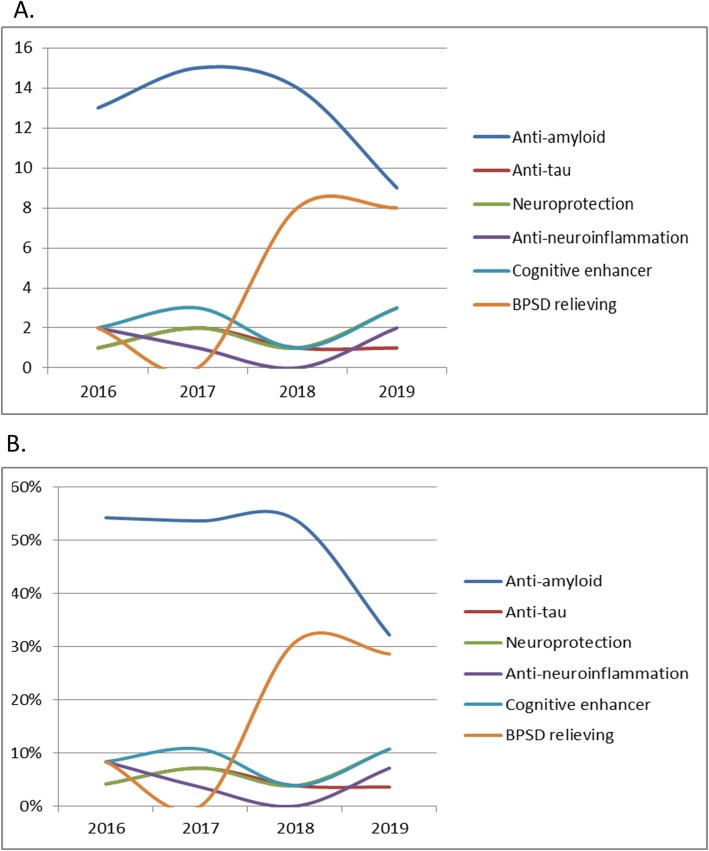
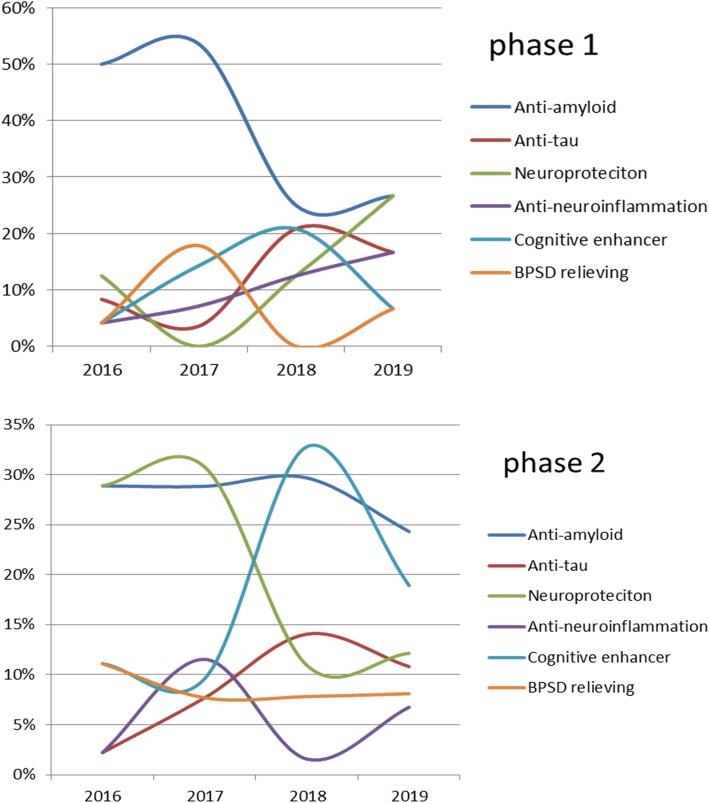
- In 2019, there were nine phase 3 anti-amyloid trials for eight drugs, and the number of anti-amyloid phase 3 trials was lower than in 2017 and 2018.
- Ongoing anti-amyloid trials had largely moved to prodromal or preclinical AD; no ongoing drug trials enrolled patients with advanced AD.
- Aducanumab showed dose-dependent amyloid removal and, in the updated EMERGE analysis, 23% less decline in CDR-SB, 27% less decline in ADAS-Cog 13, and 40% less decline in ADCS-ADL-MCI versus placebo at 78 weeks; amyloid plaque burden also decreased at 26 and 78 weeks (P < 0.001).
- Several programs were unsuccessful or stopped for lack of efficacy or other reasons, including azeliragon, pioglitazone, intepirdine, aripiprazole, nilvadipine, and the CNP520 arm of Generation Study 1, which “showed a worsening of cognitive function.”
## Methods
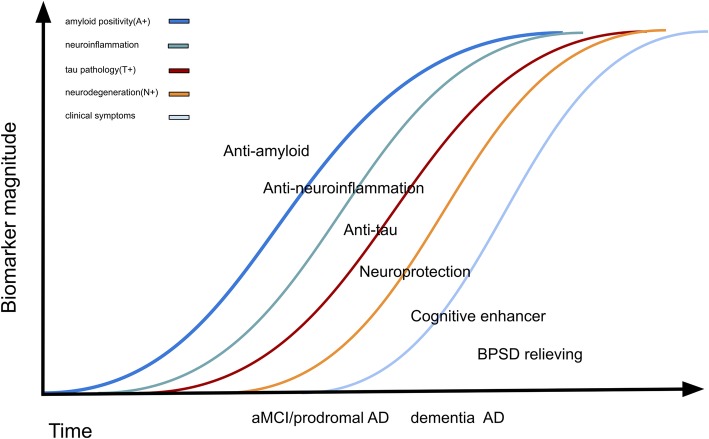
- The paper is a narrative review of Alzheimer disease clinical trials, organized by therapeutic target: anti-amyloid, anti-tau, antineuroinflammation, neuroprotection, cognitive enhancers, and BPSD-relieving therapy.
- The authors state they reviewed the current state of clinical trials at clinicaltrials.gov, along with the underlying mechanisms and reasons prior trials failed.
- Main analysis is descriptive synthesis of trial status, phases, targets, endpoints, and reported outcomes; no original participant-level statistical analysis is reported.
## Limitations
- The paper does not describe a systematic search strategy, inclusion/exclusion criteria, or formal risk-of-bias assessment; this is evident from the text.
- It is a review of trial registrations and reported results, so its conclusions depend on available public reports and may be limited by incomplete disclosure of some trial findings; this is evident from the text.
- The authors do not report pooled effect estimates or meta-analytic results; instead, the evidence is presented trial by trial.
Model-written summary. Check it against the paper before relying on it.
Integrity signals
Registry
Cites
Statistics
Figures
Verification
Claims the paper makes
16 Valid · 5 Not valid · 18 Not checked · 32 Own results and interpretations
The cited sources support only part of this claim — read each source’s verdict below.
In the paper
“Molecular imaging studies such as those using amyloid positron emission tomography (PET) have shown that Aβ deposition reaches a plateau before brain atrophy can be identified from structural magnetic resonance imaging (MRI) and cognitive symptoms [15, 19].”
§ Clinical trials of new drugs for Alzheimer disease > Introduction
What the sources say
- Not checked — no full text of the sourcecites [15] Kang J Lemaire HG Unterbeck A Salbaum JM Masters CL Grzeschik KH The precursor of Alzheimer's disease amyloid A4 protein resembles a cell-surface receptor Nature 1987 325 6106 733 736 10.1038/325733a0 2881207 source
- Partly supportedcites [19] Mormino EC Kluth JT Madison CM Rabinovici GD Baker SL Miller BL Episodic memory loss is related to hippocampal-mediated beta-amyloid deposition in elderly subjects Brain J Neurol 2009 132 Pt 5 1310 1323 10.1093/brain/awn320 PMC2677792 19042931 sourceExperimental — accuracy not yet measured
Our copy of Mormino et al. (2009) supports only the sequencing element of the claim: the Discussion section 'Ab burden and EM' states that 'modest PIB increases were associated with HV atrophy... [but] were not accompanied by EM memory deficits after removal of the two subjects with highest PIB values', and 'Quantifying and classifying PIB uptake' says 'the negative impact of Ab pathology begins during initial stages of accumulation in non-demented individuals, far before Alzheimer's disease-comparable levels are reached' — i.e. Aβ-related hippocampal atrophy precedes detectable episodic memory symptoms. However, no passage in our copy states or implies that Aβ deposition 'reaches a plateau'; on the contrary, the Introduction and Discussion describe PIB uptake as continuous, supporting 'the hypothesis that Ab accumulation is a continuous process that results in clinical Alzheimer's disease once a certain threshold is reached'. The plateau claim (searched: plateau, ceiling, saturation, levels off, nonlinear) is therefore not attributable to this source, and the study is cross-sectional with no longitudinal trajectory data. (LLM, conf=0.68)
plainstates an association- Asserted: passes — The authors put it forward as true.
- Checkable: passes — It can be checked against evidence.
- Load-bearing: unclear — It is unclear whether the paper’s conclusions depend on it.
- Based: passes — The paper gives a reason why it holds.
The cited sources support only part of this claim — read each source’s verdict below.
In the paper
“Furthermore, the brains of patients with AD exhibited evidence of sustained inflammation.”
§ Clinical trials of new drugs for Alzheimer disease > Introduction
What the sources say
- Partly supportedcites [26] Hamelin L Lagarde J Dorothee G Leroy C Labit M Comley RA Early and protective microglial activation in Alzheimer's disease: a prospective study using 18F-DPA-714 PET imaging Brain J Neurol 2016 139 Pt 4 1252 1264 10.1093/brain/aww017 26984188 sourceExperimental — accuracy not yet measured
The Introduction describes microglial activation in the brains of patients with Alzheimer’s disease, and the Discussion reports evidence of neuroinflammation in patients at the prodromal stage. The paper discusses chronic activation and a sustained inflammatory response, but its reported patient findings do not establish that inflammation persisted over time in those individuals. The copy provides section labels but no page numbers for these passages. (LLM, conf=0.82)
plainstates an association- Asserted: passes — The authors put it forward as true.
- Checkable: passes — It can be checked against evidence.
- Load-bearing: unclear — It is unclear whether the paper’s conclusions depend on it.
- Based: passes — The paper gives a reason why it holds.
- Partly supported
The cited sources support only part of this claim — read each source’s verdict below.
In the paper
“Aβ itself acts as a proinflammatory agent, activating many inflammatory components.”
§ Clinical trials of new drugs for Alzheimer disease > Introduction
What the sources say
- Partly supportedcites [26] Hamelin L Lagarde J Dorothee G Leroy C Labit M Comley RA Early and protective microglial activation in Alzheimer's disease: a prospective study using 18F-DPA-714 PET imaging Brain J Neurol 2016 139 Pt 4 1252 1264 10.1093/brain/aww017 26984188 sourceExperimental — accuracy not yet measured
The Introduction describes microglial activation around amyloid-β plaques, and the Discussion says amyloid deposits provoke an inflammatory response (page numbers unavailable in our copy). But the Discussion also says the mechanism is not fully understood; the paper does not establish that Aβ itself activates many inflammatory components. (LLM, conf=0.84)
plainstates a cause- Asserted: passes — The authors put it forward as true.
- Checkable: passes — It can be checked against evidence.
- Load-bearing: unclear — It is unclear whether the paper’s conclusions depend on it.
- Based: passes — The paper gives a reason why it holds.
- Partly supported
The cited sources support only part of this claim — read each source’s verdict below.
In the paper
“Neuronal death or brain atrophy induced by amyloid, tau, and neuroinflammation might be prevented with neuroprotective therapies, which include suppressing excitable amino acid signaling pathways, free radical scavengers, and regeneration enhancers (Table 3) [29].”
§ Clinical trials of new drugs for Alzheimer disease > Introduction
What the sources say
- Partly supportedcites [29] Chi Hao Chang Hui-Yun Sang Tzu-Kang Neuronal Cell Death Mechanisms in Major Neurodegenerative Diseases International Journal of Molecular Sciences 2018 19 10 3082 10.3390/ijms19103082 30304824 PMC6213751 sourceExperimental — accuracy not yet measured
Section 3.2 links amyloid-beta and Tau to neuronal death, and the Introduction and Future Directions discuss developing treatments to counter disease progression. But the copy does not support the full attributed claim: it does not identify neuroinflammation as a cause in this account or describe the listed neuroprotective therapies—suppressing excitatory amino acid signaling, free-radical scavengers, and regeneration enhancers—as ways to prevent neuronal death or brain atrophy. No page numbers are provided for these passages. (LLM, conf=0.84)
hedgedstates a possible cause- Asserted: passes — The authors put it forward as true.
- Checkable: passes — It can be checked against evidence.
- Load-bearing: passes — The paper’s conclusions depend on it.
- Based: passes — The paper gives a reason why it holds.
- Partly supported
The cited sources support only part of this claim — read each source’s verdict below.
In the paper
“All the mutant genes of hereditary, autosomal, and dominant familial AD, including amyloid precursor protein (APP), presenilin 1, and presenilin 2, encode the major proteins involved in amyloid metabolism [14–16].”
§ Clinical trials of new drugs for Alzheimer disease > Introduction
What the sources say
- Not checked — no full text of the sourcecites [14] Selkoe DJ The molecular pathology of Alzheimer's disease Neuron. 1991 6 4 487 498 10.1016/0896-6273(91)90052-2 1673054 source
- Not checked — no full text of the sourcecites [15] Kang J Lemaire HG Unterbeck A Salbaum JM Masters CL Grzeschik KH The precursor of Alzheimer's disease amyloid A4 protein resembles a cell-surface receptor Nature 1987 325 6106 733 736 10.1038/325733a0 2881207 source
- Partly supportedcites [16] Gunawardena S Yang G Goldstein LS Presenilin controls kinesin-1 and dynein function during APP-vesicle transport in vivo Hum Mol Genet 2013 22 19 3828 3843 10.1093/hmg/ddt237 23710041 PMC3766177 sourceExperimental — accuracy not yet measured
The Introduction (page not provided) says presenilin is the catalytic component of the gamma-secretase complex that cleaves APP, and that numerous presenilin mutations cause familial AD. It does not establish that APP, presenilin 1, and presenilin 2 comprise all the genes implicated in autosomal-dominant familial AD, or characterize all three as encoding the major proteins of amyloid metabolism. (LLM, conf=0.83)
plain- Asserted: passes — The authors put it forward as true.
- Checkable: passes — It can be checked against evidence.
- Load-bearing: unclear — It is unclear whether the paper’s conclusions depend on it.
- Based: passes — The paper gives a reason why it holds.
37 more claims · 7 with their cited sources checked
Create a free account to see all 71 claims and to verify the 1 reference still open.
- Probably not a substantial claim. 15
- It may state two separate claims as one. 17
- The quote only partly states this claim. 2
Claims other papers make about this one
Each is checked against this paper’s own text: does it say what the citing paper says it does?
The source backs part of the claim, not all of it — or backs it for a different population, condition or comparison.
In the citing paper
“all attempts to develop A β -targeting drugs to reverse deficits in memory and cognition have ended in failure, despite being successful in reducing the A β load”
From Nilotinib restores memory function by preventing dopaminergic neuron degeneration in a mouse model of Alzheimer’s Disease (2021) · cites this paper as Huang et al., 2020
Experimental — accuracy not yet measuredThe source backs part of the claim, not all of it — or backs it for a different population, condition or comparison.
In the citing paper
“However, in numerous human clinical trials using this approach, there was a decrease in amyloid load, but without significant clinical improvement nor reduction in disease progression [165].”
From Alzheimer's Disease: Treatment Strategies and Their Limitations. (2022) · cites this paper as [165]
Experimental — accuracy not yet measuredThe cited source says what the claim attributes to it.
In the citing paper
“These drugs primarily function by modulating neurotransmitter levels but cannot alter the course of the disease,409,411 which are instructive for designing new drugs.”
From Recent advances in Alzheimer's disease: Mechanisms, clinical trials and new drug development strategies. (2024) · cites this paper as [411]
The cited source says what the claim attributes to it.
In the citing paper
“However, the targets of both phase 1 and phase 2 trials are diverse, with a noticeable increase in the number of phase 1 trials focusing on neuroprotection and phase 2 trials focusing on anti-neuroinflammation [85].”
From Clinical trials of new drugs for Alzheimer disease: a 2020–2023 update (2023) · cites this paper as [85]
The check wasn’t confident either way, so it gives no verdict — never disputed.
In the citing paper
“Moreover, the literature review reveals that only a single cholinesterase inhibitor is in Phase II and Phase III clinical trials, for AD management [147,148].”
From Acetylcholinesterase Inhibitory Potential of Various Sesquiterpene Analogues for Alzheimer’s Disease Therapy (2021) · cites this paper as [147]
Experimental — accuracy not yet measured
4 more claims about this paper
Create a free account to see every claim other papers make about this one.
Citations
Cites
NIA‐AA Research Framework: Toward a biological definition of Alzheimer's disease
Jack, C. R., Bennett, D. A., Blennow, K., Carrillo, M. C., Dunn, B., Haeberlein, S. B., Holtzman, D. M., Jagust, W., Jessen, F., Karlawish, J., et al. (2018) · Alzheimer's & Dementia · doi:10.1016/j.jalz.2018.02.018 · Cited by 10,537
The amyloid hypothesis of Alzheimer's disease at 25 years
Selkoe, D. J., & Hardy, J. (2016) · EMBO Molecular Medicine · doi:10.15252/emmm.201606210 · Cited by 6,164
Pushko, P., Pumpens, P., & Grens, E. (2013) · Intervirology · doi:10.1159/000346773 · Cited by 5,950
Glenner, G. G., & Wong, C. W. (1984) · Biochemical and Biophysical Research Communications · doi:10.1016/s0006-291x(84)80190-4 · Cited by 5,404
Hypothetical model of dynamic biomarkers of the Alzheimer's pathological cascade
Jack, C. R., Knopman, D. S., Jagust, W. J., Shaw, L. M., Aisen, P. S., Weiner, M. W., Petersen, R. C., & Trojanowski, J. Q. (2010) · The Lancet Neurology · doi:10.1016/s1474-4422(09)70299-6 · Cited by 4,806 · cited 1×
“Tau accumulation, which might be a consequence of neuronal damage, was proposed to begin between AD clinical symptom development and Aβ accumulation [20].”
BackgroundThe precursor of Alzheimer's disease amyloid A4 protein resembles a cell-surface receptor
Kang, J., Lemaire, H.-G., Unterbeck, A., Salbaum, J. M., Masters, C. L., Grzeschik, K.-H., Multhaup, G., Beyreuther, K., & Müller-Hill, B. (1987) · Nature · doi:10.1038/325733a0 · Cited by 4,619
Amyloid plaque core protein in Alzheimer disease and Down syndrome.
Masters, C. L., Simms, G., Weinman, N. A., Multhaup, G., McDonald, B. L., & Beyreuther, K. (1985) · Proceedings of the National Academy of Sciences · doi:10.1073/pnas.82.12.4245 · Cited by 4,431
The antibody aducanumab reduces Aβ plaques in Alzheimer’s disease
Sevigny, J., Chiao, P., Bussière, T., Weinreb, P. H., Williams, L., Maier, M., Dunstan, R., Salloway, S., Chen, T., Ling, Y., et al. (2016) · Nature · doi:10.1038/nature19323 · Cited by 3,059 · cited 1×
“Additionally, amyloid was cleared from the six cortical regions of interest, namely the frontal, parietal, lateral temporal, sensorimotor, anterior, and posterior cingulate areas [43].”
BackgroundThe molecular pathology of Alzheimer's disease
Selkoe, D. J. (1991) · Neuron · doi:10.1016/0896-6273(91)90052-2 · Cited by 2,708
Neurofibrillary tangles but not senile plaques parallel duration and severity of Alzheimer's disease
Arriagada, P. V., Growdon, J. H., Hedley-Whyte, E. T., & Hyman, B. T. (1992) · Neurology · doi:10.1212/wnl.42.3.631 · Cited by 2,668
Cited by
Items 501–600 of 669
Armansyah, N. A., Putri, A. M., Azizah, W. N., & Maryati, I. (2023) · JURNAL PENDIDIKAN KEPERAWATAN INDONESIA · doi:10.17509/jpki.v9i1.52874 · Cited by 2
“…only five treatments for neurocognitive symptoms in AD approved by the US FDA, namely three cholinesterase inhibitors (donepezil, galantamine and rivastigmine) and one N-methylD-aspartate receptor antagonist (memantine) as well as a combination of donepezil and rivastigmine (Huang et al., 2020).”
BackgroundADVANCEMENT IN THE TREATMENT OF ALZHEIMER'S DISEASE, 2023
Safdar, A., Ghani, M. U., Sabar, M. F., Khan, M. U., Hussain, M., aziz, K., & Hussain, T. (2024) · International Journal of Pharmacy & Integrated Health Sciences · doi:10.56536/ijpihs.v5i1.114 · Cited by 3
Wybitul, M., Buchmann, A., Langer, N., Höck, C., Treyer, V., & Gietl, A. F. (2024) · Neurobiology of Aging · doi:10.1016/j.neurobiolaging.2024.03.007 · Cited by 2
“J Consequently, currently ongoing prevention trials either target the removal of plaque deposition or the halting of its further progression (Huang et al., 2020).”
Pandiyan, C. K., Manivannan, A. G., Jaishankar, N., & Vellapandian, C. (2024) · Cureus · doi:10.7759/cureus.70710 · Cited by 3
“Therefore, they can be targeted for research on potential neuroprotective and cognitive-enhancing medicines [16].”
BackgroundGüler, E., Yekeler, H. B., Üner, B., Doğan, M., Asghar, A., Ikram, F., Yazır, Y., Gündüz, O., Kalaskar, D. M., & Çam, M. E. (2024) · Macromolecular Materials and Engineering · doi:10.1002/mame.202400160 · Cited by 3
Retracted“Current and emerging drug therapies in Alzheimer’s disease: A pathophysiological Perspective”
Aparajita, A., Jain, U., & Srivastava, P. (2024) · Neuroscience · doi:10.1016/j.neuroscience.2024.11.078 · Cited by 2
Liu, J., Zeng, W., Zhang, W., Zhang, R., & Luo, S. (2025) · International Journal of Imaging Systems and Technology · doi:10.1002/ima.70029 · Cited by 3
Janadri, S., Shreelaxmi, D., Mudagal, M. P., Sharma, U., Vada, S., & Haribabu, T. (2025) · International Journal of Current Pharmaceutical Research · doi:10.22159/ijcpr.2025v17i1.6039 · Cited by 2
Singh, B., Singh, K., Gupta, J. K., Semwal, B. C., Jain, D., & Sharma, M. C. (2025) · Current Alzheimer Research · doi:10.2174/0115672050386924250930184405 · Cited by 4
Alzheimer’s Disease: An Insightful Review on the Future Trends of the Effective Therapeutics
Hashmi, A., Srivastava, V., Kalam, S. A., & Mishra, D. K. (2022) · IntechOpen eBooks · doi:10.5772/intechopen.102762 · Cited by 2
Lange‐Asschenfeldt, C., & Benkert, O. (2020) · Springer eBooks · doi:10.1007/978-3-662-61753-3_6 · Cited by 3
Olfactory Bulb Biosensor Monitoring the Effect of Treatment Drugs for AD in vitro
Liu, M., Chen, C., Yuan, Q., Zhuang, L., & Wang, P. (2022) · IEEE International Symposium on Olfaction and Electronic Nose (ISOEN) · doi:10.1109/isoen54820.2022.9789665 · Cited by 4
Classification of Alzheimer’s Disease using Neuroimaging Techniques
Manochandar, T., & Diderot, P. K. (2023) · International Conference on Intelligent Computing and Control Systems (ICICCS) · doi:10.1109/iciccs56967.2023.10142373 · Cited by 2
“Intensity normalization is a type of histogram normalization used to adjust the intensity levels of sMRIs[12][13].”
MethodWei, H., Masurkar, A. V., & Razavian, N. (2021) · medRxiv · doi:10.1101/2021.05.05.21256720 · Cited by 3
Chronic PPARγ Stimulation Shifts Amyloidosis to Higher Fibrillarity but Improves CognitionPreprint
Blume, T., Deußing, M., Biechele, G., Peters, F., Zott, B., Schmidt, C., Franzmeier, N., Wind-Mark, K., Eckenweber, F., Sacher, C., et al. (2021) · bioRxiv (Cold Spring Harbor Laboratory) · doi:10.1101/2021.05.30.446348 · Cited by 3
Viaña, J. N. M. (2021) · AJOB Neuroscience · doi:10.1080/21507740.2021.1941406 · Cited by 2
“Clinical trials on therapeutic drugs and antibodies are already being conducted on people with preclinical or prodromal AD (Huang, Chao, and Hu 2020).”
BackgroundChacko, L., Nag, S., Dewanjee, S., Ghosh, S., Vallamkondu, J., Mitra, O., Dey, A., Bhuniya, T., Paluru, H. P. R., Reddy, P. H., et al. (2022) · Preprints.org · doi:10.20944/preprints202211.0032.v1 · Cited by 2
Drug Discovery from Medicinal Plants against Alzheimer's Disease
Marzouk, M. M., Farid, M. M., Hegazi, N. M., & Ezzat, S. M. (2023) · Wiley eBooks · doi:10.1002/9781119794127.ch3 · Cited by 4
Cogs in the autophagic machine—equipped to combat dementia-prone neurodegenerative diseases
de Wet, S., Theart, R. P., & Loos, B. (2023) · Frontiers in Molecular Neuroscience · doi:10.3389/fnmol.2023.1225227 · Cited by 1
“Indeed, studies have revealed that this increase produces a pro-inflammatory state within the extracellular region which contributes toward cytotoxicity, and anti-amyloid therapies may therefore be a poor choice in combating AD symptoms (Patel et al., 2005; García-Bueno et al., 2008; Jin et al., 2008; Huang et al., 20…”
BackgroundA Detailed study on Image Segmentation with Different Optimization Algorithms for Dementia Disease
Manochandar, T., & Diderot, P. K. (2023) · International Conference on Research Methodologies in Knowledge Management, Artificial Intelligence and Telecommunication Engineering (RMKMATE) · doi:10.1109/rmkmate59243.2023.10369735 · Cited by 1
“The person will struggle with listening, reading, and speaking during the MCI stage [5][12] Figure:1 Process of AD diagnosis and classification”
BackgroundYadav, E., Mandal, A. K., Sah, A. K., Poudel, S., Pathak, P., Khalilullah, H., Jaremko, M., Emwas, A.-H. M., Yadav, P. S., & Verma, A. (2024) · CNS & Neurological Disorders - Drug Targets · doi:10.2174/0118715273298025240905130205 · Cited by 4
Ghosh, S., Choudhury, S. H., Mukherjee, K., & Bhattacharyya, S. N. (2024) · Springer eBooks · doi:10.1007/978-3-031-68237-7_16 · Cited by 5
Advances in Research on Tibetan Medicine for Improving Cognitive Dysfunction
Yu, T., Yu, Y., & Cheng, X. (2025) · International Journal of Drug Discovery and Pharmacology · doi:10.53941/ijddp.2025.100010 · Cited by 1
“Additionally, conditions like epilepsy [7], Parkinson’s disease [8], and Alzheimer’s disease (AD) [9,10] can also cause cognitive dysfunction (Figure 1), many of these diseases induce cognitive impairment through neuroinflammation, which subsequently leads to cognitive disorders.”
Amin, K., Li, J., Lyu, B., Wang, S., Fu, H., Liu, B., & Yu, H. (2025) · International Journal of Pharmaceutics · doi:10.1016/j.ijpharm.2025.125983 · Cited by 1
Identifying latent classes of longitudinal change in picture naming in a population-based sample
Finkel, D., Liu, Y., Gatz, M., Schneider, S., Hernandez, R., Orriëns, B., & Kapteyn, A. (2025) · Aging Clinical and Experimental Research · doi:10.1007/s40520-025-03169-3 · Cited by 1
Targeting Endoplasmic Reticulum to Treat Neurodegenerative Disorders
Rajpurohit, C. S., & Yadav, V. K. (2025) · Springer eBooks · doi:10.1007/978-981-95-0125-0_9 · Cited by 1
Kim, M. K., Kwon, B. J., Kim, Y., Lee, J., Kim, H. C., Hong, J. Y., & Kim, J. (2025) · Nutrition Research Reviews · doi:10.1017/s0954422425100267 · Cited by 1
“Current treatments can temporarily alleviate symptoms or slow the progression of dementia but cannot reverse existing brain damage (4) .”
Tripathi, S. M., Shiells, H., Waymont, J. M. J., Staff, R. T., Schelter, B. O., Bentham, P., Wischik, C. M., & Murray, A. D. (2026) · Current Alzheimer Research · doi:10.2174/0115672050399596251106033110 · Cited by 2
Perry, R. J., Kipps, C., Martín, M., Bozzali, M., Logroscino, G., Trafford, S. J., Dhadda, S., Kanekiyo, M., Amanda, G., Hodgkinson, M., et al. (2026) · The Journal of Prevention of Alzheimer s Disease · doi:10.1016/j.tjpad.2026.100507 · Cited by 8
“Growing evidence suggests that amyloid removal slows progression of disease and therapies targeting this process may alter the underlying disease course [3,9 – 11].”
Lim, J. Y., Lee, J. E., Lee, M., Shim, H., Park, S. I., Park, S. A., Jeun, S.-S., Wang, S.-M., Kim, S., Yang, S. H., et al. (2026) · Translational Neurodegeneration · doi:10.1186/s40035-026-00539-3 · Cited by 2
Zhou, X.-W., Wang, Y.-X., Du, W.-R., Zhang, C.-Y., Qin, S.-H., & Ma, Z.-Y. (2026) · Medicinal Chemistry Research · doi:10.1007/s00044-026-03536-3 · Cited by 1
“Given the multifactorial nature of the disease, developing multitarget-directed ligands (MTDLs) is one of the most rational therapeutic strategies, because they are designed to simultaneously modulate the various pathological targets involved in AD [8, 9].”
Impedimetric Immunosensing for Neuroinflammatory Biomarker Profiling
Cruz, A., Abreu, C. M., Freitas, P. P., & Pinto, I. M. (2021) · Neuromethods · doi:10.1007/978-1-0716-1712-0_14 · Cited by 2
Early Aβ42 Exposure Causes Learning Impairment in Later Life
Cheng, K., Cheung, C. H. A., & Chiang, H. (2022) · Aging and Disease · doi:10.14336/ad.2021.1015 · Cited by 1
“However, this hypothesis has recently been challenged by findings showing that reduced accumulation of Aβ in the brain does not produce significant improvement on cognitive function in patients with AD [1, 2], raising a question on the role of Aβ accumulation in the development of this disease, and also suggesting tha…”
BackgroundDrug Therapy in Cognitive Disorders and Its Effects on Oral Health
Ahmed, S. E., Begum, R., Kumar, A. S., et al. (2022) · Cureus · doi:10.7759/cureus.27194 · Cited by 1
“Pathological examination in AD shows that there is degeneration in cholinergic neuron-rich regions, such as the nucleus basalis of Meynert, frontal cortex, anterior cingulate cortex, and posterior cingulate cortex [2].”
BackgroundUncária Tomentosa (Wild.) D.C. em processos inflamatórios na doença de Alzheimer
Barbosa, F. C., Rezende, J. D. P., & da Silva, E. J. (2023) · Revista de Divulgação Científica Sena Aires · doi:10.36239/revisa.v12.n1.p93a111 · Cited by 1
Herbal Components for the Treatment of Alzheimer's Disease
Bisht, T., Sundram, S., Malviya, R., & Pandey, A. (2023) · The Natural Products Journal · doi:10.2174/2210315513666230123111541 · Cited by 1
Huang, J. V., Gill, D., Zuber, V., Matthews, P. M., Elliott, P., Tzoulaki, I., & Dehghan, A. (2023) · Frontiers in Genetics · doi:10.3389/fgene.2023.1124431 · Cited by 2
“Clinical trials of anti-amyloid and anti-tau intervention for AD have been conducted but meaningfully effective drugs are still not available (Congdon and Sigurdsson, 2018; Huang et al., 2020), and their causal role is under question (Kametani and Hasegawa, 2018; Morris et al.”
BackgroundGamma secretase inhibition: Effects on fertility and embryo-fetal development in rats
Sivaraman, L., & Sanderson, T. P. (2023) · Toxicology and Applied Pharmacology · doi:10.1016/j.taap.2023.116512 · Cited by 1
Kognitive Störungen und Demenz
Hoffmann, U. (2023) · Springer eBooks · doi:10.1007/978-3-662-65648-8_12 · Cited by 1
Klasifikasi Alzheimer Berdasarkan Data Citra MRI Otak Menggunakan Fcm Dan Anfis
Almumtazah, N., Kiromi, M. S., & Ulinnuha, N. (2023) · Jurnal Teknologi Informasi dan Ilmu Komputer · doi:10.25126/jtiik.20231036826 · Cited by 1
Mahnashi, M. H., Ali, S., Alshehri, O. M., Almazni, I. A., Asiri, S. A., Sadiq, A., Zafar, R., & Jan, M. S. (2023) · Journal of Biomolecular Structure and Dynamics · doi:10.1080/07391102.2023.2251052 · Cited by 1
“…the risk of developing this disease. advancement were made in brain imaging techniques, such as positron emission tomography, which allowed better visualization and quantification of amyloid plaques and tau pathology in living individuals (Alzheimer ’ s Association, 2016; Huang et al., 2020).”
Al-Saedi, J. H., Mernea, M., Anghelescu, G. D. C., Nitu, C., Stoian, G., & Mihailescu, D. F. (2023) · Romanian Journal of Biophysics · doi:10.59277/rjb.2023.2.01 · Cited by 1
“One strategy is to target the receptor of AGEs (RAGE) and prevent their interaction [4], with some inhibitors being currently under clinical trials [13, 33].”
BackgroundInsight into Early Diagnosis of Multiple Sclerosis by Targeting Prognostic Biomarkers
Puranik, N., Yadav, D., & Song, M. (2023) · Current Pharmaceutical Design · doi:10.2174/0113816128247471231018053737 · Cited by 1
Systemic Literature Review Study on the Efficacy and Safety of Novel Alzheimer’s Disease Treatments
Park, S., Chang, H., Sohn, H., & Shim, M. (2023) · Korean Journal of Clinical Pharmacy · doi:10.24304/kjcp.2023.33.4.290 · Cited by 1
Pathophysiology and Management Approaches in Alzheimer’s Disease
Jain, S., Goel, D., Nazir, S. S., Yadav, V., & Vohora, D. (2023) · Springer eBooks · doi:10.1007/978-981-99-6807-7_4 · Cited by 5
Las cuidadoras de pacientes de Alzhéimer: una cuestión de injusticia epistémica
Cortés, D. R. M., & Calva, S. B. (2024) · Revista de Estudios de Género La Ventana · doi:10.32870/lv.v7i60.7865 · Cited by 1
Zhong, T., Dou, L., Liu, P., Huang, K., Wang, Y., & Chen, L. (2024) · Frontiers in Aging Neuroscience · doi:10.3389/fnagi.2024.1443309 · Cited by 1
“However, drug trials for the prevention and treatment of specific pathophysiological processes of AD have struggled to escape a cycle of failure (Huang et al., 2020).”
BackgroundSamakkhiwitthayakhom, T. S. (2024) · International Journal of Current Science Research and Review · doi:10.47191/ijcsrr/v7-i7-97
“However, long-term adherence and the diet's broader health impacts require further investigation [9].”
BackgroundSalikhova, D. I., Shedenkova, M. O., Sudina, A. K., Belousova, E. V., Krasilnikova, I. A., Nekrasova, A. A., Nefedova, Z. A., Frolov, D., Fatkhudinov, T., Макаров, А. В., et al. (2024) · Frontiers in Cellular Neuroscience · doi:10.3389/fncel.2024.1449063 · Cited by 3
“New research directions include the use of bioactive progenitor cell molecules aiming at specific molecular targets (Huang et al., 2020; Shalaby and El-Agnaf, 2022; Palanisamy et al., 2023).”
BackgroundGene therapies for neurodegenerative disease: current knowledge and challenges
Arora, B., Garg, S., Shrivastav, A., Sharma, M., Sahu, B., & Kumar, U. (2024) · Elsevier eBooks · doi:10.1016/b978-0-443-23826-0.00007-6 · Cited by 1
Maridevarmath, M., Dugani, S., Mense, U., Pattar, S., & Iyer, S. (2025) · Transactions of Indian National Academy of Engineering · doi:10.1007/s41403-025-00522-w · Cited by 2
“Further, privacy con - cerns limit the development of robust models, and as such continuous efforts towards clinical interventions are being made for curing AD (Huang et al. 2020 ).”
Rahamouz-Haghighi, S., Akaberi, M., Emami, S. A., & Tayarani‐Najaran, Z. (2025) · Journal of Ethnopharmacology · doi:10.1016/j.jep.2025.120504 · Cited by 1
Chettupalli, A. K., Gupta, N., Bukke, S. P. N., Singh, M. P., & Mandal, C. (2025) · Biomedicine & Pharmacotherapy · doi:10.1016/j.biopha.2025.118803 · Cited by 1
Scientific community needs to financially support human brain tissue research and brain banks
Donahue, J. E. (2020) · Journal of Neurology Neurosurgery & Psychiatry · doi:10.1136/jnnp-2020-324942 · Cited by 1
Nervenzellen retten oder ersetzen – welche Strategie ist erfolgreicher?
Klimaschewski, L. P. (2021) · Springer eBooks · doi:10.1007/978-3-662-63392-2_3 · Cited by 1
Azan, N. K. B., Ng, A. S., Samsudi, F. B., Mazlan, M. R. B., Loh, Y. K., & Ling, M. H. (2023) · Acta Scientifci Nutritional Health · doi:10.31080/asnh.2023.07.1193
Lin, K., Hsieh, K., Jiang, X., & Kim, Y. (2023) · PubMed Central · Cited by 6
Broad kinase inhibition mitigates early neuronal dysfunction and cognitive deficits in tauopathyPreprint
Koren, S. A., Hamm, M. J., Cloyd, R., Fontaine, S. N., Chishti, E. A., Lanzillotta, C., Rodriguez-Rivera, J., Ingram, A., Bell, M. C., Escobar, S. M. G., et al. (2020) · bioRxiv (Cold Spring Harbor Laboratory) · doi:10.1101/2020.07.31.229583 · Cited by 1
“multi-target or combinatorial treatments (3, 5).”
Jordá-Siquier, T., Petrel, M., Kouskoff, V., Cordelières, F. P., Frykman, S., Müller, U. C., Mulle, C., & Barthet, G. (2020) · bioRxiv (Cold Spring Harbor Laboratory) · doi:10.1101/2020.10.16.342196 · Cited by 3
“active or passive immunotherapy against A peptides), no treatment to cure or even to slow down AD progression is available [30, 46].”
BackgroundStudy of 3-(4’-Nitrobenzamido)coumarin using an Alzheimer’s Disease ModelPreprint
Rodríguez‐Enríquez, F., Viña, D., Uriarte, E., Fontenla, J. A., & Matos, M. J. (2021) · Research Square · doi:10.21203/rs.3.rs-226609/v1 · Cited by 1
Zhao, M., Liu, J., He, J., Chen, X., Feng, Y., Wang, C., Liu, W., Liu, X., Liu, M., & Hou, D. (2021) · Research Square · doi:10.21203/rs.3.rs-750372/v1 · Cited by 1
“It is urgent to further understand the mechanism of Alzheimer's disease [2-4].”
BackgroundJiang, J., Han, Y., & Jessen, F. (2021) · Frontiers in Aging Neuroscience · doi:10.3389/fnagi.2021.760920 · Cited by 1
Rye, I., Vik, A., Kociński, M., et al. (2022) · Research Square · doi:10.21203/rs.3.rs-1392666/v1 · Cited by 1
Planta Medica International Open
Radad, R. M. A. U. C. K. B. K. K. (2022) · Planta Medica International Open · doi:10.1055/s-00032099 · Cited by 1
Diagnostic Fluid Biomarkers in Alzheimer’s Disease: Blood and Cerebrospinal FluidPreprint
Park, J. E., Gunasekaran, T. I., Cho, Y. H., Choi, S., Song, M., Cho, S. H., Kim, J., Song, H., Choi, K. Y., Lee, J. J., et al. (2021) · Research Square · doi:10.21203/rs.3.rs-763031/v2 · Cited by 1
Henkel, N., Joyce, A. W., Shedroff, E., Imami, A. S., Alganem, K., Hamoud, A.-R. A., Xu, C., Siciliano, B., Ma, T., Wen, Z., et al. (2022) · bioRxiv (Cold Spring Harbor Laboratory) · doi:10.1101/2022.06.14.496149 · Cited by 1
A Dft Study of the Chemical Reactivity Properties of Alzheimer's Disease MedicationsPreprint
Nuha, D., Berber, H., & Karaburun, A. Ç. (2022) · SSRN Electronic Journal · doi:10.2139/ssrn.4113642 · Cited by 1
Nemergut, M., Marques, S. M., Uhrík, L., Váňová, T., Nezvedová, M., Gadara, D. C., Jha, D., Tulis, J., Novakova, V., Planas-Iglesias, J., et al. (2022) · bioRxiv (Cold Spring Harbor Laboratory) · doi:10.1101/2022.10.09.511473 · Cited by 1
A Multimodal Machine Learning Model for Predicting Dementia Conversion in Alzheimer’s DiseasePreprint
Lee, M., Kim, H. W., Choe, Y. S., et al. (2023) · Research Square · doi:10.21203/rs.3.rs-3148332/v1 · Cited by 1
Maladie d'Alzheimer : où en est-on?
Trivalle, C. (2020) · NPG. Neurologie, psychiatrie, gériatrie/NPG · doi:10.1016/s1627-4830(20)30194-x
Clinical Validation of Neuronal Pentraxin Receptor as a Candidate Biomarker for Alzheimer’s Disease
Lim, B. (2020) · TSpace (University of Toronto)
Deep Brain Stimulation – Therapeutic Possibilities in Alzheimer's Disease
Fitzgerald, E., Kusyk, D. M., & Tomycz, N. D. (2021) · OBM Geriatrics · doi:10.21926/obm.geriatr.2102170
“Ongoing clinical trials continue to investigate β-amyloid targeted therapy as well various other medications with anti-tau effects, neurotransmitter modification, anti-neuroinflammatory and neuroprotective effects, however the community remains without effective or diseasemodifying drugs [3].”
BackgroundKhalivulla, S. I., & Mallikarjuna, K. (2021) · Research Square · doi:10.21203/rs.3.rs-756424/v1
“The current attempt to treat Alzheimer’s disease by targeting the amyloid plaques has been unsuccessful in clinical trials because of accumulation of several other toxic products (Huang et al. 2020).”
BackgroundDiagnostic Fluid Biomarkers in Alzheimer’s Disease: Blood and Cerebrospinal FluidPreprint
Park, J. E., Gunasekaran, T. I., Cho, Y. H., et al. (2021) · Research Square · doi:10.21203/rs.3.rs-763031/v1
“Therefore, early diagnosis and prevention of AD are crucial in order to reduce disease severity and improve prognosis [5].”
BackgroundWhen should a psychiatrist remember to test homocysteine levels? - a literature review
Nowak, K., Chiriboga, S., Halczuk, I., & Karakuła‐Juchnowicz, H. (2021) · Current Problems of Psychiatry · doi:10.2478/cpp-2021-0006
“8 million people worldwide suffered from dementia, and after the age of 60 the incidence of Alzheimer's disease is about 1%, and after 90 years of age it is up to 50% [60, 62].”
BackgroundNörodejeneratif Hastalıklarda Umut Verici Bir Terapötik Hedef: Sestrin-2
Baran, A. H. (2022) · Sağlık Akademisi Kastamonu · doi:10.25279/sak.991294
Music intervention affects the quality of life on Alzheimer’s disease: a meta-analysisPreprint
Yu, X. (2021) · Research Square · doi:10.21203/rs.3.rs-1039196/v1
Tau Imaging in Neurodegenerative Dementia
Ponisio, M. R., Iranpour, P., & Benzinger, T. L. S. (2021) · Springer eBooks · doi:10.1007/978-3-030-82367-2_12
Anchoring of Amyloid-β onto Polyunsaturated Phospholipid Membranes
Yuan, R., & Huang, H. (2021) · Journal of Biomolecular Structure and Dynamics · doi:10.1080/07391102.2021.2016488
“Since the discovery of Alzheimer’s disease in 1906, the pathogenesis of the disease has remained unsolved, and there are no effective drugs to treat it (L. K. Huang et al., 2020).”
BackgroundExploring the Efficacy of Anti-amyloid-β Therapeutics in Treating Alzheimer Disease
Downey, C. (2022) · Youth STEM Matters · doi:10.51892/ysm.1.202201
Bjorkli, C., Hemler, M. E., Julian, J. B., Sandvig, A., & Sandvig, I. (2022) · bioRxiv (Cold Spring Harbor Laboratory) · doi:10.1101/2022.01.14.476357
“Research within the field has primarily focused on late-stage disease pathology 50 and a central reason for recent failures in clinical trials in AD may thus be the timing of 51 intervention, as most clinical trials begin at advanced stages of the disease, after irreversible 52 neuronal death has already occurred (5,…”
Dietary Polyphenols and Neuroprotection
Silva, R. F. M., & Pogačnik, L. (2022) · MDPI eBooks · doi:10.3390/books978-3-0365-2882-3
New directions of research in the pharmacotherapy of Alzheimer’s disease
Ţurcan, L., Caracaş, A., Stirba, D., Latus, S., Malancea, O., & Bacinschi, N. (2022) · Bulletin of the Academy of Sciences of Moldova Medical Sciences · doi:10.52692/1857-0011.2021.3-71.44
INVESTIGATING TOLFENAMIC ACID AND ITS ANALOGS AS POTENTIAL ALZHEIMER’S DISEASE THERAPEUTICS
Hill, J. (2021) · Digital Commons - URI (University of Rhode Island) · doi:10.23860/diss-hill-jaunetta-2021 · Cited by 1
Alzheimer-Erkrankung – welche Substanzen befinden sich derzeit in Phase-III-Studien?
Häger, K. (2022) · Der Nervenarzt · doi:10.1007/s00115-022-01275-5
“Eine jährlich durchgeführte Analyse dieser Art ließe einen Trend zum Schwerpunkt der Studientätigkeit erkennen [7].”
BackgroundTarget profiling in terms of translatability and early translation planning
Wehling, M. (2021) · Elsevier eBooks · doi:10.1016/b978-0-12-820493-1.00013-1
Meta-Analysis of Natural vs Pharmaceutical Interventions for Alzheimer's Disease
Vrublevskaya, T. (2021) · San José State University ScholarWorks (San Jose State University) · doi:10.31979/etd.b494-dcd5
Žiaunys, M., Mikalauskaitė, K., Sakalauskas, A., & Smirnovas, V. (2021) · PeerJ · doi:10.7287/peerj.12381v0.1/reviews/1
Patel, S. G., Vyas, N. Y., Patel, A., Shah, U., Raval, M., Patel, M. M., & Patel, A. J. (2022) · Current Psychopharmacologye · doi:10.2174/2211556011666220510141329
Aducanumab for Alzheimer’s disease: Observations and opportunities
Pridmore, W. (2022) · Australasian Psychiatry · doi:10.1177/10398562221121215
“Behavioural and psychological symptoms of dementia often necessitate psychiatric input.(1) No diseasemodifying treatments for AD have yet been identified; currently available agents reduce symptoms for a brief period but do not alter progression.”
BackgroundInfluentialDefensive reactions against intrinsic stressesPreprint
Zhang, X., Ouyang, J. L., Fu, M., Wang, Y., & Liu, Q. (2022) · OSF Preprints (OSF Preprints) · doi:10.31219/osf.io/dtk3v
Cannabinoid-basierte Therapie in einem Modell für die sporadische Alzheimer-Erkrankung
Sichler, M. E. (2022) · eDiss (Georg-August-Universität Göttingen) · doi:10.53846/goediss-9445
A qualitative analysis of a A$β$-monomer model with inflammation processes for Alzheimer's diseasePreprint
Ciuperca, I. S., Pujo-Menjouet, L., Tine, L. M., Torres, N., & Volpert, V. A. (2022) · arXiv (Cornell University) · doi:10.48550/arxiv.2212.06114
“Other treatment suggestions include actions on multiple targets besides neuroinflammatory and neuroprotective effects such as anti-amyloid and anti-tau effects [25, 26].”
BackgroundRecent advancement in drugs of Alzheimer's disease
Zaidi, S. R., & Badola, A. (2022) · International Journal of Basic & Clinical Pharmacology · doi:10.18203/2319-2003.ijbcp20223367
Saving or Replacing Nerve Cells: Which Strategy is More Successful?
Klimaschewski, L. P. (2022) · Springer eBooks · doi:10.1007/978-3-662-66369-1_3
Chapter 3. Genomics in Geriatric Psychiatry
Diniz, B. S., & Qiu, W. Q. (2022) · American Psychiatric Association Publishing eBooks · doi:10.1176/appi.books.9781615375196.ds03
Metadata
- Authors
- Huang, L.-K., Chao, S.-P., & Hu, C.-J.
- Affiliations
- National Health Research Institutes (TW)
- Taipei Medical University-Shuang Ho Hospital (TW)
- Corresponding author
- Hu, Chaur-Jong
- Venue
- Journal of Biomedical Science
- Published
- 2020-01-06
- Volume
- 27
- Issue
- 1
- Pages
- 18-18
- ISSN
- 1021-7770 (ISSN-L)
- 1423-0127
- PMC
- PMC6943903
- OpenAlex
- W3000635098
- Cited by
- 702
- References
- 84
- Citations by year
- 2026: 32 · 2025: 66 · 2024: 94 · 2023: 142 · 2022: 137 · 2021: 146 · 2020: 66
- FWCI
- 73.09
- Type
- journal article
- Language
- en
- Open access
- diamond
- doi.org
- Licence
- cc-by
- creativecommons.org/licenses/by/4.0/ (tdm)
- creativecommons.org/licenses/by/4.0/ (vor)
- Locations
- Journal of Biomedical Science (publishedVersion, cc-by)
- PubMed (publishedVersion)
- PubMed Central (submittedVersion, cc-by)
- DOAJ (DOAJ: Directory of Open Access Journals) (submittedVersion, cc-by-sa)
- Topics
- Health Sciences › Medicine › Pharmacology (medical) › Cholinesterase and Neurodegenerative Diseases
- Life Sciences › Neuroscience › Cellular and Molecular Neuroscience › Alzheimer's disease research and treatments
- Life Sciences › Neuroscience › Neurology › Neuroprotection in Cerebral Ischemia
- Keywords
- Alzheimer's disease, clinical trials, amyloid hypothesis, amyloid-beta, anti-amyloid therapy, anti-tau therapy, cholinesterase inhibitors, NMDA receptor antagonists
- MeSH terms
- Alzheimer Disease, Cholinesterase Inhibitors, Clinical Trials as Topic, Humans, Receptors, N-Methyl-D-Aspartate, Amyloid beta-Peptides
About these checks
Registry, retraction, Cites and statistics results are computed, not judged, with one exception: a printed reference that no index lists is read once by a model before it counts as a citation error. Claims are extracted by a model and kept only when their quote appears verbatim in the text; each cited source is then checked, with a model’s help, for whether it says what the claim relies on. Those verdicts can be wrong — read the claim’s quote and the cited source before relying on one.
The claim verdicts this report counts are experimental: their accuracy is not yet measured.
A language model drew the claims from the paper on 2026-10-10, under version 3 of the claim definition (model deepseek-v4.1-flash, prompt extract-v3).
A second model labelled each claim on 2026-10-10 (model jev-1.13-20260917, definition revision gold-guideline-v0.2).
Cited sources are checked with a language model’s help (qwen3.8-omni-flash and gpt-6-sol).
Statistics and arithmetic are recomputed, not judged.
Confidence bands are shown only for fields calibrated on our annotated test set. None is calibrated yet, so no band is shown.
What counts as a claim ›How we measure confidence ›How we check this ›
Are you an author, or do you see a problem with this page? Request a review
Data sources
Bibliographic data: Semantic Scholar, OpenAlex, Crossref.
Contains information from the Semantic Scholar Academic Graph Datasets, made available under the ODC Attribution License (ODC-BY 1.0).
Semantic Scholar’s data is described in: Kinney, R., et al. (2023). The Semantic Scholar Open Data Platform. arXiv:2301.10140.
