

Clinical trials of new drugs for Alzheimer disease
Open accessThe DOI matches its Crossref record; 83 of the 84 references it cites were found in a registry or an index; 21 of the 49 sources its claims cite were checked for support.
Abstract
Current AD drugs, including cholinesterase inhibitors and memantine, can only inhibit dementia symptoms for a limited period and cannot stop or reverse disease progression.
Overview
CoChat Summary
## TL;DR
This review surveys ongoing and recent clinical trials of Alzheimer disease drugs and argues that the field has shifted away from late-stage anti-amyloid strategies toward earlier intervention and more diverse targets. The authors conclude that effective disease-modifying therapies are still lacking, despite some encouraging signals for a few agents.
## Key findings
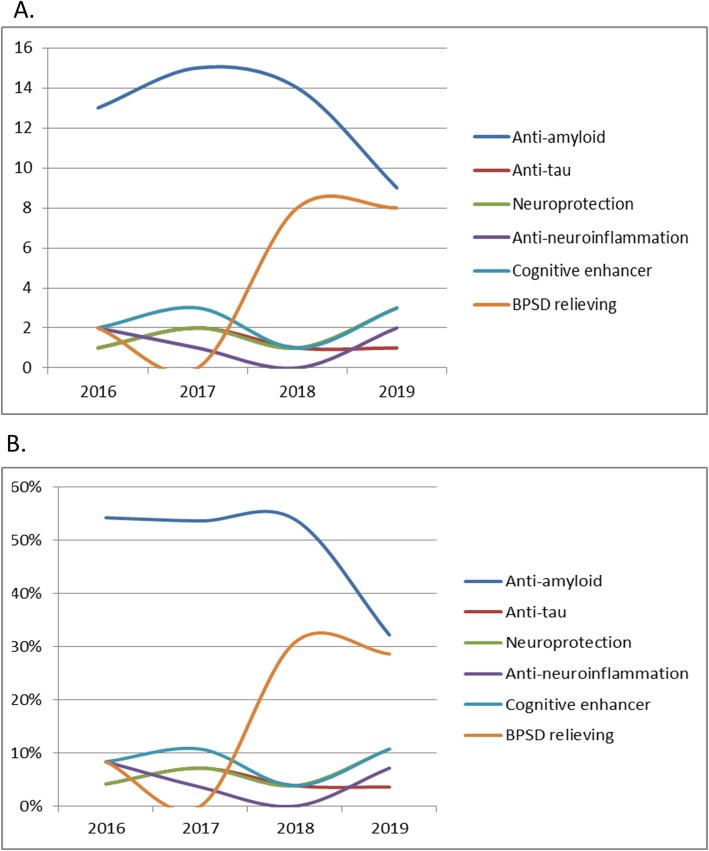
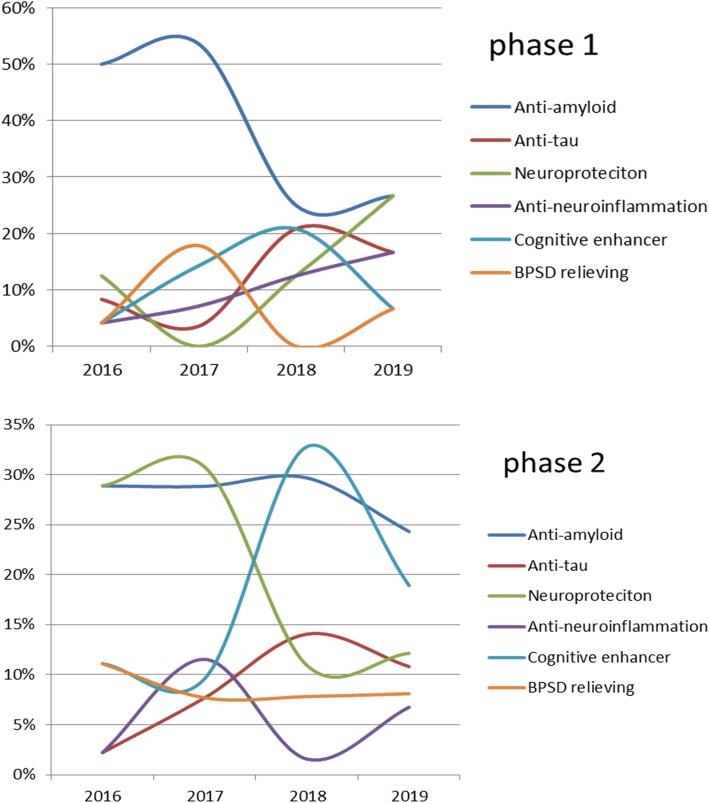
- In 2019, there were nine phase 3 anti-amyloid trials for eight drugs, and the number of anti-amyloid phase 3 trials was lower than in 2017 and 2018.
- Ongoing anti-amyloid trials had largely moved to prodromal or preclinical AD; no ongoing drug trials enrolled patients with advanced AD.
- Aducanumab showed dose-dependent amyloid removal and, in the updated EMERGE analysis, 23% less decline in CDR-SB, 27% less decline in ADAS-Cog 13, and 40% less decline in ADCS-ADL-MCI versus placebo at 78 weeks; amyloid plaque burden also decreased at 26 and 78 weeks (P < 0.001).
- Several programs were unsuccessful or stopped for lack of efficacy or other reasons, including azeliragon, pioglitazone, intepirdine, aripiprazole, nilvadipine, and the CNP520 arm of Generation Study 1, which “showed a worsening of cognitive function.”
## Methods
- The paper is a narrative review of Alzheimer disease clinical trials, organized by therapeutic target: anti-amyloid, anti-tau, antineuroinflammation, neuroprotection, cognitive enhancers, and BPSD-relieving therapy.
- The authors state they reviewed the current state of clinical trials at clinicaltrials.gov, along with the underlying mechanisms and reasons prior trials failed.
- Main analysis is descriptive synthesis of trial status, phases, targets, endpoints, and reported outcomes; no original participant-level statistical analysis is reported.
## Limitations
- The paper does not describe a systematic search strategy, inclusion/exclusion criteria, or formal risk-of-bias assessment; this is evident from the text.
- It is a review of trial registrations and reported results, so its conclusions depend on available public reports and may be limited by incomplete disclosure of some trial findings; this is evident from the text.
- The authors do not report pooled effect estimates or meta-analytic results; instead, the evidence is presented trial by trial.
Model-written summary. Check it against the paper before relying on it.
Integrity signals
Registry
Cites
Statistics
Figures
Verification
Claims the paper makes
16 Valid · 5 Not valid · 18 Not checked · 32 Own results and interpretations
The cited sources support only part of this claim — read each source’s verdict below.
In the paper
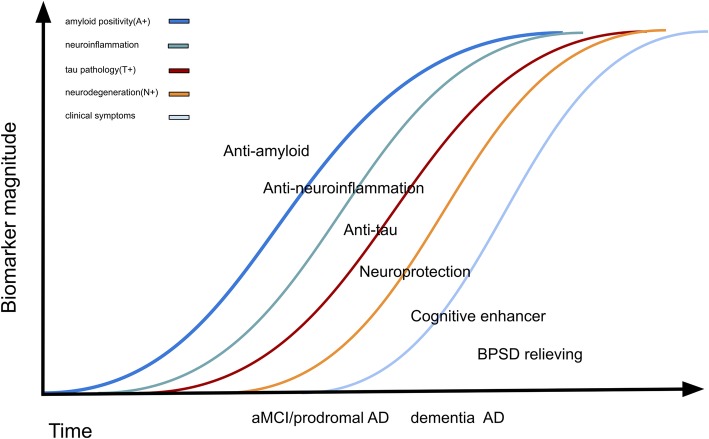
“Molecular imaging studies such as those using amyloid positron emission tomography (PET) have shown that Aβ deposition reaches a plateau before brain atrophy can be identified from structural magnetic resonance imaging (MRI) and cognitive symptoms [15, 19].”
§ Clinical trials of new drugs for Alzheimer disease > Introduction
What the sources say
- Not checked — no full text of the sourcecites [15] Kang J Lemaire HG Unterbeck A Salbaum JM Masters CL Grzeschik KH The precursor of Alzheimer's disease amyloid A4 protein resembles a cell-surface receptor Nature 1987 325 6106 733 736 10.1038/325733a0 2881207 source
- Partly supportedcites [19] Mormino EC Kluth JT Madison CM Rabinovici GD Baker SL Miller BL Episodic memory loss is related to hippocampal-mediated beta-amyloid deposition in elderly subjects Brain J Neurol 2009 132 Pt 5 1310 1323 10.1093/brain/awn320 PMC2677792 19042931 sourceExperimental — accuracy not yet measured
Our copy of Mormino et al. (2009) supports only the sequencing element of the claim: the Discussion section 'Ab burden and EM' states that 'modest PIB increases were associated with HV atrophy... [but] were not accompanied by EM memory deficits after removal of the two subjects with highest PIB values', and 'Quantifying and classifying PIB uptake' says 'the negative impact of Ab pathology begins during initial stages of accumulation in non-demented individuals, far before Alzheimer's disease-comparable levels are reached' — i.e. Aβ-related hippocampal atrophy precedes detectable episodic memory symptoms. However, no passage in our copy states or implies that Aβ deposition 'reaches a plateau'; on the contrary, the Introduction and Discussion describe PIB uptake as continuous, supporting 'the hypothesis that Ab accumulation is a continuous process that results in clinical Alzheimer's disease once a certain threshold is reached'. The plateau claim (searched: plateau, ceiling, saturation, levels off, nonlinear) is therefore not attributable to this source, and the study is cross-sectional with no longitudinal trajectory data. (LLM, conf=0.68)
plainstates an association- Asserted: passes — The authors put it forward as true.
- Checkable: passes — It can be checked against evidence.
- Load-bearing: unclear — It is unclear whether the paper’s conclusions depend on it.
- Based: passes — The paper gives a reason why it holds.
The cited sources support only part of this claim — read each source’s verdict below.
In the paper
“Furthermore, the brains of patients with AD exhibited evidence of sustained inflammation.”
§ Clinical trials of new drugs for Alzheimer disease > Introduction
What the sources say
- Partly supportedcites [26] Hamelin L Lagarde J Dorothee G Leroy C Labit M Comley RA Early and protective microglial activation in Alzheimer's disease: a prospective study using 18F-DPA-714 PET imaging Brain J Neurol 2016 139 Pt 4 1252 1264 10.1093/brain/aww017 26984188 sourceExperimental — accuracy not yet measured
The Introduction describes microglial activation in the brains of patients with Alzheimer’s disease, and the Discussion reports evidence of neuroinflammation in patients at the prodromal stage. The paper discusses chronic activation and a sustained inflammatory response, but its reported patient findings do not establish that inflammation persisted over time in those individuals. The copy provides section labels but no page numbers for these passages. (LLM, conf=0.82)
plainstates an association- Asserted: passes — The authors put it forward as true.
- Checkable: passes — It can be checked against evidence.
- Load-bearing: unclear — It is unclear whether the paper’s conclusions depend on it.
- Based: passes — The paper gives a reason why it holds.
- Partly supported
The cited sources support only part of this claim — read each source’s verdict below.
In the paper
“Aβ itself acts as a proinflammatory agent, activating many inflammatory components.”
§ Clinical trials of new drugs for Alzheimer disease > Introduction
What the sources say
- Partly supportedcites [26] Hamelin L Lagarde J Dorothee G Leroy C Labit M Comley RA Early and protective microglial activation in Alzheimer's disease: a prospective study using 18F-DPA-714 PET imaging Brain J Neurol 2016 139 Pt 4 1252 1264 10.1093/brain/aww017 26984188 sourceExperimental — accuracy not yet measured
The Introduction describes microglial activation around amyloid-β plaques, and the Discussion says amyloid deposits provoke an inflammatory response (page numbers unavailable in our copy). But the Discussion also says the mechanism is not fully understood; the paper does not establish that Aβ itself activates many inflammatory components. (LLM, conf=0.84)
plainstates a cause- Asserted: passes — The authors put it forward as true.
- Checkable: passes — It can be checked against evidence.
- Load-bearing: unclear — It is unclear whether the paper’s conclusions depend on it.
- Based: passes — The paper gives a reason why it holds.
- Partly supported
The cited sources support only part of this claim — read each source’s verdict below.
In the paper
“Neuronal death or brain atrophy induced by amyloid, tau, and neuroinflammation might be prevented with neuroprotective therapies, which include suppressing excitable amino acid signaling pathways, free radical scavengers, and regeneration enhancers (Table 3) [29].”
§ Clinical trials of new drugs for Alzheimer disease > Introduction
What the sources say
- Partly supportedcites [29] Chi Hao Chang Hui-Yun Sang Tzu-Kang Neuronal Cell Death Mechanisms in Major Neurodegenerative Diseases International Journal of Molecular Sciences 2018 19 10 3082 10.3390/ijms19103082 30304824 PMC6213751 sourceExperimental — accuracy not yet measured
Section 3.2 links amyloid-beta and Tau to neuronal death, and the Introduction and Future Directions discuss developing treatments to counter disease progression. But the copy does not support the full attributed claim: it does not identify neuroinflammation as a cause in this account or describe the listed neuroprotective therapies—suppressing excitatory amino acid signaling, free-radical scavengers, and regeneration enhancers—as ways to prevent neuronal death or brain atrophy. No page numbers are provided for these passages. (LLM, conf=0.84)
hedgedstates a possible cause- Asserted: passes — The authors put it forward as true.
- Checkable: passes — It can be checked against evidence.
- Load-bearing: passes — The paper’s conclusions depend on it.
- Based: passes — The paper gives a reason why it holds.
- Partly supported
The cited sources support only part of this claim — read each source’s verdict below.
In the paper
“All the mutant genes of hereditary, autosomal, and dominant familial AD, including amyloid precursor protein (APP), presenilin 1, and presenilin 2, encode the major proteins involved in amyloid metabolism [14–16].”
§ Clinical trials of new drugs for Alzheimer disease > Introduction
What the sources say
- Not checked — no full text of the sourcecites [14] Selkoe DJ The molecular pathology of Alzheimer's disease Neuron. 1991 6 4 487 498 10.1016/0896-6273(91)90052-2 1673054 source
- Not checked — no full text of the sourcecites [15] Kang J Lemaire HG Unterbeck A Salbaum JM Masters CL Grzeschik KH The precursor of Alzheimer's disease amyloid A4 protein resembles a cell-surface receptor Nature 1987 325 6106 733 736 10.1038/325733a0 2881207 source
- Partly supportedcites [16] Gunawardena S Yang G Goldstein LS Presenilin controls kinesin-1 and dynein function during APP-vesicle transport in vivo Hum Mol Genet 2013 22 19 3828 3843 10.1093/hmg/ddt237 23710041 PMC3766177 sourceExperimental — accuracy not yet measured
The Introduction (page not provided) says presenilin is the catalytic component of the gamma-secretase complex that cleaves APP, and that numerous presenilin mutations cause familial AD. It does not establish that APP, presenilin 1, and presenilin 2 comprise all the genes implicated in autosomal-dominant familial AD, or characterize all three as encoding the major proteins of amyloid metabolism. (LLM, conf=0.83)
plain- Asserted: passes — The authors put it forward as true.
- Checkable: passes — It can be checked against evidence.
- Load-bearing: unclear — It is unclear whether the paper’s conclusions depend on it.
- Based: passes — The paper gives a reason why it holds.
37 more claims · 7 with their cited sources checked
Create a free account to see all 71 claims and to verify the 1 reference still open.
- Probably not a substantial claim. 15
- It may state two separate claims as one. 17
- The quote only partly states this claim. 2
Claims other papers make about this one
Each is checked against this paper’s own text: does it say what the citing paper says it does?
The source backs part of the claim, not all of it — or backs it for a different population, condition or comparison.
In the citing paper
“all attempts to develop A β -targeting drugs to reverse deficits in memory and cognition have ended in failure, despite being successful in reducing the A β load”
From Nilotinib restores memory function by preventing dopaminergic neuron degeneration in a mouse model of Alzheimer’s Disease (2021) · cites this paper as Huang et al., 2020
Experimental — accuracy not yet measuredThe source backs part of the claim, not all of it — or backs it for a different population, condition or comparison.
In the citing paper
“However, in numerous human clinical trials using this approach, there was a decrease in amyloid load, but without significant clinical improvement nor reduction in disease progression [165].”
From Alzheimer's Disease: Treatment Strategies and Their Limitations. (2022) · cites this paper as [165]
Experimental — accuracy not yet measuredThe cited source says what the claim attributes to it.
In the citing paper
“These drugs primarily function by modulating neurotransmitter levels but cannot alter the course of the disease,409,411 which are instructive for designing new drugs.”
From Recent advances in Alzheimer's disease: Mechanisms, clinical trials and new drug development strategies. (2024) · cites this paper as [411]
The cited source says what the claim attributes to it.
In the citing paper
“However, the targets of both phase 1 and phase 2 trials are diverse, with a noticeable increase in the number of phase 1 trials focusing on neuroprotection and phase 2 trials focusing on anti-neuroinflammation [85].”
From Clinical trials of new drugs for Alzheimer disease: a 2020–2023 update (2023) · cites this paper as [85]
The check wasn’t confident either way, so it gives no verdict — never disputed.
In the citing paper
“Moreover, the literature review reveals that only a single cholinesterase inhibitor is in Phase II and Phase III clinical trials, for AD management [147,148].”
From Acetylcholinesterase Inhibitory Potential of Various Sesquiterpene Analogues for Alzheimer’s Disease Therapy (2021) · cites this paper as [147]
Experimental — accuracy not yet measured
4 more claims about this paper
Create a free account to see every claim other papers make about this one.
Citations
Cites
NIA‐AA Research Framework: Toward a biological definition of Alzheimer's disease
Jack, C. R., Bennett, D. A., Blennow, K., Carrillo, M. C., Dunn, B., Haeberlein, S. B., Holtzman, D. M., Jagust, W., Jessen, F., Karlawish, J., et al. (2018) · Alzheimer's & Dementia · doi:10.1016/j.jalz.2018.02.018 · Cited by 10,537
The amyloid hypothesis of Alzheimer's disease at 25 years
Selkoe, D. J., & Hardy, J. (2016) · EMBO Molecular Medicine · doi:10.15252/emmm.201606210 · Cited by 6,164
Pushko, P., Pumpens, P., & Grens, E. (2013) · Intervirology · doi:10.1159/000346773 · Cited by 5,950
Glenner, G. G., & Wong, C. W. (1984) · Biochemical and Biophysical Research Communications · doi:10.1016/s0006-291x(84)80190-4 · Cited by 5,404
Hypothetical model of dynamic biomarkers of the Alzheimer's pathological cascade
Jack, C. R., Knopman, D. S., Jagust, W. J., Shaw, L. M., Aisen, P. S., Weiner, M. W., Petersen, R. C., & Trojanowski, J. Q. (2010) · The Lancet Neurology · doi:10.1016/s1474-4422(09)70299-6 · Cited by 4,806 · cited 1×
“Tau accumulation, which might be a consequence of neuronal damage, was proposed to begin between AD clinical symptom development and Aβ accumulation [20].”
BackgroundThe precursor of Alzheimer's disease amyloid A4 protein resembles a cell-surface receptor
Kang, J., Lemaire, H.-G., Unterbeck, A., Salbaum, J. M., Masters, C. L., Grzeschik, K.-H., Multhaup, G., Beyreuther, K., & Müller-Hill, B. (1987) · Nature · doi:10.1038/325733a0 · Cited by 4,619
Amyloid plaque core protein in Alzheimer disease and Down syndrome.
Masters, C. L., Simms, G., Weinman, N. A., Multhaup, G., McDonald, B. L., & Beyreuther, K. (1985) · Proceedings of the National Academy of Sciences · doi:10.1073/pnas.82.12.4245 · Cited by 4,431
The antibody aducanumab reduces Aβ plaques in Alzheimer’s disease
Sevigny, J., Chiao, P., Bussière, T., Weinreb, P. H., Williams, L., Maier, M., Dunstan, R., Salloway, S., Chen, T., Ling, Y., et al. (2016) · Nature · doi:10.1038/nature19323 · Cited by 3,059 · cited 1×
“Additionally, amyloid was cleared from the six cortical regions of interest, namely the frontal, parietal, lateral temporal, sensorimotor, anterior, and posterior cingulate areas [43].”
BackgroundThe molecular pathology of Alzheimer's disease
Selkoe, D. J. (1991) · Neuron · doi:10.1016/0896-6273(91)90052-2 · Cited by 2,708
Neurofibrillary tangles but not senile plaques parallel duration and severity of Alzheimer's disease
Arriagada, P. V., Growdon, J. H., Hedley-Whyte, E. T., & Hyman, B. T. (1992) · Neurology · doi:10.1212/wnl.42.3.631 · Cited by 2,668
Amyloid deposition as the central event in the aetiology of Alzheimer’s disease
Hardy, J., & Allsop, D. (1991) · Trends in Pharmacological Sciences · doi:10.1016/0165-6147(91)90609-v · Cited by 2,538
(2015) · HAL · Cited by 2,238
Two Phase 3 Trials of Bapineuzumab in Mild-to-Moderate Alzheimer's Disease
Salloway, S., Sperling, R., Fox, N. C., Blennow, K., Klunk, W., Raskind, M., Sabbagh, M., Honig, L. S., Porsteinsson, A. P., Ferris, S., et al. (2014) · New England Journal of Medicine · doi:10.1056/nejmoa1304839 · Cited by 1,960
Alzheimer disease: Evidence for selective loss of cholinergic neurons in the nucleus basalis
Whitehouse, P. J., Price, D. L., Clark, A. W., Coyle, J. T., & DeLong, M. R. (1981) · Annals of Neurology · doi:10.1002/ana.410100203 · Cited by 1,736
Phase 3 Trials of Solanezumab for Mild-to-Moderate Alzheimer's Disease
Doody, R. S., Thomas, R. G., Farlow, M., Iwatsubo, T., Vellas, B., Joffe, S., Kieburtz, K., Raman, R., Sun, X., Aisen, P. S., et al. (2014) · New England Journal of Medicine · doi:10.1056/nejmoa1312889 · Cited by 1,668
Neuronal loss correlates with but exceeds neurofibrillary tangles in Alzheimer's disease
Gómez‐Isla, T., Hollister, R., West, H., Mui, S., Growdon, J. H., Petersen, R. C., Parisi, J. E., & Hyman, B. T. (1997) · Annals of Neurology · doi:10.1002/ana.410410106 · Cited by 1,489
Holmes, C., Boche, D., Wilkinson, D., Yadegarfar, G., Hopkins, V., Bayer, A., Jones, R. W., Bullock, R., Love, S., Neal, J. W., et al. (2008) · The Lancet · doi:10.1016/s0140-6736(08)61075-2 · Cited by 1,416 · cited 1×
“A study involving cognitively healthy adults showed that Aβ in CSF or the hippocampus increases after sleep deprivation or slowwave sleep disruption, which indicates the complexity of Aβ kinetics [59, 60, 61].”
BackgroundClinical effects of Aβ immunization (AN1792) in patients with AD in an interrupted trial
Gilman, S., Koller, M., Black, R. S., Jenkins, L., Griffith, S. G., Fox, N. C., Eisner, L., Kirby, L., Rovira, M. B., Forette, F., et al. (2005) · Neurology · doi:10.1212/01.wnl.0000159740.16984.3c · Cited by 1,329 · cited 1×
“In a phase 2 study, 6% of patients developed aseptic meningoencephalitis as a side effect [39].”
BackgroundA Phase 3 Trial of Semagacestat for Treatment of Alzheimer's Disease
Doody, R. S., Raman, R., Farlow, M., Iwatsubo, T., Vellas, B., Joffe, S., Kieburtz, K., He, F., Sun, X., Thomas, R. G., et al. (2013) · New England Journal of Medicine · doi:10.1056/nejmoa1210951 · Cited by 1,224
Wang, X., Sun, G., Feng, T., Zhang, J., Huang, X., Wang, T., Xie, Z., Chu, X., Yang, J., Wang, H., et al. (2019) · Cell Research · doi:10.1038/s41422-019-0216-x · Cited by 1,144 · cited 1×
“GV-971 (sodium oligo-mannurarate) can bind to multiple sites of amyloid, further destabilize and inhibit Aβ aggregation, and then increases Aβ clearance [52].”
BackgroundTau-targeting therapies for Alzheimer disease
Congdon, E. E., & Sigurdsson, E. M. (2018) · Nature Reviews Neurology · doi:10.1038/s41582-018-0013-z · Cited by 1,113
Trial of Solanezumab for Mild Dementia Due to Alzheimer’s Disease
Honig, L. S., Vellas, B., Woodward, M., Boada, M., Bullock, R., Borrie, M., Hager, K., Andreasen, N., Scarpini, E., Liu-Seifert, H., et al. (2018) · New England Journal of Medicine · doi:10.1056/nejmoa1705971 · Cited by 1,049
Role of Glutamate and NMDA Receptors in Alzheimer’s Disease
Wang, R., & Reddy, P. H. (2017) · Journal of Alzheimer’s Disease · doi:10.3233/jad-160763 · Cited by 1,009
β-Amyloid accumulation in the human brain after one night of sleep deprivation
Shokri-Kojori, E., Wang, G.-J., Wiers, C. E., Demiral, S. B., Guo, M., Kim, S. W., Lindgren, E., Ramirez, V., Zehra, A., Freeman, C., et al. (2018) · Proceedings of the National Academy of Sciences · doi:10.1073/pnas.1721694115 · Cited by 893 · cited 1×
“Soluble Aβ exerts a physiological function, modulating synaptic function and facilitating neuronal growth; furthermore, Aβ protects the brain from infections, repairs leaks in the blood–brain barrier, and promotes recovery from injury [57, 58].”
BackgroundRaina, P., Santaguida, P., Ismaila, A., Patterson, C., Cowan, D., Levine, M., Booker, L., & Oremus, M. (2008) · Annals of Internal Medicine · doi:10.7326/0003-4819-148-5-200803040-00009 · Cited by 771
Alzheimer's disease drug development pipeline: 2019
Cummings, J., Lee, G., Ritter, A., Sabbagh, M., & Zhong, K. (2019) · Alzheimer's & Dementia: Translational Research & Clinical Interventions · doi:10.1016/j.trci.2019.05.008 · Cited by 762
Beta-amyloid precursor protein cleavage by a membrane-bound protease.
Sisodia, S. S. (1992) · Proceedings of the National Academy of Sciences · doi:10.1073/pnas.89.13.6075 · Cited by 738
The Evolution of Preclinical Alzheimer’s Disease: Implications for Prevention Trials
Sperling, R., Mormino, E., & Johnson, K. (2014) · Neuron · doi:10.1016/j.neuron.2014.10.038 · Cited by 725
An overview of APP processing enzymes and products.
Chow, V. W., Mattson, M. P., Wong, P. C., & Gleichmann, M. (2010) · NeuroMolecular Medicine · doi:10.1007/s12017-009-8104-z · Cited by 684
Episodic memory loss is related to hippocampal-mediated -amyloid deposition in elderly subjects
Mormino, E. C., Kluth, J. T., Madison, C. M., Rabinovici, G. D., Baker, S. L., Miller, B. L., Koeppe, R. A., Mathis, C. A., Weiner, M. W., Jagust, W. J., et al. (2009) · Brain · doi:10.1093/brain/awn320 · Cited by 684 · cited 1×
“Molecular imaging studies such as those using amyloid positron emission tomography (PET) have shown that Aβ deposition reaches a plateau before brain atrophy can be identified from structural magnetic resonance imaging (MRI) and cognitive symptoms [15, 19].”
BackgroundSlow wave sleep disruption increases cerebrospinal fluid amyloid-β levels
Ju, Y.-E. S., Ooms, S. J., Sutphen, C., Macauley, S. L., Zangrilli, M. A., Jerome, G., Fagan, A. M., Mignot, E., Zempel, J. M., Claassen, J. A. H. R., et al. (2017) · Brain · doi:10.1093/brain/awx148 · Cited by 604
Treatment Combinations for Alzheimer’s Disease: Current and Future Pharmacotherapy Options
Cummings, J. L., Tong, G., & Ballard, C. (2019) · Journal of Alzheimer's Disease · doi:10.3233/jad-180766 · Cited by 588 · cited 1×
“creases the level of aggregated tau proteins to alleviate tau-related neuronal damage [67].”
BackgroundPreclinical Alzheimer's disease and its outcome: a longitudinal cohort study
Vos, S. J., Xiong, C., Visser, P. J., Jasielec, M. S., Hassenstab, J., Grant, E. A., Cairns, N. J., Morris, J. C., Holtzman, D. M., & Fagan, A. M. (2013) · The Lancet Neurology · doi:10.1016/s1474-4422(13)70194-7 · Cited by 564
Hamelin, L., Lagarde, J., Dorothée, G., Leroy, C., Labit, M., Comley, R. A., de Souza, L. C., Corne, H., Dauphinot, L., Bertoux, M., et al. (2016) · Brain · doi:10.1093/brain/aww017 · Cited by 519
Neocortical Neurofibrillary Tangles Correlate With Dementia Severity in Alzheimer's Disease
Bierer, L. M., Hof, P. R., Purohit, D. P., Carlin, L., Schmeidler, J., Davis, K. L., & Perl, D. P. (1995) · Archives of Neurology · doi:10.1001/archneur.1995.00540250089017 · Cited by 514
Bohrmann, B., Baumann, K., Benz, J., Gerber, F., Huber, W., Knoflach, F., Messer, J., Oroszlan, K., Rauchenberger, R., Richter, W. F., et al. (2012) · Journal of Alzheimer's Disease · doi:10.3233/jad-2011-110977 · Cited by 448
Frequency of hippocampal formation atrophy in normal aging and Alzheimer's disease
De Leon, M. J., George, A. E., Golomb, J., Tarshish, C., Convit, A., Kluger, A., De Santi, S., Mc Rae, T., Ferris, S. H., Reisberg, B., et al. (1997) · Neurobiology of Aging · doi:10.1016/s0197-4580(96)00213-8 · Cited by 429
Neuronal Cell Death Mechanisms in Major Neurodegenerative Diseases
Chi, H., Chang, H.-Y., & Sang, T.-K. (2018) · International Journal of Molecular Sciences · doi:10.3390/ijms19103082 · Cited by 412
Amyloid-β and tau complexity — towards improved biomarkers and targeted therapies
Polanco, J. C., Li, C., Bodea, L.-G., Martinez-Marmol, R., Meunier, F. A., & Götz, J. (2018) · Nature Reviews Neurology · doi:10.1038/nrneurol.2017.162 · Cited by 378
Effect of sleep on overnight cerebrospinal fluid amyloid β kinetics
Lucey, B. P., Hicks, T. J., McLeland, J. S., Toedebusch, C. D., Boyd, J., Elbert, D. L., Patterson, B. W., Baty, J., Morris, J. C., Ovod, V., et al. (2018) · Annals of Neurology · doi:10.1002/ana.25117 · Cited by 362 · cited 1×
“A study involving cognitively healthy adults showed that Aβ in CSF or the hippocampus increases after sleep deprivation or slowwave sleep disruption, which indicates the complexity of Aβ kinetics [59, 60, 61].”
BackgroundMay, P. C., Dean, R. A., Lowe, S. L., Martenyi, F., Sheehan, S. M., Boggs, L. N., Monk, S. A., Mathes, B. M., Mergott, D. J., Watson, B. M., et al. (2011) · The Journal of Neuroscience · doi:10.1523/jneurosci.3647-11.2011 · Cited by 336
Neuropsychiatric symptoms in Alzheimer's disease: what might be associated brain circuits?
Rosenberg, P. B., Nowrangi, M. A., & Lyketsos, C. G. (2015) · Molecular Aspects of Medicine · doi:10.1016/j.mam.2015.05.005 · Cited by 302
Muscarinic cholinergic influences in memory consolidation
Power, A. (2003) · Neurobiology of Learning and Memory · doi:10.1016/s1074-7427(03)00086-8 · Cited by 261
Pinto, A., Bonucci, A., Maggi, E., Corsi, M., & Businaro, R. (2018) · Antioxidants · doi:10.3390/antiox7050063 · Cited by 259
Tau Proteins and Tauopathies in Alzheimer’s Disease
Chong, F. P., Ng, K. Y., Koh, R. Y., & Chye, S. M. (2018) · Cellular and Molecular Neurobiology · doi:10.1007/s10571-017-0574-1 · Cited by 246
Beyreuther, K., & Masters, C. L. (1991) · Brain Pathology · doi:10.1111/j.1750-3639.1991.tb00667.x · Cited by 221
Lumateperone: a new treatment approach for neuropsychiatric disorders
Kumar, B., Kuhad, A., & Kuhad, A. (2018) · Drugs of Today · doi:10.1358/dot.2018.54.12.2899443 · Cited by 204 · cited 1×
“Excessive activity of the NMDA receptor is toxic to cells and accelerates cell death [81].”
BackgroundNilvadipine in mild to moderate Alzheimer disease: A randomised controlled trial
Lawlor, B., Segurado, R., Kennelly, S., Olde Rikkert, M. G. M., Howard, R., Pasquier, F., Börjesson-Hanson, A., Tsolaki, M., Lucca, U., Molloy, D. W., et al. (2018) · PLOS Medicine · doi:10.1371/journal.pmed.1002660 · Cited by 193
Wiessner, C., Wiederhold, K.-H., Tissot, A. C., Frey, P., Danner, S., Jacobson, L. H., Jennings, G. T., Luond, R., Ortmann, R., Reichwald, J., et al. (2011) · Journal of Neuroscience · doi:10.1523/jneurosci.0293-11.2011 · Cited by 190
Goure, W. F., Krafft, G. A., Jerecic, J., & Hefti, F. (2014) · Alzheimer's Research & Therapy · doi:10.1186/alzrt272 · Cited by 190
Neprilysin: An Enzyme Candidate to Slow the Progression of Alzheimer's Disease
El-Amouri, S. S., Zhu, H., Yu, J., Marr, R., Verma, I. M., & Kindy, M. S. (2008) · The American Journal of Pathology · doi:10.2353/ajpath.2008.070620 · Cited by 187
Tau Proteins and Neurofibrillary Degeneration
Goedert, M., Spillantini, M. G., & Crowther, R. A. (1991) · Brain Pathology · doi:10.1111/j.1750-3639.1991.tb00671.x · Cited by 178
Wilkinson, S. T., & Sanacora, G. (2019) · Drug Discovery Today · doi:10.1016/j.drudis.2018.11.007 · Cited by 173 · cited 1×
“It is an anti-tau antibody engineered to capture and neutralize tau aggregate [71].”
BackgroundBurstein, A. H., Sabbagh, M., Andrews, R., Valcarce, C., Dunn, I., & Altstiel, L. (2018) · The Journal of Prevention of Alzheimer's Disease · doi:10.14283/jpad.2018.18 · Cited by 171
Tau Biology and Tau-Directed Therapies for Alzheimer’s Disease
Bakota, L., & Brandt, R. (2016) · Drugs · doi:10.1007/s40265-015-0529-0 · Cited by 170
ADCOMS: a composite clinical outcome for prodromal Alzheimer's disease trials
Wang, J., Logovinsky, V., Hendrix, S. B., Stanworth, S. H., Perdomo, C., Xu, L., Dhadda, S., Do, I., Rabe, M., Luthman, J., et al. (2016) · Journal of Neurology, Neurosurgery & Psychiatry · doi:10.1136/jnnp-2015-312383 · Cited by 160
Ikezu, T., Trapp, B. D., Song, K. S., Schlegel, A., Lisanti, M. P., & Okamoto, T. (1998) · Journal of Biological Chemistry · doi:10.1074/jbc.273.17.10485 · Cited by 157
Effects of Ginkgo biloba on dementia: an overview of systematic reviews
Yuan, Q., Wang, C.-W., Shi, J., & Lin, Z.-X. (2017) · Journal of Ethnopharmacology · doi:10.1016/j.jep.2016.12.005 · Cited by 148
Post-mortem analysis of neuroinflammatory changes in human Alzheimer’s disease
Gomez-Nicola, D., & Boche, D. (2015) · Alzheimer's Research & Therapy · doi:10.1186/s13195-015-0126-1 · Cited by 147
Ginkgo biloba Extract in Vascular Protection: Molecular Mechanisms and Clinical Applications
Tian, J., Liu, Y., & Chen, K. (2017) · Current Vascular Pharmacology · doi:10.2174/1570161115666170713095545 · Cited by 146 · cited 2×
“It blocks certain functions of platelet-activating factor, leading to the inhibition of platelet aggregation, suppression of neuroinflammation, and prevention of cell damage caused by free radicals [75, 76].”
BackgroundThe discovery of suvorexant, the first orexin receptor drug for insomnia
Coleman, P. J., Gotter, A. L., Herring, W. J., Winrow, C. J., & Renger, J. J. (2017) · Annual Review of Pharmacology and Toxicology · doi:10.1146/annurev-pharmtox-010716-104837 · Cited by 128
Tracking neuroinflammation in Alzheimer’s disease: the role of positron emission tomography imaging
Zimmer, E. R., Leuzy, A., Benedet, A. L., Breitner, J., Gauthier, S., & Rosa-Neto, P. (2014) · Journal of Neuroinflammation · doi:10.1186/1742-2094-11-120 · Cited by 121
Yang, T., Xiao, T., Sun, Q., & Wang, K. (2017) · Acta Pharmaceutica Sinica B · doi:10.1016/j.apsb.2017.09.001 · Cited by 120 · cited 7×
“EVP-6124 is an α7 nicotinic acetylcholine receptor agonist and a 5-HT3 receptor antagonist and mediates the release of multiple neurotransmitters, such as γaminobutyric acid, glutamate, ACh, and dopamine [78, 79].”
BackgroundInfluentialThe keystone of Alzheimer pathogenesis might be sought in Aβ physiology
Puzzo, D., Gulisano, W., Arancio, O., & Palmeri, A. (2015) · Neuroscience · doi:10.1016/j.neuroscience.2015.08.039 · Cited by 116 · cited 1×
“Soluble Aβ exerts a physiological function, modulating synaptic function and facilitating neuronal growth; furthermore, Aβ protects the brain from infections, repairs leaks in the blood–brain barrier, and promotes recovery from injury [57, 58].”
BackgroundParis, D., Bachmeier, C., Patel, N., Quadros, A., Volmar, C.-H., Laporte, V., Ganey, J., Beaulieu-Abdelahad, D., Ait-Ghezala, G., Crawford, F., et al. (2011) · Molecular Medicine · doi:10.2119/molmed.2010.00180 · Cited by 114
Nicotinic Receptors in Neurodegeneration
Posadas, I., Lopez-Hernandez, B., & Cena, V. (2013) · Current Neuropharmacology · doi:10.2174/1570159x11311030005 · Cited by 113
The role of 5 HT6-receptor antagonists in Alzheimer’s disease: an update
Khoury, R., Grysman, N., Gold, J., Patel, K., & Grossberg, G. T. (2018) · Expert Opinion on Investigational Drugs · doi:10.1080/13543784.2018.1483334 · Cited by 112
Pioglitazone for the treatment of Alzheimer’s disease
Galimberti, D., & Scarpini, E. (2017) · Expert Opinion on Investigational Drugs · doi:10.1080/13543784.2017.1265504 · Cited by 106
Physiological Roles of Amyloid-?? and Implications for its Removal in Alzheimer???s Disease
Bishop, G. M., & Robinson, S. R. (2004) · Drugs & Aging · doi:10.2165/00002512-200421100-00001 · Cited by 94 · cited 1×
“The report revealed no change in primary or secondary outcome measures [56].”
BackgroundTen Years of Tau-Targeted Immunotherapy: The Path Walked and the Roads Ahead
Novak, P., Kontsekova, E., Zilka, N., & Novak, M. (2018) · Frontiers in Neuroscience · doi:10.3389/fnins.2018.00798 · Cited by 87
Choline: Selective enhancement of serial learning and encoding of low imagery words in man
Sitaram, N., Weingartner, H., Caine, E. D., & Gillin, J. C. (1978) · Life Sciences · doi:10.1016/0024-3205(78)90011-5 · Cited by 81
Mohajeri, M. H., Wollmer, M. A., & Nitsch, R. M. (2002) · Journal of Biological Chemistry · doi:10.1074/jbc.m202899200 · Cited by 67
Presenilin controls kinesin-1 and dynein function during APP-vesicle transport in vivo
Gunawardena, S., Yang, G., & Goldstein, L. S. B. (2013) · Human Molecular Genetics · doi:10.1093/hmg/ddt237 · Cited by 66
Aripiprazole in the treatment of Alzheimer's disease
De Deyn, P. P., Drenth, A. F., Kremer, B. P., Oude Voshaar, R. C., & Van Dam, D. (2013) · Expert Opinion on Pharmacotherapy · doi:10.1517/14656566.2013.764989 · Cited by 61
Herring, W. J., Roth, T., Krystal, A. D., & Michelson, D. (2019) · Journal of Sleep Research · doi:10.1111/jsr.12782 · Cited by 53
Boccia, M. M., Blake, M. G., Acosta, G. B., & Baratti, C. M. (2003) · Neuroscience Letters · doi:10.1016/s0304-3940(03)00493-2 · Cited by 51
Bansal, A., Kirschner, M., Zu, L., Cai, D., & Zhang, L. (2018) · Brain Research · doi:10.1016/j.brainres.2018.10.001 · Cited by 35 · cited 1×
“matergic deregulation may lead to brain cell death or dysfunction through destruction of synaptic function and plasticity, promotion of microglia-mediated neuroinflammation, and the release of Aβ and tau [72].”
BackgroundMurakami, K., & Irie, K. (2019) · Molecules · doi:10.3390/molecules24112125 · Cited by 31
Ahmed, M., Malik, M., Teselink, J., Lanctôt, K. L., & Herrmann, N. (2019) · Drugs & Aging · doi:10.1007/s40266-019-00668-7 · Cited by 29 · cited 1×
“EVP-6124 is an α7 nicotinic acetylcholine receptor agonist and a 5-HT3 receptor antagonist and mediates the release of multiple neurotransmitters, such as γaminobutyric acid, glutamate, ACh, and dopamine [78, 79].”
BackgroundApplications of tau PET imaging
Okamura, N., & Yanai, K. (2017) · Nature Reviews Neurology · doi:10.1038/nrneurol.2017.38 · Cited by 26
Park, S. Y., Shin, H. K., Lee, W. S., Bae, S. S., Kim, K., Hong, K. W., & Kim, C. D. (2017) · Oncotarget · doi:10.18632/oncotarget.22777 · Cited by 13
Abi‐Saab, D., Andjelkovic, M., Delmar, P., Voyle, N., Esau, N., & Lasser, R. A. (2017) · Alzheimer's & Dementia · doi:10.1016/j.jalz.2017.06.112 · Cited by 9 · cited 1×
“gantenerumab has an acceptable safety profile at a high dose [48].”
Background
Cited by
Comprehensive Review on Alzheimer’s Disease: Causes and Treatment
Breijyeh, Z., & Karaman, R. (2020) · Molecules · doi:10.3390/molecules25245789 · Cited by 2,789
Zhang, J., Zhang, Y., Wang, J., Xia, Y., Zhang, J., & Chen, L. (2024) · Signal Transduction and Targeted Therapy · doi:10.1038/s41392-024-01911-3 · Cited by 1,138
Alzheimer's Disease: Treatment Strategies and Their Limitations.
Passeri, E., Elkhoury, K., Morsink, M., Broersen, K., Linder, M., Tamayol, A., Malaplate, C., Yen, F. T., & Arab-Tehrany, E. (2022) · International Journal of Molecular Sciences · doi:10.3390/ijms232213954 · Cited by 689
“However, in numerous human clinical trials using this approach, there was a decrease in amyloid load, but without significant clinical improvement nor reduction in disease progression [165].”
BackgroundMechanisms of cognitive dysfunction in CKD
Viggiano, D., Wagner, C. A., Martino, G., Nedergaard, M., Zoccali, C., Unwin, R., & Capasso, G. (2020) · Nature Reviews Nephrology · doi:10.1038/s41581-020-0266-9 · Cited by 392
Biomarkers for Alzheimer’s disease—preparing for a new era of disease-modifying therapies
Zetterberg, H., & Bendlin, B. B. (2021) · Molecular Psychiatry · doi:10.1038/s41380-020-0721-9 · Cited by 377
Metadata
- Authors
- Huang, L.-K., Chao, S.-P., & Hu, C.-J.
- Affiliations
- National Health Research Institutes (TW)
- Taipei Medical University-Shuang Ho Hospital (TW)
- Corresponding author
- Hu, Chaur-Jong
- Venue
- Journal of Biomedical Science
- Published
- 2020-01-06
- Volume
- 27
- Issue
- 1
- Pages
- 18-18
- ISSN
- 1021-7770 (ISSN-L)
- 1423-0127
- PMC
- PMC6943903
- OpenAlex
- W3000635098
- Cited by
- 702
- References
- 84
- Citations by year
- 2026: 32 · 2025: 66 · 2024: 94 · 2023: 142 · 2022: 137 · 2021: 146 · 2020: 66
- FWCI
- 73.09
- Type
- journal article
- Language
- en
- Open access
- diamond
- doi.org
- Licence
- cc-by
- creativecommons.org/licenses/by/4.0/ (tdm)
- creativecommons.org/licenses/by/4.0/ (vor)
- Locations
- Journal of Biomedical Science (publishedVersion, cc-by)
- PubMed (publishedVersion)
- PubMed Central (submittedVersion, cc-by)
- DOAJ (DOAJ: Directory of Open Access Journals) (submittedVersion, cc-by-sa)
- Topics
- Health Sciences › Medicine › Pharmacology (medical) › Cholinesterase and Neurodegenerative Diseases
- Life Sciences › Neuroscience › Cellular and Molecular Neuroscience › Alzheimer's disease research and treatments
- Life Sciences › Neuroscience › Neurology › Neuroprotection in Cerebral Ischemia
- Keywords
- Alzheimer's disease, clinical trials, amyloid hypothesis, amyloid-beta, anti-amyloid therapy, anti-tau therapy, cholinesterase inhibitors, NMDA receptor antagonists
- MeSH terms
- Alzheimer Disease, Cholinesterase Inhibitors, Clinical Trials as Topic, Humans, Receptors, N-Methyl-D-Aspartate, Amyloid beta-Peptides
About these checks
Registry, retraction, Cites and statistics results are computed, not judged, with one exception: a printed reference that no index lists is read once by a model before it counts as a citation error. Claims are extracted by a model and kept only when their quote appears verbatim in the text; each cited source is then checked, with a model’s help, for whether it says what the claim relies on. Those verdicts can be wrong — read the claim’s quote and the cited source before relying on one.
The claim verdicts this report counts are experimental: their accuracy is not yet measured.
A language model drew the claims from the paper on 2026-10-10, under version 3 of the claim definition (model deepseek-v4.1-flash, prompt extract-v3).
A second model labelled each claim on 2026-10-10 (model jev-1.13-20260917, definition revision gold-guideline-v0.2).
Cited sources are checked with a language model’s help (qwen3.8-omni-flash and gpt-6-sol).
Statistics and arithmetic are recomputed, not judged.
Confidence bands are shown only for fields calibrated on our annotated test set. None is calibrated yet, so no band is shown.
What counts as a claim ›How we measure confidence ›How we check this ›
Are you an author, or do you see a problem with this page? Request a review
Data sources
Bibliographic data: Semantic Scholar, OpenAlex, Crossref.
Contains information from the Semantic Scholar Academic Graph Datasets, made available under the ODC Attribution License (ODC-BY 1.0).
Semantic Scholar’s data is described in: Kinney, R., et al. (2023). The Semantic Scholar Open Data Platform. arXiv:2301.10140.
