

Persisting alterations of iron homeostasis in COVID-19 are associated with non-resolving lung pathologies and poor patients’ performance: a prospective observational cohort study
Open accessThe DOI matches its Crossref record; 35 of the 35 references it cites were found in a registry or an index; 21 of the 45 sources its claims cite were checked for support.
Abstract
Background: Severe coronavirus disease 2019 (COVID-19) is frequently associated with hyperinflammation and hyperferritinemia. The latter is related to increased mortality in COVID-19. Still, it is not clear if iron dysmetabolism is mechanistically linked to COVID-19 pathobiology. Methods: We herein present data from the ongoing prospective, multicentre, observational CovILD cohort study (ClinicalTrials.gov number, NCT04416100), which systematically follows up patients after COVID-19. 109 participants were evaluated 60 days after onset of first COVID-19 symptoms including clinical examination, chest computed tomography and laboratory testing. Results: We investigated subjects with mild to critical COVID-19, of which the majority received hospital treatment. 60 days after disease onset, 30% of subjects still presented with iron deficiency and 9% had anemia, mostly categorized as anemia of inflammation. Anemic patients had increased levels of inflammation markers such as interleukin-6 and C-reactive protein and survived a more severe course of COVID-19. Hyperferritinemia was still present in 38% of all individuals and was more frequent in subjects with preceding severe or critical COVID-19. Analysis of the mRNA expression of peripheral blood mononuclear cells demonstrated a correlation of increased ferritin and cytokine mRNA expression in these patients. Finally, persisting hyperferritinemia was significantly associated with severe lung pathologies in computed tomography scans and a decreased performance status as compared to patients without hyperferritinemia. Discussion: Alterations of iron homeostasis can persist for at least two months after the onset of COVID-19 and are closely associated with non-resolving lung pathologies and impaired physical performance. Determination of serum iron parameters may thus be a easy to access measure to monitor the resolution of COVID-19. Trial registration: ClinicalTrials.gov number: NCT04416100.
Overview
CoChat Summary
TL;DR
In a prospective observational cohort, 109 COVID-19 survivors evaluated about 60 days after symptom onset showed persistent iron dysmetabolism, including iron deficiency in 30%, anemia in 9%, and hyperferritinemia in 38%. Persisting hyperferritinemia was associated with more severe lung pathology on CT and reduced six-minute walking distance.
Key findings
- At 60 days, 30% had iron deficiency (13% absolute, 17% functional), 9.2% had anemia, and 38% had hyperferritinemia; hyperferritinemia was more frequent in males (48%) than females (23%, p = 0.009).
- Anemia was more common after severe/critical COVID-19: 90% of anemic patients had previously had severe to critical disease, and anemic patients had higher IL6 (p = 0.009) and CRP (p = 0.031).
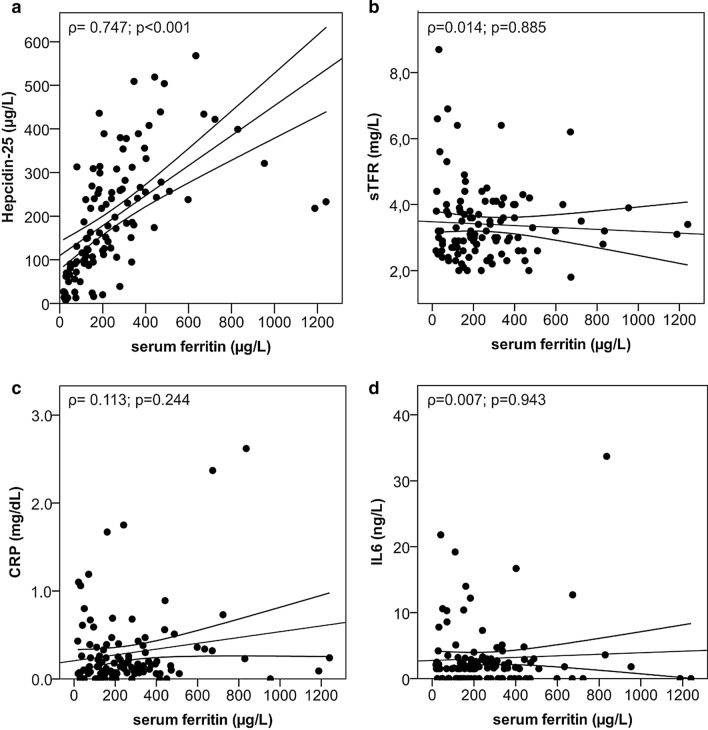
- Hyperferritinemia correlated with serum hepcidin but not with CRP or IL6; hepcidin was positively correlated with TSAT (ρ = 0.328, p < 0.01) and negatively with sTFRF index (ρ = −0.439, p < 0.01).
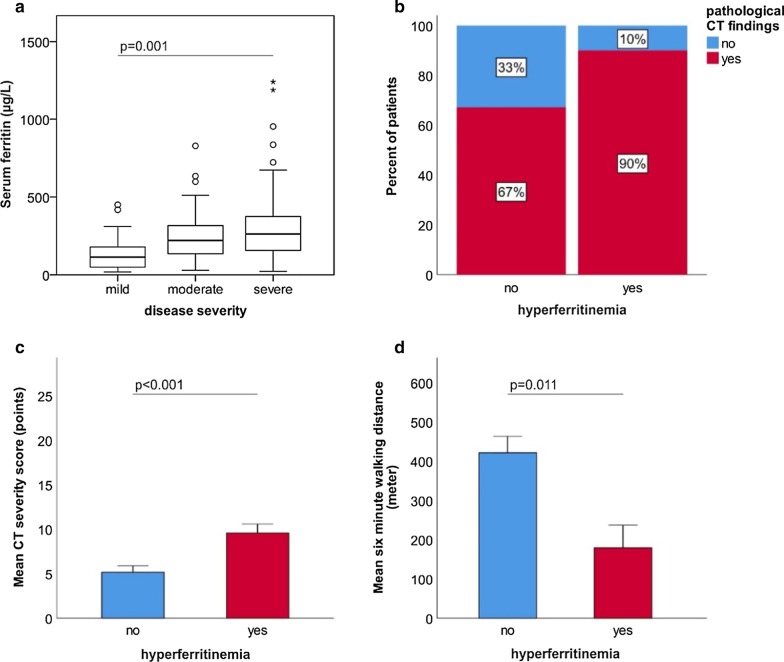
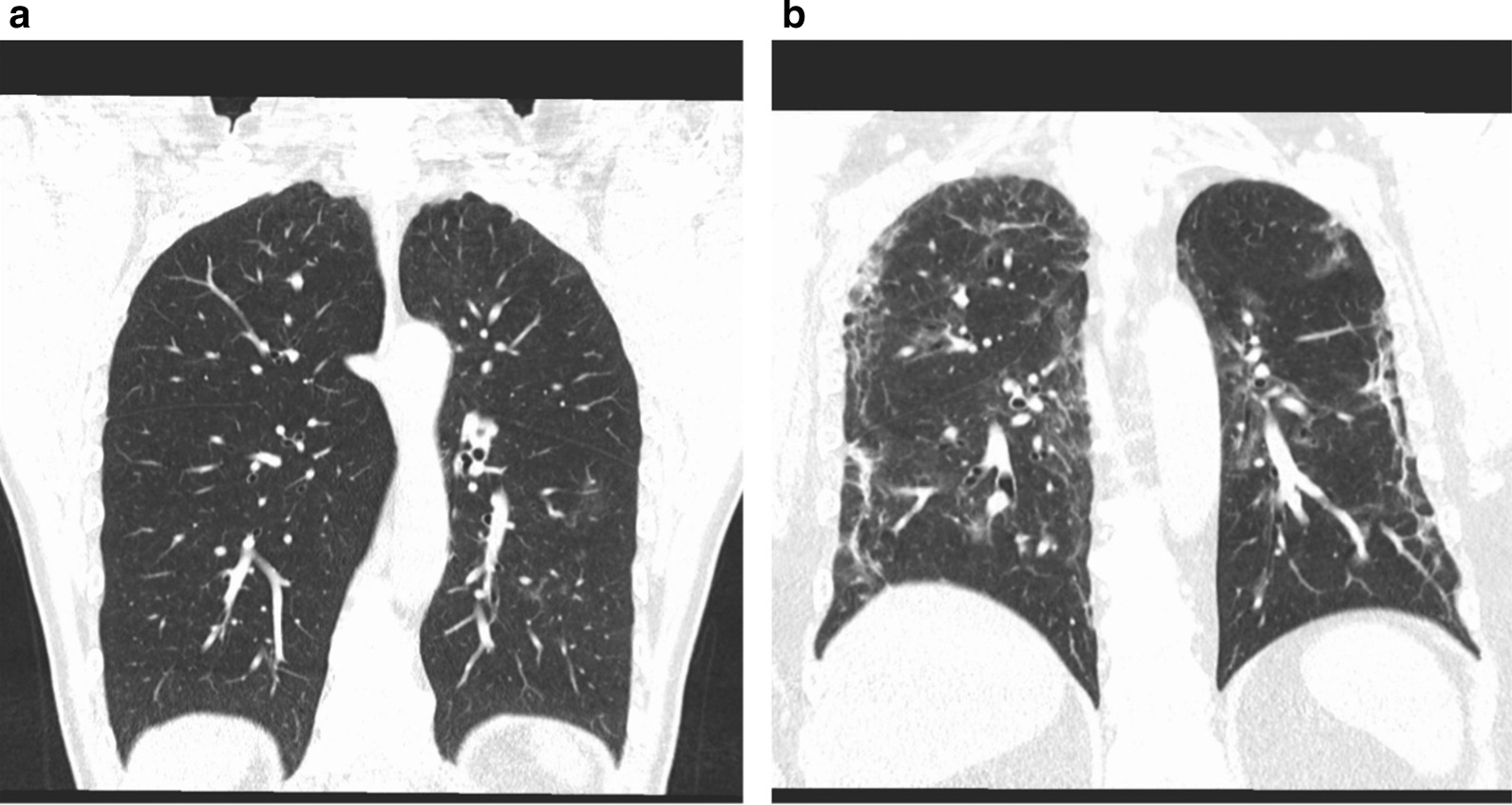
- Patients with persisting hyperferritinemia had more frequent and severe pathological CT findings and, in a subgroup of 23 tested, decreased six-minute walking distance compared with those with normal ferritin.
Methods
- Prospective, multicentre, observational CovILD cohort study (NCT04416100); 109 adults aged ≥18 years with prior mild to critical COVID-19 were evaluated 60 days (SD ± 12) after first symptom onset.
- Assessments included clinical examination, structured symptom questionnaire, performance evaluation including six-minute walking test, blood sampling, and low-dose chest CT scored for lung pathology severity (0–25).
- Iron parameters, anemia definitions, hyperferritinemia cut-offs, PBMC mRNA expression by RT-PCR, and group comparisons/correlations were analyzed with nonparametric tests and Sidak adjustment where appropriate.
Limitations
- The authors state the data are observational and do not provide evidence for causality; further mechanistic evaluation is warranted.
- Evident from the text: follow-up is a single post-acute time point around 60 days, so persistence beyond that window is not established.
- Evident from the text: the six-minute walking test analysis was limited to a subgroup of 23 participants (12 with hyperferritinemia, 11 without).
Model-written summary. Check it against the paper before relying on it.
Integrity signals
Registry
Cites
Statistics
Figures
Verification
Claims the paper makes
9 Valid · 1 Not valid · 11 Not checked · 34 Own results and interpretations
Some cited sources support this claim and some don’t — read each source’s verdict below.
In the paper
“The latter is related to increased mortality in COVID-19.”
- Also stated in: § Discussion · plain
“hyperferritinemia is associated with increased mortality in COVID-19.”
§ Persisting alterations of iron homeostasis in COVID-19 are associated with non-resolving lung pathologies and poor patients’ performance: a prospective observational cohort study > Abstract > Background
What the sources say
- Supportedcites [1] Mehta P McAuley DF Brown M Sanchez E Tattersall RS Manson JJ Hlh across speciality Collaboration UK: COVID-19: consider cytokine storm syndromes and immunosuppression Lancet 2020 395 1033 1034 10.1016/S0140-6736(20)30628-0 32192578 PMC7270045 source
The paper’s main text reports that elevated ferritin was a predictor of fatality in a retrospective study of 150 confirmed COVID-19 cases, with higher mean ferritin in non-survivors than survivors. This supports the claimed association between hyperferritinemia and increased mortality; the paper does not claim that ferritin causes death. (LLM, conf=0.94)
- Disputedcites [14] Bellmann-Weiler R Lanser L Barket R Rangger L Schapfl A Schaber M Fritsche G Wöll E Weiss G Prevalence and Predictive Value of Anemia and Dysregulated Iron Homeostasis in Patients with COVID-19 Infection J Clin Med. 2020 9 8 2429 10.3390/jcm9082429 PMC7464087 32751400 sourceExperimental — accuracy not yet measured
The Results (§3.3) found no significant relationship between elevated ferritin and mortality in this cohort, and the Discussion (§4) explicitly says higher ferritin was not associated with an increased risk of death. The Introduction (§1) reports that earlier studies found a relationship with death, but this paper's own findings do not support the unqualified claim. (LLM, conf=0.88)
Checked by a reasoning model — may be wrong.
- Could not verifycites [28] Phua J Weng L Ling L Egi M Lim CM Divatia JV Shrestha BR Arabi YM Ng J Gomersall CD Intensive care management of coronavirus disease 2019 (COVID-19): challenges and recommendations Lancet Respir Med 2020 8 506 517 10.1016/S2213-2600(20)30161-2 32272080 PMC7198848 sourceExperimental — accuracy not yet measured
The Other intensive care management section describes increasing ferritin as a sign of hyperinflammation in COVID-19. The Epidemiology and clinical features section lists factors associated with mortality, but does not include ferritin. Searches for hyperferritinemia, ferritin, and mortality found no passage linking elevated ferritin to increased mortality in our copy; page numbers were unavailable. (LLM, conf=0.76)
plainstates an association- Asserted: passes — The authors put it forward as true.
- Checkable: passes — It can be checked against evidence.
- Load-bearing: passes — The paper’s conclusions depend on it.
- Based: passes — The paper gives a reason why it holds.
- Also stated in: § Discussion · plain
The cited sources support only part of this claim — read each source’s verdict below.
In the paper
“One of these features is the frequent emergence of disturbances of iron homeostasis in COVID-19, most prominently reflected by the high incidence of hyperferritinemia [1, 14, 28].”
§ Persisting alterations of iron homeostasis in COVID-19 are associated with non-resolving lung pathologies and poor patients’ performance: a prospective observational cohort study > Discussion
What the sources say
- Partly supportedcites [1] Mehta P McAuley DF Brown M Sanchez E Tattersall RS Manson JJ Hlh across speciality Collaboration UK: COVID-19: consider cytokine storm syndromes and immunosuppression Lancet 2020 395 1033 1034 10.1016/S0140-6736(20)30628-0 32192578 PMC7270045 sourceExperimental — accuracy not yet measured
The paper’s main text reports elevated ferritin in a study of 150 COVID-19 patients and recommends screening patients with severe COVID-19 for rising ferritin. It does not establish a high incidence of hyperferritinemia across COVID-19 patients or describe frequent disturbances of iron homeostasis more broadly. (LLM, conf=0.86)
- Partly supportedcites [14] Bellmann-Weiler R Lanser L Barket R Rangger L Schapfl A Schaber M Fritsche G Wöll E Weiss G Prevalence and Predictive Value of Anemia and Dysregulated Iron Homeostasis in Patients with COVID-19 Infection J Clin Med. 2020 9 8 2429 10.3390/jcm9082429 PMC7464087 32751400 sourceExperimental — accuracy not yet measured
Results §3.3 reports abnormal iron homeostasis in 194 of 222 hospitalized COVID-19 patients (88.2%) and discusses elevated ferritin levels. It does not give an incidence of hyperferritinemia or establish that this is the most prominent disturbance; its findings also concern hospitalized patients rather than all people with COVID-19. (LLM, conf=0.84)
- Partly supportedcites [28] Phua J Weng L Ling L Egi M Lim CM Divatia JV Shrestha BR Arabi YM Ng J Gomersall CD Intensive care management of coronavirus disease 2019 (COVID-19): challenges and recommendations Lancet Respir Med 2020 8 506 517 10.1016/S2213-2600(20)30161-2 32272080 PMC7198848 sourceExperimental — accuracy not yet measured
The 'Other intensive care management' section describes increasing ferritin concentrations as a sign of hyperinflammation in some patients with COVID-19, and the 'Repurposed and experimental therapies' section mentions raised ferritin in a proposed cytokine-storm mechanism (page numbers unavailable). Neither passage establishes that iron-homeostasis disturbances are frequent or that hyperferritinemia has a high incidence across patients with COVID-19. (LLM, conf=0.85)
plainstates an association- Asserted: passes — The authors put it forward as true.
- Checkable: passes — It can be checked against evidence.
- Load-bearing: passes — The paper’s conclusions depend on it.
- Based: passes — The paper gives a reason why it holds.
- Partly supported
The cited sources support only part of this claim — read each source’s verdict below.
In the paper
“suggests that increased ferritin expression may reflect ongoing subclinical inflammation [32, 33].”
§ Persisting alterations of iron homeostasis in COVID-19 are associated with non-resolving lung pathologies and poor patients’ performance: a prospective observational cohort study > Discussion
What the sources say
- Partly supportedcites [32] Feelders RA Vreugdenhil G Eggermont AM Kuiper-Kramer PA van Eijk HG Swaak AJ Regulation of iron metabolism in the acute-phase response: interferon gamma and tumour necrosis factor alpha induce hypoferraemia, ferritin production and a decrease in circulating transferrin receptors in cancer patients Eur J Clin Invest 1998 28 520 527 10.1046/j.1365-2362.1998.00323.x 9726030 sourceExperimental — accuracy not yet measured
Our copy clearly supports the mechanistic core of the claim: ferritin is induced by proinflammatory cytokines during inflammation, with the Introduction stating that impaired iron release 'is associated with an increased ferritin synthesis as reflected by elevated serum ferritin levels', the 'Induction of hypoferraemia' section showing TNF (via IL-6) and IFN-γ raise ferritin in cancer patients, and 'Cytokine network and acute-phase response' concluding that 'ferritin acts as an early APP'. However, the qualifier 'subclinical' is not addressed: the study concerns an overt, recombinant-cytokine/surgery-driven acute-phase response, and the authors explicitly note that 'APP levels and iron status were normal before treatment' in their patients with local tumours without systemic involvement, i.e. no subclinical inflammation was measured or inferred. No passage in our copy treats ferritin as a marker of low-grade or clinically silent inflammation. (LLM, conf=0.72)
- Partly supportedcites [33] Tilg H Ulmer H Kaser A Weiss G Role of IL-10 for induction of anemia during inflammation J Immunol 2002 169 2204 2209 10.4049/jimmunol.169.4.2204 12165551 sourceExperimental — accuracy not yet measured
Our copy supports the mechanistic half: the Introduction (p. 1) states that in anemia of chronic disease 'ferritin levels, reflecting body iron stores, are often elevated' and that proinflammatory cytokines (IL-1, IL-6, TNF-α) induce ferritin biosynthesis, while the Discussion (Sections 'In vitro effects of IL-10...' and 'Summary') attributes hyperferritinemia to cytokine-driven ferritin translation in monocytes/macrophages. However, every setting in the paper is overt inflammation/ACD or experimentally induced IL-10 hyperferritinemia in treated patients; no passage (searched: subclinical inflammation, acute phase reactant, marker of inflammatory activity) treats increased ferritin as an indicator of ongoing SUBCLINICAL inflammation. That extension is the citing authors' inference, not this source's statement. (LLM, conf=0.70)
hedgedstates a possible cause- Asserted: passes — The authors put it forward as true.
- Checkable: passes — It can be checked against evidence.
- Load-bearing: passes — The paper’s conclusions depend on it.
- Based: passes — The paper gives a reason why it holds.
- Partly supported
The cited sources support only part of this claim — read each source’s verdict below.
In the paper
“This theory is supported by previous data demonstrating that inflammation induces iron-dependant peroxidation processes resulting in cellular apoptosis, a process which is referred to as ferroptosis [29, 30].”
§ Persisting alterations of iron homeostasis in COVID-19 are associated with non-resolving lung pathologies and poor patients’ performance: a prospective observational cohort study > Discussion
What the sources say
- Partly supportedcites [29] Sun Y Chen P Zhai B Zhang M Xiang Y Fang J Xu S Gao Y Chen X Sui X Li G The emerging role of ferroptosis in inflammation Biomed Pharmacother 2020 127 110108 10.1016/j.biopha.2020.110108 32234642 sourceExperimental — accuracy not yet measured
Section 2.1 describes ferroptosis as iron-dependent phospholipid peroxidation leading to cell death. Section 4.1 reports that inflammatory cytokines can affect a ferroptosis regulator and that TNF may trigger ferroptosis, but it does not establish the broad claim that inflammation induces this process. The Abstract explicitly classifies ferroptosis as regulated necrosis distinct from apoptosis, so calling it cellular apoptosis is incorrect. (LLM, conf=0.88)
- Not checked yetcites [30] Ursini F Maiorino M Lipid peroxidation and ferroptosis: the role of GSH and GPx4 Free Radic Biol Med 2020 152 175 185 10.1016/j.freeradbiomed.2020.02.027 32165281 source
boostedstates a cause- Asserted: passes — The authors put it forward as true.
- Checkable: passes — It can be checked against evidence.
- Load-bearing: passes — The paper’s conclusions depend on it.
- Based: passes — The paper gives a reason why it holds.
- Partly supported
Every source the paper cites for this claim was checked and supports it.
In the paper
“This mechanism may contribute to uncontrolled cytokine release, as found during the COVID-19 associated “cytokine storm”, as well [1].”
§ Persisting alterations of iron homeostasis in COVID-19 are associated with non-resolving lung pathologies and poor patients’ performance: a prospective observational cohort study > Discussion
What the sources say
- Supportedcites [1] Mehta P McAuley DF Brown M Sanchez E Tattersall RS Manson JJ Hlh across speciality Collaboration UK: COVID-19: consider cytokine storm syndromes and immunosuppression Lancet 2020 395 1033 1034 10.1016/S0140-6736(20)30628-0 32192578 PMC7270045 source
The cited passage (opening/body, p.1 of our copy) states that 'accumulating evidence suggests that a subgroup of patients with severe COVID-19 might have a cytokine storm syndrome' and describes secondary HLH as a 'fulminant and fatal hypercytokinaemia', with a sHLH-like cytokine profile (IL-2, IL-7, G-CSF, IP-10, MCP-1, MIP-1α, TNF-α) tied to COVID-19 severity and elevated ferritin and IL-6 predicting fatality — i.e. uncontrolled cytokine release in COVID-19-associated cytokine storm, attributed there to 'virally driven hyperinflammation'. The source's own hedge ('might', 'suggesting') matches the citing sentence's 'may contribute', so the paraphrase does not overstate it. The only element our copy cannot check is the identity of 'this mechanism' (the citing paper's own antecedent), which is not part of what this source is asked to support. (LLM, conf=0.82)
hedgedstates a possible cause- Asserted: passes — The authors put it forward as true.
- Checkable: passes — It can be checked against evidence.
- Load-bearing: unclear — It is unclear whether the paper’s conclusions depend on it.
- Based: passes — The paper gives a reason why it holds.
- Supported
27 more claims
Create a free account to see all 55 claims and to verify the 24 references still open.
- Probably not a substantial claim. 15
- It may state two separate claims as one. 15
Claims other papers make about this one
Each is checked against this paper’s own text: does it say what the citing paper says it does?
The source backs part of the claim, not all of it — or backs it for a different population, condition or comparison.
In the citing paper
“This is found in multiple diseases and infections of any kind including the recently emerging pathogen SARS-CoV-2 where hyperferritinemia was frequently observed and linked to a more severe clinical course of COVID-19 [152], and persisting alterations of iron homeostasis were associated with prolonged pathologic inflammation and impaired lung function [153].”
From Iron in immune cell function and host defense (2021) · cites this paper as [153]
Experimental — accuracy not yet measured
Self-check
Percentages, sums and reported differences re-computed from the paper’s own numbers.
Each contradiction between two passages listed here was confirmed by an independent check.
Rated minor: it would not touch a result — a value no result rests on, a p-value that stays on the same side of the significance level, or a conflict that is clerical, resolved elsewhere in the paper, or outside its own findings.
In the paper
§ Persisting alterations of iron homeostasis in COVID-19 are associated with non-resolving lung pathologies and poor patients’ performance: a prospective observational cohort study > Results > Alterations of iron handling and immune effector function in peripheral blood mononuclear cells
“but not with hepcidin (ρ = 0.609, p < 0.001).”
§ Persisting alterations of iron homeostasis in COVID-19 are associated with non-resolving lung pathologies and poor patients’ performance: a prospective observational cohort study > Discussion
“Ferritin mRNA regulation at the cellular level was correlated with both cytokine expressions as well as markers of iron homeostasis.”
Citations
Cites
Zhou, F., Yu, T., Du, R., Fan, G., Liu, Y., Liu, Z., Xiang, J., Wang, Y., Song, B., Gu, X., et al. (2020) · The Lancet · doi:10.1016/s0140-6736(20)30566-3 · Cited by 27,263
COVID-19: consider cytokine storm syndromes and immunosuppression
Mehta, P., McAuley, D. F., Brown, M., Sanchez, E., Tattersall, R. S., & Manson, J. J. (2020) · The Lancet · doi:10.1016/s0140-6736(20)30628-0 · Cited by 9,664
Fleischner Society: Glossary of Terms for Thoracic Imaging
Hansell, D. M., Bankier, A. A., MacMahon, H., McLoud, T. C., Müller, N. L., & Remy, J. (2008) · Radiology · doi:10.1148/radiol.2462070712 · Cited by 4,198
Nemeth, E., Rivera, S., Gabayan, V., Keller, C., Taudorf, S., Pedersen, B. K., & Ganz, T. (2004) · Journal of Clinical Investigation · doi:10.1172/jci200420945 · Cited by 2,650 · cited 2×
“Accordingly, IL6 is a key mediator of inflammation-driven iron handling, as it induces the production of hepcidin, the master regulator of iron homeostasis [4].”
BackgroundLipid peroxidation and ferroptosis: The role of GSH and GPx4
Ursini, F., & Maiorino, M. (2020) · Free Radical Biology and Medicine · doi:10.1016/j.freeradbiomed.2020.02.027 · Cited by 1,954
Intensive care management of coronavirus disease 2019 (COVID-19): challenges and recommendations
Phua, J., Weng, L., Ling, L., Egi, M., Lim, C.-M., Divatia, J. V., Shrestha, B. R., Arabi, Y. M., Ng, J., Gomersall, C. D., et al. (2020) · The Lancet Respiratory Medicine · doi:10.1016/s2213-2600(20)30161-2 · Cited by 1,509
A Red carpet for iron metabolism
Muckenthaler, M. U., Rivella, S., Hentze, M. W., & Galy, B. (2017) · Cell · doi:10.1016/j.cell.2016.12.034 · Cited by 1,319
Ganz, T., & Nemeth, E. (2012) · Biochimica et Biophysica Acta (BBA) - Molecular Cell Research · doi:10.1016/j.bbamcr.2012.01.014 · Cited by 1,282
Weiss, G., Ganz, T., & Goodnough, L. T. (2019) · Blood · doi:10.1182/blood-2018-06-856500 · Cited by 1,219
Ferritins: A family of molecules for iron storage, antioxidation and more
Arosio, P., Ingrassia, R., & Cavadini, P. (2009) · Biochimica et Biophysica Acta (BBA) - General Subjects · doi:10.1016/j.bbagen.2008.09.004 · Cited by 886 · cited 1×
“Ferritin is the most relevant cellular iron storage protein and is regulated by both, iron availability and inflammation [2, 3].”
Background
Cited by
More than 50 long-term effects of COVID-19: a systematic review and meta-analysis
Lopez-Leon, S., Wegman-Ostrosky, T., Perelman, C., Sepulveda, R., Rebolledo, P. A., Cuapio, A., & Villapol, S. (2021) · Scientific Reports · doi:10.1038/s41598-021-95565-8 · Cited by 2,757
Long covid—mechanisms, risk factors, and management
Crook, H., Raza, S., Nowell, J., Young, M., & Edison, P. (2021) · BMJ · doi:10.1136/bmj.n1648 · Cited by 1,655
Short-term and Long-term Rates of Postacute Sequelae of SARS-CoV-2 Infection: A Systematic Review
Groff, D., Sun, A., Ssentongo, A. E., Ba, D. M., Parsons, N., Poudel, G. R., Lekoubou, A., Oh, J. S., Ericson, J. E., Ssentongo, P., et al. (2021) · JAMA Network Open · doi:10.1001/jamanetworkopen.2021.28568 · Cited by 998
Nasserie, T., Hittle, M., & Goodman, S. N. (2021) · JAMA Network Open · doi:10.1001/jamanetworkopen.2021.11417 · Cited by 702
Pathophysiology and mechanism of long COVID: a comprehensive review
Castanares-Zapatero, D., Chalon, P., Kohn, L., Dauvrin, M., Detollenaere, J., Maertens de Noordhout, C., Primus-de Jong, C., Cleemput, I., & Van den Heede, K. (2022) · Annals of Medicine · doi:10.1080/07853890.2022.2076901 · Cited by 585
Physical and mental health complications post-COVID-19: Scoping review
Shanbehzadeh, S., Tavahomi, M., Zanjari, N., Ebrahimi-Takamjani, I., & Amiri-arimi, S. (2021) · Journal of Psychosomatic Research · doi:10.1016/j.jpsychores.2021.110525 · Cited by 334
Salamanna, F., Veronesi, F., Martini, L., Landini, M. P., & Fini, M. (2021) · Frontiers in Medicine · doi:10.3389/fmed.2021.653516 · Cited by 265
Iron in immune cell function and host defense
Haschka, D., Hoffmann, A., & Weiss, G. (2021) · Seminars in Cell & Developmental Biology · doi:10.1016/j.semcdb.2020.12.005 · Cited by 188
Self-citationGyöngyösi, M., Alcaide, P., Asselbergs, F. W., Brundel, B. J. J. M., Camici, G. G., Martins, P. D. C., Ferdinandy, P., Fontana, M., Girao, H., Gnecchi, M., et al. (2023) · Cardiovascular Research · doi:10.1093/cvr/cvac115 · Cited by 164
The changing epidemiology of fungal infections
Lass‐Flörl, C., & Steixner, S. J. M. (2023) · Molecular Aspects of Medicine · doi:10.1016/j.mam.2023.101215 · Cited by 151
Neurological outcomes 1 year after COVID‐19 diagnosis: A prospective longitudinal cohort study
Rass, V., Beer, R., Schiefecker, A. J., Lindner, A., Kofler, M., Ianosi, B., Mahlknecht, P., Heim, B., Peball, M., Carbone, F., et al. (2022) · European Journal of Neurology · doi:10.1111/ene.15307 · Cited by 126
Self-citationWeir, M. R. (2021) · American Journal of Nephrology · doi:10.1159/000516901 · Cited by 117
Serum Zinc, Copper, and Other Biometals Are Associated with COVID-19 Severity Markers
Skalny, A. V., Timashev, P. S., Aschner, M., Aaseth, J., Chernova, L. N., Belyaev, V. E., Grabeklis, A. R., Notova, S. V., Łobiński, R., Tsatsakis, A. M., et al. (2021) · Metabolites · doi:10.3390/metabo11040244 · Cited by 99
Russo, A., Tellone, E., Barreca, D., Ficarra, S., & Laganà, G. (2022) · International Journal of Molecular Sciences · doi:10.3390/ijms23042171 · Cited by 102
Stellate ganglion block reduces symptoms of Long COVID: A case series
Liu, L. D., & Duricka, D. (2021) · Journal of Neuroimmunology · doi:10.1016/j.jneuroim.2021.577784 · Cited by 98
Long-term clinical and biochemical residue after COVID-19 recovery
Gameil, M. A., Marzouk, R. E., El-Sebaie, A. H., & Rozaik, S. E. (2021) · Egyptian Liver Journal · doi:10.1186/s43066-021-00144-1 · Cited by 90
Iron metabolism in infections: Focus on COVID-19
Girelli, D., Marchi, G., Busti, F., & Vianello, A. (2021) · Seminars in Hematology · doi:10.1053/j.seminhematol.2021.07.001 · Cited by 91
Ahmed, N., Mahmood, M. S., Ullah, M. A., Araf, Y., Rahaman, T. I., Moin, A. T., & Hosen, M. J. (2022) · Current Microbiology · doi:10.1007/s00284-022-02824-6 · Cited by 88
Plasma proteomic signature predicts who will get persistent symptoms following SARS-CoV-2 infection
Captur, G., Moon, J., Topriceanu, C., Joy, G., Swadling, L., Hällqvist, J., Doykov, I., Patel, N., Śpiewak, J., Baldwin, T., et al. (2022) · EBioMedicine · doi:10.1016/j.ebiom.2022.104293 · Cited by 76
Measures of physical performance in COVID-19 patients: a mapping review
Simonelli, C., Paneroni, M., Vitacca, M., & Ambrosino, N. (2021) · Pulmonology · doi:10.1016/j.pulmoe.2021.06.005 · Cited by 73
Iron and iron-related proteins in COVID-19
Suriawinata, E., & Mehta, K. J. (2022) · Clinical and Experimental Medicine · doi:10.1007/s10238-022-00851-y · Cited by 72
Iron as the concert master in the pathogenic orchestra playing in sporadic Parkinson’s disease
Riederer, P. F., Monoranu, C., Strobel, S., Iordache, T., & Sian‐Hülsmann, J. (2021) · Journal of Neural Transmission · doi:10.1007/s00702-021-02414-z · Cited by 72
Korompoki, E., Gavriatopoulou, M., Fotiou, D., Ntanasis‐Stathopoulos, I., Dimopoulos, M. A., & Terpos, E. (2021) · American Journal of Hematology · doi:10.1002/ajh.26384 · Cited by 71
Genomic variation, origin tracing, and vaccine development of SARS-CoV-2: A systematic review
Li, T., Huang, T., Guo, C., Wang, A., Shi, X., Mo, X., Lu, Q., Sun, J., Hui, T., Tian, G., et al. (2021) · The Innovation · doi:10.1016/j.xinn.2021.100116 · Cited by 66
Immune Mechanisms in Inflammatory Anemia
Canny, S. P., Orozco, S. L., Thulin, N. K., & Hamerman, J. A. (2023) · Annual Review of Immunology · doi:10.1146/annurev-immunol-101320-125839 · Cited by 65
SARS-CoV-2 Proteins Bind to Hemoglobin and Its Metabolites
Lechuga, G. C., Souza‐Silva, F., Sacramento, C. Q., Trugilho, M. R. O., Valente, R. H., Napoleão-Pêgo, P., Dias, S. D. S. G., Rodrigues, N. F., Temerozo, J. R., Carels, N., et al. (2021) · International Journal of Molecular Sciences · doi:10.3390/ijms22169035 · Cited by 64
Connecting the Dots: Interplay of Pathogenic Mechanisms between COVID-19 Disease and Mucormycosis
Prakash, H., Skiada, A., Paul, R. A., Chakrabarti, A., & Rudramurthy, S. M. (2021) · Journal of Fungi · doi:10.3390/jof7080616 · Cited by 57
Nutraceuticals and Dietary Supplements for Older Adults with Long COVID-19
Tosato, M., Ciciarello, F., Zazzara, M. B., Pais, C., Savera, G., Picca, A., Galluzzo, V., Coelho‐Júnior, H. J., Calvani, R., Marzetti, E., et al. (2022) · Clinics in Geriatric Medicine · doi:10.1016/j.cger.2022.04.004 · Cited by 54
Pushparaj, K., Bhotla, H. K., Arumugam, V. A., Pappuswamy, M., Easwaran, M., Liu, W., Issara, U., Rengasamy, K. R. R., Meyyazhagan, A., & Balasubramanian, B. (2021) · The Science of The Total Environment · doi:10.1016/j.scitotenv.2021.150355 · Cited by 53
Sonnweber, T., Tymoszuk, P., Sahanic, S., Boehm, A., Pizzini, A., Luger, A. K., Schwabl, C., Nairz, M., Grubwieser, P., Kurz, K., et al. (2022) · eLife · doi:10.7554/elife.72500 · Cited by 52
Self-citationIron Deficiency, Anemia, and the Immune System
Mitterstiller, A., von Raffay, L., & Nairz, M. (2022) · Nutrition and health · doi:10.1007/978-3-031-14521-6_18 · Cited by 50
Self-citationRole of Endothelium in Cardiovascular Sequelae of Long COVID
Santoro, L., Zaccone, V., Falsetti, L., Ruggieri, V., Danese, M., Miro, C., Giorgio, A. D., Nesci, A., D’Alessandro, A., Moroncini, G., et al. (2023) · Biomedicines · doi:10.3390/biomedicines11082239 · Cited by 46
Research progress of post-acute sequelae after SARS-CoV-2 infection
Jiao, T., Huang, Y., Sun, H., & Yang, L. (2024) · Cell Death and Disease · doi:10.1038/s41419-024-06642-5 · Cited by 46
Frost, J. N., & Drakesmith, H. (2025) · Nature reviews. Immunology · doi:10.1038/s41577-025-01193-y · Cited by 46
Naidu, S. A. G., Clemens, R., & Naidu, A. S. (2022) · Journal of Dietary Supplements · doi:10.1080/19390211.2022.2075072 · Cited by 42
Low transferrin levels predict heightened inflammation in patients with COVID-19: New insights
Claise, C., Saleh, J., Rezek, M., Vaulont, S., Peyssonnaux, C., & Edeas, M. A. (2021) · International Journal of Infectious Diseases · doi:10.1016/j.ijid.2021.12.340 · Cited by 41
Serum iron indices in COVID‐19‐associated mucormycosis: A case–control study
Mohan Kumar, H., Sharma, P., Rudramurthy, S. M., Sehgal, I. S., Prasad, K. T., Pannu, A. K., Das, R., Panda, N. K., Sharma, N., Chakrabarti, A., et al. (2021) · Mycoses · doi:10.1111/myc.13391 · Cited by 39
Serum nitrite and nitrate: A potential biomarker for post-covid-19 complications?
Wang, J., Mei, F., Bai, L., Zhou, S., Liu, D., Yao, L., Ahluwalia, A., Ghiladi, R. A., Su, L., Shu, T., et al. (2021) · Free Radical Biology and Medicine · doi:10.1016/j.freeradbiomed.2021.08.237 · Cited by 38
Naidu, A. S., Wang, C., Rao, P., Mancini, F., Clemens, R., Wirakartakusumah, A., Chiu, H., Yen, C., Porretta, S., Mathai, I., et al. (2024) · npj Science of Food · doi:10.1038/s41538-024-00261-2 · Cited by 37
Iron Chelator or Iron Supplement Consumption in COVID-19? The Role of Iron with Severity Infection
Bastin, A., Shiri, H., Zanganeh, S., Fooladi, S., Momeni‐Moghaddam, M. A., Mehrabani, M., & Nematollahi, M. H. (2021) · Biological Trace Element Research · doi:10.1007/s12011-021-03048-8 · Cited by 34
Karosanidze, I., Kiladze, U., Kirtadze, N., Giorgadze, M., Amashukeli, N., Parulava, N., Iluridze, N., Kikabidze, N., Gudavadze, N., Gelashvili, L., et al. (2022) · Pharmaceuticals · doi:10.3390/ph15030345 · Cited by 34
Sonnweber, T., Grubwieser, P., Sahanic, S., Boehm, A., Pizzini, A., Luger, A. K., Schwabl, C., Koppelstätter, S., Kurz, K., Puchner, B., et al. (2022) · Metabolites · doi:10.3390/metabo12060546 · Cited by 36
Self-citationRaiten, D. J., Combs, G. F., Steiber, A. L., & Bremer, A. A. (2021) · Advances in Nutrition · doi:10.1093/advances/nmab046 · Cited by 33
“There are many reasons to assume that SARS-CoV-2 infection might lead to anemia, not the least of which is that it clearly causes a profound inflammatory response that could result in a functional (nonnutritional) iron deficiency and concomitant adverse functional outcomes (56, 57).”
BackgroundLadlow, P., Holdsworth, D., O’Sullivan, O., Barker-Davies, R. M., Houston, A. D., Chamley, R. R., Rogers-Smith, K., Kinkaid, V., Kedzierski, A., Naylor, J., et al. (2023) · Journal of Applied Physiology · doi:10.1152/japplphysiol.00370.2022 · Cited by 33
Busatto, G. F., de Araújo, A. L., Castaldelli-Maia, J. M., Damiano, R. F., Imamura, M., Guedes, B. F., Pinna, F. R., Sawamura, M. V. Y., Mancini, M. C., da Silva, K. R., et al. (2022) · Psychological Medicine · doi:10.1017/s0033291722001374 · Cited by 33
20 years of Hepcidin: How far we have come
Colucci, S., Marques, O., & Altamura, S. (2021) · Seminars in Hematology · doi:10.1053/j.seminhematol.2021.05.001 · Cited by 30
The Relationship Between Hepcidin-Mediated Iron Dysmetabolism and COVID-19 Severity: A Meta-Analysis
Peng, D., Gao, Y., Zhang, L., Liu, Z., Wang, H., & Liu, Y. (2022) · Frontiers in Public Health · doi:10.3389/fpubh.2022.881412 · Cited by 30
The spike of SARS-CoV-2 promotes metabolic rewiring in hepatocytes
Mercado-Gómez, M., Prieto‐Fernández, E., Goikoetxea‐Usandizaga, N., Vila-Vecilla, L., Azkargorta, M., Bravo, M., Serrano‐Maciá, M., Egia‐Mendikute, L., Agudo, R. R., Lachiondo‐Ortega, S., et al. (2022) · Communications Biology · doi:10.1038/s42003-022-03789-9 · Cited by 30
Wang, M. X., Gwee, S. X. W., & Pang, J. (2021) · Nutrients · doi:10.3390/nu13051589 · Cited by 29
Pavlidou, E., Poulios, E., Papadopoulou, S. Κ., Fasoulas, A., Dakanalis, A., & Giaginis, C. (2024) · Medical Sciences · doi:10.3390/medsci12010011 · Cited by 29
Role of Iron Chelation and Protease Inhibition of Natural Products on COVID-19 Infection
Carota, G., Ronsisvalle, S., Panarello, F., Tibullo, D., Nicolosi, A., & Volti, G. L. (2021) · Journal of Clinical Medicine · doi:10.3390/jcm10112306 · Cited by 28
Iron oxide and iron oxyhydroxide nanoparticles impair SARS-CoV-2 infection of cultured cells
DeDiego, M. L., Portilla, Y., Daviu, N., López-García, D., Villamayor, L., Mulens‐Arias, V., Ovejero, J. G., Gallo‐Córdova, Á., Veintemillas-Verdaguer, S., Morales, M. P., et al. (2022) · Journal of Nanobiotechnology · doi:10.1186/s12951-022-01542-2 · Cited by 28
COVID-19 associated mucormycosis: evolving technologies for early and rapid diagnosis
Samson, R., & Dharne, M. S. (2021) · 3 Biotech · doi:10.1007/s13205-021-03080-4 · Cited by 27
Resolving the equation between mucormycosis and COVID-19 disease
Pasrija, R., & Naime, M. (2022) · Molecular Biology Reports · doi:10.1007/s11033-021-07085-3 · Cited by 27
COVID-19-Related Brain Injury: The Potential Role of Ferroptosis
Zhang, R., Sun, C., Chen, X., Han, Y., Zang, W., Jiang, C., Wang, J., & Wang, J. (2022) · Journal of Inflammation Research · doi:10.2147/jir.s353467 · Cited by 28
Wang, L., Foer, D., Zhang, Y., Karlson, E. W., Bates, D. W., & Zhou, L. (2022) · The Journal of Allergy and Clinical Immunology In Practice · doi:10.1016/j.jaip.2022.12.003 · Cited by 27
COVID-19 and Anemia: What Do We Know So Far?
Abu‐Ismail, L., Taha, M. J. J., Abuawwad, M. T., Al-Bustanji, Y., Al‐Shami, K., Nashwan, A. J., & Yassin, M. A. (2023) · Hemoglobin · doi:10.1080/03630269.2023.2236546 · Cited by 29
Hepatic Failure in COVID-19: Is Iron Overload the Dangerous Trigger?
Nonno, F. D., Nardacci, R., Colombo, D., Comandini, U. V., Cicalini, S., Antinori, A., Marchioni, L., D’Offizi, G., Piacentini, M., & Falasca, L. (2021) · Cells · doi:10.3390/cells10051103 · Cited by 26
Leiser, O. P., Hobbs, E. C., Sims, A. M., Korch, G. W., & Taylor, K. (2021) · Pathogens · doi:10.3390/pathogens10111497 · Cited by 26
Mucormycosis an added burden to Covid-19 Patients: An in-depth systematic review
Shah, N. N., Khan, Z., Ahad, H., Elderdery, A. Y., Alomary, M. N., Atwah, B., Alhindi, Z., Alsugoor, M. H., Elkhalifa, A. M. E., Nabi, S. U., et al. (2022) · Journal of Infection and Public Health · doi:10.1016/j.jiph.2022.10.011 · Cited by 25
Hyperferritinemia and the Extent of Mucormycosis in COVID-19 Patients
Bhadania, S., Bhalodiya, N., Sethi, Y., Kaka, N., Mishra, S. D., Patel, N., Wasim, A. U., Joshi, S., & Shah, K. B. (2021) · Cureus · doi:10.7759/cureus.20569 · Cited by 25
O’Sullivan, O., Holdsworth, D., Ladlow, P., Barker-Davies, R. M., Chamley, R. R., Houston, A. D., May, S., Dewson, D., Mills, D. S., Pierce, K., et al. (2023) · Sports Medicine - Open · doi:10.1186/s40798-023-00552-0 · Cited by 25
Ferritin: Significance in viral infections
Zhao, X., Zhou, Y., Zhang, Y., & Zhang, Y. (2024) · Reviews in Medical Virology · doi:10.1002/rmv.2531 · Cited by 24
Adaptive immunity and vaccination – iron in the spotlight
Preston, A. E., Drakesmith, H., & Frost, J. N. (2021) · Immunotherapy Advances · doi:10.1093/immadv/ltab007 · Cited by 25
Mendonça, M. M., da Cruz, K. R., Pinheiro, D. D. S., Moraes, G. C. A., Ferreira, P. M., Neto, M. L. F., da Silva, E. S., Gonçalves, R. V., Pedrino, G. R., Fajemiroye, J. O., et al. (2022) · Hematology Transfusion and Cell Therapy · doi:10.1016/j.htct.2022.01.005 · Cited by 22
Metabolic Profile of Patients with Long COVID: A Cross-Sectional Study
de Menezes, D. C., de Lima, P. D. L., de Lima, I. C., Uesugi, J. H. E., Vasconcelos, P. F. D. C., Quaresma, J. A. S., & Falcão, L. F. M. (2023) · Nutrients · doi:10.3390/nu15051197 · Cited by 21
Washirasaksiri, C., Sayabovorn, N., Ariyakunaphan, P., Kositamongkol, C., Chaisathaphol, T., Sitasuwan, T., Tinmanee, R., Auesomwang, C., Nimitpunya, P., Woradetsittichai, D., et al. (2023) · Scientific Reports · doi:10.1038/s41598-023-41523-5 · Cited by 21
Moreira, A. C., Teles, M. J., Silva, T., Bento, C. M., Alves, I. S., Pereira, L., Guimarães, J. T., Porto, G., Oliveira, P., & Gomes, M. S. (2021) · Viruses · doi:10.3390/v13122482 · Cited by 20
Urine Metabolite Analysis to Identify Pathomechanisms of Long COVID: A Pilot Study
Taenzer, M., Löffler‐Ragg, J., Schroll, A., Monfort‐Lanzas, P., Engl, S., Weiß, G., Brigo, N., & Kurz, K. (2023) · International Journal of Tryptophan Research · doi:10.1177/11786469231220781 · Cited by 20
Self-citationIron Dyshomeostasis in COVID-19: Biomarkers Reveal a Functional Link to 5-Lipoxygenase Activation
Dufrusine, B., Valentinuzzi, S., Bibbò, S., Damiani, V., Lanuti, P., Pieragostino, D., Boccio, P. D., D’Alessandro, E., Rabottini, A., Berghella, A., et al. (2022) · International Journal of Molecular Sciences · doi:10.3390/ijms24010015 · Cited by 19
Iron—sepsis associations in population health revealed by epidemiology
Mohus, R. M., Gustad, L. T., Damås, J. K., & Drakesmith, H. (2025) · EBioMedicine · doi:10.1016/j.ebiom.2025.105927 · Cited by 17
Excess iron aggravates the severity of COVID-19 infection
Chaubey, G. K., Dilawari, R., Modanwal, R., Talukdar, S., Dhiman, A., Raje, C. I., & Raje, M. (2023) · Free Radical Biology and Medicine · doi:10.1016/j.freeradbiomed.2023.08.011 · Cited by 17
Ernährungsarmut bei Kindern – Ursachen, Folgen, COVID-19
Biesalski, H. K. (2021) · Aktuelle Ernährungsmedizin · doi:10.1055/a-1553-3202 · Cited by 17
The Role of Nutrition in Mitigating the Effects of COVID-19 from Infection through PASC
Mey, J. T., Kirwan, J. P., & Axelrod, C. L. (2023) · Nutrients · doi:10.3390/nu15040866 · Cited by 17
Long COVID as a Tauopathy: Of “Brain Fog” and “Fusogen Storms”
Sfera, A., Rahman, L., del Campo, C. M. Z.-M., & Kozlakidis, Z. (2023) · International Journal of Molecular Sciences · doi:10.3390/ijms241612648 · Cited by 17
Cardiac iron overload promotes cardiac injury in patients with severe COVID-19
Baier, M. J., Wagner, S., Hupf, J., Evert, K., Evert, M., Sossalla, S. T., Jungbauer, C. G., Maier, L. S., Neef, S., & Mustroph, J. (2021) · Infection · doi:10.1007/s15010-021-01722-6 · Cited by 16
Bianconi, V., Mannarino, M. R., Figorilli, F., Cosentini, E., Batori, G., Marini, E., Banach, M., Sahebkar, A., & Pirro, M. (2022) · Expert Review of Molecular Diagnostics · doi:10.1080/14737159.2022.2052047 · Cited by 16
Circulating trace elements status in COVID-19 disease: A meta-analysis
Li, Y., Luo, W., & Liang, B. (2022) · Frontiers in Nutrition · doi:10.3389/fnut.2022.982032 · Cited by 15
Positive Effects of Probiotic Therapy in Patients with Post-Infectious Fatigue
Obermoser, K., Brigo, N., Schroll, A., Monfort‐Lanzas, P., Gostner, J. M., Engl, S., Geisler, S., Knoll, M., Schennach, H., Weiß, G., et al. (2023) · Metabolites · doi:10.3390/metabo13050639 · Cited by 15
Self-citationAssociation of trace element status in COVID-19 patients with disease severity
Bego, T., Meseldžić, N., Prnjavorac, B., Prnjavorac, L., Marjanović, D., Azevedo, R., Pinto, E., Duro, M., Couto, C., & Almeida, A. A. (2022) · Journal of Trace Elements in Medicine and Biology · doi:10.1016/j.jtemb.2022.127055 · Cited by 15
How to stratify the risk of thrombosis for esthetic plastic surgery? The proposal of a new scale
Cuenca-Pardo, J., Ramos-Gallardo, G. O., Morales-Olivera, M., Contreras-Bulnes, L., Bucio-Duarte, J., Iribarren-Moreno, R., Vélez-Benítez, E., Domínguez-Millán, R., & Salmeán-Piña, Ó. E. (2023) · Journal of Plastic Reconstructive & Aesthetic Surgery · doi:10.1016/j.bjps.2023.03.005 · Cited by 14
Long COVID: Pathophysiology – epidemiology and patient needs
Castanares, D., Kohn, L., Dauvrin, M., Detollenaere, J., Maertens de Noordhout, C., Primus-De Jongh, C., Cleemput, I., & den Heede, K. V. (2021) · Lirias (KU Leuven) · Cited by 17
Invasive fungal disease in COVID-19 patients: a single-center prospective observational study
Adžić‐Vukičević, T., Mladenovic, M., Jovanović, S., Soldatović, I., & Radovanović-Spurnić, A. (2023) · Frontiers in Medicine · doi:10.3389/fmed.2023.1084666 · Cited by 15
The role of nutrition on the treatment of Covid 19
Younes, S. (2024) · Human Nutrition & Metabolism · doi:10.1016/j.hnm.2024.200255 · Cited by 13
Normalized Cardiac Structure and Function in COVID-19 Survivors Late After Recovery
Gao, Y., Zhou, W., Huang, P., Liu, H., Bi, X.-J., Zhu, Y., Sun, J., Tang, Q.-Y., Li, L., Zhang, J., et al. (2021) · Frontiers in Cardiovascular Medicine · doi:10.3389/fcvm.2021.756790 · Cited by 13
Sharma, M., Vanam, H. P., Panda, N. K., Patro, S. K., Arora, R., Bhadada, S. K., Rudramurthy, S. M., Singh, M. P., & Koppula, P. R. (2022) · Diabetology · doi:10.3390/diabetology3010013 · Cited by 14
Rubas, N. C., Peres, R., Kunihiro, B. P., Allan, N. P., Phankitnirundorn, K., Wells, R. K., McCracken, T., Lee, R. H., Umeda, L., Conching, A., et al. (2024) · Scientific Reports · doi:10.1038/s41598-023-50027-1 · Cited by 12
Significance of hyperferritinemia as a diagnostic and prognostic biomarker
Kaleda, M. I., & Fedorov, E. S. (2022) · Modern Rheumatology Journal · doi:10.14412/1996-7012-2022-2-74-80 · Cited by 12
SARS-CoV-2 association with hemoglobin and iron metabolism
Mancilha, E. M. B., & de Oliveira, J. S. R. (2021) · Revista da Associação Médica Brasileira · doi:10.1590/1806-9282.20210555 · Cited by 11
Soares, N. C., Hussein, A., Muhammad, J. S., Semreen, M. H., ElGhazali, G. E., & Hamad, M. A. (2023) · PLoS ONE · doi:10.1371/journal.pone.0289738 · Cited by 10
Ameliorating effects of probiotics on alterations in iron homeostasis and inflammation in COVID-19
El-Sayed, E. M., & Ibrahim, K. S. (2022) · Molecular Biology Reports · doi:10.1007/s11033-022-07226-2 · Cited by 10
Iron Metabolism in the Recovery Phase of Critical Illness with a Focus on Sepsis
Zhang, X., Holbein, B. E., Zhou, J., & Lehmann, C. (2024) · International Journal of Molecular Sciences · doi:10.3390/ijms25137004 · Cited by 9
Batista, J. C., DeAntonio, R., & López‐Vergès, S. (2025) · Cells · doi:10.3390/cells14110763 · Cited by 9
Abulseoud, O. A., Yehia, A., Egol, C., Nettey, V. N., Aly, M. H., Qu, Y., Skolnik, A. B., Grill, M. F., Sen, A., & Schneekloth, T. D. (2022) · Frontiers in Psychiatry · doi:10.3389/fpsyt.2022.1035986 · Cited by 9
Long COVID: Pathophysiology – epidemiology and patient needs
Castanares‐Zapatero, D., Kohn, L., Dauvrin, M., Detollenaere, J., de Noordhout, C. M., Jong, C. P.-D., Cleemput, I., & den Heede, K. V. (2021) · doi:10.57598/r344c · Cited by 9
Chen, Y., Feei, Z., Yu, D., Jiang, Z., Wang, B., & Yuan, L. (2022) · Environmental Geochemistry and Health · doi:10.1007/s10653-022-01204-0 · Cited by 9
Quantity of IgG response to SARS-CoV-2 spike glycoprotein predicts pulmonary recovery from COVID-19
Nairz, M., Sahanic, S., Pizzini, A., Boehm, A., Tymoszuk, P., Mitterstiller, A., von Raffay, L., Grubwieser, P., Bellmann‐Weiler, R., Koppelstätter, S., et al. (2022) · Scientific Reports · doi:10.1038/s41598-022-07489-6 · Cited by 8
Self-citationMetallomic and Untargeted Metabolomic Signatures of Human Milk from SARS‐CoV‐2 Positive Mothers
Arias‐Borrego, A., Soto-Cruz, F. J., Selma‐Royo, M., Bäuerl, C., Verdevio, E. G., Pérez-Cano, F. J., Lerín, C., Velasco, I., Martínez‐Costa, C., Collado, M. C., et al. (2022) · Molecular Nutrition & Food Research · doi:10.1002/mnfr.202200071 · Cited by 7
Morales-Olivera, M., Cuenca-Pardo, J., Ramos-Gallardo, G. O., Contreras-Bulnes, L., Bucio-Duarte, J., Vélez-Benítez, E., Domínguez-Millán, R., Iribarren-Moreno, R., Cárdenas-Camarena, L., Salmeán-Piña, Ó. E., et al. (2023) · Cirugía Plástica · doi:10.35366/110919 · Cited by 7
Ścibior, A., & Wnuk, E. (2022) · Biology · doi:10.3390/biology11020215 · Cited by 7
Metadata
- Authors
- Sonnweber, T., Boehm, A., Sahanic, S., Pizzini, A., Aichner, M., Sonnweber, B., Kurz, K., Koppelstätter, S., Haschka, D., Petzer, V., Hilbe, R., Theurl, M., Lehner, D., Nairz, M., Puchner, B., Luger, A., Schwabl, C., Bellmann-Weiler, R., Wöll, E., Widmann, G., Tancevski, I., Judith-Löffler-Ragg, & Weiss, G.
- Affiliations
- Innsbruck Medical University (AT)
- Reha Zentrum Münster Betriebs GmbH (AT)
- Corresponding author
- Weiss, Günter
- ORCID
- Venue
- Respiratory Research
- Published
- 2020-10-21
- Volume
- 21
- Issue
- 1
- Pages
- 276-276
- ISSN
- 1465-9921 (ISSN-L)
- 1465-993X
- PMC
- PMC7575703
- OpenAlex
- W3094405947
- Semantic Scholar
- c79917a9c6df3a281626f7086d14ea9b9a34ae16
- Cited by
- 177
- References
- 35
- Citations by year
- 2026: 7 · 2025: 11 · 2024: 25 · 2023: 31 · 2022: 57 · 2021: 45 · 2020: 1
- FWCI
- 4.39
- Type
- journal article
- Language
- en
- Open access
- gold
- doi.org
- Licence
- cc-by
- creativecommons.org/licenses/by/4.0 (tdm)
- creativecommons.org/licenses/by/4.0 (vor)
- Locations
- Respiratory Research (publishedVersion, cc-by)
- PubMed Central (publishedVersion, cc-by)
- PubMed (publishedVersion)
- DOAJ (DOAJ: Directory of Open Access Journals) (submittedVersion, cc-by-sa)
- Funders
- Oesterreichische Nationalbank (Project 17271)
- Topics
- Health Sciences › Medicine › Infectious Diseases › COVID-19 Clinical Research Studies
- Health Sciences › Medicine › Hematology › Iron Metabolism and Disorders
- Health Sciences › Medicine › Clinical Neurology › Long-Term Effects of COVID-19
- Keywords
- COVID-19 pandemic, iron homeostasis, hyperferritinemia, iron deficiency, anemia of chronic disease, long COVID, interleukin-6, C-reactive protein, peripheral blood mononuclear cells, cytokine mRNA expression, physical performance, hyperinflammation
- MeSH terms
- COVID-19, Adult, Aged, Anemia, C-Reactive Protein, Female, Ferritins, Follow-Up Studies, Homeostasis, Humans, Inflammation, Iron, Lung Diseases, Male, Middle Aged, Monocytes, Pneumonia, Viral, Prospective Studies, Tomography, X-Ray Computed, Cohort Studies, Interleukin-6, Coronavirus Infections, Pandemics
About these checks
Registry, retraction, Cites and statistics results are computed, not judged, with one exception: a printed reference that no index lists is read once by a model before it counts as a citation error. Claims are extracted by a model and kept only when their quote appears verbatim in the text; each cited source is then checked, with a model’s help, for whether it says what the claim relies on. Those verdicts can be wrong — read the claim’s quote and the cited source before relying on one.
The claim verdicts this report counts are experimental: their accuracy is not yet measured.
A language model drew the claims from the paper on 2026-10-07, under version 3 of the claim definition (model deepseek-v4.1-flash, prompt extract-v3).
A second model labelled each claim on 2026-10-07 (model jev-1.13-20260917, definition revision gold-guideline-v0.2).
Cited sources are checked with a language model’s help (gpt-6-sol and qwen3.8-omni-flash).
Statistics and arithmetic are recomputed, not judged.
Confidence bands are shown only for fields calibrated on our annotated test set. None is calibrated yet, so no band is shown.
What counts as a claim ›How we measure confidence ›How we check this ›
Are you an author, or do you see a problem with this page? Request a review
Data sources
Bibliographic data: Semantic Scholar, OpenAlex, Crossref.
Contains information from the Semantic Scholar Academic Graph Datasets, made available under the ODC Attribution License (ODC-BY 1.0).
Semantic Scholar’s data is described in: Kinney, R., et al. (2023). The Semantic Scholar Open Data Platform. arXiv:2301.10140.
