

Benefits and side effects of protein supplementation and exercise in sarcopenic obesity: A scoping review
Open accessThe DOI matches its Crossref record; 56 of the 56 references it cites were found in a registry or an index.
Abstract
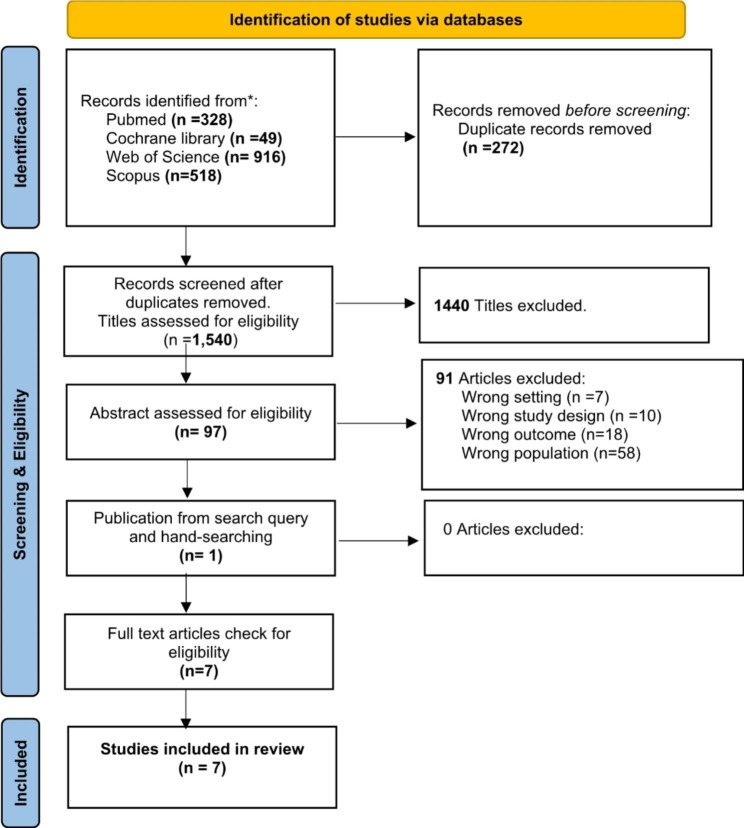
Background: Protein supplements have been widely used among those who are struggling with sarcopenic obesity among older adults. However, despite their popularity, there is still a lack of concrete evidence on both the potential benefits and side effects of protein supplementation and exercise on sarcopenic obesity (SO). Objective: Thus, we aimed to determine the impacts of protein supplementation and exercise in older adults with sarcopenic obesity. Method: A systematic database search was conducted for randomised controlled trials, quasi experimental study and pre-post study design addressing the effects of protein supplementation in improving sarcopenic obesity among older adults. This scoping review was conducted based on PRISMA-Scr guidelines across PubMed, Embase, Web of Science and Cochrane Library databases. To assess record eligibility, two independent reviewers performed a rigorous systematic screening process. Results: Of the 1,811 citations identified, 7 papers met the inclusion criteria. Six studies were randomised controlled trials and one study was a pre-post test study design. The majority of studies discussed the use of both protein supplements and exercise training. The included studies prescribed protein intake ranging from 1.0 to 1.8 g/kg/BW/day for the intervention group, while the duration of exercise performed ranged from 2 to 3 times per week, with each session lasting for 1 hour. Whey protein supplementation has been shown to be effective in improving sarcopenic conditions and weight status in SO individuals. The combination of exercise training especially resistance training and the used of protein supplement provided additional benefits in terms of lean muscle mass as well as biomarkers. The study also revealed a lack of consistency in exercise design among interventions for sarcopenic obesity. Conclusion: Overall, it appears to be a promising option for SO individuals to improve their sarcopenic condition and weight status through the combination of resistance exercise and whey protein supplementation. However, it also highlights the need for caution when it comes to high amounts of protein intake prescription. Future research is warranted to investigate the optimal exercise design for this population, given the limited research conducted in this specific area.
Overview
The claims and statistics of this paper haven’t been checked yet.
Free: it reads the open-access text and checks the first 5 claims that cite a source we can check. Create a free account to check every claim.
Integrity signals
Registry
Cites
Statistics
Figures
Verification
Claims the paper makes
The claims and statistics of this paper haven’t been checked yet.
Free: it reads the open-access text and checks the first 5 claims that cite a source we can check. Create a free account to check every claim.
Claims other papers make about this one
Each is checked against this paper’s own text: does it say what the citing paper says it does?
The source backs part of the claim, not all of it — or backs it for a different population, condition or comparison.
In the citing paper
“WP has also been shown to improve systolic and diastolic blood pressure, waist circumference, triglycerides, cholesterol profile, fasting blood glucose, and insulin resistance in metabolic syndrome [159,160].”
From Nutritional Approaches to Enhance GLP-1 Analogue Therapy in Obesity: A Narrative Review (2025) · cites this paper as [159]
Experimental — accuracy not yet measuredThe source backs part of the claim, not all of it — or backs it for a different population, condition or comparison.
In the citing paper
“WP has also been shown to improve systolic and diastolic blood pressure, waist circumference, triglycerides, cholesterol profile, fasting blood glucose, and insulin resistance in metabolic syndrome [159,160].”
From Nutritional Approaches to Enhance GLP-1 Analogue Therapy in Obesity: A Narrative Review (2025) · cites this paper as [159]
Experimental — accuracy not yet measuredThe check wasn’t confident either way, so it gives no verdict — never disputed.
In the citing paper
“WP has also been shown to improve systolic and diastolic blood pressure, waist circumference, triglycerides, cholesterol profile, fasting blood glucose, and insulin resistance in metabolic syndrome [159,160].”
From Nutritional Approaches to Enhance GLP-1 Analogue Therapy in Obesity: A Narrative Review (2025) · cites this paper as [159]
Experimental — accuracy not yet measuredIn the citing paper
“WP has also been shown to improve systolic and diastolic blood pressure, waist circumference, triglycerides, cholesterol profile, fasting blood glucose, and insulin resistance in metabolic syndrome [159,160].”
From Nutritional Approaches to Enhance GLP-1 Analogue Therapy in Obesity: A Narrative Review (2025) · cites this paper as [159]
In the citing paper
“WP has also been shown to improve systolic and diastolic blood pressure, waist circumference, triglycerides, cholesterol profile, fasting blood glucose, and insulin resistance in metabolic syndrome [159,160].”
From Nutritional Approaches to Enhance GLP-1 Analogue Therapy in Obesity: A Narrative Review (2025) · cites this paper as [159]
1 more claim about this paper
Create a free account to see every claim other papers make about this one.
Self-check
Percentages, sums and reported differences re-computed from the paper’s own numbers.
The self-check needs the paper’s full text.
Citations
Cites
PRISMA Extension for Scoping Reviews (PRISMA-ScR): Checklist and Explanation
Tricco, A. C., Lillie, E., Zarin, W., O'Brien, K. K., Colquhoun, H., Levac, D., Moher, D., Peters, M. D. J., Horsley, T., Weeks, L., et al. (2018) · Annals of Internal Medicine · doi:10.7326/m18-0850 · Cited by 43,565 · cited 1×
“The pres-ent scoping review was reported in accordance with Preferred Reporting Items for Systematic Review and Meta-analysis extension for scoping review (PRISMA-ScR) guidelines [35].”
MethodScoping studies: towards a methodological framework
Arksey, H., & O'Malley, L. (2005) · International Journal of Social Research Methodology · doi:10.1080/1364557032000119616 · Cited by 36,742 · cited 1×
“The methodological framework proposed by Arksey and O’Malley [34] was used to conduct this scoping review which involved the following steps: (i) identifying the research question, (ii) identifying relevant studies, (iii) selecting the studies, (iv) charting the information and (v) summarizing the…”
MethodSarcopenia: European consensus on definition and diagnosis
Cruz-Jentoft, A. J., Baeyens, J. P., Bauer, J. M., Boirie, Y., Cederholm, T., Landi, F., Martin, F. C., Michel, J.-P., Rolland, Y., Schneider, S. M., et al. (2010) · Age and Ageing · doi:10.1093/ageing/afq034 · Cited by 11,601
The metabolic phenotype in obesity: Fat mass, body fat distribution, and adipose tissue function
Goossens, G. H. (2017) · Obesity Facts · doi:10.1159/000471488 · Cited by 8,481
Asian Working Group for Sarcopenia: 2019 Consensus Update on Sarcopenia Diagnosis and Treatment
Chen, L.-K., Woo, J., Assantachai, P., Auyeung, T.-W., Chou, M.-Y., Iijima, K., Jang, H. C., Kang, L., Kim, M., Kim, S., et al. (2020) · Journal of the American Medical Directors Association · doi:10.1016/j.jamda.2019.12.012 · Cited by 7,070
Bauer, J., Biolo, G., Cederholm, T., Cesari, M., Cruz-Jentoft, A. J., Morley, J. E., Phillips, S., Sieber, C., Stehle, P., Teta, D., et al. (2013) · Journal of the American Medical Directors Association · doi:10.1016/j.jamda.2013.05.021 · Cited by 2,553 · cited 2×
“The consensus guideline has recommended that for healthy older adults the protein intake should be at least 1.0 to 1.2 g of protein per kilogram of body weight (BW) per day [55, 56].”
BackgroundInfluentialDeutz, N. E. P., Bauer, J. M., Barazzoni, R., Biolo, G., Boirie, Y., Bosy-Westphal, A., Cederholm, T., Cruz-Jentoft, A., Krznariç, Z., Nair, K. S., et al. (2014) · Clinical Nutrition · doi:10.1016/j.clnu.2014.04.007 · Cited by 1,738
Muscaritoli, M., Anker, S. D., Argilés, J., Aversa, Z., Bauer, J. M., Biolo, G., Boirie, Y., Bosaeus, I., Cederholm, T., Costelli, P., et al. (2010) · Clinical Nutrition · doi:10.1016/j.clnu.2009.12.004 · Cited by 1,732
Sarcopenic obesity in older adults: aetiology, epidemiology and treatment strategies
Batsis, J. A., & Villareal, D. T. (2018) · Nature Reviews Endocrinology · doi:10.1038/s41574-018-0062-9 · Cited by 1,382 · cited 3×
“Research has shown that older adults are at a considerably higher risk of health problems [4] including sarcopenia [5–7] and sarcopenic obesity [8, 9].”
BackgroundSarcopenia with limited mobility: an international consensus
Morley, J. E., Abbatecola, A. M., Argiles, J. M., Baracos, V., Bauer, J., Bhasin, S., Cederholm, T., Stewart Coats, A. J., Cummings, S. R., Evans, W. J., et al. (2011) · Journal of the American Medical Directors Association · doi:10.1016/j.jamda.2011.04.014 · Cited by 1,125
Sarcopenic obesity: definition, cause and consequences
Stenholm, S., Harris, T. B., Rantanen, T., Visser, M., Kritchevsky, S. B., & Ferrucci, L. (2008) · Current Opinion in Clinical Nutrition and Metabolic Care · doi:10.1097/mco.0b013e328312c37d · Cited by 1,070 · cited 1×
“On the other hand, sarcopenic obesity refers to the combination of sarcopenia and obesity [17].”
BackgroundJaul, E., & Barron, J. (2017) · Frontiers in Public Health · doi:10.3389/fpubh.2017.00335 · Cited by 946
Obesity: Risk factors, complications, and strategies for sustainable long‐term weight management
Fruh, S. M. (2017) · Journal of the American Association of Nurse Practitioners · doi:10.1002/2327-6924.12510 · Cited by 709
Nutritional recommendations for the management of sarcopenia
Morley, J. E., Argiles, J. M., Evans, W. J., Bhasin, S., Cella, D., Deutz, N. E. P., Doehner, W., Fearon, K. C. H., Ferrucci, L., Hellerstein, M. K., et al. (2010) · Journal of the American Medical Directors Association · doi:10.1016/j.jamda.2010.04.014 · Cited by 664 · cited 1×
“More protein is required (1.2–1.5 g/ kg BW/d) for those who have acute or chronic diseases as suggested by PROT-AGE Study Group [55] and The Society of Sarcopenia, Cachexia and Wasting Disorders, which recommends the intake of 1.0 to 1.5 g/kg BW/ day for older adults to maintain muscle mass [57].”
BackgroundInfluentialPathogenesis of sarcopenia and the relationship with fat mass: descriptive review
Li, C., Yu, K., Shyh‐Chang, N., Jiang, Z., Liu, T., Ma, S., Luo, L., Guang, L., Liang, K., Ma, W., et al. (2022) · Journal of Cachexia, Sarcopenia and Muscle · doi:10.1002/jcsm.12901 · Cited by 626 · cited 3×
“Ageing people may experience change in visceral fat distribution into the intra-abdominal region due to adipose inflammation, which can also promote fat infiltration inside the skeletal muscles, ultimately resulting in loss of overall strength and functional ability [13].”
BackgroundInfluentialSarcopenia: A Contemporary Health Problem among Older Adult Populations
Papadopoulou, S. (2020) · Nutrients · doi:10.3390/nu12051293 · Cited by 588
Hong, S.-H., & Choi, K. M. (2020) · International Journal of Molecular Sciences · doi:10.3390/ijms21020494 · Cited by 390
Resistance exercise as a treatment for sarcopenia: prescription and delivery
Hurst, C., Robinson, S. M., Witham, M. D., Dodds, R. M., Granic, A., Buckland, C., De Biase, S., Finnegan, S., Rochester, L., Skelton, D. A., et al. (2022) · Age and Ageing · doi:10.1093/ageing/afac003 · Cited by 319
Health Consequences of Sarcopenic Obesity: A Narrative Review
Roh, E., & Choi, K. M. (2020) · Frontiers in Endocrinology · doi:10.3389/fendo.2020.00332 · Cited by 304 · cited 2×
“Compared to individuals who only have sarcopenia or obesity, individuals with sarcopenic obesity have greater risks of metabolic disorders, higher CVD prevalence, higher mortality rates and reduced physical performance [21–23].”
Backgroundvan Dronkelaar, C., van Velzen, A., Abdelrazek, M., van der Steen, A., Weijs, P. J. M., & Tieland, M. (2018) · Journal of the American Medical Directors Association · doi:10.1016/j.jamda.2017.05.026 · Cited by 279
Hsu, K.-J., Liao, C.-D., Tsai, M.-W., & Chen, C.-N. (2019) · Nutrients · doi:10.3390/nu11092163 · Cited by 258
Verreijen, A. M., Verlaan, S., Engberink, M. F., Swinkels, S., de Vogel-van den Bosch, J., & Weijs, P. J. (2015) · The American Journal of Clinical Nutrition · doi:10.3945/ajcn.114.090290 · Cited by 237 · cited 1×
“The outcomes demonstrated that the use of the supplement was successful in maintaining muscle mass while losing weight in this cohort [24].”
BackgroundKim, H., Kim, M., Kojima, N., Fujino, K., Hosoi, E., Kobayashi, H., Somekawa, S., Niki, Y., Yamashiro, Y., & Yoshida, H. (2016) · Journal of the American Medical Directors Association · doi:10.1016/j.jamda.2016.06.016 · Cited by 199 · cited 10×
“The duration of exercise performed ranged from 2 to 3 times per week, with each session lasting 1 h [36, 37, 41].”
BackgroundInfluentialChen, N., He, X., Feng, Y., Ainsworth, B. E., & Liu, Y. (2021) · European Review of Aging and Physical Activity · doi:10.1186/s11556-021-00277-7 · Cited by 178 · cited 1×
“By incorporating resistance exercise, which promotes muscle growth and strength [43], with whey protein supplementation, providing essential amino acids for muscle protein synthesis [28, 44], SO individuals have the potential to enhance muscle mass and function while managing their weight.”
BackgroundBellanti, F., Romano, A. D., Lo Buglio, A., Castriotta, V., Guglielmi, G., Greco, A., Serviddio, G., & Vendemiale, G. (2018) · Maturitas · doi:10.1016/j.maturitas.2017.12.002 · Cited by 158 · cited 1×
“Compared to individuals who only have sarcopenia or obesity, individuals with sarcopenic obesity have greater risks of metabolic disorders, higher CVD prevalence, higher mortality rates and reduced physical performance [21–23].”
BackgroundExercise and Protein Intake: A Synergistic Approach against Sarcopenia
Martone, A. M., Marzetti, E., Calvani, R., Picca, A., Tosato, M., Santoro, L., Di Giorgio, A., Nesci, A., Sisto, A., Santoliquido, A., et al. (2017) · BioMed Research International · doi:10.1155/2017/2672435 · Cited by 135 · cited 1×
“The evidence suggests that exercise and protein supplementation have a synergistic effect on the condition of sarcopenia among individuals with sarcopenia [30, 31].”
BackgroundPrevalence and Associated Factors of Sarcopenia in Singaporean Adults—The Yishun Study
Pang, B. W. J., Wee, S.-L., Lau, L. K., Jabbar, K. A., Seah, W. T., Ng, D. H. M., Ling Tan, Q. L., Chen, K. K., Jagadish, M. U., & Ng, T. P. (2021) · Journal of the American Medical Directors Association · doi:10.1016/j.jamda.2020.05.029 · Cited by 129
Nabuco, H. C. G., Tomeleri, C. M., Fernandes, R. R., Sugihara Junior, P., Cavalcante, E. F., Cunha, P. M., Antunes, M., Nunes, J. P., Venturini, D., Barbosa, D. S., et al. (2019) · Clinical Nutrition ESPEN · doi:10.1016/j.clnesp.2019.04.007 · Cited by 125
Kemmler, W., Weissenfels, A., Teschler, M., Willert, S., Bebenek, M., Shojaa, M., Kohl, M., Freiberger, E., Sieber, C., & von Stengel, S. (2017) · Clinical Interventions in Aging · doi:10.2147/cia.s137987 · Cited by 123 · cited 10×
“Four out of six studies assessed the effectiveness of protein supplementation with combination of exercise training [36–39 , 41].”
BackgroundMethodResultInfluentialIs sarcopenia associated with an increased risk of all-cause mortality and functional disability?
Kelley, G. A., & Kelley, K. S. (2017) · Experimental Gerontology · doi:10.1016/j.exger.2017.06.008 · Cited by 106 · cited 1×
“This disease is referred to as sarcopenia, which is the loss of muscle mass that occurs with ageing and is significantly linked to an increased risk of injury occurrences [14], poor mental health, cognitive decline, decreased physical activity [15] and overall increased mortality [14, 16].”
BackgroundWagenaar, C. A., Dekker, L. H., & Navis, G. J. (2021) · Clinical Nutrition · doi:10.1016/j.clnu.2021.01.005 · Cited by 105 · cited 1×
“It is noted that the prevalence of sarcopenic obesity is increasing in adults aged 65 years and older [8] and it appears to be particularly common among older women [12].”
BackgroundChang, M. C., & Choo, Y. J. (2023) · Nutrients · doi:10.3390/nu15030521 · Cited by 104
Waters, D. L., Aguirre, L., Gurney, B., Sinacore, D. R., Fowler, K., Gregori, G., Armamento-Villareal, R., Qualls, C., & Villareal, D. T. (2022) · The Journals of Gerontology: Series A · doi:10.1093/gerona/glab111 · Cited by 99 · cited 1×
“This approach has demonstrated improvements in ectopic fat deposition as well as physical and metabolic function among older adults with obesity [49].”
BackgroundExploring the Impact of Obesity on Skeletal Muscle Function in Older Age
Morgan, P. T., Smeuninx, B., & Breen, L. (2020) · Frontiers in Nutrition · doi:10.3389/fnut.2020.569904 · Cited by 98 · cited 1×
“For example, individuals with obesity have a high prevalence of chronic non-communicable diseases that negatively impact muscle metabolism [19, 20].”
BackgroundOtsuka, Y., Yamada, Y., Maeda, A., Izumo, T., Rogi, T., Shibata, H., Fukuda, M., Arimitsu, T., Miyamoto, N., & Hashimoto, T. (2022) · Journal of Cachexia, Sarcopenia and Muscle · doi:10.1002/jcsm.12941 · Cited by 96 · cited 1×
“Resistance exercise can stimulate muscle hypertrophy due to training stimulus and lead to improvement in muscle strength and physical performance [47].”
BackgroundHita-Contreras, F., Bueno-Notivol, J., Martínez-Amat, A., Cruz-Díaz, D., Hernandez, A. V., & Pérez-López, F. R. (2018) · Maturitas · doi:10.1016/j.maturitas.2018.07.007 · Cited by 86 · cited 2×
“Indeed, in line with previous studies, exercise interventions have demonstrated the ability to improve muscle mass, muscle strength, physical performance, and reduce fat mass [29, 32].”
BackgroundResultSammarco, R., Marra, M., Di Guglielmo, M. L., Naccarato, M., Contaldo, F., Poggiogalle, E., Donini, L. M., & Pasanisi, F. (2017) · Obesity Facts · doi:10.1159/000468153 · Cited by 75 · cited 7×
“Skeletal muscle mass (Appendicular skeletal mass, ASM), lean body mass, ideal fat free mass, and skeletal muscle mass index were commonly used in most studies to determine sar-copenic condition [36–38 , 41].”
BackgroundMethodInfluentialMaltais, M. L., Perreault, K., Courchesne-Loyer, A., Lagacé, J.-C., Barsalani, R., & Dionne, I. J. (2016) · International Journal of Sport Nutrition and Exercise Metabolism · doi:10.1123/ijsnem.2015-0160 · Cited by 73 · cited 9×
“Four out of six studies assessed the effectiveness of protein supplementation with combination of exercise training [36–39 , 41].”
BackgroundMethodInfluentialSri‐on, J., Fusakul, Y., Kredarunsooksree, T., Paksopis, T., & Ruangsiri, R. (2022) · BMC Geriatrics · doi:10.1186/s12877-022-03471-z · Cited by 71 · cited 3×
“Research has shown that older adults are at a considerably higher risk of health problems [4] including sarcopenia [5–7] and sarcopenic obesity [8, 9].”
BackgroundInfluentialChew, S. T. H., Tey, S. L., Yalawar, M., Liu, Z., Baggs, G. E., How, C. H., Cheong, M., Chow, W. L., Low, Y. L., Huynh, D. T. T., et al. (2022) · BMC Geriatrics · doi:10.1186/s12877-022-03704-1 · Cited by 68
Eglseer, D., Traxler, M., Schoufour, J. D., Weijs, P. J. M., Voortman, T., Boirie, Y., Cruz-Jentoft, A. J., Reiter, L., Bauer, S., for the SO-NUTS Consortium, et al. (2023) · Nutrition Reviews · doi:10.1093/nutrit/nuad007 · Cited by 68 · cited 3×
“The recommended exercise prescription is largely consistent with our findings and previous research [33].”
BackgroundResultKemmler, W., Kohl, M., Freiberger, E., Sieber, C., & von Stengel, S. (2018) · BMC Geriatrics · doi:10.1186/s12877-018-0759-6 · Cited by 66 · cited 5×
“However, one study showed that EMS intervention improved the HDL and IL-6 level [40].”
BackgroundMethodInfluentialKemmler, W., Shojaa, M., Steele, J., Berger, J., Fröhlich, M., Schoene, D., von Stengel, S., Kleinöder, H., & Kohl, M. (2021) · Frontiers in Physiology · doi:10.3389/fphys.2021.640657 · Cited by 63 · cited 1×
“In this review, we noticed some studies utilised the whole-body electromyostimulation (WB-EMS) as an alternative to exercise, [39, 41] which has shown to possibly improve muscle mass and strength among non-athletic adults [50].”
BackgroundGuo, Y., Fu, X., Hu, Q., Chen, L., & Zuo, H. (2022) · Frontiers in Nutrition · doi:10.3389/fnut.2022.929891 · Cited by 62
Yuenyongchaiwat, K., & Boonsinsukh, R. (2020) · Current Gerontology and Geriatrics Research · doi:10.1155/2020/8041489 · Cited by 60 · cited 1×
“This disease is referred to as sarcopenia, which is the loss of muscle mass that occurs with ageing and is significantly linked to an increased risk of injury occurrences [14], poor mental health, cognitive decline, decreased physical activity [15] and overall increased mortality [14, 16].”
BackgroundLee, S. Y., Lee, H. J., & Lim, J.-Y. (2022) · Archives of Gerontology and Geriatrics · doi:10.1016/j.archger.2022.104758 · Cited by 59 · cited 3×
“However, recent review studies have indicated that protein supplementation alone may not lead to significant changes in parameters associated with sarcopenia [26, 27], which contradicts the findings from previous studies [28].”
BackgroundResultWhey for Sarcopenia; Can Whey Peptides, Hydrolysates or Proteins Play a Beneficial Role?
Gilmartin, S., O’Brien, N. M., & Giblin, L. (2020) · Foods · doi:10.3390/foods9060750 · Cited by 57 · cited 1×
“By incorporating resistance exercise, which promotes muscle growth and strength [43], with whey protein supplementation, providing essential amino acids for muscle protein synthesis [28, 44], SO individuals have the potential to enhance muscle mass and function while managing their weight.”
BackgroundSu, Y., Chang, S., & Tsai, H. (2022) · Journal of Clinical Medicine · doi:10.3390/jcm11216474 · Cited by 56
Jang, Y. J. (2022) · Journal of Microbiology and Biotechnology · doi:10.4014/jmb.2210.10014 · Cited by 49 · cited 1×
“However, recent review studies have indicated that protein supplementation alone may not lead to significant changes in parameters associated with sarcopenia [26, 27], which contradicts the findings from previous studies [28].”
ResultPurcell, S. A., Mackenzie, M., Barbosa-Silva, T. G., Dionne, I. J., Ghosh, S., Siervo, M., Ye, M., & Prado, C. M. (2021) · Frontiers in Physiology · doi:10.3389/fphys.2020.583825 · Cited by 48 · cited 2×
“Research has shown that older adults are at a considerably higher risk of health problems [4] including sarcopenia [5–7] and sarcopenic obesity [8, 9].”
BackgroundInfluentialKamińska, M. S., Rachubińska, K., Grochans, S., Skonieczna‐Żydecka, K., Cybulska, A. M., Grochans, E., & Karakiewicz, B. (2023) · Nutrients · doi:10.3390/nu15092039 · Cited by 38 · cited 1×
“However, recent review studies have indicated that protein supplementation alone may not lead to significant changes in parameters associated with sarcopenia [26, 27], which contradicts the findings from previous studies [28].”
ResultBauer, J. M., Mikušová, L., Verlaan, S., Bautmans, I., Brandt, K., Donini, L. M., Maggio, M. G., Mets, T. F., Wijers, S. L. J., Garthoff, J. A., et al. (2020) · Aging Clinical and Experimental Research · doi:10.1007/s40520-020-01519-x · Cited by 35 · cited 1×
“On the other hand, a six-month experiment among older people with sarcopenia aiming to examine the safety and tolerability of a medical nutrition drink fortified with vitamin D, calcium, and leucine revealed that the drink was safe and well-tolerated by the participants [25].”
BackgroundCamajani, E., Persichetti, A., Watanabe, M., Contini, S., Vari, M., Di Bernardo, S., Faro, M., Lubrano, C., Gnessi, L., Caprio, M., et al. (2022) · Nutrients · doi:10.3390/nu14091884 · Cited by 34
Nutrition in the prevention and management of sarcopenia - A special focus on Asian Indians
Bhattacharya, S., Bhadra, R., Schols, A. M. W. J., van Helvoort, A., & Sambashivaiah, S. (2022) · Osteoporosis and Sarcopenia · doi:10.1016/j.afos.2022.12.002 · Cited by 29 · cited 1×
“Insufficient intake of specific micronutri-ents, such as magnesium, selenium, calcium [58], vitamin B complex, vitamin D, and, iron [59] have been associated with the development of sarcopenia.”
BackgroundLi, L., He, Y., Jin, N., He, L., & Liu, X. (2022) · Food Chemistry X · doi:10.1016/j.fochx.2022.100210 · Cited by 24 · cited 1×
“The evidence suggests that exercise and protein supplementation have a synergistic effect on the condition of sarcopenia among individuals with sarcopenia [30, 31].”
BackgroundAccuracy of Body Mass Index and Obesity Status in Police Trainees
Stojković, M., Heinrich, K. M., Čvorović, A., Jeknić, V., Greco, G., & Kukić, F. (2022) · European Journal of Investigation in Health Psychology and Education · doi:10.3390/ejihpe12010004 · Cited by 24 · cited 1×
“The percentage of body fat index (PBF) has been considered as a more accurate standard than BMI to determine being overweight or obese because it measures body fat directly and BMI does not always reflect the true body fat in our body [54].”
Background
Research works printed but not linked: 3
- Sudharsanan N, Bloom DE. The demography of aging in low-and middle- income countries: chronological versus functional perspectives. https://www. ncbi.nlm.nih.gov/books/NBK513069/. Accessed 15 March 2023.
- Ranee R, Suzana S, You YY, Devinder KAS, Sakian NI. Prevalence and risk fac- tors of sarcopenia among community dwelling older adults in klang valley. Malaysian J Med Health Sci. 2022;18(1):177-86.
- Bauer J, Biolo G, Cederholm T, Cesari M, Cruz-Jentoft AJ, Morley JE, et al. Evidence-based recommendations for optimal dietary protein intake in older people: a position paper from the PROT-AGE study group. J Am Med Dir Assoc. 2013;14(8):542-59. https://doi.org/10.1016/j.jamda.2013.05.021. · DOI · Paper page
Cited by
Impact of wearable-assisted walking on sarcopenia and body composition in older adults
Wu, C.-E. R., & Manga, Y. B. (2025) · BMC Geriatrics · doi:10.1186/s12877-025-06142-x · Cited by 20
“Furthermore, all participants received dietary guidance and were advised to refrain from high-protein supplements to mitigate potential confounding effects on changes in muscle mass [31].”
Renin angiotensin system-induced muscle wasting: putative mechanisms and implications for clinicians
Afsar, B., Afsar, R. E., Caliskan, Y., Lentine, K. L., & Edwards, J. C. (2025) · Molecular and Cellular Biochemistry · doi:10.1007/s11010-024-05043-8 · Cited by 15
“Furthermore, a recent meta-analysis showed that whey protein supplementation improves sarcopenia [106].”
Batitucci, G., Abud, G. F., Ortiz, G. U., Belisário, L. F., Travieso, S. G., Viliod, M. C. D. L., Venturini, A. C. R., & de Freitas, E. C. (2024) · Ageing Research Reviews · doi:10.1016/j.arr.2024.102460 · Cited by 13
Koh, F. H.-X., Yik, V., Chin, S.-E., Kok, S., Lee, H.-B., Tong, C., Tay, P. W. L., Chean, E., Lam, Y.-E., Mah, S., et al. (2024) · Nutrients · doi:10.3390/nu16244351 · Cited by 14
Huan, Y., Yue, H., Song, Y., Zhang, W., Wei, B., & Tang, Q. (2025) · Nutrients · doi:10.3390/nu17050750 · Cited by 10
Metadata
- Authors
- Cheah, K. J., & Cheah, L. J.
- Affiliations
- Universiti Tunku Abdul Rahman (MY)
- North West Regional Hospital (AU)
- Corresponding author
- Cheah, Khang Jin
- ORCID
- Cheah, Khang Jin
- Venue
- Nutrition Journal
- Published
- 2023-10-23
- Volume
- 22
- Issue
- 1
- Pages
- 52-52
- ISSN
- 1475-2891 (ISSN-L)
- PMC
- PMC10591413
- OpenAlex
- W4387876600
- Cited by
- 29
- References
- 56
- Citations by year
- 2026: 5 · 2025: 16 · 2024: 8
- FWCI
- 1.03
- Type
- journal article
- Language
- en
- Open access
- gold
- doi.org
- Licence
- cc-by
- creativecommons.org/licenses/by/4.0 (tdm)
- creativecommons.org/licenses/by/4.0 (vor)
- Locations
- Nutrition Journal (publishedVersion, cc-by)
- PubMed Central (publishedVersion, cc-by)
- PubMed (publishedVersion)
- DOAJ (DOAJ: Directory of Open Access Journals) (submittedVersion, cc-by-sa)
- Greater South Information System
- Topics
- Health Sciences › Medicine › Physiology (medical) › Nutrition and Health in Aging
- Health Sciences › Nursing › Nutrition and Dietetics › Muscle metabolism and nutrition
- Life Sciences › Biochemistry, Genetics and Molecular Biology › Molecular Biology › Muscle Physiology and Disorders
- Keywords
- sarcopenic obesity, protein supplementation, whey protein, resistance training, exercise training, older adults, lean muscle mass, protein intake, adverse effects, weight status
- MeSH terms
- Whey Proteins, Aged, Humans, Obesity, Exercise, Randomized Controlled Trials as Topic, Dietary Supplements, Muscle Strength, Sarcopenia
About these checks
Registry, retraction, Cites and statistics results are computed, not judged, with one exception: a printed reference that no index lists is read once by a model before it counts as a citation error. Claims are extracted by a model and kept only when their quote appears verbatim in the text; each cited source is then checked, with a model’s help, for whether it says what the claim relies on. Those verdicts can be wrong — read the claim’s quote and the cited source before relying on one.
Statistics and arithmetic are recomputed, not judged.
Confidence bands are shown only for fields calibrated on our annotated test set. None is calibrated yet, so no band is shown.
What counts as a claim ›How we measure confidence ›How we check this ›
Are you an author, or do you see a problem with this page? Request a review
Data sources
Bibliographic data: Semantic Scholar, OpenAlex, Crossref.
Contains information from the Semantic Scholar Academic Graph Datasets, made available under the ODC Attribution License (ODC-BY 1.0).
Semantic Scholar’s data is described in: Kinney, R., et al. (2023). The Semantic Scholar Open Data Platform. arXiv:2301.10140.
