

Crosstalk between cancer cells and tumor associated macrophages is required for mesenchymal circulating tumor cell-mediated colorectal cancer metastasis
Open accessThe DOI matches its Crossref record; 55 of the 55 references it cites were found in a registry or an index.
Abstract
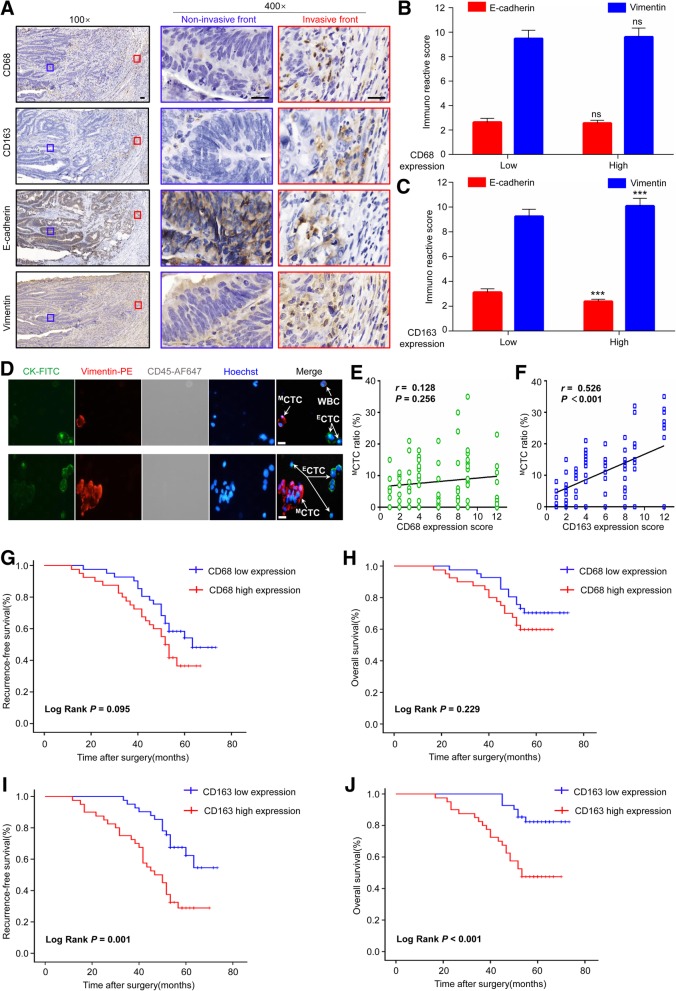
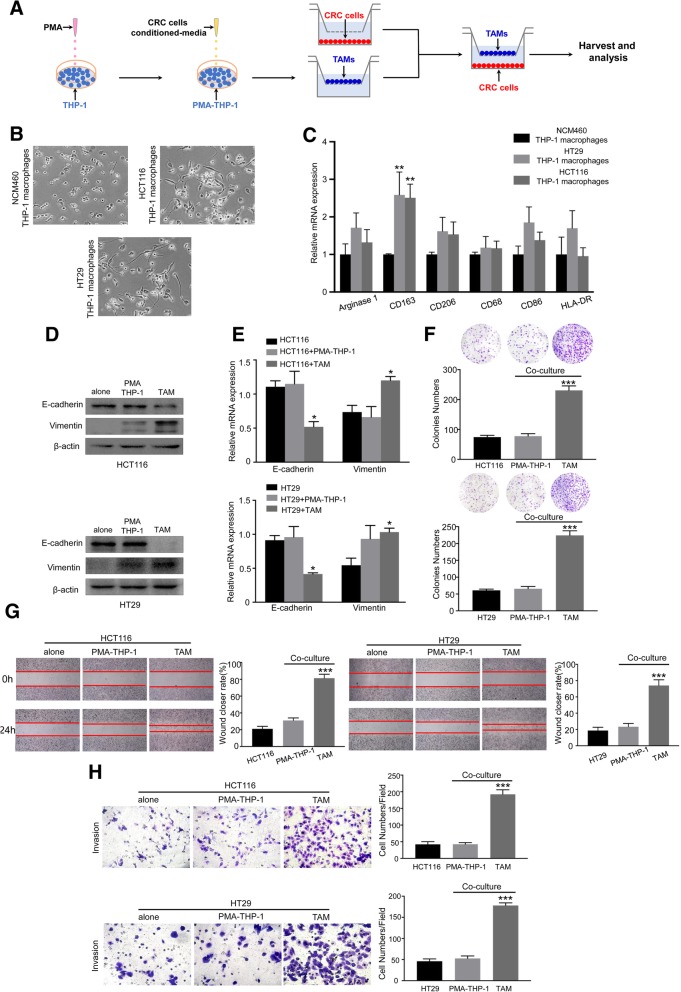
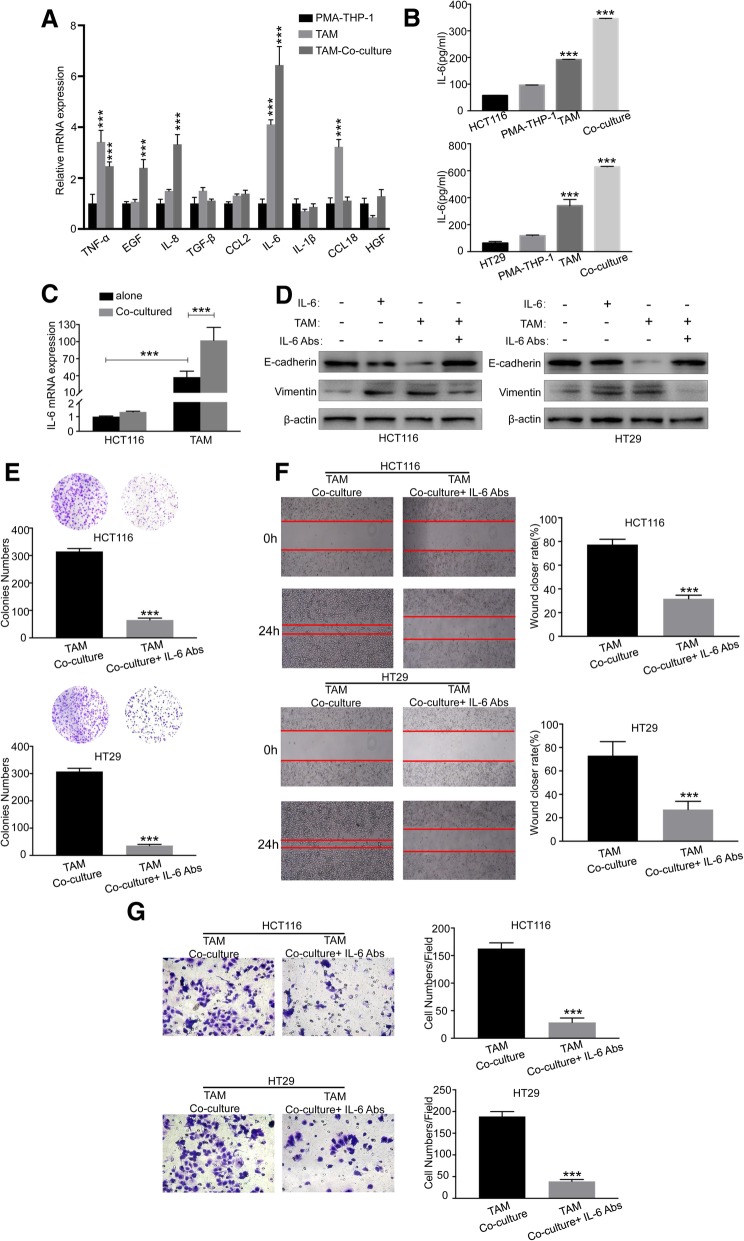
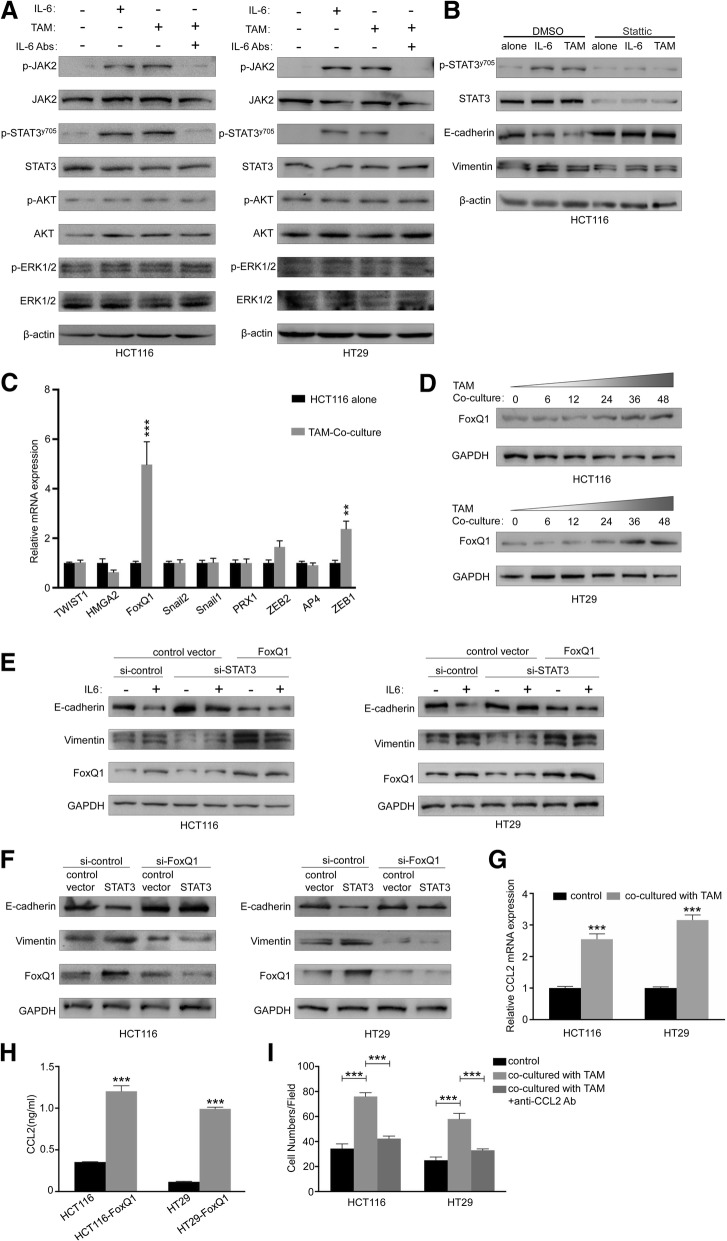
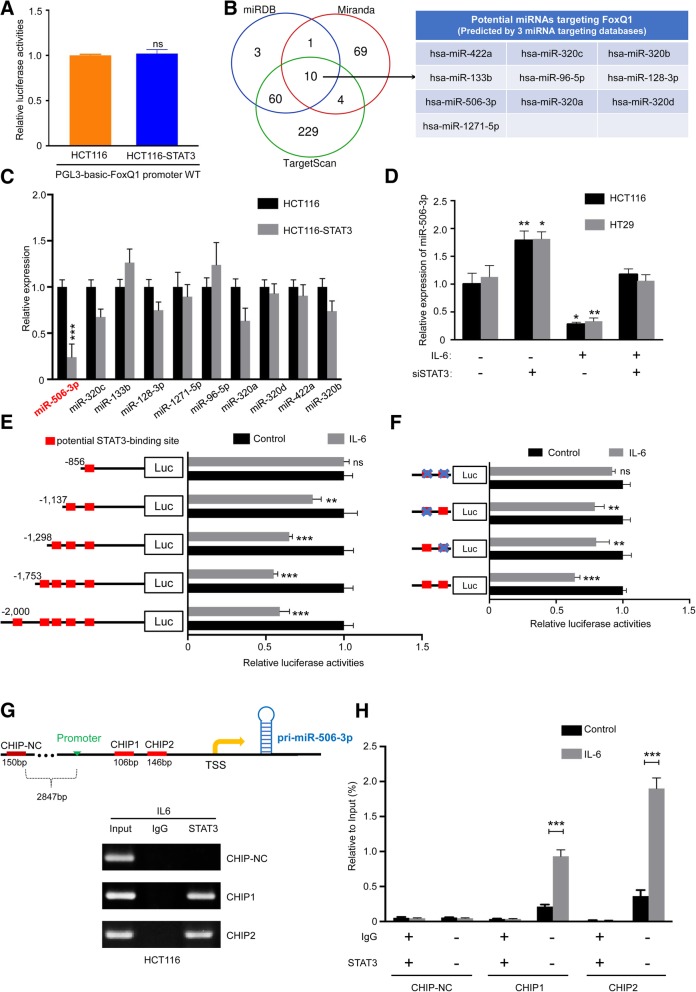
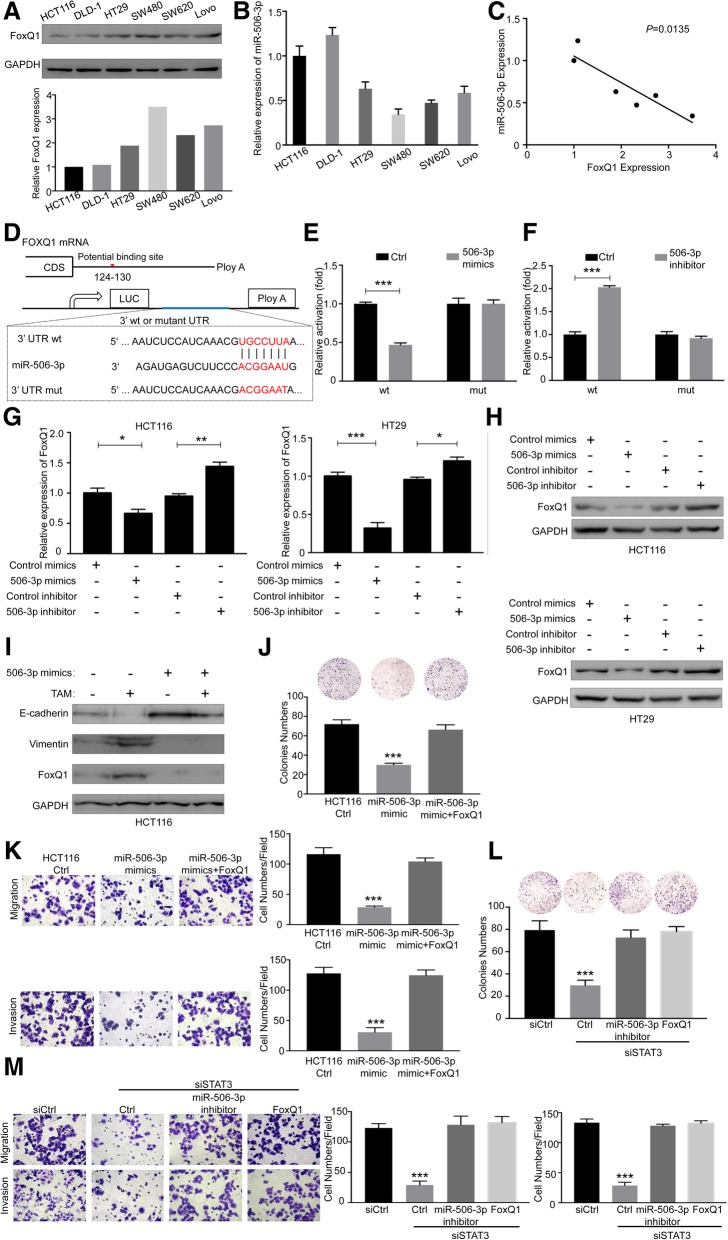
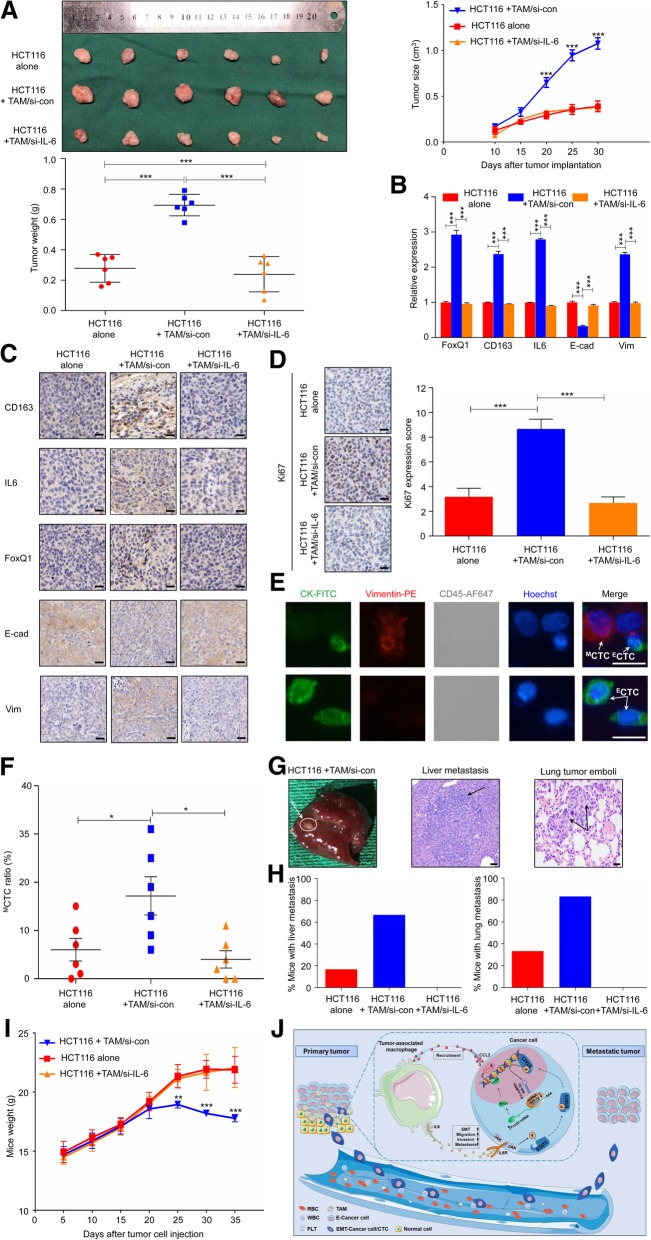
BACKGROUND: Tumor-associated macrophages (TAMs) are major components of tumor microenvironment that frequently associated with tumor metastasis in human cancers. Circulating tumor cell (CTC), originating from primary tumor sites, is considered to be the precursors of tumor metastasis. However, the regulatory mechanism of TAMs in CTC-mediated tumor metastasis still remains unclear. METHODS: Immunohistochemical staining was used to detect the macrophages infiltration (CD68 and CD163), epithelial-mesenchymal transition (EMT) markers (E-cadherin and Vimentin) expression in serial sections of human colorectal cancer (CRC) specimens. Then, the correlations between macrophages infiltration and clinicopathologic features, mesenchymal CTC ratio, and patients' prognosis were analyzed. A co-culture assay in vitro was used to evaluate the role of TAMs on CRC EMT, migration and invasion, and ELISA, luciferase reporter assay and CHIP were performed to uncover the underlying mechanism. Furthermore, an in vivo model was carried out to confirm the effect of TAMs on mesenchymal CTC-mediated metastasis. RESULTS: TAMs infiltrated in invasive front was associated with EMT, mesenchymal CTC ratio, and poor prognosis in patients with CRC. CRC-conditioned macrophages regulated EMT program to enhance CRC cells migration and invasion by secreting IL6. TAMs-derived IL6 activated the JAK2/STAT3 pathway, and activated STAT3 transcriptionally inhibited the tumor suppressor miR-506-3p in CRC cells. miR-506-3p, a key miRNA regulating FoxQ1, was downregulated in CRC cells, resulting in increased FoxQ1 expression, which in turn led to the production of CCL2 that promoted macrophage recruitment. Inhibition of CCL2 or IL6 broke this loop and reduced macrophage migration and mesenchymal CTC-mediated metastasis, respectively. CONCLUSIONS: Our data indicates that TAMs induce EMT program to enhance CRC migration, invasion, and CTC-mediated metastasis by regulating the JAK2/STAT3/miR-506-3p/FoxQ1 axis, which in turn leads to the production of CCL2 that promote macrophage recruitment, revealing a new cross-talk between immune cells and tumor cells in CRC microenvironment.
Overview
The claims and statistics of this paper haven’t been checked yet.
Free: it reads the open-access text and checks the first 5 claims that cite a source we can check. Create a free account to check every claim.
Integrity signals
Registry
Cites
Statistics
Figures
Verification
Claims the paper makes
The claims and statistics of this paper haven’t been checked yet.
Free: it reads the open-access text and checks the first 5 claims that cite a source we can check. Create a free account to check every claim.
Claims other papers make about this one
Each is checked against this paper’s own text: does it say what the citing paper says it does?
The cited source says what the claim attributes to it.
In the citing paper
“In this line, a study in human colorectal cancer (CRC) specimens and in vitro co-culture, revealed that TAMs induce EMT program to enhance CRC invasion, migration, and CTC-mediated metastasis by producing IL6 to activate JAK2/STAT3 axis and inhibit the suppressive role of miR-506-3p on FoxQ1 expression.”
From Tumor microenvironment complexity and therapeutic implications at a glance (2020) · cites this paper as [94]
Self-check
Percentages, sums and reported differences re-computed from the paper’s own numbers.
The self-check needs the paper’s full text.
Citations
Cites
Siegel, R. L., Miller, K. D., & Jemal, A. (2015) · CA: A Cancer Journal for Clinicians · doi:10.3322/caac.21254 · Cited by 11,853
Molecular mechanisms of epithelial–mesenchymal transition
Lamouille, S., Xu, J., & Derynck, R. (2014) · Nature Reviews Molecular Cell Biology · doi:10.1038/nrm3758 · Cited by 8,091
Macrophage Diversity Enhances Tumor Progression and Metastasis
Qian, B.-Z., & Pollard, J. W. (2010) · Cell · doi:10.1016/j.cell.2010.03.014 · Cited by 5,188 · cited 1×
“Macrophages in the TME, referred to as tumor-associated macrophages (TAMs), are one of the most abundant types of cells, and exhibit different phenotypes and functions in response to various microenvironmental signals generated from tumor and stromal cells [14].”
BackgroundCCL2 recruits inflammatory monocytes to facilitate breast-tumour metastasis
Qian, B.-Z., Li, J., Zhang, H., Kitamura, T., Zhang, J., Campion, L. R., Kaiser, E. A., Snyder, L. A., & Pollard, J. W. (2011) · Nature · doi:10.1038/nature10138 · Cited by 2,874
Berns, K., Horlings, H. M., Hennessy, B. T., Madiredjo, M., Hijmans, E. M., Beelen, K., Linn, S. C., Gonzalez-Angulo, A. M., Stemke-Hale, K., Hauptmann, M., et al. (2007) · Cancer Cell · doi:10.1016/j.ccr.2007.08.030 · Cited by 1,627
Dissecting the metastatic cascade
Pantel, K., & Brakenhoff, R. H. (2004) · Nature Reviews Cancer · doi:10.1038/nrc1370 · Cited by 1,281 · cited 1×
“Furthermore, CTC disseminate from primary tumor by undergoing EMT that allow them to penetrate blood vessels [35], and CTC was thought to have stronger invasive and metastatic ability [36].”
BackgroundApplied bioinformatics for the identification of regulatory elements
Wasserman, W. W., & Sandelin, A. (2004) · Nature Reviews Genetics · doi:10.1038/nrg1315 · Cited by 1,228 · cited 1×
“To validate whether transcription of miR-506-3p was directly activated by STAT3, we performed bioinformatics analysis of miR-506-3p promoter region to reveal potential transcription factor binding sites and five potential STAT3-binding sites were revealed by Jaspar [32] (Additional file 1: Figure S3A and Additional fi…”
MethodIliopoulos, D., Jaeger, S. A., Hirsch, H. A., Bulyk, M. L., & Struhl, K. (2010) · Molecular Cell · doi:10.1016/j.molcel.2010.07.023 · Cited by 830 · cited 1×
“For example, STAT3 activated by IL6 directly upregulated the miR-21 and miR-181b-1, which was shown to be necessary for the epigenetic switch linking inflammation to cancer [53].”
BackgroundSu, S., Liu, Q., Chen, J., Chen, J., Chen, F., He, C., Huang, D., Wu, W., Lin, L., Huang, W., et al. (2014) · Cancer Cell · doi:10.1016/j.ccr.2014.03.021 · Cited by 772 · cited 1×
“Our results were in accordance with previous study, which comprehensively demonstrated that CCL18 TAMs infiltration in the tumor invasive front might establish an aggressive TME and could regulate breast cancer cells an EMT shift to increase metastatic ability [33].”
ResultSelf-citationWang, X., Luo, G., Zhang, K., Cao, J., Huang, C., Jiang, T., Liu, B., Su, L., & Qiu, Z. (2018) · Cancer Research · doi:10.1158/0008-5472.can-17-3841 · Cited by 767 · cited 1×
“Additionally, Wang and colleagues revealed that pancreatic cancer (PC) cells activated macrophages to the M2 phenotype, which then promoted EMT progress to increase migration and invasion of PC cells [23].”
Background
Research works printed but not linked: 3
- Su S Liu Q Chen J Chen J Chen F He C Huang D Wu W Lin L Huang W A positive feedback loop between mesenchymal-like cancer cells and macrophages is essential to breast cancer metastasis Cancer Cell 2014 25 605 620 10.1016/j.ccr.2014.03.021 24823638 · DOI · Paper page
- Pantel K Brakenhoff RH Dissecting the metastatic cascade Nat Rev Cancer 2004 4 448 10.1038/nrc1370 15170447 · DOI · Paper page
- Guo J Yan Y Yan Y Guo Q Zhang M Zhang J Goltzman D Tumor-associated macrophages induce the expression of FOXQ1 to promote epithelial-mesenchymal transition and metastasis in gastric cancer cells Oncol Rep 2017 38 2003 2010 10.3892/or.2017.5877 28791370 PMC5652949 · DOI
Cited by
Items 401–500 of 861
Factors affecting survival in patients with colorectal cancer: an umbrella review
Yu, L., Yuan, J. T., Lou, S., Huang, A., Cai, X., Ji, J., Dai, X., Mao, X., Mao, Y., & Sun, L. (2025) · Journal of Translational Medicine · doi:10.1186/s12967-025-06876-7 · Cited by 14
“As reported by Wei [57], the interplay between CTC and tumor associated macrophages (TAMs) could accelerate metastatic progression: CTC in blood may release CCL2, recruiting peripheral monocytes and driving their differentiation into TAMs.”
Extracellular Vesicles in the Progression and Therapeutic Resistance of Nasopharyngeal Carcinoma
Shan, Y., Zhou, P., Zhou, Q., & Yang, L. (2022) · Cancers · doi:10.3390/cancers14092289 · Cited by 12
“They can be affected by factors secreted by tumors, resulting in many inflammatory factors, such as IL-6, which can promote the occurrence and development of tumors [53].”
BackgroundInfluentialLi, J., Zhao, C., Wang, D., Wang, S., Dong, H., Wang, D., Yang, Y., Li, J., Cui, F., He, X., et al. (2022) · Cancer Immunology Immunotherapy · doi:10.1007/s00262-022-03300-7 · Cited by 13
“Similarly, tumor-derived cytokines and chemokines, such as CCL2 [27, 28], CCL5 [29], and CXCL12 [30], can recruit TAMs, establish the niches for metastasis, and promote the colonization and growth of metastatic tumor cells in the target organs.”
BackgroundSelf-citationExosomes in metastasis of colorectal cancers: Friends or foes?
Wu, Z. Q., Fang, Z.-X., Hou, Y.-Y., Wu, B., Deng, Y., Wu, H.-T., & Liu, J. (2023) · World Journal of Gastrointestinal Oncology · doi:10.4251/wjgo.v15.i5.731 · Cited by 13
Hydrogel-Based Therapeutics for Pancreatic Ductal Adenocarcinoma Treatment
Liu, J., Wu, W., Zhu, Q., & Zhu, H. (2023) · Pharmaceutics · doi:10.3390/pharmaceutics15102421 · Cited by 12
“The presence of Tregs in the TME exerts inhibitory effects on the antitumor immune response, thereby contributing to tumor progression across various cancer types [57,59].”
BackgroundQin, X., Ha, S., Chen, L., Zhang, T., & Li, M. (2023) · Nutrients · doi:10.3390/nu15234882 · Cited by 15
Kawamura, I., Ohe, R., Suzuki, K., Kabasawa, T., Kitaoka, T., Takahara, D., Kono, M., Uchiyama, N., Musha, H., Futakuchi, M., et al. (2024) · Cancer Cell International · doi:10.1186/s12935-024-03292-7 · Cited by 12
Zhang, H., Zhuo, C., Lin, R., Ke, F., Wang, M., & Yang, C. (2024) · Annals of Surgical Oncology · doi:10.1245/s10434-024-16194-9 · Cited by 14
Self-citationZhang, W., Tao, W., Zhou, J., Wu, C., Long, F., Shen, H., Zhu, H., Mao, Q., Xu, J., Li, S., et al. (2021) · Communications Biology · doi:10.1038/s42003-021-02084-3 · Cited by 12
Yu, Z., Chan, S., Wang, X., Sun, R., Wang, M., Wang, Z., Zuo, X., Chen, J., Zhang, H., & Chen, W. (2023) · Drug Design Development and Therapy · doi:10.2147/dddt.s402824 · Cited by 12
“Lifestyle, genetic, and environmental factors have all been shown to be risk factors for the development of CRC.25 This malignancy is the third most common type of cancer worldwide.”
BackgroundInfluentialRetractedWang, X., Bai, L., Kong, L., & Guo, Z. (2024) · Frontiers in Oncology · doi:10.3389/fonc.2024.1411731 · Cited by 11
Wan, J., Zhao, J., & Fang, X. (2024) · Frontiers in Immunology · doi:10.3389/fimmu.2024.1502257 · Cited by 15
“As a crucial subset of TME cells, tumor-associated macrophages (TAMs) primarily originate from monocytes in the bone marrow and play a signi fi cant role in the initiation, progression, and invasion of CRC (38, 39).”
Sulaiman, R. A., De, P. K., Aske, J. C., Lin, X., Dale, A., Vaselaar, E., Ageton, C., Gaster, K., Espaillat, L. R., Starks, D. C., et al. (2022) · Cancers · doi:10.3390/cancers14194577 · Cited by 11
Self-citationKhabipov, A., Trung, D. N., van der Linde, J., Miebach, L., Lenz, M., Erne, F., von Bernstorff, W., Schulze, T., Kersting, S., Bekeschus, S., et al. (2023) · Biomedicines · doi:10.3390/biomedicines11061517 · Cited by 11
Risk assessment in pT1 colorectal cancer
Norton, E. J., & Bateman, A. C. (2023) · Journal of Clinical Pathology · doi:10.1136/jcp-2023-208803 · Cited by 11
“22 Tumour budding and poorly differentiated clusters TB, that is, single or clusters of up to four neoplastic cells in the tumour stroma at the advancing tumour front, is recognised as a poor prognostic factor in CRC. Buds do not imply poor differentiation but are graded in their own right on the number of buds per hi…”
BackgroundInfluentialWei, Q., Luo, S., & He, G. (2024) · Scientific Reports · doi:10.1038/s41598-024-59725-w · Cited by 11
“It has been shown that tumor-associated macrophages (TAMs), especially M2 subtype macrophages, promote cancer cell metastasis by inducing EMT 21 .”
Lv, L., Zhou, F., Quan, Y., Fan, Y., Bao, Y., Dou, Y., Qu, H., Dai, X., Zhao, H., Zheng, S., et al. (2024) · Translational Oncology · doi:10.1016/j.tranon.2024.101989 · Cited by 12
Tatsuno, R., Komohara, Y., Pan, C., Kawasaki, T., Enomoto, A., Jubashi, T., Kono, H., Wako, M., Ashizawa, T., Haro, H., et al. (2024) · Cancers · doi:10.3390/cancers16162801 · Cited by 11
“…pathway, and activated STAT3 inhibited transcription of the tumor suppressor miR-506-3p in CRC cells. miR-506-3p, a key miRNA-regulating FoxQ1, was downregulated in CRC cells, resulting in increased FoxQ1 expression and consequent production of CCL2, which promotes macrophage mobilization [73].”
BackgroundYue, T., Liu, Q., Wu, R., Xiao, C., Ni, C., Wang, K., Hu, W., Zhong, Z., Zhao, J., Li, Q., et al. (2021) · Molecular Therapy — Nucleic Acids · doi:10.1016/j.omtn.2021.12.006 · Cited by 11
Self-citationPan-cancer analysis of forkhead box Q1 as a potential prognostic and immunological biomarker
Dong, Q., Yan, L., Xu, Q., Hu, X., Yang, Y., Zhu, R., Xu, Q., Yang, Y., & Wang, B. (2022) · Frontiers in Genetics · doi:10.3389/fgene.2022.944970 · Cited by 11
“…in immunology has been preliminarily confirmed, with previous research showing that cancer-related macrophages induce epithelial–mesenchymal transition by regulating the JAK2/ STAT3/miR-506-3p/FOXQ1 axis, thereby enhancing the invasion and migration of colorectal cancer cells (Wei et al., 2019).”
BackgroundResultThe functions and prognostic values of chemokine and chemokine receptors in gastric cancer.
He, C., He, L., Lu, Q., Xiao, J., & Dong, W. (2022) · PubMed · Cited by 11
Li, S., Pan, T., Xu, G., Gao, Y., Zhang, Y., Xu, Q., Pan, J., Zhou, W., Xu, J., Li, Q., et al. (2023) · Communications Biology · doi:10.1038/s42003-023-05117-1 · Cited by 11
Chen, J., Teng, Y., Chen, C.-Y., & Chen, J. (2023) · Cancer Cell International · doi:10.1186/s12935-023-03088-1 · Cited by 10
Identification of expression profiles and prognostic value of RFCs in colorectal cancer
Misbah, M., Kumar, M., Najmi, A. K., & Akhtar, M. (2024) · Scientific Reports · doi:10.1038/s41598-024-56361-2 · Cited by 10
“High TAMs is associated with invasion, migration, and IL6 for tumor progression of CRC metastasis 62 .”
BackgroundXuan, Z., Zhang, Y., Li, D., Wang, K., Huang, P., & Shi, J. (2024) · Journal of Cellular and Molecular Medicine · doi:10.1111/jcmm.70142 · Cited by 10
“33 For instance, epithelial cells acquire mesenchymal properties through the EMT process, enhancing their invasive and metastatic capabilities.”
BackgroundAPOC1 expressed in macrophages promotes the pulmonary metastasis of colorectal cancer via CCL2/CCL5
Qin, F., Zheng, H., Wu, J., Liu, Z., Zheng, Y., Yang, X., Chen, J., Deng, W., Luo, Z., Tan, J. W., et al. (2025) · International Immunopharmacology · doi:10.1016/j.intimp.2025.114611 · Cited by 10
Zhang, D., Pei, S., Feng, Z., & Xia, G. (2025) · Journal of Translational Medicine · doi:10.1186/s12967-025-06732-8 · Cited by 12
“This inhibition of miR-506-3p expression leads to increased FOXQ1 levels [85].”
Liver metastasis of colorectal cancer: Mechanism and clinical therapy (Review)
Yang, C., Zhao, L., Wang, C., Ye, Y., & Shen, Z. (2025) · Oncology Reports · doi:10.3892/or.2025.8963 · Cited by 11
“M2 macrophages facilitate tumor invasion and metastasis through several mechanisms, such as remodeling the extracel‑ lular matrix (49) and inducing EMT (50,51).”
Self-citationPFOS promotes lung adenocarcinoma cell proliferation through PI3K/AKT/NF-κB mediated EMT
Liu, R., Yang, Q., Fan, S., He, Y., Duan, J., Zhang, S., Xiong, H., & Zeng, D. (2025) · Food and Chemical Toxicology · doi:10.1016/j.fct.2025.115714 · Cited by 10
Hejazi, M., Heshmat, R., Shafiee, G., Larijani, B., Mokhtarzadeh, A. A., Ebrahimi, V., & Tavangar, S. M. (2025) · Cancers · doi:10.3390/cancers17203373 · Cited by 10
Wang, W., Yi, Z., Yang, Z., Huang, Y., Chen, H., Li, Y., Jing, L., Yin, S., & Zhang, F. (2025) · Journal of Translational Medicine · doi:10.1186/s12967-025-07376-4 · Cited by 10
“Strikingly, macrophages represent an essential component of the liver and play a crucial role in the liver metastatic TME [12–14].”
Screening of prognosis-related Immune cells and prognostic predictors in Colorectal Cancer Patients
Deng, S., Zhu, Q., Chen, H., Xiao, T., Zhu, Y., Gao, J., Li, Q., & Gao, Y. (2023) · BMC Cancer · doi:10.1186/s12885-023-10667-y · Cited by 12
Overexpression of miR-506-3p reversed doxorubicin resistance in drug-resistant osteosarcoma cells
Wang, X., Ding, R., Fu, Z., Yang, M., Li, D., Zhou, Y., Qin, C.-Z., Zhang, W., Si, L., Zhang, J., et al. (2024) · Frontiers in Pharmacology · doi:10.3389/fphar.2024.1303732 · Cited by 12
SIRT5 promote malignant advancement of chordoma by regulating the desuccinylation of c-myc
Jiang, M., Huang, Z., Chen, L., Deng, T., Liu, J., & Wu, Y. (2024) · BMC Cancer · doi:10.1186/s12885-024-12140-w · Cited by 10
“The Transwell migration and invasion assays were performed as previously described [18].”
MethodAhmad, M. S., Braoudaki, M., & Siddiqui, S. S. (2024) · PLoS ONE · doi:10.1371/journal.pone.0311212 · Cited by 11
Prominosomes - a particular class of extracellular vesicles containing prominin-1/CD133?
Karbanová, J., Thamm, K., Fargeas, C. A., Deniz, I. A., Lorico, A., & Corbeil, D. (2025) · Journal of Nanobiotechnology · doi:10.1186/s12951-025-03102-w · Cited by 11
“Since interleukin-6/STAT3 signaling is known to stimulate prom-inin-1 expression [464], prominosome-mediated cancer cell–macrophage communication could create a positive feedback loop that further enhances cancer growth and metastasis [465].”
Ma, S., Zheng, L., Zheng, L., & Bian, X. (2021) · Evidence-based Complementary and Alternative Medicine · doi:10.1155/2021/1353674 · Cited by 10
Xu, H., Cheng, C., & Le, W. (2022) · Electrophoresis · doi:10.1002/elps.202100360 · Cited by 10
Molecular Profiling of Liquid Biopsies for Precision Oncology
Gonzalez‐Kozlova, E. (2022) · Advances in experimental medicine and biology · doi:10.1007/978-3-030-91836-1_13 · Cited by 11
Akshaya, R. L., Saranya, I., & Selvamurugan, N. (2023) · Breast Cancer · doi:10.1007/s12282-023-01491-0 · Cited by 10
Lv, Z., Feng, H., Wang, T., Ma, X., & Zhang, X. (2022) · Urologic Oncology Seminars and Original Investigations · doi:10.1016/j.urolonc.2021.11.030 · Cited by 12
Liu, Q., Wang, Y., Song, M., Huang, J., Shi, J., Sun, W., Ji, X., Chang, Y., Ma, B., Zhang, P., et al. (2025) · Advanced Science · doi:10.1002/advs.202405399 · Cited by 14
Self-citationFeng, Y., Liu, G., Cai, Q., & Zhou, J. (2025) · Frontiers in Immunology · doi:10.3389/fimmu.2025.1591359 · Cited by 10
Salmaninejad, A., Layeghi, S. M., Falakian, Z., Foroushani, P. S., Golestani, S., Pourghazi, F., Kobravi, S., & Yousefi, M. (2026) · Clinical and Experimental Medicine · doi:10.1007/s10238-026-02055-0 · Cited by 9
Zhou, M., Xie, P., Chen, L., Zhang, P., & Xu, F. (2023) · PubMed Central · Cited by 9
Tariq, L., Arafah, A. M., Sehar, N., Ali, A., Khan, A., Rasool, I., Rashid, S. M., Ahmad, S. B., Beigh, S., Dar, T. U. H., et al. (2023) · Medical Oncology · doi:10.1007/s12032-023-02099-2 · Cited by 9
“C motif chemokine ligand 2 (CCL2), a molecular signal that recruits macrophages [76].”
BackgroundLi, S., Yu, M., Wang, X., & Fei, B. (2023) · Cancer Biology & Therapy · doi:10.1080/15384047.2023.2274122 · Cited by 9
Inhibition of TGF-β1-induced epithelial-mesenchymal transition in gliomas by DMC-HA
Shi, L., Wang, Z., Rong, J., Fei, X., Li, X., Bao, H., Gong, W., & Qian, J. (2023) · Aging · doi:10.18632/aging.205340 · Cited by 11
Yang, Y., Zhao, M., Kuang, Q.-X., You, F., & Jiang, Y. (2024) · Phytomedicine · doi:10.1016/j.phymed.2024.155451 · Cited by 11
Wang, X., Song, Y., Lu, X., Zhang, H., & Wang, T. (2024) · Cells · doi:10.3390/cells13171439 · Cited by 10
“Additionally, a high infiltration of TAM is linked to a worse prognosis in several tumors, including gastric cancer [27], breast cancer [28], CRC [29], liver cancer [30], and other malignancies [31].”
BackgroundWang, W., Liu, Y., Wang, Z., Tan, X., Jian, X., & Zhang, Z. (2024) · Scientific Reports · doi:10.1038/s41598-024-73168-3 · Cited by 9
“Macrophages can regulate the infiltration and epithelial-mesenchymal transition program of colorectal cancer cells by secreting interleukin-6, enhancing the migration and invasion capabilities of colorectal cancer cells 76 .”
BackgroundCirculating IL6 is involved in the infiltration of M2 macrophages and CD8+ T cells
Huang, J., Xiao, R., Shi, S., Li, Q., Li, M., Xiao, M., Wang, Y., Yang, Y., Li, W., & Tang, Y. (2025) · Scientific Reports · doi:10.1038/s41598-025-92817-9 · Cited by 10
EMT Mechanism, Lung Cancer Metastasis, and microRNA
Tanabe, S. (2021) · Frontiers in Molecular Biosciences · doi:10.3389/fmolb.2021.731788 · Cited by 9
Xie, F., Wang, M., Su, Y., Xiao, K., Chu, X., Long, S., Li, L., Zhang, X., Xue, P., & Zhu, S. (2022) · Evidence-based Complementary and Alternative Medicine · doi:10.1155/2022/1620539 · Cited by 9
“e activated JAK2/ STAT3 pathway transcriptionally inhibited the tumor suppressor miR-506-3p in colorectal cancer (CRC) cells, which in turn led to pulmonary metastases [50].”
BackgroundZhang, W., Hu, X., & Jiang, Z. (2022) · Cells · doi:10.3390/cells11111780 · Cited by 9
“The tumor microenvironment (TME) plays a crucial role in cancer progression and metastasis [16].”
BackgroundLu, Z., Huang, Y., Huang, J., Ni, H.-H., Luo, T., Wei, X., Bai, X., Qi, L., & Xiang, B. (2023) · Journal of Hepatocellular Carcinoma · doi:10.2147/jhc.s398591 · Cited by 11
“shedding and metastasis of HCC cells.(7,9,10,20) The anti-platelet therapy can inhibit related tumor pathways, attenuate hepatic inflammatory response, delay tumor progression, and improve the prognosis of HCC patients.”
BackgroundZhang, S., Geng, J., Shan, F., Shan, Y., Griffin, N., Wu, B., & Wang, X. (2023) · International Immunopharmacology · doi:10.1016/j.intimp.2023.110064 · Cited by 9
Analysis of diagnostic value of CTC and CTDNA in early lung cancer
Yao, H., Wen, L., Li, Z., & Xia, C. (2023) · Cellular and Molecular Biology · doi:10.14715/cmb/2023.69.6.9 · Cited by 9
“Among them, CTC and ctDNA are the most important markers (15,16).”
BackgroundAlburquerque-González, B., López-Calderón, F., López-Abellán, M. D., Esteban-Gil, Á., García‐Solano, J., & Conesa‐Zamora, P. (2020) · International Journal of Molecular Sciences · doi:10.3390/ijms21061991 · Cited by 10
“Here, TAMs arise as driving factors for the development of metastasis, paired with the epithelial-mesenchymal transition (EMT), migration and invasion [72].”
BackgroundTumor-macrophage crosstalk: how to listen
Dey, T. (2020) · Integrative Biology · doi:10.1093/intbio/zyaa023 · Cited by 9
Li, X., Lu, J., Chen, F., Yuan, J., Zha, Y., Li, Y., Junfeng, Y., Li, Q., Yuan, J., & Tong, Q. (2025) · Cancer Letters · doi:10.1016/j.canlet.2025.217509 · Cited by 8
Myeloid cells are involved in tumor immunity, metastasis and metabolism in tumor microenvironment
Zhang, C., Song, Y., Yang, H., & Wu, K. (2025) · Cell Biology and Toxicology · doi:10.1007/s10565-025-10012-y · Cited by 9
“TAMs induce EMT to enhance the invasion of colorectal cancer by regulating the JAK2/STAT3/miR-506-3p/FoxQ1 axis (Wei et al. 2019).”
Self-citationWen, Z.-F., Huang, Q.-T., Wang, Y., Nan, F.-Y., Zhai, Z., & Li, Y. (2025) · Scientific Reports · doi:10.1038/s41598-025-14527-6 · Cited by 9
“We also found that DLBCL patients with high expression of CD68, CD163 and MCP-1 had shorter survival and CD163 and MCP-1 were independent risk factors for DLBCL patients, which is consistent with studies in other tumors 36–42 .”
Advance in therapies targeting tumor-associated macrophages in ovarian cancer
Li, M., Ma, Y., Dai, T., Wang, Y., & Yue, Y. (2025) · Frontiers in Immunology · doi:10.3389/fimmu.2025.1677839 · Cited by 11
Frisch, S. M., & Hu, G. (2025) · BMC Cancer · doi:10.1186/s12885-025-15178-6 · Cited by 9
“C A recently described Cap-dependent initiation factor, DAP5, is upregulated by oncogenic transformation, selectively promoting the translation of integrin-alpha subunit and EMT factor mRNAs [83].”
Li, G., Wan, Y., Cui, G., Jiang, K., Su, J., Duan, S., & Chang, S. (2025) · Cancer Letters · doi:10.1016/j.canlet.2025.218155 · Cited by 8
Chen, H., Tang, C., Tan, C. H., Wu, F., Li, Z., Ji, W., Lu, L., Xu, C., Shen, Z., & Huang, Y.-Q. (2022) · Journal of Oncology · doi:10.1155/2022/3445350 · Cited by 11
Lucarini, V., Nardozi, D., Angiolini, V., Benvenuto, M., Focaccetti, C., Carrano, R., Besharat, Z. M., Bei, R., & Masuelli, L. (2023) · Biomedicines · doi:10.3390/biomedicines11061761 · Cited by 8
RNF114 facilitates the proliferation, stemness, and metastasis of colorectal cancer
Liu, S., Gong, L., Huang, F.-C., Xu, N., Yang, K., Liu, X., & Li, W. (2023) · Pathology - Research and Practice · doi:10.1016/j.prp.2023.154716 · Cited by 8
Peng, D., Wang, Y., Yao, Y., Yang, Z., Wu, S., Zeng, K., Hu, X., & Zhao, Y. D. (2024) · Molecular and Cellular Biochemistry · doi:10.1007/s11010-023-04904-y · Cited by 8
“The finding provides evidence of the intricate interplay between macrophages and tumor cells in the CRC microenvironment [83].”
Cancer metastases: Tailoring the targets
Pote, M. S., Singh, D., A, A. M., Suchita, J., & Gacche, R. N. (2024) · Heliyon · doi:10.1016/j.heliyon.2024.e35369 · Cited by 9
Li, X., Guo, Y., Deng, X., Jiao, Y., Hao, H., Dong, Q., Sun, H., & Han, S. (2025) · Journal of Ethnopharmacology · doi:10.1016/j.jep.2025.119757 · Cited by 9
Sun, D., Yang, K.-S., Chen, J., & Zheng-bing, W. (2021) · World Journal of Surgical Oncology · doi:10.1186/s12957-021-02411-2 · Cited by 10
Wang, W., Shen, H., Liu, Z., Chen, Y., Hou, L., & Ding, Y. (2022) · Cancer Treatment and Research Communications · doi:10.1016/j.ctarc.2022.100592 · Cited by 10
Cheng, T., Xu, M., Zhang, H., Lu, B., Zhang, X., Wang, Z., & Huang, J. (2022) · Oxidative Medicine and Cellular Longevity · doi:10.1155/2022/2694377 · Cited by 8
RetractedАлексеенко, И. В., Kondratyeva, L. G., Чернов, И. П., & Sverdlov, E. D. (2023) · International Journal of Molecular Sciences · doi:10.3390/ijms24032796 · Cited by 9
Liang, Y., Li, R., Bao, S., Li, Z.-L., Yin, H., & Dai, C. (2023) · Human Gene Therapy · doi:10.1089/hum.2023.046 · Cited by 8
“22 The present study suggested that after overexpressing RPL34 , E-cadherin expression was decreased and N-cadherin and ZEB1 expression was increased, promoting migration and invasion of CRC cells.”
Song, B., Peng, Y., Zheng, Y., Zhu, Y., Liu, W., Wang, K., Cui, Z., & Song, B. (2023) · Cancer Immunology Immunotherapy · doi:10.1007/s00262-023-03504-5 · Cited by 9
Cai, D., Liang, J., Cai, X., Yang, Y., Liu, G., Zhou, F., & He, D. (2021) · Translational Cancer Research · doi:10.21037/tcr-20-2712 · Cited by 9
“At the same time, CD163 is also involved in the development of multiple myeloma, meningioma, Hodgkin lymphoma and colorectal cancer (40-43).”
BackgroundPark, H.-J., & Park, S. (2021) · Nutrition and Cancer · doi:10.1080/01635581.2021.1968444 · Cited by 8
Liu, Z., Li, G., Li, X., Wang, Y., Liao, L., Yang, T., Han, C., Huang, K., Chen, C., Li, X., et al. (2025) · Antiviral Research · doi:10.1016/j.antiviral.2025.106093 · Cited by 7
Navigating therapeutic prospects by modulating autophagy in colorectal cancer
Rajendran, D., & Oon, C. E. (2024) · Life Sciences · doi:10.1016/j.lfs.2024.123121 · Cited by 11
Current biological implications and clinical relevance of metastatic circulating tumor cells
Shahhosseini, R., Pakmehr, S., Elhami, A., Shakir, M. N., Alzahrani, A. A., Al‐Hamdani, M. M., Abosoda, M., Alsalamy, A., Mohammadi-Dehcheshmeh, M., Maleki, T. E., et al. (2024) · Clinical and Experimental Medicine · doi:10.1007/s10238-024-01518-6 · Cited by 7
“Similar to neutrophils, myeloid-derived suppressor cells (MDSCs) and macrophages can provide survival advantages for CTC clusters and protecting them from immune surveillance [43] [44] (Fig.”
Shi, J., Zheng, P., Ouyang, L., & Cui, F. (2025) · Human Mutation · doi:10.1155/humu/9488531 · Cited by 7
“Chen et al. found that CRC cells regulate the EMT program by promoting macrophage recruitment, which enhances CRC cell migration and invasion [10].”
SerpinE2 promotes M2 polarization in macrophage to accelerate colorectal cancer progression
Liu, H.-L., Gao, X., Yang, W., & Li, W. (2025) · Frontiers in Oncology · doi:10.3389/fonc.2025.1585935 · Cited by 8
Liu, Q., Wang, J., Gao, S., Li, Z., Zhang, W., Liu, W., Liu, B., Dong, G., & You, B. (2025) · Cell Communication and Signaling · doi:10.1186/s12964-025-02297-7 · Cited by 7
“The interaction between macrophages and tumor cells is known to reshape the tumor microenvironment and promote tumor progression [32].”
Self-citationXiong, Q., Jin, J., Lin, J., Zhang, B., Jiang, Y., Sun, Z., Zhang, L., Wu, Y., Zhao, G., Qin, J., et al. (2025) · Drug Resistance Updates · doi:10.1016/j.drup.2025.101290 · Cited by 8
Peng, G., Zhong, L., Luo, L., Ju, Y., Lu, Y., Ng, L., Foo, C. C., Cheng, F., Huang, L., & Ouyang, M. (2025) · Journal of Translational Medicine · doi:10.1186/s12967-025-06863-y · Cited by 9
“Metastatic dissemination arises in part from the reciprocal interactions between malignant cells and the TME [29, 30].”
Tumor Cell Plasticity in Cancer: Signaling Pathways and Pharmaceutical Interventions
Sun, S., Sun, Y., Lan, L., Luan, S., Zhou, J. R., Deng, J., Yuan, Y., & Wu, Z. (2025) · MedComm · doi:10.1002/mco2.70541 · Cited by 8
Trojan Horse Strategy: How Biomimetic Nanomedicine Remodels the Tumor Microenvironment
Wang, W., Mu, S., Zhang, J., Shan, G., Li, X., Wang, R., Guo, T., & He, X. (2026) · Advanced Science · doi:10.1002/advs.202519213 · Cited by 9
“Elevated tumor CCL2 further recruits TAMs, creating a vicious cycle [ 60 ].”
Ning, S., Wu, H., Guo, R., Deng, M., Cui, Y., Xue, D., Li, C., Jin, C., & Li, H. (2026) · Cancer Control · doi:10.1177/10732748261430581 · Cited by 9
“30 Furthermore, various exosomes and extracellular vesicles facilitate the interaction between CRC cells and TAMs by carrying non-coding RNAs; these cargoes activate pathways such as RhoA/ ROCK, PI3K/AKT, and JAK2/STAT3, thereby promoting the metastatic phenotype of CRC cells and establishing a…”
Roudi, R., Beikzadeh, B., Beikzadeh, B., Kalantari, S., & Sobhani, N. (2026) · Journal of Experimental & Clinical Cancer Research · doi:10.1186/s13046-026-03676-9 · Cited by 9
Synergism of TLR3 and TLR4 agonists during macrophage reprogramming into an antitumor state
Bagaev, A., Rybinets, A., Fedorova, A. A., Ushakova, E. I., Лебедева, Е. С., Av, P., & Ataullakhanov, R. I. (2021) · Immunologiya · doi:10.33029/0206-4952-2021-42-6-615-630 · Cited by 7
Wang, L., Shan, Y., Zheng, S., Li, J., & Cui, P. L. (2023) · Stem Cells International · doi:10.1155/2023/2759679 · Cited by 7
RetractedThe expression and function of long noncoding RNAs in hepatocellular carcinoma
Du, J., Su, Y., Jianzhi, G., & Tai, Y. (2023) · Cancer Innovation · doi:10.1002/cai2.90 · Cited by 7
“Other studies have shown that reducing other T ‐ UCRs , such as T ‐ UCR300a , could block the invasion of HCC cells [94].”
BackgroundRAI2 acts as a tumor suppressor with functional significance in gastric cancer
Lou, X., Deng, W., Shuai, L., Chen, Y., Xu, M., Xu, J., Zhang, Y., Wu, Y., & Cao, Z. (2023) · Aging · doi:10.18632/aging.205135 · Cited by 7
Pan, Y.-B., Xu, W., Huang, M., Lu, Y.-D., Zhou, Y., Teng, Y., Gong, J., Fu, X.-Y., Mao, X., & Li, S. (2024) · Journal of Cancer · doi:10.7150/jca.91627 · Cited by 8
“Such a relationship has also been reported in CRC. Tumor-associated macrophages (TAMs) can induce EMT by regulating the JAK2/STAT3/ miR-506-3p/FoxQ1 axis to enhance CRC migration and invasion[51].”
BackgroundHeterogeneity of myeloid cells in common cancers: Single cell insights and targeting strategies
Jing, Z.-Q., Luo, Z.-Q., Chen, S.-R., & Sun, Z. (2024) · International Immunopharmacology · doi:10.1016/j.intimp.2024.112253 · Cited by 8
Wang, B., Cheng, H., Ji, Z., Jiang, Z., Wang, R., Ding, Y., & Jiang, N. (2024) · Advanced Healthcare Materials · doi:10.1002/adhm.202304096 · Cited by 8
Metadata
- Authors
- Wei, C., Yang, C., Wang, S., Shi, D., Zhang, C., Lin, X., Liu, Q., Dou, R., & Xiong, B.
- Affiliations
- Zhongnan Hospital of Wuhan University (CN)
- Corresponding author
- Xiong, Bin
- Venue
- Molecular Cancer
- Published
- 2019-03-30
- Volume
- 18
- Issue
- 1
- Pages
- 64-64
- ISSN
- 1476-4598 (ISSN-L)
- PMC
- PMC6441214
- OpenAlex
- W2948024202
- Cited by
- 833
- References
- 55
- Citations by year
- 2026: 60 · 2025: 129 · 2024: 148 · 2023: 147 · 2022: 173 · 2021: 100 · 2020: 66 · 2019: 8
- FWCI
- 34.76
- Type
- journal article
- Language
- en
- Open access
- gold
- doi.org
- Licence
- cc-by
- creativecommons.org/licenses/by/4.0/ (tdm)
- Locations
- Molecular Cancer (publishedVersion, cc-by)
- PubMed Central (publishedVersion, cc-by)
- PubMed (publishedVersion)
- DOAJ (DOAJ: Directory of Open Access Journals) (submittedVersion, cc-by-sa)
- Funders
- National Natural Science Foundation of China ((81572874, 81702411)
- Topics
- Life Sciences › Immunology and Microbiology › Immunology › Immune cells in cancer
- Health Sciences › Medicine › Oncology › Cancer Cells and Metastasis
- Life Sciences › Biochemistry, Genetics and Molecular Biology › Molecular Biology › Mechanisms of cancer metastasis
- Keywords
- tumor-associated macrophages, circulating tumor cells, colorectal cancer, metastasis, epithelial-mesenchymal transition, interleukin-6, JAK2/STAT3 signaling, miR-506-3p, FOXQ1, MCP-1, macrophage recruitment, tumor microenvironment, cell migration and invasion
- MeSH terms
- Animals, Cell Movement, Female, Follow-Up Studies, Humans, Liver Neoplasms, Lung Neoplasms, Macrophages, Male, Mice, Nude, Middle Aged, Neoplastic Cells, Circulating, Neoplasm Invasiveness, Prognosis, Tumor Cells, Cultured, Biomarkers, Tumor, Colorectal Neoplasms, Signal Transduction, Gene Expression Regulation, Neoplastic, Survival Rate, Apoptosis, Xenograft Model Antitumor Assays, Cell Proliferation, Mice, Epithelial-Mesenchymal Transition, Tumor Microenvironment
About these checks
Registry, retraction, Cites and statistics results are computed, not judged, with one exception: a printed reference that no index lists is read once by a model before it counts as a citation error. Claims are extracted by a model and kept only when their quote appears verbatim in the text; each cited source is then checked, with a model’s help, for whether it says what the claim relies on. Those verdicts can be wrong — read the claim’s quote and the cited source before relying on one.
Statistics and arithmetic are recomputed, not judged.
Confidence bands are shown only for fields calibrated on our annotated test set. None is calibrated yet, so no band is shown.
What counts as a claim ›How we measure confidence ›How we check this ›
Are you an author, or do you see a problem with this page? Request a review
Data sources
Bibliographic data: Semantic Scholar, OpenAlex, Crossref.
Contains information from the Semantic Scholar Academic Graph Datasets, made available under the ODC Attribution License (ODC-BY 1.0).
Semantic Scholar’s data is described in: Kinney, R., et al. (2023). The Semantic Scholar Open Data Platform. arXiv:2301.10140.
