

Crosstalk between cancer cells and tumor associated macrophages is required for mesenchymal circulating tumor cell-mediated colorectal cancer metastasis
Open accessThe DOI matches its Crossref record; 55 of the 55 references it cites were found in a registry or an index.
Abstract
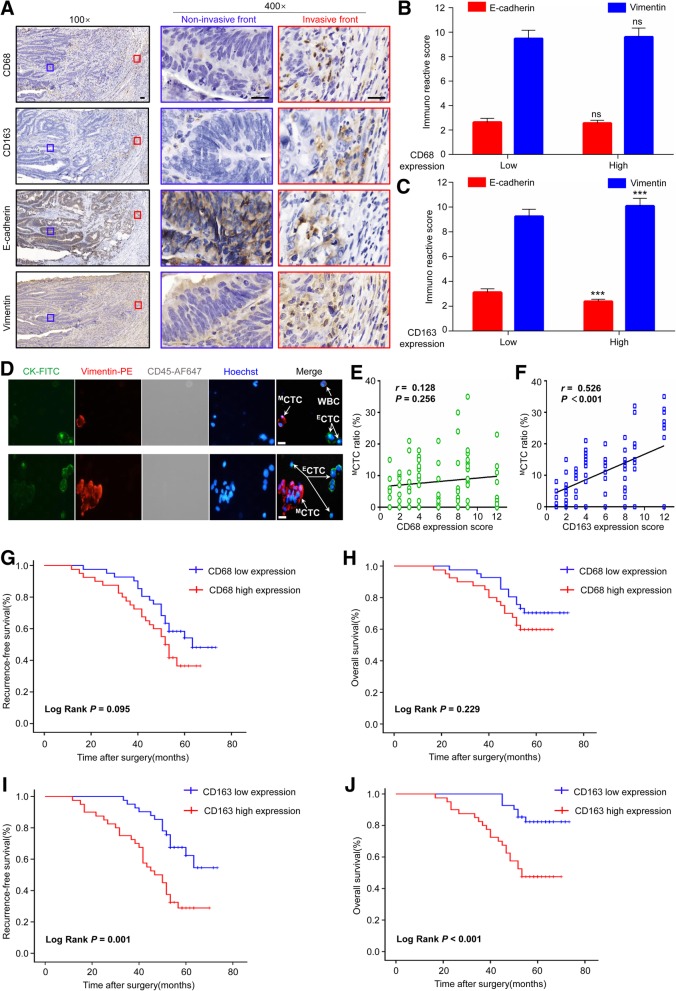
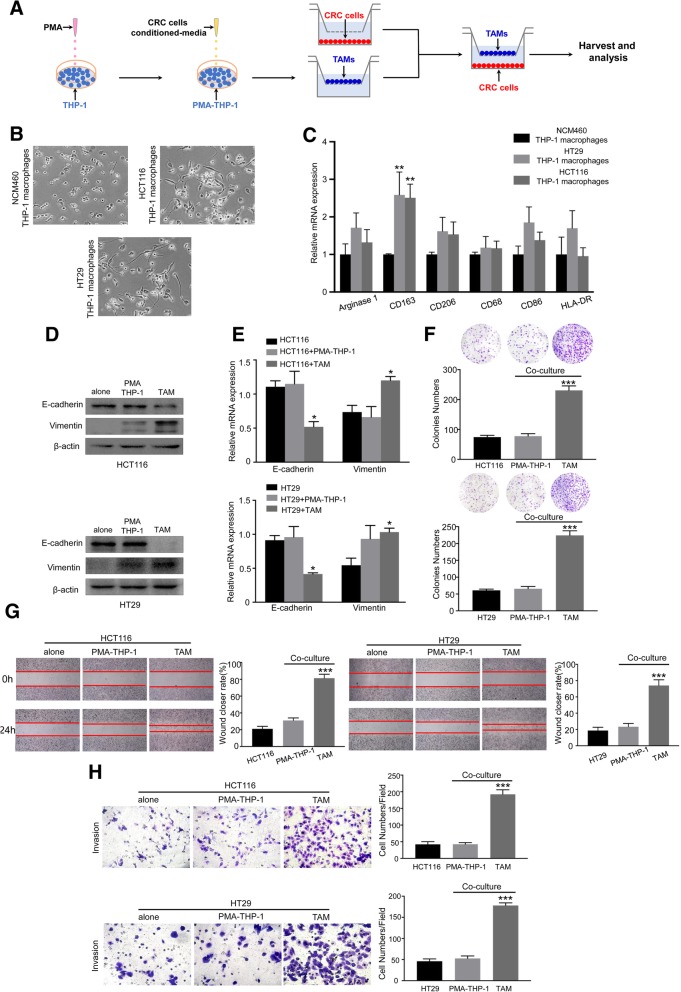
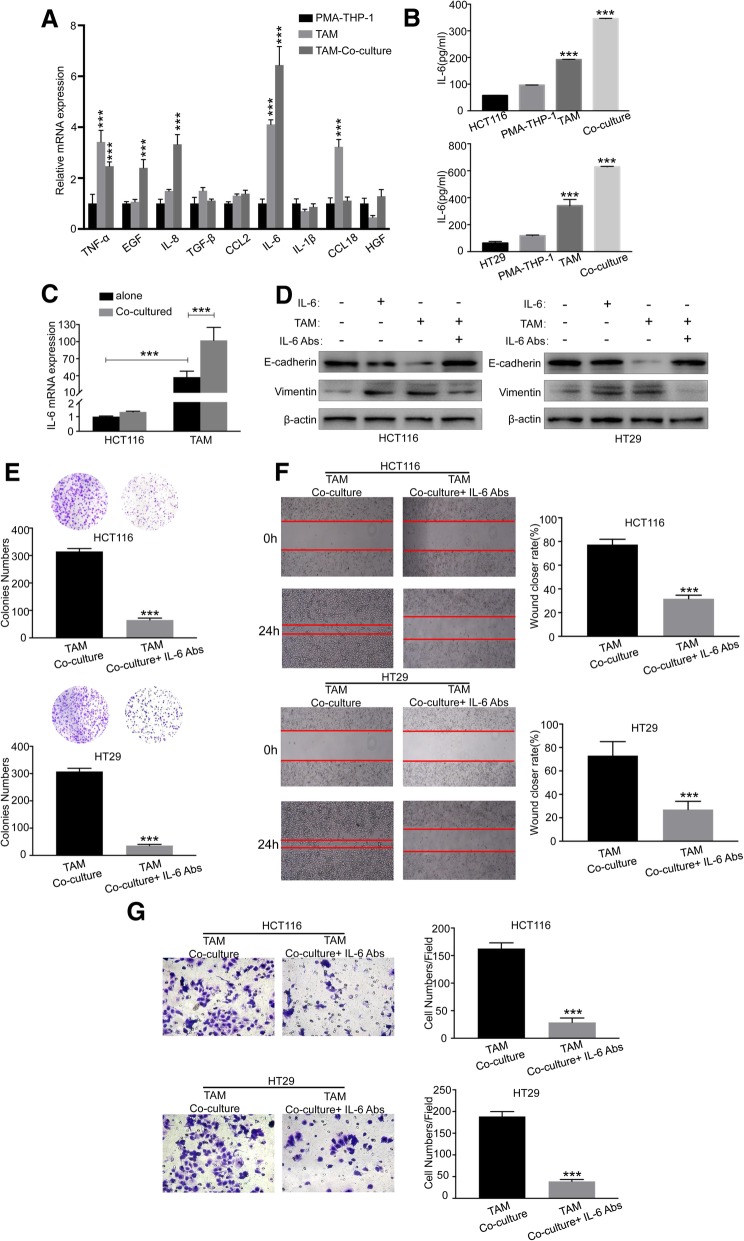
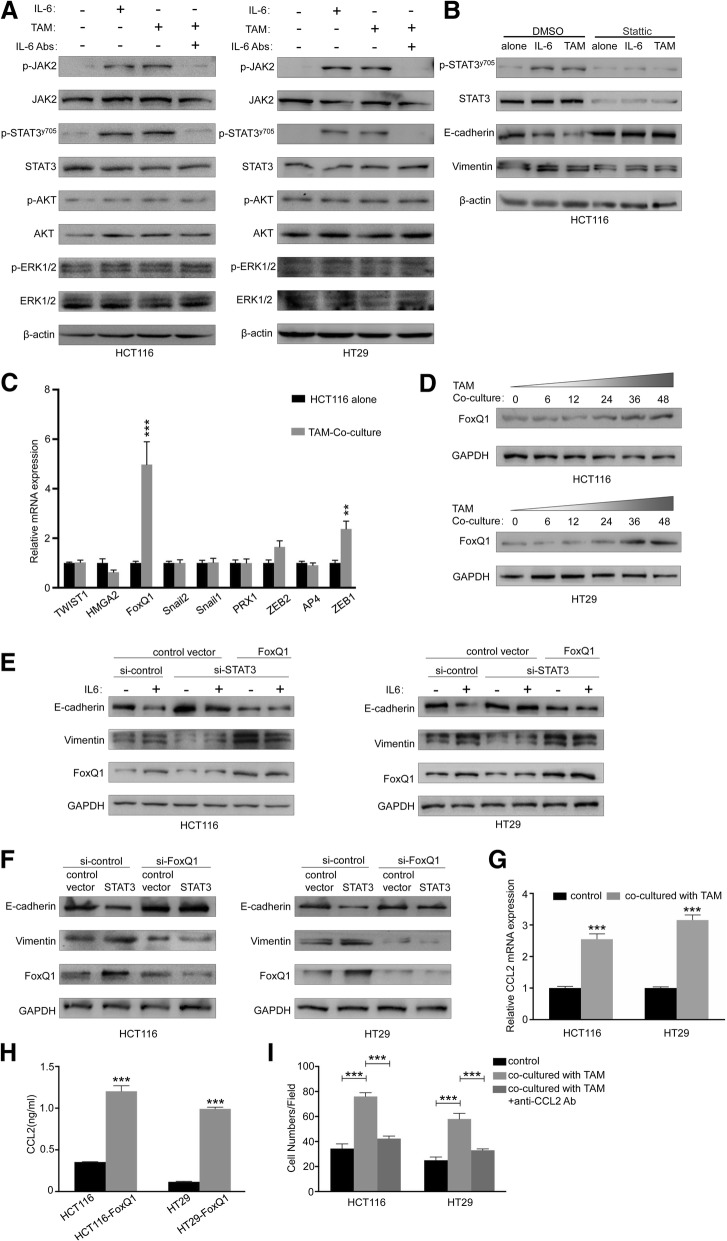
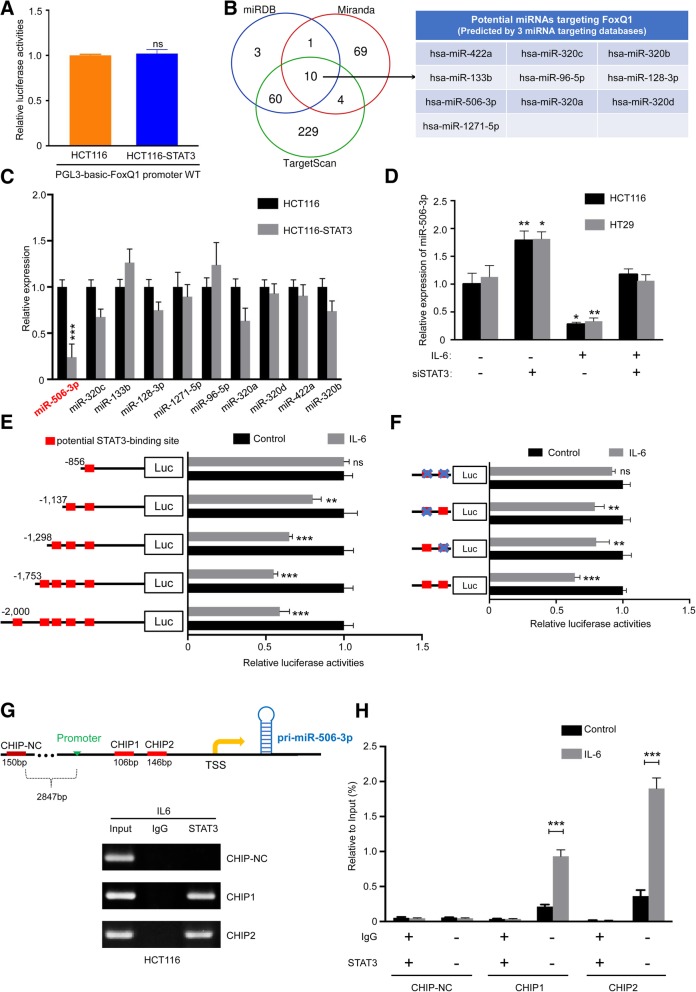
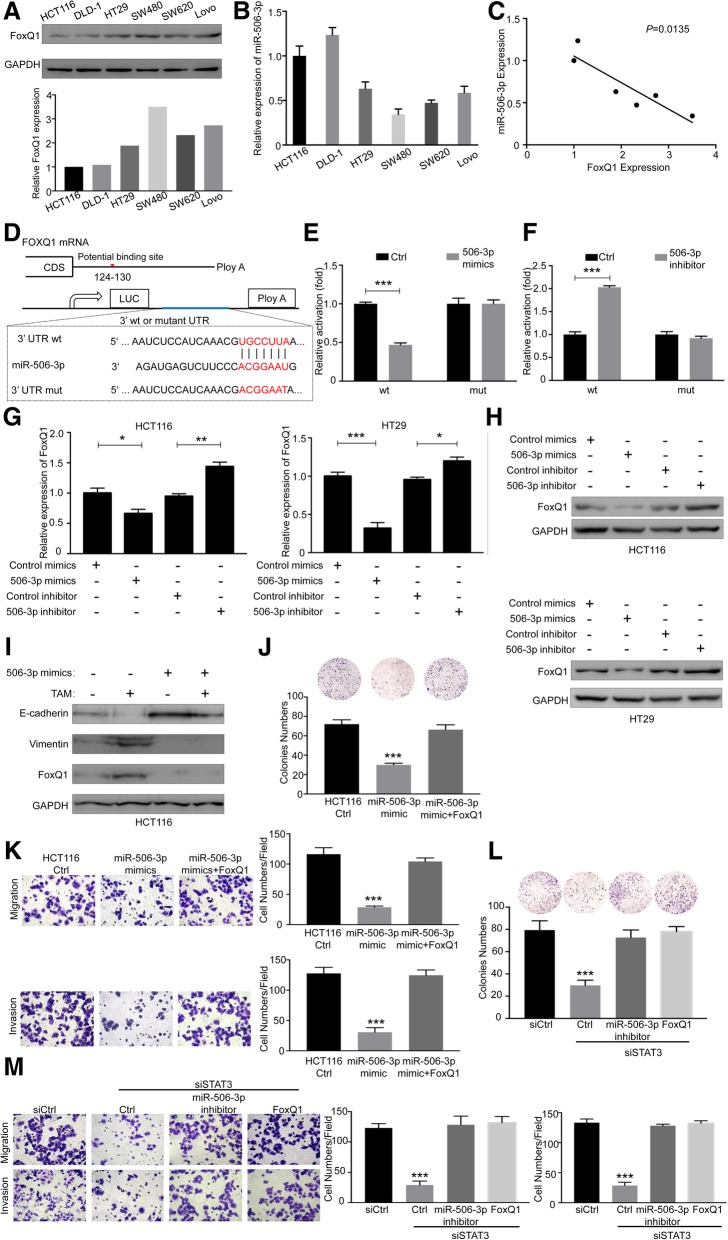
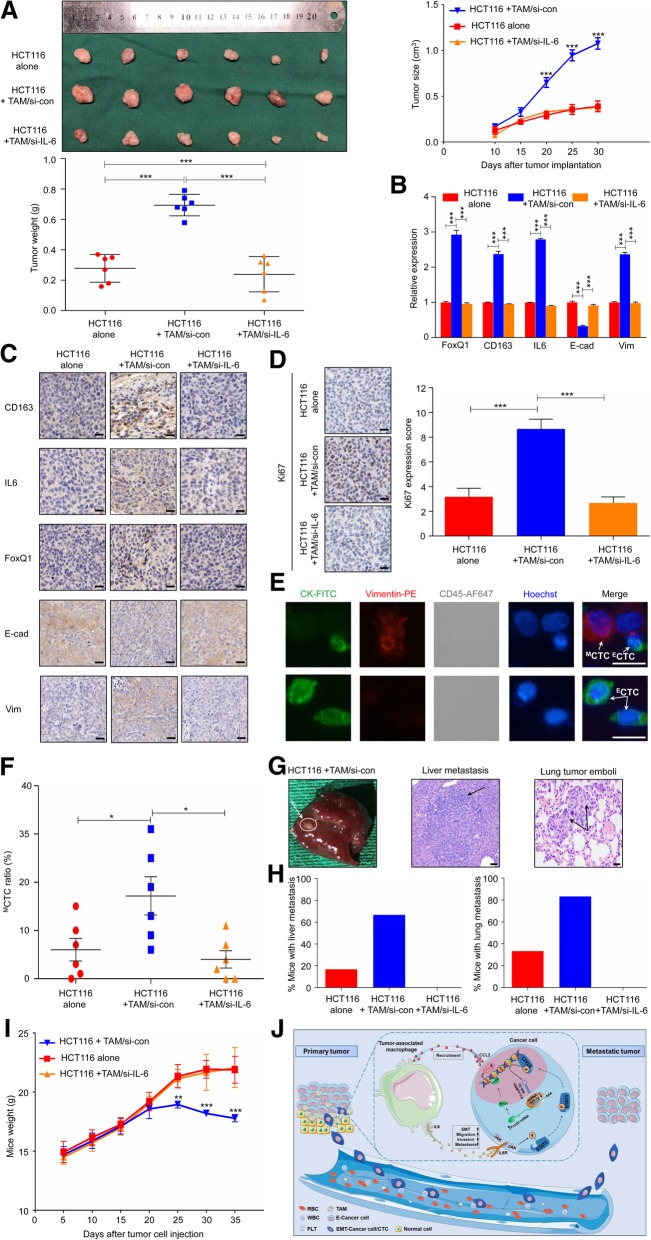
BACKGROUND: Tumor-associated macrophages (TAMs) are major components of tumor microenvironment that frequently associated with tumor metastasis in human cancers. Circulating tumor cell (CTC), originating from primary tumor sites, is considered to be the precursors of tumor metastasis. However, the regulatory mechanism of TAMs in CTC-mediated tumor metastasis still remains unclear. METHODS: Immunohistochemical staining was used to detect the macrophages infiltration (CD68 and CD163), epithelial-mesenchymal transition (EMT) markers (E-cadherin and Vimentin) expression in serial sections of human colorectal cancer (CRC) specimens. Then, the correlations between macrophages infiltration and clinicopathologic features, mesenchymal CTC ratio, and patients' prognosis were analyzed. A co-culture assay in vitro was used to evaluate the role of TAMs on CRC EMT, migration and invasion, and ELISA, luciferase reporter assay and CHIP were performed to uncover the underlying mechanism. Furthermore, an in vivo model was carried out to confirm the effect of TAMs on mesenchymal CTC-mediated metastasis. RESULTS: TAMs infiltrated in invasive front was associated with EMT, mesenchymal CTC ratio, and poor prognosis in patients with CRC. CRC-conditioned macrophages regulated EMT program to enhance CRC cells migration and invasion by secreting IL6. TAMs-derived IL6 activated the JAK2/STAT3 pathway, and activated STAT3 transcriptionally inhibited the tumor suppressor miR-506-3p in CRC cells. miR-506-3p, a key miRNA regulating FoxQ1, was downregulated in CRC cells, resulting in increased FoxQ1 expression, which in turn led to the production of CCL2 that promoted macrophage recruitment. Inhibition of CCL2 or IL6 broke this loop and reduced macrophage migration and mesenchymal CTC-mediated metastasis, respectively. CONCLUSIONS: Our data indicates that TAMs induce EMT program to enhance CRC migration, invasion, and CTC-mediated metastasis by regulating the JAK2/STAT3/miR-506-3p/FoxQ1 axis, which in turn leads to the production of CCL2 that promote macrophage recruitment, revealing a new cross-talk between immune cells and tumor cells in CRC microenvironment.
Overview
The claims and statistics of this paper haven’t been checked yet.
Free: it reads the open-access text and checks the first 5 claims that cite a source we can check. Create a free account to check every claim.
Integrity signals
Registry
Cites
Statistics
Figures
Verification
Claims the paper makes
The claims and statistics of this paper haven’t been checked yet.
Free: it reads the open-access text and checks the first 5 claims that cite a source we can check. Create a free account to check every claim.
Claims other papers make about this one
Each is checked against this paper’s own text: does it say what the citing paper says it does?
The cited source says what the claim attributes to it.
In the citing paper
“In this line, a study in human colorectal cancer (CRC) specimens and in vitro co-culture, revealed that TAMs induce EMT program to enhance CRC invasion, migration, and CTC-mediated metastasis by producing IL6 to activate JAK2/STAT3 axis and inhibit the suppressive role of miR-506-3p on FoxQ1 expression.”
From Tumor microenvironment complexity and therapeutic implications at a glance (2020) · cites this paper as [94]
Self-check
Percentages, sums and reported differences re-computed from the paper’s own numbers.
The self-check needs the paper’s full text.
Citations
Cites
Siegel, R. L., Miller, K. D., & Jemal, A. (2015) · CA: A Cancer Journal for Clinicians · doi:10.3322/caac.21254 · Cited by 11,853
Molecular mechanisms of epithelial–mesenchymal transition
Lamouille, S., Xu, J., & Derynck, R. (2014) · Nature Reviews Molecular Cell Biology · doi:10.1038/nrm3758 · Cited by 8,091
Macrophage Diversity Enhances Tumor Progression and Metastasis
Qian, B.-Z., & Pollard, J. W. (2010) · Cell · doi:10.1016/j.cell.2010.03.014 · Cited by 5,188 · cited 1×
“Macrophages in the TME, referred to as tumor-associated macrophages (TAMs), are one of the most abundant types of cells, and exhibit different phenotypes and functions in response to various microenvironmental signals generated from tumor and stromal cells [14].”
BackgroundCCL2 recruits inflammatory monocytes to facilitate breast-tumour metastasis
Qian, B.-Z., Li, J., Zhang, H., Kitamura, T., Zhang, J., Campion, L. R., Kaiser, E. A., Snyder, L. A., & Pollard, J. W. (2011) · Nature · doi:10.1038/nature10138 · Cited by 2,874
Berns, K., Horlings, H. M., Hennessy, B. T., Madiredjo, M., Hijmans, E. M., Beelen, K., Linn, S. C., Gonzalez-Angulo, A. M., Stemke-Hale, K., Hauptmann, M., et al. (2007) · Cancer Cell · doi:10.1016/j.ccr.2007.08.030 · Cited by 1,627
Dissecting the metastatic cascade
Pantel, K., & Brakenhoff, R. H. (2004) · Nature Reviews Cancer · doi:10.1038/nrc1370 · Cited by 1,281 · cited 1×
“Furthermore, CTC disseminate from primary tumor by undergoing EMT that allow them to penetrate blood vessels [35], and CTC was thought to have stronger invasive and metastatic ability [36].”
BackgroundApplied bioinformatics for the identification of regulatory elements
Wasserman, W. W., & Sandelin, A. (2004) · Nature Reviews Genetics · doi:10.1038/nrg1315 · Cited by 1,228 · cited 1×
“To validate whether transcription of miR-506-3p was directly activated by STAT3, we performed bioinformatics analysis of miR-506-3p promoter region to reveal potential transcription factor binding sites and five potential STAT3-binding sites were revealed by Jaspar [32] (Additional file 1: Figure S3A and Additional fi…”
MethodIliopoulos, D., Jaeger, S. A., Hirsch, H. A., Bulyk, M. L., & Struhl, K. (2010) · Molecular Cell · doi:10.1016/j.molcel.2010.07.023 · Cited by 830 · cited 1×
“For example, STAT3 activated by IL6 directly upregulated the miR-21 and miR-181b-1, which was shown to be necessary for the epigenetic switch linking inflammation to cancer [53].”
BackgroundSu, S., Liu, Q., Chen, J., Chen, J., Chen, F., He, C., Huang, D., Wu, W., Lin, L., Huang, W., et al. (2014) · Cancer Cell · doi:10.1016/j.ccr.2014.03.021 · Cited by 772 · cited 1×
“Our results were in accordance with previous study, which comprehensively demonstrated that CCL18 TAMs infiltration in the tumor invasive front might establish an aggressive TME and could regulate breast cancer cells an EMT shift to increase metastatic ability [33].”
ResultSelf-citationWang, X., Luo, G., Zhang, K., Cao, J., Huang, C., Jiang, T., Liu, B., Su, L., & Qiu, Z. (2018) · Cancer Research · doi:10.1158/0008-5472.can-17-3841 · Cited by 767 · cited 1×
“Additionally, Wang and colleagues revealed that pancreatic cancer (PC) cells activated macrophages to the M2 phenotype, which then promoted EMT progress to increase migration and invasion of PC cells [23].”
Background
Research works printed but not linked: 3
- Su S Liu Q Chen J Chen J Chen F He C Huang D Wu W Lin L Huang W A positive feedback loop between mesenchymal-like cancer cells and macrophages is essential to breast cancer metastasis Cancer Cell 2014 25 605 620 10.1016/j.ccr.2014.03.021 24823638 · DOI · Paper page
- Pantel K Brakenhoff RH Dissecting the metastatic cascade Nat Rev Cancer 2004 4 448 10.1038/nrc1370 15170447 · DOI · Paper page
- Guo J Yan Y Yan Y Guo Q Zhang M Zhang J Goltzman D Tumor-associated macrophages induce the expression of FOXQ1 to promote epithelial-mesenchymal transition and metastasis in gastric cancer cells Oncol Rep 2017 38 2003 2010 10.3892/or.2017.5877 28791370 PMC5652949 · DOI
Cited by
Items 701–800 of 861
Development of a Prognostic Model for Colorectal Cancer Based on Four EMT-related GenesPreprint
Hung, S., Yang, C., Cao, F., He, X., & Zheng, Y. (2020) · doi:10.21203/rs.3.rs-135628/v1
Self-citationZhang, S., Lv, J., Fan, B., Fan, Z., Li, C., Gu, B., Yu, W., & Zhang, T. (2021) · medRxiv · doi:10.1101/2021.08.30.21262762
CIRCULATING TUMOR CELLS: WHERE WE LEFT OFF?
Kryvoshlyk, I. (2021) · Biotechnologia Acta · doi:10.15407/biotech14.04.005
Lv, Z., Feng, H., Wang, T., Ma, X., & Zhang, X. (2021) · Research Square · doi:10.21203/rs.3.rs-820712/v1
Zhang, Y., Zhang, J., Wei, F., Zhang, H., Wang, D., Deng, H., & Xu, X. (2021) · Research Square · doi:10.21203/rs.3.rs-1060949/v1
“Similiarly, tumor-associated macrophages(TAMs) are the main component in TME and it can enhance tumor metastasis by inducing the epithelial-mesenchymal transition(EMT)(35).”
BackgroundSome design considerations for cask handling at large-scale shipping and receiving facilities
Yount, J. A., Berger, J. D., & Shirley, C. G. (1983) · OSTI OAI (U.S. Department of Energy Office of Scientific and Technical Information)
Mesenchymal Stem Cells: A Boon or Bane in Cancer Progression and Metastasis
Yeeravalli, R., & Das, A. (2021) · Handbook of Oxidative Stress in Cancer: Therapeutic Aspects · doi:10.1007/978-981-16-1247-3_228-1
Interleukin-6 and colorectal cancer development
Hromakova, I. А., Сорочан, П. П., Prokhach, N. E., & Hromakova, I. S. (2021) · Український радіологічний та онкологічний журнал · doi:10.46879/ukroj.4.2021.89-107
Lv, Z., Feng, H., Wang, T., Li, H., Ma, X., & Zhang, X. (2021) · Research Square · doi:10.21203/rs.3.rs-992969/v1
Fém nanorészecskék és hiszton-deacetiláz inhibitorok tumorellenes hatásának vizsgálata
Igaz, N. (2021) · SZTE Repository of Dissertations (University of Szeged) · doi:10.14232/phd.10766
Regulation of Tumor Progression and Metastasis by Bone Marrow-Derived Microenvironments
Ramchandani, D., Rayes, T. P. E., Gao, D., Altorki, N. K., Cox, T. R., Erler, J. T., & Mittal, V. (2022) · Springer eBooks · doi:10.1007/978-3-030-98950-7_14
DNA Methylation Signatures in Breast Cancer: A Systematic Review and Meta-AnalysisPreprint
Trasierras-Fresco, A. M., Andreu, Z., Dolader-Rabinad, B., Hidalgo, M. R., Hernandez-Ramirez, R. A., Soler-Sáez, I., Gómez-Cabañes, B., Romero, A., Lopez-Guerrero, J. A., Vaya, M. D. L. I., et al. (2022) · bioRxiv (Cold Spring Harbor Laboratory) · doi:10.1101/2022.10.15.512358
Wu, B., Li, S., Zhai, Y., Li, Z., Li, F., Dong, B., Sheng, Y., Huang, L., & Qi, Y. (2022) · Research Square · doi:10.21203/rs.3.rs-2365658/v1
Mesenchymal Stem Cells: A Boon or Bane in Cancer Progression and Metastasis
Yeeravalli, R., & Das, A. (2022) · Handbook of Oxidative Stress in Cancer: Therapeutic Aspects · doi:10.1007/978-981-16-5422-0_228
Wang, S., Dong, X., Zheng, C., Gu, M., Jiang, H., Liang, X., & Zheng, X. (2023) · Research Square · doi:10.21203/rs.3.rs-2410527/v1
Self-citationExpression of CD163 in gastric cancer and its clinical significancePreprint
Cheng, H., Zhu, C., Ma, J., Zhiang, P. A. N., & Da, M. (2023) · Research Square · doi:10.21203/rs.3.rs-2562762/v1
Osmulski, P. A., Cunsolo, A., Chen, M., Qian, Y., Lin, C.-L., Hung, C., Mahalingam, D., Kirma, N. B., Chen, C., Taverna, J. A., et al. (2023) · doi:10.1158/0008-5472.c.6512932.v1
Data from Cell–Cell Interactions Drive Metastasis of Circulating Tumor Microemboli
Tao, J., Zhu, L., Yakoub, M., Reißfelder, C., Loges, S., & Schölch, S. (2023) · doi:10.1158/0008-5472.c.6514137.v1
Distal Onco-sphere: Cluster Metastasis
Saw, P. E., & Song, E. (2023) · Springer eBooks · doi:10.1007/978-981-99-1183-7_15
Design, Synthesis, and Biological Evaluation of Benzo[B]Thiophene 1,1-Dioxide (BTP) DerivativesPreprint
Ding, L., Li, X., Yan, W., Liu, X., Deng, F., Chen, X., Zhang, Y., Jia, Q., & He, D. (2023) · SSRN Electronic Journal · doi:10.2139/ssrn.4565703
fanyue, S., Wang, B., Yang, Y., Shi, X., Zhang, C., Wang, Y., Liu, H., Zhang, Y., Yang, T., Liu, X., et al. (2023) · Research Square · doi:10.21203/rs.3.rs-3433179/v1
Self-citationChu, B., Lou, Y., & Yu, Q. (2023) · Research Square · doi:10.21203/rs.3.rs-3626254/v1
Potential targets of heparin during progression and metastasis of malignant neoplasms
Malashchenko, V. V., Хлусов, И. А., Yurova, K. A., Хазиахматова, О. Г., Тодосенко, Н. М., & Litvinova, L. S. (2023) · Medical Immunology (Russia) · doi:10.15789/1563-0625-pto-2864
A multi-model study of extracellular vesicles in bowel cancer invasion and metastasis
Guarnerio, S. (2023) · Sheffield Hallam University · doi:10.7190/shu-thesis-00581
Research Progress of miR-485-3p in Digestive System Tumors
孙, 家. (2024) · Advances in Clinical Medicine · doi:10.12677/acm.2024.143968
Additional file 2 of Clinical plasma cells-related genes to aid therapy in colon cancer
Zhang, Q., Feng, X. S., Zhang, M., Sun, W., Zhai, Y., Qing, S., Liu, Y., Zhao, H., Sun, J., Zhang, Y., et al. (2023) · Figshare · doi:10.6084/m9.figshare.23819853
Additional file 1 of Clinical plasma cells-related genes to aid therapy in colon cancer
Zhang, Q., Feng, X., Zhang, M., Sun, W., Zhai, Y., Qing, S., Liu, Y., Zhao, H., Sun, J., Zhang, Y., et al. (2023) · Figshare · doi:10.6084/m9.figshare.23819850
Yang, Y., Feng, M., Bai, L., Liao, W., Zhou, K., Zhang, M., Wu, Q., Wen, F., Lei, W., Zhang, P., et al. (2021) · Figshare · doi:10.6084/m9.figshare.16625488
Measurement and analysis of rare circulating tumor cell dynamics with diffuse in vivo flow cytometry
Williams, A. L. (2024) · Digital Repository Service (Northeastern University) · doi:10.17760/d20659805
Feng, Q., Liu, Q., Liu, Z., Xu, J., Yang, Y., Zhu, Y., Lu, G., Xu, G., Wu, D., Wang, F., et al. (2024) · Translational Oncology · doi:10.1016/j.tranon.2024.101950
Self-citationBiomarkers for modeling of cancer-specifc tumorassociated macrophages ex vivo
Sudarskikh, T., Larionova, I., Rakina, M. A., & Kzhyshkowska, J. G. (2024) · Siberian Journal of Oncology · doi:10.21294/1814-4861-2024-23-4-54-65
Advances in Molecular Biology Knowledge of Rectal Cancer and Forthcoming Role of Liquid Biopsy
(2024) · Frontiers research topics · doi:10.3389/978-2-8325-5643-6
Immunomorphological specifcity of HER2-low breast cancer
Mikhailov, I. V., Романовна, Е. Е., Glazkov, A. A., Михайловна, Т. И., Setdikova, G. R., & Балканов, А. С. (2024) · Siberian Journal of Oncology · doi:10.21294/1814-4861-2024-23-5-47-58
The concomitant tumor suspension cells derived from SKBR-3 exhibit circulating tumor cell features
Li, D., Liu, F., Li, S., Zhao, X., Yeung, K., Wong, T. M., & Wu, J. (2025) · Tissue and Cell · doi:10.1016/j.tice.2025.102777
Mahmoodi, M., & Nasiri, G. (2024) · Scientific Journal of Kurdistan University of Medical Sciences · doi:10.61186/sjku.29.1.9
Zhou, J., Li, L., Pu, Y., Tang, L., Tian, T., Zhu, G., Zhang, H., Ge, G., Ji, Q., & Li, H. (2025) · SSRN Electronic Journal · doi:10.2139/ssrn.5224827
Hemeda, D., El‐Mesery, A., Mohamed, M., Gawesh, Z. M. A., Elnahas, W., & Soliman, M. A. (2025) · Asian Pacific Journal of Cancer Prevention · doi:10.31557/apjcp.2025.26.4.1429
Li, M. (2025) · Theoretical and Natural Science · doi:10.54254/2753-8818/2025.au24072
Applying physical principles to cancer research
Fischbach, C., O’Hern, C. S., & Engler, A. J. (2025) · APL Bioengineering · doi:10.1063/5.0282296
Follow-Up Management and Prognosis
Yang, X., Sun, H., & Jiang, Z. (2025) · Springer eBooks · doi:10.1007/978-981-96-7364-3_20
Zhang, G., Yu, J., Zhang, F., Wang, F., & Zhou, C. (2025) · Frontiers in Pharmacology · doi:10.3389/fphar.2025.1646840 · Cited by 1
Chen, M., Xu, F., Zhou, S., Yu, Y., Xu, J., Gan, L., Wang, M., Sun, Y., Zhang, H., & Wang, W. (2025) · Talanta · doi:10.1016/j.talanta.2025.128863
The Role of Macrophages in Cancer Immunity
Yang, W., Liu, W., Hu, N., & Li, C. (2025) · Springer eBooks · doi:10.1007/978-3-032-00749-0_19
Parmar, N. B., Desai, M. K., Parekh, P. S., Patel, R. B., Shah, D. D., Chorawala, M. R., Shah, P. A., & Bhupendra, G. P. (2025) · Elsevier eBooks · doi:10.1016/b978-0-443-33536-5.00012-2
Yang, Y., Liu, J., Han, Y., Zhu, G., Niu, H., Zheng, B., Tang, X., Li, J., Kang, Y., Yu, J., et al. (2025) · MedComm · doi:10.1002/mco2.70419
“Recent research confirms that CD163 + TAMs promote colorectal cancer cell migration and invasion via IL-6, which modulates the STAT3/miR-506-3p/FoxQ1 pathway [32].”
He, J., Wang, L., Yu, B., Huang, W., Ouyang, C., Zhou, M., Hu, R., & Chen, Z. (2025) · Frontiers in Cell and Developmental Biology · doi:10.3389/fcell.2025.1694257
TAMs-derived IL-1β inducing DDX21 enhances CRC proliferation and metastasis via JAK2/STAT3 pathway
Wang, Y., Zhen, T., He, S., Wang, Y., Chen, L., Chen, Y., Shi, H., & Han, A. (2025) · Cancer Treatment and Research Communications · doi:10.1016/j.ctarc.2025.101022 · Cited by 2
Advances in application of single-cell sequencing in colorectal cancer
Gong, T., & Liu, Y.-K. (2025) · World Chinese Journal of Digestology · doi:10.11569/wcjd.v33.i10.771
Progress in research of premetastatic niche in colorectal cancer liver metastasis
Chi, Z.-C. (2025) · World Chinese Journal of Digestology · doi:10.11569/wcjd.v33.i11.847
Identification of PLXNC1 as a novel biomarker for consensus molecular subtype 4 in colorectal cancer
Wang, W., Zhou, M., Li, T., Gan, W., Lv, S., Yan, Z., Hou, Y., Zeng, Z., Yang, L., Zhang, F., et al. (2025) · Genes & Diseases · doi:10.1016/j.gendis.2025.101974
“4C), in accordance with the mesenchymal phenotype, 52 and a decreased proportion of epithelial cells, T cells, and B cells compared with the cell types in patients in the CMS1 — 3.”
Yuan, C., Shu, X., Wang, X., Hu, Z., & Jie, Z. (2025) · Discover Oncology · doi:10.1007/s12672-025-04250-z
“They facilitate tumor invasion and metastasis by promoting extracellular matrix remodeling and inducing epithelial-mesenchymal transition [13, 14].”
M2 macrophages are the origin of tumor metastasisPreprint
Li, H., Miao, Y., Suo, L., Wang, X., Mao, Y., Zhang, X., Zhou, N., Tian, J., Yu, X., Wang, T., et al. (2023) · Research Square · doi:10.21203/rs.3.rs-2381206/v1
Liu, Q., Yang, C., Wang, S., Shi, D., Wei, C., Song, J., Lin, X., Dou, R., Bai, J., Xiang, Z., et al. (2020) · Figshare · doi:10.6084/m9.figshare.12050166
Self-citationJiang, M., Huang, Z., Chen, L., Deng, T., Liu, J., & Wu, Y. (2024) · Figshare · doi:10.6084/m9.figshare.26698415
He, Y., Han, Y., Fan, A.-H., Li, D., Wang, B., Ji, K., Wang, X., Zhao, X., & Lu, Y. (2022) · Figshare · doi:10.6084/m9.figshare.21275895
Wang, S., Cheng, L., Jing, F., & Li, G. (2022) · Figshare · doi:10.6084/m9.figshare.20454910
Self-citationJiang, M., Huang, Z., Chen, L., Deng, T., Liu, J., & Wu, Y. (2024) · Figshare · doi:10.6084/m9.figshare.26698418
Wang, S., Cheng, L., Jing, F., & Li, G. (2022) · Figshare · doi:10.6084/m9.figshare.20454913
Self-citationWang, S., Cheng, L., Jing, F., & Li, G. (2022) · Figshare · doi:10.6084/m9.figshare.20454907
Self-citationLiu, F., Liang, Y., Sun, R., Yang, W., Liang, Z., Gu, J., Zhao, F., & Decai, T. (2022) · Figshare · doi:10.6084/m9.figshare.20430557
Kawamura, I., Ohe, R., Suzuki, K., Kabasawa, T., Kitaoka, T., Takahara, D., Kono, M., Uchiyama, N., Musha, H., Futakuchi, M., et al. (2024) · Figshare · doi:10.6084/m9.figshare.26693197
Kawamura, I., Ohe, R., Suzuki, K., Kabasawa, T., Kitaoka, T., Takahara, D., Kono, M., Uchiyama, N., Musha, H., Futakuchi, M., et al. (2024) · Figshare · doi:10.6084/m9.figshare.26693194
Yan, C., Yang, Z., Chen, P., Yeh, Y., Sun, C., Xie, T., Huang, W., & Zhang, X. (2024) · Figshare · doi:10.6084/m9.figshare.26701963
Long, Z., Li, X., Deng, W., Tan, Y., & Liu, J. (2024) · Figshare · doi:10.6084/m9.figshare.26738925
Wang, H., Shao, R., Liu, W., 彭淑梅, Bai, S., Fu, B., Zhao, C., & Lu, Y. (2022) · Figshare · doi:10.6084/m9.figshare.19768142
He, Y., Han, Y., Fan, A.-H., Li, D., Wang, B., Ji, K., Wang, X., Zhao, X., & Lu, Y. (2022) · Figshare · doi:10.6084/m9.figshare.21275880
Wang, S., Cheng, L., Jing, F., & Li, G. (2022) · Figshare · doi:10.6084/m9.figshare.20454916
Self-citationHe, Y., Han, Y., Fan, A.-H., Li, D., Wang, B., Ji, K., Wang, X., Zhao, X., & Lu, Y. (2022) · Figshare · doi:10.6084/m9.figshare.21275877
He, Y., Han, Y., Fan, A.-H., Li, D., Wang, B., Ji, K., Wang, X., Zhao, X., & Lu, Y. (2022) · Figshare · doi:10.6084/m9.figshare.21275892
Long, Z., Li, X., Deng, W., Tan, Y., & Liu, J. (2024) · Figshare · doi:10.6084/m9.figshare.26738934
Zhang, X., Wu, T., Zhou, J., Chen, X., Dong, C., Guo, Z., Yang, R., Liang, R., Feng, Q., Hu, R., et al. (2024) · Figshare · doi:10.6084/m9.figshare.26588103
Li, H., Yang, P., Wang, J., Zhang, J., Ma, Q., Jiang, Y., Wu, Y., Han, T., & Xiang, D. (2022) · Figshare · doi:10.6084/m9.figshare.17982272
Li, H., Yang, P., Wang, J., Zhang, J., Ma, Q., Jiang, Y., Wu, Y., Han, T., & Xiang, D. (2022) · Figshare · doi:10.6084/m9.figshare.17982266
Han, S., Zhen, W., Guo, T., Zou, J., & Li, F. (2020) · Figshare · doi:10.6084/m9.figshare.13100785
Li, X., Lan, Q., Lai, W., Wu, H., Xu, H., Fang, K., Chu, Z., & Zeng, Y. (2022) · Figshare · doi:10.6084/m9.figshare.20688599
He, Y., Han, Y., Fan, A.-H., Li, D., Wang, B., Ji, K., Wang, X., Zhao, X., & Lu, Y. (2022) · Figshare · doi:10.6084/m9.figshare.21275889
Wang, S., Cheng, L., Jing, F., & Li, G. (2022) · Figshare · doi:10.6084/m9.figshare.20454904
Self-citationWang, H., Shao, R., Liu, W., 彭淑梅, Bai, S., Fu, B., Zhao, C., & Lu, Y. (2022) · Figshare · doi:10.6084/m9.figshare.19768139
Jiang, M., Huang, Z., Chen, L., Deng, T., Liu, J., & Wu, Y. (2024) · Figshare · doi:10.6084/m9.figshare.25485760
Jiang, M., Huang, Z., Chen, L., Deng, T., Liu, J., & Wu, Y. (2024) · Figshare · doi:10.6084/m9.figshare.26698409
Wang, H., Shao, R., Liu, W., 彭淑梅, Bai, S., Fu, B., Zhao, C., & Lu, Y. (2022) · Figshare · doi:10.6084/m9.figshare.19768130
Jiang, M., Huang, Z., Chen, L., Deng, T., Liu, J., & Wu, Y. (2024) · Figshare · doi:10.6084/m9.figshare.26698412
Li, H., Yang, P., Wang, J., Zhang, J., Ma, Q., Jiang, Y., Wu, Y., Han, T., & Xiang, D. (2022) · Figshare · doi:10.6084/m9.figshare.17982275
Zhang, X., Wu, T., Zhou, J., Chen, X., Dong, C., Guo, Z., Yang, R., Liang, R., Feng, Q., Hu, R., et al. (2024) · Figshare · doi:10.6084/m9.figshare.26588100
Long, Z., Li, X., Deng, W., Tan, Y., & Liu, J. (2024) · Figshare · doi:10.6084/m9.figshare.26738931
Li, X., Lan, Q., Lai, W., Wu, H., Xu, H., Fang, K., Chu, Z., & Zeng, Y. (2022) · Figshare · doi:10.6084/m9.figshare.20688596
Wang, H., Shao, R., Liu, W., 彭淑梅, Bai, S., Fu, B., Zhao, C., & Lu, Y. (2022) · Figshare · doi:10.6084/m9.figshare.19768133
Wang, H., Shao, R., Liu, W., 彭淑梅, Bai, S., Fu, B., Zhao, C., & Lu, Y. (2022) · Figshare · doi:10.6084/m9.figshare.19768145
Zhang, X., Wu, T., Zhou, J., Chen, X., Dong, C., Guo, Z., Yang, R., Liang, R., Feng, Q., Hu, R., et al. (2024) · Figshare · doi:10.6084/m9.figshare.26588097
Li, Z., Wang, P., Cui, W., Yong, H., Wang, D., Zhao, T., Wang, W., Shi, M., Zheng, J., & Bai, J. (2022) · Figshare · doi:10.6084/m9.figshare.21384326
He, Y., Han, Y., Fan, A.-H., Li, D., Wang, B., Ji, K., Wang, X., Zhao, X., & Lu, Y. (2022) · Figshare · doi:10.6084/m9.figshare.21275883
Li, H., Ruan, Y., Liu, C., Fan, X., Yao, Y., Dai, Y., Song, Y., Jiang, D., Sun, N., Jiao, G., et al. (2024) · Figshare · doi:10.6084/m9.figshare.25584024
李晓军, Lan, Q., Lai, W., Wu, H., Xu, H., Fang, K., Chu, Z., & Zeng, Y. (2022) · Figshare · doi:10.6084/m9.figshare.20688605
Long, Z., Li, X., Deng, W., Tan, Y., & Liu, J. (2024) · Figshare · doi:10.6084/m9.figshare.26738937
李晓军, Lan, Q., Lai, W., Wu, H., Xu, H., Fang, K., Chu, Z., & Zeng, Y. (2022) · Figshare · doi:10.6084/m9.figshare.20688590
李晓军, Lan, Q., Lai, W., Wu, H., Xu, H., Fang, K., Chu, Z., & Zeng, Y. (2022) · Figshare · doi:10.6084/m9.figshare.20688593
Wang, S., Cheng, L., Jing, F., & Li, G. (2022) · Figshare · doi:10.6084/m9.figshare.20454901
Self-citation
Metadata
- Authors
- Wei, C., Yang, C., Wang, S., Shi, D., Zhang, C., Lin, X., Liu, Q., Dou, R., & Xiong, B.
- Affiliations
- Zhongnan Hospital of Wuhan University (CN)
- Corresponding author
- Xiong, Bin
- Venue
- Molecular Cancer
- Published
- 2019-03-30
- Volume
- 18
- Issue
- 1
- Pages
- 64-64
- ISSN
- 1476-4598 (ISSN-L)
- PMC
- PMC6441214
- OpenAlex
- W2948024202
- Cited by
- 833
- References
- 55
- Citations by year
- 2026: 60 · 2025: 129 · 2024: 148 · 2023: 147 · 2022: 173 · 2021: 100 · 2020: 66 · 2019: 8
- FWCI
- 34.76
- Type
- journal article
- Language
- en
- Open access
- gold
- doi.org
- Licence
- cc-by
- creativecommons.org/licenses/by/4.0/ (tdm)
- Locations
- Molecular Cancer (publishedVersion, cc-by)
- PubMed Central (publishedVersion, cc-by)
- PubMed (publishedVersion)
- DOAJ (DOAJ: Directory of Open Access Journals) (submittedVersion, cc-by-sa)
- Funders
- National Natural Science Foundation of China ((81572874, 81702411)
- Topics
- Life Sciences › Immunology and Microbiology › Immunology › Immune cells in cancer
- Health Sciences › Medicine › Oncology › Cancer Cells and Metastasis
- Life Sciences › Biochemistry, Genetics and Molecular Biology › Molecular Biology › Mechanisms of cancer metastasis
- Keywords
- tumor-associated macrophages, circulating tumor cells, colorectal cancer, metastasis, epithelial-mesenchymal transition, interleukin-6, JAK2/STAT3 signaling, miR-506-3p, FOXQ1, MCP-1, macrophage recruitment, tumor microenvironment, cell migration and invasion
- MeSH terms
- Animals, Cell Movement, Female, Follow-Up Studies, Humans, Liver Neoplasms, Lung Neoplasms, Macrophages, Male, Mice, Nude, Middle Aged, Neoplastic Cells, Circulating, Neoplasm Invasiveness, Prognosis, Tumor Cells, Cultured, Biomarkers, Tumor, Colorectal Neoplasms, Signal Transduction, Gene Expression Regulation, Neoplastic, Survival Rate, Apoptosis, Xenograft Model Antitumor Assays, Cell Proliferation, Mice, Epithelial-Mesenchymal Transition, Tumor Microenvironment
About these checks
Registry, retraction, Cites and statistics results are computed, not judged, with one exception: a printed reference that no index lists is read once by a model before it counts as a citation error. Claims are extracted by a model and kept only when their quote appears verbatim in the text; each cited source is then checked, with a model’s help, for whether it says what the claim relies on. Those verdicts can be wrong — read the claim’s quote and the cited source before relying on one.
Statistics and arithmetic are recomputed, not judged.
Confidence bands are shown only for fields calibrated on our annotated test set. None is calibrated yet, so no band is shown.
What counts as a claim ›How we measure confidence ›How we check this ›
Are you an author, or do you see a problem with this page? Request a review
Data sources
Bibliographic data: Semantic Scholar, OpenAlex, Crossref.
Contains information from the Semantic Scholar Academic Graph Datasets, made available under the ODC Attribution License (ODC-BY 1.0).
Semantic Scholar’s data is described in: Kinney, R., et al. (2023). The Semantic Scholar Open Data Platform. arXiv:2301.10140.
