

Crosstalk between cancer cells and tumor associated macrophages is required for mesenchymal circulating tumor cell-mediated colorectal cancer metastasis
Open accessThe DOI matches its Crossref record; 55 of the 55 references it cites were found in a registry or an index.
Abstract
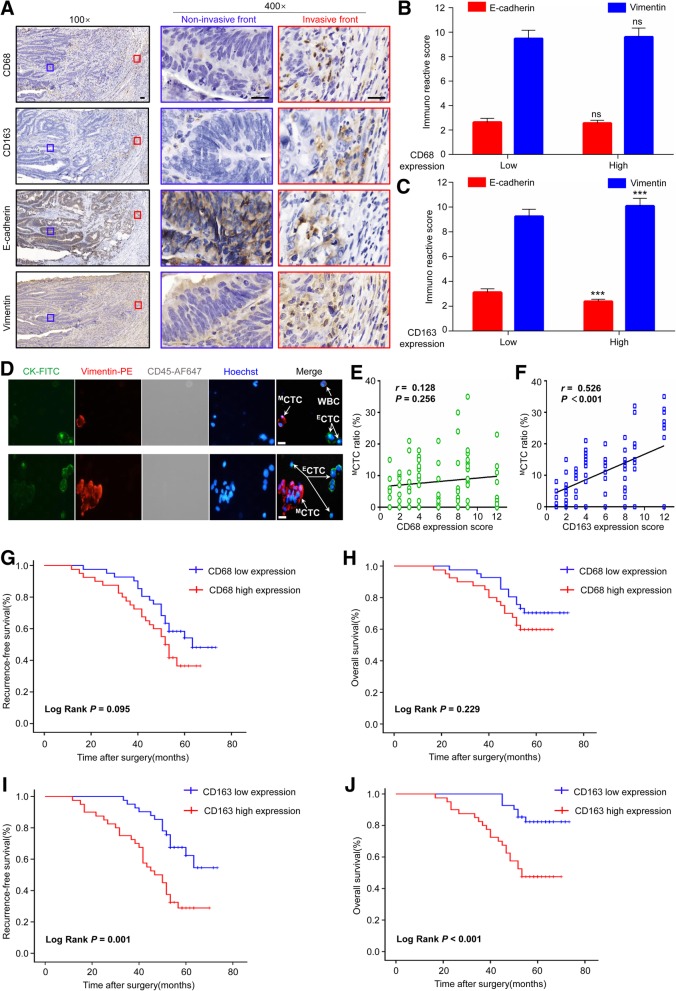
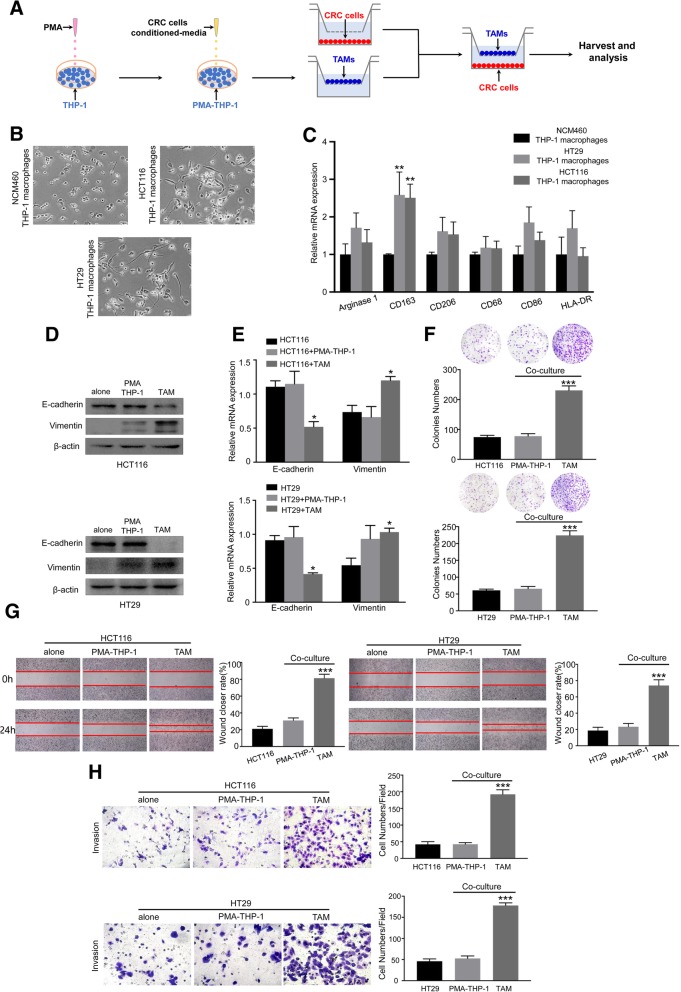
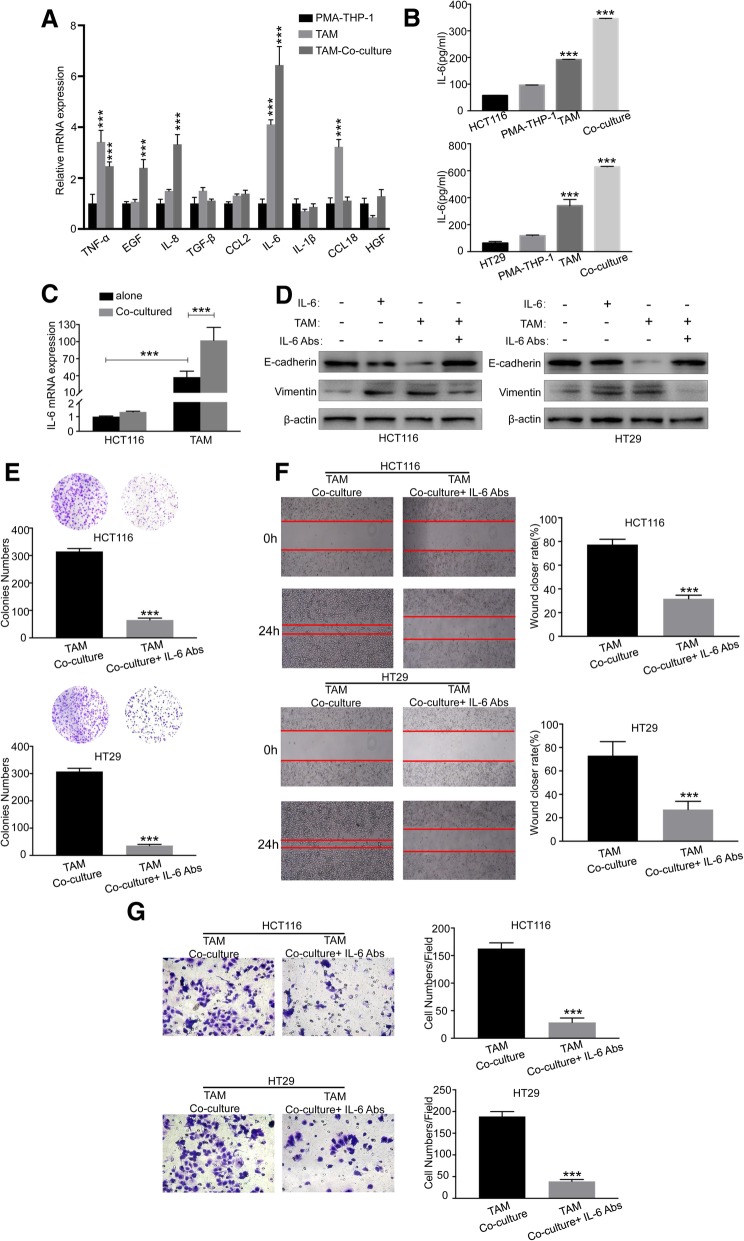
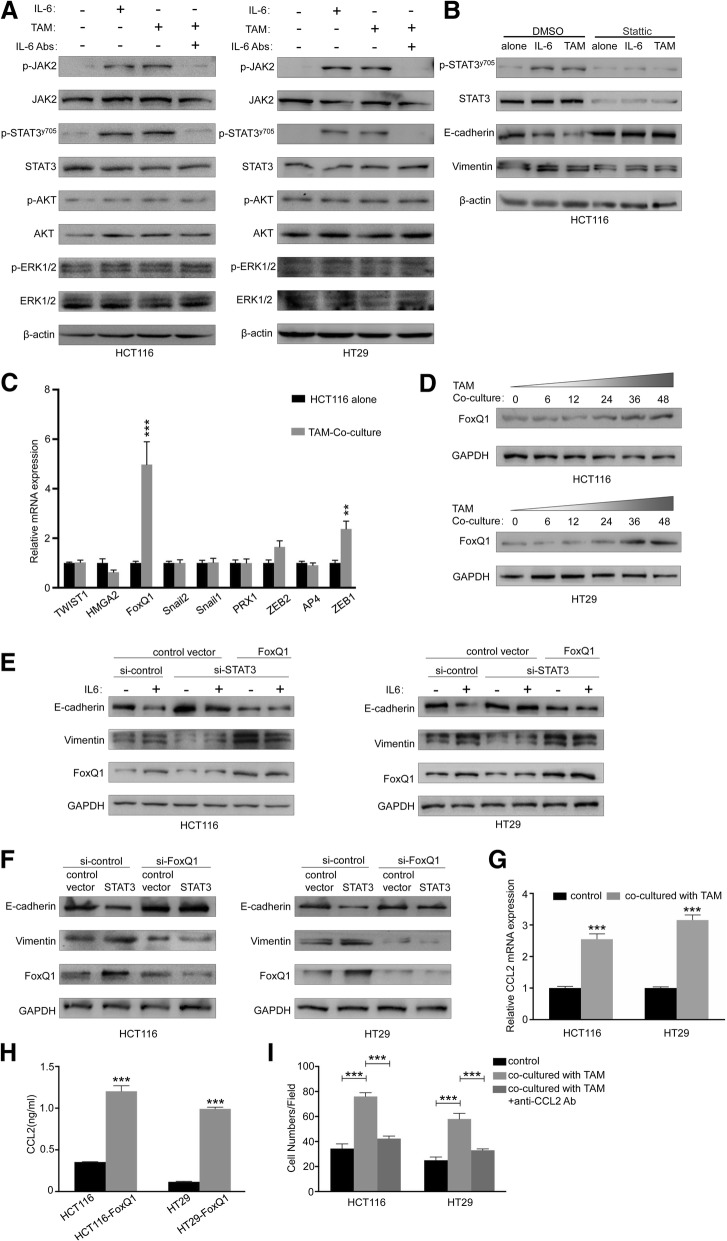
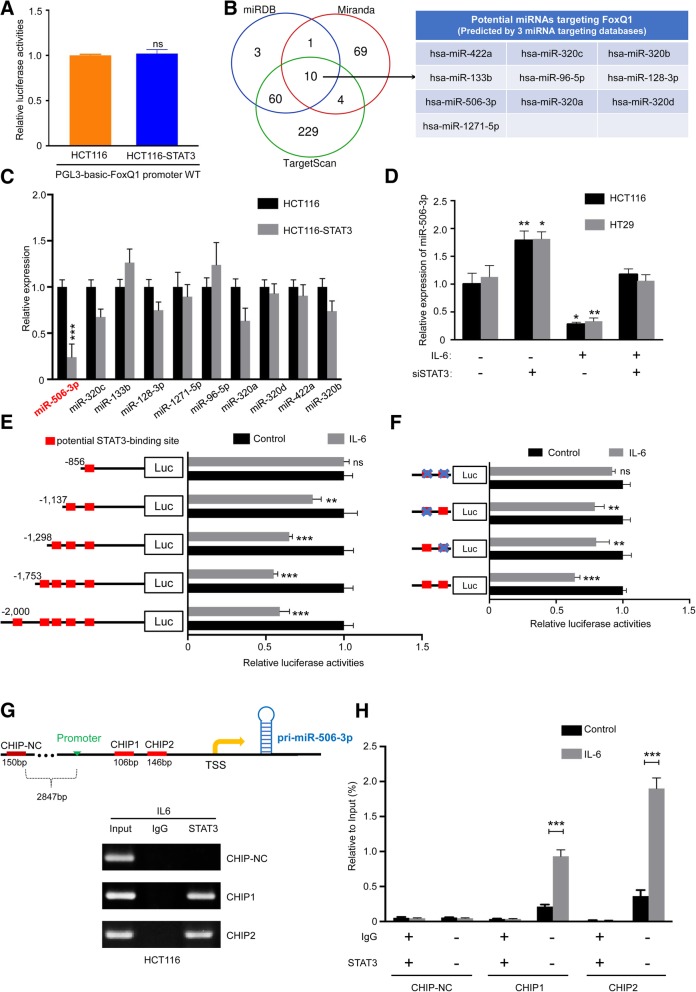
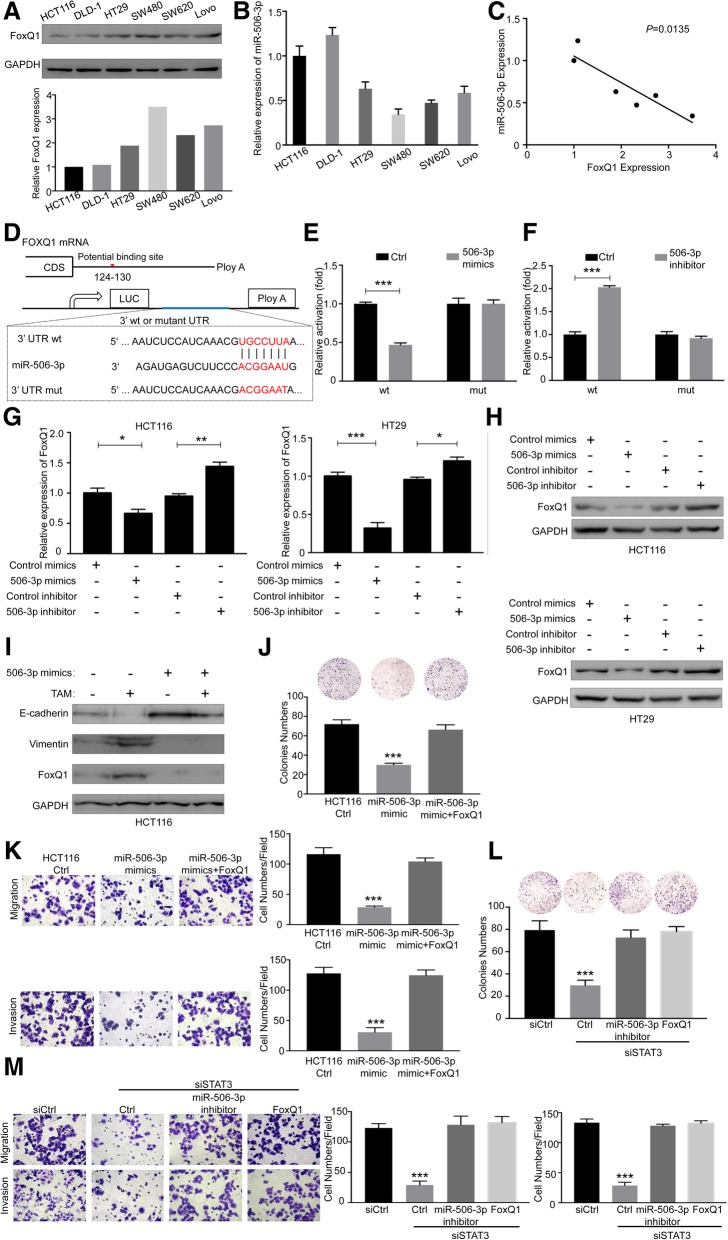
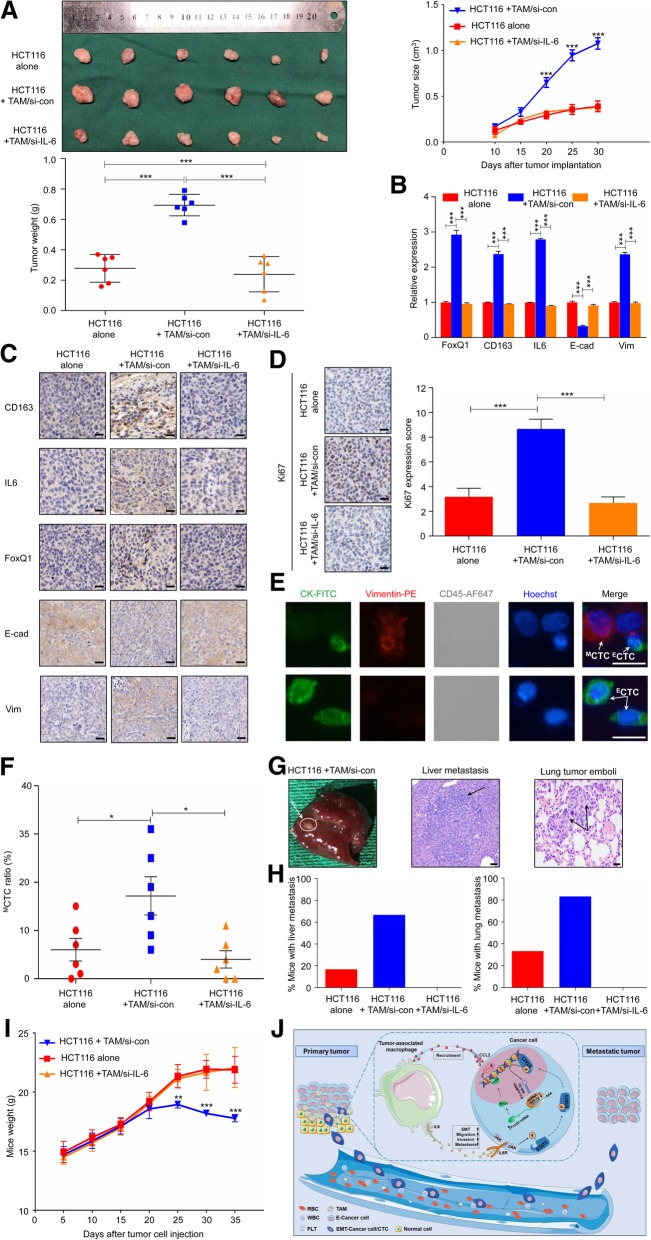
BACKGROUND: Tumor-associated macrophages (TAMs) are major components of tumor microenvironment that frequently associated with tumor metastasis in human cancers. Circulating tumor cell (CTC), originating from primary tumor sites, is considered to be the precursors of tumor metastasis. However, the regulatory mechanism of TAMs in CTC-mediated tumor metastasis still remains unclear. METHODS: Immunohistochemical staining was used to detect the macrophages infiltration (CD68 and CD163), epithelial-mesenchymal transition (EMT) markers (E-cadherin and Vimentin) expression in serial sections of human colorectal cancer (CRC) specimens. Then, the correlations between macrophages infiltration and clinicopathologic features, mesenchymal CTC ratio, and patients' prognosis were analyzed. A co-culture assay in vitro was used to evaluate the role of TAMs on CRC EMT, migration and invasion, and ELISA, luciferase reporter assay and CHIP were performed to uncover the underlying mechanism. Furthermore, an in vivo model was carried out to confirm the effect of TAMs on mesenchymal CTC-mediated metastasis. RESULTS: TAMs infiltrated in invasive front was associated with EMT, mesenchymal CTC ratio, and poor prognosis in patients with CRC. CRC-conditioned macrophages regulated EMT program to enhance CRC cells migration and invasion by secreting IL6. TAMs-derived IL6 activated the JAK2/STAT3 pathway, and activated STAT3 transcriptionally inhibited the tumor suppressor miR-506-3p in CRC cells. miR-506-3p, a key miRNA regulating FoxQ1, was downregulated in CRC cells, resulting in increased FoxQ1 expression, which in turn led to the production of CCL2 that promoted macrophage recruitment. Inhibition of CCL2 or IL6 broke this loop and reduced macrophage migration and mesenchymal CTC-mediated metastasis, respectively. CONCLUSIONS: Our data indicates that TAMs induce EMT program to enhance CRC migration, invasion, and CTC-mediated metastasis by regulating the JAK2/STAT3/miR-506-3p/FoxQ1 axis, which in turn leads to the production of CCL2 that promote macrophage recruitment, revealing a new cross-talk between immune cells and tumor cells in CRC microenvironment.
Overview
The claims and statistics of this paper haven’t been checked yet.
Free: it reads the open-access text and checks the first 5 claims that cite a source we can check. Create a free account to check every claim.
Integrity signals
Registry
Cites
Statistics
Figures
Verification
Claims the paper makes
The claims and statistics of this paper haven’t been checked yet.
Free: it reads the open-access text and checks the first 5 claims that cite a source we can check. Create a free account to check every claim.
Claims other papers make about this one
Each is checked against this paper’s own text: does it say what the citing paper says it does?
The cited source says what the claim attributes to it.
In the citing paper
“In this line, a study in human colorectal cancer (CRC) specimens and in vitro co-culture, revealed that TAMs induce EMT program to enhance CRC invasion, migration, and CTC-mediated metastasis by producing IL6 to activate JAK2/STAT3 axis and inhibit the suppressive role of miR-506-3p on FoxQ1 expression.”
From Tumor microenvironment complexity and therapeutic implications at a glance (2020) · cites this paper as [94]
Self-check
Percentages, sums and reported differences re-computed from the paper’s own numbers.
The self-check needs the paper’s full text.
Citations
Cites
Siegel, R. L., Miller, K. D., & Jemal, A. (2015) · CA: A Cancer Journal for Clinicians · doi:10.3322/caac.21254 · Cited by 11,853
Molecular mechanisms of epithelial–mesenchymal transition
Lamouille, S., Xu, J., & Derynck, R. (2014) · Nature Reviews Molecular Cell Biology · doi:10.1038/nrm3758 · Cited by 8,091
Macrophage Diversity Enhances Tumor Progression and Metastasis
Qian, B.-Z., & Pollard, J. W. (2010) · Cell · doi:10.1016/j.cell.2010.03.014 · Cited by 5,188 · cited 1×
“Macrophages in the TME, referred to as tumor-associated macrophages (TAMs), are one of the most abundant types of cells, and exhibit different phenotypes and functions in response to various microenvironmental signals generated from tumor and stromal cells [14].”
BackgroundCCL2 recruits inflammatory monocytes to facilitate breast-tumour metastasis
Qian, B.-Z., Li, J., Zhang, H., Kitamura, T., Zhang, J., Campion, L. R., Kaiser, E. A., Snyder, L. A., & Pollard, J. W. (2011) · Nature · doi:10.1038/nature10138 · Cited by 2,874
Berns, K., Horlings, H. M., Hennessy, B. T., Madiredjo, M., Hijmans, E. M., Beelen, K., Linn, S. C., Gonzalez-Angulo, A. M., Stemke-Hale, K., Hauptmann, M., et al. (2007) · Cancer Cell · doi:10.1016/j.ccr.2007.08.030 · Cited by 1,627
Dissecting the metastatic cascade
Pantel, K., & Brakenhoff, R. H. (2004) · Nature Reviews Cancer · doi:10.1038/nrc1370 · Cited by 1,281 · cited 1×
“Furthermore, CTC disseminate from primary tumor by undergoing EMT that allow them to penetrate blood vessels [35], and CTC was thought to have stronger invasive and metastatic ability [36].”
BackgroundApplied bioinformatics for the identification of regulatory elements
Wasserman, W. W., & Sandelin, A. (2004) · Nature Reviews Genetics · doi:10.1038/nrg1315 · Cited by 1,228 · cited 1×
“To validate whether transcription of miR-506-3p was directly activated by STAT3, we performed bioinformatics analysis of miR-506-3p promoter region to reveal potential transcription factor binding sites and five potential STAT3-binding sites were revealed by Jaspar [32] (Additional file 1: Figure S3A and Additional fi…”
MethodIliopoulos, D., Jaeger, S. A., Hirsch, H. A., Bulyk, M. L., & Struhl, K. (2010) · Molecular Cell · doi:10.1016/j.molcel.2010.07.023 · Cited by 830 · cited 1×
“For example, STAT3 activated by IL6 directly upregulated the miR-21 and miR-181b-1, which was shown to be necessary for the epigenetic switch linking inflammation to cancer [53].”
BackgroundSu, S., Liu, Q., Chen, J., Chen, J., Chen, F., He, C., Huang, D., Wu, W., Lin, L., Huang, W., et al. (2014) · Cancer Cell · doi:10.1016/j.ccr.2014.03.021 · Cited by 772 · cited 1×
“Our results were in accordance with previous study, which comprehensively demonstrated that CCL18 TAMs infiltration in the tumor invasive front might establish an aggressive TME and could regulate breast cancer cells an EMT shift to increase metastatic ability [33].”
ResultSelf-citationWang, X., Luo, G., Zhang, K., Cao, J., Huang, C., Jiang, T., Liu, B., Su, L., & Qiu, Z. (2018) · Cancer Research · doi:10.1158/0008-5472.can-17-3841 · Cited by 767 · cited 1×
“Additionally, Wang and colleagues revealed that pancreatic cancer (PC) cells activated macrophages to the M2 phenotype, which then promoted EMT progress to increase migration and invasion of PC cells [23].”
Background
Research works printed but not linked: 3
- Su S Liu Q Chen J Chen J Chen F He C Huang D Wu W Lin L Huang W A positive feedback loop between mesenchymal-like cancer cells and macrophages is essential to breast cancer metastasis Cancer Cell 2014 25 605 620 10.1016/j.ccr.2014.03.021 24823638 · DOI · Paper page
- Pantel K Brakenhoff RH Dissecting the metastatic cascade Nat Rev Cancer 2004 4 448 10.1038/nrc1370 15170447 · DOI · Paper page
- Guo J Yan Y Yan Y Guo Q Zhang M Zhang J Goltzman D Tumor-associated macrophages induce the expression of FOXQ1 to promote epithelial-mesenchymal transition and metastasis in gastric cancer cells Oncol Rep 2017 38 2003 2010 10.3892/or.2017.5877 28791370 PMC5652949 · DOI
Cited by
Macrophages in immunoregulation and therapeutics
Chen, S., Saeed, A. F. U. H., Liu, Q., Jiang, Q., Xu, H., Xiao, G. G., Rao, L., & Duo, Y. (2023) · Signal Transduction and Targeted Therapy · doi:10.1038/s41392-023-01452-1 · Cited by 2,229
“Furthermore, CCL2 production upon activating this axis may aid in macrophage recruitment.(316) High TCF4 expression was also linked to macrophage recruitment and polarization in metastatic locations.”
BackgroundSelf-citationTumor microenvironment complexity and therapeutic implications at a glance
Baghban, R., Roshangar, L., Jahanban-Esfahlan, R., Seidi, K., Ebrahimi-Kalan, A., Jaymand, M., Kolahian, S., Javaheri, T., & Zare, P. (2020) · Cell Communication and Signaling · doi:10.1186/s12964-020-0530-4 · Cited by 1,784
“Blockade of IL6 or CCL2 demolishes this loop as evidenced by reduced mesenchymal CTC-mediated metastasis and macrophage migration, respectively [94] .”
BackgroundCirculating tumor cells: biology and clinical significance
Lin, D., Shen, L., Luo, M., Zhang, K., Li, J., Yang, Q., Zhu, F., Zhou, D., Zheng, S., Chen, Y., et al. (2021) · Signal Transduction and Targeted Therapy · doi:10.1038/s41392-021-00817-8 · Cited by 993
Metabolism, metabolites, and macrophages in cancer
Li, M., Yang, Y., Xiong, L., Jiang, P., Wang, J., & Li, C. (2023) · Journal of Hematology & Oncology · doi:10.1186/s13045-023-01478-6 · Cited by 507
“Furthermore, TAMs have been implicated in facilitating tumour invasion and metastasis [29, 30].”
BackgroundThree-Dimensional Spheroids as In Vitro Preclinical Models for Cancer Research
Pinto, B., Henriques, A. C., Silva, P. M. A., & Bousbaa, H. (2020) · Pharmaceutics · doi:10.3390/pharmaceutics12121186 · Cited by 440
“The TME, mainly through hypoxia and secreted cytokines, promotes the M2 phenotype which favors, amongst others, tissue repair and tumor invasion and progression [19,20].”
BackgroundTumor-Associated Macrophages in Human Breast, Colorectal, Lung, Ovarian and Prostate Cancers
Larionova, I., Tuguzbaeva, G., Ponomaryova, A., Stakheyeva, M., Cherdyntseva, N., Pavlov, V., Choinzonov, E., & Kzhyshkowska, J. (2020) · Frontiers in Oncology · doi:10.3389/fonc.2020.566511 · Cited by 392
Cancer cell plasticity during tumor progression, metastasis and response to therapy
Pérez-González, A., Bévant, K., & Blanpain, C. (2023) · Nature Cancer · doi:10.1038/s43018-023-00595-y · Cited by 332
Wang, H., Tian, T., & Zhang, J. (2021) · International Journal of Molecular Sciences · doi:10.3390/ijms22168470 · Cited by 364
“found that TAMs secrete IL-6 to induce EMT, which enhances CRC migration and invasion by regulating the JAK2/STAT3/miR-506-3p/FoxQ1 axis [69].”
BackgroundWang, D., Wang, X., Si, M., Yang, J., Sun, S., Wu, H., Cui, S., Qu, X., & Yu, X. (2020) · Cancer Letters · doi:10.1016/j.canlet.2020.01.005 · Cited by 322
Colorectal liver metastasis: molecular mechanism and interventional therapy
Zhou, H., Liu, Z., Wang, Y., Wen, X., Amador, E. H., Yuan, L., Ran, X., Xiong, L., Ran, Y., Chen, W., et al. (2022) · Signal Transduction and Targeted Therapy · doi:10.1038/s41392-022-00922-2 · Cited by 298
“TAMs and CTC both interacted to promote the occurrence of metastasis.(322) These findings suggest targeting strategies against CTC clusters may be effective in the treatment of liver metastases.”
BackgroundShi, X., Wang, X., Yao, W., Shi, D., Shao, X., Lu, Z., Chai, Y., Song, J., Tang, W., & Wang, X. (2024) · Signal Transduction and Targeted Therapy · doi:10.1038/s41392-024-01885-2 · Cited by 258
“Wei et al. 166 indicated that by controlling the JAK2/STAT3/miR-506-3p/FoxQ1 axis, CD163 + TAMs induce the EMT program to improve CRC migration, invasion, and CTC-mediated metastasis.”
BackgroundSelf-citationAcquired resistance to cancer immunotherapy: Role of tumor-mediated immunosuppression
Saleh, R., & Elkord, E. (2020) · Seminars in Cancer Biology · doi:10.1016/j.semcancer.2019.07.017 · Cited by 292
Emerging role of tumor cell plasticity in modifying therapeutic response
Qin, S., Jiang, J., Lu, Y., Nice, E. C., Huang, C., Zhang, J., & He, W. (2020) · Signal Transduction and Targeted Therapy · doi:10.1038/s41392-020-00313-5 · Cited by 268
Li, H., Yang, P., Wang, J., Zhang, J., Ma, Q., Jiang, Y., Wu, Y., Han, T., & Xiang, D. (2022) · Journal of Hematology & Oncology · doi:10.1186/s13045-021-01223-x · Cited by 273
Targeting of CD163+ Macrophages in Inflammatory and Malignant Diseases
Skytthe, M. K., Graversen, J. H., & Moestrup, S. K. (2020) · International Journal of Molecular Sciences · doi:10.3390/ijms21155497 · Cited by 261
The Impact of the Tumor Microenvironment on Macrophage Polarization in Cancer Metastatic Progression
Wang, H., Yung, M. M. H., Ngan, H. Y. S., Chan, K. K. L., & Chan, D. W. (2021) · International Journal of Molecular Sciences · doi:10.3390/ijms22126560 · Cited by 254
Decoding the spatiotemporal heterogeneity of tumor-associated macrophages
Chu, X., Tian, Y., & Lv, C. (2024) · Molecular Cancer · doi:10.1186/s12943-024-02064-1 · Cited by 214
“Current research suggests that macrophages may promote EMT through signaling pathways such as IL-35/ JAK2-STAT6-GATA3, IL6/Jak/Stat3/THBS1, or STAT3/ miR-506-3p/FoxQ1, which facilitate the invasion, and metastasis of tumor cells [88, 93, 94].”
BackgroundLiu, Q., Yang, C., Wang, S., Shi, D., Wei, C., Song, J., Lin, X., Dou, R., Bai, J., Xiang, Z., et al. (2020) · Cell Communication and Signaling · doi:10.1186/s12964-020-00557-2 · Cited by 226
Self-citationHuang, Y.-H., Cai, K., Xu, P.-P., Wang, L., Huang, C.-X., Fang, Y., Cheng, S., Sun, X.-J., Liu, F., Huang, J.-Y., et al. (2021) · Signal Transduction and Targeted Therapy · doi:10.1038/s41392-020-00437-8 · Cited by 228
Metabolic Reprogramming of Colorectal Cancer Cells and the Microenvironment: Implication for Therapy
Nenkov, M., Ma, Y., Gaßler, N., & Chen, Y. (2021) · International Journal of Molecular Sciences · doi:10.3390/ijms22126262 · Cited by 218
Multi-stage mechanisms of tumor metastasis and therapeutic strategies
Liu, Z., Chen, J., Ren, Y., Liu, S., Ba, Y., Zuo, A., Luo, P., Cheng, Q., Xu, H., & Han, X. (2024) · Signal Transduction and Targeted Therapy · doi:10.1038/s41392-024-01955-5 · Cited by 184
“87 (Fig.”
Yang, C., Dou, R., Wei, C., Liu, K., Shi, D., Zhang, C., Liu, Q., Wang, S., & Xiong, B. (2021) · Molecular Therapy · doi:10.1016/j.ymthe.2021.02.006 · Cited by 214
Self-citationChen, J., Zhang, K., Zhi, Y., Wu, Y., Chen, B., Bai, J., & Wang, X. (2021) · Clinical and Translational Medicine · doi:10.1002/ctm2.478 · Cited by 203
Circulating tumor cells: from new biological insights to clinical practice
Gu, X., Wei, S., & Lv, X. (2024) · Signal Transduction and Targeted Therapy · doi:10.1038/s41392-024-01938-6 · Cited by 182
CCL2: An Important Mediator Between Tumor Cells and Host Cells in Tumor Microenvironment
Jin, J., Lin, J., Xu, A., Lou, J., Qian, C., Li, X., Wang, Y., Yu, W., & Tao, H. (2021) · Frontiers in Oncology · doi:10.3389/fonc.2021.722916 · Cited by 190
“In colorectal cancer, CCL2 was found to be strongly correlated with endothelial–mesenchymal transition, and inhibition of CCL2 significantly reduced macrophage infiltration and tumor metastasis mediated by circulating cancer cells (20).”
BackgroundInfluentialThe Role of Tumor Microenvironment Cells in Colorectal Cancer (CRC) Cachexia
Kasprzak, A. (2021) · International Journal of Molecular Sciences · doi:10.3390/ijms22041565 · Cited by 189
Circulating tumor cell-blood cell crosstalk: Biology and clinical relevance
Pereira-Veiga, T., Schneegans, S., Pantel, K., & Wikman, H. (2022) · Cell Reports · doi:10.1016/j.celrep.2022.111298 · Cited by 175
Targeting of TAMs: can we be more clever than cancer cells?
Kzhyshkowska, J. G., Shen, J., & Larionova, I. (2024) · Cellular and Molecular Immunology · doi:10.1038/s41423-024-01232-z · Cited by 201
“Even in CRC, the presence of M2 macrophages, de fi ned by CD206, CD163, and stabilin-1 expression, is indicative of metastasis [35, 36, 59].”
Tan, Y., Sun, R., Liu, L., Yang, D., Xiang, Q., Li, L., Tang, J., Qiu, Z., Peng, W., Wang, Y., et al. (2021) · Theranostics · doi:10.7150/thno.58322 · Cited by 176
“To generate macrophages, 1×10⁶ THP-1 cells were seeded in the bottom chamber of a Cell Culture Insert with PRIM medium containing 10 ng/ml 12-myristate 13-acetate (PMA, Sigma) for 24 h [78].”
MethodRoles of tumor-associated macrophages in tumor progression: implications on therapeutic strategies
Zhu, S., Yi, M., Wu, Y., Dong, B., & Wu, K. (2021) · Experimental Hematology & Oncology · doi:10.1186/s40164-021-00252-z · Cited by 178
“Moreover, the activation of this axis could result in the generation of CCL2 and thereby facilitate the recruitment of macrophages [73].”
BackgroundDiagnostic Sensitivity of NLR and PLR in Early Diagnosis of Gastric Cancer
Fang, T., Wang, Y., Yin, X., Zhai, Z., Zhang, Y., Yang, Y., You, Q., Li, Z., Ma, Y., Li, C., et al. (2020) · Journal of Immunology Research · doi:10.1155/2020/9146042 · Cited by 178
Glaviano, A., Lau, H., Carter, L. M., Lee, E. H. C., Lam, H. Y., Okina, E., Tan, D. J. J., Tan, W., Ang, H. L., Carbone, D., et al. (2025) · Journal of Hematology & Oncology · doi:10.1186/s13045-024-01634-6 · Cited by 184
The Colorectal Cancer Tumor Microenvironment and Its Impact on Liver and Lung Metastasis
Chandra, R., Karalis, J. D., Liu, C., Murimwa, G. Z., Voth Park, J., Heid, C. A., Reznik, S. I., Huang, E., Minna, J. D., & Brekken, R. A. (2021) · Cancers · doi:10.3390/cancers13246206 · Cited by 167
“TAMs also promote EMT through IL-6-mediated activation of the JAK2/STAT3 pathway and subsequent inhibition of the miRNA tumor suppressor miR-506-3p and its target, FoxQ1, as well as through secretion of CCL22 and subsequent activation of the PI3K/AKT pathway [73,77].”
BackgroundThe promising role of tumor-associated macrophages in the treatment of cancer
Wang, H., Wang, X., Zhang, X., & Xu, W. (2024) · Drug Resistance Updates · doi:10.1016/j.drup.2023.101041 · Cited by 175
New insights into the correlations between circulating tumor cells and target organ metastasis
Zhan, Q., Liu, B., Situ, X., Luo, Y., Fu, T., Wang, Y., Xie, Z., Ren, L., Zhu, Y. J., He, W., et al. (2023) · Signal Transduction and Targeted Therapy · doi:10.1038/s41392-023-01725-9 · Cited by 175
“250,261 Thus, the cellular components and factors in the tumor microenvironment are attractive therapeutic targets to inhibit metastasis.”
BackgroundUtilizing chemokines in cancer immunotherapy
Märkl, F., Huynh, D., Endres, S., & Kobold, S. (2022) · Trends in cancer · doi:10.1016/j.trecan.2022.04.001 · Cited by 181
Role of Epithelial to Mesenchymal Transition in Colorectal Cancer
Lu, J., Kornmann, M., & Traub, B. (2023) · International Journal of Molecular Sciences · doi:10.3390/ijms241914815 · Cited by 167
“This discovery unveils a novel form of communication between immune cells and tumor cells inside the microenvironment of CRC [99].”
BackgroundProgress in Understanding the IL-6/STAT3 Pathway in Colorectal Cancer
Lin, Y., He, Z., Ye, J., Liu, Z., She, X., Gao, X., & Liang, R. (2020) · OncoTargets and Therapy · doi:10.2147/ott.s278013 · Cited by 165
“In this way, IL-6 regulates the STAT3/miR-506-3p/FoxQ1 axis to induce the EMT and enhance CRC migration and invasion.(34) Integrin β6 participates in IL-6-induced EMT and tumor cell invasion in CRC.”
BackgroundUnderstanding cell‐cell communication and signaling in the colorectal cancer microenvironment
AlMusawi, S., Ahmed, M., & Nateri, A. S. (2021) · Clinical and Translational Medicine · doi:10.1002/ctm2.308 · Cited by 151
Never Travel Alone: The Crosstalk of Circulating Tumor Cells and the Blood Microenvironment
Heeke, S., Mograbi, B., Alix‐Panabières, C., & Hofman, P. M. (2019) · Cells · doi:10.3390/cells8070714 · Cited by 147
Zhong, Q., Fang, Y., Lai, Q., Wang, S., He, C., Li, A., Liu, S., & Yan, Q. (2020) · Journal of Experimental & Clinical Cancer Research · doi:10.1186/s13046-020-01637-4 · Cited by 149
“[19], but we found that this effect was blocked with CPEB3 overexpression CRC cells.”
InfluentialSelf-citationTumor-Associated Macrophages: A Potential Target for Cancer Therapy
Tan, Y., Wang, M., Zhang, Y., Ge, S., Zhong, F., Xia, G., & Sun, C. (2021) · Frontiers in Oncology · doi:10.3389/fonc.2021.693517 · Cited by 165
“On the one hand, accumulating evidence has demonstrated that during metastasis, TAMs can induce epithelial–mesenchymal transitions (EMTs) in cancer cells, enhance tumor cell invasion, inhibit normal antigen presentation, reduce T cell recognition and destroy tumor cells by secreting various cytokines and inflammatory…”
BackgroundMao, Z., Zhang, J., Shi, Y., Li, W., Shi, H., Ji, R., Mao, F., Qian, H., Xu, W., & Zhang, X. (2020) · Oncogenesis · doi:10.1038/s41389-020-00249-z · Cited by 142
Tumor-associated macrophages: A promising target for a cancer immunotherapeutic strategy
Zhang, S., Song, X., Yang, L., Ye, L., Zhou, Q., & Yang, W.-B. (2020) · Pharmacological Research · doi:10.1016/j.phrs.2020.105111 · Cited by 149
Nano-enhanced immunotherapy: Targeting the immunosuppressive tumor microenvironment
Jin, Y., Huang, Y., Ren, H., Huang, H., Lai, C., Wang, W., Tong, Z., Zhang, H., Wu, W., Liu, C., et al. (2024) · Biomaterials · doi:10.1016/j.biomaterials.2023.122463 · Cited by 142
Wang, Y., Zhong, X., He, X., Hu, Z., Huang, H., Chen, J., Chen, K., Zhao, S., Wei, P., & Li, D. (2023) · Journal of Experimental & Clinical Cancer Research · doi:10.1186/s13046-023-02729-7 · Cited by 112
Tumor-Associated Neutrophils and Macrophages—Heterogenous but Not Chaotic
Wu, L., & Zhang, X. H.-F. (2020) · Frontiers in Immunology · doi:10.3389/fimmu.2020.553967 · Cited by 137
“This reciprocal loop can be blocked by inhibition of CCL2 or IL6 with reduced macrophage migration and metastasis of CTC (78).”
BackgroundInfluentialZhao, Y., Yu, Z., Ma, R., Zhang, Y., Zhao, L., Yan, Y., Lv, X., Zhang, L., Su, P., Bi, J., et al. (2020) · Molecular Therapy — Nucleic Acids · doi:10.1016/j.omtn.2020.12.005 · Cited by 133
Dou, R., Liu, K., Yang, C., Zheng, J., Shi, D., Lin, X., Chen, W., Zhang, C., Fang, Y., Huang, S., et al. (2021) · Clinical and Translational Medicine · doi:10.1002/ctm2.595 · Cited by 129
“13,12 Taken together, we discuss how the EMT process of tumour cells is activated in TME and the mechanism by which EMT tumour cells alter the TME blood vessel permeability in the TME.”
Self-citationThe role of tumor-associated macrophages in osteosarcoma progression – therapeutic implications
Huang, Q., Liang, X., Ren, T., Huang, Y., Zhang, H., Yu, Y., Chen, C., Wang, W., Niu, J., Lou, J., et al. (2021) · Cellular Oncology · doi:10.1007/s13402-021-00598-w · Cited by 118
The Role of the IL-6 Cytokine Family in Epithelial–Mesenchymal Plasticity in Cancer Progression
Abaurrea, A., Araujo, A. M., & Caffarel, M. M. (2021) · International Journal of Molecular Sciences · doi:10.3390/ijms22158334 · Cited by 117
“Colon STAT3 Snail Slug Zeb1 TCF3 Fra-1 FoxQ1 Mesenchymal-like morphology Decreased E-cadherin, ZO-1 Increased N-cadherin, vimentin, fibronectin, β-catenin, cell scattering Liu 2015 [84]; Wei 2019 [85]; Rokavec 2014 [86]; Gao 2018 [58]”
Yin, H., Miao, Z., Wang, L., Su, B., Liu, C., Jin, Y. T., Wu, B., Han, H., & Yuan, X. (2022) · Aging · doi:10.18632/aging.203914 · Cited by 116
“Accordingly, our results further corroborated that high levels of these cytokines are associated with CRC metastasis [41].”
ResultWang, Y., Gao, R., Li, J., Tang, S., Li, S., Tong, Q., & Li, S. (2021) · International Journal of Nanomedicine · doi:10.2147/ijn.s284560 · Cited by 120
Zhang, J., Hu, Z., Horta, C. A., & Yang, J. (2022) · Seminars in Cancer Biology · doi:10.1016/j.semcancer.2022.12.002 · Cited by 114
“Meanwhile, IL-6 activated the JAK2/ STAT3/FoxA1 signaling in colon cancer cells, which led to high levels of CCL12 secretion in cancer cells to recruit more macrophages [149].”
BackgroundThe tumour microenvironment as an integrated framework to understand cancer biology
Burgos-Panadero, R., Lucantoni, F., Gamero-Sandemetrio, E., Cruz-Merino, L. D. L., Álvaro, T., & Noguera, R. (2019) · Cancer Letters · doi:10.1016/j.canlet.2019.07.010 · Cited by 105
Bao, Z., Zeng, W. G., Zhang, D., Wang, L., Deng, X., Lai, J., Li, J., Gong, J., & Xiang, G. (2022) · International Journal of Biological Sciences · doi:10.7150/ijbs.66854 · Cited by 116
“the production of CCL2 and promoted the recruitment of macrophages [35].”
BackgroundBuoso, E., Masi, M., Racchi, M., & Corsini, E. (2020) · International Journal of Molecular Sciences · doi:10.3390/ijms21239229 · Cited by 108
The Role of the Tumor Microenvironment and Treatment Strategies in Colorectal Cancer
Chen, Y., Zheng, X., & Wu, C. (2021) · Frontiers in Immunology · doi:10.3389/fimmu.2021.792691 · Cited by 117
“When HT-29 or HCT116 cells are co-cultured with TAMs (THP-1 cells stimulated by conditioned medium from a CRC cell line), TAM derived IL-6 activates the JAK2/ STAT3 pathway, which results in increased FoxQ1 expression, leads to the production of CCL2 and promotes the recruitment of macrophages, thus enhancing the migr…”
BackgroundMethodLei, X., Li, Z., Zhong, Y., Li, S., Chen, J., Ke, Y., Lv, S., Huang, L., Pan, Q., Zhao, L., et al. (2022) · Acta Pharmaceutica Sinica B · doi:10.1016/j.apsb.2022.05.024 · Cited by 106
Zhou, B., Mo, Z., Lai, G., Chen, X., Li, R., Wu, R., Zhu, J., & Zheng, F. (2023) · Journal of Experimental & Clinical Cancer Research · doi:10.1186/s13046-023-02620-5 · Cited by 103
Hou, S., Zhao, Y., Chen, J., Lin, Y., & Qi, X. (2024) · Journal of Translational Medicine · doi:10.1186/s12967-024-04856-x · Cited by 106
Liu, H., Liu, Y., Sun, P., Leng, K., Xu, Y., Mei, L., Han, P., Zhang, B., Yao, K., Li, C., et al. (2020) · Clinical Science · doi:10.1042/cs20191087 · Cited by 105
Xie, T., Fu, D.-J., Li, Z., Lv, D., Song, X., Yu, Y., Wang, C., Li, K., Zhai, B., Wu, J., et al. (2022) · Molecular Cancer · doi:10.1186/s12943-022-01630-9 · Cited by 106
“TAM had been shown to promote EMT in tumor cells [29].”
BackgroundHan, N., Yang, Z., Xie, Z.-X., Xu, H., Yu, T., Li, Q., Li, L.-G., Peng, X., Yang, X., Hu, J., et al. (2023) · Phytomedicine · doi:10.1016/j.phymed.2023.154682 · Cited by 104
Guo, Y. L., Wang, M., Zou, Y., Jin, L., Zhao, Z., Liu, Q., Wang, S., & Li, J. (2022) · Journal of Nanobiotechnology · doi:10.1186/s12951-022-01586-4 · Cited by 94
“IL-6 modulates CRC cell proliferation, invasive capacity, and sensitivity to chemotherapeutic agents by participating in the regulation of the JAK2/STAT3 axis [63, 71, 72].”
BackgroundSelf-citationLuo, Y., Chen, Y., Jin, H., Hou, B., Li, H., Li, X., Liu, L., Zhou, Y., Li, Y., Song, Y. S., et al. (2023) · Acta Pharmaceutica Sinica B · doi:10.1016/j.apsb.2023.03.025 · Cited by 92
Self-citationDong, B., Wu, C., Huang, L., & Qi, Y. (2021) · Frontiers in Cell and Developmental Biology · doi:10.3389/fcell.2021.739358 · Cited by 99
Epithelial–Mesenchymal Plasticity in Tumor Immune Evasion
Mullins, R. D. Z., Pal, A., Barrett, T. F., Neal, M. E. H., & Puram, S. V. (2022) · Cancer Research · doi:10.1158/0008-5472.can-21-4370 · Cited by 94
Immunotherapy and immunoevasion of colorectal cancer
Zein, M. A., Boukhdoud, M., Shammaa, H., Mouslem, H., Ayoubi, L. M. E., Iratni, R., Issa, K., Khachab, M. Y., Assi, H. I., Sahebkar, A., et al. (2023) · Drug Discovery Today · doi:10.1016/j.drudis.2023.103669 · Cited by 94
Pro-tumorigenic functions of macrophages at the primary, invasive and metastatic tumor site
Nasrollahzadeh, E., Razi, S., Keshavarz‐Fathi, M., Mazzone, M., & Rezaei, N. (2020) · Cancer Immunology Immunotherapy · doi:10.1007/s00262-020-02616-6 · Cited by 89
Piezo type mechanosensitive ion channel component 1 facilitates gastric cancer omentum metastasis
Wang, X., Cheng, G., Miao, Y., Qiu, F., Bai, L.-G., Gao, Z., Huang, Y., Dong, L., Niu, X., Wang, X., et al. (2021) · Journal of Cellular and Molecular Medicine · doi:10.1111/jcmm.16217 · Cited by 86
Nie, F., Sun, X., Sun, J., Zhang, J., & Wang, Y. (2025) · Cell Death Discovery · doi:10.1038/s41420-025-02593-8 · Cited by 99
“For example, tumor-associated macrophages (TAMs) can drive CRC migration and invasion by activating the JAK2/STAT3/miR-506-3p/ FoxQ1 signaling to induce EMT, simultaneously triggering CCL2-mediated macrophage recruitment in a feedforward loop [116].”
Lv, J., Liu, C., Chen, F., Feng, Z.-P., Jia, L., Liu, P.-J., Yang, Z.-X., Hou, F., & Deng, Z. (2021) · Molecular Medicine Reports · doi:10.3892/mmr.2021.12249 · Cited by 90
Molecular Network of Colorectal Cancer and Current Therapeutic Options
Huang, Z., & Yang, M. (2022) · Frontiers in Oncology · doi:10.3389/fonc.2022.852927 · Cited by 97
“One study showed that tumor-associated macrophage-derived IL-6 activates the Janus kinase (JAK) 2/signal transducer and activator of transcription (STAT) 3 axis to modulate cell migration and invasion in CRC (33).”
BackgroundLiu, Q., Zhao, E., Geng, B., Gao, S., Yu, H., He, X., Li, X., Dong, G., & You, B. (2022) · Cell Death and Disease · doi:10.1038/s41419-022-04814-9 · Cited by 83
Self-citationBauleth-Ramos, T., Feijão, T., Gonçalves, A., Shahbazi, M.-A., Liu, Z., Barrias, C., Oliveira, M. J., Granja, P., Santos, H. A., & Sarmento, B. (2020) · Journal of Controlled Release · doi:10.1016/j.jconrel.2020.04.025 · Cited by 79
Gómez, V., Eykyn, T. R., Mustapha, R., Flores‐Borja, F., Male, V. H., Barber, P. R., Patsialou, A., Green, R. J., Panagaki, F., Li, C. W., et al. (2020) · Science Signaling · doi:10.1126/scisignal.aax4585 · Cited by 83
“In colorectal cancer, TAM-secreted IL-6 enhances cancer cell epithelial-to-mesenchymal transition through phosphorylated signal transducer and activator of transcription 3 (p-STAT3) signaling, whereas TAM-educated tumor cells recruit new TAMs upon chemokine (C-C motif) ligand 2 secretion (32).”
BackgroundHarnessing epithelial-mesenchymal plasticity to boost cancer immunotherapy
Gu, Y., Zhang, Z., & ten Dijke, P. (2023) · Cellular and Molecular Immunology · doi:10.1038/s41423-023-00980-8 · Cited by 80
“Interestingly, TWIST [169], miR-506-3p/FoxQ1 axis [170] and hypoxia-AXL [171] also could induce the expression of CCL2 to recruit TAMs.”
BackgroundLi, L., Yang, X., Xu, H., Yu, T., Li, Q., Hu, J., Peng, X., Han, N., Xu, X. M., Chen, N., et al. (2023) · Advanced Healthcare Materials · doi:10.1002/adhm.202301561 · Cited by 81
Wu, J., Liu, W., Qiu, X., Li, J., Song, K., Shen, S., Huo, L., Chen, L., Xu, M., Wang, H., et al. (2023) · Phenomics · doi:10.1007/s43657-023-00136-8 · Cited by 80
“CD68 is the marker of macrophages and elevated levels of CD68 were significantly related to poor overall survival in liver cancer (Wei et al. 2019; Zhang et al. 2022).”
BackgroundRole of tumor‐associated macrophages at the invasive front in human colorectal cancer progression
Inagaki, K., Kunisho, S., Takigawa, H., Yuge, R., Oka, S., Tanaka, S., Shimamoto, F., Chayama, K., & Kitadai, Y. (2021) · Cancer Science · doi:10.1111/cas.14940 · Cited by 83
Yan, C., Yang, Z., Chen, P., Yeh, Y., Sun, C., Xie, T., Huang, W., & Zhang, X. (2024) · Journal of Experimental & Clinical Cancer Research · doi:10.1186/s13046-024-03025-8 · Cited by 78
“…and its role in enhancing the malignant progression of glioma, we analyzed six potential cytokines and chemokines (CCL2, CCL5, CCL17, CCL18, HMGB1, and TGFB1) derived from TAMs, which were previously reported to be associated with lactate levels or pro-tumorigenic activities [14, 15, 18, 33, 40].”
BackgroundZhou, J., Song, Q., Li, H., Han, Y., Pu, Y., Li, L., Rong, W., Liu, X., Wang, Z., Sun, J., et al. (2024) · Molecular Cancer · doi:10.1186/s12943-024-02086-9 · Cited by 83
“Since several reports have shown the promoting effect of activated macrophages on CRC cell migration [27–29], we further investigated the effects of circ-0034880-en-riched TEVs on CRC cells migration and CD206 + pro-tumor macrophages in vitro .”
BackgroundUnderstanding initiation and progression of hepatocellular carcinoma through single cell sequencing
Li, X., Shen, Y., Zhang, L., Guo, X., & Wu, J. H. (2022) · Biochimica et Biophysica Acta (BBA) - Reviews on Cancer · doi:10.1016/j.bbcan.2022.188720 · Cited by 82
Nie, F., Zhang, J., Tian, H., Zhao, J., Gong, P., Wang, H., Wang, S., Yang, P., & Yang, C. (2024) · Cell Death and Disease · doi:10.1038/s41419-024-06640-7 · Cited by 76
“It has been found that macrophages and tumor cells exhibit close spatial connections and engage in multi-directional intercellular communication [17].”
BackgroundSelf-citationLiu, Q., Song, J., Pan, Y., Shi, D., Yang, C., Wang, S., & Xiong, B. (2020) · International Journal of Biological Sciences · doi:10.7150/ijbs.40535 · Cited by 71
“Western blot was performed according to the previous report [8].”
BackgroundMethodResultSelf-citationJiang, X., Cao, G., Gao, G., Wang, W., Zhao, J., & Gao, C. (2020) · Journal of Cellular Physiology · doi:10.1002/jcp.29833 · Cited by 72
“Tumor microenvironment educates the infiltrating TAMs to polarize to M2‐TAMs status to suppress antitumor immune responses and promote angiogenesis (Wei et al., 2019).”
BackgroundEmerging mechanisms progress of colorectal cancer liver metastasis
Zhao, W., Dai, S., Yue, L., Fan, X., Gu, J. H., Dai, X., & Qian, X. (2022) · Frontiers in Endocrinology · doi:10.3389/fendo.2022.1081585 · Cited by 74
“CD163+ tumor-associated macrophages can secrete IL-6 to activate tumor cells JAK2/STAT3, promoting EMT and CTC-mediated metastasis, which is closely related to poor prognosis of patients (72).”
BackgroundDihydroartemisinin remodels macrophage into an M1 phenotype via ferroptosis-mediated DNA damage
Li, L., Peng, X., Yu, T., Xu, H., Han, N., Yang, X., Li, Q.-R., Hu, J., Liu, B., Yang, Z., et al. (2022) · Frontiers in Pharmacology · doi:10.3389/fphar.2022.949835 · Cited by 77
“TAM interacts with lung cancer cells and various types of immunocytes (Singhal et al., 2019; Wei et al., 2019), promoting the proliferation of malignant cells and repressing the anti-tumor immune response (Lavin et al.”
BackgroundWang, D., Wang, S., Jin, M., Zuo, Y., Wang, J., Niu, Y., Zhou, Q., Chen, J., Tang, X., Tang, W., et al. (2024) · Advanced Science · doi:10.1002/advs.202309857 · Cited by 81
Self-citationJing, D., Wu, W., Chen, X., Xiao, H., Zhang, Z., Chen, F., Zhang, Z., Liu, J., Shao, Z., & Pu, F. (2022) · Pharmacological Research · doi:10.1016/j.phrs.2022.106287 · Cited by 69
Functionalized Nanoparticles Targeting Tumor-Associated Macrophages as Cancer Therapy
He, Y., Júnior, R. F. D. A., Cruz, L. J., & Eich, C. (2021) · Pharmaceutics · doi:10.3390/pharmaceutics13101670 · Cited by 70
Immune cell membrane-based biomimetic nanomedicine for treating cancer metastasis
Zhu, L., Yu, X., Cao, T., Deng, H., Tang, X., Lin, Q., & Zhou, Q. (2023) · Acta Pharmaceutica Sinica B · doi:10.1016/j.apsb.2023.03.004 · Cited by 67
The fibroinflammatory response in cancer
Xiao, Z., & Puré, E. (2025) · Nature reviews. Cancer · doi:10.1038/s41568-025-00798-8 · Cited by 74
Scavenger receptor MARCO contributes to macrophage phagocytosis and clearance of tumor cells
Xing, Q., Feng, Y., Sun, H., Yang, S., Sun, T., Guo, X., Ji, F., Wu, B., & Zhou, D. (2021) · Experimental Cell Research · doi:10.1016/j.yexcr.2021.112862 · Cited by 68
Kilmister, E. J., Koh, S. P., Weth, F. R., Gray, C., & Tan, S. T. (2022) · Biomedicines · doi:10.3390/biomedicines10112988 · Cited by 75
Yang, J., Wang, L., Guan, X., & Qin, J. (2022) · Pharmacological Research · doi:10.1016/j.phrs.2022.106357 · Cited by 65
Zhou, W., Du, W.-D., Li, Y.-F., Al‐Aroomi, M. A., Yan, C., Wang, Y., Zhang, Z., Liu, F., & Sun, C.-F. (2022) · International Journal of General Medicine · doi:10.2147/ijgm.s364708 · Cited by 65
The roles of tissue resident macrophages in health and cancer
Cao, M., Wang, Z., Lan, W., Xiang, B., Liao, W., Zhou, J., Liu, X., Wang, Y., Zhang, S., Lu, S., et al. (2024) · Experimental Hematology and Oncology · doi:10.1186/s40164-023-00469-0 · Cited by 70
“…and IL-10 Enhance tumor proliferation [236] CCR2-independent F4/80 + MHCII lo subset Promote tumor progression [237] ERK/S100A8/A9 Enhance tumor migration [240] JAK2/STAT3/FOXQ1 Promote its migration and invasion [241] of human liver macrophages is less well-defined compared to mouse Kupffer cells.”
BackgroundKamdje, A. H. N., Etet, P. F. S., Kipanyula, M. J., Vecchio, L., Simo, R. T., NJAMNSHI, A. K., Lukong, K. E., & Mimche, P. N. (2022) · Frontiers in Endocrinology · doi:10.3389/fendo.2022.927390 · Cited by 65
“Frontiers in Endocrinology 02 are responsible for matrix remodeling (15, 16).”
Background
Metadata
- Authors
- Wei, C., Yang, C., Wang, S., Shi, D., Zhang, C., Lin, X., Liu, Q., Dou, R., & Xiong, B.
- Affiliations
- Zhongnan Hospital of Wuhan University (CN)
- Corresponding author
- Xiong, Bin
- Venue
- Molecular Cancer
- Published
- 2019-03-30
- Volume
- 18
- Issue
- 1
- Pages
- 64-64
- ISSN
- 1476-4598 (ISSN-L)
- PMC
- PMC6441214
- OpenAlex
- W2948024202
- Cited by
- 833
- References
- 55
- Citations by year
- 2026: 60 · 2025: 129 · 2024: 148 · 2023: 147 · 2022: 173 · 2021: 100 · 2020: 66 · 2019: 8
- FWCI
- 34.76
- Type
- journal article
- Language
- en
- Open access
- gold
- doi.org
- Licence
- cc-by
- creativecommons.org/licenses/by/4.0/ (tdm)
- Locations
- Molecular Cancer (publishedVersion, cc-by)
- PubMed Central (publishedVersion, cc-by)
- PubMed (publishedVersion)
- DOAJ (DOAJ: Directory of Open Access Journals) (submittedVersion, cc-by-sa)
- Funders
- National Natural Science Foundation of China ((81572874, 81702411)
- Topics
- Life Sciences › Immunology and Microbiology › Immunology › Immune cells in cancer
- Health Sciences › Medicine › Oncology › Cancer Cells and Metastasis
- Life Sciences › Biochemistry, Genetics and Molecular Biology › Molecular Biology › Mechanisms of cancer metastasis
- Keywords
- tumor-associated macrophages, circulating tumor cells, colorectal cancer, metastasis, epithelial-mesenchymal transition, interleukin-6, JAK2/STAT3 signaling, miR-506-3p, FOXQ1, MCP-1, macrophage recruitment, tumor microenvironment, cell migration and invasion
- MeSH terms
- Animals, Cell Movement, Female, Follow-Up Studies, Humans, Liver Neoplasms, Lung Neoplasms, Macrophages, Male, Mice, Nude, Middle Aged, Neoplastic Cells, Circulating, Neoplasm Invasiveness, Prognosis, Tumor Cells, Cultured, Biomarkers, Tumor, Colorectal Neoplasms, Signal Transduction, Gene Expression Regulation, Neoplastic, Survival Rate, Apoptosis, Xenograft Model Antitumor Assays, Cell Proliferation, Mice, Epithelial-Mesenchymal Transition, Tumor Microenvironment
About these checks
Registry, retraction, Cites and statistics results are computed, not judged, with one exception: a printed reference that no index lists is read once by a model before it counts as a citation error. Claims are extracted by a model and kept only when their quote appears verbatim in the text; each cited source is then checked, with a model’s help, for whether it says what the claim relies on. Those verdicts can be wrong — read the claim’s quote and the cited source before relying on one.
Statistics and arithmetic are recomputed, not judged.
Confidence bands are shown only for fields calibrated on our annotated test set. None is calibrated yet, so no band is shown.
What counts as a claim ›How we measure confidence ›How we check this ›
Are you an author, or do you see a problem with this page? Request a review
Data sources
Bibliographic data: Semantic Scholar, OpenAlex, Crossref.
Contains information from the Semantic Scholar Academic Graph Datasets, made available under the ODC Attribution License (ODC-BY 1.0).
Semantic Scholar’s data is described in: Kinney, R., et al. (2023). The Semantic Scholar Open Data Platform. arXiv:2301.10140.
