

Targeting AURKA in Cancer: molecular mechanisms and opportunities for Cancer therapy
Open accessThe DOI matches its Crossref record; 237 of the 238 references it cites were found in a registry or an index.
Abstract
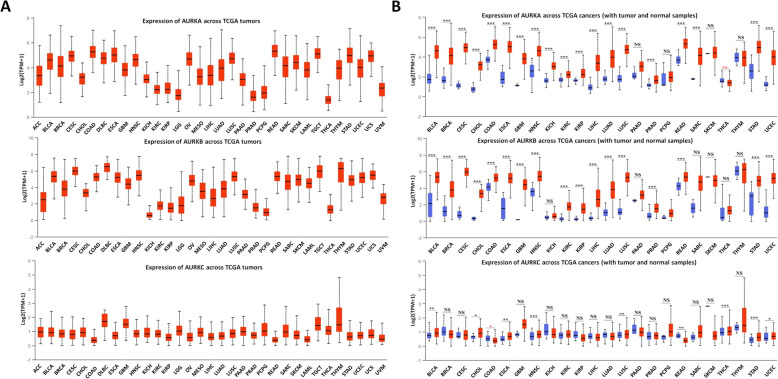
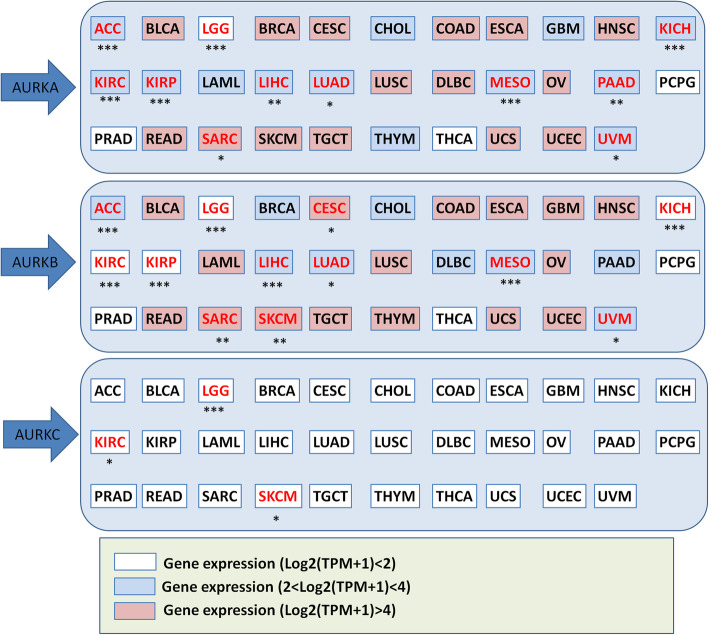
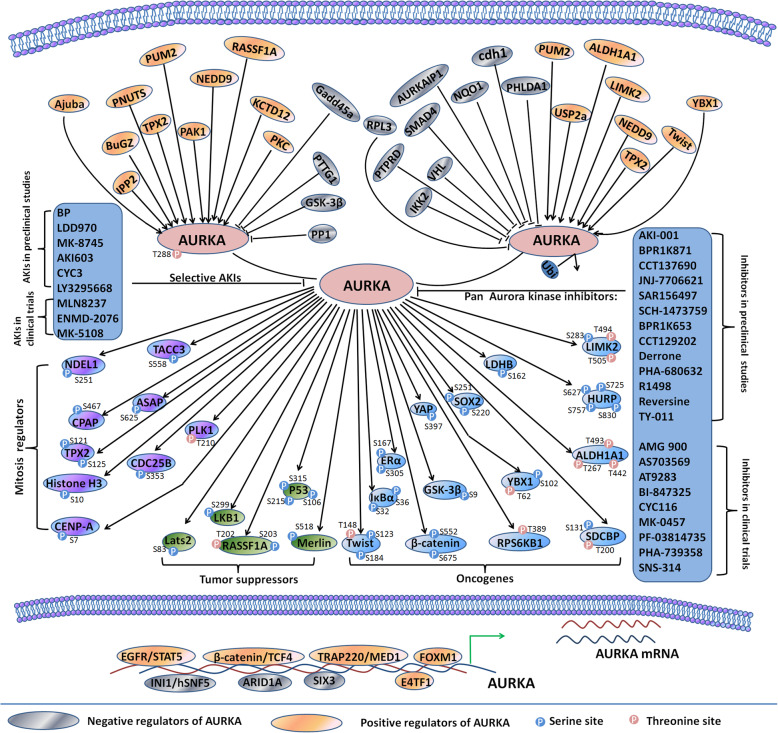
Aurora kinase A (AURKA) belongs to the family of serine/threonine kinases, whose activation is necessary for cell division processes via regulation of mitosis. AURKA shows significantly higher expression in cancer tissues than in normal control tissues for multiple tumor types according to the TCGA database. Activation of AURKA has been demonstrated to play an important role in a wide range of cancers, and numerous AURKA substrates have been identified. AURKA-mediated phosphorylation can regulate the functions of AURKA substrates, some of which are mitosis regulators, tumor suppressors or oncogenes. In addition, enrichment of AURKA-interacting proteins with KEGG pathway and GO analysis have demonstrated that these proteins are involved in classic oncogenic pathways. All of this evidence favors the idea of AURKA as a target for cancer therapy, and some small molecules targeting AURKA have been discovered. These AURKA inhibitors (AKIs) have been tested in preclinical studies, and some of them have been subjected to clinical trials as monotherapies or in combination with classic chemotherapy or other targeted therapies.
Overview
The claims and statistics of this paper haven’t been checked yet.
Free: it reads the open-access text and checks the first 5 claims that cite a source we can check. Create a free account to check every claim.
Integrity signals
Registry
Cites
Statistics
Figures
Verification
Claims the paper makes
The claims and statistics of this paper haven’t been checked yet.
Free: it reads the open-access text and checks the first 5 claims that cite a source we can check. Create a free account to check every claim.
Claims other papers make about this one
Each is checked against this paper’s own text: does it say what the citing paper says it does?
The cited source says what the claim attributes to it.
In the citing paper
“AURKA, a member of the AURK family member, is frequently overexpressed in a wide range of cancers and plays a critical role in oncogenesis [127, 128].”
From Differential Response and Resistance to KRAS-Targeted Therapy (2025) · cites this paper as [127]
Self-check
Percentages, sums and reported differences re-computed from the paper’s own numbers.
The self-check needs the paper’s full text.
Citations
Cites
3 retracted
Zhou, S.-F., Ding, Y.-H., Zhou, Z.-W., Ha, C., Zhang, X.-Y., Pan, S.-T., He, Z.-X., Edelman, J. L., Wang, D., Yang, Y.-X., et al. (2015) · Drug Design Development and Therapy · doi:10.2147/dddt.s74062 · Cited by 87 · cited 1×
“process is also impeded by MLN8237 treatment in human epithelial ovarian and pancreatic cancer cells [134].”
BackgroundRetractedAurora-A is a determinant of tamoxifen sensitivity through phosphorylation of ERα in breast cancer
Zheng, X.-Q., Guo, J., Yang, H., Kanai, M., He, L. L., Li, Y. Y., Koomen, J., Minton, S., Gao, M., Ren, X. B., et al. (2013) · Oncogene · doi:10.1038/onc.2013.444 · Cited by 44 · cited 1×
“Ser167 and Ser305, leading to an increase in the DNAbinding ability of ERα and the transcriptional activity of ERα toward its target cyclin D1 [55].”
BackgroundRetractedZhou, S.-F., Li, J.-P., Yang, Y.-X., Liu, Q., Zhou, Z.-W., Pan, S., He, Z., Zhang, X., Yang, T., Pan, S.-Y., et al. (2015) · Drug Design Development and Therapy · doi:10.2147/dddt.s74412 · Cited by 36 · cited 1×
“PHA-739358 also induces cell cycle arrest, apoptosis and autophagy and suppresses the EMT process [176, 177].”
BackgroundRetractedHarrington, E. A., Bebbington, D., Moore, J., Rasmussen, R. K., Ajose-Adeogun, A. O., Nakayama, T., Graham, J. A., Demur, C., Hercend, T., Diu-Hercend, A., et al. (2004) · Nature Medicine · doi:10.1038/nm1003 · Cited by 965 · cited 1×
“MK-0457, a pyrazoloquinazoline compound, inhibits all three Aurora kinases [166] and inhibits FLT-3 and Abl kinases [167].”
BackgroundDai, Y., Xu, C., Sun, X., & Chen, X. (2017) · Chemical Society Reviews · doi:10.1039/c6cs00592f · Cited by 931 · cited 1×
“Furthermore, development of nanoparticle therapeutic carriers that are passively targeted to tumors through the enhanced permeability and retention effect may be helpful [231].”
BackgroundPolo-like kinase-1 is activated by aurora A to promote checkpoint recovery
Macůrek, L., Lindqvist, A., Lim, D., Lampson, M. A., Klompmaker, R., Freire, R., Clouin, C., Taylor, S. S., Yaffe, M. B., & Medema, R. H. (2008) · Nature · doi:10.1038/nature07185 · Cited by 710 · cited 1×
“It has been reported that AURKA is responsible for the Thr210 phosphorylation of PLK1, which is required for checkpoint recovery [58].”
BackgroundMitotic Phosphorylation of Histone H3: Spatio-Temporal Regulation by Mammalian Aurora Kinases
Crosio, C., Fimia, G. M., Loury, R., Kimura, M., Okano, Y., Zhou, H., Sen, S., Allis, C. D., & Sassone-Corsi, P. (2002) · Molecular and Cellular Biology · doi:10.1128/mcb.22.3.874-885.2002 · Cited by 666 · cited 1×
“phosphorylates Ser10 both in vitro and in vivo [61].”
BackgroundStructural Basis of Aurora-A Activation by TPX2 at the Mitotic Spindle
Bayliss, R., Sardon, T., Vernos, I., & Conti, E. (2003) · Molecular Cell · doi:10.1016/s1097-2765(03)00392-7 · Cited by 636 · cited 1×
“The Nterminal domain of TPX2 binds to AURKA and protects AURKA from dephosphorylation according to experimental and structural analyses [10, 11].”
BackgroundHirota, T., Kunitoku, N., Sasayama, T., Marumoto, T., Zhang, D., Nitta, M., Hatakeyama, K., & Saya, H. (2003) · Cell · doi:10.1016/s0092-8674(03)00642-1 · Cited by 628 · cited 2×
“The LIM protein Ajuba efficiently stimulates AURKA autophosphorylation at Thr288 and increases kinase activity toward histone H3 in the late G2 phase [25].”
BackgroundPhosphorylation by aurora kinase A induces Mdm2-mediated destabilization and inhibition of p53
Katayama, H., Sasai, K., Kawai, H., Yuan, Z.-M., Bondaruk, J., Suzuki, F., Fujii, S., Arlinghaus, R. B., Czerniak, B. A., & Sen, S. (2004) · Nature Genetics · doi:10.1038/ng1279 · Cited by 588 · cited 1×
“It has been reported that AURKA phosphorylates p53 at Ser315, after which p53 is destabilized and the G2-M transition is enhanced [72].”
Background
Cited by
Items 101–200 of 629
The hGID GID4 E3 ubiquitin ligase complex targets ARHGAP11A to regulate cell migration
(2024) · doi:10.26508/lsa.202403046 · Cited by 19
“Many of these pocket-independent interactors are nuclear proteins involved in regulation of gene expression or cell division (Baillat et al, 2005; Du et al, 2021; Nakanishi, 2022) and may thus help recruiting the hGID complex to regulate DNA-associated processes, polymerase activity, and/or cell…”
FTO degrader impairs ribosome biogenesis and protein translation in acute myeloid leukemia
Li, W., Zhao, Y., Wu, D., Chen, Z., Qing, Y., Yang, F., Ji, F., Zhang, L., Sau, L., Chen, J., et al. (2025) · Science Advances · doi:10.1126/sciadv.adv7648 · Cited by 20
“Among these genes, AURKA and STAG1 play important roles in cell division by regulating chromosome segregation and mitotic spindle formation ( 30 , 31 ) and are considered promising targets for cancer therapy ( 32 , 33 ).”
Suter, R. K., Jermakowicz, A. M., Veeramachaneni, R., D’Antuono, M., Zhang, L. G., Chowdary, R., Kaeppeli, S., Sharp, M., Palwai, P., Stathias, V., et al. (2026) · Nature Communications · doi:10.1038/s41467-025-67783-5 · Cited by 19
“Aside from their role in cell cycle progression, the aurora kinases also play an important role in neurodevelopment and have been extensively studied as targets not only in GBM but many other cancers 15, 24 – 50 .”
Shaikh, N., Linthoi, R. K., Swamy, K. V., Karthikeyan, M., & Vyas, R. (2022) · Journal of Biomolecular Structure and Dynamics · doi:10.1080/07391102.2022.2124453 · Cited by 21
“Kinase inhibitor is effective in treating certain types of cancer including breast, colorectal, kidney and leukaemia (Du et al., 2021).”
BackgroundSattler, M., Mambetsariev, I., Fricke, J., Tan, T., Liu, S., Vaidehi, N., Pisick, E. P., Mirzapoiazova, T., Rock, A. G., Merla, A., et al. (2023) · Journal of Clinical Medicine · doi:10.3390/jcm12051936 · Cited by 22
“Both AURKA and the related AURKB can share oncogenic features but possess different substrates, and there is considerable interest in targeting Aurora kinase activity in cancers [59].”
BackgroundSmall molecule chaperones facilitate the folding of RNA G-quadruplexes
Lejault, P., Prudent, L., Terrier, M.-P., & Perreault, J. (2023) · Biochimie · doi:10.1016/j.biochi.2023.08.016 · Cited by 20
Chalbatani, G. M., Gharagouzloo, E., Malekraeisi, M. A., Azizi, P., Ebrahimi, A., Hamblin, M. R., Mahmoodzadeh, H., Elkord, E., Miri, S. R., Sanati, M. H., et al. (2023) · Scientific Reports · doi:10.1038/s41598-023-46620-z · Cited by 21
“This phenomenon may, in part, account for the association between AURKA and a favorable outcome in CRC 36 .”
BackgroundDevelopment of MPS1 Inhibitors: Recent Advances and Perspectives
Zeng, Y., Ren, X., Jin, P., Zhang, Y., Zhuo, M., & Wang, J. (2023) · Journal of Medicinal Chemistry · doi:10.1021/acs.jmedchem.3c00963 · Cited by 19
AURKA knockdown inhibits esophageal squamous cell carcinoma progression through ferroptosis
Mi, Y., Chen, L., Wang, C., Miao, Y., Song, C., Su, J., & Wang, L. (2024) · Heliyon · doi:10.1016/j.heliyon.2024.e28365 · Cited by 20
“Aurora kinases (AURK) including AURKA, AURKB and AURKC, are serine/threonine kinases, which share a highly conserved catalytic autophosphorylation site [9].”
BackgroundWang, J., Zhang, Z., Li, Q., Hu, Z., Chen, Y., Chen, H., Cai, W. L., Du, Q., Zhang, P., Xiong, D., et al. (2024) · Frontiers in Pharmacology · doi:10.3389/fphar.2024.1282361 · Cited by 19
Age-Related Clusters and Favorable Immune Phenotypes in Young Breast Cancer Patients
Ingebriktsen, L. M., Svanøe, A. A., Sæle, A. K. M., Humlevik, R. O. C., Toska, K., Kalvenes, M. B., Aas, T., Heie, A., Askeland, C., Knutsvik, G., et al. (2024) · Modern Pathology · doi:10.1016/j.modpat.2024.100529 · Cited by 19
An update on small molecule compounds targeting synthetic lethality for cancer therapy
Luo, J., Li, Y., Zhang, Y., Wu, D., Ren, Y., Liu, J., Wang, C., & Zhang, J. (2024) · European Journal of Medicinal Chemistry · doi:10.1016/j.ejmech.2024.116804 · Cited by 19
Yuan, Y., Chen, Z., Cai, X., He, S., Li, D., & Zhao, W. (2021) · Frontiers in Oncology · doi:10.3389/fonc.2021.766947 · Cited by 19
Checkpoint Inhibitors in Cancer Therapy: Clinical Benefits for Head and Neck Cancers
Ettl, T., Grube, M., Schulz, D., & Bauer, R. J. (2022) · Cancers · doi:10.3390/cancers14204985 · Cited by 20
Pogash, S., & Fletcher, S. (2025) · RSC Medicinal Chemistry · doi:10.1039/d5md00095e · Cited by 19
Jiang, Y. P., Wang, T., Sheng, D., Han, C., Tian, X., Zhang, P., You, W., Fan, W., Zhang, Z., Jin, T., et al. (2022) · Journal of Biological Chemistry · doi:10.1016/j.jbc.2022.102561 · Cited by 18
“Aurora A is found to be overexpressed in various solid tumors (22, 23), and overexpression of Aurora A kinase plays an important role in metabolic reprogrammingmediated cancer progression (24, 25).”
BackgroundVengayil, V., Niphadkar, S., Adhikary, S., Varahan, S., & Laxman, S. (2024) · eLife · doi:10.7554/elife.90293 · Cited by 19
Non-Coding RNAs of Mitochondrial Origin: Roles in Cell Division and Implications in Cancer
Piergentili, R., & Sechi, S. (2024) · International Journal of Molecular Sciences · doi:10.3390/ijms25137498 · Cited by 18
“AURKA is a serine/threonine kinase involved in many processes carried out during cell division, such as centrosome duplication and maturation, G2/M transition, mitotic spindle assembly, and DNA replication [158].”
BackgroundEllenbroek, B. D., Kahler, J. P., Arella, D., Lin, C., Jespers, W., Züger, E. A.-K., Drukker, M., & Pomplun, S. J. (2024) · Angewandte Chemie International Edition · doi:10.1002/anie.202416082 · Cited by 19
Fonseca, R., Zhu, Y. X., Bruins, L. A., Ahmann, J., de Campos, C. B., Braggio, E., Chen, X., Arribas, M., Darvish, S. A., Welsh, S. J., et al. (2025) · Blood Cancer Journal · doi:10.1038/s41408-025-01215-x · Cited by 18
Identification of genes modulated by interferon gamma in breast cancer cells
Tecalco-Cruz, Á. C., Macías‐Silva, M., Ramírez‐Jarquín, J. O., & Méndez-Ambrosio, B. (2021) · Biochemistry and Biophysics Reports · doi:10.1016/j.bbrep.2021.101053 · Cited by 21
STIL/AURKA axis promotes cell proliferation by influencing primary cilia formation in bladder cancer
Li, J., Qi, Y., Li, B., Liu, Y., Yang, K., Zhang, Z., Zhu, J., & Du, E. (2023) · Journal of Translational Medicine · doi:10.1186/s12967-023-04118-2 · Cited by 18
“AURKA belongs to the family of serine/threonine kinases, whose activation is necessary for cell division processes via the regulation of mitosis [12].”
BackgroundWang, L., Yilmaz, F., Yildirim, O., Schölermann, B., Bag, S., Greiner, L. C., Pahl, A., Sievers, S., Scheel, R., Strohmann, C., et al. (2024) · Advanced Science · doi:10.1002/advs.202309202 · Cited by 17
Wang, Y., Ma, Y., He, L., Du, J., Li, X., Jiao, P., Wu, X., Xu, X., Zhou, W., Yang, L., et al. (2024) · Chinese Journal of Cancer Research · doi:10.21147/j.issn.1000-9604.2024.03.05 · Cited by 17
Self-citationRecent Advances in Immunotherapy and Targeted Therapy of Triple Negative Breast Cancer
Shewale, H., & Kanugo, A. (2024) · Current Pharmaceutical Biotechnology · doi:10.2174/0113892010303244240718075729 · Cited by 17
OTUD6A Is an Aurora Kinase A-Specific Deubiquitinase
Kim, H. J., & Kim, J. (2021) · International Journal of Molecular Sciences · doi:10.3390/ijms22041936 · Cited by 17
“In addition to PLK1, many Aurora-A downstream substrates have been identified and the functional roles of Aurora-A-mediated phosphorylation of the substrates have been extensively investigated in tumorigenesis [33].”
BackgroundAshraf, S., Ranaghan, K. E., Woods, C. J., Mulholland, A. J., & Ul‐Haq, Z. (2021) · Scientific Reports · doi:10.1038/s41598-021-97368-3 · Cited by 17
Integrin-Mediated Adhesion Promotes Centrosome Separation in Early Mitosis
Kamranvar, S. A., Gupta, D. K., Wasberg, A., Liu, L., Roig, J., & Johansson, S. (2022) · Cells · doi:10.3390/cells11081360 · Cited by 19
“The regulation of Aurora A is complex and several different activation mechanisms have been elucidated [46], including binding to Ser112phosphorylated Bora, autophosphorylation at Thr288 after interactions with Tpx2, and transphosphorylation after interactions with Cep192 [47]; furthermore, PAK1 was shown to promote A…”
Backgroundde la Peña, J. B., Chase, R., Kunder, N., Smith, P. R., Lou, T., Stanowick, A. D., Suresh, P., Shukla, T. N., Butcher, S. E., Price, T. J., et al. (2023) · Journal of Neuroscience · doi:10.1523/jneurosci.1604-22.2023 · Cited by 18
Harnessing ferroptosis for enhanced sarcoma treatment: mechanisms, progress and prospects
Zeng, J., Zhang, X., Lin, Z., Zhang, Y., Yang, J., Dou, P., & Liu, T. (2024) · Experimental Hematology and Oncology · doi:10.1186/s40164-024-00498-3 · Cited by 16
“Studies have shown that aurora kinase A (AURKA) is significantly up-regulated in ES, and its expression level is significantly related to the short overall survival and event-free survival of patients with ES [200, 201].”
BackgroundLin, T., Zhang, Y., Lin, Z., & Peng, L. (2021) · International Journal of General Medicine · doi:10.2147/ijgm.s340057 · Cited by 16
“Recently, several AURKA inhibitors have been identified with anticancer activity in preclinical studies.(48) To sum up, the hub genes in the PPI network uniformly regulate the cell cycle, whose aberrance underlies malignant phenotypes of cancers, and most of them have been considered as cancer biomarkers.”
BackgroundWang, H., Chi, L., Yu, F., Dai, H., Si, X., Gao, C., Wang, Z., Liu, L., Zheng, J., Ke, Y., et al. (2022) · Bioorganic & Medicinal Chemistry · doi:10.1016/j.bmc.2022.116922 · Cited by 17
PARP10 Mediates Mono-ADP-Ribosylation of Aurora-A Regulating G2/M Transition of the Cell Cycle
Paola, S. D., Matarese, M., Barretta, M. L., Dathan, N. A., Colanzi, A., Corda, D., & Grimaldi, G. (2022) · Cancers · doi:10.3390/cancers14215210 · Cited by 16
“Nevertheless, treatment with Aurora-A inhibitors in the clinic show low tolerability due to the function of this kinase in highly proliferating cells, such as bone marrow cells and epithelial cells [95].”
BackgroundZhao, H., Wang, Y., Yang, Z., Wei, W., Cong, Z., & Xie, Y. (2022) · Annals of Translational Medicine · doi:10.21037/atm-22-4798 · Cited by 16
“AURKs are important regulators of the cell cycle, of which AURKA and AURKB are the most abundant isoform in cancer (6).”
Chebulagic acid suppresses gastric cancer by inhibiting the AURKA/β-catenin/Wnt pathway
Zhao, J., Shi, Y., Ma, Y., Pan, L., Wang, Y., Li, Y., Dong, J., & Ying, J. (2023) · Frontiers in Pharmacology · doi:10.3389/fphar.2023.1143427 · Cited by 17
“The TCGA database also states that high expression of AURKA is a prognostic marker in several cancers (Du et al., 2021).”
Background(2025) · doi:10.1038/s41467-025-57671-3 · Cited by 15
“AURKA serves also as a therapeutic cancer target that is often overexpressed in several cancers 57,58 .”
Mushtaq, A., Singh, P. K., Tabassum, G., Mohammad, T., Hassan, M. I., Syed, M. A., & Dohare, R. (2022) · Journal of Biomolecular Structure and Dynamics · doi:10.1080/07391102.2022.2140200 · Cited by 15
“Abnormal expression of AURKA promotes tumorigenesis by actively contributing to cell proliferation, metastasis and self-renewal of cancer stem cells (Du et al., 2021).”
BackgroundDu, R., Li, K., Zhou, Z., Huang, Y., Guo, K., Zhang, H., Chen, Z., Zhao, X., Han, L. B., & Bian, H. (2023) · Oncology Reports · doi:10.3892/or.2023.8553 · Cited by 15
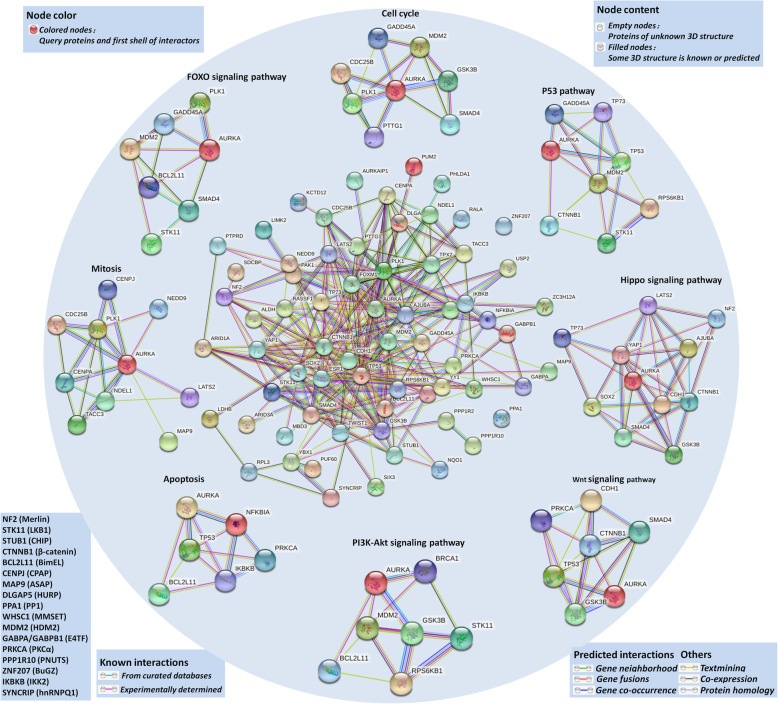
“According to the AURKA interactome from previous studies, AURKA‐interacting proteins were enriched in the PI3K/Akt pathway (12).”
BackgroundMethodInfluentialSelf-citationYang, S.-J., Chang, S., Chang, K., Lin, B., Chang, K., Liu, Y.-W., Lai, M., & Hung, L. (2024) · Cell Death and Disease · doi:10.1038/s41419-023-06381-z · Cited by 17
Tang, R., Guo, L., Wei, T., Chen, T., Yang, H., Ye, H., Lin, F., Zeng, Y., Yu, H., Cai, Z., et al. (2024) · eLife · doi:10.7554/elife.98579 · Cited by 15
Çakıroğlu, E., Eris, S., Öz, Ö., Karakülah, G., & Şentürk, Ş. (2025) · Cell Death and Disease · doi:10.1038/s41419-025-07587-z · Cited by 16
“Repeated freeze and thaw cycles were avoided.”
Huang, B., Hao, M., Li, C., & Luo, K. Q. (2022) · Pharmacological Research · doi:10.1016/j.phrs.2022.106209 · Cited by 15
Cacioppo, R., Akman, H. B., Tuncer, T., Erson-Bensan, A. E., & Lindon, C. (2023) · eLife · doi:10.7554/elife.87253 · Cited by 16
Caporossi, D., & Dimauro, I. (2024) · Free Radical Biology and Medicine · doi:10.1016/j.freeradbiomed.2024.01.023 · Cited by 14
AURKA Enhances the Glycolysis and Development of Ovarian Endometriosis Through ERβ
Sun, Y., Zhang, S., Zhang, X., Li, G., Sun, F., Wang, M., Ren, C., Jiang, A., & Yang, T. (2024) · Endocrinology · doi:10.1210/endocr/bqae018 · Cited by 15
Zheng, M., Kumar, A., Sharma, V., Behl, T., Sehgal, A., Wal, P., Shinde, N. V., Kawaduji, B. S., Kapoor, A., Anwer, M. K., et al. (2024) · Frontiers in Cell and Developmental Biology · doi:10.3389/fcell.2024.1353860 · Cited by 14
“It is acknowledged to be a potent oncogene and a possible target for cancer (Fadaka et al., 2020; Du et al., 2021).”
BackgroundSarker, A., Aziz, M. A., Hossen, M. B., Mollah, M. M. H., Al-Amin, & Mollah, M. N. H. (2024) · Scientific Reports · doi:10.1038/s41598-024-79391-2 · Cited by 15
Fanelli, G. N., Nuzzo, P. V., Pederzoli, F., & Loda, M. F. (2024) · Surgical pathology clinics · doi:10.1016/j.path.2024.10.003 · Cited by 15
Furqan, M., Fayyaz, A., Firdous, F., Raza, H. G., Bilal, A., Saleem, R. S. Z., Shahzad‐ul‐Hussan, S., Wang, D., Youssef, F. S., Musayeib, N. M. A., et al. (2022) · Journal of Natural Products · doi:10.1021/acs.jnatprod.1c01222 · Cited by 14
Hegedüs, L., Okumus, Ö., Mairinger, F. D., Plönes, T., Reuter, S., Schüler, M., Welt, A., Vega-Rubín-de-Celis, S., Theegarten, D., Bánkfalvi, Á., et al. (2023) · Lung Cancer · doi:10.1016/j.lungcan.2023.03.003 · Cited by 14
Wang, Q., Shi, T., Xu, Y., Liu, Y., & Zhang, M. (2023) · The Kaohsiung Journal of Medical Sciences · doi:10.1002/kjm2.12649 · Cited by 14
“AURKA expression was signally elevated in different cancer types, pointing out the role of AURKA as a potential oncogene in tumorigenesis.(31) AURKA can regulate tumorigenesis through different pathways.”
BackgroundLong, F., Ma, H., Hao, Y., Tian, L., Li, Y., Li, B., Chen, J., Tang, Y., Li, J., Deng, L., et al. (2023) · Computational and Structural Biotechnology Journal · doi:10.1016/j.csbj.2023.05.013 · Cited by 15
“AURKA is involved in centrosome replication, segregation, and maturation, and plays an important role in the mitotic cell cycle of eukaryotes [43].”
BackgroundChang, C., Yeh, T., Chen, C., Wang, W.-P., Chen, Y.-T., Tsai, C., Chen, Y.-F., Ke, Y., Wang, J.-Y., Chen, C.-P., et al. (2024) · Molecular Cancer Therapeutics · doi:10.1158/1535-7163.mct-23-0602 · Cited by 13
Self-citationIdentification of AURKA as a Biomarker Associated with Cuproptosis and Ferroptosis in HNSCC
Jia, X. P., Tian, J., Fu, Y., Wang, Y., Yang, Y., Zhang, M., Yang, C., & Liu, Y. (2024) · International Journal of Molecular Sciences · doi:10.3390/ijms25084372 · Cited by 14
Identification of key genes associated with cervical cancer based on bioinformatics analysis
Yang, X., Zhou, M., Luan, Y., Li, K., Yang, X., & Yang, X. (2024) · BMC Cancer · doi:10.1186/s12885-024-12658-z · Cited by 13
“This gene may play a role in tumor development and progression [17].”
BackgroundIdentification of a Novel Substrate for eEF2K and the AURKA‐SOX8 as the Related Pathway in TNBC
Wan, X., Gong, R., Zhao, X., Li, Y., Shan, T., Zhong, C., Zhu, R., Chen, Z., Jiang, S., He, L., et al. (2025) · Advanced Science · doi:10.1002/advs.202412985 · Cited by 13
Beernaert, B., Jady‐Clark, R. L., Shah, P., Ramon‐Gil, E., Lawson, N. M., Brodtman, Z. D., Tagore, S., Stihler, F., Carter, A., Clarke, S., et al. (2026) · Science Advances · doi:10.1126/sciadv.aeb1611 · Cited by 14
PHA-680626 Is an Effective Inhibitor of the Interaction between Aurora-A and N-Myc
Boi, D., Souvalidou, F., Capelli, D., Polverino, F., Marini, G., Montanari, R., Pochetti, G., Tramonti, A., Contestabile, R., Trisciuoglio, D., et al. (2021) · International Journal of Molecular Sciences · doi:10.3390/ijms222313122 · Cited by 17
AURKA is a prognostic biomarker for good overall survival in stage II colorectal cancer patients
Jung, P., Horst, D. A., Kirchner, T., Klauschen, F., & Neumann, J. H. L. (2022) · Pathology - Research and Practice · doi:10.1016/j.prp.2022.153936 · Cited by 13
Clarke, M. N., Marsoner, T., Adell, M. A. Y., Ravichandran, M. C., & Campbell, C. S. (2022) · The EMBO Journal · doi:10.15252/embj.2022111500 · Cited by 13
Pudjihartono, N., Ho, D., Golovina, E., Fadason, T., Kempa-Liehr, A. W., & O'Sullivan, J. M. (2023) · Journal of Autoimmunity · doi:10.1016/j.jaut.2023.103046 · Cited by 13
Autocrine regulation of tumor cell repopulation by Hsp70-HMGB1 alarmin complex
Sverchinsky, D. V., Alhasan, B. A., Mikeladze, M. A., Lazarev, V. F., Kuznetcova, L. S., Morshneva, A. V., Nikotina, A. D., Ziewanah, A., Koludarova, L. V., Starkova, T. Y., et al. (2023) · Journal of Experimental & Clinical Cancer Research · doi:10.1186/s13046-023-02857-0 · Cited by 14
“The activation of Aurka is necessary for the regulation of mitosis [22] and its expression is elevated in cancer tissues compared to normal ones [23].”
BackgroundYin, M., Wang, Y., Ren, X., Han, M., Li, S., Liang, R., Wang, G., & Gang, X. (2023) · Frontiers in Endocrinology · doi:10.3389/fendo.2023.1250033 · Cited by 13
Barone, S., Cerchia, C., Summa, V., & Brindisi, M. (2024) · Journal of Medicinal Chemistry · doi:10.1021/acs.jmedchem.4c01247 · Cited by 14
Zhang, Z., Liao, Y., Zhang, J., Li, Q., Feng, Y., & Yu, W. (2025) · Journal of Medicinal Chemistry · doi:10.1021/acs.jmedchem.5c01301 · Cited by 13
O’Hanlon, J. A., Gutsche, K., Müller, J. E., Prusty, N. R., Mirza, A. R., Roumeliotis, T. I., Yang, H., Stubbs, M., Hallett, S. T., Eing, L., et al. (2026) · Journal of Medicinal Chemistry · doi:10.1021/acs.jmedchem.5c03024 · Cited by 13
Naso, F. D., Polverino, F., Cilluffo, D., Latini, L., Stagni, V., Asteriti, I. A., Rosa, A., Soddu, S., & Guarguaglini, G. (2024) · Biochimica et Biophysica Acta (BBA) - Molecular Basis of Disease · doi:10.1016/j.bbadis.2024.167116 · Cited by 12
“The interplay be-tween AurkA and p53-mediated pathways also deserve consideration and in-depth investigation in the light of the active research on the development of AurkA kinase inhibitors and their ongoing evaluation in clinical trials for cancer therapy [73].”
Phosphoinositides in New Spaces
Davies, E. M., Mitchell, C. A., & Stenmark, H. (2023) · Cold Spring Harbor Perspectives in Biology · doi:10.1101/cshperspect.a041406 · Cited by 13
AURKA promotes renal cell carcinoma progression via regulation of CCNB1 transcription
Wen, J., Wang, X., Yang, G., & Zheng, J. (2024) · Heliyon · doi:10.1016/j.heliyon.2024.e27959 · Cited by 11
“Analysis of TCGA data revealed high expression levels of AURKA in adrenocortical carcinoma (ACC), KICH, KIRC and KIRP [26].”
BackgroundAbazari, O., Dayati, P., Shahidi, M., Reza, J. Z., Rahmanian, M., & Naghib, S. M. (2024) · Current Medicinal Chemistry · doi:10.2174/0109298673302140240627053904 · Cited by 11
ALDH1A1 as a marker for metastasis initiating cells: A mechanistic insight
Datta, N., Snijesh, V. P., Parvathy, K., Sneha, A., & Maliekal, T. T. (2024) · Experimental Cell Research · doi:10.1016/j.yexcr.2024.114213 · Cited by 12
p53: The Multifaceted Roles of Covalent Modifications in Cancer
Grigoreva, T. A., Romanova, A. A., Tribulovich, V. G., Pestov, N. B., Oganov, R. A., Kovaleva, D. K., Korneenko, T. V., & Barlev, N. A. (2024) · Pharmaceuticals · doi:10.3390/ph17121682 · Cited by 13
Hao, W., Zhao, H., Li, Z., Li, J., Guo, J., Chen, Q., Gao, Y., Ren, M., Zhao, X., & Yue, W. (2021) · Journal of Ovarian Research · doi:10.1186/s13048-021-00794-0 · Cited by 11
“Meanwhile, a certain quantity of AURKA kinase inhibitors have been developed during the past decade, which suppress cancer cell proliferation, migration and invasion [61].”
Hsu, S., Chu, Y.-H., Syue, W.-J., Lin, H. Y., Chang, W., Chen, J. Y., Wu, C., Yen, C., Cheng, K., & Chiu, C. (2022) · Frontiers in Oncology · doi:10.3389/fonc.2022.872883 · Cited by 13
The role of AURKA / miR ‐199b‐3p in hepatocellular carcinoma cells
Li, G., Yang, T., & Gao, Z. (2022) · Journal of Clinical Laboratory Analysis · doi:10.1002/jcla.24758 · Cited by 11
Li, S., Li, T., Shi, Y., Xu, B.-J., Deng, Y., & Sun, X. (2024) · Cancer Biomarkers · doi:10.3233/cbm-230113 · Cited by 11
Liu, Y., Liang, W., Chang, Y., He, Z., Wu, M., Zheng, H., Ke, X., Lv, M., Liu, Q., Liu, Q., et al. (2022) · Frontiers in Immunology · doi:10.3389/fimmu.2022.950884 · Cited by 11
“Moreover, clinical trials of these KIs as single agents failed to meet therapeutic expectations, with marginal clinical efficacies in both hematologic malignancies and solid cancers (46).”
BackgroundPâslaru, L., Bindea, G., Năstase, A., Sorop, A., Zimbru, C. G., Herlea, V., Hrehoreţ, D., Brașoveanu, V., Zamfir, R., Dima, S., et al. (2022) · Medicina · doi:10.3390/medicina58121803 · Cited by 11
Jiang, D., Chen, H., Cao, J., Chen, Y., Huang, J., & Weng, Y. (2022) · Immunobiology · doi:10.1016/j.imbio.2022.152314 · Cited by 11
Wang, Q., Zhao, M., Zhang, T., Zhang, B., Zheng, Z., Lin, Z., Zhou, S., Dong, Z., Chen, Z., Zheng, S., et al. (2023) · Frontiers in Pharmacology · doi:10.3389/fphar.2023.1203125 · Cited by 10
“It has been shown to promote the development of hematological malignancies and solid tumors (Du et al., 2021).”
BackgroundSelf-citationWu, F., Chai, B., Qi, P., Han, Y., Gu, Z., Pan, W. D., Zhang, H., Wang, X., Liu, X., Zou, H., et al. (2024) · The Journal of Gene Medicine · doi:10.1002/jgm.3737 · Cited by 10
“36,37 Abnormal amplification and high expression of AURKA are common in a variety of human tumors, 38,39 such as upper gastrointestinal cancer, 40 squamous cell head and neck carcinomas, 41 and colorectal cancer.”
Li, M., Sun, F., Wang, J., Lü, S., Que, Y., Song, M., Chen, H., Xiong, X., Xie, W., Zhu, J., et al. (2024) · Oncogene · doi:10.1038/s41388-024-03164-4 · Cited by 10
“AURKA plays an indispensable role in many biological processes, including centrosome maturation and separation, spindle assembly, chromosome arrangement, etc. [46].”
Liu, J., Deng, Y., Pu, Z., Miao, Y., Hao, Z., Wang, H., Zhang, S., Liu, H., Wang, J., Lv, Y., et al. (2025) · JCI Insight · doi:10.1172/jci.insight.173700 · Cited by 14
Cui, Z., Song, Q., Chen, Y., & Yang, K. (2022) · Biomedical Papers · doi:10.5507/bp.2022.001 · Cited by 10
Glioma Subtypes Based on the Activity Changes of Immunologic and Hallmark Gene Sets in Cancer
Chen, S. (2022) · Frontiers in Endocrinology · doi:10.3389/fendo.2022.879233 · Cited by 10
A Novel Ferroptosis-Related Gene Signature for Prognosis Prediction in Ewing Sarcoma
Zhao, R., Li, Z., Huang, Y., Xiong, C., Zhang, C., Liang, H., Xu, J., & Luo, X. (2022) · Analytical Cellular Pathology · doi:10.1155/2022/6711629 · Cited by 11
“Meanwhile, AURKA inhibitors (AKIs) have been tested in preclinical studies, and some of them have been subjected to clinical trials as monotherapies or in combination with classic chemotherapy or other targeted therapies [46].”
BackgroundDeciphering the Role and Signaling Pathways of PKCα in Luminal A Breast Cancer Cells
Serrano-López, E. M., Coronado-Parra, T., Marín‐Vicente, C., Szállási, Z., Gómez-Abellán, V., López-Andreo, M. J., Gragera, M., Gómez-Fernández, J. C., López‐Nicolás, R., & Corbalán‐García, S. (2022) · International Journal of Molecular Sciences · doi:10.3390/ijms232214023 · Cited by 10
Combined inhibition of aurora kinases and Bcl-xL induces apoptosis through select BH3-only proteins
Li, J., Chen, C., O’Neill, K. L., Fousek-Schuller, V. J., Black, A. R., Black, J. D., Zhang, J., & Luo, X. (2023) · Journal of Biological Chemistry · doi:10.1016/j.jbc.2023.102875 · Cited by 12
“Many of these inhibitors have entered clinical trials as single agents or as combinatorial partners with other agents, and the most advanced AURK inhibitor in clinical trials is MLN8237 (alisertib), an ATP-competitive and highly selective inhibitor of AURK A with an IC50 of 1 nM (7).”
BackgroundCentrosomes and associated proteins in pathogenesis and treatment of breast cancer
Athwal, H., Kochiyanil, A., Bhat, V., Allan, A. L., & Parsyan, A. E. (2024) · Frontiers in Oncology · doi:10.3389/fonc.2024.1370565 · Cited by 11
Sestito, S., Bacci, A., Chiarugi, S., Runfola, M., Gado, F., Margheritis, E. G., Gul, S., Riveiro, M. E., Vázquez, R., Huguet, S., et al. (2021) · European Journal of Medicinal Chemistry · doi:10.1016/j.ejmech.2021.113895 · Cited by 10
Zhang, Y., Luo, S., Jia, Y., & Zhang, X. (2022) · International Journal of Cancer · doi:10.1002/ijc.34007 · Cited by 10
Azzarito, G., Visentin, M., Leeners, B., & Dubey, R. K. (2022) · International Journal of Molecular Sciences · doi:10.3390/ijms23137192 · Cited by 10
Rommasi, F. (2023) · Scientific Reports · doi:10.1038/s41598-023-35318-x · Cited by 10
DELs enable the development of BRET probes for target engagement studies in cells
Teske, K. A., Su, W., Corona, C. R., Wen, J., Deng, J., Ping, Y., Zhang, Z., Zhang, Q., Wilkinson, J., Beck, M., et al. (2023) · Cell chemical biology · doi:10.1016/j.chembiol.2023.06.019 · Cited by 10
A multivariate retrospective analysis of high‐grade gliomas: Survival and prognostic factors
Shi, W., Wang, X., Liu, S., Zheng, Z., Dong, L., & Jiang, X. M. (2024) · Cancer Medicine · doi:10.1002/cam4.7456 · Cited by 10
Alonso-Ron, C., Vethencourt, A., González‐Suárez, E., & Oruezabal, R. I. (2025) · Cancers · doi:10.3390/cancers17040633 · Cited by 9
“Among them, perhaps the one that went furthest in its development for TNBC was ENMD-2076 [65].”
Kral, A. J., Jia, L., Sim, G., Wan, L., Ishigami, Y., & Krainer, A. R. (2025) · Molecular Cell · doi:10.1016/j.molcel.2025.12.004 · Cited by 9
Centrosome Defects in Hematological Malignancies: Molecular Mechanisms and Therapeutic Insights
Hu, M., Wang, Y., & Zhou, J. (2022) · Blood Science · doi:10.1097/bs9.0000000000000127 · Cited by 9
Characteristic Analysis of Featured Genes Associated with Cholangiocarcinoma Progression
Yao, Q., Chen, W., Gao, F., Wu, Y., Zhou, L., Xu, H., Yu, J., Zhu, X., Wang, L., Li, L., et al. (2023) · Biomedicines · doi:10.3390/biomedicines11030847 · Cited by 9
A Network of 17 Microtubule-Related Genes Highlights Functional Deregulations in Breast Cancer
Rodrigues, S., MORIN, M., Guichaoua, G., Moindjie, H., Haykal, M. M., Collier, O., Stoven, V., & Nahmias, C. (2023) · Cancers · doi:10.3390/cancers15194870 · Cited by 11
“Together, these results may fill the gap towards the development of personalized medicine in breast cancer.”
Background
Metadata
- Authors
- Du, R., Huang, C., Liu, K., Li, X., & Dong, Z.
- Affiliations
- Zhengzhou University (CN)
- Corresponding author
- Du, Ruijuan
- Li, Xiang
- Dong, Zigang
- Venue
- Molecular Cancer
- Published
- 2021-01-15
- Volume
- 20
- Issue
- 1
- Pages
- 15-15
- ISSN
- 1476-4598 (ISSN-L)
- PMC
- PMC7809767
- OpenAlex
- W3123995258
- Cited by
- 586
- References
- 238
- Citations by year
- 2026: 71 · 2025: 118 · 2024: 145 · 2023: 124 · 2022: 100 · 2021: 26
- FWCI
- 12.94
- Type
- journal article
- Language
- en
- Open access
- gold
- doi.org
- Licence
- cc-by
- creativecommons.org/licenses/by/4.0/ (tdm)
- creativecommons.org/licenses/by/4.0/ (vor)
- Locations
- Molecular Cancer (publishedVersion, cc-by)
- PubMed Central (publishedVersion, cc-by)
- PubMed (publishedVersion)
- DOAJ (DOAJ: Directory of Open Access Journals) (submittedVersion, cc-by-sa)
- Funders
- National Natural Science Foundation of China (81802795, 82073075, 31301144)
- Topics
- Life Sciences › Biochemistry, Genetics and Molecular Biology › Cell Biology › Microtubule and mitosis dynamics
- Life Sciences › Biochemistry, Genetics and Molecular Biology › Cancer Research › Cancer Mechanisms and Therapy
- Health Sciences › Medicine › Oncology › Cancer-related Molecular Pathways
- Keywords
- AURKA, AURKA inhibitors, cancer therapy, mitosis regulation, serine/threonine kinase, oncogenic signaling, small-molecule kinase inhibitors, combination chemotherapy, targeted therapy
- MeSH terms
- Animals, Humans, Neoplasms, Substrate Specificity, Survival Analysis, Protein Kinase Inhibitors, Molecular Targeted Therapy, Aurora Kinase A
About these checks
Registry, retraction, Cites and statistics results are computed, not judged, with one exception: a printed reference that no index lists is read once by a model before it counts as a citation error. Claims are extracted by a model and kept only when their quote appears verbatim in the text; each cited source is then checked, with a model’s help, for whether it says what the claim relies on. Those verdicts can be wrong — read the claim’s quote and the cited source before relying on one.
Statistics and arithmetic are recomputed, not judged.
Confidence bands are shown only for fields calibrated on our annotated test set. None is calibrated yet, so no band is shown.
What counts as a claim ›How we measure confidence ›How we check this ›
Are you an author, or do you see a problem with this page? Request a review
Data sources
Bibliographic data: Semantic Scholar, OpenAlex, Crossref.
Contains information from the Semantic Scholar Academic Graph Datasets, made available under the ODC Attribution License (ODC-BY 1.0).
Semantic Scholar’s data is described in: Kinney, R., et al. (2023). The Semantic Scholar Open Data Platform. arXiv:2301.10140.
