

Targeting AURKA in Cancer: molecular mechanisms and opportunities for Cancer therapy
Open accessThe DOI matches its Crossref record; 237 of the 238 references it cites were found in a registry or an index.
Abstract
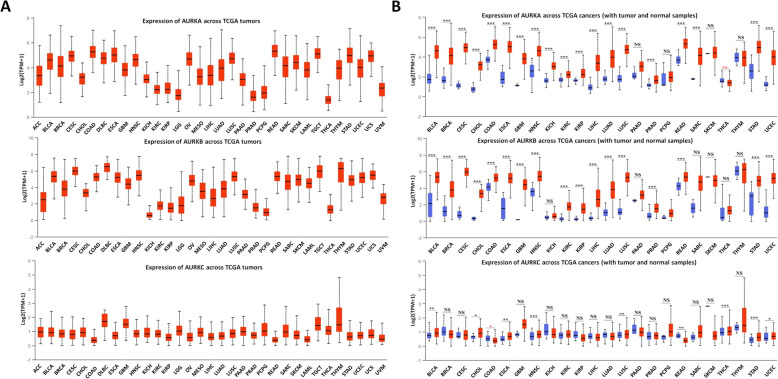
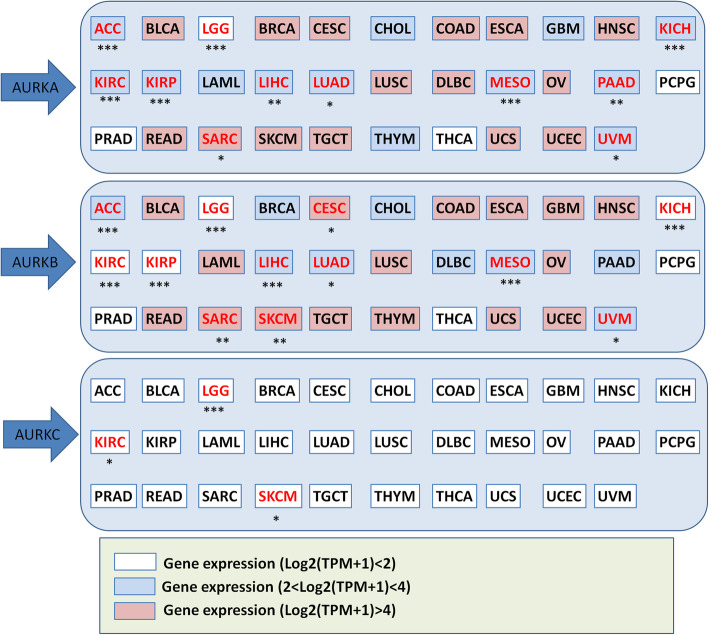
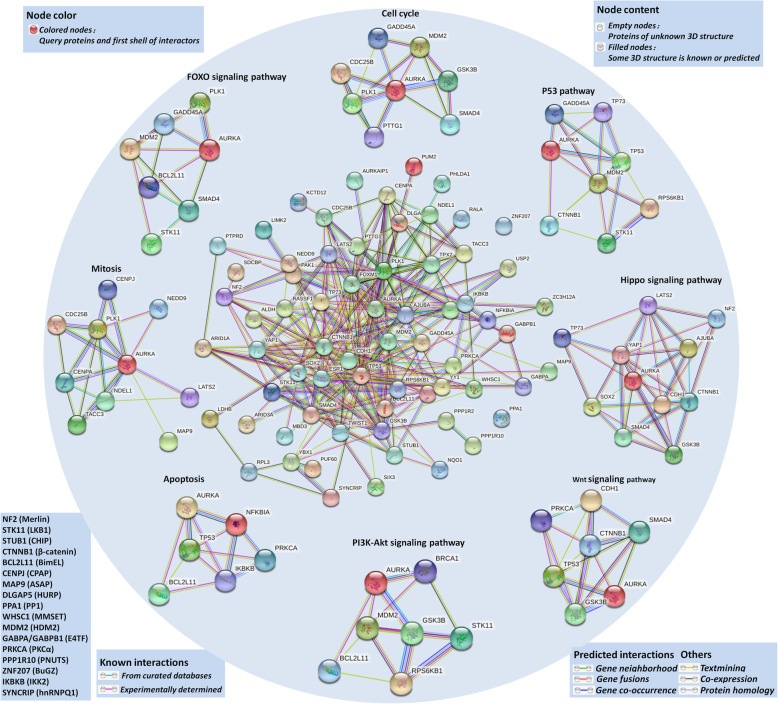
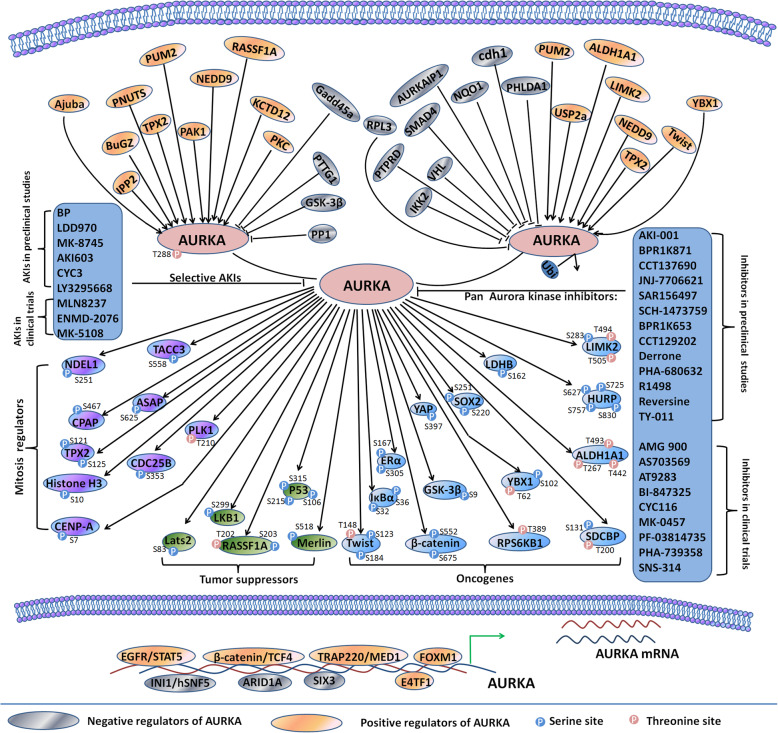
Aurora kinase A (AURKA) belongs to the family of serine/threonine kinases, whose activation is necessary for cell division processes via regulation of mitosis. AURKA shows significantly higher expression in cancer tissues than in normal control tissues for multiple tumor types according to the TCGA database. Activation of AURKA has been demonstrated to play an important role in a wide range of cancers, and numerous AURKA substrates have been identified. AURKA-mediated phosphorylation can regulate the functions of AURKA substrates, some of which are mitosis regulators, tumor suppressors or oncogenes. In addition, enrichment of AURKA-interacting proteins with KEGG pathway and GO analysis have demonstrated that these proteins are involved in classic oncogenic pathways. All of this evidence favors the idea of AURKA as a target for cancer therapy, and some small molecules targeting AURKA have been discovered. These AURKA inhibitors (AKIs) have been tested in preclinical studies, and some of them have been subjected to clinical trials as monotherapies or in combination with classic chemotherapy or other targeted therapies.
Overview
The claims and statistics of this paper haven’t been checked yet.
Free: it reads the open-access text and checks the first 5 claims that cite a source we can check. Create a free account to check every claim.
Integrity signals
Registry
Cites
Statistics
Figures
Verification
Claims the paper makes
The claims and statistics of this paper haven’t been checked yet.
Free: it reads the open-access text and checks the first 5 claims that cite a source we can check. Create a free account to check every claim.
Claims other papers make about this one
Each is checked against this paper’s own text: does it say what the citing paper says it does?
The cited source says what the claim attributes to it.
In the citing paper
“AURKA, a member of the AURK family member, is frequently overexpressed in a wide range of cancers and plays a critical role in oncogenesis [127, 128].”
From Differential Response and Resistance to KRAS-Targeted Therapy (2025) · cites this paper as [127]
Self-check
Percentages, sums and reported differences re-computed from the paper’s own numbers.
The self-check needs the paper’s full text.
Citations
Cites
3 retracted
Zhou, S.-F., Ding, Y.-H., Zhou, Z.-W., Ha, C., Zhang, X.-Y., Pan, S.-T., He, Z.-X., Edelman, J. L., Wang, D., Yang, Y.-X., et al. (2015) · Drug Design Development and Therapy · doi:10.2147/dddt.s74062 · Cited by 87 · cited 1×
“process is also impeded by MLN8237 treatment in human epithelial ovarian and pancreatic cancer cells [134].”
BackgroundRetractedAurora-A is a determinant of tamoxifen sensitivity through phosphorylation of ERα in breast cancer
Zheng, X.-Q., Guo, J., Yang, H., Kanai, M., He, L. L., Li, Y. Y., Koomen, J., Minton, S., Gao, M., Ren, X. B., et al. (2013) · Oncogene · doi:10.1038/onc.2013.444 · Cited by 44 · cited 1×
“Ser167 and Ser305, leading to an increase in the DNAbinding ability of ERα and the transcriptional activity of ERα toward its target cyclin D1 [55].”
BackgroundRetractedZhou, S.-F., Li, J.-P., Yang, Y.-X., Liu, Q., Zhou, Z.-W., Pan, S., He, Z., Zhang, X., Yang, T., Pan, S.-Y., et al. (2015) · Drug Design Development and Therapy · doi:10.2147/dddt.s74412 · Cited by 36 · cited 1×
“PHA-739358 also induces cell cycle arrest, apoptosis and autophagy and suppresses the EMT process [176, 177].”
BackgroundRetractedHarrington, E. A., Bebbington, D., Moore, J., Rasmussen, R. K., Ajose-Adeogun, A. O., Nakayama, T., Graham, J. A., Demur, C., Hercend, T., Diu-Hercend, A., et al. (2004) · Nature Medicine · doi:10.1038/nm1003 · Cited by 965 · cited 1×
“MK-0457, a pyrazoloquinazoline compound, inhibits all three Aurora kinases [166] and inhibits FLT-3 and Abl kinases [167].”
BackgroundDai, Y., Xu, C., Sun, X., & Chen, X. (2017) · Chemical Society Reviews · doi:10.1039/c6cs00592f · Cited by 931 · cited 1×
“Furthermore, development of nanoparticle therapeutic carriers that are passively targeted to tumors through the enhanced permeability and retention effect may be helpful [231].”
BackgroundPolo-like kinase-1 is activated by aurora A to promote checkpoint recovery
Macůrek, L., Lindqvist, A., Lim, D., Lampson, M. A., Klompmaker, R., Freire, R., Clouin, C., Taylor, S. S., Yaffe, M. B., & Medema, R. H. (2008) · Nature · doi:10.1038/nature07185 · Cited by 710 · cited 1×
“It has been reported that AURKA is responsible for the Thr210 phosphorylation of PLK1, which is required for checkpoint recovery [58].”
BackgroundMitotic Phosphorylation of Histone H3: Spatio-Temporal Regulation by Mammalian Aurora Kinases
Crosio, C., Fimia, G. M., Loury, R., Kimura, M., Okano, Y., Zhou, H., Sen, S., Allis, C. D., & Sassone-Corsi, P. (2002) · Molecular and Cellular Biology · doi:10.1128/mcb.22.3.874-885.2002 · Cited by 666 · cited 1×
“phosphorylates Ser10 both in vitro and in vivo [61].”
BackgroundStructural Basis of Aurora-A Activation by TPX2 at the Mitotic Spindle
Bayliss, R., Sardon, T., Vernos, I., & Conti, E. (2003) · Molecular Cell · doi:10.1016/s1097-2765(03)00392-7 · Cited by 636 · cited 1×
“The Nterminal domain of TPX2 binds to AURKA and protects AURKA from dephosphorylation according to experimental and structural analyses [10, 11].”
BackgroundHirota, T., Kunitoku, N., Sasayama, T., Marumoto, T., Zhang, D., Nitta, M., Hatakeyama, K., & Saya, H. (2003) · Cell · doi:10.1016/s0092-8674(03)00642-1 · Cited by 628 · cited 2×
“The LIM protein Ajuba efficiently stimulates AURKA autophosphorylation at Thr288 and increases kinase activity toward histone H3 in the late G2 phase [25].”
BackgroundPhosphorylation by aurora kinase A induces Mdm2-mediated destabilization and inhibition of p53
Katayama, H., Sasai, K., Kawai, H., Yuan, Z.-M., Bondaruk, J., Suzuki, F., Fujii, S., Arlinghaus, R. B., Czerniak, B. A., & Sen, S. (2004) · Nature Genetics · doi:10.1038/ng1279 · Cited by 588 · cited 1×
“It has been reported that AURKA phosphorylates p53 at Ser315, after which p53 is destabilized and the G2-M transition is enhanced [72].”
Background
Cited by
Items 601–631 of 631
Erat, S., Devrim, A. K., Şenol, A., Moran, B., Çoban, C. Ç., & Akanbong, E. A. (2026) · International Journal of Veterinary and Animal Research (IJVAR) · doi:10.71336/ijvar.733
“AURKA is a serine/threonine kinase involved in cell division by regulating mitosis and is considered an important therapeutic target due to its overexpression in many cancer types and its involvement of oncogenic signaling pathways (Du et al., 2021).”
Widyananda, M. H., Ulfa, S. M., Muflikhah, L., Zakaria, Z. A., & Widodo, N. (2026) · Oriental Pharmacy and Experimental Medicine · doi:10.1007/s13596-026-00924-3
Xia, D., Li, J., Zhou, X., Yu, C., & Yang, S. (2026) · Molecular Genetics and Genomics · doi:10.1007/s00438-026-02514-z
“It plays a key role in cell proliferation by regulating mitosis, cell division, and cell cycle progression (Du et al. 2021 ).”
Song, J. (2026) · OncoTargets and Therapy · doi:10.2147/ott.s620767
“12,13 Our study addresses this translational impasse by identifying and experimentally validating dipyridamole as a compound that combines AURKA-binding activity with an established perioperative safety profile derived from decades of clinical use in cardiovascular indications, a combination that…”
Li, Q., Xu, Z., Wan, M., Ye, C., Yang, S., Chen, R., Jiang, Q., Zhang, Y., Chen, J., Bai, R., et al. (2026) · Genes & Diseases · doi:10.1016/j.gendis.2026.102482
Xiang, Q., Peng, Y., Ye, Y., & Li, X. (2026) · Epigenetics · doi:10.1080/15592294.2026.2719245
“AURKA has been well characterized as a serine/threonine kinase essential for mitotic progression, centrosome maturation, and chromosomal stability [21].”
Self-citationMohammed, N., Abdullahi, U., Saleh, A., & Hamza, R. M. (2026) · UMYU Scientifica · doi:10.56919/usci.2654.006
“AURKA is one of the most promising protein targets for hepatocellular cancer drug research due to its role as cell cycle regulator (Du et al ., 2021).”
InfluentialDiCE-Ex: a web server for network-based differential-centrality gene exploration
Lokuge, S. D., Liu, S., Shang, M., Yang, K., Ware, S. M., Yang, L., Lü, X., & Wan, J. (2026) · Nucleic Acids Research · doi:10.1093/nar/gkag896
Küçükakçalı, Z., & Çiçek, İ. B. (2026) · ODÜ Tıp Dergisi · doi:10.56941/odutip.2005798
From single to dual targeting: Recent advances in EGFR-based dual inhibitors for cancer therapy
YALCIN, Z. S., Alagöz, M. A., & Algül, Ö. (2026) · European Journal of Medicinal Chemistry · doi:10.1016/j.ejmech.2026.119400
BUB signaling in cancer and molecular insights into targeted therapies
Baweja, B., Saini, C., Vats, P., Soni, R., Jangir, K., Patidar, P., Kumar, A., & Nema, R. (2026) · Communications Biology · doi:10.1038/s42003-026-10976-5 · Cited by 1
“Combination-based strategies involving PARP inhibitors, microtubule-targeting agents, and immune checkpoint blockade have further highlighted the potential of BUB-centered synthetic lethality approaches, particularly in genomically unstable cancers 185 – 190 .”
Rovik, A., Afifah, L., & Andyra, V. U. (2026) · Jurnal Tumbuhan Obat Indonesia · doi:10.31002/jtoi.v19i1.3150
“AURKA is a critical regulator of mitotic spindle formation and chromosome segregation and has been associated with increased tumor aggressiveness, enhanced migration, and extracellular matrix remodeling (Du et al. , 2021; Noh et al. , 2015; Tang et al. , 2017; Wang et al. , 2012).”
BindingDB (2025) · UC San Diego · doi:10.7270/q2w95fv8
BindingDB Entry 50020040: Development of MPS1 Inhibitors: Recent Advances and Perspectives.
BindingDB (2024) · UC San Diego · doi:10.7270/q2fr021h
BindingDB (2026) · UC San Diego · doi:10.7270/q25m6bn9
BindingDB Entry 50019737: Discovery of the First Potent, Selective, and
BindingDB (2024) · UC San Diego · doi:10.7270/q2988cd4
Liu, Q., Zhu, H., Gao, H., 发吉, 杨., Zhang, S., Wang, X., Hao, Y., Niu, Z., & Zhou, X. (2026) · Ecotoxicology and Environmental Safety · doi:10.1016/j.ecoenv.2026.120966
Dağlı, H., & ÇELİK, İ. S. (2026) · Biomedicines · doi:10.3390/biomedicines14112522
Chen, Y., Yao, H., Yu, Y., 朱维维, Xiong, M., Yuan, S., & Wang, M. (2026) · Biochemical and Biophysical Research Communications · doi:10.1016/j.bbrc.2026.154872
Nousiainen, R., Eloranta, K., Isoaho, N., Cairo, S., Wilson, D. B., Heikinheimo, M., & Pihlajoki, M. (2023) · doi:10.3389/fgene.2023.1170940.s002
Chen, X., Ma, J., Wang, X., Zi, T., Qian, D., Li, C., & Xu, C. (2022) · doi:10.3389/fendo.2022.1106175.s001
Yu, F., Ji, S., Guo, J., & Yang, Z. (2026) · Cancer Biome and Targeted Therapy · doi:10.66505/cbtt.v1i4.62
Han, F., Wang, H.-Z., Chang, M.-J., Hu, Y.-T., Liang, L.-Z., Li, S., Liu, F., He, P.-F., Yang, X.-T., & Li, F. (2023) · doi:10.3389/fonc.2022.972215.s001
Guo, Z., Li Shen, Ningning Li, Xiaoxiao Wu, Canming Wang, Zheng Gu, Chen, Z., Junping Liu, Mao, W., & Han, Y. (2021) · doi:10.3389/fonc.2021.789244.s001
Hu, J., Song, F., Kang, W., Xia, F., Song, Z., Wang, Y., Li, J., & Zhao, Q. (2023) · doi:10.3389/fphar.2023.1162563.s005
Wang, J., Zhang, Z., Li, Q., Hu, Z., Chen, Y., Chen, H., Cai, W., Du, Q., Zhang, P., Xiong, D., et al. (2024) · doi:10.3389/fphar.2024.1282361.s002
Metadata
- Authors
- Du, R., Huang, C., Liu, K., Li, X., & Dong, Z.
- Affiliations
- Zhengzhou University (CN)
- Corresponding author
- Du, Ruijuan
- Li, Xiang
- Dong, Zigang
- Venue
- Molecular Cancer
- Published
- 2021-01-15
- Volume
- 20
- Issue
- 1
- Pages
- 15-15
- ISSN
- 1476-4598 (ISSN-L)
- PMC
- PMC7809767
- OpenAlex
- W3123995258
- Cited by
- 586
- References
- 238
- Citations by year
- 2026: 71 · 2025: 118 · 2024: 145 · 2023: 124 · 2022: 100 · 2021: 26
- FWCI
- 12.94
- Type
- journal article
- Language
- en
- Open access
- gold
- doi.org
- Licence
- cc-by
- creativecommons.org/licenses/by/4.0/ (tdm)
- creativecommons.org/licenses/by/4.0/ (vor)
- Locations
- Molecular Cancer (publishedVersion, cc-by)
- PubMed Central (publishedVersion, cc-by)
- PubMed (publishedVersion)
- DOAJ (DOAJ: Directory of Open Access Journals) (submittedVersion, cc-by-sa)
- Funders
- National Natural Science Foundation of China (81802795, 82073075, 31301144)
- Topics
- Life Sciences › Biochemistry, Genetics and Molecular Biology › Cell Biology › Microtubule and mitosis dynamics
- Life Sciences › Biochemistry, Genetics and Molecular Biology › Cancer Research › Cancer Mechanisms and Therapy
- Health Sciences › Medicine › Oncology › Cancer-related Molecular Pathways
- Keywords
- AURKA, AURKA inhibitors, cancer therapy, mitosis regulation, serine/threonine kinase, oncogenic signaling, small-molecule kinase inhibitors, combination chemotherapy, targeted therapy
- MeSH terms
- Animals, Humans, Neoplasms, Substrate Specificity, Survival Analysis, Protein Kinase Inhibitors, Molecular Targeted Therapy, Aurora Kinase A
About these checks
Registry, retraction, Cites and statistics results are computed, not judged, with one exception: a printed reference that no index lists is read once by a model before it counts as a citation error. Claims are extracted by a model and kept only when their quote appears verbatim in the text; each cited source is then checked, with a model’s help, for whether it says what the claim relies on. Those verdicts can be wrong — read the claim’s quote and the cited source before relying on one.
Statistics and arithmetic are recomputed, not judged.
Confidence bands are shown only for fields calibrated on our annotated test set. None is calibrated yet, so no band is shown.
What counts as a claim ›How we measure confidence ›How we check this ›
Are you an author, or do you see a problem with this page? Request a review
Data sources
Bibliographic data: Semantic Scholar, OpenAlex, Crossref.
Contains information from the Semantic Scholar Academic Graph Datasets, made available under the ODC Attribution License (ODC-BY 1.0).
Semantic Scholar’s data is described in: Kinney, R., et al. (2023). The Semantic Scholar Open Data Platform. arXiv:2301.10140.
