

Targeting AURKA in Cancer: molecular mechanisms and opportunities for Cancer therapy
Open accessThe DOI matches its Crossref record; 237 of the 238 references it cites were found in a registry or an index.
Abstract
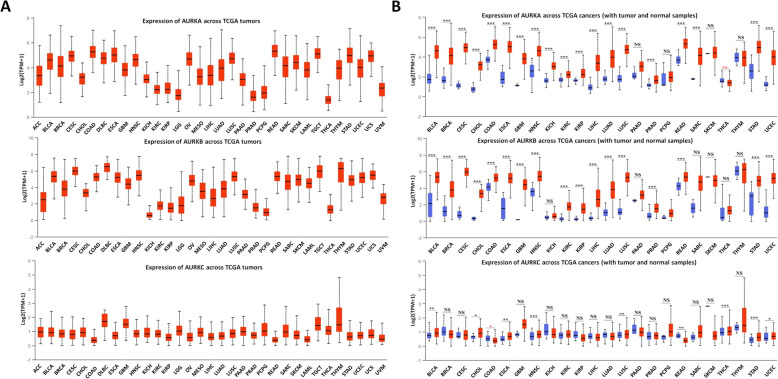
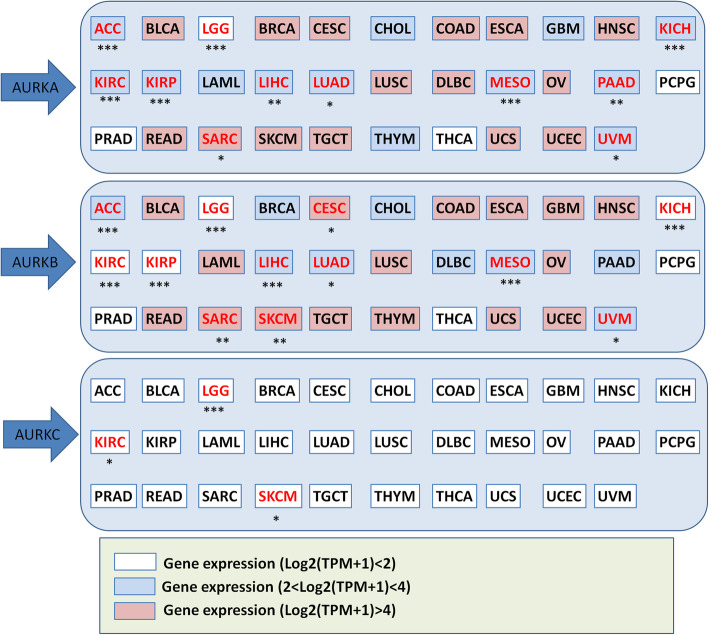
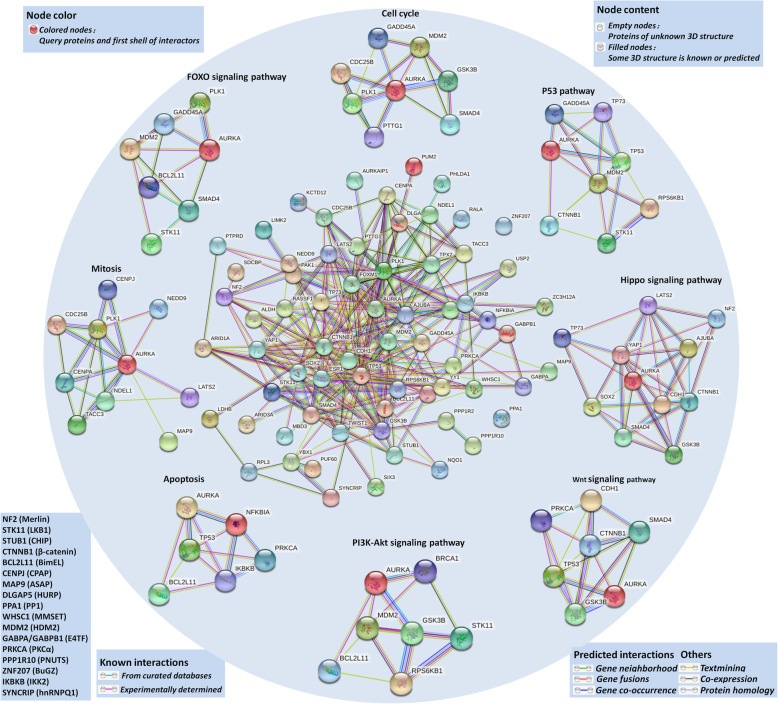
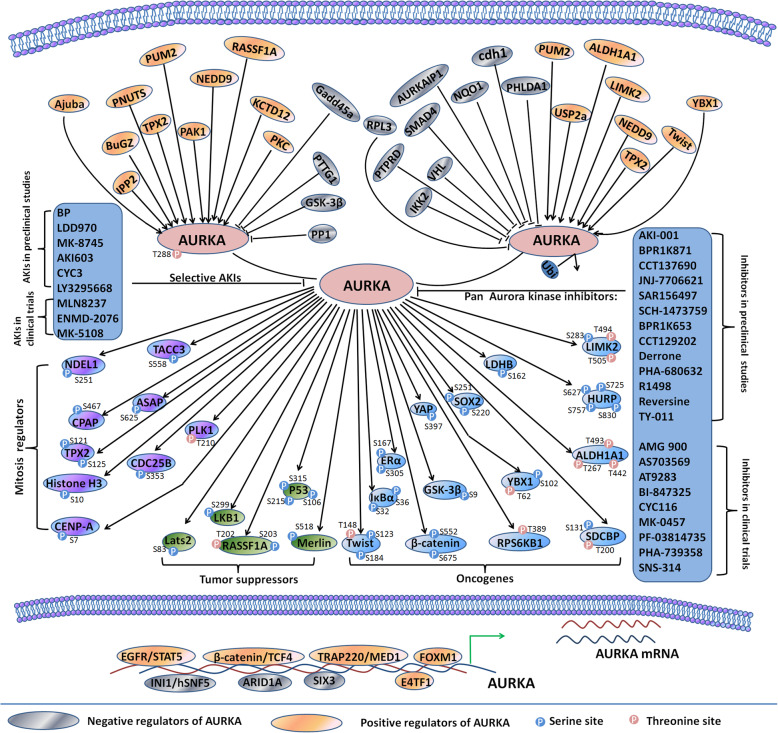
Aurora kinase A (AURKA) belongs to the family of serine/threonine kinases, whose activation is necessary for cell division processes via regulation of mitosis. AURKA shows significantly higher expression in cancer tissues than in normal control tissues for multiple tumor types according to the TCGA database. Activation of AURKA has been demonstrated to play an important role in a wide range of cancers, and numerous AURKA substrates have been identified. AURKA-mediated phosphorylation can regulate the functions of AURKA substrates, some of which are mitosis regulators, tumor suppressors or oncogenes. In addition, enrichment of AURKA-interacting proteins with KEGG pathway and GO analysis have demonstrated that these proteins are involved in classic oncogenic pathways. All of this evidence favors the idea of AURKA as a target for cancer therapy, and some small molecules targeting AURKA have been discovered. These AURKA inhibitors (AKIs) have been tested in preclinical studies, and some of them have been subjected to clinical trials as monotherapies or in combination with classic chemotherapy or other targeted therapies.
Overview
The claims and statistics of this paper haven’t been checked yet.
Free: it reads the open-access text and checks the first 5 claims that cite a source we can check. Create a free account to check every claim.
Integrity signals
Registry
Cites
Statistics
Figures
Verification
Claims the paper makes
The claims and statistics of this paper haven’t been checked yet.
Free: it reads the open-access text and checks the first 5 claims that cite a source we can check. Create a free account to check every claim.
Claims other papers make about this one
Each is checked against this paper’s own text: does it say what the citing paper says it does?
The cited source says what the claim attributes to it.
In the citing paper
“AURKA, a member of the AURK family member, is frequently overexpressed in a wide range of cancers and plays a critical role in oncogenesis [127, 128].”
From Differential Response and Resistance to KRAS-Targeted Therapy (2025) · cites this paper as [127]
Self-check
Percentages, sums and reported differences re-computed from the paper’s own numbers.
The self-check needs the paper’s full text.
Citations
Cites
3 retracted
Zhou, S.-F., Ding, Y.-H., Zhou, Z.-W., Ha, C., Zhang, X.-Y., Pan, S.-T., He, Z.-X., Edelman, J. L., Wang, D., Yang, Y.-X., et al. (2015) · Drug Design Development and Therapy · doi:10.2147/dddt.s74062 · Cited by 87 · cited 1×
“process is also impeded by MLN8237 treatment in human epithelial ovarian and pancreatic cancer cells [134].”
BackgroundRetractedAurora-A is a determinant of tamoxifen sensitivity through phosphorylation of ERα in breast cancer
Zheng, X.-Q., Guo, J., Yang, H., Kanai, M., He, L. L., Li, Y. Y., Koomen, J., Minton, S., Gao, M., Ren, X. B., et al. (2013) · Oncogene · doi:10.1038/onc.2013.444 · Cited by 44 · cited 1×
“Ser167 and Ser305, leading to an increase in the DNAbinding ability of ERα and the transcriptional activity of ERα toward its target cyclin D1 [55].”
BackgroundRetractedZhou, S.-F., Li, J.-P., Yang, Y.-X., Liu, Q., Zhou, Z.-W., Pan, S., He, Z., Zhang, X., Yang, T., Pan, S.-Y., et al. (2015) · Drug Design Development and Therapy · doi:10.2147/dddt.s74412 · Cited by 36 · cited 1×
“PHA-739358 also induces cell cycle arrest, apoptosis and autophagy and suppresses the EMT process [176, 177].”
BackgroundRetractedHarrington, E. A., Bebbington, D., Moore, J., Rasmussen, R. K., Ajose-Adeogun, A. O., Nakayama, T., Graham, J. A., Demur, C., Hercend, T., Diu-Hercend, A., et al. (2004) · Nature Medicine · doi:10.1038/nm1003 · Cited by 965 · cited 1×
“MK-0457, a pyrazoloquinazoline compound, inhibits all three Aurora kinases [166] and inhibits FLT-3 and Abl kinases [167].”
BackgroundDai, Y., Xu, C., Sun, X., & Chen, X. (2017) · Chemical Society Reviews · doi:10.1039/c6cs00592f · Cited by 931 · cited 1×
“Furthermore, development of nanoparticle therapeutic carriers that are passively targeted to tumors through the enhanced permeability and retention effect may be helpful [231].”
BackgroundPolo-like kinase-1 is activated by aurora A to promote checkpoint recovery
Macůrek, L., Lindqvist, A., Lim, D., Lampson, M. A., Klompmaker, R., Freire, R., Clouin, C., Taylor, S. S., Yaffe, M. B., & Medema, R. H. (2008) · Nature · doi:10.1038/nature07185 · Cited by 710 · cited 1×
“It has been reported that AURKA is responsible for the Thr210 phosphorylation of PLK1, which is required for checkpoint recovery [58].”
BackgroundMitotic Phosphorylation of Histone H3: Spatio-Temporal Regulation by Mammalian Aurora Kinases
Crosio, C., Fimia, G. M., Loury, R., Kimura, M., Okano, Y., Zhou, H., Sen, S., Allis, C. D., & Sassone-Corsi, P. (2002) · Molecular and Cellular Biology · doi:10.1128/mcb.22.3.874-885.2002 · Cited by 666 · cited 1×
“phosphorylates Ser10 both in vitro and in vivo [61].”
BackgroundStructural Basis of Aurora-A Activation by TPX2 at the Mitotic Spindle
Bayliss, R., Sardon, T., Vernos, I., & Conti, E. (2003) · Molecular Cell · doi:10.1016/s1097-2765(03)00392-7 · Cited by 636 · cited 1×
“The Nterminal domain of TPX2 binds to AURKA and protects AURKA from dephosphorylation according to experimental and structural analyses [10, 11].”
BackgroundHirota, T., Kunitoku, N., Sasayama, T., Marumoto, T., Zhang, D., Nitta, M., Hatakeyama, K., & Saya, H. (2003) · Cell · doi:10.1016/s0092-8674(03)00642-1 · Cited by 628 · cited 2×
“The LIM protein Ajuba efficiently stimulates AURKA autophosphorylation at Thr288 and increases kinase activity toward histone H3 in the late G2 phase [25].”
BackgroundPhosphorylation by aurora kinase A induces Mdm2-mediated destabilization and inhibition of p53
Katayama, H., Sasai, K., Kawai, H., Yuan, Z.-M., Bondaruk, J., Suzuki, F., Fujii, S., Arlinghaus, R. B., Czerniak, B. A., & Sen, S. (2004) · Nature Genetics · doi:10.1038/ng1279 · Cited by 588 · cited 1×
“It has been reported that AURKA phosphorylates p53 at Ser315, after which p53 is destabilized and the G2-M transition is enhanced [72].”
Background
Cited by
Items 401–500 of 629
Zhai, J. H., Liu, S., Wang, T., Wang, Y., & Peng, Y. (2025) · BMC Cancer · doi:10.1186/s12885-025-14230-9 · Cited by 1
“This approach identifies key signaling pathways associated with specific biological processes [24].”
Karpiński, P., Wu, C.-L., & Hoang, M. P. (2025) · American Journal of Clinical Pathology · doi:10.1093/ajcp/aqaf046 · Cited by 1
Sato, M., Yamamoto, Y., Moriwaki, T., Fukuda, K., & Tsuchiya, K. (2025) · Biochemistry and Biophysics Reports · doi:10.1016/j.bbrep.2025.102073 · Cited by 1
Singh, K., Pathan, S., Malhotra, M., Jayakannan, M., & Balasubramanian, N. (2025) · Biomacromolecules · doi:10.1021/acs.biomac.5c00366 · Cited by 1
UBC6 mediated the inhibitory effect of quercetin on ovarian cancer through the PRKN-AURKA-AMPK axis
Chen, Y., Jia, H., Yang, X., Pei, L., Liu, J., Yuan, H., Song, Y., Zuo, D., Deng, L., Shi, J., et al. (2025) · International Immunopharmacology · doi:10.1016/j.intimp.2025.115815 · Cited by 1
Huang, B., Yin, Z., Gao, G., Li, L., & Miao, Y. (2025) · Frontiers in Oncology · doi:10.3389/fonc.2025.1707092 · Cited by 1
“The TCGA dataset was retrieved following the methodology described in previous studies (26, 27).”
Gong, Q., Liang, D., Luo, Y., Yang, C., Yang, Y., & Zhang, S. (2025) · Food and Chemical Toxicology · doi:10.1016/j.fct.2025.115901 · Cited by 1
Wang, Q., Chen, Y., Liu, Y., Rao, Q., Wei, Q., Wang, S., & Jiang, X. (2025) · Nano Research · doi:10.26599/nr.2025.94907914 · Cited by 1
Murakami, H., Wang, J., & Yu, H. (2026) · Current Oncology · doi:10.3390/curroncol33010037 · Cited by 1
“AURKA may promote carcinogenesis via cell proliferation, ferroptosis, and cancer stem cell self-renewal [32].”
Zhu, J., Feng, Y., Zhu, Z., Chen, Y., & Tang, C.-E. (2026) · Scientific Reports · doi:10.1038/s41598-026-36395-4 · Cited by 1
“According to the Cancer Genome Atlas (TCGA) UALCAN database, AURKA is expressed in many kinds of tumor, such as rectal adenocarcinoma 24 .”
InfluentialShukla, S., Pogash, S., Venkatesh, A., McGrath, J., Rosales, R. D. R., Kanumuambidi, J.-P. T., Al‐Toubat, M., Fletcher, S., & Balaji, K. C. (2026) · Investigational New Drugs · doi:10.1007/s10637-026-01603-5 · Cited by 1
Alam, M. K., Islam, M. R., Haque, T., Ganji, K. K., Babkair, H. A., Rashid, M. E., Ahmed, K. S., & Bui, F. M. (2026) · Journal of Genetic Engineering and Biotechnology · doi:10.1016/j.jgeb.2026.100668 · Cited by 1
“28,29 Overexpression of AURKA can encourage cellular transformation and may potentiate the action of various oncogenes, further enhancing the chance of tumorigenesis.”
Chen, Z., Chu, T., Ding, C., Gu, Y., & Li, Q. (2026) · Bioinformatics and Biology Insights · doi:10.1177/11779322261435461 · Cited by 1
“16 So AURKA expression upregulation in human cancer was not surprising.”
Nair, K. U., & Samuel, P. P. (2026) · Journal of Chemical Sciences · doi:10.1007/s12039-026-02497-9 · Cited by 1
Aurora-A drives sorafenib resistance by scaffolding stress granule assembly via phase separation
Kong, L., Zhong, F., Yu, F., Wang, T., Wang, G., Bai, Y. H., Xia, H., Pan, Z., Liu, M., Zhang, Y., et al. (2026) · Proceedings of the National Academy of Sciences · doi:10.1073/pnas.2516469123 · Cited by 1
“A as an attractive therapeutic target (11–19).”
AURKA/PHB2 signaling drives acquired resistance to KRAS G12C inhibitors in KRAS G12C-mutant NSCLC
Liao, J., Lan, X., Chen, Z., Hu, D., Luo, D., He, H., Huang, Z., Yu, H., Bai, Y., Luο, X., et al. (2026) · Cell Death Discovery · doi:10.1038/s41420-026-03080-4 · Cited by 1
“The PCR cycling conditions were conducted as previously described [11, 12].”
Drag, M., Hvilsom, C., Poulsen, L. L., Jensen, H. G., Tahas, S. A., Leineweber, C., Cray, C., Bertelsen, M. F., & Bojesen, A. M. (2026) · Journal of Clinical Microbiology · doi:10.1128/jcm.01054-25 · Cited by 1
Zhao, Z., Qiu, L., Li, Z. L., Wu, J., Ni, Q. Y., Li, S., WANG, H., Shi, C., Lin, X., Liu, Y., et al. (2026) · The Aging Male · doi:10.1080/13685538.2026.2680719 · Cited by 1
GATA2 promotes hepatitis B virus-associated hepatocellular carcinoma development by regulating AURKA
Liang, D., Guo, Q., Zhao, X. L., & Ding, J. (2026) · Archives of Microbiology · doi:10.1007/s00203-026-04965-9 · Cited by 1
Uriarte-Arrazola, I., Magallón‐Lorenz, M., Fernández‐Rodríguez, J., Zhang, J., Lee, E., Ortega‐Bertran, S., Creus‐Bachiller, E., Farrés-Casas, J., Wilson, K. M., McKnight, C. G., et al. (2026) · Nature Communications · doi:10.1038/s41467-026-73119-8 · Cited by 1
Odeh, R., Jaber, A. M., Al-Sulaibi, M., Nsairat, H., & Taha, M. O. (2026) · RSC Advances · doi:10.1039/d6ra03053j · Cited by 1
Karnik, M., Anantharaju, P. G., Sharma, A., Sukocheva, O., Tse, E., & Madhunapantula, S. V. (2026) · Frontiers in Oncology · doi:10.3389/fonc.2026.1857128 · Cited by 2
“2, resulting in enhanced proliferation, resistance to apoptosis, and transformation (22).”
Zhou, F., Zhu, W., Chen, W., & Ruan, L. (2026) · Biochimica et Biophysica Acta (BBA) - Reviews on Cancer · doi:10.1016/j.bbcan.2026.189643 · Cited by 1
Elsaedy, E. A., AlRammah, T., Kawashima, K., Ebos, J. M. L., Katsuta, E., Opyrchal, M., Narui, K., Yamada, A., & Takabe, K. (2026) · Annals of Surgical Oncology · doi:10.1245/s10434-026-20599-z · Cited by 1
Genomic data mining reveals hub genes and lncRNAs as prognostic biomarkers in breast cancer
Tariq, S., Sajjad, U., Naveed, H., Awais, M., Munir, A., & Afzal, S. (2025) · Scientific Reports · doi:10.1038/s41598-025-98204-8 · Cited by 1
“The filtered genes include AURKA, BUB1B, A member of the serine/threonine kinase family, Aurora Kinase A (AURKA) 25 exhibits markedly elevated expression in various cancer types, including breast, colorectal 26 , lung, prostate 27 , ovarian, and gastric cancer 28 .”
InfluentialNEAT1: a multifaceted long non-coding RNA in multiple myeloma
Benini, G., Taranto, S., Sciumé, M., Rigali, F., Marcheselli, R., Abate, A., Mitola, S. M. F., Sigala, S., Sacco, A., & Roccaro, A. M. (2025) · Haematologica · doi:10.3324/haematol.2025.289258 · Cited by 1
“42-44 It has been shown that AURKA is controlled by NEAT1 through TPX2, an allosteric regulator of AURKA, thereby promoting cell cycle progression and contributing to MM development (Figure 1C).”
Han, L., Peng, L., Wang, X., Tong, C., Wu, Y., Li, W., Meng, X., & Wang, Y. (2026) · Archives of Biochemistry and Biophysics · doi:10.1016/j.abb.2026.110875 · Cited by 1
Lin, Q., Xue, Y., Shi, H., Tao, Y., Xiyan, T., Chi, K., & Yu, H. N. (2026) · Scientific Reports · doi:10.1038/s41598-026-59918-5 · Cited by 1
Targeting MYC to Combat Pancreatic Cancer
Liu, Y., Gan, Y., Chen, J.-Z., Jiang, Y., Huang, F., & Tang, D. (2022) · Journal of Exploratory Research in Pharmacology · doi:10.14218/jerp.2021.00015 · Cited by 1
Zhao, Y., Zuo, J., Shen, Y., Yan, D., Chen, J., & Qi, X. (2022) · Symmetry · doi:10.3390/sym14071403 · Cited by 1
Padilla, A. M., Lázaro, J. P. M., & Amador, A. A. (2022) · F1000Research · doi:10.12688/f1000research.123714.2 · Cited by 1
Avendaño, C., & Menéndez, J. C. (2023) · Elsevier eBooks · doi:10.1016/b978-0-12-818549-0.00011-x · Cited by 1
Kyrgiafini, M.-A., & Mamuris, Z. (2023) · DNA · doi:10.3390/dna3040013 · Cited by 1
“The two other family members, AURKA and AURKCB , are highly expressed in many cancer types and act as oncogenes [14].”
BackgroundZhi, L., Li, H., Shi, B., Yu, T., Jia, X., & Zhang, H. (2024) · Frontiers in Pharmacology · doi:10.3389/fphar.2024.1437806 · Cited by 1
Profiling of human genes afflicted with nasopharyngeal carcinoma using microarray data
Raj, R., Subhashini, Patel, K. K., & Kumar, M. (2025) · Human Gene · doi:10.1016/j.humgen.2025.201376 · Cited by 2
Targeting Cell Signalling Pathways with New Small Molecules in Inflammation and Cancer
Mondal, R., Rahate, K., & Chaudhary, S. (2025) · Current Topics in Medicinal Chemistry · doi:10.2174/0115680266360926250509040743 · Cited by 1
Cooperative targeting of NF-κB enhances ferroptosis-driven HCC therapy with Alisertib and Donafenib
Zhou, Q., & Wang, R. (2025) · Frontiers in Cell and Developmental Biology · doi:10.3389/fcell.2025.1637767 · Cited by 1
“Emerging as a multitargeted small-molecule agent, alisertib synergistically enhances conventional chemotherapies and targeted anticancer regimens through concurrent pathway blockade, positioning it as a promising chemosensitizer in precision oncology (Du et al., 2021; Zheng D. et al., 2023).”
Adaptive fitness in APC -mutant cells requires chromosome rearrangementsPreprint
Kawasaki, Y., Hamaji, T., Owada, K., Hayashi, A., Wu, Y., Nogi, T., Okada, M., Sakai, S., Tokushige, N., Sasagawa, S., et al. (2020) · bioRxiv (Cold Spring Harbor Laboratory) · doi:10.1101/2020.09.18.303016 · Cited by 1
Varshney, N., Kashyap, D., Saini, V., Singh, S., Kumar, S., Manivannan, E., Brás, N. F., & Jha, H. C. (2023) · Research Square · doi:10.21203/rs.3.rs-3195156/v1 · Cited by 1
Wolff, F., Srinivasan, S., Nöcker, M. C., Mangal, S., Mikeladze‐Dvali, T., & Zanin, E. (2023) · bioRxiv (Cold Spring Harbor Laboratory) · doi:10.1101/2023.08.08.552464 · Cited by 1
“Aurora A kinase is also an oncogene and overexpression has been reported in a broad range of human malignancies (Du et al., 2021), thus, a better understanding of Aurora A’s role in cell division might be crucial for the development of new therapeutic treatments.”
BackgroundActivation of Pol theta-mediated end joining begins during mitotic commitmentPreprint
McBrine, C. P., Jensen, R. B., & King, M. C. (2024) · bioRxiv (Cold Spring Harbor Laboratory) · doi:10.1101/2024.10.03.616590 · Cited by 1
5’ HOXD GENES DIFFERENTIALLY REGULATE GENE EXPRESSION OF SYNOVIAL FIBROBLASTS IN HAND JOINTSPreprint
Mirrahimi, M., Klein, K., Cebrián, C. C., Khmelevskaya, A. A., Houtman, M., Camarillo‐Retamosa, E., Saadat, M. H., Ezen, E., Vogetseder, A., Rothenfluh, E., et al. (2024) · bioRxiv (Cold Spring Harbor Laboratory) · doi:10.1101/2024.12.10.627720 · Cited by 1
Rieger, S., Hsieh, C.-J., Anthony, C., Vlach, M., Cádiz, A., Schmidt, N. A., Ugo, M. J., Sanchez, C. A., Reimonn, C. A., Wuchty, S., et al. (2025) · Research Square · doi:10.21203/rs.3.rs-5470731/v1 · Cited by 1
Self-citationZhang, Y., Li, Y., Gan, D., Liu, Y., & Lü, X. (2025) · bioRxiv (Cold Spring Harbor Laboratory) · doi:10.1101/2025.10.21.683668 · Cited by 1
Whately, K. M. (2021) · The Research Repository @ WVU (West Virginia University) · doi:10.33915/etd.10163
Winter, P., Kotowicz, B. U., Fuksiewicz, M., Kowalska, M. M., Jagiełło-Gruszfeld, A., & Nowecki, Z. I. (2022) · Research Square · doi:10.21203/rs.3.rs-1233138/v1
AlG3 Induces AURKA to Promote Laryngeal Squamous Cell Carcinoma MetastasisPreprint
Huang, S., Yang, L., Qiao, P., & Hu, A. (2022) · Research Square · doi:10.21203/rs.3.rs-1230972/v1
Guo, H., Zhang, M., Gu, H., & Liu, J. (2022) · bioRxiv (Cold Spring Harbor Laboratory) · doi:10.1101/2022.01.24.477593
AlG3 Induces AURKA to Promote Laryngeal Squamous Cell Carcinoma MetastasisPreprint
Yang, L., Qiao, P., Hu, A., & Huang, S. (2022) · Research Square · doi:10.21203/rs.3.rs-1230972/v2
Hsa_circ_0084904 drives cervical cancer advancement by modulating the miR- 578/AURAK pathwayPreprint
Wang, Y., Liang, L., Jin, C., Yu, J., Tian, X., & Wang, A. (2022) · Research Square · doi:10.21203/rs.3.rs-1753748/v1
The retroactive and future potentials of Aurora kinases in the treatment of cancer
Bhatt, H., Vishwakarma, K., & Shaw, S. K. (2022) · Elsevier eBooks · doi:10.1016/b978-0-323-91287-7.00016-8
Li, X., Wang, R., Chen, X., Yu, Y., He, C., & Zhang, Q. (2022) · Research Square · doi:10.21203/rs.3.rs-1923405/v1
Self-citationQian, Z., & Zhang, W. (2022) · bioRxiv (Cold Spring Harbor Laboratory) · doi:10.1101/2022.08.17.504277
Identification and Validation of Hub Genes in Uterine Corpus Endometrioid CarcinomaPreprint
LI, J., Huang, Y., & Sheng, X. (2022) · Research Square · doi:10.21203/rs.3.rs-2090822/v1 · Cited by 1
He, Q., Zhu, J., Wang, L., Ding, E., & Song, K. (2022) · Frontiers in Genetics · doi:10.3389/fgene.2022.940214
MAD2L1 Promotes Ewing's Sarcoma Progression Through AURKA/MYC AxisPreprint
Chen, H., Hu, J., Wang, J., Liu, J., Chen, B., Zhang, Y., Song, M., Li, M., Hong, Y., Sun, F., et al. (2022) · Research Square · doi:10.21203/rs.3.rs-2330053/v1
Targeting the Complex Protein Network of MYCN-amplified Anaplastic Ependymoma: A Case Report
Castro, M. P. (2022) · Journal of Cellular Signaling · doi:10.33696/signaling.3.082
“PLK1 also has non-canonical targets beyond the cell cycle, including the MAP kinase pathway through RAF1 protooncogene, serine/ threonine kinase (RAF1 -CRAF) phosphorylation [54], while AURKA promotes tumorigenesis by participating in epithelialmesenchymal transition (EMT), metastasis, survival, and selfrenewal of can…”
BackgroundCacioppo, R., Akman, H. B., Tuncer, T., Erson-Bensan, A. E., & Lindon, C. (2023) · eLife · doi:10.7554/elife.87253.1.sa4
Cacioppo, R., Begum, A. H., Tuncer, T., et al. (2023) · eLife · doi:10.7554/elife.87253.1.sa2
Cacioppo, R., Begum, A. H., Tuncer, T., et al. (2023) · eLife · doi:10.7554/elife.87253.1.sa1
Cacioppo, R., Begum, A. H., Tuncer, T., et al. (2023) · eLife · doi:10.7554/elife.87253.1.sa0
Data from Targeting Senescence as a Therapeutic Opportunity for Triple-Negative Breast Cancer
de Paula, B., Kieran, R., Koh, S. S. Y., Crocamo, S., Abdelhay, E. S. F. W., & Muñoz‐Espín, D. (2023) · doi:10.1158/1535-7163.c.6597340.v1
Fasudil promotes polyploidization of megakaryoblasts in an acute megakaryocyte leukemia model
He, B., Wang, C., Niu, J., Wang, F., Zhang, Y., Gao, Y., & Yang, Q. (2023) · Naunyn-Schmiedeberg s Archives of Pharmacology · doi:10.1007/s00210-023-02513-6
“RUNX1, AURKA, and GATA1 are polyploidization relative proteins (Lordier et al. 2012; Saultier et al. 2021; Du et al. 2021), which are high expressed in the lowploidy megakaryoblast.”
BackgroundAli, N. A., Kment, J. L., Young, S., & Craig, A. W. (2023) · bioRxiv (Cold Spring Harbor Laboratory) · doi:10.1101/2023.08.11.552992
Karimpour, F., Samani, F. A., Jalili, A., Bahrampour, A., & Maddah, R. (2023) · Informatics in Medicine Unlocked · doi:10.1016/j.imu.2023.101372
Sengupta, D., Thakur, D., Mahapatra, E., Das, S., Sen, S., Roy, A., & Mukherjee, S. (2023) · Preprints.org · doi:10.20944/preprints202310.0364.v1
Aurka inhibition-based combination therapy approaches in glioblastoma.
Sak, M. (2023) · ThinkIR: The University of Louisville's Institutional Repository (University of Louisville) · doi:10.18297/etd/4149
Pirestani, S., Golemis, E. A., & Strochlic, T. (2023) · iDEA - Drexel University Institutional Repository · doi:10.17918/00001820
Yu, O. L., Zhou, Y., Lim, C. W., & CHING, Y. P. (2023) · SSRN Electronic Journal · doi:10.2139/ssrn.4635430
Noor, Z., Zhao, Z., Guo, S., Qin, Y., Ma, H., Yu, Z., Li, J., & Zhang, Y. (2024) · Aquaculture Reports · doi:10.1016/j.aqrep.2024.102039
Hao, W., Zhao, H., Li, Z., Li, J., Guo, J., Chen, Q., Gao, Y., Ren, M., Zhao, X., & Yue, W. (2021) · Figshare · doi:10.6084/m9.figshare.14228209
Hao, W., Zhao, H., Li, Z., Li, J., Guo, J., Chen, Q., Gao, Y., Ren, M., Zhao, X., & Yue, W. (2021) · Figshare · doi:10.6084/m9.figshare.14228206
Sha, R., Guo, R., Duan, H., Peng, Q., Yuan, N., Wang, Z., Li, Z., Xie, Z., You, X., & Feng, Y. (2024) · eLife · doi:10.7554/elife.98175.1.sa3
Zhang, L., Pan, Z., Song, W., Wang, W., Fu, L., Li, J., He, R., Wang, Q., Wang, Y., Zhang, S., et al. (2024) · Research Square · doi:10.21203/rs.3.rs-4717976/v1
Хромосомная нестабильность при раке желудка
Немцова, М. В., Molchanov, A. D., Kuznetsova, E., & Bure, I. V. (2024) · Nauchno-prakticheskii zhurnal «Medicinskaia genetika» · doi:10.25557/2073-7998.2024.05.3-14
Conceptual therapeutics for small cell lung cancer
Chaudhry, S., & Trailokya, A. (2024) · IP Indian Journal of Immunology and Respiratory Medicine · doi:10.18231/j.ijirm.2024.020
Yu, K., Meng, G., He, H., Li, W., Wang, L., Li, Y., Wang, X., Huang, Y., He, J., Zhao, M., et al. (2024) · Annals of Diagnostic Pathology · doi:10.1016/j.anndiagpath.2024.152413
Pawar, S. P., Kolpe, M. S., Suryawanshi, V. S., Chikhale, S., TIGHEZZA, A. M., Patil, P. C., & Bhowmick, S. (2024) · Journal of Biomolecular Structure and Dynamics · doi:10.1080/07391102.2024.2435058
“Aurora kinase is a priority target for synthesizing and developing novel disease inhibitors (Du et al., 2021).”
Han, Y., Li, B., Yu, X., Liu, J., Zhang, M. H., Zhao, W., Zhang, D., & Zhang, J. (2025) · Genes & Genomics · doi:10.1007/s13258-025-01619-w
“The three key CSAGs mentioned above could serve as useful mitotic regulators, tumor suppressors, or carcinogens (Du et al. 2021).”
Devrim, T., Devrim, A. K., Şenol, A., Sudağıdan, M., & Atalay, E. S. (2025) · Bratislavské lekárske listy/Bratislava medical journal · doi:10.1007/s44411-024-00004-5
“AURKA belongs to the aurora kinases family regulating chromosomal alignment and segregation during mitosis and meiosis [12].”
Clear Cell Carcinoma Caused by Cesarean Section Scar Endometriosis: One Case and Literature Review
邓, 娅., Xue, L., Wang, X., & Li, H. (2025) · Advances in Clinical Medicine · doi:10.12677/acm.2025.152334
Zhou, J., Zhang, Z., Huang, R., Zhuang, X., & Ni, S. (2025) · American Journal of Translational Research · doi:10.62347/vlgd3371
Li, M., Hua, D., Wang, Z., Liu, Z., Gong, H., Sun, Y., Hu, X., & Wang, Y. (2025) · 四川大学学报:医学版 · doi:10.12182/20250160104
Sakuma, T., Otani, Y., & Shimizu, H. (2025) · bioRxiv (Cold Spring Harbor Laboratory) · doi:10.1101/2025.04.09.647947
Aloqbi, A. A. (2025) · International Journal of Pharmaceutical Investigation · doi:10.5530/ijpi.20250216
Synergistic effects of Aurora A and AKT inhibitors combined with radiation in colon cancer cells
Peng, Q., We, Z., Li, J., & Liu, D. (2025) · Discover Oncology · doi:10.1007/s12672-025-02562-8
“* Danqing Liu, ldq19862005@126.com | 1 gastric, and pancreatic cancers [5, 6].”
Ren, D., Li, K., Liu, Z., Bi, Y., Liu, L., Ji, L., Yang, K., Luo, Y., Luo, L., Yang, Y., et al. (2025) · bioRxiv (Cold Spring Harbor Laboratory) · doi:10.1101/2025.05.16.654427
“Notably, AURKA has been predominantly studied in the context of cancer biology(38-40), with limited research exploring its role in neural development and neurological disorders.”
Aurora kinase A in urological cancers
Grasso1, J., Zhang, C., & Fong, K.-W. (2025) · Serican Journal of Medicine · doi:10.17161/sjm.v2i3.23694
Zhang, W., Zhu, M., Chen, S., Zhou, C., Meng, M., Yang, Y., Chen, S., & Xu, C. (2025) · Medicine · doi:10.1097/md.0000000000043973
From birth to disease: 3D telomere archtecture and aurora kinase changes in Down syndromePreprint
de Oliveira, F. M., Cruvinel, I. D., Ferreira, B. M. R., Zanuzzi, T. R. L., Lima, L. S., & Mai, S. (2025) · Research Square · doi:10.21203/rs.3.rs-7320263/v1
ISG15 Differentially Modulates Clade Ib and II MPXV Infection in MEF cellsPreprint
McGrail, J. P., Campaña-Gómez, I., Tuhkala, A., Keskitalo, S., Varjosalo, M. T., García‐Sastre, A., Palacios, G. F., Sánchez‐Seco, M. P., & Guerra, S. (2025) · bioRxiv (Cold Spring Harbor Laboratory) · doi:10.1101/2025.09.26.678780
“This indicates an increased alteration in stress response and cell cycle control during infection when ISG15 is not present (61) (62) (63).”
Identification of progression markers for prostate cancer
Song, J., Zhou, Y., Hedman, H., Rantapero, T., & Landström, M. (2025) · Cell Cycle · doi:10.1080/15384101.2025.2563930
“Aurora kinases are frequently overexpressed in many different cancers [29,70], including KIRP, KIPC, LUAD, BRCA [71], non-small cell lung cancer (NSCLC) [72], and prostate cancer [73].”
ISG15 Differentially Modulates Clade Ib and II MPXV InfectionPreprint
Guerra, S., McGrail, J. P., Campaña-Gómez, I., Tuhkala, A., Keskitalo, S., Varjosalo, M. T., García‐Sastre, A., Palacios, G. F., & Sánchez‐Seco, M. P. (2025) · Research Square · doi:10.21203/rs.3.rs-7774452/v1
Sharma, M. K., Chongtham, J., Bhushan, A., Chosdol, K., Sinha, S., & Srivastava, T. (2026) · Annals of Neurosciences · doi:10.1177/09727531261453688 · Cited by 1
“31,32 CENPF, a kinetochore protein responsive to hypoxic stress, integrates p53 and MAPK signalling to modulate cell-cycle checkpoints, 33,34 while CTGF participates in extracellular matrix remodelling and angiogenic signalling.”
Aurora Kinases in Ocular Malignancies: Functional Significance and Potential Implications
Lenka, S. S., Borah, N. A., Sucharita, S., Kaliki, S., Tripathy, D., & Reddy, M. M. (2025) · Ocular Oncology and Pathology · doi:10.1159/000549336
“AURKA overexpression correlates with poor prognosis, suggesting its possible application as a prognostic biomarker, while AURKB expression correlates with decreased overall survival [40].”
Khosravi, A., Seifi, S., Salimi, B., Mabani, M., Rostami, P., & Nomani, M. (2025) · Network Modeling Analysis in Health Informatics and Bioinformatics · doi:10.1007/s13721-025-00640-z
“Cell cycle progression and checkpoint control are mostly regulated by genes including CCNB1, CDK1, and AURKA (Chen et al. 2024; You et al. 2020; Du et al. 2021).”
Tanaka, A., Ogawa, M., Otani, Y., Hendrickson, R. C., Li, Z., Agaram, N. P., Klimstra, D. S., Wang, J. Y., Wei, W., & Roehrl, M. H. A. (2025) · bioRxiv (Cold Spring Harbor Laboratory) · doi:10.1101/2025.11.19.689365
Metadata
- Authors
- Du, R., Huang, C., Liu, K., Li, X., & Dong, Z.
- Affiliations
- Zhengzhou University (CN)
- Corresponding author
- Du, Ruijuan
- Li, Xiang
- Dong, Zigang
- Venue
- Molecular Cancer
- Published
- 2021-01-15
- Volume
- 20
- Issue
- 1
- Pages
- 15-15
- ISSN
- 1476-4598 (ISSN-L)
- PMC
- PMC7809767
- OpenAlex
- W3123995258
- Cited by
- 586
- References
- 238
- Citations by year
- 2026: 71 · 2025: 118 · 2024: 145 · 2023: 124 · 2022: 100 · 2021: 26
- FWCI
- 12.94
- Type
- journal article
- Language
- en
- Open access
- gold
- doi.org
- Licence
- cc-by
- creativecommons.org/licenses/by/4.0/ (tdm)
- creativecommons.org/licenses/by/4.0/ (vor)
- Locations
- Molecular Cancer (publishedVersion, cc-by)
- PubMed Central (publishedVersion, cc-by)
- PubMed (publishedVersion)
- DOAJ (DOAJ: Directory of Open Access Journals) (submittedVersion, cc-by-sa)
- Funders
- National Natural Science Foundation of China (81802795, 82073075, 31301144)
- Topics
- Life Sciences › Biochemistry, Genetics and Molecular Biology › Cell Biology › Microtubule and mitosis dynamics
- Life Sciences › Biochemistry, Genetics and Molecular Biology › Cancer Research › Cancer Mechanisms and Therapy
- Health Sciences › Medicine › Oncology › Cancer-related Molecular Pathways
- Keywords
- AURKA, AURKA inhibitors, cancer therapy, mitosis regulation, serine/threonine kinase, oncogenic signaling, small-molecule kinase inhibitors, combination chemotherapy, targeted therapy
- MeSH terms
- Animals, Humans, Neoplasms, Substrate Specificity, Survival Analysis, Protein Kinase Inhibitors, Molecular Targeted Therapy, Aurora Kinase A
About these checks
Registry, retraction, Cites and statistics results are computed, not judged, with one exception: a printed reference that no index lists is read once by a model before it counts as a citation error. Claims are extracted by a model and kept only when their quote appears verbatim in the text; each cited source is then checked, with a model’s help, for whether it says what the claim relies on. Those verdicts can be wrong — read the claim’s quote and the cited source before relying on one.
Statistics and arithmetic are recomputed, not judged.
Confidence bands are shown only for fields calibrated on our annotated test set. None is calibrated yet, so no band is shown.
What counts as a claim ›How we measure confidence ›How we check this ›
Are you an author, or do you see a problem with this page? Request a review
Data sources
Bibliographic data: Semantic Scholar, OpenAlex, Crossref.
Contains information from the Semantic Scholar Academic Graph Datasets, made available under the ODC Attribution License (ODC-BY 1.0).
Semantic Scholar’s data is described in: Kinney, R., et al. (2023). The Semantic Scholar Open Data Platform. arXiv:2301.10140.
