

Targeting AURKA in Cancer: molecular mechanisms and opportunities for Cancer therapy
Open accessThe DOI matches its Crossref record; 237 of the 238 references it cites were found in a registry or an index.
Abstract
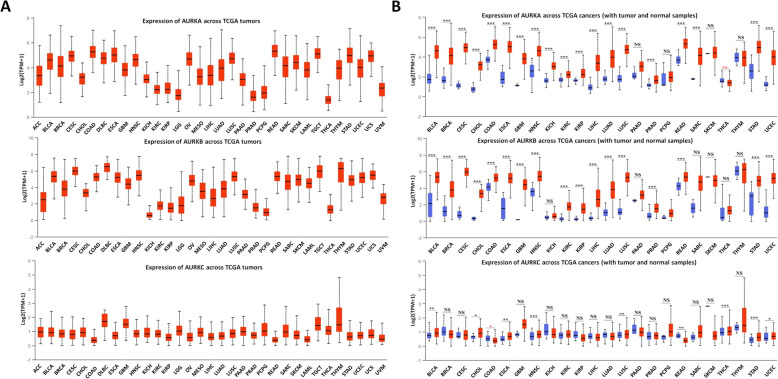
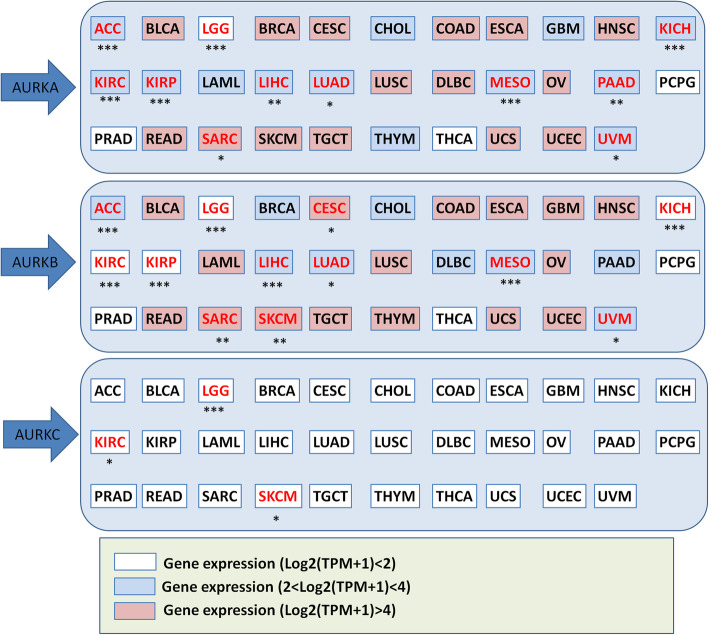
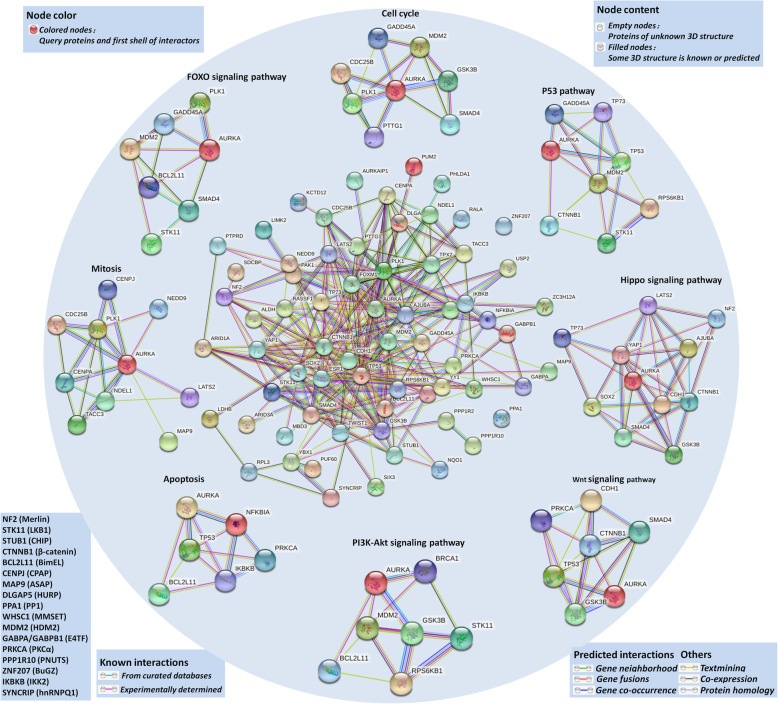
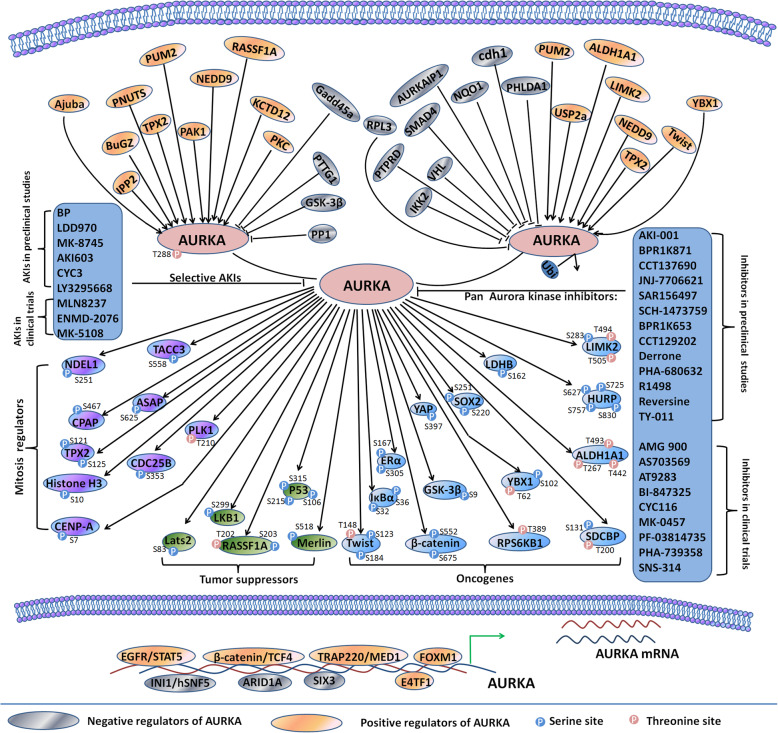
Aurora kinase A (AURKA) belongs to the family of serine/threonine kinases, whose activation is necessary for cell division processes via regulation of mitosis. AURKA shows significantly higher expression in cancer tissues than in normal control tissues for multiple tumor types according to the TCGA database. Activation of AURKA has been demonstrated to play an important role in a wide range of cancers, and numerous AURKA substrates have been identified. AURKA-mediated phosphorylation can regulate the functions of AURKA substrates, some of which are mitosis regulators, tumor suppressors or oncogenes. In addition, enrichment of AURKA-interacting proteins with KEGG pathway and GO analysis have demonstrated that these proteins are involved in classic oncogenic pathways. All of this evidence favors the idea of AURKA as a target for cancer therapy, and some small molecules targeting AURKA have been discovered. These AURKA inhibitors (AKIs) have been tested in preclinical studies, and some of them have been subjected to clinical trials as monotherapies or in combination with classic chemotherapy or other targeted therapies.
Overview
The claims and statistics of this paper haven’t been checked yet.
Free: it reads the open-access text and checks the first 5 claims that cite a source we can check. Create a free account to check every claim.
Integrity signals
Registry
Cites
Statistics
Figures
Verification
Claims the paper makes
The claims and statistics of this paper haven’t been checked yet.
Free: it reads the open-access text and checks the first 5 claims that cite a source we can check. Create a free account to check every claim.
Claims other papers make about this one
Each is checked against this paper’s own text: does it say what the citing paper says it does?
The cited source says what the claim attributes to it.
In the citing paper
“AURKA, a member of the AURK family member, is frequently overexpressed in a wide range of cancers and plays a critical role in oncogenesis [127, 128].”
From Differential Response and Resistance to KRAS-Targeted Therapy (2025) · cites this paper as [127]
Self-check
Percentages, sums and reported differences re-computed from the paper’s own numbers.
The self-check needs the paper’s full text.
Citations
Cites
3 retracted
Zhou, S.-F., Ding, Y.-H., Zhou, Z.-W., Ha, C., Zhang, X.-Y., Pan, S.-T., He, Z.-X., Edelman, J. L., Wang, D., Yang, Y.-X., et al. (2015) · Drug Design Development and Therapy · doi:10.2147/dddt.s74062 · Cited by 87 · cited 1×
“process is also impeded by MLN8237 treatment in human epithelial ovarian and pancreatic cancer cells [134].”
BackgroundRetractedAurora-A is a determinant of tamoxifen sensitivity through phosphorylation of ERα in breast cancer
Zheng, X.-Q., Guo, J., Yang, H., Kanai, M., He, L. L., Li, Y. Y., Koomen, J., Minton, S., Gao, M., Ren, X. B., et al. (2013) · Oncogene · doi:10.1038/onc.2013.444 · Cited by 44 · cited 1×
“Ser167 and Ser305, leading to an increase in the DNAbinding ability of ERα and the transcriptional activity of ERα toward its target cyclin D1 [55].”
BackgroundRetractedZhou, S.-F., Li, J.-P., Yang, Y.-X., Liu, Q., Zhou, Z.-W., Pan, S., He, Z., Zhang, X., Yang, T., Pan, S.-Y., et al. (2015) · Drug Design Development and Therapy · doi:10.2147/dddt.s74412 · Cited by 36 · cited 1×
“PHA-739358 also induces cell cycle arrest, apoptosis and autophagy and suppresses the EMT process [176, 177].”
BackgroundRetractedHarrington, E. A., Bebbington, D., Moore, J., Rasmussen, R. K., Ajose-Adeogun, A. O., Nakayama, T., Graham, J. A., Demur, C., Hercend, T., Diu-Hercend, A., et al. (2004) · Nature Medicine · doi:10.1038/nm1003 · Cited by 965 · cited 1×
“MK-0457, a pyrazoloquinazoline compound, inhibits all three Aurora kinases [166] and inhibits FLT-3 and Abl kinases [167].”
BackgroundDai, Y., Xu, C., Sun, X., & Chen, X. (2017) · Chemical Society Reviews · doi:10.1039/c6cs00592f · Cited by 931 · cited 1×
“Furthermore, development of nanoparticle therapeutic carriers that are passively targeted to tumors through the enhanced permeability and retention effect may be helpful [231].”
BackgroundPolo-like kinase-1 is activated by aurora A to promote checkpoint recovery
Macůrek, L., Lindqvist, A., Lim, D., Lampson, M. A., Klompmaker, R., Freire, R., Clouin, C., Taylor, S. S., Yaffe, M. B., & Medema, R. H. (2008) · Nature · doi:10.1038/nature07185 · Cited by 710 · cited 1×
“It has been reported that AURKA is responsible for the Thr210 phosphorylation of PLK1, which is required for checkpoint recovery [58].”
BackgroundMitotic Phosphorylation of Histone H3: Spatio-Temporal Regulation by Mammalian Aurora Kinases
Crosio, C., Fimia, G. M., Loury, R., Kimura, M., Okano, Y., Zhou, H., Sen, S., Allis, C. D., & Sassone-Corsi, P. (2002) · Molecular and Cellular Biology · doi:10.1128/mcb.22.3.874-885.2002 · Cited by 666 · cited 1×
“phosphorylates Ser10 both in vitro and in vivo [61].”
BackgroundStructural Basis of Aurora-A Activation by TPX2 at the Mitotic Spindle
Bayliss, R., Sardon, T., Vernos, I., & Conti, E. (2003) · Molecular Cell · doi:10.1016/s1097-2765(03)00392-7 · Cited by 636 · cited 1×
“The Nterminal domain of TPX2 binds to AURKA and protects AURKA from dephosphorylation according to experimental and structural analyses [10, 11].”
BackgroundHirota, T., Kunitoku, N., Sasayama, T., Marumoto, T., Zhang, D., Nitta, M., Hatakeyama, K., & Saya, H. (2003) · Cell · doi:10.1016/s0092-8674(03)00642-1 · Cited by 628 · cited 2×
“The LIM protein Ajuba efficiently stimulates AURKA autophosphorylation at Thr288 and increases kinase activity toward histone H3 in the late G2 phase [25].”
BackgroundPhosphorylation by aurora kinase A induces Mdm2-mediated destabilization and inhibition of p53
Katayama, H., Sasai, K., Kawai, H., Yuan, Z.-M., Bondaruk, J., Suzuki, F., Fujii, S., Arlinghaus, R. B., Czerniak, B. A., & Sen, S. (2004) · Nature Genetics · doi:10.1038/ng1279 · Cited by 588 · cited 1×
“It has been reported that AURKA phosphorylates p53 at Ser315, after which p53 is destabilized and the G2-M transition is enhanced [72].”
Background
Cited by
Items 501–600 of 629
Yang, S.-J., Kuan, Y.-H., Ooi, Z.-X., Lai, H.-S., Wu, H., Liao, P., Lin, Y.-J., Su, C. M., Lai, M., & Hung, L. (2025) · Cell Death Discovery · doi:10.1038/s41420-025-02885-z
“Additionally, accumulating evidence indicates that Aurora-A overexpression plays a critical role in tumor malignancy in various types of cancer [30, 31].”
Zhang, R., Huang, Q., Chen, Z., Meng, W., Dong, H., Qi, Z., Liu, L., Shen, J., & Xie, D. (2025) · Advanced Science · doi:10.1002/advs.202409341
Guo, Y., Wang, J., Huang, J., Wei, J., Han, Y.-J., Liu, Y., & Lu, Y. (2025) · International Journal of Ophthalmology · doi:10.18240/ijo.2026.01.02 · Cited by 2
Reversal of Centrosome Amplification to Reduce Oncogenicity of Metastatic Uveal Melanoma
Fabian-Kolpanowicz, K. (2023) · Lancaster EPrints (Lancaster University) · doi:10.17635/lancaster/thesis/2119
Li, J., Qi, Y., Li, B., Liu, Y., Yang, K., Zhang, Z., Zhu, J., & Du, E. (2024) · Figshare · doi:10.6084/m9.figshare.26584944
Tang, G., Peng, J., Huo, L., & Yin, W. (2024) · Figshare · doi:10.6084/m9.figshare.26593394
Ren, L., Yang, Y., Li, W., Zheng, X., Liu, J., Li, S., Yang, H., Zhang, Y., Ge, B., Zhang, S., et al. (2022) · Figshare · doi:10.6084/m9.figshare.21261638
Ingebriktsen, L. M., Humlevik, R. O. C., Svanøe, A. A., Sæle, A. K. M., Winge, I., Toska, K., Kalvenes, M. B., Davidsen, B., Heie, A., Knutsvik, G., et al. (2024) · Figshare · doi:10.6084/m9.figshare.26943867
Ingebriktsen, L. M., Humlevik, R. O. C., Svanøe, A. A., Sæle, A. K. M., Winge, I., Toska, K., Kalvenes, M. B., Davidsen, B., Heie, A., Knutsvik, G., et al. (2024) · Figshare · doi:10.6084/m9.figshare.26943849
Ren, L., Yang, Y., Li, W., Zheng, X., Liu, J., Li, S., Yang, H., Zhang, Y., Ge, B., Zhang, S., et al. (2022) · Figshare · doi:10.6084/m9.figshare.21261629
Zheng, Z., Yang, H., Shi, Y., Zhou, F., Liu, L., Yan, Z., & Wang, X. (2024) · Figshare · doi:10.6084/m9.figshare.26610729
Ingebriktsen, L. M., Humlevik, R. O. C., Svanøe, A. A., Sæle, A. K. M., Winge, I., Toska, K., Kalvenes, M. B., Davidsen, B., Heie, A., Knutsvik, G., et al. (2024) · Figshare · doi:10.6084/m9.figshare.26943855
Additional file 1 of Autocrine regulation of tumor cell repopulation by Hsp70-HMGB1 alarmin complex
Sverchinsky, D. V., Alhasan, B. A., Mikeladze, M. A., Lazarev, V. F., Kuznetcova, L. S., Morshneva, A. V., Nikotina, A. D., Ziewanah, A., Koludarova, L. V., Starkova, T. Y., et al. (2024) · Figshare · doi:10.6084/m9.figshare.26631577
Ingebriktsen, L. M., Humlevik, R. O. C., Svanøe, A. A., Sæle, A. K. M., Winge, I., Toska, K., Kalvenes, M. B., Davidsen, B., Heie, A., Knutsvik, G., et al. (2024) · Figshare · doi:10.6084/m9.figshare.26943870
Martins, S., Coletti, R., & Lopes, M. B. (2024) · Figshare · doi:10.6084/m9.figshare.26619988
Ingebriktsen, L. M., Humlevik, R. O. C., Svanøe, A. A., Sæle, A. K. M., Winge, I., Toska, K., Kalvenes, M. B., Davidsen, B., Heie, A., Knutsvik, G., et al. (2024) · Figshare · doi:10.6084/m9.figshare.26943846
Ingebriktsen, L. M., Humlevik, R. O. C., Svanøe, A. A., Sæle, A. K. M., Winge, I., Toska, K., Kalvenes, M. B., Davidsen, B., Heie, A., Knutsvik, G., et al. (2024) · Figshare · doi:10.6084/m9.figshare.26943876
Zheng, Z., Yang, H., Shi, Y., Zhou, F., Liu, L., Yan, Z., & Wang, X. (2024) · Figshare · doi:10.6084/m9.figshare.26610732
Additional file 1 of Therapeutic targeting of the TPX2/TTK network in colorectal cancer
Shaath, H., Vishnubalaji, R., Elango, R., Velayutham, D., Jithesh, P. V., & Alajez, N. M. (2023) · Figshare · doi:10.6084/m9.figshare.24217397
Tang, G., Peng, J., Huo, L., & Yin, W. (2024) · Figshare · doi:10.6084/m9.figshare.26593391
Yang, X., Zhou, M., Luan, Y., Li, K., Wang, Y., & Yang, X. (2024) · Figshare · doi:10.6084/m9.figshare.26753974
Yang, X., Zhou, M., Luan, Y., Li, K., Wang, Y., & Yang, X. (2024) · Figshare · doi:10.6084/m9.figshare.26753968
Ingebriktsen, L. M., Humlevik, R. O. C., Svanøe, A. A., Sæle, A. K. M., Winge, I., Toska, K., Kalvenes, M. B., Davidsen, B., Heie, A., Knutsvik, G., et al. (2024) · Figshare · doi:10.6084/m9.figshare.26943840
Tang, G., Peng, J., Huo, L., & Yin, W. (2024) · Figshare · doi:10.6084/m9.figshare.26593397
Ingebriktsen, L. M., Humlevik, R. O. C., Svanøe, A. A., Sæle, A. K. M., Winge, I., Toska, K., Kalvenes, M. B., Davidsen, B., Heie, A., Knutsvik, G., et al. (2024) · Figshare · doi:10.6084/m9.figshare.26943843
Li, J., Qi, Y., Li, B., Liu, Y., Yang, K., Zhang, Z., Zhu, J., & Du, E. (2024) · Figshare · doi:10.6084/m9.figshare.26584950
Ren, L., Yang, Y., Li, W., Zheng, X., Liu, J., Li, S., Yang, H., Zhang, Y., Ge, B., Zhang, S., et al. (2022) · Figshare · doi:10.6084/m9.figshare.21261620
Ingebriktsen, L. M., Humlevik, R. O. C., Svanøe, A. A., Sæle, A. K. M., Winge, I., Toska, K., Kalvenes, M. B., Davidsen, B., Heie, A., Knutsvik, G., et al. (2024) · Figshare · doi:10.6084/m9.figshare.26943873
Tang, G., Peng, J., Huo, L., & Yin, W. (2024) · Figshare · doi:10.6084/m9.figshare.26593382
Samimi, H., Tavakoli, R., Fallah, P., Sohi, A. N., Shirkouhi, M. A., Naderi, M., & Haghpanah, V. (2024) · Figshare · doi:10.6084/m9.figshare.26551726
Ingebriktsen, L. M., Humlevik, R. O. C., Svanøe, A. A., Sæle, A. K. M., Winge, I., Toska, K., Kalvenes, M. B., Davidsen, B., Heie, A., Knutsvik, G., et al. (2024) · Figshare · doi:10.6084/m9.figshare.26943864
Ingebriktsen, L. M., Humlevik, R. O. C., Svanøe, A. A., Sæle, A. K. M., Winge, I., Toska, K., Kalvenes, M. B., Davidsen, B., Heie, A., Knutsvik, G., et al. (2024) · Figshare · doi:10.6084/m9.figshare.26943861
Ingebriktsen, L. M., Humlevik, R. O. C., Svanøe, A. A., Sæle, A. K. M., Winge, I., Toska, K., Kalvenes, M. B., Davidsen, B., Heie, A., Knutsvik, G., et al. (2024) · Figshare · doi:10.6084/m9.figshare.26943837
Yang, X., Zhou, M., Luan, Y., Li, K., Wang, Y., & Yang, X. (2024) · Figshare · doi:10.6084/m9.figshare.26384690
Yang, X., Zhou, M., Luan, Y., Li, K., Wang, Y., & Yang, X. (2024) · Figshare · doi:10.6084/m9.figshare.26384548
Meng, J., Wei, Y., Deng, Q., Li, L., & Li, X. (2022) · Figshare · doi:10.6084/m9.figshare.18482409
Self-citationMeng, J., Wei, Y., Deng, Q., Li, L., & Li, X. (2022) · Figshare · doi:10.6084/m9.figshare.18482406
Self-citationRen, L., Yang, Y., Li, W., Zheng, X., Liu, J., Li, S., Yang, H., Zhang, Y., Ge, B., Zhang, S., et al. (2022) · Figshare · doi:10.6084/m9.figshare.21261635
Additional file 2 of Therapeutic targeting of the TPX2/TTK network in colorectal cancer
Shaath, H., Vishnubalaji, R., Elango, R., Velayutham, D., Jithesh, P. V., & Alajez, N. M. (2024) · Figshare · doi:10.6084/m9.figshare.24217634
Additional file 2 of Predicting drug response from single-cell expression profiles of tumours
Pellecchia, S., Viscido, G., Franchini, M., & Gambardella, G. (2024) · Figshare · doi:10.6084/m9.figshare.26648316
Ren, L., Yang, Y., Li, W., Zheng, X., Liu, J., Li, S., Yang, H., Zhang, Y., Ge, B., Zhang, S., et al. (2022) · Figshare · doi:10.6084/m9.figshare.21261617
Li, J., Qi, Y., Li, B., Liu, Y., Yang, K., Zhang, Z., Zhu, J., & Du, E. (2023) · Figshare · doi:10.6084/m9.figshare.26584947
Ingebriktsen, L. M., Humlevik, R. O. C., Svanøe, A. A., Sæle, A. K. M., Winge, I., Toska, K., Kalvenes, M. B., Davidsen, B., Heie, A., Knutsvik, G., et al. (2024) · Figshare · doi:10.6084/m9.figshare.26943834
Tang, G., Peng, J., Huo, L., & Yin, W. (2024) · Figshare · doi:10.6084/m9.figshare.26593379
Ren, L., Yang, Y., Li, W., Zheng, X., Liu, J., Li, S., Yang, H., Zhang, Y., Ge, B., Zhang, S., et al. (2022) · Figshare · doi:10.6084/m9.figshare.21261626
Yang, X., Zhou, M., Luan, Y., Li, K., Wang, Y., & Yang, X. (2024) · Figshare · doi:10.6084/m9.figshare.26753971
Ingebriktsen, L. M., Humlevik, R. O. C., Svanøe, A. A., Sæle, A. K. M., Winge, I., Toska, K., Kalvenes, M. B., Davidsen, B., Heie, A., Knutsvik, G., et al. (2024) · Figshare · doi:10.6084/m9.figshare.26943858
Tang, G., Peng, J., Huo, L., & Yin, W. (2024) · Figshare · doi:10.6084/m9.figshare.26593385
Additional file 1 of Predicting drug response from single-cell expression profiles of tumours
Pellecchia, S., Viscido, G., Franchini, M., & Gambardella, G. (2024) · Figshare · doi:10.6084/m9.figshare.26648313
Ren, L., Yang, Y., Li, W., Zheng, X., Liu, J., Li, S., Yang, H., Zhang, Y., Ge, B., Zhang, S., et al. (2022) · Figshare · doi:10.6084/m9.figshare.21261623
Tang, G., Peng, J., Huo, L., & Yin, W. (2024) · Figshare · doi:10.6084/m9.figshare.26593388
Ren, L., Yang, Y., Li, W., Zheng, X., Liu, J., Li, S., Yang, H., Zhang, Y., Ge, B., Zhang, S., et al. (2022) · Figshare · doi:10.6084/m9.figshare.21261632
Ingebriktsen, L. M., Humlevik, R. O. C., Svanøe, A. A., Sæle, A. K. M., Winge, I., Toska, K., Kalvenes, M. B., Davidsen, B., Heie, A., Knutsvik, G., et al. (2024) · Figshare · doi:10.6084/m9.figshare.26943852
Yang, X., Zhou, M., Luan, Y., Li, K., Wang, Y., & Yang, X. (2024) · Figshare · doi:10.6084/m9.figshare.26753965
Pretel, J. J. M. (2024) · Repository of Digital Objects for Teaching Research and Culture (University of Valencia)
Gonçalves, A. P. (2025) · Portuguese National Funding Agency for Science, Research and Technology (RCAAP Project by FCT)
Overcome Resistance to Drug-Induced Apoptosis in Cancer Cells
Li, J. (2022) · DigitalCommons@UNMC
Hüz, M., Soylu, N. K., Koç, A., Kucukakcali, Z., Danis, N., & Özhan, O. (2026) · Diagnostics · doi:10.3390/diagnostics16010160
“Phospho-specific antibodies targeting AURKA-activated molecules, such as Phospho-PLK1 Thr210 and Phospho-p53 Ser315 , were selected for analysis [17,27].”
InfluentialChen, A., Nie, H., Li, Y., Zhong, L., Yang, W., & Zhang, L. (2026) · Medicine · doi:10.1097/md.0000000000046636
“[29,30] CDK1 is a crucial protein kinase that regulates the progression of the G2/M phase in the cell cycle, and its abnormal expression can affect normal cell division and proliferation.”
Kim, S.-S., Moghe, M., Rait, A. S., Harford, J. B., & Chang, E. H. (2026) · International Journal of Nanomedicine · doi:10.2147/ijn.s443375
Neto, J. D. B. V. (2023) · LA Referencia (Red Federada de Repositorios Institucionales de Publicaciones Científicas)
Zhang, N., Zhang, W., Li, Y., Wu, Q., Shi, R., & Li, S. (2026) · Combinatorial Chemistry & High Throughput Screening · doi:10.2174/0113862073414517251122065708
NN-01-195, a Novel Conjugate of HSP90 and AURKA Inhibitors, Effectively Targets Solid Tumors
Nguyen, T. T., Nandwana, N. K., Srikanth, Y. V. V., Bagnyukova, T., Chkhalo, O., Cai, K. Q., Lamperelli, J., Pirestani, S., Mehra, M. K., Burtness, B. A., et al. (2026) · Molecular Cancer Therapeutics · doi:10.1158/1535-7163.mct-25-0857
de Oliveira, F. M., dos Santos, R. A., Silveira, N. N., Neto, F. S. L., Junta, C. M., Lanza, U., & Siqueira, C. S. (2026) · Ozone Science and Engineering · doi:10.1080/01919512.2026.2612995
“Aurora kinases are crucial regulators of mitosis, and their overexpression is commonly associated with aggressive cancer phenotypes and poor prognosis (R. Du et al. 2021; Lin et al. 2020; Titova et al. 2023).”
AURKA‐Driven Metabolic Rewiring in Gastric Epithelial Cells
Varshney, N., Singh, S., Rani, C., Verma, T., Mishra, A., Kumar, R., & Jha, H. C. (2026) · Journal of Raman Spectroscopy · doi:10.1002/jrs.70119
Vasudevan, K., Dhanushkumar, T., Selvam, P. K., Krishnan, A., Sunila, B. G., Elavarasu, S. M., Mohan, S., & Karunakaran, R. (2026) · bioRxiv (Cold Spring Harbor Laboratory) · doi:10.64898/2026.02.18.706559
Xiaoling, Q. U., Lu, L., & Dong, X. (2026) · Medicine · doi:10.1097/md.0000000000047615
“[23] At the clinical correlation level, Deng and coworkers reported that high AURKB expression is significantly associated with shortened survival in gastric cancer patients, [20] and the CTD data in this study further extend this conclusion to esophageal cancer (Fig.”
SENP5 enhances antiviral innate immunity by promoting AURKA-dependent STAT2 phosphorylation
Song, S., Kan, Y., Zhou, M., Jiang, Y., Tang, Y., Luo, H., & Hu, Y. (2026) · Cell Communication and Signaling · doi:10.1186/s12964-026-02808-0
“Recently, extensive research has indicated that dysregulation of AURKA is frequently observed in various malignancies and contributes to oncogenesis, making it a potential target for cancer therapy [47, 48].”
Kumar, A., Chutia, H., & Nagamani, S. (2026) · Journal of Molecular Graphics and Modelling · doi:10.1016/j.jmgm.2026.109365
Khin, M., Saldana, A. C., Rangel‐Grimaldo, M., Raja, H. A., Abegg, D., Ekiert, J., Liu, C., Misra, S., Ratia, K., Adibekian, A., et al. (2026) · Molecular & Cellular Proteomics · doi:10.1016/j.mcpro.2026.101558
Yin, J., Wang, Y., Zhang, H., & Qu, W. (2026) · SLAS TECHNOLOGY · doi:10.1016/j.slast.2026.100416
Physiological study of Aurora kinase A (AURKA) in relation with Breast Cancer Tissue
Merza, S., & Hassan, A. B. (2026) · Al-Kufa University Journal for Biology · doi:10.36320/ajb/v18.i1.23024
“It is also detectable in tissues characterized by low or absent rates of cell division, where it contributes to a range of physiological processes during interphase [9].”
Targeting the cell cycle : A novel therapeutic strategy against ATIP3- deficient breast cancer
Haykal, M. M. (2023) · theses.fr (ABES) · doi:10.70675/03dee32bz395cz469ez9a0dzf4c5f2e84330
Hu, Y., He, Z., Yang, X., Han, B., & Chen, X. (2026) · Molecular Diversity · doi:10.1007/s11030-026-11548-9
Necroptosis in pancreatic cancer: Molecular mechanisms and therapeutic implications
Fan, Y.-J., Liu, W. W., Liu, C., Zhu, Y., Chu, T., Han, H.-S., & Wu, D.-D. (2026) · APOPTOSIS · doi:10.1007/s10495-026-02284-4
“Aurora kinase (AURK) consists of three highly homologous serine/threonine kinases, includ - ing aurora kinase A (AURKA), AURKB, and AURKC [ 53, 54 ], which are essential during cell mitosis [ 55 ].”
Gao, Q., Zhang, X., Hui, K., Zou, X., Li, L., Yu, Z., Feng, Y., Shen, X., Jiang, X., & Liu, B. (2026) · Naunyn-Schmiedeberg s Archives of Pharmacology · doi:10.1007/s00210-026-05391-w
“Aurora Kinase A (AURKA), a serine/threonine kinase belonging to the Aurora kinase family, plays a pivotal role in cell division (Du et al. 2021).”
Zhuang, A., Wang, X., Cheng, Y., Chenhe, Z., Liu, H., Li, R., Wan, Y., Zeng, W., Wu, T., & Li, W. (2026) · Biochimica et Biophysica Acta (BBA) - Reviews on Cancer · doi:10.1016/j.bbcan.2026.189600
TARGETING ONCOGENES: DEVELOPMENT AND CHARACTERIZATION OF AURKA AND HER2 INHIBITORS
Montoya, I. (2026) · Scholar Works at UT Tyler (The University of Texas at Tyler)
Zhang, L., & Wu, P. (2026) · Cell Adhesion & Migration · doi:10.1080/19336918.2026.2674357
Yang, Z., Chang, C., Gao, N., Gao, P., Feng, R., Meng, J., Yang, X., Song, Y., & Fan, T. (2026) · Discover Oncology · doi:10.1007/s12672-026-05254-z
Putra, W. E., Widiastuti, D., Hidayatullah, A., Isnanto, H., Heikal, M. F., Sustiprijatno, & Sari, D. R. T. (2026) · Analele Universităţii "Ovidius" Constanţa. Seria Chimie/"Ovidius" University Annals of Chemistry · doi:10.2478/auoc-2026-0001
“From a drug discovery standpoint, the therapeutic potential of AURKA inhibition is well-validated [5], yet the development of "Type I" or "Type II" inhibitors is plagued by a significant selectivity hurdle.”
Genomic Catastrophe Defines the Evolutionary Trajectory of Adrenocortical Carcinoma
Backman, S., Axling, F., (41392), L. Z., Botling, J., Juhlin, C. C., Barazeghi, E., Skogseid, B. M., Klimàcek, B., Annebäck, M., Zedenius, J., et al. (2026) · Endocrine Pathology · doi:10.1007/s12022-026-09922-2
“This dependency is therapeutically attractive, as SAC inhibitors induce apoptosis in ACC cells [53–55] and several agents are already in clinical development in advanced carcinomas [56, 57].”
In silico design of julolidine–BODIPY-based near-infrared probes for AURKA detection
Bernardshaw, L. J., Ramasamy, R., & Solomon, R. V. (2026) · Inorganica Chimica Acta · doi:10.1016/j.ica.2026.123323
Qi, X., Zhang, H., Wang, S., Qiao, L., Ma, L., Zhang, K., & Wang, Y. (2026) · Discover Oncology · doi:10.1007/s12672-026-05413-2
“These selected targets have shown top topological importance in the protein-protein interaction network and proved its role in cell cycle regulation, oncogenic signaling, DNA damage checkpoint regulation in TNBC respectively [9, 19].”
Sengupta, D., Thakur, D., Mahapatra, E., Das, S., Chakrabarti, J., Sen, S., & Mukherjee, S. (2026) · Bioscience Reports · doi:10.1042/bsr20253828
“…by positive regulators like FOXM1, EGF [10], the TRAP200/MED1 complex, the β -catenin/TCF-4 complex [11], or Myc or inactivation of transcriptional repressors [12] of AURKA have also been documented, which presented AURKA as an attractive therapeutic target [13] and a probable diagnostic marker.”
Oukhdouch, A., Nadir, Y., Salman, E. M., Khalid, J., Zinbi, B., Souad, S., & rais, H. (2026) · Journal of Genetic Engineering and Biotechnology · doi:10.1016/j.jgeb.2026.100724
“36 In GBM, the significant upregulation of all five hub genes reinforces their relevance to glioma process.”
Sarker, H., Ali, M. A., Islam, M. F., Ahmed, E., Ganguly, A., & Zilani, M. N. H. (2026) · Journal of Genetic Engineering and Biotechnology · doi:10.1016/j.jgeb.2026.100745
Kumar, A., Chaturvedi, A., Kumar, M., Katiyar, A., Nayak, P., Singh, H., Banerjee, A., Kumar, S., & Prakash, A. (2026) · Journal of Integrated Science and Technology · doi:10.62110/sciencein.jist.2026.v14.1614
Wang, X., Tian, R., Duan, K., & Zhang, X. (2026) · International Journal of Radiation Research · doi:10.66224/ijrr.24.1.11
Targeting the oncogenic functions of Aurora-A by degraders
Müller, J. E. (2026) · doi:10.25972/opus-45313
Identification of Key Pathways and Hub Genes in Breast Cancer Via a Systems Biology Approach
Angoshtan, S. F., Mori, Z., Naeimi, S., & Aghdam, E. M. (2026) · Pharmaceutical Sciences · doi:10.34172/ps.026.42698
Capece, M., Reshetnikova, E., Wang, Y., Katuwal, N. B., Bellan, D. D. L., Kumar, A., Bharti, V., Watkins, R., Krull, J. E., Gu, S., et al. (2026) · Journal for ImmunoTherapy of Cancer · doi:10.1136/jitc-2025-013441
“47 55–57 Alisertib is being investigated in phase I–III clinical trials, both as a single agent and in combination with other therapies, for indications such as breast cancer, small cell lung cancer, and other advanced solid tumors (https://www.…”
Sankhe, K., Jadhav, M., Prabhu, A., & Khan, T. (2026) · EXCLI journal · doi:10.17179/excli2026-9347_supplementary_data
Shang, Q. H., Awuti, G., Xu, H., Chen, Q. M., & Zhao, J. (2026) · PubMed Central · doi:10.7518/hxkq.2026135
A nuclear-targeted PROTAC enables subcellular-selective degradation of AURKA
Qian, B., Liu, F., Liu, Q., Zhou, F., Zhu, D., Lei, X., Wen, S., Hou, Z., & Liu, Q. (2026) · Biochemical and Biophysical Research Communications · doi:10.1016/j.bbrc.2026.154458
Mourad, M. A. E., Hofni, A., & Mourad, A. A. E. (2026) · Drug Development Research · doi:10.1002/ddr.70364
Du, E., Wang, W., Su, Q., Huang, W., Qi, Y., Tang, W., Zhang, Z., Zhang, C., & Li, J. (2026) · Cell Death and Disease · doi:10.1038/s41419-026-09203-0
“…1:3000), HRP-conjugated Goat Anti-Rabbit IgG(H + L) (SA00001-2, Proteintech, 1:3000), ARL13B (17711-1-AP, Proteintech, 1:1000), Rhodamine (TRITC) – conjugated Goat Anti-Rabbit IgG(H + L) (SA00007-2, Proteintech Group, 1:500), and FITC Monoclonal antibody (68132-1-Ig, Proteintech Group, 1:1000).”
Jiang, H., 童炜来, Wang, S., Xiong, X., Yao, G., Yang, F., Xu, Y., Liu, J., Xie, X., & Liu, Z. (2026) · Cellular and Molecular Life Sciences · doi:10.1007/s00018-026-06396-7
“Aurora kinase A (AURKA) is a serine/threonine kinase that regulates centrosome maturation, mitotic entry, and spindle assembly and is widely implicated in cancer progression [13–19 ].”
Erat, S., Devrim, A. K., Şenol, A., Moran, B., Çoban, C. Ç., & Akanbong, E. A. (2026) · International Journal of Veterinary and Animal Research (IJVAR) · doi:10.71336/ijvar.733
“AURKA is a serine/threonine kinase involved in cell division by regulating mitosis and is considered an important therapeutic target due to its overexpression in many cancer types and its involvement of oncogenic signaling pathways (Du et al., 2021).”
Widyananda, M. H., Ulfa, S. M., Muflikhah, L., Zakaria, Z. A., & Widodo, N. (2026) · Oriental Pharmacy and Experimental Medicine · doi:10.1007/s13596-026-00924-3
Metadata
- Authors
- Du, R., Huang, C., Liu, K., Li, X., & Dong, Z.
- Affiliations
- Zhengzhou University (CN)
- Corresponding author
- Du, Ruijuan
- Li, Xiang
- Dong, Zigang
- Venue
- Molecular Cancer
- Published
- 2021-01-15
- Volume
- 20
- Issue
- 1
- Pages
- 15-15
- ISSN
- 1476-4598 (ISSN-L)
- PMC
- PMC7809767
- OpenAlex
- W3123995258
- Cited by
- 586
- References
- 238
- Citations by year
- 2026: 71 · 2025: 118 · 2024: 145 · 2023: 124 · 2022: 100 · 2021: 26
- FWCI
- 12.94
- Type
- journal article
- Language
- en
- Open access
- gold
- doi.org
- Licence
- cc-by
- creativecommons.org/licenses/by/4.0/ (tdm)
- creativecommons.org/licenses/by/4.0/ (vor)
- Locations
- Molecular Cancer (publishedVersion, cc-by)
- PubMed Central (publishedVersion, cc-by)
- PubMed (publishedVersion)
- DOAJ (DOAJ: Directory of Open Access Journals) (submittedVersion, cc-by-sa)
- Funders
- National Natural Science Foundation of China (81802795, 82073075, 31301144)
- Topics
- Life Sciences › Biochemistry, Genetics and Molecular Biology › Cell Biology › Microtubule and mitosis dynamics
- Life Sciences › Biochemistry, Genetics and Molecular Biology › Cancer Research › Cancer Mechanisms and Therapy
- Health Sciences › Medicine › Oncology › Cancer-related Molecular Pathways
- Keywords
- AURKA, AURKA inhibitors, cancer therapy, mitosis regulation, serine/threonine kinase, oncogenic signaling, small-molecule kinase inhibitors, combination chemotherapy, targeted therapy
- MeSH terms
- Animals, Humans, Neoplasms, Substrate Specificity, Survival Analysis, Protein Kinase Inhibitors, Molecular Targeted Therapy, Aurora Kinase A
About these checks
Registry, retraction, Cites and statistics results are computed, not judged, with one exception: a printed reference that no index lists is read once by a model before it counts as a citation error. Claims are extracted by a model and kept only when their quote appears verbatim in the text; each cited source is then checked, with a model’s help, for whether it says what the claim relies on. Those verdicts can be wrong — read the claim’s quote and the cited source before relying on one.
Statistics and arithmetic are recomputed, not judged.
Confidence bands are shown only for fields calibrated on our annotated test set. None is calibrated yet, so no band is shown.
What counts as a claim ›How we measure confidence ›How we check this ›
Are you an author, or do you see a problem with this page? Request a review
Data sources
Bibliographic data: Semantic Scholar, OpenAlex, Crossref.
Contains information from the Semantic Scholar Academic Graph Datasets, made available under the ODC Attribution License (ODC-BY 1.0).
Semantic Scholar’s data is described in: Kinney, R., et al. (2023). The Semantic Scholar Open Data Platform. arXiv:2301.10140.
