

Wnt signaling in colorectal cancer: pathogenic role and therapeutic target
Open accessThe DOI matches its Crossref record; 276 of the 276 references it cites were found in a registry or an index.
Abstract
Background: The Wnt signaling pathway is a complex network of protein interactions that functions most commonly in embryonic development and cancer, but is also involved in normal physiological processes in adults. The canonical Wnt signaling pathway regulates cell pluripotency and determines the differentiation fate of cells during development. The canonical Wnt signaling pathway (also known as the Wnt/β-catenin signaling pathway) is a recognized driver of colon cancer and one of the most representative signaling pathways. As a functional effector molecule of Wnt signaling, the modification and degradation of β-catenin are key events in the Wnt signaling pathway and the development and progression of colon cancer. Therefore, the Wnt signaling pathway plays an important role in the pathogenesis of diseases, especially the pathogenesis of colorectal cancer (CRC). Objective: Inhibit the Wnt signaling pathway to explore the therapeutic targets of colorectal cancer. Methods: Based on studying the Wnt pathway, master the biochemical processes related to the Wnt pathway, and analyze the relevant targets when drugs or inhibitors act on the Wnt pathway, to clarify the medication ideas of drugs or inhibitors for the treatment of diseases, especially colorectal cancer. Results: Wnt signaling pathways include: Wnt/β-catenin or canonical Wnt signaling pathway, planar cell polarity (Wnt-PCP) pathway and Wnt-Ca 2+ signaling pathway. The Wnt signaling pathway is closely related to cancer cell proliferation, stemness, apoptosis, autophagy, metabolism, inflammation and immunization, microenvironment, resistance, ion channel, heterogeneity, EMT/migration/invasion/metastasis. Drugs/phytochemicals and molecular preparations for the Wnt pathway of CRC treatment have now been developed. Wnt inhibitors are also commonly used clinically for the treatment of CRC. Conclusion: The development of drugs/phytochemicals and molecular inhibitors targeting the Wnt pathway can effectively treat colorectal cancer clinically.
Overview
The claims and statistics of this paper haven’t been checked yet.
Free: it reads the open-access text and checks the first 5 claims that cite a source we can check. Create a free account to check every claim.
Integrity signals
Registry
Cites
Statistics
Figures
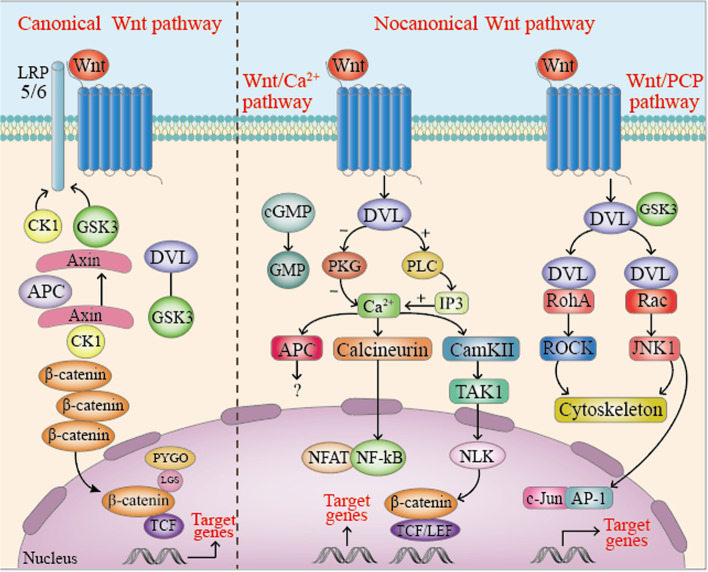
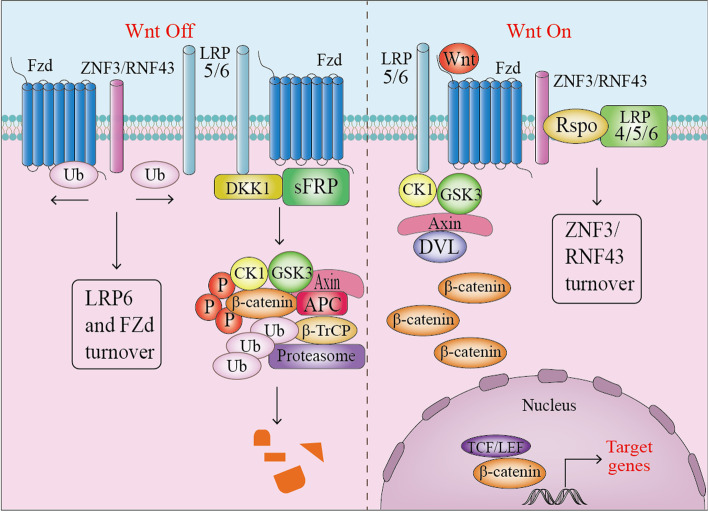
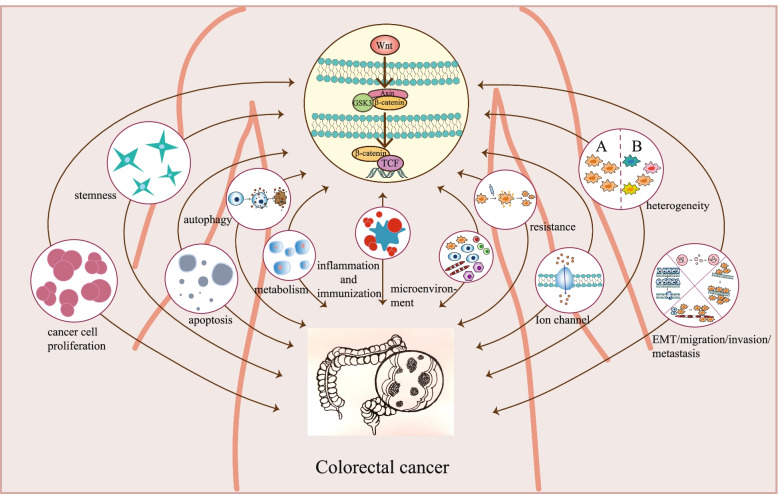
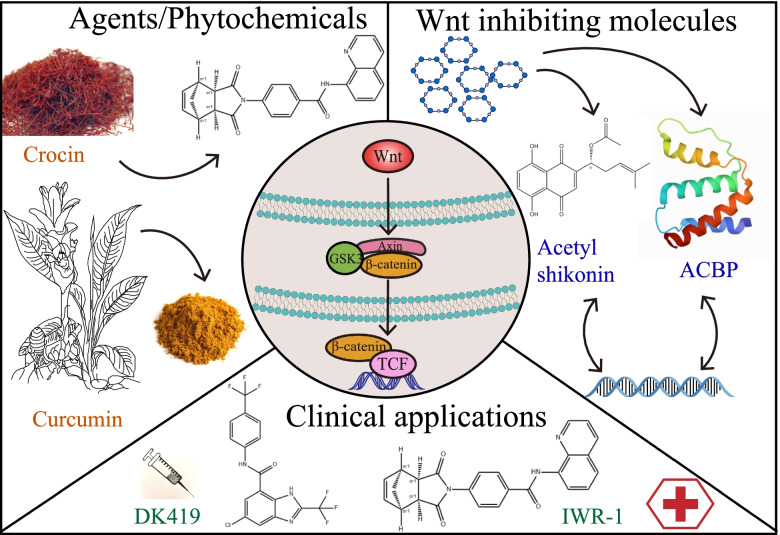
Verification
Claims the paper makes
The claims and statistics of this paper haven’t been checked yet.
Free: it reads the open-access text and checks the first 5 claims that cite a source we can check. Create a free account to check every claim.
Claims other papers make about this one
Each is checked against this paper’s own text: does it say what the citing paper says it does?
The source backs part of the claim, not all of it — or backs it for a different population, condition or comparison.
In the citing paper
“Multiple agents targeting both canonical and the β-catenin-independent non-canonical Wnt signaling including v-ATPase inhibitors and anti-RSPO antibody are undergoing clinical trials in CRC and other malignancies [119,120].”
From Recent Advances in Therapeutic Strategies to Improve Colorectal Cancer Treatment (2024) · cites this paper as [120]
Experimental — accuracy not yet measured
Self-check
Percentages, sums and reported differences re-computed from the paper’s own numbers.
The self-check needs the paper’s full text.
Citations
Cites
4 retracted
RETRACTED: Phytosomal curcumin inhibits tumor growth in colitis‐associated colorectal cancer
Marjaneh, R. M., Rahmani, F., Hassanian, S. M., Rezaei, N., Hashemzehi, M., Bahrami, A., Ariakia, F., Fiuji, H., Sahebkar, A., Avan, A., et al. (2018) · Journal of Cellular Physiology · doi:10.1002/jcp.26538 · Cited by 200
RetractedAmerizadeh, F., Rezaei, N., Rahmani, F., Hassanian, S. M., Moradi‐Marjaneh, R., Fiuji, H., Boroumand, N., Tirkani, A. N., Ghayour‐Mobarhan, M., Ferns, G. A., et al. (2018) · Journal of Cellular Biochemistry · doi:10.1002/jcb.27367 · Cited by 97
RetractedSun, J., Zhang, T., Cheng, M., Hong, L., Zhang, C., Xie, M., Sun, P., Fan, R., Wang, Z., Wang, L., et al. (2019) · Journal of Experimental & Clinical Cancer Research · doi:10.1186/s13046-019-1098-y · Cited by 65
RetractedHuang, T., Zhang, Q., Ren, W., Yan, B., Liang, Y., Tang, T., Lin, H. L., & Zhang, Y. (2020) · Cell Biology International · doi:10.1002/cbin.11358 · Cited by 52
RetractedWnt/β-Catenin Signaling, Disease, and Emerging Therapeutic Modalities
Nusse, R., & Clevers, H. (2017) · Cell · doi:10.1016/j.cell.2017.05.016 · Cited by 4,342
Targeting the Wnt/β-catenin signaling pathway in cancer
Zhang, Y., & Wang, X. (2020) · Journal of Hematology & Oncology · doi:10.1186/s13045-020-00990-3 · Cited by 1,431
Wnt signaling in development and tissue homeostasis
Steinhart, Z., & Angers, S. (2018) · Development · doi:10.1242/dev.146589 · Cited by 821
Wnt/β-catenin signaling in cancer stemness and malignant behavior
Fodde, R., & Brabletz, T. (2007) · Current Opinion in Cell Biology · doi:10.1016/j.ceb.2007.02.007 · Cited by 785
Hu, J. L., Wang, W., Lan, X. L., Zeng, Z. C., Liang, Y. S., Yan, Y. R., Song, F. Y., Wang, F. F., Zhu, X. H., Liao, W. J., et al. (2019) · Molecular Cancer · doi:10.1186/s12943-019-1019-x · Cited by 773 · cited 1×
“In terms of mechanism, the increased expression of miR-92a-3p activates the Wnt/β-catenin pathway, inhibits mitochondrial apoptosis by directly inhibiting FBXW7 and MOAP1, and promotes the stem cell, EMT, and metastasis of colorectal cancer cells [128].”
BackgroundWnt signaling in breast cancer: biological mechanisms, challenges and opportunities
Xu, X., Zhang, M., Xu, F., & Jiang, S. (2020) · Molecular Cancer · doi:10.1186/s12943-020-01276-5 · Cited by 588
Cited by
Items 701–800 of 973
(2026) · doi:10.1007/s11030-026-11586-3
Reissland, M., Hartmann, O., Tauch, S., Prieto‐Garcia, C., Schulte, C., Solvie, D., Loebbert, S., Jacomin, A., Pesic, M. H., Bugter, J. M., et al. (2023) · Research Square · doi:10.21203/rs.3.rs-2647009/v1
Heterogeneity in cancer: molecular mechanisms and therapeutic strategies
He, Y., Niu, L., Ren, Y.-M., Yuan, G.-Q., Pan, Y.-W., & Jin, W. (2026) · Signal Transduction and Targeted Therapy · doi:10.1038/s41392-026-03064-x
Akçeşme, B., Abazi, F., Hrapović, A., & Kozarić, S. (2025) · Hacettepe Journal of Biology and Chemistry · doi:10.15671/hjbc.1712451
Wei, M., Zang, H., Gao, Q., Zhang, Y., Wen, J., & Gao, Y. (2026) · Research Square · doi:10.21203/rs.3.rs-8578038/v1
Li, Y., Lai, R., He, Y., Cheng, L., Cheng, L., Yi, J., Li, Y., & Zhou, S. (2026) · Cells · doi:10.3390/cells15151396
Zhao, D., Zhao, G., Yao, M., Wu, J., & Fang, Z. (2026) · Journal of Translational Medicine · doi:10.1186/s12967-026-08019-y
Cao, J., Li, Y., He, L., pan, D., Wang, C., Li, J., Sun, K., Li, X., Aziz, F., Xiao, J., et al. (2026) · American Journal Of Pathology · doi:10.1016/j.ajpath.2026.06.011
A multi-model study of extracellular vesicles in bowel cancer invasion and metastasis
Guarnerio, S. (2023) · Sheffield Hallam University · doi:10.7190/shu-thesis-00581
Negi, P., Upreti, A., Budhlakoti, P., Sen, A. K., Danu, M., Tewari, S., Joshi, N., & Joshi, D. C. (2026) · Frontiers in Molecular Biosciences · doi:10.3389/fmolb.2026.1924197
Wang, Y., Wang, X., 霍达, Wang, S.-B., Liu, Q.-Y., Pang, J., Shen, T., Cui, D., Zhao, W.-J., Luo, Q.-F., et al. (2026) · Clinical and Experimental Medicine · doi:10.1007/s10238-026-02203-6
An online diagnosis method for cancer lesions based on intelligent imaging analysis
Gu, G., Shen, L., & Zhou, X. (2023) · Open Life Sciences · doi:10.1515/biol-2022-0625
Anti-resonance in developmental signaling regulates cell fate decisionsPreprint
Rosen, S. J., Witteveen, O., Baxter, N. J., Lach, R. S., Hopkins, E., Bauer, M., & Wilson, M. Z. (2025) · eLife · doi:10.7554/elife.107794.2
Maheshwari, T., Bhattacharya, S., & Singh, D. (2026) · Journal of Biomaterials Science Polymer Edition · doi:10.1080/09205063.2026.2736154
Decoding Colon Cancer Heterogeneity Through Integrated miRNA–Gene Network Analysis
He, Q., Mi, Z., Liu, T., Huang, T., Li, M., Guo, B., & Zheng, Z. (2025) · Mathematics · doi:10.3390/math13061020
Mechanism of ABCD3 inhibiting colorectal cancer progression by regulating Wnt/β-catenin
Luo, H., Li, M., Lin, X., Zhao, S. T., & Li, Q. (2025) · Molecular Biology Reports · doi:10.1007/s11033-025-10825-4
Structure, Function, and Role of KCTD9 in Human Diseases
刘, 宗. (2025) · Journal of Clinical Personalized Medicine · doi:10.12677/jcpm.2025.44413
Norrin in cancer: from a promising prognostic biomarker to a novel therapeutic target
Zhang, J., Zhang, Z., Xiong, H., Dong, G., & Yu, L. (2025) · Frontiers in Oncology · doi:10.3389/fonc.2025.1692715
Goosecoid drives colorectal cancer progression by inducing epithelial-mesenchymal transition
Li, B.-C., Wang, B.-Z., Han, L., Zhang, Z.-W., Wang, Y., Zhang, Y.-J., & Zhang, J.-N. (2026) · World Journal of Gastrointestinal Oncology · doi:10.4251/wjgo.v18.i3.115028
Exploring the Prognostic Role of SLC9A1 (NHE1) in Colon Adenocarcinoma
Adalı, Y., Özdil, B., & Köseler, A. (2026) · Genel Tıp Dergisi · doi:10.54005/geneltip.1758107
Dual targeting of YAP1 and β-catenin: a therapeutic strategy for colorectal cancer
Eleanya, G. C., Oresanya, Z. O., Omoigberale, O. J., & Kanmodi, R. (2026) · Discover Chemistry. · doi:10.1007/s44371-026-00562-3
Wang, J., Si, Y., Xuan, M., Han, S., Liu, K., Jiao, J., Men, X., Li, H., Wang, J., Liu, T., et al. (2026) · International Journal of Oncology · doi:10.3892/ijo.2026.5895
Chen, H., Zhang, B., Zhu, B., Zhou, P., Xu, C., Li, Q., & Chen, W. (2026) · Frontiers in Microbiology · doi:10.3389/fmicb.2026.1791364
The emerging metabolic role and treatment target of CPT1A in CRC
Zhu, X., Sun, T., Yuan, J., Mao, F., Jin, T., & Yi, C. (2026) · Frontiers in Cell and Developmental Biology · doi:10.3389/fcell.2026.1881073
Ramos, D. A. A., de Pina, D. F. T., Squiavinato, A. C. M. S., de Araújo, W. M., Rocha, M. R., & Morgado‐Díaz, J. A. (2026) · Molecular Biology Reports · doi:10.1007/s11033-026-12711-z
Chen, M., Ding, B., Tan, L., Ai, Q., Wang, Q., Zhu, L., & Huang, J. (2026) · Research Square · doi:10.21203/rs.3.rs-10019093/v1
Exploring Vitamin E’s Role in Colorectal Cancer Growth Using Rodent Models: A Scoping Review
Murshid, N. M., Goon, J. A., & Arifin, K. T. (2026) · Nutrients · doi:10.3390/nu18020289
Unravelling the p53 misfolding by chaperones in cancer
Jan, N., Jan, A., Sofi, S., & Mir, M. A. (2025) · Advances in protein chemistry and structural biology · doi:10.1016/bs.apcsb.2025.08.011
Silva, G. H., & Oliveira, R. L. (2023) · Archive of International Journal of Cancer and Allied Science · doi:10.51847/dey7tjvjc4
A gene program dictionary of human cellsPreprint
Xu, Y., Wang, Y., Geng, Z., Qin, Y., & Ma, S. (2025) · bioRxiv (Cold Spring Harbor Laboratory) · doi:10.1101/2025.10.29.685322
RAMAMOORTHY, S., Ramasamy, J., Gopinath, S., VIJAYAN, N., & Jaisankar, D. (2025) · Asian Journal of Pharmaceutical and Clinical Research · doi:10.22159/ajpcr.2025v18i4.54115
Ateeq, B., Nigam, S., Khan, U., Praveen, A., Shendre, A., Carskadon, S. L., Kapoor, A., Tewari, A., Chandra, A., & Palanisamy, N. (2023) · Research Square · doi:10.21203/rs.3.rs-3180701/v1
Hong, Y.-C., Tsai, C., Hu, T.-Y., Hsu, C., Peng, Y., Chen, W., Huang, W. J., Lin, T.-P., & Chang, P.-C. (2024) · bioRxiv (Cold Spring Harbor Laboratory) · doi:10.1101/2024.09.28.615561
Gene interaction enrichment analysis for transcriptomic data with GREAPreprint
Liu, X., Jiang, A., Lyu, C., & Chen, L. (2025) · bioRxiv (Cold Spring Harbor Laboratory) · doi:10.1101/2025.04.15.649030
Exploration of the clinical prognostic model of BRCA based on PCAT7
Zhang, Z., Xiang, C., Chen, T., Ma, A., Wang, X., Li, J., Chen, Y., Huang, C., Li, T., Wu, D., et al. (2025) · Frontiers in Oncology · doi:10.3389/fonc.2025.1580858
Zhang, T., Sun, R., Lian, X., Wang, C., Li, Y., & Liu, K. (2025) · Frontiers in Oncology · doi:10.3389/fonc.2025.1591040
Zhong, D., Li, C., & Xiao, Z. (2026) · Frontiers in Immunology · doi:10.3389/fimmu.2026.1938564
Immuntherapie gastrointestinaler Tumoren
Wirth, T. C. (2025) · Die Onkologie · doi:10.1007/s00761-025-01690-8
Assessment of the Toxicity of Polystyrene Microplastic in the Colon and Liver of Adult NMRI Mice
Zangene, S., Morovvati, H., Anbara, H., & Bernabò, N. (2025) · Iranian Journal of Veterinary Medicine · doi:10.32598/ijvm.19.2.1005532
Mechanisms Underlying Immunotherapy Resistance in Microsatellite-Stable Colorectal Cancer
Di, J., Liu, J., & Zhang, X. (2026) · Bratislavské lekárske listy/Bratislava medical journal · doi:10.1007/s44411-026-00524-2
Ye, X., Lv, F., Zheng, A., Yu, S., Xia, S., Jin, Y., Yang, X., Zhao, Q., Chen, H., Chen, B., et al. (2026) · Biology of Reproduction · doi:10.1093/biolre/ioag071
Kang, K. A., Piao, M. J., Senavirathna, H. M. M. M., Madhuwantha, M. P. L., Boo, H., Yoon, S. P., Choi, Y. H., Kim, Y. R., & Hyun, J. W. (2026) · Food and Chemical Toxicology · doi:10.1016/j.fct.2026.116296
Zhao, Y., Liang, X., Duan, X., & Zhang, C. (2024) · Figshare · doi:10.6084/m9.figshare.26592059
Zhao, Y., Liang, X., Duan, X., & Zhang, C. (2024) · Figshare · doi:10.6084/m9.figshare.26592062
Zhao, Y., Liang, X., Duan, X., & Zhang, C. (2024) · Figshare · doi:10.6084/m9.figshare.26592074
Zhao, Y., Liang, X., Duan, X., & Zhang, C. (2024) · Figshare · doi:10.6084/m9.figshare.26592068
Zhao, Y., Liang, X., Duan, X., & Zhang, C. (2024) · Figshare · doi:10.6084/m9.figshare.26592053
Zhao, Y., Liang, X., Duan, X., & Zhang, C. (2024) · Figshare · doi:10.6084/m9.figshare.26592056
Zhao, Y., Liang, X., Duan, X., & Zhang, C. (2024) · Figshare · doi:10.6084/m9.figshare.26592077
Zhao, Y., Liang, X., Duan, X., & Zhang, C. (2024) · Figshare · doi:10.6084/m9.figshare.26592065
Zhao, Y., Liang, X., Duan, X., & Zhang, C. (2024) · Figshare · doi:10.6084/m9.figshare.26592071
raw paired end sequencing data of HCT116 WT and TKS4 KO cells
Schád, É. (2025) · Zenodo (CERN European Organization for Nuclear Research) · doi:10.5281/zenodo.15790186
Proteomic landscape of colorectal cancer liver metastasis
Ju, W., Liu, L., Chang, Y., Duan, X., Chen, X., He, L., Wang, Z., Guo, L., & Yin, J. (2025) · Translational Oncology · doi:10.1016/j.tranon.2025.102558
ASCL2 drives colorectal cancer metastasis through transcriptional activation of TDGF1
Li, D., Wang, H., Yu, Z., Zhang, Y., Zhang, J., Tao, X., Wang, F., Luo, S., & Lu, Q. (2026) · Cellular Oncology · doi:10.1007/s13402-026-01213-6
Cheng, Z., Wang, H., Yang, Z., Li, J., & Chen, X. (2024) · Figshare · doi:10.6084/m9.figshare.24598033
Cheng, Z., Wang, H., Yang, Z., Li, J., & Chen, X. (2023) · Figshare · doi:10.6084/m9.figshare.24597764
Wnt/β-catenin and D2 receptor signaling crosstalk in disease mechanisms
Zhang, P., Ge, Y., & Zhang, X. (2026) · Open Life Sciences · doi:10.1515/biol-2025-1385
Research Progress on the Effects of FXR on the Development of Colorectal Cancer
钱, 奕. (2024) · Hans Journal of Biomedicine · doi:10.12677/hjbm.2024.144066
Rodríguez-Alonso, A., Jove, L., Alfonsín, G., Tasende, M. M., Jordens, I., Maurice, M. M., & Figueroa, A. (2026) · iScience · doi:10.1016/j.isci.2026.116743
TCF/LEF family transcription factors: Molecular landscape and prognostic scoring in pan‐cancer
Yang, Z., Cai, D., Zhao, Z., Jian, Z., Shi, M., Chen, Y., Chen, J., Qu, C., & Cai, D. (2026) · Clinical and Translational Discovery · doi:10.1002/ctd2.70168
Jaiswal, S., Wang, F., Wu, X., Chang, T.-S., Shirazi, A., Lee, M., Dame, M. K., Spence, J. R., & Wang, T. D. (2024) · Diagnostics · doi:10.3390/diagnostics14030273
Kumar, A., Amita, Sapna, Garg, V. K., Mistry, K., & Singh, B. (2026) · Pharmacological Research - Natural Products · doi:10.1016/j.prenap.2026.100907
Russell, S. K., Valguarnera, E., Pak, J. J., & Wardenburg, J. B. (2026) · bioRxiv (Cold Spring Harbor Laboratory) · doi:10.64898/2026.09.28.755180
Olude, O. M. (2025) · Journal of Experimental and Molecular Biology · doi:10.47743/jemb-2025-250
Dou, Z., Shi, Z., Li, Q., Zhao, H., Chen, J., Wang, Y., Xiao, H., Zhang, J. K., & Liu, H. (2026) · Journal of Drug Delivery Science and Technology · doi:10.1016/j.jddst.2026.108700
Self-citationNigam, S., Khan, U. K., Praveen, A., Shendre, A., Carskadon, S. L., Kapoor, A., Tiwari, A., Chandra, A., Palanisamy, N., & Ateeq, B. (2023) · bioRxiv (Cold Spring Harbor Laboratory) · doi:10.1101/2023.07.18.549480
Saulis, G., Vitkin, E. I., Saulė, R., Wise, J., Gulbinas, A., Dambrauskas, Ž., Ivanauskienė, S., Žilinskas, J., Poškienė, L., & Golberg, A. (2026) · Cancer Medicine · doi:10.1002/cam4.71922
Kumari, K., & Baligar, P. (2025) · Biointerface Research in Applied Chemistry · doi:10.33263/briac156.090
Wen, S., Zeng, H., An, K., Wu, S., Huang, X., Shao, Z., Bai, J., & Yin, T. (2022) · Research Square · doi:10.21203/rs.3.rs-2296058/v1
Zhou, Y., Huang, X., She, X., Hao, Q., Mi, Z., & Yang, Y. (2026) · Multiple Sclerosis and Related Disorders · doi:10.1016/j.msard.2026.107410
Colorectal cancer organoid co-culture systems and their applications in drug screening
徐永强, Xing, T., Zhang, S., Zheng, S., Liu, C., Li, X., & Jia, J. (2026) · Chemico-Biological Interactions · doi:10.1016/j.cbi.2026.112277
Long non-coding RNA TMEM51-AS1 inhibits colorectal cancer progression
Wu, D., Xia, Q., Su, X., Mao, Y., Mao, J., Ding, Q., Liu, J., Zhong, W., Zhang, X., Li, H.-X., et al. (2025) · Discover Oncology · doi:10.1007/s12672-025-02676-z
Sharma, D., Samreen, A., Nair, A., & Arumugam, S. (2026) · In Silico Pharmacology · doi:10.1007/s40203-026-00585-9
Fan, M., Fan, M., Gao, J., Gao, M., Xie, X., Liu, Y., Qi, L.-Z., Zhang, X., Li, S., & Du, R. (2023) · Research Square · doi:10.21203/rs.3.rs-3505983/v1
Chen, K., Li, N., Ren, A., Yang, L., Xie, P., Gao, Y., Li, Y., Tang, Y. F., Zhang, R. Y., Pan, H., et al. (2026) · Chemical Engineering Journal · doi:10.1016/j.cej.2026.179188
PCED1A serves as a potential biomarker for diagnosis and prognosis in colorectal cancer
Wang, C., Zhang, D., & Huang, Y. (2025) · Discover Oncology · doi:10.1007/s12672-025-03311-7
Spirulina and exercise: a two-pronged approach to mitigating oxidative stress in colorectal cancer
Mehdipournezhad, K., Hajibabaie, F., Ramazanpour, B., Safavi, K., & Abedpoor, N. (2025) · Molecular Biology Reports · doi:10.1007/s11033-025-11212-9
Research Progress of Wnt/β-catenin Pathway in Tumor Therapy
Tao, J. (2025) · Theoretical and Natural Science · doi:10.54254/2753-8818/2025.21967
Novel targeting strategies on signaling pathways of colorectal cancer
Sabale, P., Waghmare, S., Potey, L., Khedekar, P. B., Sabale, V., Rarokar, N. R., Chikhale, R. V., & Palekar, R. (2024) · Elsevier eBooks · doi:10.1016/b978-0-443-13870-6.00017-9
Dong, L., Yang, Z., Xu, Z., Huang, G., Yang, X., Lv, Y., Huang, K., Liu, Z., Zhang, F., Jiang, K., et al. (2026) · Cell Death and Disease · doi:10.1038/s41419-026-09077-2
O'Connor, P., Murphy, G., & Walsh, N. (2025) · Archive of International Journal of Cancer and Allied Science · doi:10.51847/tbdl7qwuah
Letter to the Editor: Icaritin targeting epithelial-mesenchymal transition in colorectal cancer
Sun, N.-Q., Zhang, H.-X., & Mo, S. (2026) · World Journal of Gastrointestinal Oncology · doi:10.4251/wjgo.119926
Gu, Y., Yalikun, A., Shen, Y., Chen, P., Gong, H., Liu, Q., Wang, X., Liu, L., Wei, S., Xu, X., et al. (2026) · Food and Chemical Toxicology · doi:10.1016/j.fct.2026.116430
Zhi, T. (2025) · Integrate Medicine · doi:10.61958/imwk2881
Implications of cellular prion protein in tumor biology
Damra, A. (2026) · Frontiers in Oncology · doi:10.3389/fonc.2026.1906977
Wei, L., Guo, X., Ren, J., Luo, Y., Liu, J., Yang, Z., & Zhang, Y. (2026) · Chinese Herbal Medicines · doi:10.1016/j.chmed.2026.10.012
Puxeddu, M., Cui, Z., Colla, C., Nalli, M., Manetto, S., Ciogli, A., Cuřínová, P., Bufano, M., Toto, A., Gianni, S., et al. (2026) · Journal of Medicinal Chemistry · doi:10.1021/acs.jmedchem.6c00706
Chi, X.-J., Song, Y.-B., Liu, D.-H., Wei, L.-Q., Zhao, A., An, X., Feng, Z.-Z., Lan, X.-H., Lv, Y.-M., Li, H., et al. (2023) · Figshare · doi:10.6084/m9.figshare.24070274
Chi, X.-J., Song, Y., Liu, D., Wei, L., Zhao, A.-R., An, X., Feng, Z.-Z., Lan, X.-H., Lv, Y.-M., Li, H.-J., et al. (2023) · Figshare · doi:10.6084/m9.figshare.24070277
Mao, D., Sun, J., Zhang, X., Wang, Z., & Zhang, Y. (2026) · APOPTOSIS · doi:10.1007/s10495-026-02259-5
Bhanja, P., Chugh, R. M., Rehman, S., Krepel, S. A., Mitra, A., Gupta-Saraf, P., Olea, X. D., Arora, T., Pathak, H. B., MD, M. A. K., et al. (2026) · Cancer Letters · doi:10.1016/j.canlet.2026.218879
Genetic Signatures Upon Transition from Colorectal Polyps to colon Cancer
Radak, M., Ravand, F. K., Ghamari, N., & Fallahi, H. (2025) · Current Tissue Microenvironment Reports · doi:10.1007/s43152-025-00060-1
Lin, Y., Cai, R., Huang, L., Lin, T., Lin, A., Lin, Z., Jiang, S., Zhu, Y., Yuan, Y., & Su, S. (2026) · Foods · doi:10.3390/foods15091608
Anticancer Potential of Andrographolide and its Analogs in Colorectal Cancer: An Update
Lakshmi, S. S., Birudala, G., Prasad, B. D., Kusuma, P. K., Raj, M. A., Kotha, K. K., Basha, S. S., Mayasa, V., Kanna, S., & Nelson, V. K. (2024) · BENTHAM SCIENCE PUBLISHERS eBooks · doi:10.2174/9789815256567124010013
Cheng, L., Zhang, H., Guo, L., Zhang, Q., Zhang, Y., Xie, Q., Zhou, S., Wen, D., Chen, W., Wang, Z., et al. (2026) · Oncogenesis · doi:10.1038/s41389-026-00618-0
Effect of Natural Products in the Prevention and Treatment of Colorectal Cancer
Hassan, E. S., Abdulateef, D. S., Ahmed, F. N., Mohammed, G. A., & Rahman, H. S. (2026) · Indian Journal of Medical and Paediatric Oncology · doi:10.1055/s-0046-1816066
Zou, H., Guo, Y., Pan, Q., Chen, Y., Huang, J., 周一军, Yang, X., Zhu, Y., Mo, L., Cai, J., et al. (2026) · Cancer Letters · doi:10.1016/j.canlet.2026.218514
Metadata
- Authors
- Zhao, H., Ming, T., Tang, S., Ren, S., Yang, H., Liu, M., Tao, Q., & Xu, H.
- Affiliations
- Chengdu University of Traditional Chinese Medicine (CN)
- Corresponding author
- Xu, Haibo
- Venue
- Molecular Cancer
- Published
- 2022-07-14
- Volume
- 21
- Issue
- 1
- Pages
- 144-144
- ISSN
- 1476-4598 (ISSN-L)
- PMC
- PMC9281132
- OpenAlex
- W4285391272
- Cited by
- 857
- References
- 275
- Citations by year
- 2026: 151 · 2025: 276 · 2024: 245 · 2023: 169 · 2022: 15
- FWCI
- 18.63
- Type
- journal article
- Language
- en
- Open access
- gold
- doi.org
- Licence
- cc-by
- creativecommons.org/licenses/by/4.0 (tdm)
- creativecommons.org/licenses/by/4.0 (vor)
- Locations
- Molecular Cancer (publishedVersion, cc-by)
- PubMed Central (publishedVersion, cc-by)
- PubMed (publishedVersion)
- DOAJ (DOAJ: Directory of Open Access Journals) (submittedVersion, cc-by-sa)
- Funders
- National Natural Science Foundation of China (81173598, 81573813)
- Chengdu University of Traditional Chinese Medicine (GJJJ2021003)
- Chengdu University
- Sichuan Provincial Administration of Traditional Chinese Medicine (2021XYCZ007, 2021MS447)
- Health Commission of Sichuan Province (21PJ107)
- Topics
- Life Sciences › Biochemistry, Genetics and Molecular Biology › Molecular Biology › Wnt/β-catenin signaling in development and cancer
- Health Sciences › Medicine › Oncology › Colorectal Cancer Treatments and Studies
- Health Sciences › Medicine › Oncology › Cancer Cells and Metastasis
- Keywords
- Wnt signaling, colorectal cancer, Wnt/β-catenin signaling, β-catenin degradation, therapeutic target, Wnt inhibitors, cancer stemness, epithelial-mesenchymal transition, drug resistance, tumor microenvironment, phytochemicals
- MeSH terms
- Cell Movement, Colonic Neoplasms, Humans, Colorectal Neoplasms, Cell Line, Tumor, Cell Proliferation, beta Catenin, Epithelial-Mesenchymal Transition, Tumor Microenvironment, Wnt Signaling Pathway
About these checks
Registry, retraction, Cites and statistics results are computed, not judged, with one exception: a printed reference that no index lists is read once by a model before it counts as a citation error. Claims are extracted by a model and kept only when their quote appears verbatim in the text; each cited source is then checked, with a model’s help, for whether it says what the claim relies on. Those verdicts can be wrong — read the claim’s quote and the cited source before relying on one.
Statistics and arithmetic are recomputed, not judged.
Confidence bands are shown only for fields calibrated on our annotated test set. None is calibrated yet, so no band is shown.
What counts as a claim ›How we measure confidence ›How we check this ›
Are you an author, or do you see a problem with this page? Request a review
Data sources
Bibliographic data: Semantic Scholar, OpenAlex, Crossref.
Contains information from the Semantic Scholar Academic Graph Datasets, made available under the ODC Attribution License (ODC-BY 1.0).
Semantic Scholar’s data is described in: Kinney, R., et al. (2023). The Semantic Scholar Open Data Platform. arXiv:2301.10140.
