

A review of the effect of omega-3 polyunsaturated fatty acids on blood triacylglycerol levels in normolipidemic and borderline hyperlipidemic individuals
Open accessThe DOI matches its Crossref record; 65 of the 66 references it cites were found in a registry or an index.
Abstract
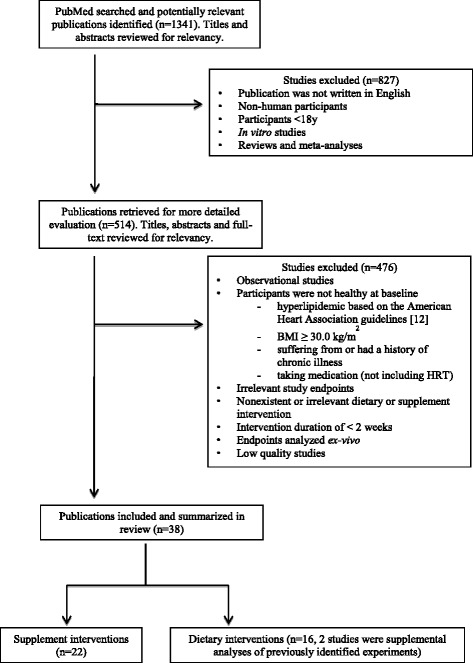
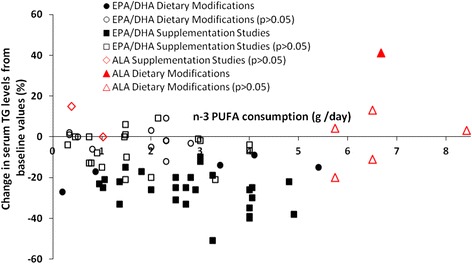
Circulating levels of triacylglycerol (TG) is a recognized risk factor for developing cardiovascular disease, a leading cause of death worldwide. The Institute of Medicine and the American Heart Association both recommend the consumption of n-3 polyunsaturated fatty acids (PUFA), specifically eicosapentaenoic acid (EPA) and docosahexaenoic acid (DHA), to reduce serum TG in hyperlipidemic individuals. Additionally, a number of systematic reviews have shown that individuals with any degree of dyslipidemia, elevated serum TG and/or cholesterol, may benefit from a 20-30% reduction in serum TG after consuming n-3 PUFA derived from marine sources. Given that individuals with serum lipid levels ranging from healthy to borderline dyslipidemic constitute a large portion of the population, the focus of this review was to assess the potential for n-3 PUFA consumption to reduce serum TG in such individuals. A total of 1341 studies were retrieved and 38 clinical intervention studies, assessing 2270 individuals, were identified for inclusion in the current review. In summary, a 9-26% reduction in circulating TG was demonstrated in studies where ≥ 4 g/day of n-3 PUFA were consumed from either marine or EPA/DHA-enriched food sources, while a 4-51% reduction was found in studies where 1-5 g/day of EPA and/or DHA was consumed through supplements. Overall, this review summarizes the current evidence with regards to the beneficial effect of n-3 PUFA on circulating TG levels in normolipidemic to borderline hyperlipidemic, otherwise healthy, individuals. Thus demonstrating that n-3 PUFA may play an important role in the maintenance of cardiovascular health and disease prevention.
Overview
The claims and statistics of this paper haven’t been checked yet.
Free: it reads the open-access text and checks the first 5 claims that cite a source we can check. Create a free account to check every claim.
Integrity signals
Registry
Cites
Statistics
Figures
Verification
Claims the paper makes
The claims and statistics of this paper haven’t been checked yet.
Free: it reads the open-access text and checks the first 5 claims that cite a source we can check. Create a free account to check every claim.
Claims other papers make about this one
Each is checked against this paper’s own text: does it say what the citing paper says it does?
The cited source says what the claim attributes to it.
In the citing paper
“Supplementation of omega‐3 polyunsaturated fatty acids (ω3 PUFAs), such as eicosapentaenoic acid (EPA) and docosahexaenoic acid (DHA), is one of the lipid‐lowering approaches. 6”
From Association Between Omega-3 Fatty Acid Intake and Dyslipidemia: A Continuous Dose-Response Meta-Analysis of Randomized Controlled Trials (2023) · cites this paper as [6]
The cited source says what the claim attributes to it.
In the citing paper
“ω3 PUFAs could reduce serum triglyceride concentration by approximately 15% to 30% 6 , 7 , 8 , 9 but could not affect or even increase LDL‐C levels. 9 , 10 , 11 , 12 , 13”
From Association Between Omega-3 Fatty Acid Intake and Dyslipidemia: A Continuous Dose-Response Meta-Analysis of Randomized Controlled Trials (2023) · cites this paper as [6]
The cited source says what the claim attributes to it.
In the citing paper
“These dose predictions cannot be performed in previous meta‐analyses that failed to reveal a significant dose–response relationship 12 , 14 and brought uncertainty. 6 , 9 , 13 , 15”
From Association Between Omega-3 Fatty Acid Intake and Dyslipidemia: A Continuous Dose-Response Meta-Analysis of Randomized Controlled Trials (2023) · cites this paper as [6]
Self-check
Percentages, sums and reported differences re-computed from the paper’s own numbers.
The self-check needs the paper’s full text.
Citations
Cites
Heart Disease and Stroke Statistics—2023 Update: A Report From the American Heart Association
Tsao, C. W., Aday, A. W., Almarzooq, Z. I., Anderson, C. A. M., Arora, P., Avery, C. L., Baker-Smith, C. M., Beaton, A. Z., Boehme, A. K., Buxton, A. E., et al. (2023) · Circulation · doi:10.1161/cir.0000000000001123 · Cited by 8,300
Trumbo, P., Schlicker, S., Yates, A. A., & Poos, M. (2002) · Journal of the American Dietetic Association · doi:10.1016/s0002-8223(02)90346-9 · Cited by 5,993 · cited 1×
“The 2002 Institute of Medicine (IOM) report on Dietary Reference Intakes for various macronutrients, including fat, states that, “Supplementation with fish oil, which is high in EPA and DHA, reduces triacylglycerol concentrations; low density lipoprotein cholesterol and high density lipoprotein cholesterol concentrati…”
BackgroundHeart Disease and Stroke Statistics—2013 Update: A Report From the American Heart Association
Go, A. S., Mozaffarian, D., Roger, V. L., Benjamin, E. J., Berry, J. D., Borden, W. B., Bravata, D. M., Dai, S., Ford, E. S., Fox, C. S., et al. (2013) · Circulation · doi:10.1161/cir.0b013e31828124ad · Cited by 5,292 · cited 2×
“org/publicdomain/zero have been reported to be either hypertriglyceridemic or hyperlipidemic [2, 9, 10].”
BackgroundLichtenstein, A. H., Appel, L. J., Brands, M., Carnethon, M., Daniels, S., Franch, H. A., Franklin, B., Kris-Etherton, P., Harris, W. S., Howard, B., et al. (2006) · Circulation · doi:10.1161/circulationaha.106.176158 · Cited by 2,705 · cited 1×
“200 ≤ total-cholesterol (total-c) ≤ 240 mg/dL, 130 ≤ LDL-c ≤ 160 mg/dL, and 150 ≤ TG ≤ 200 mg/dL] [14, 25] Healthy or overweight participants: Mean BMI within intervention group(s) and control/placebo group (if applicable) at baseline ≤29.”
Triglycerides and Cardiovascular Disease: A Scientific Statement From the American Heart Association
Miller, M., Stone, N. J., Ballantyne, C., Bittner, V., Criqui, M. H., Ginsberg, H. N., Goldberg, A. C., Howard, W. J., Jacobson, M. S., Kris-Etherton, P. M., et al. (2011) · Circulation · doi:10.1161/cir.0b013e3182160726 · Cited by 1,871
Hokanson, J. E., & Austin, M. A. (1996) · Journal of Cardiovascular Risk · doi:10.1097/00043798-199604000-00014 · Cited by 1,706 · cited 1×
“indicates that an 88 mg/dL increase in fasting TG levels elevates the risk of developing CVD by 14 % and 37 %, in males and females, respectively [3–8].”
Backgroundn-3 fatty acids and serum lipoproteins: human studies
Harris, W. (1997) · The American Journal of Clinical Nutrition · doi:10.1093/ajcn/65.5.1645s · Cited by 1,243 · cited 3×
“This review stratified studies comparing participants with either healthy (serum levels < 177 mg/dL) or elevated levels (serum levels ≥ 177 mg/dL) of serum TG; relative to the upper limit for serum TG of 200 mg/dL utilized in the current review [19].”
BackgroundInfluentialFish oils and plasma lipid and lipoprotein metabolism in humans: a critical review
Harris, W. S. (1989) · Journal of Lipid Research · doi:10.1016/s0022-2275(20)38310-3 · Cited by 1,127
Effects of omega-3 fatty acids on serum markers of cardiovascular disease risk: a systematic review
Balk, E. M., Lichtenstein, A. H., Chung, M., Kupelnick, B., Chew, P., & Lau, J. (2006) · Atherosclerosis · doi:10.1016/j.atherosclerosis.2006.02.012 · Cited by 732 · cited 1×
“, both of which assessed studies in which individuals consumed either fish, algal EPA or algal DHA oils [23, 24].”
BackgroundJeppesen, J. Ø., Hein, H. O., Suadicani, P., & Gyntelberg, F. (1998) · Circulation · doi:10.1161/01.cir.97.11.1029 · Cited by 676 · cited 1×
“indicates that an 88 mg/dL increase in fasting TG levels elevates the risk of developing CVD by 14 % and 37 %, in males and females, respectively [3–8].”
Background
Research works printed but not linked: 1
- Health Canada Guidance Document for Preparing a Submission for Food Health Claims 2013
Cited by
Items 101–143 of 143
Mossaheb, N., Papageorgiou, K. G., Schäfer, M. R., Becker, J., Schloegelhofer, M., & Amminger, G. P. (2015) · Early Intervention in Psychiatry · doi:10.1111/eip.12275 · Cited by 5
“Furthermore, ω-3 PUFAs have been associated with cardioprotective effects and with reductions of elevated triglyceride (TG) levels in moderate hypertriglyceridemia, defined by TG levels between 150 and 500 mg dL, as well as in borderline hyperlipidaemia.(16) As a matter of fact, the American Heart Association recommen…”
BackgroundDelarue, J. (2018) · Cahiers de Nutrition et de Diététique · doi:10.1016/j.cnd.2018.01.003 · Cited by 6
Le, H. V., Nguyen, Q. V., Nguyen, D. V., Malau‐Aduli, B. S., Nichols, P. D., & Malau‐Aduli, A. E. O. (2018) · Animals · doi:10.3390/ani8120231 · Cited by 5
Sujeta, A., Čapkauskienė, S., Vizbaraitė, D., Stasiulė, L., Balčiūnas, M., Stasiulis, A., & Kaduševičius, E. (2019) · International Journal for Vitamin and Nutrition Research · doi:10.1024/0300-9831/a000476 · Cited by 5
Bioactive fractions from cantabrian anchovy (Engraulis encrarischolus) viscera
Burgos‐Hernández, A., Rosas‐Burgos, E. C., Martínez, M., Nuncio‐Jáuregui, P. N., Marhuenda-Egea, F. C., Kačániová, M., Petrová, J., & Carbonell-Barrachina, Á. A. (2016) · Food Science and Technology · doi:10.1590/1678-457x.10115 · Cited by 4
“Much of the research in this area has been focused on marine lipidic compounds found in seafood such as unsaturated fatty acids ω-3 and ω-6, to which prevention of chronico-degenerative illnesses have been attributed (Burgos-Hernández et al., 2001; Farzaneh-Far et al., 2010; Shahidi & Miraliakbari, 2004; Ewaschuk et a…”
BackgroundFish oil supplementation in obese rats ameliorates metabolic syndrome response
Freitas, D. M. B., Oliveira, B. A. C., Henschel, L. D. V., Oliveira, M., Zazula, M. F., Horlem, T., Rodriguez, D. F. S., Carvalhal, S. R. S., Iagher, F., Fernández, R., et al. (2024) · Brazilian Journal of Medical and Biological Research · doi:10.1590/1414-431x2024e13172 · Cited by 3
“…with MS ingesting 0.3 – 3.0 g n-3 PUFA/day showed reduction of body weight and body fat (21), and our results demonstrated that FO supplementation lowered body weight and TAG concentration, which means that DHA and EPA act as natural hypolipidemics (22), possibly preventing the progress of MS (23).”
BackgroundInfluentialDas, D., Datta, A. K., Kumbhakar, D. V., Ghosh, B., Pramanik, A., & Gupta, S. (2018) · Industrial Crops and Products · doi:10.1016/j.indcrop.2018.10.046 · Cited by 3
Prihapsara, F., Wijayanti, I. I., Budiharjo, A., Pangastut, A., & Artanti, A. N. (2021) · Pharmaceutical Sciences Asia · doi:10.29090/psa.2021.01.19.120 · Cited by 3
Atherothrombose: Neue Behandlungsstrategien
Soehnlein, O. (2017) · Herz · doi:10.1007/s00059-017-4659-x · Cited by 3
Fujioka, Y. (2018) · Journal of the Japanese Coronary Association · doi:10.7793/jcoron.24.003 · Cited by 3
McMullan, J. E., Kumar, R. A., Yeates, A. J., Allsopp, P. J., Mulhern, M. S., van Wijngaarden, E., Strain, J., & McSorley, E. M. (2025) · Journal of Nutrition · doi:10.1016/j.tjnut.2025.10.010 · Cited by 3
“…on lipid profiles among those with high CVD risk noted significant increases in HDL [45], whereas other studies have shown reductions in triglycerides and inflammatory markers including CRP using supplementation > 1 g EPA + DHA per day among normolipidemic and hyperlipidemic individuals [46,47].”
Taha, A. M., Michel, C. G., Abdelrahman, E. H., Nagy, A. M., Abdelhameed, M. F., ElMosbah, D. E., & Hashem, M. M. (2026) · Journal of Ethnopharmacology · doi:10.1016/j.jep.2026.121285 · Cited by 2
Miller, T. C., Gutierre, R. C., Ingham, S. J. M., Ribeiro, A. A. C. M., Arida, R. M., Иванов, А. В., & Faloppa, F. (2020) · Nutrition · doi:10.1016/j.nut.2020.110832 · Cited by 2
McQueen, C. E., & Orr, K. K. (2017) · The American Pharmacists Association eBooks · doi:10.21019/9781582122656.ch51 · Cited by 2
Channel catfish, a species with potential deposition of human-beneficial fatty acids
Parra‐Bracamonte, G. M., Perales-Torres, A. L., Magaña-Monforte, J. G., Lara‐Rivera, A. L., Segura-Correa, J. ́., & García-Ruiz, Y. (2024) · Latin American Journal of Aquatic Research · doi:10.3856/vol52-issue1-fulltext-3085 · Cited by 2
“Additionally, combined consumption of EPA and DHA has been associated with a reduction in blood triglyceride levels (Jain et al. 2015, Leslie et al. 2015, Zhang et al. 2019), anti-inflammatory benefits in chronic inflammatory diseases, such as rheumatoid arthritis (Calder 2015) and prevention of…”
BackgroundIkan teri Engraulis encrasicolus berpotensi sebagai pangan fungsional
Salma, W. O., Ruwiah, R., Muchtar, F., Mudjahidah, N. H., Nurdin, K. D. S., & Bastaman, M. R. (2021) · AcTion Aceh Nutrition Journal · doi:10.30867/action.v6i1.377 · Cited by 2
“Namun diperlukan vitamin E untuk menjaga fungsi n-3 PUFA dalam membran sel dan melindungi EPA dan DHA agar tidak teroksidasi (Leslie et al., 2015).”
BackgroundSatokar, V. V., Cutfield, W. S., Derraik, J. G. B., Harwood, M. L. N., Okesene-Gafa, K. A. M., Beck, K. L., Cameron‐Smith, D., O'Sullivan, J. M., Sundborn, G., Pundir, S., et al. (2020) · BMJ Open · doi:10.1136/bmjopen-2020-041015 · Cited by 2
Lipid modulatory effects of omega-3 fatty acids in children with sickle cell disease
Khan, S. A., Ahmed, T. J., Zughaibi, T. A., Alghamdi, B. S. A., Halawani, S. H., & Khan, S. A. (2022) · Journal of King Saud University - Science · doi:10.1016/j.jksus.2022.102338 · Cited by 2
Taheri, M., & Irandoust, K. (2018) · Salmand · doi:10.32598/sija.13.10.100 · Cited by 4
Bubnova, M. G., Ezhov, M. V., Aronov, D. M., Galyаvich, A. S., Gurevich, V. S., Duplyakov, D. V., Zafiraki, V. K., Karamnova, N. S., Kashtalap, V. V., Konovalov, G. A., et al. (2025) · Cardiosomatics · doi:10.17816/cs688224 · Cited by 1
McQueen, C. E., & Orr, K. K. (2015) · The American Pharmacists Association eBooks · doi:10.21019/9781582122250.ch51 · Cited by 1
Thakur, S., Singh, H., Sharma, S., Kaur, M., Singh, A., Kaur, A., & Jain, S. K. (2024) · Drug and Chemical Toxicology · doi:10.1080/01480545.2024.2308835 · Cited by 1
“…in fish consumption and reduction in the risk of alzheimer’s disease (astarita et al., 2010; Bazan et al., 2011). supplementation of Dha was also found to reduce the serum tG levels by 4–51% in different trails, in normolipidemic to borderline hyperlipi-daemic subjects (leslie et al., 2015).”
McQueen, C. E., & Orr, K. K. (2020) · The American Pharmacists Association eBooks · doi:10.21019/9781582123172.ch51 · Cited by 1
Calder, P. C. (2017) · European Journal of Lipid Science and Technology · doi:10.1002/ejlt.201700239 · Cited by 3
“The effect size reported for supplemental omega-3 fatty acids and blood TG concentrations [1-5], indicates that TG lowering is likely to one component, and an important one at that, contributing to the cardioprotective effects of EPA and DHA [9].”
BackgroundProteomics: a tool to investigate of composition and function of HDL in hyperlipidemia
da Silva, A. R. M. (2022) · Digital Library of Theses and Dissertations (Universidade de São Paulo) · doi:10.11606/t.46.2022.tde-26082022-123137 · Cited by 1
The Effect of Omega-3 Fatty Acids on Hypertriglyceridemia: A Review
Patrikios, I. S. (2020) · Biomedical Journal of Scientific & Technical Research · doi:10.26717/bjstr.2020.26.004382
The Development of Individual Human Fatty Acid Reference Ranges
Lust, C. A. C. (2020) · The Atrium (University of Guelph)
Hume, A. L. (2019) · Pharmacy Today · doi:10.1016/j.ptdy.2018.12.008
Nutrition and Cardiovascular Health
Tappia, P. S., & Blewett, H. (2020) · MDPI eBooks · doi:10.3390/books978-3-03928-888-5 · Cited by 1
Effects of Traditional Way of Fish Consumption in Sri Lanka on Cardiovascular Risk Profiles
Devadason, C. (2022) · Indian Journal of Public Health Research & Development · doi:10.37506/ijphrd.v13i3.18171
COVID-19, dyslipidemia and familial hypercholesterolemia: an up-date
Silvino, J. P. D. P., Tosatti, J. A. G., Jannes, C. E., Silva, I. D. F. O., & Gomes, K. B. (2022) · Research Society and Development · doi:10.33448/rsd-v11i9.31975
“Eicosapentaenoic acid (EPA) and docosahexaenoic acid (DHA), omega-3 components, reduce TG levels (Leslie et al., 2015) and have been associated with favorable effects on several cardiovascular risk markers such as high blood pressure and platelet aggregation (Miller et al., 2014).”
BackgroundFang, H., Li, M., Jin, W., Zhang, Y., Hong, Z., & Chen, W. (2022) · Phosphorus, sulfur, and silicon and the related elements · doi:10.1080/10426507.2022.2136667
“The anti-obesity effect of x-3 long chain PUFAs has been recognized as credible based on a number of literature reports.([20,21]) DHA/DPA reduced the accumulation of body fat by limiting both hypertrophy and hyperplasia of fat cells.”
BackgroundKardiyovasküler Hastalıklar ve Fonksiyonel Besinler
Yalçın, B., & Çelikayar, M. N. (2024) · Cumhuriyet Üniversitesi Sağlık Bilimleri Enstitüsü Dergisi · doi:10.51754/cusbed.1398809
Orr, K. K., Casper, K. A., & Mehta, B. H. (2024) · The American Pharmacists Association eBooks · doi:10.21019/aphaotc-comp.natural-products
Influence of the Anti-Hyperlipidemia Effect of Fish Oil Supplement in High-Cholesterol Diet Rats
Chu, W.-L., Hsu, Y.-J., Huang, C., Lin, Y., & Chien, Y.-J. (2025) · Universal library of medical and health sciences. · doi:10.70315/uloap.ulmhs.2025.0302002
Taheri, R., Weaver, O. R., Ye, M., Vena, J. E., Johnson, J. A., Vine, D. F., Eurich, D. T., & Proctor, S. D. (2025) · Frontiers in Nutrition · doi:10.3389/fnut.2025.1630126
Gul, M. R., Tas, O., Ince, A. E., Şümnü, G., Erol, N., Ozarda, O., & Öztop, M. H. (2025) · Acta Horticulturae · doi:10.17660/actahortic.2025.1445.24
Wiyono, T., Sholikhah, E. N., & Pratiwi, W. R. (2026) · IOP Conference Series Earth and Environmental Science · doi:10.1088/1755-1315/1584/1/012057
Processing technology, antioxidant ability and flavor characteristics of hybrid crucian carp soup
Zhou, Y., Zhang, Y., Wang, B., Lei, S., Li, X., Zhou, Y., & Zhong, H. (2026) · Applied Food Research · doi:10.1016/j.afres.2026.101833
Health benefit considerations for the development of fish advisory guidelines for PFOS
Spliethoff, H. M., Palmer, M. C., Marquez‐Bravo, L. G., Marks, T., & Ginsberg, G. (2026) · Journal of Toxicology and Environmental Health Part B · doi:10.1080/10937404.2026.2665431 · Cited by 1
“…which leads to reduced transcription of lipogenic genes (Hirako et al. 2010), n-3 PUFAs may directly affect liver fat metabolism, stimulate breakdown of fat in liver, and reduce inflammation associated with development and progression of liver disease (Leslie et al. 2015; Scorletti and Byrne 2018).”
Lyu, J., Qian, Y.-W., Xu, Z., Liu, Z.-Y., Fang, F., Miao, M.-Y., Qin, L.-Q., Song, C., Wang, H., & Chen, G. (2026) · Heart · doi:10.1136/heartjnl-2026-327893
Safety of diet therapy using ϖ-3 polyunsaturated fatty acids
Bonkalo, T. I., Дербенева, С. А., Shmeleva, S. V., & Belyakova, N. V. (2026) · Problems of Social Hygiene Public Health and History of Medicine · doi:10.32687/0869-866x-2026-34-s2-1066-1070
Metadata
- Authors
- Leslie, M. A., Cohen, D. J. A., Liddle, D. M., Robinson, L. E., & Ma, D. W. L.
- Affiliations
- University of Guelph (CA)
- Venue
- Lipids in Health and Disease
- Published
- 2015-06-06
- Volume
- 14
- Issue
- 1
- Pages
- 53-53
- ISSN
- 1476-511X (ISSN-L)
- PMC
- PMC4488064
- OpenAlex
- W1511998280
- Cited by
- 143
- References
- 66
- Citations by year
- 2026: 6 · 2025: 8 · 2024: 6 · 2023: 10 · 2022: 13 · 2021: 15 · 2020: 23 · 2019: 14 · 2018: 19 · 2017: 19 · 2016: 5 · 2015: 5
- FWCI
- 2.05
- Type
- journal article
- Language
- en
- Open access
- gold
- doi.org
- Locations
- Lipids in Health and Disease (publishedVersion, cc-by)
- Europe PMC (PubMed Central) (publishedVersion, cc-by)
- PubMed Central (publishedVersion, cc-by)
- PubMed (publishedVersion)
- Funders
- Manitoba Rural Adaptation Council
- Topics
- Health Sciences › Nursing › Nutrition and Dietetics › Fatty Acid Research and Health
- Life Sciences › Agricultural and Biological Sciences › Aquatic Science › Aquaculture Nutrition and Growth
- Physical Sciences › Chemistry › Organic Chemistry › Edible Oils Quality and Analysis
- Keywords
- omega-3 polyunsaturated fatty acids, eicosapentaenoic acid, docosahexaenoic acid, serum triglycerides, hypertriglyceridemia, dietary supplementation, marine fatty acids, cardiovascular disease prevention
- MeSH terms
- Adult, Aged, Diet, Female, Humans, Hyperlipidemias, Male, Middle Aged, Triglycerides, Fatty Acids, Omega-3, Dietary Supplements
About these checks
Registry, retraction, Cites and statistics results are computed, not judged, with one exception: a printed reference that no index lists is read once by a model before it counts as a citation error. Claims are extracted by a model and kept only when their quote appears verbatim in the text; each cited source is then checked, with a model’s help, for whether it says what the claim relies on. Those verdicts can be wrong — read the claim’s quote and the cited source before relying on one.
Statistics and arithmetic are recomputed, not judged.
Confidence bands are shown only for fields calibrated on our annotated test set. None is calibrated yet, so no band is shown.
What counts as a claim ›How we measure confidence ›How we check this ›
Are you an author, or do you see a problem with this page? Request a review
Data sources
Bibliographic data: Semantic Scholar, OpenAlex, Crossref.
Contains information from the Semantic Scholar Academic Graph Datasets, made available under the ODC Attribution License (ODC-BY 1.0).
Semantic Scholar’s data is described in: Kinney, R., et al. (2023). The Semantic Scholar Open Data Platform. arXiv:2301.10140.
