

A review of the effect of omega-3 polyunsaturated fatty acids on blood triacylglycerol levels in normolipidemic and borderline hyperlipidemic individuals
Open accessThe DOI matches its Crossref record; 65 of the 66 references it cites were found in a registry or an index.
Abstract
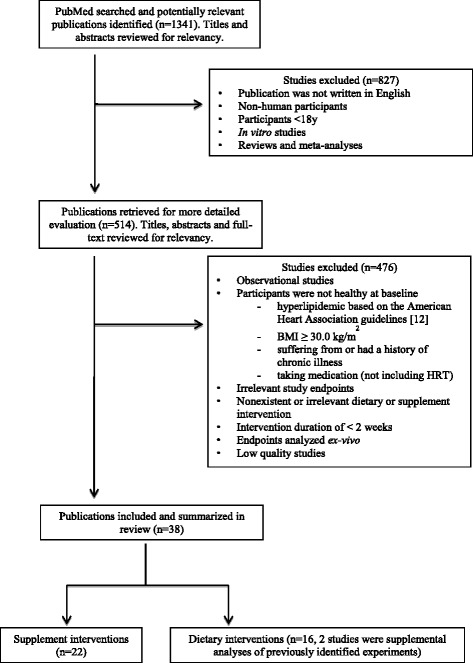
Circulating levels of triacylglycerol (TG) is a recognized risk factor for developing cardiovascular disease, a leading cause of death worldwide. The Institute of Medicine and the American Heart Association both recommend the consumption of n-3 polyunsaturated fatty acids (PUFA), specifically eicosapentaenoic acid (EPA) and docosahexaenoic acid (DHA), to reduce serum TG in hyperlipidemic individuals. Additionally, a number of systematic reviews have shown that individuals with any degree of dyslipidemia, elevated serum TG and/or cholesterol, may benefit from a 20-30% reduction in serum TG after consuming n-3 PUFA derived from marine sources. Given that individuals with serum lipid levels ranging from healthy to borderline dyslipidemic constitute a large portion of the population, the focus of this review was to assess the potential for n-3 PUFA consumption to reduce serum TG in such individuals. A total of 1341 studies were retrieved and 38 clinical intervention studies, assessing 2270 individuals, were identified for inclusion in the current review. In summary, a 9-26% reduction in circulating TG was demonstrated in studies where ≥ 4 g/day of n-3 PUFA were consumed from either marine or EPA/DHA-enriched food sources, while a 4-51% reduction was found in studies where 1-5 g/day of EPA and/or DHA was consumed through supplements. Overall, this review summarizes the current evidence with regards to the beneficial effect of n-3 PUFA on circulating TG levels in normolipidemic to borderline hyperlipidemic, otherwise healthy, individuals. Thus demonstrating that n-3 PUFA may play an important role in the maintenance of cardiovascular health and disease prevention.
Overview
The claims and statistics of this paper haven’t been checked yet.
Free: it reads the open-access text and checks the first 5 claims that cite a source we can check. Create a free account to check every claim.
Integrity signals
Registry
Cites
Statistics
Figures
Verification
Claims the paper makes
The claims and statistics of this paper haven’t been checked yet.
Free: it reads the open-access text and checks the first 5 claims that cite a source we can check. Create a free account to check every claim.
Claims other papers make about this one
Each is checked against this paper’s own text: does it say what the citing paper says it does?
The cited source says what the claim attributes to it.
In the citing paper
“Supplementation of omega‐3 polyunsaturated fatty acids (ω3 PUFAs), such as eicosapentaenoic acid (EPA) and docosahexaenoic acid (DHA), is one of the lipid‐lowering approaches. 6”
From Association Between Omega-3 Fatty Acid Intake and Dyslipidemia: A Continuous Dose-Response Meta-Analysis of Randomized Controlled Trials (2023) · cites this paper as [6]
The cited source says what the claim attributes to it.
In the citing paper
“ω3 PUFAs could reduce serum triglyceride concentration by approximately 15% to 30% 6 , 7 , 8 , 9 but could not affect or even increase LDL‐C levels. 9 , 10 , 11 , 12 , 13”
From Association Between Omega-3 Fatty Acid Intake and Dyslipidemia: A Continuous Dose-Response Meta-Analysis of Randomized Controlled Trials (2023) · cites this paper as [6]
The cited source says what the claim attributes to it.
In the citing paper
“These dose predictions cannot be performed in previous meta‐analyses that failed to reveal a significant dose–response relationship 12 , 14 and brought uncertainty. 6 , 9 , 13 , 15”
From Association Between Omega-3 Fatty Acid Intake and Dyslipidemia: A Continuous Dose-Response Meta-Analysis of Randomized Controlled Trials (2023) · cites this paper as [6]
Self-check
Percentages, sums and reported differences re-computed from the paper’s own numbers.
The self-check needs the paper’s full text.
Citations
Cites
Heart Disease and Stroke Statistics—2023 Update: A Report From the American Heart Association
Tsao, C. W., Aday, A. W., Almarzooq, Z. I., Anderson, C. A. M., Arora, P., Avery, C. L., Baker-Smith, C. M., Beaton, A. Z., Boehme, A. K., Buxton, A. E., et al. (2023) · Circulation · doi:10.1161/cir.0000000000001123 · Cited by 8,300
Trumbo, P., Schlicker, S., Yates, A. A., & Poos, M. (2002) · Journal of the American Dietetic Association · doi:10.1016/s0002-8223(02)90346-9 · Cited by 5,993 · cited 1×
“The 2002 Institute of Medicine (IOM) report on Dietary Reference Intakes for various macronutrients, including fat, states that, “Supplementation with fish oil, which is high in EPA and DHA, reduces triacylglycerol concentrations; low density lipoprotein cholesterol and high density lipoprotein cholesterol concentrati…”
BackgroundHeart Disease and Stroke Statistics—2013 Update: A Report From the American Heart Association
Go, A. S., Mozaffarian, D., Roger, V. L., Benjamin, E. J., Berry, J. D., Borden, W. B., Bravata, D. M., Dai, S., Ford, E. S., Fox, C. S., et al. (2013) · Circulation · doi:10.1161/cir.0b013e31828124ad · Cited by 5,292 · cited 2×
“org/publicdomain/zero have been reported to be either hypertriglyceridemic or hyperlipidemic [2, 9, 10].”
BackgroundLichtenstein, A. H., Appel, L. J., Brands, M., Carnethon, M., Daniels, S., Franch, H. A., Franklin, B., Kris-Etherton, P., Harris, W. S., Howard, B., et al. (2006) · Circulation · doi:10.1161/circulationaha.106.176158 · Cited by 2,705 · cited 1×
“200 ≤ total-cholesterol (total-c) ≤ 240 mg/dL, 130 ≤ LDL-c ≤ 160 mg/dL, and 150 ≤ TG ≤ 200 mg/dL] [14, 25] Healthy or overweight participants: Mean BMI within intervention group(s) and control/placebo group (if applicable) at baseline ≤29.”
Triglycerides and Cardiovascular Disease: A Scientific Statement From the American Heart Association
Miller, M., Stone, N. J., Ballantyne, C., Bittner, V., Criqui, M. H., Ginsberg, H. N., Goldberg, A. C., Howard, W. J., Jacobson, M. S., Kris-Etherton, P. M., et al. (2011) · Circulation · doi:10.1161/cir.0b013e3182160726 · Cited by 1,871
Hokanson, J. E., & Austin, M. A. (1996) · Journal of Cardiovascular Risk · doi:10.1097/00043798-199604000-00014 · Cited by 1,706 · cited 1×
“indicates that an 88 mg/dL increase in fasting TG levels elevates the risk of developing CVD by 14 % and 37 %, in males and females, respectively [3–8].”
Backgroundn-3 fatty acids and serum lipoproteins: human studies
Harris, W. (1997) · The American Journal of Clinical Nutrition · doi:10.1093/ajcn/65.5.1645s · Cited by 1,243 · cited 3×
“This review stratified studies comparing participants with either healthy (serum levels < 177 mg/dL) or elevated levels (serum levels ≥ 177 mg/dL) of serum TG; relative to the upper limit for serum TG of 200 mg/dL utilized in the current review [19].”
BackgroundInfluentialFish oils and plasma lipid and lipoprotein metabolism in humans: a critical review
Harris, W. S. (1989) · Journal of Lipid Research · doi:10.1016/s0022-2275(20)38310-3 · Cited by 1,127
Effects of omega-3 fatty acids on serum markers of cardiovascular disease risk: a systematic review
Balk, E. M., Lichtenstein, A. H., Chung, M., Kupelnick, B., Chew, P., & Lau, J. (2006) · Atherosclerosis · doi:10.1016/j.atherosclerosis.2006.02.012 · Cited by 732 · cited 1×
“, both of which assessed studies in which individuals consumed either fish, algal EPA or algal DHA oils [23, 24].”
BackgroundJeppesen, J. Ø., Hein, H. O., Suadicani, P., & Gyntelberg, F. (1998) · Circulation · doi:10.1161/01.cir.97.11.1029 · Cited by 676 · cited 1×
“indicates that an 88 mg/dL increase in fasting TG levels elevates the risk of developing CVD by 14 % and 37 %, in males and females, respectively [3–8].”
BackgroundReduced or modified dietary fat for preventing cardiovascular disease
Hooper, L., Summerbell, C. D., Thompson, R., Sills, D., Roberts, F. G., Moore, H. J., & Davey Smith, G. (2012) · Cochrane Database of Systematic Reviews · doi:10.1002/14651858.cd002137.pub3 · Cited by 379
Benefits of fish oil supplementation in hyperlipidemia: a systematic review and meta-analysis
Eslick, G. D., Howe, P. R. C., Smith, C., Priest, R., & Bensoussan, A. (2009) · International Journal of Cardiology · doi:10.1016/j.ijcard.2008.03.092 · Cited by 299 · cited 1×
“35 g of DHA) reduced serum TG by 14 %, yet cholesterol levels were not altered beyond a clinically insignificant increase in LDL-c [22].”
BackgroundWei, M. Y., & Jacobson, T. A. (2011) · Current Atherosclerosis Reports · doi:10.1007/s11883-011-0210-3 · Cited by 284
Lovegrove, J. A., Lovegrove, S. S., Lesauvage, S. V., Brady, L. M., Saini, N., Minihane, A. M., & Williams, C. M. (2004) · American Journal of Clinical Nutrition · doi:10.1093/ajcn/79.6.974 · Cited by 277 · cited 5×
“5 −25* 6 Moderate LA diet/ Olive Oil Lovegrove [48] 2.”
BackgroundInfluentialDodin, S., Lemay, A., Jacques, H., Légaré, F., Forest, J.-C., & Mâsse, B. (2005) · The Journal of Clinical Endocrinology & Metabolism · doi:10.1210/jc.2004-1148 · Cited by 244 · cited 15×
“Studies assessing an increased consumption of ALA utilized 30–40 g/day of flaxseed (5.74-8.42 g/day of ALA) [28, 30, 39, 40], yet the results from these trials produced inconsistent effects on lipid levels.”
BackgroundResultInfluentialMori, T. A., & Woodman, R. J. (2006) · Current Opinion in Clinical Nutrition & Metabolic Care · doi:10.1097/01.mco.0000214566.67439.58 · Cited by 226 · cited 1×
“, both of which assessed studies in which individuals consumed either fish, algal EPA or algal DHA oils [23, 24].”
BackgroundLiu, J., Zeng, F.-F., Liu, Z.-M., Zhang, C.-X., Ling, W.-H., & Chen, Y.-M. (2013) · Lipids in Health and Disease · doi:10.1186/1476-511x-12-159 · Cited by 192 · cited 1×
“indicates that an 88 mg/dL increase in fasting TG levels elevates the risk of developing CVD by 14 % and 37 %, in males and females, respectively [3–8].”
BackgroundStark, K. D., & Holub, B. J. (2004) · The American Journal of Clinical Nutrition · doi:10.1093/ajcn/79.5.765 · Cited by 177 · cited 1×
“Stark (2004) [61] 32 Postmenopausal Females 12, 500 mg Capsules containing DHA from an algal source Randomized, double blind, placebo controlled, cross-over study 4 weeks DHA decreased TG by 8 % (sig).”
MethodKaul, N., Kreml, R., Austria, J. A., Richard, M. N., Edel, A. L., Dibrov, E., Hirono, S., Zettler, M. E., & Pierce, G. N. (2008) · Journal of the American College of Nutrition · doi:10.1080/07315724.2008.10719674 · Cited by 161 · cited 1×
“Kaul (2008) [58] 54 females, 34 males 2, 1 g capsules per day containing Randomized, double blind, placebo controlled, parallel arm study 12 weeks Fish oil produced a 4 % and 7 % increase in total-c and LDL-c, respectively No significant change in CRP or TNF-ɑ levels”
Laidlaw, M., & Holub, B. J. (2003) · American Journal of Clinical Nutrition · doi:10.1093/ajcn/77.1.37 · Cited by 153 · cited 5×
“While studies solely providing n-3 PUFA in doses < 1 g/day (EPA, DHA or both) significantly lowered fasting TG by 8-38 % [44–55, 59, 61, 62, 64].”
BackgroundInfluentialChanges in triglyceride levels and risk for coronary heart disease in young men.
Tirosh, A., Rudich, A., Shochat, T., Tekes-Manova, D., Israeli, E., Henkin, Y., Kochba, I., & Shai, I. (2007) · Annals of Internal Medicine · doi:10.7326/0003-4819-147-6-200709180-00007 · Cited by 151 · cited 1×
“indicates that an 88 mg/dL increase in fasting TG levels elevates the risk of developing CVD by 14 % and 37 %, in males and females, respectively [3–8].”
BackgroundBernstein, A. M., Ding, E. L., Willett, W. C., & Rimm, E. B. (2012) · The Journal of Nutrition · doi:10.3945/jn.111.148973 · Cited by 148 · cited 1×
“concluded that DHA from algal oil plays a role in reducing serum TG while elevating serum LDL-c [21].”
BackgroundDodin, S., Cunnane, S. C., Mâsse, B., Lemay, A., Jacques, H., Asselin, G., Tremblay-Mercier, J., Marc, I., Lamarche, B., Légaré, F., et al. (2008) · Nutrition · doi:10.1016/j.nut.2007.09.003 · Cited by 142 · cited 15×
“Studies assessing an increased consumption of ALA utilized 30–40 g/day of flaxseed (5.74-8.42 g/day of ALA) [28, 30, 39, 40], yet the results from these trials produced inconsistent effects on lipid levels.”
BackgroundResultInfluentialNew and classical risk factors--the Münster heart study (PROCAM).
Assmann, G., Schulte, H., & Cullen, P. (1997) · PubMed · Cited by 139
AMBRING, A., FRIBERG, P., AXELSEN, M., LAFFRENZEN, M., TASKINEN, M.-R., BASU, S., & JOHANSSON, M. (2004) · Clinical Science · doi:10.1042/cs20030315 · Cited by 134 · cited 3×
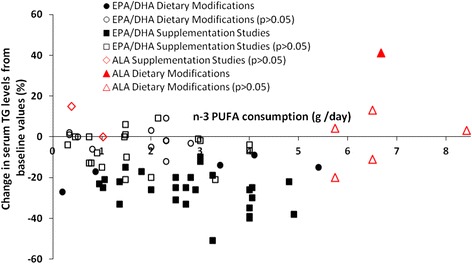
“The three dietary interventions that provided ≥ 4 g/day of EPA and/or DHA noted significant reductions in TG of 9-26 % [27, 29, 31, 33], while six out of seven experimental arms providing 2.”
BackgroundDyerberg, J., Eskesen, D. C., Andersen, P. W., Astrup, A. V., Buemann, B., Christensen, J., Clausen, P., Rasmussen, B. F., Schmidt, E. B., Tholstrup, T., et al. (2004) · European Journal of Clinical Nutrition · doi:10.1038/sj.ejcn.1601934 · Cited by 132 · cited 5×
“It is noteworthy that two of the 16 studies [27, 28] were subsequent analyses of formerly identified interventions [29, 30].”
BackgroundMethodInfluentialCiubotaru, I., Lee, Y.-S., & Wander, R. C. (2003) · The Journal of Nutritional Biochemistry · doi:10.1016/s0955-2863(03)00101-3 · Cited by 127 · cited 3×
“In contrast, the supplementation studies assessed within the current review Table 4 Alteration of serum TG levels in supplementation studies involving normolipidemic and moderately hyperlipidemic subjects Study N-3 PUFA Dose (g/d) % Change in serum TG levels Duration (wks) Additional Supplement (g/d) Study N-3 PUFA Do…”
BackgroundInfluentialBuckley, R., Shewring, B., Turner, R., Yaqoob, P., & Minihane, A. M. (2004) · British Journal of Nutrition · doi:10.1079/bjn20041235 · Cited by 118 · cited 3×
“Five studies utilized a DHA-rich oil from an algal source [59–63], and two studies employed an EPA-rich oil from fish sources [59, 64].”
BackgroundChanges in Triglyceride Levels and Risk for Coronary Heart Disease in Young Men
(2007) · Annals of Internal Medicine · doi:10.7326/0003-4819-147-6-200709180-00003 · Cited by 118
Rizza, S., Tesauro, M., Cardillo, C., Galli, A., Iantorno, M., Gigli, F., Sbraccia, P., Federici, M., Quon, M. J., & Lauro, D. (2009) · Atherosclerosis · doi:10.1016/j.atherosclerosis.2009.03.006 · Cited by 117 · cited 1×
“Rizza (2009) [47] 25 females, 25 males 2 capsules of fish oil (0.”
BackgroundSanders, T. A. B., Gleason, K., Griffin, B., & Miller, G. J. (2006) · British Journal of Nutrition · doi:10.1079/bjn20051658 · Cited by 111
Sanders, T. A. B., Hall, W. L., Maniou, Z., Lewis, F., Seed, P. T., & Chowienczyk, P. (2011) · American Journal of Clinical Nutrition · doi:10.3945/ajcn.111.018036 · Cited by 108 · cited 5×
“9 g/day of n3 PUFA for 12–52 weeks did not consistently produce a significant reduction in TG levels [43–45, 63].”
BackgroundInfluentialReduced or modified dietary fat for preventing cardiovascular disease
Hooper, L., Summerbell, C. D., Thompson, R., Sills, D., Roberts, F. G., Moore, H. J., & Smith, G. D. (2016) · Sao Paulo Medical Journal · doi:10.1590/1516-3180.20161342t1 · Cited by 101
Bioavailability of α-linolenic acid from flaxseed diets as a function of the age of the subject
Patenaude, A. F., Rodriguez–Leyva, D., Edel, A. L., Dibrov, E., Dupasquier, C. M. C., Austria, J. A., Richard, M. N., Chahine, M. N., Malcolmson, L., & Pierce, G. N. (2009) · European Journal of Clinical Nutrition · doi:10.1038/ejcn.2009.41 · Cited by 99 · cited 6×
“Among the 14 dietary intervention studies, four studies utilized increased fish consumption [31–34]; five studies examined the benefits of increasing EPA/DHA intake by enriching foods to contain a higher content of n-3 PUFA [27, 29, 35–38]; three studies measured the effects of increasing ALA intake [28, 30, 39, 40];…”
BackgroundResultInfluentialLara, J. J., Economou, M., Wallace, A. M., Rumley, A., Lowe, G. D. O., Slater, C., CASLAKE, M. J., Sattar, N. A., & Lean, M. E. J. (2006) · Atherosclerosis · doi:10.1016/j.atherosclerosis.2006.06.018 · Cited by 97 · cited 4×
“The three dietary interventions that provided ≥ 4 g/day of EPA and/or DHA noted significant reductions in TG of 9-26 % [27, 29, 31, 33], while six out of seven experimental arms providing 2.”
BackgroundInfluentialGeppert, J., Kraft, V., Demmelmair, H., & Koletzko, B. (2006) · British Journal of Nutrition · doi:10.1079/bjn20051720 · Cited by 96 · cited 2×
“Geppert (2006) [63] 87 Females, 87 Males Vegetarians 4 capusles of DHA-rich oil from Ulkenia sp.”
BackgroundPlasma triglyceride as a risk factor for cardiovascular disease.
Austin, M. A. (1998) · PubMed · Cited by 93
Offman, E., Marenco, T., Ferber, S., Johnson, J., Kling, D., Curcio, D., & Davidson, M. (2013) · Vascular Health and Risk Management · doi:10.2147/vhrm.s50464 · Cited by 92
Omega-3 fatty acid concentrates in the treatment of moderate hypertriglyceridemia
Skulas-Ray, A. C., West, S. G., Davidson, M. H., & Kris-Etherton, P. M. (2008) · Expert Opinion on Pharmacotherapy · doi:10.1517/14656566.9.7.1237 · Cited by 91 · cited 2×
“However, these analyses primarily focused on hyperlipidemic individuals, a population likely to achieve the most drastic reduction in TG levels upon n-3 PUFA consumption, and may conceal a lack of response in normolipidemic subjects, whom with they were pooled [18].”
BackgroundResultVanschoonbeek, K., Feijge, M. A. H., Paquay, M., Rosing, J., Saris, W., Kluft, C., Giesen, P. L. A., de Maat, M. P. M., & Heemskerk, J. W. M. (2004) · Arteriosclerosis, Thrombosis, and Vascular Biology · doi:10.1161/01.atv.0000137119.28893.0b · Cited by 91 · cited 1×
“Vanschoonbeek (2004) [53] 20 Males 9 capsules of fish oil:1.”
BackgroundBaró, L. (2003) · Clinical Nutrition · doi:10.1054/clnu.2002.0620 · Cited by 87
Nilsson, A., Radeborg, K., Salo, I., & Björck, I. (2012) · Nutrition Journal · doi:10.1186/1475-2891-11-99 · Cited by 86 · cited 1×
“Nilsson (2012) [46] 28 females, 10 males 5 capsules of fish oil Randomized, placebo controlled, crossover study 5 weeks TG reduced 12 % (sig) Systolic and Diastolic blood pressure was reduced by 5 % Age: 51–72 1.”
BackgroundStasi, D. D., Bernasconi, R., Marchioli, R., Marfisi, R. M., Rossi, G. A., Tognoni, G., & Tacconi, M. T. (2004) · European Journal of Clinical Pharmacology · doi:10.1007/s00228-004-0758-8 · Cited by 80 · cited 4×
“A second study demonstrated a significant dose–response effect whereby 1 g/day of marine derived n-3 PUFA produced an elevation in TG levels by 9 %, while 2 and 4 g/day of n-3 PUFA for 12 weeks produced decreases in TG levels of 15 % and 20 %, respectively [54].”
BackgroundInfluentialDyslipidemia Prevalence, Treatment, Control, and Awareness in the Canadian Health Measures Survey
Joffres, M., Shields, M. E., Tremblay, M. S., & Gorber, S. C. (2013) · Canadian Journal of Public Health · doi:10.17269/cjph.104.3783 · Cited by 80 · cited 1×
“org/publicdomain/zero have been reported to be either hypertriglyceridemic or hyperlipidemic [2, 9, 10].”
BackgroundStark, K. D., Park, E. J., Maines, V. A., & Holub, B. J. (2000) · American Journal of Clinical Nutrition · doi:10.1093/ajcn/72.2.389 · Cited by 79 · cited 3×
“In contrast, the supplementation studies assessed within the current review Table 4 Alteration of serum TG levels in supplementation studies involving normolipidemic and moderately hyperlipidemic subjects Study N-3 PUFA Dose (g/d) % Change in serum TG levels Duration (wks) Additional Supplement (g/d) Study N-3 PUFA Do…”
BackgroundInfluentialDamsgaard, C. T., Frøkiær, H., Andersen, A. D., & Lauritzen, L. (2008) · Journal of Nutrition · doi:10.1093/jn/138.6.1061 · Cited by 75 · cited 4×
“Damsgaard (2008) [56] 66 males 10 capsules of fish oil (2.”
BackgroundInfluentialBrady, L. M., Lovegrove, S. S., Lesauvage, S. V., Gower, B. A., Minihane, A. M., Williams, C. M., & Lovegrove, J. A. (2004) · American Journal of Clinical Nutrition · doi:10.1093/ajcn/79.6.983 · Cited by 75
Cazzola, R., Russo-Volpe, S., Miles, E. A., Rees, D., Banerjee, T., Roynette, C. E., Wells, S. J., Goua, M., Wahle, K. W. J., Calder, P. C., et al. (2006) · Atherosclerosis · doi:10.1016/j.atherosclerosis.2006.06.008 · Cited by 75 · cited 2×
“Five studies utilized a DHA-rich oil from an algal source [59–63], and two studies employed an EPA-rich oil from fish sources [59, 64].”
BackgroundBélanger, M. F., Poirier, M., Jbilou, J., & Scarborough, P. (2014) · Public Health · doi:10.1016/j.puhe.2013.11.003 · Cited by 72 · cited 1×
“Cardiovascular disease (CVD) is one of the leading causes of mortality in North America, accounting for 1/3 and 1/6 of all deaths in Canada and the United States, respectively [1, 2].”
BackgroundStuglin, C., & Prasad, K. (2005) · Journal of Cardiovascular Pharmacology and Therapeutics · doi:10.1177/107424840501000103 · Cited by 71 · cited 14×
“Studies assessing an increased consumption of ALA utilized 30–40 g/day of flaxseed (5.74-8.42 g/day of ALA) [28, 30, 39, 40], yet the results from these trials produced inconsistent effects on lipid levels.”
BackgroundResultInfluentialGarcía-Alonso, F. J., Jorge-Vidal, V., Ros, G., & Periago, M. J. (2011) · European Journal of Nutrition · doi:10.1007/s00394-011-0225-0 · Cited by 71 · cited 4×
“No significant changes in haemostatic factors Age: 28–43 0.94 g of DHA Total cholesterol, LDL-c and HDLc increased 6-11 % in the group consuming DHA rich oil (sig) Vs. (TG - 95, Total-C – 180, LDL-C – 97) Placebo (olive oil) No changes in the placebo group Leslie et al. Lipids in Health and Disease (2015) 14:53 Page 1…”
BackgroundInfluentialWu, W. H., Lu, S. C., Wang, T. F., Jou, H. J., & Wang, T. A. (2006) · European Journal of Clinical Nutrition · doi:10.1038/sj.ejcn.1602328 · Cited by 70 · cited 3×
“Wu (2006) [62] 25 Postmenopausal Vegetarian Females Capsules providing 6 g of DHA rich algae oil Randomized, single blind, placebo controlled study 6 weeks DHA decreased TG by 18 %, Total-c by 3 % and LDL-C by 3 % while elevating HDL-C by 6 % No changes in levels of urinary estrogen metabolites, or markers of oxidativ…”
BackgroundInfluentialEFSA Panel on Dietetic Products, N. A. A. (. (2010) · EFSA Journal · doi:10.2903/j.efsa.2010.1796 · Cited by 65
Mann, N. J., O’Connell, S. L., Baldwin, K. M., Singh, I., & Meyer, B. J. (2010) · Lipids · doi:10.1007/s11745-010-3450-z · Cited by 60 · cited 1×
“Mann (2010) [52] 19 Females, 11 Males 10 capsules containing: Randomized, double-blind, parallel designed study 2 weeks TG was reduced 25 % in the group receiving Seal oil and 21 % in the group receiving Tuna oil (sig) CRP was reduced by 11 % and 25 % in the groups receiving tuna oil and fish oil, respectively Age: 20…”
MethodRegular consumption ofn-3 fatty acid-enriched pork modifies cardiovascular risk factors
Coates, A. M., Sioutis, S., Buckley, J. D., & Howe, P. R. C. (2008) · British Journal Of Nutrition · doi:10.1017/s0007114508025063 · Cited by 57 · cited 3×
“Coates (2009) [38] 29 males 200 g portion of pork from pigs fed a diet fortified with n-3 (0.”
BackgroundNavas-Carretero, S., Pérez-Granados, A. M., Schoppen, S., & Vaquero, M. P. (2009) · British Journal of Nutrition · doi:10.1017/s0007114509220794 · Cited by 54 · cited 2×
“NavasCarretero (2009) [34] 25 iron deficient females Oily fish diet (2.”
BackgroundMacLean, D. R., Petrasovits, A., Connelly, P. W., Joffres, M., O'Connor, B., & Little, J. A. (1999) · PubMed · Cited by 50
EFSA Panel on Dietetic Products, N. A. A. (. (2009) · EFSA Journal · doi:10.2903/j.efsa.2009.1263 · Cited by 47
Minihane, A. M., Brady, L. M., Lovegrove, S. S., Lesauvage, S. V., Williams, C. M., & Lovegrove, J. A. (2004) · European Journal of Nutrition · doi:10.1007/s00394-004-0488-9 · Cited by 42 · cited 4×
“differences between treatments, the diet providing 15 g of n-6 PUFA produced a trend towards reduced total-c and LDL-c by 3 % and 8 %, respectively, and a trend towards elevated HDL-c by 8 % [41].”
BackgroundMethodInfluentialn−3 long‐chain FA decrease serum levels of TG and remnant‐like particle‐cholesterol in humans
Hamazaki, K., Itomura, M., Huan, M., Nishizawa, H., Watanabe, S., Hamazaki, T., Sawazaki, S., Terasawa, K., Nakajima, S., Terano, T., et al. (2003) · Lipids · doi:10.1007/s11745-003-1069-x · Cited by 41 · cited 6×
“Among the 14 dietary intervention studies, four studies utilized increased fish consumption [31–34]; five studies examined the benefits of increasing EPA/DHA intake by enriching foods to contain a higher content of n-3 PUFA [27, 29, 35–38]; three studies measured the effects of increasing ALA intake [28, 30, 39, 40];…”
BackgroundMethodInfluentialHlais, S., El‐Bistami, D., Rahi, B., Mattar, M., & Obeid, O. (2013) · Lipids · doi:10.1007/s11745-013-3819-x · Cited by 39 · cited 1×
“Hlais (2013) [45] 112 males Fish oil (FO) capsules (Per gram: 0.”
BackgroundFakhrzadeh, H., Ghaderpanahi, M., Sharifi, F., Mirarefin, M., Badamchizade, Z., Kamrani, A.-A. A., & Larijani, B. (2010) · International Journal for Vitamin and Nutrition Research · doi:10.1024/0300-9831/a000011 · Cited by 37 · cited 1×
“Fakhrzadeh (2010) [43] 73 females, 51 males 1 capsule of fish oil Randomized, double-blind, placebo controlled, parallel arm 26 weeks TG levels increased 15 % in the placebo group and decreased 2 % in the treatment group (sig.”
BackgroundThe effect of farmed trout on cardiovascular risk markers in healthy men
Hallund, J., Overgaard Madsen, B., Bügel, S. H., Jacobsen, C., Jakobsen, J., Krarup, H., Holm, J., Nielsen, H. H., & Lauritzen, L. (2010) · British Journal of Nutrition · doi:10.1017/s0007114510002527 · Cited by 34 · cited 3×
“Two trials, of 4 weeks [31] and 8 weeks in duration [32], showed that fish consumption of 125–150 g/day (3.”
BackgroundSofi, F., Giorgi, G., Cesari, F., Gori, A. M., Mannini, L., Parisi, G., Casini, A., Abbate, R., Gensini, G. F., & Poli, B. M. (2013) · PubMed · doi:10.6133/apjcn.2013.22.1.12 · Cited by 19 · cited 5×
“Among the 14 dietary intervention studies, four studies utilized increased fish consumption [31–34]; five studies examined the benefits of increasing EPA/DHA intake by enriching foods to contain a higher content of n-3 PUFA [27, 29, 35–38]; three studies measured the effects of increasing ALA intake [28, 30, 39, 40];…”
BackgroundInfluentialTrans, and n-3 polyunsaturated fatty acids and vascular function—A yin yang situation?
Dyerberg, J., Christensen, J. H., Eskesen, D. C., Astrup, A. V., & Stender, S. (2006) · Atherosclerosis Supplements · doi:10.1016/j.atherosclerosissup.2006.04.017 · Cited by 14
Research works printed but not linked: 1
- Health Canada Guidance Document for Preparing a Submission for Food Health Claims 2013
Cited by
Kinoshita, M., Yokote, K., Arai, H., Iida, M., Ishigaki, Y., Ishibashi, S., Umemoto, S., Egusa, G., Ohmura, H., Okamura, T., et al. (2018) · Journal of Atherosclerosis and Thrombosis · doi:10.5551/jat.gl2017 · Cited by 813
ATUALIZAÇÃO DA DIRETRIZ BRASILEIRA DE DISLIPIDEMIAS E PREVENÇÃO DA ATEROSCLEROSE - 2017
Faludi, A., Izar, M., Saraiva, J., Chacra, A., Bianco, H., Afiune Neto, A., Bertolami, A., Pereira, A., Lottenberg, A., Sposito, A., et al. (2017) · Arquivos Brasileiros de Cardiologia · doi:10.5935/abc.20170121 · Cited by 633
Very long-chain n -3 fatty acids and human health: fact, fiction and the future
Calder, P. C. (2018) · Proceedings of the Nutrition Society · doi:10.1017/s0029665117003950 · Cited by 419
Nutrition and Cardiovascular Health
Casas, R., Castro-Barquero, S., Estruch, R., & Sacanella, E. (2018) · International Journal of Molecular Sciences · doi:10.3390/ijms19123988 · Cited by 340
“So, several meta-analyses of RCTs [229,230] have reported significant reductions of LDL-c, SBP, fasting glucose, BMI, hemoglobin A1c, or TNF-α levels, and significant increments of HDL-c.”
InfluentialOkamura, T., Tsukamoto, K., Arai, H., Fujioka, Y., Ishigaki, Y., Koba, S., Ohmura, H., Shoji, T., Yokote, K., Yoshida, H., et al. (2024) · Journal of Atherosclerosis and Thrombosis · doi:10.5551/jat.gl2022 · Cited by 302
Metadata
- Authors
- Leslie, M. A., Cohen, D. J. A., Liddle, D. M., Robinson, L. E., & Ma, D. W. L.
- Affiliations
- University of Guelph (CA)
- Venue
- Lipids in Health and Disease
- Published
- 2015-06-06
- Volume
- 14
- Issue
- 1
- Pages
- 53-53
- ISSN
- 1476-511X (ISSN-L)
- PMC
- PMC4488064
- OpenAlex
- W1511998280
- Cited by
- 143
- References
- 66
- Citations by year
- 2026: 6 · 2025: 8 · 2024: 6 · 2023: 10 · 2022: 13 · 2021: 15 · 2020: 23 · 2019: 14 · 2018: 19 · 2017: 19 · 2016: 5 · 2015: 5
- FWCI
- 2.05
- Type
- journal article
- Language
- en
- Open access
- gold
- doi.org
- Locations
- Lipids in Health and Disease (publishedVersion, cc-by)
- Europe PMC (PubMed Central) (publishedVersion, cc-by)
- PubMed Central (publishedVersion, cc-by)
- PubMed (publishedVersion)
- Funders
- Manitoba Rural Adaptation Council
- Topics
- Health Sciences › Nursing › Nutrition and Dietetics › Fatty Acid Research and Health
- Life Sciences › Agricultural and Biological Sciences › Aquatic Science › Aquaculture Nutrition and Growth
- Physical Sciences › Chemistry › Organic Chemistry › Edible Oils Quality and Analysis
- Keywords
- omega-3 polyunsaturated fatty acids, eicosapentaenoic acid, docosahexaenoic acid, serum triglycerides, hypertriglyceridemia, dietary supplementation, marine fatty acids, cardiovascular disease prevention
- MeSH terms
- Adult, Aged, Diet, Female, Humans, Hyperlipidemias, Male, Middle Aged, Triglycerides, Fatty Acids, Omega-3, Dietary Supplements
About these checks
Registry, retraction, Cites and statistics results are computed, not judged, with one exception: a printed reference that no index lists is read once by a model before it counts as a citation error. Claims are extracted by a model and kept only when their quote appears verbatim in the text; each cited source is then checked, with a model’s help, for whether it says what the claim relies on. Those verdicts can be wrong — read the claim’s quote and the cited source before relying on one.
Statistics and arithmetic are recomputed, not judged.
Confidence bands are shown only for fields calibrated on our annotated test set. None is calibrated yet, so no band is shown.
What counts as a claim ›How we measure confidence ›How we check this ›
Are you an author, or do you see a problem with this page? Request a review
Data sources
Bibliographic data: Semantic Scholar, OpenAlex, Crossref.
Contains information from the Semantic Scholar Academic Graph Datasets, made available under the ODC Attribution License (ODC-BY 1.0).
Semantic Scholar’s data is described in: Kinney, R., et al. (2023). The Semantic Scholar Open Data Platform. arXiv:2301.10140.
