

A review of the effect of omega-3 polyunsaturated fatty acids on blood triacylglycerol levels in normolipidemic and borderline hyperlipidemic individuals
Open accessThe DOI matches its Crossref record; 65 of the 66 references it cites were found in a registry or an index.
Abstract
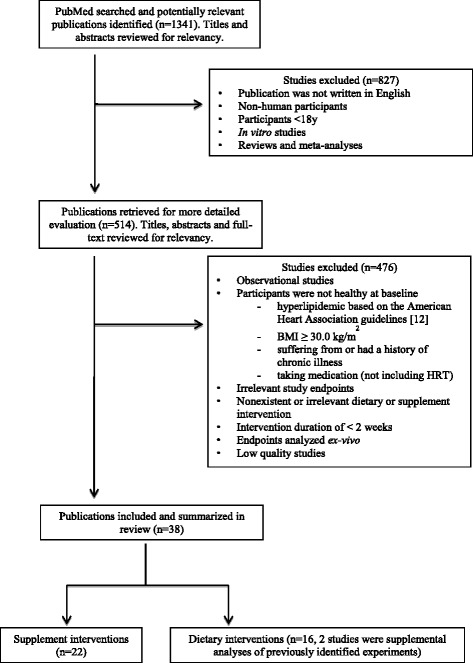
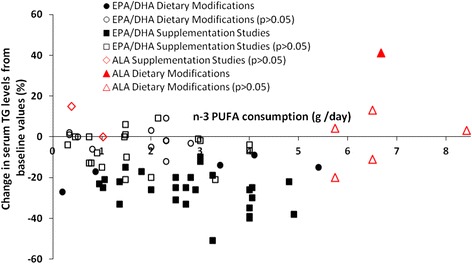
Circulating levels of triacylglycerol (TG) is a recognized risk factor for developing cardiovascular disease, a leading cause of death worldwide. The Institute of Medicine and the American Heart Association both recommend the consumption of n-3 polyunsaturated fatty acids (PUFA), specifically eicosapentaenoic acid (EPA) and docosahexaenoic acid (DHA), to reduce serum TG in hyperlipidemic individuals. Additionally, a number of systematic reviews have shown that individuals with any degree of dyslipidemia, elevated serum TG and/or cholesterol, may benefit from a 20-30% reduction in serum TG after consuming n-3 PUFA derived from marine sources. Given that individuals with serum lipid levels ranging from healthy to borderline dyslipidemic constitute a large portion of the population, the focus of this review was to assess the potential for n-3 PUFA consumption to reduce serum TG in such individuals. A total of 1341 studies were retrieved and 38 clinical intervention studies, assessing 2270 individuals, were identified for inclusion in the current review. In summary, a 9-26% reduction in circulating TG was demonstrated in studies where ≥ 4 g/day of n-3 PUFA were consumed from either marine or EPA/DHA-enriched food sources, while a 4-51% reduction was found in studies where 1-5 g/day of EPA and/or DHA was consumed through supplements. Overall, this review summarizes the current evidence with regards to the beneficial effect of n-3 PUFA on circulating TG levels in normolipidemic to borderline hyperlipidemic, otherwise healthy, individuals. Thus demonstrating that n-3 PUFA may play an important role in the maintenance of cardiovascular health and disease prevention.
Overview
The claims and statistics of this paper haven’t been checked yet.
Free: it reads the open-access text and checks the first 5 claims that cite a source we can check. Create a free account to check every claim.
Integrity signals
Registry
Cites
Statistics
Figures
Verification
Claims the paper makes
The claims and statistics of this paper haven’t been checked yet.
Free: it reads the open-access text and checks the first 5 claims that cite a source we can check. Create a free account to check every claim.
Claims other papers make about this one
Each is checked against this paper’s own text: does it say what the citing paper says it does?
The cited source says what the claim attributes to it.
In the citing paper
“Supplementation of omega‐3 polyunsaturated fatty acids (ω3 PUFAs), such as eicosapentaenoic acid (EPA) and docosahexaenoic acid (DHA), is one of the lipid‐lowering approaches. 6”
From Association Between Omega-3 Fatty Acid Intake and Dyslipidemia: A Continuous Dose-Response Meta-Analysis of Randomized Controlled Trials (2023) · cites this paper as [6]
The cited source says what the claim attributes to it.
In the citing paper
“ω3 PUFAs could reduce serum triglyceride concentration by approximately 15% to 30% 6 , 7 , 8 , 9 but could not affect or even increase LDL‐C levels. 9 , 10 , 11 , 12 , 13”
From Association Between Omega-3 Fatty Acid Intake and Dyslipidemia: A Continuous Dose-Response Meta-Analysis of Randomized Controlled Trials (2023) · cites this paper as [6]
The cited source says what the claim attributes to it.
In the citing paper
“These dose predictions cannot be performed in previous meta‐analyses that failed to reveal a significant dose–response relationship 12 , 14 and brought uncertainty. 6 , 9 , 13 , 15”
From Association Between Omega-3 Fatty Acid Intake and Dyslipidemia: A Continuous Dose-Response Meta-Analysis of Randomized Controlled Trials (2023) · cites this paper as [6]
Self-check
Percentages, sums and reported differences re-computed from the paper’s own numbers.
The self-check needs the paper’s full text.
Citations
Cites
Heart Disease and Stroke Statistics—2023 Update: A Report From the American Heart Association
Tsao, C. W., Aday, A. W., Almarzooq, Z. I., Anderson, C. A. M., Arora, P., Avery, C. L., Baker-Smith, C. M., Beaton, A. Z., Boehme, A. K., Buxton, A. E., et al. (2023) · Circulation · doi:10.1161/cir.0000000000001123 · Cited by 8,300
Trumbo, P., Schlicker, S., Yates, A. A., & Poos, M. (2002) · Journal of the American Dietetic Association · doi:10.1016/s0002-8223(02)90346-9 · Cited by 5,993 · cited 1×
“The 2002 Institute of Medicine (IOM) report on Dietary Reference Intakes for various macronutrients, including fat, states that, “Supplementation with fish oil, which is high in EPA and DHA, reduces triacylglycerol concentrations; low density lipoprotein cholesterol and high density lipoprotein cholesterol concentrati…”
BackgroundHeart Disease and Stroke Statistics—2013 Update: A Report From the American Heart Association
Go, A. S., Mozaffarian, D., Roger, V. L., Benjamin, E. J., Berry, J. D., Borden, W. B., Bravata, D. M., Dai, S., Ford, E. S., Fox, C. S., et al. (2013) · Circulation · doi:10.1161/cir.0b013e31828124ad · Cited by 5,292 · cited 2×
“org/publicdomain/zero have been reported to be either hypertriglyceridemic or hyperlipidemic [2, 9, 10].”
BackgroundLichtenstein, A. H., Appel, L. J., Brands, M., Carnethon, M., Daniels, S., Franch, H. A., Franklin, B., Kris-Etherton, P., Harris, W. S., Howard, B., et al. (2006) · Circulation · doi:10.1161/circulationaha.106.176158 · Cited by 2,705 · cited 1×
“200 ≤ total-cholesterol (total-c) ≤ 240 mg/dL, 130 ≤ LDL-c ≤ 160 mg/dL, and 150 ≤ TG ≤ 200 mg/dL] [14, 25] Healthy or overweight participants: Mean BMI within intervention group(s) and control/placebo group (if applicable) at baseline ≤29.”
Triglycerides and Cardiovascular Disease: A Scientific Statement From the American Heart Association
Miller, M., Stone, N. J., Ballantyne, C., Bittner, V., Criqui, M. H., Ginsberg, H. N., Goldberg, A. C., Howard, W. J., Jacobson, M. S., Kris-Etherton, P. M., et al. (2011) · Circulation · doi:10.1161/cir.0b013e3182160726 · Cited by 1,871
Hokanson, J. E., & Austin, M. A. (1996) · Journal of Cardiovascular Risk · doi:10.1097/00043798-199604000-00014 · Cited by 1,706 · cited 1×
“indicates that an 88 mg/dL increase in fasting TG levels elevates the risk of developing CVD by 14 % and 37 %, in males and females, respectively [3–8].”
Backgroundn-3 fatty acids and serum lipoproteins: human studies
Harris, W. (1997) · The American Journal of Clinical Nutrition · doi:10.1093/ajcn/65.5.1645s · Cited by 1,243 · cited 3×
“This review stratified studies comparing participants with either healthy (serum levels < 177 mg/dL) or elevated levels (serum levels ≥ 177 mg/dL) of serum TG; relative to the upper limit for serum TG of 200 mg/dL utilized in the current review [19].”
BackgroundInfluentialFish oils and plasma lipid and lipoprotein metabolism in humans: a critical review
Harris, W. S. (1989) · Journal of Lipid Research · doi:10.1016/s0022-2275(20)38310-3 · Cited by 1,127
Effects of omega-3 fatty acids on serum markers of cardiovascular disease risk: a systematic review
Balk, E. M., Lichtenstein, A. H., Chung, M., Kupelnick, B., Chew, P., & Lau, J. (2006) · Atherosclerosis · doi:10.1016/j.atherosclerosis.2006.02.012 · Cited by 732 · cited 1×
“, both of which assessed studies in which individuals consumed either fish, algal EPA or algal DHA oils [23, 24].”
BackgroundJeppesen, J. Ø., Hein, H. O., Suadicani, P., & Gyntelberg, F. (1998) · Circulation · doi:10.1161/01.cir.97.11.1029 · Cited by 676 · cited 1×
“indicates that an 88 mg/dL increase in fasting TG levels elevates the risk of developing CVD by 14 % and 37 %, in males and females, respectively [3–8].”
Background
Research works printed but not linked: 1
- Health Canada Guidance Document for Preparing a Submission for Food Health Claims 2013
Cited by
Kinoshita, M., Yokote, K., Arai, H., Iida, M., Ishigaki, Y., Ishibashi, S., Umemoto, S., Egusa, G., Ohmura, H., Okamura, T., et al. (2018) · Journal of Atherosclerosis and Thrombosis · doi:10.5551/jat.gl2017 · Cited by 813
ATUALIZAÇÃO DA DIRETRIZ BRASILEIRA DE DISLIPIDEMIAS E PREVENÇÃO DA ATEROSCLEROSE - 2017
Faludi, A., Izar, M., Saraiva, J., Chacra, A., Bianco, H., Afiune Neto, A., Bertolami, A., Pereira, A., Lottenberg, A., Sposito, A., et al. (2017) · Arquivos Brasileiros de Cardiologia · doi:10.5935/abc.20170121 · Cited by 633
Very long-chain n -3 fatty acids and human health: fact, fiction and the future
Calder, P. C. (2018) · Proceedings of the Nutrition Society · doi:10.1017/s0029665117003950 · Cited by 419
Nutrition and Cardiovascular Health
Casas, R., Castro-Barquero, S., Estruch, R., & Sacanella, E. (2018) · International Journal of Molecular Sciences · doi:10.3390/ijms19123988 · Cited by 340
“So, several meta-analyses of RCTs [229,230] have reported significant reductions of LDL-c, SBP, fasting glucose, BMI, hemoglobin A1c, or TNF-α levels, and significant increments of HDL-c.”
InfluentialOkamura, T., Tsukamoto, K., Arai, H., Fujioka, Y., Ishigaki, Y., Koba, S., Ohmura, H., Shoji, T., Yokote, K., Yoshida, H., et al. (2024) · Journal of Atherosclerosis and Thrombosis · doi:10.5551/jat.gl2022 · Cited by 302
Cicero, A. F. G., Colletti, A., Bajraktari, G., Descamps, O., Djuric, D. M., Ezhov, M., Fras, Z., Katsiki, N., Langlois, M., Latkovskis, G., et al. (2017) · Nutrition Reviews · doi:10.1093/nutrit/nux047 · Cited by 295
Cicero, A. F. G., Colletti, A., Bajraktari, G., Descamps, O., Djuric, D. M., Ezhov, M., Fras, Z., Katsiki, N., Langlois, M., Latkovskis, G., et al. (2017) · Archives of Medical Science · doi:10.5114/aoms.2017.69326 · Cited by 281
The Role of Nutraceuticals in Statin Intolerant Patients
Banach, M., Patti, A. M., Giglio, R. V., Cicero, A. F. G., Atanasov, A. G., Bajraktari, G., Bruckert, E., Descamps, O., Djuric, D. M., Ezhov, M., et al. (2018) · Journal of the American College of Cardiology · doi:10.1016/j.jacc.2018.04.040 · Cited by 272
Innes, J. K., & Calder, P. C. (2018) · International Journal of Molecular Sciences · doi:10.3390/ijms19020532 · Cited by 201
Nutraceutical therapies for atherosclerosis
Moss, J. W. E., & Ramji, D. P. (2016) · Nature Reviews Cardiology · doi:10.1038/nrcardio.2016.103 · Cited by 187
Thota, R. N., Acharya, S. H., & Garg, M. L. (2019) · Lipids in Health and Disease · doi:10.1186/s12944-019-0967-x · Cited by 127
Huang, C.-W., Chien, Y.-S., Chen, Y.-J., Ajuwon, K., Mersmann, H., & Ding, S.-T. (2016) · International Journal of Molecular Sciences · doi:10.3390/ijms17101689 · Cited by 100
“To treat patients with obesity or its comorbidities, the amount of fish oils required to appropriately serve as ligands for the n-3 PUFA receptor GRP120 will be too high to be practical [85].”
BackgroundInfluentialMcNamara, R. K., Asch, R. H., Lindquist, D. M., & Krikorian, R. (2018) · Prostaglandins, Leukotrienes and Essential Fatty Acids · doi:10.1016/j.plefa.2017.05.001 · Cited by 97
“decreases blood triglyceride levels [137] and reduces blood platelet aggregation [136], potentially by attenuating platelet thromboxane A2 production which has vasoconstriction effects [138-140].”
BackgroundPolyunsaturated fatty acids: any role in rheumatoid arthritis?
Navarini, L., Afeltra, A., Afflitto, G. G., & Margiotta, D. P. E. (2017) · Lipids in Health and Disease · doi:10.1186/s12944-017-0586-3 · Cited by 103
“Moreover, n-3 PUFAs effects on CV system are also evident in inhibiting arterial stiffness [101, 102], in plaques formation and modification process [103, 104], in regulation of lipid plasma profile [105, 106].”
BackgroundZibaeenezhad, M. J., Ghavipisheh, M., Attar, A., & Aslani, A. (2017) · Nutrition & Diabetes · doi:10.1038/s41387-017-0007-8 · Cited by 83
Recent progress in the use of functional foods for older adults: A narrative review
Jędrusek‐Golińska, A., Górecka, D., Buchowski, M. S., Wieczorowska–Tobis, K., Gramza‐Michałowska, A., & Szymandera-Buszka, K. E. (2020) · Comprehensive Reviews in Food Science and Food Safety · doi:10.1111/1541-4337.12530 · Cited by 96
Schwingshackl, L., Zähringer, J., Beyerbach, J., Werner, S. S., Heseker, H., Koletzko, B. V., & Meerpohl, J. J. (2021) · Annals of Nutrition and Metabolism · doi:10.1159/000515058 · Cited by 95
Wang, T., Zhang, X., Zhou, N., Shen, Y., Li, B., Chen, B. E., & Li, X. (2023) · Journal of the American Heart Association · doi:10.1161/jaha.123.029512 · Cited by 73
Stonehouse, W., Benassi-Evans, B., Bednarz, J., Vincent, A. D., Hall, S., & Hill, C. L. (2022) · American Journal of Clinical Nutrition · doi:10.1093/ajcn/nqac125 · Cited by 82
Rizzo, M., Colletti, A., Penson, P. E., Katsiki, N., Mikhailidis, D. P., Toth, P. P., Gouni‐Berthold, I., Mancini, J., MARAIS, D. P., Moriarty, P. M., et al. (2023) · Pharmacological Research · doi:10.1016/j.phrs.2023.106679 · Cited by 79
Iqbal, Z., Ho, J. H., Adam, S., France, M. W., Syed, A. A., Neely, D., Rees, A., Khatib, R., Cegla, J., Byrne, C. D., et al. (2020) · Atherosclerosis · doi:10.1016/j.atherosclerosis.2020.09.008 · Cited by 66
Bioactive Compounds (BACs): A Novel Approach to Treat and Prevent Cardiovascular Diseases
Din, S. R. U., Saeed, S., Khan, S. U., Kiani, F. A., Alsuhaibani, A. M., & Zhong, M. (2023) · Current Problems in Cardiology · doi:10.1016/j.cpcardiol.2023.101664 · Cited by 66
Rakotoarisoa, M., Angelov, B., Espinoza, S., Khakurel, K. P., Bizien, T., Drechsler, M., & Angelova, A. (2021) · ACS Sustainable Chemistry & Engineering · doi:10.1021/acssuschemeng.1c04706 · Cited by 60
Cardiovascular Diseases, Depression Disorders and Potential Effects of Omega-3 Fatty Acids
Trebatická, J., Dukát, A., Ďuračková, Z., & Muchová, J. (2017) · Physiological Research · doi:10.33549/physiolres.933430 · Cited by 58
Biotechnology tools and applications for development of oilseed crops with healthy vegetable oils
Msanne, J., Kim, H., & Cahoon, E. B. (2020) · Biochimie · doi:10.1016/j.biochi.2020.09.020 · Cited by 64
Anzalone, A., Carbuhn, A., Jones, L., Gallop, A., Smith, A., Johnson, P., Swearingen, L., Moore, C., Rimer, E., McBeth, J., et al. (2019) · Journal of Athletic Training · doi:10.4085/1062-6050-387-18 · Cited by 54
“Diets high in x-3 FA reduce blood pressure(19) and circulating triglycerides.(20) The Omega-3 Index was proposed as a clinical stratification system that provides information regarding the CVD risk,(21) and researchers(5) recently confirmed that an Omega-3 Index ,4% constituted high risk and .”
BackgroundEnkhmaa, B., Surampudi, P. N., Anuurad, E., & Berglund, L. (2015) · Europe PMC (PubMed Central) · Cited by 65
Magoni, C., Bertacchi, S., Giustra, C. M., Guzzetti, L., Cozza, R., Ferrari, M., Torelli, A., Marieschi, M., Porro, D., Branduardi, P., et al. (2022) · Trends in Food Science & Technology · doi:10.1016/j.tifs.2022.01.030 · Cited by 56
Hypertriglyceridemia: new approaches in management and treatment
Wolska, A., Yang, Z.-H., & Remaley, A. T. (2020) · Current Opinion in Lipidology · doi:10.1097/mol.0000000000000710 · Cited by 49
Nakamura, F., Ishida, Y., Aihara, K., Sawada, D., Ashida, N., Sugawara, T., Aoki, Y., Takehara, I., Takano, K., & Fujiwara, S. (2016) · Microbial Ecology in Health & Disease · doi:10.3402/mehd.v27.30312 · Cited by 47
“For example, docosahexaenoic acid (DHA) and eicosapentaenoic acid (EPA) are PPARa agonists, and they are representative of foods that affect lipid metabolism, as supported by abundant evidence from clinical studies (25).”
BackgroundLiddle, D. M., Hutchinson, A. L., Wellings, H. R., Power, K. A., Robinson, L. E., & Monk, J. M. (2017) · Nutrients · doi:10.3390/nu9121289 · Cited by 51
“In humans, LC n-3 PUFA have been shown to improve several metabolic risk factors, namely blood lipid levels [299]; however, the effects on circulating adipokines (i.”
BackgroundSelf-citationInfluence of Bioactive Nutrients on the Atherosclerotic Process: A Review
Casas, R. M., Estruch, R., & Sacanella, E. (2018) · Nutrients · doi:10.3390/nu10111630 · Cited by 46
“A meta-analysis of 38 clinical intervention studies reported that increased consumption of EPA and DHA through either supplementation or consumption of enriched foods was associated with a 20–30% reduction in serum TG levels (≥4 g/day) in healthy patients and in patients with borderline hyperlipidemia [55].”
BackgroundYang, Z., Amar, M. J., Sampson, M. L., Courville, A. B., Sorokin, A. V., Gordon, S. M., Aponte, A. M., Stagliano, M. S., Playford, M. P., Fu, Y., et al. (2020) · Nutrients · doi:10.3390/nu12030749 · Cited by 45
“Results from various epidemiological and clinical studies have also demonstrated the important role of n-3 PUFA in decreasing triglycerides (TG) [3].”
BackgroundResultStupin, A., Mihalj, M., Kolobarić, N., Šušnjara, P., Kolar, L., Mihaljević, Z., Matić, A., Stupin, M., Jukić, I., Kralik, Z., et al. (2020) · International Journal of Molecular Sciences · doi:10.3390/ijms21114149 · Cited by 44
“who reported that only very high doses of EPA and/or DHA-enriched food sources (≥4 g/day) have the ability to reduce serum triglycerides (by 9–26%) in normolipidemic to borderline hyperlipidemic and otherwise healthy individuals [33].”
BackgroundOmega-3 intake is associated with liver disease protection
Vell, M. S., Creasy, K. T., Scorletti, E., Seeling, K. S., Hehl, L., Rendel, M. D., Schneider, K. M., & Schneider, C. V. (2023) · Frontiers in Public Health · doi:10.3389/fpubh.2023.1192099 · Cited by 42
“In addition, Omega-3 fatty acids may directly affect liver fat metabolism (23).”
BackgroundRangel-Huerta, Ó. D., & Gil, Á. (2017) · Clinical Nutrition · doi:10.1016/j.clnu.2017.05.015 · Cited by 43
Liu, W. C., & Kim, I. H. (2017) · Annals of Animal Science · doi:10.1515/aoas-2017-0026 · Cited by 34
“It is suggested that the ratio of n-6:n-3 PUFA is a risk factor in cancers and cardiovascular disease (Simopoulos, 2008), and a lower n-6:n-3 PUFA ratio is required for the prevention and management of chronic diseases (Leslie et al., 2015).”
BackgroundO’Mahoney, L. L., Dunseath, G. J., Churm, R., Holmes, M. J., Boesch, C., Stavropoulos‐Kalinoglou, A., Ajjan, R., Birch, K. M., Orsi, N. M., Mappa, G., et al. (2020) · Cardiovascular Diabetology · doi:10.1186/s12933-020-01094-5 · Cited by 37
Morais, N. S., Passos, T. S., Ramos, G. R., Ferreira, V. A. F., Moreira, S. M. G., Filho, G. P. C., Barreto, A. P. G., Leite, P. I. P., de Almeida, R. S., Paulo, C. L. R., et al. (2022) · PLoS ONE · doi:10.1371/journal.pone.0265649 · Cited by 33
Zayed, E. A., Ain-Shoka, A. A., El-Shazly, K. A., & Latif, H. A. A. E. (2018) · Journal of Biochemical and Molecular Toxicology · doi:10.1002/jbt.22218 · Cited by 43
Omega-3 fatty acids coordinate glucose and lipid metabolism in diabetic patients
Mone, P., Varzideh, F., Kansakar, U., Infante, C., Lombardi, A., Donato, A. D., Frullone, S., & Santulli, G. (2022) · Lipids in Health and Disease · doi:10.1186/s12944-022-01642-w · Cited by 32
Food and plant bioactives for reducing cardiometabolic disease: How does the evidence stack up?
Cicero, A. F. G., & Colletti, A. (2017) · Trends in Food Science & Technology · doi:10.1016/j.tifs.2017.04.001 · Cited by 32
Yang, B., Shi, M.-Q., Li, Z.-H., Shi, L., Wang, A.-M., Guo, X.-J., & Li, D. (2019) · Food & Function · doi:10.1039/c8fo01707g · Cited by 28
McNamara, R. K., & Almeida, D. M. (2019) · Harvard Review of Psychiatry · doi:10.1097/hrp.0000000000000199 · Cited by 34
Pillai, S. C., Borah, A., Jacob, E. M., & Kumar, D. S. (2021) · Drug Delivery · doi:10.1080/10717544.2021.1892241 · Cited by 33
“meta-analysis that was published in 2015 (Leslie et al., 2015).”
BackgroundAmigó, N., Akinkuolie, A. O., Chiuve, S. E., Correig, X., Cook, N. R., & Mora, S. (2020) · Journal of the American Heart Association · doi:10.1161/jaha.119.014963 · Cited by 29
“Reported n-3 fatty acid effects on lipids are mixed.(12) When administered in supplemental doses, n-3 fatty acids, particularly marine-derived, produce a meaningful decrease in triglycerides,(13) a modest increase in HDL (high-density lipoprotein) cholesterol (HDL-C),(14) and an increase in LDL (low-density lipoprotei…”
BackgroundDyslipidemia Management in 2020: An Update on Diagnosis and Therapeutic Perspectives
Karantas, I. D., Okur, M. E., Okur, N. Ü., & Siafaka, P. I. (2020) · Endocrine Metabolic & Immune Disorders - Drug Targets · doi:10.2174/1871530320666200810144004 · Cited by 33
Zinöcker, M. K., Svendsen, K., & Dankel, S. N. (2020) · American Journal of Clinical Nutrition · doi:10.1093/ajcn/nqaa322 · Cited by 25
Kelly, R. K., Watling, C. Z., Tong, T. Y. N., Piernas, C., Carter, J. L., Papier, K., Key, T. J., & Perez‐Cornago, A. (2021) · Arteriosclerosis Thrombosis and Vascular Biology · doi:10.1161/atvbaha.120.315628 · Cited by 26
Munjral, S., Ahluwalia, P., Jamthikar, A. D., Puvvula, A., Saba, L., Faa, G., Singh, I. M., Chadha, P. S., Turk, M., Johri, A. M., et al. (2021) · Frontiers in Bioscience-Landmark · doi:10.52586/5026 · Cited by 24
“Omega-3 PUFA contains eicosapentaenoic acid (EPA) and docosahexaenoic acid (DHA), both helpful in CVD prevention [ 205, 208].”
BackgroundNutraceuticals in Paediatric Patients with Dyslipidaemia
Banderali, G., Capra, M. E., Viggiano, C., Biasucci, G., & Pederiva, C. (2022) · Nutrients · doi:10.3390/nu14030569 · Cited by 24
Zulyniak, M. A., Roke, K., Gerling, C., Logan, S. L., Spriet, L. L., & Mutch, D. M. (2016) · Molecular Nutrition & Food Research · doi:10.1002/mnfr.201500830 · Cited by 24
Romo‐Hualde, A., Huerta, A. E., González-Navarro, C. J., Ramos-López, O., Moreno-Aliaga, M. J., & Martínez, J. A. (2018) · Lipids in Health and Disease · doi:10.1186/s12944-018-0750-4 · Cited by 25
“Discussion The higher reductions on BMI and fat mass in those groups supplemented with α-LA could be explained by direct or indirect effects of this organosulfur compound derived from caprylic acid on adipocyte metabolism, regulation mitochondrial biogenesis, lipid turnover (lipolysis/ lipogenesis) or inflammation [18…”
Lipid-lowering nutraceuticals update on scientific evidence
Derosa, G., Colletti, A., Maffioli, P., D’Angelo, A., Lupi, A., Zito, G., Mureddu, G. F., Raddino, R., Fedele, F., & Cicero, A. F. G. (2020) · Journal of Cardiovascular Medicine · doi:10.2459/jcm.0000000000000970 · Cited by 23
An update on the safety of nutraceuticals and effects on lipid parameters
Cicero, A. F. G., & Colletti, A. (2018) · Expert Opinion on Drug Safety · doi:10.1080/14740338.2018.1429404 · Cited by 23
“This reduction is higher in hypertriglyceridemic subjects and with doses >4 g/day of ω3 (−9/−51%) [93].”
BackgroundYang, Z., Amar, M. J., Sorokin, A. V., Troendle, J. F., Courville, A. B., Sampson, M. L., Playford, M. P., Yang, S. B., Stagliano, M. S., Ling, C., et al. (2019) · Journal of clinical lipidology · doi:10.1016/j.jacl.2019.10.013 · Cited by 26
n-3 PUFA Enriched Eggs as a Source of Valuable Bioactive Substances
Radanović, A., Kralik, G., Drenjančević, I., Galović, O., Košević, M., & Kralik, Z. (2023) · Foods · doi:10.3390/foods12234202 · Cited by 25
“%) if they were consumed in large amounts (>4 g/day) contained in functional products [45].”
BackgroundOverview of dietary supplements on patients with type 2 diabetes
Behrouz, V., Dastkhosh, A., & Sohrab, G. (2020) · Diabetes & Metabolic Syndrome Clinical Research & Reviews · doi:10.1016/j.dsx.2020.03.019 · Cited by 21
Conway, M. C., McSorley, E. M., Mulhern, M. S., Spence, T., van Wijngaarden, E., Watson, G. E., Wahlberg, K. E., Pineda, D., Bröberg, K., Hyland, B. W., et al. (2020) · European Journal of Nutrition · doi:10.1007/s00394-020-02326-w · Cited by 22
Grytten, E., Laupsa‐Borge, J., Cetin, K., Bohov, P., Nordrehaug, J. E., Skorve, J., Berge, R. K., Strand, E., Bjørndal, B., Nygard, O. K., et al. (2025) · Journal of Lipid Research · doi:10.1016/j.jlr.2025.100770 · Cited by 21
“PUFAs, which include omega-3 (n-3) and omega-6 (n-6), are recommended as a replacement of saturated FAs to reduce risk of CVD (19, 20), in part by lowering of LDL-C (21, 22) and triacylglycerols (TAGs) (23, 24).”
Ulmus macrocarpa Hance modulates lipid metabolism in hyperlipidemia via activation of AMPK pathway
Han, H.-J., Song, X., Yadav, D., Hwang, M. S., Lee, J. H., Lee, C. H., Kim, T. H., Lee, J. J., & Kwon, J. (2019) · PLoS ONE · doi:10.1371/journal.pone.0217112 · Cited by 20
AbuMweis, S. S., Omran, D. A., Al-Shami, I. K., & Jew, S. (2021) · Complementary Therapies in Medicine · doi:10.1016/j.ctim.2021.102662 · Cited by 21
Sun, C., Chen, Y., Zhang, H., Zhu, L., Xu, L., & Liang, S. (2023) · LWT · doi:10.1016/j.lwt.2023.114875 · Cited by 19
Mennitti, L. V., Oyama, L. M., Santamarina, A. B., do Nascimento, O., & Pisani, L. P. (2018) · Prostaglandins Leukotrienes and Essential Fatty Acids · doi:10.1016/j.plefa.2018.07.001 · Cited by 19
Associations between circulating fatty acid levels and metabolic risk factors
Bi, X., Yeo, P. L. Q., Loo, Y. T., & Henry, C. J. (2019) · Journal of Nutrition & Intermediary Metabolism · doi:10.1016/j.jnim.2019.02.002 · Cited by 22
Krueger, K., Boehme, E., Klettner, A., & Zille, M. (2021) · Critical Reviews in Food Science and Nutrition · doi:10.1080/10408398.2021.1915242 · Cited by 20
“A systematic review identified 38 clinical intervention studies that overall report a 26% decrease in circulating triglycerides when 4 g/day of omega-3 fatty acids were consumed from either marine or EPA/DHA-enriched food sources (Leslie et al. 2015).”
BackgroundEgg Yolk as Means for Providing Essential and Beneficial Fatty Acids
Shinn, S. E., Proctor, A., & Baum, J. (2018) · Journal of the American Oil Chemists Society · doi:10.1002/aocs.12008 · Cited by 19
Wojda, A., Janczy, A., & Małgorzewicz, S. (2021) · Acta Biochimica Polonica · doi:10.18388/abp.2020_5515 · Cited by 18
“Nuts and vegetable oils, especially those derived from olive and canola, are great sources of PUFA n-3, which higher intake may be beneficial for increasing HDLC concentrations and reducing LDL-C and TC levels (Leslie et al., 2015).”
BackgroundTanisawa, K., Ito, T., Kawakami, R., Usui, C., Kawamura, T., Suzuki, K., Sakamoto, S., Ishii, K., Muraoka, I., Oka, K., et al. (2022) · Frontiers in Nutrition · doi:10.3389/fnut.2022.779967 · Cited by 17
“A metaanalysis of intervention studies also reported that fish oil or n3 polyunsaturated fatty acid intake reduces blood triglyceride levels (41, 42).”
BackgroundCardiometabolic risks and omega‐3 index in recent‐onset bipolar I disorder
Wulsin, L. R., Blom, T. J., Durling, M., Welge, J. A., DelBello, M. P., Adler, C. M., McNamara, R. K., & Strakowski, S. M. (2018) · Bipolar Disorders · doi:10.1111/bdi.12633 · Cited by 16
Link between Omega 3 Fatty Acids Carried by Lipoproteins and Breast Cancer Severity
Bobin‐Dubigeon, C., Nazih, H., Croyal, M., & Bard, J. (2022) · Nutrients · doi:10.3390/nu14122461 · Cited by 15
“EPA and DHA are known to impact lipoprotein metabolism by reducing hepatic VLDL production, inducing a TG-lowering effect, as described in supplementation studies [9,10].”
BackgroundThe emerging global phenomenon of sarcopenic obesity: Role of functional foods; a conference report
Shao, A. E., Campbell, W. W., Chen, C. O., Mittendorfer, B., Rivas, D. A., & Griffiths, J. C. (2017) · Journal of Functional Foods · doi:10.1016/j.jff.2017.03.048 · Cited by 20
Ćurić, Ž. B., Masle, A. M., Kibel, A., Selthofer-Relatić, K., Stupin, A., Mihaljević, Z., Jukić, I., Stupin, M., Matić, A., Kozina, N., et al. (2021) · Biology · doi:10.3390/biology10080774 · Cited by 16
“, taking >4 g/day of EPA- and/or DHA-enriched food sources reduced serum triglycerides (by 9–26%) in normolipidemic to borderline hyperlipidemic but otherwise healthy individuals [33].”
BackgroundDjurić, Z., Aslam, M. N., Simon, B. R., Sen, A., Jiang, Y. Y., Ren, J., Chan, R., Soni, T., Rajendiran, T. M., Smith, W. L., et al. (2017) · The Journal of Nutritional Biochemistry · doi:10.1016/j.jnutbio.2017.04.013 · Cited by 15
“In addition, fish oils are known to have a triglyceride lowering effect [19], but the effects of fish oils on colon lipids are currently less well defined.”
BackgroundBaum, S. J., & Scholz, K. P. (2019) · Clinical Cardiology · doi:10.1002/clc.23220 · Cited by 16
“In most of the studies that found TG-lowering effects of fish oil (or EPA/DHA), participants received 1 g to >4 g of the respective fatty acid per day.(52) The TG lowering effect is linearly dose-dependent, and individuals with higher baseline TG levels exhibit greater declines in absolute TG levels in response to ome…”
BackgroundRamsvik, M. S., Bjørndal, B., Bruheim, I. A., Bohov, P., & Berge, R. K. (2015) · Marine Drugs · doi:10.3390/md13074375 · Cited by 15
“The preventive role is explained by their ability to lower plasma triacylglycerol (TAG) [9–11], reduce platelet aggregation [12,13] and blood pressure [14], protect against cardiac arrhythmias [15], and potentially reduce inflammation [16–18].”
BackgroundGrytten, E., Laupsa‐Borge, J., Bohov, P., Bjørndal, B., Strand, E., Skorve, J., Nordrehaug, J. E., Berge, R. K., Rostrup, E., Mellgren, G., et al. (2021) · Clinical Nutrition · doi:10.1016/j.clnu.2021.03.040 · Cited by 15
Sandoval, K. E., Wooten, J. S., Harris, M. P., Schaller, M. L., Umbaugh, D. S., & WITT, K. A. (2018) · Current Developments in Nutrition · doi:10.1093/cdn/nzy065 · Cited by 14
“Although ω-3 PUFA supplementation is well established in reducing TGs in humans, such studies heavily focused on the treatment of highly dyslipidemic populations (35, 36).”
BackgroundMorelli, V. M., de Mutsert, R., Roos, A., Lamb, H. J., Vlieg, A. V. H., Bos, M. H. A., Rosendaal, F. R., Lijfering, W. M., & Cannegieter, S. C. (2020) · Arteriosclerosis Thrombosis and Vascular Biology · doi:10.1161/atvbaha.120.315365 · Cited by 13
Fish consumption and its lipid modifying effects – A review of intervention studies
McMullan, J. E., Yeates, A. J., Allsopp, P. J., Mulhern, M. S., Strain, J. J., van Wijngaarden, E., MYERS, G. J., Shroff, E. H., Shamlaye, C. F., & McSorley, E. M. (2023) · NeuroToxicology · doi:10.1016/j.neuro.2023.10.003 · Cited by 18
Hăbeanu, M., Lefter, N. A., Gheorghe, A., Untea, A. E., Ropotă, M., Grigore, D.-M., Varzaru, I., & Toma, S. M. (2019) · Animals · doi:10.3390/ani9050234 · Cited by 12
Dams, S., Holasek, S. J., Tsiountsioura, M., Edelsbrunner, M., Dietz, P., Köfeler, H. C., Malliga, D.-E., Gürbüz, A., Meier‐Allard, N., Poncza, B., et al. (2020) · International Journal of Food Sciences and Nutrition · doi:10.1080/09637486.2020.1725960 · Cited by 12
Lust, C. A. C., Bi, X., Henry, C. J., & David, W. L. (2021) · Nutrients · doi:10.3390/nu13020435 · Cited by 12
“consumption and the antiatherogenic properties of HDL cholesterol levels [50].”
Backgroundvon Schacky, C. (2019) · Der Internist · doi:10.1007/s00108-019-00687-x · Cited by 21
Hichami, A., Grissa, O., Mrizak, I., Benammar, C., & Khan, N. A. (2016) · Journal of Nutrition and Metabolism · doi:10.1155/2016/3124960 · Cited by 11
“There is no doubt concerning the beneficial effects of n-3 PUFAs in the improvements of hypertriglyceridemia and the reduction of cardiovascular risk [99].”
BackgroundLe, H. V., Nguyen, Q. V., Nguyen, D. V., Otto, J. R., Malau‐Aduli, B. S., Nichols, P. D., & Malau‐Aduli, A. E. O. (2018) · Nutrients · doi:10.3390/nu10121985 · Cited by 12
“Omega-3 (n-3) fatty acids have potent anti-inflammatory and inflammation resolving properties in model systems [1] and n-3 fatty acid supplementation may be used as an effective tool in the primary and secondary prevention of cardiovascular disease [2,3].”
MethodChen, P., Zhang, X., Yang, Q., Li, L., Cao, Y., Zhong, R., & Miao, J. (2025) · Journal of Agriculture and Food Research · doi:10.1016/j.jafr.2025.101672 · Cited by 11
Belmonte, A. M., Macchioni, P., Minelli, G., Scutaru, C., Volpelli, L. A., & Fiego, D. P. L. (2021) · Italian Journal of Food Science · doi:10.15586/ijfs.v33i2.2005 · Cited by 12
“High values of ratio can be the cause of various diseases (Simopoulos, 2002, 2010; Leslie et al., 2015).”
BackgroundRole of natural compounds in non-alcoholic fatty liver diseases (NAFLD): a mechanistic approach
Wal, P., Yadav, S., Jha, S. K., Singh, A., Bhargavi, B., Shivaram, R., Imran, M., & Aziz, N. (2025) · Egyptian Liver Journal · doi:10.1186/s43066-025-00452-w · Cited by 12
Kolar, L., Stupin, M., Stupin, A., Šušnjara, P., Mihaljević, Z., Matić, A., Jukić, I., Kolobarić, N., & Drenjančević, I. (2021) · Preventive Nutrition and Food Science · doi:10.3746/pnf.2021.26.4.388 · Cited by 10
“sumption has the ability to reduce serum triglyceride levels in healthy individuals (Leslie et al., 2015).”
BackgroundArimoto, M., Yamämoto, Y., Imaoka, W., Kuroshima, T., Toragai, R., Nakamura, M., Ito, Y., & Ai, M. (2023) · Journal of Atherosclerosis and Thrombosis · doi:10.5551/jat.64024 · Cited by 12
Leshno, M., Goldbourt, U., Pinchuk, I., & Lichtenberg, D. A. (2017) · International Journal of Food Sciences and Nutrition · doi:10.1080/09637486.2017.1402868 · Cited by 9
“The association of TG-levels and blood pressure were reviewed in the literature (Colussi et al. 2017; Leslie et al. 2015).”
BackgroundHuang, S., Sabrina, N., Chien, Y., Chen, Y., Lin, S., & Chang, J. (2018) · Molecular Nutrition & Food Research · doi:10.1002/mnfr.201800243 · Cited by 6
Muzsik, A., Bajerska, J., Jeleń, H. H., Walkowiak, J., Krzyżanowska-Jankowska, P., & Chmurzyńska, A. (2019) · Menopause The Journal of The North American Menopause Society · doi:10.1097/gme.0000000000001409 · Cited by 7
Şahin, Y., Alçığır, M. E., ŞENOL, A., Özden, H., Ekici, H., Yıldırım, E., & Çínar, M. (2022) · Kocatepe Veterinary Journal · doi:10.30607/kvj.1051733 · Cited by 6
Laupsa‐Borge, J., Grytten, E., Bohov, P., Bjørndal, B., Strand, E., Skorve, J., Nordrehaug, J. E., Berge, R. K., Rostrup, E., Mellgren, G., et al. (2023) · Frontiers in Nutrition · doi:10.3389/fnut.2023.1020678 · Cited by 6
Nam, G. E., Myung, S., & Choi, Y. (2017) · European Journal of Lipid Science and Technology · doi:10.1002/ejlt.201700111 · Cited by 6
Wang, Y., Li, J., Subramaniyan, I., do Vale, G. D., Chaudhary, J., Anwar, A., Wight‐Carter, M., McDonald, J. G., Putnam, W. C., Qin, T., et al. (2020) · Toxicology and Applied Pharmacology · doi:10.1016/j.taap.2020.115037 · Cited by 5
“This was somewhat surprising given that dietary consumption of DHA has been reported to lower lipids (Leslie et al., 2015) and induce anti-diabetic effects (Li et al., 2014).”
BackgroundMasle, A. M., Kibel, A., Jukić, I., Čičak, P., Selthofer-Relatić, K., Stupin, A., Mihaljević, Z., Šušnjara, P., Ćurić, Ž. B., Bačun, T., et al. (2024) · Clinical Interventions in Aging · doi:10.2147/cia.s461821 · Cited by 5
“53,54”
Briawan, D., Nurpratama, W. L., & Riyadina, W. (2020) · Indonesian Journal of Human Nutrition · doi:10.21776/ub.ijhn.2020.007.02.6 · Cited by 11
“dapat memainkan peran penting dalam pemeliharaan kolesterol dalam tubuh dan pencegahan penyakit tidak menular [37].”
Background
Metadata
- Authors
- Leslie, M. A., Cohen, D. J. A., Liddle, D. M., Robinson, L. E., & Ma, D. W. L.
- Affiliations
- University of Guelph (CA)
- Venue
- Lipids in Health and Disease
- Published
- 2015-06-06
- Volume
- 14
- Issue
- 1
- Pages
- 53-53
- ISSN
- 1476-511X (ISSN-L)
- PMC
- PMC4488064
- OpenAlex
- W1511998280
- Cited by
- 143
- References
- 66
- Citations by year
- 2026: 6 · 2025: 8 · 2024: 6 · 2023: 10 · 2022: 13 · 2021: 15 · 2020: 23 · 2019: 14 · 2018: 19 · 2017: 19 · 2016: 5 · 2015: 5
- FWCI
- 2.05
- Type
- journal article
- Language
- en
- Open access
- gold
- doi.org
- Locations
- Lipids in Health and Disease (publishedVersion, cc-by)
- Europe PMC (PubMed Central) (publishedVersion, cc-by)
- PubMed Central (publishedVersion, cc-by)
- PubMed (publishedVersion)
- Funders
- Manitoba Rural Adaptation Council
- Topics
- Health Sciences › Nursing › Nutrition and Dietetics › Fatty Acid Research and Health
- Life Sciences › Agricultural and Biological Sciences › Aquatic Science › Aquaculture Nutrition and Growth
- Physical Sciences › Chemistry › Organic Chemistry › Edible Oils Quality and Analysis
- Keywords
- omega-3 polyunsaturated fatty acids, eicosapentaenoic acid, docosahexaenoic acid, serum triglycerides, hypertriglyceridemia, dietary supplementation, marine fatty acids, cardiovascular disease prevention
- MeSH terms
- Adult, Aged, Diet, Female, Humans, Hyperlipidemias, Male, Middle Aged, Triglycerides, Fatty Acids, Omega-3, Dietary Supplements
About these checks
Registry, retraction, Cites and statistics results are computed, not judged, with one exception: a printed reference that no index lists is read once by a model before it counts as a citation error. Claims are extracted by a model and kept only when their quote appears verbatim in the text; each cited source is then checked, with a model’s help, for whether it says what the claim relies on. Those verdicts can be wrong — read the claim’s quote and the cited source before relying on one.
Statistics and arithmetic are recomputed, not judged.
Confidence bands are shown only for fields calibrated on our annotated test set. None is calibrated yet, so no band is shown.
What counts as a claim ›How we measure confidence ›How we check this ›
Are you an author, or do you see a problem with this page? Request a review
Data sources
Bibliographic data: Semantic Scholar, OpenAlex, Crossref.
Contains information from the Semantic Scholar Academic Graph Datasets, made available under the ODC Attribution License (ODC-BY 1.0).
Semantic Scholar’s data is described in: Kinney, R., et al. (2023). The Semantic Scholar Open Data Platform. arXiv:2301.10140.
