

Burnout in nursing: a theoretical review.
Open accessThe DOI matches its Crossref record; 113 of the 115 references it cites were found in a registry or an index; 27 of the 261 sources its claims cite were checked for support.
Abstract
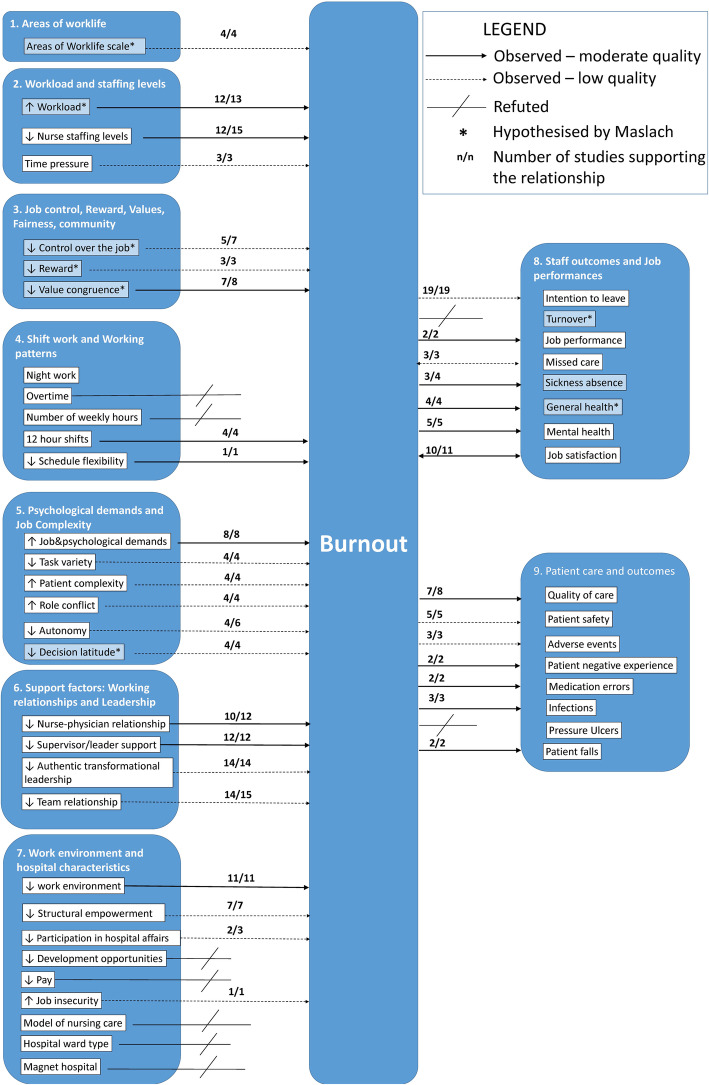
BACKGROUND: Workforce studies often identify burnout as a nursing 'outcome'. Yet, burnout itself-what constitutes it, what factors contribute to its development, and what the wider consequences are for individuals, organisations, or their patients-is rarely made explicit. We aimed to provide a comprehensive summary of research that examines theorised relationships between burnout and other variables, in order to determine what is known (and not known) about the causes and consequences of burnout in nursing, and how this relates to theories of burnout. METHODS: We searched MEDLINE, CINAHL, and PsycINFO. We included quantitative primary empirical studies (published in English) which examined associations between burnout and work-related factors in the nursing workforce. RESULTS: Ninety-one papers were identified. The majority (n = 87) were cross-sectional studies; 39 studies used all three subscales of the Maslach Burnout Inventory (MBI) Scale to measure burnout. As hypothesised by Maslach, we identified high workload, value incongruence, low control over the job, low decision latitude, poor social climate/social support, and low rewards as predictors of burnout. Maslach suggested that turnover, sickness absence, and general health were effects of burnout; however, we identified relationships only with general health and sickness absence. Other factors that were classified as predictors of burnout in the nursing literature were low/inadequate nurse staffing levels, ≥ 12-h shifts, low schedule flexibility, time pressure, high job and psychological demands, low task variety, role conflict, low autonomy, negative nurse-physician relationship, poor supervisor/leader support, poor leadership, negative team relationship, and job insecurity. Among the outcomes of burnout, we found reduced job performance, poor quality of care, poor patient safety, adverse events, patient negative experience, medication errors, infections, patient falls, and intention to leave. CONCLUSIONS: The patterns identified by these studies consistently show that adverse job characteristics-high workload, low staffing levels, long shifts, and low control-are associated with burnout in nursing. The potential consequences for staff and patients are severe. The literature on burnout in nursing partly supports Maslach's theory, but some areas are insufficiently tested, in particular, the association between burnout and turnover, and relationships were found for some MBI dimensions only.
Overview
CoChat Summary
TL;DR
This theoretical review of 91 quantitative studies found adverse job characteristics—high workload, low staffing levels, long shifts, and low control—are consistently associated with burnout in nursing, with severe potential consequences for staff and patients. The literature partly supports Maslach’s theory, but incomplete burnout measurement and mostly cross-sectional designs limit causal inference.
Key findings
- Across 91 studies, high workload was supported in 12/13 studies, low/inadequate nurse staffing in 12/15, ≥12-h shifts in 4/4, low control over the job in 5/7, low reward in 3/3, low value congruence in 7/8, low decision latitude in 4/4, poor supervisor/leader support in 12/12, negative team relationship in 14/15, and intention to leave in 19/19.
- Burnout was associated with reduced job performance (2/2), poor quality of care (7/8), poor patient safety (5/5), adverse events (3/3), medication errors (2/2), infections (3/3), and patient falls (2/2); no association was found with pressure ulcers. Turnover was refuted despite being hypothesised by Maslach, with only one small study finding Depersonalisation associated with turnover within 2 years.
- Most studies used the Maslach Burnout Inventory (n = 81), but only 39 (47%) measured and reported all three MBI subscales; 23 used Emotional Exhaustion only, 11 used Emotional Exhaustion and Depersonalisation, and 9 summed the three subscales despite advice against this. Maslach’s hypothesised predictors were generally supported, but often only for some MBI dimensions.
Methods
- Theoretical review conducted according to Campbell et al. and Pare et al.; systematic search of MEDLINE, CINAHL, and PsycINFO in May 2019 for English quantitative primary empirical studies examining associations between burnout and work-related factors or outcomes in nurses or nursing assistants in healthcare settings. Studies focused exclusively on personal factors, only comparing burnout levels across settings, or literature reviews, commentaries, and editorials were excluded.
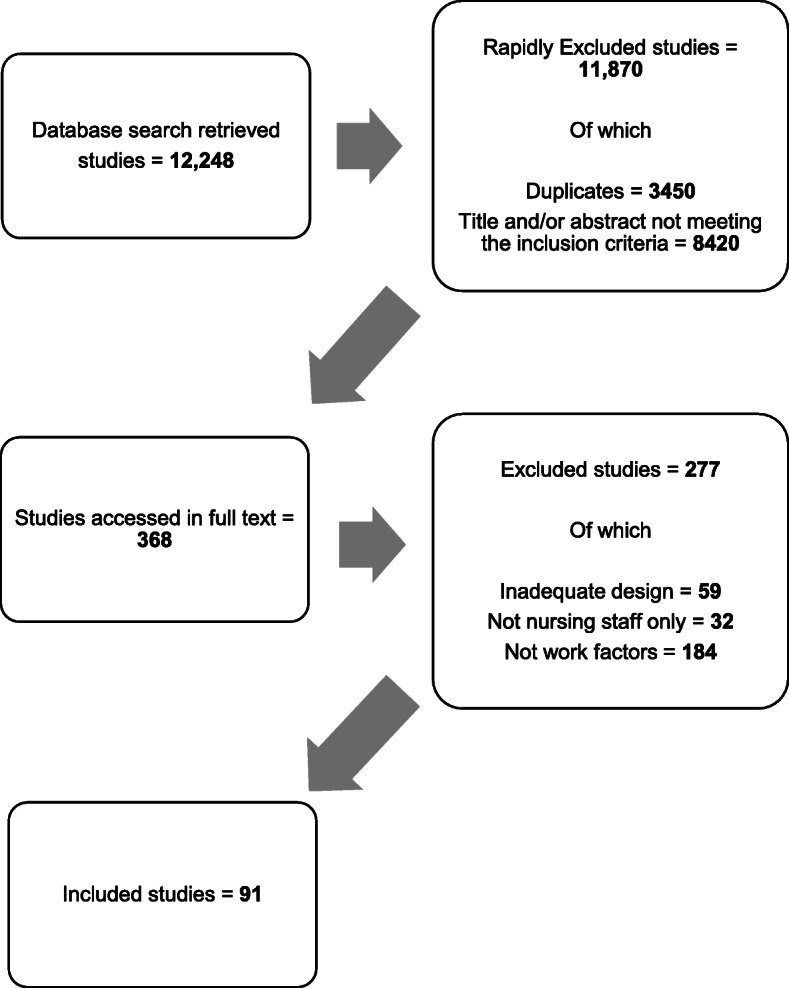
- The search yielded 12,248 records; 368 full texts were accessed, and 91 studies were included. Data were extracted on country, setting, sample size, staff group, burnout measure, variables tested, and findings; a coding frame starting from Maslach’s multidimensional theory produced nine broad categories. No formal quality appraisal was performed, but key quality aspects were summarised.
Limitations
- Stated by the authors: no formal quality appraisal instrument was applied; studies were reported without context or estimates such as ORs and 95% CIs; personality and other individual variables were not considered in data extraction; and studies indexed elsewhere or grey literature may have been missed.
- Evident from the text: 87/91 studies (97%) were cross-sectional, limiting temporal and causal inference and creating simultaneity bias, with factors such as missed care, job satisfaction, and mental health treated as both predictors and outcomes. Incomplete MBI measurement—only 39/91 studies used all three subscales, and 9 summed subscales—further limits testing of Maslach’s theory.
Model-written summary. Check it against the paper before relying on it.
Integrity signals
Registry
Cites
Statistics
Figures
Verification
Claims the paper makes
24 Valid · 3 Not valid · 199 Not checked · 100 Own results and interpretations
The sources with a verdict support this claim; the rest weren’t checked yet, have no full text we could read, or their verdicts aren’t rated yet.
In the paper
“high psychological demands were associated with higher odds of Emotional Exhaustion [62, 78]”
§ Burnout in nursing: a theoretical review > Results > Psychological demands and job complexity
What the sources say
- Supportedcites [62] Vidotti V Ribeiro RP Galdino MJQ Martins JT Burnout syndrome and shift work among the nursing staff Rev Lat Am Enfermagem 2018 26 e3022 30110099 PMC6091368 source
The Method section identifies psychological demands as a dimension of the Demand-Control-Support Questionnaire. In Results, Table 3 reports that high demand was associated with higher odds of emotional exhaustion among day-shift nursing staff (adjusted OR 2.50, 95% CI 1.44–4.35). The reported association is specific to the day shift. (LLM, conf=0.91)
- Not checked — no full text of the sourcecites [78] Bourbonnais R Comeau M Vezina M Dion G Job strain, psychological distress, and burnout in nurses Am J Ind Med 1998 34 1 20 28 9617384 doi:10.1002/(sici)1097-0274(199807)34:1
plainstates an association- Asserted: passes — The authors put it forward as true.
- Checkable: passes — It can be checked against evidence.
- Load-bearing: passes — The paper’s conclusions depend on it.
- Based: passes — The paper gives a reason why it holds.
- Supported
The cited sources support only part of this claim — read each source’s verdict below.
In the paper
“and Emotional Exhaustion and Personal Accomplishment [50]”
§ Burnout in nursing: a theoretical review > Results > Working relationships and leadership
What the sources say
- Partly supportedcites [50] Hanrahan NP Aiken LH McClaine L Hanlon AL Relationship between psychiatric nurse work environments and nurse burnout in acute care general hospitals Issues Ment Health Nurs 2010 31 3 198 207 20144031 PMC2856615 sourceExperimental — accuracy not yet measured
The Discussion (‘Strong Mangers and Leaders’) reports a significant relationship between manager skill and emotional exhaustion. The Results state that none of the work-environment factors, including manager skill, were associated with personal accomplishment in the adjusted or unadjusted models. The claim is therefore supported for emotional exhaustion but not personal accomplishment. (LLM, conf=0.92)
plainstates an association- Asserted: passes — The authors put it forward as true.
- Checkable: passes — It can be checked against evidence.
- Load-bearing: unclear — It is unclear whether the paper’s conclusions depend on it.
- Based: passes — The paper gives a reason why it holds.
- Partly supported
Every source the paper cites for this claim was checked and supports it.
In the paper
“The inability to establish a temporal link means limits the inference of causality [115].”
§ Burnout in nursing: a theoretical review > Discussion
What the sources say
- Supportedcites [115] Antonakis J Bendahan S Jacquart P Lalive R On making causal claims: a review and recommendations Leadersh Q 2010 21 6 1086 1120 source
Section 1, “What is Causality?”, lists temporal precedence as a condition for measuring a causal effect and explicitly calls temporal ordering necessary but not sufficient. Thus, inability to establish temporal order limits causal inference. (LLM, conf=0.93)
plain- Asserted: passes — The authors put it forward as true.
- Checkable: passes — It can be checked against evidence.
- Load-bearing: passes — The paper’s conclusions depend on it.
- Based: passes — The paper gives a reason why it holds.
- Supported
The sources with a verdict support this claim; the rest weren’t checked yet, have no full text we could read, or their verdicts aren’t rated yet.
In the paper
“| Night work | | | √ | |”
- Also stated in: § Working patterns and shift work · plain
“Working night shifts was associated with burnout (composite score) [68] and Emotional Exhaustion [62], but the relationship was not significant in two studies [69, 70].”
§ Burnout in nursing: a theoretical review > Results
What the sources say
- Not checked — no full text of the sourcecites [68] Anwar MM Elareed HR Burnout among Egyptian nurses Journal of Public Health-Heidelberg 2017 25 6 693 697 source
- Supportedcites [62] Vidotti V Ribeiro RP Galdino MJQ Martins JT Burnout syndrome and shift work among the nursing staff Rev Lat Am Enfermagem 2018 26 e3022 30110099 PMC6091368 source
The Results (Table 2) show that the relationship between work shift and burnout differs across dimensions: emotional exhaustion and professional realization differ significantly by shift, while depersonalization does not. The Discussion also reports higher overall burnout levels among day-shift than night-shift nursing staff. This supports the claim that night work is not consistently associated with burnout. (LLM, conf=0.86)
- Not checked — no full text of the sourcecites [69] Wisetborisut A Angkurawaranon C Jiraporncharoen W Uaphanthasath R Wiwatanadate P Shift work and burnout among health care workers Occup Med (Lond) 2014 64 4 279 286 24550196 source
- Not checked — no full text of the sourcecites [70] Ilhan MN Durukan E Taner E Maral I Bumin MA Burnout and its correlates among nursing staff: questionnaire survey J Adv Nurs 2008 61 1 100 106 18034813 source
plain- Asserted: passes — The authors put it forward as true.
- Checkable: passes — It can be checked against evidence.
- Load-bearing: unclear — It is unclear whether the paper’s conclusions depend on it.
- Based: passes — The paper gives a reason why it holds.
- Also stated in: § Working patterns and shift work · plain
Every source the paper cites for this claim was checked and supports it.
In the paper
“Long shifts of 12 h or more were associated with all MBI subscales [74]”
§ Burnout in nursing: a theoretical review > Results > Working patterns and shift work
What the sources say
- Supportedcites [74] Dall’Ora C Griffiths P Ball J Simon M Aiken LH Association of 12 h shifts and nurses’ job satisfaction, burnout and intention to leave: findings from a cross-sectional study of 12 European countries BMJ Open 2015 5 9 e008331 26359284 PMC4577950 source
The Measurements section identifies the three MBI subscales as emotional exhaustion, depersonalisation and personal accomplishment. The Discussion explicitly reports an association between shifts of 12 hours or more and all three subscales; the Shift length and nurse outcomes section reports the corresponding adjusted results. (LLM, conf=0.95)
plainstates an association- Asserted: passes — The authors put it forward as true.
- Checkable: passes — It can be checked against evidence.
- Load-bearing: passes — The paper’s conclusions depend on it.
- Based: passes — The paper gives a reason why it holds.
- Supported
201 more claims · 15 with their cited sources checked
Create a free account to see all 326 claims and to verify the 23 references still open.
- Probably not a substantial claim. 64
- It may state two separate claims as one. 72
- The quote only partly states this claim. 2
Claims other papers make about this one
Each is checked against this paper’s own text: does it say what the citing paper says it does?
The source backs part of the claim, not all of it — or backs it for a different population, condition or comparison.
In the citing paper
“Burnout among HPs is significantly associated with suicidal ideation [7], decreased job satisfaction [8], and increased turnover intention, ultimately resulting in a loss of HPs and deterioration in the quality of care, which is also negatively affected, as is patient safety and health status [9,10,11].”
From Effects of Third-Wave Cognitive Behavioral Therapy for Healthcare Professionals’ Burnout: A Systematic Review and Meta-Analysis (2025) · cites this paper as [9]
Experimental — accuracy not yet measuredThe source backs part of the claim, not all of it — or backs it for a different population, condition or comparison.
In the citing paper
“Reducing EE and DP may also contribute to improved workforce retention and lower absenteeism, ultimately benefiting healthcare providers and enhancing patient safety and care quality [9,10,11].”
From Effects of Third-Wave Cognitive Behavioral Therapy for Healthcare Professionals’ Burnout: A Systematic Review and Meta-Analysis (2025) · cites this paper as [9]
Experimental — accuracy not yet measuredThe cited source says what the claim attributes to it.
In the citing paper
“Last but not the least, some other organizational factors may also affect burnout, such as excessive workload, time pressure, high job demands, low rewards, low job autonomy, or negative team atmosphere [13].”
From The efficacy of applying the Interpersonal Effectiveness skills of dialectical behavior therapy into communication skills workshop for clinical nurses (2023) · cites this paper as [13]
Self-check
Percentages, sums and reported differences re-computed from the paper’s own numbers.
Each contradiction between two passages listed here was confirmed by an independent check.
Rated minor: it would not touch a result — a value no result rests on, a p-value that stays on the same side of the significance level, or a conflict that is clerical, resolved elsewhere in the paper, or outside its own findings.
In the paper
“The database search yielded 12 248 studies, of which 11 870 were rapidly excluded as either duplicates or titles and/or abstract not meeting the inclusion criteria. Of the 368 studies accessed in full text, 277 were excluded, and 91 studies were included in the review.”
§ Burnout in nursing: a theoretical review > Results
Reported 368 · recomputed 378
Rated minor: it would not touch a result — a value no result rests on, a p-value that stays on the same side of the significance level, or a conflict that is clerical, resolved elsewhere in the paper, or outside its own findings.
In the paper
§ Burnout in nursing: a theoretical review > Results
“| Overtime | | | √ | |”
§ Burnout in nursing: a theoretical review > Results > Working patterns and shift work
“One study found working that overtime was associated with composite MBI score [73].”
Rated minor: it would not touch a result — a value no result rests on, a p-value that stays on the same side of the significance level, or a conflict that is clerical, resolved elsewhere in the paper, or outside its own findings.
In the paper
“Most studies used the Maslach Burnout Inventory Scale (n = 81), which comprises three subscales reflecting the theoretical model: Emotional Exhaustion, Depersonalisation, and reduced Personal Accomplishment. However, less than half (47%, n = 39) of the papers measured and reported results with all three subscales.”
§ Burnout in nursing: a theoretical review > Results > Measures of burnout
Reported 47 · recomputed 48.148148
Citations
Cites
The measurement of experienced burnout
Maslach, C., & Jackson, S. E. (1981) · Journal of Organizational Behavior · doi:10.1002/job.4030020205 · Cited by 14,496
The job demands-resources model of burnout.
Demerouti, E., Bakker, A. B., Nachreiner, F., & Schaufeli, W. B. (2001) · Journal of Applied Psychology · doi:10.1037/0021-9010.86.3.499 · Cited by 13,643
Maslach, C., Schaufeli, W. B., & Leiter, M. P. (2001) · Annual Review of Psychology · doi:10.1146/annurev.psych.52.1.397 · Cited by 12,852
(1996) · Consulting Psychologists Press eBooks · Cited by 7,863
Freudenberger, H. J. (1974) · Journal of Social Issues · doi:10.1111/j.1540-4560.1974.tb00706.x · Cited by 5,463
Hospital Nurse Staffing and Patient Mortality, Nurse Burnout, and Job Dissatisfaction
Aiken, L. H. (2002) · JAMA · doi:10.1001/jama.288.16.1987 · Cited by 5,226
The Copenhagen Burnout Inventory: A new tool for the assessment of burnout
Kristensen, T. S., Borritz, M., Villadsen, E., & Christensen, K. B. (2005) · Work & Stress · doi:10.1080/02678370500297720 · Cited by 3,136
On making causal claims: A review and recommendations
Antonakis, J., Bendahan, S., Jacquart, P., & Lalive, R. (2010) · The Leadership Quarterly · doi:10.1016/j.leaqua.2010.10.010 · Cited by 2,441
Synthesizing information systems knowledge: A typology of literature reviews
Paré, G., Trudel, M.-C., Jaana, M., & Kitsiou, S. (2015) · Information & Management · doi:10.1016/j.im.2014.08.008 · Cited by 1,987
Burnout: 35 years of research and practice.
Schaufeli, W. B., Leiter, M. P., & Maslach, C. (2009) · Career Development International · doi:10.1108/13620430910966406 · Cited by 1,964
Research works printed but not linked: 4
- Ekstedt M Burnout and sleep: Institutionen för folkhälsovetenskap/Department of Public Health Sciences 2005
- Cherniss C Burnout in new professionals: a long-term follow-up study J Health Hum Resour Adm 1989 12 1 11 24
- Adali E Priami M Evagelou H Mougia V Ifanti M Alevizopoulos G Burnout in psychiatric nursing personnel in Greek hospitals European Journal of Psychiatry 2003 17 3 173 181
- Laschinger HKS Shamian J Thomson D Impact of magnet hospital characteristics on nurses’ perceptions of trust, burnout, quality of care, and work satisfaction Nurs Econ 2001 19 5 209 219
Cited by
Items 401–500 of 1,160
Carthon, J. M. B., Brom, H. M., Maye, A., Iroegbu, C., Gil, J., Rizzo, J. A., Amenyedor, K. E., Montalvo, W., & Villarruel, A. M. (2024) · Nursing Outlook · doi:10.1016/j.outlook.2024.102234 · Cited by 7
Sibisanu, R., Cseminschi, S., Ionica, A. C., Leba, M., Drăghici, A., & Nassar, Y. (2024) · Sustainability · doi:10.3390/su16167016 · Cited by 15
“Its repercussions extend to reduced organizational commitment, increased turnover, and absenteeism [5,6], all of which challenge the sustainability of educational systems and institutions.”
BackgroundInfluentialOrganisational support and strategies to address nurse burnout and enhance resilience
Adan, C. (2024) · Nursing Management · doi:10.7748/nm.2024.e2142 · Cited by 7
Carthy, V. J. C. M., Brady, N. M., Murphy, A., Murphy, A., Ball, J., Crouch, R., Duffield, C. M., Griffiths, P., Scott, P. A., & Drennan, J. (2025) · Journal of Advanced Nursing · doi:10.1111/jan.16845 · Cited by 14
“Reduced workloads are associated with lower levels of nursing staff burnout (Dall'Ora et al. 2020; Tsolakidis and Vasiliki Diamantidou 2022) and, as reported in this study, increases to staffing reduced levels of emotional exhaustion between the two time-points.”
InfluentialSelf-citationEstrategias de prevención del agotamiento profesional en enfermeras de cuidados intensivos
Herrera-Sánchez, P. J., & Mina-Villalta, G. Y. (2023) · Revista Científica Ciencia y Método · doi:10.55813/gaea/rcym/v1/n4/24 · Cited by 8
COVID-19 Burnout Level of Health Staff Working and not Working in Intensive Care Units
Mecit, B. B. T., Opak, S. Ş., Yıldırım, Ö. D., & Sıvacı, R. (2022) · Journal of Anesthesiology and Reanimation Specialists’ Society · doi:10.54875/jarss.2022.27928 · Cited by 6
Social shaming and bullying of mental health staff by patients: A survey in a mental health centre
Assuline, S. Z., Savitsky, B., Wilf‐Miron, R., & Kagan, I. (2022) · Journal of Psychiatric and Mental Health Nursing · doi:10.1111/jpm.12865 · Cited by 9
Kaltenegger, H. C., Weigl, M., Becker, L., Rohleder, N., Nowak, D., & Quartucci, C. (2022) · PLoS ONE · doi:10.1371/journal.pone.0274202 · Cited by 12
“Exposure to these stressors is linked to burnout, which in turn is not only associated with adverse consequences for general health on an individual level, but also on an organizational level most importantly regarding quality of care and patient safety [27, 52].”
BackgroundFeng, X., Yang, C., Yang, H.-J., Wang, K., Xu, Y., Zhang, X., Zhang, Q., & Ma, J. (2023) · Frontiers in Psychiatry · doi:10.3389/fpsyt.2022.1018391 · Cited by 10
Matsuo, M., Takayama, Y., Kinouchi, C., & Suzuki, E. (2023) · INQUIRY The Journal of Health Care Organization Provision and Financing · doi:10.1177/00469580221146839 · Cited by 13
Carnesten, H., Gustin, L. W., Skoglund, K., & Wågert, P. V. H. (2023) · Journal of Advanced Nursing · doi:10.1111/jan.15585 · Cited by 18
Hasebrook, J. P., Hecke, J., Volkert, T., Singer, M., Hinkelmann, J., Michalak, L., & Hahnenkamp, K. (2023) · Frontiers in Psychology · doi:10.3389/fpsyg.2023.1106501 · Cited by 9
“, 2020), and long working hours (Leigh et al., 2002; Dall’Ora et al., 2015; Oh et al., 2019; Dall’Ora et al., 2020) lower job satisfaction leading to job dissatisfaction as well as negative feelings and attitudes toward the job (Armstrong, 2006).”
BackgroundInfluentialVicarious Trauma and Health Outcomes in Forensic Mental Health Nurses
Newman, C., Roche, M. A., & Elliott, D. (2023) · Journal of Forensic Nursing · doi:10.1097/jfn.0000000000000450 · Cited by 15
Aslam, N., Khan, A., Habib, N., & Ahmed, A. (2021) · International Journal of Human Rights in Healthcare · doi:10.1108/ijhrh-02-2021-0028 · Cited by 9
Sofyan, M., Fitriani, D. Y., Friska, D., Basrowi, R. W., & Fuady, A. (2022) · Nursing Open · doi:10.1002/nop2.1213 · Cited by 7
Esteban‐Sepúlveda, S., Terradas, R., Ribeiro, T. C., Pagès, E. G., Sangrà, P. S., & Lacueva‐Pérez, L. (2022) · Enfermería Clínica (English Edition) · doi:10.1016/j.enfcle.2021.12.003 · Cited by 6
Galanis, P., Moisoglou, I., Katsiroumpa, A., Vraka, I. S., Siskou, O. C., Konstantakopoulou, O., & Καϊτελίδου, Δ. (2023) · Research Square · doi:10.21203/rs.3.rs-3310921/v1 · Cited by 6
Cooper, A. L., Best, M. C., Read, R. A., & Brown, J. A. (2024) · Journal of Psychiatric and Mental Health Nursing · doi:10.1111/jpm.13038 · Cited by 11
Bibliometric analysis of nurses’ moral distress research
Li, X., Liu, X., Wang, F., Zhang, Y., Huang, J., Wang, J., & Zhou, X. (2024) · Frontiers in Psychiatry · doi:10.3389/fpsyt.2024.1504713 · Cited by 5
Åkerström, M., Wahlström, J., Lindegård, A., Arvidsson, I., & Ståhl, A.-C. F. (2025) · Frontiers in Medicine · doi:10.3389/fmed.2024.1509023 · Cited by 14
An Exploratory Model of How Ethical Indicators Predict Health Professional Burnout
Kjos, A. L., Gnacinski, S. L., & Wahl, C. A. (2025) · Research in Nursing & Health · doi:10.1002/nur.22453 · Cited by 26
The Relationship Between Commuting Stress and Nurses’ Well‐Being: Considering Gender Differences
Li, D., Houghton, J. D., Li, X., Peng, Q., Li, J., & Zou, W. (2025) · Journal of Nursing Management · doi:10.1155/jonm/4414417 · Cited by 10
Cesare, M., Nitto, M. D., Iovino, P., Caponnetto, V., Longobucco, Y., Marcomini, I., Zaghini, F., Alvaro, R., Burgio, A., Cicolini, G., et al. (2025) · Journal of Clinical Nursing · doi:10.1111/jocn.70007 · Cited by 9
How does physical activity alleviate nurse job burnout? The important role of recovery experiences
Li, X., Zhang, T., Zhao, G., Li, J., & Chen, C. (2025) · Frontiers in Public Health · doi:10.3389/fpubh.2025.1658020 · Cited by 13
Enasoni, S., Diana, S. M., Cosoroabă, R. M., Zara, F., Novacescu, D., Dumitru, C. Ș., Pătrașcu, R., & Enache, A. (2025) · Healthcare · doi:10.3390/healthcare13182278 · Cited by 14
“Unlike burnout, which can often be mitigated through individual-level interventions such as workload adjustments or resilience training, moral injury requires structural changes in healthcare delivery, ethical climate, and leadership accountability [23].”
Assessing the magnitude of burnout among emergency nurses in Portugal
Fernandes, J. B., Antunes, R., Ivanel, M., Lucas, M., de Oliveira, R. S., Bico, W., Simões, A. D. J. C., Vareta, D. A., Bernardes, C., Vaz, C., et al. (2025) · Frontiers in Public Health · doi:10.3389/fpubh.2025.1699355 · Cited by 7
Generating balanced workload allocations in hospitals
Smet, P. (2023) · Operations Research for Health Care · doi:10.1016/j.orhc.2023.100390 · Cited by 5
Cerbin‐Koczorowska, M., Przymuszała, P., & Zielińska‐Tomczak, Ł. (2023) · BMC Medical Education · doi:10.1186/s12909-023-04393-z · Cited by 8
“The elevated levels of stress at work over a longer period of time may lead to burnout, which is defined by emotional exhaustion, depersonalization (negative and cynical approach toward other people), and increased inefficacy feelings [2], which in the case of medical teachers, who very often are simultaneously also a…”
BackgroundGoussinsky, R. (2023) · Journal of Aggression Maltreatment & Trauma · doi:10.1080/10926771.2023.2246015 · Cited by 8
“Finally, the negative effect of burnout on quality of care and patient safety (e.g., Dall’ora et al., 2020), underscores the need to determine whether the present findings extend to other samples of healthcare providers.”
BackgroundChang, Y., Chia Hui, H. S. U., Tseng, Y., & Hsiung, C. A. (2023) · Journal of Nursing Research · doi:10.1097/jnr.0000000000000585 · Cited by 9
Shen, Y., Zhao, M., Wei, N., Zhao, W., Han, M., Dai, S., Wang, X., Li, L., & Zhang, X. (2024) · Holistic Nursing Practice · doi:10.1097/hnp.0000000000000637 · Cited by 5
“46 Finally, the salary structure of nursing staff in China is inflexible and does not match the jobs.”
Translation and psychometric evaluation of the Chinese version of the Nursing Time Management Scale
Fu, Z., Wang, Y. P., Zhang, L., & Tan, M. (2024) · Frontiers in Medicine · doi:10.3389/fmed.2024.1396625 · Cited by 6
“…with acute, critical and severe diseases, as well as the need to deal with multiple patients at the same time, a number of complicated nursing tasks (3), so to become an excellent nurse not only need to master all the operational skills, but also need a kind of ability to rationally arrange time.”
BackgroundHanna, R., Banasiewicz, J., Katarzyna, B., Zaręba, K. T., & Jaworski, M. (2024) · Scientific Reports · doi:10.1038/s41598-024-77607-z · Cited by 9
Brynskog, E., Larsson, M., Smith, F., Rosell, L., & Bjuresäter, K. (2024) · Nordic journal of nursing research · doi:10.1177/20571585241290325 · Cited by 6
“25 In sum, CNCC services can be described as a part of an ongoing international endeavour to improve cancer care by advancing nursing practices.”
Durant, D. J., Colburn, V. F., & Guerrazzi-Young, C. (2024) · Nurse Education in Practice · doi:10.1016/j.nepr.2024.104203 · Cited by 10
Factors associated with burnout among internationally educated nurses: A scoping review
Chen, G., Ogata, Y., & Sasaki, M. (2024) · International Nursing Review · doi:10.1111/inr.13073 · Cited by 9
Masih, Y., & Adeline, S. (2025) · medtigo Journal of Medicine · doi:10.63096/medtigo3084214 · Cited by 6
Study of Nurses' Malpractice Tendencies and Burnout Levels
Şenturan, L., Kaya, G., & Emirtaş, T. (2025) · Research in Nursing & Health · doi:10.1002/nur.22460 · Cited by 9
Mazur, L. M., Lee, N., Baernholdt, M., Epstein, E. G., Meltzer-Brody, S. E., Bissram, J., & Adapa, K. (2025) · Workplace Health & Safety · doi:10.1177/21650799251333072 · Cited by 6
“Before the pandemic, rates of burnout, depression, and suicide were much higher among nurses and physicians than in the general worker population (Dall’Ora et al., 2020; National Academies of Sciences, Engineering, and Medicine et al., 2019).”
Munyayi, F. K., & van Wyk, B. E. (2021) · BMJ Open · doi:10.1136/bmjopen-2021-049452 · Cited by 5
Wooten, R., Kothari, D., Pryor, R. J., & Bearman, G. M. (2022) · Current Infectious Disease Reports · doi:10.1007/s11908-022-00773-6 · Cited by 9
Vermeesch, A. L., Garrigues, L., & Littzen, C. O. R. (2022) · International Journal of Environmental Research and Public Health · doi:10.3390/ijerph192416463 · Cited by 8
Iranian nursing applicants' perception of the nursing profession: A qualitative study
Zamanzadeh, V., Ghahramanian, A., Valizadeh, L., & Bagheriyeh, F. (2023) · Nursing Open · doi:10.1002/nop2.1629 · Cited by 7
Kazemi, S., Parizad, N., & Habibzadeh, H. (2023) · Nursing Open · doi:10.1002/nop2.1595 · Cited by 6
Dorsey, M. S. (2023) · Nursing Management · doi:10.1097/01.numa.0000918200.92839.d9 · Cited by 5
Christensen, S. S., Nixon, T. L., Aguilar, R. L., Muhamedagic, Z., & Mahoney, K. (2023) · International Journal of Healthcare Management · doi:10.1080/20479700.2023.2190251 · Cited by 7
“These factors aligned with empirical and theoretical fi ndings in nursing literature, with characteristics driving burnout that include sta ffi ng, workload, social climate, and other work environment features [27 – 29].”
BackgroundMishina, K. E., Berg, J., Vainila, V., Korte, M., & Lahti, M. (2023) · Perspectives In Psychiatric Care · doi:10.1155/2023/3159566 · Cited by 13
“An underresourced system greatly increases the risk of burnout in staf because of emotional exhaustion, detachment, and poor mental health [25] which can further lead to poor care.”
Background2022 Emory Business Case for Nursing Summit: What has changed in the past year
McCauley, L., Burke, S. P., Hayes, R. K., & Sedatole, K. L. (2023) · Nursing Outlook · doi:10.1016/j.outlook.2023.101998 · Cited by 6
Uribe, J. C. G., Espinal, L. A. E., Montoya, I. D. C. C., Villegas, S. H., & Duque, M. O. G. (2023) · Revista latinoamericana de bioética · doi:10.18359/rlbi.5816 · Cited by 25
“• Problemas de salud: gastrointestinal, migraña, trastornos de sueño y dificultades de concentración (32, 48, 70) Salud mental (1, 32, 48, 54-60) • Autopercepción negativa en los ámbitos personal, laboral y social (10).”
Nishimoto, D., Kodama, S., Shimoshikiryo, I., Ibusuki, R., Nerome, Y., Takezaki, T., & Nishio, I. (2023) · Yonago acta medica · doi:10.33160/yam.2023.08.008 · Cited by 10
Psychometric properties and factor structure of the Vietnamese Copenhagen Burnout Inventory
Tran, T. T. T., Nguyen, Q. T., Nguyen, N. T., Vu, S. T., Kaewboonchoo, O., Kawakami, N., & Nguyen, H. T. (2023) · Journal of Occupational Health · doi:10.1002/1348-9585.12425 · Cited by 13
“15 However, the MBI was criticized for its structure, dimensionality, and items.”
BackgroundIncrease nurse faculty salaries to reduce the nursing shortage
Kroning, M., & Northrup, A. (2023) · Nursing · doi:10.1097/01.nurse.0000991580.35123.d6 · Cited by 5
Infection Control Nurses’ Burnout Experiences in Hospitals during the COVID-19 Pandemic
Lee, S.-J., Kim, S., & Park, J. (2024) · Journal of Korean Academy of Fundamentals of Nursing · doi:10.7739/jkafn.2024.31.1.135 · Cited by 5
Psychometric evaluation of the Chinese version of the burnout syndrome assessment scale in nurses
Xie, W., Lu, T., Huang, X., Zhang, C., Choudhary, M., & Kumar, A. (2024) · Frontiers in Psychology · doi:10.3389/fpsyg.2024.1309090 · Cited by 5
Bové, D. G., Simonsen, S. S., Herling, S. F., & Timm, H. U. (2024) · Journal of Advanced Nursing · doi:10.1111/jan.16371 · Cited by 4
Optimizing the contributions of nursing and midwifery workforces: #Protect, #Invest, #Together
Buchan, J., Campbell, J., & McCarthy, C. F. (2021) · Human Resources for Health · doi:10.1186/s12960-021-00577-0 · Cited by 7
Coping mechanisms and burnout among checkpoint soldiers in the IDF: a salutogenic perspective
Atias, D., Machluf-Biton, M., Lior, Y., Ohayon, O., & Antonovsky, A. (2022) · Health Promotion International · doi:10.1093/heapro/daac051 · Cited by 7
Burnout among Telecommunication Sales Managers
Малинаускас, Р. К., Grinevicius, M., & Malinauskiene, V. A. (2022) · International Journal of Environmental Research and Public Health · doi:10.3390/ijerph191811249 · Cited by 8
“Our results align with those of many other studies concerning the effects of high job demands [34], job tension [9], or work overload [6,35] on emotional exhaustion.”
ResultPrediction of nursing burnout—a scoping review of the literature from 1970 to 2021
Leite, C. C. M., & Wooldridge, A. R. (2022) · IISE Transactions on Healthcare Systems Engineering · doi:10.1080/24725579.2022.2149638 · Cited by 8
“In nursing, burnout has been associated with the presence of adverse job characteristics (Dall ’ Ora et al., 2020), including but not limited to: Poor salaries, staff shortages, heavy workload, lack of infrastructure, overcrowded hospitals, high patient loads (G € orgens-Ekermans & Brand, 2012);…”
BackgroundTechnological innovation for workload allocation in nursing care management: an integrative review
Galiano, A., Moreno‐Fergusson, M. E., Guerrero, W. J., Muñóz, M. F., Basto, G. A. O., Ramírez, J. S. C., Lozano, M. G., & Sundt, A. L. (2023) · F1000Research · doi:10.12688/f1000research.125421.1 · Cited by 8
Rozani, V., & Kagan, I. (2023) · BMC Nursing · doi:10.1186/s12912-023-01205-z · Cited by 10
“Previous studies reported that a positive work environment was associated with reduced burnout [37], higher organizational commitment, work autonomy, work performance, job satisfaction, and lower job stress [38], as well as a low turnover intention [38, 39].”
BackgroundAuthentic nursing leadership theory and nurse leaders' stories
Luger, S., & Koziol, D. (2024) · Nursing Management · doi:10.1097/nmg.0000000000000129 · Cited by 5
Improved staffing policies and practices in healthcare based on a conceptual model
Wei, N., Wang, Z., Li, X., Zhang, Y., Zhang, J., Huang, Z., & Wang, X. (2024) · Frontiers in Public Health · doi:10.3389/fpubh.2024.1431017 · Cited by 15
“This is consistent with the mainstream findings that understaffing leads to an increased workload of employees (75, 76), which in turn causes fatigue, negative emotions, and decreased productivity, ultimately leading to a decrease in team performance (77, 78).”
ResultMogomotsi, G., & Creese, J. (2024) · Hospitals · doi:10.3390/hospitals1020013 · Cited by 6
“The above factors fit into the quality of work life factors identified by Walton [11], and also match a systematic review conducted by Chiara et al. [47], who linked the above-mentioned factors to burnout.”
InfluentialAtashzadeh‐Shoorideh, F., Taylor, E. J., & Ghadirian, F. (2024) · Journal of Clinical Nursing · doi:10.1111/jocn.17632 · Cited by 6
Insomnia mediates the longitudinal association between loneliness and burnout among nurses
Świtaj, P., Baka, Ł., Kapica, Ł., Bugajska, J., Januszczak, J., & Sienkiewicz‐Jarosz, H. (2025) · Scientific Reports · doi:10.1038/s41598-025-11264-8 · Cited by 8
Pang, X., Pan, J., Chen, Z., Cao, X., Shi, J., & Mao, L. (2025) · International Journal of Nursing Studies · doi:10.1016/j.ijnurstu.2025.105207 · Cited by 4
The role of burnout on nurses' intention to leave the profession: the role of work shifts
Bouranta, N., & Kafetzopoulos, D. (2025) · Journal of Health Organization and Management · doi:10.1108/jhom-03-2025-0139 · Cited by 5
Career commitment and sense of calling in nursing students: a longitudinal study
Ding, T., Shi, J., Li, W., Xiong, F., Xu, H., Zhao, C., Zhang, G., & Cong, C. (2026) · Frontiers in Medicine · doi:10.3389/fmed.2026.1760650 · Cited by 4
“Ding et al. 10.3389/fmed.2026.1760650 nurses remains relatively high (3).”
InfluentialEmotional exhaustion digital technology stress and occupational burnout among nurses
Li, H., & Zhong, Y. (2026) · Occupational Medicine · doi:10.1093/occmed/kqag014 · Cited by 5
Chen, M., & Kao, F. (2023) · International Journal of Nursing Practice · doi:10.1111/ijn.13169 · Cited by 4
Harmuch, C., Devechi, A. C. R., Pini, J. D. S., et al. (2024) · Contribuciones a las Ciencias Sociales · doi:10.55905/revconv.17n.3-122 · Cited by 4
Thimmapuram, J., Patel, K. D., Bhatt, D., Chauhan, A., Madhusudhan, D. K., Bhatt, K. K., Deshpande, S., Budhbhatti, U., & Joshi, C. G. (2024) · JMIR Bioinformatics and Biotechnology · doi:10.2196/65506 · Cited by 6
Understanding emotional and health indicators underlying the burnout risk of healthcare workers
Güveyi, E., Elvin, G., Kennedy, A., Kurt, Z., Sice, P. V., Patel, P., Dubruel, A., & Heckels, D. (2025) · PLoS ONE · doi:10.1371/journal.pone.0302604 · Cited by 11
Burnout, collective efficacy and the social network of an intensive care unit
Kiefer, A. K., Shoham, D. A., Joyce, C., & Burkhart, L. (2025) · Nursing in Critical Care · doi:10.1111/nicc.13282 · Cited by 6
Psychosocial Predictors of Job Satisfaction in Nursing: Insights from a Spanish Hospital Setting
Trillo, A., Ortega‐Maldonado, A., Lopez-Pena, B., et al. (2025) · Behavioral Sciences · doi:10.3390/bs15030274 · Cited by 4
“…have raised questions about the direct relationship between psychological empowerment and emotional exhaustion, as some findings suggest that organisational factors, such as workload, may moderate the impact of psychological empowerment on reducing emotional exhaustion (Dall’Ora et al., 2020).”
Saari, M., Coumoundouros, C., Tadeo, J. C., Chyzzy, B., Northwood, M., & Giosa, J. (2025) · BMC Nursing · doi:10.1186/s12912-025-03045-5 · Cited by 5
Ibrahim, I. A., Alenezi, A., Hagrass, H., & Abdou, H. R. (2025) · SAGE Open Nursing · doi:10.1177/23779608251346685 · Cited by 4
“Academic burnout de fi ned as a psychological syndrome characterized by emotional exhaustion, depersonalization, and a diminished sense of personal accomplishment has emerged as a signi fi cant barrier to optimal student performance and future professional engagement (Dall ’ Ora et al., 2020).”
Zhu, J., Ding, M., Si, D., Li, Y., Yuan, Z., Li, D., Deng, L., Tang, C., & Xiong, S. (2025) · BMC Nursing · doi:10.1186/s12912-025-03335-y · Cited by 5
Critical Care Nursing Workforce Retention From an Irish Perspective: A National Survey
McEvoy, N. L., Credland, N., Cribbin, D., Curley, G. F., & Humphries, N. (2025) · Nursing in Critical Care · doi:10.1111/nicc.70094 · Cited by 7
Ogbuabor, D. C., Ghasi, N. C., & Eneh, R. (2022) · AIMS Public Health · doi:10.3934/publichealth.2022050 · Cited by 5
“Adequate nurse staffing, focus on nursing tasks and non-interference with nursing care will improve the nurse-topatient ratio, decrease workloads and limit nurses’ experiences of burnout [39].”
BackgroundŁopatkiewicz, A., Mańk, M., Mikulski, J., Woynarowska-Sołdan, M., & Krzych‐Fałta, E. (2022) · Medical Studies · doi:10.5114/ms.2022.122393 · Cited by 4
Impact of the Practice Environment on Oncology and Hematology Nurses: A Scoping Review
O’Dea, A., Caulfield, R., & Roche, M. A. (2023) · Cancer Nursing · doi:10.1097/ncc.0000000000001264 · Cited by 9
Kwitowski, M. A., Lebin, L. G., Kelleher, J., Zsemlye, M. M., & Nagle-Yang, S. M. (2023) · Clinical Obstetrics & Gynecology · doi:10.1097/grf.0000000000000842 · Cited by 4
Exploring coping mechanisms of nurses against burnout in a psychiatric hospital in Botswana
Masoloko, A., Magdalena, Koen, P., Maserapelo, & Serapelwane, G. (2024) · International Journal of Africa Nursing Sciences · doi:10.1016/j.ijans.2024.100684 · Cited by 4
Malik, A., & Sinha, N. (2024) · Mental Health and Social Inclusion · doi:10.1108/mhsi-12-2023-0137 · Cited by 6
Leep‐Lazar, K., & Stimpfel, A. W. (2024) · OJIN The Online Journal of Issues in Nursing · doi:10.3912/ojin.vol29no02man03 · Cited by 5
Long COVID in healthcare workers: longitudinal mixed-methods study
Grant, A. M., Adams, N. N., MacIver, E., et al. (2024) · Occupational Medicine · doi:10.1093/occmed/kqae113 · Cited by 4
“The NHS is experiencing a workforce crisis, with unprecedented demand for services, high levels of vacancies and burnout [15,16].”
Pike, N. A., Dougherty, C. M., Black, T., Freedenberg, V. A., Green, T., Howie‐Esquivel, J., Pucciarelli, G., Souffront, K., & Laurent, P. S. (2024) · Journal of the American Heart Association · doi:10.1161/jaha.124.038199 · Cited by 6
Omotoye, O. O., Olonade, Z. O., Olaniyan, T. S., & Olusesi, L. D. (2024) · Journal of Workplace Behavioral Health · doi:10.1080/15555240.2024.2441214 · Cited by 7
“The healthcare sector, mainly teaching hospitals, is especially vulnerable to workplace incivility due to its high-stress and high-stakes nature (Dall’Ora et al., 2020; Thomas et al., 2022).”
Yalçın, B., Sarıköse, S., Göktepe, N., & Türkmen, E. (2025) · BMC Health Services Research · doi:10.1186/s12913-025-12711-y · Cited by 6
“According to earlier research, high workload, a lack of staff, shifts lasting more than 12 h, a lack of program flexibility, time restraints, role conflict, a lack of autonomy, lousy teamwork, a lack of managerial support, and job insecurity were all associated with nurses’ burnout [15].”
Sonographers' experiences in coping with stress in the workplace in Gauteng, South Africa
Vorster, M., Casmod, Y., & Hajat, A. (2025) · Radiography · doi:10.1016/j.radi.2025.102960 · Cited by 5
The effect of caring work environment model on nurses’ burnout in general hospitals
Putra, K. R., Sutadi, H., Setyowati, S., & Hayati, R. T. S. (2021) · International Journal of Public Health Science (IJPHS) · doi:10.11591/ijphs.v10i3.20800 · Cited by 9
Srinivas, G. C., Whitham, A., Rouse, R., et al. (2021) · Journal of the Intensive Care Society · doi:10.1177/17511437211010039 · Cited by 4
“Occupational burnout develops via two pathways: excessive job demands leading to exhaustion, insufficient job resources leading to disengagement.(5) Before pandemic, high burnout scores were reported in 30–50% of HCPs in acute care specialities, with 2– 3x higher suicide rates.”
BackgroundPresentation of a model of the work engagement in surgical technologists: A qualitative study
Imani, B., Zandi, S., Mostafayi, M., et al. (2021) · Perioperative Care and Operating Room Management · doi:10.1016/j.pcorm.2021.100235 · Cited by 4
Sevtap, E. Z. E. R., & Üstün, B. (2022) · Ege Üniversitesi Hemşirelik Fakültesi Dergisi · doi:10.53490/egehemsire.1003831 · Cited by 11
Li, F., Liu, S., Huang, H., & Tan, B. (2022) · Risk Management and Healthcare Policy · doi:10.2147/rmhp.s360892 · Cited by 4
“According to the theory of job search, the main reason for individual career mobility is economic motivation.(8,9) Usually, individuals will compare costs and benefits when choosing career mobility.”
BackgroundHUBUNGAN BURNOUT DENGAN KUALITAS HIDUP PADA PERAWAT DI RSUD MARIA WALANDA MARAMIS
Tandilangi, A. A., & Ticoalu, J. (2022) · Klabat Journal of Nursing · doi:10.37771/kjn.v4i1.802 · Cited by 11
Pregnant nurses’ experiences of working shifts: a qualitative systematic review protocol
Ooshige, N., Matsunaka, E., & Ueki, S. (2022) · JBI Evidence Synthesis · doi:10.11124/jbies-22-00060 · Cited by 5
Seivwright, A. N., Kaleveld, L., Meltzer, A., Atkins, M. T., Varadharajan, M., Campbell, P., Callis, Z., & Wilson, E. (2022) · Frontiers in Health Services · doi:10.3389/frhs.2022.1037256 · Cited by 9
Metadata
- Authors
- Dall’Ora, C., Ball, J., Reinius, M., & Griffiths, P.
- Affiliations
- University of Southampton (GB)
- Karolinska Institutet (SE)
- Corresponding author
- Dall’Ora, Chiara
- Venue
- Human Resources for Health
- Published
- 2020-06-05
- Volume
- 18
- Issue
- 1
- Pages
- 41-41
- ISSN
- 1478-4491 (ISSN-L)
- PMC
- PMC7273381
- OpenAlex
- W3011614181
- Cited by
- 1,181
- References
- 115
- Citations by year
- 2026: 239 · 2025: 276 · 2024: 211 · 2023: 211 · 2022: 148 · 2021: 79 · 2020: 14
- FWCI
- 27.93
- Type
- journal article
- Language
- en
- Open access
- gold
- doi.org
- Licence
- cc-by
- creativecommons.org/licenses/by/4.0 (tdm)
- creativecommons.org/licenses/by/4.0 (vor)
- Locations
- Human Resources for Health (publishedVersion, cc-by)
- PubMed Central (publishedVersion, cc-by)
- PubMed (publishedVersion)
- ePrints Soton (University of Southampton) (acceptedVersion)
- DOAJ (DOAJ: Directory of Open Access Journals) (submittedVersion, cc-by-sa)
- Funders
- National Institute for Health and Care Research (NF-SI-0616-10068)
- Topics
- Health Sciences › Medicine › Public Health, Environmental and Occupational Health › Occupational Health and Burnout
- Social Sciences › Psychology › Social Psychology › Stress and Burnout Research
- Health Sciences › Health Professions › General Health Professions › Healthcare professionals’ stress and burnout
- Keywords
- burnout, nursing workforce, workload, nurse staffing, job control, shift length, role conflict, job insecurity, leadership, turnover, sick leave, patient safety, quality of care, nurse-physician relationship
- MeSH terms
- Burnout, Professional, Health Status, Humans, Internal-External Control, Job Satisfaction, Leadership, Nurses, Personnel Turnover, Quality of Health Care, Time Factors, Workload, Workplace, Sick Leave, Nurse's Role, Patient Safety
About these checks
Registry, retraction, Cites and statistics results are computed, not judged, with one exception: a printed reference that no index lists is read once by a model before it counts as a citation error. Claims are extracted by a model and kept only when their quote appears verbatim in the text; each cited source is then checked, with a model’s help, for whether it says what the claim relies on. Those verdicts can be wrong — read the claim’s quote and the cited source before relying on one.
The claim verdicts this report counts are experimental: their accuracy is not yet measured.
A language model drew the claims from the paper on 2026-10-10, under version 3 of the claim definition (model deepseek-v4.1-flash, prompt extract-v3).
A second model labelled each claim on 2026-10-10 (model jev-1.13-20260917, definition revision gold-guideline-v0.2).
Cited sources are checked with a language model’s help (gpt-6-sol).
Statistics and arithmetic are recomputed, not judged.
Confidence bands are shown only for fields calibrated on our annotated test set. None is calibrated yet, so no band is shown.
What counts as a claim ›How we measure confidence ›How we check this ›
Are you an author, or do you see a problem with this page? Request a review
Data sources
Bibliographic data: Semantic Scholar, OpenAlex, Crossref.
Contains information from the Semantic Scholar Academic Graph Datasets, made available under the ODC Attribution License (ODC-BY 1.0).
Semantic Scholar’s data is described in: Kinney, R., et al. (2023). The Semantic Scholar Open Data Platform. arXiv:2301.10140.
